


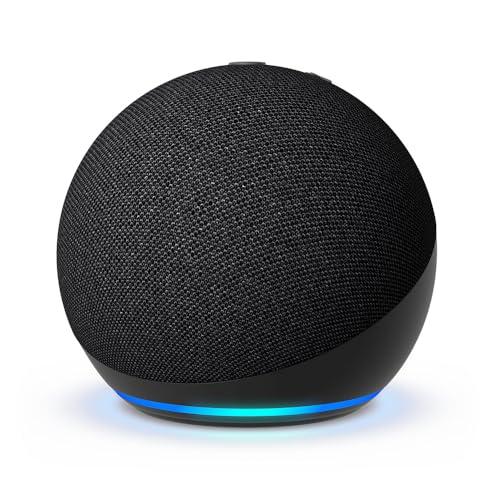
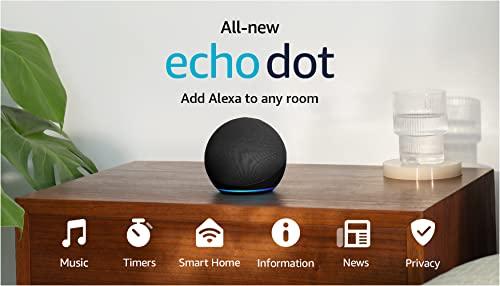

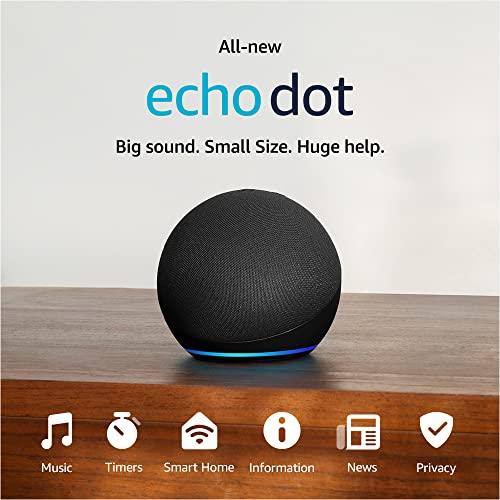
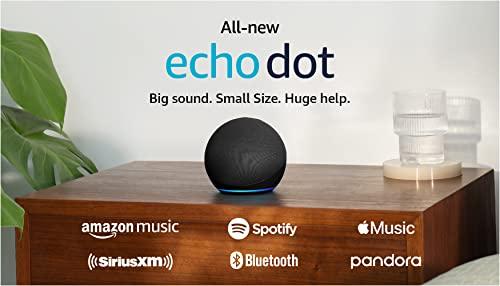
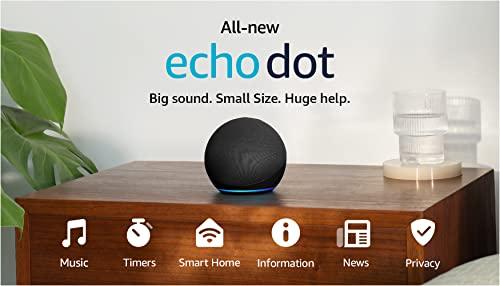
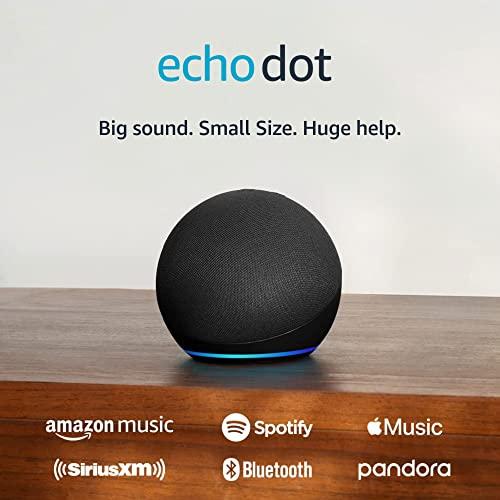
Smart speakers have evolved dramatically since Amazon first introduced the Echo in 2014. What started as a novel voice-controlled gadget has split into two distinct categories: premium audio devices that happen to be smart, and smart home controllers that happen to play music. The Amazon Echo Dot 5th Generation and Denon Home 250 perfectly illustrate this divide, representing completely different philosophies about what a "smart speaker" should actually do.
Understanding which approach works better for your home requires looking beyond marketing buzzwords and diving into what these devices actually deliver in real-world use. At the time of writing, these speakers sit at opposite ends of the price spectrum—the Echo Dot representing exceptional value in the budget category, while the Denon commands premium pricing for serious audio performance.
The smart speaker market has matured into two clear segments. Voice assistant speakers like the Echo Dot 5th Gen prioritize convenience, smart home control, and affordability. They're designed to disappear into your daily routine, handling everything from setting timers to controlling your lights, with audio quality that's "good enough" for most casual listening.
Premium audio speakers like the Denon Home 250, on the other hand, are music systems first and smart devices second. They target listeners who won't compromise on sound quality but want modern conveniences like voice control and wireless streaming. Think of them as traditional hi-fi speakers that learned some new tricks.
The key considerations boil down to your primary use case, budget expectations, room size requirements, and how much you actually care about audio fidelity. Most people think they care about sound quality until they realize they're primarily using their speaker to ask about the weather and set cooking timers.
Amazon released the Echo Dot 5th Generation in 2022 as part of their continued push to make Alexa ubiquitous in American homes. This generation introduced significant improvements over previous models, including better audio drivers, a faster AZ2 Neural Edge Processor (Amazon's custom chip that speeds up voice processing), and new sensors for temperature and motion detection. These additions transform the Dot from a simple voice assistant into a more capable smart home hub.
The Denon Home 250 launched in 2020 as part of Denon's entry into the wireless smart speaker market, leveraging their decades of experience in high-end audio equipment. Denon built this speaker around their HEOS multi-room platform—a system that allows multiple speakers to work together seamlessly throughout your home while maintaining audiophile-grade sound quality.
Since these releases, both devices have received firmware updates that expanded their capabilities, but their core philosophies remain unchanged: the Echo Dot focuses on expanding smart home integration, while the Denon continues refining audio performance and multi-room functionality.
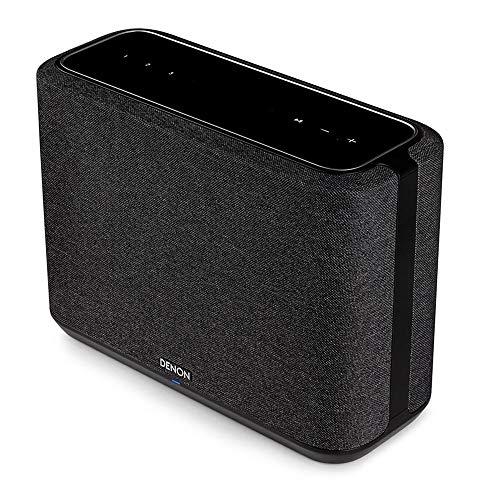
The most significant difference between these speakers lies in their approach to sound reproduction. The Denon Home 250 employs a sophisticated driver array that would make audio engineers nod approvingly: two 0.75-inch soft dome tweeters handle high frequencies, two 4-inch woofers manage mid-bass, and a 5.25-inch passive bass radiator (a driver without a magnet that moves in response to air pressure from the active drivers) extends low-end response. Each driver gets its own dedicated Class-D amplifier, ensuring clean power delivery across the frequency spectrum.
This configuration creates what's called a "true stereo" experience from a single enclosure. The angled tweeters create stereo separation—the illusion that sound is coming from different locations—without relying on digital processing tricks that can make music sound artificial or fatiguing over long listening sessions.
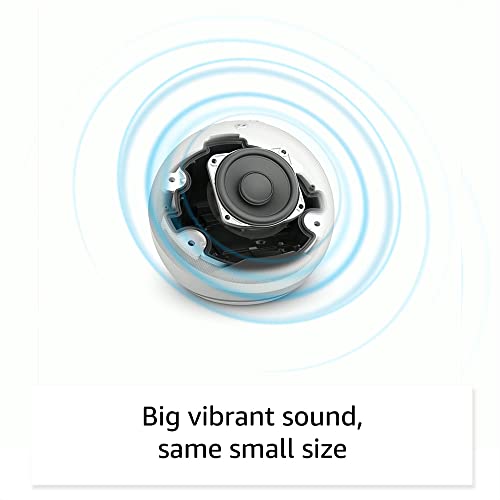
The Echo Dot 5th Gen, by contrast, uses a single 1.73-inch full-range driver. This is Amazon's largest driver ever used in a Dot, and it does deliver noticeably improved bass and vocal clarity compared to previous generations. However, physics imposes hard limits on what a small driver can accomplish. You simply cannot move enough air with a 1.73-inch speaker to create the low-frequency response or volume levels that larger drivers provide.
Our research into user feedback and professional reviews consistently shows the performance gap here is substantial. The Denon Home 250 can comfortably fill medium to large rooms with rich, detailed sound that remains clear and balanced even at higher volumes. Multiple reviewers noted its ability to handle complex musical passages—think orchestral crescendos or bass-heavy electronic music—without the compression or distortion that plagues smaller speakers.
The Echo Dot, meanwhile, excels at what it was designed for: clear vocal reproduction for voice content, podcasts, and casual music listening in smaller spaces. Push it too hard or expect room-filling bass, and you'll quickly hit its limits. The sound becomes thin and strained, reminding you that this is fundamentally a smart home device, not a music system.
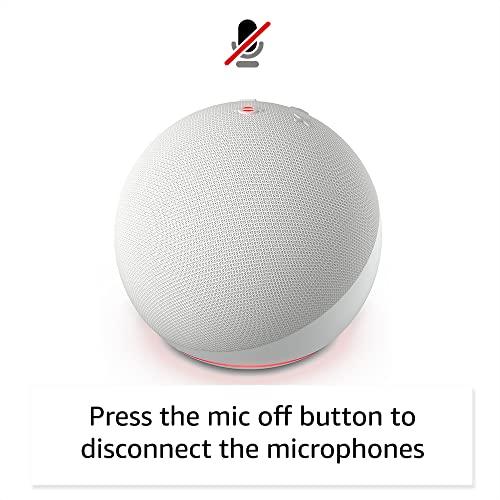
Here's where the tables turn completely. The Echo Dot 5th Generation represents Amazon's fifth iteration of perfecting voice interaction, and it shows. The device packs seven microphones arranged in an array that can isolate your voice even in noisy environments or when music is playing. This far-field voice recognition technology uses beamforming—essentially focusing the microphones' sensitivity in the direction of your voice while suppressing background noise.
The AZ2 Neural Edge Processor deserves special mention. This custom Amazon chip processes voice commands locally on the device for faster response times, rather than sending everything to the cloud first. In practical terms, this means the Dot responds noticeably quicker to commands like "Alexa, stop" or "Alexa, volume down"—interactions where even half-second delays feel sluggish.
Perhaps more importantly, the Echo Dot includes individual voice recognition. It can distinguish between different family members and provide personalized responses, calendar information, or music recommendations. This might seem like a small feature, but it transforms the device from a shared appliance into something that feels genuinely intelligent and personal.
The Denon Home 250 includes Alexa functionality, but it's clearly an afterthought in the design process. With only two microphones and processing power focused on audio rather than voice recognition, it handles basic commands adequately but lacks the sophisticated voice processing that makes interacting with the Echo Dot feel natural and responsive.
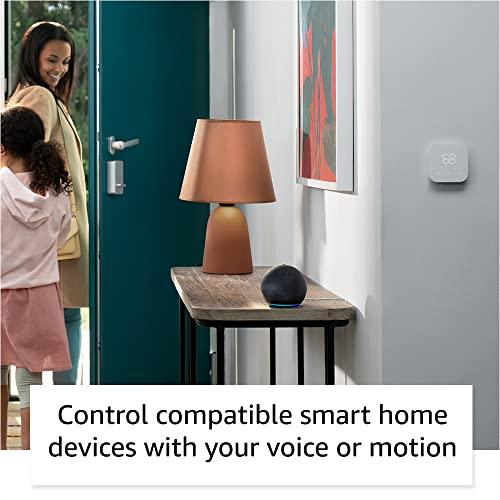
This is where understanding your smart home goals becomes crucial. The Echo Dot 5th Generation isn't just a speaker—it's a legitimate smart home hub. It includes a built-in Zigbee radio, which means it can directly control compatible smart lights, switches, sensors, and other devices without requiring separate hubs or bridges cluttering up your network setup.
The temperature sensor adds another layer of automation possibilities. You can create routines that automatically adjust your thermostat when the room gets too warm, or trigger fans and air purifiers based on actual room conditions rather than arbitrary schedules. The ultrasound motion detection works similarly, allowing the Dot to sense when someone enters a room and respond accordingly—turning on lights, starting music, or announcing reminders.
These sensors transform the Echo Dot from a reactive device (responding only when spoken to) into a proactive one that can monitor and respond to your home environment. For smart home enthusiasts, this represents exceptional value, as equivalent sensing hardware from dedicated smart home companies often costs more than the entire Echo Dot.
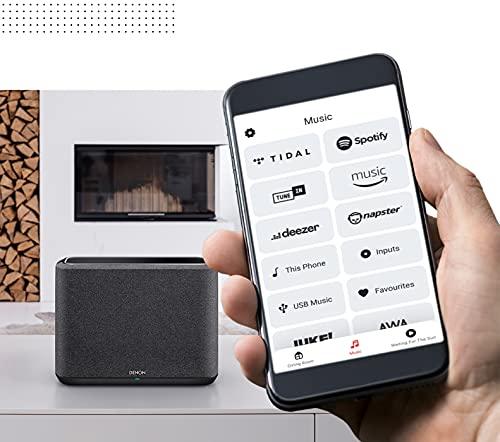
The Denon Home 250 takes a more traditional approach, focusing on audio-centric smart features. Its HEOS platform excels at multi-room audio coordination, allowing you to sync music across multiple speakers throughout your home while maintaining high audio quality. However, it lacks the comprehensive smart home integration features of the Echo ecosystem.
Both speakers support multi-room audio, but their approaches reflect their core design philosophies. The Denon Home 250's HEOS system is built from the ground up for audiophile-quality multi-room experiences. It can synchronize up to 32 speakers across your home while preserving high-resolution audio quality—important if you're streaming lossless music files or high-bitrate services.
HEOS also supports true stereo pairing, where two Denon Home 250s can create a proper left-right stereo setup with improved soundstage and imaging. For home theater applications, these speakers can even serve as wireless surround channels when paired with compatible Denon soundbars and subwoofers.
Amazon's multi-room approach prioritizes simplicity and affordability over audio fidelity. You can easily group multiple Echo Dots for synchronized playback throughout your home, but the system doesn't support true stereo pairing or maintain the same audio quality standards as dedicated audio-first platforms.
For most casual listeners, Amazon's approach works perfectly well. But if you're building a serious whole-home audio system where sound quality matters in every room, the Denon platform offers significantly more sophisticated capabilities.
At the time of writing, these speakers represent dramatically different value propositions. The Echo Dot 5th Generation delivers exceptional value in the budget smart speaker category, offering comprehensive voice assistant features, smart home hub functionality, and adequate audio performance at an extremely accessible price point. You could purchase multiple Echo Dots for different rooms and still spend significantly less than a single Denon Home 250.
The Denon commands premium pricing that reflects its audiophile-grade components and sophisticated engineering. While expensive compared to basic smart speakers, it's competitively priced within the premium wireless speaker category, especially considering its smart features and multi-room capabilities. The question becomes whether the audio quality improvement justifies the substantial price difference for your specific use cases.
Our analysis of user reviews suggests that audio enthusiasts consistently find the Denon worth its premium pricing, while casual listeners often feel the Echo Dot provides all the functionality they actually use. This aligns with our general observation that most people overestimate how much they'll use a speaker for critical music listening versus everyday voice interactions.
For home theater applications, these speakers serve entirely different roles. The Denon Home 250 can integrate into a proper surround sound system as wireless rear speakers, maintaining the audio quality standards that home theater enthusiasts expect. Its ability to decode high-resolution audio formats and maintain synchronization with other components makes it a legitimate choice for dedicated listening rooms.
The Echo Dot 5th Generation isn't designed for home theater use, though it can serve as a convenient voice control interface for compatible smart TVs and streaming devices. Some users place Echo Dots in their media rooms specifically for hands-free control of lighting, volume, and streaming services, rather than for audio reproduction.
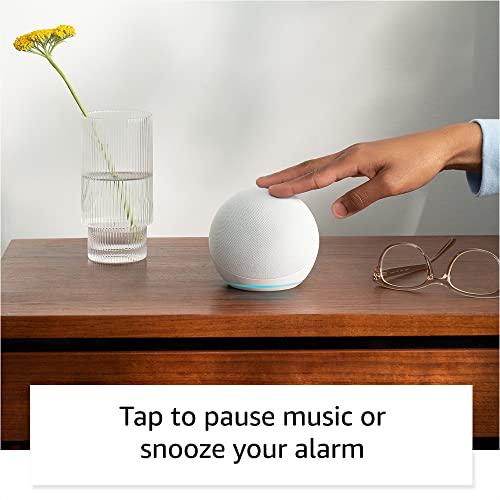
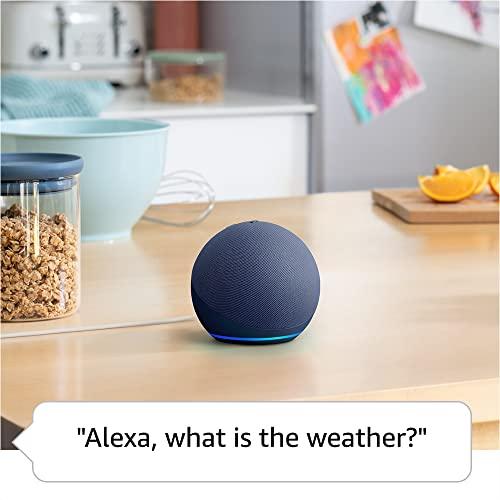
Choose the Amazon Echo Dot 5th Generation if you're primarily interested in smart home control, voice assistance, and casual music listening. It excels as a kitchen companion for timers and cooking questions, a bedroom alarm clock that responds to voice commands, or a smart home hub that can control your lights and thermostat while providing decent background music.
The Echo Dot makes particular sense for first-time smart speaker buyers, families on a budget who want voice control throughout their home, or anyone whose listening habits center more on podcasts, audiobooks, and voice content than high-quality music reproduction.
The Denon Home 250 is the clear choice for audio enthusiasts who refuse to compromise on sound quality but want modern smart speaker conveniences. It's ideal as a primary music system in living rooms or dedicated listening spaces, particularly if you're building or expanding a multi-room audio setup where quality matters in every zone.
Consider the Denon if you have a substantial budget allocated for home audio, regularly listen to high-resolution music files, or plan to integrate the speaker into a broader home theater system. It's also worth the investment if you're tired of mediocre audio quality from budget smart speakers and want something that can genuinely serve as your main music system.
The Amazon Echo Dot 5th Generation and Denon Home 250 represent two successful but fundamentally different approaches to smart speakers. The Echo Dot maximizes convenience and smart home functionality while providing adequate audio for most casual use cases. The Denon prioritizes audio excellence while incorporating smart features as valuable additions rather than core functionality.
Your choice should align with your primary use case and budget expectations. If smart home control and voice assistance drive your interest in smart speakers, the Echo Dot delivers exceptional value and capabilities. If music listening quality is your top priority and you're willing to invest in premium audio performance, the Denon Home 250 provides a compelling combination of audiophile sound quality and modern smart features.
Both speakers excel within their intended markets, making this less about finding an objectively "better" product and more about understanding which philosophy better matches your home audio priorities and expectations.
| Denon Home 250 | Amazon Echo Dot 5th Generation |
|---|---|
| Audio Drivers - Determines sound quality and room-filling capability | |
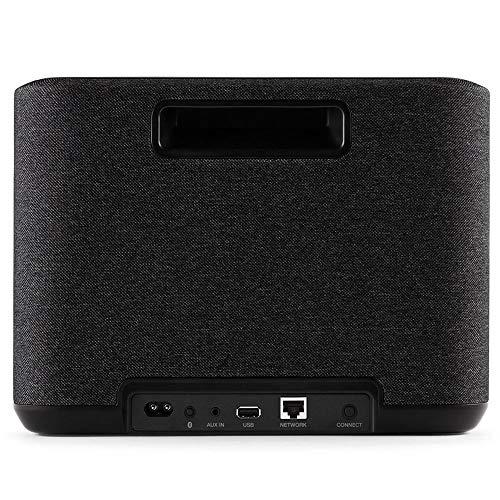
| 2 × 0.75" tweeters, 2 × 4" woofers, 1 × 5.25" passive radiator | Single 1.73" full-range driver |
| Amplification - Affects power, clarity, and distortion levels | |
| 4 dedicated Class-D amplifiers (one per active driver) | Single integrated amplifier |
| High-Resolution Audio Support - Important for audiophiles with quality music files | |
| PCM up to 24-bit/192kHz, DSD up to 5.6MHz | Standard resolution audio only |
| Microphones - Impacts voice recognition accuracy and range | |
| 2 microphones (adequate for voice control) | 7-microphone array with far-field recognition |
| Voice Recognition Features - Enhances personalization and smart home control | |
| Basic Alexa functionality | Individual voice recognition, AZ2 Neural Edge Processor |
| Smart Home Hub Capabilities - Reduces need for additional hardware | |
| Wi-Fi and Bluetooth connectivity only | Built-in Zigbee hub, temperature sensor, motion detection |
| Multi-Room Audio - Critical for whole-home audio systems | |
| HEOS Built-in (up to 32 devices, stereo pairing, hi-res sync) | Basic Echo multi-room (no stereo pairing, compressed audio) |
| Physical Dimensions - Affects placement options and room aesthetics | |
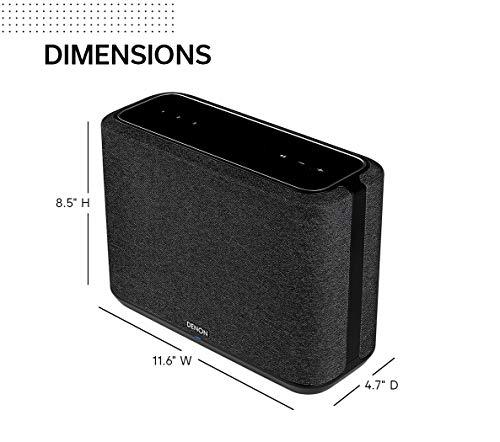
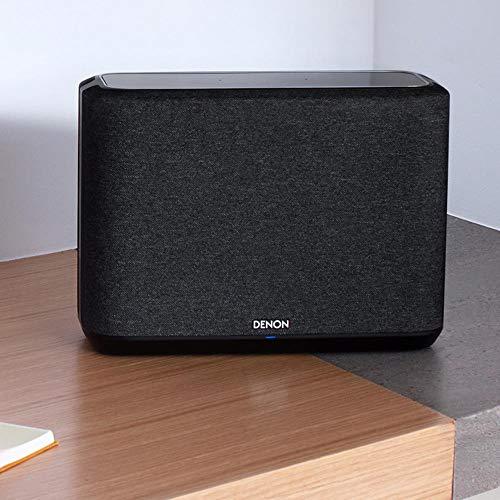
| 11.6" × 8.6" × 5.9", 10.5 lbs (substantial footprint) | 3.9" × 3.9" × 3.1", 0.66 lbs (compact and portable) |
| Connectivity Options - Determines source flexibility and integration | |
| Wi-Fi, Bluetooth, Ethernet, USB-A, 3.5mm aux input | Wi-Fi, Bluetooth only (no aux input or wired connections) |
| Premium Audio Features - Adds value for serious listening | |
| Wall-mountable, stereo pairing, home theater integration | Basic audio optimized for voice clarity |
| Target Use Case - Helps determine best fit for your needs | |
| Primary music system with smart features | Smart home control with adequate audio for casual listening |
The Denon Home 250 delivers significantly better sound quality with its multi-driver system featuring dedicated tweeters, woofers, and a passive radiator. The Amazon Echo Dot 5th Generation has a single small driver that's adequate for voice content and casual listening but can't match the audio fidelity of the Denon Home 250.
The Denon Home 250 is a premium audio speaker with smart features, while the Amazon Echo Dot 5th Generation is primarily a smart home device that also plays music. The Denon focuses on high-quality sound reproduction, whereas the Echo Dot prioritizes voice control and smart home integration.
The Amazon Echo Dot 5th Generation excels at smart home control with its built-in Zigbee hub, temperature sensor, motion detection, and seven-microphone array. The Denon Home 250 offers basic Alexa functionality but lacks the comprehensive smart home features of the Echo Dot.
Both speakers support multi-room audio, but differently. The Denon Home 250 uses HEOS technology for high-quality multi-room sync and stereo pairing capabilities. The Amazon Echo Dot 5th Generation offers basic multi-room grouping with other Echo devices but cannot create true stereo pairs like the Denon.
The Denon Home 250 is much better suited for large rooms due to its powerful drivers and amplifiers that can fill bigger spaces with clear, dynamic sound. The Amazon Echo Dot 5th Generation is designed for smaller spaces and will struggle to provide adequate volume and bass in larger rooms.
Both speakers include Amazon Alexa built-in. The Amazon Echo Dot 5th Generation offers the most advanced Alexa experience with individual voice recognition and faster processing. The Denon Home 250 supports Alexa commands but with less sophisticated voice recognition than the Echo Dot.
This depends on your priorities. The Amazon Echo Dot 5th Generation provides exceptional value for smart home control and basic audio needs at a budget-friendly price. The Denon Home 250 offers better value for audio enthusiasts who want premium sound quality with smart features, despite its higher cost.
The Denon Home 250 offers multiple connectivity options including Wi-Fi, Bluetooth, Ethernet, USB, and a 3.5mm aux input. The Amazon Echo Dot 5th Generation only supports Wi-Fi and Bluetooth connections, with no physical input options like the Denon.
The Denon Home 250 can integrate into home theater setups as wireless surround speakers or stereo pairs, maintaining audio quality standards expected in dedicated listening environments. The Amazon Echo Dot 5th Generation isn't designed for home theater use, though it can provide voice control for compatible entertainment systems.
The Denon Home 250 supports high-resolution audio formats up to 24-bit/192kHz and DSD files, making it ideal for audiophiles with quality music collections. The Amazon Echo Dot 5th Generation only supports standard resolution audio and is better suited for streaming services and voice content than high-quality music files.
The Amazon Echo Dot 5th Generation features superior voice recognition with seven microphones, far-field detection, and individual user recognition capabilities. The Denon Home 250 has basic voice control with two microphones but doesn't match the advanced voice processing features of the Echo Dot.
For most first-time buyers, the Amazon Echo Dot 5th Generation is the better choice due to its affordable price, comprehensive smart home features, and ease of use. The Denon Home 250 is better suited for users who prioritize audio quality and are willing to invest more for premium sound with smart capabilities.
We've done our best to create useful and informative comparisons to help you decide what product to buy. Our research uses advanced automated methods to create this comparison and perfection is not possible - please contact us for corrections or questions. These are the sites we've researched in the creation of this article: dxomark.com - hometechnologyreview.com - crutchfield.com - versus.com - stereoguide.com - versus.com - whathifi.com - techgearlab.com - youtube.com - crutchfield.com - consumerreports.org - blog.son-video.com - crutchfield.com - skybygramophone.com - audiolab.com - theaudiotailor.com.au - youtube.com - scribd.com - soundguys.com - reviewed.com - youtube.com - youtube.com - whathifi.com - youtube.com - youtube.com - dell.com - bestbuy.com - youtube.com - youtube.com - nfm.com - soundguys.com - staples.com - homedepot.com - techradar.com - gadgets360.com - youtube.com - versus.com - en.wikipedia.org

Privacy Policy
Terms and Conditions - Affiliate Policy
Home Security
© Copyright 2008-2026.
11816 Inwood Rd #1211, Dallas, TX 75244