




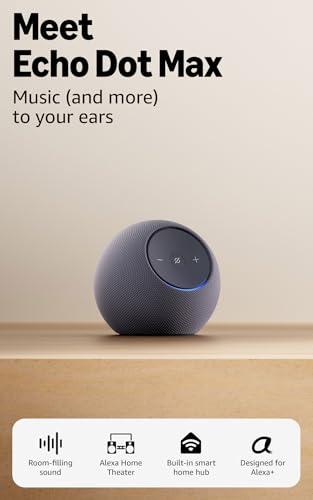
When smart speakers first hit the market around 2014, they were essentially voice assistants with basic audio capabilities. Fast forward to today, and we have two distinct evolutionary paths: speakers that prioritize exceptional sound quality with smart features as a bonus, and smart home hubs that happen to play music surprisingly well. The Denon Home 250 and Amazon Echo Dot Max perfectly represent these opposing philosophies.
At the time of writing, these products sit in vastly different price tiers—the Denon Home 250 costs roughly five times more than the Echo Dot Max. This isn't just pricing strategy; it reflects fundamentally different engineering priorities and target audiences. Understanding which approach fits your needs will save you from buyer's remorse and ensure you get the performance that matters most to you.
The smart speaker market has matured into two clear categories. Audio-focused smart speakers start with premium driver designs, acoustic engineering, and high-resolution audio support, then add smart features for convenience. Smart-home-focused speakers begin with comprehensive automation capabilities, voice processing, and ecosystem integration, then optimize audio performance within size and cost constraints.
The key considerations when choosing between these approaches include your primary use case (critical listening vs ambient music), room size and acoustics, existing smart home setup, and whether you value audio quality enough to pay significantly more for it. Your choice also depends on how much you trust voice assistants versus preferring app-based control, and whether you need the speaker to integrate with existing audio equipment.
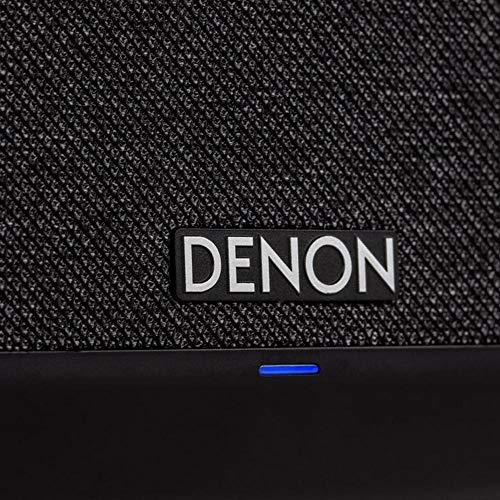
The Denon Home 250 launched as part of Denon's wireless speaker lineup, building on decades of audio engineering expertise. Denon, traditionally known for high-end AV receivers and Hi-Fi components, entered the wireless speaker market to bring audiophile-quality sound to streaming music. The Home series represents their attempt to match the convenience of mass-market smart speakers while maintaining the sound quality standards that audio enthusiasts expect.
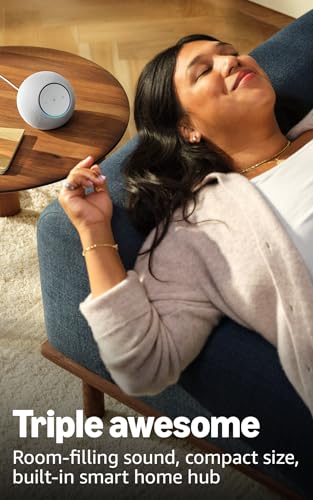
The Amazon Echo Dot Max, released in 2024, represents Amazon's push into premium compact speakers after years of focusing on affordability and smart home integration. Previous Echo Dot generations prioritized voice recognition and smart features over audio quality, but the Max version shows Amazon's recognition that users want both convenience and better sound. The "Max" designation signals a significant upgrade in audio components and processing power compared to standard Echo Dots.
Since their respective launches, both speakers have benefited from firmware updates that improved voice recognition, added streaming service compatibility, and refined audio processing algorithms. The smart speaker market's rapid evolution means that features considered premium just a few years ago—like multi-room audio and high-resolution streaming—are now standard expectations.
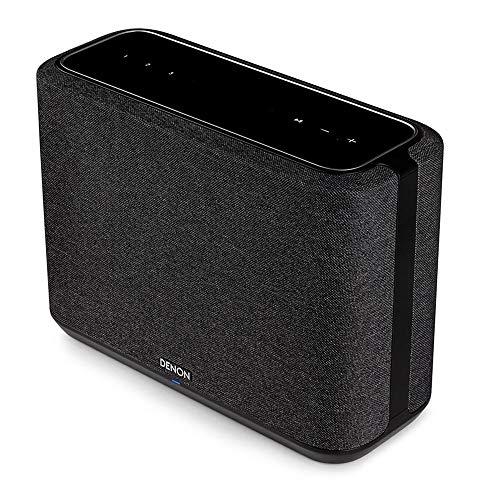
The Denon Home 250 uses a sophisticated 2-way stereo driver system—this means it has separate speakers optimized for different frequency ranges, just like professional studio monitors. Two 0.75-inch soft dome tweeters handle high frequencies (treble), while two 4-inch mid-bass woofers cover the midrange and lower frequencies. A rear-firing 5.25-inch passive radiator (a speaker-like component without a magnet that moves air to enhance bass response) adds deep bass without requiring additional amplification.
Each driver gets its own dedicated Class-D amplifier. Class-D amplification is highly efficient and generates minimal heat, allowing more power in a smaller package. This individual amplification means each frequency range gets clean, undistorted power, resulting in better separation between instruments and vocals.
The Echo Dot Max takes a different approach with a single 0.8-inch tweeter and 2.5-inch woofer. While this seems limited compared to the Denon's driver count, Amazon's engineering focuses on digital signal processing (DSP) to create the illusion of wider soundstage and fuller bass. The internal acoustic design maximizes the limited space, and Amazon claims nearly three times the bass response of standard Echo Dots.
Based on our research of expert reviews and user feedback, the difference in approach creates distinct sound signatures. The Denon Home 250 produces more natural stereo imaging—you can actually hear instruments positioned left and right in the mix, similar to wearing good headphones. The Echo Dot Max creates an impressive sense of spaciousness for its size, but the soundstage feels more artificially widened.
Frequency response measures how evenly a speaker reproduces different pitches, from deep bass (around 20Hz) to the highest treble (around 20,000Hz). A flat frequency response means all frequencies play at the same volume level, which generally sounds most natural.
The Denon Home 250 aims for a relatively flat response with slight emphasis on bass for modern music preferences. Expert reviews consistently praise its midrange clarity—the frequency range where most vocals and instruments live. This makes it excellent for jazz, classical, and acoustic music where instrumental separation matters. However, some users find the bass can overwhelm smaller rooms, especially when placed near walls.
The Echo Dot Max shows more dramatic frequency shaping. Amazon intentionally boosts bass response to create impact from a small driver, but this sometimes comes at the expense of midrange clarity. Reviews suggest vocals can sound slightly recessed (pushed back in the mix) compared to the prominent bass. For pop, electronic, and bass-heavy music, this tuning works well, but audiophiles might find it less accurate for acoustic recordings.
This is where the engineering philosophies become starkly apparent. The Denon Home 250 supports high-resolution audio up to 24-bit/192kHz for PCM files and DSD up to 5.6MHz. To put this in perspective, CD quality is 16-bit/44.1kHz, so the Denon can handle files with exponentially more audio information.
High-resolution audio contains more digital information about the original recording, potentially preserving subtle details like reverb decay, instrument texture, and spatial cues that get lost in compressed formats. Whether you can hear the difference depends on your hearing, the quality of the original recording, and your listening environment, but having the capability means the speaker won't be the limiting factor in your audio chain.
The Echo Dot Max focuses on lossless streaming from services like Amazon Music HD, which provides CD-quality audio without additional compression. While not as technically capable as the Denon's high-resolution support, this covers the vast majority of streaming content and sounds significantly better than standard compressed music files.
The Echo Dot Max showcases Amazon's latest Alexa+ AI technology, which represents a significant evolution in voice interaction. Traditional voice assistants require specific command phrases, but Alexa+ aims for more natural conversation patterns. The upgraded processing can better understand context, handle follow-up questions, and interpret commands even when you don't use exact wake words.
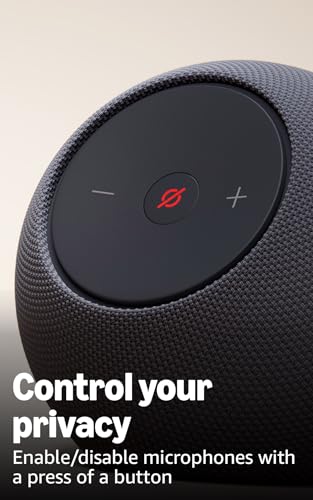
Far-field microphone arrays in the Echo Dot Max use multiple microphones positioned around the device to better isolate your voice from background noise and music playback. Amazon's beamforming technology can focus on your voice while suppressing sounds coming from other directions, making voice recognition more reliable in noisy environments.
The Denon Home 250 takes a more traditional approach, supporting multiple voice assistants (Alexa, Google Assistant, and Siri through AirPlay 2) but focusing less on advanced AI features. This multi-platform approach prevents ecosystem lock-in—you're not committed to Amazon's services and can switch between voice assistants as needed.
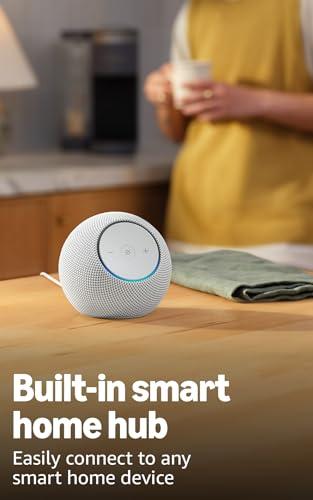
Here's where the Echo Dot Max truly differentiates itself. It includes built-in Zigbee, Matter, and Thread Border Router functionality. These are different wireless protocols that smart home devices use to communicate. Having them built into the speaker means you don't need separate hubs for many smart lights, locks, sensors, and switches.
Zigbee is particularly important because many affordable smart home devices use it instead of Wi-Fi to save battery life and reduce network congestion. Matter is the new industry standard designed to make smart home devices work together regardless of manufacturer. Thread creates a mesh network that can self-heal if individual devices go offline.
The Denon Home 250 focuses on audio ecosystem integration instead. Its HEOS Built-in technology allows seamless connection with other Denon and Marantz audio equipment. If you have or plan to add a Denon AV receiver, additional HEOS speakers, or a Denon soundbar, everything works together through a single app with synchronized playback.
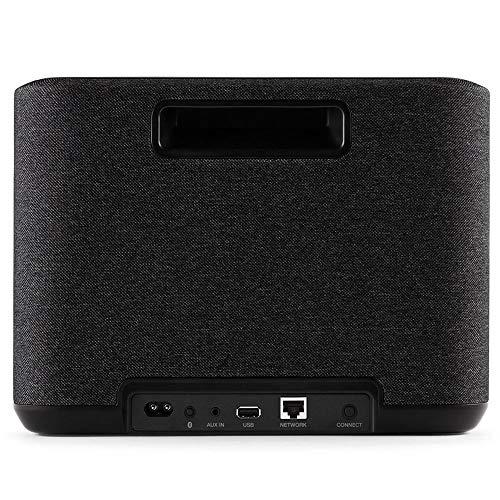
The Denon Home 250 provides significantly more connection flexibility. Beyond Wi-Fi and Bluetooth, it includes Ethernet for stable wired internet, USB-A for direct playback from drives, and a 3.5mm analog input. This analog input is crucial if you want to connect a turntable, CD player, or other audio source directly to the speaker.
Dual-band Wi-Fi (2.4GHz and 5GHz) means the Denon can choose the less congested frequency band for better streaming reliability. The Ethernet port eliminates potential Wi-Fi dropouts entirely, which matters for high-resolution audio streaming where interruptions are particularly noticeable.
The Echo Dot Max embraces wireless-first design with Wi-Fi 6E support—the latest wireless standard offering faster speeds and less congestion. It can also function as an eero Wi-Fi satellite, extending your home network coverage. This dual-purpose design adds value beyond audio playback, potentially eliminating dead zones in your wireless coverage.
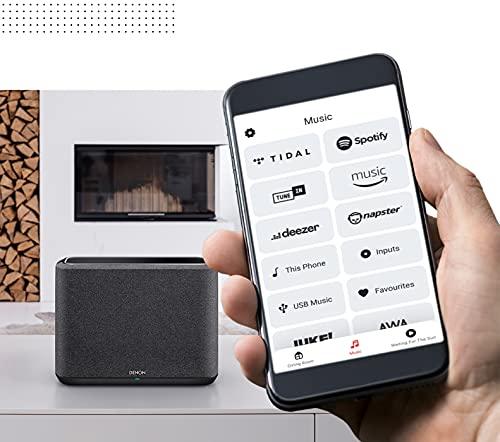
Both speakers support major streaming services, but with different emphases. The Denon Home 250 excels with audiophile-focused services like Tidal Masters, Amazon Music HD, and Apple Music Lossless. Its Roon Ready certification integrates with Roon's premium music library software, which many serious listeners use to organize and enhance their digital music collections.
The Echo Dot Max provides deeper integration with Amazon's ecosystem, including seamless voice control for Amazon Music, Spotify, and other Alexa-compatible services. The voice-first approach means you can request specific songs, artists, or playlists without touching your phone, which is particularly convenient for background music and casual listening.
The Denon Home 250 shines in multi-room scenarios through its HEOS ecosystem. You can group up to 32 HEOS devices for synchronized playback, and the system maintains timing precision even with high-resolution audio streams. Pairing two Home 250s creates a true wireless stereo pair with proper left/right channel separation, something that's rare in the wireless speaker market.
For home theater applications, the Denon Home 250 can serve as wireless surround speakers when paired with compatible Denon soundbars. This creates a proper 5.1 or 7.1 surround sound system without running speaker wires, though you'll want to ensure your Wi-Fi network can handle multiple high-bandwidth audio streams simultaneously.
The Echo Dot Max offers more affordable multi-room expansion, and while the individual speakers may not match the Denon's audio quality, having multiple units throughout your home provides excellent coverage for voice commands and ambient music. The Drop-In and Intercom features turn your speaker network into a whole-home communication system, which adds practical value beyond just music playback.
When considering home theater use, the Denon Home 250 has distinct advantages. Its superior dynamic range (the difference between quiet and loud sounds) makes it better suited for movie soundtracks where whispered dialogue needs to be clear and explosions need impact. The wider frequency response also helps with sound effects positioning and environmental audio cues that enhance the viewing experience.
The Echo Dot Max can pair with Fire TV devices for basic surround sound, but its compact drivers limit the scale and impact compared to dedicated home theater speakers. However, for casual TV viewing in smaller rooms, multiple Echo Dot Max units provide convenient voice control and reasonable audio enhancement at a much lower total cost.
Based on our analysis of expert reviews and user feedback, several performance characteristics stand out as most important for different use cases.
For critical music listening, frequency response accuracy, stereo imaging width, and dynamic range top the list. The Denon Home 250 excels in all these areas, with measurements and reviews consistently showing flatter frequency response and better instrument separation. Its larger drivers and individual amplification provide headroom for complex musical passages without distortion.
For casual background music and smart home use, convenience features, voice recognition accuracy, and value for money become more important. The Echo Dot Max delivers competitive audio quality for its price point while adding comprehensive smart home functionality that the Denon can't match.
Bass response deserves special attention because it's often overemphasized in marketing claims. Both speakers produce impressive bass for their respective sizes, but through different approaches. The Denon's passive radiator and larger cabinet volume create more natural, extended low-end response. The Echo Dot Max uses DSP enhancement to create the perception of deeper bass, which works well for most music but can sound artificial with acoustic recordings.
You're serious about music quality and want a speaker that won't compromise your listening experience. If you have a dedicated listening space, high-quality music sources (vinyl, high-resolution downloads, or lossless streaming), and the budget for premium audio equipment, the Denon Home 250 justifies its higher cost through superior sound quality.
The Denon also makes sense if you want ecosystem flexibility—the ability to work with Apple, Amazon, and Google platforms means you're not locked into any single company's services. If you have existing Denon/Marantz equipment or plan to build a serious multi-room audio system, the HEOS integration provides professional-grade synchronization and control.
Consider the Denon Home 250 for primary living spaces where you'll do focused listening, or if you need the analog input for connecting turntables, CD players, or other audio sources directly.
You want modern smart home functionality with good-enough audio quality at an accessible price point. If your primary needs are voice control, smart home automation, home intercom functionality, and casual music listening, the Echo Dot Max provides exceptional value.
The Echo Dot Max excels in secondary rooms like bedrooms, kitchens, or home offices where convenience matters more than ultimate audio fidelity. Its compact size, comprehensive smart features, and ability to extend Wi-Fi coverage make it practical for whole-home deployment.
Choose the Echo Dot Max if you're building or expanding an Amazon/Alexa ecosystem, want to experiment with smart speakers without major financial commitment, or need multiple speakers throughout your home for voice commands and ambient music.
The choice between these speakers ultimately depends on your priorities and budget. At the time of writing, you're paying roughly five times more for the Denon Home 250, but you're getting fundamentally different capabilities rather than just incremental improvements.
The Denon Home 250 is an audio device that happens to include smart features—perfect for music lovers who want streaming convenience without sacrificing sound quality. The Echo Dot Max is a comprehensive smart home hub that also plays music surprisingly well—ideal for users who prioritize convenience, automation, and value.
Both speakers succeed in their intended roles, making this less about finding an objective "winner" and more about matching the right tool to your specific needs and expectations. Consider your listening habits, room size, existing smart home setup, and budget honestly, and the right choice becomes clear.
| Denon Home 250 | Amazon Echo Dot Max |
|---|---|
| Driver Configuration - Determines overall sound quality and frequency separation | |
| 2-way stereo: dual tweeters, dual woofers, passive radiator with individual amplification | Single tweeter + woofer with DSP enhancement |
| High-Resolution Audio Support - Critical for audiophiles with premium music sources | |
| PCM up to 24-bit/192kHz, DSD up to 5.6MHz | Lossless streaming support, automatic room adaptation |
| Smart Home Hub Capabilities - Eliminates need for separate automation devices | |
| Basic Alexa integration only | Built-in Zigbee, Matter, Thread Border Router |
| Physical Connectivity - Important for connecting turntables, CD players, other audio gear | |
| Ethernet, USB-A, 3.5mm AUX input, Wi-Fi, Bluetooth | Wi-Fi 6E, Bluetooth LE 5.3, proprietary power port only |
| Voice Assistant Support - Affects ecosystem flexibility and platform lock-in | |
| Alexa, Google Assistant, Siri (via AirPlay 2) | Alexa+ AI with enhanced natural language processing |
| Multi-Room Audio Technology - Key for whole-home audio systems | |
| HEOS Built-in (up to 32 devices, professional synchronization) | Echo multi-room grouping, eero Wi-Fi satellite capability |
| Stereo Pairing - Creates true left/right channel separation for serious listening | |
| True wireless stereo with proper channel separation | Basic stereo pairing with other Echo devices |
| Home Theater Integration - Matters for users wanting surround sound without wires | |
| Wireless surround speakers with Denon Home soundbars | Basic Fire TV surround support |
| Size and Weight - Affects placement flexibility and acoustic performance | |
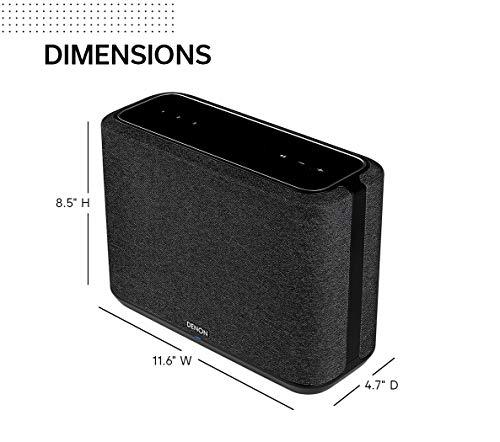
| 11.6" × 8.6" × 5.9", 10.5 lbs (larger cabinet enables better bass) | 4.3" × 4.3" × 3.9", compact spherical design |
| Audio Input Flexibility - Critical for analog sources and existing equipment | |
| Multiple wired inputs including analog AUX | Wireless streaming only, no physical audio inputs |
| Price Positioning - Reflects target audience and feature priorities | |
| Premium tier (roughly 5x higher cost at time of writing) | Affordable smart speaker with enhanced audio |
| Primary Strength - Core value proposition | |
| Audiophile-quality sound with smart convenience features | Comprehensive smart home hub with surprisingly good audio |
The Denon Home 250 delivers significantly better sound quality with its 2-way stereo driver system, dual tweeters, dual woofers, and passive radiator. It supports high-resolution audio up to 24-bit/192kHz and provides natural stereo imaging. The Amazon Echo Dot Max offers impressive audio for its compact size and price point, with enhanced bass response and spatial audio support, but cannot match the Denon's audiophile-grade performance.
The Denon Home 250 excels in home theater applications, functioning as wireless surround speakers with compatible Denon soundbars and providing the dynamic range needed for movie soundtracks. The Amazon Echo Dot Max offers basic Fire TV surround support but is better suited for casual TV viewing rather than serious home theater use due to its compact drivers and limited scale.
The Amazon Echo Dot Max is superior for smart home control with built-in Zigbee, Matter, and Thread Border Router hubs, eliminating the need for separate automation devices. It features advanced Alexa+ AI for natural voice interactions and comprehensive smart home integration. The Denon Home 250 offers basic Alexa support but focuses primarily on audio performance rather than smart home capabilities.
The Denon Home 250 supports multiple voice assistants including Alexa, Google Assistant, and Siri through AirPlay 2, providing ecosystem flexibility. The Amazon Echo Dot Max focuses exclusively on Amazon's Alexa+ AI technology with enhanced natural language processing, but doesn't support other voice assistant platforms directly.
The Denon Home 250 offers extensive connectivity with Ethernet, USB-A, and 3.5mm AUX input for connecting turntables, CD players, and other audio sources. The Amazon Echo Dot Max is designed for wireless streaming only and lacks physical audio inputs, relying entirely on Wi-Fi 6E and Bluetooth connectivity.
The Denon Home 250 uses HEOS Built-in technology supporting up to 32 devices with professional-grade synchronization, making it excellent for serious multi-room audio systems. The Amazon Echo Dot Max offers Echo multi-room grouping at a more affordable price point, making it practical for whole-home deployment despite less advanced audio synchronization.
The Denon Home 250 produces deeper, more natural bass through its larger cabinet volume and 5.25-inch passive radiator, providing extended low-end response ideal for music and movies. The Amazon Echo Dot Max delivers impressive bass for its compact size using DSP enhancement, with nearly three times the bass response of standard Echo Dots, though it cannot match the Denon's physical bass extension.
The Denon Home 250 supports high-resolution audio streaming including Tidal Masters and Amazon Music HD, with formats up to 24-bit/192kHz and DSD support. The Amazon Echo Dot Max focuses on lossless streaming from major services with automatic room adaptation technology, providing excellent quality for compressed and CD-quality sources but limited high-resolution support.
The Denon Home 250 creates true stereo sound from a single unit with its dual-driver configuration and can pair with another unit for proper left/right channel separation. The Amazon Echo Dot Max uses spatial audio processing to create wide soundstage effects and can pair with other Echo devices for basic stereo functionality, though with less precise imaging than the Denon.
The Amazon Echo Dot Max offers exceptional value by combining competent audio performance with comprehensive smart home hub functionality at an affordable price point. The Denon Home 250 provides premium audio quality that justifies its significantly higher cost for serious listeners who prioritize sound fidelity over smart features.
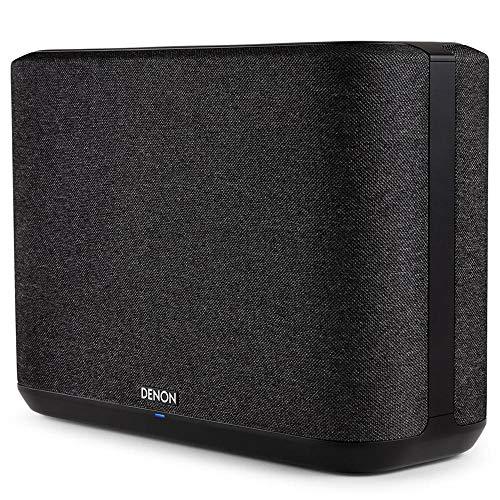
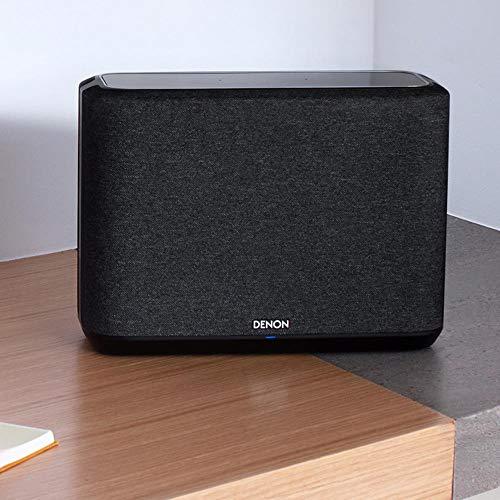
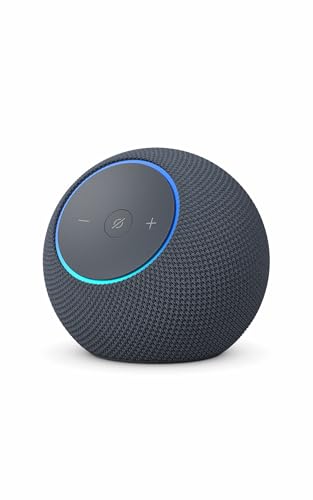
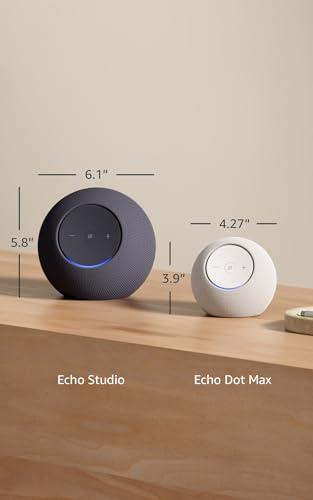
The Denon Home 250 is a larger speaker at 11.6" × 8.6" × 5.9" with a fabric-wrapped design that enables better acoustic performance and bass response. The Amazon Echo Dot Max features a compact 4.3" spherical design that fits easily in any room while still delivering room-filling sound through advanced acoustic engineering.
Choose the Denon Home 250 if you prioritize audiophile-quality sound, need multiple connectivity options, want ecosystem flexibility, or plan serious multi-room audio installations. Select the Amazon Echo Dot Max if you want comprehensive smart home control, prefer voice-first interaction, need affordable whole-home audio coverage, or value modern AI features alongside good audio performance.
We've done our best to create useful and informative comparisons to help you decide what product to buy. Our research uses advanced automated methods to create this comparison and perfection is not possible - please contact us for corrections or questions. These are the sites we've researched in the creation of this article: dxomark.com - hometechnologyreview.com - crutchfield.com - versus.com - stereoguide.com - versus.com - whathifi.com - techgearlab.com - youtube.com - crutchfield.com - consumerreports.org - blog.son-video.com - crutchfield.com - skybygramophone.com - audiolab.com - theaudiotailor.com.au - youtube.com - scribd.com - techradar.com - engadget.com - engadget.com - t3.com - telegraph.co.uk - gadgetmatch.com - youtube.com - youtube.com - youtube.com - youtube.com - homecrux.com - aboutamazon.com - phonearena.com - tomsguide.com - matteralpha.com - techbuzz.ai - techradar.com - pocket-lint.com - bestbuy.com

Privacy Policy
Terms and Conditions - Affiliate Policy
Home Security
© Copyright 2008-2026.
11816 Inwood Rd #1211, Dallas, TX 75244