



Party speakers have evolved dramatically over the past few years, transforming from simple portable Bluetooth devices into sophisticated entertainment systems that can power entire events. Whether you're planning backyard barbecues, hosting karaoke nights, or setting up a semi-permanent sound system for regular gatherings, today's party speakers pack impressive technology into packages designed to get people moving.
The market offers everything from ultra-portable units that fit in a backpack to tower-style speakers that rival home audio systems. At the heart of this category lies a fundamental trade-off: portability versus power. Some speakers prioritize being lightweight and weatherproof for beach trips and camping, while others focus on delivering room-filling sound with professional-grade features for serious entertaining.
When evaluating party speakers, several factors matter most. Sound output and bass response determine whether your speaker can energize a crowd or get drowned out by conversation. Battery life separates speakers that die mid-party from those that last until sunrise. Build quality and durability decide whether your investment survives outdoor use and enthusiastic party-goers. Finally, party-specific features like lighting effects, microphone inputs, and multi-speaker connectivity can transform a simple music player into a complete entertainment hub.
Today, we're comparing two speakers that represent different philosophies in this space: the JBL PartyBox Encore Essential 2 and the Sony ULT TOWER 9. Released in 2024 and 2025 respectively, both incorporate the latest Bluetooth technology and modern party features, but they approach the market from completely different angles.
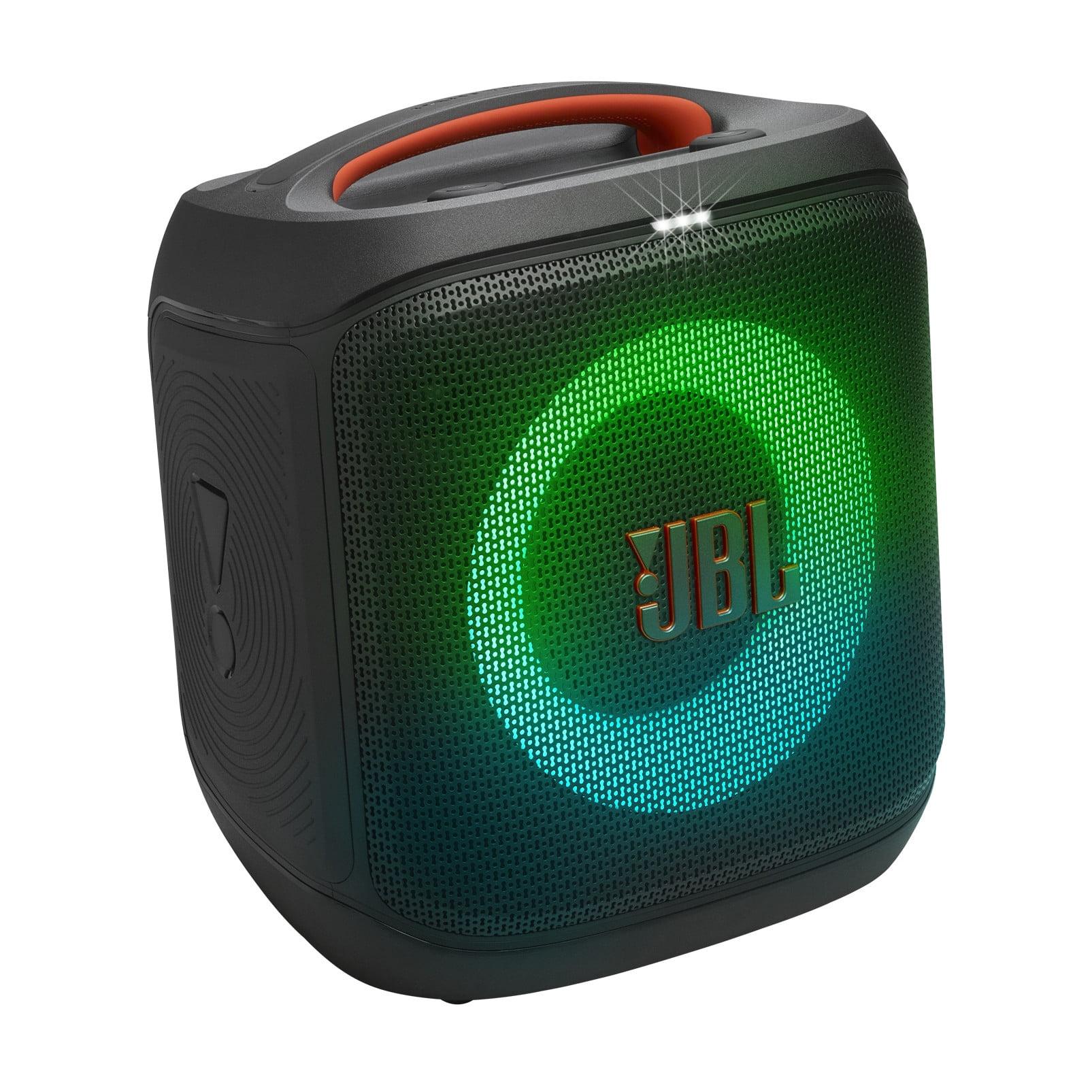
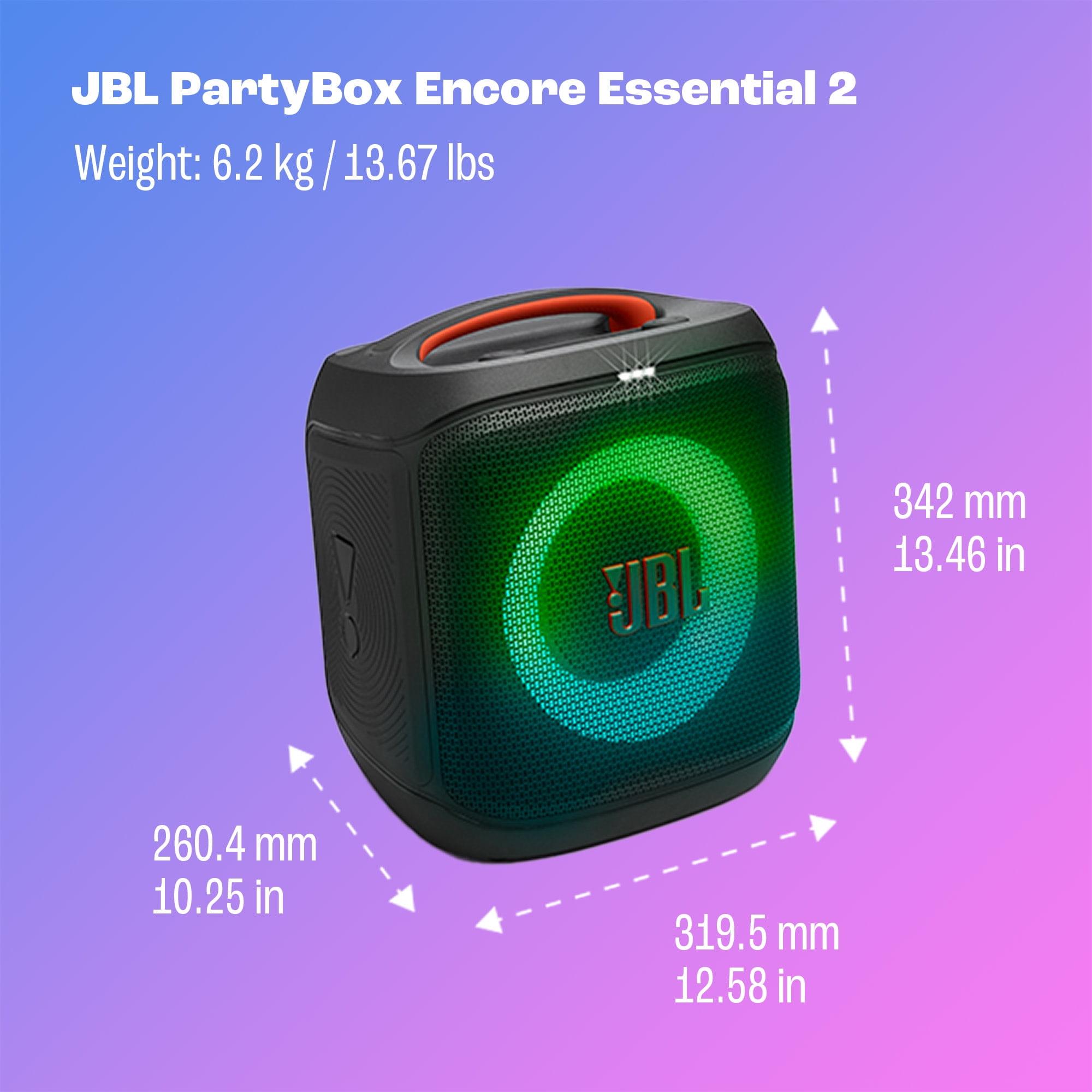
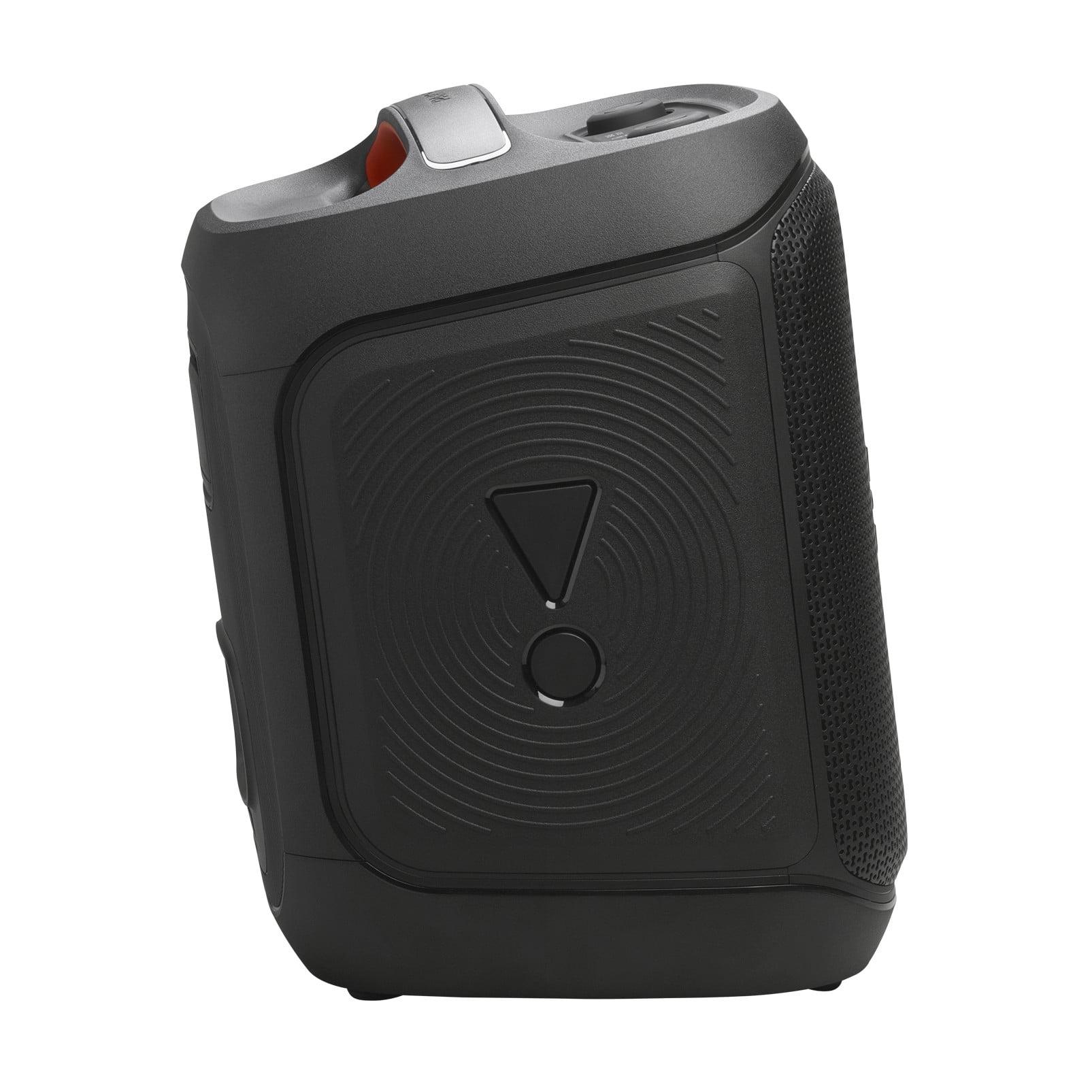
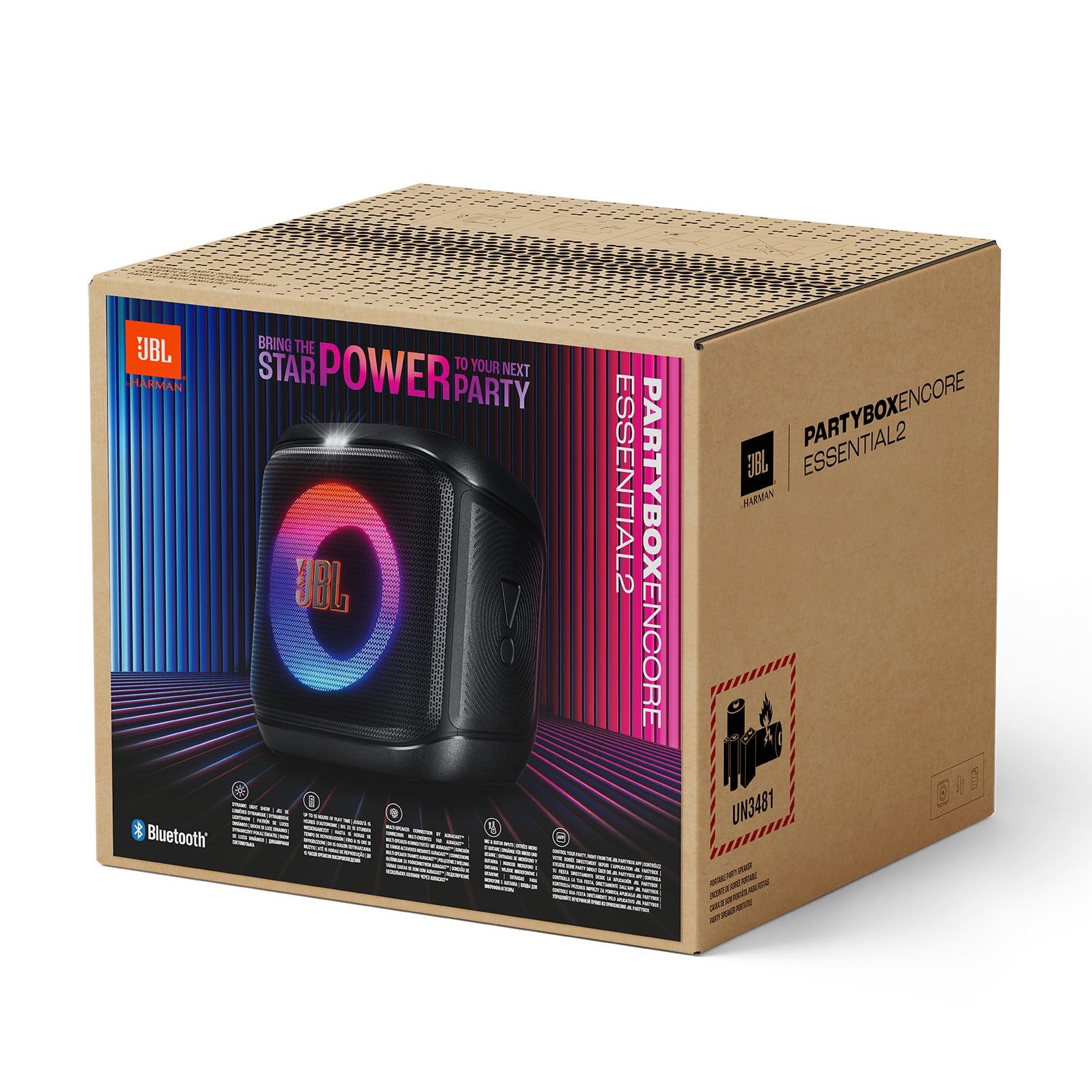
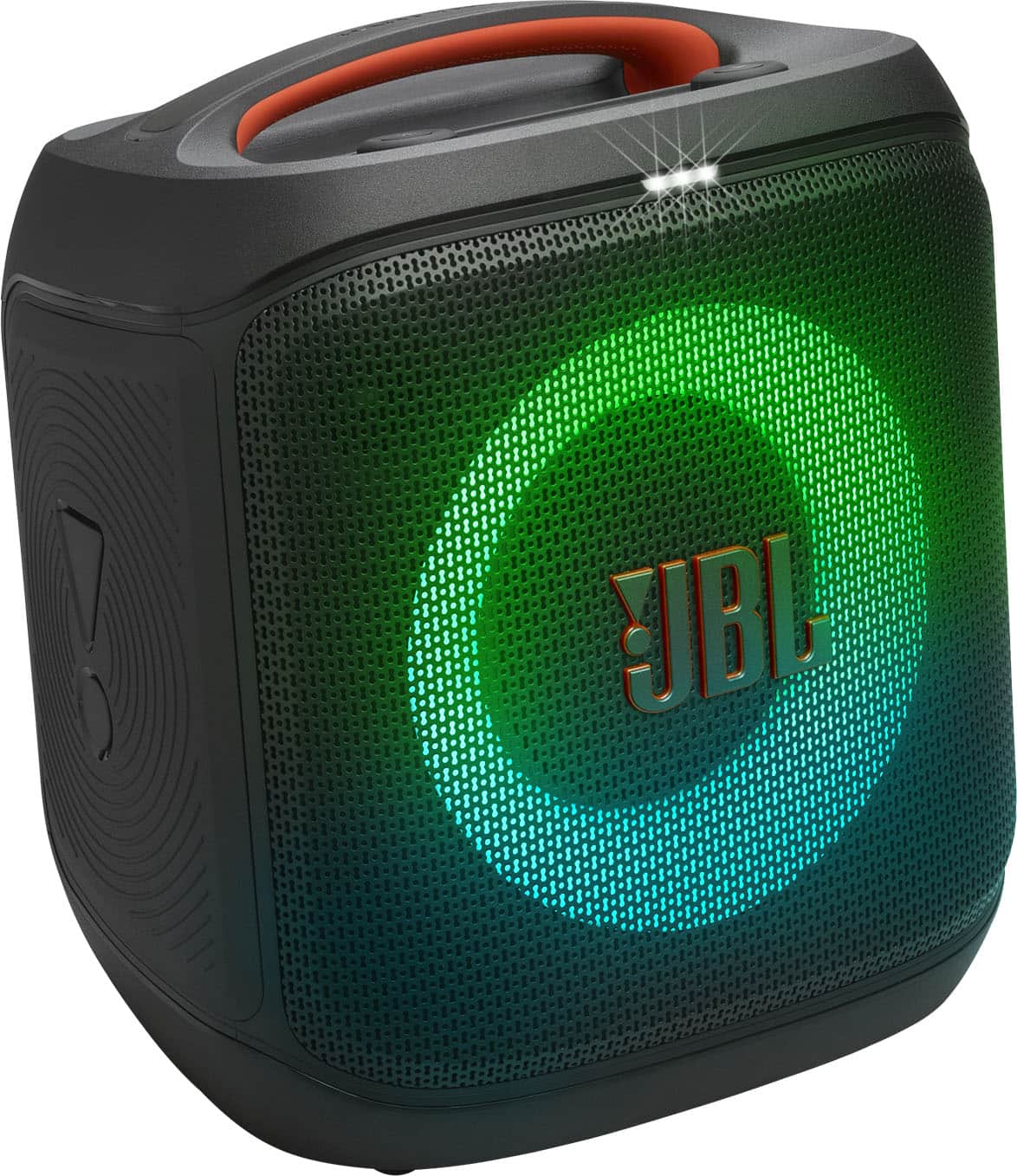
The JBL PartyBox Encore Essential 2 embodies the "take anywhere" philosophy. At roughly 13 pounds with a built-in carrying handle, this speaker prioritizes convenience and mobility. JBL designed it for users who want to grab their speaker and head to different venues—whether that's a friend's backyard, the local park, or poolside at a vacation rental.
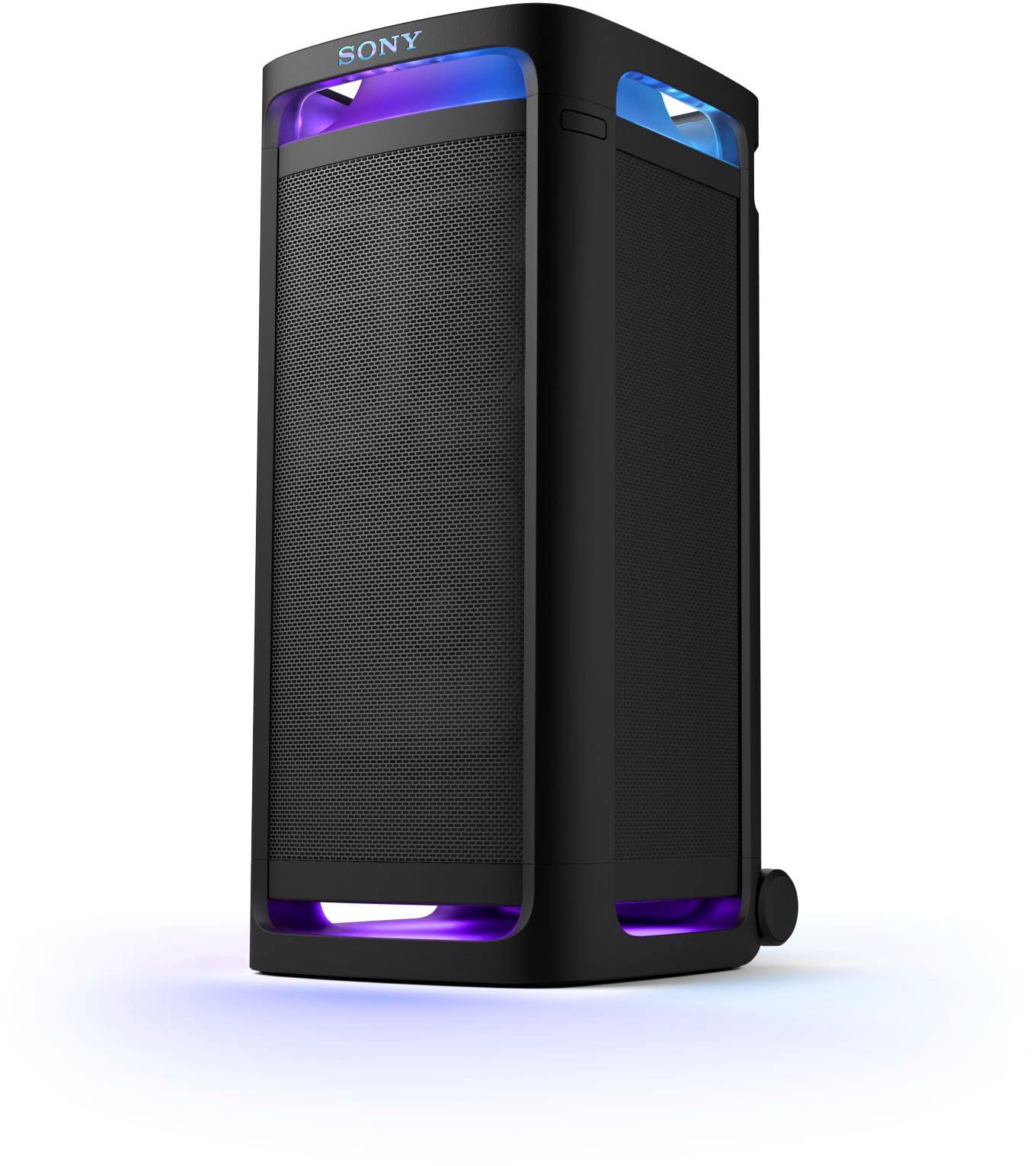
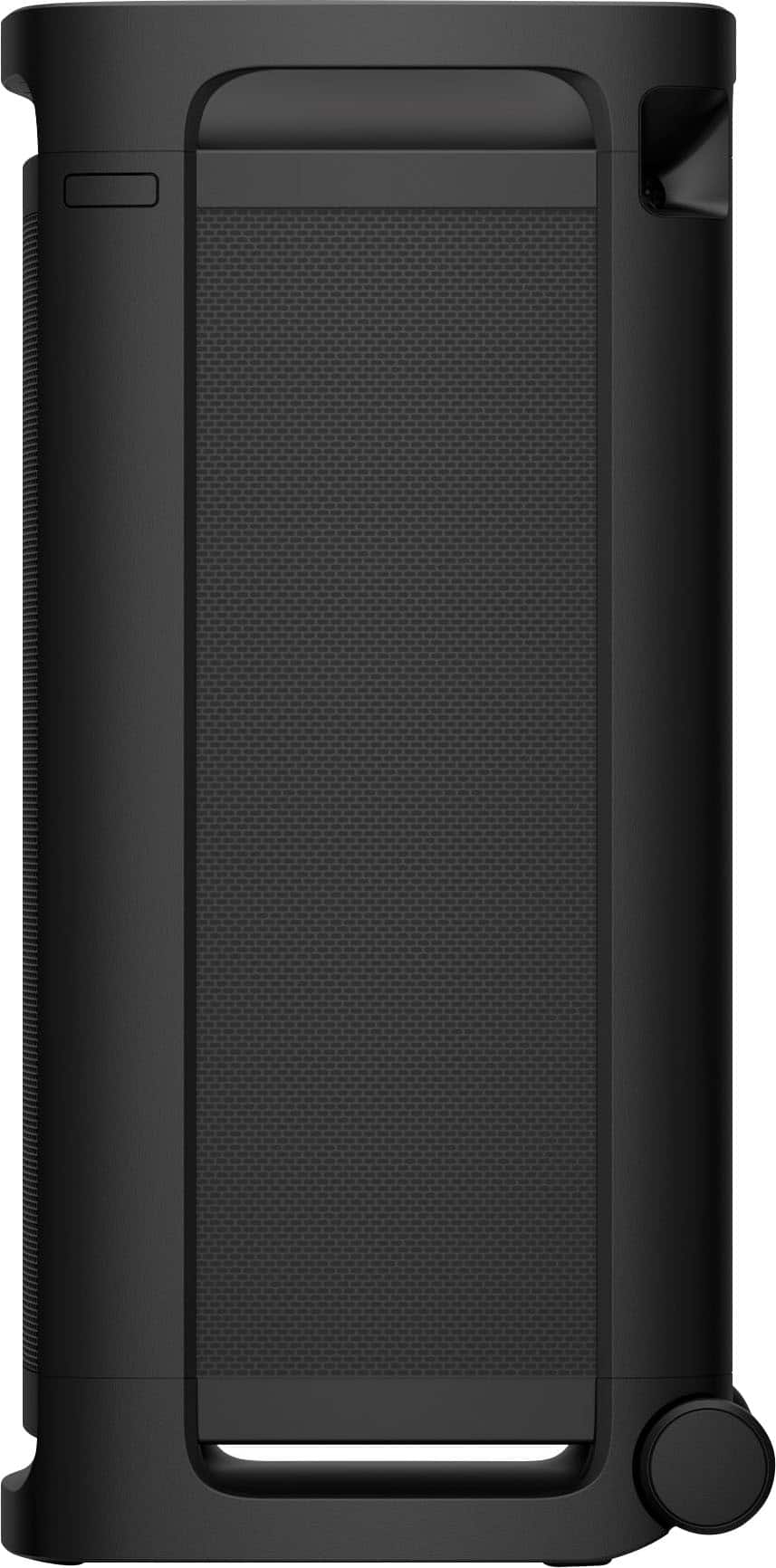
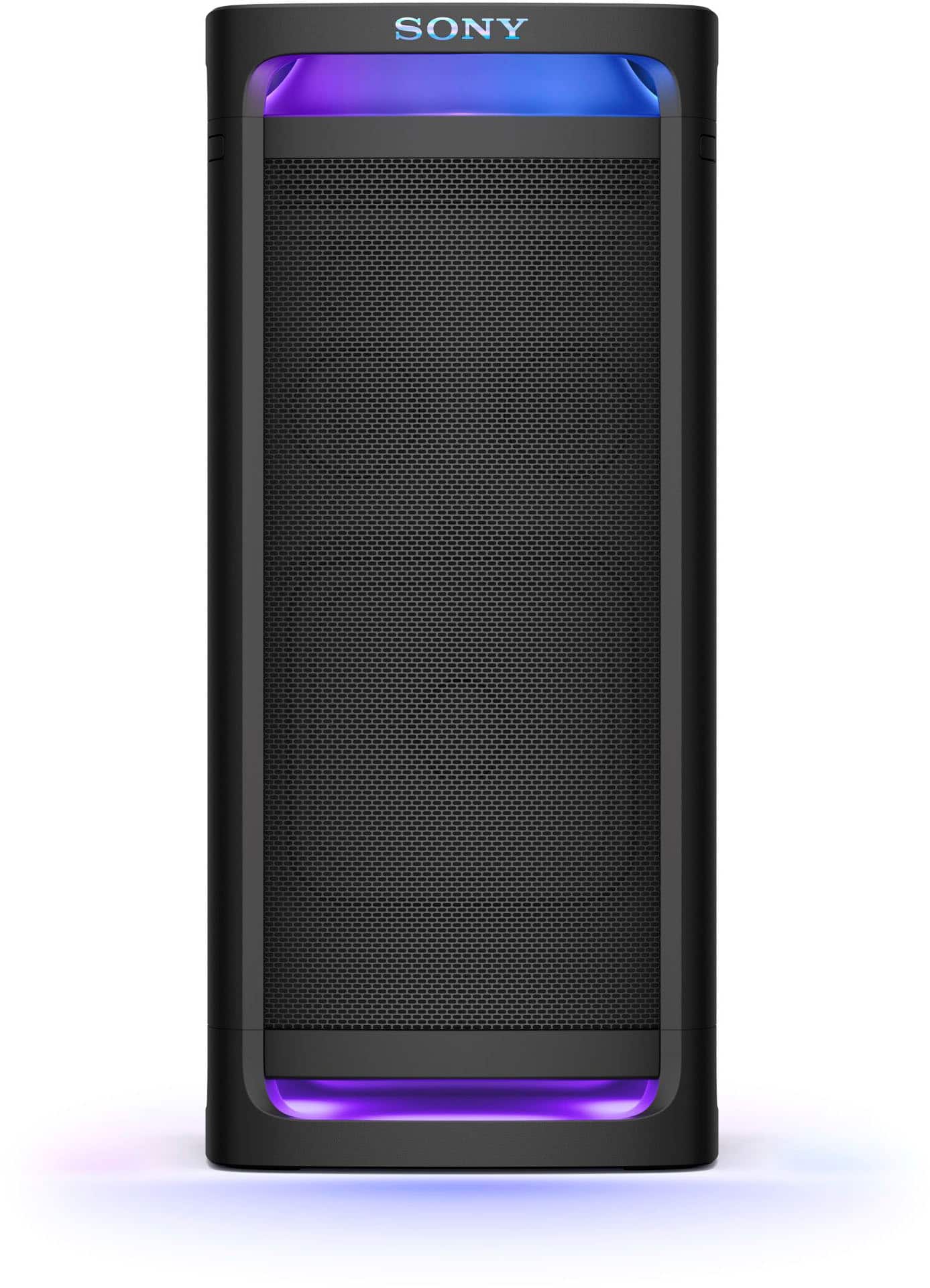
In contrast, the Sony ULT TOWER 9 takes the "bring the venue to you" approach. Weighing in at 65 pounds with wheels and a telescoping handle like a piece of luggage, Sony built this speaker to stay put and deliver professional-level performance. It's designed for users who want to create a dedicated party space with serious sound quality.
At the time of writing, these speakers occupy different price tiers, with the JBL positioned as an affordable entry point and the Sony commanding a premium price that reflects its advanced features and larger size. This price difference—roughly 2.5x between the two—immediately signals their different target markets.
The most significant difference between these speakers lies in their fundamental approach to sound reproduction. The JBL PartyBox Encore Essential 2 uses a straightforward two-way design with a single 5.25-inch woofer handling bass and midrange frequencies, while two small 0.75-inch dome tweeters handle the highs. This configuration, powered by 100W RMS, represents a classic approach that prioritizes efficiency and cost-effectiveness.
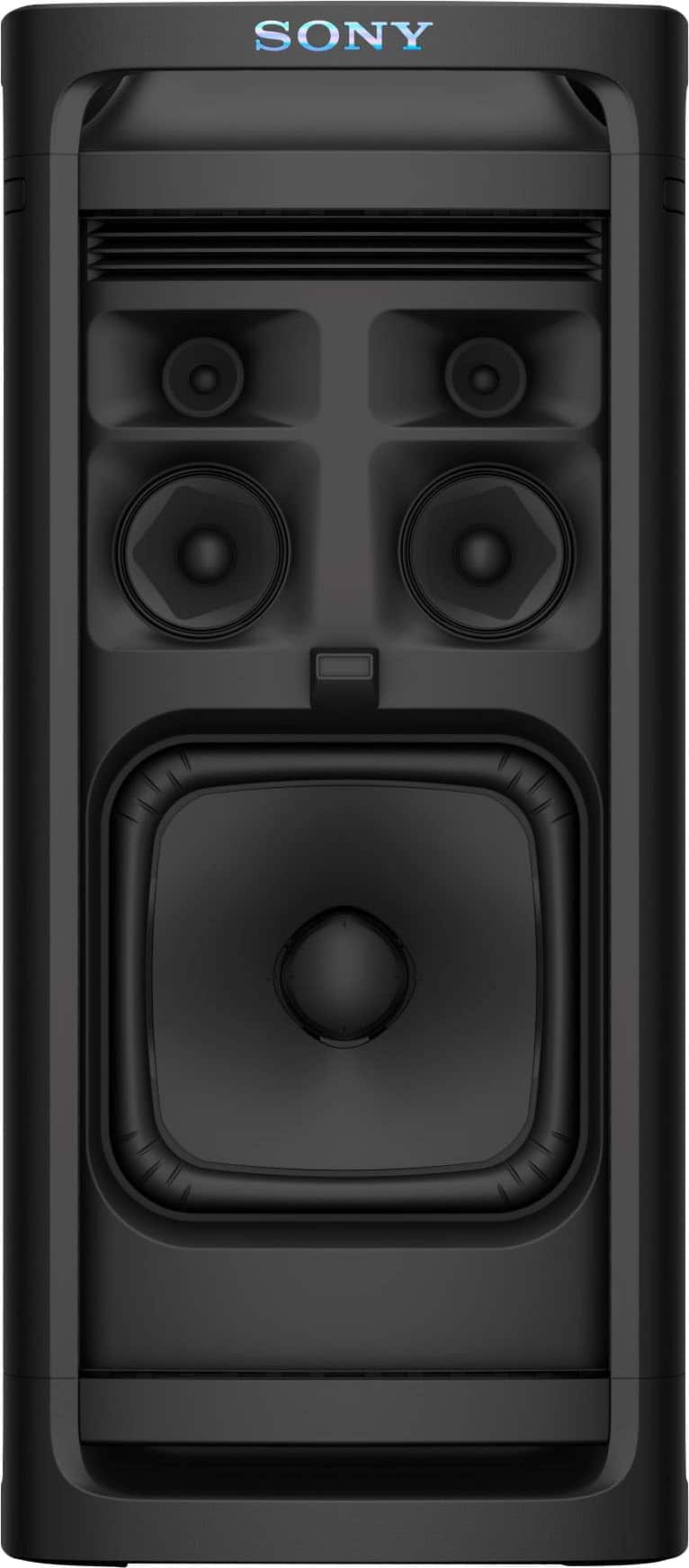
The Sony ULT TOWER 9, however, employs a sophisticated three-way design that separates the audio spectrum into distinct frequency bands. Its massive 12.6-inch X-Balanced woofer handles deep bass, two dedicated 4.8-inch midrange drivers reproduce vocals and instruments, and four separate dome tweeters (two front-facing, two rear-facing) handle high frequencies. This driver separation allows each element to specialize in its frequency range, resulting in cleaner, more detailed sound reproduction.
X-Balanced Speaker technology deserves special attention here. Sony's rectangular woofer design maximizes the diaphragm surface area within the speaker cabinet, allowing for greater air movement and deeper bass response while reducing distortion. This isn't just marketing speak—the physics of moving more air with less excursion (back-and-forth movement) genuinely produces cleaner bass at high volumes.
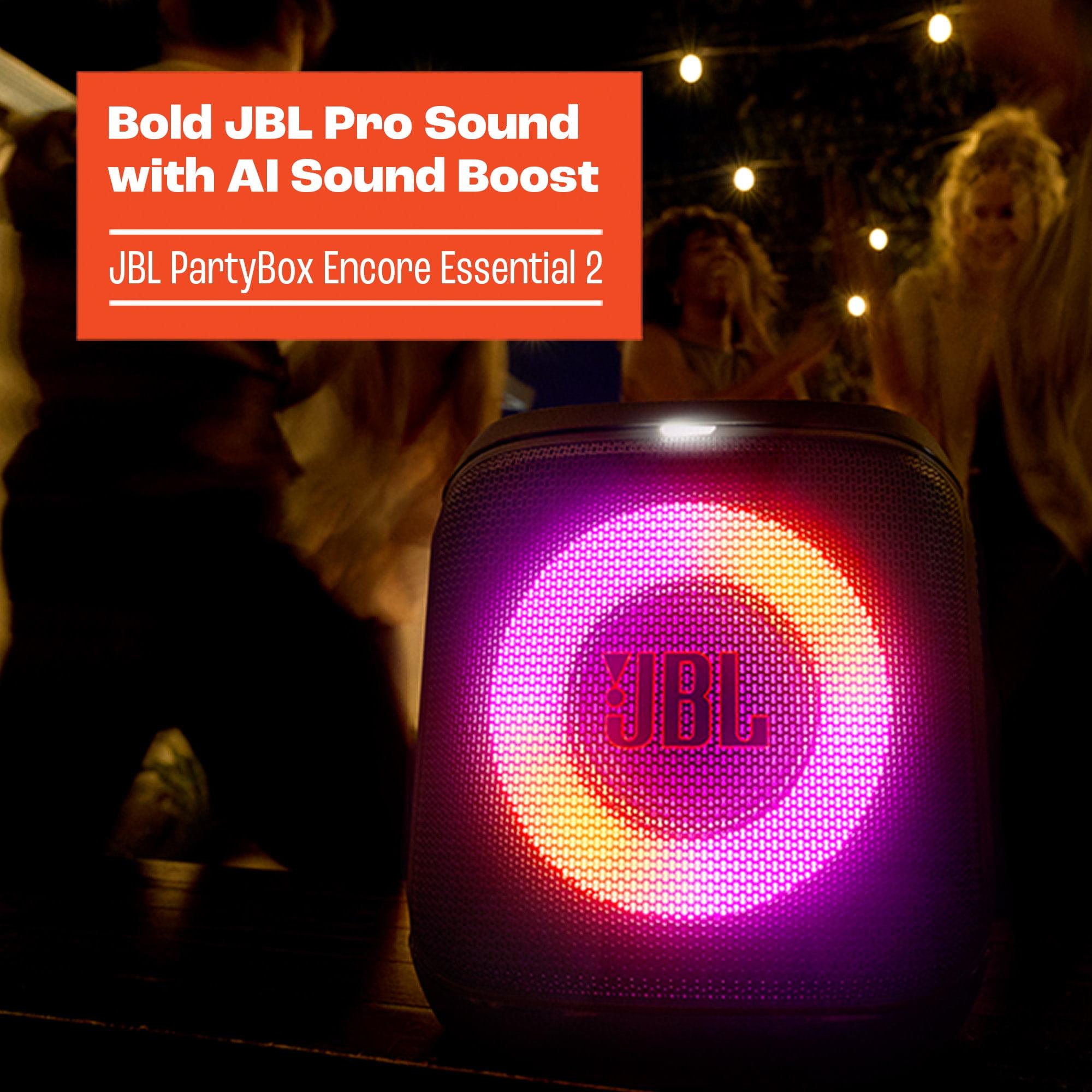
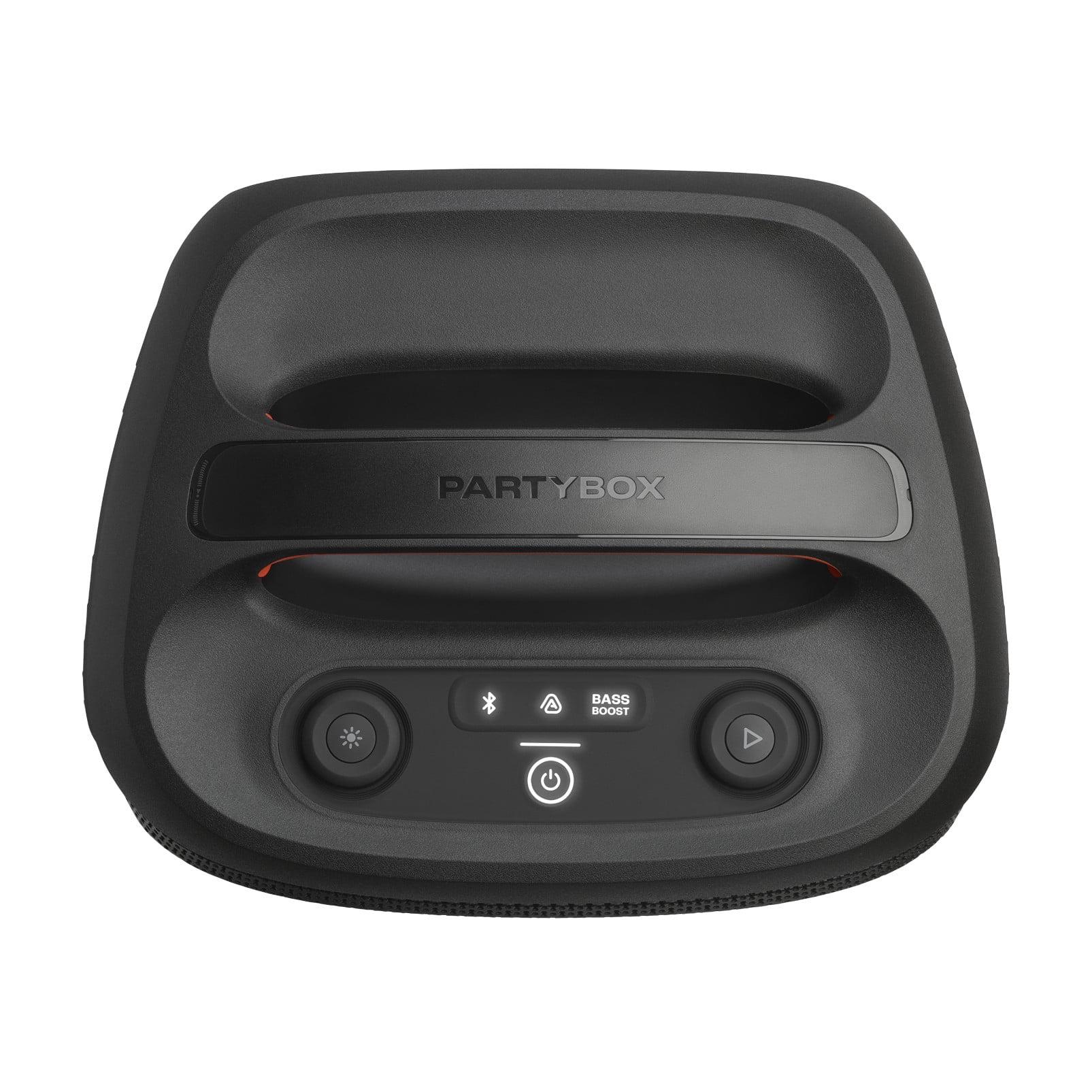
Bass response often makes or breaks a party speaker, and these two units approach low-end reproduction very differently. The JBL includes a Bass Boost mode that enhances the output of its single woofer, while AI Sound Boost technology helps maintain clarity at high volumes by automatically adjusting the signal to prevent distortion.
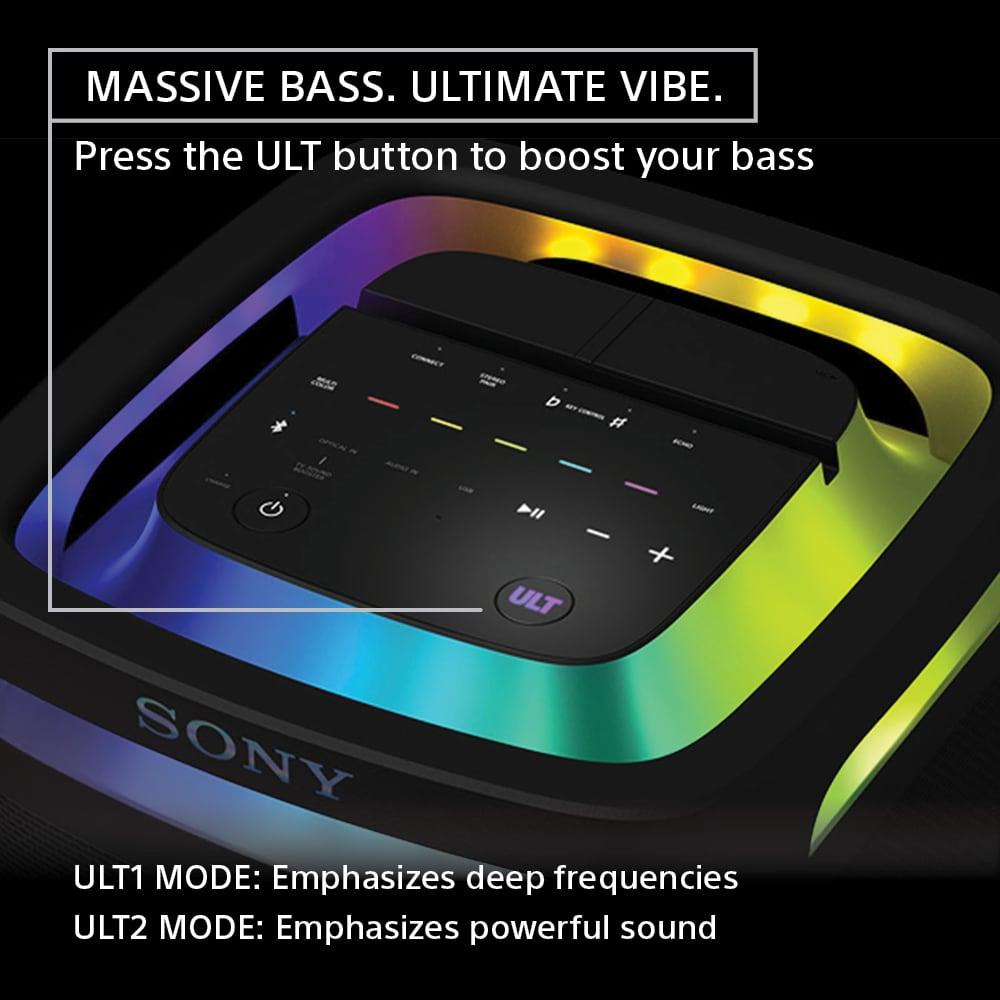
The Sony takes bass enhancement further with its dual ULT modes. ULT1 provides a balanced bass boost that enhances low-end punch without overwhelming other frequencies, while ULT2 delivers maximum bass impact for genres like hip-hop and EDM where deep bass is essential. The larger woofer and dedicated bass reflex port design give the Sony a significant advantage in producing the kind of physical bass that party-goers can feel in their chest.
Based on our research of user and expert reviews, the Sony consistently delivers superior bass depth and impact. Multiple reviewers note that the Sony's bass feels more controlled and defined, while the JBL can sound somewhat congested when pushed to its limits, particularly in the lower midrange where the single woofer handles both bass and vocal frequencies.
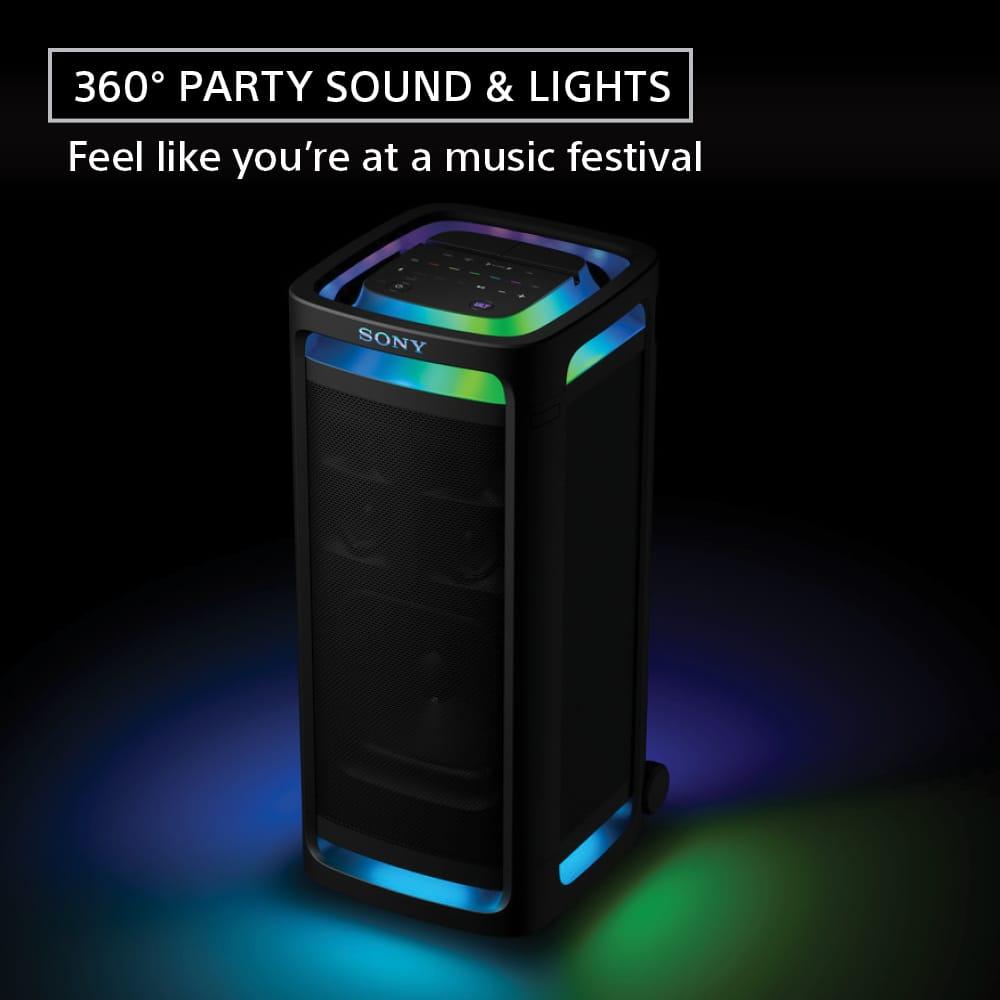
The JBL projects sound primarily forward, creating a traditional directional soundstage. This works well when the speaker faces the listening area but can create dead zones if people move around the space. The Sony addresses this with its 360-degree sound design, using rear-facing tweeters to create omnidirectional high-frequency dispersion while the large woofer provides bass that naturally spreads throughout the room.
For home theater use, this difference becomes particularly relevant. The Sony's optical digital input and TV Sound Booster feature make it a compelling option for enhancing TV audio, where the rear tweeters can create a wider soundstage for movies and shows. The JBL lacks these connectivity options, limiting its home theater potential.
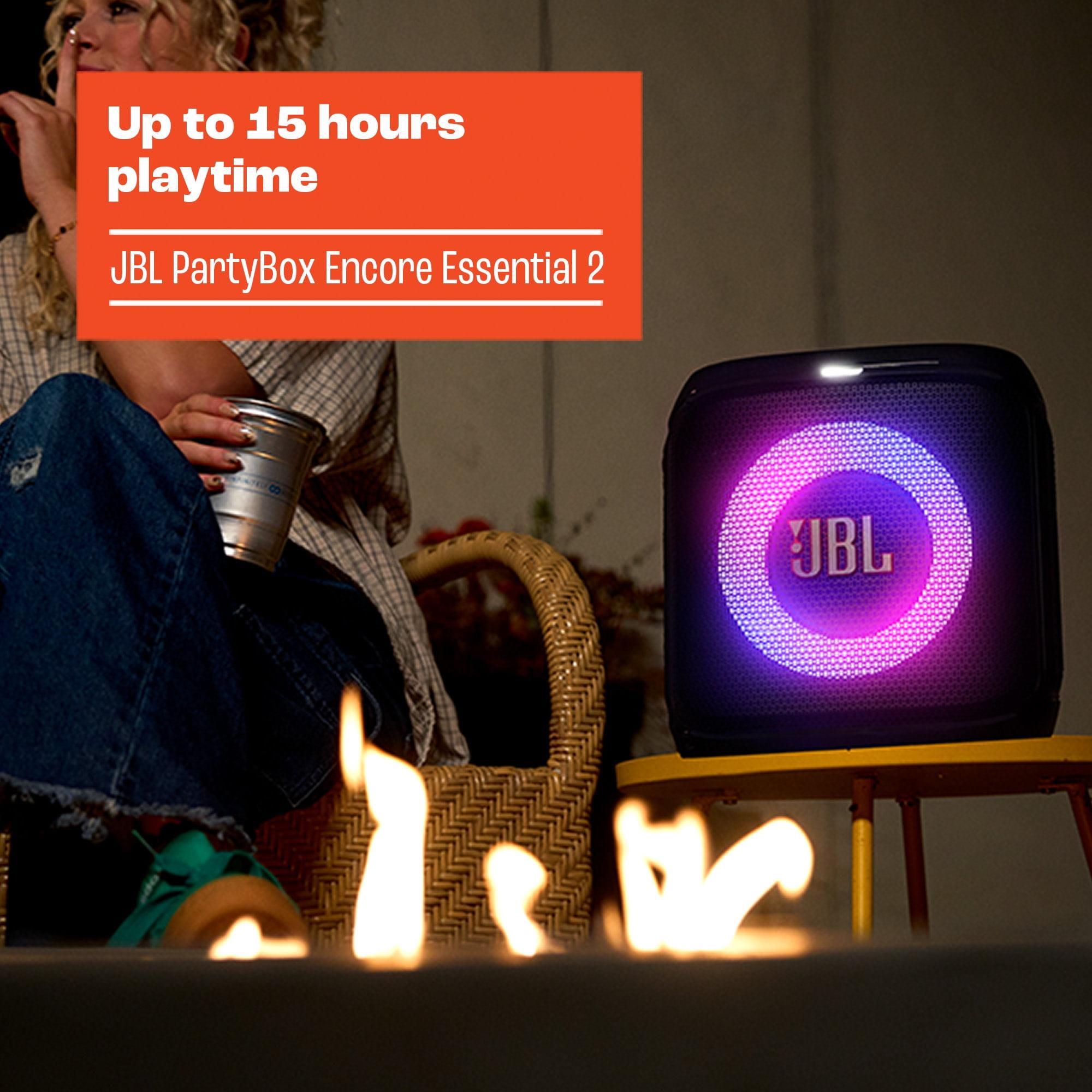
Battery performance reveals another fundamental difference in design philosophy. The JBL PartyBox Encore Essential 2 provides up to 15 hours of playbook, which covers most day-long events. More importantly, it features a user-replaceable battery design—you can unscrew the battery compartment and swap in a fresh battery, extending the speaker's lifespan and providing unlimited playtime with spare batteries.
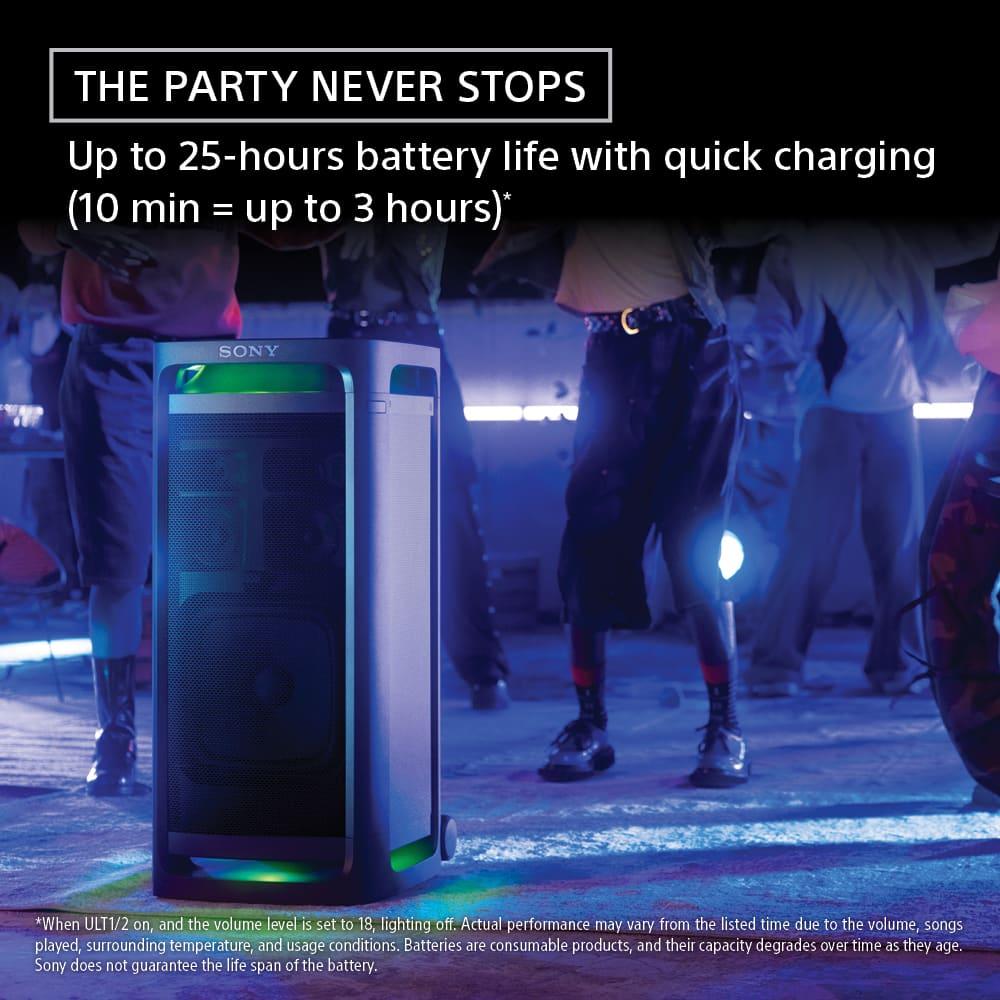
The Sony ULT TOWER 9 takes a different approach with its impressive 25-hour battery life, among the longest available in party speakers at the time of writing. Even more impressive is its quick-charge capability: 10 minutes of charging provides three hours of playback, making it practically impossible to get caught with a dead speaker if you have access to power.
Both speakers can operate while charging, but the Sony's superior battery management and longer life make it better suited for extended events like all-night parties or multi-day festivals. The JBL's replaceable battery design, however, offers more flexibility for users who prefer to carry spare batteries rather than be tethered to power outlets.
Here's where these speakers diverge most dramatically. The JBL measures roughly 13" x 13.5" x 10", making it small enough to fit in most car trunks or carry onto public transportation. Its IPX4 splash-proof rating means it can handle poolside splashes, light rain, or the occasional spilled drink without damage.
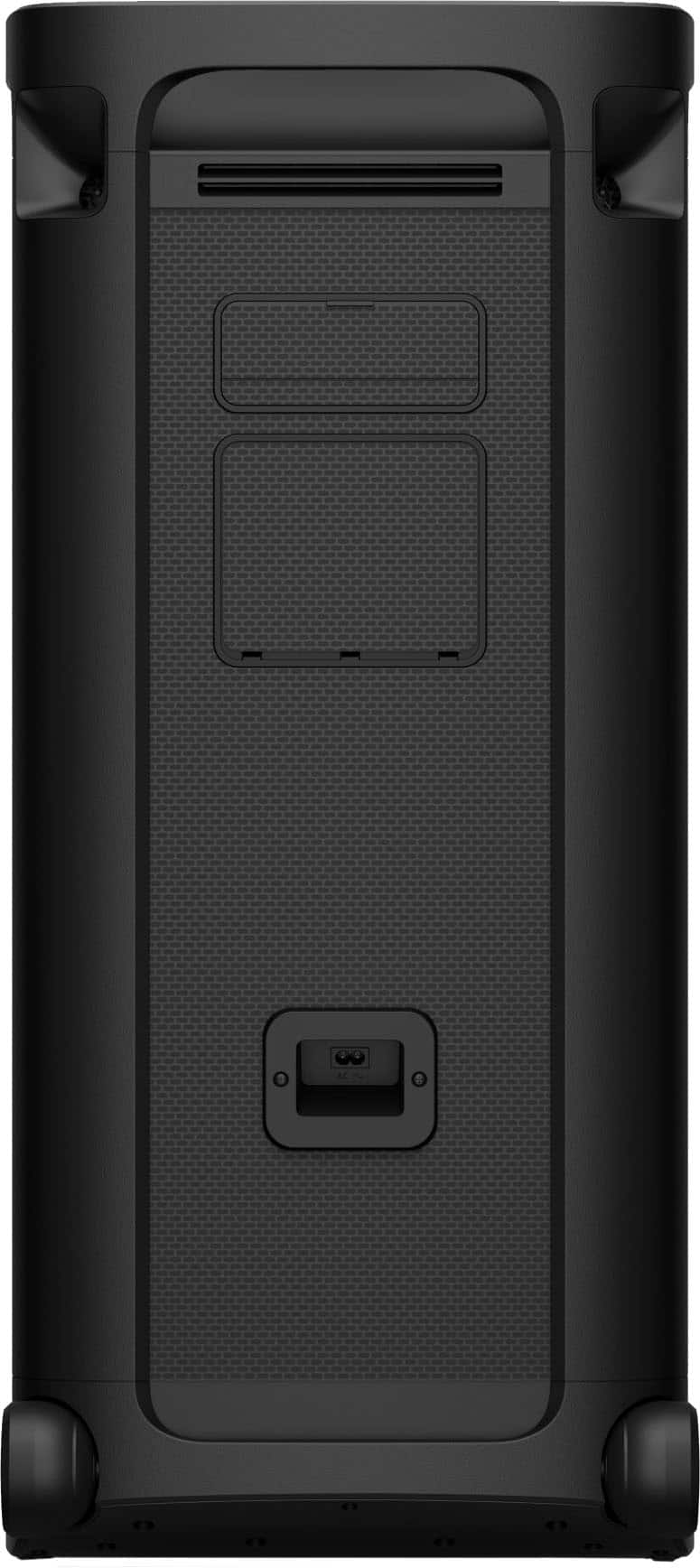
The Sony, at 16" x 36" x 18", is more like a piece of furniture than a portable speaker. While it includes heavy-duty casters and a telescoping handle for transport, moving it requires planning. The lack of weather resistance means it's strictly an indoor or covered outdoor speaker.
This size difference isn't just about convenience—it reflects the fundamental physics of speaker design. Larger cabinets allow for bigger drivers and more internal airspace, which translates directly into deeper bass and higher maximum volume. The Sony's massive internal volume gives its woofer room to breathe, producing bass frequencies that the smaller JBL simply cannot match.
Modern party speakers need to do more than just reproduce audio—they need to create an atmosphere and accommodate interactive entertainment. Both speakers include dynamic lighting systems, but their implementations differ significantly.
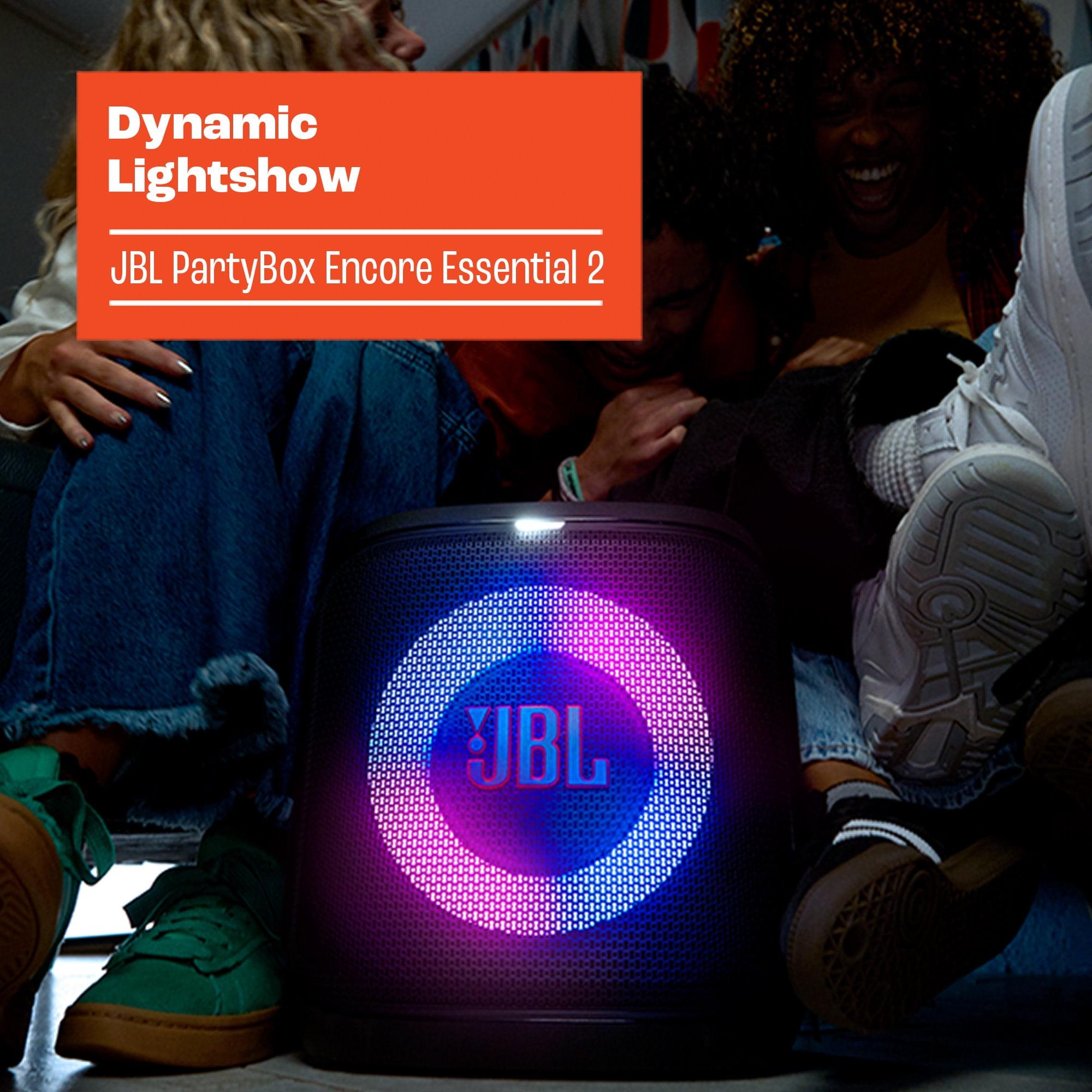
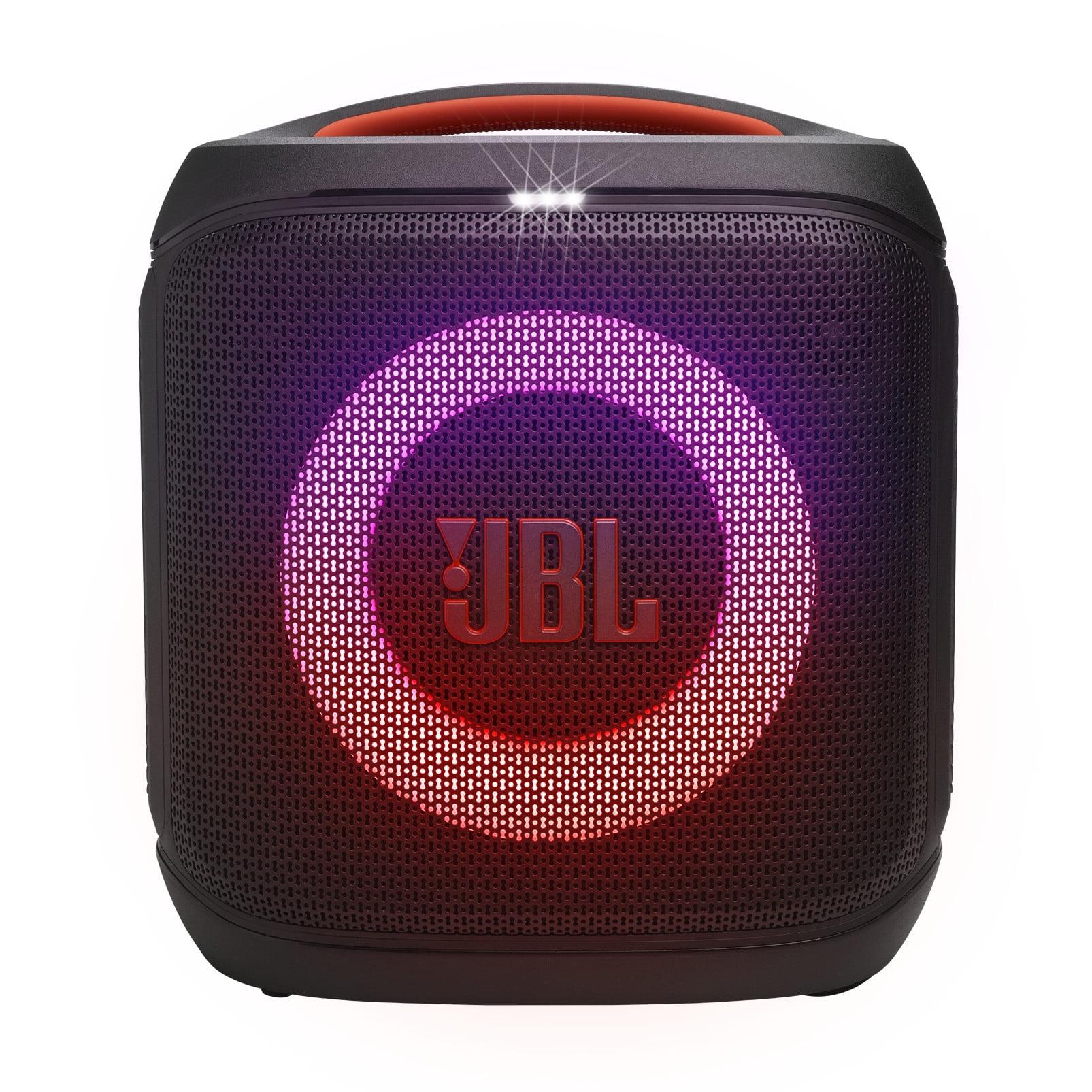
The JBL features a programmable lightshow with six distinct modes (Neon, Loop, Bounce, Trim, Switch, and Freeze) that synchronize with music. The JBL PartyBox app allows users to customize colors and patterns, creating visual interest without overwhelming the music.
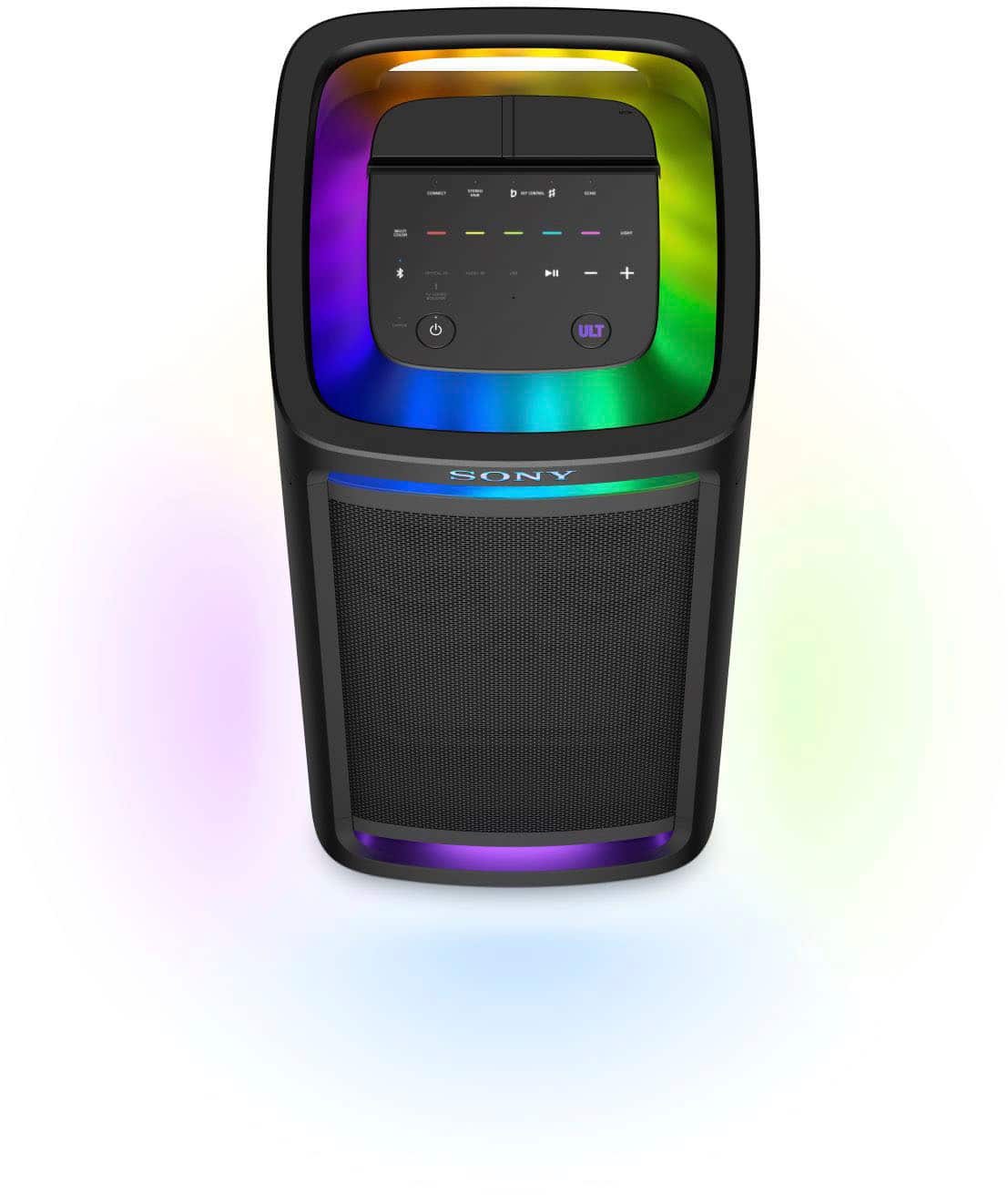
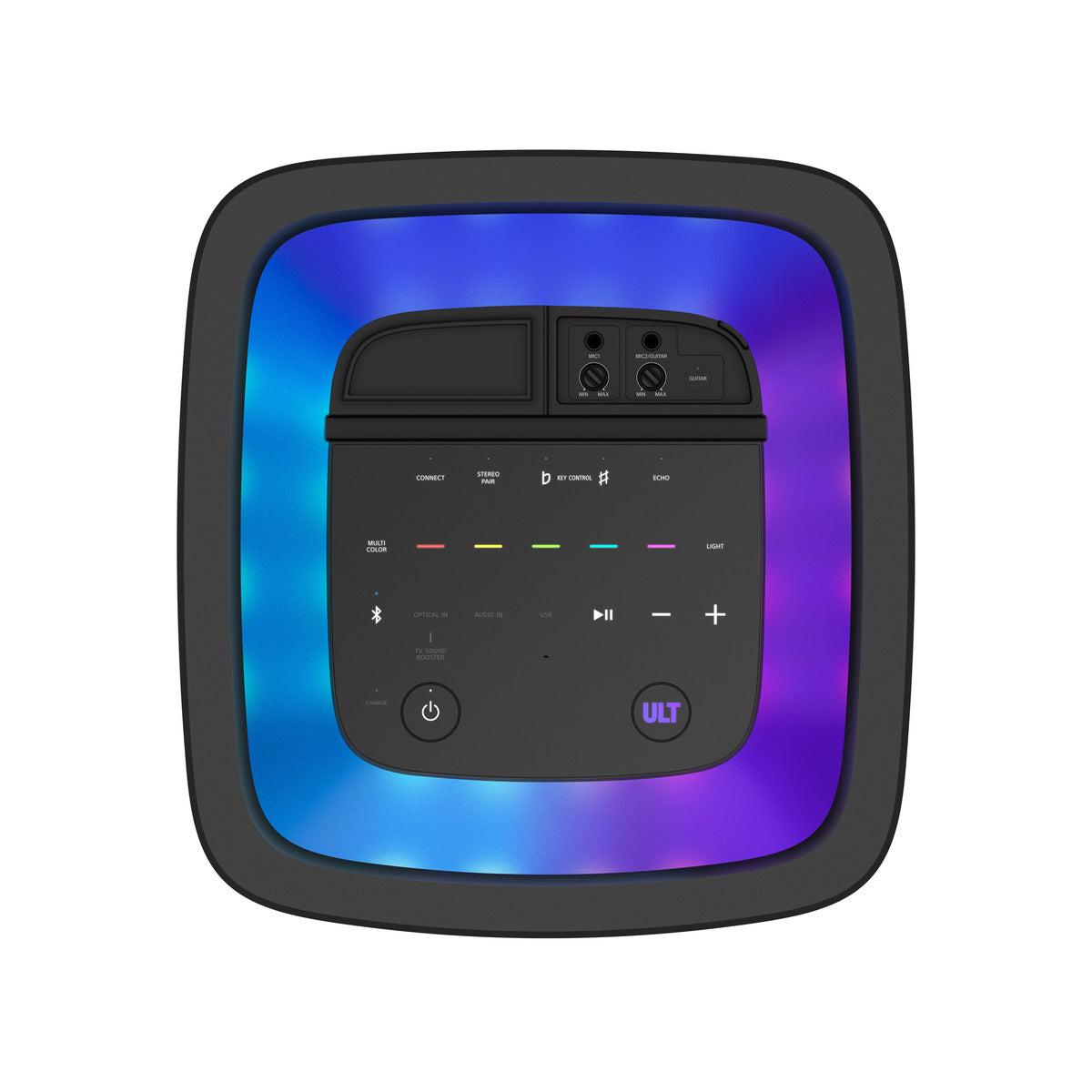
The Sony takes lighting further with its 360-degree LED array that creates room-filling light effects. The Sony Music Center app provides more granular control over lighting patterns, and the larger speaker cabinet provides space for more impressive light distribution.
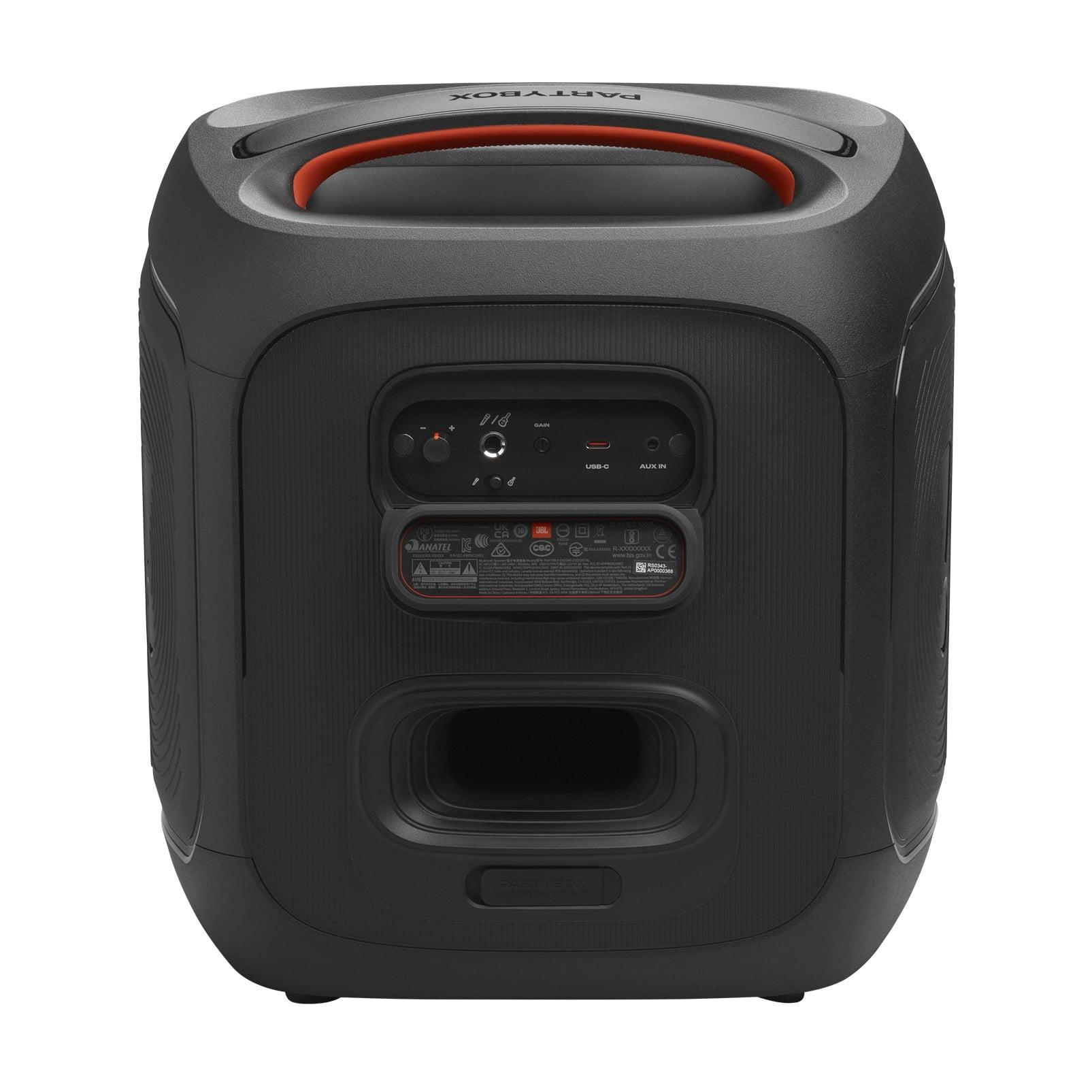
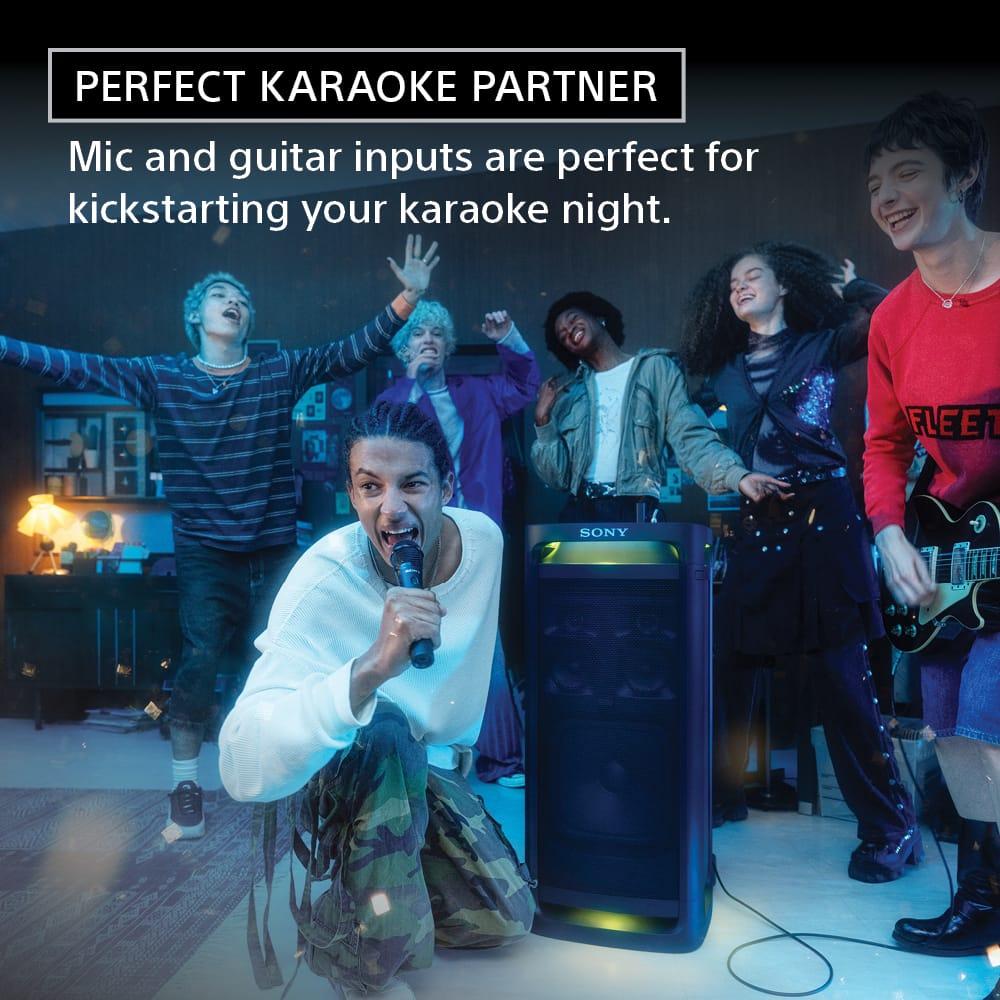
Both speakers accommodate microphones and instruments, but their approaches differ. The JBL includes dedicated mic and guitar inputs with basic level controls and a karaoke EQ that helps reduce harsh frequencies in vocals.
The Sony elevates the karaoke experience with two separate mic/guitar inputs, each with independent volume controls, echo effects, and key control for pitch adjustment. The dual inputs allow for duets or mic-and-guitar combinations without external mixing equipment. Sony's compatibility with their ULT MIC wireless microphone system adds professional convenience for performers who want freedom from cables.
Both speakers support modern Bluetooth standards, but the Sony includes Bluetooth 5.3 with support for higher-quality codecs like LDAC, which can transmit more audio data for better sound quality from compatible devices. The Sony also includes optical digital input for direct TV connection, USB-A for music playback and device charging, and a 3.5mm auxiliary input.
The JBL focuses on essential connectivity with Bluetooth 5.4, USB-C, and auxiliary input. Its Auracast technology allows wireless connection to other compatible JBL speakers for expanded sound coverage.
Multi-speaker connectivity represents another key difference. JBL's Auracast system works with other Auracast-enabled speakers for synchronized playback, while Sony's Party Connect can link up to 100 compatible Sony speakers with synchronized audio and lighting effects. For users planning to build a multi-speaker system, Sony's ecosystem offers more expansion potential.
Based on extensive review analysis, the performance differences become clear in specific scenarios:
Small to Medium Gatherings (10-30 people): The JBL performs admirably, providing sufficient volume and bass for backyard parties, beach gatherings, or small indoor events. Its portability makes it ideal for users who host in different locations.
Large Gatherings (50+ people): The Sony shows its advantage with room-filling sound that maintains clarity at high volumes. Multiple reviews note that the Sony can energize large spaces without the distortion that affects smaller speakers when pushed hard.
Outdoor vs. Indoor Use: The JBL's splash-proof rating makes it superior for poolside, beach, or camping use where weather protection matters. The Sony excels in covered outdoor spaces or indoors where its lack of weather sealing isn't a concern.
Extended Events: The Sony's 25-hour battery life and quick-charge capability make it ideal for all-day festivals, wedding receptions, or multi-day events where battery anxiety could otherwise be a concern.
Both speakers incorporate recent technological advances, but in different ways. The JBL's AI Sound Boost technology represents an intelligent approach to maintaining audio quality at high volumes by automatically adjusting the signal to prevent distortion and maintain clarity.
The Sony's Sound Field Optimization uses built-in microphones to analyze the acoustic environment and automatically adjust its output for optimal performance in different spaces. This kind of adaptive audio processing represents the future of smart speakers, where devices automatically optimize their performance rather than requiring manual adjustment.
The Sony's 10-band equalizer provides much more granular control over sound shaping than typical party speakers, allowing users to fine-tune the audio for different music genres or acoustic environments. This level of customization typically appears only in professional audio equipment.
The choice between these speakers ultimately depends on your primary use case and priorities. The JBL PartyBox Encore Essential 2 excels for users who value portability, weather resistance, and cost-effectiveness. It's perfect for people who host gatherings in different locations, need a speaker for outdoor activities, or want essential party features without premium pricing.
The Sony ULT TOWER 9 serves users who prioritize sound quality, extended battery life, and comprehensive features over portability. It's ideal for people with dedicated entertainment spaces, those who host large or extended events, or users who want professional-grade features and are willing to pay for them.
For home theater integration, the Sony offers clear advantages with its optical input, TV sound boost feature, and superior soundstage width from its rear tweeters. The JBL works as a TV speaker but lacks the dedicated connections and acoustic design for optimal home theater performance.
Neither speaker is definitively "better"—they excel in different scenarios. The JBL maximizes value and convenience, while the Sony maximizes performance and features. Your choice should align with how and where you plan to use your party speaker most often. Consider whether you'll move it frequently, how large your typical gatherings are, and whether you value premium audio quality enough to accept reduced portability and higher cost.
Both represent solid investments in their respective categories, incorporating modern technology and proven engineering to deliver reliable party audio for years to come.
| JBL PartyBox Encore Essential 2 | Sony ULT TOWER 9 |
|---|---|
| Power Output - Determines maximum volume and bass impact | |
| 100W RMS with AI Sound Boost | 153W with sophisticated 3-way design |
| Speaker Configuration - Affects sound quality and clarity | |
| 2-way: 1x 5.25" woofer, 2x 0.75" tweeters | 3-way: 12.6" woofer, 2x 4.8" midrange, 4 tweeters |
| Weight & Portability - Critical for transport between venues | |
| 6.2 kg (13.7 lbs) with carry handle | 29.6 kg (65.25 lbs) with wheels and handle |
| Battery Life - Determines event duration without power | |
| Up to 15 hours (user-replaceable battery) | Up to 25 hours with 10-min quick charge |
| Weather Resistance - Important for outdoor use | |
| IPX4 splash-proof (poolside safe) | No weather rating (indoor/covered only) |
| Bass Enhancement - Affects party atmosphere and energy | |
| Bass Boost mode with single woofer | Dual ULT modes with X-Balanced 12.6" woofer |
| Sound Dispersion - Determines coverage area | |
| Front-facing directional | 360° omnidirectional with rear tweeters |
| Microphone Inputs - For karaoke and live performance | |
| 1x mic/guitar input with karaoke EQ | 2x mic/guitar inputs with echo and key control |
| Lighting Effects - Enhances party atmosphere | |
| 6-mode programmable lightshow | 360° customizable LED array |
| Connectivity Options - Affects versatility and home theater use | |
| Bluetooth 5.4, USB-C, AUX, Auracast linking | Bluetooth 5.3, USB-A, AUX, Optical, Party Connect |
| Sound Customization - Important for different music genres | |
| Basic app controls with preset modes | 10-band EQ with Sound Field Optimization |
| Multi-Speaker Expansion - For larger venues | |
| Auracast wireless linking | Party Connect (up to 100 speakers) |
| Charging Capabilities - Useful for device power | |
| USB-C port for external device charging | USB-A power bank (7.5W output) |
| Ideal Use Case - Determines best value proposition | |
| Mobile parties, outdoor events, budget-conscious | Large venues, extended events, premium sound quality |
The JBL PartyBox Encore Essential 2 is significantly more portable, weighing only 13.7 pounds with a built-in carry handle and IPX4 splash-proof rating. The Sony ULT TOWER 9 weighs 65 pounds and requires wheels for transport, making it better suited for stationary setups rather than frequent moving.
The Sony ULT TOWER 9 delivers superior sound quality with its 3-way speaker system featuring dedicated midrange drivers and a massive 12.6-inch woofer. The JBL PartyBox Encore Essential 2 uses a simpler 2-way design that's good for its size but can't match the Sony's clarity and bass depth.
The Sony ULT TOWER 9 offers exceptional 25-hour battery life with quick charging (10 minutes for 3 hours of playback). The JBL PartyBox Encore Essential 2 provides up to 15 hours but features a user-replaceable battery design for extended use with spare batteries.
The JBL PartyBox Encore Essential 2 is designed for outdoor use with IPX4 splash-proof protection, making it safe for poolside parties and light weather exposure. The Sony ULT TOWER 9 lacks weather resistance and should only be used indoors or under covered outdoor areas.
The Sony ULT TOWER 9 offers superior karaoke features with dual microphone inputs, echo effects, key control, and compatibility with wireless microphones. The JBL PartyBox Encore Essential 2 has basic karaoke functionality with one mic input and simple EQ adjustments.
The Sony ULT TOWER 9 produces significantly deeper and more powerful bass thanks to its 12.6-inch X-Balanced woofer and dual ULT bass boost modes. The JBL PartyBox Encore Essential 2 has decent bass for its size with Bass Boost mode, but cannot match the physical impact of the Sony's larger driver.
The JBL PartyBox Encore Essential 2 provides excellent value for users prioritizing portability and essential party features at a budget-friendly price. The Sony ULT TOWER 9 offers premium value for those willing to invest in superior sound quality, longer battery life, and professional-grade features.
The Sony ULT TOWER 9 excels for home theater with its optical digital input, TV Sound Booster feature, and 360-degree sound dispersion from rear tweeters. The JBL PartyBox Encore Essential 2 can connect via Bluetooth or AUX but lacks dedicated TV connectivity features.
The Sony ULT TOWER 9 is designed for large gatherings with its powerful 153W output, room-filling 360-degree sound, and ability to maintain clarity at high volumes. The JBL PartyBox Encore Essential 2 works well for smaller to medium-sized parties but may struggle in very large spaces.
Both speakers offer party lighting, but the Sony ULT TOWER 9 features a more impressive 360-degree LED array with extensive customization options. The JBL PartyBox Encore Essential 2 provides attractive lightshow effects with six different modes that sync with music beats.
Yes, both support multi-speaker connectivity but use different systems. The Sony ULT TOWER 9 uses Party Connect to link up to 100 compatible speakers with synchronized audio and lighting. The JBL PartyBox Encore Essential 2 uses Auracast technology for wireless linking with other compatible JBL speakers.
Choose the JBL PartyBox Encore Essential 2 if you need portability, outdoor use capability, and essential party features at an affordable price. Select the Sony ULT TOWER 9 if you prioritize premium sound quality, extended battery life, comprehensive features, and plan to use it primarily in one location for larger gatherings.
We've done our best to create useful and informative comparisons to help you decide what product to buy. Our research uses advanced automated methods to create this comparison and perfection is not possible - please contact us for corrections or questions. These are the sites we've researched in the creation of this article: rtings.com - rtings.com - global.jbl.com - armorsound.com - rtings.com - soundguys.com - youtube.com - versus.com - manuals.plus - jbl.com - youtube.com - bestbuy.com - crutchfield.com - youtube.com - bestbuy.com - audioadvice.com - youtube.com - comparisontabl.es - manuals.plus - ggelectronics.com - gzhls.at - jbl.com - th.jbl.com - manuals.plus - cdwg.com - th.jbl.com - creativeaudio.net - bestbuy.com - samsung.com - bestbuy.com - crutchfield.com - manuals.plus - guidefitter.com - static.pcrichard.com - theshortcut.com - skybygramophone.com - bestbuy.com - crutchfield.com - soundguys.com - videoandaudiocenter.com - electronics.sony.com - helpguide.sony.net - youtube.com - youtube.com - youtube.com - sony.com - youtube.com - skybygramophone.com - sony.com - manuals.plus - stereoguide.com - helpguide.sony.net

Privacy Policy
Terms and Conditions - Affiliate Policy
Home Security
© Copyright 2008-2026.
11816 Inwood Rd #1211, Dallas, TX 75244