

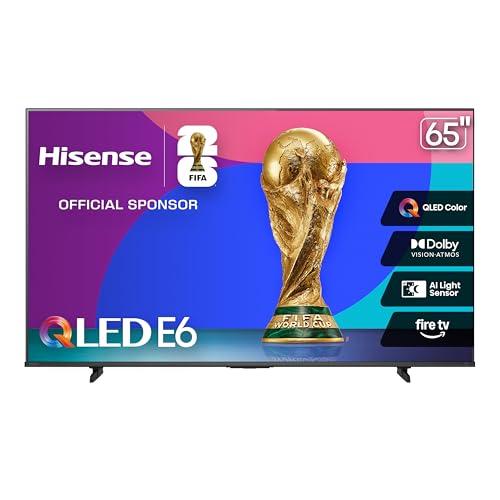
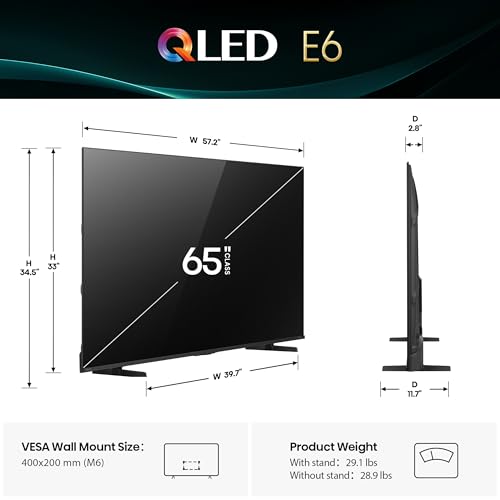

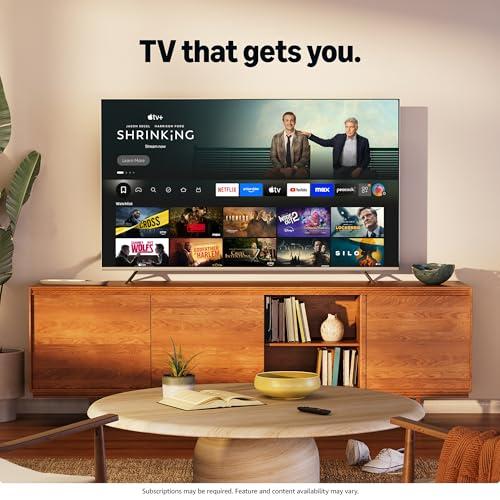
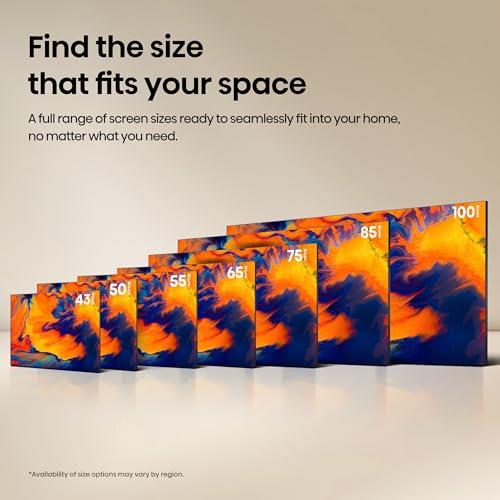
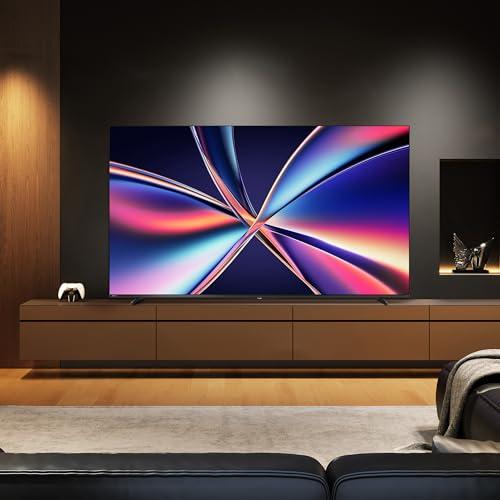
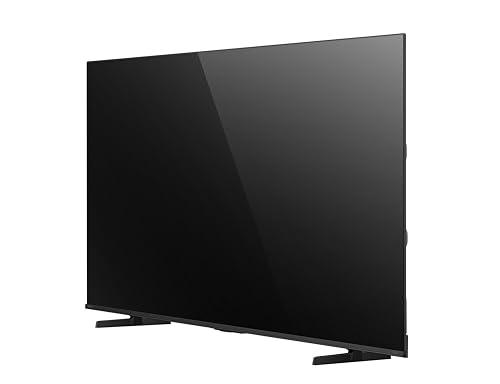
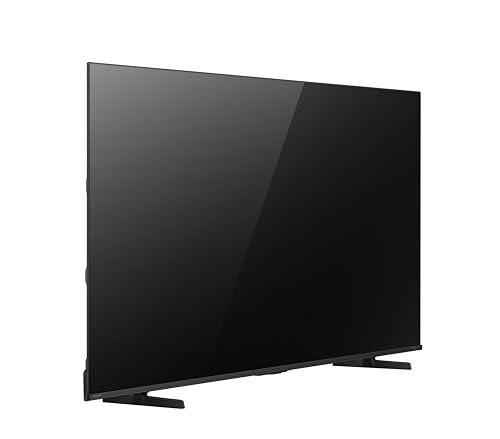
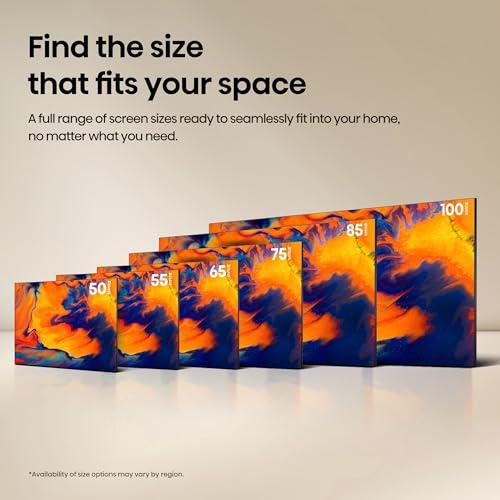
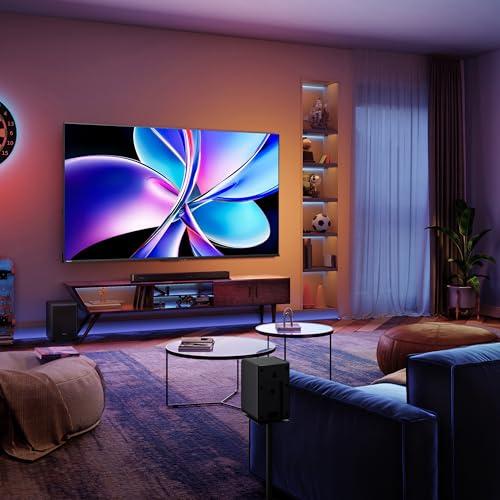
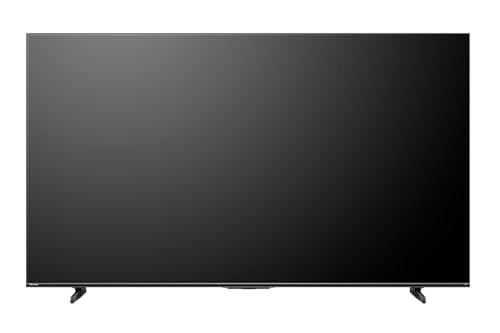
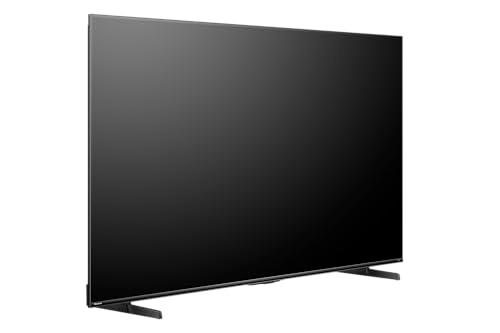
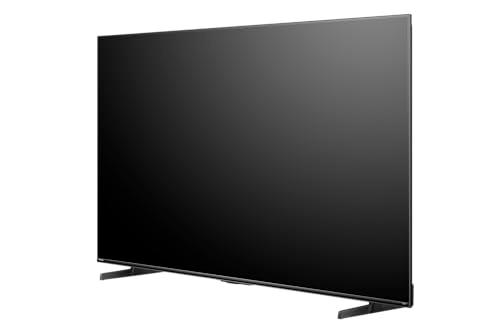
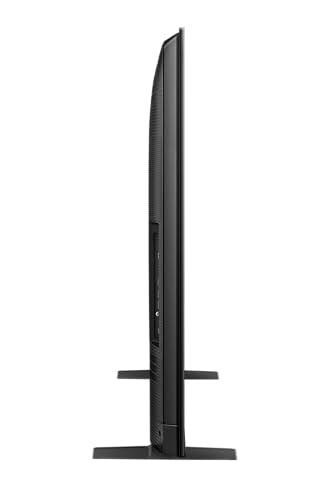
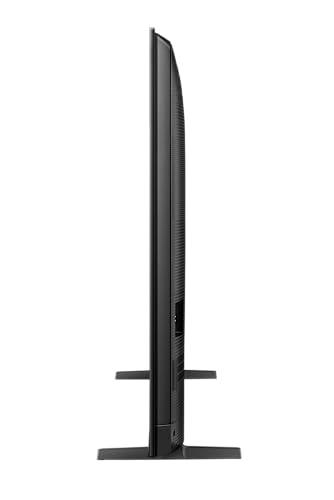
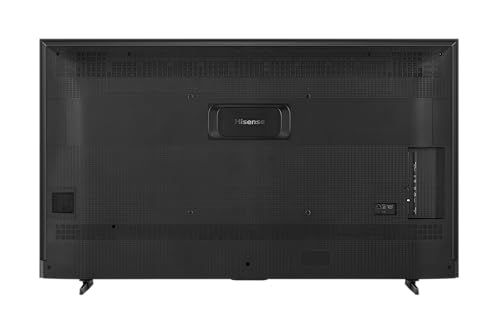
Choosing the right 65-inch TV has become increasingly complex as manufacturers pack more features into budget-friendly models. Two standout options from Hisense's 2025 lineup—the E6 Cinema Series and the QD7 Mini-LED—represent different approaches to delivering quality 4K entertainment without breaking the bank. At the time of writing, these models are priced competitively in the sub-$500 market, with the QD7 commanding a modest premium over the E6.
The fundamental question isn't just which TV costs less, but which delivers better value for your specific viewing habits and room setup. After evaluating expert reviews, user feedback, and technical specifications, clear differences emerge that make each model better suited for different scenarios.
Both the Hisense E6 and QD7 compete in the crowded "budget premium" 65-inch segment—TVs that aim to deliver most of the picture quality benefits of expensive models while staying accessible to mainstream buyers. This category has exploded in recent years as display technology has improved and manufacturing costs have decreased.
The most critical performance factors in this space revolve around contrast ratio (how deep blacks appear versus how bright whites can get), color accuracy, motion handling for sports and gaming, and smart platform responsiveness. Unlike premium models that excel across all areas, budget TVs typically make tradeoffs—excelling in some areas while compromising in others.
HDR support has become table stakes, meaning both TVs can display content with enhanced dynamic range that shows more detail in shadows and highlights. However, the quality of HDR implementation varies dramatically based on the underlying display technology.
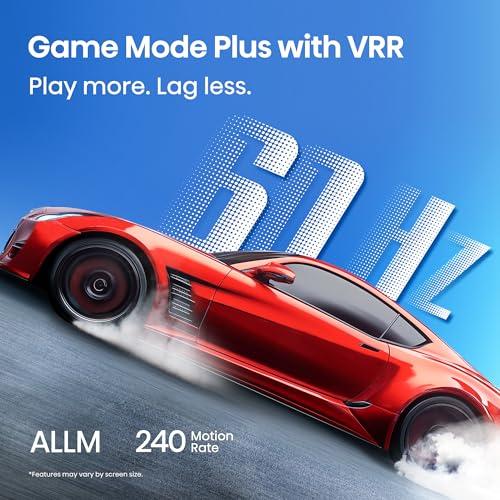
Gaming compatibility has also become essential as PlayStation 5 and Xbox Series X consoles have pushed 4K gaming into the mainstream. Features like Variable Refresh Rate (VRR) eliminate screen tearing, while Auto Low Latency Mode (ALLM) reduces input lag—the delay between pressing a controller button and seeing the action on screen.
The biggest difference between these models lies in their backlighting approach, which fundamentally impacts picture quality in ways that matter for daily viewing.
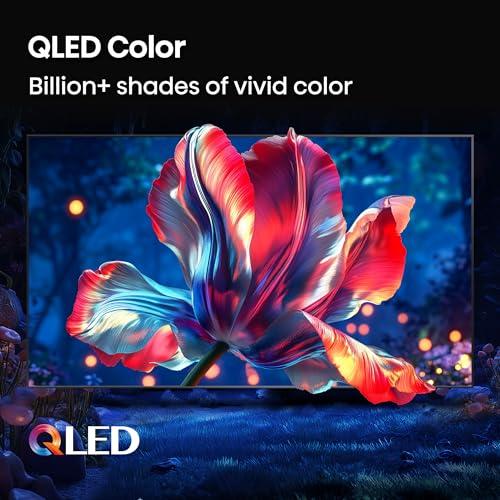
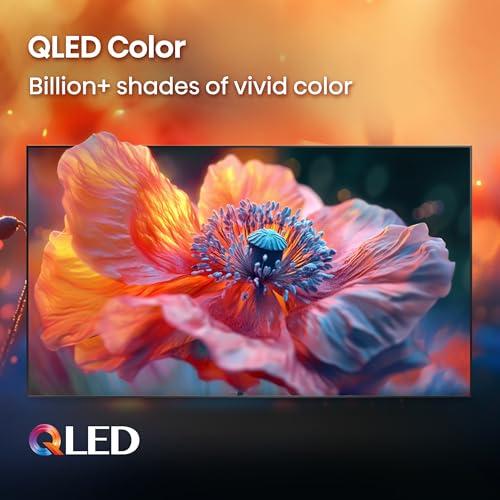
The E6 Cinema Series uses conventional LED backlighting combined with Quantum Dot technology. Think of Quantum Dots as microscopic particles that act like color filters, converting blue LED light into precise red and green wavelengths. This creates over one billion displayable colors with exceptional accuracy—colors appear vibrant and natural rather than oversaturated.
What the E6 lacks is local dimming—the ability to independently control brightness in different screen areas. Instead, the entire backlight brightens or dims uniformly. This approach works well for most content but struggles with high-contrast scenes like starfields or dark movie scenes with bright elements.
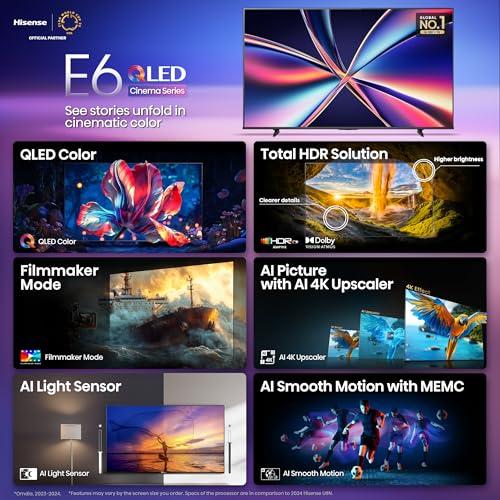
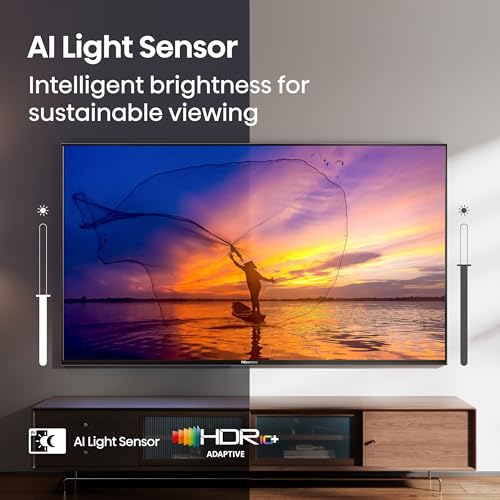
The E6 compensates with smart features rarely found at this price point. Its AI Light Sensor continuously monitors your room's ambient lighting and adjusts screen brightness automatically. This isn't just a gimmick—it genuinely improves viewing comfort while potentially extending the TV's lifespan by preventing unnecessary brightness.
WiFi 6 connectivity provides another practical advantage. While your internet speed might not change, WiFi 6 handles multiple connected devices more efficiently and provides more stable streaming, especially important if you're streaming 4K content while other devices use the same network.
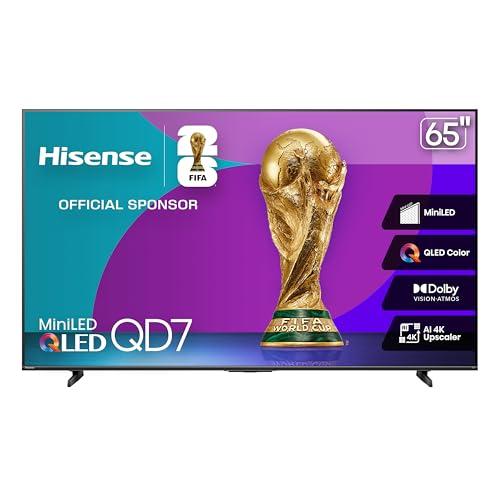
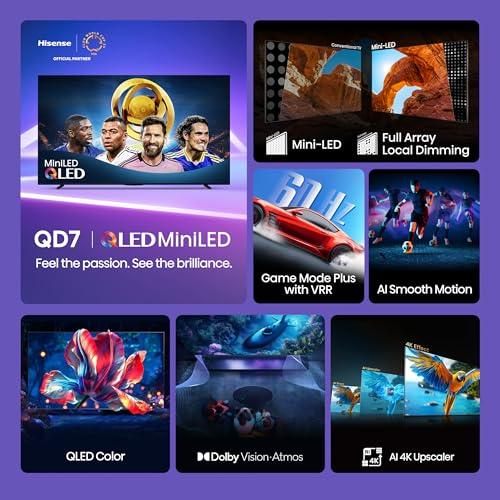
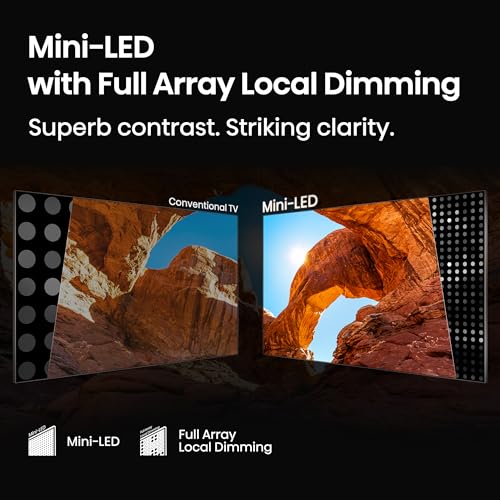
The QD7 Series represents a newer approach called Mini-LED backlighting. Instead of large LED lights behind the screen, Mini-LED uses thousands of tiny LEDs arranged in independent zones. Each zone can brighten or dim separately, creating what's called Full Array Local Dimming (FALD).
This technology directly addresses traditional LED TVs' biggest weakness: poor black levels. When displaying a night sky with stars, the QD7 can keep the dark areas nearly black while making stars brilliantly bright. Traditional LED TVs like the E6 must choose between dim stars or grayish skies.
The improvement is immediately noticeable in dark room viewing. Movie scenes with shadows show genuine depth rather than the flat, grayish appearance common with budget TVs. However, based on professional reviews, the QD7's black levels, while improved, don't reach the inky depths of OLED displays that cost significantly more.
Mini-LED technology emerged as a middle ground between affordable LED and expensive OLED displays. Since 2022, it has rapidly improved, with 2025 models like the QD7 offering local dimming performance that was reserved for premium TVs just a few years ago.
Both models handle current gaming consoles competently, but with different strengths that matter depending on your gaming preferences.
The E6 Cinema Series offers Motion Rate 120 processing, which uses interpolation to create smoother motion from standard 60fps content. Its AI Smooth Motion with MEMC (Motion Estimation, Motion Compensation) analyzes incoming frames and generates intermediate frames to reduce blur during fast action.
The QD7 takes a different approach with Motion Rate 240 and more responsive panel technology. Rather than relying heavily on processing, it uses faster pixel response times to maintain clarity during motion. This typically results in sharper sports viewing and gaming, though the difference is subtle during normal TV watching.
Both TVs support 4K gaming at 60Hz with all current consoles, but the QD7 includes more advanced gaming features. Its Variable Refresh Rate (VRR) synchronizes the TV's display with your console's frame output, eliminating screen tearing when frame rates fluctuate. Auto Low Latency Mode (ALLM) automatically switches to the lowest input lag when gaming mode is detected.
The E6 includes basic Game Mode Plus but lacks VRR and ALLM. For casual gaming, this difference is negligible. For competitive gaming or when playing graphically demanding games that don't maintain consistent 60fps, the QD7's features provide noticeably smoother performance.
Both models achieve acceptable input lag in game mode—the delay between controller input and screen response. Based on user reports, both fall within the 15-20 millisecond range that most gamers find acceptable for all but the most competitive scenarios.
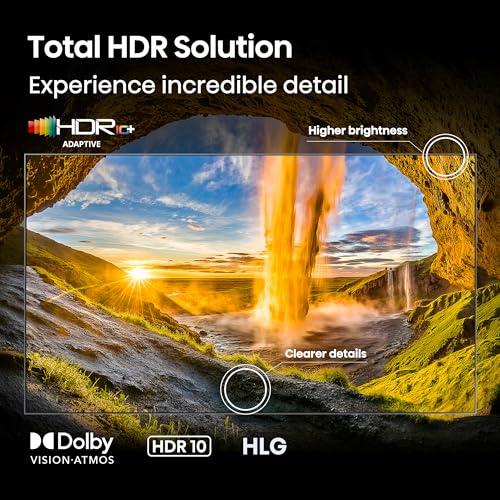
Both the E6 and QD7 support identical HDR formats: Dolby Vision, HDR10+, HDR10, and HLG. These standards allow content creators to include metadata about how bright or dark specific scenes should appear, theoretically delivering more realistic images.
However, supporting HDR and delivering great HDR are different things. Peak brightness—how bright the TV can get—determines how impactful HDR highlights appear. Professional reviews suggest both models achieve moderate peak brightness suitable for most content but fall short of the eye-searing highlights that make premium HDR truly spectacular.
The QD7's local dimming provides the crucial advantage here. HDR's most dramatic moments often involve bright objects against dark backgrounds—think car headlights on a dark road or explosions in space. The QD7 can make those bright elements pop while keeping surrounding areas appropriately dark. The E6 must compromise, either dimming the bright elements or lightening the dark areas.
Both models use Quantum Dot technology, and in this area, they perform similarly well. Quantum Dots have revolutionized color accuracy in affordable TVs by producing more precise, saturated colors without the over-the-top appearance that plagued earlier budget displays.
Colors appear natural and vibrant across both models. Skin tones look realistic, nature documentaries showcase rich greens and blues, and animated content displays the bold, saturated colors creators intended. The difference between these models lies in contrast, not color.
This is where choosing between these models becomes clearest. The E6 performs admirably in bright living rooms where ambient light minimizes the importance of deep blacks. Its AI Light Sensor provides a genuine advantage here, automatically adjusting brightness as room lighting changes throughout the day.
The QD7 shines in darker environments where its contrast advantage becomes immediately apparent. Movie watching in a dimmed room reveals shadow detail that simply disappears on traditional LED displays. However, in bright rooms, this advantage diminishes as ambient light washes out the superior black levels.
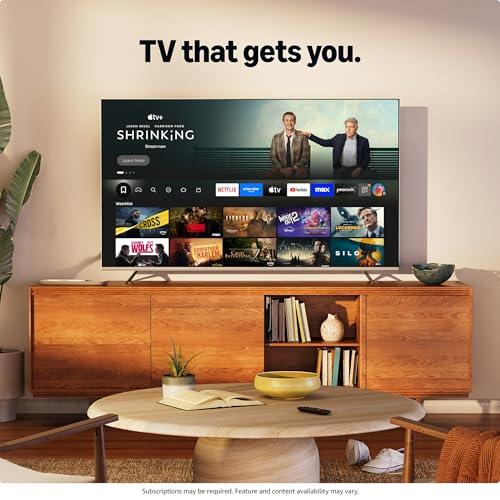
Both models run Amazon's Fire TV platform, which has evolved significantly since its launch. The 2025 implementation feels responsive and intuitive, with a home screen that balances streaming apps, live TV options, and personalized recommendations without feeling cluttered.
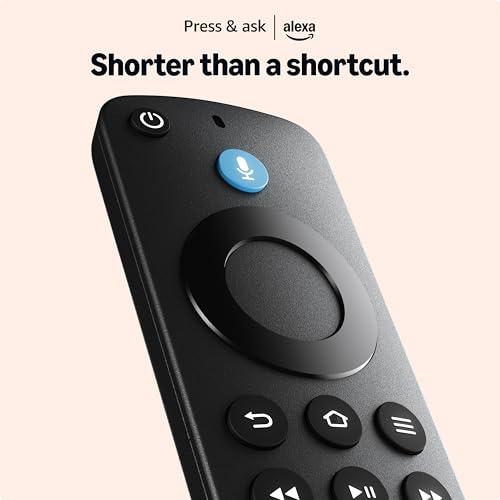
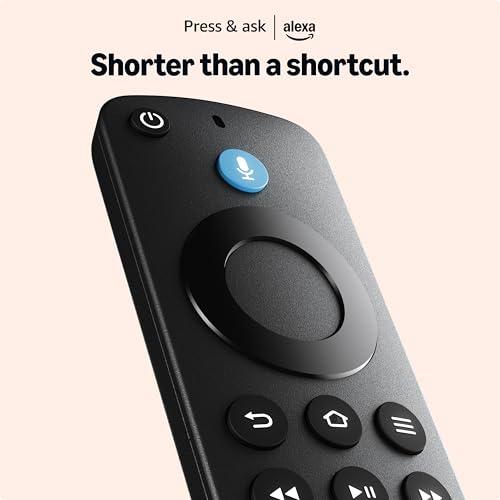
Alexa integration works well for voice control, allowing you to search for content, control smart home devices, and adjust TV settings using natural language. The included voice remote feels solid and includes dedicated buttons for popular streaming services.
The platform's strength lies in its content aggregation—it pulls together shows and movies from multiple streaming services, making it easier to find something to watch without jumping between apps. However, if you're heavily invested in Google's ecosystem or prefer Android TV's interface, Fire TV might feel limiting.
Both TVs include Apple AirPlay support, allowing iPhone and iPad users to stream content directly to the TV, which helps bridge the gap for Apple device users.
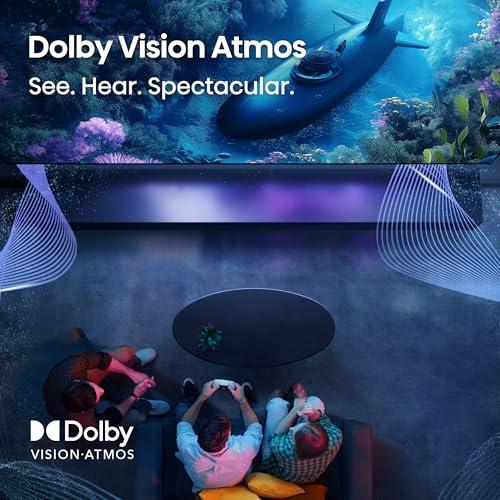
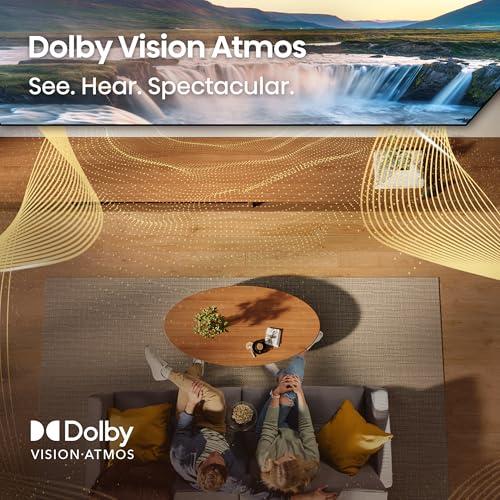
Neither TV will replace a dedicated sound system, but both exceed expectations for built-in audio. The QD7 delivers 20W of power through a 2.0 channel system with Dolby Atmos processing, which creates a more immersive soundstage than traditional stereo speakers.
Dolby Atmos on these TVs doesn't provide true overhead sound effects like dedicated Atmos speakers, but it does expand the apparent soundstage and improves dialogue clarity. For medium-sized rooms, the built-in audio is sufficient for most content, though action movies and music benefit from external speakers or a soundbar.
If you're building a dedicated home theater setup, room characteristics heavily influence which TV makes sense.
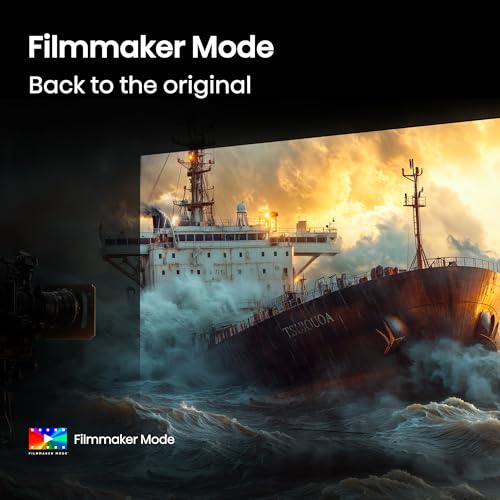
The QD7 is the clear choice for dark room viewing. Its local dimming creates the contrast necessary for cinematic experiences, and its Filmmaker Mode displays content with the color grading and aspect ratios directors intended. While it doesn't match OLED's infinite contrast, it provides enough depth for engaging movie watching.
The E6 struggles in dark rooms where its grayish black levels become apparent. However, if your "home theater" includes windows or regular ambient lighting, this limitation becomes less relevant.
For living rooms that serve multiple purposes, the E6 makes more sense. Its AI Light Sensor automatically adapts to changing conditions throughout the day, and its color performance remains strong under ambient light. The money saved versus the QD7 can go toward other home theater components like a soundbar or streaming device.
At the time of writing, the QD7 commands a modest premium over the E6—typically around $50-80 more. This relatively small price difference makes the decision more nuanced than typical budget versus premium comparisons.
The E6 delivers impressive feature density at its price point. Quantum Dot color, comprehensive HDR support, WiFi 6 connectivity, and AI-driven brightness adjustment represent technologies that were premium features just a few years ago.
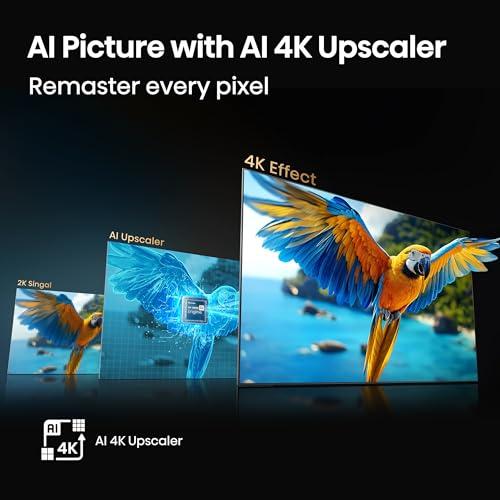
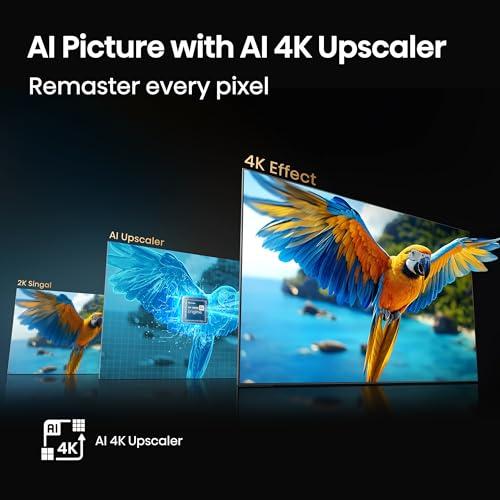
Its AI 4K Upscaler deserves particular mention. This feature uses machine learning to enhance lower-resolution content, making 1080p Blu-rays and streaming content appear sharper and more detailed. The processing is sophisticated enough to improve clarity without introducing artifacts or over-sharpening.
For buyers prioritizing smart features and color accuracy over contrast, the E6 provides exceptional value. It's particularly appealing if you watch mostly newer, brighter content rather than dark, atmospheric movies.
The QD7's higher price directly buys better contrast through Mini-LED technology. This isn't a subtle improvement—the difference in dark room viewing is immediately apparent to most viewers.
Professional reviews consistently highlight the QD7's superior black levels and highlight brightness. While not perfect, it provides the kind of visual depth that makes movies more engaging and gaming more immersive.
The additional gaming features (VRR and ALLM) add value for serious gamers, though casual players won't notice these benefits.
The E6 excels as an all-around family room TV that handles diverse content well without requiring specific viewing conditions to shine.
The QD7 makes sense as a primary entertainment centerpiece where picture quality takes priority over convenience features.
After evaluating both models across multiple criteria, the QD7 Series emerges as the better choice for most buyers. The modest price premium directly translates to meaningfully better picture quality, particularly in the contrast performance that defines premium viewing experiences.
The E6 Cinema Series remains an excellent value for specific scenarios—particularly bright room viewing and budget-conscious buyers who prioritize features over picture quality. Its AI Light Sensor and WiFi 6 connectivity provide practical daily-use advantages that some users will genuinely appreciate.
However, TVs are typically long-term purchases, and the QD7's superior contrast will provide years of better viewing experiences across diverse content types. The additional gaming features future-proof the investment as gaming technology continues evolving.
Unless budget constraints are paramount or you specifically value the E6's unique smart features, the QD7 delivers better long-term satisfaction for most viewing scenarios. The technology gap between traditional LED and Mini-LED backlighting is significant enough to justify the modest premium, making it one of the clearer value propositions in the competitive 65-inch TV market.
| Hisense 65" E6 Cinema Series QLED 4K Fire TV | Hisense QD7 Series 65" Mini-LED 4K Fire TV |
|---|---|
| Display Technology - The foundation that determines contrast and black levels | |
| QLED with conventional LED backlighting, no local dimming zones | Mini-LED backlighting with Full Array Local Dimming (FALD) using thousands of independent LED zones |
| Black Level Performance - Critical for dark room viewing and movie watching | |
| Standard LED blacks appear grayish in dark rooms | Significantly deeper blacks thanks to local dimming, though not OLED-level |
| Peak Brightness - Affects HDR impact and bright room visibility | |
| Moderate brightness suitable for most HDR content | Higher peak brightness with better HDR highlight performance |
| Color Technology - Both deliver excellent color accuracy and vibrancy | |
| QLED Quantum Dot displaying over 1 billion colors | QLED Quantum Dot displaying over 1 billion colors |
| Motion Handling - Important for sports and fast-action content | |
| Motion Rate 120 with AI Smooth Motion and MEMC processing | Motion Rate 240 with faster pixel response times and superior motion clarity |
| Gaming Features - Essential for modern console compatibility | |
| Game Mode Plus with basic gaming optimizations | Game Mode Plus with Variable Refresh Rate (VRR) and Auto Low Latency Mode (ALLM) |
| Refresh Rate - Affects gaming and motion smoothness | |
| Native 60Hz with motion interpolation to 120Hz | Native 60Hz with motion processing to 240Hz |
| HDR Format Support - All major formats supported on both models | |
| Dolby Vision, HDR10+, HDR10, HLG, Filmmaker Mode | Dolby Vision, Dolby Vision Gaming, HDR10+, HDR10, HLG |
| Smart Features - E6 includes more convenience-focused additions | |
| Fire TV with Alexa, AI Light Sensor, WiFi 6, AI 4K Upscaler | Fire TV with Alexa, AI 4K Upscaler, Apple HomeKit/AirPlay |
| Audio System - Both include Dolby Atmos processing | |
| Dolby Atmos with built-in speakers (power output not specified) | 20W, 2.0 channel system with Dolby Atmos |
| Best Use Case - Different strengths for different viewing scenarios | |
| Bright rooms, casual viewing, maximum features per dollar | Dark rooms, serious gaming, cinematic movie watching |
| Value Proposition - QD7 offers meaningful picture upgrade for modest premium | |
| Excellent feature density and smart functionality at entry price point | Superior contrast and gaming features justify the modest price increase |
The Hisense QD7 Series Mini-LED delivers significantly better picture quality than the E6 Cinema Series, primarily due to its Mini-LED backlighting with Full Array Local Dimming. This technology allows the QD7 to produce deeper blacks and brighter highlights, creating superior contrast that's especially noticeable during dark room viewing. While both models use QLED Quantum Dot technology for excellent color reproduction, the QD7's contrast advantage makes movies and HDR content more visually compelling.
The core difference lies in backlighting technology. The Hisense E6 uses conventional LED backlighting that illuminates the entire screen uniformly, while the QD7 employs Mini-LED technology with thousands of independent LED zones that can brighten or dim separately. This gives the QD7 Series much better contrast performance, deeper blacks, and more precise HDR rendering, though it comes at a modest price premium over the E6.
The QD7 Series is the superior gaming TV, featuring Variable Refresh Rate (VRR) and Auto Low Latency Mode (ALLM) that eliminate screen tearing and reduce input lag. Both the E6 and QD7 support 4K gaming at 60Hz with modern consoles, but the QD7's advanced gaming features provide smoother performance during graphically demanding games. The E6 offers basic Game Mode Plus but lacks these premium gaming technologies.
Yes, both the E6 Cinema Series and QD7 perform well in bright rooms thanks to their QLED technology, which maintains color accuracy under ambient light. The E6 actually has a slight advantage here with its AI Light Sensor that automatically adjusts brightness based on room lighting conditions. In bright environments, the QD7's contrast advantage becomes less noticeable, making the E6 an excellent value choice for well-lit living spaces.
For dedicated home theater use, the QD7 Series is clearly superior. Its Mini-LED backlighting with local dimming creates the contrast necessary for cinematic experiences in dark rooms, where the difference between these models is most apparent. The QD7 also includes Filmmaker Mode for authentic content presentation. The E6 struggles with grayish blacks in dark viewing environments, making it less suitable for serious home theater applications.
Yes, both the E6 and QD7 run identical Fire TV smart platforms with built-in Alexa, providing access to all major streaming services including Netflix, Prime Video, Disney+, and more. Both models also support Apple AirPlay for iPhone and iPad users. The E6 Cinema Series includes WiFi 6 connectivity for potentially more stable streaming, while the QD7 uses standard WiFi 5.
The QD7 Series offers superior motion handling with Motion Rate 240 and faster pixel response times, making it better for sports viewing. Fast-moving action appears clearer with less blur compared to the E6's Motion Rate 120 processing. Both models use MEMC (Motion Estimation, Motion Compensation) technology, but the QD7's more responsive panel technology provides noticeably smoother sports and action content.
Both the E6 and QD7 feature Dolby Atmos audio processing for enhanced sound quality. The QD7 Series specifies a 20W, 2.0 channel speaker system, while the E6's audio specifications aren't detailed. In practice, both deliver above-average built-in audio for their price class with clear dialogue and sufficient volume for medium-sized rooms, though external speakers or soundbars will provide better performance for serious home theater use.
The QD7 Series provides better long-term value despite its modest price premium over the E6. The Mini-LED technology delivers meaningfully better picture quality that you'll notice daily, especially for movie watching and gaming. However, the E6 Cinema Series offers excellent value if you prioritize smart features like WiFi 6 and AI Light Sensor, or if you primarily watch content in bright rooms where contrast matters less.
Both the E6 and QD7 support identical HDR formats including Dolby Vision, HDR10+, HDR10, and HLG. However, the QD7 Series delivers superior HDR performance thanks to its local dimming capability, which can simultaneously display bright highlights and deep shadows as HDR content creators intended. The E6 supports all the same HDR standards but cannot achieve the same contrast range due to its uniform backlighting.
Both TVs offer similar setup experiences with Fire TV's user-friendly interface, but the E6 Cinema Series includes more convenience features for daily use. Its AI Light Sensor automatically adjusts brightness throughout the day, while WiFi 6 connectivity provides more stable streaming performance. The QD7 focuses more on picture quality improvements rather than convenience features, making the E6 slightly more user-friendly for non-technical users.
For most first-time 4K TV buyers, the QD7 Series is the better investment despite the higher cost. Its superior contrast and gaming features provide a more impressive upgrade from older TVs and better long-term satisfaction. Choose the E6 Cinema Series if budget is the primary concern or if you watch mostly in bright rooms where its picture quality limitations are less apparent. The QD7's Mini-LED technology represents a more significant step up in the viewing experience.
We've done our best to create useful and informative comparisons to help you decide what product to buy. Our research uses advanced automated methods to create this comparison and perfection is not possible - please contact us for corrections or questions. These are the sites we've researched in the creation of this article: bestbuy.com - bestbuy.com - rtings.com - pcvarge.com - youtube.com - youtube.com - youtube.com - rtings.com - shopabunda.com - hisense-usa.com - camelcamelcamel.com - manuals.plus - hisense-usa.com - hisense-usa.com - hisense-usa.com - slickdeals.net - bestbuy.com - youtube.com - youtube.com - rtings.com - tvsbook.com - hometechnologyreview.com - hometechnologyreview.com - bestbuy.com - static.pcrichard.com - hometechnologyreview.com - bestbuy.com - hisense-usa.com - hisense-usa.com - shopmyexchange.com - brandsmartusa.com - manuals.plus - youtube.com - tvsbook.com - flatpanelshd.com - youtube.com

Privacy Policy
Terms and Conditions - Affiliate Policy
Home Security
© Copyright 2008-2026.
11816 Inwood Rd #1211, Dallas, TX 75244