


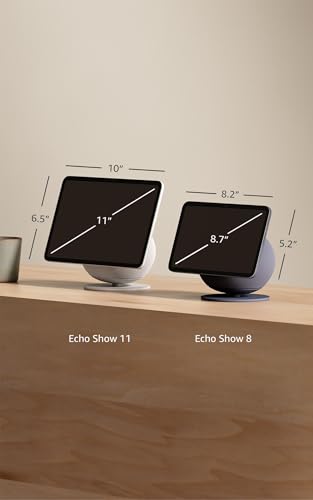
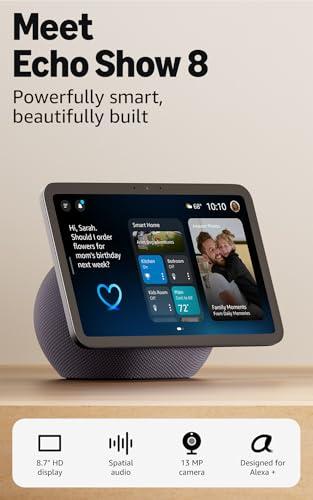
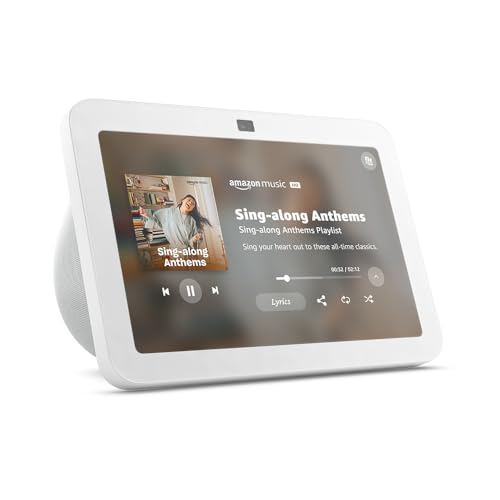
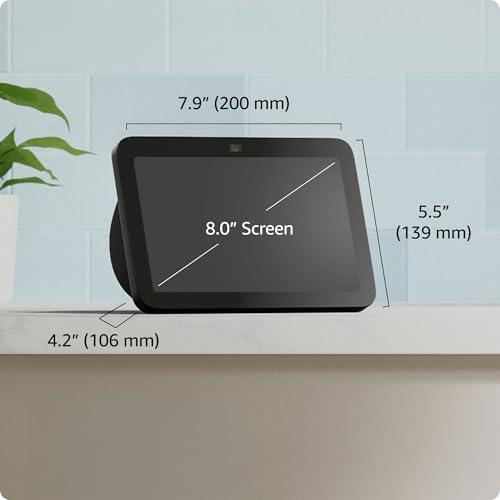
Smart displays have become the Swiss Army knives of modern homes, combining the visual feedback we crave from our phones with the hands-free convenience of voice assistants. Amazon's Echo Show 8 sits right in the sweet spot of this category—large enough to be genuinely useful while compact enough to fit anywhere in your home.
But here's where things get interesting: Amazon released two distinct generations of the Echo Show 8 that look nearly identical but perform quite differently. The second generation launched in 2021 during the height of remote work adoption, while the third generation arrived in 2023 with some serious under-the-hood improvements. At the time of writing, you'll often find the older model heavily discounted, creating a compelling value decision that isn't as straightforward as you might expect.
Smart displays occupy a unique space in our connected homes. Unlike a tablet that you pick up and put down, these devices are designed to be always-on information centers that blend into your daily routine. Think of them as digital picture frames that happen to be incredibly smart.
The core appeal lies in their multitasking nature. While cooking, you can display a recipe hands-free, set multiple timers with voice commands, play music, and even video call family members—all without touching your phone with messy hands. The visual element adds context that pure voice assistants can't provide, showing weather forecasts, calendar events, and smart home controls at a glance.
Performance in smart displays revolves around several key areas: how responsive the touchscreen feels, how good the audio sounds for music and calls, how well the device handles smart home integration, and how natural video calling feels. Display quality matters for readability, while processing speed affects everything from voice recognition to app launching.
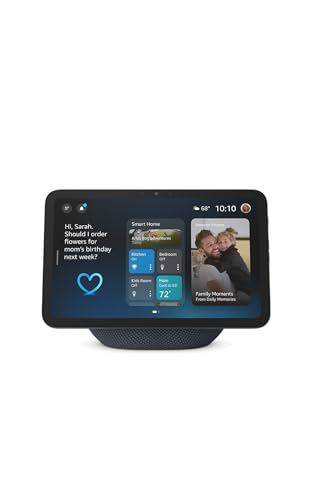
Both the Echo Show 8 (2nd Gen) and Echo Show 8 (3rd Gen) feature 8-inch displays, but Amazon made subtle yet meaningful design changes between generations. The most immediately noticeable difference is the camera placement—the newer model centers the 13-megapixel camera at the top of the screen, while the older generation awkwardly positions it on the right side.
This might seem like a minor detail, but it fundamentally changes how video calls feel. With the third generation, you're looking directly at the person you're talking to, creating a more natural conversation flow. The off-center camera on the second generation makes it feel like you're constantly looking slightly off to the side, which becomes noticeable during longer calls.
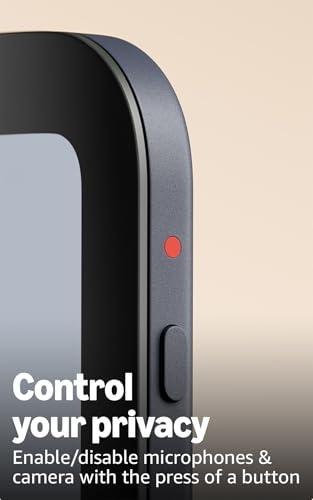
Amazon also refined the physical controls between generations. The newer model features wider, pill-shaped buttons that are easier to locate by feel, while the older version uses smaller, circular buttons. These might seem like trivial changes, but when you're adjusting volume in a dark room or quickly muting during a call, the improved button design makes a real difference.
The back panel got a significant redesign too. The third generation features a more streamlined profile with better acoustic engineering for its upgraded speakers, while the second generation has a larger hump that houses its more basic audio components.
Both generations share identical 8-inch HD displays with 1280 by 800 pixel resolution—that's the same pixel density you'd find on many tablets. The screen size hits a practical sweet spot: large enough to read recipes from across a kitchen counter, but not so big that it dominates your space like the massive 15-inch Echo Show.
However, the third generation produces noticeably brighter, more vibrant images despite using the same panel. This improvement comes from better internal processing and calibration. More importantly, the newer model introduces Adaptive Content—a feature that sounds simple but proves surprisingly useful in daily use.
Adaptive Content works like this: when you're across the room, the display shows large, glanceable information like weather icons and calendar events. As you approach, it automatically switches to more detailed widgets and interactive controls. This might sound gimmicky, but it eliminates the visual clutter that can make smart displays feel overwhelming.
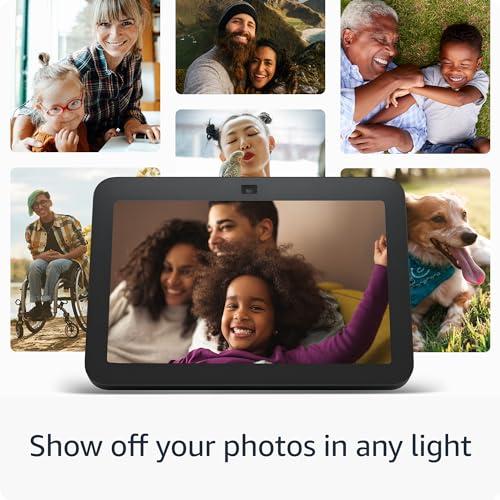
Both models handle typical tasks like displaying recipes, showing photos, and streaming video without issues. The touchscreen responsiveness is good on both, though the newer model benefits from its faster processor with slightly quicker response times.
Here's where the differences between generations become dramatic. Audio quality represents the most significant upgrade Amazon made between the second and third generation Echo Show 8 models.
The older model uses dual 1-inch speakers—adequate for voice calls and casual music listening, but lacking the fullness you'd want for serious audio enjoyment. The newer model jumps to dual 2-inch neodymium speakers paired with a passive bass radiator (essentially a component that enhances low-frequency response without requiring power).
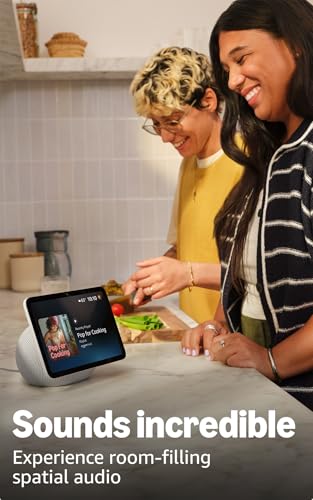
The size difference alone tells part of the story, but Amazon also added sophisticated audio processing to the third generation. Spatial audio technology creates a wider soundstage that makes music feel more immersive, while room adaptation technology analyzes your space's acoustics and adjusts the sound accordingly. If you place the device in a small, hard-walled kitchen versus a large, carpeted living room, it will automatically compensate for those acoustic differences.
In practical terms, the second generation sounds fine for podcasts, audiobooks, and video calls, but music can feel flat and lacking in bass. The third generation delivers surprisingly rich sound that can genuinely serve as your primary speaker for casual listening. While it won't replace dedicated bookshelf speakers or premium wireless speakers, it's impressive enough that you might find yourself choosing it over smaller Bluetooth speakers.
For home theater use, neither model serves as a serious audio solution, but the newer model works better as a secondary display for controlling your main entertainment system while providing decent background audio for casual viewing.
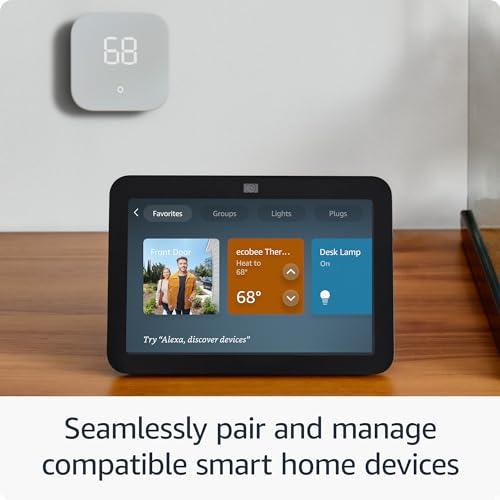
The smart home capabilities represent perhaps the most important functional difference between these generations. The Echo Show 8 (2nd Gen) connects to smart home devices through Wi-Fi and Bluetooth, relying on cloud-based processing and separate hubs for many devices.
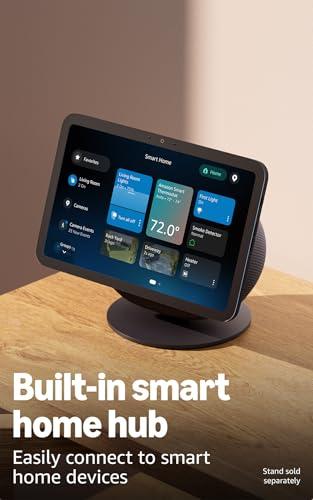
The Echo Show 8 (3rd Gen) includes a built-in smart home hub supporting three major protocols: Zigbee, Thread Border Router, and Matter controller functionality. Let me break down what these mean and why they matter.
Zigbee is a low-power wireless protocol used by many smart switches, sensors, and bulbs. Without built-in Zigbee support, you'd need a separate hub (like a SmartThings hub or Philips Hue bridge) to control these devices. Thread is a newer protocol designed for ultra-reliable, fast smart home communication, while Matter serves as a universal standard that lets devices from different manufacturers work together seamlessly.
Having these protocols built into the third generation means it can directly control compatible devices without additional hardware. More importantly, Amazon engineered the newer model to process common smart home commands locally rather than sending them to the cloud first. This results in noticeably faster response times—up to 40% quicker according to Amazon's testing.
In daily use, this translates to lights that turn on immediately when you ask, rather than the slight delay you might experience with cloud-based processing. For smart home enthusiasts building comprehensive automation systems, the newer model eliminates the need for multiple hub devices while providing faster, more reliable control.
The third generation features Amazon's custom AZ2 Neural Network Engine in an octa-core processor configuration. This specialized chip handles voice recognition, visual processing, and smart home commands more efficiently than the older model's more basic processor.
Neural Network Engine sounds complicated, but it essentially means the device can process certain artificial intelligence tasks locally rather than sending everything to Amazon's servers. This results in faster voice recognition, quicker smart home responses, and better overall system responsiveness.
The performance difference becomes apparent during everyday use. App launches feel snappier on the newer model, voice commands get processed more quickly, and the interface responds to touches without delay. While neither device matches the blazing speed of modern smartphones, the third generation feels notably more responsive during multitasking scenarios.
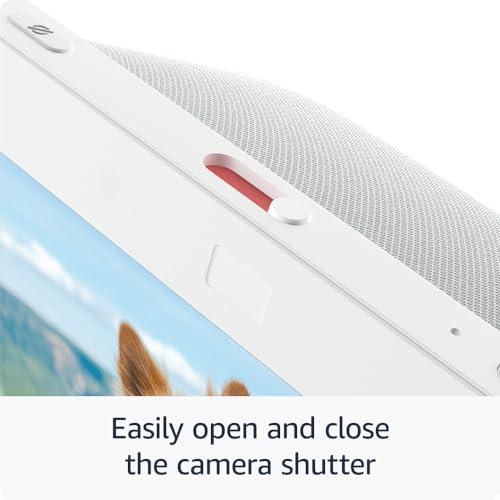
Both models feature 13-megapixel cameras with physical privacy shutters—a sliding cover that physically blocks the lens when closed. The camera quality is identical between generations, providing sharp, well-lit video for calls and adequate resolution for home monitoring features.
The key difference lies in camera placement and auto-framing behavior. Both models include auto-framing technology that automatically pans and zooms to keep you centered in the frame as you move around, but the third generation's centered camera placement makes this feature work more naturally.
During video calls, the centered camera creates more natural eye contact and better conversation flow. The older model's right-side camera placement can make longer calls feel awkward, as you're never quite looking directly at the person you're talking to.
For home monitoring, both cameras work equally well, letting you check in on your space remotely through the Alexa app. The physical privacy shutters provide peace of mind when you want to ensure complete privacy.
The third generation supports Wi-Fi 5 (802.11ac) alongside Wi-Fi 4 compatibility, while the older model only supports Wi-Fi 4 (802.11n). This might seem like a minor technical detail, but Wi-Fi 5 provides better performance in busy wireless environments and faster data transfer speeds for streaming high-resolution content.
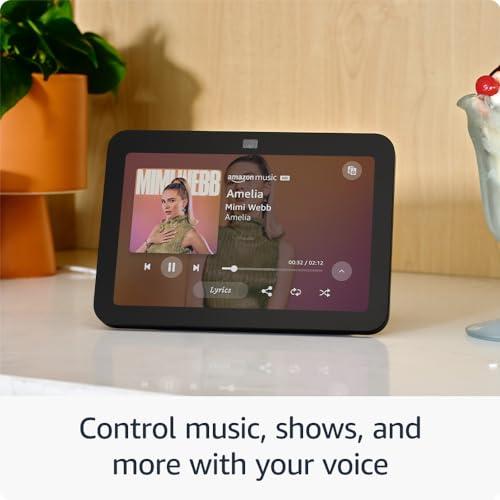
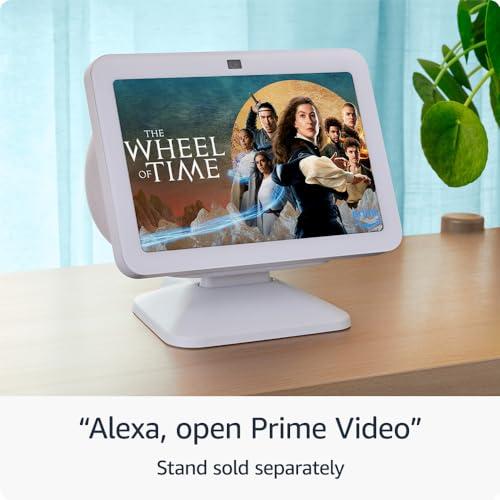
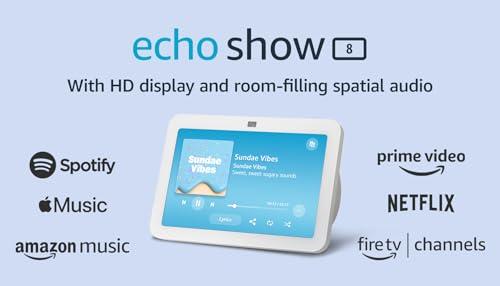
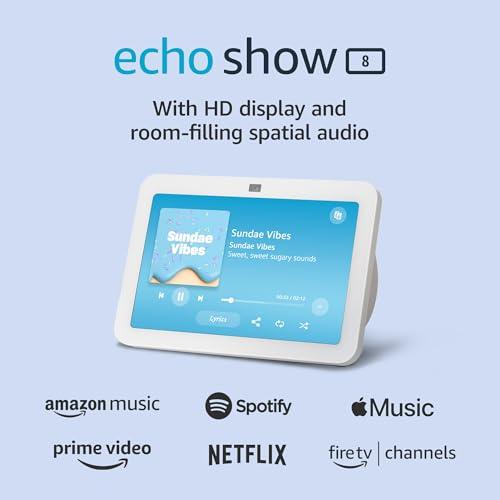
Both models integrate seamlessly with Amazon's ecosystem, supporting Prime Video, Amazon Music, Audible, and the full range of Alexa skills. They also work with popular third-party services like Spotify, Netflix (though not Disney+ or HBO Max), and various smart home platforms.
The newer model's built-in smart home hub capabilities extend compatibility to a much wider range of devices and platforms, making it more versatile for users with diverse smart home setups or plans for future expansion.
At the time of writing, the Echo Show 8 (2nd Gen) frequently appears at significant discounts, sometimes dropping to nearly half its original price. The Echo Show 8 (3rd Gen) launched at a higher price point but can often be found on sale as well.
The value equation depends heavily on current pricing and your specific needs. When the older model is heavily discounted, it represents excellent value for users who primarily need basic smart display functionality—recipe display, weather information, casual video calling, and simple smart home control.
The newer model justifies its premium through several meaningful improvements: dramatically better audio quality, built-in smart home hub functionality (which could replace a separate $50+ hub device), faster performance, and more natural video calling. For users planning to expand their smart home setups or who prioritize audio quality, these improvements can easily justify the price difference.
The Echo Show 8 (2nd Gen) makes sense for budget-conscious buyers who find it at steep discounts, users who already own comprehensive smart home hubs, or those who need a secondary display for basic tasks. It's also a solid choice for bedrooms, guest rooms, or offices where advanced features matter less than core functionality.
The Echo Show 8 (3rd Gen) better serves users who want their smart display to pull double duty as a decent speaker, smart home enthusiasts planning to expand their setups, or anyone who frequently makes video calls. The faster processor and improved audio quality make daily interactions more pleasant, while the built-in smart home hub future-proofs your investment.
For home theater setups, neither model serves as a primary audio solution, but the newer model works better as a control hub and secondary display thanks to its improved processing speed and audio quality.
My recommendation leans toward the third generation for most users, assuming reasonable pricing. The audio improvements alone make daily music listening significantly more enjoyable, while the smart home hub capabilities eliminate the need for additional hardware. The faster processor ensures the device won't feel sluggish as Amazon adds features over time.
However, if you find the second generation at a substantial discount and don't prioritize audio quality or smart home expansion, it remains a capable device that handles core smart display functions well. The key is understanding which features matter most for your specific use case and evaluating current pricing accordingly.
Both models represent solid choices within Amazon's ecosystem, but the third generation offers enough meaningful improvements to justify its premium for most users seeking a long-term smart display solution.
| Amazon Echo Show 8 Display | Amazon Echo Show 8 3rd Gen Smart Display |
|---|---|
| Display - Same 8-inch screen, but 3rd Gen has better brightness and adaptive features | |
| 8-inch HD touchscreen, 1280 x 800 resolution | 8-inch HD touchscreen, 1280 x 800 resolution with edge-to-edge glass and Adaptive Content |
| Audio System - The most significant upgrade between generations | |
| Dual 1-inch speakers (adequate for calls, limited for music) | Dual 2-inch neodymium speakers with passive bass radiator, spatial audio, and room adaptation |
| Smart Home Hub - Major difference for device compatibility | |
| Wi-Fi and Bluetooth only (requires separate hubs for Zigbee devices) | Built-in Zigbee, Matter, and Thread Border Router support |
| Camera Placement - Affects video calling experience | |
| 13MP camera positioned on right side (awkward for video calls) | 13MP camera centered at top (natural video calling experience) |
| Processor Performance - Impacts responsiveness and speed | |
| Standard processor (slower Alexa responses) | Octa-core with Amazon AZ2 Neural Network Engine (40% faster performance) |
| Wi-Fi Support - Better connectivity on newer model | |
| Wi-Fi 4 (802.11n) only | Wi-Fi 5 (802.11ac) and Wi-Fi 4 support |
| Physical Controls - Improved button design on 3rd Gen | |
| Small circular buttons (harder to locate by feel) | Larger pill-shaped buttons (easier to find and press) |
| Release Date - Technology generation gap | |
| Released 2021 (frequently heavily discounted) | Released 2023 (latest technology, occasional sales) |
| Best For - Different use cases based on priorities | |
| Budget buyers, basic smart display needs, secondary locations | Audio quality priorities, smart home expansion, primary display use |
The biggest difference is audio quality. The Amazon Echo Show 8 3rd Gen Smart Display features dramatically improved speakers with dual 2-inch drivers and spatial audio technology, while the Amazon Echo Show 8 Display has smaller 1-inch speakers. The newer model also includes a built-in smart home hub supporting Zigbee, Matter, and Thread protocols.
The Amazon Echo Show 8 3rd Gen Smart Display delivers significantly better audio with its dual 2-inch neodymium speakers, passive bass radiator, and room adaptation technology. The Amazon Echo Show 8 Display has adequate sound for calls but limited bass response for music listening.
Both the Amazon Echo Show 8 Display and Amazon Echo Show 8 3rd Gen Smart Display have identical 13MP cameras with the same image quality. However, the newer model positions the camera at the center of the screen, creating a more natural video calling experience compared to the right-side placement on the older generation.
The Amazon Echo Show 8 3rd Gen Smart Display is superior for smart home control because it includes a built-in hub supporting Zigbee, Thread, and Matter protocols. This eliminates the need for separate hubs and provides faster local processing. The Amazon Echo Show 8 Display relies on Wi-Fi and cloud-based control only.
Yes, both the Amazon Echo Show 8 Display and Amazon Echo Show 8 3rd Gen Smart Display feature identical 8-inch HD touchscreens with 1280 x 800 resolution. The newer model produces slightly brighter images and includes Adaptive Content that adjusts information based on your distance from the screen.
The Amazon Echo Show 8 3rd Gen Smart Display is significantly faster thanks to its octa-core processor with Amazon's AZ2 Neural Network Engine. This provides 40% faster Alexa responses and smoother navigation compared to the Amazon Echo Show 8 Display.
Neither the Amazon Echo Show 8 Display nor Amazon Echo Show 8 3rd Gen Smart Display serves as a primary home theater audio solution. However, the newer model works better as a secondary display and control hub thanks to its improved audio quality and faster processor for streaming content.
Value depends on current pricing and needs. The Amazon Echo Show 8 Display offers excellent value when heavily discounted for basic smart display functions. The Amazon Echo Show 8 3rd Gen Smart Display provides better long-term value with its superior audio, smart home hub capabilities, and faster performance.
Yes, both the Amazon Echo Show 8 Display and Amazon Echo Show 8 3rd Gen Smart Display support the same Alexa features, Prime Video, Netflix, Spotify, and other streaming services. The newer model adds Fire TV Channels with over 400 free live channels.
The Amazon Echo Show 8 3rd Gen Smart Display provides a better video calling experience due to its centered camera placement, which creates more natural eye contact. Both models have the same 13MP camera quality and auto-framing features, but the older model's right-side camera feels awkward during longer calls.
Both the Amazon Echo Show 8 Display and Amazon Echo Show 8 3rd Gen Smart Display support Bluetooth audio output to external speakers. However, the newer model's built-in audio quality is impressive enough that external speakers may be less necessary for casual listening.
For most buyers, the Amazon Echo Show 8 3rd Gen Smart Display is the better choice thanks to its superior audio, smart home hub capabilities, and future-proof features. Choose the Amazon Echo Show 8 Display only if you find it at a significant discount and have basic smart display needs without smart home expansion plans.
We've done our best to create useful and informative comparisons to help you decide what product to buy. Our research uses advanced automated methods to create this comparison and perfection is not possible - please contact us for corrections or questions. These are the sites we've researched in the creation of this article: thedisconnekt.com - thehousetech.com - bestbuy.com - tomsguide.com - youtube.com - bestbuy.com - dimensions.com - engadget.com - youtube.com - techradar.com - ifixit.com - dreamgreenhouse.com - aboutamazon.com - engadget.com - en.wikipedia.org - bestbuy.com - homedepot.com - techradar.com - youtube.com - tomsguide.com - androidcentral.com - bestbuy.com - versus.com - versus.com - dell.com - youtube.com - youtube.com

Privacy Policy
Terms and Conditions - Affiliate Policy
Home Security
© Copyright 2008-2026.
11816 Inwood Rd #1211, Dallas, TX 75244