


Amazon's Echo lineup has evolved significantly since its debut, and 2025 brought two standout devices that represent different philosophies in smart home technology. The Echo Dot Max and Echo Show 8 (3rd Gen) both run Alexa and control your smart home, but they approach user interaction in fundamentally different ways. One prioritizes pure audio excellence, while the other combines sound with visual interaction.
The choice between these devices comes down to how you prefer to interact with technology and what role you want your smart assistant to play in your daily routine. Let's dive deep into what makes each device unique and help you figure out which one deserves a spot in your home.
Before Amazon revolutionized voice assistants, we controlled our homes through physical switches, remote controls, and smartphone apps. Smart speakers changed this by introducing voice control, but they remained invisible helpers that you heard but didn't see. Smart displays took the next step by adding visual feedback, creating interactive hubs that can show information, play videos, and provide touchscreen control.
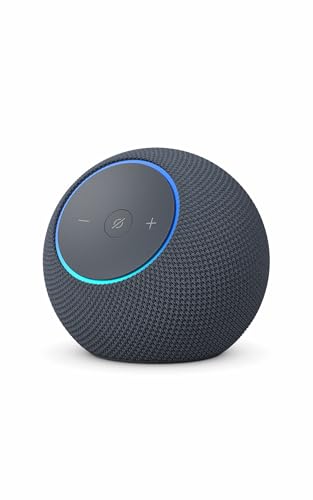
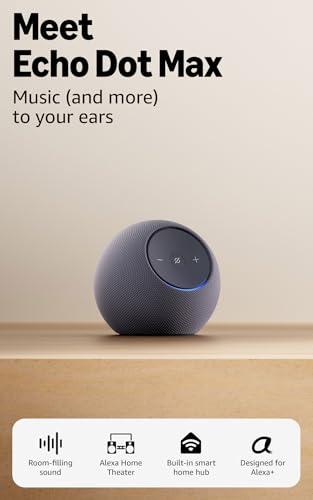
The Echo Dot Max represents the evolution of the pure smart speaker approach. It's designed to blend seamlessly into your environment while delivering superior audio performance. You interact with it entirely through voice commands, and it responds through sound – whether that's playing music, reading the weather, or confirming that it's dimmed your lights.
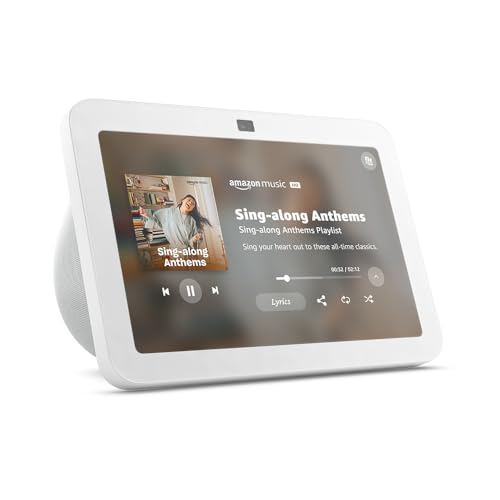
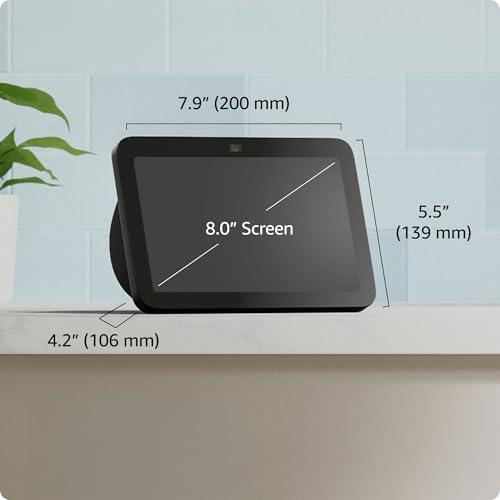
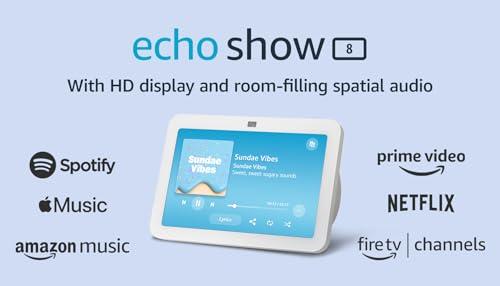
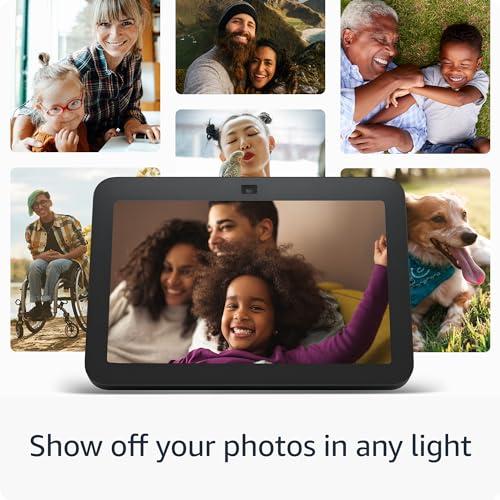
The Echo Show 8 (3rd Gen), on the other hand, adds a visual dimension to voice interaction. Its 8-inch touchscreen can display weather forecasts, show recipe instructions, facilitate video calls, and provide visual controls for your smart home devices. It's like having a small computer screen that also happens to be an excellent smart speaker.
The fundamental question is whether you want your smart assistant to be an invisible helper or a visible hub. Both approaches have their merits, and the right choice depends on where you plan to use the device and how you prefer to interact with technology.
When it comes to audio quality, the Echo Dot Max takes a decisive lead, and the engineering behind this advantage is fascinating. Amazon completely redesigned the internal architecture, moving away from the traditional approach of cramming speakers into whatever space was left after fitting the electronics.
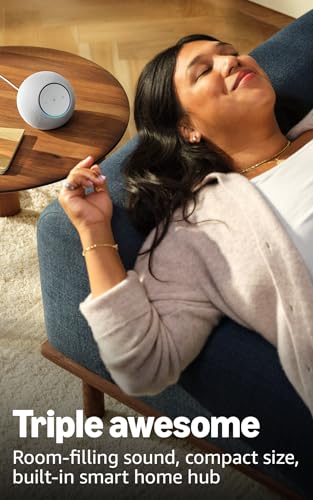
The Dot Max features a dual-driver system with a dedicated woofer (for bass frequencies) and a custom tweeter (for high frequencies). What makes this special is that these drivers are integrated directly into the device housing rather than being separate modules. This integration doubles the internal air space compared to previous Echo Dot models, and more air space translates directly to better bass response – specifically, three times more bass than the standard Echo Dot.
Think of it like the difference between a small practice amp and a full-sized speaker cabinet. The Echo Dot Max essentially fits a much larger speaker's performance into a compact form. The sound adapts to your room's acoustics automatically, adjusting frequency response based on how sound reflects off your walls and furniture.
The Echo Show 8 (3rd Gen) takes a different approach with its dual 2-inch neodymium speakers and passive bass radiator. Neodymium magnets are stronger than traditional speaker magnets, allowing for more precise driver movement and clearer sound. The passive bass radiator is essentially a speaker without the magnet that vibrates sympathetically to enhance low frequencies.
While the Show 8's audio quality is impressive for a device that also houses an 8-inch screen, camera, and computing components, it can't match the Dot Max's purpose-built audio focus. The Show 8's front-facing speaker design prioritizes screen integration over acoustic optimization, which is a reasonable trade-off given its dual functionality.
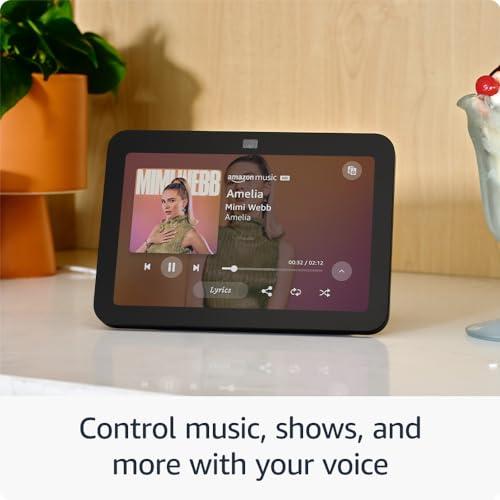
For pure music listening, the Echo Dot Max delivers audiophile-quality sound that rivals dedicated speakers costing significantly more. The Echo Show 8 provides excellent audio for a smart display, making it perfect for background music, podcast listening, and video content, but it won't replace a dedicated music speaker for serious listening sessions.
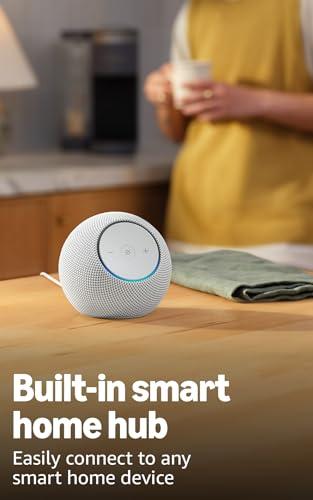
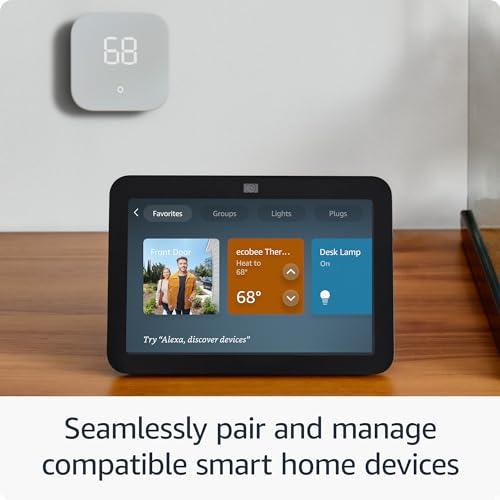
The Echo Show 8 (3rd Gen) dominates in smart home integration, serving as a comprehensive command center rather than just a voice assistant. It includes built-in support for Zigbee, Thread, and Matter protocols – the three major standards that smart home devices use to communicate.
Zigbee is a mesh networking protocol that allows devices to relay signals through each other, extending range throughout your home. Thread is a newer, more efficient protocol that connects devices directly to your internet router. Matter is the universal standard that different brands are adopting to ensure devices work together regardless of manufacturer.
Having these protocols built into the Echo Show 8 means you can connect compatible smart lights, locks, sensors, and other devices directly without buying separate hub devices that typically cost $50-100 each. The AZ3 Pro chip processes many smart home commands locally, reducing response times by up to 40% compared to sending requests to Amazon's servers.
The visual interface adds another layer of convenience. Instead of remembering voice commands for every device, you can tap touchscreen controls to adjust lights, check security cameras, or modify thermostat settings. The device shows the status of connected devices at a glance, which is particularly useful for complex automation routines.
The Echo Dot Max provides standard Alexa smart home control through voice commands using the AZ3 chip. While it can control any Alexa-compatible device, it lacks the built-in hub functionality and relies entirely on voice interaction. For basic smart home control – turning lights on and off, adjusting thermostats, locking doors – this works perfectly well. But for complex smart home setups with dozens of devices from different manufacturers, the Show 8's hub capabilities become invaluable.
The Echo Show 8's 8-inch HD display (1280x800 resolution) opens up possibilities that simply don't exist with voice-only devices. The screen quality is crisp and bright, though it does have noticeable bezels that make it look somewhat dated compared to modern tablets or phones.
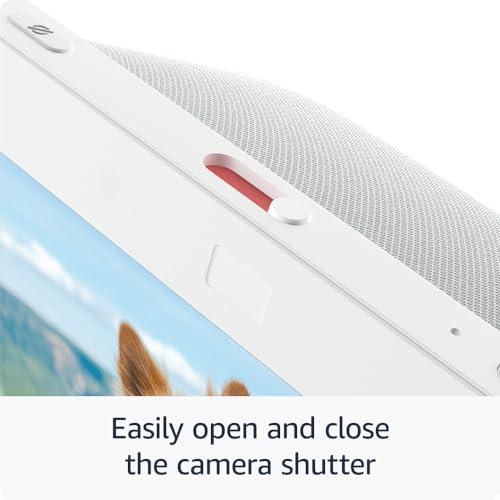
The centered 13MP camera supports auto-framing during video calls, automatically panning and zooming to keep you in the center of the frame as you move around. This makes it excellent for video calls with family or remote work meetings. The camera includes a physical privacy shutter that slides over the lens when you want complete privacy.
One of the most thoughtful features is Adaptive Content, which changes what's displayed based on how far you are from the device. When you're across the room, it shows large, easily readable information like weather or headlines. As you approach, it transitions to more detailed widgets and interactive controls. This prevents the screen from being cluttered with information that's too small to read from a distance.
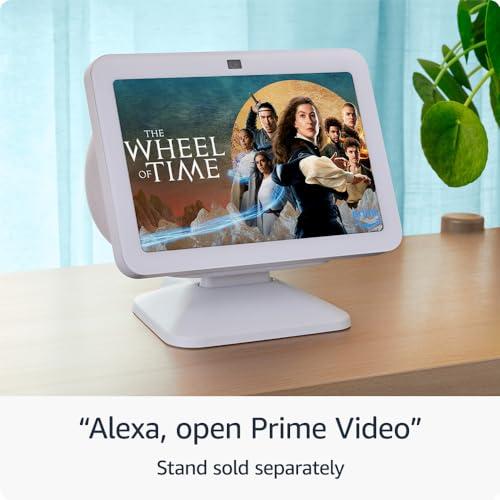
The device provides access to over 420 live and ad-supported streaming channels, making it excellent for kitchen use where you might want to watch cooking shows, news, or entertainment while preparing meals. Recipe display is particularly well-executed, showing step-by-step instructions with timers and the ability to scale ingredients automatically.
The Echo Dot Max, by contrast, offers zero visual feedback. This might seem like a limitation, but it's actually a design choice that eliminates distractions. There's no screen demanding your attention, no notifications popping up, and no temptation to watch videos when you should be focusing on other tasks. For bedroom use or office environments where visual distraction is unwanted, this approach is superior.
Both devices represent significant upgrades in processing power compared to their predecessors. The Echo Show 8 uses Amazon's AZ3 Pro chip, specifically designed to handle the demands of visual processing, smart home hub functions, and local command processing. This results in noticeably faster response times, with Alexa answers arriving 40% quicker than previous generations.
The Echo Dot Max uses the standard AZ3 chip, which focuses processing power on audio optimization and voice recognition. While it may not match the Show 8's raw computing power, it's perfectly adequate for its audio-focused mission and actually provides slightly better far-field voice detection due to its optimized microphone array.
Both devices handle basic Alexa commands – weather, timers, smart home control, music playback – with snappy responses. The difference becomes apparent in complex scenarios: the Echo Show 8 excels at simultaneous tasks like displaying recipes while playing music and controlling multiple smart devices, while the Echo Dot Max focuses its processing power on delivering the best possible audio experience.
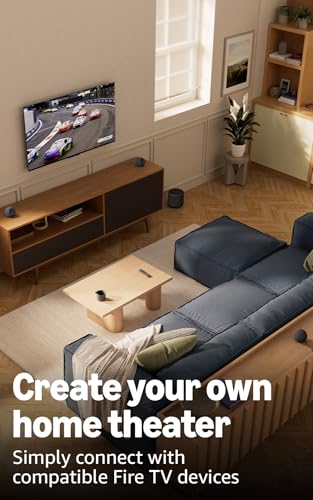
For home theater enthusiasts, the Echo Dot Max offers compelling possibilities. You can pair multiple units together for stereo sound or create a full surround sound system with up to five Dot Max speakers connected to Fire TV devices. This flexibility allows you to build a wireless home theater setup without running cables or investing in traditional AV receivers.
The spatial audio processing adapts to your room's acoustics automatically, optimizing sound based on room size, furniture placement, and wall materials. This means the same speaker setup will sound different (and better) in a carpeted living room versus a hardwood-floored bedroom, adjusting frequency response to compensate for acoustic differences.
The Echo Show 8 also supports spatial audio and can be part of multi-room setups, but its design priorities lean toward individual use rather than home theater integration. Its front-facing speaker configuration works best when you're sitting in front of the device, making it ideal for kitchen countertops or bedside tables rather than living room entertainment centers.
For serious music listening or home theater use, the Echo Dot Max's acoustic optimization and multi-speaker capabilities make it the clear choice. The Echo Show 8 works better as a secondary device that provides visual feedback and convenient control over your main entertainment system.
At the time of writing, the Echo Dot Max represents exceptional value for audio quality, typically priced significantly lower than the Echo Show 8. The price difference – usually $50-80 – reflects the additional hardware and capabilities of the smart display.
The Echo Dot Max delivers premium audio quality that typically requires speakers costing 2-3 times more. If your primary goal is music listening and voice control, you're getting audiophile-level performance at a mainstream price point.
The Echo Show 8 combines multiple devices into one unit: smart speaker, display, video calling device, and smart home hub. When you consider that a separate smart home hub costs $50-100, a decent video calling camera runs $100-150, and you'd still need a smart speaker for voice control, the Show 8's integrated approach provides substantial value for users who will actually utilize these features.
The key consideration is whether you'll use the visual features enough to justify the higher cost. If you primarily interact with Alexa through voice commands and rarely need visual feedback, the Echo Dot Max's superior audio quality at a lower price makes more sense. If you value video calling, visual smart home control, and entertainment viewing, the Echo Show 8's additional capabilities justify the premium.
Both devices were released in 2025 as part of Amazon's major Echo lineup refresh. This timing is significant because it represents Amazon's response to increased competition from Apple's HomePod lineup and Google's Nest devices, pushing the company to deliver more specialized, higher-performance devices rather than one-size-fits-all solutions.
The Echo Dot Max represents the culmination of years of acoustic engineering, incorporating lessons learned from the Echo Studio's development into a compact form factor. The dual-driver integration and spatial audio processing represent genuine technological advancement rather than incremental improvements.
The Echo Show 8 (3rd Gen) builds on the success of previous Echo Show models while addressing key weaknesses: slow response times, limited smart home integration, and poor camera placement. The centered camera and built-in smart home hub functionality directly respond to user feedback from earlier generations.
Choose the Echo Dot Max if you're primarily interested in superior audio quality and voice-only interaction. It's perfect for music enthusiasts who want premium sound without premium prices, people building multi-room audio systems, or anyone who prefers technology that stays invisible until needed. The compact design makes it ideal for bedrooms, home offices, or any space where a screen might be distracting.
The Echo Dot Max also excels for home theater applications, offering wireless surround sound capabilities that would traditionally require expensive AV receivers and cable runs. If you're building an entertainment system around Fire TV devices, multiple Dot Max speakers provide cinema-quality audio without the complexity of traditional home theater equipment.
Choose the Echo Show 8 (3rd Gen) if you value visual feedback and interactive control. It's exceptional for kitchens where you want to follow recipes, watch cooking shows, or keep an eye on timers while preparing meals. The video calling capabilities make it perfect for staying connected with family members, especially grandparents who appreciate the large screen and simple interface.
The smart home hub functionality makes the Echo Show 8 invaluable for anyone with complex smart home setups. If you have devices from multiple manufacturers using different protocols, or if you're tired of managing separate hub devices, the Show 8's integrated approach simplifies your entire smart home ecosystem.
Both devices represent significant advances in their respective categories, but they serve fundamentally different use cases. The Echo Dot Max perfects the invisible smart speaker concept, delivering premium audio quality and seamless voice interaction. The Echo Show 8 (3rd Gen) creates a visual command center that combines multiple device functions into a single, highly capable unit.
Your choice ultimately depends on whether you want your smart assistant to be heard but not seen, or whether you value the additional capabilities that come with visual interaction. Both devices excel at what they're designed to do – the question is which design philosophy better matches how you want to interact with your smart home.
| Amazon Echo Dot Max Smart Speaker | Amazon Echo Show 8 3rd Gen Smart Display |
|---|---|
| Audio Quality - Most important for music listening and entertainment | |
| Dual-driver system (woofer + tweeter) with 3x bass of standard Dot, room-filling spatial audio | Dual 2-inch neodymium speakers with passive bass radiator, good but display-optimized design |
| Display and Visual Features - Essential for video calls, recipes, and smart home control | |
| No display (voice-only interaction, zero visual distractions) | 8-inch HD touchscreen (1280x800) with adaptive content that changes based on distance |
| Smart Home Hub Capabilities - Eliminates need for separate hub devices | |
| Standard Alexa connectivity (relies on other hubs for Zigbee/Thread devices) | Built-in Zigbee, Thread, and Matter hub support (saves $50-100 on separate hubs) |
| Camera and Video Calling - Important for family communication and security | |
| No camera (maximum privacy, no video calling capability) | Centered 13MP camera with auto-framing and privacy shutter for video calls |
| Processing Power - Affects response speed and multitasking | |
| AZ3 chip optimized for audio and voice recognition | AZ3 Pro chip with 40% faster smart home responses and local processing |
| Multi-Room Audio - For whole-home sound systems and home theater | |
| Supports pairing up to 5 units for stereo/surround sound with Fire TV | Can join multi-room setups but front-facing design better for individual use |
| Form Factor and Design - How it fits in your space | |
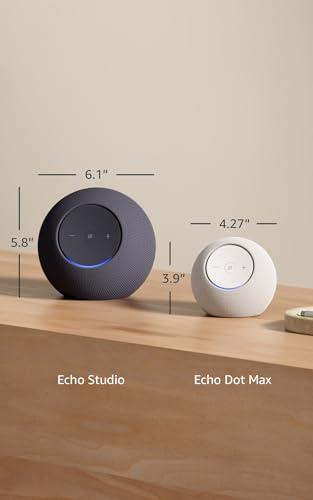
| Compact spherical design with 3D knit fabric, blends invisibly | Larger footprint with 8-inch screen, designed as visual centerpiece |
| Entertainment Features - Streaming and content consumption | |
| Audio-only content (music, podcasts, audiobooks) | Access to 420+ streaming channels, recipe display, visual timers |
| Best Use Cases - Who should choose each device | |
| Music enthusiasts, bedrooms, home theater, voice-only preference | Kitchens, video calling, complex smart homes, visual interaction preference |
The Amazon Echo Dot Max Smart Speaker is significantly better for music listening, featuring a dual-driver system with dedicated woofer and tweeter that delivers 3x more bass than standard Echo devices. The Echo Show 8 3rd Gen Smart Display has good audio quality with dual neodymium speakers, but its design prioritizes screen integration over pure audio performance. If music quality is your primary concern, the Echo Dot Max provides audiophile-level sound in a compact package.
Only the Amazon Echo Show 8 3rd Gen Smart Display supports video calls through its centered 13MP camera with auto-framing technology. The Amazon Echo Dot Max Smart Speaker has no camera or display, so it can only handle voice calls through your connected phone or other Alexa devices. For families who want to video chat with relatives or use the device for work meetings, the Echo Show 8 is the clear choice.
The Echo Show 8 3rd Gen Smart Display excels at smart home control with built-in Zigbee, Thread, and Matter hub support, eliminating the need for separate hub devices. It also provides visual controls through its touchscreen interface. The Amazon Echo Dot Max Smart Speaker offers standard Alexa voice control but requires separate hubs for many smart devices. For complex smart home setups, the Echo Show 8 provides superior integration and control options.
The Amazon Echo Dot Max Smart Speaker is excellent for home theater use, supporting multi-speaker pairing with up to 5 units to create surround sound systems with Fire TV devices. Its spatial audio technology adapts to room acoustics automatically. The Echo Show 8 3rd Gen Smart Display can join multi-room setups but its front-facing design is better suited for individual use rather than home theater integration. Choose the Echo Dot Max for serious home entertainment systems.
The Echo Show 8 3rd Gen Smart Display is ideal for kitchens, offering recipe display with step-by-step instructions, visual timers, and the ability to watch cooking shows or news while preparing meals. The Amazon Echo Dot Max Smart Speaker works well for kitchen music and voice commands but lacks the visual features that make cooking easier. For culinary enthusiasts, the Echo Show 8 provides significantly more kitchen-focused functionality.
The Echo Show 8 3rd Gen Smart Display provides access to over 420 streaming channels and can display video content on its 8-inch screen, though major services like Netflix may have limitations. The Amazon Echo Dot Max Smart Speaker has no display and only supports audio content like music, podcasts, and audiobooks. For visual entertainment, only the Echo Show 8 offers streaming capabilities.
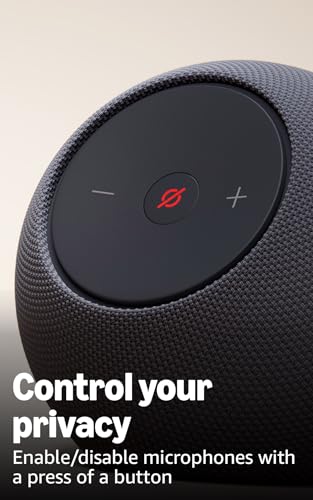
The Amazon Echo Dot Max Smart Speaker offers maximum privacy with no camera or display, eliminating visual surveillance concerns. The Echo Show 8 3rd Gen Smart Display includes a 13MP camera but features a physical privacy shutter that completely blocks the lens when closed. Both devices have microphone mute buttons. Privacy-conscious users may prefer the Echo Dot Max for its complete lack of visual recording capability.
The Amazon Echo Dot Max Smart Speaker is excellent for bedrooms with its compact design, superior audio for music or sleep sounds, and no screen to create unwanted light or distractions. The Echo Show 8 3rd Gen Smart Display can work in bedrooms for video calls and alarm clock functionality, but the always-present screen may be distracting for some users. Most people find the Echo Dot Max better suited for bedroom environments.
Both devices offer excellent voice recognition, but the Echo Show 8 3rd Gen Smart Display has a slight edge with its AZ3 Pro chip providing 40% faster response times for smart home commands. The Amazon Echo Dot Max Smart Speaker uses the AZ3 chip with optimized microphone arrays for superior far-field voice detection. For basic voice commands, both perform excellently, but the Echo Show 8 handles complex multi-device scenarios faster.
The Echo Show 8 3rd Gen Smart Display offers full touchscreen control, allowing you to adjust settings, control smart devices, and access features silently through taps and swipes. The Amazon Echo Dot Max Smart Speaker relies entirely on voice commands and physical buttons for volume and mute functions. For situations where quiet operation is needed, the Echo Show 8 provides more flexible control options.
Value depends on your needs: the Amazon Echo Dot Max Smart Speaker delivers premium audio quality typically found in much more expensive speakers, making it exceptional value for music lovers. The Echo Show 8 3rd Gen Smart Display costs more but combines multiple devices (smart speaker, display, camera, smart home hub) into one unit. The Echo Dot Max offers better pure audio value, while the Echo Show 8 provides better overall functionality value.
For first-time Alexa users, the Echo Show 8 3rd Gen Smart Display often works better because its visual interface makes learning Alexa's capabilities easier and more intuitive. You can see weather forecasts, calendar events, and smart home controls without memorizing voice commands. The Amazon Echo Dot Max Smart Speaker is better for users who already know they prefer voice-only interaction and prioritize audio quality. Most beginners find the Echo Show 8 more user-friendly for getting started with smart home technology.
We've done our best to create useful and informative comparisons to help you decide what product to buy. Our research uses advanced automated methods to create this comparison and perfection is not possible - please contact us for corrections or questions. These are the sites we've researched in the creation of this article: techradar.com - engadget.com - engadget.com - t3.com - telegraph.co.uk - gadgetmatch.com - youtube.com - youtube.com - youtube.com - youtube.com - homecrux.com - aboutamazon.com - phonearena.com - tomsguide.com - matteralpha.com - techbuzz.ai - techradar.com - pocket-lint.com - bestbuy.com - techradar.com - techradar.com - youtube.com - tomsguide.com - thedisconnekt.com - androidcentral.com - bestbuy.com - versus.com - versus.com - dimensions.com - ifixit.com - bestbuy.com - dell.com - youtube.com - youtube.com

Privacy Policy
Terms and Conditions - Affiliate Policy
Home Security
© Copyright 2008-2026.
11816 Inwood Rd #1211, Dallas, TX 75244