



If you're building out an Alexa-powered smart home, you've probably noticed Amazon offers two very different approaches to entertainment and control. The Amazon Echo Studio represents their flagship audio-first philosophy—think of it as Amazon's answer to Apple's premium HomePod. Meanwhile, the Echo Show 8 (3rd Gen) takes a completely different route, packing a touchscreen, camera, and decent speakers into one versatile device.
The choice between these isn't just about features—it's about how you want to interact with your smart home and what matters most in your daily routine. Do you prioritize audiophile-grade music listening, or would you rather have a visual command center that can handle video calls, streaming, and smart home management all in one place?
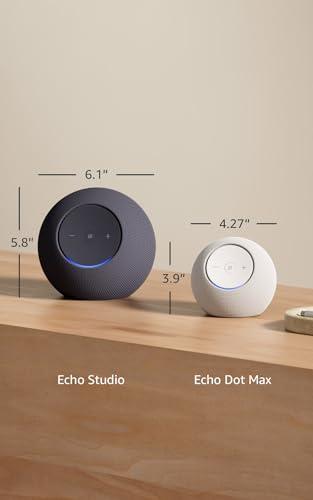
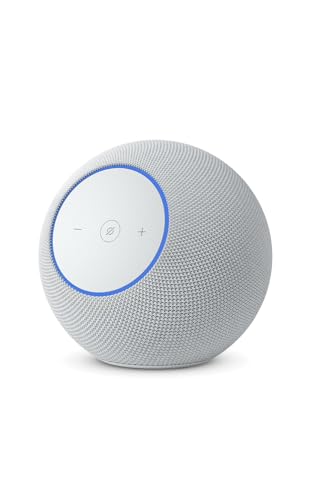
When Amazon designed the Echo Studio, they had one clear goal: deliver the best possible sound quality in their ecosystem. Released in 2019, it was Amazon's direct challenge to premium smart speakers, and the latest 2025 generation has only refined that focus with improved processing power and a more compact design.
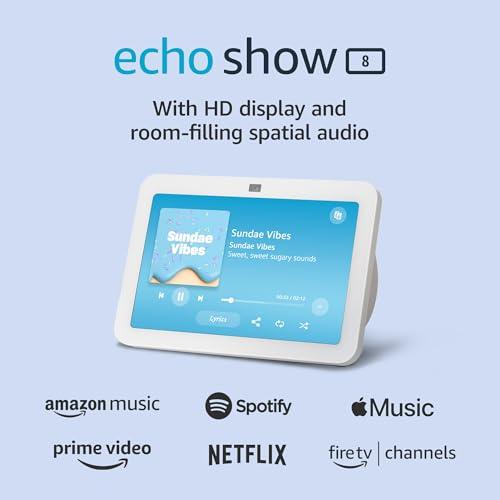
The Echo Show 8 (3rd Gen), launched in 2023, represents the evolution of Amazon's smart display lineup. Rather than competing purely on audio quality, it aims to be your smart home's visual nerve center—handling everything from morning weather updates to evening video calls with family.
These represent fundamentally different philosophies about how smart devices should fit into your home. The key considerations boil down to whether you want a dedicated premium audio experience or prefer the flexibility of a multi-functional hub that does several things well.
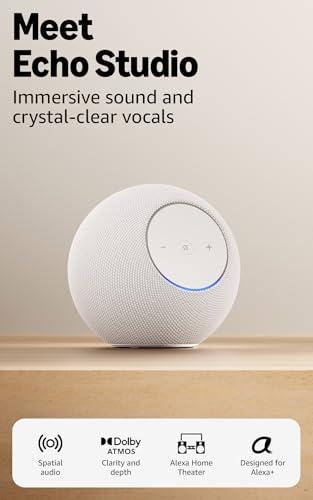
The Amazon Echo Studio doesn't mess around when it comes to sound. Its five-speaker configuration includes three 2-inch midrange drivers, one 5.25-inch woofer, and a 1-inch tweeter—all working together to create what Amazon calls "room-filling sound." But the real magic happens in how these speakers are positioned and how the device processes audio.
The woofer fires downward through a bass port, which helps generate deep, powerful low-end frequencies without making the speaker sound boomy or muddy. Meanwhile, the midrange drivers are positioned strategically to create a wide soundstage—that's the sense of space and separation you hear between different instruments in a song.
What sets the Echo Studio apart is its room adaptation technology, sometimes called Omnisense Technology in the newer generation. This feature uses built-in microphones to analyze your room's acoustics in real-time, then adjusts the audio output to compensate for factors like hard surfaces, furniture placement, or room size. If you place it near a wall, it automatically reduces bass to prevent that boomy sound. In an open space, it might enhance certain frequencies to maintain clarity.
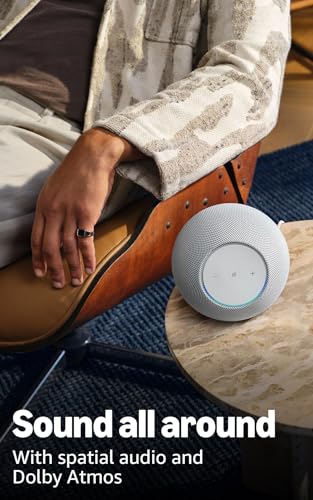
The Studio supports Hi-Res audio up to 24-bit/192kHz—technical specs that essentially mean it can play back music with much more detail than standard streaming quality. It also handles spatial audio formats like Dolby Atmos, which creates a three-dimensional sound experience that can make you feel like you're sitting in a recording studio or concert hall.
From our research into professional reviews and user feedback, the Echo Studio consistently delivers on its premium audio promises. Reviewers often compare it favorably to Apple's HomePod, noting that it produces a bigger, more spacious sound that fills larger rooms effectively. The bass response is particularly impressive, though some users note it can occasionally feel overemphasized depending on the genre and room acoustics.
The Echo Show 8 (3rd Gen) takes a completely different approach to audio. Its dual 2-inch neodymium speakers work with a passive bass radiator—essentially a membrane that vibrates in response to the main speakers to enhance low-frequency response without requiring additional power.
While this setup can't match the Echo Studio for pure audio fidelity, user reviews consistently praise the Show 8's sound quality as surprisingly robust for a device with a screen. Many users report it's loud enough to fill a typical living room or kitchen and produces clearer dialogue for video content than many soundbars.
The Echo Show 8 also includes spatial audio processing, though it's optimized more for speech clarity and multimedia content than for critical music listening. The room adaptation technology helps optimize sound for its typical countertop placement, automatically adjusting for the reflective surfaces commonly found in kitchens and home offices.
Here's where the fundamental difference between these devices becomes crystal clear. The Echo Studio has no screen, no camera, no visual interface at all. Every interaction happens through voice commands or the Alexa app on your phone.
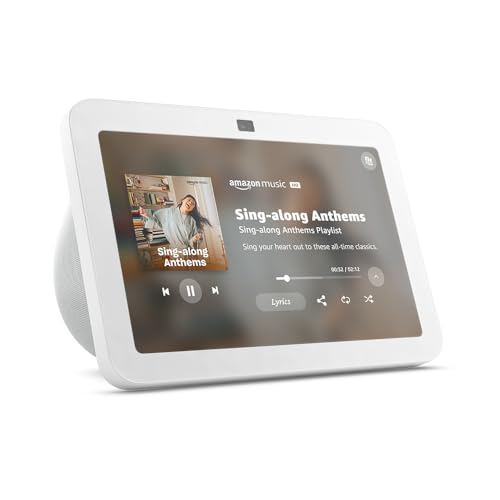
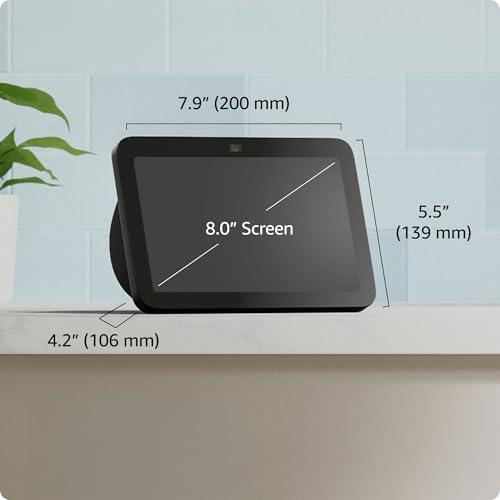
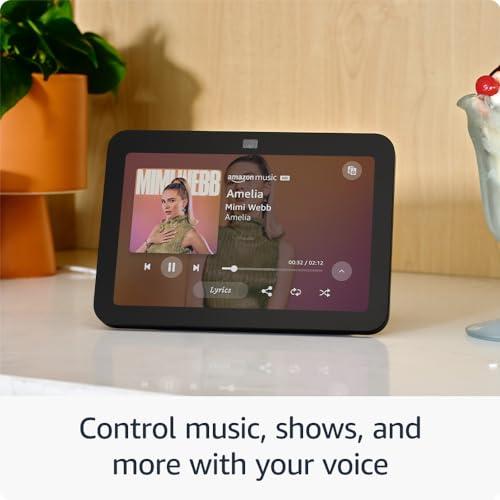
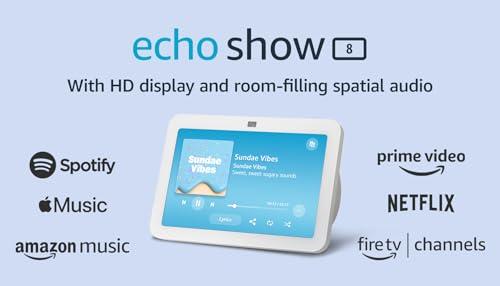
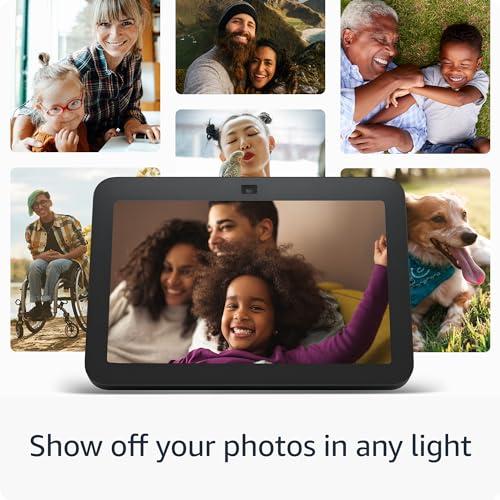
The Echo Show 8 (3rd Gen), meanwhile, centers its entire experience around its 8-inch touchscreen. The 1280 x 800 resolution display is sharp enough for comfortable viewing from typical countertop distances, and the edge-to-edge glass gives it a more modern appearance than previous generations.
One of the most impressive features of the Echo Show 8 is something called Adaptive Content. This technology uses proximity sensors to change what's displayed based on how far you are from the device. When you're across the room, it shows large, glanceable information like weather icons or calendar reminders. Walk closer, and it transitions to more detailed widgets and interactive controls.
This might sound like a gimmick, but in practice, it makes the device feel much more intuitive. Instead of cluttering the screen with tiny widgets you can't read from a distance, or showing overly simplified information when you're trying to interact directly, it adapts to match how you're actually using it.
The centered 13MP camera on the Echo Show 8 represents a significant upgrade from earlier generations. The auto-framing feature pans and zooms to keep you centered during video calls, which works well for both personal conversations and work meetings. While it's not as smooth as dedicated webcams, it's perfectly adequate for most home use.
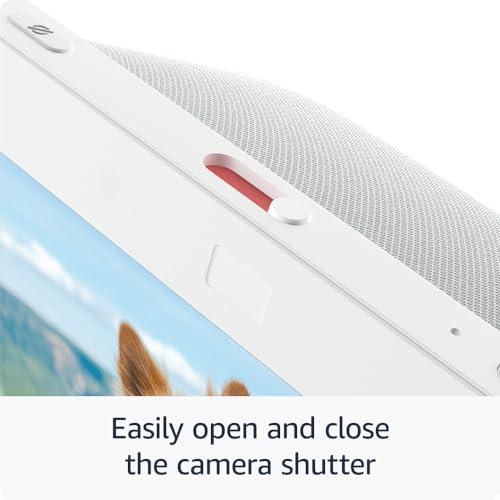
The physical privacy shutter addresses one of the most common concerns about smart displays—you can physically block the camera when you don't want it active, rather than relying solely on software controls.
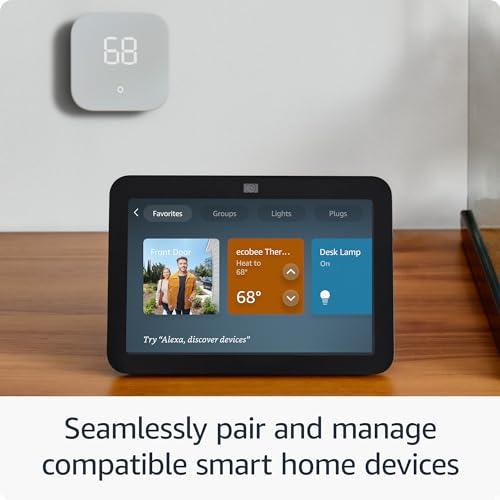
Both devices serve as excellent smart home hubs, but they approach control differently. The Echo Show 8 (3rd Gen) supports a comprehensive range of protocols including Zigbee, Matter, Thread border router, BLE Mesh, and Amazon's Sidewalk network. This broad compatibility means it can directly control devices from different manufacturers without requiring separate hubs.
The Echo Studio includes Zigbee and Matter support, making it compatible with most modern smart home devices, though it lacks some of the newer protocols found in the Show 8. However, it does include a 3.5mm/optical audio input—a unique feature that lets you connect external audio sources like turntables or CD players.
The difference in smart home control comes down to interaction style. With the Echo Studio, everything happens through voice commands. This works beautifully for simple tasks like "turn off the living room lights" or "set the temperature to 72 degrees." But complex smart home routines or precise control can be frustrating without visual feedback.
The Echo Show 8 offers both voice and visual control. You can say "show me the security cameras" and get live feeds on screen, or tap through lighting controls to adjust individual bulbs. For managing multiple devices or understanding device status at a glance, the visual interface proves far more efficient.
The Echo Show 8 (3rd Gen) runs on an octa-core processor with Amazon's AZ2 Neural Network Engine, which delivers noticeably faster performance than previous generations. Users consistently report that touch interactions feel instant, Alexa responses come quickly, and apps launch without hesitation.
The Echo Studio, particularly in its 2025 generation, includes the newer AZ3 Pro chip with AI acceleration. This primarily benefits audio processing and voice recognition, allowing more commands to be processed locally rather than sending everything to Amazon's servers.
Both devices handle typical smart home commands quickly, but the Show 8's superior processing power becomes apparent when multitasking—streaming video while managing smart home devices, for example.
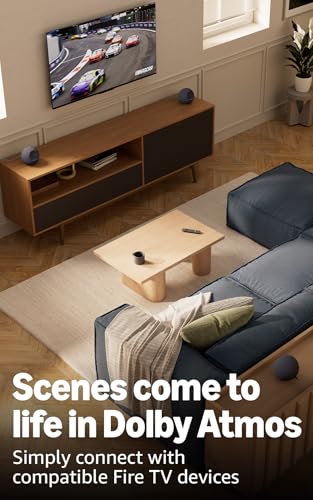
If you're considering either device as part of a home theater setup, the Echo Studio has a clear advantage. It can pair wirelessly with Fire TV devices to serve as your main speakers, and its spatial audio capabilities work particularly well with movie content that supports Dolby Atmos.
Multiple Echo Studios can be paired for true stereo separation, creating a surprisingly capable surround sound system. The room adaptation technology helps optimize audio regardless of your seating arrangement or room acoustics.
The Echo Show 8 isn't designed for home theater use, though it works fine for casual viewing of shows or videos in smaller spaces like bedrooms or kitchens.
At the time of writing, the Echo Studio represents Amazon's premium audio offering, priced accordingly but often costing significantly less than comparable speakers from Apple or other premium brands. If audio quality is your primary concern, it delivers impressive performance for the investment.
The Echo Show 8 (3rd Gen) typically costs less than the Studio while offering much broader functionality. For users who want one device that handles multiple roles—smart home control, video calling, entertainment, and information display—it represents excellent value.
The Echo Show 8 excels in kitchens and home offices where you need quick access to recipes, timers, calendar information, and video calls. The ability to watch cooking videos, display step-by-step recipe instructions, and handle video calls while your hands are busy makes it incredibly practical for daily use.
The Echo Studio works better in dedicated listening spaces—living rooms, bedrooms, or home offices where music quality matters more than visual functionality. Its substantial size and weight mean it's more of a permanent installation than a device you'll move around frequently.
The Echo Studio has no battery power option—it needs to be plugged in constantly. Its 3.5kg weight makes it unsuitable for portable use, and the lack of any visual interface means you miss out on many Alexa features that rely on screen interaction.
The Echo Show 8 still has relatively thick bezels around its display, which can make it look dated compared to modern tablets or smartphones. The display is also quite reflective, which can be problematic in bright rooms or near windows.
Choose the Amazon Echo Studio if music listening is your primary use case and you want the best possible audio quality in Amazon's ecosystem. It's ideal for audiophiles who prefer voice-only interaction and don't need video calling or visual smart home controls. The spatial audio features and room adaptation technology make it particularly appealing for creating immersive listening experiences.
The Echo Show 8 (3rd Gen) makes more sense for most households because of its versatility. If you want one device that can handle morning news briefings, recipe displays during cooking, video calls with family, smart home management, and evening entertainment, it delivers impressive capabilities across all these use cases.
Consider your primary use environment too. The Echo Studio needs dedicated space and works best as part of an audio-focused setup. The Echo Show 8 thrives on countertops, desks, or bedside tables where its screen and camera can be easily accessed throughout the day.
For most people building their first smart home setup, the Echo Show 8 offers better overall value and functionality. But if you're serious about audio quality and already have other devices handling video calls and visual controls, the Echo Studio delivers a premium listening experience that's hard to match in its price range.
The choice ultimately comes down to whether you want a specialized audio device or a versatile smart home hub that does many things well. Both represent excellent execution of their respective design philosophies.
| Amazon Echo Studio Smart Speaker | Amazon Echo Show 8 3rd Gen Smart Display |
|---|---|
| Primary Design Purpose - Fundamentally different approaches | |
| Premium audio-focused smart speaker with no display | Multi-functional smart display with touchscreen interface |
| Audio Configuration - Key difference in sound quality | |
| 5-speaker array: 3 midrange, 1 woofer, 1 tweeter with 200W power | 2 neodymium speakers with passive bass radiator |
| Audio Format Support - Important for music enthusiasts | |
| Hi-Res audio up to 24-bit/192kHz, Dolby Atmos, spatial audio | Standard formats with spatial processing, optimized for multimedia |
| Display and Visual Interface - Major functional difference | |
| No display or visual interface whatsoever | 8-inch HD touchscreen (1280 x 800) with Adaptive Content |
| Camera and Video Calling - Communication capabilities | |
| No camera or video calling features | 13MP centered camera with auto-framing and privacy shutter |
| Smart Home Hub Protocols - Device compatibility range | |
| Zigbee, Matter support | Zigbee, Matter, Thread border router, BLE Mesh, Sidewalk |
| Size and Portability - Space and placement considerations | |
| Large cylindrical design: 8.1" x 6.9", weighs 7.7 lbs | Compact countertop form: 7.9" x 5.4" x 4.2", weighs 2.3 lbs |
| Connectivity Options - Input flexibility | |
| Wi-Fi, Bluetooth, 3.5mm/optical audio input | Wi-Fi, Bluetooth (no audio input) |
| Processing Power - Performance and responsiveness | |
| AZ3 Pro chip with AI acceleration (2025 generation) | Octa-core SoC with AZ2 Neural Network Engine |
| Room Adaptation Technology - Automatic sound optimization | |
| Advanced Omnisense room acoustic sensing and adjustment | Basic room adaptation for countertop placement |
| Multi-Room and Pairing - Expandability options | |
| Can pair for stereo or integrate with Fire TV for home theater | Multi-room audio support, primarily single-unit design |
| Privacy Controls - User control over device monitoring | |
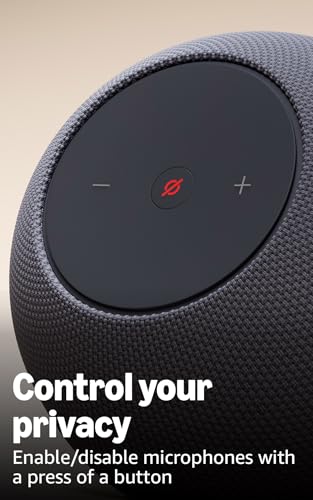
| Microphone mute button only | Microphone mute switch and physical camera shutter |
| Content Streaming and Entertainment - Visual media capabilities | |
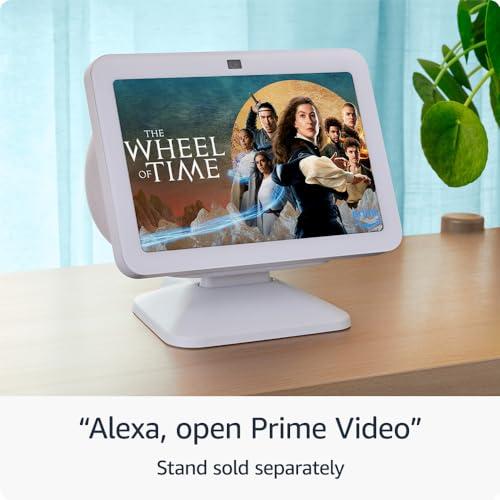
| Audio-only streaming from music services | Full video streaming (Prime Video, etc.) plus audio services |
| Price Range - Value proposition difference | |
| Premium pricing for flagship audio performance | Mid-range pricing for multi-functional capabilities |
The Amazon Echo Studio Smart Speaker delivers significantly better audio quality with its five-speaker array, including a 5.25-inch woofer and support for Hi-Res audio up to 24-bit/192kHz. The Echo Show 8 3rd Gen Smart Display has good sound for a display device but focuses more on multimedia content than pure music listening.
Only the Echo Show 8 3rd Gen Smart Display supports video calling with its 13MP centered camera and auto-framing feature. The Amazon Echo Studio Smart Speaker has no camera or display, limiting it to voice-only calls through Alexa.
Both devices work well for smart home control, but the Echo Show 8 offers visual interfaces for easier device management and supports more protocols (Zigbee, Matter, Thread). The Amazon Echo Studio relies entirely on voice commands but still supports major smart home protocols.
The Amazon Echo Studio Smart Speaker excels for home theater use, pairing wirelessly with Fire TV devices and supporting Dolby Atmos for immersive movie audio. Multiple Echo Studio units can create stereo pairs. The Echo Show 8 isn't designed for home theater applications.
The Echo Show 8 3rd Gen Smart Display is more compact at 7.9" x 5.4" x 4.2" and weighs just 2.3 pounds, making it perfect for countertops. The Amazon Echo Studio is larger and heavier at 7.7 pounds, requiring more dedicated placement space.
Only the Echo Show 8 can display video content with its 8-inch HD touchscreen, supporting Prime Video and other streaming services. The Amazon Echo Studio Smart Speaker has no display and only handles audio content.
The Echo Show 8 3rd Gen Smart Display typically offers better overall value with its multiple functions including display, camera, decent audio, and smart home hub capabilities. The Amazon Echo Studio costs more but delivers premium audio quality for serious music listeners.
Yes, both the Amazon Echo Studio Smart Speaker and Echo Show 8 work with major services like Spotify, Apple Music, Amazon Music, and Pandora. However, the Echo Studio better showcases high-quality streaming with its superior speakers and Hi-Res audio support.
The Echo Show 8 3rd Gen Smart Display excels in kitchens with its recipe displays, cooking timers, video calling capabilities, and countertop-friendly size. The Amazon Echo Studio works for kitchen audio but lacks the visual features that make cooking easier.
The Echo Show 8 offers full touch screen control in addition to voice commands, while the Amazon Echo Studio Smart Speaker relies entirely on voice control or the Alexa smartphone app for interaction.
Both devices include microphone mute options, but the Echo Show 8 3rd Gen Smart Display adds a physical camera shutter for complete privacy control. The Amazon Echo Studio only needs microphone controls since it has no camera.
Choose the Amazon Echo Studio Smart Speaker if premium audio quality is your top priority and you don't need visual features or video calling. Pick the Echo Show 8 if you want one device that handles multiple tasks including entertainment, communication, and smart home control with good (but not audiophile-level) sound quality.
We've done our best to create useful and informative comparisons to help you decide what product to buy. Our research uses advanced automated methods to create this comparison and perfection is not possible - please contact us for corrections or questions. These are the sites we've researched in the creation of this article: whathifi.com - crutchfield.com - rtings.com - dxomark.com - youtube.com - dimensions.com - youtube.com - bestbuy.com - techradar.com - dolby.com - consumerreports.org - engadget.com - phonearena.com - aboutamazon.com - askalexa.com - techradar.com - techradar.com - youtube.com - tomsguide.com - thedisconnekt.com - androidcentral.com - bestbuy.com - versus.com - versus.com - dimensions.com - ifixit.com - bestbuy.com - dell.com - youtube.com - youtube.com

Privacy Policy
Terms and Conditions - Affiliate Policy
Home Security
© Copyright 2008-2026.
11816 Inwood Rd #1211, Dallas, TX 75244