

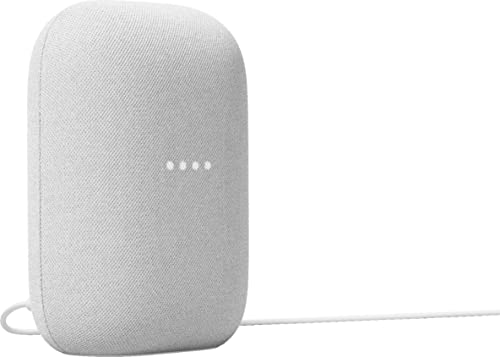
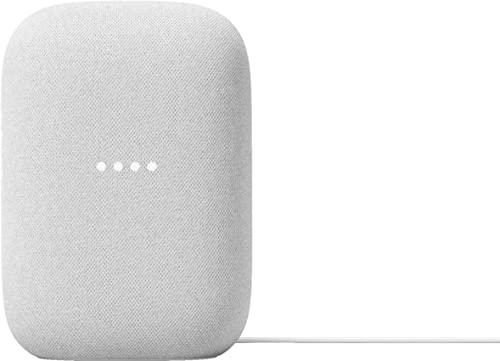
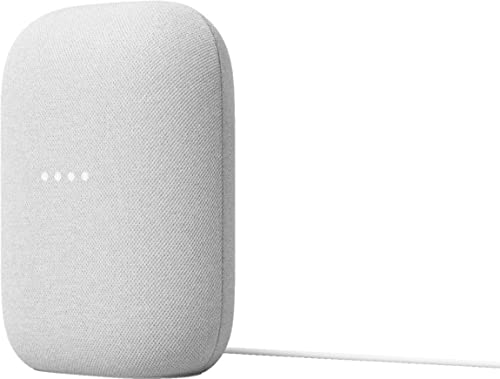
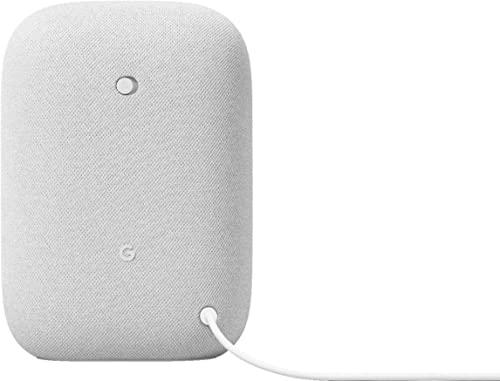
When you walk into a friend's house and ask Alexa to play music or check the weather with Google Assistant, you're experiencing one of two very different approaches to smart home technology. The choice between a dedicated smart speaker like the Google Nest Audio and a smart display such as the Amazon Echo Show 8 3rd Gen represents a fundamental decision about how you want to interact with your home's intelligence.
These aren't just different versions of the same product—they're entirely different philosophies. One focuses purely on delivering excellent sound and voice interaction, while the other adds a visual layer that transforms how you consume information and control your smart home. Understanding which approach fits your lifestyle better will save you from buyer's remorse and help you build a smart home setup that actually enhances your daily routine.
The smart home audio landscape has evolved dramatically since Amazon launched the first Echo in 2014. What started as simple voice-controlled speakers has branched into distinct categories, each serving different needs and preferences.
Smart speakers like the Google Nest Audio represent the original vision: excellent audio quality paired with voice assistant capabilities. These devices prioritize sound reproduction above all else, using their internal space efficiently for larger drivers (the components that actually create sound) and acoustic engineering. The trade-off is simplicity—you interact entirely through voice commands and rely on your phone for visual feedback.
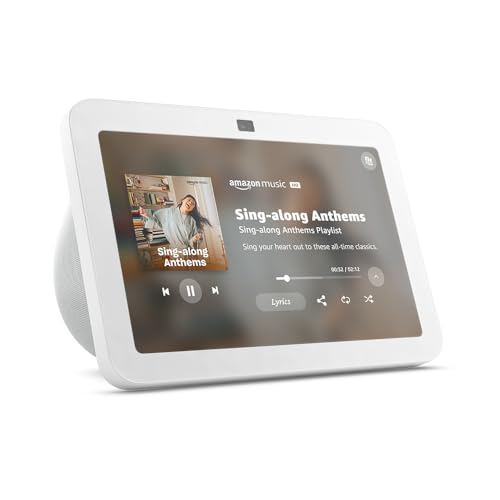
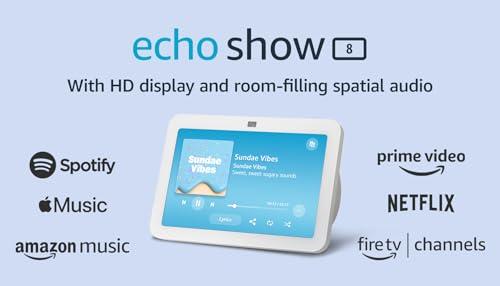
Smart displays like the Amazon Echo Show 8 emerged later as manufacturers realized that some interactions work better with visual elements. Released in its third generation in 2023, this category combines traditional smart speaker functionality with touchscreen interfaces, cameras for video calling, and visual feedback for everything from weather forecasts to recipe instructions.
The key considerations when choosing between these categories go beyond just "speaker versus screen." You're choosing between focused excellence and versatile convenience, between minimal visual footprint and comprehensive information display, and between voice-only interaction and multi-modal control.
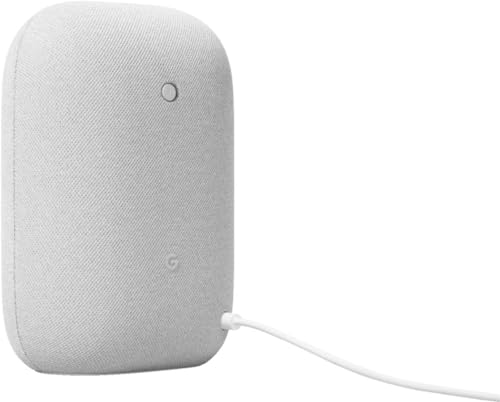
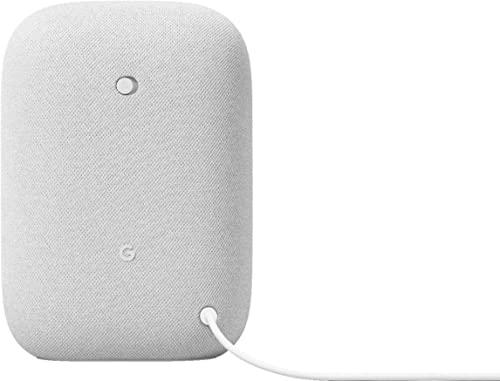
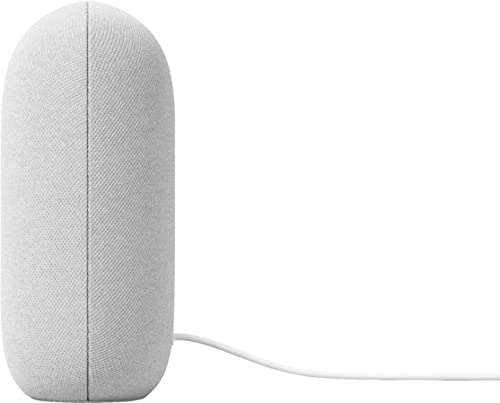
Google released the Nest Audio in 2020 as a direct replacement for the original Google Home, and the difference in sound quality is immediately apparent. The engineering team had one primary goal: create the best-sounding smart speaker at this price point, and it shows.
The Nest Audio houses a custom 75mm woofer—that's the larger driver responsible for bass and midrange frequencies—paired with a 19mm tweeter for crisp high-frequency details. This two-driver system might sound simple, but the implementation is sophisticated. Google claims the speaker delivers 75% more volume and 50% stronger bass compared to the original Google Home, and our research into user experiences confirms these aren't just marketing numbers.
What makes the Nest Audio special is its Ambient IQ technology, which automatically adjusts volume based on background noise in your room. If your dishwasher kicks on while you're listening to a podcast, the speaker intelligently increases volume to maintain clarity. This adaptive behavior works particularly well for spoken content like news and audiobooks, though it doesn't function with locally stored music files.
The speaker also includes real-time audio processing that analyzes the content you're playing and optimizes the sound signature accordingly. Music gets different treatment than podcasts, ensuring vocals remain clear and present regardless of what you're listening to.
The Amazon Echo Show 8 3rd Gen takes a fundamentally different approach to audio. Since it needs to handle everything from music playback to movie soundtracks to video call audio, the engineering priorities shift toward versatility rather than pure musical accuracy.
The device features dual 2-inch neodymium speakers—neodymium being a type of magnet that allows for more powerful sound from smaller drivers—complemented by a passive bass radiator. A passive radiator is essentially a speaker cone without a magnet that vibrates sympathetically to enhance bass response without requiring additional amplification.
What's particularly impressive about the Echo Show 8 is its spatial audio processing. The device uses Amazon's AZ2 Neural Network Engine (a specialized chip designed for AI processing) to analyze your room's acoustics and adjust sound output accordingly. This room adaptation technology means the speaker sounds different in a kitchen with hard surfaces than in a bedroom with carpeting and curtains, optimizing for each environment.
The result is audio that excels at dialogue clarity for video content and provides satisfying bass response for casual music listening. However, our analysis of expert reviews suggests that pure music reproduction doesn't quite match the Nest Audio's focused approach, particularly for complex musical passages where instrument separation matters.
For pure music listening, the Google Nest Audio wins decisively. Its larger woofer, audio-first engineering, and lack of visual components competing for internal space result in more accurate sound reproduction and better dynamics. The ability to pair two units for stereo sound further extends this advantage for serious listening sessions.
The Echo Show 8 excels when audio serves multimedia content. Video soundtracks, video calls, and spoken content all benefit from its multi-directional sound design and dialogue optimization. If you're watching cooking videos while preparing dinner, the Echo Show 8's approach proves more practical than pure audio fidelity.
Both devices excel at voice recognition, but they achieve this through different technological approaches that reflect their manufacturers' broader AI strategies.
The Google Nest Audio leverages Google's decades of search expertise and natural language processing. When you ask complex questions or request specific information, Google Assistant consistently provides more comprehensive and contextually relevant answers. This advantage becomes particularly apparent with follow-up questions, where the assistant maintains context better than competitors.
Voice Match technology allows the Nest Audio to recognize individual family members' voices, providing personalized responses for calendar events, commute times, and music preferences. The three far-field microphones are strategically positioned to pick up voices from across medium-sized rooms, though performance can degrade in very large or acoustically challenging spaces.
The Amazon Echo Show 8 pairs Alexa's voice processing with visual feedback that often proves more useful than audio responses alone. When you ask about the weather, seeing the weekly forecast on screen provides more information than a spoken summary. Recipe instructions become infinitely more practical when you can see ingredients lists and step-by-step photos.
The device's four far-field microphones, combined with the AZ2 Neural Engine's 40% faster processing compared to the previous generation, result in noticeably quicker response times. The visual confirmation of commands also reduces the anxiety of wondering whether the device heard you correctly—you can see the response forming on screen.
Perhaps more importantly, the Echo Show 8 supports Visual ID through its 13MP camera, recognizing registered users and personalizing the display accordingly. This camera-based recognition proves more reliable than voice-only identification, particularly in noisy environments.
This is where the philosophical differences between these devices become most apparent, and where the Amazon Echo Show 8 demonstrates a significant advantage for serious smart home enthusiasts.
The Google Nest Audio excels within Google's ecosystem, offering seamless integration with Nest thermostats, Chromecast devices, and Google Home products. The speaker supports Matter (a universal smart home standard that allows different brands to work together), ensuring compatibility with a wide range of third-party devices.
However, the Nest Audio requires external hubs for protocols like Zigbee, which many popular smart home devices still use. This means additional purchases and setup complexity if you want to control devices like Philips Hue lights or SmartThings sensors directly.
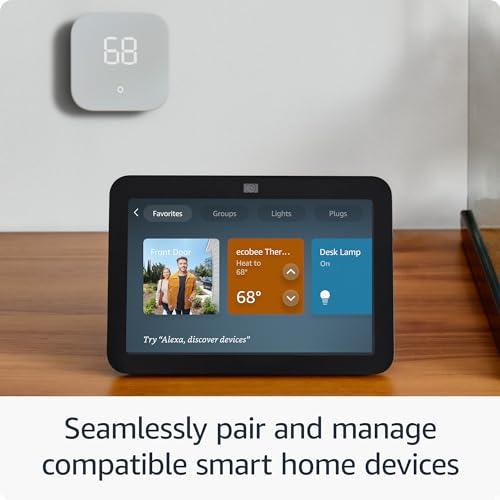
The Echo Show 8 3rd Gen includes built-in support for Zigbee, Matter, and Thread Border Router functionality. This means it can directly control hundreds of smart home devices without requiring separate hubs—a significant value proposition that's not immediately obvious from specification sheets.
Thread is a newer networking protocol designed specifically for smart home devices, offering better reliability and lower power consumption than traditional Wi-Fi connections. Having a Thread Border Router built into your Echo Show 8 future-proofs your smart home setup as more manufacturers adopt this standard.
The visual interface also simplifies smart home management in ways that voice-only control cannot match. Setting up new devices, adjusting multiple lights simultaneously, or checking the status of various sensors becomes intuitive through touch interaction rather than memorizing specific voice commands.
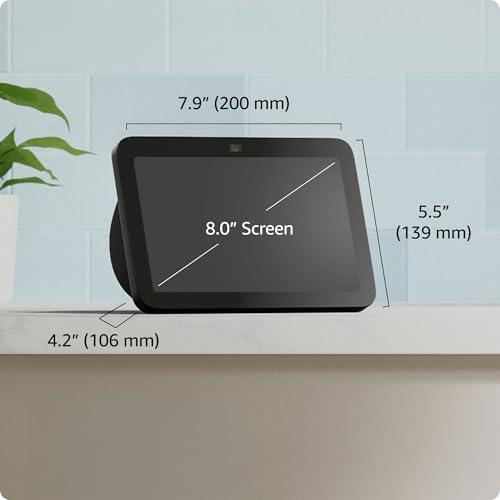
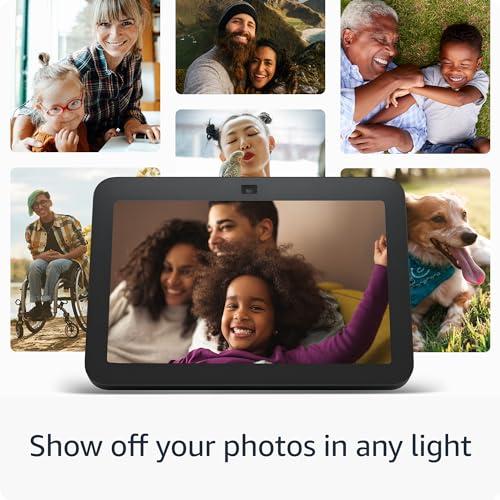
The 8-inch touchscreen on the Amazon Echo Show 8 operates at 1280×800 resolution—not cutting-edge by smartphone standards, but perfectly adequate for its intended use cases. The display's real value lies not in pixel density but in the convenience it provides for daily tasks.
One of the most thoughtful features introduced with the 3rd generation is Adaptive Content, which changes what you see based on your distance from the device. When you're across the room, the screen displays large, glanceable information like weather icons and calendar appointments. Move closer, and detailed widgets appear with more comprehensive information and interactive controls.
This might seem like a minor feature, but it addresses a real usability problem with always-on displays. Nobody wants to see cluttered information from across the kitchen, but when you're standing right in front of the device, you want access to detailed controls and information.
The 13MP centered camera supports auto-framing technology that keeps you in the center of video calls as you move around. While this feature works reliably, it's not quite as smooth as dedicated webcams, with a slight delay as it adjusts to your movement.
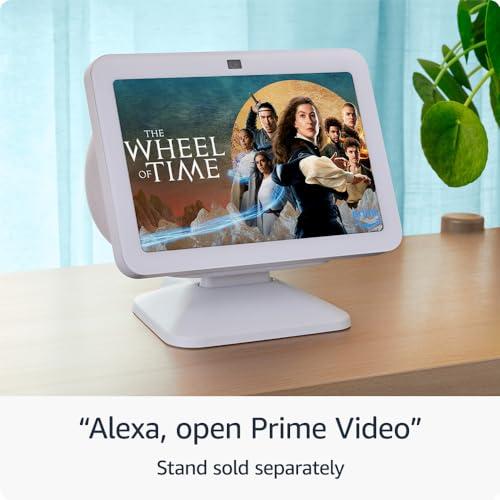
For visual media consumption, the Echo Show 8 transforms into a capable streaming device for YouTube, Prime Video, and other services. The audio quality enhancement really shines here, as the spatial processing optimizes sound for video content in ways that pure music speakers don't prioritize.
At the time of writing, the Google Nest Audio typically costs significantly less than the Amazon Echo Show 8 3rd Gen, making value calculations more complex than simple feature counting.
The Nest Audio delivers exceptional value if your primary need is high-quality audio and voice assistant functionality. The sound quality rivals much more expensive speakers, and the Google Assistant integration provides excellent smart home control within supported ecosystems.
For multi-room audio setups, the cost advantage becomes even more pronounced. Placing Nest Audio speakers throughout your home costs substantially less than equivalent Echo Show displays, while still providing comprehensive voice control in every room.
The device's minimal power consumption and lack of always-on display also provide ongoing value through lower energy costs, though this difference is relatively small in absolute terms.
The Amazon Echo Show 8 justifies its higher price through versatility and the inclusion of features that would otherwise require separate devices. The built-in smart home hub alone can save the cost of separate Zigbee and Thread controllers, while the camera eliminates the need for a dedicated video calling device.
However, this value proposition only holds if you actually use these additional features. Purchasing an Echo Show 8 solely for audio playback represents poor value compared to the Nest Audio or other dedicated speakers.
Neither device serves as a serious home theater audio solution, but they integrate with existing setups in different ways that might influence your decision.
The Google Nest Audio can serve as part of a Google Home speaker group, providing synchronized audio throughout your home when paired with Chromecast-enabled devices. While it won't replace dedicated surround sound systems, it can handle background music and casual viewing for smaller spaces.
The Amazon Echo Show 8 offers more flexibility for video content consumption but remains limited by its small drivers for serious movie watching. However, its ability to control other devices—including sound bars and AV receivers through IR blasters or smart home integration—makes it a capable control hub for more complex home theater setups.
If home theater audio is a priority, neither device should be your primary speaker solution. Instead, consider them as control interfaces and supplementary audio sources that enhance but don't replace dedicated audio equipment.
You prioritize audio quality above all else. If music listening represents your primary use case, the Nest Audio's superior sound reproduction and stereo pairing capabilities provide better value than compromising for visual features you won't use.
Your smart home ecosystem centers on Google services. Heavy users of Google Calendar, YouTube Music, and Nest devices will find the integration seamless and comprehensive.
You prefer minimal visual presence. The Nest Audio's subtle design and lack of always-on display make it suitable for bedrooms, offices, or anywhere you want smart functionality without visual distraction.
Budget is a primary concern. The lower cost makes it practical to deploy multiple units throughout your home, creating a comprehensive voice control network without significant expense.
You want a central smart home command center. The built-in hub capabilities and visual interface make complex smart home management significantly easier than voice-only alternatives.
Video calling matters to your household. Families with distant relatives or remote workers will find the camera and auto-framing features genuinely useful for staying connected.
Kitchen or office placement is intended. These locations benefit most from visual information display, recipe instructions, calendar reminders, and quick information access.
You consume visual media regularly. YouTube videos, streaming services, and visual content consumption justify the display and enhanced multimedia audio processing.
The fundamental question isn't which device is objectively better—it's which approach to smart home interaction matches your lifestyle and priorities. The Google Nest Audio excels at being an exceptional speaker that happens to be smart, while the Amazon Echo Show 8 succeeds as a comprehensive smart home interface that also plays audio well.
Consider your daily routines, evaluate which features you'll actually use, and choose the device that enhances rather than complicates your interaction with technology. Both represent excellent execution of their respective philosophies, making your decision less about finding the "winner" and more about finding the right fit for your home.
| Google Nest Audio | Amazon Echo Show 8 3rd Gen |
|---|---|
| Product Category - Fundamentally different approaches to smart home control | |
| Smart Speaker (audio-only) | Smart Display (audio + visual + hub) |
| Release Year - Shows how current the technology is | |
| 2020 (mature, proven design) | 2023 (latest generation with newest features) |
| Audio Hardware - Critical for music quality and room-filling sound | |
| 75mm woofer + 19mm tweeter (dedicated audio focus) | Dual 2-inch neodymium speakers + passive bass radiator (multimedia optimized) |
| Display - Changes how you interact with information and controls | |
| None (voice-only interaction) | 8-inch HD touchscreen (1280×800 resolution) |
| Voice Assistant - Affects smart home control and information quality | |
| Google Assistant with Voice Match | Alexa with Visual ID and voice recognition |
| Microphone Array - Important for voice pickup across rooms | |
| 3 far-field microphones | 4 far-field microphones |
| Smart Home Hub - Determines which devices you can control directly | |
| Matter support only (requires external hubs for Zigbee) | Built-in Zigbee, Matter, and Thread Border Router |
| Camera - Enables video calls and visual recognition | |
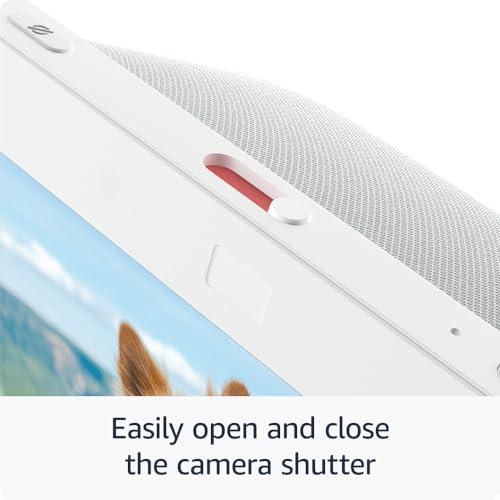
| None | 13MP with auto-framing and privacy shutter |
| Processor - Affects response speed and smart features | |
| Not specified (adequate for audio tasks) | Octa-core with AZ2 Neural Engine (40% faster than previous gen) |
| Connectivity - Determines streaming and device compatibility | |
| Wi-Fi, Bluetooth, Chromecast built-in | Wi-Fi, Bluetooth, works with major streaming services |
| Physical Controls - How you interact without voice commands | |
| Touch controls on top, hardware mic mute | Volume buttons, camera shutter, mic mute switch |
| Stereo Pairing - Important for music lovers wanting room-filling sound | |
| Yes (can pair two Nest Audio units) | No (single device only) |
| Power Requirements - Affects placement flexibility | |
| 30W external adapter (compact) | 18V DC barrel jack (larger footprint) |
| Privacy Features - Important for households concerned about always-listening devices | |
| Hardware mic mute, no camera | Hardware mic/camera mute, physical camera shutter |
| Best Use Cases - Who should choose each option | |
| Music lovers, multi-room audio, budget-conscious, privacy-focused | Smart home enthusiasts, families, visual learners, video callers |
The Google Nest Audio is significantly better for music listening. It features a dedicated 75mm woofer and 19mm tweeter designed specifically for audio quality, delivering 75% more volume and 50% stronger bass than previous Google speakers. The Amazon Echo Show 8 prioritizes multimedia audio for video content and voice calls, making the Google Nest Audio the clear winner for pure music enjoyment.
No, only the Amazon Echo Show 8 supports video calls through its 13MP camera with auto-framing technology. The Google Nest Audio is an audio-only device without any camera, so it can only handle voice calls through Google Assistant. If video calling with family is important, the Echo Show 8 is your only option between these two.
The Amazon Echo Show 8 3rd Gen is far superior as a smart home hub. It includes built-in Zigbee, Matter, and Thread Border Router support, allowing direct control of hundreds of smart devices without additional hubs. The Google Nest Audio only supports Matter and requires separate hubs for Zigbee devices, making the Echo Show 8 more comprehensive for smart home control.
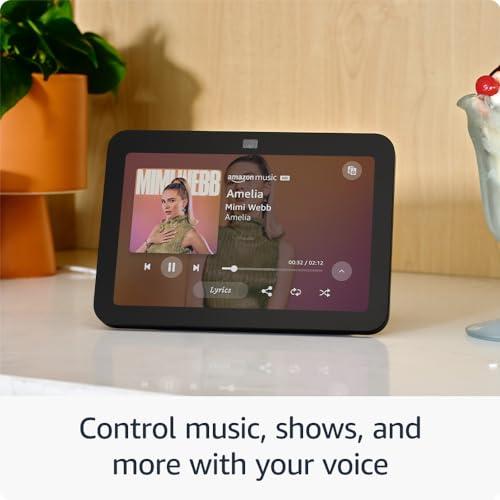
Each device works best within its own ecosystem. The Google Nest Audio integrates seamlessly with Google services like YouTube Music, Google Calendar, and Chromecast devices. The Amazon Echo Show 8 excels with Amazon services like Prime Video and Amazon Music. While both support some cross-platform features, you'll get the best experience matching the device to your preferred ecosystem.
The Amazon Echo Show 8 is ideal for kitchens. Its touchscreen displays recipes with step-by-step instructions, timers, shopping lists, and cooking videos. You can see weather forecasts and calendar events at a glance while preparing meals. The Google Nest Audio only provides voice interaction, making the visual interface of the Echo Show 8 much more practical for kitchen use.
Neither device is designed for serious home theater use, but they serve different supplementary roles. The Google Nest Audio can be part of a multi-room audio setup with Chromecast devices. The Amazon Echo Show 8 works better for casual video watching with its multimedia-optimized audio and screen, though both lack the power for true home theater applications.
Both devices excel at voice recognition but in different ways. The Amazon Echo Show 8 has four far-field microphones compared to three on the Google Nest Audio, and its AZ2 Neural Engine processes commands 40% faster. However, the Google Nest Audio benefits from Google's superior natural language processing for complex questions and searches.
The Google Nest Audio offers more privacy by design since it has no camera, only microphones that can be muted with a hardware switch. The Amazon Echo Show 8 includes both microphone and camera mute switches, plus a physical camera shutter. If privacy is your top concern, the camera-free Google Nest Audio provides fewer potential data collection points.
The Google Nest Audio is much more cost-effective for multi-room setups due to its lower price point. You can place several Nest Audio speakers throughout your home for comprehensive voice control at a fraction of the cost of multiple Echo Show 8 displays. The Google Nest Audio also supports stereo pairing for enhanced sound quality.
Yes, both the Google Nest Audio and Amazon Echo Show 8 require Wi-Fi internet connections to function. They rely on cloud processing for voice recognition, music streaming, and smart home control. Without internet, neither device can perform their primary functions, though the Echo Show 8 might retain some basic display functionality.
The Google Nest Audio is generally better for bedrooms due to its lack of always-on display that could cause light pollution during sleep. It has a minimal visual footprint and excellent audio for bedtime music or podcasts. The Amazon Echo Show 8 can work in bedrooms if you use the display brightness controls and camera shutter for privacy.
Yes, both devices can control smart home devices, but the Amazon Echo Show 8 offers more comprehensive control. Its built-in Zigbee hub directly controls many devices without additional equipment, while the Google Nest Audio may require separate hubs for some devices. The Echo Show 8's touchscreen also provides visual control interfaces that are more intuitive than voice-only commands from the Google Nest Audio.
We've done our best to create useful and informative comparisons to help you decide what product to buy. Our research uses advanced automated methods to create this comparison and perfection is not possible - please contact us for corrections or questions. These are the sites we've researched in the creation of this article: rtings.com - pocket-lint.com - whathifi.com - store.google.com - sypnotix.com - store.google.com - techradar.com - rtings.com - audiosciencereview.com - youtube.com - soundguys.com - audioholics.com - store.google.com - store.google.com - youtube.com - support.google.com - soundguys.com - dxomark.com - thenextweb.com - support.google.com - dimensions.com - store.google.com - store.google.com - bestbuy.com - en.wikipedia.org - store.google.com - cybershack.com.au - matteralpha.com - techradar.com - techradar.com - youtube.com - tomsguide.com - thedisconnekt.com - androidcentral.com - bestbuy.com - versus.com - versus.com - dimensions.com - ifixit.com - bestbuy.com - dell.com - youtube.com - youtube.com

Privacy Policy
Terms and Conditions - Affiliate Policy
Home Security
© Copyright 2008-2026.
11816 Inwood Rd #1211, Dallas, TX 75244