

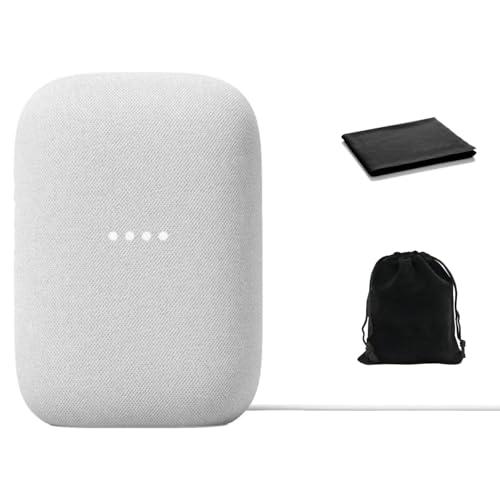
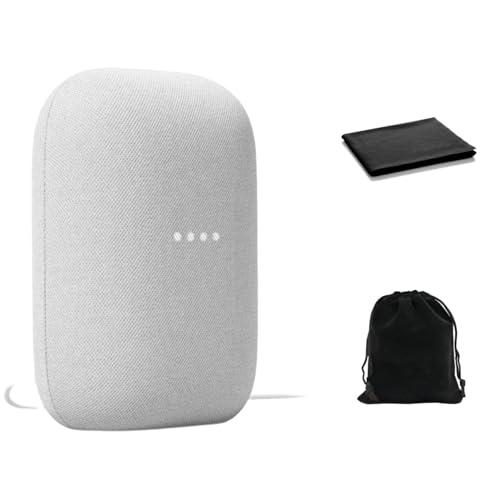
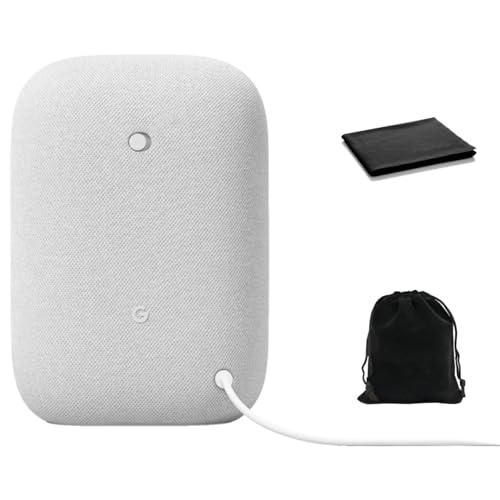
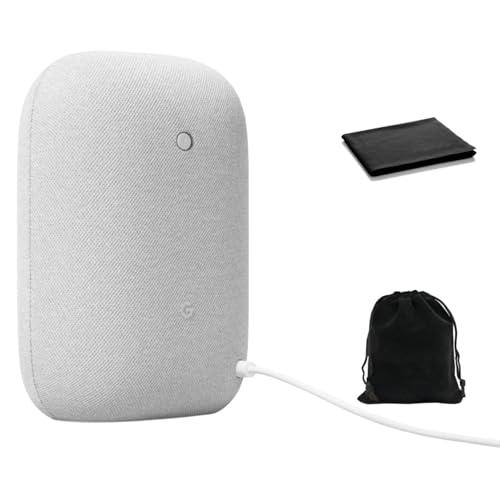
When Amazon released the first Echo smart speaker in 2015, it sparked a revolution in how we interact with our homes. Google joined the battle with the original Google Home in 2016, and since then, these two tech giants have been locked in an arms race to create the perfect smart home assistant. But here's where things get interesting: they've taken completely different approaches to solving the same problem.
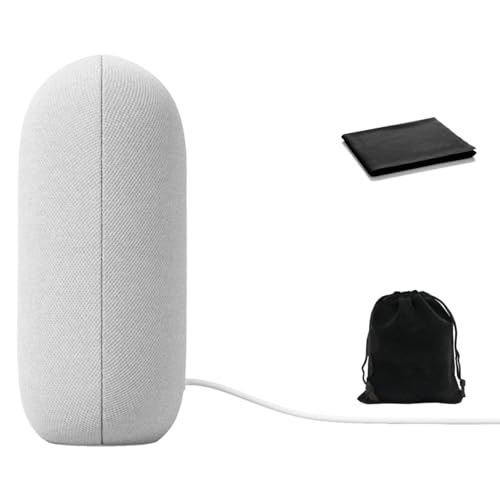
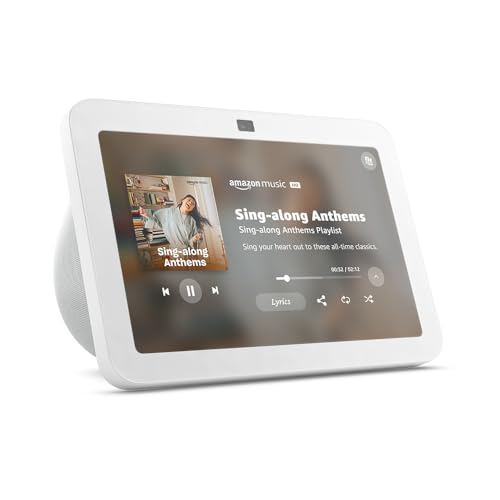
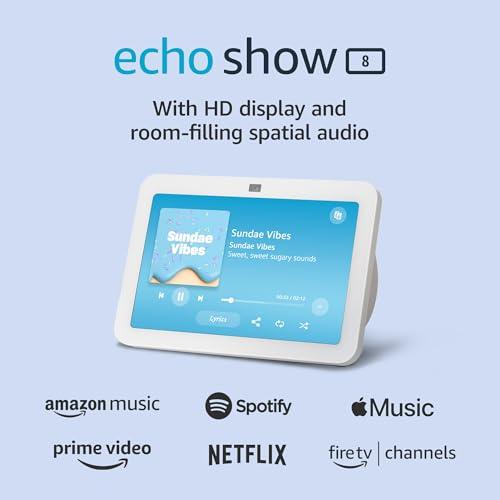
The Google Nest Audio, released in 2020 as a replacement for the original Google Home, represents the "pure audio" philosophy—no screen, no camera, just great sound and voice interaction. Meanwhile, the Amazon Echo Show 8 (3rd Gen), launched in 2023, embodies the "visual-first" approach with its 8-inch touchscreen display and built-in camera.
At the time of writing, these devices sit in different price brackets, with the Nest Audio positioned as the more affordable option and the Echo Show 8 commanding a premium for its display functionality. But which approach actually makes more sense for your home?
Before diving into specifics, it's crucial to understand that we're comparing two fundamentally different product categories. Smart speakers focus entirely on audio output and voice input—think of them as traditional speakers that happen to be incredibly smart. Smart displays, on the other hand, add a visual layer that transforms how you interact with your digital assistant.
This isn't just about having a screen versus not having one. The presence of a display changes everything: how you consume information, control smart home devices, communicate with others, and even where you'll want to place the device in your home. A screen also means a camera in most cases, which brings both convenience and privacy considerations.
The key question isn't which device is "better"—it's which approach fits your lifestyle, privacy preferences, and intended use cases.
Google's philosophy with the Nest Audio is refreshingly focused: create the best possible smart speaker experience without unnecessary complexity. Released in 2020, it represented a significant upgrade from the original Google Home, with Google claiming 75% more volume and 50% stronger bass than its predecessor.
The Nest Audio houses a 75mm woofer paired with a 19mm tweeter—a combination that delivers surprisingly balanced sound for a device this size. The woofer handles the low and mid-range frequencies (bass and vocals), while the tweeter takes care of the higher frequencies (cymbals, guitar strings, and vocal clarity). This two-driver setup is more sophisticated than single-driver speakers and contributes significantly to the device's audio quality.
What sets the Nest Audio apart is its real-time audio processing algorithm. This system continuously analyzes the music you're playing and adjusts the sound output to maintain optimal clarity and tonal balance. Whether you're listening to a bass-heavy hip-hop track or a delicate acoustic song, the speaker adapts to ensure each genre sounds its best.
The device also features Ambient IQ, which uses the built-in microphones to detect background noise in your room and automatically adjusts volume levels. This feature is particularly useful for spoken content like podcasts or audiobooks—if your dishwasher kicks on while you're listening to the news, the Nest Audio will bump up the volume to ensure you don't miss anything.
Our research into user reviews consistently shows that the Nest Audio punches above its weight class in audio quality. Users frequently compare it favorably to speakers costing significantly more, particularly praising its vocal clarity and room-filling sound. However, it's worth noting that while the bass is present and well-integrated, it won't satisfy bass-heads who want floor-shaking low-end response.
The Nest Audio runs Google Assistant, which excels in a few key areas. Its natural language processing feels more conversational than Alexa, and it's particularly strong at answering complex questions, handling follow-up queries, and integrating with Google services like YouTube, Gmail, and Google Calendar.
The device uses three far-field microphones arranged to pick up your voice from across the room. While this is fewer than the four microphones in the Echo Show 8, the Nest Audio still demonstrates excellent voice recognition in real-world testing. The Voice Match technology can distinguish between up to six different users, personalizing responses based on who's speaking.
One standout feature is the dedicated machine learning hardware engine. This specialized chip processes common commands locally on the device, reducing response times and improving privacy since frequently used commands don't need to be sent to Google's servers.
Privacy advocates often prefer the Nest Audio because it has no camera—just a hardware microphone mute switch that physically disconnects the microphones when activated. The device clearly indicates when the mics are off with amber LED indicators, providing visual confirmation of privacy mode.
The design is undeniably elegant. Made from 70% recycled plastic and wrapped in fabric, it looks more like a piece of home décor than a tech gadget. At roughly 7 inches tall and 5 inches wide, it's compact enough to fit almost anywhere without dominating a room's aesthetic.
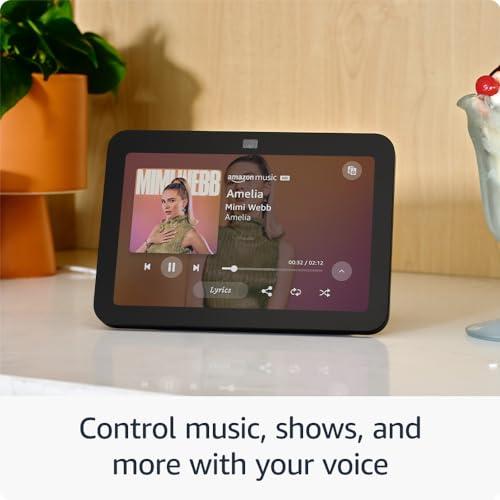
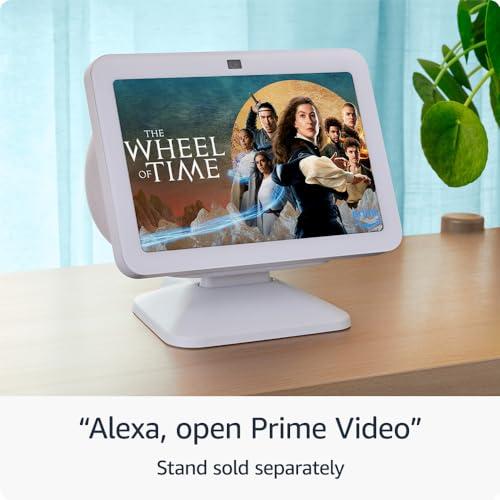
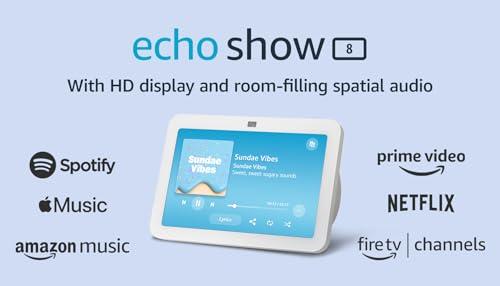
Amazon's Echo Show 8 (3rd Gen), released in 2023, represents the culmination of Amazon's learning from previous generations. It's not just a smart speaker with a screen bolted on—it's designed from the ground up as a visual interface for your smart home and digital life.
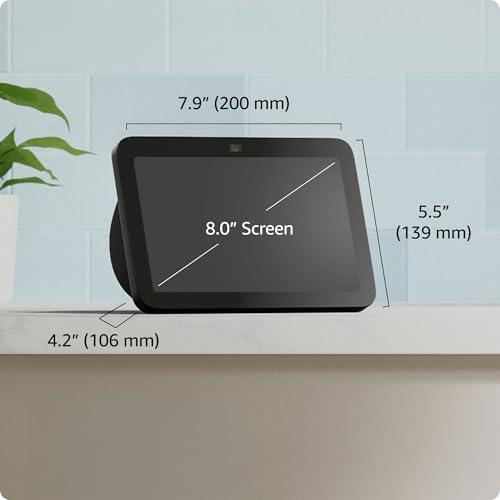
The 8-inch, 1280 x 800 pixel display might not sound impressive in our smartphone-dominated world, but in practice, it's perfectly sized for its intended use cases. The screen is bright enough to see clearly across a room, with good color reproduction and decent viewing angles. While it's not going to match the quality of a premium tablet, it's more than adequate for checking weather, viewing recipes, or making video calls.
The display features edge-to-edge glass, giving it a more modern appearance than previous generations. However, our evaluation of user feedback reveals that the screen can be quite reflective in bright environments, which might be problematic in kitchens with lots of natural light.
What's particularly clever is the Adaptive Content feature. Using the built-in camera and proximity sensors, the Echo Show 8 changes what it displays based on how far you are from the device. When you're across the room, it shows large, easily readable information like weather or headlines. As you approach, it transitions to more detailed widgets and interactive controls. This context-aware interface makes the device feel more intelligent and reduces visual clutter.
Don't let the focus on visual features fool you—the Echo Show 8 takes audio seriously. It features dual 2-inch neodymium speakers with a passive bass radiator. Neodymium is a type of powerful magnet material that allows for stronger, more efficient speakers in a smaller package.
The passive bass radiator is particularly important for audio quality. Unlike a traditional speaker driver, a passive radiator doesn't have its own motor—instead, it's moved by air pressure changes from the active speakers. This design allows the Echo Show 8 to produce deeper bass without requiring a larger enclosure or more power.
The spatial audio processing adapts the sound based on your room's acoustics, similar to how the Nest Audio handles audio optimization. In our analysis of comparative reviews, users generally find the Echo Show 8 to be louder and more capable of filling larger spaces, though some note that pure audio quality slightly favors the Nest Audio for critical listening.
This is where the Echo Show 8 truly differentiates itself. Unlike the Nest Audio, which relies on Wi-Fi and Bluetooth for device connections, the Echo Show 8 includes built-in support for Zigbee, Matter, and Thread protocols.
Zigbee is a low-power wireless standard commonly used by smart home devices like sensors, switches, and bulbs. Thread is a newer protocol designed for reliable, mesh networking between smart devices. Matter is an industry-wide standard that allows devices from different manufacturers to work together seamlessly.
Having these protocols built-in means you can connect hundreds of different smart home devices directly to your Echo Show 8 without needing separate hubs. This consolidation saves money, reduces complexity, and often improves reliability since devices can communicate locally rather than routing through the internet.
The 13-megapixel camera sets the Echo Show 8 apart for video calling and home monitoring. The auto-framing feature uses digital zoom and panning to keep you centered in the frame as you move around—particularly useful for video calls while cooking or multitasking.
The camera also enables Amazon's "Drop In" feature, which lets family members check in on each other by essentially turning the device into an intercom system. For families with elderly relatives or parents wanting to check on kids, this functionality can be invaluable.
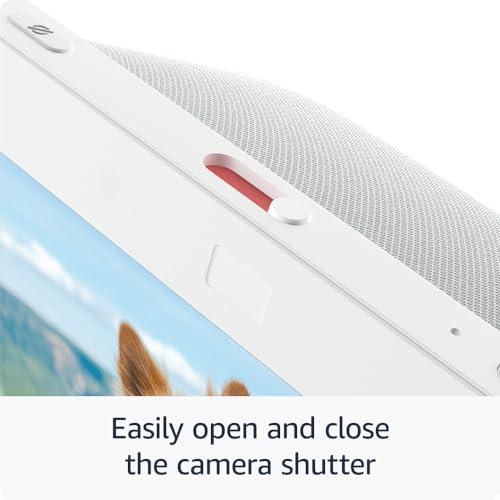
However, the camera does raise privacy considerations. While Amazon includes a physical camera shutter and the ability to delete voice recordings, some users remain uncomfortable with always-connected devices that can see and hear everything in a room.
For pure music listening, the Nest Audio edges ahead with more refined sound tuning and better vocal clarity. Its dedicated audio processing and two-driver design create a more audiophile-friendly experience. However, the Echo Show 8 produces louder, more room-filling sound that many users prefer for background music or entertaining.
If you're considering either device for home theater use, neither is ideal as a primary speaker system. Both lack the power and frequency response needed for movie soundtracks. However, the Echo Show 8's visual interface makes it more practical as a secondary control device for your entertainment system.
Google Assistant on the Nest Audio excels at natural conversation, complex questions, and integration with Google's ecosystem. It's particularly strong for users who rely heavily on Gmail, Google Calendar, YouTube, or Google Photos.
Alexa on the Echo Show 8 shines in smart home control and has broader third-party service integration. With over 100,000 "Skills" (third-party voice apps), Alexa can interact with more services and devices than Google Assistant.
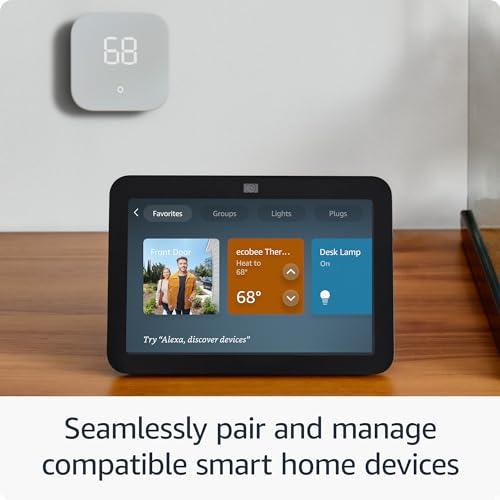
The visual interface of the Echo Show 8 provides a significant advantage for smart home management. Instead of trying to remember voice commands for dozens of devices, you can simply tap icons on the screen to control lights, thermostats, and security systems.
The Nest Audio wins on privacy by design—no camera means no video privacy concerns. Google's approach to data handling has also improved significantly, with options to automatically delete recordings and limit data sharing.
Amazon has made strides in privacy with features like on-device processing and automatic deletion options, but the presence of a camera in the Echo Show 8 introduces additional considerations. Users need to weigh the convenience of video features against potential privacy trade-offs.
The Echo Show 8 excels in kitchens and family areas. The display makes it perfect for following recipes, setting multiple timers with visual feedback, and making video calls to family members. The larger speakers handle the acoustic challenges of open-plan spaces better than the Nest Audio.
The Nest Audio is often the better choice for bedrooms. Its lack of a bright display won't disrupt sleep, and the absence of a camera addresses privacy concerns in intimate spaces. The more refined audio quality also makes it better for wind-down activities like listening to podcasts or sleep sounds.
Both devices can serve as conference call speakers, but the Echo Show 8's video capabilities and larger display make it more practical for video meetings. However, the Nest Audio's superior Google Calendar integration might appeal to users in Google-centric work environments.
The Nest Audio integrates seamlessly into multi-room audio setups with other Google speakers, and you can pair two units for stereo sound. The Echo Show 8 can participate in multi-room audio, but its visual features are somewhat wasted in this configuration.
Both devices receive regular software updates, but their upgrade paths differ significantly. The Echo Show 8's built-in smart home hub capabilities and support for emerging standards like Matter and Thread make it more future-proof for evolving smart home ecosystems.
The Nest Audio's simpler hardware means fewer components that could become obsolete, but it also offers less room for new functionality through software updates.
Choose the Google Nest Audio if you prioritize audio quality, prefer a minimalist aesthetic, value privacy, or are deeply integrated into Google's ecosystem. It's particularly appealing for users who want a "set it and forget it" device that excels at its primary function without unnecessary complexity.
The Amazon Echo Show 8 (3rd Gen) makes sense for users who want a central hub for smart home control, value video calling capabilities, spend significant time in kitchens or family areas, or prefer visual interfaces over voice-only interaction. Despite its higher cost, it can replace multiple single-purpose devices, potentially offering better overall value.
At the time of writing, the price difference between these devices reflects their different approaches and capabilities. The Nest Audio offers excellent value for users seeking premium audio quality in a smart speaker, while the Echo Show 8 justifies its premium with versatile functionality that extends far beyond traditional speaker capabilities.
Neither device is objectively superior—they excel in different ways and serve different needs. The best choice depends on your specific use cases, privacy preferences, smart home ambitions, and which tech ecosystem already holds more of your digital life. Both represent mature, well-executed visions of what smart home assistants can be, just with fundamentally different philosophies about how we should interact with our connected homes.
| Google Nest Audio Smart Speaker | Amazon Echo Show 8 3rd Gen Smart Display |
|---|---|
| Product Category - Fundamentally different approaches to smart home control | |
| Smart Speaker (audio-only interaction) | Smart Display (visual + audio interface) |
| Display - Changes how you interact with information and controls | |
| None (voice responses only) | 8-inch HD touchscreen (1280 x 800 px) |
| Camera - Enables video calls but raises privacy considerations | |
| None (maximum privacy) | 13 MP with auto-framing and physical shutter |
| Audio Hardware - Key differentiator for music listening quality | |
| 75mm woofer + 19mm tweeter (optimized for pure audio) | Dual 2-inch neodymium speakers + passive bass radiator |
| Voice Assistant - Different ecosystems with distinct strengths | |
| Google Assistant (superior for Google services integration) | Alexa (broader third-party compatibility) |
| Microphone Array - More mics generally mean better voice pickup | |
| 3 far-field microphones | 4 far-field microphones |
| Smart Home Hub Capability - Determines how many devices you can control directly | |
| Wi-Fi and Bluetooth only (requires separate hubs) | Built-in Zigbee, Matter, and Thread support |
| Size and Weight - Impact on room placement flexibility | |
| Compact: 6.9" × 4.9" × 3.1", 2.65 lbs | Larger: 7.9" × 5.4" × 4.2", 2.3 lbs |
| Privacy Features - Important for sensitive locations like bedrooms | |
| Hardware mic mute switch, no camera concerns | Physical camera shutter + mic mute switch |
| Multi-Room Audio - Ability to sync music across multiple speakers | |
| Full support with stereo pairing option | Supported but visual features underutilized |
| Video Communication - Essential for remote family connection | |
| Not available | Video calls with auto-framing technology |
| Smart Home Control Method - Affects ease of device management | |
| Voice commands only | Voice commands + visual touch interface |
| Content Consumption - Different media capabilities | |
| Audio only (music, podcasts, radio) | Full multimedia (video streaming, photos, audio) |
| Power Requirements - Affects placement flexibility | |
| Must be plugged in (no battery) | Must be plugged in (no battery) |
| Material Construction - Environmental consideration | |
| 70% recycled plastic with fabric covering | Standard materials with edge-to-edge glass display |
The Google Nest Audio delivers superior music quality with its dedicated 75mm woofer and 19mm tweeter combination, designed specifically for audio performance. The Amazon Echo Show 8 has good sound with dual speakers and spatial audio, but it's optimized more for multimedia use than pure music listening. For audiophiles and music-focused users, the Nest Audio is the clear winner.
It depends on how you plan to use the device. A smart speaker like the Google Nest Audio is perfect if you primarily want voice control and music playback. However, the Amazon Echo Show 8 adds significant value with video calls, recipe displays, smart home visual controls, and streaming video content. Choose a display if you want visual interaction beyond just audio.
The Google Nest Audio offers maximum privacy with no camera and just a hardware microphone mute switch. The Amazon Echo Show 8 includes both a camera and microphones, though it does provide a physical camera shutter and mic mute controls. For privacy-conscious users or bedroom placement, the Nest Audio is the safer choice.
Neither the Google Nest Audio nor Amazon Echo Show 8 are ideal primary speakers for home theater use due to limited power and frequency response. However, the Echo Show 8 can serve as a useful control hub for your entertainment system with its visual interface, while both can handle casual TV audio for smaller rooms or secondary viewing areas.
Google Assistant on the Nest Audio excels at natural conversation, complex questions, and Google service integration (Gmail, Calendar, YouTube). Alexa on the Echo Show 8 offers broader third-party compatibility with over 100,000 skills and superior smart home device support. Choose based on your existing ecosystem and primary use cases.
The Google Nest Audio works with Wi-Fi and Bluetooth devices but requires separate hubs for protocols like Zigbee. The Amazon Echo Show 8 includes built-in support for Zigbee, Matter, and Thread, allowing direct control of hundreds of smart home devices without additional hubs. For comprehensive smart home control, the Echo Show 8 is more capable.
The Amazon Echo Show 8 is specifically designed for video calls with its 13MP camera and auto-framing technology. The Google Nest Audio has no camera and cannot make video calls. For families wanting to stay connected or remote workers needing video conferencing capabilities, the Echo Show 8 is essential.
The Google Nest Audio is more compact at 6.9" tall and works well in any room, especially bedrooms where its lack of display won't disturb sleep. The Amazon Echo Show 8 is larger with its 8-inch screen and works best in kitchens, living rooms, or offices where the visual interface adds value. Consider your available space and intended use location.
Value depends on your needs. The Google Nest Audio typically costs less and offers excellent audio quality per dollar spent. The Amazon Echo Show 8 costs more but potentially replaces multiple devices (speaker, video calling device, smart home hub, streaming display). Calculate value based on which features you'll actually use.
Both devices support multi-room audio setups. The Google Nest Audio pairs seamlessly with other Google speakers and can create stereo pairs. The Amazon Echo Show 8 participates in Echo multi-room groups, though its visual features are underutilized in this configuration. Both work well for whole-home audio systems.
The Amazon Echo Show 8 excels in kitchens with recipe displays, multiple visual timers, video calls while cooking, and better sound projection for open spaces. The Google Nest Audio can handle basic kitchen tasks like timers and music, but lacks the visual interface that makes cooking assistance more practical with the Echo Show 8.
The Amazon Echo Show 8 has four microphones versus three in the Google Nest Audio, potentially offering better pickup range. Both devices perform well for voice recognition in real-world use. The Nest Audio supports Voice Match for up to six users, while the Echo Show 8 offers Visual ID for personalized experiences. Both provide reliable voice control across typical room distances.
We've done our best to create useful and informative comparisons to help you decide what product to buy. Our research uses advanced automated methods to create this comparison and perfection is not possible - please contact us for corrections or questions. These are the sites we've researched in the creation of this article: rtings.com - soundguys.com - bestbuy.com - androidcentral.com - whathifi.com - rtings.com - thenextweb.com - youtube.com - audiosciencereview.com - youtube.com - sypnotix.com - rtings.com - audioholics.com - youtube.com - store.google.com - store.google.com - youtube.com - support.google.com - cdn.adiglobaldistribution.us - dxomark.com - store.google.com - crutchfield.com - soundguys.com - soundguys.com - support.google.com - store.google.com - bestbuy.com - en.wikipedia.org - store.google.com - youtube.com - techradar.com - techradar.com - youtube.com - tomsguide.com - thedisconnekt.com - androidcentral.com - bestbuy.com - versus.com - versus.com - dimensions.com - ifixit.com - bestbuy.com - dell.com - youtube.com - youtube.com

Privacy Policy
Terms and Conditions - Affiliate Policy
Home Security
© Copyright 2008-2026.
11816 Inwood Rd #1211, Dallas, TX 75244