


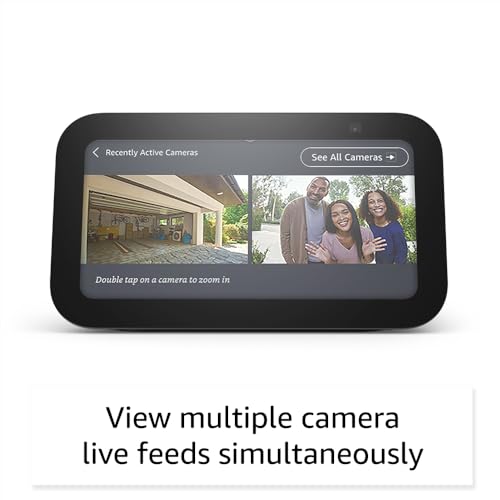
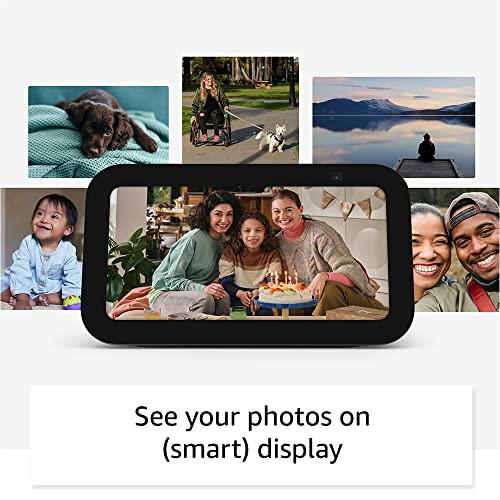
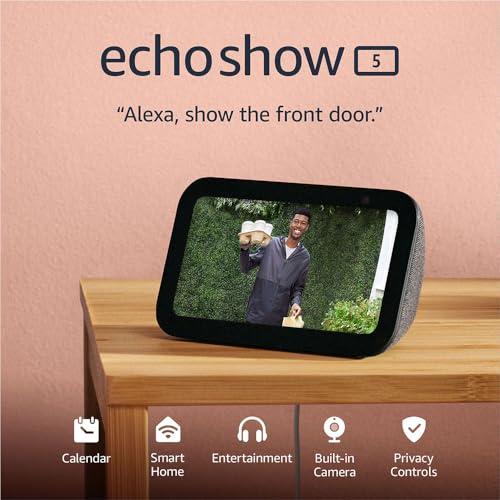
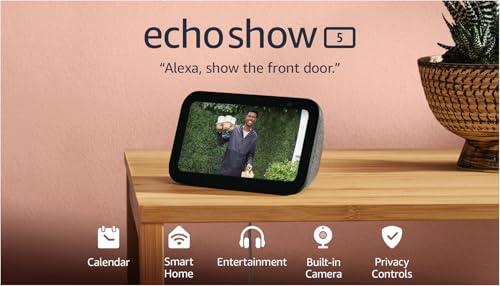
Smart displays have transformed from simple voice assistants into powerful home command centers. These devices combine Alexa's voice capabilities with touchscreens, cameras, and speakers to create versatile hubs for entertainment, communication, and smart home control. Amazon's third-generation Echo Show 8 and Echo Show 5, both released in 2023, represent the company's latest thinking on how these devices should fit into our homes.
The fundamental question isn't whether you need a smart display—if you're reading this, you've probably already decided you do. Instead, it's about choosing the right size and capability level for your specific needs and budget. The differences between these two devices are substantial enough that picking the wrong one could leave you either overpaying for features you don't use or constantly wishing for capabilities you don't have.
Before diving into comparisons, it's worth understanding what makes smart displays different from tablets or smart speakers. Unlike tablets, smart displays are designed to be always-on information centers that respond instantly to voice commands. Unlike smart speakers, they provide visual feedback that makes complex tasks like following recipes, making video calls, or controlling multiple smart home devices much more intuitive.
The key considerations when choosing a smart display revolve around how you'll actually use it. Display size affects everything from reading recipes across the kitchen to enjoying video content. Audio quality determines whether the device can replace dedicated speakers for music. Camera capabilities impact video calling and home security features. Processing power affects how quickly the device responds to commands and handles multitasking. Smart home integration determines how effectively the device can serve as a central hub for connected devices.
The Echo Show 8 and Echo Show 5 target fundamentally different use cases, despite sharing the same Alexa ecosystem and core functionality. This positioning affects everything from their hardware specifications to their optimal placement in your home.
The Echo Show 8 is engineered as a primary smart display—the main device you'll interact with regularly for entertainment, communication, and home control. Its larger form factor and enhanced capabilities make it suitable for central locations like kitchens, living rooms, or home offices where multiple family members might use it throughout the day.
The Echo Show 5, conversely, is designed as either a compact alternative for space-constrained environments or as a secondary device that extends your smart display ecosystem to additional rooms. Its smaller footprint makes it ideal for nightstands, desks, or anywhere you want basic smart display functionality without the visual dominance of a larger screen.
At the time of writing, the Echo Show 8 typically costs about $60 more than the Echo Show 5, which represents a significant percentage increase over the smaller device's price. This premium reflects substantial hardware improvements, but whether those improvements justify the cost depends entirely on your intended use case.
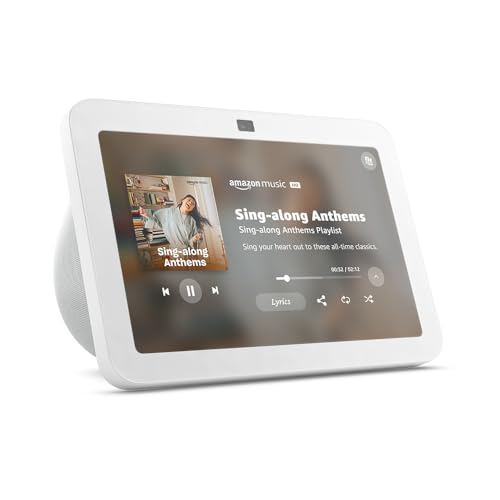
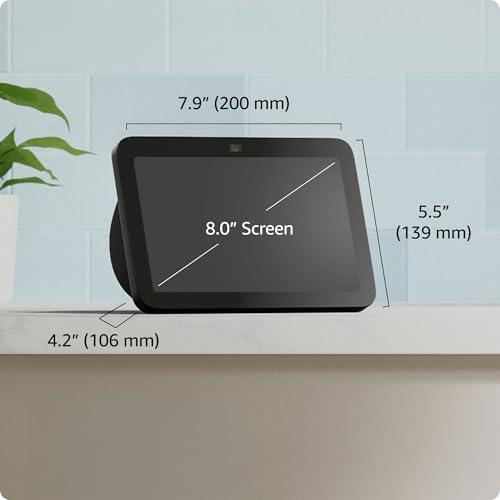
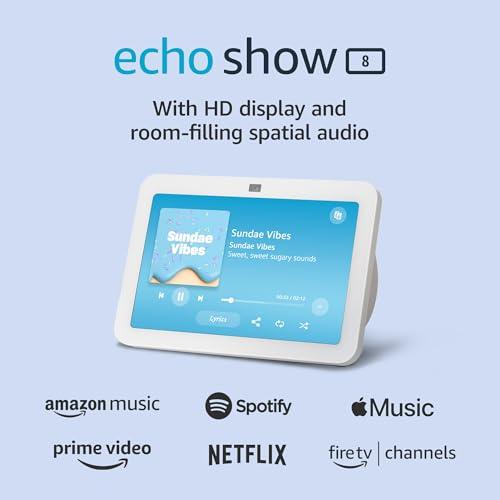
The most immediately obvious difference between these devices is their screen size, but the implications extend far beyond simple measurements. The Echo Show 8 features an 8-inch display with 1280×800 resolution, while the Echo Show 5 has a 5.5-inch screen at 960×480 resolution.
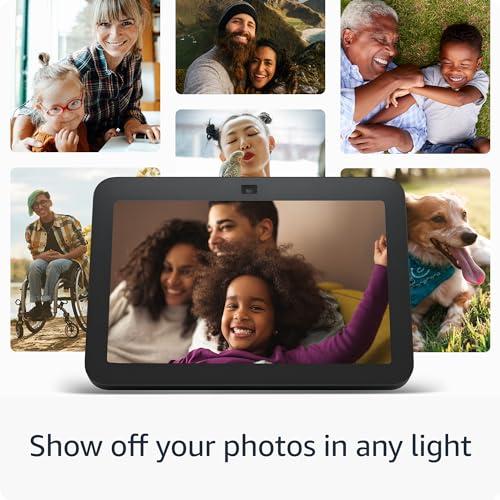
These specifications translate to dramatically different user experiences. The Echo Show 8's higher resolution provides noticeably sharper text and images that make reading recipes, viewing photos, or watching video content genuinely comfortable. The pixel density difference means that text remains crisp even when displaying multiple pieces of information simultaneously, such as weather, calendar events, and news headlines.
The Echo Show 5's lower resolution becomes apparent when displaying detailed content. Text can appear pixelated, especially when viewing web pages or reading longer articles. This doesn't make the device unusable, but it does limit comfortable viewing to simple information displays like time, weather, or basic controls.
Screen real estate affects functionality in ways that aren't immediately obvious. The larger display on the Echo Show 8 allows for more sophisticated user interfaces with multiple touch targets that are easy to hit accurately. The Echo Show 5's smaller screen requires more simplified interfaces that sometimes necessitate additional taps to access the same functions.
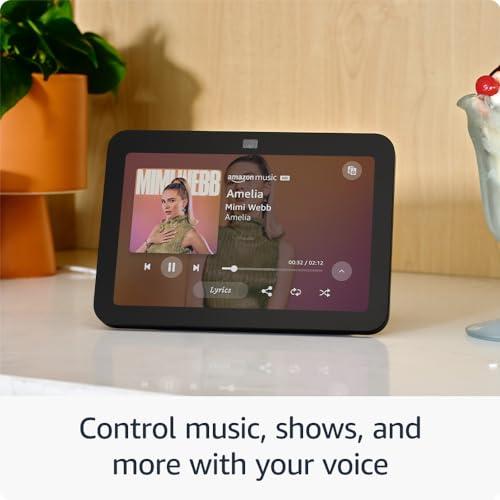
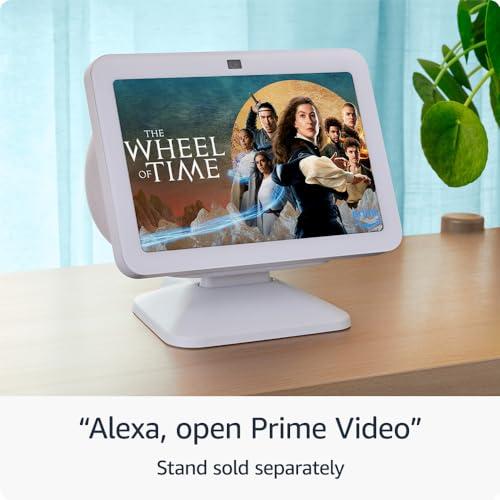
For video content, the size difference is even more pronounced. While both devices can stream from services like Prime Video and YouTube, the Echo Show 5's screen is really only suitable for brief viewing sessions or background video while doing other tasks. The Echo Show 8 provides a viewing experience that's genuinely enjoyable for longer content, though it's still not large enough to serve as a primary TV replacement.
The displays also differ in their physical construction. The Echo Show 8 features edge-to-edge glass that provides a more premium appearance and improved color reproduction. The Echo Show 5 has a more traditional bezel design that's functional but less visually striking.
Perhaps the most significant performance gap between these devices lies in their audio capabilities. This difference is so substantial that it fundamentally changes how you can use each device.
The Echo Show 8 incorporates dual 2-inch neodymium speakers with a passive bass radiator—a setup that delivers surprisingly powerful audio for a device this size. Neodymium speakers are more efficient and produce cleaner sound than traditional speakers, while the passive bass radiator (essentially a speaker cone without a magnet that resonates with the active speakers) enhances low-frequency response without requiring additional amplification.
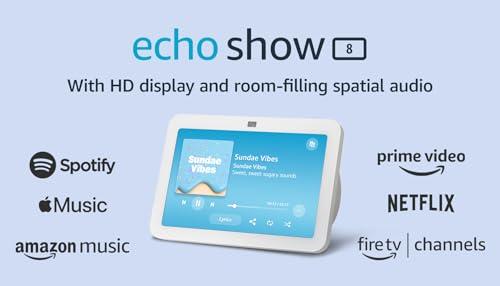
This audio system is enhanced by spatial audio processing and room adaptation technology. Spatial audio creates a wider soundstage that makes music and video more immersive, while room adaptation adjusts the audio output based on the acoustics of the surrounding space. These features work together to produce sound that can genuinely fill a room, making the Echo Show 8 suitable as a primary speaker for background music, podcast listening, or even small gatherings.
User reviews consistently highlight the Echo Show 8's audio quality as exceeding expectations, with many noting that visitors are surprised to discover such rich sound coming from what appears to be a modest device. The bass response is particularly noteworthy—while it won't replace a dedicated subwoofer, it provides enough low-end presence to make music sound full and engaging rather than thin and tinny.
The Echo Show 5 features a single 1.75-inch speaker that, while improved over previous generations, simply cannot compete with the Echo Show 8's dual-speaker setup. The smaller driver and lack of bass enhancement mean that music sounds adequate for background listening but lacks the depth and clarity that makes for an engaging audio experience.
This audio difference affects more than just music enjoyment. Voice responses from Alexa are clearer and more natural-sounding on the Echo Show 8, video calls benefit from better speaker clarity, and even notification sounds are more pleasant and attention-getting.
For home theater integration, neither device is designed to replace a dedicated sound system, but the Echo Show 8 can serve as a reasonable audio source for small rooms or secondary viewing areas. Its audio output is substantial enough that you might find yourself using it for casual video watching without feeling the need for additional speakers.
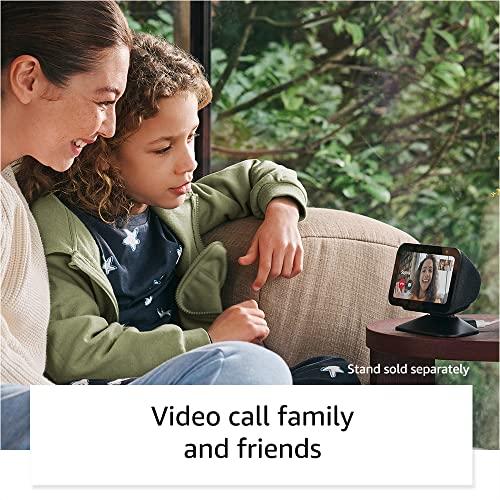
Video calling has become an essential feature of smart displays, and the camera specifications reveal another significant difference between these devices. The Echo Show 8 maintains the 13-megapixel camera from previous generations, while the Echo Show 5 uses a more basic 2-megapixel sensor.
This six-fold difference in resolution translates to noticeably better video quality during calls. The Echo Show 8's camera produces sharper, more detailed images with better color reproduction and superior performance in various lighting conditions. The higher resolution also enables more sophisticated features like Visual ID, which can recognize different family members and personalize the display accordingly.
Both cameras include auto-framing technology, which automatically pans and zooms to keep you centered in the frame as you move around. However, the Echo Show 8's implementation is more responsive and accurate, partly due to its more powerful processor and higher-resolution sensor providing more image data to work with.
The Echo Show 5's camera, while described as "fairly low-end" by reviewers, remains functional for basic video calls with family members or checking in on pets when away from home. The quality difference becomes most apparent when comparing calls side-by-side or when using the camera for home monitoring features.
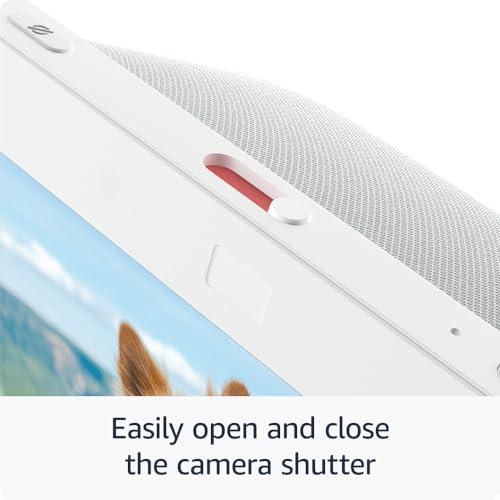
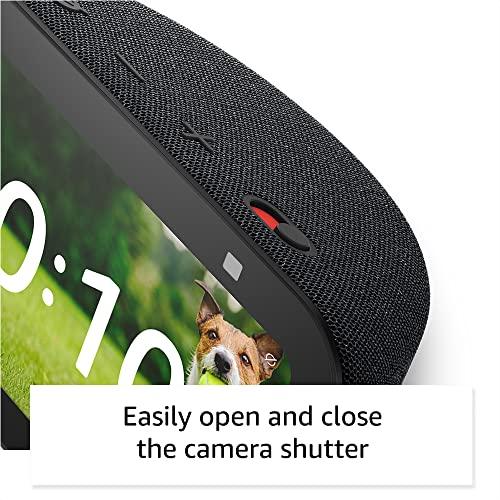
Both devices include physical camera shutters and microphone mute buttons—essential privacy features that address legitimate concerns about always-on devices in intimate spaces like bedrooms. The inclusion of these hardware controls demonstrates Amazon's recognition that privacy isn't just about software settings but about providing users with immediate, physical control over their devices.
The performance difference between these devices extends beyond specifications to real-world usability. The Echo Show 8 uses an octa-core (eight-core) system-on-chip with Amazon's AZ2 Neural Network Engine, while the Echo Show 5 relies on a MediaTek processor that, while improved in the 2023 revision, doesn't match the Echo Show 8's capabilities.
Amazon's AZ2 Neural Network Engine is particularly important for the types of tasks these devices handle. This specialized processor accelerates machine learning tasks like voice recognition, Visual ID, and smart home automation. The result is noticeably faster response times when asking Alexa questions, quicker execution of smart home commands, and more responsive touch interactions.
In practical terms, the Echo Show 8 responds almost instantly to voice commands, launches apps and video streams within seconds, and handles multiple simultaneous tasks without noticeable lag. The Echo Show 5, while adequate for basic tasks, occasionally shows brief delays when processing complex requests or switching between different functions.
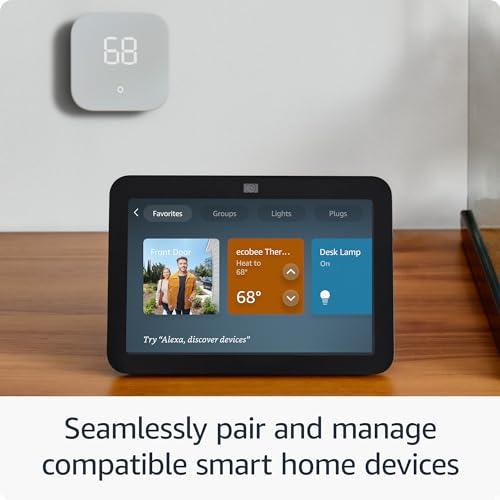
This processing power difference becomes most apparent when using the devices for smart home control. The Echo Show 8 can quickly display and control multiple device groups, handle complex automation routines, and provide rapid feedback when adjusting settings. The Echo Show 5 handles these tasks but with occasionally noticeable delays that can make interactions feel less seamless.
One of the most significant technical differences between these devices lies in their smart home capabilities. The Echo Show 8 includes built-in hub functionality supporting Zigbee, Matter, and Thread Border Router protocols. These are communication standards that allow smart devices to connect directly to your network and interact with each other.
Zigbee is a low-power wireless protocol commonly used by smart lights, sensors, and switches. Matter is a new universal standard designed to make different smart home devices work together regardless of manufacturer. Thread is a networking protocol that creates mesh networks for improved reliability and range.
Having these protocols built into the Echo Show 8 means you can connect compatible smart devices directly without purchasing separate hubs. This not only saves money but also simplifies your smart home setup and reduces the number of devices competing for space on your network.
The Echo Show 5 lacks this built-in hub functionality, though it still provides excellent smart home control through Alexa's standard capabilities. It can control devices connected through other hubs or cloud services, but it cannot serve as the central connection point for local smart home networks.
For users building comprehensive smart home systems, this hub functionality represents significant added value. For those with basic smart home needs or who already have other hub devices, the difference may be less important.
The physical differences between these devices extend beyond simple size measurements to fundamental questions about where and how you'll use them. The Echo Show 8 measures approximately 8×5×4 inches and weighs over two pounds, making it a substantial presence that requires dedicated surface space.
This size means the Echo Show 8 needs a permanent location—it's not something you'll casually move from room to room. However, its substantial build quality and premium materials make it an attractive addition to kitchen counters, home offices, or living room side tables.
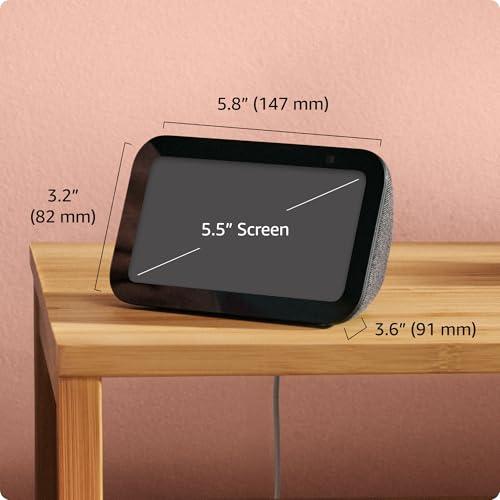
The Echo Show 5 is genuinely compact at roughly 6×4×3 inches and weighing just over one pound. This makes it ideal for space-constrained environments like bedside tables, small desks, or anywhere you want smart display functionality without visual dominance.
Both devices are available in multiple color options to match different home decor styles, and both feature the fabric-covered backs and rounded corners that have become Amazon's signature smart display aesthetic.
The size difference also affects viewing angles and usability. The Echo Show 8's larger screen is comfortable to view from various positions and distances, making it suitable for use by multiple people simultaneously. The Echo Show 5's smaller screen requires closer viewing and is really optimized for single-user interactions.
Understanding which device suits your specific needs requires considering how you'll actually use a smart display in your daily routine.
Kitchen and Living Areas: The Echo Show 8 excels in these high-traffic spaces where it serves multiple family members throughout the day. Its larger screen makes recipe viewing comfortable, even from across the room. The superior audio means you can enjoy music while cooking without needing additional speakers. The better camera makes family video calls more enjoyable, and the built-in smart home hub can control lights, thermostats, and other devices throughout your home.
Bedside and Personal Spaces: The Echo Show 5 works beautifully as a smart alarm clock and bedside companion. Its compact size doesn't dominate nightstand space, and its screen provides just enough information for checking time, weather, or setting alarms without being overwhelming. The lower resolution isn't problematic for these simple tasks, and the smaller speaker is adequate for voice responses and gentle wake-up alarms.
Office and Desk Use: Either device can work in office settings, but the choice depends on your needs. The Echo Show 5 is excellent for basic tasks like displaying calendar information, setting reminders, or making quick video calls without taking up valuable desk space. The Echo Show 8 is better if you plan to use it for longer video conferences or as a secondary monitor for information displays.
Multi-Room Setups: Many users find the optimal solution involves both devices—the Echo Show 8 as the primary unit in a main living area, with one or more Echo Show 5 units extending smart display functionality to bedrooms, offices, or other spaces. This approach maximizes coverage while keeping costs reasonable.
At the time of writing, the price difference between these devices typically ranges from $50-70, with the Echo Show 8 representing a significant premium over the Echo Show 5. This price difference reflects genuine hardware improvements that affect daily usability.
The Echo Show 8 delivers meaningfully better performance across every major category: display quality, audio capabilities, camera resolution, processing power, and smart home integration. For users who plan to use their smart display as a primary device for entertainment, communication, and home control, these improvements justify the additional cost.
The Echo Show 5 represents excellent value for users with specific requirements: those who need a compact device, want a secondary unit for additional rooms, or have basic smart display needs that don't require premium capabilities.
The cost-per-feature analysis favors the Echo Show 8 for most users, as the additional capabilities far exceed the proportional price increase. However, the Echo Show 5 fills a unique niche that the larger device simply cannot address due to its size requirements.
Choose the Echo Show 8 if you want a primary smart display that can handle multiple roles effectively. It's the better choice for families who will use it for video calls, individuals who enjoy streaming video content, music lovers who want quality audio, and smart home enthusiasts who appreciate built-in hub functionality. The larger screen and superior performance make daily interactions more enjoyable and efficient.
The Echo Show 5 is ideal for users who need compact size above all else, want a secondary device to extend smart display coverage, or have simple requirements focused on basic information display and voice control. It's particularly well-suited for bedside use, small apartments, or situations where budget constraints make the premium features of the larger model difficult to justify.
For most buyers considering their first smart display, the Echo Show 8 provides a more satisfying experience that reduces the likelihood of upgrade regret. Its superior capabilities make it versatile enough to handle whatever tasks you discover you want to use it for, rather than limiting you to basic functions.
The Echo Show 5 excels in specific scenarios but works best when you have a clear understanding of your limited requirements or when complementing a more capable primary device. Both represent solid choices within their intended use cases—the key is honestly assessing which use case matches your actual needs and living situation.
| Amazon Echo Show 8 3rd Gen | Amazon Echo Show 5 3rd Gen |
|---|---|
| Display Size & Resolution - Directly impacts readability and video viewing comfort | |
| 8-inch, 1280×800 (sharp text, comfortable video viewing) | 5.5-inch, 960×480 (basic info display, pixelated detailed content) |
| Audio System - Determines music quality and room-filling capability | |
| Dual 2-inch speakers + bass radiator (room-filling sound, excellent music) | Single 1.75-inch speaker (adequate for voice, limited music quality) |
| Camera Quality - Affects video call clarity and smart features | |
| 13MP with auto-framing (crisp video calls, Visual ID support) | 2MP basic camera (functional but low-quality video calls) |
| Processing Power - Controls response speed and multitasking ability | |
| Octa-core + AZ2 Neural Engine (instant responses, smooth performance) | MediaTek processor (adequate speed, occasional delays) |
| Smart Home Hub - Eliminates need for separate hub devices | |
| Built-in Zigbee, Matter, Thread support (direct device control) | Standard Alexa control only (requires separate hubs for some devices) |
| Physical Size - Determines placement options and visual impact | |
| 7.9×5.4×4.2 inches, 36.6 oz (requires dedicated counter space) | 5.8×3.6×3.2 inches, 16.1 oz (fits on nightstands, small desks) |
| Best Use Cases - Where each device excels | |
| Primary kitchen/living room display, family video calls, music listening | Bedside companion, secondary device, space-constrained areas |
| Value Proposition - Cost vs. capabilities trade-off | |
| Premium features justify higher cost for primary use | Excellent budget option for basic needs or secondary placement |
The Amazon Echo Show 8 3rd Gen is significantly better for kitchen use due to its 8-inch display that's easily readable from across the room when following recipes. Its dual speakers provide excellent audio for cooking music, and the larger screen makes video calls with family more enjoyable. The Amazon Echo Show 5 3rd Gen is too small for comfortable recipe viewing and lacks the audio quality needed for kitchen entertainment.
The Amazon Echo Show 8 3rd Gen features an 8-inch screen with 1280×800 resolution, delivering sharp text and comfortable video viewing. The Amazon Echo Show 5 3rd Gen has a 5.5-inch display with 960×480 resolution that's adequate for basic information but appears pixelated with detailed content. The size difference makes the Echo Show 8 suitable for primary use while the Echo Show 5 works best as a secondary device.
The Amazon Echo Show 8 3rd Gen provides a genuinely enjoyable viewing experience for casual movie watching, though it's not large enough to replace a TV. Its superior audio with dual speakers and bass radiator enhances the entertainment experience. The Amazon Echo Show 5 3rd Gen is really only suitable for brief video clips due to its small 5.5-inch screen and limited single-speaker audio.
The Amazon Echo Show 8 3rd Gen delivers dramatically better audio with its dual 2-inch neodymium speakers and passive bass radiator, producing room-filling sound that can serve as your primary speaker for small gatherings. The Amazon Echo Show 5 3rd Gen has a single 1.75-inch speaker that's adequate for voice responses but lacks the depth and clarity needed for enjoyable music listening.
The Amazon Echo Show 8 3rd Gen is superior for video calls with its 13MP camera that produces sharp, clear images and responsive auto-framing technology. The larger 8-inch screen also makes calls more comfortable and engaging. The Amazon Echo Show 5 3rd Gen has a basic 2MP camera that's functional but produces noticeably lower-quality video, making it less ideal for important calls.
The Amazon Echo Show 5 3rd Gen is specifically designed for bedside use with its compact 5.5-inch form factor that doesn't dominate nightstand space. It's perfect for checking time, weather, and setting alarms. The Amazon Echo Show 8 3rd Gen is too large for most bedside tables and its brighter, larger display might be disruptive in bedroom environments.
The Amazon Echo Show 8 3rd Gen includes built-in hub functionality with Zigbee, Matter, and Thread support, allowing direct connection to smart devices without additional hubs. The Amazon Echo Show 5 3rd Gen provides standard Alexa smart home control but lacks built-in hub capabilities, requiring separate hub devices for some smart home products. This makes the Echo Show 8 more valuable for comprehensive smart home setups.
The Amazon Echo Show 8 3rd Gen responds significantly faster thanks to its octa-core processor with Amazon's AZ2 Neural Network Engine, providing instant responses and smooth multitasking. The Amazon Echo Show 5 3rd Gen has adequate performance for basic tasks but occasionally shows brief delays with complex requests or when switching between functions.
The Amazon Echo Show 8 3rd Gen can serve as a reasonable audio source for small rooms or secondary viewing areas thanks to its powerful dual-speaker system with spatial audio. The Amazon Echo Show 5 3rd Gen lacks the audio quality needed for TV enhancement, with its single small speaker being adequate only for device notifications and voice responses.
The Amazon Echo Show 8 3rd Gen offers better value for most users despite its higher price, delivering premium features across display, audio, camera, and smart home integration that justify the cost difference. The Amazon Echo Show 5 3rd Gen provides excellent value for users with specific needs like compact size or secondary device placement, but the Echo Show 8 offers more capabilities per dollar spent.
For most households, one Amazon Echo Show 8 3rd Gen as the primary device in a main living area, combined with Amazon Echo Show 5 3rd Gen units in bedrooms or offices, provides optimal coverage and functionality. The Echo Show 8 handles family activities and entertainment while the smaller Echo Show 5 devices extend smart display access to personal spaces without excessive cost.
The Amazon Echo Show 8 3rd Gen is more family-friendly with its larger screen for shared viewing, superior camera for video calls with relatives, and better audio for family entertainment. Its robust smart home hub capabilities also make household management easier. While the Amazon Echo Show 5 3rd Gen can work in children's rooms, the Echo Show 8 serves as a better central family device that everyone can enjoy using together.
We've done our best to create useful and informative comparisons to help you decide what product to buy. Our research uses advanced automated methods to create this comparison and perfection is not possible - please contact us for corrections or questions. These are the sites we've researched in the creation of this article: techradar.com - techradar.com - youtube.com - tomsguide.com - thedisconnekt.com - androidcentral.com - bestbuy.com - versus.com - versus.com - dimensions.com - ifixit.com - bestbuy.com - dell.com - youtube.com - youtube.com - bestbuy.com - reviewed.com - goodhousekeeping.com - geekzone.co.nz - versus.com - youtube.com - versus.com - youtube.com - hindustantimes.com - nfm.com - dimensions.com - gadgetguy.com.au - youtube.com - versus.com - dell.com - bestbuy.com - homedepot.com - homedepot.com - businessinsider.com - en.wikipedia.org - youtube.com

Privacy Policy
Terms and Conditions - Affiliate Policy
Home Security
© Copyright 2008-2026.
11816 Inwood Rd #1211, Dallas, TX 75244