

Amazon's Alexa ecosystem has evolved dramatically since its introduction, offering everything from tiny voice-only speakers to full-featured smart displays. Two of the most popular options—the Echo Show 8 3rd Generation and the Echo Dot 5th Generation—represent completely different approaches to smart home control. Understanding their differences can save you from buyer's remorse and help you choose the device that actually fits your lifestyle.
When Amazon launched the original Echo in 2015, smart speakers were mostly novelties for tech enthusiasts. Today, they've become central command centers for modern homes, controlling everything from lights and thermostats to security cameras and entertainment systems. The key insight? Not everyone needs the same level of functionality.
At the time of writing, Amazon offers dozens of Alexa-enabled devices, but they generally fall into two categories: voice-only speakers and smart displays. Voice-only speakers rely entirely on spoken commands and audio responses, while smart displays add touchscreens that show information, play videos, and provide visual feedback for smart home controls.
The most important considerations when choosing between these approaches are surprisingly practical. Do you have counter space for a larger device? Will you actually use video calling features? Do you prefer tapping a screen or speaking commands? These everyday factors matter more than impressive spec sheets.
Your smart home setup also influences the decision. If you're controlling a few smart bulbs, either device works fine. But if you're managing security cameras, multiple thermostats, and dozens of connected devices, visual feedback becomes incredibly valuable. There's a reason professional installers often recommend displays for primary locations and compact speakers for secondary rooms.
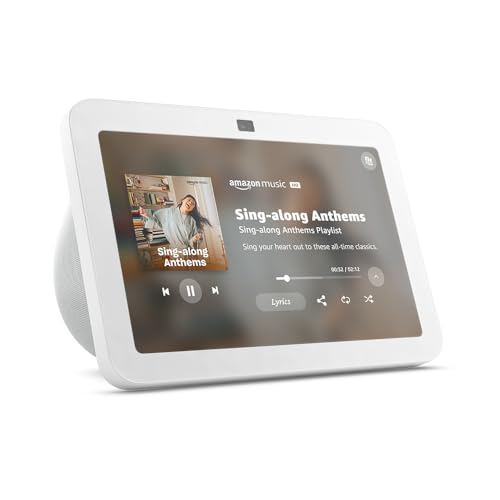
The Echo Show 8 3rd Generation, released in 2023, represents Amazon's latest thinking on smart displays. At roughly three times the price of the Echo Dot 5th Generation (released in 2022), it's positioned as a premium multimedia hub rather than a basic voice assistant.
What makes this comparison interesting is that both devices run the same Alexa software and can perform most of the same functions. The Echo Dot can control your smart home, play music, set timers, and answer questions just like its expensive sibling. The Echo Show 8 simply adds visual capabilities and significantly better audio—but whether those additions justify the price difference depends entirely on your specific needs.
From our research into user experiences and expert reviews, the choice often comes down to intended use. People who buy the Echo Show 8 typically place it in kitchens or living rooms as a family communication device and entertainment hub. The Echo Dot buyers usually want multiple units throughout their homes for convenient voice control without visual clutter.
The most obvious distinction between these devices is that one has a screen and one doesn't. But this difference runs deeper than you might expect, fundamentally changing how you interact with Alexa and your smart home.
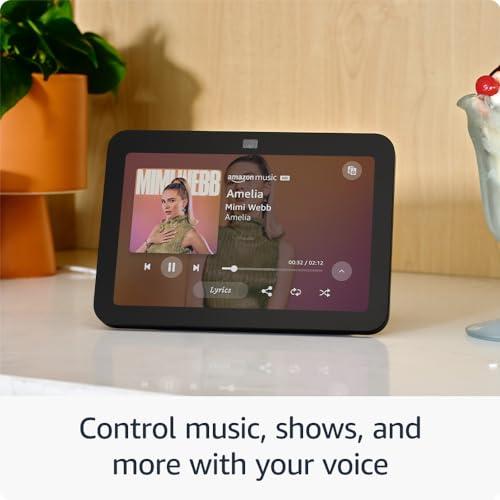
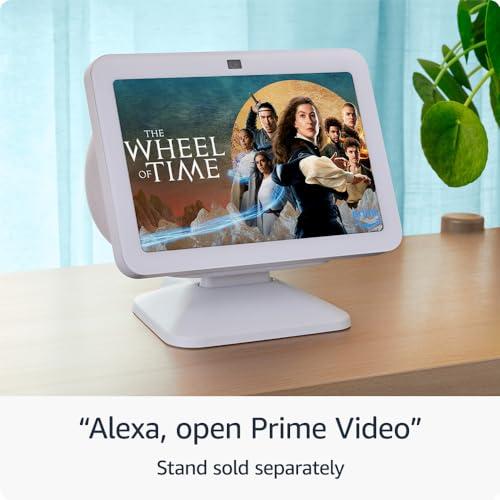
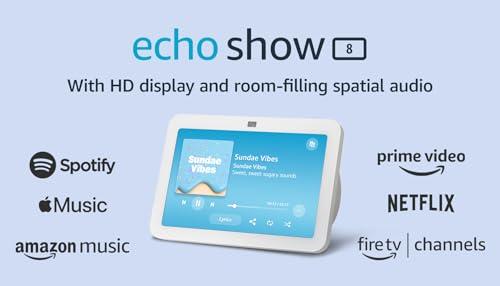
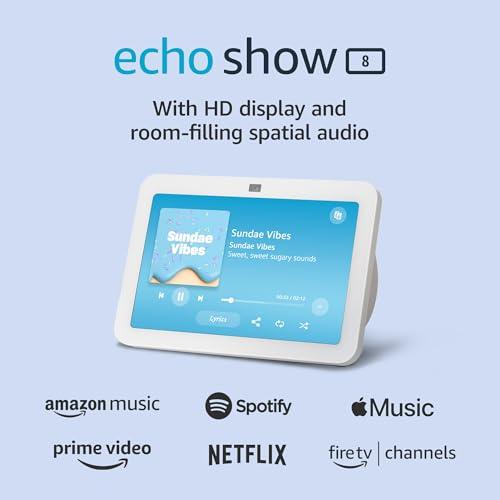
The Echo Show 8's 8-inch HD touchscreen (1280x800 resolution) transforms Alexa from a voice assistant into a visual interface. Instead of asking "Alexa, what's the weather?" and listening to a spoken response, you get an at-a-glance forecast with graphics and details for the week ahead.
One standout feature is Adaptive Content, which Amazon introduced with the 2023 model. The device uses its camera to detect how far you are from the screen and adjusts what it displays accordingly. From across the room, you'll see large, easy-to-read information like the time, weather, or calendar events. Move closer, and the interface shifts to show detailed controls, news headlines, or interactive widgets.
Visual ID takes this personalization further by recognizing different family members and customizing the display for each person. When you approach the Echo Show 8, it might show your calendar and reminders, while showing someone else their preferred news sources and smart home controls.
For video calls, the 13MP centered camera includes auto-framing technology—a feature that automatically pans and zooms to keep you centered in the frame as you move around. This makes video calls feel more natural and professional, especially important as remote work and family video chats have become routine.
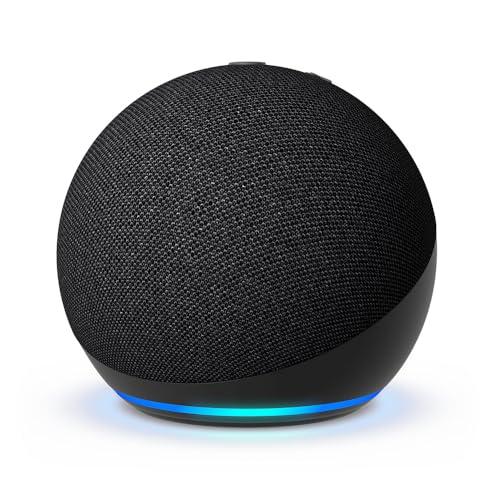
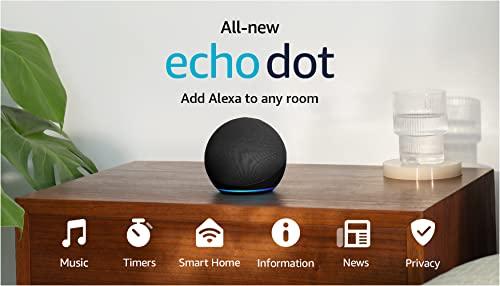
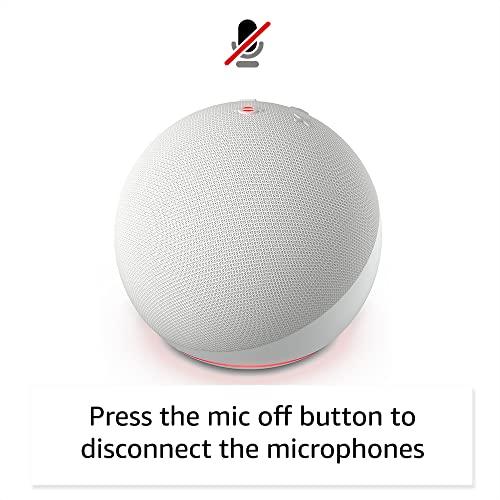
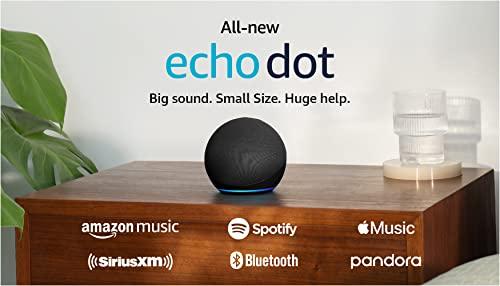
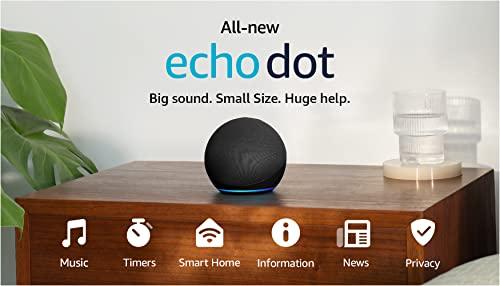
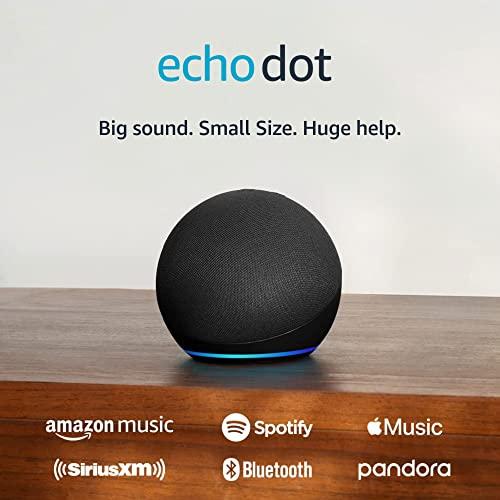
The Echo Dot 5th Generation takes the opposite approach, eliminating visual distractions entirely. Its only visual feedback comes from a colored LED light ring around the base that indicates when Alexa is listening, processing commands, or providing status updates.
This minimalism has real advantages. The device blends into any decor, doesn't demand attention when you're not using it, and forces you to interact through natural speech rather than tapping screens. Many users find this more relaxing, especially in bedrooms or quiet spaces where a glowing screen would be disruptive.
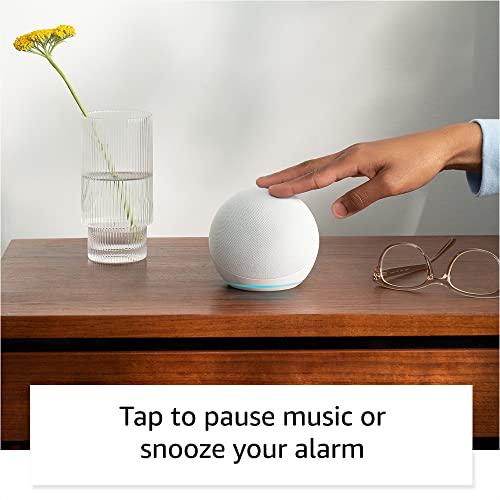
The Echo Dot does include some clever physical interactions. Its built-in accelerometer enables tap controls—you can tap the top to snooze alarms, pause music, or stop timers without speaking. This addresses one of the main limitations of voice-only devices: the need to speak commands even for simple actions.
From our analysis of user feedback, the choice between visual and voice-only interaction often depends on your household's communication style. Families with children or elderly members frequently prefer the Echo Show 8's visual feedback, while adults living alone often appreciate the Echo Dot's unobtrusive presence.
Audio quality represents the biggest performance gap between these devices, and it's an area where physics ultimately trumps engineering cleverness.
The Echo Show 8 3rd Generation includes dual 2-inch neodymium speakers with a passive bass radiator—a design that allows much deeper bass response than typical small speakers. Neodymium magnets are stronger than traditional speaker magnets, enabling more precise driver movement and clearer sound. The passive bass radiator acts like a subwoofer, moving air to enhance low frequencies without requiring additional power or amplification.
Amazon also implemented spatial audio processing, which analyzes your room's acoustics and adjusts the sound accordingly. This room adaptation technology helps the speakers sound their best whether you're in a small kitchen or a larger living room.
In practical terms, this means the Echo Show 8 can serve as your primary music speaker for medium-sized rooms. Bass response is substantial enough for modern pop and rock music, while vocal clarity makes podcasts and audiobooks enjoyable to listen to while cooking or working.
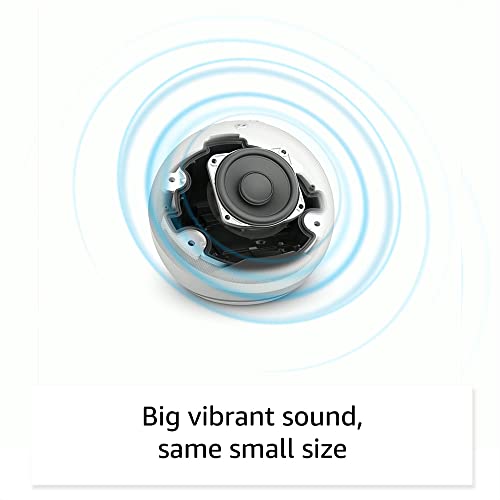
The Echo Dot 5th Generation features a single 1.73-inch driver—Amazon's largest ever in a Dot device. This represents a significant improvement over previous generations, delivering what Amazon claims is twice the bass response of the 4th generation model.
However, physics still applies. A single small driver in a compact enclosure simply cannot move as much air as larger speakers. The Echo Dot sounds surprisingly good for its size and price point, but it's designed for personal listening or background music rather than room-filling sound.
From expert audio reviews, the Echo Dot performs best at moderate volumes in smaller spaces. Push the volume too high, and you'll hear distortion as the small driver struggles with demanding content. The sound is also directional—you'll get the best experience when positioned relatively close to the device.
For music listening, the Echo Show 8 clearly wins. Its audio quality approaches that of dedicated Bluetooth speakers in the same price range, while the Echo Dot serves more as a functional voice interface that can also play music acceptably.
This difference becomes crucial if you're considering either device as part of a home theater setup. While neither replaces a proper sound system, the Echo Show 8 can serve as a secondary TV speaker for casual viewing or background music. The Echo Dot lacks the volume and dynamic range needed for any serious entertainment use.
Modern smart homes use multiple wireless protocols to connect devices, and this is where the technical differences between these products become important for long-term functionality.
The Echo Show 8 3rd Generation includes built-in support for Matter, Zigbee, and Thread protocols. This might sound like technical jargon, but these protocols determine which smart home devices you can control directly without additional hardware.
Matter is a new industry standard designed to make smart home devices work together regardless of manufacturer. Think of it as a universal language that lets Amazon, Google, Apple, and Samsung devices communicate seamlessly. Thread is a low-power mesh networking protocol that creates more reliable connections between devices, while Zigbee is an established standard used by many smart lights, sensors, and switches.
Having these protocols built into the Echo Show 8 means you can often eliminate separate smart home hubs. Instead of needing a Philips Hue bridge for your lights, a SmartThings hub for sensors, and a separate Thread router, the Echo Show 8 can handle all these connections directly.
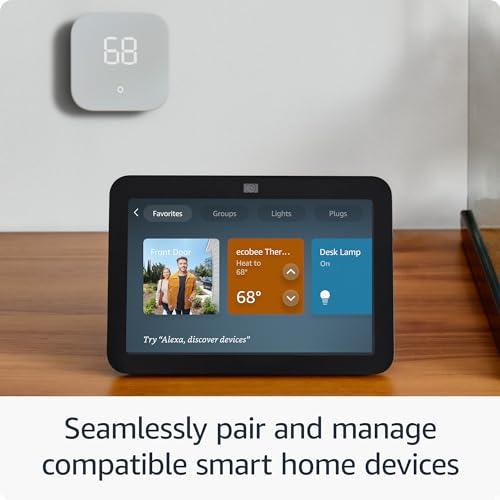
The visual interface makes managing these connections much easier. Instead of remembering voice commands for dozens of devices, you can see all your connected lights, cameras, and sensors on the touchscreen and control them with simple taps.
The Echo Dot 5th Generation supports standard Alexa smart home functionality through Wi-Fi and Bluetooth, but lacks the advanced hub capabilities of its bigger sibling. You'll need separate hubs or bridges to connect Zigbee or Thread devices.
However, the Echo Dot does include some interesting sensors for automation. Its built-in temperature sensor can trigger routines based on room temperature—for example, turning on a smart fan when the room gets too warm. The ultrasound motion detection can sense when someone enters or leaves the room, enabling presence-based automation like automatically turning on lights.
These features work best when you have multiple Echo Dots throughout your home, creating a network of sensors that can trigger actions based on occupancy and environmental conditions.
For users just starting with smart home devices, the Echo Show 8 offers a more comprehensive and user-friendly experience. Advanced users with existing hub infrastructure might prefer multiple Echo Dots for broader sensor coverage throughout their homes.
Both devices received significant processor upgrades in their latest generations, but the improvements serve different purposes.
The Echo Show 8 3rd Generation features an octa-core processor with Amazon's AZ2 Neural Network Engine, making it 40% faster than the previous generation. This processing power enables smooth touchscreen navigation, quick video streaming, and faster visual recognition for features like Visual ID and auto-framing video calls.
The Echo Dot 5th Generation also uses Amazon's AZ2 Neural Edge Processor, but optimized for voice processing rather than multimedia tasks. The result is noticeably faster Alexa responses compared to previous Dot generations—commands that used to take 2-3 seconds now respond almost immediately.
In daily use, both devices feel responsive for their intended purposes. The Echo Show 8 launches apps quickly and navigates menus smoothly, while the Echo Dot provides snappy voice interactions without the delays that plagued earlier models.
The physical presence of these devices in your home matters more than you might expect, especially since they're designed to be always-on and always-listening.
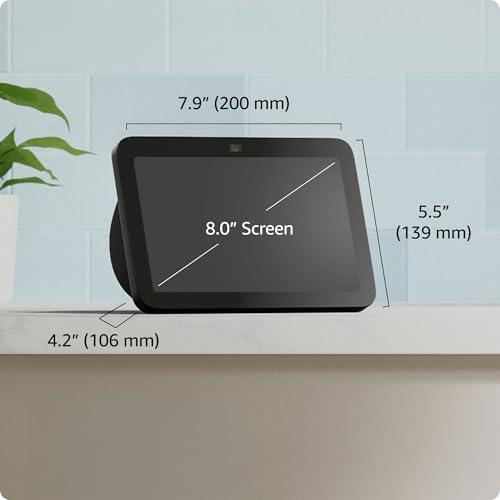
The Echo Show 8 measures roughly 8 inches wide and 5.5 inches deep—about the size of a small tablet on a stand. It's designed to be seen and used, with an edge-to-edge glass display that looks premium but also shows fingerprints and dust.
This size works well on kitchen counters, home office desks, or bedroom nightstands where you want easy access to its features. The device needs to be positioned thoughtfully since the camera and microphones work best when you're directly in front of it.
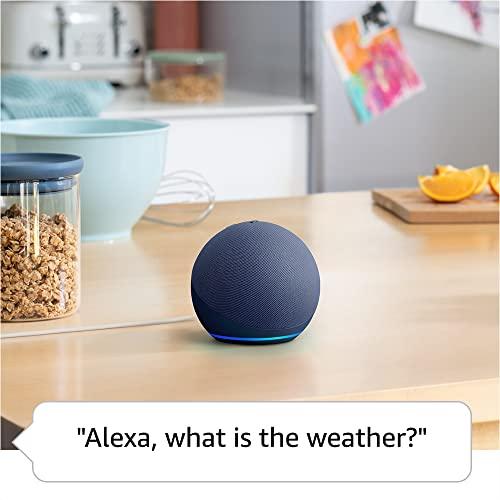
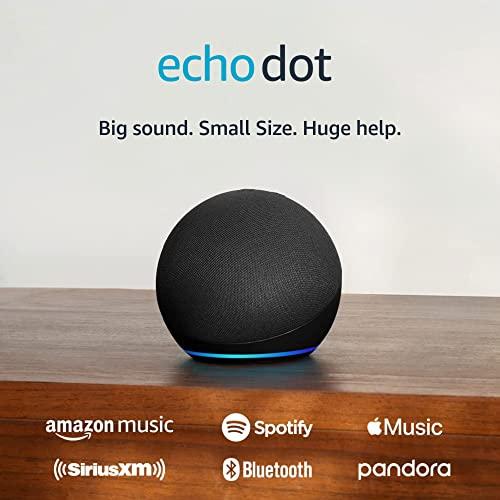
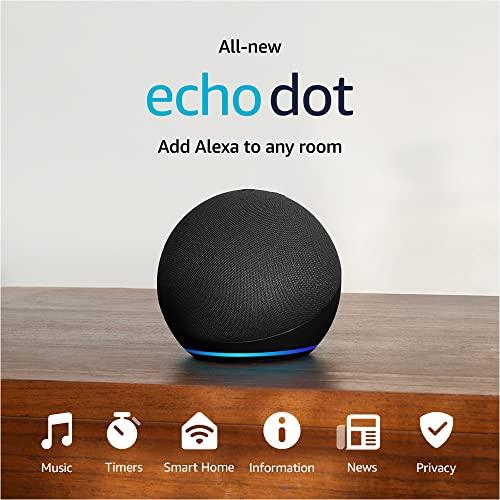
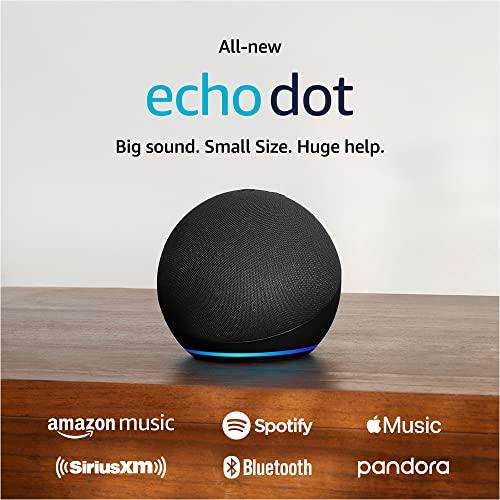
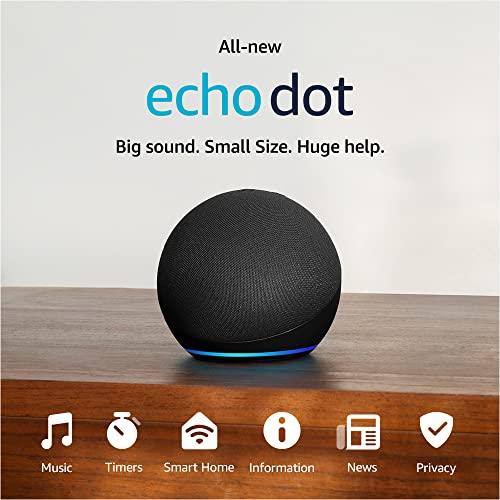
The Echo Dot 5th Generation is spherical and roughly the size of a tennis ball, weighing just 12 ounces. It's available in multiple colors and designed to blend into your existing decor rather than dominate it.
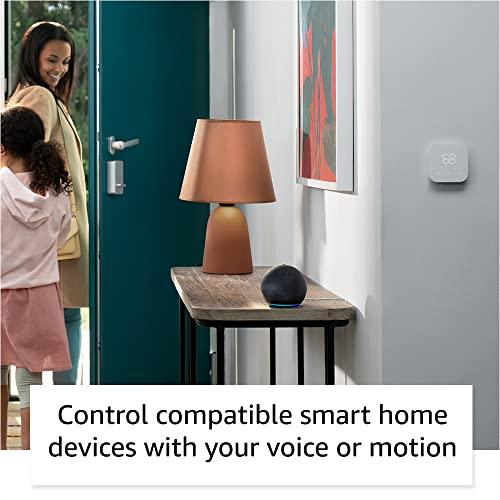
This compact size enables creative placement options—on bookshelves, tucked into corners, or even mounted on walls with optional accessories. The omnidirectional microphones work well regardless of positioning, making it more flexible for room placement.
At the time of writing, the Echo Show 8 3rd Generation typically costs about three times as much as the Echo Dot 5th Generation. This price difference reflects genuinely different capabilities rather than just premium positioning.
The Echo Show 8 makes sense as a primary smart home controller in high-traffic areas like kitchens or living rooms. Its visual interface excels at displaying multiple pieces of information simultaneously—weather, calendar, news, and smart home status all visible at a glance.
For families, the video calling capabilities justify the higher price. The auto-framing camera and large screen create a much better video chat experience than smartphone calls, especially for keeping in touch with distant relatives or grandparents who appreciate the larger display.
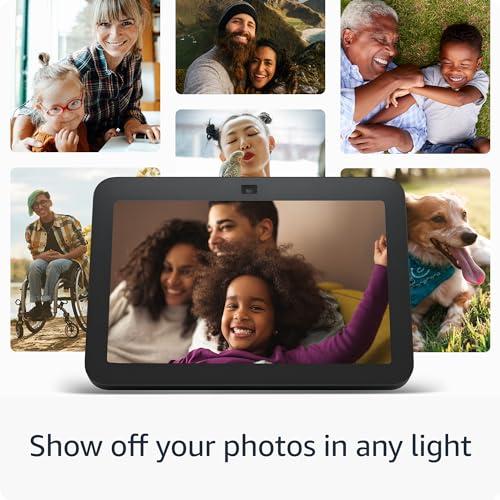
The device also works well as a digital photo frame, cycling through family photos when not actively in use. Combined with its decent audio quality, this makes it a natural choice for common areas where multiple people will interact with it.
The Echo Dot 5th Generation shines as a secondary device or primary speaker for users who prefer voice interaction. Its compact size and lower price make it practical to place multiple units throughout your home, creating whole-home voice control without significant expense.
For bedrooms, bathrooms, or home offices where visual distraction would be unwelcome, the Echo Dot's audio-only interface feels more appropriate. Its tap controls address many situations where you might hesitate to speak commands aloud.
The device also works well for renters or people who move frequently. Its small size and simple setup make it easy to relocate, while the lower price reduces the cost of replacing it if damaged.
Choosing between the Echo Show 8 3rd Generation and Echo Dot 5th Generation ultimately depends on how you want to interact with technology in your daily life.
The Echo Show 8 transforms Alexa into a visual, multimedia experience. It's the better choice if you want a central family communication hub, enjoy watching video content, or prefer touchscreen controls for your smart home. The higher price is justified by genuinely useful features that change how you use the device daily.
The Echo Dot 5th Generation keeps Alexa focused on voice interaction while adding just enough modern features to feel current. It's ideal for users who want Alexa's capabilities without visual complexity, need multiple devices for whole-home coverage, or simply prefer technology that stays in the background until needed.
Both devices represent solid values in their respective categories. The key is honestly assessing which approach fits your lifestyle, physical space, and budget. In our experience analyzing user feedback, most people who choose based on their actual usage patterns rather than feature lists end up satisfied with either device.
| Amazon Echo Show 8 3rd Gen Smart Display | Amazon Echo Dot 5th Generation Smart Speaker |
|---|---|
| Display - Determines visual interaction capabilities and multimedia use | |
| 8-inch HD touchscreen (1280x800) with Adaptive Content and Visual ID | No display - LED light ring for status only |
| Audio Quality - Most important for music listening and room-filling sound | |
| Dual 2-inch neodymium speakers with passive bass radiator, spatial audio | Single 1.73-inch driver, front-firing mono audio |
| Smart Home Hub - Eliminates need for separate hubs and future-proofs setup | |
| Built-in Matter, Zigbee, Thread Border Router support | Standard Alexa compatibility, requires separate hubs for advanced protocols |
| Camera - Essential for video calls and security monitoring | |
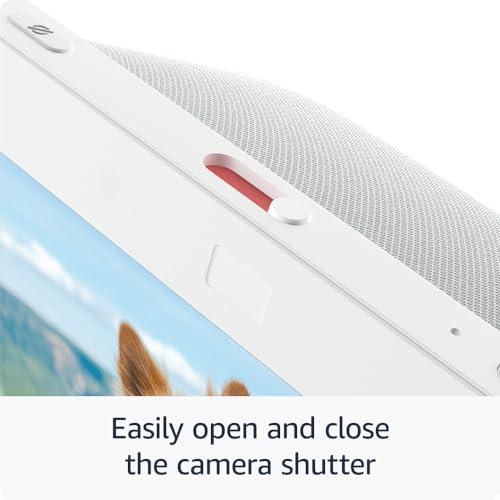
| 13MP centered camera with auto-framing and privacy shutter | No camera |
| Processing Power - Affects response speed and multimedia performance | |
| Octa-core SoC with AZ2 Neural Network Engine (40% faster than previous gen) | AZ2 Neural Edge Processor optimized for voice commands |
| Physical Size - Impacts placement options and room integration | |
| 7.9 x 5.4 x 4.2 inches, 2.3 lbs (requires dedicated counter space) | 3.9 x 3.9 x 3.5 inches, 0.75 lbs (fits anywhere) |
| Unique Features - Differentiating capabilities that justify price differences | |
| Video streaming, digital photo frame, visual smart home control, video calling | Temperature sensor, motion detection, tap controls, eero Wi-Fi extender |
| Best Use Cases - Where each device excels in real-world scenarios | |
| Primary kitchen/living room hub, family communication, multimedia consumption | Secondary rooms, multiple unit deployments, voice-first interaction |
| Value Proposition - Cost-benefit analysis for typical buyers | |
| Premium price for comprehensive visual interface and superior audio | Budget-friendly for core Alexa functionality with surprisingly good sound |
The Amazon Echo Show 8 3rd Gen delivers significantly better audio quality with its dual 2-inch neodymium speakers and passive bass radiator. It provides room-filling stereo sound that's suitable for medium-sized spaces. The Amazon Echo Dot 5th Generation has improved audio over previous generations but uses a single small driver that's best for personal listening or background music in smaller rooms.
Yes, the Amazon Echo Show 8 3rd Gen includes built-in Matter, Zigbee, and Thread support, allowing it to control most smart home devices directly without additional hubs. The Amazon Echo Dot 5th Generation requires separate hubs for many smart home protocols, though it does include useful sensors like temperature monitoring and motion detection for basic automation.
Only the Amazon Echo Show 8 3rd Gen supports video calls with its 13MP camera and 8-inch display. The camera includes auto-framing to keep you centered during calls. The Amazon Echo Dot 5th Generation has no camera or display, so it can only make voice calls through Alexa's Drop In feature.
The Amazon Echo Dot 5th Generation is much more compact at roughly the size of a tennis ball, making it easy to place on shelves, nightstands, or tucked into corners. The Amazon Echo Show 8 3rd Gen requires dedicated counter or shelf space due to its 8-inch display and larger footprint, but offers much more functionality in return.
Both the Amazon Echo Show 8 3rd Gen and Amazon Echo Dot 5th Generation run the same Alexa software and respond to identical voice commands. The key difference is that the Echo Show 8 adds visual feedback, touchscreen controls, and multimedia capabilities on top of the standard Alexa experience.
The Amazon Echo Dot 5th Generation is generally better for bedrooms due to its compact size, minimal visual distraction, and tap controls that let you snooze alarms or pause music without speaking. The Amazon Echo Show 8 3rd Gen has a bright display that some find disruptive in sleeping areas, though it can be dimmed or turned off.
Neither device is designed as a primary home theater speaker, but the Amazon Echo Show 8 3rd Gen can serve as a secondary speaker for casual TV watching due to its superior audio quality and volume. The Amazon Echo Dot 5th Generation lacks the power and dynamic range needed for any serious entertainment audio use.
The Amazon Echo Show 8 3rd Gen excels in kitchens with its large display for viewing recipes, timers, and cooking videos. You can follow along with step-by-step instructions without touching the screen with messy hands. The Amazon Echo Dot 5th Generation can handle basic kitchen tasks like timers and conversions but lacks visual recipe guidance.
The Amazon Echo Show 8 3rd Gen typically costs about three times more than the Amazon Echo Dot 5th Generation. The Echo Dot offers exceptional value for basic Alexa functionality and surprisingly good audio for its size. The Echo Show 8 justifies its higher price with multimedia capabilities, superior sound, and comprehensive smart home hub features.
The Amazon Echo Show 8 3rd Gen allows full touchscreen control of smart home devices, letting you adjust lights, thermostats, and view security cameras without voice commands. The Amazon Echo Dot 5th Generation is primarily voice-controlled, though it does offer tap gestures for basic functions like pausing music or snoozing alarms.
The Amazon Echo Show 8 3rd Gen works better for families due to its Visual ID feature that recognizes different family members and customizes content accordingly. The large display is easier for children to interact with, and video calling helps kids stay connected with distant relatives. The Amazon Echo Dot 5th Generation can be more challenging for young children who benefit from visual feedback.
This depends on your home layout and needs. Multiple Amazon Echo Dot 5th Generation devices create whole-home voice control at a reasonable cost and work well for basic automation throughout different rooms. A single Amazon Echo Show 8 3rd Gen serves better as a central family hub in a primary location like the kitchen, offering multimedia and communication features that justify having just one premium device.
We've done our best to create useful and informative comparisons to help you decide what product to buy. Our research uses advanced automated methods to create this comparison and perfection is not possible - please contact us for corrections or questions. These are the sites we've researched in the creation of this article: techradar.com - techradar.com - youtube.com - tomsguide.com - thedisconnekt.com - androidcentral.com - bestbuy.com - versus.com - versus.com - dimensions.com - ifixit.com - bestbuy.com - dell.com - youtube.com - youtube.com - soundguys.com - reviewed.com - youtube.com - youtube.com - whathifi.com - youtube.com - youtube.com - dell.com - bestbuy.com - youtube.com - youtube.com - nfm.com - soundguys.com - staples.com - homedepot.com - techradar.com - gadgets360.com - youtube.com - versus.com - en.wikipedia.org

Privacy Policy
Terms and Conditions - Affiliate Policy
Home Security
© Copyright 2008-2026.
11816 Inwood Rd #1211, Dallas, TX 75244