


Smart displays have come a long way since Amazon first introduced the Echo Show back in 2017. What started as a somewhat clunky tablet-speaker combo has evolved into sophisticated home hubs that can control your entire smart home, stream your favorite shows, and even recognize your face to provide personalized information. Today, we're comparing two of Amazon's most compelling options: the premium Echo Show 11 and the mainstream favorite Echo Show 8 3rd Gen.
Understanding smart displays starts with recognizing they're not just bigger versions of smart speakers. These devices serve as visual command centers for modern homes, combining voice control with touchscreen interfaces that make complex tasks much more intuitive. Whether you're adjusting your thermostat, checking who's at the front door, or video chatting with family, having that visual element transforms how you interact with your smart home ecosystem.
When evaluating smart displays, several key factors determine which device will work best in your specific situation. Screen quality matters enormously – not just size, but resolution, brightness, and viewing angles. A display you can't read clearly from across the kitchen isn't going to be very useful when you're cooking and need to check a timer.
Audio quality has become increasingly important as these devices often replace dedicated speakers. The Echo Show 8 3rd Gen, released in 2023, marked a significant step forward in this area, while the Echo Show 11, arriving in 2025, pushes audio performance even further with its advanced spatial processing.
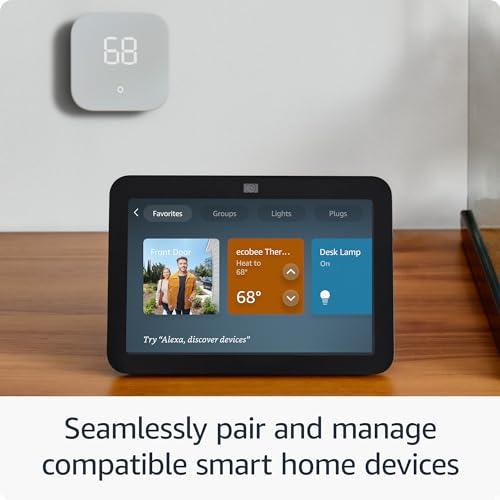
Smart home integration capabilities have also evolved dramatically. Early smart displays could control basic devices, but modern ones like both models we're examining include built-in support for Zigbee, Matter, and Thread protocols. These technical standards might sound confusing, but they essentially mean these displays can communicate directly with almost any smart device without needing additional hubs cluttering up your home.
Processing power determines how responsive your display feels in daily use. Nothing kills the smart home experience like laggy responses or stuttering video playback. Both devices have made substantial improvements here, though they take different approaches to achieving smooth performance.
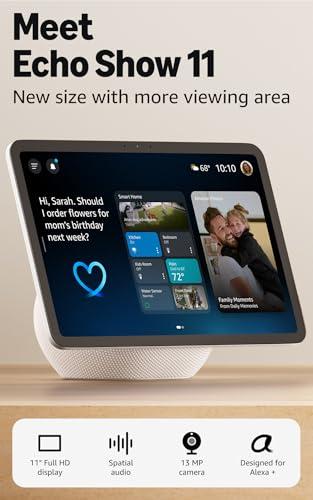
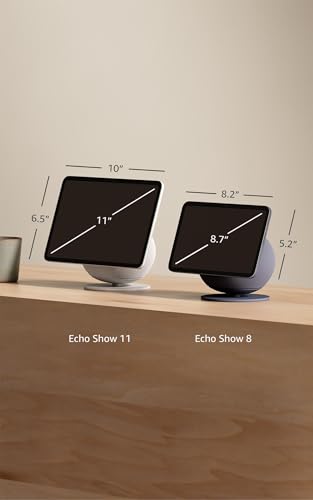
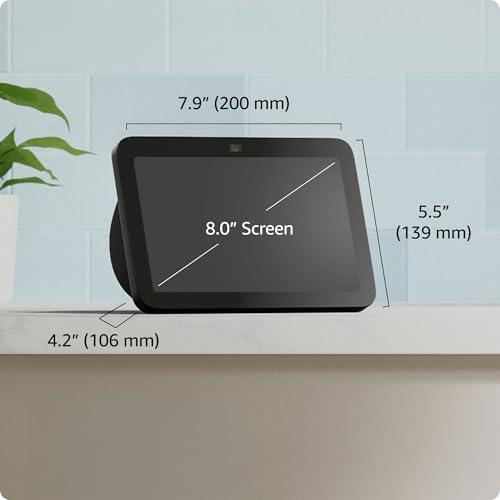
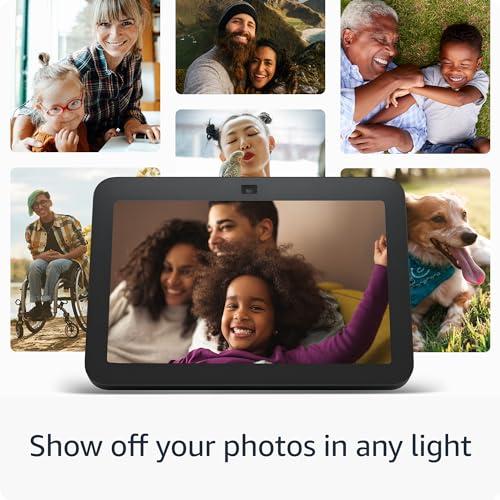
The most obvious difference between these displays is screen size, but the implications go deeper than you might expect. The Echo Show 11 features an 11-inch display with Full HD resolution (1920×1200 pixels), while the Echo Show 8 offers an 8-inch screen with standard HD resolution (1280×800 pixels).
That three-inch difference translates to dramatically more viewable area – roughly 60% more screen real estate. For media consumption, this makes the Echo Show 11 significantly more enjoyable. Watching YouTube videos or Netflix shows feels natural rather than cramped. The higher pixel density also means text appears sharper, which matters when you're reading recipes or checking calendar appointments from across the room.
However, the Echo Show 8 isn't just a smaller version of its bigger sibling. Its compact form factor makes it incredibly versatile for placement options. While the Echo Show 11 demands counter or shelf space like a small television, the Echo Show 8 fits comfortably on nightstands, crowded kitchen counters, or small desk spaces.
The visual technology also differs between these devices. The Echo Show 11 incorporates what Amazon calls "in-cell touch and negative liquid crystal design" – technical terms that essentially mean the touch sensors are built into the display itself rather than layered on top, resulting in better clarity and viewing angles. This advanced display technology, combined with adaptive brightness that automatically adjusts to room lighting, makes the larger display practical even in challenging lighting conditions.
From our research into user feedback, the Echo Show 11 consistently receives praise for its vibrant colors and sharp text, while the Echo Show 8 is noted more for its responsive touch interface and adequate brightness for most indoor situations. Both displays handle fingerprints reasonably well, though neither includes advanced anti-reflective coatings that might help in very bright rooms.
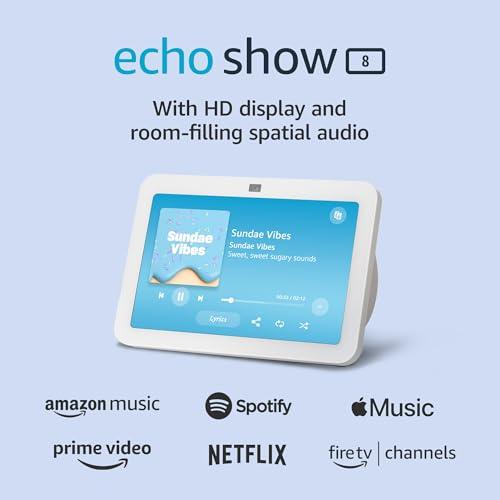
Perhaps the most impressive improvement in both displays comes in audio quality, though each takes a different approach to delivering room-filling sound. The Echo Show 8 3rd Gen includes dual 2-inch neodymium speakers paired with a passive bass radiator. This might sound technical, but the practical result is surprisingly rich audio with actual bass response – something earlier smart displays struggled with.
Neodymium speakers use powerful rare-earth magnets to produce clear, detailed sound from relatively small drivers. The passive bass radiator works like a subwoofer without requiring additional power, using air movement from the main speakers to enhance low-frequency response. User reviews consistently highlight how the Echo Show 8 delivers audio quality that rivals dedicated Bluetooth speakers costing $50 or more.
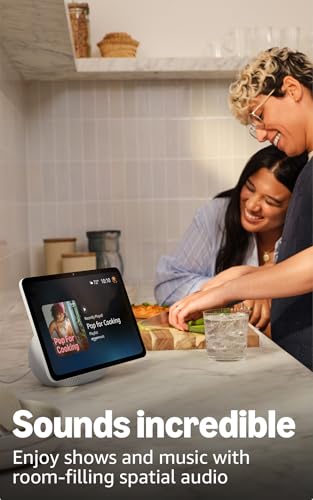
The Echo Show 11 takes audio even further with its front-facing stereo system and custom woofer design. More importantly, it includes spatial audio processing powered by Amazon's AZ3 Pro chip. Spatial audio analyzes your room's acoustics and adjusts sound accordingly – if you're in a small bedroom, it won't overpower the space, but in a large kitchen, it'll open up to fill the area appropriately.
This room adaptation technology, which both devices include to varying degrees, represents a significant advancement over traditional speakers that just play the same way regardless of environment. Our analysis of expert reviews suggests the Echo Show 11 provides noticeably richer sound for music listening, while the Echo Show 8 offers excellent audio quality that exceeds expectations for its size and price point.
For home theater applications, neither device replaces a dedicated sound system, but both work well for casual video streaming. The Echo Show 11 provides enough audio quality to serve as the primary speaker for small to medium rooms when watching content, while the Echo Show 8 works better for individual or close-proximity viewing.
The processing differences between these devices illustrate how rapidly smart display technology has advanced. The Echo Show 8 3rd Gen runs on an octa-core processor (eight processing cores working together) combined with Amazon's AZ2 Neural Network Engine. This specialized AI chip handles voice recognition, natural language processing, and smart home commands more efficiently than general-purpose processors.
According to Amazon's specifications, this setup delivers 40% faster performance compared to the previous Echo Show 8 generation, released in 2021. In practical terms, this means Alexa responds more quickly to commands, apps launch faster, and video streaming starts with less buffering.
The Echo Show 11 pushes processing power significantly further with Amazon's newest AZ3 Pro chip, which includes an integrated AI accelerator designed specifically for running advanced language models directly on the device. This edge computing approach (processing data locally rather than sending it to remote servers) enables features that weren't possible in earlier devices.
Most notably, the Echo Show 11 supports Alexa+, Amazon's next-generation AI assistant that provides more natural conversation and contextual understanding. While this advanced AI is currently limited to the United States at the time of writing, it represents where smart home technology is heading – toward devices that understand context and can anticipate your needs rather than just responding to direct commands.
The processing power difference also enables the Echo Show 11 to run what Amazon calls the Omnisense sensor fusion platform. This system combines data from multiple sensors – the camera, microphones, Wi-Fi signals, accelerometers, and even ultrasound – to detect user presence and behavior patterns. Practically, this means the device can recognize when you're approaching and automatically display relevant information without you asking for it.
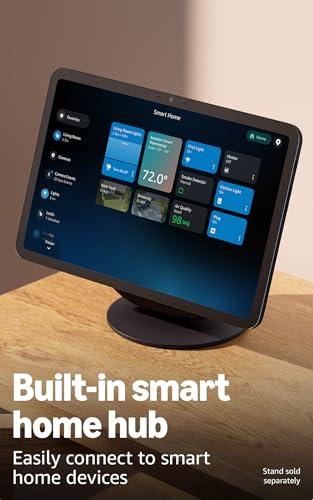
Both displays excel as smart home hubs, supporting the three major connectivity standards that matter most: Zigbee, Matter, and Thread. Understanding these protocols helps explain why modern smart displays have become so capable as central control points.
Zigbee is a low-power wireless standard used by many smart home devices, from light bulbs to door sensors. Having Zigbee built into your display means you can connect these devices directly without needing separate hubs. Matter is a newer standard designed to make smart home devices work together regardless of brand – essentially creating a universal language for smart devices. Thread provides secure, reliable mesh networking that helps devices communicate even when your Wi-Fi is busy or temporarily unavailable.
The Echo Show 8 3rd Gen marked a significant upgrade in smart home capabilities compared to its predecessor, which lacked built-in Zigbee support. Now both displays offer identical smart home integration, making either one capable of controlling virtually any modern smart device.
Both displays also function as Thread Border Routers, which sounds technical but simply means they help extend your Thread network's range and reliability. If you have Thread-enabled devices like newer smart locks or sensors, either display will help ensure they stay connected and responsive.
Video calling has become increasingly important for smart displays, and both devices handle this well with identical 13-megapixel cameras. This represents a significant upgrade from earlier Echo Show models that typically featured much lower resolution cameras.
The cameras support auto-framing technology that automatically pans and zooms to keep you centered in video calls as you move around. While not as sophisticated as dedicated webcams, this feature works well for family video calls or checking in on your home remotely through the Alexa app.
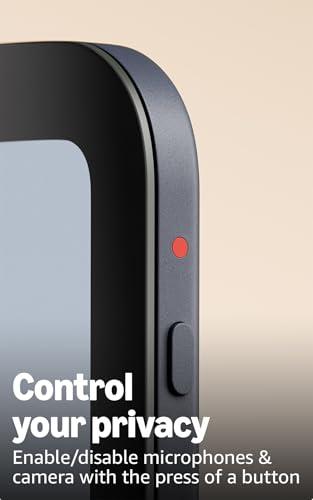
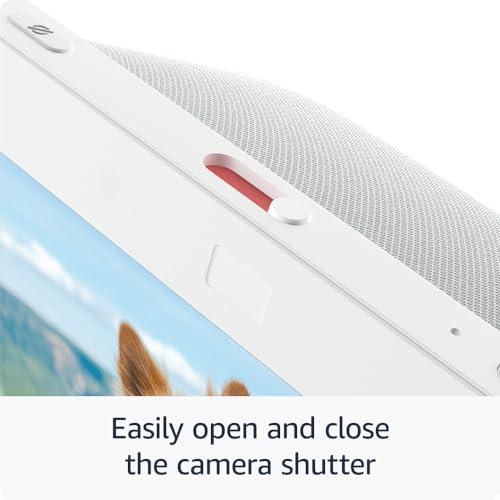
Both devices include physical camera shutters – a privacy feature that manually blocks the camera lens when not in use. This addresses one of the main concerns people have about always-on smart home devices, providing a clear, visible indication that the camera is disabled.
For home security applications, both displays can serve as monitoring devices, allowing you to check live camera feeds or receive notifications when motion is detected. The larger screen of the Echo Show 11 makes it easier to see details in security footage, but both devices handle this functionality equally well.
At the time of writing, the Echo Show 8 3rd Gen represents exceptional value in the smart display market, typically priced around half as much as the Echo Show 11. This price difference reflects their different target markets, but it also highlights how much capability Amazon has packed into their mid-range offering.
The Echo Show 8 includes virtually all the smart home functionality of its more expensive sibling, along with surprisingly good audio quality and a responsive, high-quality display. For most households, it provides everything needed in a smart display without compromise.
The Echo Show 11 justifies its premium pricing with cutting-edge features like Alexa+, advanced spatial audio, and a significantly larger, higher-resolution display. However, these improvements come at roughly double the cost, making it more of a luxury purchase than a practical necessity for most users.
The decision between these displays ultimately comes down to your specific needs and budget considerations. The Echo Show 8 3rd Gen excels as an all-around performer that fits well in most spaces and use cases. Its compact size makes it ideal for bedrooms, home offices, or crowded kitchen counters where a larger display would feel overwhelming.
Choose the Echo Show 8 if you want a reliable smart home hub that handles daily tasks exceptionally well – checking weather, setting timers, controlling smart devices, playing music, or making video calls. Its audio quality alone makes it competitive with dedicated Bluetooth speakers, and its smart home capabilities are comprehensive enough for even complex setups.
The Echo Show 11 makes sense when display quality and advanced features are priorities. If you frequently watch videos, need a device that works well from across the room, or want access to cutting-edge AI features, the larger display and premium audio justify the additional cost.
For home theater integration, neither device replaces a dedicated audio system, but the Echo Show 11 works well as a secondary display for casual video streaming in bedrooms or kitchens. Its spatial audio processing and room adaptation make it surprisingly capable for moderate-volume entertainment.
Consider multiple Echo Show 8 devices throughout your home rather than one premium Echo Show 11 if you want smart display functionality in several rooms. The cost would be similar, but you'd gain the convenience of distributed access to your smart home controls and entertainment options.
Both devices represent significant improvements over earlier smart displays, with faster processors, better audio, and comprehensive smart home integration. The Echo Show 8 3rd Gen achieves the sweet spot of features and value for most users, while the Echo Show 11 pushes the boundaries of what's possible in a smart display for those willing to invest in premium capabilities.
The smart display market continues evolving rapidly, but both of these devices are well-positioned to remain relevant and useful for years to come, thanks to their robust processing power and comprehensive connectivity options.
| Amazon Echo Show 11 Smart Display | Amazon Echo Show 8 3rd Gen Smart Display |
|---|---|
| Display Size & Resolution - Critical for media viewing and readability from distance | |
| 11-inch Full HD touchscreen (1920×1200) with adaptive brightness | 8-inch HD touchscreen (1280×800) with edge-to-edge glass |
| Audio System - Determines music quality and room-filling sound | |
| Front-facing stereo drivers with custom woofer and spatial audio processing | Dual 2-inch neodymium speakers with passive bass radiator |
| Processor & AI Features - Affects responsiveness and smart capabilities | |
| AZ3 Pro chip with AI accelerator, supports Alexa+ with advanced conversational AI | Octa-core SoC with AZ2 Neural Network Engine, 40% faster than previous generation |
| Camera Quality - Important for video calls and home monitoring | |
| 13MP centered camera with auto-framing and physical shutter | 13MP centered camera with auto-framing and physical shutter |
| Smart Home Hub Capabilities - Eliminates need for separate hubs | |
| Built-in Zigbee, Matter, Thread Border Router support | Built-in Zigbee, Matter, Thread Border Router support |
| Advanced Sensors - Enables personalized and proactive features | |
| Omnisense sensor fusion platform (camera, audio, ultrasound, Wi-Fi radar, accelerometer) | Standard camera and microphone sensors |
| Design & Form Factor - Affects placement options and room aesthetics | |
| Floating display design with woven mesh base, requires substantial counter space | Compact profile ideal for nightstands, small counters, and tight spaces |
| Display Technology - Impacts viewing quality and touch responsiveness | |
| In-cell touch with negative liquid crystal design for wide viewing angles | Standard touchscreen with responsive interface and anti-fingerprint coating |
| Value Positioning - Consider features versus cost | |
| Premium flagship with cutting-edge features at higher price point | Exceptional value offering most premium features at mid-range pricing |
The Amazon Echo Show 11 features an 11-inch Full HD display, while the Amazon Echo Show 8 3rd Gen has an 8-inch HD screen. The larger display on the Echo Show 11 provides significantly more viewing area for watching videos, viewing photos, and reading content from across the room.
Both devices offer excellent audio, but the Amazon Echo Show 11 delivers superior sound with front-facing stereo drivers, a custom woofer, and advanced spatial audio processing. The Amazon Echo Show 8 3rd Gen provides impressive audio quality with dual neodymium speakers and passive bass radiator that rivals many dedicated Bluetooth speakers.
The Amazon Echo Show 11 is significantly better for video content thanks to its larger 11-inch Full HD display and enhanced audio system. While the Echo Show 8 3rd Gen can handle video streaming adequately, the bigger screen and superior sound make the Echo Show 11 more enjoyable for extended viewing sessions.
Yes, both the Amazon Echo Show 11 and Amazon Echo Show 8 3rd Gen function as comprehensive smart home hubs with identical capabilities. They both support Zigbee, Matter, and Thread protocols, allowing you to control virtually any smart home device without needing additional hubs.
Both devices feature the same 13-megapixel centered camera with auto-framing technology and physical privacy shutters. Video call quality is essentially identical between the Amazon Echo Show 11 and Amazon Echo Show 8 3rd Gen, though the larger screen on the Echo Show 11 provides a better viewing experience during calls.
The Amazon Echo Show 11 uses Amazon's latest AZ3 Pro chip with AI accelerator, supporting advanced features like Alexa+ conversational AI. The Amazon Echo Show 8 3rd Gen runs on an octa-core processor with AZ2 Neural Network Engine, delivering 40% faster performance than previous generations and excellent responsiveness for daily tasks.
The Amazon Echo Show 8 3rd Gen provides exceptional value, offering most premium smart display features at a mid-range price point. The Amazon Echo Show 11 justifies its higher cost with a larger display, superior audio, and cutting-edge AI features, making it worthwhile for users who prioritize these premium capabilities.
The Amazon Echo Show 11 works well as a kitchen TV replacement with its 11-inch Full HD display and room-filling audio. The Amazon Echo Show 8 3rd Gen can serve this purpose in smaller kitchens or for basic viewing needs, but the larger screen of the Echo Show 11 provides a more TV-like experience.
The Amazon Echo Show 8 3rd Gen is ideal for small spaces due to its compact 8-inch form factor that fits comfortably on nightstands and crowded surfaces. While the Amazon Echo Show 11 offers superior features, its larger size requires more dedicated space and may overwhelm smaller rooms.
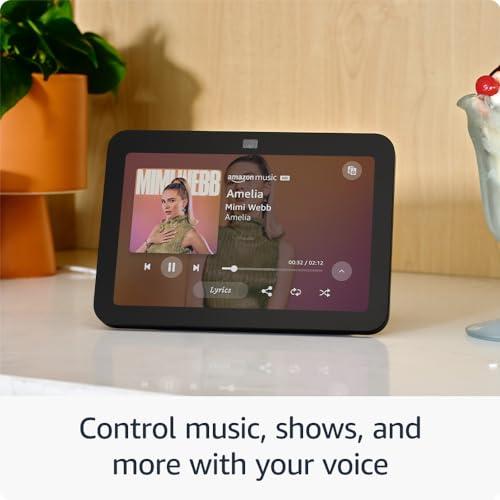
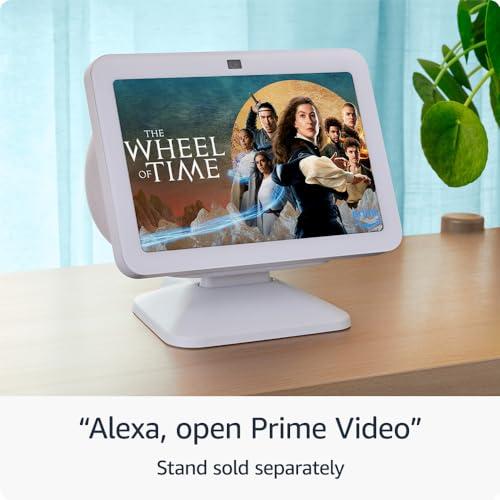
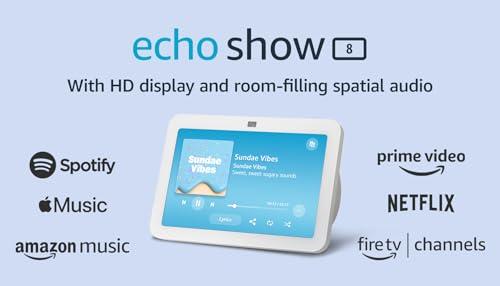
Yes, both the Amazon Echo Show 11 and Amazon Echo Show 8 3rd Gen support the same streaming services including Prime Video, Netflix, Hulu, and YouTube. However, the larger display and better audio of the Echo Show 11 provide a more enjoyable streaming experience.
The Amazon Echo Show 11 includes Amazon's next-generation Alexa+ with advanced conversational AI, contextual understanding, and proactive suggestions. The Amazon Echo Show 8 3rd Gen uses standard Alexa with reliable voice recognition and smart home control, but lacks the advanced AI capabilities of the Echo Show 11.
This depends on your needs and budget. Multiple Amazon Echo Show 8 3rd Gen units provide smart display functionality throughout your home at a similar total cost to one Amazon Echo Show 11. Choose the Echo Show 11 if you want one premium display for a primary location, or multiple Echo Show 8 devices for distributed smart home control and convenience.
We've done our best to create useful and informative comparisons to help you decide what product to buy. Our research uses advanced automated methods to create this comparison and perfection is not possible - please contact us for corrections or questions. These are the sites we've researched in the creation of this article: notebookcheck.net - techradar.com - matteralpha.com - bestbuy.com - aboutamazon.com - cordcuttersnews.com - techradar.com - techradar.com - youtube.com - tomsguide.com - thedisconnekt.com - androidcentral.com - bestbuy.com - versus.com - versus.com - dimensions.com - ifixit.com - bestbuy.com - dell.com - youtube.com - youtube.com

Privacy Policy
Terms and Conditions - Affiliate Policy
Home Security
© Copyright 2008-2026.
11816 Inwood Rd #1211, Dallas, TX 75244