



Smart speakers have come a long way from those early days when they could barely understand what you were asking for. Today's devices are sophisticated audio systems that can fill your room with sound, control your entire smart home, and even adapt their performance based on your environment. But with so many options available, choosing the right one for your needs can feel overwhelming.
Two standout options in the smart speaker market are the Amazon Echo Dot Max and the Google Nest Audio. While they're both smart speakers at their core, they take very different approaches to delivering audio and smart features. The Echo Dot Max focuses on packing premium audio technology into an incredibly compact form, while the Google Nest Audio offers a more traditional approach with solid performance across the board.
Before diving into the specifics, it's worth understanding what makes a smart speaker truly useful in 2024. These devices serve as the central nervous system for your connected home, handling everything from playing your morning playlist to dimming the lights for movie night. The best smart speakers excel in three key areas: audio quality that actually sounds good, voice assistants that understand what you're asking for, and smart home integration that works without constant troubleshooting.
Audio quality has become increasingly important as these devices have evolved beyond simple voice command tools. A smart speaker with poor sound quality will sit unused on your shelf, no matter how smart it claims to be. Similarly, voice assistant performance can make or break the daily experience – there's nothing more frustrating than repeating yourself multiple times just to turn off a light.
Smart home integration is where things get technical, but it's crucial for long-term satisfaction. Some speakers include built-in hubs that can directly communicate with smart devices, while others require additional hardware bridges to connect everything together.
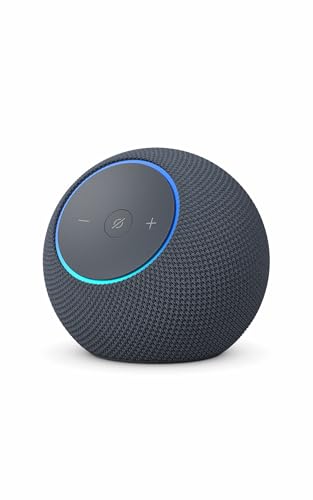
The Amazon Echo Dot Max represents Amazon's 2024 push into premium compact audio, building on years of Echo Dot popularity while addressing the line's biggest weakness: sound quality. Amazon released this as part of their strategy to compete with higher-end compact speakers like Apple's HomePod mini, but at a more accessible price point. The "Max" designation signals this isn't just another incremental update – it's a fundamental reimagining of what a compact smart speaker can deliver.
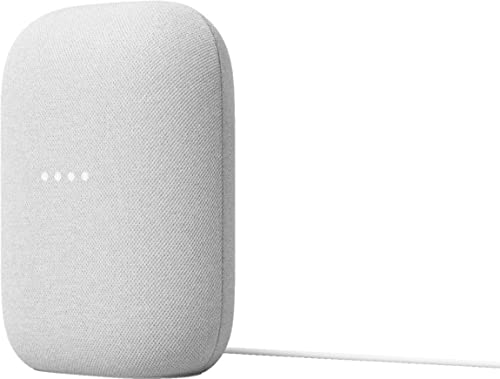
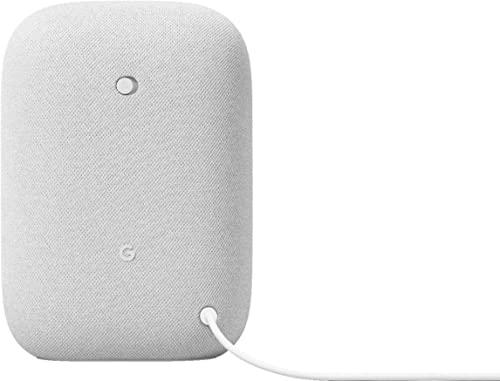
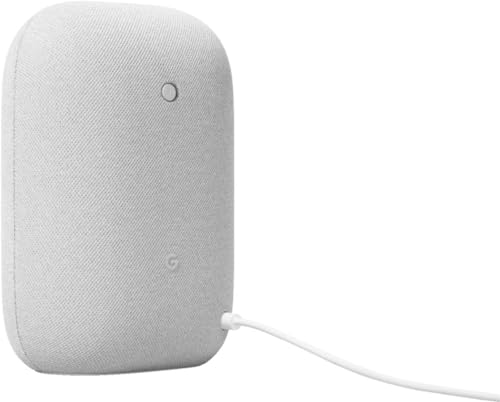
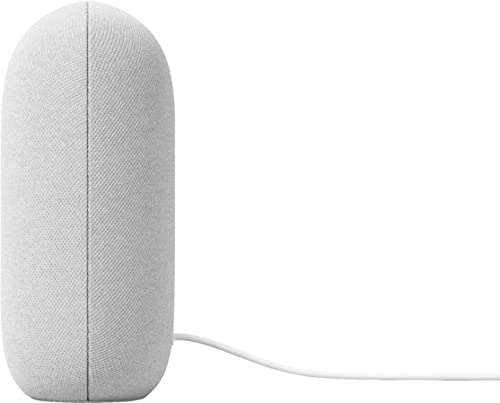
The Google Nest Audio, launched in 2020, was Google's answer to criticism that their original Google Home didn't sound particularly impressive. Google completely redesigned their approach to smart speakers with this model, focusing on room-filling sound and sustainable materials while maintaining their strength in conversational AI.
Since their respective launches, both companies have continued refining these platforms through software updates, but the hardware foundations remain largely unchanged. This gives us a good perspective on how each approach has aged and which features matter most in daily use.
The most striking difference between these speakers lies in their audio engineering approaches. The Echo Dot Max achieves something that seemed impossible just a few years ago: delivering genuinely impressive bass response from a sphere small enough to fit in your palm. This comes from Amazon's complete redesign of the internal acoustics, featuring a dedicated high-excursion woofer (a type of speaker driver specifically designed to move more air for deeper bass) paired with a custom tweeter (the small driver responsible for high-frequency sounds like cymbals and vocals).
The result is nearly three times the bass response compared to previous Echo Dot models. But more importantly, the Echo Dot Max includes spatial audio processing, which creates the illusion that sound is coming from multiple directions rather than a single point. Think of it like the difference between listening to music through basic earbuds versus a good pair of headphones – spatial audio makes the experience feel much more immersive and natural.
The Google Nest Audio takes a more conventional but proven approach with its 75mm woofer and 19mm tweeter configuration. Google claims this setup delivers 75% louder volume and 50% stronger bass than their previous Google Home. In practice, this translates to solid, room-filling sound that handles most music genres competently, though it doesn't have the same audio processing sophistication as the Echo Dot Max.
Based on our research of expert reviews and user feedback, the Echo Dot Max consistently impresses listeners with its ability to produce full, rich sound from such a small package. The spatial audio processing particularly shines with well-recorded music, creating a soundstage that seems impossible given the speaker's size. However, the Google Nest Audio offers more raw volume and can better fill larger rooms, making it more suitable for open floor plans or larger living spaces.
Both speakers include intelligent features that adjust their performance based on your environment, but they work differently. The Echo Dot Max uses what Amazon calls room adaptation technology – essentially, it analyzes the acoustics of your space and adjusts its output accordingly. This means it should sound good whether it's sitting on a nightstand, tucked into a bookshelf, or placed on a kitchen counter.
The Google Nest Audio includes Ambient IQ, which focuses specifically on adjusting volume based on background noise. This feature works particularly well for spoken content like podcasts or news briefings, automatically turning up the volume when your dishwasher kicks on or turning it down during quiet moments.
For home theater applications, the Echo Dot Max has a significant advantage. It supports Dolby Atmos (an advanced surround sound format) and can be paired with other Echo speakers or Amazon's Fire TV devices to create a genuine surround sound experience. You could theoretically set up multiple Echo Dot Max speakers around your living room for an impressive home theater setup without the complexity of traditional surround sound systems.
This is where personal preference and existing tech ecosystems become crucial. The Echo Dot Max runs Amazon's new Alexa+ assistant, powered by their custom AZ3 chip with AI acceleration. This represents a significant leap in processing power, enabling more natural conversation flows and better understanding of complex requests.
However, based on extensive user feedback and expert analysis, Google Assistant on the Nest Audio still maintains an edge in conversational sophistication. Google Assistant excels at follow-up questions and contextual understanding – you can ask "What's the weather?" followed by "What about tomorrow?" and it understands you're still talking about weather. It's also significantly better at web searches and general knowledge questions, leveraging Google's search expertise.
The difference becomes apparent in daily use. Alexa tends to be more transactional – great for specific commands like "Turn off the living room lights" or "Set a timer for 10 minutes." Google Assistant feels more conversational and can handle more complex, multi-part requests with better accuracy.
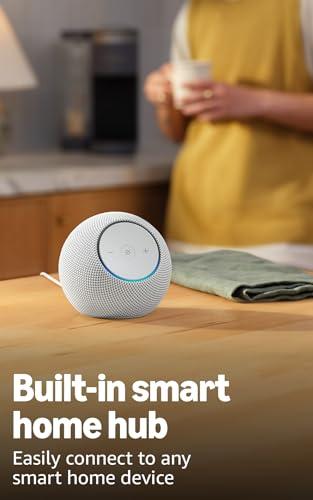
Here's where the Echo Dot Max pulls significantly ahead. It includes a built-in Zigbee hub, which is essentially a translator that allows the speaker to communicate directly with hundreds of different smart home devices. Zigbee is a low-power wireless communication protocol that many smart bulbs, sensors, and switches use to talk to each other.
Without getting too deep into technical details, having a built-in Zigbee hub means you can connect compatible smart devices directly to the Echo Dot Max without needing additional bridges or hubs cluttering up your router setup. This translates to easier setup, more reliable connections, and often better performance from your smart home devices.
The Google Nest Audio lacks this built-in hub capability, which means you'll often need separate bridges for smart home devices. While it supports Google's smart home ecosystem well and includes Matter support (a new standard designed to make smart home devices work better together), the lack of built-in Zigbee is a meaningful limitation for serious smart home enthusiasts.
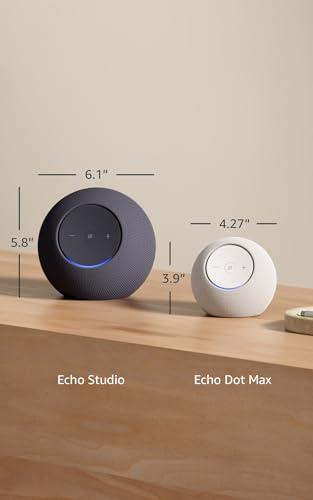
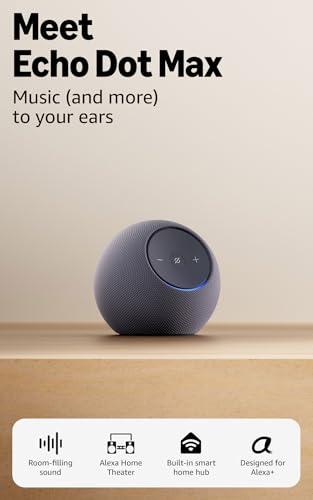
The design differences reflect each company's philosophy about where smart speakers fit in your home. The Echo Dot Max maintains the compact, spherical design that made Echo Dots popular – it can fit almost anywhere without dominating your space. The 3D knit fabric covering isn't just aesthetic; it's designed for acoustic transparency, meaning it doesn't interfere with sound quality while providing an attractive, modern appearance.
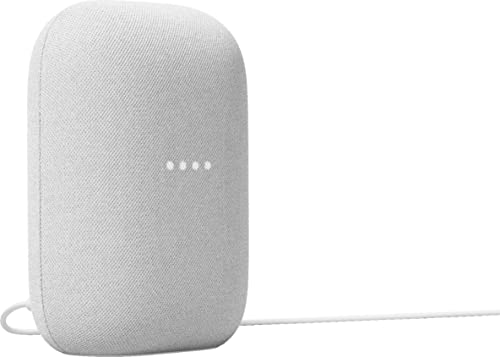
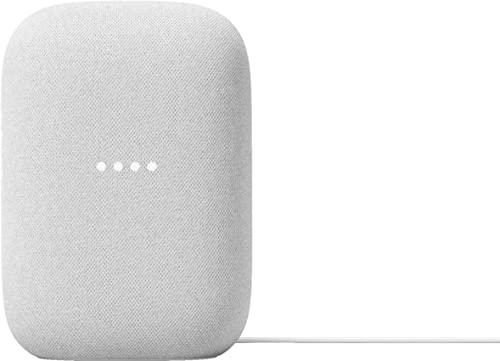
The Google Nest Audio is noticeably larger and takes a more traditional speaker approach with its rectangular form factor. Google made sustainability a key focus, constructing it from 70% recycled plastic. It's available in multiple colors designed to blend into home décor, but it requires more dedicated placement space than the compact Echo Dot Max.
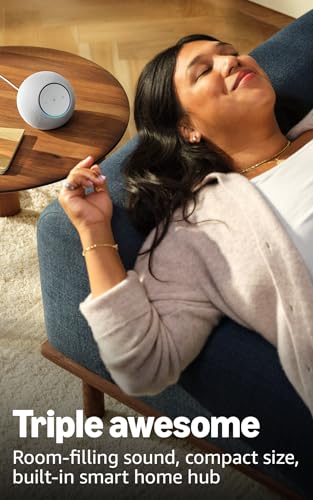
From a practical standpoint, the Echo Dot Max's smaller size makes it more versatile for placement. You can easily fit it on a nightstand, bookshelf, or kitchen counter without it feeling intrusive. The Google Nest Audio needs more deliberate placement but provides more substantial sound output when you have the space for it.
At the time of writing, both speakers are positioned in the premium segment of their respective ecosystems, typically priced competitively with each other. However, the value equation extends far beyond the initial purchase price. The Echo Dot Max includes features typically found in much more expensive speakers – spatial audio, Dolby Atmos support, and built-in smart home hub capabilities represent significant value additions.
The Google Nest Audio often goes on sale more frequently and integrates seamlessly with Google's free services like YouTube Music, Google Calendar, and Gmail. If you're already using Google services extensively, the daily convenience factor can justify the investment even if the raw audio specifications aren't quite as impressive.
Your existing technology ecosystem should heavily influence this decision. If you use Amazon Prime, have Fire TV devices, or already own Ring security products, the Echo Dot Max will integrate more seamlessly into your daily routines. The Alexa Skills platform also provides extensive third-party integrations, though the quality can be inconsistent.
Google ecosystem users – those with Android phones, YouTube Premium, or Google Workspace accounts – will find the Google Nest Audio more immediately useful. Google's services integration feels more polished and comprehensive, particularly for information-heavy requests and calendar management.
Based on extensive research of user reviews and expert analysis, the most important performance characteristics break down as follows:
Audio Quality: The Echo Dot Max consistently outperforms expectations for its size category, with spatial audio providing a genuine competitive advantage. The Google Nest Audio offers more traditional but reliable audio performance suitable for most listening scenarios.
Voice Recognition: Both perform well in typical home environments, but the Echo Dot Max's enhanced microphone array provides slightly better pickup in noisy conditions.
Response Speed: The Echo Dot Max's AZ3 chip provides noticeably faster response times, while the Google Nest Audio sometimes shows slight delays with complex requests.
Smart Home Reliability: The built-in Zigbee hub in the Echo Dot Max provides more consistent smart home device control compared to the bridge-dependent approach of the Google Nest Audio.
For users interested in building a home theater setup, the Echo Dot Max offers compelling advantages. Its support for Dolby Atmos and ability to pair with Fire TV devices means you could create a legitimate surround sound experience using multiple units. The compact size makes it practical to position speakers around your viewing area without the visual clutter of traditional bookshelf speakers.
The Google Nest Audio can be paired for stereo sound and works well for casual TV audio, but it lacks the advanced audio processing and home theater-specific features that make the Echo Dot Max more compelling for dedicated entertainment setups.
Choose the Amazon Echo Dot Max if:
Choose the Google Nest Audio if:
Both speakers represent strong choices in the smart speaker market, but they serve different priorities. The Echo Dot Max pushes the boundaries of what's possible in a compact smart speaker, offering genuinely impressive audio technology and comprehensive smart home integration. It's the better choice for users who want a device that can serve multiple roles – from casual music listening to serious home theater integration.
The Google Nest Audio remains a solid, well-rounded choice that excels at the core smart speaker functions: reliable voice assistance, decent audio quality, and seamless integration with Google's ecosystem. It's particularly appealing for users who prioritize the voice assistant experience over advanced audio features.
At the time of writing, the Echo Dot Max offers better long-term value for most users, thanks to its advanced audio technology and built-in smart home capabilities. However, your existing ecosystem and specific priorities should ultimately drive the decision. Both speakers will serve you well, but the Echo Dot Max's technical advantages make it the more future-proof choice for most homes.
| Amazon Echo Dot Max Smart Speaker | Google Nest Audio Speaker |
|---|---|
| Audio Quality - The foundation of any good smart speaker | |
| Dual-driver system (woofer + tweeter) with spatial audio and Dolby Atmos support, 3x bass boost over standard Echo Dot | 75mm woofer + 19mm tweeter, 75% louder and 50% stronger bass than original Google Home |
| Size and Placement Flexibility - Important for fitting into your home | |
| Compact spherical design, fits anywhere without dominating space | Larger rectangular form factor, requires dedicated placement but more substantial presence |
| Smart Home Integration - Critical for controlling connected devices | |
| Built-in Zigbee hub for direct device control, no additional bridges needed | No built-in hub, requires separate bridges for many smart devices, supports Matter standard |
| Voice Assistant Performance - How well it understands and responds | |
| Alexa+ with AZ3 chip, faster responses but more transactional approach | Google Assistant with superior conversational AI and complex query handling |
| Audio Processing Features - Advanced tech that enhances listening | |
| Room adaptation technology, spatial audio, multi-speaker home theater setup capability | Ambient IQ auto-volume adjustment based on background noise, stereo pairing available |
| Microphone Array - How well it hears you across the room | |
| Enhanced far-field microphones with improved noise filtering | 3 far-field microphones, good performance but can struggle in very noisy environments |
| Ecosystem Integration - Works best with which services | |
| Amazon services (Prime Music, Fire TV, Ring), extensive Alexa Skills platform | Google services (YouTube Music, Gmail, Calendar), Chromecast built-in, Android integration |
| Build Materials and Sustainability - Environmental considerations | |
| 3D knit fabric for acoustic transparency, modern tech aesthetic | 70% recycled plastic construction, available in multiple home-friendly colors |
| Home Theater Potential - Expandability for entertainment setups | |
| Dolby Atmos support, pairs with Fire TV for surround sound, multiple unit configurations | Basic stereo pairing, good for casual TV audio but limited theater features |
| Power and Connectivity - Technical specs that affect performance | |
| Custom AZ3 processor with AI acceleration, Wi-Fi and Bluetooth connectivity | Quad Core A53 1.8 GHz with ML hardware engine, Wi-Fi and Bluetooth 5.0 |
The Amazon Echo Dot Max Smart Speaker delivers superior audio quality with its dual-driver system featuring spatial audio and Dolby Atmos support. It produces nearly 3x the bass of standard Echo Dots despite its compact size. The Google Nest Audio Speaker offers solid sound with 75% louder volume than previous Google models, but lacks the advanced audio processing of the Echo Dot Max.
The Amazon Echo Dot Max Smart Speaker features a compact spherical design that fits easily on nightstands or bookshelves without taking up much space. The Google Nest Audio Speaker has a larger rectangular form factor (175 x 124 x 78 mm) that requires more dedicated placement but provides a more substantial visual presence in your room.
The Amazon Echo Dot Max Smart Speaker excels at smart home integration with its built-in Zigbee hub, allowing direct control of compatible devices without additional bridges. The Google Nest Audio Speaker lacks a built-in hub and often requires separate bridges for smart home devices, though it supports the newer Matter standard for device compatibility.
Google Assistant on the Google Nest Audio Speaker offers superior conversational AI with better handling of complex queries and follow-up questions. The Amazon Echo Dot Max Smart Speaker features the new Alexa+ assistant with faster response times, though it tends to be more transactional in nature compared to Google's more natural conversation style.
The Amazon Echo Dot Max Smart Speaker is excellent for home theater applications with Dolby Atmos support and the ability to pair with Fire TV devices for surround sound. Multiple units can create a genuine home theater experience. The Google Nest Audio Speaker offers basic stereo pairing but lacks advanced home theater features, making the Echo Dot Max the clear winner for entertainment setups.
The Google Nest Audio Speaker integrates seamlessly with Android devices, YouTube Music, Gmail, and Google services, plus includes Chromecast built-in. The Amazon Echo Dot Max Smart Speaker works best with Amazon services like Prime Music, Fire TV, and Audible, though both speakers support major streaming platforms through their respective ecosystems.
The Amazon Echo Dot Max Smart Speaker includes spatial audio processing, room adaptation technology, and Dolby Atmos support for immersive listening experiences. The Google Nest Audio Speaker features Ambient IQ technology that automatically adjusts volume based on background noise, particularly effective for podcasts and spoken content.
The Google Nest Audio Speaker leads in sustainability with its construction from 70% recycled plastic materials. The Amazon Echo Dot Max Smart Speaker uses 3D knit fabric designed for acoustic transparency, but Google has made environmental responsibility a more prominent focus in the Nest Audio's design and materials.
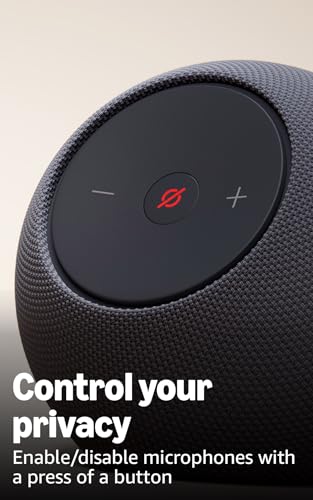
Both speakers perform well for voice recognition, but the Amazon Echo Dot Max Smart Speaker features an enhanced microphone array with improved background noise filtering. The Google Nest Audio Speaker includes three far-field microphones that work well in most environments, though performance can decrease in very noisy settings compared to the Echo Dot Max's advanced array.
The Amazon Echo Dot Max Smart Speaker typically offers superior value with its premium audio features, built-in smart home hub, and compact design that doesn't compromise on sound quality. The Google Nest Audio Speaker frequently goes on sale and provides good value for users prioritizing Google ecosystem integration and conversational AI over advanced audio features.
Yes, both speakers support multi-speaker setups. The Amazon Echo Dot Max Smart Speaker can pair with other Echo devices and supports sophisticated home theater configurations with Fire TV. The Google Nest Audio Speaker can be paired with another unit for stereo sound and works with Google's multi-room audio system throughout your home.
For serious music listening, the Amazon Echo Dot Max Smart Speaker is the clear winner with its spatial audio, enhanced bass response, and Dolby Atmos support. For voice assistant tasks and smart home control, the Google Nest Audio Speaker excels with its superior conversational AI, though the Echo Dot Max provides a good balance of both audio quality and smart features in a compact package.
We've done our best to create useful and informative comparisons to help you decide what product to buy. Our research uses advanced automated methods to create this comparison and perfection is not possible - please contact us for corrections or questions. These are the sites we've researched in the creation of this article: techradar.com - engadget.com - engadget.com - t3.com - telegraph.co.uk - gadgetmatch.com - youtube.com - youtube.com - youtube.com - youtube.com - homecrux.com - aboutamazon.com - phonearena.com - tomsguide.com - matteralpha.com - techbuzz.ai - techradar.com - pocket-lint.com - bestbuy.com - rtings.com - pocket-lint.com - whathifi.com - store.google.com - sypnotix.com - store.google.com - techradar.com - rtings.com - audiosciencereview.com - youtube.com - soundguys.com - audioholics.com - store.google.com - store.google.com - youtube.com - support.google.com - soundguys.com - dxomark.com - thenextweb.com - support.google.com - dimensions.com - store.google.com - store.google.com - bestbuy.com - en.wikipedia.org - store.google.com - cybershack.com.au - matteralpha.com

Privacy Policy
Terms and Conditions - Affiliate Policy
Home Security
© Copyright 2008-2026.
11816 Inwood Rd #1211, Dallas, TX 75244