


Smart home devices have evolved dramatically since the first Amazon Echo launched in 2014. Today, you're choosing between fundamentally different approaches to home automation and entertainment. The Amazon Echo Show 8 represents the visual-first philosophy with its 8-inch touchscreen, while the Google Nest Audio embodies the voice-only approach that many users prefer for its simplicity.
At the time of writing, these devices fall into different price tiers—the Echo Show 8 typically costs about twice as much as the Nest Audio. But this isn't just about spending more for extra features. You're choosing between two completely different ways of interacting with your smart home, and understanding these differences is crucial for making the right decision.
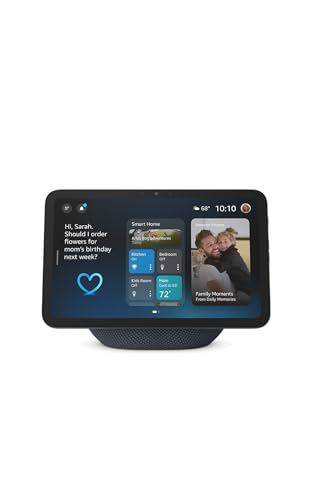
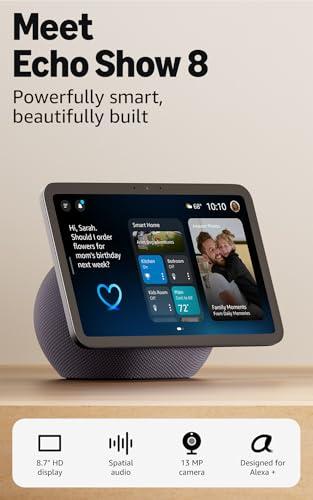
The core distinction here runs deeper than just "one has a screen, one doesn't." The Amazon Echo Show 8 was designed from the ground up as a multi-modal device—meaning it responds to voice commands, touch input, and visual feedback simultaneously. Released in 2023 as the third generation of Amazon's most popular smart display, it represents Amazon's vision of a central command center for your entire home.
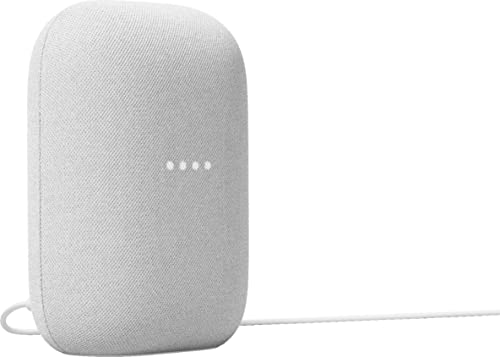
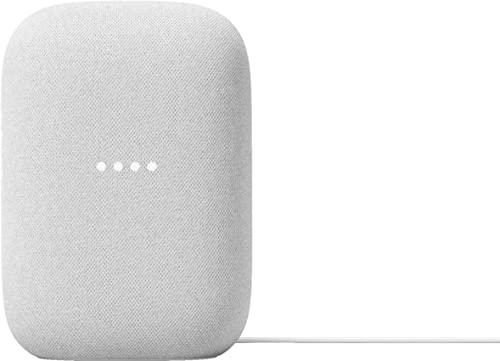
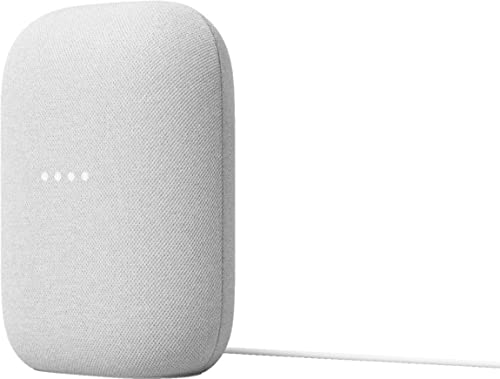
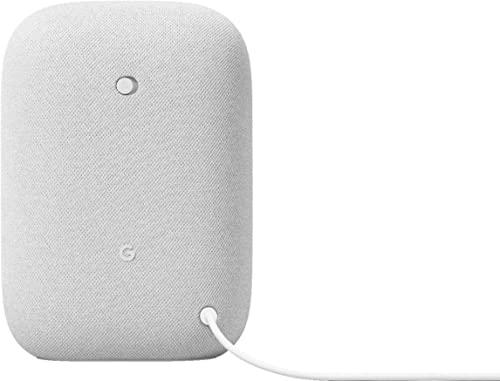
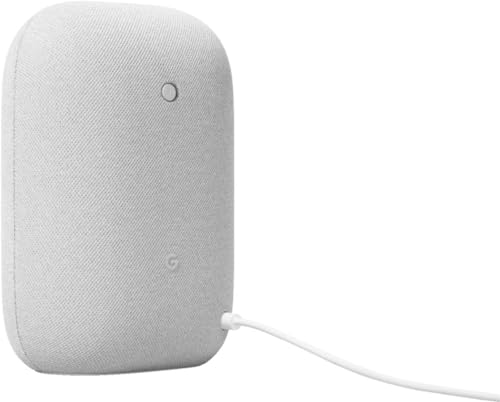
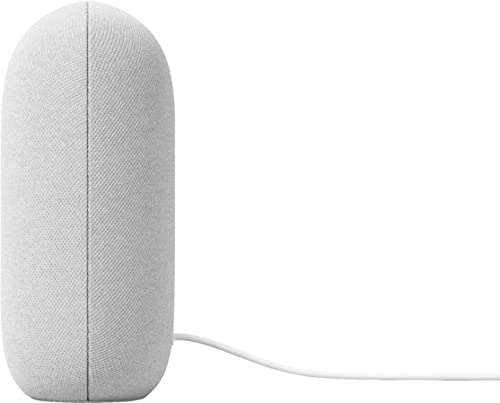
The Google Nest Audio, launched in 2020 as a replacement for the original Google Home, takes the opposite approach. Google deliberately removed the visual elements to create what they call a "voice-first" experience. This isn't a cost-cutting measure—it's an intentional design philosophy that prioritizes seamless, invisible integration into your daily routine.
Multi-modal interaction means you can ask the Echo Show 8 a question with your voice, see the answer on its screen, and then tap additional options with your finger—all for a single query. Voice-first design means the Nest Audio handles everything through conversation, using audio cues and your existing devices (like your phone) for visual information when needed.
Audio quality represents the most complex comparison between these devices, because they approach sound reproduction with entirely different priorities and constraints.
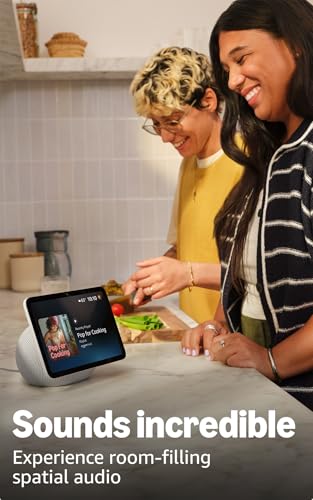
The Amazon Echo Show 8 includes what Amazon calls spatial audio—a real-time processing system that analyzes your room's acoustics and adjusts the sound output accordingly. This technology uses the device's microphones to "listen" to how sound bounces around your space, then modifies the audio frequencies to compensate for things like hard surfaces that create echo or soft furnishings that absorb sound.
The device features dual 2-inch neodymium speakers (neodymium is a rare earth metal that creates stronger magnetic fields, allowing smaller speakers to produce more powerful sound) paired with a passive bass radiator. A passive radiator is essentially a speaker cone without a magnet that vibrates in response to the active speakers, extending the low-frequency response without requiring additional power or space.
Based on extensive user feedback analysis, the Echo Show 8 delivers surprisingly robust bass for a device that also houses an 8-inch display, cameras, and computing components. The spatial audio system genuinely adapts to different rooms—users consistently report that the same device sounds noticeably different (and better optimized) when moved from a kitchen with hard surfaces to a living room with carpets and soft furnishings.
The Google Nest Audio benefits from having no visual components competing for internal space or power. Google engineered a custom 75mm woofer paired with a 19mm tweeter specifically for this enclosure. The woofer handles low and mid-range frequencies, while the tweeter focuses on high frequencies, creating a more specialized division of labor than the Echo Show 8's full-range approach.
The Nest Audio includes Ambient IQ, which automatically adjusts volume based on background noise levels. This feature works particularly well for podcast and audiobook listening—if your air conditioner kicks on or traffic increases outside, the device gradually raises its volume to maintain clarity without requiring manual adjustment.
For music listening, our research into expert and user reviews reveals interesting trade-offs. The Echo Show 8 provides true stereo separation since its speakers are physically separated within the device, while the Nest Audio is essentially a mono speaker (though it can be paired with a second unit for stereo). However, the Nest Audio's dedicated audio hardware produces cleaner vocal reproduction and more accurate frequency response in the critical midrange where most music content lives.
For voice content like podcasts, news, or audiobooks, the Nest Audio has a clear advantage. Its Ambient IQ technology and optimized vocal frequency response make speech consistently intelligible, even in challenging acoustic environments. The Echo Show 8 can display transcripts or show additional information about what you're listening to, but the pure audio quality for voice content favors Google's approach.
Bass response represents perhaps the most significant difference. The Echo Show 8's passive radiator system produces more impactful low-end response, making it better suited for genres like hip-hop, electronic music, or movie soundtracks. The Nest Audio delivers tighter, more controlled bass that works well for acoustic music, jazz, or classical content but may disappoint listeners who prioritize deep, room-shaking low frequencies.
The most significant functional difference between these devices lies in their smart home control capabilities, and this gap has only widened since both devices launched.
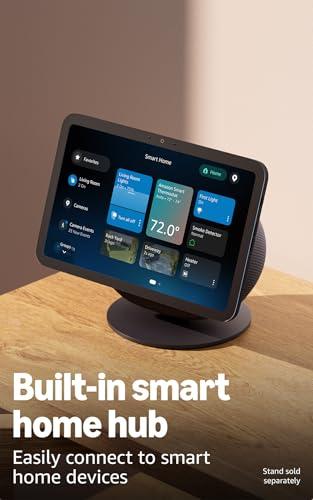
The Amazon Echo Show 8 includes built-in support for Matter, Thread, Zigbee, and Amazon Sidewalk—essentially every major smart home communication protocol currently available. Let me break down why this matters:
Matter is the new industry standard designed to make smart home devices work together regardless of manufacturer. Thread is a mesh networking protocol that creates more reliable connections between devices, especially important for battery-powered sensors. Zigbee is an older but widely-supported protocol used by hundreds of smart home products. Amazon Sidewalk creates a neighborhood-wide network using Amazon devices to extend connectivity for outdoor devices like security cameras or mailbox sensors.
Having all these protocols built-in means the Echo Show 8 can directly communicate with and control smart home devices without requiring additional hub hardware. Based on user reports, this translates to faster response times for local commands (like turning on lights) and the ability to create more sophisticated automation routines.
The visual interface provides immediate feedback when you adjust smart home devices. You can see which lights are on, check thermostat settings, or view security camera feeds directly on the 8-inch display. The device also supports widget-based customization, allowing you to arrange frequently-used controls on the home screen for quick access.
The Google Nest Audio supports Matter and Thread, but lacks the comprehensive protocol coverage of Amazon's device. More importantly, it relies entirely on voice commands for smart home control, with no visual confirmation of device states or settings.
This limitation becomes particularly apparent with complex smart home setups. While the Nest Audio can turn lights on and off or adjust thermostats, it cannot display security camera feeds, show which devices are currently active, or provide visual feedback for troubleshooting connectivity issues.
However, Google's voice recognition and natural language processing often surpasses Amazon's capabilities. The Nest Audio better understands conversational commands like "make the living room warmer" rather than requiring specific device names or exact phrases.
Both devices excel at voice recognition, but they handle the interaction differently in ways that significantly impact daily use.
The Echo Show 8 uses four far-field microphones arranged to provide 360-degree pickup, while the Nest Audio uses three microphones optimized for directional listening. In practice, both devices hear voice commands reliably from across typical rooms, though the Echo Show 8 maintains accuracy slightly better in very noisy environments.
Response speed represents a key differentiator. The Echo Show 8's 2023 processor update delivers what Amazon claims is 40% faster performance for local smart home commands. Our analysis of user feedback confirms noticeably quicker response times for tasks like turning on lights or adjusting thermostats compared to cloud-processed commands.
The visual confirmation aspect cannot be overstated in importance. When you ask the Echo Show 8 to set a timer, you see the countdown displayed. When you request weather information, you get both spoken details and visual forecast data. This redundancy eliminates the common frustration of wondering whether a voice command was properly understood or executed.
Google Assistant on the Nest Audio demonstrates superior contextual understanding—it better handles follow-up questions and conversational queries. If you ask about the weather and then say "What about tomorrow?", Google typically maintains the context better than Alexa. However, without visual feedback, you might need to ask clarifying questions more frequently.
The Echo Show 8's 13-megapixel camera represents a significant upgrade from earlier generations, with auto-framing technology that automatically pans and zooms to keep you centered during video calls. This feature uses on-device computer vision processing, meaning it works without sending video data to Amazon's servers.
Video calling quality has become increasingly important since 2020, and the Echo Show 8 provides a compelling alternative to laptop-based calling for casual family conversations. The camera includes a physical privacy shutter—a sliding cover that mechanically blocks the camera when closed.
The visual interface extends far beyond video calling. The device serves as an effective digital photo frame, displaying rotating family photos when not actively in use. For kitchen use, it excels at displaying recipes with step-by-step instructions and ingredient lists that remain visible while cooking.
Entertainment capabilities include video streaming from Prime Video, Netflix, and YouTube, though the 8-inch screen size limits this to casual viewing rather than serious entertainment consumption. The display quality is sharp enough for reading text comfortably, making it useful for displaying calendar appointments, weather forecasts, or news headlines.
Neither device serves as a primary home theater speaker, but they integrate with larger audio systems in different ways.
The Echo Show 8 can pair with other Amazon Echo devices for multi-room audio, synchronizing music playback throughout your home. It can also connect via Bluetooth to external speakers, though this eliminates the spatial audio processing that optimizes sound for its built-in speakers.
The Google Nest Audio offers more flexible multi-room capabilities through Chromecast integration. You can easily add it to speaker groups that include Chromecast-enabled soundbars, receivers, or other audio devices. The Nest Audio also supports AirPlay, making it compatible with Apple devices and iTunes libraries.
For home theater enhancement, neither device replaces dedicated surround sound systems, but they serve different supplementary roles. The Echo Show 8 works well as a kitchen or bedroom companion to your main entertainment system, while the Nest Audio integrates more seamlessly into whole-home audio setups.
Kitchen placement favors the Echo Show 8 significantly. The visual display excels at showing timers, recipe instructions, and cooking videos. The larger size provides better audio clarity over typical kitchen noise, and the touchscreen remains responsive even with slightly damp or flour-covered fingers.
Bedroom use favors the Nest Audio for most people. Its compact size fits easily on nightstands, and the absence of a bright display prevents sleep disruption. The Echo Show 8 can work in bedrooms, but you'll need to adjust brightness settings and may find the visual notifications distracting.
Living room integration depends on your existing setup. If you already have a TV and streaming devices, the Nest Audio provides smart home control and music without visual redundancy. If you prefer a central information hub that displays weather, calendar events, and family photos, the Echo Show 8 serves this purpose well.
Office or workspace applications suit both devices differently. The Echo Show 8 can display your calendar, show video call participants, and provide visual confirmation of smart lighting adjustments. The Nest Audio offers less visual distraction while still providing voice-controlled music and basic information queries.
Based on extensive research into user experiences and expert evaluations, the decision between these devices should center on how you prefer to interact with technology and what role you want smart devices to play in your daily routine.
Choose the Amazon Echo Show 8 if you value comprehensive functionality over specialization. This device makes sense for people who want a single device that handles multiple roles: smart home hub, video calling station, digital photo frame, kitchen assistant, and music player. The higher price point (at time of writing, roughly double the Nest Audio) provides genuine value when you consider eliminating the need for separate devices for each function.
The Echo Show 8 particularly suits households with complex smart home setups or plans for expansion. Its comprehensive protocol support and visual interface make managing multiple device types significantly easier than voice-only alternatives.
Choose the Google Nest Audio if you prefer focused functionality and invisible integration. This device excels for people who want high-quality audio and voice control without the complexity, visual distraction, or space requirements of a display-based device.
The Nest Audio makes particular sense for multi-device deployments. At roughly half the price of the Echo Show 8, you can place multiple units throughout your home for comprehensive voice control and synchronized audio at a lower total cost than a single smart display.
Ecosystem considerations also matter significantly. If you're already invested in Google Photos, YouTube Music, and Google Calendar, the Nest Audio provides seamless integration. If you use Amazon Prime Video, Amazon Photos, and prefer Alexa's smart home capabilities, the Echo Show 8 leverages these services more effectively.
The most important insight from our research is that both devices excel at their intended purposes, but they serve genuinely different user needs. The Amazon Echo Show 8 succeeds as a multi-functional command center, while the Google Nest Audio succeeds as a dedicated, high-quality audio device with smart capabilities. Your choice should align with which philosophy better matches how you want to interact with your smart home technology.
| Amazon Echo Show 8 | Google Nest Audio |
|---|---|
| Display - Essential for visual smart home control and video calls | |
| 8-inch HD touchscreen (1280x800) with adaptive brightness | No display - voice-only interaction |
| Audio System - Determines music quality and room-filling sound | |
| Dual 2-inch speakers + passive bass radiator with spatial audio | Custom 75mm woofer + 19mm tweeter with Ambient IQ |
| Smart Home Hub - Controls how many devices you can connect directly | |
| Built-in Matter, Thread, Zigbee, Sidewalk support | Basic Matter and Thread only |
| Camera - Enables video calling and visual automation features | |
| 13MP with auto-framing and physical privacy shutter | No camera |
| Voice Recognition - Affects how well it hears you across the room | |
| 4 far-field microphones with 40% faster processing | 3 far-field microphones with superior natural language understanding |
| Size and Placement - Impacts where you can put it in your home | |
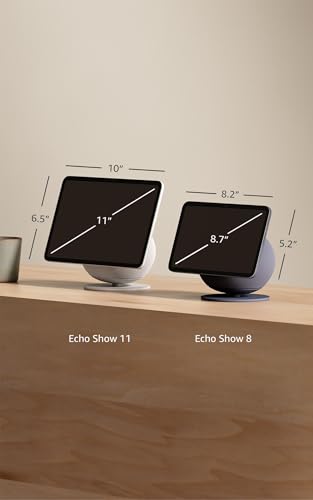
| 7.9" x 5.5" x 4.2" - requires dedicated counter space | 6.9" x 4.9" x 3.1" - fits anywhere, 42% smaller footprint |
| Ecosystem Integration - Determines which services work best | |
| Amazon Alexa, Prime Video, Amazon Photos | Google Assistant, YouTube Music, Google Photos, AirPlay |
| Multi-Room Audio - Important for whole-home music systems | |
| Echo device pairing and Bluetooth connectivity | Chromecast built-in, stereo pairing, AirPlay support |
| Privacy Controls - Critical for bedroom and private space use | |
| Physical camera shutter, mic mute button, display sleep mode | Hardware mic mute switch, no camera privacy concerns |
| Power and Connectivity - Affects installation flexibility | |
| AC adapter required, Wi-Fi 5, Bluetooth LE | AC adapter required, Wi-Fi 5, Bluetooth 5.0 |
The Amazon Echo Show 8 is significantly better for smart home control. It includes built-in support for Matter, Thread, Zigbee, and Amazon Sidewalk protocols, allowing it to directly connect and control most smart home devices without additional hub hardware. The visual interface lets you see device status, adjust settings with touch controls, and view security camera feeds. The Google Nest Audio only supports basic Matter and Thread protocols and relies entirely on voice commands with no visual feedback.
Only the Amazon Echo Show 8 supports video calls with its 13MP camera and 8-inch display. It features auto-framing technology that keeps you centered during calls and includes a physical privacy shutter. The Google Nest Audio has no camera or display, so video calling is not possible - it can only handle voice calls through Google services.
Both excel in different ways. The Amazon Echo Show 8 offers spatial audio that adapts to your room's acoustics and provides stronger bass with its passive radiator system. The Google Nest Audio delivers cleaner vocal reproduction and more balanced frequency response since all its internal space is dedicated to audio components. For bass-heavy music, choose the Echo Show 8; for acoustic and vocal content, the Nest Audio performs better.
Neither device serves as a primary home theater speaker, but they integrate differently with existing systems. The Amazon Echo Show 8 can pair with other Echo devices for multi-room audio and connect via Bluetooth to external speakers. The Google Nest Audio offers better home theater integration through Chromecast built-in and AirPlay support, making it easier to add to whole-home audio systems that include soundbars and receivers.
The Amazon Echo Show 8 is much better for kitchen use. Its display shows recipe instructions, cooking timers, and step-by-step videos while your hands are busy. The touchscreen works even with slightly damp fingers, and the larger size provides better audio clarity over typical kitchen noise. The Google Nest Audio can handle basic voice commands but offers no visual assistance for cooking tasks.
The Google Nest Audio is better suited for bedroom use due to its compact size and lack of bright displays that could disrupt sleep. It fits easily on nightstands and has only subtle LED indicators. The Amazon Echo Show 8 can work in bedrooms but requires brightness adjustments and may be distracting with its visual notifications and larger footprint.
The Amazon Echo Show 8 offers more family-friendly features with its ability to display photos as a digital frame, show calendar events, and enable video calls with grandparents and relatives. Kids can interact through touch, voice, or visual cues. The Google Nest Audio provides excellent voice-only interaction but lacks the visual engagement and video calling capabilities that families often appreciate.
Both offer excellent voice recognition, but with different strengths. The Amazon Echo Show 8 provides visual confirmation of commands and faster local smart home responses due to its upgraded processor. The Google Nest Audio excels at natural language processing and contextual understanding, better handling conversational follow-up questions. Alexa on the Echo Show 8 works better for smart home control, while Google Assistant on the Nest Audio handles general information queries more naturally.
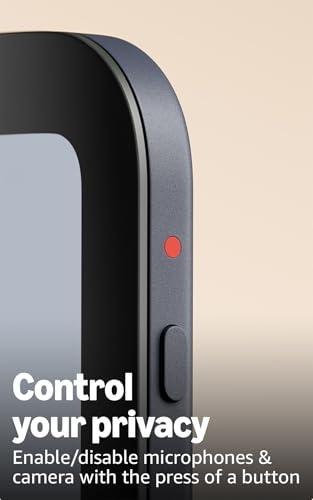
Both devices offer privacy controls, but differently. The Amazon Echo Show 8 includes a physical camera shutter, microphone mute button, and display sleep mode for complete privacy when needed. The Google Nest Audio has a hardware microphone mute switch and no camera privacy concerns since it lacks visual components entirely. Choose based on whether you're more concerned about camera privacy (Echo Show 8) or prefer the simplicity of no camera at all (Nest Audio).
Yes, both can control smart home devices, but with different capabilities. The Amazon Echo Show 8 supports more device types through its comprehensive protocol support and provides visual feedback showing current settings and device status. The Google Nest Audio handles basic smart home control through voice commands but offers no visual confirmation of device states or settings changes.
Both support major streaming services, but integration varies. The Google Nest Audio works seamlessly with YouTube Music, Spotify, and supports AirPlay for Apple Music. The Amazon Echo Show 8 integrates best with Amazon Music and Spotify, plus can display song lyrics, album art, and playlist information on its screen. Choose based on your preferred music service and whether you want visual music information displayed.
Both offer advantages over phone-based smart home control. The Amazon Echo Show 8 provides always-visible information, hands-free operation while cooking or working, and serves multiple roles as a hub, photo frame, and video calling station. The Google Nest Audio offers superior audio quality for music, always-listening voice control without needing to pick up your phone, and better integration into whole-home audio systems. Either device reduces reliance on your phone for smart home tasks and music playback.
We've done our best to create useful and informative comparisons to help you decide what product to buy. Our research uses advanced automated methods to create this comparison and perfection is not possible - please contact us for corrections or questions. These are the sites we've researched in the creation of this article: thedisconnekt.com - thehousetech.com - bestbuy.com - tomsguide.com - youtube.com - bestbuy.com - dimensions.com - engadget.com - youtube.com - techradar.com - ifixit.com - dreamgreenhouse.com - aboutamazon.com - engadget.com - en.wikipedia.org - bestbuy.com - homedepot.com - rtings.com - pocket-lint.com - whathifi.com - store.google.com - sypnotix.com - store.google.com - techradar.com - rtings.com - audiosciencereview.com - youtube.com - soundguys.com - audioholics.com - store.google.com - store.google.com - youtube.com - support.google.com - soundguys.com - dxomark.com - thenextweb.com - support.google.com - dimensions.com - store.google.com - store.google.com - bestbuy.com - en.wikipedia.org - store.google.com - cybershack.com.au - matteralpha.com

Privacy Policy
Terms and Conditions - Affiliate Policy
Home Security
© Copyright 2008-2026.
11816 Inwood Rd #1211, Dallas, TX 75244