



Smart speakers have transformed how we interact with our homes, turning simple voice commands into powerful automation tools. These devices combine wireless audio with AI assistants, creating a central hub for entertainment, information, and home control. But with dozens of options flooding the market, choosing between models like the Google Nest Audio and Amazon Echo Pop requires understanding what each brings to the table.
The smart speaker category has matured significantly since Amazon launched the first Echo in 2014. Today's speakers must balance multiple priorities: delivering quality audio, responding accurately to voice commands, controlling smart home devices, and fitting seamlessly into our living spaces. The challenge lies in finding the right combination of features for your specific needs and budget.
Before diving into specific models, it's worth understanding what makes a smart speaker tick. At its core, these devices house several key components: speakers (drivers) for audio output, microphones for voice pickup, processors for handling commands, and wireless connectivity for internet access. The magic happens when these elements work together—your voice travels through multiple microphones, gets processed by onboard chips, sent to cloud servers for interpretation, and returns as audio or smart home actions.
The most critical performance factors include audio quality (how music and voices sound), voice recognition accuracy (how well it understands you), response speed (how quickly it acts), and smart home compatibility (what devices it can control). Design matters too, since these speakers live in our most personal spaces.
The Google Nest Audio launched in 2020 as Google's answer to growing competition in the smart speaker space. It replaced the original Google Home with a focus on significantly improved sound quality and refined design. Google positioned this as their mainstream speaker—not their cheapest option, but the one most people should consider for primary use.
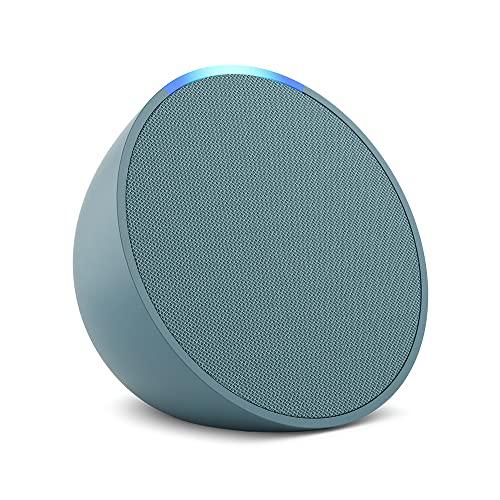
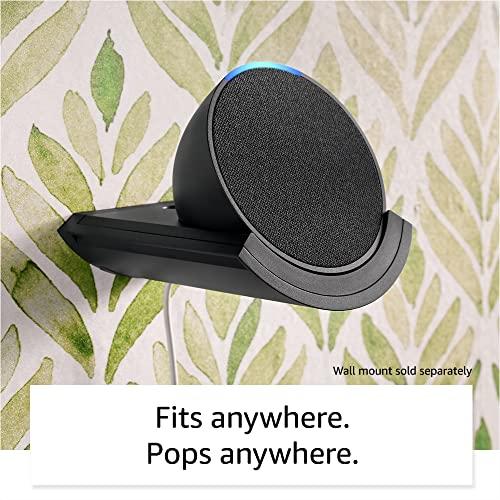
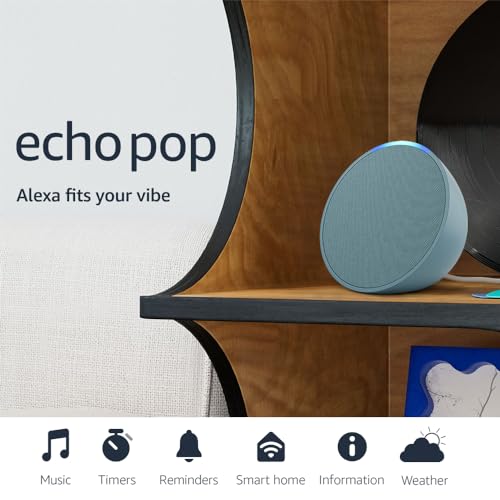
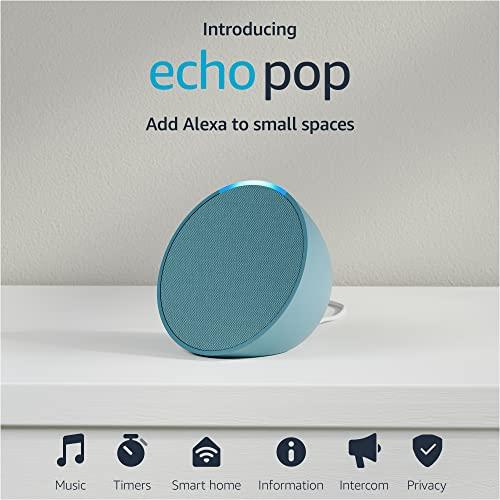
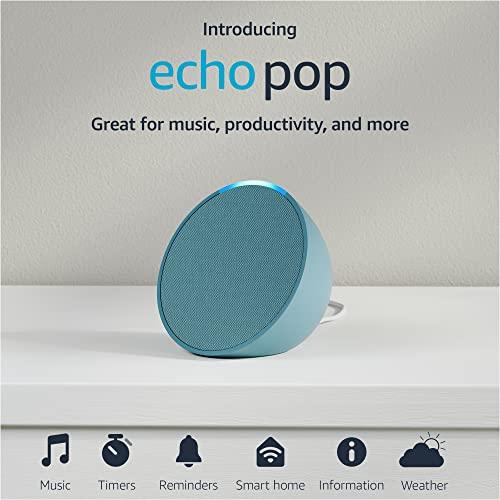
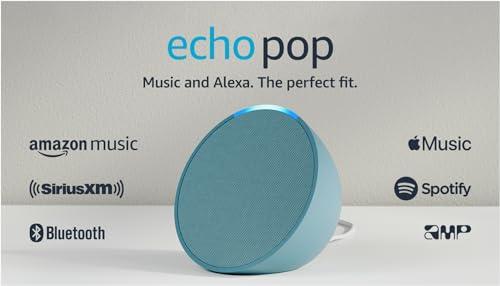
The Amazon Echo Pop arrived in 2023 as Amazon's response to users wanting Alexa capabilities without the bulk or cost of larger Echo devices. Its distinctive half-sphere design represents a departure from Amazon's typical round speakers, targeting small spaces and budget-conscious buyers.
These represent fundamentally different philosophies: Google prioritized audio performance and room presence, while Amazon emphasized affordability and placement flexibility.
Sound quality represents the most significant difference between these speakers, and physics plays a huge role here. The Google Nest Audio houses a 75mm woofer (the larger driver that handles bass and midrange) paired with a 19mm tweeter (smaller driver for high frequencies). This combination, housed in a larger enclosure, allows for much better sound reproduction across all frequencies.
Our research into professional reviews reveals the Google Nest Audio delivers what Google claims as 75% louder volume and 50% stronger bass compared to its predecessor. In practical terms, this translates to sound that can comfortably fill medium-sized rooms without distortion. The frequency response—how evenly it reproduces different pitches—remains balanced across most of the audio spectrum, making vocals clear and instruments distinguishable.
The speaker's real-time audio processing deserves special mention. This technology continuously adjusts the sound output to maintain consistent tonal balance regardless of volume level. Think of it as automatic EQ (equalization) that ensures music doesn't become muddy at low volumes or harsh at high ones.
A standout feature is Ambient IQ, which automatically adjusts volume based on background noise in your room. This proves particularly useful for podcasts and news—if your air conditioner kicks on or someone starts cooking, the speaker compensates by raising the volume slightly. However, this only works with streaming content, not locally stored music files.
The Amazon Echo Pop, with its 1.95-inch (49.5mm) driver, faces physical limitations that no amount of clever engineering can completely overcome. A smaller driver in a smaller enclosure simply cannot move as much air or reproduce low frequencies as effectively. Our analysis of user and expert feedback consistently shows the Echo Pop delivers clear vocals and adequate performance for background music, but struggles with bass-heavy content and distorts when pushed to higher volumes.
The directional nature of the Echo Pop's front-firing speaker creates an interesting trade-off. Unlike omnidirectional speakers that spread sound in all directions, this focused approach works well when placed against a wall or in a corner, creating a more intentional listening experience. However, it means the sweet spot for optimal sound is more limited.
For home theater integration, neither speaker offers the power or frequency response needed for serious movie watching. The Google Nest Audio could serve as a secondary speaker for casual viewing, but both lack the bass extension and volume capabilities that home theater setups demand. If you're looking for speakers to enhance your TV experience, you'd need to consider larger options or dedicated soundbars.
Both speakers excel at voice recognition and response, but in distinctly different ways. The Google Nest Audio leverages Google's advanced natural language processing to excel at conversational interactions. Its Voice Match technology can distinguish between different household members, providing personalized responses—your calendar when you ask, your spouse's when they ask.
Google Assistant's strength lies in handling follow-up questions and contextual requests. Ask "What's the weather tomorrow?" followed by "What about the weekend?" and it understands you're still talking about weather. This conversational ability makes interactions feel more natural, especially for complex queries or when you need information from Google's vast knowledge base.
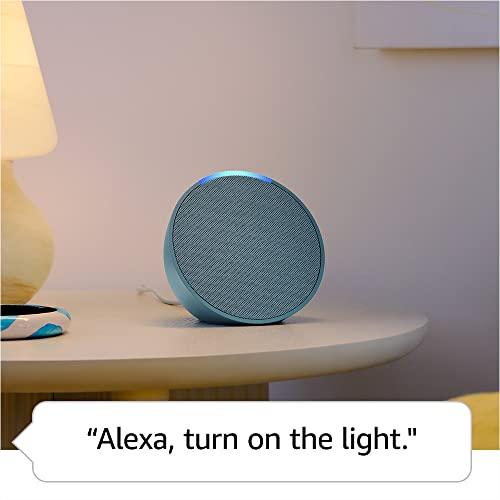
The Amazon Echo Pop runs on Amazon's AZ2 Neural Edge processor, which enables faster local processing of common commands. This means basic requests like turning on lights or setting timers happen without round-trips to the cloud, resulting in near-instantaneous responses. The three-microphone array proves effective at picking up voice commands even in noisy environments.
Alexa's massive skill library—over 100,000 third-party integrations at last count—represents its key advantage. These skills extend Alexa's capabilities far beyond basic functions, enabling everything from meditation sessions to complex business workflows. However, the quality varies significantly, and finding useful skills among the vast catalog can be challenging.
Both assistants handle the fundamentals well: playing music, setting timers, controlling smart home devices, and answering questions. The choice often comes down to which ecosystem you prefer and what additional services you use regularly.
Smart home control represents a core function for both speakers, but they approach it differently. The Google Nest Audio supports Matter, the new universal smart home standard designed to make devices from different manufacturers work together seamlessly. This forward-looking approach means better long-term compatibility as more devices adopt Matter.
However, the Google Nest Audio lacks a built-in Zigbee hub—a wireless communication protocol used by many smart home devices. This means some devices might require additional bridges or hubs to connect, potentially complicating setup and adding cost.
The Amazon Echo Pop also supports Matter while offering additional connectivity features that punch above its price point. It can act as a Sidewalk Bridge, extending Amazon's neighborhood network that helps devices stay connected even outside your Wi-Fi range. The built-in eero Wi-Fi extender capability can boost your mesh network coverage by up to 1,000 square feet—a genuinely useful feature that adds value beyond smart home control.
What the Echo Pop lacks compared to other Echo models are the temperature and motion sensors that enable advanced automation. You can't create routines that trigger based on room temperature or motion detection, limiting its usefulness for sophisticated smart home setups.
Both speakers handle basic smart home control excellently: turning lights on and off, adjusting thermostats, and controlling compatible devices through voice commands. The choice depends on whether you prioritize Google's ecosystem integration or Amazon's broader device compatibility.
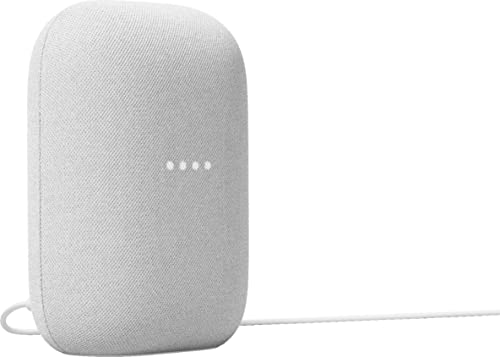
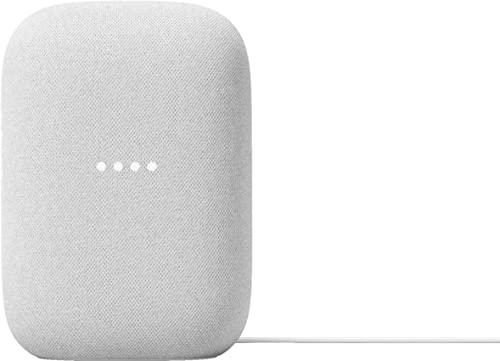
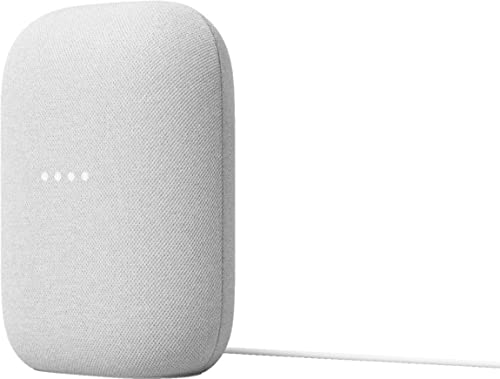
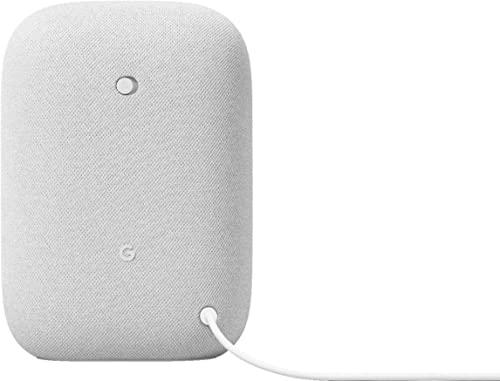
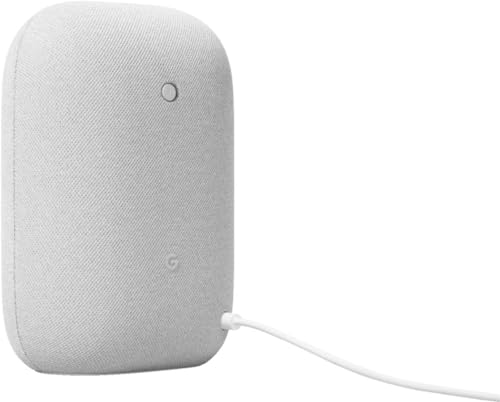
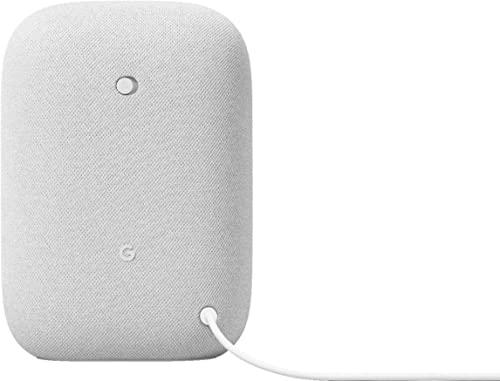
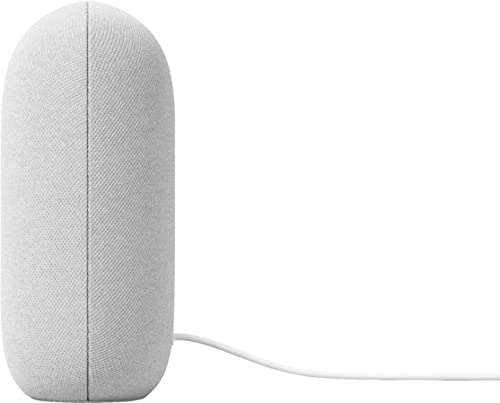
The design differences between these speakers reflect their intended use cases. The Google Nest Audio embraces a minimalist aesthetic with its fabric-wrapped rectangular form. Made from 70% recycled plastic, it's available in colors like Chalk, Charcoal, and Sage that blend into most home decor. The design feels substantial without being imposing—clearly a speaker, but not demanding attention.
The physical controls consist of three capacitive touch areas on the top surface for play/pause and volume adjustment. While functional, these can be harder to locate by feel compared to physical buttons, especially in dark rooms. The two-stage hardware microphone mute switch provides clear privacy control—when it's off, it's really off.
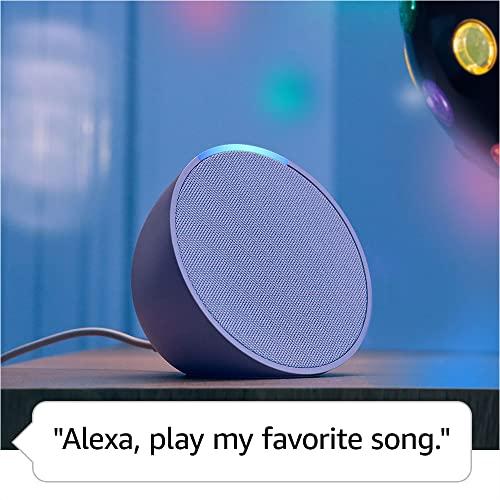
The Amazon Echo Pop takes a completely different approach with its semi-spherical design. This unique shape not only looks distinctive but serves a practical purpose—the angled front surface directs sound upward and outward, optimizing the listening experience when placed on lower surfaces like nightstands or desks.
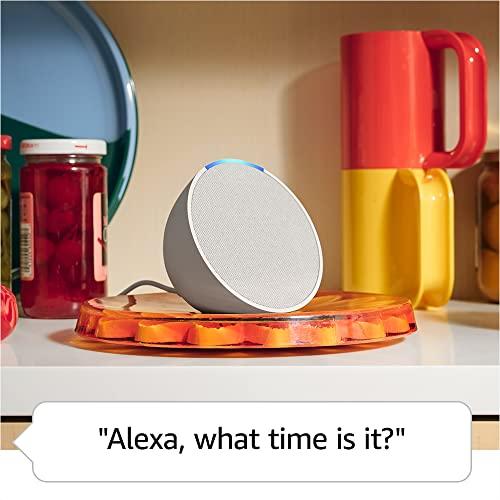
Available in eye-catching colors including Lavender Bloom and Midnight Teal, the Echo Pop doesn't try to disappear into your decor. Instead, it embraces being a tech accessory, with optional colorful sleeves for further customization. At 196 grams, it's light enough to move easily between rooms or take on trips (though it still needs to stay plugged in).
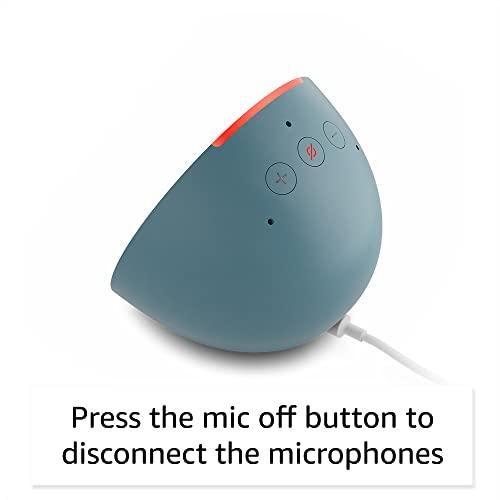
The physical controls include volume up/down buttons and a microphone mute button, which light up red when activated. The absence of an action button simplifies the design, relying on voice commands for most interactions.
Understanding how these speakers perform in actual home environments helps clarify their strengths. In a medium-sized living room, the Google Nest Audio can serve as a primary music speaker, delivering enough volume and bass response for background music during dinner parties or focused listening sessions. Its sound remains clear and balanced even at higher volumes, making it suitable for spaces where audio quality matters.
The same living room would challenge the Echo Pop. While it can certainly play music and handle voice commands, the audio experience feels more like background accompaniment than active listening. However, place it in a bedroom, home office, or kitchen, and its performance shines. The compact size fits perfectly on nightstands or counters, and the audio quality proves more than adequate for these intimate spaces.
For multi-room setups, the strategies differ significantly. Multiple Google Nest Audio speakers throughout a home create a high-quality distributed audio system, but the cost adds up quickly. Multiple Echo Pop speakers provide comprehensive voice control coverage at a fraction of the cost, though with compromised audio quality in larger rooms.
The voice recognition performance of both speakers impresses in real-world use. The Google Nest Audio's three far-field microphones pick up commands reliably from across medium-sized rooms, while the Echo Pop's microphone array punches above its weight, maintaining accuracy even in noisy environments.
At the time of writing, these speakers occupy different price tiers, reflecting their distinct positioning. The Google Nest Audio typically commands a premium over the Echo Pop, but frequent sales can narrow this gap significantly. The value equation depends entirely on your priorities and intended use.
If audio quality matters—whether for music, podcasts, or general media consumption—the Google Nest Audio delivers significantly more sound per dollar. The engineering required for better drivers, larger enclosure, and advanced audio processing justifies the price premium for users who will notice and appreciate the difference.
The Amazon Echo Pop represents exceptional value for smart home control and basic audio needs. Its low price point makes it practical to place multiple units throughout your home, creating comprehensive voice control coverage without breaking the budget. The added features like Wi-Fi extension and Sidewalk Bridge support provide genuine utility that enhances the value proposition.
For families or individuals heavily invested in either Google's or Amazon's ecosystem, the value calculation shifts toward whichever integrates better with existing services and devices.
The decision between the Google Nest Audio and Amazon Echo Pop ultimately comes down to understanding your primary use case and accepting the trade-offs each represents.
Choose the Google Nest Audio if you want a speaker that can handle serious music listening duties while providing excellent smart home control. It's ideal for living rooms, kitchens, or any space where audio quality matters and you have room for a larger device. The superior sound quality and Google ecosystem integration make it worth the premium for users who will take advantage of these capabilities.
The Amazon Echo Pop excels as a secondary speaker or for users whose needs center on smart home control rather than audio performance. Its compact size and attractive price make it perfect for bedrooms, offices, bathrooms, or any space where you want Alexa access without audio being the primary concern. For whole-home voice control on a budget, multiple Echo Pops provide better coverage than fewer, more expensive speakers.
Consider your space constraints, audio priorities, and ecosystem preferences. Both speakers succeed in their intended roles—the Google Nest Audio as a capable primary speaker with smart features, and the Amazon Echo Pop as an affordable way to add Alexa everywhere you need it. Neither choice will disappoint if matched to appropriate expectations and use cases.
| Google Nest Audio | Amazon Echo Pop |
|---|---|
| Audio Drivers - Determines sound quality and room-filling capability | |
| 75mm woofer + 19mm tweeter (superior bass and clarity) | Single 1.95" front-firing driver (adequate for small spaces) |
| Design & Dimensions - Affects placement flexibility and room aesthetics | |
| 175 x 124 x 78mm, 1.2kg (substantial, needs stable surface) | 99 x 83 x 91mm, 196g (ultra-compact, fits anywhere) |
| Voice Assistant - Core smart functionality and ecosystem integration | |
| Google Assistant with Voice Match (conversational, Google services) | Alexa with AZ2 processor (vast skills library, fast responses) |
| Smart Home Connectivity - Determines device compatibility and setup complexity | |
| Matter support, no Zigbee hub (may need bridges for some devices) | Matter + Bluetooth LE Mesh + Sidewalk Bridge (broader compatibility) |
| Audio Performance - Most important for music and media consumption | |
| 75% louder than predecessor, room-filling sound, clear at high volume | Best at 40-70% volume, directional sound, distorts when pushed |
| Microphone Array - Affects voice pickup accuracy and range | |
| 3 far-field mics with hardware mute switch | 3-microphone array with physical mute button |
| Special Features - Unique capabilities that add value beyond basics | |
| Ambient IQ auto-volume, real-time audio processing, 70% recycled materials | eero Wi-Fi extender (1000 sq ft), Amazon Sidewalk support |
| Power & Connectivity - Determines placement limitations and audio input options | |
| AC power only, Wi-Fi + Bluetooth 5.0, Chromecast built-in | AC power only, Wi-Fi + Bluetooth, no audio output jack |
| Best Use Case - Who should choose this speaker | |
| Primary speaker for medium rooms, music lovers, Google ecosystem users | Secondary/bedroom speaker, budget multi-room setups, compact spaces |
The Google Nest Audio delivers significantly better sound quality with its 75mm woofer and 19mm tweeter setup. It produces 75% louder volume and 50% stronger bass than previous Google speakers, making it ideal for active music listening. The Amazon Echo Pop has a smaller 1.95-inch driver that's better suited for background music and podcasts rather than serious listening sessions.
The Google Nest Audio measures 175 x 124 x 78mm and weighs 1.2kg, making it a substantial speaker that needs a stable surface. The Amazon Echo Pop is much more compact at 99 x 83 x 91mm and weighs only 196g, allowing it to fit on nightstands, desks, or small shelves easily.
Both assistants excel in different areas. Google Assistant on the Google Nest Audio is more conversational and better at follow-up questions, plus it integrates deeply with Google services. Alexa on the Amazon Echo Pop offers over 100,000 third-party skills and faster local processing for basic commands like smart home control.
Neither the Google Nest Audio nor the Amazon Echo Pop is designed for serious home theater use. While the Google Nest Audio could serve as a casual secondary speaker for TV audio, both lack the power and bass extension needed for movie watching. You'd need dedicated soundbars or larger speakers for home theater applications.
The Amazon Echo Pop is specifically designed for small spaces with its compact semi-spherical design and front-firing speaker. It fits perfectly on nightstands and provides adequate sound for bedrooms or offices. The Google Nest Audio might be oversized for very small rooms, though it will deliver better audio quality if space allows.
Both speakers handle basic smart home control well, but with different strengths. The Google Nest Audio supports Matter for future compatibility but lacks a Zigbee hub. The Amazon Echo Pop offers Matter support plus additional features like Bluetooth LE Mesh and can extend eero Wi-Fi networks up to 1,000 square feet.
The value depends on your priorities. The Google Nest Audio provides better audio quality per dollar if music listening matters to you. The Amazon Echo Pop offers exceptional value for smart home control and basic audio needs, especially if you want multiple speakers throughout your home on a budget.
Yes, both speakers support multi-room setups. Multiple Google Nest Audio speakers create a high-quality distributed audio system with Google's ecosystem. Multiple Amazon Echo Pop units provide comprehensive voice control coverage at a lower total cost, though with less impressive audio in larger rooms.
Both speakers perform excellently for voice recognition. The Google Nest Audio has three far-field microphones that work well across medium-sized rooms. The Amazon Echo Pop also features a three-microphone array that punches above its weight, maintaining accuracy even in noisy environments despite its smaller size.
The Google Nest Audio comes in minimalist colors like Chalk, Charcoal, Sage, Sand, and Sky with a fabric-wrapped rectangular design made from 70% recycled materials. The Amazon Echo Pop offers more vibrant options including Lavender Bloom, Charcoal, Glacier White, and Midnight Teal, with optional colorful sleeve accessories for customization.
For kitchens and living rooms, the Google Nest Audio is typically the better choice due to its superior audio performance and ability to fill medium-sized spaces with clear sound. The Amazon Echo Pop can work in kitchens but is better suited as a secondary device rather than the primary speaker in these high-traffic areas.
No, both the Google Nest Audio and Amazon Echo Pop require constant AC power and must remain plugged in. Neither speaker has a built-in battery for portable use, so you'll need to place them near electrical outlets and they're designed for stationary use in your home.
We've done our best to create useful and informative comparisons to help you decide what product to buy. Our research uses advanced automated methods to create this comparison and perfection is not possible - please contact us for corrections or questions. These are the sites we've researched in the creation of this article: rtings.com - pocket-lint.com - whathifi.com - store.google.com - sypnotix.com - store.google.com - techradar.com - rtings.com - audiosciencereview.com - youtube.com - soundguys.com - audioholics.com - store.google.com - store.google.com - youtube.com - support.google.com - soundguys.com - dxomark.com - thenextweb.com - support.google.com - dimensions.com - store.google.com - store.google.com - bestbuy.com - en.wikipedia.org - store.google.com - cybershack.com.au - matteralpha.com - rtings.com - reviewed.com - techradar.com - soundguys.com - youtube.com - youtube.com - youtube.com - bestbuy.com - soundguys.com - rtings.com - goodhousekeeping.com - bestbuy.com - youtube.com - dell.com - manuals.plus - youtube.com - bestbuy.com - en.wikipedia.org - nfm.com

Privacy Policy
Terms and Conditions - Affiliate Policy
Home Security
© Copyright 2008-2026.
11816 Inwood Rd #1211, Dallas, TX 75244