



When Amazon released the original Echo in 2014, it sparked a revolution in how we interact with technology in our homes. Fast forward to today, and we're faced with an interesting choice between two distinct philosophies: do we want our smart assistant to focus purely on exceptional audio, or should it include a screen for visual feedback and additional functionality?
This decision becomes crystal clear when comparing two standout devices from tech giants Google and Amazon: the Google Nest Audio and the Amazon Echo Show 5 3rd Gen. While both serve as smart home command centers, they represent fundamentally different approaches to voice-controlled technology. Understanding these differences will help you choose the right device for your specific needs and budget.
Before diving into specifics, it's worth understanding what makes these devices tick. Smart home voice assistants use far-field microphones (specialized microphones designed to pick up voices from across the room) combined with artificial intelligence to interpret commands and control connected devices. They rely on cloud computing, meaning your voice commands are processed on powerful remote servers rather than entirely on the device itself.
The key considerations when choosing between smart speakers and smart displays include audio quality, smart home integration capabilities, user interface preferences, space constraints, privacy concerns, and overall value. Each category makes different trade-offs to optimize for specific use cases.
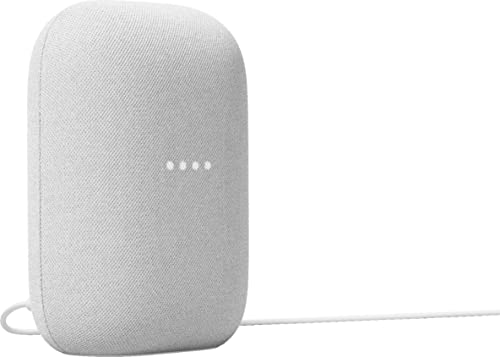
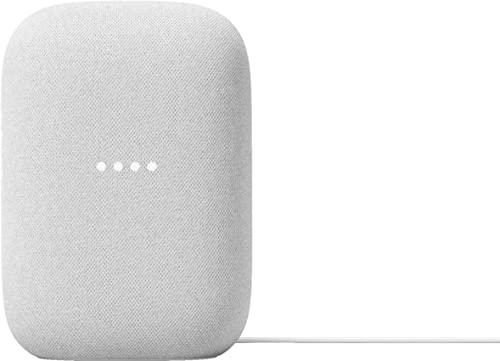
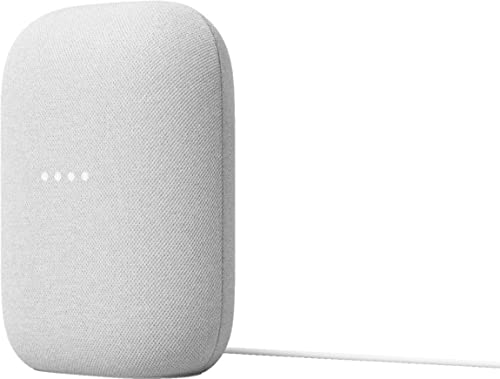
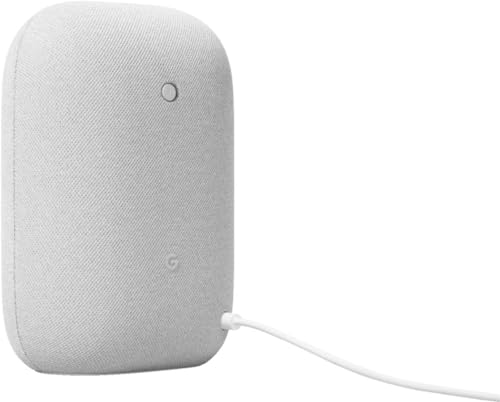
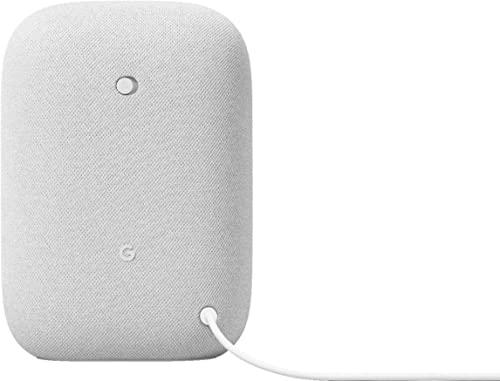
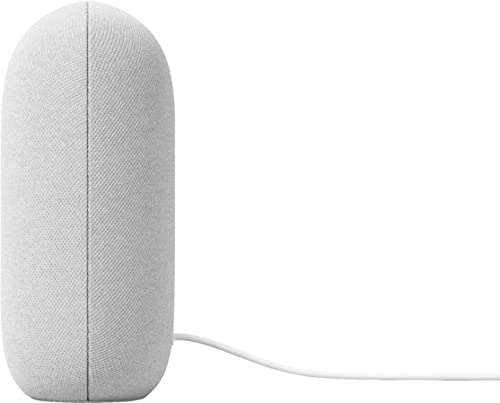
Released in 2020, the Google Nest Audio arrived as Google's answer to users demanding better sound quality from their smart speakers. Google learned from the limitations of their original Home speaker and completely redesigned their approach around superior audio performance.
The device features a custom-designed 75mm woofer paired with a 19mm tweeter - technical specifications that translate to significantly better bass response and clearer high-frequency sounds like cymbals and vocals. This dual-driver setup allows the speaker to handle different frequency ranges optimally, something impossible with single-driver designs.
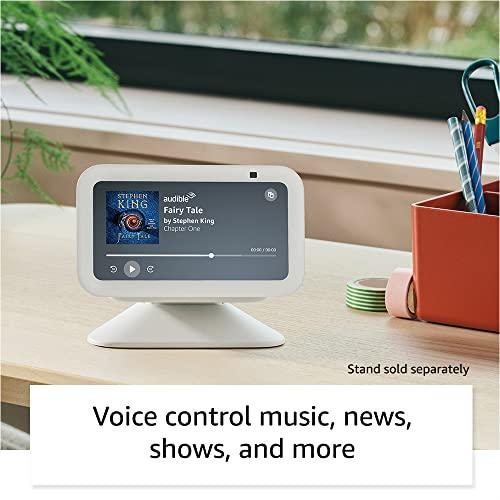
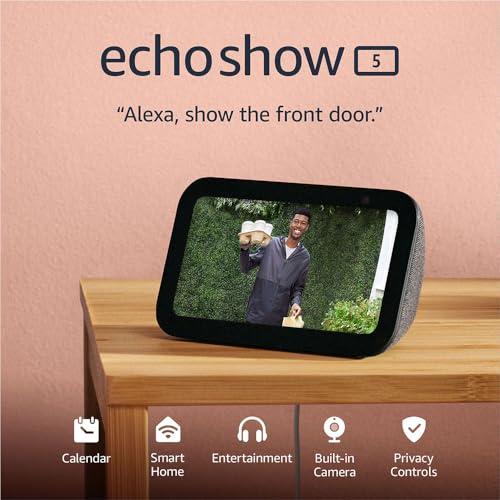
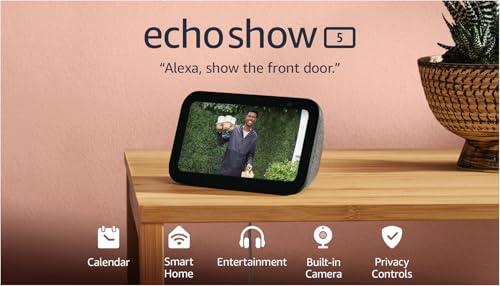
Amazon's Echo Show 5 3rd Gen, released in 2023, represents the latest evolution in compact smart displays. Rather than focusing solely on audio, Amazon designed this device around the premise that visual feedback enhances the smart home experience.
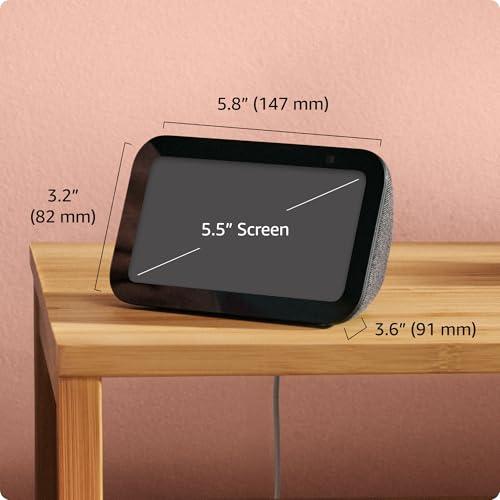
The 5.5-inch touchscreen with 960x480 pixel resolution provides enough detail for reading text, viewing photos, and basic video playback. The 2MP camera enables video calling and home monitoring features, while maintaining the voice control capabilities that made Echo devices popular.
This comparison's most significant performance gap lies in audio quality, and it's not particularly close. Our research into professional reviews and user feedback consistently shows the Google Nest Audio delivering substantially better sound across virtually every metric that matters.
The Nest Audio's 75mm woofer produces bass frequencies that give music weight and presence, while the dedicated 19mm tweeter ensures vocals and high-frequency instruments remain crisp and detailed. Google claims the device delivers 75% louder output than its predecessor with 50% stronger bass - improvements you can genuinely hear in side-by-side comparisons.
More importantly, the Google Nest Audio includes sophisticated audio processing technology. Ambient IQ automatically adjusts volume based on background noise levels, ensuring podcast dialogue remains audible when the dishwasher starts running. The real-time audio tuning algorithm continuously optimizes sound output for consistent tonal balance, regardless of volume level.
In contrast, the Amazon Echo Show 5 uses a single 1.7-inch driver designed primarily for voice clarity rather than music fidelity. While adequate for Alexa responses and basic music playback, it lacks the bass response and overall richness that makes music enjoyable. The single-driver design simply cannot reproduce the full frequency range that makes audio content engaging.
For context, if you're planning to stream music regularly - whether from Spotify, Apple Music, or Amazon Music - the audio quality difference is immediately apparent. The Nest Audio fills medium-sized rooms with balanced, room-filling sound, while the Echo Show 5 works better for personal listening or background audio in small spaces.
Both devices excel at smart home control but leverage different ecosystems and approaches. The Google Nest Audio integrates seamlessly with Google's services and supports advanced automation through Google Assistant's sophisticated natural language processing.
Voice Match technology allows the Nest Audio to recognize individual household members' voices, providing personalized responses for calendars, playlists, and reminders. This feature proves particularly valuable in multi-person households where different users have distinct preferences and schedules.
Google Assistant's strength lies in handling complex, multi-step commands and follow-up questions. You can say, "Hey Google, play some jazz music, then remind me to call Mom in 30 minutes, and add milk to my shopping list," and it processes all three requests accurately.
The Amazon Echo Show 5 offers broader third-party device compatibility and benefits from Amazon's extensive Alexa Skills ecosystem - essentially apps that extend Alexa's functionality. The visual interface provides immediate feedback when controlling smart lights, thermostats, or security cameras, which many users find more intuitive than voice-only interaction.
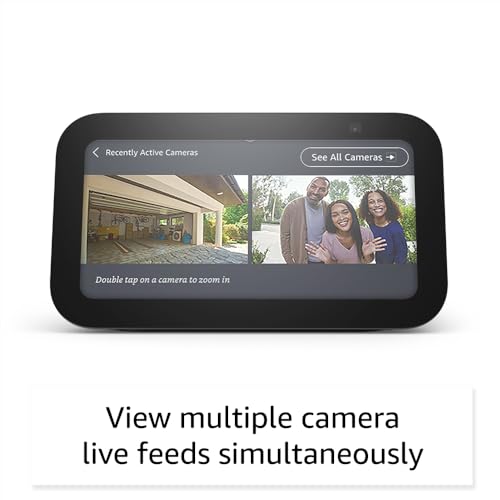
The display capability becomes particularly valuable for security camera integration. You can say "Alexa, show me the front door camera" and immediately see live footage, something impossible with audio-only devices like the Nest Audio.
This represents perhaps the most philosophical difference between these devices. The Google Nest Audio embraces a purely audio interface with minimal visual indicators - just subtle LED lights that respond to voice commands and volume adjustments.
This approach reduces distractions and works well for users who prefer their technology to remain in the background. The fabric-wrapped design, available in multiple colors, blends into home decor without demanding attention.
The Amazon Echo Show 5 takes the opposite approach, using its touchscreen to provide visual confirmation of commands, display useful information like weather and calendar events, and enable direct touch control of smart home devices. The always-on display can show clock faces, photos, or ambient information when not actively in use.
For many users, especially those new to smart home technology, visual feedback provides reassurance that commands were understood correctly. Being able to see timer countdowns, weather forecasts, or calendar appointments at a glance proves genuinely useful in daily life.
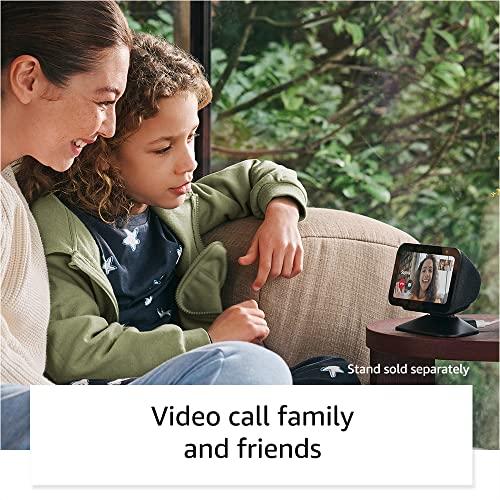
The Amazon Echo Show 5 offers significant advantages in communication and basic entertainment. The 2MP camera enables video calling with other Echo Show devices or the Alexa app on smartphones. While not broadcast quality, it's perfectly adequate for checking in with family members or using the Drop In feature to monitor different rooms in your home.
The display also supports video streaming from Amazon Prime Video and basic web browsing, though the 5.5-inch screen size limits its effectiveness for extended viewing. It works better for quick video clips, recipe viewing, or displaying photos from Amazon Photos.
The Google Nest Audio focuses entirely on audio content and cannot provide these visual features. However, its superior audio quality makes it significantly better for music streaming, podcasts, and audiobook playback - content that benefits from clear, full-range sound reproduction.
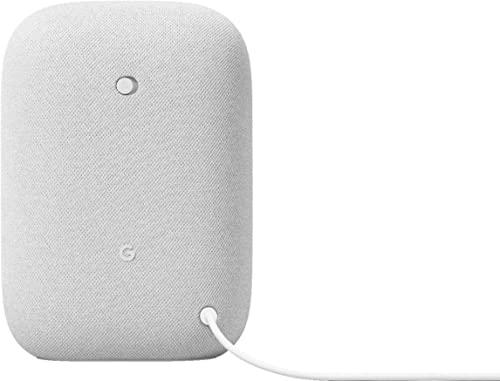
Both devices raise privacy considerations due to their always-listening microphones, but they handle these concerns differently. The Google Nest Audio includes a hardware microphone mute switch that physically disconnects the microphones when activated, providing complete privacy assurance.
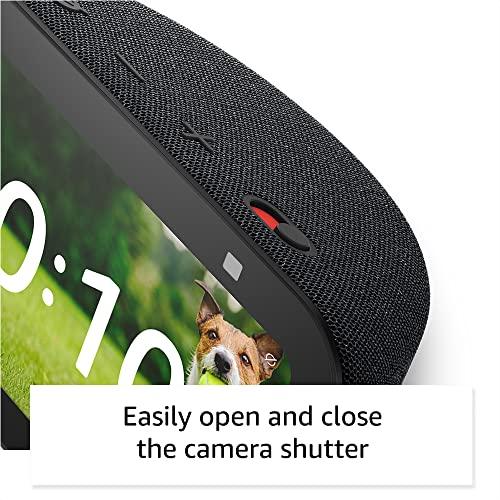
The Amazon Echo Show 5 includes both microphone and camera privacy controls - a physical camera shutter and microphone/camera off button. The camera adds an additional privacy dimension that some users find concerning, while others appreciate the added functionality.
Both companies allow users to review and delete voice recordings through their respective apps, and both use on-device processing for wake word detection to minimize data transmission.
Room placement significantly affects how these devices perform. The Google Nest Audio works best in living rooms, bedrooms, or any space where audio quality matters. Its sound is directional rather than 360-degree, so positioning matters for optimal performance.
The Amazon Echo Show 5 excels in specific scenarios like bedside tables, kitchen counters, or home offices where visual information proves valuable. The compact form factor and useful display make it ideal for spaces where you want quick access to information without occupying significant space.
For home theater integration, neither device serves as a primary audio source for serious movie watching, but the Nest Audio can enhance casual viewing with better dialogue clarity and background music reproduction.
At the time of writing, both devices occupy similar price ranges in the smart speaker market, making the value comparison primarily about feature priorities rather than budget constraints.
The Google Nest Audio delivers exceptional value for users prioritizing audio quality and Google ecosystem integration. Its build quality, using 70% recycled plastic materials, suggests good long-term durability, and the superior audio components justify the investment for regular music listeners.
The Amazon Echo Show 5 provides compelling value for users wanting dual functionality as both speaker and basic smart display. The communication features, visual controls, and compact form factor offer utility that purely audio devices cannot match.
Consider long-term usage patterns when making this decision. If you primarily stream music or podcasts, the audio quality investment pays dividends daily. If you value visual feedback and communication features, the display functionality becomes essential over time.
Choose the Google Nest Audio if superior audio quality tops your priority list. It's the clear winner for music enthusiasts, podcast lovers, or anyone wanting the best smart speaker experience under $150. The device particularly suits users already integrated into Google's ecosystem with Gmail, Google Calendar, or Pixel devices.
The Nest Audio also appeals to privacy-conscious users who prefer avoiding camera-equipped devices, and anyone wanting their smart assistant to remain visually unobtrusive while delivering exceptional audio performance.
Select the Amazon Echo Show 5 if you want visual feedback and touchscreen control options. It's ideal for bedside use as a smart alarm clock, kitchen assistance with visual timers and recipes, or any scenario where you benefit from seeing information rather than just hearing responses.
The Echo Show 5 particularly suits users already invested in Amazon's ecosystem, elderly users who prefer visual confirmation of commands, or anyone wanting video calling capabilities for family communication.
The fundamental decision comes down to whether you prioritize superior audio performance or prefer the versatility of visual interaction. Both excel in their respective approaches, but they serve distinctly different user needs and preferences. Consider your primary use cases, room placement, and ecosystem preferences to make the choice that best fits your smart home vision.
| Google Nest Audio Speaker | Amazon Echo Show 5 3rd Gen Smart Display |
|---|---|
| Display - Key differentiator for visual feedback and control | |
| None (audio-only device) | 5.5-inch touchscreen (960×480 pixels) |
| Audio Hardware - Most important for music quality and room-filling sound | |
| 75mm woofer + 19mm tweeter (dedicated drivers for bass and treble) | Single 1.7-inch driver (adequate for voice, limited for music) |
| Voice Assistant - Determines smart home capabilities and ecosystem integration | |
| Google Assistant with Voice Match technology | Amazon Alexa with extensive Skills ecosystem |
| Camera - Essential for video calls and home monitoring | |
| None (privacy advantage for some users) | 2MP front-facing camera with physical shutter |
| Microphones - Critical for voice recognition accuracy | |
| 3 far-field microphones | 2 far-field microphones |
| Processor - Affects response speed and AI processing | |
| Quad Core A53 1.8 GHz with ML hardware engine | MediaTek MT 8169B with Amazon AZ2 Neural Edge |
| Connectivity - Determines streaming quality and device compatibility | |
| Wi-Fi 802.11ac, Bluetooth 5.0, Chromecast built-in | Dual-band Wi-Fi 802.11ac, Bluetooth |
| Physical Design - Important for room placement and aesthetics | |
| 175mm H × 124mm W × 78mm D, 1.2kg (larger, heavier) | 147mm W × 82mm H × 91mm D, 456g (compact, lightweight) |
| Privacy Controls - Essential for user comfort with always-listening devices | |
| Hardware microphone mute switch | Microphone/camera off button + physical camera shutter |
| Smart Home Integration - Determines compatibility with existing devices | |
| Google Home ecosystem, Matter support | Broader third-party compatibility, visual device controls |
| Primary Use Cases - Helps determine best fit for your needs | |
| Music streaming, voice control, living room audio | Bedside assistant, kitchen helper, video calls, visual information |
| Best Room Placement - Optimizes device performance and utility | |
| Living rooms, bedrooms where audio quality matters | Bedside tables, kitchen counters, desk spaces |
The Google Nest Audio Speaker delivers significantly better sound quality with its dedicated 75mm woofer and 19mm tweeter configuration. It produces fuller bass, clearer vocals, and overall richer audio compared to the Amazon Echo Show 5 3rd Gen Smart Display, which uses a single 1.7-inch driver designed primarily for voice clarity rather than music reproduction.
It depends on your preferences and use cases. The Amazon Echo Show 5 3rd Gen Smart Display provides visual feedback for commands, displays useful information like weather and timers, and enables video calling. The Google Nest Audio Speaker focuses purely on audio without visual distractions, which some users prefer for a cleaner, less intrusive experience.
Both excel at smart home control but in different ways. The Google Nest Audio Speaker offers superior voice recognition and complex command processing through Google Assistant. The Amazon Echo Show 5 3rd Gen Smart Display provides visual controls and broader third-party device compatibility, making it easier to manage smart home devices through touch controls and visual feedback.
Only the Amazon Echo Show 5 3rd Gen Smart Display supports video calls through its 2MP camera, allowing calls to other Echo Show devices or the Alexa app. The Google Nest Audio Speaker doesn't have a camera and only supports voice calls through Google services.
The Amazon Echo Show 5 3rd Gen Smart Display works exceptionally well as a bedside smart alarm clock with customizable display faces and visual feedback. However, if you prioritize better sound quality for music or podcasts before bed, the Google Nest Audio Speaker provides superior audio performance in a bedroom setting.
Both devices have always-listening microphones, but handle privacy differently. The Google Nest Audio Speaker includes a hardware microphone mute switch for complete privacy control. The Amazon Echo Show 5 3rd Gen Smart Display has both microphone and camera privacy controls, including a physical camera shutter, but the camera adds an additional privacy consideration.
The Amazon Echo Show 5 3rd Gen Smart Display excels in kitchen environments with visual recipe displays, cooking timers you can see, and the ability to watch cooking videos. While the Google Nest Audio Speaker can handle voice commands and timers, the visual interface makes kitchen tasks more convenient.
The Google Nest Audio Speaker integrates best with Google services and devices, while the Amazon Echo Show 5 3rd Gen Smart Display offers broader third-party compatibility with various smart home brands. Both support Matter for improved interoperability with different device ecosystems.
The Amazon Echo Show 5 3rd Gen Smart Display has a more compact footprint and lighter weight, making it ideal for tight spaces like nightstands or small counters. The Google Nest Audio Speaker is larger and heavier but provides better sound quality if space allows.
Neither the Google Nest Audio Speaker nor the Amazon Echo Show 5 3rd Gen Smart Display requires ongoing subscriptions for basic functionality. However, premium music services, video streaming, and some advanced features may require separate subscriptions to services like Spotify, Netflix, or Amazon Prime.
The Google Nest Audio Speaker provides superior audio quality for podcast listening with clearer dialogue and better sound processing. Its Ambient IQ feature automatically adjusts volume based on background noise, ensuring podcast content remains audible. The Amazon Echo Show 5 3rd Gen Smart Display can play podcasts but doesn't offer the same audio fidelity.
Yes, ecosystem preference should influence your decision. Choose the Google Nest Audio Speaker if you use Gmail, Google Calendar, YouTube Music, or Android devices heavily. Select the Amazon Echo Show 5 3rd Gen Smart Display if you're an Amazon Prime member, use Amazon services frequently, or prefer Alexa's extensive third-party skills and compatibility.
We've done our best to create useful and informative comparisons to help you decide what product to buy. Our research uses advanced automated methods to create this comparison and perfection is not possible - please contact us for corrections or questions. These are the sites we've researched in the creation of this article: rtings.com - pocket-lint.com - whathifi.com - store.google.com - sypnotix.com - store.google.com - techradar.com - rtings.com - audiosciencereview.com - youtube.com - soundguys.com - audioholics.com - store.google.com - store.google.com - youtube.com - support.google.com - soundguys.com - dxomark.com - thenextweb.com - support.google.com - dimensions.com - store.google.com - store.google.com - bestbuy.com - en.wikipedia.org - store.google.com - cybershack.com.au - matteralpha.com - bestbuy.com - reviewed.com - goodhousekeeping.com - techradar.com - geekzone.co.nz - versus.com - youtube.com - versus.com - youtube.com - hindustantimes.com - nfm.com - dimensions.com - gadgetguy.com.au - youtube.com - versus.com - dell.com - bestbuy.com - homedepot.com - homedepot.com - businessinsider.com - en.wikipedia.org - youtube.com

Privacy Policy
Terms and Conditions - Affiliate Policy
Home Security
© Copyright 2008-2026.
11816 Inwood Rd #1211, Dallas, TX 75244