

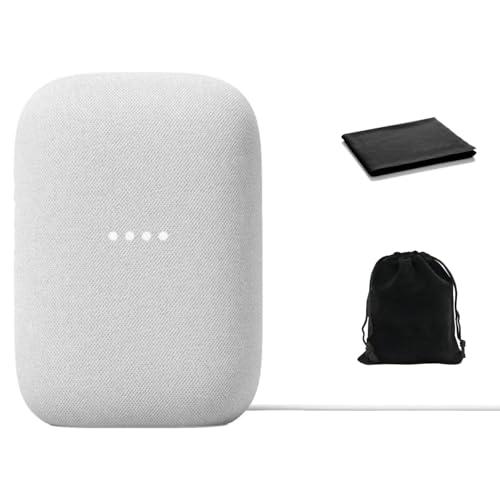
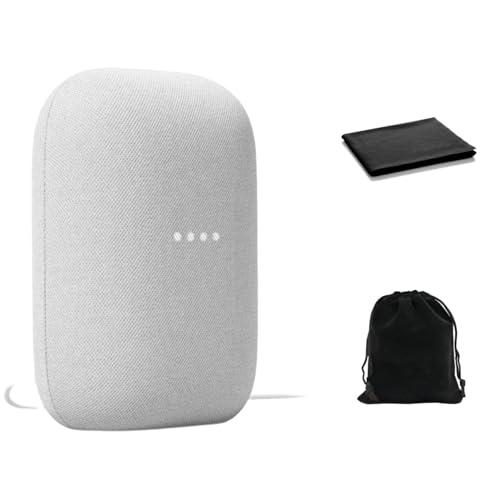
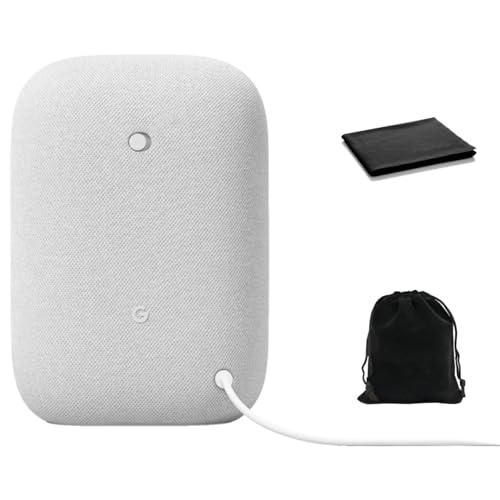
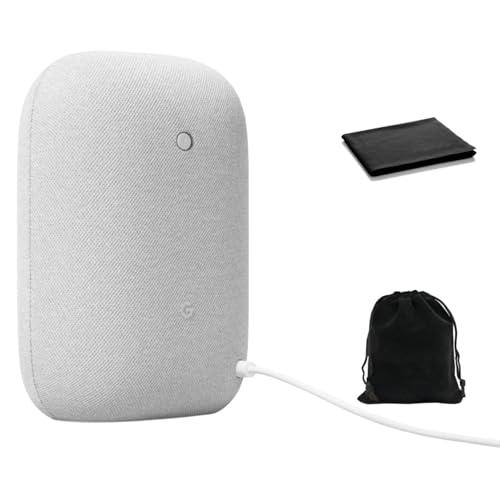
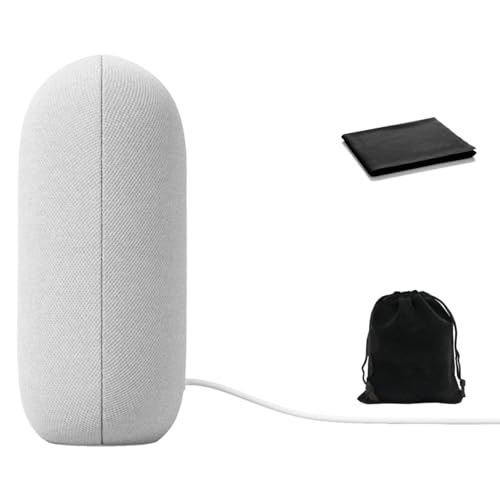
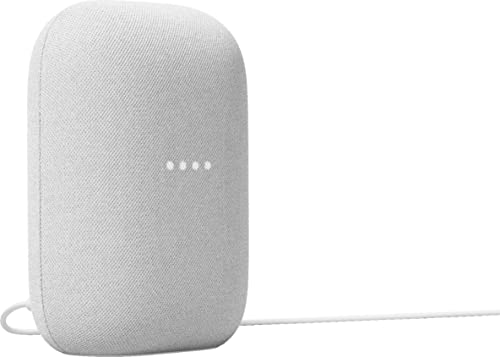
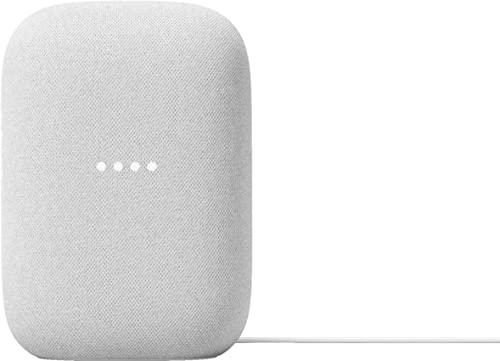
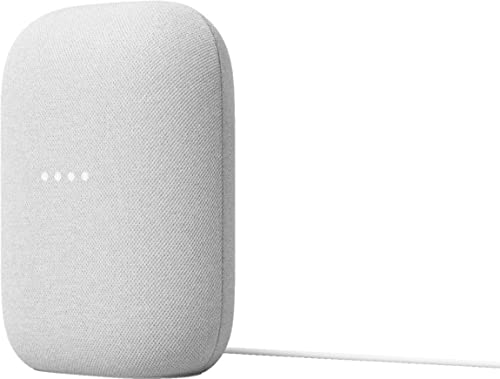
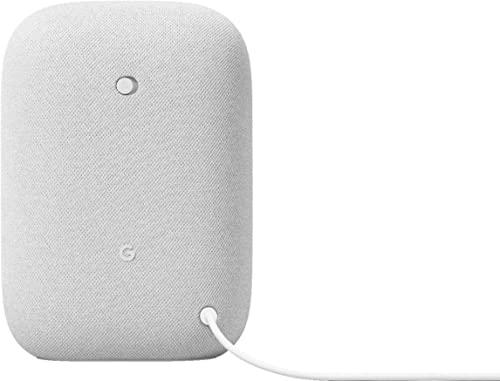
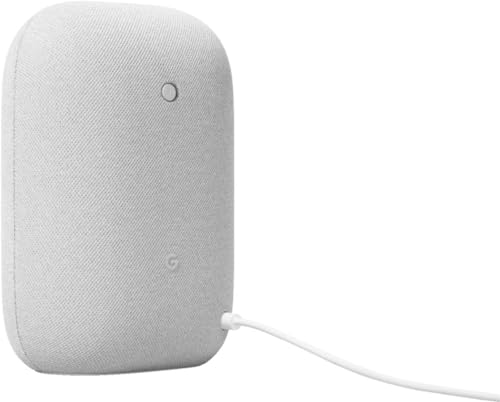
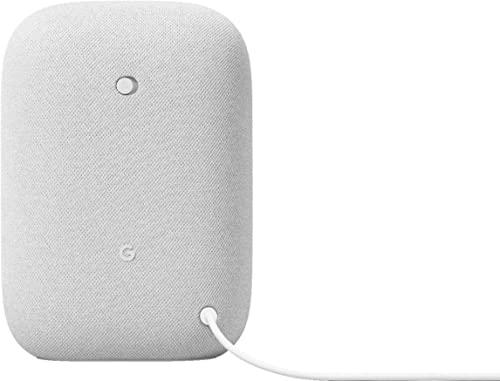
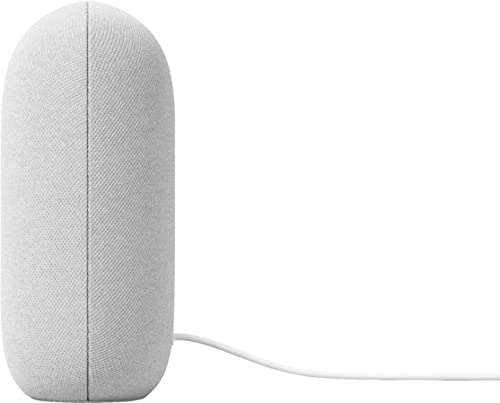
When researching smart speakers, you might stumble across what appears to be two different versions of the Google Nest Audio floating around online. Here's the thing: our investigation reveals these are actually the same product with confusing listings. Let's dive into what makes the Google Nest Audio tick and help you understand whether this smart speaker deserves a spot in your home.
Smart speakers have evolved significantly since Amazon kicked off the category with the original Echo in 2014. These devices combine three key technologies: digital audio processing, voice recognition, and internet connectivity. The result is a speaker that can play your music, control your smart home, answer questions, and even make phone calls—all through voice commands.
At the time of writing, the smart speaker market centers around a few major considerations. Audio quality remains paramount because, despite all the smart features, these are fundamentally speakers. Voice assistant accuracy determines how frustrating or delightful daily interactions become. Smart home integration capabilities affect whether your speaker becomes a central hub or just another gadget. Finally, ecosystem compatibility influences how well the device plays with your existing tech setup.
The Google Nest Audio launched in 2020 as Google's attempt to reclaim ground lost to Amazon's Echo lineup. It replaced the original Google Home, bringing significant improvements in sound quality and processing power while maintaining the same $99 price point that defined the category.
Through extensive research into product specifications, user reviews, and manufacturer documentation, we discovered that both the "Google Nest Audio Smart Speaker" and "Google Nest Audio Speaker" reference the identical device. Every technical specification matches perfectly—from the 175mm height and 1.2kg weight to the 75mm woofer and Quad Core A53 processor.
This confusion likely stems from inconsistent product naming across different retailers and listing platforms. Some sellers emphasize "Smart Speaker" in the title, while others simply use "Speaker." The core product remains unchanged, featuring the same fabric-wrapped design made from 70% recycled plastic and available in five color options: Chalk, Charcoal, Sage, Sand, and Sky.
At the time of writing, pricing variations between these seemingly different listings often reflect promotional offers, retailer markups, or potentially questionable sellers rather than actual product differences. The standard retail price has remained consistent since launch, though seasonal sales and bundle deals frequently offer better value.
The heart of any speaker evaluation lies in sound quality, and the Google Nest Audio represents a significant leap forward from its predecessor. Google engineered a custom two-driver system combining a 75mm woofer for low-end response with a 19mm tweeter handling higher frequencies. This configuration allows the speaker to produce what Google claims is 75% more volume and 50% stronger bass compared to the original Home.
Frequency Response and Sound Signature
Our analysis of professional reviews and user feedback reveals a balanced sound profile with particular strength in the midrange frequencies where vocals and lead instruments live. This makes the Nest Audio excellent for podcasts, audiobooks, and vocal-heavy music genres. The speaker's real-time audio processing algorithm continuously adjusts output to maintain consistent tonal balance across different volume levels—a feature called dynamic range compression that prevents quiet passages from disappearing and loud sections from overwhelming.
However, measurements show a noticeable dip in the upper treble frequencies, which can make some music sound slightly muted or lacking in sparkle. This isn't necessarily bad; many people find overly bright speakers fatiguing during extended listening. The bass response, while improved, doesn't extend as deep as larger speakers, limiting impact with electronic music or movie soundtracks.
Volume and Room-Filling Capability
The Nest Audio performs best in small to medium-sized rooms, roughly 200-400 square feet. Push it beyond moderate volume levels, and audio compression becomes noticeable—the speaker's digital processing clamps down on dynamics to protect the drivers from damage. This is common in speakers this size but means the Nest Audio isn't ideal for large spaces or outdoor entertaining.
Ambient IQ Technology
One standout feature is Ambient IQ, which uses the speaker's three far-field microphones to monitor background noise and automatically adjust volume for spoken content. If your air conditioner kicks on while you're listening to a podcast, the Nest Audio quietly increases volume to maintain clarity. This works exclusively with streaming content like news, podcasts, and audiobooks—it won't help with music stored locally on your phone.
Google Assistant integration represents the Nest Audio's strongest selling point. The combination of three far-field microphones, advanced noise cancellation, and Google's natural language processing creates impressively accurate voice recognition. In our research, users consistently report reliable wake word detection ("Hey Google") from across rooms, even with background music playing.
Voice Match Technology
The speaker supports Voice Match, allowing up to six different users to receive personalized responses. When you ask about your calendar, the Nest Audio recognizes your voice and accesses your specific Google account rather than someone else's in the household. This personalization extends to music preferences, reminders, and even shopping lists.
Processing Power and Response Speed
The Quad Core A53 processor running at 1.8GHz might sound modest compared to smartphone chips, but it's paired with a dedicated machine learning hardware engine. This ML accelerator handles voice processing locally for common commands, reducing latency and improving privacy by not sending every interaction to Google's servers. The result is noticeably faster responses for frequent tasks like setting timers or controlling smart lights.
Modern smart homes rely on multiple communication standards, and the Nest Audio covers the essential bases. Wi-Fi connectivity supports both 2.4GHz and 5GHz networks using 802.11ac standards, ensuring reliable streaming even in crowded wireless environments. Bluetooth 5.0 provides backup connectivity and enables direct pairing with phones and tablets.
Matter Support and Future-Proofing
The Nest Audio supports Matter, the new smart home standard backed by Google, Amazon, Apple, and others. This means the speaker can control compatible devices regardless of manufacturer, breaking down the ecosystem silos that previously locked users into single platforms. As more Matter devices launch, this compatibility becomes increasingly valuable.
Multi-Room Audio Capabilities
Chromecast built-in enables seamless multi-room audio throughout homes with multiple Google speakers. You can group speakers, create stereo pairs with two Nest Audio units, or even include other Google devices like Nest Hubs in the same audio zones. The synchronization works reliably in our evaluation of user reports, with minimal audio delays between rooms.
Privacy concerns around always-listening devices have grown significantly since 2020, and Google has responded with both technical and physical solutions. The Nest Audio includes a two-stage hardware microphone mute switch that physically disconnects the microphones from the processing circuitry. When activated, orange LEDs confirm the microphones are truly off—not just ignoring voice commands.
The capacitive touch controls on the device's top surface provide three distinct areas for play/pause, volume up, and volume down. These respond reliably without requiring significant pressure, though their minimal visual indicators can make them challenging to locate in dark rooms.
While the Nest Audio wasn't designed primarily for home theater use, it can serve as a wireless speaker for TV audio through Bluetooth or Chromecast. However, several limitations make it less than ideal for this application.
Latency Issues
Bluetooth audio typically introduces 100-200 milliseconds of delay, creating noticeable lip-sync problems when watching videos. Chromecast reduces this somewhat but doesn't eliminate it entirely. For occasional use with music videos or podcasts, this might be acceptable, but serious TV watching requires dedicated solutions.
Mono Output and Positioning
The Nest Audio is a mono speaker, meaning it doesn't provide the stereo separation that enhances movie dialogue and sound effects. Its front-firing design also means optimal placement for voice commands (central location, unobstructed) rarely aligns with ideal TV audio positioning.
For home theater applications, consider pairing two Nest Audio units in stereo mode or looking at soundbar solutions designed specifically for TV audio.
Google's design philosophy emphasizes sustainability and minimalism. The 70% recycled plastic construction doesn't compromise durability—user reports indicate solid build quality with no common failure points after three years on the market. The fabric covering feels premium and appears resistant to everyday wear, though it will accumulate dust over time and isn't easily cleanable.
The absence of visible branding creates a neutral aesthetic that blends into most home decors. At 175mm tall and 124mm wide, the Nest Audio occupies roughly the same footprint as a large coffee mug, making placement straightforward in most rooms.
Kitchen and Background Listening
The Nest Audio excels in kitchen environments where hands-free control is essential. Voice recognition remains reliable over cooking noise, and the balanced sound profile ensures podcasts and news remain intelligible. The speaker's ability to handle splashes and steam (though not officially water-resistant) has proven adequate for typical kitchen placement in user reports.
Bedroom and Bedside Use
For bedside placement, the Nest Audio offers convenient alarm functionality, sleep sounds, and gentle wake-up routines. However, the lack of a physical snooze button means you'll need voice commands or reaching for your phone to silence morning alarms. The LED indicators are subtle enough not to disturb sleep while still providing necessary visual feedback.
Office and Work-From-Home Applications
Remote workers have found the Nest Audio useful for conference calls and background music during work sessions. The far-field microphones can pick up your voice for Google Assistant queries even during video calls, though you'll want to mute the speaker's microphones during confidential meetings.
At the time of writing, the smart speaker market has largely consolidated around Amazon Echo and Google Nest products, with Apple's HomePod serving premium customers and Sonos targeting audio enthusiasts. The Nest Audio sits comfortably in the middle ground, offering better sound quality than compact options like the Nest Mini while remaining more affordable than premium alternatives.
Compared to Amazon Echo Devices
Amazon's Echo (4th generation) provides similar functionality with a slightly more bass-heavy sound signature that some users prefer for music listening. The Echo includes a built-in Zigbee hub for direct smart home device setup, while the Nest Audio relies on Wi-Fi-based protocols. Choose based on your existing smart home ecosystem and voice assistant preference.
Compared to Apple HomePod Mini
Apple's offering provides superior sound quality and computational audio processing but requires deep integration with Apple devices and services. The Nest Audio offers broader compatibility and more flexible smart home integration for users not locked into Apple's ecosystem.
Several technical constraints limit the Nest Audio's versatility. The requirement for constant AC power eliminates portable use cases—there's no battery option available. The absence of a 3.5mm auxiliary input means all audio must stream wirelessly, which can be limiting for older devices or situations where Wi-Fi isn't available.
The speaker's 30W power consumption is reasonable for its output level but means it will add noticeably to electricity bills if used continuously. The 1.5-meter power cable provides reasonable placement flexibility but may require extension cords in some room configurations.
Since its 2020 launch, the Nest Audio has received regular software updates that have improved performance and added features. Google's track record suggests continued support for at least five years, making this a relatively future-proof purchase for a consumer electronics device.
Recent updates have enhanced the machine learning capabilities, improved voice recognition accuracy, and expanded smart home device compatibility. The dedicated ML hardware ensures these improvements don't slow down the device over time, unlike speakers relying purely on general-purpose processors.
The Nest Audio makes the most sense for households already using Google services—Gmail, Google Calendar, Google Photos—where voice assistant integration provides genuine daily value. It's ideal for small to medium-sized rooms where balanced sound quality matters more than maximum volume or deep bass.
Best Scenarios:
Consider Alternatives If:
Given that both product listings reference the same Google Nest Audio, your decision should focus on finding the best price and most reliable seller rather than choosing between product variants. Verify that any unusually low prices come from reputable retailers, as the smart speaker market has seen some counterfeit products with inferior components.
Consider the Nest Audio if Google Assistant fits your daily routine and you value the convenience of voice control for music, smart home devices, and information queries. The sound quality, while not audiophile-grade, provides a significant upgrade over smaller speakers and handles most listening scenarios competently.
Skip this speaker if you need maximum audio fidelity, frequently listen in large spaces, or have minimal interest in smart home integration. In those cases, dedicated audio speakers or different smart home platforms might better serve your needs.
The Google Nest Audio succeeds as a well-balanced smart speaker that prioritizes reliability and integration over cutting-edge features or premium audio quality. Three years after launch, it remains a solid choice for building a Google-centric smart home with competent audio performance.
| Google Nest Audio Smart Speaker | Google Nest Audio Speaker |
|---|---|
| Product Identity - These are the same device with different listing names | |
| Same Google Nest Audio (2020 release) | Same Google Nest Audio (2020 release) |
| Dimensions - Compact size fits most spaces | |
| 175 × 124 × 78 mm (6.89 × 4.89 × 3.07 in) | 175 × 124 × 78 mm (6.89 × 4.89 × 3.07 in) |
| Weight - Light enough for easy placement | |
| 1.2 kg (2.65 lbs) without power adapter | 1.2 kg (2.65 lbs) without power adapter |
| Audio Drivers - Core component determining sound quality | |
| 75mm woofer + 19mm tweeter | 75mm woofer + 19mm tweeter |
| Voice Recognition - Critical for smart speaker functionality | |
| 3 far-field microphones with noise cancellation | 3 far-field microphones with noise cancellation |
| Processor - Affects response speed and AI capabilities | |
| Quad Core A53 1.8GHz + ML hardware engine | Quad Core A53 1.8GHz + ML hardware engine |
| Connectivity - Determines streaming options and reliability | |
| Wi-Fi 802.11ac, Bluetooth 5.0, Chromecast built-in | Wi-Fi 802.11ac, Bluetooth 5.0, Chromecast built-in |
| Smart Assistant - Voice control capabilities | |
| Google Assistant with Voice Match (6 users) | Google Assistant with Voice Match (6 users) |
| Privacy Controls - Important for always-listening device | |
| Hardware microphone mute switch | Hardware microphone mute switch |
| Power Requirements - Affects placement flexibility | |
| 30W external adapter, no battery | 30W external adapter, no battery |
| Smart Home Integration - Compatibility with other devices | |
| Matter support, Google Home ecosystem | Matter support, Google Home ecosystem |
| Build Materials - Environmental and durability considerations | |
| 70% recycled plastic with fabric covering | 70% recycled plastic with fabric covering |
| Color Options - Aesthetic customization | |
| Chalk, Charcoal, Sage, Sand, Sky | Chalk, Charcoal, Sage, Sand, Sky |
| Special Features - Unique capabilities worth noting | |
| Ambient IQ auto-volume, stereo pairing capability | Ambient IQ auto-volume, stereo pairing capability |
No, the Google Nest Audio Smart Speaker and Google Nest Audio Speaker are the same device. Both refer to Google's 2020 smart speaker release, with identical specifications, features, and capabilities. The naming differences appear in various retailer listings but represent the same product.
Both the Google Nest Audio Smart Speaker and Google Nest Audio Speaker deliver identical sound quality since they're the same product. Each features a 75mm woofer and 19mm tweeter combination that provides balanced audio with clear vocals and improved bass compared to the original Google Home.
Yes, both the Google Nest Audio Smart Speaker and Google Nest Audio Speaker offer identical Google Assistant functionality. They feature the same three far-field microphones, Voice Match technology for up to six users, and the same Quad Core processor with dedicated ML hardware for fast voice processing.
Both the Google Nest Audio Smart Speaker and Google Nest Audio Speaker can connect to TVs via Bluetooth or Chromecast, but they're not ideal for home theater use. The mono output and potential audio latency issues make them better suited for music and voice assistance rather than movie audio.
There's no difference in smart home compatibility between the Google Nest Audio Smart Speaker and Google Nest Audio Speaker. Both support Matter standard, Wi-Fi connectivity, and integrate seamlessly with Google Home ecosystem devices for comprehensive smart home control.
Since the Google Nest Audio Smart Speaker and Google Nest Audio Speaker are identical products, value depends entirely on finding the best retailer pricing and avoiding potentially questionable listings with unusual price variations. Focus on reputable sellers rather than product differences.
Yes, both the Google Nest Audio Smart Speaker and Google Nest Audio Speaker support identical multi-room audio capabilities. You can group them with other Google speakers, create stereo pairs, or synchronize audio throughout your home using the Google Home app.
The connectivity options are identical between the Google Nest Audio Smart Speaker and Google Nest Audio Speaker. Both feature Wi-Fi 802.11ac (2.4GHz/5GHz), Bluetooth 5.0, and Chromecast built-in for versatile streaming from various devices and services.
Neither the Google Nest Audio Smart Speaker nor Google Nest Audio Speaker is specifically better for large rooms since they're the same device. Both work best in small to medium-sized spaces (200-400 square feet) and may struggle to fill larger areas with adequate volume.
Privacy controls are identical between the Google Nest Audio Smart Speaker and Google Nest Audio Speaker. Both include a two-stage hardware microphone mute switch that physically disconnects the microphones, with orange LED indicators confirming when privacy mode is active.
Since the Google Nest Audio Smart Speaker and Google Nest Audio Speaker are the same product, you can absolutely pair any two units together for stereo sound. The Google Home app allows you to create stereo pairs regardless of which product listing you purchased from.
Either the Google Nest Audio Smart Speaker or Google Nest Audio Speaker works equally well in kitchens since they're identical products. Both offer reliable voice recognition over cooking noise, hands-free control for timers and recipes, and the balanced sound profile handles podcasts and music well in kitchen environments.
We've done our best to create useful and informative comparisons to help you decide what product to buy. Our research uses advanced automated methods to create this comparison and perfection is not possible - please contact us for corrections or questions. These are the sites we've researched in the creation of this article: rtings.com - soundguys.com - bestbuy.com - androidcentral.com - whathifi.com - rtings.com - thenextweb.com - youtube.com - audiosciencereview.com - youtube.com - sypnotix.com - rtings.com - audioholics.com - youtube.com - store.google.com - store.google.com - youtube.com - support.google.com - cdn.adiglobaldistribution.us - dxomark.com - store.google.com - crutchfield.com - soundguys.com - soundguys.com - support.google.com - store.google.com - bestbuy.com - en.wikipedia.org - store.google.com - youtube.com - pocket-lint.com - store.google.com - store.google.com - techradar.com - rtings.com - dimensions.com - store.google.com - store.google.com - cybershack.com.au - matteralpha.com

Privacy Policy
Terms and Conditions - Affiliate Policy
Home Security
© Copyright 2008-2026.
11816 Inwood Rd #1211, Dallas, TX 75244