




Smart speakers have transformed from simple voice assistants into sophisticated entertainment hubs that can fill your room with music, control your entire smart home, and serve as the central brain of your connected lifestyle. But with so many options available, choosing the right one can feel overwhelming—especially when you're comparing speakers that seem similar on the surface but actually serve very different purposes.
Today we're diving deep into two popular options: the Amazon Echo Studio and the Google Nest Audio. While both carry the "smart speaker" label, they're actually targeting completely different users and use cases. Think of it like comparing a professional-grade camera to a smartphone camera—both take pictures, but one is built for serious photographers while the other prioritizes convenience and everyday use.
Before we jump into the specifics, it's worth understanding what you should actually care about when shopping for a smart speaker. The most important factors typically break down into four main areas: sound quality, voice assistant performance, smart home integration, and overall value for your specific needs.
Sound quality encompasses everything from how loud the speaker can get without distorting, to how well it handles different types of music, to whether it can fill your particular space with rich, detailed audio. Voice assistant performance covers how well the device hears you from across the room, how accurately it understands your commands, and how helpful its responses actually are. Smart home integration determines how well the speaker works with your existing devices and how easily it can control lights, thermostats, and other connected gadgets.
The tricky part is that these factors often compete with each other. A speaker optimized for incredible sound quality might sacrifice some smart features or cost significantly more. Understanding your priorities helps cut through the marketing noise and find the right fit.
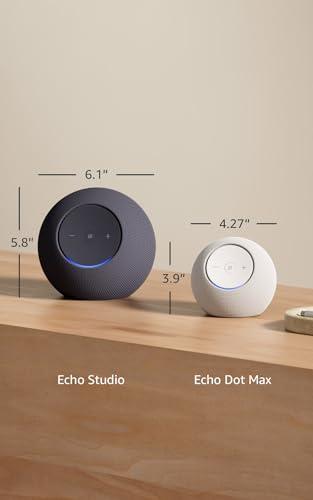
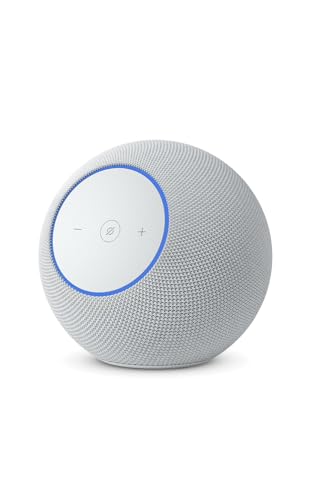
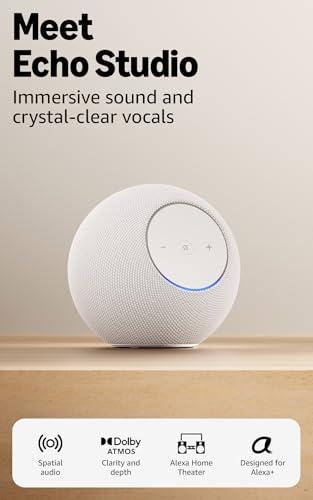
The Amazon Echo Studio launched in 2019 as Amazon's flagship audio device, and it's undergone several updates since then, including a 2025 refresh that made it 40% smaller while maintaining the same powerful audio capabilities. At the time of writing, it sits in the premium price tier—roughly three times more expensive than budget alternatives but still competitive with dedicated high-end speakers that lack smart features.
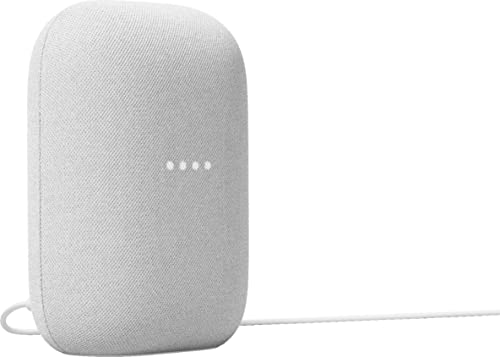
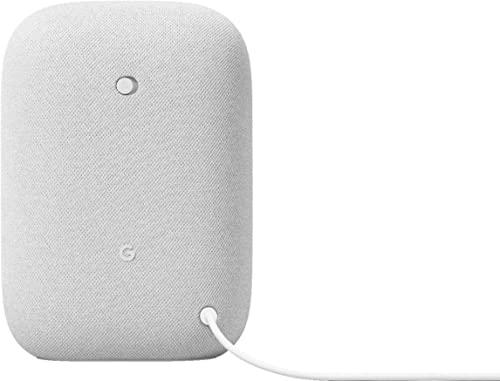
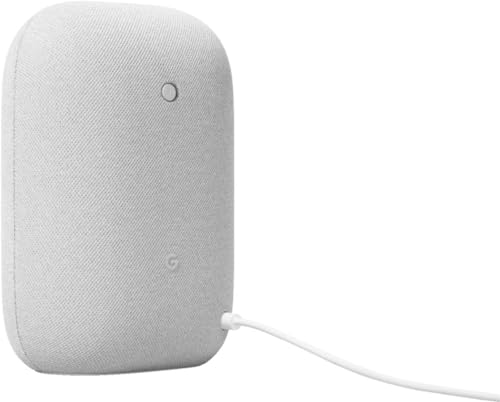
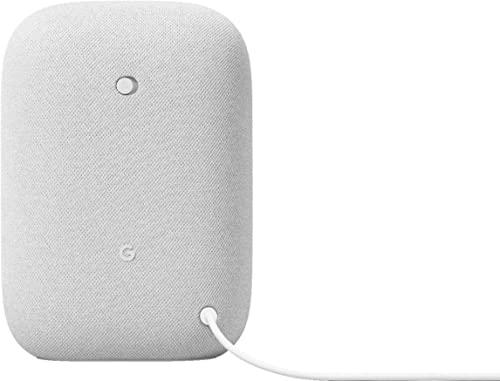
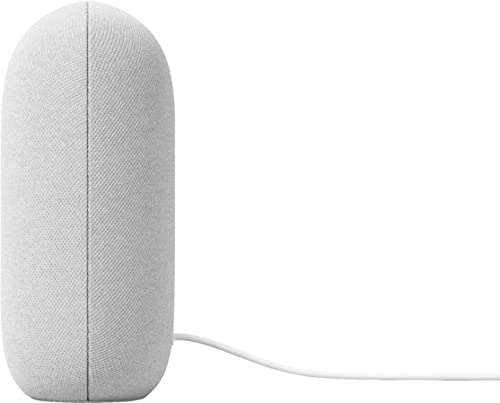
The Google Nest Audio arrived in 2020 as Google's replacement for the original Google Home, targeting the mainstream market with a focus on balanced performance at an accessible price point. Since launch, it's remained relatively unchanged, which speaks to Google's confidence in the original design.
These release timelines matter because they show each company's strategy. Amazon positioned the Echo Studio as a premium product from day one, while Google designed the Nest Audio to be the smart speaker for everyone—the reliable workhorse that doesn't break the bank.
Here's where these speakers diverge most dramatically. The Amazon Echo Studio doesn't just play music—it's designed to be your home's primary audio system. Inside that substantial cylindrical body, you'll find five separate speakers working together: a large 5.25-inch woofer pointing downward to generate deep bass, three 2-inch midrange drivers handling vocals and instruments, and a 1-inch tweeter for crisp high frequencies.
This isn't just marketing fluff—having dedicated drivers for different frequency ranges (called a "multi-way" design) allows each speaker to focus on what it does best. The result is cleaner, more detailed sound across the entire spectrum. When you play a track with complex instrumentation, you can actually pick out individual elements rather than hearing everything mashed together.
The Google Nest Audio takes a more pragmatic approach with just two drivers: a 75mm woofer and a 19mm tweeter. This is perfectly adequate for casual listening and background music, but it simply can't match the detail and power of the Echo Studio's more complex setup.
Based on our research into professional reviews and user feedback, the difference is immediately apparent when you play the same song on both speakers. The Echo Studio delivers what reviewers consistently describe as "room-filling" sound that can get loud enough to annoy your neighbors without becoming harsh or distorted. The bass response is particularly impressive—deep enough to feel in your chest during dramatic movie scenes or bass-heavy music.
The Nest Audio, while improved from Google's earlier speakers, struggles with anything beyond moderate volumes. Several professional reviews noted that the bass lacks presence and impact, with one memorably describing the sound as being "stuffed in a cardboard box." This doesn't make it a bad speaker, but it does limit its usefulness if audio quality is a priority.
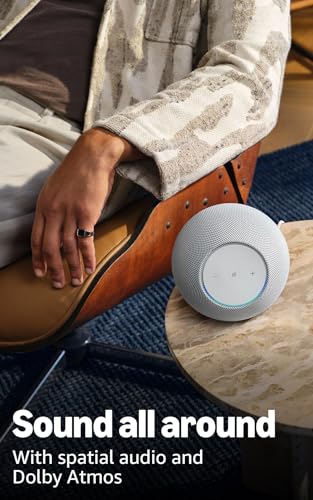
One of the Echo Studio's standout features is its support for Dolby Atmos and spatial audio—technologies that create a three-dimensional sound experience rather than traditional left-right stereo. Instead of music coming from a single point, Dolby Atmos content can make it feel like instruments are positioned around and even above you.
This isn't just a gimmick. When watching movies on a connected Fire TV device, the Echo Studio can create surprisingly convincing surround sound effects. Helicopters really do seem to fly overhead, and explosions feel more immersive. For music, the effect varies depending on how the track was mixed, but properly mastered spatial audio content can sound remarkably spacious and enveloping.
The Nest Audio doesn't support spatial audio, though it does include something called Ambient IQ that automatically adjusts volume based on background noise. This is actually quite practical for podcasts and news content—the speaker gets louder when your kitchen gets noisy and quieter during calm moments.
Here's where things get interesting, because the Google Nest Audio actually holds a significant advantage. Google Assistant has consistently outperformed Alexa in voice recognition tests and general knowledge queries. It's better at understanding natural speech patterns, handling follow-up questions, and providing helpful answers to complex queries.
The Nest Audio can hear you clearly from across typical rooms, even with background noise, and responds quickly with natural-sounding speech. Google's assistant also excels at contextual understanding—you can ask "What's the weather?" followed by "What about tomorrow?" and it knows you're still talking about weather.
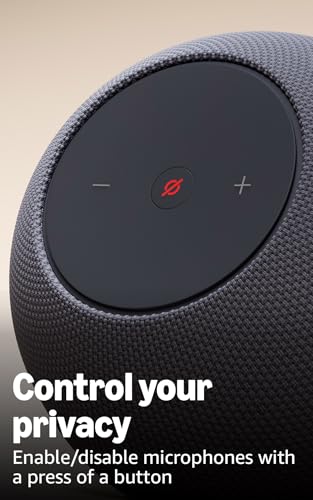
The Echo Studio features seven microphones for voice pickup, which works well in most situations, but Alexa sometimes struggles with complex or conversational queries compared to Google's offering. Amazon is also transitioning toward a subscription model for advanced Alexa features, which could impact long-term value.
However, this advantage might matter less if you primarily use your smart speaker for music playback rather than constant voice interaction.
Both speakers can control smart home devices, but they take different approaches. The Echo Studio includes a built-in Zigbee hub, which means it can directly communicate with compatible smart lights, locks, thermostats, and sensors without needing additional hardware. Zigbee is a wireless protocol specifically designed for smart home devices—it's more reliable than Wi-Fi for this purpose and doesn't bog down your internet connection.
This built-in hub capability makes the Echo Studio particularly appealing if you're building out a comprehensive smart home setup. You can add compatible devices and control them immediately without buying separate hubs or bridges.
The Nest Audio lacks a Zigbee hub but compensates with seamless integration into Google's ecosystem and excellent Chromecast support. If you use Google services extensively or have Android devices, the experience feels more cohesive. The ability to easily cast audio from your phone to the speaker is particularly convenient for streaming content that might not be available through voice commands.
Both speakers support Matter, the new universal smart home standard that promises better compatibility between different brands and platforms.
The physical differences between these speakers reflect their different priorities. The Echo Studio is substantial—over 8 inches tall and weighing nearly 8 pounds. This isn't a speaker you casually move around or tuck into tight spaces. But that size enables its superior acoustic performance and houses all the advanced processing hardware.
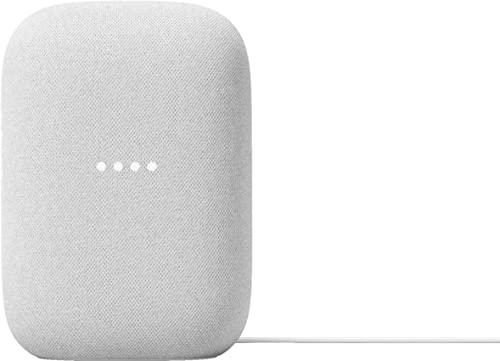
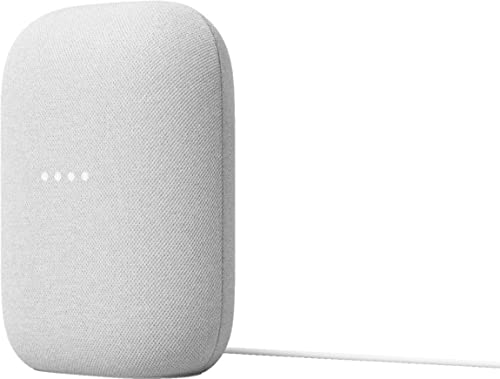
The Nest Audio prioritizes discretion with its compact, fabric-covered design that blends into most home decor. At less than 7 inches tall and under 3 pounds, it fits comfortably on bookshelves, kitchen counters, or bedside tables. Google offers it in multiple colors specifically to help it disappear into your living space.
Your room size and intended placement should heavily influence this decision. The Echo Studio needs space to breathe acoustically and works best as a centerpiece speaker in medium to large rooms. The Nest Audio excels in smaller spaces where a large speaker would overwhelm the room or look out of place.
For home theater use, the Echo Studio offers compelling advantages. It can wirelessly connect to Fire TV devices to create an instant home theater audio upgrade. With Dolby Atmos support and powerful bass response, it provides a much more immersive movie-watching experience than typical TV speakers or basic soundbars.
You can even pair two Echo Studio speakers for true stereo separation, creating a surprisingly effective home theater setup without running cables or mounting additional speakers on walls. The automatic room adaptation feature analyzes your space and adjusts the sound accordingly, optimizing performance regardless of where you place the speakers.
The Nest Audio simply isn't designed for this use case. While it can play audio from Chromecast-enabled devices, it lacks the power and frequency response needed for compelling movie audio.
At the time of writing, the price difference between these speakers is dramatic—the Echo Studio costs roughly three times more than the Nest Audio. This isn't just premium pricing for marginally better performance; these are genuinely different product categories.
The Echo Studio competes with dedicated bookshelf speakers and soundbars in its price range, many of which lack smart features entirely. When evaluated purely on audio performance per dollar, it holds up well against non-smart alternatives while adding comprehensive voice control and smart home integration.
The Nest Audio offers remarkable value for users who want smart speaker functionality without paying premium prices. It delivers reliable voice control, decent audio for casual listening, and seamless ecosystem integration at a price that makes it accessible to most users.
The key question isn't whether the Echo Studio sounds better—it clearly does. The question is whether that difference justifies the price premium for your specific use case and budget.
When evaluating smart speakers, focus on these key performance areas:
Maximum volume without distortion determines how well the speaker works in larger spaces or during parties. The Echo Studio can reach over 91 dB cleanly, while the Nest Audio starts showing compression artifacts at high volumes.
Bass extension and control affects how music feels and impacts movie watching. Deep, controlled bass makes action movies more exciting and gives music more emotional impact. The Echo Studio's dedicated subwoofer provides substantially better performance here.
Voice recognition accuracy in various conditions determines how frustrating daily use will be. Both speakers perform well in quiet rooms, but the Nest Audio maintains better accuracy in noisy environments.
Ecosystem compatibility affects long-term satisfaction as you add more smart devices. Consider which services and devices you currently use and plan to add in the future.
The Amazon Echo Studio makes sense for several specific user profiles. If you care deeply about audio quality and want one device that can serve as both your primary music speaker and smart home controller, it's worth the investment. It's also ideal for home theater enthusiasts who want to upgrade their TV audio without complexity or extensive wiring.
The Echo Studio also appeals to users who value future-proofing. Its advanced processing capabilities and regular software updates mean it's likely to remain relevant longer than simpler speakers.
The Google Nest Audio suits users who want smart speaker functionality without the premium price or large footprint. It's perfect for kitchens, bedrooms, or offices where you need voice control and background music but don't require audiophile-level performance.
It's also the better choice for users deeply integrated into Google's ecosystem or those who prioritize voice assistant quality over audio performance.
Ultimately, your choice comes down to understanding what you actually need versus what sounds impressive in marketing materials. If you find yourself frequently frustrated by weak bass or lack of volume from current speakers, and you have the budget and space, the Echo Studio will likely satisfy in ways that cheaper alternatives cannot.
However, if you primarily use smart speakers for voice commands, checking weather, controlling smart lights, and playing background music while cooking or working, the Nest Audio provides everything you need without the premium cost.
Consider your long-term plans too. If you're building a comprehensive smart home or planning a home theater upgrade, the Echo Studio's advanced capabilities and built-in hub make it a better foundation. If you want to add smart speakers to multiple rooms affordably, the Nest Audio's lower cost makes multi-room setups much more accessible.
Both speakers excel within their intended use cases, but they serve fundamentally different needs. The key is honestly evaluating which category of user you are, rather than being swayed by impressive specifications you might not actually utilize. Choose based on your real-world usage patterns, and you'll end up with a speaker that enhances your daily life rather than gathering dust as an expensive disappointment.
| Amazon Echo Studio | Google Nest Audio |
|---|---|
| Audio Drivers - Determines sound quality and power | |
| 5 speakers: 5.25" woofer, 3x 2" midrange, 1" tweeter (professional-grade setup) | 2 speakers: 75mm woofer, 19mm tweeter (adequate for casual listening) |
| Maximum Volume - Critical for larger rooms and parties | |
| Up to 91.1 dB SPL with minimal distortion (room-filling sound) | Moderate volume with compression at high levels (best for small spaces) |
| Spatial Audio Support - Enhances movies and immersive content | |
| Dolby Atmos and 3D audio processing (true surround sound experience) | No spatial audio (standard stereo only) |
| Voice Assistant Quality - Affects daily usability and accuracy | |
| Alexa with 7 far-field microphones (good, transitioning to paid model) | Google Assistant with 3 microphones (superior recognition and responses) |
| Smart Home Hub - Enables direct device control | |
| Built-in Zigbee hub (controls devices without additional hardware) | No hub (requires separate bridges for some devices) |
| Size and Weight - Impacts placement flexibility | |
| 8.1" tall, 6.9" wide, 7.7 lbs (requires dedicated space) | 6.89" tall, 4.89" wide, 2.65 lbs (fits anywhere) |
| Home Theater Capability - Important for TV audio upgrade | |
| Wireless Fire TV pairing, stereo pairing support (excellent movie audio) | Basic Chromecast audio only (not designed for theater use) |
| Multi-Room Audio - For whole-home music systems | |
| Amazon Music ecosystem, can pair for stereo (premium experience) | Google ecosystem, affordable stereo pairing under $150 total |
| Connectivity Options - Determines input flexibility | |
| Wi-Fi, Bluetooth, Zigbee, 3.5mm/optical input (comprehensive) | Wi-Fi, Bluetooth 5.0, Chromecast built-in (streaming focused) |
| Price Category - At time of writing | |
| Premium tier (~3x more expensive, competes with dedicated audio gear) | Budget-friendly mainstream option (accessible to most users) |
The Amazon Echo Studio delivers significantly better sound quality with its five-speaker array including a dedicated 5.25-inch woofer and three midrange drivers. It produces room-filling, powerful audio that can reach 91 dB without distortion. The Google Nest Audio uses only two drivers and provides adequate sound for casual listening but lacks the bass depth and overall power of the Echo Studio.
The primary difference is that the Amazon Echo Studio is a premium audio device designed for serious music listening and home theater use, while the Google Nest Audio is a budget-friendly smart speaker focused on voice control and basic audio needs. The Echo Studio costs roughly three times more but delivers professional-grade sound quality.
The Google Nest Audio is better for small spaces due to its compact size (under 7 inches tall) and unobtrusive fabric design. The Amazon Echo Studio is quite large at over 8 inches tall and 7.7 pounds, making it better suited for medium to large rooms where it has space to deliver its full acoustic potential.
The Amazon Echo Studio excels for home theater use with Dolby Atmos support, powerful bass, and wireless Fire TV integration. You can even pair two units for true stereo surround sound. The Google Nest Audio isn't designed for home theater use and lacks the power and spatial audio features needed for an immersive movie experience.
The Google Nest Audio features superior voice assistant performance with Google Assistant, which offers better voice recognition, more natural responses, and superior handling of complex queries. While the Echo Studio has capable Alexa integration with seven microphones, Google Assistant is generally considered more accurate and helpful.
Both speakers control smart home devices, but differently. The Amazon Echo Studio includes a built-in Zigbee hub that directly controls compatible devices without additional hardware. The Google Nest Audio lacks a Zigbee hub but integrates seamlessly with Google's ecosystem and supports Chromecast for easy audio streaming from phones and tablets.
This depends on your needs. The Google Nest Audio offers excellent value for users wanting smart speaker functionality at an accessible price point. The Amazon Echo Studio provides good value for audio enthusiasts who want premium sound quality plus smart features, competing well with dedicated speakers in its price range.
Yes, both speakers support stereo pairing within their ecosystems. Two Google Nest Audio speakers create an affordable stereo setup, while pairing two Amazon Echo Studio speakers delivers a premium stereo experience with impressive soundstage and bass response for serious listening.
The Amazon Echo Studio can reach much higher volumes (up to 91.1 dB) while maintaining sound quality, making it suitable for parties and large spaces. The Google Nest Audio shows compression and harshness at maximum volume, limiting its effectiveness in louder or larger environments.
The Amazon Echo Studio supports high-resolution audio up to 24-bit, Dolby Atmos, spatial audio, and works with Amazon Music, Spotify, Apple Music, and other major services. The Google Nest Audio supports standard audio formats and integrates with Google's services plus Spotify, YouTube Music, and other platforms via Chromecast.
The Google Nest Audio typically offers simpler setup through the Google Home app and more intuitive voice interactions. The Echo Studio requires more consideration for placement due to its size and acoustic needs, but both speakers are relatively straightforward to set up within their respective ecosystems.
For your first smart speaker, the Google Nest Audio is often the better choice due to its affordable price, compact size, and excellent voice assistant. Choose the Amazon Echo Studio as your first smart speaker only if audio quality is your top priority and you have the budget and space to accommodate its premium features and larger size.
We've done our best to create useful and informative comparisons to help you decide what product to buy. Our research uses advanced automated methods to create this comparison and perfection is not possible - please contact us for corrections or questions. These are the sites we've researched in the creation of this article: whathifi.com - crutchfield.com - rtings.com - dxomark.com - youtube.com - dimensions.com - youtube.com - bestbuy.com - techradar.com - dolby.com - consumerreports.org - engadget.com - phonearena.com - aboutamazon.com - askalexa.com - rtings.com - pocket-lint.com - whathifi.com - store.google.com - sypnotix.com - store.google.com - techradar.com - rtings.com - audiosciencereview.com - youtube.com - soundguys.com - audioholics.com - store.google.com - store.google.com - youtube.com - support.google.com - soundguys.com - dxomark.com - thenextweb.com - support.google.com - dimensions.com - store.google.com - store.google.com - bestbuy.com - en.wikipedia.org - store.google.com - cybershack.com.au - matteralpha.com

Privacy Policy
Terms and Conditions - Affiliate Policy
Home Security
© Copyright 2008-2026.
11816 Inwood Rd #1211, Dallas, TX 75244