




Amazon has two completely different approaches to smart home devices that happen to work incredibly well together—or as alternatives to each other, depending on what you need. The Echo Show 8 represents Amazon's vision of a visual smart home hub, while the Echo Studio focuses purely on delivering the best audio experience possible in a smart speaker. Both were refreshed in 2024-2025 with significant improvements, but they serve fundamentally different purposes.
Understanding which one fits your lifestyle comes down to a simple question: Do you want a device that shows you information and handles multiple tasks adequately, or do you want one that plays music and audio content exceptionally well? Let's dive deep into what makes each device unique and help you figure out which approach works better for your home.
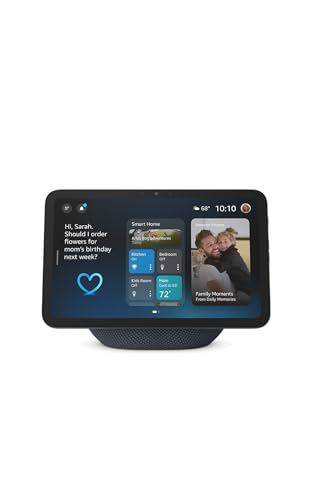
The Echo Show 8 falls into the smart display category, which means it's essentially a tablet that's permanently docked and optimized for voice control. These devices excel at visual tasks—showing you the weather, displaying recipes while you cook, letting you make video calls to family, and providing a touchscreen interface for controlling smart home devices. The trade-off is that they can't dedicate as much internal space to speakers, so audio quality takes a back seat to versatility.
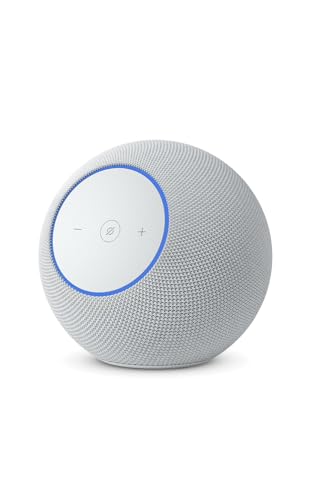
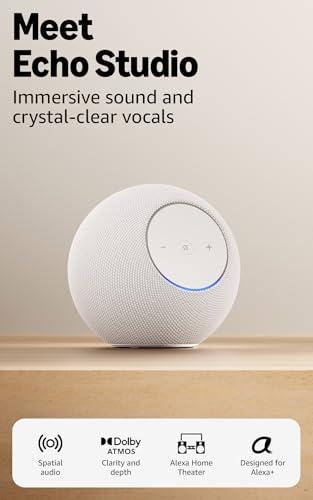
The Echo Studio, on the other hand, is a premium smart speaker designed from the ground up for audio excellence. Every component inside is optimized for sound quality, room-filling volume, and acoustic precision. There's no screen taking up space, no camera hardware to accommodate—just drivers, amplifiers, and advanced audio processing. This focus allows it to compete with dedicated speakers costing much more.
The key consideration is whether you value functional versatility or audio excellence as your primary smart home interaction method. Most people find they lean heavily toward one or the other based on how they actually use these devices day-to-day.
Here's where the comparison gets interesting, because the performance gap between these devices is massive when it comes to sound quality. The Echo Studio isn't just better at audio—it's playing in a completely different league.
The Echo Studio features a five-speaker array that's been carefully engineered for room-filling sound. At its heart is a 5.25-inch downward-firing woofer (the component responsible for bass frequencies) that uses a bass port design to maximize low-frequency output without distortion. This woofer handles everything below about 200 Hz, which covers the deep bass that makes music feel full and powerful.
Above that, three 2-inch midrange drivers handle the crucial mid-frequencies where vocals and most instruments live. These are positioned strategically around the device to create a wide soundstage—meaning music doesn't sound like it's coming from a single point, but rather fills the space around you. A 1-inch tweeter handles the high frequencies, ensuring crisp details and clear treble.
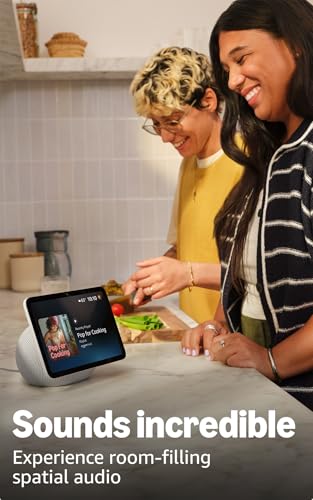
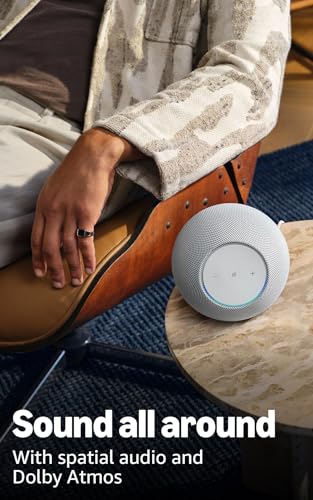
The real magic happens with spatial audio processing. The Echo Studio supports Dolby Atmos, which is a technology that creates the illusion of sound coming from above, below, and all around you. When you're listening to properly mastered content, instruments can seem to float in specific locations in your room. It's not just stereo (left and right channels)—it's truly three-dimensional audio.
Room adaptation technology continuously analyzes your space using the built-in microphones and adjusts the audio output accordingly. If you place the Echo Studio near a wall, it automatically compensates for the bass buildup that typically occurs. In an open room, it adjusts differently to maintain optimal sound balance. This happens automatically and constantly, which is something you'd normally need expensive professional equipment to achieve.
The Echo Show 8 has respectable speakers for what it is, but physics works against it. With an 8-inch screen taking up most of the front face, there's limited space for driver placement and acoustic design. The speakers are positioned beneath the display and while they support spatial audio features, they simply can't move the air volume necessary for room-filling sound or deep bass response.
This doesn't mean the Echo Show 8 sounds bad—it's perfectly adequate for voice interaction, casual music listening, and watching videos. But if you're someone who cares about audio quality, listens to music regularly, or wants a device that can fill a large room with sound, the difference is immediately noticeable.
When evaluating audio performance, several measurements tell the real story. Maximum volume output is measured in decibels (dB), and the Echo Studio can reach over 90 dB, which is loud enough for parties or large rooms. The Echo Show 8 reaches adequate volumes for personal use but can't compete in larger spaces.
Frequency response—how well a speaker reproduces different pitches from low bass to high treble—heavily favors the Echo Studio. Its dedicated woofer can reproduce deep bass frequencies down to around 30 Hz, while the Echo Show 8 struggles below 80 Hz, missing the lowest notes that give music its full impact.
Perhaps most importantly, dynamic range—the difference between the quietest and loudest sounds a speaker can reproduce without distortion—is significantly better on the Echo Studio. This means subtle details in music remain clear even when louder instruments are playing, creating a more engaging and realistic listening experience.
Here's where the Echo Show 8 has no competition, because the Echo Studio doesn't have a screen at all. The visual interface fundamentally changes how you interact with a smart device, and for many people, it's transformative.
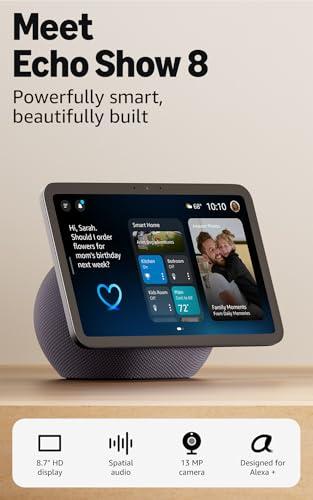
The Echo Show 8 uses what Amazon calls "in-cell touch plus negative liquid crystal" technology. Breaking this down: in-cell touch means the touch sensors are built directly into the LCD panel rather than being a separate layer on top, which reduces thickness and improves clarity. Negative liquid crystal design enhances viewing angles and color reproduction, so the screen looks good even when you're viewing it from the side.
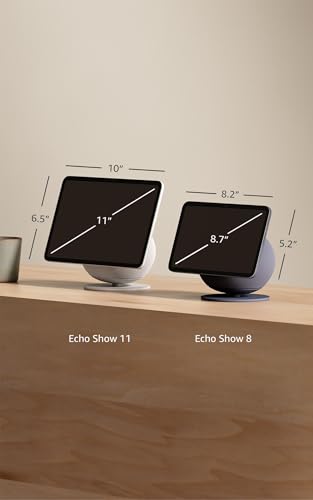
The 8-inch display hits a sweet spot for usability. It's large enough to clearly show information, recipes, and video content, but compact enough to fit comfortably on kitchen counters, nightstands, or office desks. The 1280 x 800 resolution provides sharp text and clear images, with adaptive brightness that automatically adjusts to your room's lighting conditions.
The 13-megapixel camera is a significant upgrade from earlier generations and enables several key features. Video calling quality is genuinely good—clear enough for family calls and work meetings. Auto-framing uses on-device processing to pan and zoom the camera view, keeping you centered in the frame even as you move around. A physical privacy shutter gives you complete control over when the camera can see you.
One of the most impressive features is Visual ID, which uses computer vision (AI that can recognize and understand images) to identify different family members and personalize what appears on screen. When you approach the Echo Show 8, it might show your calendar, music preferences, or reminders, while showing different information for other family members.
Adaptive Content takes this further by adjusting how much information appears based on how close you are to the device. From across the room, it might show just the time and weather. As you get closer, more detailed information appears—your schedule, smart home device statuses, or news updates. This creates a more natural, contextual interaction that feels responsive to your presence.
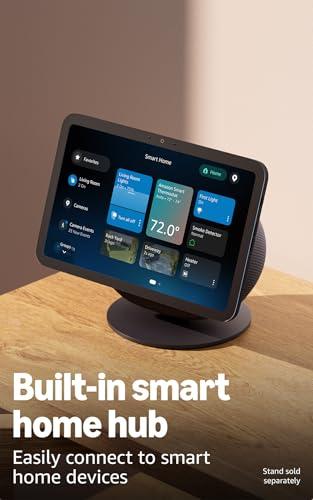
Both devices include built-in Zigbee hubs, which is significant for smart home enthusiasts. Zigbee is a wireless communication protocol (like Wi-Fi or Bluetooth, but optimized for smart home devices) that allows direct device-to-device communication without requiring internet connectivity for basic functions. This means faster response times and more reliable smart home control.
The Echo Show 8 excels at visual smart home management. You can see security camera feeds, adjust lighting with intuitive sliders, check door lock status, and manage routines through touch controls. For complex smart home setups, having visual feedback and touch control makes management significantly easier than voice commands alone.
The Echo Studio handles smart home control entirely through voice, but it's equally capable. The advantage comes in rooms where you primarily want audio content—you can control lights, temperature, and other devices without interrupting your music or requiring visual attention.
Both devices support Matter and Thread protocols (newer smart home standards designed for better interoperability), making them future-proof as smart home technology continues evolving.
Both devices feature Amazon's AZ3 Pro chip with AI accelerator, representing a significant leap in processing power compared to earlier Echo generations. This custom silicon enables 40% faster Alexa response times and supports more complex on-device AI processing.
The AI accelerator is particularly important for privacy and responsiveness. Many voice commands and smart home controls can now be processed locally on the device rather than being sent to Amazon's cloud servers. This means faster responses and reduced dependence on internet connectivity for basic functions.
For the Echo Show 8, this processing power enables features like real-time person recognition, adaptive content delivery, and smooth video playback. The Echo Studio uses the same chip to optimize audio processing, manage spatial audio algorithms, and handle complex multi-room audio synchronization.
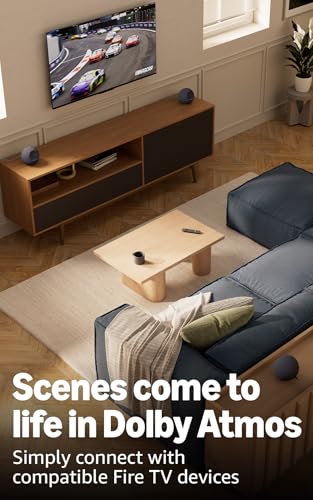
If you're thinking about home theater applications, the Echo Studio is the clear choice, but with some important considerations. It can be paired with Fire TV devices to create wireless surround sound systems, supporting up to 5.1 channel configurations when combined with additional Echo speakers and a subwoofer.
The spatial audio capabilities really shine with movie content that supports Dolby Atmos. Action sequences, ambient soundscapes, and musical scores gain dimensionality that significantly enhances the viewing experience. The automatic room tuning ensures optimal performance regardless of your room's acoustics.
However, for casual TV watching or streaming, the Echo Show 8 might actually be more practical in some scenarios. You can use it to control your entertainment system, display information about what you're watching, or even stream content directly to the device for personal viewing.
After extensive research into user experiences and professional reviews, clear usage patterns emerge for each device.
Video communication is important to you. The camera quality and auto-framing feature make this genuinely useful for staying connected with family or remote work meetings. The visual interface makes call management intuitive in ways that audio-only devices can't match.
You spend significant time in the kitchen. The Echo Show 8 excels as a kitchen companion—displaying recipes with step-by-step instructions, setting visual timers, showing weather while you have coffee, and handling video calls while you cook. The touchscreen works well even with messy hands when voice commands might not be ideal.
Your smart home setup is complex. Visual interfaces make managing multiple smart devices, checking statuses, and troubleshooting issues much easier than voice-only interaction. Security camera integration alone can justify the choice for many users.
You want one device handling multiple daily tasks. The versatility factor is significant—morning weather and news briefings, music during the day, video calls with family, bedtime routine management. It's the Swiss Army knife approach to smart home devices.
Audio quality genuinely matters to you. If you regularly listen to music, podcasts, or other audio content, the difference in sound quality is dramatic. The Echo Studio can serve as your primary speaker system, while the Echo Show 8 cannot.
You have large or acoustically challenging spaces. The Echo Studio can fill big rooms with sound and adapt to difficult acoustic environments automatically. Open floor plans, high ceilings, or rooms with lots of hard surfaces benefit significantly from its advanced audio processing.
You're building a home theater system. The surround sound capabilities and Dolby Atmos support make this a natural choice for entertainment-focused rooms. The ability to create proper 5.1 systems with additional Echo devices is unique in this price range.
You already have visual devices that work well for you. If you're comfortable using your phone or tablet for visual smart home control, weather checking, and video calls, the Echo Studio provides superior audio without duplicating capabilities you already have.
At the time of writing, these devices are priced close enough that cost shouldn't be the primary deciding factor. The Echo Show 8 typically costs slightly less, but we're talking about a difference that's relatively minor compared to the functional differences between them.
The decision really comes down to your primary use case and preferences. The Echo Show 8 is the better choice for most people who want a versatile smart home hub that handles multiple tasks well. It's particularly valuable in kitchens, bedrooms, or offices where visual information and video communication add significant value.
The Echo Studio is the clear winner for anyone who prioritizes audio quality or wants to build a proper home entertainment system. If music listening is a daily priority, or if you have a large space that needs powerful, room-filling sound, the audio performance difference justifies choosing this focused approach.
Both devices represent significant improvements over their predecessors, with faster processing, better integration, and enhanced AI capabilities. You really can't go wrong with either choice—it's more about matching the device to your specific needs and usage patterns. Consider how you actually interact with smart devices daily, and the right choice becomes clear.
| Amazon Echo Show 8 Display | Amazon Echo Studio Smart Speaker |
|---|---|
| Primary Function - Core purpose and design philosophy | |
| Smart display with touchscreen interface and moderate audio | Premium smart speaker focused exclusively on audio excellence |
| Display Technology - Essential for visual tasks and information | |
| 8-inch touchscreen (1280x800) with adaptive brightness and touch controls | No display - purely audio-focused design |
| Audio Performance - Critical for music quality and room filling sound | |
| Basic speakers adequate for voice interaction and casual listening | Five-speaker array with 5.25" woofer, spatial audio, and 200W power output |
| Camera Capabilities - Important for video calls and smart features | |
| 13MP camera with auto-framing, privacy shutter, and person recognition | No camera included |
| Spatial Audio Support - Advanced audio processing for immersive sound | |
| Basic spatial audio features limited by speaker constraints | Full Dolby Atmos and 3D audio with room adaptation technology |
| Smart Home Hub - Built-in connectivity for device control | |
| Zigbee hub with visual control interface and touch panels | Zigbee hub with voice-only control (no visual interface) |
| Maximum Volume Output - Ability to fill large spaces | |
| Adequate for personal use and small rooms | 90+ dB capable of filling large rooms and outdoor spaces |
| Connectivity Options - Flexibility for different audio sources | |
| Wi-Fi, Bluetooth, no wired audio inputs | Wi-Fi, Bluetooth, 3.5mm AUX, optical input for high-quality sources |
| Home Theater Integration - Building surround sound systems | |
| Limited to basic audio pairing | Supports 5.1 surround systems with Fire TV and additional Echo devices |
| Form Factor - Size and placement considerations | |
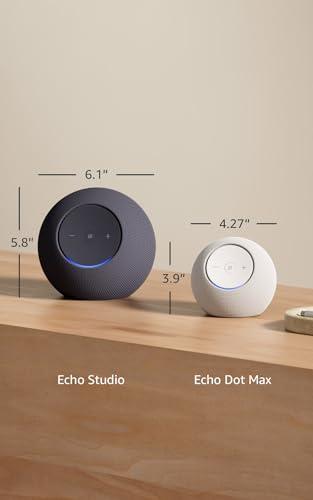
| Compact countertop design (7.9" x 5.4" x 4.2") ideal for kitchens/bedrooms | Larger spherical design optimized for acoustic performance |
| Processor - Speed and AI capabilities | |
| AZ3 Pro chip with AI accelerator for fast visual and voice processing | AZ3 Pro chip with AI accelerator optimized for audio processing |
| Best Use Cases - Who should choose each device | |
| Video calls, visual information, kitchen companion, multi-purpose hub | Music listening, large rooms, home theater, audiophile-quality sound |
The Amazon Echo Studio Smart Speaker is significantly better for music listening. It features a five-speaker array with a dedicated 5.25-inch woofer, spatial audio processing, and 200 watts of power output. The Amazon Echo Show 8 Display has basic speakers that are adequate for casual listening but cannot match the Studio's audio quality, bass response, or room-filling volume.
No, only the Amazon Echo Show 8 Display supports video calls with its 13-megapixel camera and auto-framing features. The Amazon Echo Studio Smart Speaker has no camera and only supports voice calls through connected devices.
Both devices have built-in Zigbee hubs and excellent smart home integration. The Amazon Echo Show 8 Display offers visual control panels and touch interface for easier device management, while the Amazon Echo Studio Smart Speaker relies entirely on voice commands but is equally capable for smart home automation.
The Amazon Echo Studio Smart Speaker is excellent for home theater, supporting Dolby Atmos and 5.1 surround sound systems when paired with Fire TV devices and additional Echo speakers. The Amazon Echo Show 8 Display is not designed for home theater use and lacks the audio power needed for cinematic experiences.
The Amazon Echo Show 8 Display is ideal for kitchens, offering recipe displays, visual timers, video calling while cooking, and easy touch controls even with messy hands. The Amazon Echo Studio Smart Speaker works well for kitchen music but cannot display recipes or visual information.
The Amazon Echo Studio Smart Speaker excels at filling large rooms with powerful, room-filling sound up to 90+ dB. The Amazon Echo Show 8 Display is designed for personal use and smaller spaces, lacking the power and driver size needed for large room audio coverage.
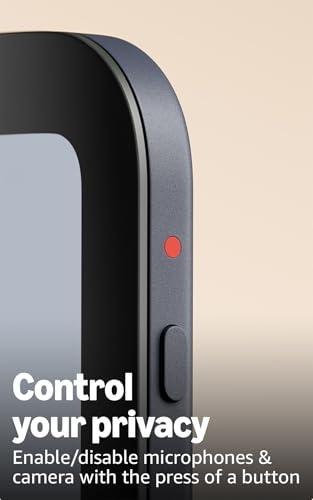
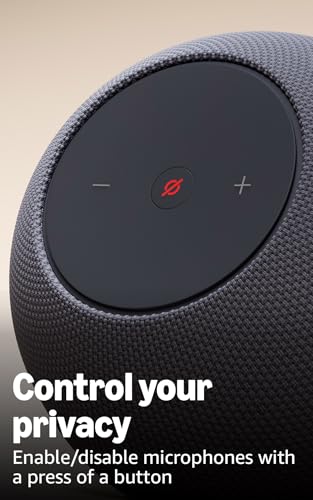
Both devices include microphone mute buttons and privacy controls. The Amazon Echo Show 8 Display adds a physical camera shutter for visual privacy. The Amazon Echo Studio Smart Speaker has no camera, so visual privacy isn't a concern, but both offer equivalent voice privacy protections.
Yes, both the Amazon Echo Show 8 Display and Amazon Echo Studio Smart Speaker support major music streaming services like Spotify, Apple Music, Amazon Music, and Pandora. The Show 8 additionally supports video streaming services for visual content consumption.
The Amazon Echo Show 8 Display is better for bedside use, offering visual alarm displays, weather information, and gentle wake-up lighting. It can also serve as a digital photo frame and information display. The Amazon Echo Studio Smart Speaker may be too large and powerful for bedside placement in most bedrooms.
Both devices require Wi-Fi for most functions, but the Amazon Echo Show 8 Display and Amazon Echo Studio Smart Speaker can handle some smart home controls locally thanks to their built-in Zigbee hubs and AZ3 Pro processors with AI accelerators for offline processing capabilities.
The Amazon Echo Show 8 Display typically offers better value for most users due to its versatility, handling video calls, visual information, smart home control, and adequate audio in one device. The Amazon Echo Studio Smart Speaker provides better value specifically for audio enthusiasts who prioritize music quality over multi-functionality.
The fundamental choice is between visual versatility and audio excellence. Choose the Amazon Echo Show 8 Display if you want a multi-purpose device for video calls, visual information, and general smart home tasks. Choose the Amazon Echo Studio Smart Speaker if audio quality is your top priority and you want the best-sounding Echo device for music and home theater applications.
We've done our best to create useful and informative comparisons to help you decide what product to buy. Our research uses advanced automated methods to create this comparison and perfection is not possible - please contact us for corrections or questions. These are the sites we've researched in the creation of this article: thedisconnekt.com - thehousetech.com - bestbuy.com - tomsguide.com - youtube.com - bestbuy.com - dimensions.com - engadget.com - youtube.com - techradar.com - ifixit.com - dreamgreenhouse.com - aboutamazon.com - engadget.com - en.wikipedia.org - bestbuy.com - homedepot.com - whathifi.com - crutchfield.com - rtings.com - dxomark.com - youtube.com - dimensions.com - youtube.com - bestbuy.com - techradar.com - dolby.com - consumerreports.org - engadget.com - phonearena.com - askalexa.com

Privacy Policy
Terms and Conditions - Affiliate Policy
Home Security
© Copyright 2008-2026.
11816 Inwood Rd #1211, Dallas, TX 75244