




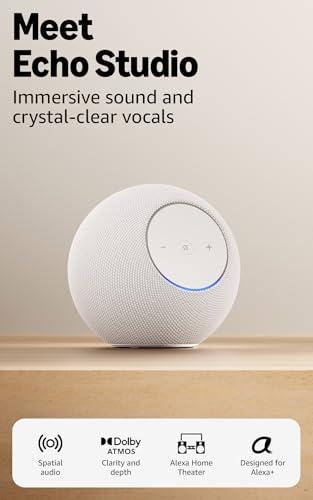



Amazon's Echo lineup has evolved dramatically since the first Echo arrived in 2014, transforming from a simple voice assistant into a comprehensive smart home ecosystem. Today, we're comparing two fundamentally different approaches to smart home control: the Echo Studio released in 2019 as Amazon's premium audio flagship, and the Echo Show 5 (3rd Gen) launched in 2023 as their most affordable smart display.
These devices represent opposite philosophies in smart home design. One prioritizes exceptional audio performance, while the other emphasizes visual interaction and versatility. Understanding which approach fits your lifestyle requires diving deep into their capabilities, limitations, and real-world performance.
The modern smart home hub has moved far beyond simple voice commands. Today's devices serve as entertainment centers, communication hubs, and automation controllers all rolled into one. The key decision isn't just about brand loyalty or price—it's about choosing between two distinct interaction philosophies.
Smart speakers like the Echo Studio follow the traditional hi-fi approach: deliver exceptional audio quality that can replace your stereo system while providing smart home control through voice commands. This approach works brilliantly if you spend significant time listening to music and want room-filling sound that transforms your living space.
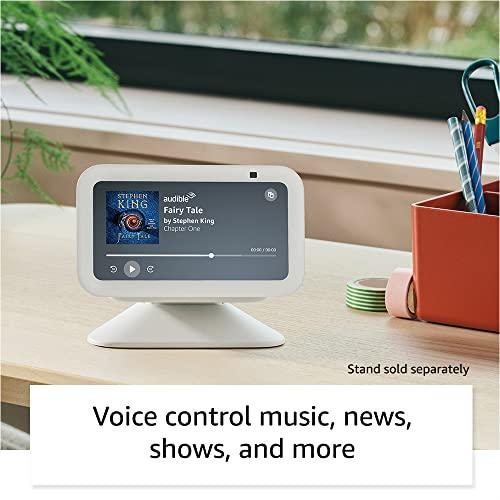
Smart displays like the Echo Show 5 take a different route. They recognize that many smart home tasks benefit from visual feedback. Weather forecasts make more sense with graphics, cooking timers are easier to monitor on screen, and video calls require visual interfaces. This multi-modal approach (combining voice, touch, and visual elements) excels when information accessibility matters more than audio excellence.
The fundamental question becomes: do you want a smart speaker that happens to control your home, or a visual interface that also plays music?
The audio performance gap between these devices is enormous—and for good reason. The Echo Studio dedicates its entire design to sound quality, while the Echo Show 5 treats audio as just one of many features.
The Echo Studio's five-speaker array represents sophisticated acoustic engineering typically found in speakers costing much more. At the heart sits a substantial 5.25-inch downward-firing subwoofer (the large speaker that handles deep bass frequencies) paired with a bass reflex port (an opening that enhances low-frequency response). This configuration allows the Studio to produce the kind of deep, controlled bass that makes hip-hop tracks thump and orchestral music feel expansive.
The midrange frequencies—where vocals and most instruments live—get handled by three separate 2-inch drivers. Two fire horizontally left and right, while a third points upward toward the ceiling. This arrangement creates what audio engineers call a "soundstage" (the perception of width and depth in music), making it feel like instruments are positioned in three-dimensional space around you.
A dedicated 1-inch tweeter handles the high frequencies (cymbals, guitar harmonics, vocal details). Having separate drivers for different frequency ranges prevents any single speaker from being overwhelmed, resulting in clearer, more detailed sound at all volume levels.
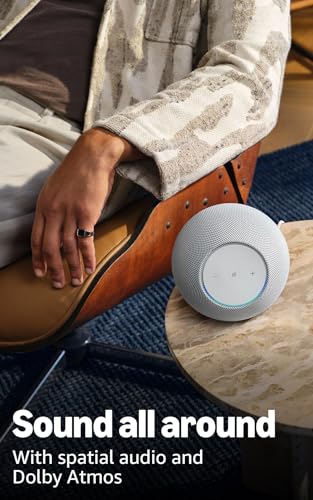
The Studio's party trick is Dolby Atmos support—a surround sound technology that processes audio to create the illusion of sounds coming from above, beside, and behind you. When listening to properly mastered tracks, you might hear a helicopter passing overhead or raindrops falling around you. It's genuinely impressive when it works, though the effect depends heavily on the source material.
Room adaptation technology automatically analyzes your space's acoustics and adjusts the sound accordingly. If you place the Studio near a wall, it reduces bass output to prevent boomy sound. In an open room, it increases bass response to fill the larger space. This ensures consistent performance regardless of placement—a crucial feature since most people don't have dedicated listening rooms.
The Echo Show 5's single 1.75-inch full-range driver faces a completely different challenge. Rather than creating an immersive audio experience, it needs to clearly reproduce Alexa's voice responses, alarm sounds, and casual music listening without taking up significant space or power.
Amazon improved the audio substantially in this third-generation model, released in 2023. The previous version sounded thin and harsh at higher volumes, but the new speaker provides clearer midrange frequencies and less distortion. However, this improvement is relative—it's now good enough for its intended purpose rather than genuinely impressive.
The lack of a dedicated subwoofer means bass response rolls off sharply below about 200Hz (the frequency range where drums and bass guitars live). Music lacks weight and impact, though podcasts and audiobooks sound perfectly fine. The single driver also means no stereo separation—everything comes from one point, eliminating the spatial qualities that make music engaging.
When evaluating smart speaker audio, several measurements matter more than others. Maximum volume without distortion determines whether a speaker can fill larger rooms or handle party environments. The Echo Studio reaches impressive volume levels while maintaining clarity, making it suitable for gatherings or background music throughout open floor plans.
Frequency response—how evenly a speaker reproduces different pitches—reveals tonal balance. The Studio delivers relatively neutral sound across the frequency spectrum, though some listeners find the bass slightly emphasized. The companion app provides bass and treble sliders for customization, something the Echo Show 5 lacks entirely.
Dynamic range (the difference between quiet and loud passages) showcases a speaker's ability to handle complex music. The Studio's multiple drivers prevent compression artifacts even during demanding orchestral pieces or modern pop tracks with heavy production. The Show 5's single driver becomes overwhelmed more easily, compressing dynamic music into a flatter, less engaging presentation.
Both devices excel at smart home control but take different approaches to connectivity and user experience. Understanding these differences helps determine which better fits your existing or planned smart home setup.
The Echo Studio includes a built-in Zigbee hub, which might sound like technical jargon but represents significant practical value. Zigbee is a wireless communication protocol specifically designed for smart home devices. Having the hub built into your Echo means compatible devices (many Philips Hue lights, some smart locks, various sensors) connect directly without requiring separate hub hardware.
This integration enables more responsive control and complex automation scenarios. When you say "Alexa, goodnight," the Studio can instantly dim Zigbee lights, lock compatible smart locks, and adjust thermostats without routing commands through multiple hubs. The reduced latency (delay between command and action) makes interactions feel more natural and immediate.
Matter support—a new universal smart home standard—ensures future compatibility with devices from different manufacturers. As the smart home industry consolidates around Matter, the Studio's support becomes increasingly valuable for avoiding compatibility headaches.
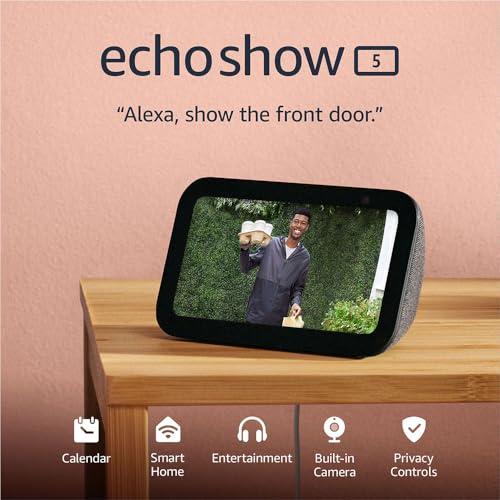
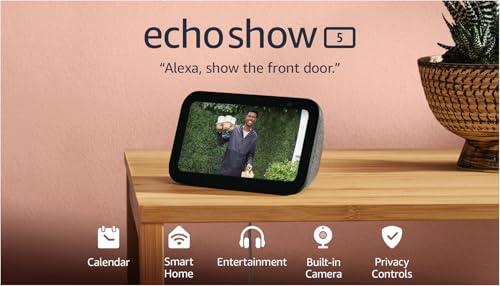
The Echo Show 5 approaches smart home control through its touchscreen interface. Rather than relying purely on voice commands, you can tap on-screen buttons to control lights, view security camera feeds, and adjust device settings. This visual approach proves particularly valuable when you want to quickly check device status or make precise adjustments.
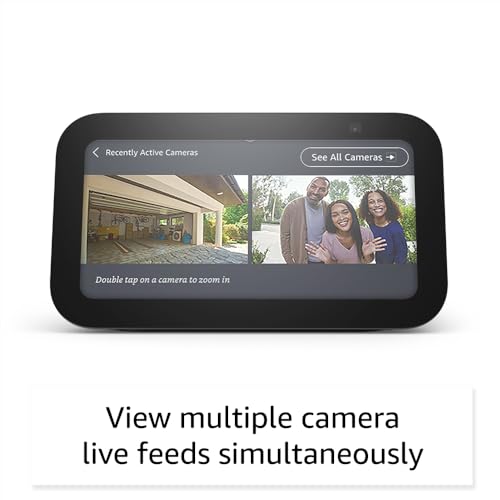
The display shows live feeds from compatible security cameras, transforming the Show 5 into a security monitor. When someone rings a compatible video doorbell, the feed appears automatically, allowing you to see and speak with visitors. This functionality alone justifies the device for many users, particularly those concerned about home security.
However, the Show 5 lacks the built-in Zigbee hub, instead relying on Wi-Fi and Matter protocols. This means some smart home devices require separate hubs, adding complexity and cost to your setup. For basic smart home control involving Wi-Fi devices (many smart plugs, some lights, most thermostats), this limitation doesn't matter. For extensive automation with mixed device types, it becomes more restrictive.
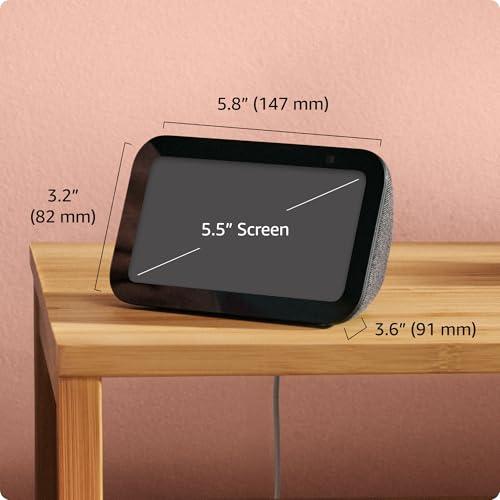
The presence or absence of a display fundamentally changes how you interact with these devices daily. The Echo Show 5's 5.5-inch touchscreen transforms routine interactions from purely audio exchanges into rich, visual experiences.
Weather forecasts exemplify the display's value. While the Echo Studio can tell you "partly cloudy with a high of 72 degrees," the Echo Show 5 shows radar maps, hourly forecasts, and precipitation chances at a glance. The visual presentation conveys more information more quickly, particularly useful during morning routines when you're deciding what to wear or whether to carry an umbrella.
Calendar integration works similarly. Voice-only devices can read upcoming appointments, but the Show 5 displays your day's schedule with times, locations, and meeting details visible simultaneously. You can scan the information without interrupting other activities—crucial when you're getting ready for work or preparing breakfast.
Cooking scenarios highlight the display's practical advantages. Recipe instructions appear step-by-step with ingredient lists, timers, and even instructional videos. You can follow along hands-free using voice commands while keeping track of multiple cooking stages visually. The Echo Studio can handle basic cooking timers and measurement conversions through voice, but lacks the visual context that makes complex recipes manageable.
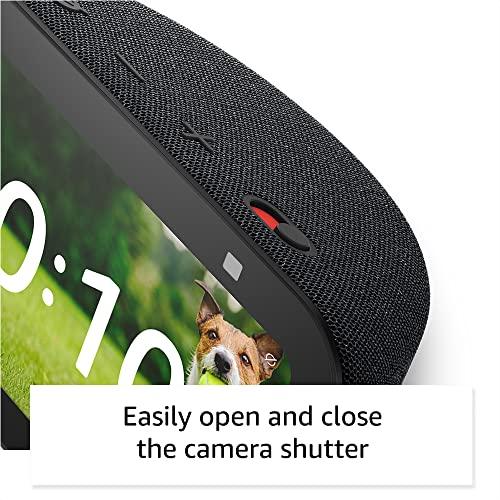
Video calling represents the Show 5's most significant functional advantage. The 2-megapixel camera enables face-to-face conversations through Skype, Zoom, and Amazon's own calling service. While 2MP doesn't deliver stunning video quality, it's perfectly adequate for staying connected with family members or conducting basic work calls.
The privacy controls deserve mention—a physical camera shutter covers the lens when not in use, and a dedicated button disables both camera and microphone. These hardware controls provide peace of mind that software-only solutions can't match.
The Echo Studio obviously can't facilitate video calls, limiting communication to voice-only interactions. For households where visual communication matters—particularly families with distant relatives or remote workers—this represents a significant limitation.
The physical differences between these devices extend beyond aesthetics to affect where and how you can use them effectively.
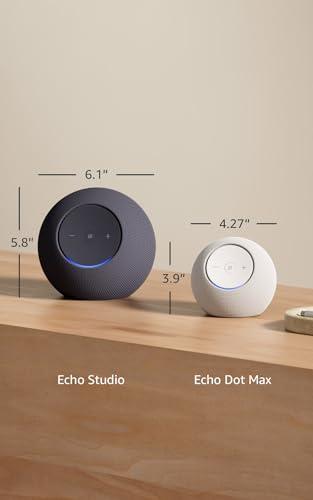
The Echo Studio's substantial cylindrical form demands dedicated placement. At roughly 8 inches tall and 7 inches in diameter, weighing nearly 8 pounds, it commands attention in any room. This isn't necessarily negative—many users appreciate having a premium-looking speaker that signals quality to guests and family members.
The significant weight and wired power requirement mean the Studio stays put once positioned. You'll want to choose its location carefully, considering both acoustic performance and aesthetic integration with your room's design. The fabric covering and available color options help it blend with most décor styles, but it will never be invisible like smaller devices.
Acoustically, the Studio performs best with some breathing room—at least a few feet from walls and corners where bass can become overwhelming. This placement requirement might conflict with furniture arrangements or available surface space, particularly in smaller rooms.
The Echo Show 5's compact dimensions (roughly 6 × 3.5 × 3 inches, weighing just one pound) enable flexible placement throughout your home. It fits comfortably on nightstands without dominating the space, tucks into kitchen corners without interfering with food preparation, and sits unobtrusively on office desks.
The lightweight design and relatively small power adapter make relocation simple when your needs change. Many users move their Show 5 between rooms seasonally or reposition it based on daily routines—something impractical with the heavier Studio.
The display's viewing angle affects placement more than you might expect. Positioned too low or at the wrong angle, the screen becomes difficult to read from normal standing or sitting positions. The adjustable stand helps somewhat, but optimal placement requires more consideration than pure audio devices.
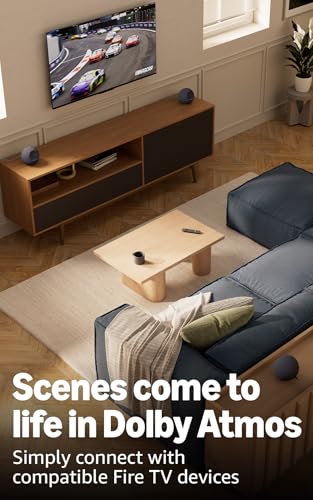
While neither device replaces a dedicated home theater system, the Echo Studio offers surprisingly capable integration with Amazon's Fire TV platform. This wireless connection transforms the Studio into a soundbar alternative, delivering Dolby Atmos processing for movies and TV shows.
The spatial audio processing that enhances music also improves dialogue clarity and sound effect positioning in movies. Action sequences gain impact from the Studio's substantial bass response, while dialogue remains clear and centered. For smaller to medium-sized rooms, this setup provides genuinely impressive movie audio without the complexity of traditional surround sound systems.
Two Echo Studios can pair for true stereo separation, creating a more convincing surround sound experience. While expensive, this configuration rivals dedicated soundbar systems costing similar amounts while providing all the smart home functionality during non-entertainment use.
The Echo Show 5 can display Fire TV content but lacks the audio performance for meaningful home theater enhancement. Its small screen also makes video viewing more of a novelty than a practical entertainment option.
Based on extensive research into user feedback and professional reviews, several performance characteristics emerge as particularly important for potential buyers.
The Echo Studio's audio quality consistently impresses users coming from standard smart speakers or basic Bluetooth devices. The improvement in bass response and overall volume capability proves immediately noticeable, with many users reporting they use it as their primary music system rather than just a smart speaker.
However, the Studio's size and power consumption (around 200 watts maximum) surprise some buyers. It's definitively not portable, and the substantial power draw becomes noticeable if you're conscious of electricity usage. The premium audio comes with premium power requirements.
The Echo Show 5's visual interface receives consistent praise for daily utility. Users frequently mention checking weather, calendar, and smart home device status at a glance rather than asking Alexa. This passive information consumption—where the device provides value without active interaction—proves more valuable than many anticipate.
The Show 5's audio limitations become apparent primarily when users attempt serious music listening. For casual background music, podcast listening, and alarm clock duties, the performance satisfies most users. Attempting to use it for party music or high-volume listening reveals the single-driver design's constraints.
Choosing between these devices requires honest assessment of your priorities and usage patterns. The Echo Studio excels when audio quality matters and you have space for a substantial speaker. At current pricing (significantly higher than the Show 5), it represents good value for users seeking premium audio performance combined with advanced smart home control.
The Echo Studio makes sense for:
The Echo Show 5 proves more versatile for general smart home use despite its audio limitations. At its much lower price point (roughly one-quarter the Studio's cost at the time of writing), it delivers impressive functionality per dollar spent.
The Echo Show 5 makes sense for:
These devices serve fundamentally different purposes despite sharing the Alexa ecosystem. The Echo Studio represents Amazon's commitment to serious audio performance, competing successfully with dedicated speakers costing similar amounts while adding comprehensive smart home functionality. Its premium pricing reflects premium components and engineering.
The Echo Show 5 democratizes smart display technology, bringing visual interfaces and video calling to price points that make experimentation low-risk. While it won't satisfy serious music listeners, it excels at the daily tasks that define modern smart home living.
Your choice ultimately depends on whether you value immersive audio experiences or practical visual interfaces more highly. Both devices succeed at their intended purposes, making this comparison less about determining a winner and more about matching device capabilities to your specific needs and preferences.
For most users, the Echo Show 5 offers better daily utility at a fraction of the cost. But for those who appreciate high-quality audio and have the space and budget for premium performance, the Echo Studio delivers an experience that standard smart speakers simply cannot match.
| Amazon Echo Studio Smart Speaker | Amazon Echo Show 5 3rd Gen Smart Display |
|---|---|
| Audio System - Critical for music quality and room-filling sound | |
| 5-speaker array with dedicated subwoofer, tweeters, and midrange drivers for room-filling stereo sound | Single 1.75" full-range driver designed for voice clarity and casual listening |
| Maximum Volume - Determines suitability for parties and larger rooms | |
| High-power output suitable for entertaining and open floor plans | Personal listening volume only, inadequate for gatherings |
| Bass Response - Essential for music genres like hip-hop, EDM, and full movie soundtracks | |
| Deep, controlled bass from 5.25" downward-firing subwoofer | Minimal bass response, lacks impact for music enjoyment |
| Dolby Atmos Support - Creates immersive 3D audio for movies and compatible music | |
| Full Dolby Atmos processing with spatial audio enhancement | No spatial audio or surround sound capabilities |
| Display - Enables visual information, video calls, and touch control | |
| No display, voice-only interaction | 5.5" touchscreen for weather, timers, video calls, and smart home control |
| Video Calling - Important for staying connected with family and remote work | |
| Not supported | 2MP camera with physical privacy shutter for Skype, Zoom, and Amazon calls |
| Smart Home Hub - Reduces need for separate hub hardware and improves response times | |
| Built-in Zigbee hub for direct device control without additional hardware | No Zigbee hub, requires separate hubs for some smart home devices |
| Size and Weight - Affects placement flexibility and room integration | |
| Large cylindrical design (8.1" tall, 6.9" diameter, 7.7 lbs) requires dedicated placement | Compact form factor (5.8" x 3.6" x 3.2", 1 lb) fits on nightstands and desks |
| High-Resolution Audio - Maximizes sound quality from premium streaming services | |
| Supports lossless formats up to 24-bit/192kHz for audiophile-quality streaming | Standard audio formats only, no high-resolution support |
| Fire TV Integration - Transforms speaker into wireless soundbar for home theater | |
| Wireless Dolby Atmos soundbar functionality with Fire TV devices | Basic Fire TV audio only, no home theater enhancement |
| Multi-Room Audio - Allows synchronized music throughout the home | |
| Stereo pairing and multi-room grouping with other Echo devices | Multi-room support but limited by single-driver audio performance |
| Price Category - Value proposition for different budgets | |
| Premium pricing reflecting audiophile-grade components and features | Budget-friendly entry point into smart display technology |
The Amazon Echo Studio is significantly better for music listening thanks to its five-speaker array with a dedicated subwoofer, tweeters, and midrange drivers. It delivers room-filling stereo sound with deep bass and supports high-resolution audio formats. The Echo Show 5 has only a single 1.75" speaker designed for voice responses rather than music enjoyment, making it unsuitable for serious listening.
While both devices control smart home devices through Alexa, the Amazon Echo Studio includes a built-in Zigbee hub that directly connects to many smart home devices without additional hardware. The Echo Show 5 lacks this hub but offers visual control through its touchscreen, showing device status and camera feeds. For basic Wi-Fi smart home control, the Echo Show 5 works fine, but extensive automation benefits from the Studio's advanced connectivity.
The Echo Show 5 is the clear winner for communication, featuring a 2MP camera that enables video calls through Skype, Zoom, and Amazon's calling service. It also includes a physical camera shutter for privacy. The Amazon Echo Studio has no camera or display, limiting it to voice-only communication through Alexa.
The Echo Show 5 is much more compact at roughly 6 × 3.6 × 3.2 inches and weighing just 1 pound, making it perfect for nightstands, kitchen counters, and desks. The Amazon Echo Studio is substantially larger at 8.1" tall and 6.9" in diameter, weighing 7.7 pounds, requiring dedicated placement and more space.
The Amazon Echo Studio excels as a home theater speaker, offering wireless Dolby Atmos processing when paired with Fire TV devices. Its powerful speakers and spatial audio create an impressive soundbar alternative for movies and TV shows. The Echo Show 5 can display Fire TV content but lacks the audio power for meaningful home theater enhancement.
This depends on your priorities. The Echo Show 5 offers exceptional value for users wanting visual smart home control, video calling, and basic Alexa functionality at a budget-friendly price. The Amazon Echo Studio costs significantly more but delivers premium audio quality that rivals dedicated speakers, making it good value for music enthusiasts willing to invest in sound quality.
Yes, both the Amazon Echo Studio and Echo Show 5 support major streaming services like Amazon Music, Spotify, Apple Music, and Pandora through Alexa voice commands. However, the Studio also supports high-resolution lossless audio formats for premium sound quality, while the Echo Show 5 can display song information, lyrics, and album artwork on its screen.
The Echo Show 5 is ideal for bedrooms, serving as a smart alarm clock with customizable displays, weather information at a glance, and gentle wake-up features. Its compact size fits perfectly on nightstands. The Amazon Echo Studio might be too large and powerful for bedroom use, though some users appreciate its superior audio for bedtime music or podcasts.
Both devices control smart home devices, but differently. The Amazon Echo Studio uses its built-in Zigbee hub for direct, fast control of compatible devices like Philips Hue lights and smart thermostats. The Echo Show 5 provides visual control through its touchscreen, showing device status and enabling quick adjustments, but may require separate hubs for some devices.
While the Amazon Echo Studio has superior overall audio quality, the Echo Show 5 is perfectly adequate for podcasts and audiobooks. Its single speaker provides clear voice reproduction, and many users prefer the visual information like episode titles and progress bars. The Studio's premium audio is overkill for spoken content unless you're particularly sensitive to audio quality.
Yes, both support multi-room audio grouping with other Alexa devices. The Amazon Echo Studio can also pair with another Studio for true stereo separation, creating an impressive two-speaker setup. The Echo Show 5 participates in multi-room groups but its single small speaker limits its contribution to the overall sound quality compared to the Studio's powerful audio output.
The Echo Show 5 provides more comprehensive privacy controls with both a physical camera shutter and a microphone/camera off button, giving users hardware-level privacy protection. The Amazon Echo Studio has a microphone mute button but no camera to worry about. Both devices allow users to delete voice recordings through the Alexa app and review privacy settings.
We've done our best to create useful and informative comparisons to help you decide what product to buy. Our research uses advanced automated methods to create this comparison and perfection is not possible - please contact us for corrections or questions. These are the sites we've researched in the creation of this article: whathifi.com - crutchfield.com - rtings.com - dxomark.com - youtube.com - dimensions.com - youtube.com - bestbuy.com - techradar.com - dolby.com - consumerreports.org - engadget.com - phonearena.com - aboutamazon.com - askalexa.com - bestbuy.com - reviewed.com - goodhousekeeping.com - techradar.com - geekzone.co.nz - versus.com - youtube.com - versus.com - youtube.com - hindustantimes.com - nfm.com - dimensions.com - gadgetguy.com.au - youtube.com - versus.com - dell.com - bestbuy.com - homedepot.com - homedepot.com - businessinsider.com - en.wikipedia.org - youtube.com

Privacy Policy
Terms and Conditions - Affiliate Policy
Home Security
© Copyright 2008-2026.
11816 Inwood Rd #1211, Dallas, TX 75244