




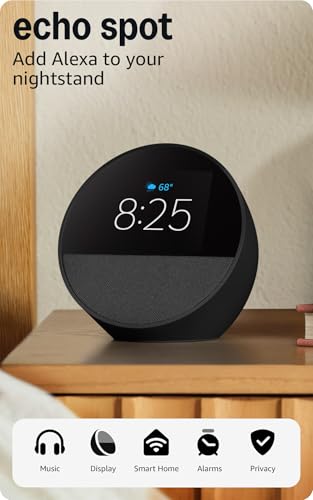
Walking into any tech store today, you'll find dozens of smart speakers promising to transform your home into a voice-controlled paradise. But Amazon's latest lineup presents an interesting dilemma: do you invest in premium audio quality with the Echo Studio, or embrace visual convenience with the new Echo Spot 2024?
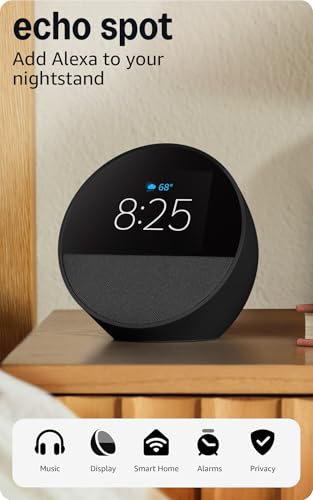
These aren't really competing products—they serve completely different purposes in Amazon's smart home ecosystem. The Echo Studio represents Amazon's flagship audio experience, a serious smart speaker designed for music lovers who want room-filling sound. Meanwhile, the Echo Spot 2024 is essentially a smart alarm clock with a touchscreen, prioritizing bedroom convenience and visual information over audio performance.
Understanding which device fits your needs requires looking beyond marketing hype to examine what each product actually delivers in real-world use. Let's dive into the technical details and performance characteristics that matter most to help you make the right choice.
Before comparing specific models, it's worth understanding what separates good smart speakers from great ones. Audio quality obviously tops the list—this includes speaker configuration (how many drivers and what sizes), power output (measured in watts), and sound processing capabilities like spatial audio (technology that creates a three-dimensional sound experience).
Smart home integration has become equally important. Modern smart speakers often function as hubs, meaning they can directly control other devices like lights and thermostats without requiring separate controllers. The user interface—whether you interact through voice commands only or have visual displays and touch controls—significantly impacts daily usability.
Form factor matters more than most people realize. A premium speaker needs dedicated space and works best as a room's primary audio source. A bedside device should be compact and offer quick, silent interactions for late-night use. Finally, value proposition varies dramatically—are you investing in audio equipment that happens to be smart, or buying convenience features with basic sound capabilities?
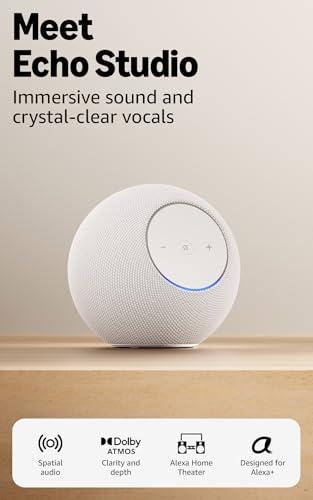
The most dramatic difference between these devices lies in their audio capabilities, and it's not even close. The Echo Studio, launched in 2019, was specifically designed to compete with premium speakers from companies like Sonos and Bose. Amazon equipped it with an impressive five-speaker array: one 1-inch tweeter for crisp highs, three 2-inch midrange drivers for vocals and instruments, and a substantial 5.25-inch woofer for deep bass response.
This multi-driver configuration produces 200 watts of total power—enough to fill large rooms with rich, detailed sound. More importantly, the Echo Studio includes sophisticated audio processing. Its automatic room adaptation technology continuously analyzes your space's acoustics using built-in microphones, then adjusts frequency response in real-time to optimize sound quality regardless of placement. This means it sounds great whether positioned near walls or in open spaces.
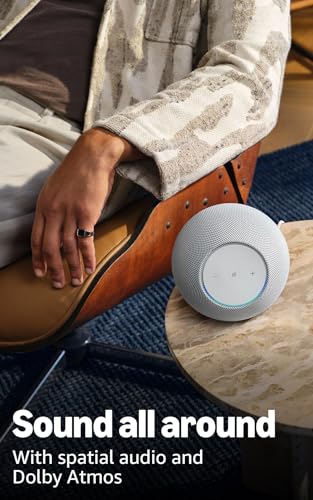
The spatial audio processing deserves special attention. The Echo Studio supports Dolby Atmos, a technology originally developed for movie theaters that creates three-dimensional soundscapes. When playing compatible music, you'll hear instruments positioned at different heights and distances, creating an immersive experience that makes familiar songs sound fresh and detailed. Sony's 360 Reality Audio and other spatial formats further enhance this effect.
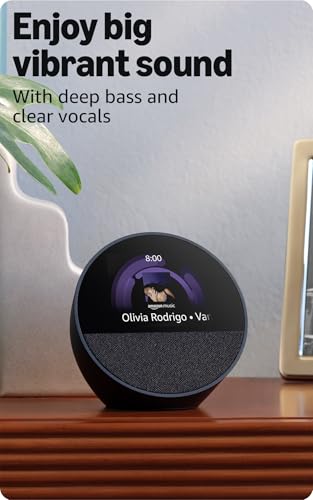
In contrast, the Echo Spot 2024 takes a completely different approach. Released in 2024 as a redesigned version of Amazon's original 2017 Echo Spot, it features a single 1.73-inch driver—adequate for an alarm clock but nowhere near room-filling audio quality. The directional design (flat front with sloped back) focuses sound toward the listener, which works fine for bedside use but doesn't create the wide soundstage that music lovers expect.
Our research into user reviews reveals consistent feedback: the Echo Studio delivers genuinely impressive audio quality that rivals dedicated speakers in its price range, while the Echo Spot 2024 produces sound that's functional but uninspiring. The Studio's bass response, in particular, receives praise for being both powerful and controlled—something rare in smart speakers.
For anyone serious about music quality, this comparison isn't close. The Echo Studio represents a legitimate audio investment, while the Echo Spot 2024 treats sound as a secondary feature.
Both devices excel at smart home integration but take distinctly different approaches. The Echo Studio includes a built-in Zigbee hub—essentially a wireless radio that can directly communicate with compatible smart home devices like Philips Hue lights, smart thermostats, and door locks. This eliminates the need for separate hub devices that typically cost $50-100, adding significant value to the Studio's overall package.
The Studio's superior microphone array (designed for cross-room voice recognition) makes it excellent for controlling devices throughout your home. You can reliably issue voice commands from across large rooms, and Alexa's responses come through crystal-clear speakers that are easy to understand even with background noise.
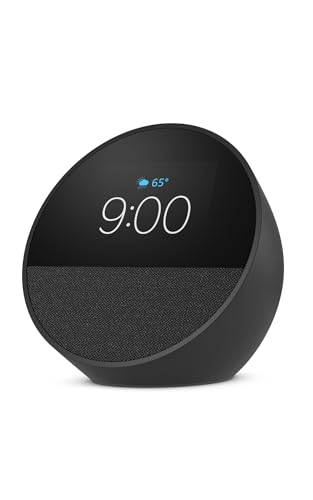
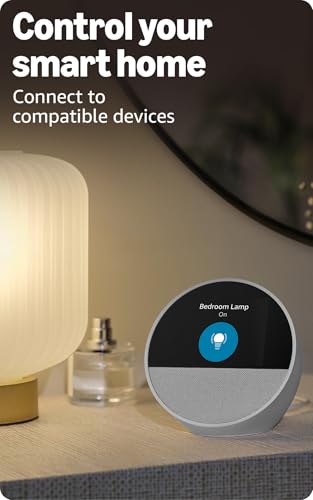
The Echo Spot 2024 takes a more visual approach to smart home control. Its 2.83-inch touchscreen displays colorful icons representing your connected devices, allowing you to adjust lights, check thermostats, or control music playback with simple taps. This visual interface proves particularly valuable for quick interactions—adjusting bedroom lights before sleep or checking the weather without speaking aloud.
The Spot's motion sensor adds an interesting automation capability. Using ultrasonic technology (sound waves beyond human hearing), it can detect when you enter or leave a room, triggering automated routines like turning lights on at bedtime or off when you leave for work. The sensitivity is adjustable through Amazon's app, preventing false triggers from pets or minor movements.
However, the Echo Spot 2024 lacks some features found in Amazon's other budget devices. There's no temperature sensor for advanced climate-based automations, and it can't function as an Eero mesh Wi-Fi extender—capabilities that even the less expensive Echo Dot includes.
For comprehensive smart home control, the Echo Studio wins thanks to its Zigbee hub and superior voice recognition. But for bedroom-specific automation and visual convenience, the Echo Spot 2024 offers unique advantages.
The interface differences between these devices reflect their intended usage scenarios. The Echo Studio relies entirely on voice commands and smartphone app control. This works well for music playback and general smart home management, where you typically issue commands from across the room. The Studio's high-quality speakers make Alexa's responses clear and easy to understand, reducing the need for visual feedback.
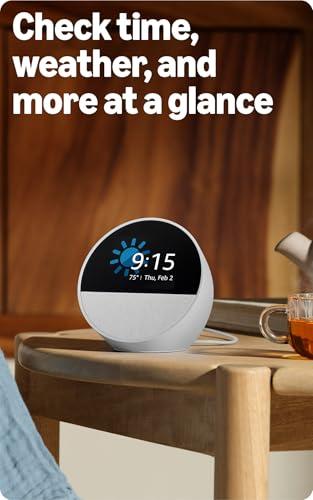
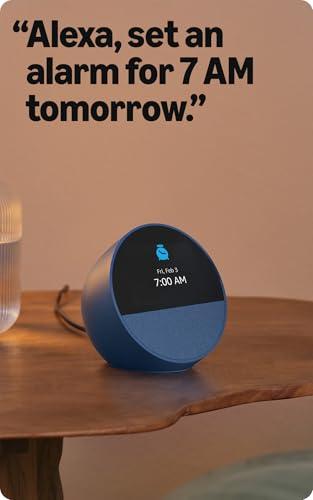
The Echo Spot 2024 offers a hybrid approach that proves surprisingly useful in practice. The always-on display shows customizable clock faces (six animated options with various color themes), current weather conditions, and album artwork during music playback. More importantly, basic controls become possible without voice commands—useful when you don't want to wake a sleeping partner or when ambient noise makes voice recognition difficult.
The tap-to-snooze feature exemplifies thoughtful bedside design. Rather than requiring voice commands or fumbling for small buttons, you can tap anywhere on the device's top surface to snooze alarms. This seemingly simple feature makes a real difference during groggily morning interactions.
Touch controls extend to smart home management, where tapping device icons feels more intuitive than remembering specific voice commands. Want to dim the bedroom lights? Tap the lighting icon and drag a slider. Check if the front door is locked? A quick glance at the security widget provides instant confirmation.
Neither approach is inherently superior—they're optimized for different use cases. The Echo Studio excels when voice control is convenient and audio feedback is sufficient. The Echo Spot 2024 shines when visual information adds value and silent interaction is preferred.
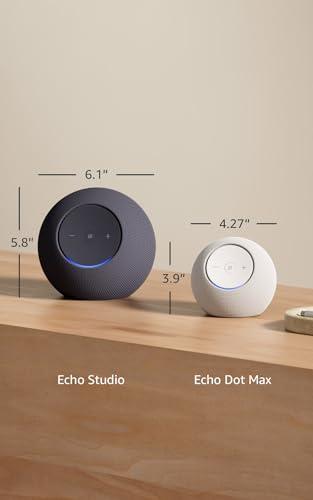
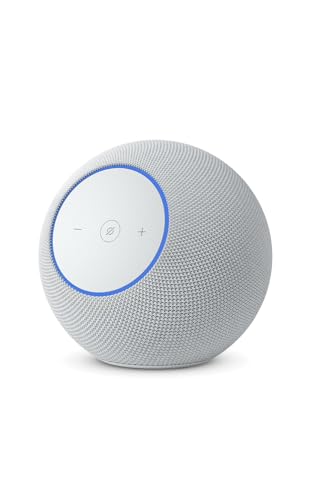
Physical design reveals each product's priorities clearly. The Echo Studio is substantial—8.1 inches tall, 6.9 inches in diameter, and weighing 7.7 pounds. This isn't a device you casually move around; it's designed for permanent placement where its premium audio capabilities can shine. The fabric covering and cylindrical shape look professional in living rooms or home offices, though the size demands dedicated surface space.
The 2024 version maintains the original's design language while incorporating internal improvements. Amazon's engineering team has refined the acoustic tuning and processing algorithms over five years of user feedback and software updates, resulting in more balanced sound and better spatial audio implementation.
The Echo Spot 2024 takes the opposite approach with its compact 4.4 x 4.5 x 4.1-inch footprint and sub-one-pound weight. The semi-spherical design looks intentionally different from Amazon's cylindrical Echo speakers, immediately signaling its distinct purpose. Available in black, white, and blue finishes, it's designed to complement bedroom décor rather than dominate it.
Amazon learned from the original 2017 Echo Spot's reception, removing the controversial camera (which raised privacy concerns for bedroom use) while improving the display quality and touch responsiveness. The result feels more refined and purpose-built for its intended role.
Both devices require constant power—there are no battery options. This makes sense given their home-focused design, though it limits placement flexibility compared to portable speakers.
Connectivity options reflect each device's target market. The Echo Studio offers comprehensive input options including 3.5mm analog input, mini-optical digital input, Bluetooth, Wi-Fi, and Zigbee wireless protocols. The USB port can accommodate an Ethernet adapter for users preferring wired network connections—useful for audiophiles who want to eliminate any potential wireless interference with high-resolution streaming.
This flexibility proves valuable for integrating the Studio into existing audio setups. You can connect turntables, CD players, or other source components directly, making it function as both a standalone smart speaker and part of a larger audio system.
The Echo Spot 2024 focuses entirely on wireless connectivity with Wi-Fi and Bluetooth support. There's no physical audio input, which makes sense given its alarm clock positioning. The Wi-Fi implementation supports both 2.4GHz and 5GHz bands for reliable streaming, while Bluetooth handles connections to phones and tablets for personal audio.
Both devices access the same streaming services—Amazon Music, Spotify, Apple Music, Pandora, and others. However, the Echo Studio supports higher-quality streams including Amazon Music HD's lossless formats and Ultra HD audio, while the Echo Spot 2024 is limited to standard compression formats.
At the time of writing, these devices occupy very different price tiers, reflecting their distinct purposes and target audiences. The Echo Studio commands a premium price that positions it against serious audio equipment—think high-end bookshelf speakers or premium soundbars. This pricing makes sense when you consider the sophisticated driver array, amplification, and processing capabilities, plus the included Zigbee hub functionality.
For music enthusiasts, the Studio's value proposition is compelling. You're getting audiophile-grade sound quality, advanced spatial audio processing, comprehensive smart home hub capabilities, and access to high-resolution streaming services. The built-in Zigbee hub alone saves the cost of a separate smart home controller, making the total package more attractive than its sticker price suggests.
The Echo Spot 2024 sits in budget-friendly territory, competing more with enhanced alarm clocks and basic smart displays than serious audio equipment. At this price point, you're paying primarily for the visual interface, compact design, and Alexa convenience—the audio capabilities are functional but basic.
This pricing strategy makes perfect sense for each product's intended role. The Studio justifies its premium cost through superior performance and features that audio enthusiasts value. The Spot delivers exactly what most people need in a bedside device without unnecessary cost for capabilities they won't use.
For home theater applications, the comparison becomes even more lopsided. The Echo Studio can integrate into serious entertainment setups through its multiple input options and high-quality audio processing. Its Dolby Atmos support makes it particularly interesting for movie watching, where the three-dimensional audio can enhance the viewing experience significantly.
Amazon designed the Studio to work with Fire TV devices for wireless home theater setups, eliminating the cable runs typically required for surround sound systems. While it won't match dedicated home theater speakers costing thousands of dollars, it provides a convenient upgrade path for casual movie watchers who want better audio than TV speakers offer.
The Echo Studio can also be paired with additional Echo devices to create multi-room audio systems or even stereo pairs for enhanced channel separation. This flexibility makes it a strong foundation for expanding your audio setup over time.
The Echo Spot 2024 simply isn't designed for home theater use. Its single small driver and bedroom-focused design make it unsuitable for movie watching or entertainment applications beyond basic background audio.
After evaluating both devices extensively, the choice comes down to understanding your primary needs and usage scenarios.
Choose the Echo Studio if you're a music lover who values audio quality above all else. This device makes sense for living rooms, home offices, or any space where you want impressive sound that can fill the room and engage listeners. The spatial audio capabilities genuinely enhance music listening, making familiar songs sound fresh and revealing details you might have missed before.
The Studio also wins if you're building a comprehensive smart home system. The built-in Zigbee hub eliminates the need for separate controllers, while the superior microphone array ensures reliable voice recognition throughout your space. For home theater enthusiasts on a budget, it provides a significant upgrade over TV speakers without the complexity of traditional surround sound systems.
The Echo Spot 2024 is perfect for bedroom use or any space where visual information adds value. If you want to see the time, weather, and notifications at a glance, or prefer touch controls over voice commands for certain interactions, the Spot delivers exactly what you need. The compact design and thoughtful features like tap-to-snooze make it an excellent alarm clock replacement that happens to include Alexa capabilities.
The Spot also makes sense if you already have good speakers elsewhere and simply want Alexa convenience with visual feedback. Its budget-friendly pricing means you can add smart assistant capabilities to bedrooms, offices, or secondary spaces without significant investment.
These products succeed because they don't try to be everything to everyone. The Echo Studio is uncompromisingly designed for audio quality and smart home control, while the Echo Spot 2024 prioritizes convenience and visual interface in a compact, bedroom-friendly package.
Neither device is objectively better—they excel in their intended roles while making reasonable compromises elsewhere. The Studio's premium pricing reflects genuine audio engineering and smart home capabilities that justify the investment for the right user. The Spot's budget positioning delivers targeted functionality without unnecessary features that would inflate the cost.
Your choice should align with your primary use case: premium audio and comprehensive smart home control (Studio) or visual convenience and bedroom functionality (Spot). Both represent solid engineering focused on specific user needs rather than attempting to appeal to everyone with mediocre compromises.
In Amazon's expanding Echo ecosystem, having products this specialized actually benefits consumers by offering clear choices based on actual needs rather than forcing everyone into one-size-fits-all solutions that satisfy nobody completely.
| Amazon Echo Studio Smart Speaker | Amazon Echo Spot 2024 Smart Alarm Clock |
|---|---|
| Audio Hardware - Critical for sound quality and room-filling capability | |
| 5-speaker array: 1" tweeter, three 2" midrange, 5.25" woofer (200W total) | Single 1.73" mono speaker (low wattage) |
| Display - Determines visual interaction capabilities | |
| No display (voice-only control) | 2.83" touchscreen (320x240 resolution) with customizable clock faces |
| Smart Home Hub - Eliminates need for separate controllers | |
| Built-in Zigbee hub for direct device control | No hub functionality (relies on Wi-Fi/Bluetooth only) |
| Audio Processing - Enhances listening experience beyond basic playback | |
| Dolby Atmos, spatial audio, automatic room adaptation | Basic mono audio processing |
| Physical Size - Impacts placement flexibility and room integration | |
| Large: 8.1" H x 6.9" W, 7.7 lbs (requires dedicated space) | Compact: 4.4" H x 4.5" W, 0.89 lbs (bedside-friendly) |
| Connectivity Options - Determines compatibility with existing equipment | |
| 3.5mm AUX, optical input, USB, Bluetooth, Wi-Fi, Zigbee | Wi-Fi, Bluetooth only (no physical inputs) |
| High-Resolution Audio - Important for music enthusiasts | |
| Supports lossless formats, Amazon Music HD, 360 Reality Audio | Standard compressed audio only |
| Motion Detection - Enables hands-free automation | |
| None | Ultrasonic motion sensor for occupancy-based routines |
| Multi-Room Audio - Expands system capabilities over time | |
| Full support for stereo pairing and multi-room setups | Basic multi-room audio support |
| Voice Recognition Range - Affects usability across room sizes | |
| Advanced far-field microphones for large rooms | 2-microphone array optimized for bedside use |
| Touch Controls - Reduces reliance on voice commands | |
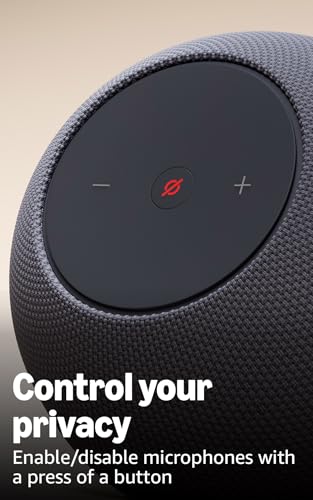
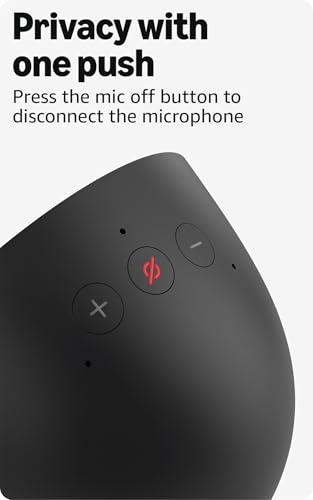
| Physical volume/mute buttons only | Full touchscreen interface plus tap-to-snooze |
| Release Year - Indicates product maturity and refinement | |
| 2019 (5+ years of software updates and improvements) | 2024 (latest design, no camera for privacy) |
The Amazon Echo Studio delivers significantly better sound quality with its 5-speaker array producing 200 watts of power, compared to the Amazon Echo Spot 2024's single small speaker. The Studio features advanced audio processing including Dolby Atmos and spatial audio, making it ideal for serious music listening, while the Spot is designed primarily as an alarm clock with basic audio capabilities.
The Amazon Echo Studio works well for home theater applications with its Dolby Atmos support, multiple audio inputs, and ability to pair with Fire TV devices wirelessly. The Amazon Echo Spot 2024 is not suitable for home theater use due to its small single speaker and bedroom-focused design.
The Amazon Echo Spot 2024 is specifically designed for bedrooms with its compact size, touchscreen display showing time and weather, tap-to-snooze functionality, and silent touch controls that won't wake sleeping partners. The Amazon Echo Studio is too large and audio-focused for typical bedside use.
The Amazon Echo Studio includes a built-in Zigbee hub that can directly control compatible smart home devices without additional equipment. The Amazon Echo Spot 2024 lacks hub functionality but offers visual smart home controls through its touchscreen interface.
Value depends on your needs: the Amazon Echo Studio provides premium audio quality and smart home hub capabilities that justify its higher price for music lovers and smart home enthusiasts. The Amazon Echo Spot 2024 offers excellent value as a smart alarm clock replacement with visual convenience features at a budget-friendly price point.
The Amazon Echo Studio offers multiple connection options including 3.5mm AUX input, optical input, and Bluetooth for connecting turntables, CD players, or other audio sources. The Amazon Echo Spot 2024 only supports wireless connections via Bluetooth and Wi-Fi streaming.
Only the Amazon Echo Spot 2024 features a display—a 2.83-inch touchscreen that shows customizable clock faces, weather, album artwork, and smart home controls. The Amazon Echo Studio has no display and relies entirely on voice commands and app control.
The Amazon Echo Studio excels at multi-room audio with full support for stereo pairing and synchronized playback across multiple rooms. The Amazon Echo Spot 2024 supports basic multi-room features but is primarily designed for single-room bedroom use.
The Amazon Echo Studio features superior far-field microphones designed for voice recognition across large spaces, making it ideal for living rooms and open areas. The Amazon Echo Spot 2024 has a simpler 2-microphone array optimized for close-range bedside interactions.
The Amazon Echo Studio supports high-resolution audio including lossless formats, Amazon Music HD, and spatial audio technologies like Sony's 360 Reality Audio. The Amazon Echo Spot 2024 is limited to standard compressed audio formats suitable for casual listening.
The Amazon Echo Spot 2024 provides unique convenience features like always-visible time and weather displays, tap-to-snooze alarms, touch controls for silent operation, and motion sensors for automated routines. The Amazon Echo Studio focuses on audio performance and comprehensive smart home control rather than convenience features.
The fundamental difference is purpose: the Amazon Echo Studio is a premium smart speaker designed for serious audio listening and comprehensive smart home control, while the Amazon Echo Spot 2024 is a smart alarm clock with visual display features optimized for bedroom and bedside use. Choose the Echo Studio for superior sound quality and the Echo Spot for visual convenience and bedroom functionality.
We've done our best to create useful and informative comparisons to help you decide what product to buy. Our research uses advanced automated methods to create this comparison and perfection is not possible - please contact us for corrections or questions. These are the sites we've researched in the creation of this article: whathifi.com - crutchfield.com - rtings.com - dxomark.com - youtube.com - dimensions.com - youtube.com - bestbuy.com - techradar.com - dolby.com - consumerreports.org - engadget.com - phonearena.com - aboutamazon.com - askalexa.com - bestbuy.com - tomsguide.com - nextpit.com - versus.com - techradar.com - versus.com - youtube.com - youtube.com - manuals.plus - techgadgetscanada.com - bestbuy.com - youtube.com - homedepot.com - homedepot.com - youtube.com - soundguys.com - youtube.com

Privacy Policy
Terms and Conditions - Affiliate Policy
Home Security
© Copyright 2008-2026.
11816 Inwood Rd #1211, Dallas, TX 75244