

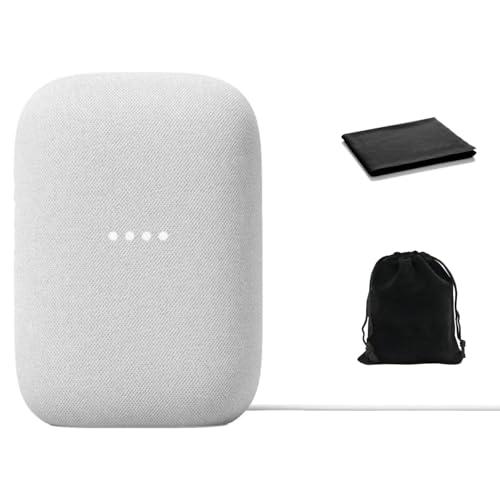
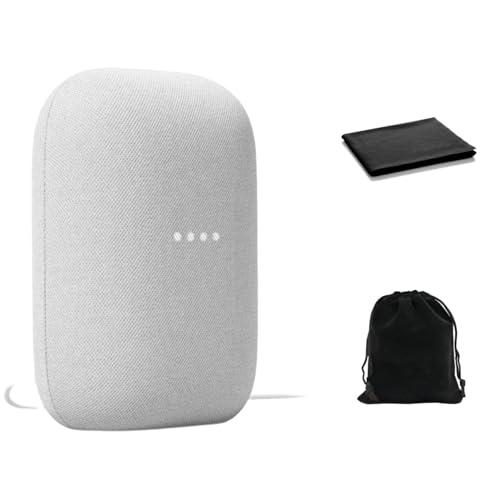
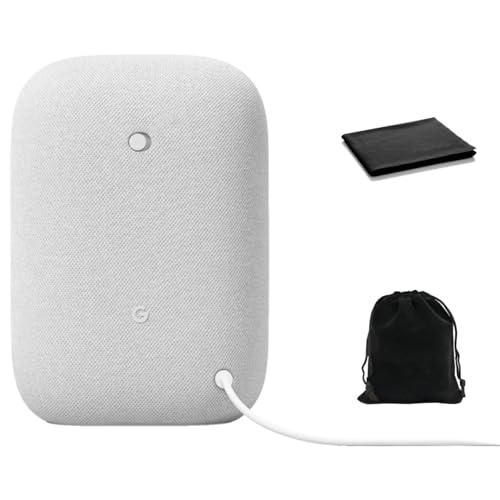
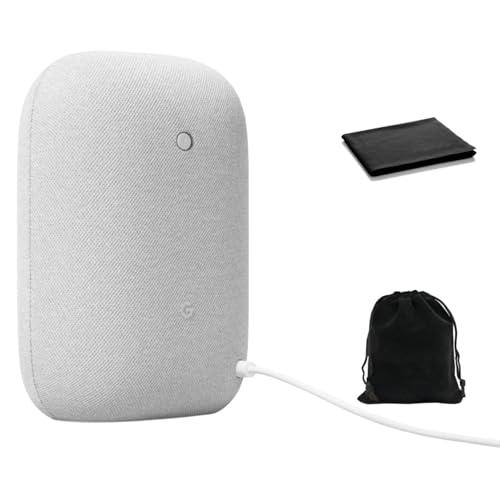



Smart speakers have become the central nervous system of modern homes, controlling everything from your morning playlist to your smart thermostat. But with dozens of options on the market, choosing between mid-range and premium models can be tricky. Today, we're diving deep into two popular choices: the Google Nest Audio and the Amazon Echo Studio.
These speakers represent fundamentally different philosophies. The Nest Audio, launched in 2020, focuses on delivering excellent value with balanced performance across all use cases. Meanwhile, the Echo Studio, introduced in 2019 and recently updated in 2024, targets audiophiles who want premium sound quality and don't mind paying extra for it.
Before we compare these specific models, it's worth understanding what makes smart speakers different from regular Bluetooth speakers. Smart speakers combine three key technologies: voice assistants (like Google Assistant or Alexa), wireless streaming capabilities, and smart home control hubs. This combination means they're always listening for wake words, can answer questions, control other devices, and stream music directly from the internet without needing your phone.
The most important considerations when choosing a smart speaker are sound quality (how good music actually sounds), voice assistant performance (how well it understands and responds to commands), smart home integration (what devices it can control), and overall value for money.
The Amazon Echo Studio doesn't mess around when it comes to audio hardware. Its five-speaker configuration includes a hefty 5.25-inch downward-firing woofer (the speaker that handles bass), three 2-inch midrange drivers (handling vocals and instruments), and a 1-inch tweeter (for crisp high frequencies). This setup allows the speaker to produce what's called "full-range audio," meaning it can handle deep bass notes and sparkly highs with equal competence.
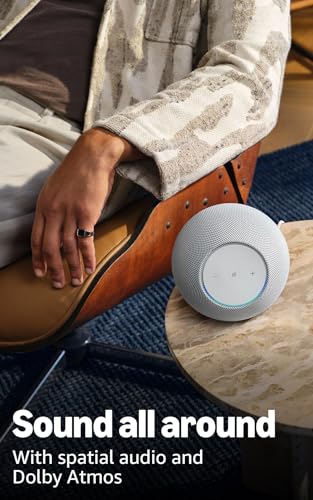
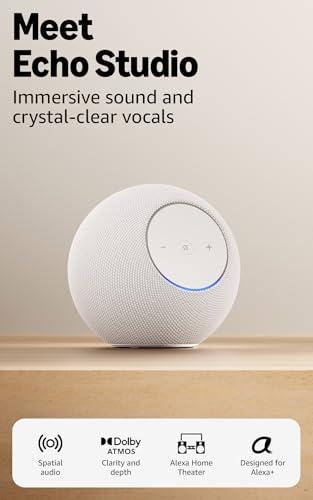
What really sets the Echo Studio apart is its support for spatial audio formats like Dolby Atmos. Think of Dolby Atmos as surround sound for music – instead of sound coming directly at you, it creates a three-dimensional soundscape where you can hear instruments positioned around the room. When listening to properly mixed tracks, drums might feel like they're behind you while vocals float in front, creating an almost concert-like experience.
The speaker can pump out sound at up to 91.1 dB SPL (Sound Pressure Level – basically how loud it gets) without significant distortion. To put that in perspective, that's loud enough for a decent-sized house party. More importantly, it maintains audio clarity even at high volumes, which cheaper speakers often struggle with.
One particularly clever feature is automatic room adaptation. The Echo Studio uses its microphones to analyze your room's acoustics – things like ceiling height, wall materials, and furniture placement – then adjusts its audio output accordingly. A speaker near a wall might boost certain frequencies to compensate for bass buildup, while one in an open room might emphasize different ranges.
The Google Nest Audio, while more modest in its hardware approach, still delivers impressive performance for its size and price point. Its 75mm woofer and 19mm tweeter work together to create what Google claims is 75% louder output with 50% stronger bass compared to the original Google Home from 2016.
Where the Nest Audio really shines is in vocal clarity and midrange reproduction. This makes it particularly well-suited for podcasts, audiobooks, and vocal-heavy music. The speaker uses real-time audio processing to adapt its sound profile based on what you're listening to – a feature called Media EQ. Classical music gets different treatment than hip-hop, ensuring optimal clarity for each content type.
The Nest Audio also includes Ambient IQ, which automatically adjusts volume based on background noise in your room. If your dishwasher starts running during a podcast, the speaker gradually increases volume to maintain audibility without jarring volume jumps.
Based on extensive research into professional reviews and user feedback, the Echo Studio clearly wins on pure audio performance. It produces noticeably deeper bass, cleaner highs, and can fill larger rooms with ease. The Nest Audio, while competent, shows its limitations at higher volumes where the sound can become somewhat thin or "tinny."
However, the performance gap matters less than you might expect for typical use cases. If you're primarily listening to music while cooking, working, or doing other activities, the Nest Audio provides perfectly adequate sound quality. The Echo Studio's advantages become most apparent during dedicated listening sessions or when entertaining guests.
The Google Nest Audio runs Google Assistant, which has evolved significantly since its 2016 debut. What sets Google Assistant apart is its conversational abilities and contextual understanding. You can ask follow-up questions without repeating the wake phrase, and it remembers previous parts of your conversation.
For example, you might say "Hey Google, what's the weather today?" followed by "What about tomorrow?" or "Will I need an umbrella?" Google Assistant understands these follow-ups refer to weather without needing clarification.
Voice Match technology allows the Nest Audio to recognize up to six different household members' voices, providing personalized responses. When you ask about "my calendar," it knows which Google account to check. This personalization extends to music preferences, commute times, and reminders.
Google Assistant also excels at general knowledge questions and web searches, leveraging Google's massive search index. Ask about historical events, cooking conversions, or random trivia, and you'll usually get accurate, detailed responses.
The Echo Studio runs Amazon's Alexa, which takes a different approach focused on "skills" – essentially apps that add functionality. With over 100,000 skills available, Alexa can do everything from ordering pizza to playing interactive games. This ecosystem approach means third-party developers can extend Alexa's capabilities far beyond what Amazon built initially.
Where Alexa particularly shines is smart home control. Its commands tend to be more standardized and reliable for device control. "Turn off the lights" or "Set the thermostat to 72 degrees" work consistently across different smart home brands and setups.
Alexa's weakness lies in conversational flow and general knowledge. It's more transactional – you give a command, it executes, then the interaction ends. Follow-up questions often require repeating the wake word, making conversations feel less natural.
For general use, daily questions, and natural conversation, Google Assistant on the Nest Audio provides a superior experience. For smart home control and accessing third-party services, Alexa on the Echo Studio has broader capabilities and better ecosystem support.
The Amazon Echo Studio includes a significant advantage that often gets overlooked: a built-in Zigbee hub. Zigbee is a wireless communication protocol that many smart home devices use – think of it as a specialized Wi-Fi network designed for low-power devices like smart bulbs, sensors, and locks.
Having this hub built-in means you can connect Zigbee devices directly to your Echo Studio without purchasing separate hubs. This is particularly valuable for popular devices like Philips Hue bulbs, which normally require their own bridge. The integration is seamless – devices connect automatically, and the hub reduces network congestion by keeping smart home traffic off your main Wi-Fi network.
The Google Nest Audio lacks a built-in hub but compensates with tight integration into Google's ecosystem. If you use Android phones, Chromecasts, Nest thermostats, or other Google products, the experience feels more unified. You can cast music from your phone, control Nest cameras, and manage Google Calendar events seamlessly.
The Nest Audio also supports the Matter standard – a new protocol designed to work across different smart home ecosystems. While Matter adoption is still growing, this future-proofs your speaker for broader device compatibility.
For dedicated smart home enthusiasts with many devices, the Echo Studio's built-in Zigbee hub provides tangible value and convenience. For users primarily invested in Google's ecosystem or those just starting with smart home devices, the Nest Audio offers adequate control capabilities with better overall integration.
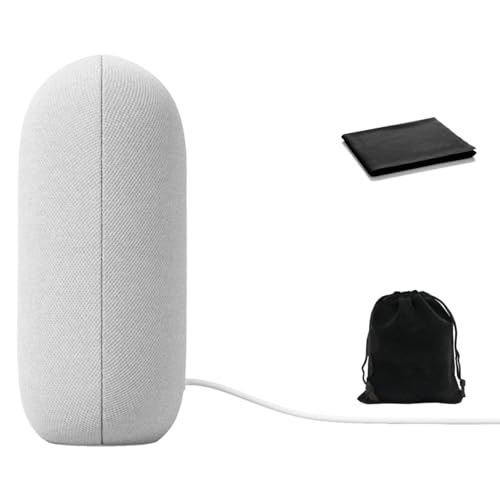
The Google Nest Audio embraces minimalist design philosophy with its pill-shaped form factor covered in fabric made from 70% recycled plastic. At 6.89 inches tall and weighing 2.65 pounds, it blends unobtrusively into most home environments. The design prioritizes subtlety over making a statement.
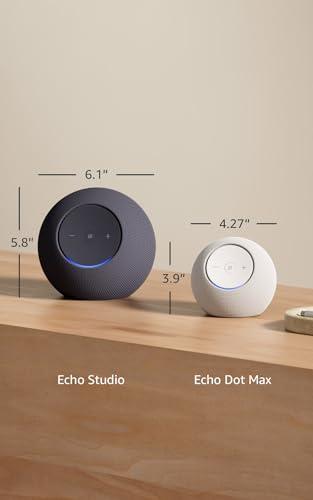
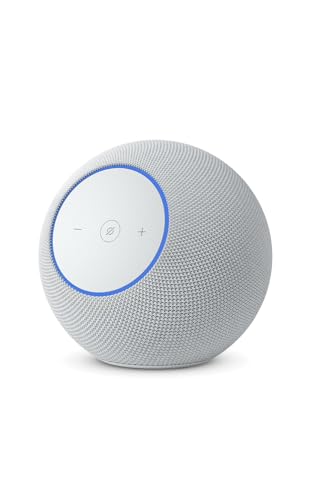
The Amazon Echo Studio takes a more traditional speaker approach with its cylindrical design. At 8.1 inches tall and 7.7 pounds, it's significantly larger and heavier, clearly communicating its premium audio focus. The fabric covering and build quality feel substantial, justifying its positioning as a premium product.
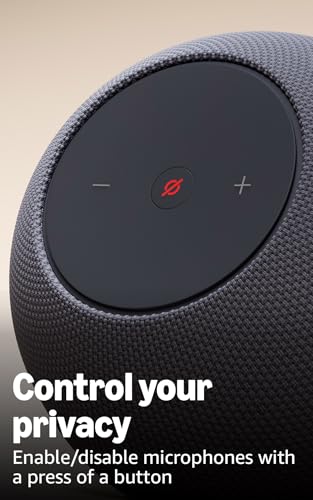
Both speakers include physical privacy controls – essential features given they're always listening. The Nest Audio has a two-stage hardware mute switch that physically disconnects the microphones, while the Echo Studio includes a dedicated mute button with clear visual feedback.
The Amazon Echo Studio includes both 3.5mm auxiliary and optical (Toslink) inputs, allowing connection to turntables, CD players, or TVs. This flexibility makes it suitable as a home theater speaker or for playing music from non-streaming sources.
The Google Nest Audio lacks any wired inputs, relying entirely on wireless connectivity through Wi-Fi, Bluetooth, and Chromecast built-in. While this limits flexibility, it maintains the speaker's minimalist aesthetic and keeps costs down.
Here's where technical specifications really matter. The Echo Studio supports high-resolution audio up to 24-bit/192kHz – essentially CD-quality and beyond. It also handles lossless formats like FLAC and spatial audio formats including Dolby Atmos and Sony 360 Reality Audio.
The Nest Audio focuses on the most common formats and streaming services rather than audiophile-grade specifications. For services like Spotify, YouTube Music, and most podcast apps, this approach works perfectly well.
At the time of writing, the Google Nest Audio typically costs roughly half what you'd pay for the Amazon Echo Studio. This price difference fundamentally shapes each product's value proposition.
The Nest Audio delivers about 80% of typical smart speaker functionality at 50% of the premium price. Unless you specifically need the Echo Studio's superior audio performance or built-in Zigbee hub, the Nest Audio represents excellent value for money.
However, the Echo Studio justifies its premium pricing for the right users. If you regularly listen to music as a primary activity (rather than background), frequently entertain guests, or have invested heavily in Zigbee smart home devices, the additional cost becomes worthwhile.
The Amazon Echo Studio works exceptionally well as a home theater speaker, particularly when paired with Fire TV devices. Its spatial audio support and powerful drivers create an immersive movie-watching experience that rivals dedicated soundbars in the same price range. The optical input also allows connection to any TV or streaming device.
Multiple Echo Studios can be configured for true stereo separation or even surround sound setups, though costs escalate quickly with multiple units.
The Google Nest Audio, while capable of TV audio through Chromecast, isn't really designed for home theater use. Its audio profile and power output work better for casual viewing than cinematic experiences.
You're deeply integrated into Google's ecosystem with Android phones, Google services, and Chromecast devices. The seamless integration creates a cohesive smart home experience that feels natural and intuitive.
Your primary use cases include podcasts, audiobooks, casual music listening, and voice commands for information and smart home control. The Nest Audio excels at these everyday tasks.
Budget is a significant consideration, and you want excellent overall performance without premium pricing. The Nest Audio delivers remarkable capability for its cost.
You prefer understated design that blends into your home décor rather than making a statement. Its minimalist aesthetic works in virtually any environment.
Audio quality is a top priority, and you regularly listen to music as a focused activity rather than just background sound. The superior drivers and spatial audio support create genuinely impressive listening experiences.
You have extensive smart home setups with Zigbee devices or plan to expand significantly. The built-in hub eliminates complexity and additional hardware requirements.
You want a speaker that can serve double duty for home theater use, either standalone or as part of a multi-speaker setup. The power output and connectivity options make this feasible.
You're willing to pay premium pricing for premium features and don't mind the larger footprint that comes with serious audio hardware.
Both speakers succeed at their intended purposes, but they target different user types and budgets. The Google Nest Audio represents the sweet spot for most users – offering excellent voice assistant performance, adequate audio quality, and outstanding value. It's the safer choice for first-time smart speaker buyers or those upgrading from older models.
The Amazon Echo Studio serves users with specific needs: superior audio quality, comprehensive smart home control, or home theater applications. Its premium pricing is justified by genuinely premium features, but only if you'll actually use those capabilities.
Consider your primary use cases honestly. If you find yourself saying "I just want something that sounds good and works reliably," the Nest Audio will exceed your expectations while saving money. If you're thinking "I want the best possible music experience and comprehensive smart home control," the Echo Studio delivers on those priorities.
The smart speaker market continues evolving rapidly, with both Google and Amazon regularly updating their software and introducing new features. Whichever option you choose, you're getting a mature, well-supported product that will continue improving through regular updates. The key is matching your specific needs and budget to the right speaker's strengths.
| Google Nest Audio | Amazon Echo Studio |
|---|---|
| Audio Hardware - Determines sound quality and room-filling capability | |
| 75mm woofer + 19mm tweeter (2 drivers total) | 5.25" woofer + 3x 2" midrange + 1" tweeter (5 drivers total) |
| Maximum Volume - How loud it gets for parties or large rooms | |
| Moderate volume, becomes tinny at maximum | 91.1 dB SPL with minimal distortion |
| Spatial Audio Support - Creates immersive, surround-sound-like experience | |
| Standard stereo only | Dolby Atmos, Sony 360 Reality Audio, 3D spatial processing |
| Voice Assistant - Daily interaction quality and capabilities | |
| Google Assistant (conversational, excellent for follow-ups) | Alexa (transactional, vast skill ecosystem) |
| Smart Home Hub - Eliminates need for separate device bridges | |
| No built-in hub (requires separate bridges for many devices) | Built-in Zigbee hub (connects devices directly) |
| Wired Connectivity - Flexibility for turntables, TVs, other sources | |
| Wi-Fi and Bluetooth only | 3.5mm aux + optical input + wireless options |
| High-Resolution Audio - Better quality for audiophile music services | |
| Standard streaming formats only | Up to 24-bit/192kHz, FLAC, lossless formats |
| Room Adaptation - Automatically optimizes sound for your space | |
| Media EQ (content-based) + Ambient IQ (noise adjustment) | Automatic acoustic room analysis with real-time tuning |
| Multi-Room Audio - Sync music throughout your home | |
| Works with other Google speakers and Chromecasts | Pairs with other Echo devices, supports stereo pairing |
| Privacy Controls - Physical microphone shutdown capability | |
| 2-stage hardware mute switch | Dedicated mute button with LED indicator |
| Design Footprint - Space requirements and visual impact | |
| Compact: 6.89" tall, 2.65 lbs, minimalist fabric design | Substantial: 8.1" tall, 7.7 lbs, premium speaker aesthetic |
| Ecosystem Integration - Works best with which devices/services | |
| Google services, Android, Chromecast, Nest devices | Amazon services, Fire TV, extensive third-party skills |
| Home Theater Use - Suitability as TV/movie speaker | |
| Limited (Chromecast audio only) | Excellent (optical input, spatial audio, powerful drivers) |
| Value Positioning - What you're paying for | |
| Best overall value with balanced everyday performance | Premium audio quality and comprehensive smart home control |
The Amazon Echo Studio delivers significantly better sound quality with its five-speaker array, including a 5.25-inch woofer and support for spatial audio formats like Dolby Atmos. The Google Nest Audio offers good sound for its size but is better suited for podcasts and casual listening rather than serious music playback.
Google Assistant on the Google Nest Audio excels at conversational interactions, follow-up questions, and general knowledge queries. Alexa on the Amazon Echo Studio is more transactional but offers a vast ecosystem of third-party skills and superior smart home device control capabilities.
The Amazon Echo Studio has a significant advantage with its built-in Zigbee hub, allowing direct connection to smart home devices without additional bridges. The Google Nest Audio lacks this hub but integrates seamlessly with Google's ecosystem and Nest devices.
The Amazon Echo Studio works excellently as a home theater speaker with its optical input, powerful drivers, and spatial audio support. It can connect directly to TVs and creates an immersive movie experience. The Google Nest Audio is limited to Chromecast audio and isn't designed for home theater use.
The Google Nest Audio provides exceptional value, delivering about 80% of smart speaker functionality at roughly half the cost. The Amazon Echo Studio justifies its premium pricing with superior audio quality and advanced features, but only if you'll use those capabilities.
The Amazon Echo Studio supports high-resolution audio up to 24-bit/192kHz and lossless formats like FLAC. The Google Nest Audio focuses on standard streaming formats and doesn't support hi-res audio, which is adequate for most music services.
The Amazon Echo Studio can reach 91.1 dB SPL with minimal distortion, making it suitable for parties and large rooms. The Google Nest Audio has moderate volume output but tends to sound tinny at maximum volume levels.
Both speakers support multi-room audio within their respective ecosystems. The Google Nest Audio works with other Google speakers and Chromecasts, while the Amazon Echo Studio pairs with other Echo devices and supports stereo pairing for enhanced sound.
The Amazon Echo Studio offers more connectivity with Wi-Fi, Bluetooth, 3.5mm auxiliary, and optical inputs for connecting various audio sources. The Google Nest Audio relies entirely on wireless connectivity through Wi-Fi, Bluetooth, and Chromecast built-in.
Both speakers include physical privacy controls. The Google Nest Audio features a two-stage hardware mute switch that physically disconnects microphones, while the Amazon Echo Studio has a dedicated mute button with clear LED indicators.
The Google Nest Audio excels at podcast listening with its clear vocal reproduction, Ambient IQ feature that adjusts volume based on background noise, and Google Assistant's superior conversational abilities for controlling playback and finding new content.
Choose the Google Nest Audio if you want excellent overall value, are integrated into Google's ecosystem, and primarily use your speaker for podcasts, casual music, and voice commands. Choose the Amazon Echo Studio if audio quality is your top priority, you need comprehensive smart home control, or want a speaker that doubles as a home theater solution.
We've done our best to create useful and informative comparisons to help you decide what product to buy. Our research uses advanced automated methods to create this comparison and perfection is not possible - please contact us for corrections or questions. These are the sites we've researched in the creation of this article: rtings.com - soundguys.com - bestbuy.com - androidcentral.com - whathifi.com - rtings.com - thenextweb.com - youtube.com - audiosciencereview.com - youtube.com - sypnotix.com - rtings.com - audioholics.com - youtube.com - store.google.com - store.google.com - youtube.com - support.google.com - cdn.adiglobaldistribution.us - dxomark.com - store.google.com - crutchfield.com - soundguys.com - soundguys.com - support.google.com - store.google.com - bestbuy.com - en.wikipedia.org - store.google.com - youtube.com - whathifi.com - crutchfield.com - rtings.com - dxomark.com - youtube.com - dimensions.com - youtube.com - bestbuy.com - techradar.com - dolby.com - consumerreports.org - engadget.com - phonearena.com - aboutamazon.com - askalexa.com

Privacy Policy
Terms and Conditions - Affiliate Policy
Home Security
© Copyright 2008-2026.
11816 Inwood Rd #1211, Dallas, TX 75244