






Amazon's smart home lineup got a major refresh in 2025, and two devices stand out as the company's premium offerings: the Echo Studio and the Echo Show 11. Both launched in late 2025 at similar price points, but they represent completely different philosophies for how we should interact with our smart homes. One prioritizes incredible sound quality above all else, while the other combines a stunning visual display with solid audio performance.
The choice between these devices isn't just about features—it's about deciding how you want technology to fit into your daily life. Do you prefer the invisible, voice-only experience that lets you control everything while keeping your hands and eyes free? Or do you want a visual command center that can display information, stream videos, and serve as your family's digital hub?
Before diving into the specifics, it's worth understanding what these devices actually do. Both the Echo Studio and Echo Show 11 serve as smart home hubs—central control points that connect and manage all your other smart devices like lights, thermostats, and security cameras. They use protocols like Zigbee (a wireless standard for smart home devices) and Matter (a new universal standard that helps different brands work together) to communicate with your gadgets.
The fundamental difference lies in how they present information back to you. The Echo Studio takes an "audio-first" approach, delivering everything through voice responses and high-quality sound. The Echo Show 11 uses a "visual-first" philosophy, showing you information on a large touchscreen while still supporting voice commands.
Both approaches have merit, but they create very different user experiences. Audio-first devices excel at ambient, hands-free control—you can adjust your lights while cooking dinner without even looking up. Visual-first devices provide information density that spoken responses simply can't match—comparing weather forecasts or viewing multiple security camera feeds simultaneously.
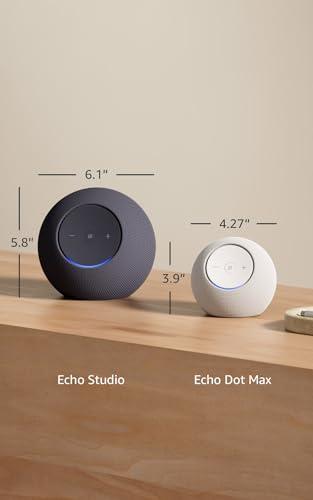
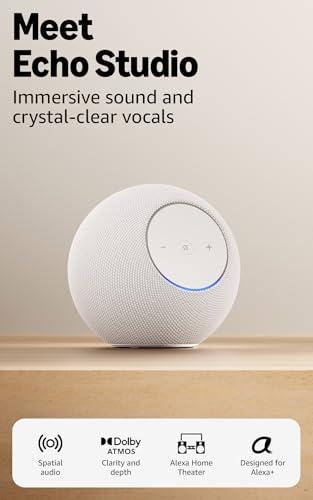
The Echo Studio represents Amazon's commitment to serious audio quality. Released in 2025 as a complete redesign of the original 2019 model, it's 40% smaller than its predecessor while maintaining the same powerful sound system. This isn't just a smart speaker that happens to sound decent—it's a legitimate hi-fi audio device that also controls your smart home.
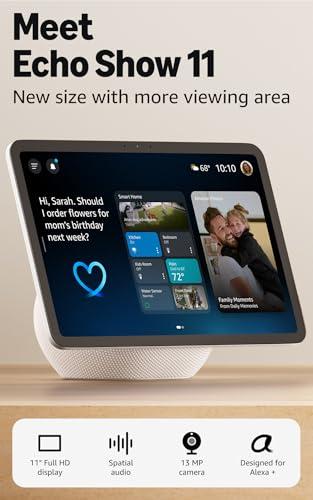
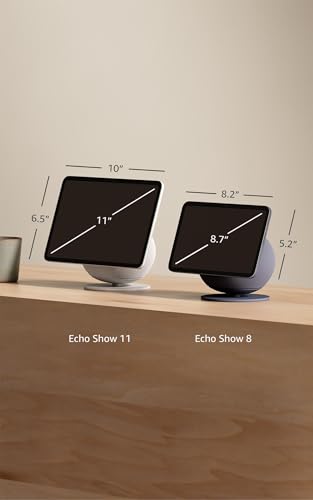
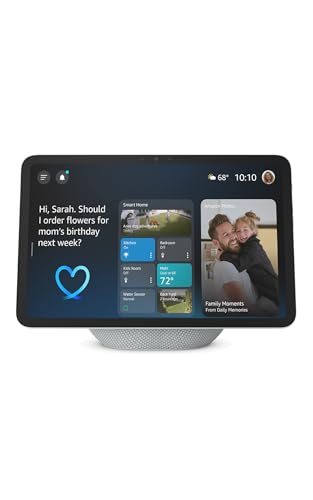
The Echo Show 11, also launching in 2025, marks Amazon's most ambitious smart display yet. With its floating 11-inch screen and modern design, it's a dramatic departure from the bulky, plasticky Echo Shows of previous generations. This device is purpose-built for Amazon's new Alexa+ AI system, which uses advanced sensors and machine learning to provide more natural, contextual interactions.
At the time of writing, both devices sit in Amazon's premium tier with similar pricing, making the decision between them particularly interesting. You're not choosing between a budget and premium option—you're choosing between two different premium experiences.
This is where the Echo Studio absolutely dominates. Amazon didn't just put better speakers in a smart device—they built a legitimate audiophile-grade sound system that happens to include smart features. The five-speaker array includes a 5.25-inch high-excursion woofer (a specialized speaker designed to move a lot of air for deep bass), three 2-inch midrange drivers positioned for optimal sound distribution, and a 1-inch tweeter for crystal-clear high frequencies.
What makes this setup special is the spatial audio processing. The Echo Studio supports Dolby Atmos, which creates three-dimensional sound that seems to come from above, beside, and around you rather than just from the speaker itself. When you're listening to a properly mixed track, you might hear rain falling from overhead or a guitar solo that appears to float in space beside the device. This isn't just marketing fluff—it's a genuinely immersive experience that rivals sound systems costing much more.
The automatic room adaptation feature deserves special mention. Using microphones and advanced processing, the Echo Studio listens to how sound bounces around your specific room and adjusts its output accordingly. Place it near a wall, and it compensates for bass buildup. Put it in the center of a large room, and it adjusts for the extra space. This kind of intelligent tuning was previously found only in much more expensive audio equipment.
Based on our research into professional reviews and user feedback, the Echo Studio can reach impressive volume levels (up to 91.1 dB) with minimal distortion, making it suitable for parties or large rooms. The bass response is particularly strong, though some reviews note it can occasionally be overpowering for certain music genres. The frequency response is generally neutral and balanced, with app-based controls letting you adjust bass and treble to taste.
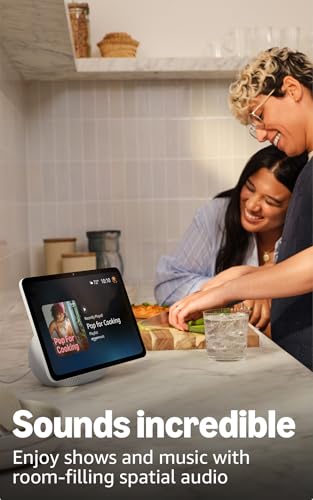
The Echo Show 11 takes a different approach to audio. Its stereo system includes front-facing drivers and a 2.8-inch woofer housed in the base unit. This configuration prioritizes clarity for video content and voice calls rather than pure musical enjoyment. The forward-firing design means audio is directed toward wherever you're sitting, which works well for watching Prime Video or making video calls but doesn't fill a room the way the Echo Studio does.
For casual listening—background music while cooking or podcasts during morning routines—the Echo Show 11 performs admirably. But if music quality matters to you, the difference between these devices is substantial. The Echo Studio delivers the kind of sound that makes you rediscover details in familiar songs, while the Echo Show 11 provides perfectly acceptable audio that serves its visual content well.
Both devices excel at smart home control, but they do it in fundamentally different ways. The Echo Studio includes a built-in Zigbee hub, meaning it can directly connect to compatible smart devices without requiring separate hubs from other manufacturers. This simplifies setup and reduces the number of devices cluttering your network.
The voice-first approach of the Echo Studio shines in everyday use. You can adjust lights, change thermostats, or lock doors without stopping what you're doing. This hands-free operation becomes second nature quickly—you'll find yourself controlling your home while carrying groceries, washing dishes, or lying in bed with the lights off.
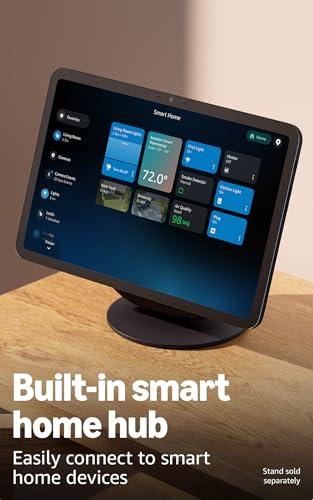
The Echo Show 11 takes smart home control to another level with its visual interface. It supports Zigbee, Matter, and Thread (including functioning as a Thread Border Router, which helps extend your smart home network's range). The visual dashboard shows the status of all connected devices at a glance, making it easy to see which lights are on, what temperature your thermostat is set to, or whether doors are locked.
This visual approach particularly shines for security systems. Rather than asking Alexa to describe what each camera sees, you can view multiple camera feeds simultaneously on the large screen. The device can also display alerts and notifications in ways that voice-only devices simply can't match.
The Echo Show 11 also introduces advanced presence detection using its array of sensors including cameras, microphones, Wi-Fi radar, and accelerometers. This Omnisense system can recognize when you approach the device and automatically display relevant information—your calendar for the day, weather forecast, or recent security camera alerts.
Here's where the philosophical differences become most apparent. The Echo Studio delivers all information through voice responses and a simple LED light ring. Ask about weather, and Alexa will tell you the forecast. Ask about your calendar, and she'll read your appointments. This audio-only approach has real advantages—you can get information while your hands are busy or your attention is focused elsewhere.
The Echo Show 11 transforms information consumption with its 11-inch Full HD display (1920×1200 resolution). Weather forecasts show detailed maps and hourly breakdowns. Calendar inquiries display your entire schedule with color-coding for different family members. News briefings include video clips alongside audio reports.
The display uses in-cell touch technology, which reduces the number of layers between the screen surface and the actual display, resulting in better viewing angles and clarity. The negative liquid crystal design helps maintain contrast and color accuracy even when viewed from the side. In practical terms, this means the screen looks good whether you're standing directly in front of it or walking past at an angle.
For families, the visual approach offers significant advantages. Shared calendars, shopping lists, and to-do items become collaborative tools that everyone can see and interact with. The Echo Show 11 can display different information based on who's looking at it, using facial recognition to personalize what appears on screen.
However, there's something to be said for the simplicity of the Echo Studio's approach. Without a screen demanding attention, the device blends into your environment until needed. There's no visual distraction, no urge to check notifications, just pure functional interaction when you need it.
Both devices handle voice calls well, but the Echo Show 11 adds video calling with its 13-megapixel camera. The auto-framing feature automatically keeps you centered in the video call even if you move around, which is particularly useful for kitchen conversations while cooking.
For media consumption, the differences are stark. The Echo Studio is built for audio content—music, podcasts, audiobooks, and radio. Its spatial audio capabilities make properly mixed content sound incredible, and support for high-resolution audio formats (up to 24-bit/192kHz) means it can take full advantage of premium streaming services.
The Echo Show 11 handles both audio and video content, making it suitable for watching Prime Video, YouTube, or other streaming services. The large screen makes video content genuinely enjoyable rather than just functional. However, the audio experience, while good, doesn't approach the Echo Studio's level of immersion and detail.
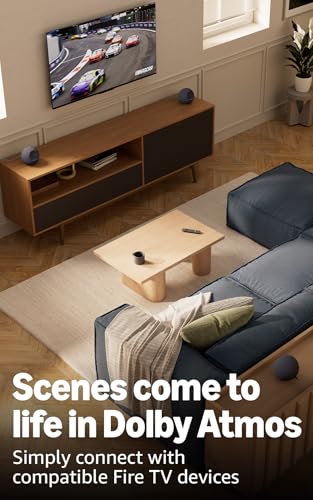
If you're thinking about building a home theater system, the Echo Studio offers compelling possibilities. You can pair multiple units for stereo sound or even create a 5.1 surround system when combined with compatible Fire TV devices. The spatial audio processing and room adaptation make each speaker automatically optimize for its position in your theater setup.
The ability to start with one Echo Studio and expand your system over time represents excellent value for home theater enthusiasts. Professional surround sound systems often cost thousands of dollars, but Amazon's approach lets you build comparable audio quality incrementally.
The Echo Show 11 doesn't offer the same home theater expandability, but it can serve as an excellent bedside or kitchen entertainment device where the screen adds value for video content.
Both devices benefit from Amazon's new AZ3 Pro chip with AI accelerator, a significant upgrade over previous generations. This custom silicon enables faster voice processing, better noise cancellation for microphones, and more responsive overall performance. The chip also allows more AI processing to happen locally on the device rather than requiring cloud connectivity for every request.
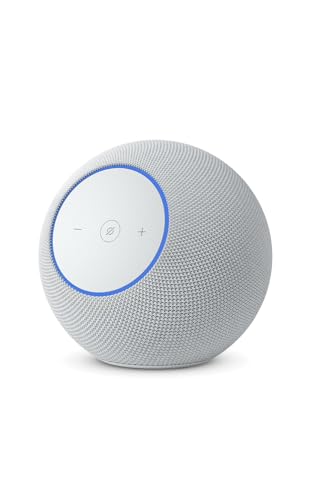
The Echo Studio's 2025 redesign addressed several issues from the original 2019 model. The new integrated speaker design eliminates the separate speaker module, doubling internal air space for fuller bass response. The 3D-knit fabric covering is engineered for acoustic transparency while maintaining a premium appearance.
The Echo Show 11 represents a complete departure from earlier Echo Show designs. Previous generations were thick, plasticky devices with small screens surrounded by large bezels. The 2025 model features a thin, floating screen design with a woven mesh base that matches Amazon's premium speaker aesthetics. The dramatically improved camera resolution (13MP vs 1-2MP in earlier models) and new VegaOS interface make this feel like a completely new product category.
At the time of writing, both devices command premium pricing in Amazon's lineup, but they deliver value in different ways. The Echo Studio competes directly with dedicated hi-fi speakers costing significantly more while adding comprehensive smart home functionality. If you value audio quality and prefer voice-only interaction, it represents exceptional value.
The Echo Show 11 competes with other premium smart displays and tablets while serving as a central smart home hub. For families managing complex schedules and wanting video communication capabilities, it can replace multiple single-purpose devices.
Choose the Echo Studio if you're an audio enthusiast who appreciates high-quality sound. It's perfect for people who want their smart home technology to blend invisibly into their environment until needed. The voice-only interface appeals to those who prefer hands-free operation and value privacy (no cameras or screens). It's also the clear choice if you're building or planning a multi-room audio system or home theater setup.
The Echo Show 11 makes sense for visually-oriented users who want information displayed rather than spoken. It's ideal for families with busy schedules who benefit from shared visual calendars and reminders. If you regularly make video calls, consume video content, or want to monitor security cameras visually, the Show 11 provides capabilities the Studio simply can't match.
Consider your primary use cases carefully. If this device will mainly play music and control smart home devices through voice commands, the Echo Studio delivers superior performance. If you want a family information hub, entertainment device, and communication center with solid (but not exceptional) audio, the Echo Show 11 offers more versatility.
Both the Echo Studio and Echo Show 11 represent Amazon's commitment to premium smart home experiences, but they serve fundamentally different needs. The Studio excels at its focused mission of delivering exceptional audio quality with seamless voice control. The Show 11 succeeds as a versatile visual hub that handles multiple functions competently.
Your choice ultimately depends on how you want to interact with technology in your daily life. Do you prefer the invisible, ambient approach where technology responds to your voice but otherwise stays out of the way? Or do you want a visual command center that provides rich information display and multiple interaction methods?
There's no wrong choice here—both devices excel at what they're designed to do. The key is understanding which philosophy better matches your lifestyle, preferences, and smart home goals.
| Amazon Echo Studio | Amazon Echo Show 11 |
|---|---|
| Primary Function - Determines your daily interaction experience | |
| Dedicated smart speaker focused on premium audio quality | Smart display combining visual interface with audio capabilities |
| Audio System - Most important for music lovers and home theater | |
| 5-speaker array: 5.25" woofer + 3 midrange + 1 tweeter, 200W output | Stereo system: front-facing drivers + 2.8" woofer, optimized for video |
| Display Capabilities - Essential for visual information and video content | |
| None - LED light ring only for basic status | 11-inch Full HD touchscreen (1920×1200) with wide viewing angles |
| Spatial Audio Support - Key differentiator for immersive listening | |
| Full Dolby Atmos and 3D audio with room adaptation technology | Enhanced spatial audio optimized for visual content pairing |
| Smart Home Hub Protocols - Determines device compatibility | |
| Built-in Zigbee hub for direct smart device control | Zigbee, Matter, and Thread with Border Router functionality |
| Camera and Video Calling - Important for family communication | |
| No camera - voice-only interaction | 13MP camera with auto-framing for high-quality video calls |
| Home Theater Expandability - Critical for building audio systems | |
| Can pair multiple units for stereo or 5.1 surround sound systems | No multi-device pairing for home theater configurations |
| Privacy Considerations - Important for security-conscious users | |
| No cameras or screens - audio-only privacy advantage | Camera and always-on display require privacy considerations |
| Form Factor and Design - Affects room placement and aesthetics | |
| Spherical fabric speaker, 40% smaller than previous generation | Floating 11" screen on woven mesh base, modern premium appearance |
| Information Display Method - Shapes daily usability | |
| Voice responses only - hands-free, eyes-free operation | Visual widgets, calendars, weather, security feeds on touchscreen |
| Media Consumption - Determines entertainment capabilities | |
| Music, podcasts, audiobooks with hi-res audio support up to 24-bit | Video streaming, photos, music with visual controls and content display |
The Amazon Echo Studio delivers significantly better music quality with its 5-speaker array, including a 5.25-inch woofer and support for Dolby Atmos spatial audio. The Echo Show 11 has decent audio for a smart display but focuses more on video content clarity than audiophile-grade music reproduction.
No, the Amazon Echo Studio doesn't have a screen and is designed purely for audio experiences. For video content, you'd need the Amazon Echo Show 11, which features an 11-inch Full HD touchscreen perfect for streaming Prime Video, YouTube, and other video services.
Both excel at smart home control but in different ways. The Amazon Echo Studio offers hands-free voice control with a built-in Zigbee hub, while the Amazon Echo Show 11 provides visual device status and touch controls alongside voice commands, plus support for more protocols including Matter and Thread.
Only the Amazon Echo Show 11 supports video calling with its 13-megapixel camera and auto-framing feature. The Amazon Echo Studio can only make voice calls since it doesn't include a camera or screen.
The Amazon Echo Studio is significantly better for home theater use. You can pair multiple Echo Studio units to create stereo or even 5.1 surround sound systems with compatible Fire TV devices. The Echo Show 11 doesn't support multi-device audio pairing for home theater configurations.
The Amazon Echo Studio is designed for completely hands-free, eyes-free operation using only voice commands and audio responses. While the Echo Show 11 supports voice control, its visual interface is a core part of the experience and provides information that voice alone cannot convey.
The Echo Show 11 has a larger footprint due to its 11-inch display and base design. The Amazon Echo Studio has a more compact spherical form factor that's 40% smaller than the previous generation, making it easier to place in various room locations.
Yes, both the Amazon Echo Studio and Amazon Echo Show 11 support major streaming services like Amazon Music, Spotify, Apple Music, and Pandora. However, the Echo Studio can take full advantage of high-resolution audio formats for superior sound quality.
The Amazon Echo Show 11 is generally better for families because of its visual calendar sharing, video calling capabilities, and ability to display photos and family schedules. The Echo Studio works well for families focused on audio content and hands-free smart home control.
Both devices support voice calling, but only the Amazon Echo Show 11 offers video calling capabilities. The Echo Studio is limited to audio-only calls but provides excellent call quality through its advanced speaker system.
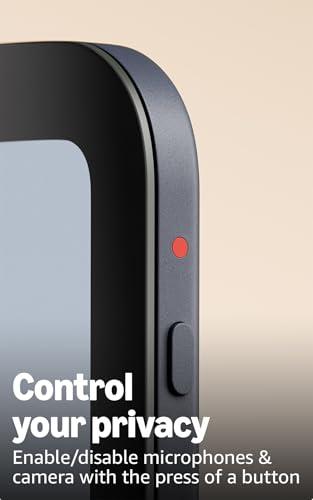
The Amazon Echo Studio offers inherent privacy advantages since it has no camera or always-on display. The Echo Show 11 includes cameras and visual sensors that some users may find concerning, though it includes privacy controls and a camera mute button.
Yes, they serve different room purposes well. The Amazon Echo Studio excels in living rooms, bedrooms, and dedicated listening spaces where audio quality matters most. The Echo Show 11 works best in kitchens, family rooms, and home offices where visual information display adds value to daily activities.
We've done our best to create useful and informative comparisons to help you decide what product to buy. Our research uses advanced automated methods to create this comparison and perfection is not possible - please contact us for corrections or questions. These are the sites we've researched in the creation of this article: whathifi.com - crutchfield.com - rtings.com - dxomark.com - youtube.com - dimensions.com - youtube.com - bestbuy.com - techradar.com - dolby.com - consumerreports.org - engadget.com - phonearena.com - aboutamazon.com - askalexa.com - notebookcheck.net - techradar.com - matteralpha.com - bestbuy.com - cordcuttersnews.com

Privacy Policy
Terms and Conditions - Affiliate Policy
Home Security
© Copyright 2008-2026.
11816 Inwood Rd #1211, Dallas, TX 75244