




Smart speakers have become the command center of modern homes, blending high-quality audio with voice-controlled convenience. Whether you're streaming music, controlling smart lights, or asking about tomorrow's weather, these devices promise to simplify daily life. But choosing between Amazon's premium Echo Studio and budget-friendly Echo Pop requires understanding some fundamental differences in approach and performance.
Smart speakers occupy a unique space in home technology, serving dual purposes that sometimes conflict with each other. On one hand, they're audio devices competing with traditional speakers and sound systems. On the other, they're smart home controllers and AI assistants that need to hear your voice clearly across the room. The best products excel at both functions, but most make compromises.
The key considerations when evaluating smart speakers include audio fidelity (how good music actually sounds), voice recognition accuracy, smart home integration capabilities, and overall value for your specific needs. Room size, listening habits, and budget all play crucial roles in determining which approach works best.
At the time of writing, Amazon's Echo lineup spans from ultra-affordable options around $25 to premium models approaching $220. This price range reflects vastly different engineering priorities and target audiences.
The Echo Studio launched in 2019 as Amazon's answer to premium audio demands from Echo users. Amazon recognized that while earlier Echo devices excelled at voice control, they couldn't satisfy users who wanted serious music playback. The Studio represented a significant engineering leap, incorporating spatial audio technology and multiple drivers to compete with dedicated hi-fi speakers.
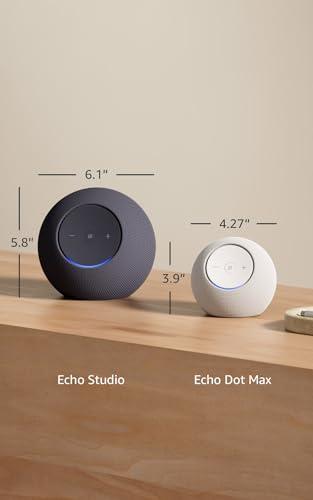
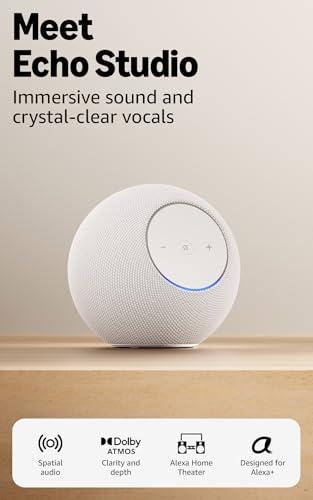
In 2025, Amazon refreshed the Echo Studio with a notably smaller form factor—40% more compact than the original—while maintaining the same sophisticated driver array. This redesign addressed one of the main criticisms of the original: its imposing size that dominated smaller spaces.
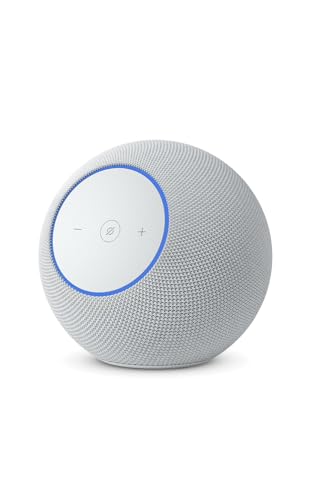
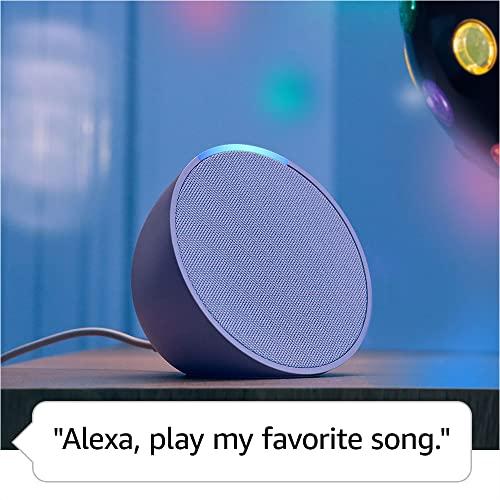
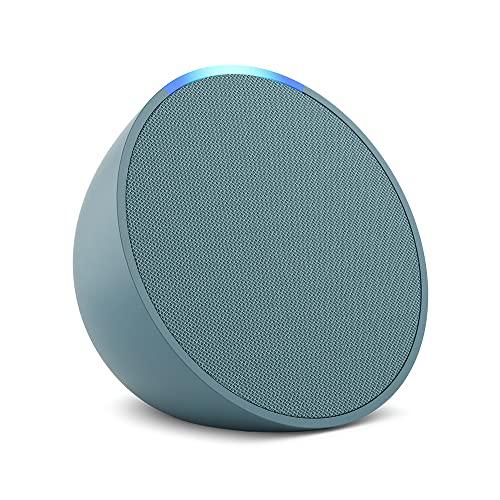
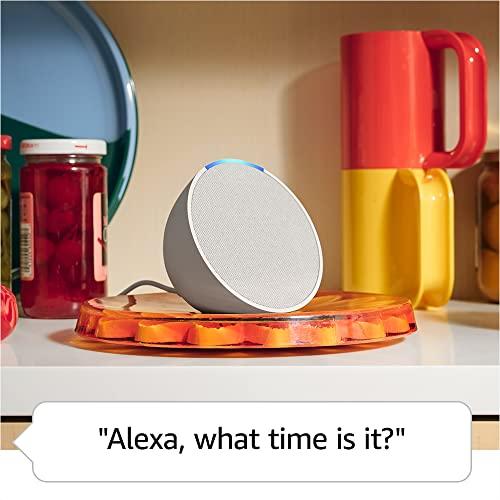
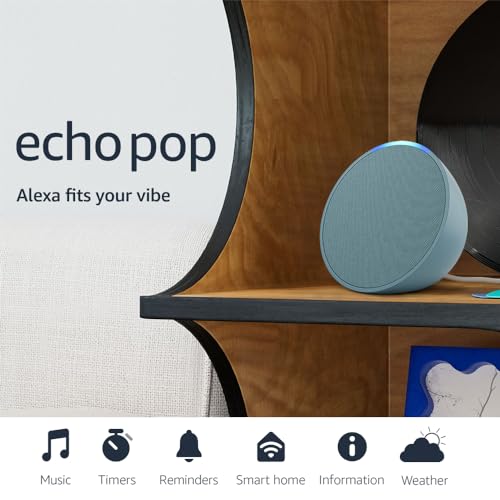
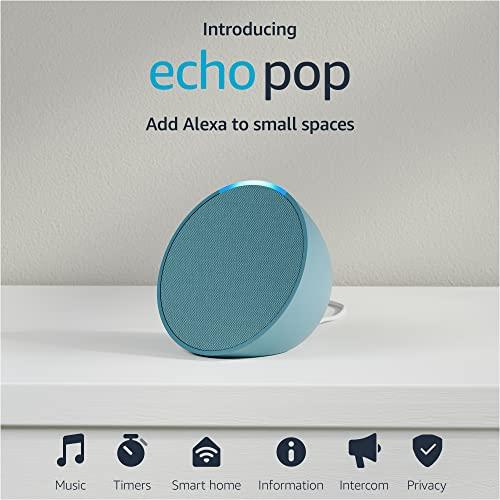
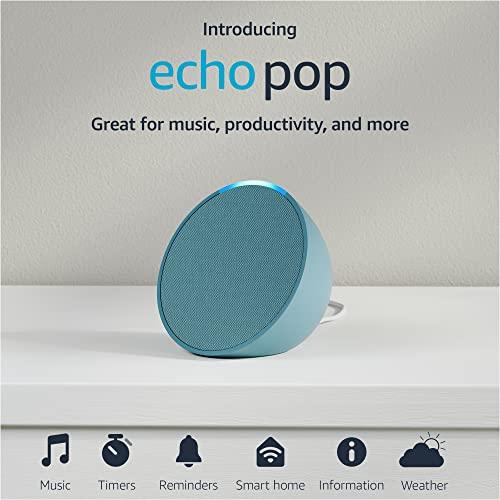
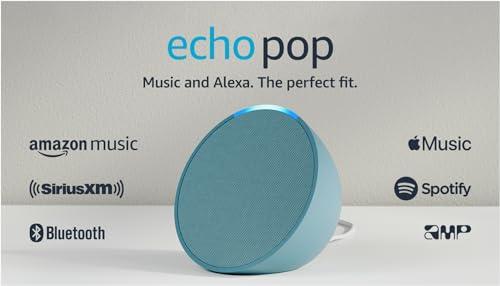
The Echo Pop, introduced in 2023, took a different approach entirely. Rather than cramming premium audio into an Echo device, Amazon focused on making Alexa as accessible and affordable as possible. The Pop's distinctive half-sphere design and sub-$30 pricing (at the time of writing) aimed to put voice control within reach of every room and every budget.
Here's where these two speakers diverge most dramatically. The Echo Studio employs what engineers call a "multi-driver array"—essentially five separate speakers working together to create a full-range sound experience. This includes a 5.25-inch woofer (the large driver that produces bass), three 2-inch midrange drivers (handling vocals and most instruments), and a 1-inch tweeter (for crisp high frequencies like cymbals).
This driver configuration allows the Echo Studio to produce what audiophiles call "room-filling sound"—audio that maintains its quality and balance whether you're sitting directly in front of the speaker or across the room. The downward-firing woofer and strategically angled midrange drivers create an omnidirectional soundstage, meaning music sounds good from multiple listening positions.
The Echo Pop, by contrast, uses a single 1.95-inch front-firing driver. While this driver is actually slightly larger than what you'd find in the standard Echo Dot, it's fundamentally limited by physics. A single small driver cannot produce deep bass frequencies or achieve high volumes without distortion. The front-firing design also creates directional audio—you need to aim the speaker toward your listening position for optimal sound.
Frequency response describes how well a speaker reproduces different pitches, from deep bass drums to shimmering hi-hats. The Echo Studio achieves what engineers call a "neutral and balanced" frequency response, meaning it doesn't artificially emphasize any particular frequency range. This results in more accurate music reproduction, though some users find the bass slightly conservative compared to consumer-oriented speakers that artificially boost low frequencies.
The Echo Pop delivers clear midrange frequencies, making it excellent for podcasts and vocals, but struggles with bass-heavy music genres like hip-hop or electronic dance music. Our research into user reviews consistently shows that the Pop performs best at 40-70% volume levels—push it higher and you'll encounter compression artifacts (distortion that makes music sound "crushed" or harsh).
Volume capabilities tell another important story. The Echo Studio can reach 91.1 dB SPL (sound pressure level), roughly equivalent to city traffic noise. This makes it suitable for parties, large gatherings, or simply filling substantial rooms with sound. The Echo Pop lacks the power for such scenarios, making it better suited for personal listening or background music in smaller spaces.
Surprisingly, the Echo Pop actually outperforms its premium sibling in voice recognition scenarios. Its three-microphone array, combined with the AZ2 Neural Edge processor, creates exceptional "far-field" voice pickup—the technical term for hearing commands from across a room. This processor handles voice recognition locally rather than sending everything to Amazon's servers, resulting in response times of 1-2 seconds.
The Echo Studio includes a seven-microphone array, but its primary engineering focus remains audio playback rather than voice interaction. In practical terms, both speakers handle typical Alexa commands reliably, but the Pop's microphones seem better tuned for noisy environments where music or TV audio might interfere with voice recognition.
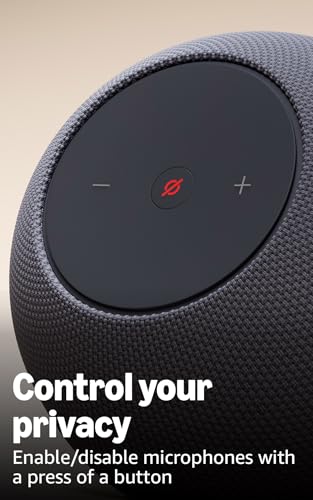
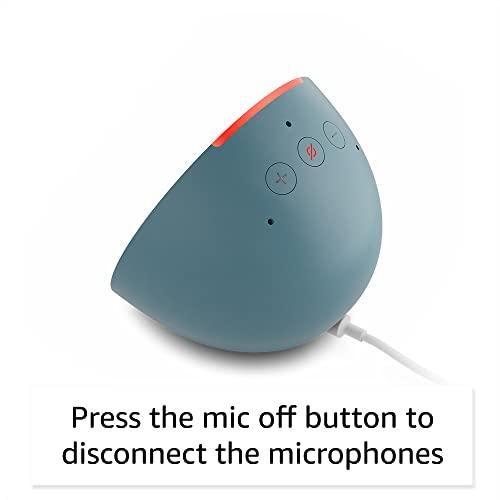
Both speakers include a physical microphone mute button—a privacy feature that completely disconnects the microphones when activated. A red light indicator confirms when the mikes are disabled, providing visual assurance that the device isn't listening.
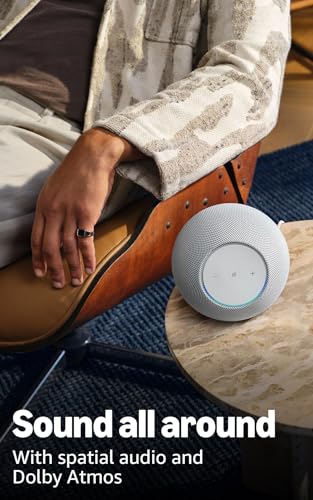
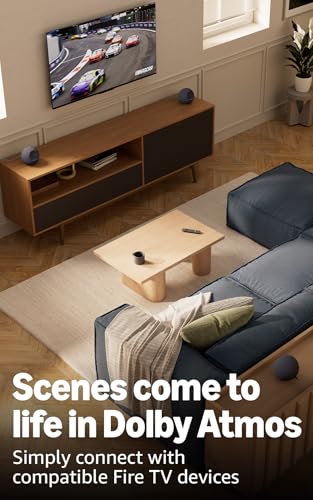
The Echo Studio supports what marketing materials call "3D audio" or spatial audio—technology that creates the illusion of sound coming from multiple directions. This includes Dolby Atmos, which adds height information to audio tracks, and Sony's 360 Reality Audio format.
In practice, spatial audio effectiveness depends heavily on the source material and room acoustics. Movie soundtracks mixed for Dolby Atmos can create genuinely immersive experiences, with sound effects appearing to come from above or behind the listener. Music varies widely—some tracks benefit dramatically from spatial processing, while others sound artificial or echo-like.
The Echo Studio also features automatic room adaptation technology, which analyzes your room's acoustics and adjusts audio output accordingly. This means the speaker sounds different next to a wall versus in an open space, optimizing for each placement scenario. It's sophisticated technology that works largely invisibly, though audiophiles can disable it if they prefer manual control.
Here's where target audience differences become apparent. The Echo Studio includes a built-in Zigbee hub—a radio technology that connects directly to smart home devices like lights, thermostats, and door locks without requiring additional hardware. This makes the Studio a genuine smart home command center, not just a speaker with voice control.
The Echo Pop takes a more modern approach, supporting Matter (the new universal smart home standard) and serving as a controller for compatible devices. It can also extend Eero mesh Wi-Fi networks by up to 1,000 square feet, effectively functioning as a Wi-Fi booster in addition to its speaker duties.
However, the Echo Pop lacks environmental sensors—it cannot detect temperature or motion for automation purposes. The Echo Studio doesn't include these sensors either, but its Zigbee capabilities provide more sophisticated device integration options.
The Echo Studio shines in home theater scenarios where traditional Echo devices fall short. It can pair wirelessly with Fire TV devices, handling audio duties for movies and shows. The spatial audio capabilities particularly benefit action movies and content mastered in Dolby Atmos.
Multiple Echo Studio units can create surround sound systems—up to five speakers can be configured for Fire TV, providing front left/right channels, rear surrounds, and a center channel. This represents significant value compared to dedicated home theater speakers, though serious audiophiles will still prefer purpose-built theater systems.
The Echo Pop isn't practical for home theater use. Its limited volume and bass response make it unsuitable for movie audio, and it cannot pair with Fire TV devices for this purpose.
At the time of writing, the Echo Studio costs roughly eight times more than the Echo Pop. This price multiple reflects fundamentally different engineering priorities and target markets.
The Echo Studio justifies its premium pricing through audio hardware that would cost considerably more in a non-smart speaker. Comparable audiophile speakers without voice control often exceed the Studio's price point. For users who prioritize music listening and want spatial audio capabilities, the Studio delivers genuine value despite its higher cost.
The Echo Pop represents exceptional value for voice control and smart home access. Its audio limitations become less relevant if your primary use involves podcast listening, audiobook playback, or casual background music. For users wanting multiple Alexa devices throughout their home, several Pops cost less than a single Studio while providing broader voice coverage.
Physical footprint matters more than many buyers initially consider. The Echo Studio measures over 8 inches tall and weighs nearly 8 pounds—it requires dedicated space and commands attention in any room. The newer 2025 model addresses this somewhat with its 40% size reduction, but it remains a substantial presence.
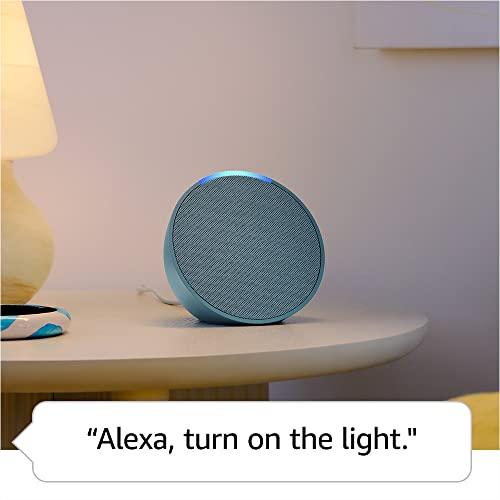
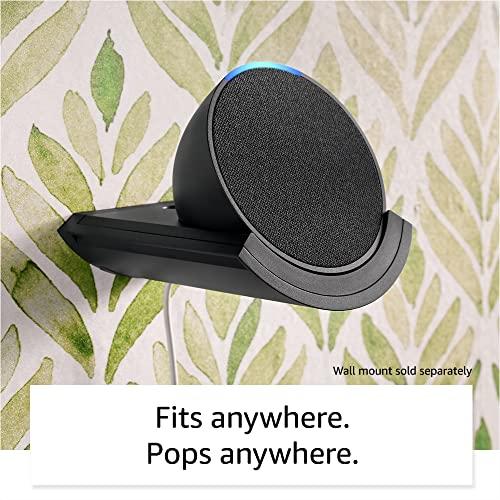
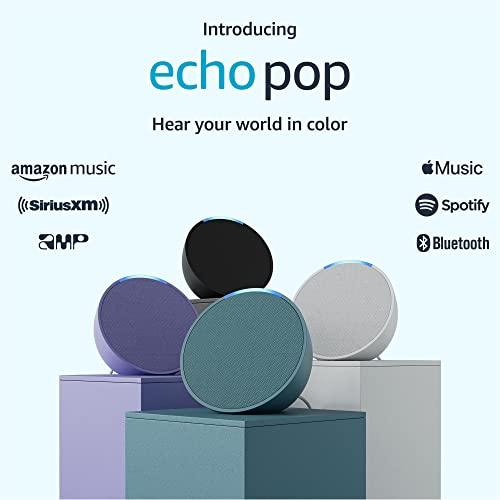
The Echo Pop practically disappears on shelves, desks, or nightstands. Its distinctive half-sphere design and multiple color options (including Lavender Bloom and Midnight Teal) let it blend into various decor styles. This flexibility proves valuable for users who want smart speakers that don't dominate their spaces.
Both speakers require constant power connections—neither includes batteries for portable use. This limitation affects placement options, particularly for the Pop, which might otherwise serve as a portable smart speaker for outdoor gatherings.
The Echo Studio makes sense for music enthusiasts who want their smart speaker to double as their primary audio system. If you find yourself cranking up music for parties, appreciate the nuances in well-recorded albums, or want to experience movies with immersive audio, the Studio's premium audio justifies its cost. It's also ideal for larger homes where powerful, room-filling sound matters.
The Echo Pop suits users who prioritize voice interaction over audio fidelity. It excels in bedrooms, offices, kitchens, or anywhere you want convenient Alexa access without audio performance expectations. Multiple Pops throughout a home create comprehensive voice coverage at a fraction of a single Studio's cost.
Consider room size carefully in your decision. The Echo Pop works beautifully in spaces up to medium-sized bedrooms or offices. Push it into larger areas and its limitations become apparent. The Echo Studio can fill substantial living areas with quality sound but feels excessive in intimate spaces.
These speakers represent different philosophies rather than direct competitors. The Echo Studio prioritizes audio performance with smart features as valuable additions. The Echo Pop focuses on smart functionality with acceptable audio as a bonus.
For most users, the decision comes down to audio priorities. If music quality matters and you have the budget and space, the Echo Studio delivers premium performance that justifies its cost. If you mainly want voice control with occasional audio use, the Echo Pop provides outstanding value and convenience.
A mixed approach also makes sense—a single Echo Studio for primary music listening paired with multiple Echo Pops for whole-home voice control. This combination maximizes both audio quality where it matters and voice coverage throughout your living space.
The smart speaker market continues evolving, but these two options represent well-executed takes on their respective approaches. Choose based on your actual usage patterns rather than theoretical needs, and either speaker will serve you well within its intended role.
| Amazon Echo Studio Smart Speaker | Amazon Echo Pop Smart Speaker |
|---|---|
| Speaker Configuration - Determines audio quality and room-filling capability | |
| 5-driver system: 5.25" woofer, three 2" midrange, 1" tweeter for full-range sound | Single 1.95" front-firing driver limits bass and volume |
| Maximum Volume - Critical for parties and large spaces | |
| 91.1 dB SPL with minimal distortion, suitable for large rooms | Limited volume with distortion at max, best at 40-70% level |
| Spatial Audio Support - Creates immersive 3D listening experience | |
| Dolby Atmos and Sony 360 Reality Audio with room adaptation | No spatial audio capabilities |
| Voice Recognition - How well it hears commands in noisy environments | |
| 7-microphone array optimized for audio playback | 3-microphone array with superior pickup in noisy rooms |
| Smart Home Hub - Controls devices without additional hardware | |
| Built-in Zigbee hub for direct smart device control | Matter controller only, no built-in hub |
| Physical Size - Impacts placement options and room aesthetics | |
| 8.1" H × 6.9" D, 7.7 lbs (newer model 40% smaller) | 3.9" × 3.3" × 3.6", 0.43 lbs fits anywhere |
| Audio Inputs - Flexibility for external devices | |
| 3.5mm aux and optical digital inputs (older models) | Wi-Fi and Bluetooth only, no physical inputs |
| Multi-Room Capabilities - Expanding audio throughout your home | |
| Stereo pairing and surround sound with Fire TV (up to 5 units) | Basic grouping only, cannot pair for stereo |
| Processor Technology - Affects response speed and features | |
| Standard Echo processing focused on audio performance | AZ2 Neural Edge processor for 1-2 second voice responses |
| Connectivity Features - Additional smart home benefits | |
| Zigbee, Wi-Fi, Bluetooth with Fire TV integration | Wi-Fi extender capability (1,000 sq ft), Matter support |
| Target Room Size - Where each speaker performs best | |
| Medium to large rooms (400+ sq ft) with powerful sound | Small to medium rooms (bedrooms, offices, kitchens) |
| Price Category - Value proposition at time of writing | |
| Premium tier around $220, competes with audiophile speakers | Ultra-budget around $25, most affordable Alexa access |
The Amazon Echo Studio delivers significantly better sound quality with its five-driver system including a 5.25-inch woofer and multiple midrange speakers. It produces room-filling audio with deep bass and clear highs. The Amazon Echo Pop uses a single 1.95-inch driver that's adequate for podcasts and casual listening but lacks bass depth and volume for serious music enjoyment.
The primary difference is audio performance and target use. The Amazon Echo Studio is designed as a premium music speaker with advanced audio technology, while the Amazon Echo Pop focuses on providing affordable Alexa voice control with basic audio capabilities. The Studio costs roughly eight times more but delivers audiophile-quality sound.
The Amazon Echo Pop is ideal for small rooms like bedrooms, offices, or kitchens due to its compact 4-inch size and directional audio that works well in intimate spaces. The Amazon Echo Studio can overpower small rooms with its powerful drivers and is better suited for medium to large spaces.
Yes, the Amazon Echo Studio excels in home theater setups. It pairs wirelessly with Fire TV devices and supports Dolby Atmos for immersive movie audio. You can configure up to five Echo Studio speakers for full surround sound. The Amazon Echo Pop isn't suitable for home theater due to its limited volume and lack of Fire TV integration.
The Amazon Echo Pop actually has superior voice recognition, especially in noisy environments. Its three-microphone array and AZ2 Neural Edge processor provide excellent far-field pickup and 1-2 second response times. While the Amazon Echo Studio has seven microphones, it's optimized more for audio playback than voice interaction.
The Amazon Echo Studio includes a built-in Zigbee hub for direct smart device control without additional hardware. The Amazon Echo Pop supports Matter (the new smart home standard) and can extend Eero Wi-Fi networks by 1,000 square feet, but lacks environmental sensors and Zigbee capabilities.
Value depends on your priorities. The Amazon Echo Pop offers exceptional value for voice control and basic audio at its budget price point. The Amazon Echo Studio provides premium audio quality that would cost more in non-smart speakers, making it good value for music enthusiasts despite the higher cost.
Yes, both support multi-room audio, but with different capabilities. The Amazon Echo Studio can pair in stereo mode and create surround sound systems with Fire TV. Multiple Echo Pop speakers can be grouped for synchronized playback throughout your home, making it cost-effective for whole-home coverage.
The Amazon Echo Studio reaches 91.1 dB SPL with minimal distortion, making it suitable for parties and large gatherings. The Amazon Echo Pop has limited volume output and distorts at maximum levels, performing best at 40-70% volume for personal listening or background music.
Both the Amazon Echo Studio and Amazon Echo Pop require Wi-Fi for most functions including Alexa voice control, music streaming, and smart home features. They can play audio via Bluetooth from your phone without Wi-Fi, but this eliminates most smart speaker functionality.
The Amazon Echo Studio is designed specifically for high-quality music streaming with support for spatial audio formats like Dolby Atmos and Sony 360 Reality Audio. It delivers balanced, room-filling sound perfect for serious listening. The Amazon Echo Pop handles casual music streaming adequately but isn't intended for audiophile-quality playback.
The Amazon Echo Studio can connect to computers via its 3.5mm aux input (older models) or Bluetooth for high-quality audio output. The Amazon Echo Pop only supports Bluetooth connectivity to computers and lacks the audio fidelity for professional or gaming use, though it works fine for casual computer audio needs.
We've done our best to create useful and informative comparisons to help you decide what product to buy. Our research uses advanced automated methods to create this comparison and perfection is not possible - please contact us for corrections or questions. These are the sites we've researched in the creation of this article: whathifi.com - crutchfield.com - rtings.com - dxomark.com - youtube.com - dimensions.com - youtube.com - bestbuy.com - techradar.com - dolby.com - consumerreports.org - engadget.com - phonearena.com - aboutamazon.com - askalexa.com - rtings.com - reviewed.com - techradar.com - soundguys.com - youtube.com - youtube.com - youtube.com - bestbuy.com - soundguys.com - rtings.com - goodhousekeeping.com - bestbuy.com - youtube.com - dell.com - manuals.plus - youtube.com - bestbuy.com - en.wikipedia.org - nfm.com

Privacy Policy
Terms and Conditions - Affiliate Policy
Home Security
© Copyright 2008-2026.
11816 Inwood Rd #1211, Dallas, TX 75244