



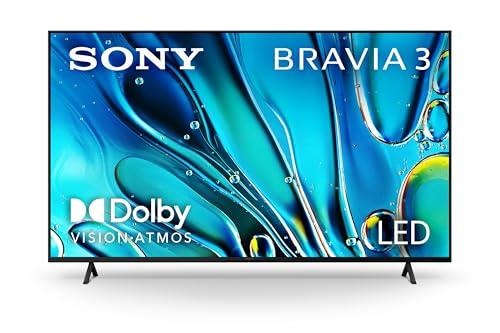
Shopping for a 65-inch TV in the budget category used to mean settling for basic picture quality and limited features. Not anymore. Two standout models—the TCL 65" Q Class QLED 4K Fire TV and the Sony BRAVIA 3 65" 4K HDR LED Google TV—prove you can get impressive performance without breaking the bank, though they take very different approaches to get there.
At the time of writing, these TVs sit in different price tiers within the budget segment, with the TCL Q Class positioned as an exceptional value play while the Sony BRAVIA 3 commands a significant premium for its brand reputation and processing prowess. The question isn't just which is better, but which approach makes more sense for your specific needs and budget.
Before diving into specifics, it's worth understanding what separates good budget TVs from mediocre ones. The most critical factors are display technology (how vibrant and bright the colors appear), smart platform experience (how smooth and intuitive the interface feels), picture processing (how well the TV handles different types of content), and gaming capabilities for console owners.
Peak brightness—measured in nits—determines how well HDR (High Dynamic Range) content appears and how the TV performs in bright rooms. Color gamut refers to the range of colors a TV can display, with wider gamuts producing more vibrant images. Motion handling affects how smooth fast-paced content like sports appears, while input lag (the delay between controller input and screen response) matters for gaming.
Neither TV includes local dimming, which uses hundreds of individually controlled LED zones to improve contrast. This keeps costs down but means both struggle with deep black levels compared to premium models.
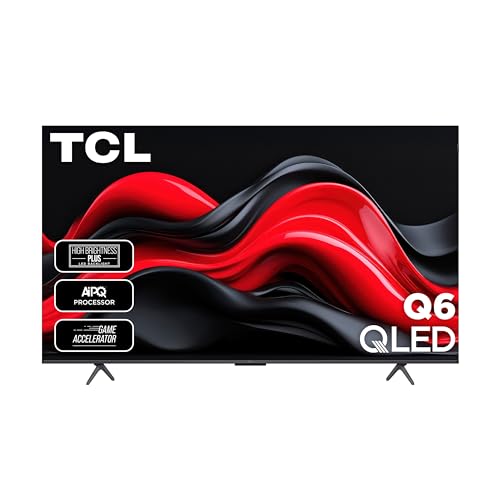
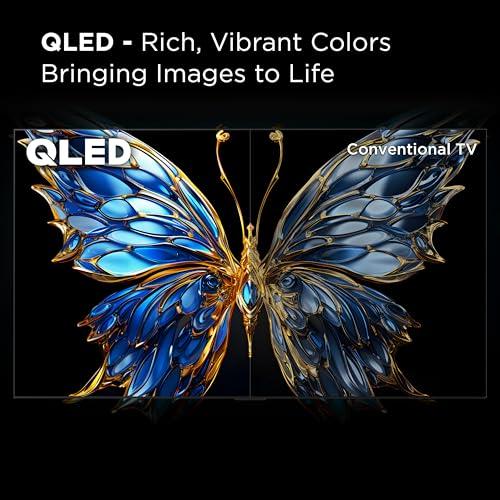
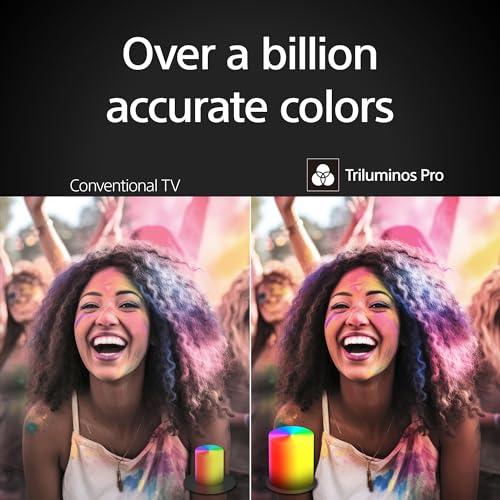
The TCL Q Class QLED employs quantum dot technology—microscopic particles that emit pure colors when hit by blue LED light. This isn't just marketing fluff; it's a genuine technological advantage that allows the TCL to display over 1 billion colors compared to roughly 16 million on standard LED TVs like the Sony BRAVIA 3.
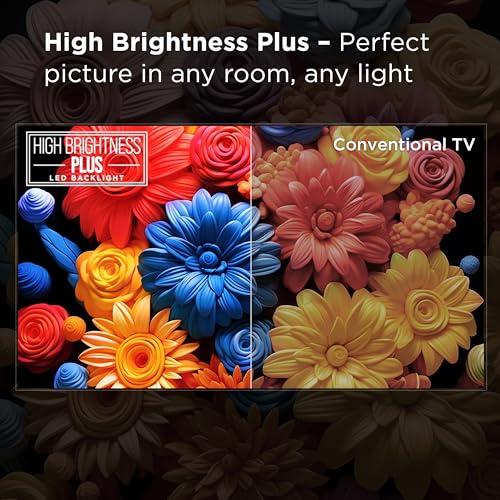
In practical terms, this translates to noticeably more vibrant colors, especially in reds and greens. Streaming HDR content on Netflix or Disney+ shows the difference immediately—sunsets appear more golden, grass looks more lush, and skin tones have better warmth. The TCL's "High Brightness+" technology also pushes peak brightness significantly higher than standard LED panels, making HDR highlights actually pop rather than appearing flat.
However, quantum dot technology comes with trade-offs. The TCL can sometimes oversaturate colors, making them appear unnatural in certain content. Skin tones occasionally look too warm or orange, particularly in older movies or TV shows that weren't mastered for wide color gamuts.
The Sony BRAVIA 3 takes the opposite approach, prioritizing accuracy over vibrancy. Sony's 4K HDR Processor X1 has been refined over several generations since its introduction, and it shows. The chip analyzes each frame in real-time, adjusting contrast, color, and clarity automatically.
Where this becomes most apparent is with variable quality content—cable TV, sports broadcasts, and older streaming content. The Sony excels at cleaning up compression artifacts (the blocky distortions you sometimes see in streaming video) and upscaling lower resolution content to look sharp on a 4K screen. If you watch a lot of news, sports, or cable TV, Sony's processing advantage becomes a daily benefit.
The TCL, by contrast, relies more on its quantum dot layer and higher brightness to improve image quality. It doesn't have the sophisticated processing to clean up poor source material, but when fed high-quality 4K content, its color advantages shine through.
Gaming capabilities reveal the biggest philosophical difference between these TVs. The TCL Q Class comes in multiple variants, with upgraded models supporting 120Hz refresh rates and Variable Refresh Rate (VRR)—features that PlayStation 5 and Xbox Series X owners will appreciate. VRR eliminates screen tearing by syncing the TV's refresh rate with the console's frame rate, while 120Hz allows supported games to display smoother motion.
The Sony BRAVIA 3, released in 2024, surprisingly lacks these modern gaming features entirely. It's locked to 60Hz with no HDMI 2.1 bandwidth, making it unsuitable for competitive gaming or anyone wanting to maximize their modern console investment. Both TVs include Auto Low Latency Mode (ALLM), which automatically switches to a low-lag game mode when it detects a console, but the Sony's limited refresh rate is a significant drawback.
For casual gaming—story-driven single-player games where frame rate matters less—both perform adequately. But serious gamers should strongly consider the TCL, particularly the upgraded variants with gaming-focused features.
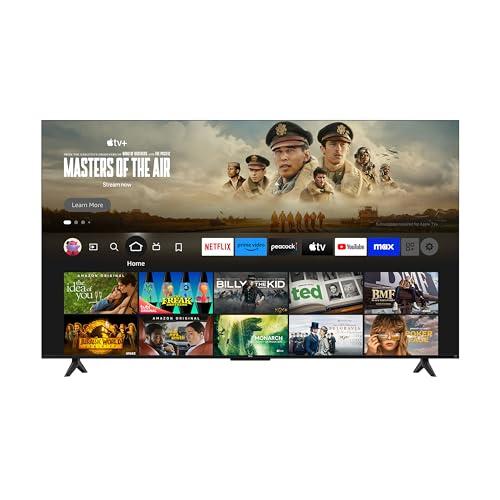
The smart TV experience often determines long-term satisfaction more than picture quality. The TCL runs Fire TV, Amazon's streaming platform that integrates seamlessly with Alexa and prioritizes Prime Video content. Fire TV's strength lies in its straightforward interface and excellent voice search, though it can feel Amazon-centric at times.
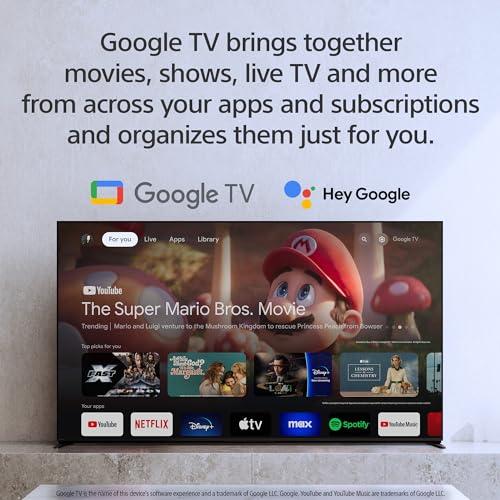
The Sony BRAVIA 3 uses Google TV, which our research consistently shows users prefer for its content-agnostic approach and smooth performance. Google TV aggregates content from multiple services into unified recommendations, making it easier to discover new shows regardless of which streaming service hosts them. The interface feels more premium and responsive than Fire TV, though both support all major streaming apps.
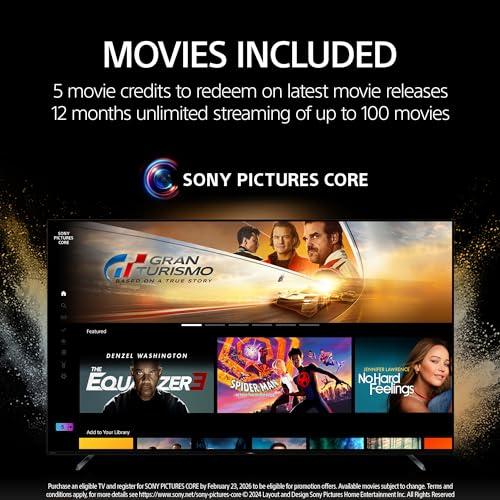
A unique Sony advantage is access to Sony Pictures Core (formerly BRAVIA CORE), which streams select movies at near-4K Blu-ray quality. While the selection is limited, the picture quality genuinely rivals physical media—something streaming services typically can't match due to bandwidth limitations.
HDR content reveals each TV's strengths and limitations most clearly. The TCL Q Class produces noticeably brighter highlights thanks to its quantum dot technology and enhanced LED backlighting. This makes HDR content on Netflix, Disney+, and Prime Video appear more impactful, with brighter clouds, more realistic sunlight, and better overall contrast.
The Sony BRAVIA 3 reaches lower peak brightness but uses superior tone mapping—the process of translating HDR content to fit the display's capabilities. Sony's processing ensures colors remain accurate even in bright scenes, while the TCL occasionally clips highlights, losing detail in very bright areas.
For dark room viewing, where accurate blacks matter most, neither TV excels due to their lack of local dimming. However, the Sony handles near-black details slightly better, making it preferable for movie nights with the lights off.
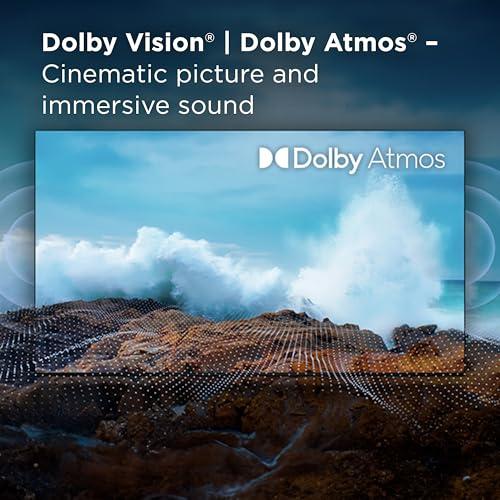
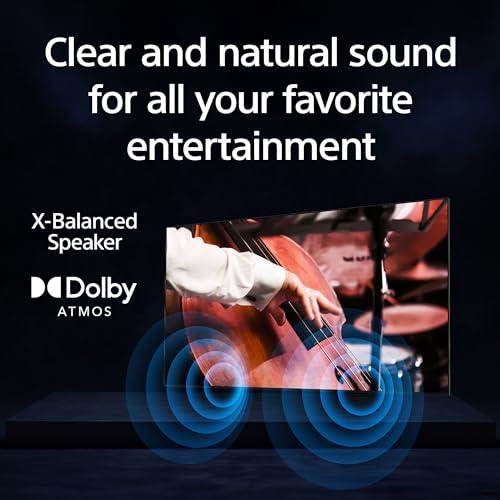
Both TVs include respectable built-in audio systems for their price points. The TCL provides 24-30W of power depending on the specific model, with upgraded variants supporting Dolby Atmos processing. The Sony BRAVIA 3 offers 20W through its 2.0 channel system but includes Sony's Ambient Optimization, which adjusts audio based on room acoustics.
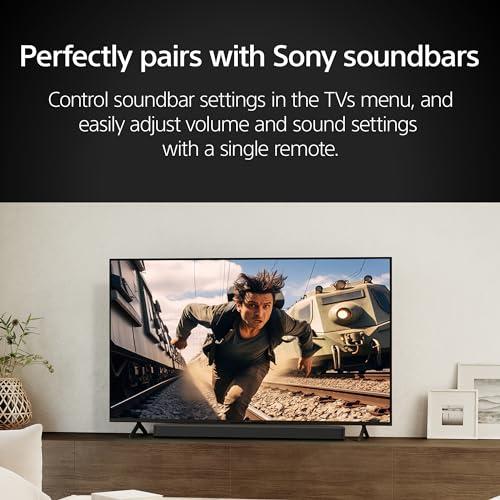
In practice, both deliver clear dialogue and adequate volume for casual viewing, but neither produces the bass response or soundstage width that enhances movie watching or music listening. For serious home theater use, plan on adding a soundbar regardless of which TV you choose.
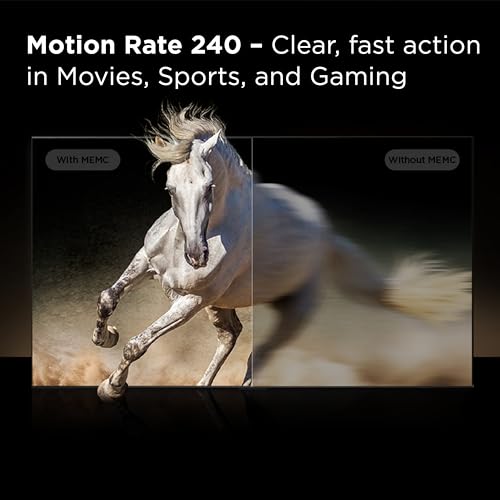
Sports fans should pay attention to motion handling differences. The TCL employs Motion Rate 240 technology, which combines multiple techniques including MEMC (Motion Estimation, Motion Compensation) frame insertion to reduce blur during fast action. This works well for sports and action movies, though it can introduce the "soap opera effect" that makes movies look artificially smooth.
The Sony BRAVIA 3 uses MotionFlow XR 200, which tends to be more conservative in its processing. Sony's approach preserves the filmmaker's intent better but may not eliminate motion blur as aggressively as the TCL during fast-paced sports broadcasts.
Both allow you to adjust or disable motion processing, but the TCL gives you more aggressive options if you prefer the smoothest possible motion.
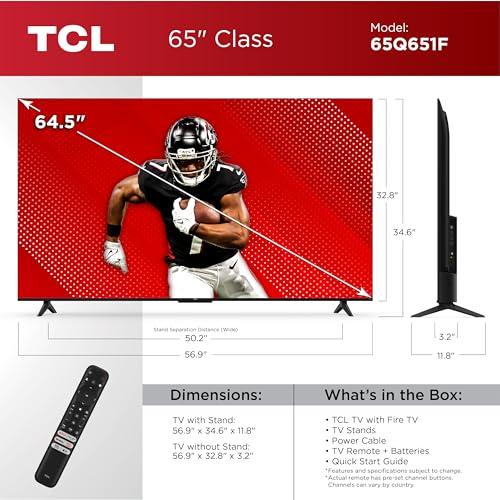
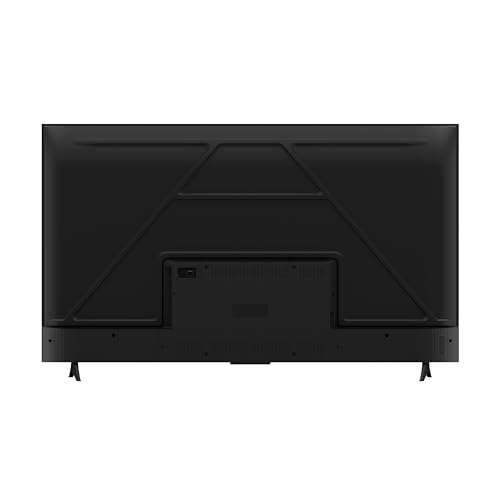
Physical design rarely drives TV purchasing decisions, but it affects daily living. The TCL Q Class features a "FullView Metal Bezel-less Design" that maximizes screen area and looks modern. Build quality feels solid for the price point, though not quite matching premium brands.
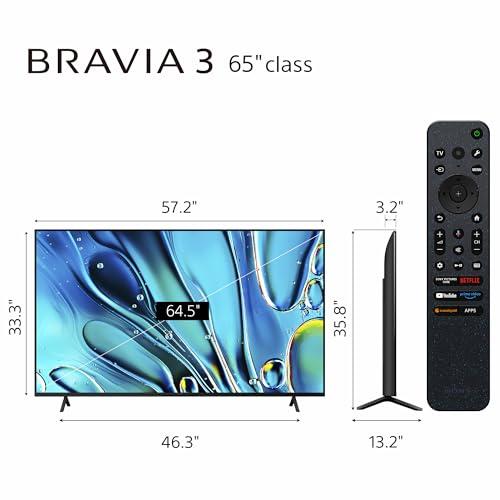
The Sony BRAVIA 3 doesn't emphasize design in its marketing, but Sony's reputation for build quality shows in the details. The stand feels more stable, the remote more substantial, and the overall fit and finish slightly more refined. Whether this justifies the price premium depends on your priorities.
The TCL Q Class QLED represents exceptional value for specific users. If you primarily stream high-quality content from Netflix, Disney+, or Prime Video, its quantum dot colors and high brightness create a genuinely impressive viewing experience. Gamers with modern consoles benefit from 120Hz support, while Amazon ecosystem users appreciate seamless Fire TV integration.
However, the TCL struggles with variable quality content. Cable TV, live sports broadcasts, and older streaming content don't benefit from quantum dot technology and may expose the TV's limited processing capabilities.
The Sony BRAVIA 3 justifies its premium for different reasons. Users who watch mixed content sources—cable TV, sports, news, and streaming—benefit from Sony's superior upscaling and processing. The Google TV platform feels more refined, and Sony's brand reputation provides confidence in long-term reliability.
But the Sony disappoints in key areas for the price. Its limited brightness makes HDR content less impressive, while the lack of modern gaming features feels outdated for a 2024 model.
For dedicated home theater use with controlled lighting, both TVs have limitations. Neither includes local dimming for deep blacks, and both lack the peak brightness of premium models. However, if you must choose between them for movie nights, the Sony BRAVIA 3 edges ahead due to better black level performance and more accurate colors in dark scenes.
The TCL works better for family rooms with ambient lighting, where its higher brightness helps overcome glare and maintain image clarity.
At the time of writing, these TVs occupy different value propositions within the budget segment. The TCL Q Class QLED delivers remarkable technology and features for its price point, making it an easy recommendation for budget-conscious buyers who want modern capabilities like quantum dot colors and gaming features.
The Sony BRAVIA 3 commands a significant premium that's harder to justify based purely on specifications. You're paying for Sony's processing expertise, brand reputation, and more refined overall experience. Whether that's worth the extra cost depends on your priorities and budget flexibility.
For most buyers, the TCL provides better value—you get genuinely impressive picture quality, modern features, and solid performance at a price that leaves room in your budget for a soundbar or streaming subscriptions. The Sony makes sense if you prioritize brand reputation, superior processing of variable content sources, or simply prefer the Google TV experience enough to pay a premium for it.
Neither TV will satisfy videophiles seeking reference-quality performance, but both prove that budget doesn't have to mean basic. Choose based on your priorities: vibrant colors and value with the TCL, or processing polish and brand prestige with the Sony.
| TCL 65" Q Class QLED 4K Fire TV | Sony BRAVIA 3 65" 4K HDR LED Google TV |
|---|---|
| Display Technology - Determines color vibrancy and brightness capabilities | |
| QLED Quantum Dot with over 1 billion colors | Standard LED with TRILUMINOS PRO color accuracy |
| Peak Brightness - Critical for HDR impact and bright room viewing | |
| High Brightness+ technology (significantly brighter than standard LED) | ~450 nits (limited HDR impact, struggles in bright rooms) |
| Gaming Features - Essential for PlayStation 5 and Xbox Series X owners | |
| 120Hz VRR support with Game Accelerator (select models), ALLM, AMD FreeSync | 60Hz only, ALLM, no VRR or HDMI 2.1 (poor for modern consoles) |
| Smart Platform - Affects daily user experience and app ecosystem | |
| Fire TV with Alexa integration (Amazon-centric) | Google TV with Google Assistant (content-agnostic, smoother interface) |
| Image Processing - How well TV handles cable, sports, and variable quality content | |
| Basic processing, relies on quantum dot brightness | 4K HDR Processor X1 with excellent upscaling and artifact reduction |
| Motion Handling - Important for sports and action content | |
| Motion Rate 240 with MEMC Frame Insertion | MotionFlow XR 200 with more conservative processing |
| HDR Support - Both support major formats but implementation differs | |
| HDR PRO+ (Dolby Vision, HDR10+, HDR10, HLG) with quantum dot advantage | HDR PRO+ (Dolby Vision, HDR10+, HDR10, HLG) with superior tone mapping |
| Audio System - Adequate but both benefit from external soundbar | |
| 24-30W with Dolby Atmos (model dependent) | 20W 2.0 system with Dolby Atmos and Ambient Optimization |
| Black Level Performance - Critical for movie watching in dark rooms | |
| Standard for direct LED (no local dimming) | Slightly better but still limited without local dimming |
| Build Quality and Design - Affects long-term satisfaction | |
| FullView Metal Bezel-less Design, solid for price point | Sony's characteristic premium feel and more refined finish |
| Best Use Cases - Who should choose each TV | |
| Budget-conscious streamers, gamers, bright rooms, Amazon users | Mixed content viewers, brand loyalists, Google ecosystem users |
The TCL 65" Q Class QLED 4K Fire TV delivers more vibrant colors and brighter images thanks to its quantum dot technology, making HDR content on Netflix and Disney+ appear more impactful. The Sony BRAVIA 3 65" 4K HDR LED Google TV offers more accurate colors and better processing for mixed content sources. For pure streaming quality, the TCL Q Class QLED provides better value with its superior brightness and color volume.
The TCL 65" Q Class QLED 4K Fire TV is significantly better for modern gaming, offering 120Hz support and Variable Refresh Rate (VRR) on select models, which eliminates screen tearing and provides smoother gameplay. The Sony BRAVIA 3 65" 4K HDR LED Google TV is limited to 60Hz with no HDMI 2.1 features, making it unsuitable for competitive gaming or maximizing next-gen console performance.
Both platforms support all major streaming apps, but user preferences vary. The TCL's Fire TV integrates seamlessly with Amazon services and Alexa, while the Sony's Google TV offers a more content-neutral interface with smoother navigation. Google TV generally receives higher user satisfaction ratings for its unified content recommendations across multiple streaming services.
The Sony BRAVIA 3 65" 4K HDR LED Google TV excels at processing variable quality content like cable TV and sports broadcasts, thanks to its superior upscaling and artifact reduction. The TCL 65" Q Class QLED 4K Fire TV handles high-quality sports streaming well but struggles more with lower-quality cable signals. For mixed sports viewing, the Sony provides more consistent results.
The TCL 65" Q Class QLED 4K Fire TV produces significantly higher peak brightness with its quantum dot technology and "High Brightness+" backlighting, making it much better for bright rooms with ambient lighting. The Sony BRAVIA 3 reaches only around 450 nits, which can cause glare issues and washed-out colors in well-lit environments.
Neither TV includes local dimming zones, so both have limited black level performance compared to premium models. However, the Sony BRAVIA 3 65" 4K HDR LED Google TV handles near-black details slightly better, while the TCL prioritizes overall brightness over deep blacks. For dark room movie watching, the Sony provides marginally better contrast performance.
The TCL 65" Q Class QLED 4K Fire TV provides exceptional value, delivering quantum dot color technology, higher brightness, and gaming features at a significantly lower price point. The Sony BRAVIA 3 commands a premium for its brand reputation and processing capabilities but offers fewer modern features. Most buyers get better bang for their buck with the TCL Q Class QLED.
Both TVs offer adequate built-in audio for casual viewing, with the TCL 65" Q Class QLED providing 24-30W depending on the model and Dolby Atmos support, while the Sony BRAVIA 3 delivers 20W with Ambient Optimization. Neither produces theater-quality sound, so both benefit significantly from adding an external soundbar for serious movie watching.
For dedicated home theater use in a dark room, the Sony BRAVIA 3 65" 4K HDR LED Google TV edges ahead with slightly better black levels and more accurate color reproduction in dark scenes. However, both TVs lack local dimming and high peak brightness, limiting their home theater performance. The TCL works better for family rooms with ambient lighting due to its superior brightness.
Yes, both the TCL 65" Q Class QLED 4K Fire TV and Sony BRAVIA 3 65" 4K HDR LED Google TV support HDR PRO+ with Dolby Vision, HDR10+, HDR10, and HLG formats. The difference lies in implementation - the TCL provides brighter HDR highlights while the Sony offers more accurate tone mapping and color processing.
Sony has a strong reputation for build quality and longevity, with the Sony BRAVIA 3 reflecting the brand's attention to detail and premium components. TCL has significantly improved its quality control in recent years, and the TCL Q Class QLED offers solid construction for its price point. Both brands provide standard one-year warranties, though Sony's service network is generally more established.
The choice depends on your priorities. Choose the TCL 65" Q Class QLED 4K Fire TV if gaming performance and vibrant streaming colors matter most, especially given its superior value proposition. Select the Sony BRAVIA 3 65" 4K HDR LED Google TV if you prioritize processing quality for cable TV and sports, don't game competitively, and prefer the premium Google TV experience despite the higher cost.
We've done our best to create useful and informative comparisons to help you decide what product to buy. Our research uses advanced automated methods to create this comparison and perfection is not possible - please contact us for corrections or questions. These are the sites we've researched in the creation of this article: bestbuy.com - tcl.com - tcl.com - circuitworldonline.com - bestbuy.com - tcl.com - rtings.com - woodruffappliance.com - rtings.com - bestbuy.com - tcl.com - tcl.com - tcl.com - youtube.com - alexraytv.com - tcl.com - alexraytv.com - avsforum.com - a1ontheweb.com - bestbuy.com - rtings.com - tomsguide.com - youtube.com - youtube.com - rtings.com - electronics.sony.com - youtube.com - manuals.plus - tvsbook.com - sargentappliance.com - bestbuy.com - avsforum.com - sony.com - costco.com - shopatsc.com - youtube.com

Privacy Policy
Terms and Conditions - Affiliate Policy
Home Security
© Copyright 2008-2026.
11816 Inwood Rd #1211, Dallas, TX 75244