


Amazon's smart home lineup can feel overwhelming, especially when you're trying to figure out which device actually makes sense for your space. Two popular options that often come up in conversations are the Amazon Echo Pop and the Amazon Echo Show 5 3rd Gen, but they represent completely different approaches to bringing Alexa into your home.
Released in 2023, both devices showcase Amazon's latest thinking about smart home integration. The Echo Pop arrived as Amazon's most affordable entry point into their ecosystem, while the Echo Show 5 3rd Gen represents their refined take on compact smart displays. Understanding which one fits your needs requires looking beyond the obvious difference of "one has a screen" and diving into how these design philosophies actually play out in daily use.
Before we get into the nitty-gritty comparisons, it's worth understanding what we're really comparing here. The Echo Pop is what tech folks call a "smart speaker" – essentially a regular speaker that's been enhanced with internet connectivity and voice recognition capabilities. You talk to it, it responds with audio, and everything happens through voice commands.
The Echo Show 5, on the other hand, is a "smart display" that combines all those voice features with a touchscreen interface. Think of it as a tablet that's been optimized for sitting on your nightstand or kitchen counter, always ready to show you information alongside its audio responses.
This fundamental difference shapes everything about how these devices work and what they're good at. The key considerations that matter most are how you prefer to interact with technology, what kind of space you're working with, whether you value visual information, and how much you're willing to spend for additional features.
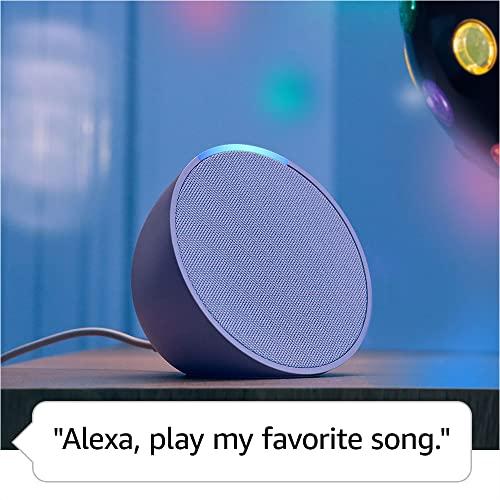
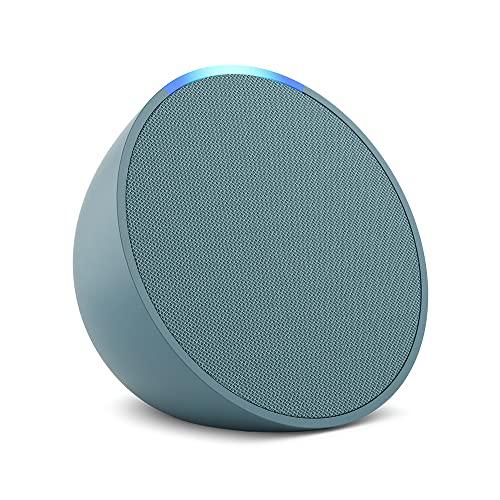
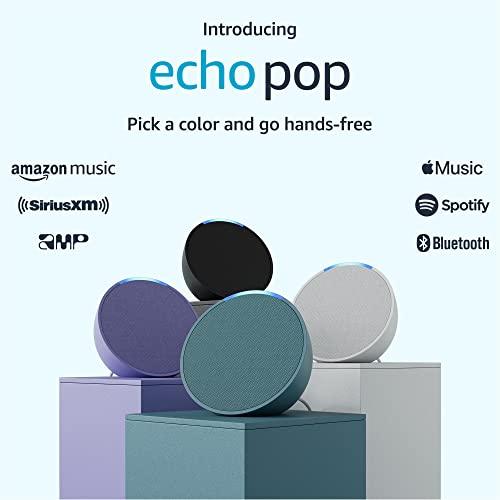
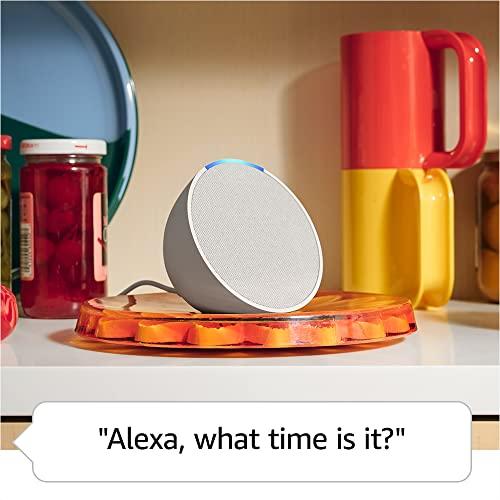
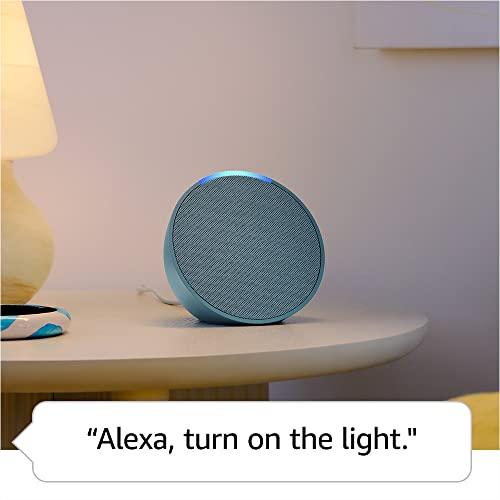
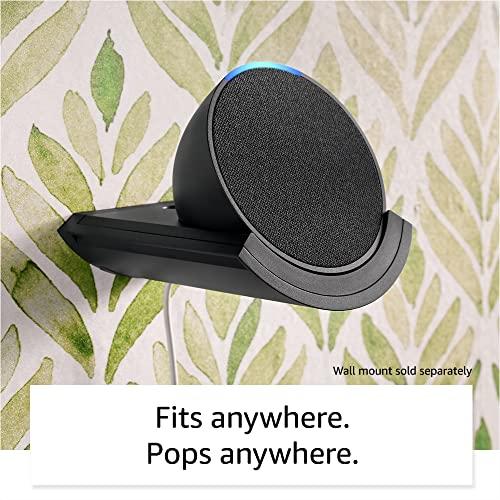
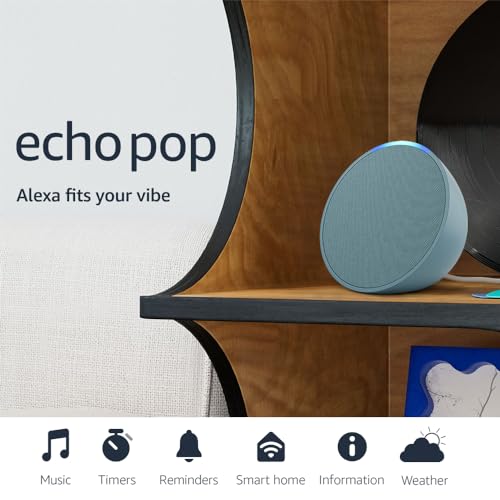
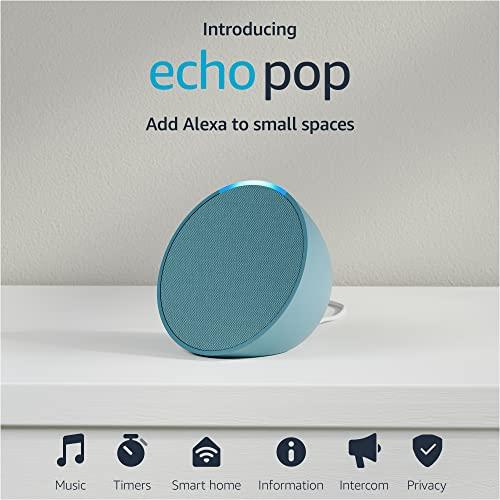
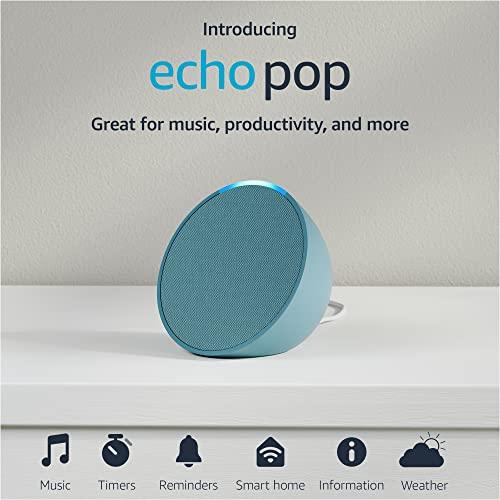
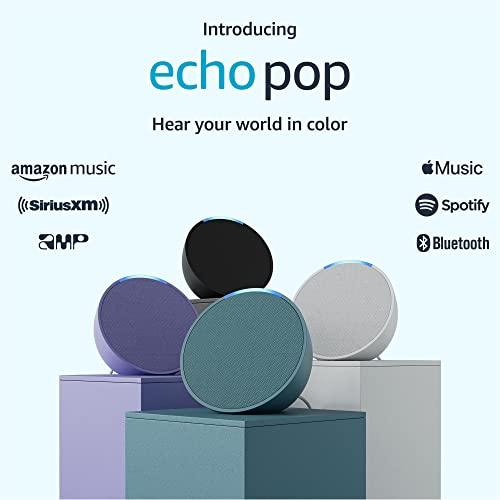
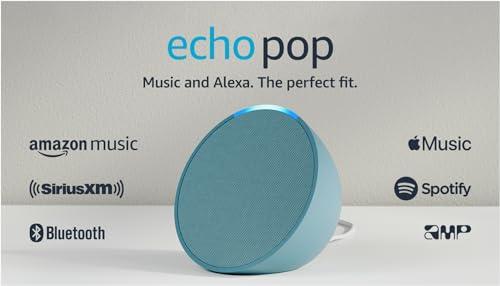
The Echo Pop embraces a unique half-sphere design that's unlike any other Echo device. At roughly the size of a large orange, it's designed to sit against a wall or in a corner, with its speaker firing forward toward you. Amazon clearly optimized this for desktop use – it's the kind of device that disappears into your workspace while still being functional.
What makes the Pop interesting is its front-facing speaker arrangement. Most small speakers try to spread sound in all directions, but Amazon made a deliberate choice here to focus the audio in one direction. This actually makes sense when you think about how people use desktop speakers – you're usually sitting in one spot, so why waste energy pushing sound behind the device?
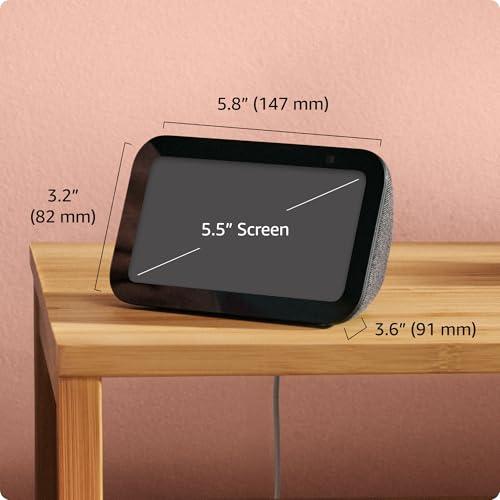
The Echo Show 5 takes a completely different approach with its traditional smart display form factor. It's about twice the weight and significantly larger, but that extra bulk houses a 5.5-inch touchscreen running at 960 × 480 pixels. The resolution isn't going to win any awards, but it's perfectly adequate for reading weather information, viewing photos, or watching the occasional YouTube video.
Both devices received Amazon's AZ2 Neural Edge processor in 2023, which is tech-speak for "the chip that makes Alexa respond faster." In practical terms, this means both devices respond to voice commands within a second or two, which feels natural in conversation. The improved processing power also helps with local command processing, so simple requests like turning off lights don't need to bounce to Amazon's servers.
Here's where things get interesting – despite their different sizes and speaker configurations, the Echo Pop and Echo Show 5 deliver remarkably similar audio quality. This surprised many reviewers when these devices launched, but it makes sense when you look at the hardware specs.
The Echo Pop uses a 1.95-inch driver (the part of the speaker that actually moves air to create sound), while the Echo Show 5 has a 1.75-inch driver. In speaker terms, bigger drivers typically mean better bass response and overall sound quality, so the Pop actually has a slight hardware advantage.
However, the real-world performance is nearly identical between these devices. Both excel at reproducing clear vocals and mid-range frequencies, making them excellent for podcasts, audiobooks, and casual music listening. Neither device will satisfy serious audiophiles – they lack the deep bass response you'd want for electronic music or the detailed high-frequency response that makes acoustic music sparkle.
The sweet spot for both devices is around 40-70% volume. Push them harder, and both start to distort, with the sound becoming harsh and unpleasant. This is typical for small speakers, as the tiny drivers simply can't move enough air to create clean sound at high volumes.
Where they differ is in sound projection. The Echo Pop's front-facing design creates a more focused listening experience – great if you're sitting at a desk directly in front of it. The Echo Show 5's rear-firing speaker creates a more diffused sound that works better when the device is placed centrally in a room.
For home theater use, neither device is particularly compelling as a primary audio source. They work fine for casual YouTube videos or the occasional Netflix show on a laptop, but you'll want dedicated speakers or soundbars for serious movie watching.
Both devices serve as capable smart home hubs, but they approach control in fundamentally different ways. The Echo Pop relies entirely on voice commands, which sounds limiting until you realize how well this actually works for most smart home tasks.
"Alexa, turn off the living room lights" or "Alexa, set the thermostat to 72 degrees" work identically on both devices. The Echo Pop also supports Matter – a relatively new smart home standard that helps different brands of smart devices work together more reliably. This is particularly valuable as the smart home industry moves toward better cross-platform compatibility.
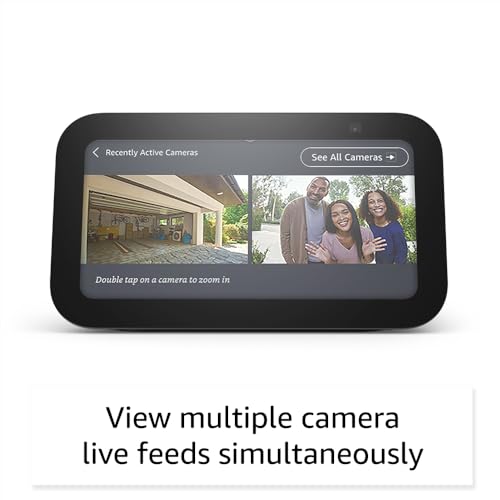
Where the Echo Show 5 pulls ahead is in providing visual feedback and more complex controls. Instead of asking Alexa what the temperature is, you can glance at the screen. Instead of trying to remember voice commands for your security cameras, you can tap an icon to view live feeds.
The visual interface becomes particularly valuable for managing multiple smart devices. If you have several light switches, thermostats, or cameras, the touchscreen lets you see their current status at a glance and make adjustments without speaking. This is especially useful late at night when you don't want to wake others with voice commands.
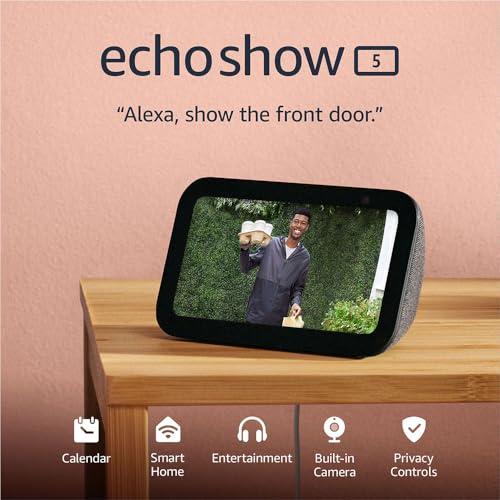
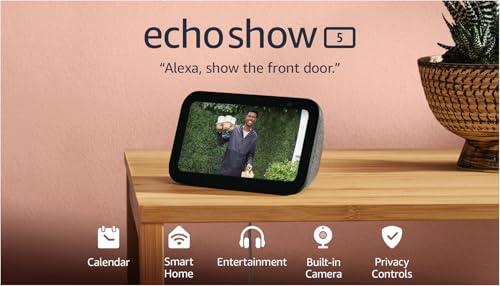
The Echo Show 5 also excels at displaying information from security cameras and video doorbells. When someone rings your doorbell, the display automatically shows the camera feed, and you can have a two-way conversation right from the device. The Echo Pop can handle the audio portion of this interaction, but you miss the visual component entirely.
This is where the devices diverge most dramatically. The Echo Pop is purely an audio device – it can play music, podcasts, audiobooks, and respond to voice queries, but that's the extent of its multimedia capabilities.
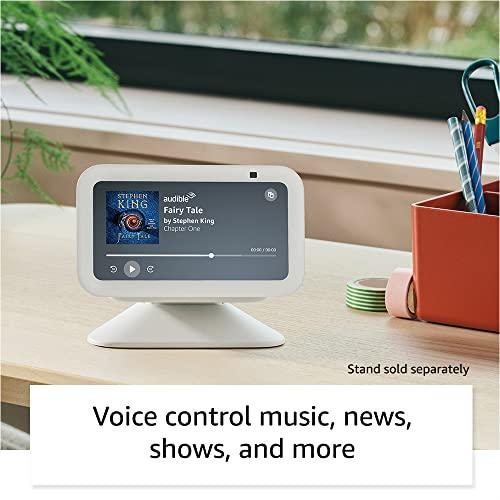
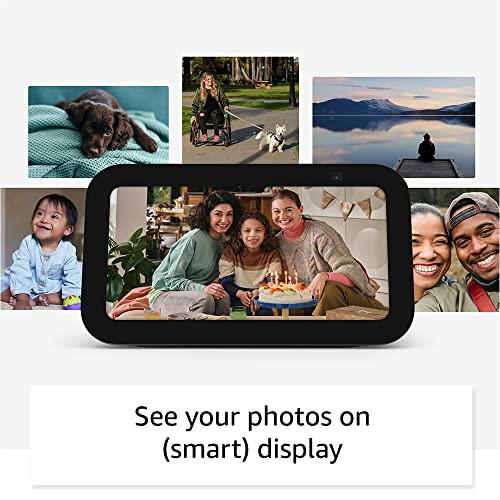
The Echo Show 5 opens up an entirely different world of functionality. You can watch Prime Video content, stream YouTube videos through the browser, view photo slideshows, and use it as a digital photo frame. The 5.5-inch screen isn't large enough for serious movie watching, but it's perfectly sized for checking the weather, reading recipes while cooking, or watching short videos.
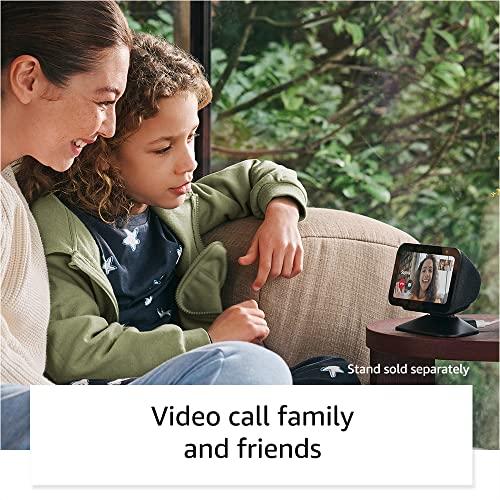
Video calling is another major differentiator. The Echo Show 5 includes a 2-megapixel camera that enables video calls to other Echo Show devices, as well as video calls through services like Zoom (though the experience is better on dedicated video calling devices). This feature proved particularly valuable during the pandemic years and continues to be useful for keeping in touch with family members who also have Echo Show devices.
The camera also enables home monitoring features. You can check in on your space remotely through the Alexa app, though the video quality is basic and there's no night vision capability. It's more of a "peace of mind" feature than a serious security solution.
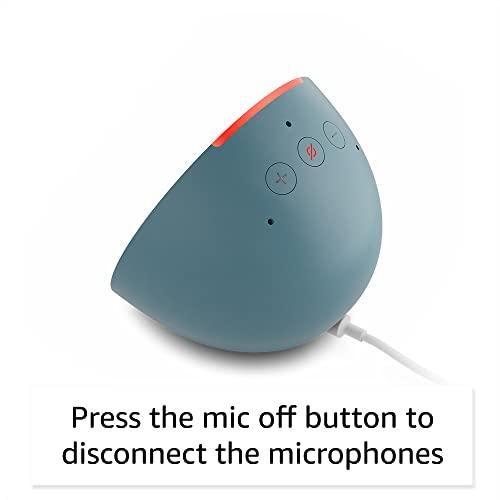
Privacy is an increasingly important consideration with smart home devices, and these two approaches have different implications. The Echo Pop represents the simpler privacy scenario – it has microphones for voice recognition, but no camera. You can physically mute the microphones with a button, and there's a clear visual indicator when they're disabled.
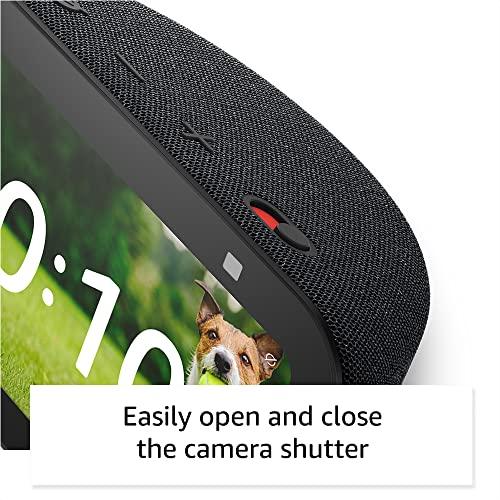
The Echo Show 5 adds complexity with its camera, but Amazon has implemented solid privacy controls. There's a physical camera shutter that mechanically blocks the lens – not just a software setting that could potentially be overridden. The microphone mute button works independently of the camera shutter, so you can disable audio pickup while still using the display features.
Both devices process voice commands locally when possible, thanks to their AZ2 processors, which means simple commands like "turn off the lights" don't necessarily send audio to Amazon's servers. More complex queries still require cloud processing, but the local processing capability provides some privacy benefits.
After researching extensive user feedback and expert reviews, some clear usage patterns emerge. The Echo Pop excels as a secondary device or in spaces where you want Alexa functionality without visual distractions. It's particularly popular in bedrooms, home offices, and small apartments where space is at a premium.
The compact design makes it ideal for placing on nightstands, desks, or shelves where a larger device would feel intrusive. The front-facing speaker works well when positioned near where you spend time – next to a computer, beside a reading chair, or on a kitchen counter where you prep meals.
The Echo Show 5 shines in roles where visual information adds significant value. It's become particularly popular as a smart alarm clock, displaying time, weather, and calendar information at a glance. In kitchens, the ability to display recipes, timers, and cooking videos makes it genuinely useful beyond basic voice commands.
For bedside use, the Show 5's night mode dims the display appropriately, and you can customize what information appears. Many users appreciate being able to check the time, weather, or their schedule without reaching for their phones.
When evaluating these devices, the most important performance characteristics are voice recognition accuracy, response time, audio clarity, and reliability. Both devices perform well in these areas, with voice recognition that works reliably even in moderately noisy environments.
Response time is consistently fast on both devices, thanks to the AZ2 processor. Simple commands execute almost instantly, while more complex queries typically respond within 2-3 seconds. This feels natural in conversation and doesn't create the frustrating delays that plagued earlier smart speakers.
Audio clarity is sufficient for their intended purposes, though neither device will replace dedicated speakers for music enthusiasts. The key metric here is intelligibility – can you clearly understand Alexa's responses and enjoy casual audio content? Both devices pass this test easily.
Reliability has been generally excellent for both devices based on user reports, with stable Wi-Fi connections and consistent performance over time. Software updates arrive regularly and typically improve functionality rather than introducing problems.
At the time of writing, the Echo Pop represents Amazon's most affordable entry into the Alexa ecosystem, typically priced around 40-50% less than the Echo Show 5. This price difference reflects their different target markets and capabilities.
For users who want basic Alexa functionality – music streaming, smart home control, voice queries, and timers – the Echo Pop delivers excellent value. The compact design and Matter support provide good future-proofing, and the audio quality is entirely adequate for casual use.
The Echo Show 5 commands its price premium through multimedia capabilities, the touchscreen interface, and video calling features. Whether these additional features justify the higher cost depends entirely on whether you'll actually use them. If you primarily interact with Alexa through voice commands and don't need visual feedback, you're paying for features you won't utilize.
Choose the Echo Pop if you want simple, affordable access to Alexa's capabilities without the complexity or cost of a display. It's ideal for small spaces, secondary locations throughout your home, or situations where you prefer voice-only interaction. Privacy-conscious users will appreciate the absence of a camera, and the compact design works well in minimalist spaces.
The Echo Show 5 makes sense when you value visual interaction with your smart home system. If you want to view security cameras, make video calls, watch occasional videos, or appreciate having weather and calendar information visible at a glance, the additional cost becomes worthwhile. It's particularly valuable in bedrooms and kitchens where visual information enhances the experience.
Neither device works well as a primary audio source for serious music listening or home theater applications, but both excel in their intended roles as smart home controllers and casual audio devices. The choice ultimately comes down to whether you want a simple voice assistant or a more comprehensive smart home interface with visual capabilities.
The smart home landscape continues evolving rapidly, but both of these 2023 releases represent mature, reliable options that should serve users well for years to come. The Echo Pop offers exceptional value for basic needs, while the Echo Show 5 provides room to grow with additional features you might discover over time.
| Amazon Echo Pop Smart Speaker | Amazon Echo Show 5 3rd Gen Smart Display |
|---|---|
| Primary Interface - How you'll interact with the device | |
| Voice commands only | Voice commands + 5.5" touchscreen (960×480) |
| Audio Hardware - Sound quality and projection | |
| 1.95" front-firing speaker (directional sound) | 1.75" rear-firing speaker (diffused sound) |
| Camera Capability - Video calls and home monitoring | |
| No camera (better for privacy) | 2MP camera with physical privacy shutter |
| Physical Design - Space requirements and placement | |
| Compact half-sphere (99×83×91mm, 196g) | Traditional display form (147×91×82mm, 456g) |
| Smart Home Control - Managing connected devices | |
| Voice-only with Matter support | Voice + touch interface with live camera feeds |
| Multimedia Features - Entertainment beyond audio | |
| Audio streaming only | Video streaming, photo display, visual content |
| Privacy Controls - Protecting your personal data | |
| Microphone mute button (no camera to worry about) | Physical camera shutter + microphone mute |
| Processor - Response speed and local processing | |
| Amazon AZ2 Neural Edge (fast voice response) | Amazon AZ2 Neural Edge + MediaTek MT 8169 B |
| Connectivity Standards - Future compatibility | |
| Wi-Fi, Bluetooth, Matter support | Wi-Fi, Bluetooth, standard Alexa protocols |
| Best Use Cases - Where each device excels | |
| Desks, small bedrooms, secondary speaker | Nightstands, kitchens, visual information needs |
| Value Proposition - What you get for the price difference | |
| Echo Pop: Entry-level Alexa access | Echo Show 5: Full smart display experience |
The Amazon Echo Pop Smart Speaker is ideal for small spaces due to its compact half-sphere design that takes up minimal room. At just 99×83×91mm, it fits easily on desks, nightstands, or small shelves. The Amazon Echo Show 5 3rd Gen Smart Display requires more space but offers visual functionality that many users find worth the extra footprint.
Only the Amazon Echo Show 5 3rd Gen Smart Display supports video calls through its built-in 2MP camera. The Amazon Echo Pop Smart Speaker is audio-only and cannot make video calls, though it can handle voice calls through Alexa's calling features.
Both devices offer surprisingly similar audio quality despite their different designs. The Amazon Echo Pop Smart Speaker has a slightly larger 1.95-inch speaker compared to the Echo Show 5's 1.75-inch driver, but real-world performance is nearly identical for casual music listening and voice responses.
Neither the Amazon Echo Pop Smart Speaker nor the Amazon Echo Show 5 3rd Gen Smart Display are suitable as primary home theater speakers due to their small drivers and limited bass response. They work fine for casual video watching on laptops or tablets, but you'll want dedicated speakers or soundbars for serious movie viewing.
The Amazon Echo Pop Smart Speaker offers simpler privacy since it has no camera - only microphones that can be muted with a physical button. The Amazon Echo Show 5 3rd Gen Smart Display includes comprehensive privacy controls with a physical camera shutter and separate microphone mute, but some users prefer devices without cameras entirely.
Yes, both the Amazon Echo Pop Smart Speaker and Amazon Echo Show 5 3rd Gen Smart Display can control compatible smart home devices through Alexa voice commands. The Echo Show 5 adds visual control through its touchscreen, letting you see device status and make adjustments without speaking.
The Amazon Echo Show 5 3rd Gen Smart Display is particularly popular for bedrooms as it functions as a smart alarm clock with customizable displays and night mode. The Amazon Echo Pop Smart Speaker works well for bedroom use too, especially if you prefer a device without a screen that might be distracting at night.
Neither the Amazon Echo Pop Smart Speaker nor the Amazon Echo Show 5 3rd Gen Smart Display can function without WiFi connection, as they rely on internet connectivity for Alexa features, music streaming, and smart home control. Both require constant power and internet access to operate.
The Amazon Echo Show 5 3rd Gen Smart Display excels in kitchens where you can view recipes, set visual timers, and watch cooking videos. The Amazon Echo Pop Smart Speaker handles basic kitchen tasks like timers and unit conversions but lacks the visual recipe display that makes the Echo Show 5 particularly useful for cooking.
The Amazon Echo Show 5 3rd Gen Smart Display can stream YouTube through its browser and supports various video services, though the 5.5-inch screen is better for short videos than full movies. The Amazon Echo Pop Smart Speaker has no video capabilities and is limited to audio content only.
Both the Amazon Echo Pop Smart Speaker and Amazon Echo Show 5 3rd Gen Smart Display use Amazon's AZ2 Neural Edge processor and respond to voice commands within 1-2 seconds. Response times are virtually identical between the devices, with both offering fast, reliable voice recognition.
The Amazon Echo Pop Smart Speaker offers excellent value as an affordable entry point into the Alexa ecosystem with solid audio quality and smart home control. The Amazon Echo Show 5 3rd Gen Smart Display justifies its higher price through multimedia features, video calling, and visual interface - making it worthwhile if you'll use these additional capabilities.
We've done our best to create useful and informative comparisons to help you decide what product to buy. Our research uses advanced automated methods to create this comparison and perfection is not possible - please contact us for corrections or questions. These are the sites we've researched in the creation of this article: rtings.com - reviewed.com - techradar.com - soundguys.com - youtube.com - youtube.com - youtube.com - bestbuy.com - soundguys.com - rtings.com - goodhousekeeping.com - bestbuy.com - youtube.com - dell.com - manuals.plus - youtube.com - bestbuy.com - en.wikipedia.org - nfm.com - bestbuy.com - reviewed.com - goodhousekeeping.com - techradar.com - geekzone.co.nz - versus.com - youtube.com - versus.com - youtube.com - hindustantimes.com - nfm.com - dimensions.com - gadgetguy.com.au - youtube.com - versus.com - dell.com - bestbuy.com - homedepot.com - homedepot.com - businessinsider.com - en.wikipedia.org - youtube.com

Privacy Policy
Terms and Conditions - Affiliate Policy
Home Security
© Copyright 2008-2026.
11816 Inwood Rd #1211, Dallas, TX 75244