




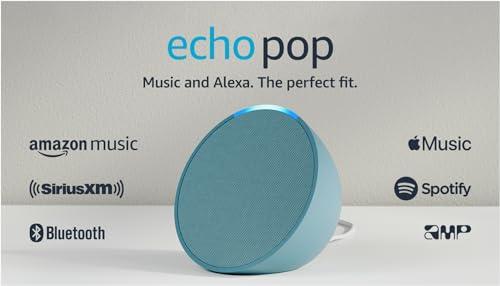
When Amazon released the Echo Pop in 2023, it marked a bold shift toward making Alexa accessible to everyone with an ultra-budget price point. Fast-forward to the Echo Dot Max launch later that year, and Amazon swung completely in the opposite direction—creating their most advanced compact smart speaker to date. These two devices represent fundamentally different approaches to what a smart speaker should be, and choosing between them comes down to understanding what you actually need from this increasingly important piece of home technology.
Smart speakers have evolved far beyond simple voice assistants. Today's models serve as home automation hubs, high-quality audio systems, and even network infrastructure. The key considerations when choosing any smart speaker include audio performance, smart home capabilities, room coverage potential, and overall value for your specific needs. Both the Echo Dot Max and Echo Pop excel in different areas, making this comparison particularly interesting for anyone trying to understand what they're actually getting for their money.
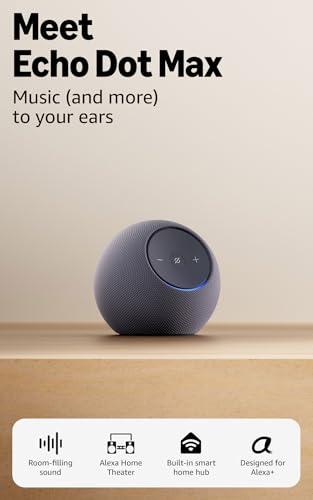
The Echo Dot Max represents Amazon's premium compact speaker approach, featuring their next-generation Alexa+ AI assistant and advanced audio technology. At the time of writing, it sits in the premium compact speaker category, competing directly with devices like Apple's HomePod Mini. The Echo Pop, meanwhile, positions itself as Amazon's most affordable entry point into the Alexa ecosystem, designed for users who want basic smart functionality without breaking the bank.
What makes this comparison fascinating is how dramatically different these approaches are. The Echo Dot Max packs cutting-edge technology into a compact form, while the Echo Pop strips things down to essentials while maintaining surprisingly good performance for its price tier. Understanding which philosophy matches your needs is crucial for making the right choice.
The audio performance gap between these speakers is perhaps their most significant difference. The Echo Dot Max features a completely redesigned internal architecture with two dedicated speakers: a high-excursion woofer (a specialized speaker designed to move more air for deeper bass) and a custom tweeter (a small speaker optimized for high frequencies). This two-way system delivers nearly three times the bass response compared to Amazon's standard Echo Dot, creating what the company calls "room-filling sound."
In contrast, the Echo Pop uses a single 1.95-inch front-firing driver—essentially one speaker pointed directly at you rather than dispersing sound in all directions. While this driver is actually slightly larger than what you'll find in the standard Echo Dot, the overall audio architecture is much simpler and more budget-focused.
Based on extensive user reviews and professional testing, the difference in sound quality is immediately noticeable. The Echo Dot Max delivers clear separation between different frequencies, meaning you can distinctly hear bass lines, vocals, and instruments without them muddying together. The Echo Pop, while surprisingly good for its price point, tends to sound somewhat flat and lacks the depth that makes music truly engaging.
Where things get really interesting is in the advanced features. The Echo Dot Max supports 360-degree spatial audio and Dolby Atmos—technologies that create an immersive soundstage where music seems to come from all around you rather than from a single point. This is the same technology found in high-end home theater systems and represents a significant leap forward for compact speakers.
The spatial audio capability means that when you're listening to properly mastered content, instruments can appear to be positioned in three-dimensional space around you. It's particularly noticeable with acoustic music, live recordings, or movie soundtracks. The Echo Pop lacks these advanced audio processing capabilities entirely, delivering straightforward stereo sound through its single driver.
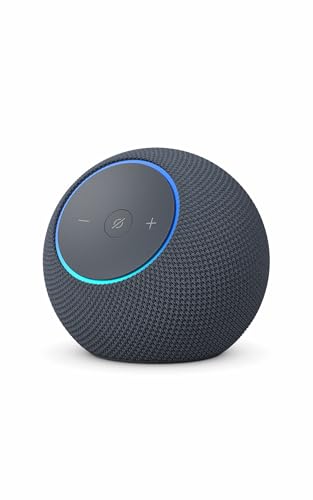
Room coverage represents another major performance difference. The Echo Dot Max uses its spherical design and advanced driver configuration to project sound evenly throughout medium to large rooms. The spherical shape isn't just aesthetic—it's acoustically optimized to minimize distortion and maximize sound dispersion.
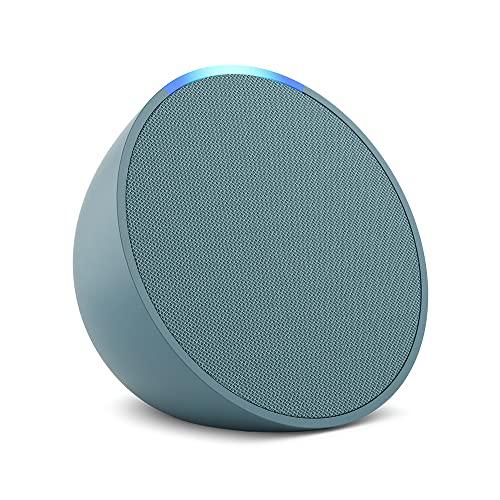
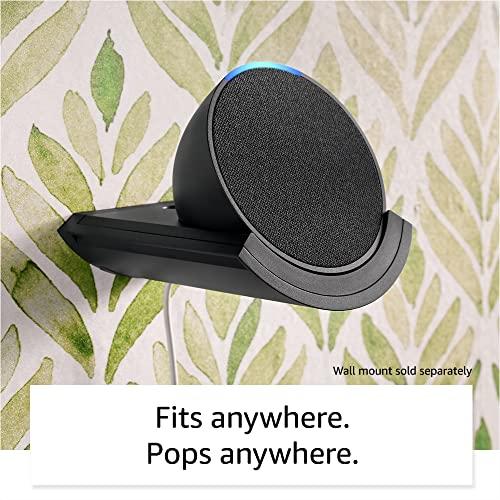
The Echo Pop takes a different approach with its semi-spherical, front-firing design. This directional approach actually works well in specific scenarios—placed against a wall or in a corner, the Echo Pop can sound surprisingly full. However, move away from its optimal listening position, and the audio experience degrades quickly. Our research into user reviews consistently shows that the Echo Pop performs best at moderate volumes (40-70% of maximum) and begins to distort when pushed harder.
The Echo Dot Max runs Amazon's new Alexa+ assistant, powered by their custom AZ3 chip with AI Accelerator technology. This isn't just a marketing term—it represents a fundamental advancement in how the device processes and responds to voice commands. Alexa+ enables more natural conversation patterns, better context awareness, and significantly faster processing of complex requests.
The Echo Pop uses standard Alexa with Amazon's AZ2 Neural Edge processor. While this still provides reliable voice assistant functionality with response times of 1-2 seconds for basic commands, it lacks the conversational improvements and advanced AI capabilities found in the newer system.
In practical terms, Alexa+ can better understand follow-up questions without requiring you to repeat the wake word, maintain context across multiple exchanges, and handle more complex multi-step requests. If you frequently use your smart speaker for detailed information queries, scheduling complex routines, or controlling multiple smart home devices simultaneously, these improvements become quite valuable.
Both devices handle voice recognition well, but with different strengths. The Echo Dot Max features an enhanced microphone array specifically designed to work with Alexa+'s improved processing capabilities. This combination excels at picking up voice commands even in noisy environments—something particularly important if you plan to use the speaker in kitchens, living rooms, or other high-activity areas.
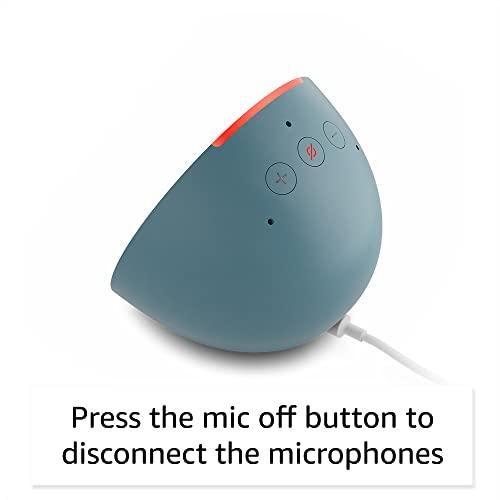
The Echo Pop includes a three-microphone array that performs admirably for its price point. Based on user feedback, it reliably picks up commands in typical home environments, though it may struggle more than the Echo Dot Max with background noise or distant voice commands.
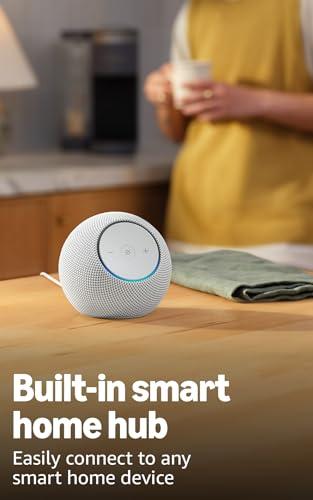
Smart home integration represents another area where these speakers diverge significantly. The Echo Dot Max includes a built-in Zigbee smart home hub—essentially a translator that allows the speaker to communicate directly with many smart home devices without requiring additional hardware. This eliminates the need for separate hubs from companies like Philips (for Hue lights) or Samsung (for SmartThings devices).
The Echo Pop takes a more basic approach, supporting Matter (a new smart home standard) and basic device control, but lacking the built-in Zigbee hub. This means you'll need separate hubs for many smart home devices, potentially adding cost and complexity to your setup.
For anyone building a comprehensive smart home system, this difference can be significant. The Echo Dot Max can serve as the central control point for dozens of devices, while the Echo Pop works better as one component in a larger system rather than as the primary hub.
The Echo Dot Max includes Omnisense technology—advanced sensors that can detect room acoustics and automatically adjust audio output for optimal sound quality. This system also enables more sophisticated automation based on environmental factors, though specific capabilities are still evolving as the technology matures.
The Echo Pop lacks these environmental sensors, focusing instead on basic voice control and simple automations. However, it does offer one unique feature: built-in Eero Wi-Fi extension capabilities. If you're already using Amazon's Eero mesh network system, the Echo Pop can extend your Wi-Fi coverage by up to 1,000 square feet—essentially serving double duty as both a smart speaker and network infrastructure.
The physical design of these speakers reflects their different market positioning. The Echo Dot Max features a premium spherical design with 3D knit fabric specifically chosen for acoustic transparency—meaning the fabric interferes minimally with sound quality. The build quality feels substantial, with careful attention to materials and finish quality.
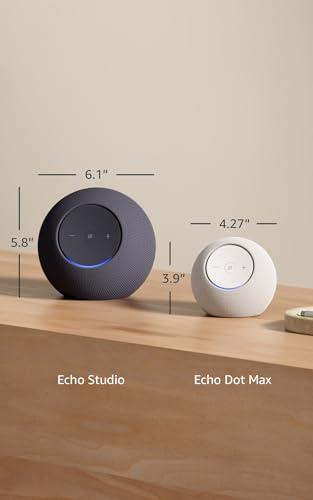
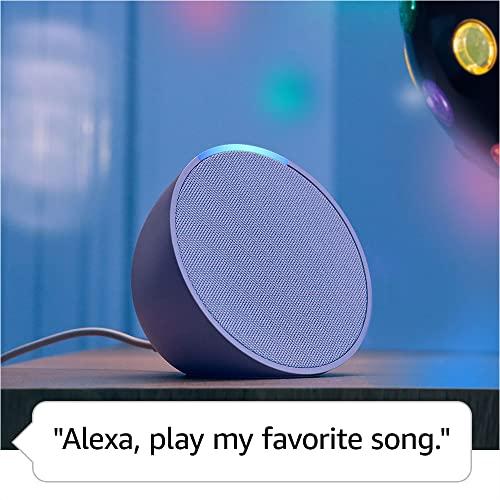
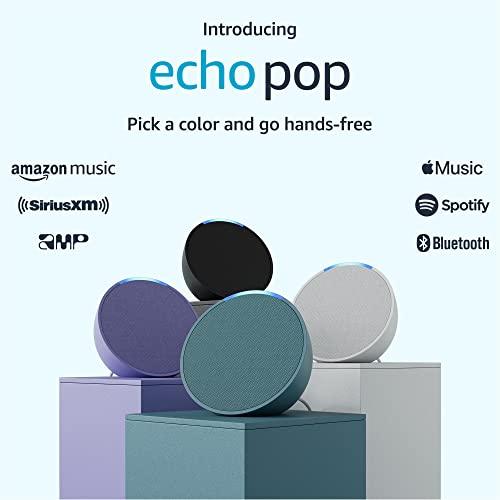
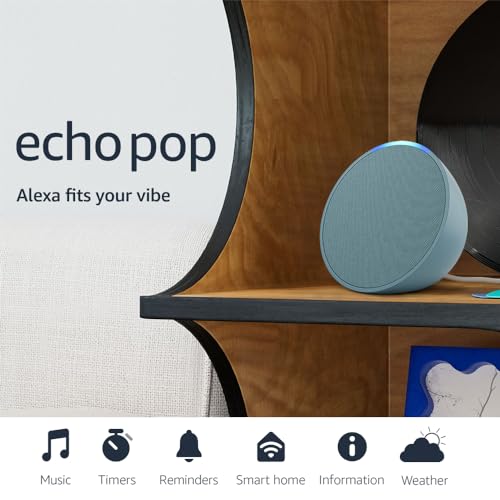
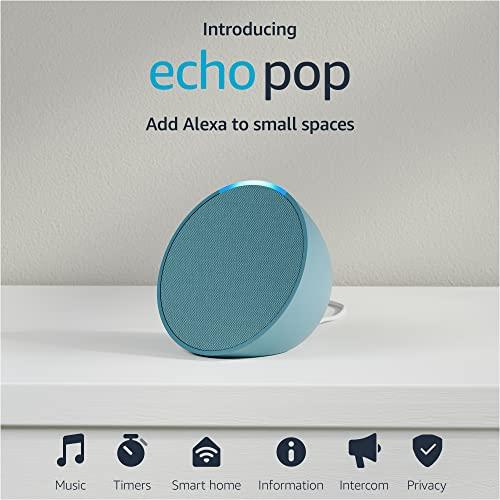
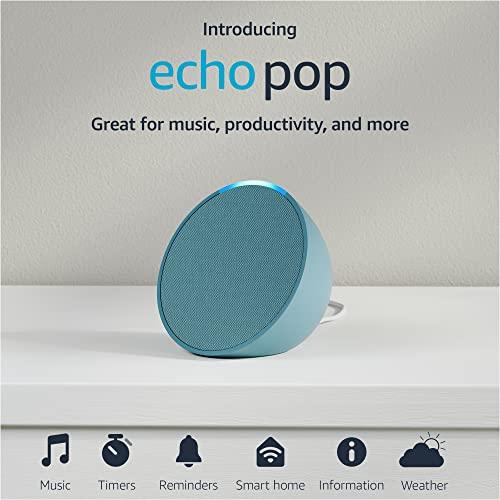
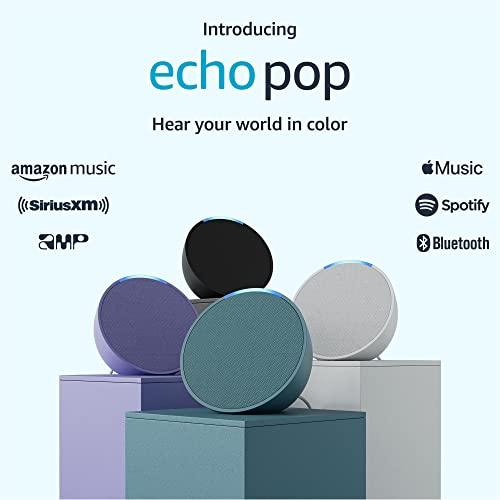
The Echo Pop opts for a more playful, space-efficient approach with its semi-spherical design and broader color options including unique choices like Lavender Bloom and Midnight Teal. The build quality is solid for the price point, though it clearly uses less expensive materials and manufacturing techniques.
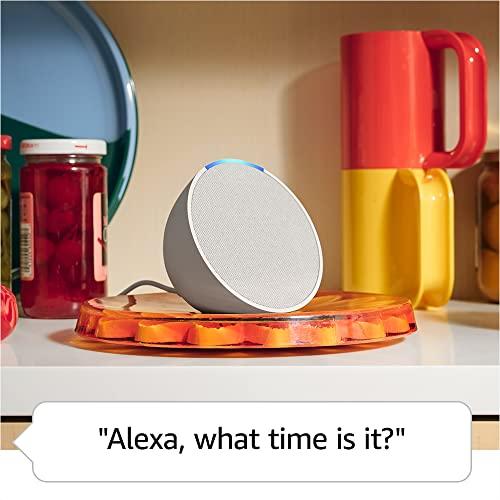
Both designs serve their intended purposes well. The Echo Dot Max looks and feels like a premium audio device, while the Echo Pop successfully achieves an approachable, non-intimidating aesthetic that works well in bedrooms, offices, or other personal spaces.
For users interested in building home theater systems, the Echo Dot Max offers significantly more potential. It can be paired with other Echo Dot Max units or Echo Studio speakers to create full Dolby Atmos surround sound systems when connected to Fire TV devices. This capability transforms the humble smart speaker into part of a serious home entertainment setup.
The multi-speaker pairing extends beyond home theater to whole-home audio systems. Multiple Echo Dot Max units can work together to create synchronized audio throughout your home, with each speaker optimized for its specific room's acoustics.
The Echo Pop supports basic stereo pairing with another Echo Pop unit, which does improve the music listening experience noticeably. However, it lacks the advanced home theater capabilities and sophisticated multi-room optimization found in the premium model.
At the time of writing, the price difference between these speakers is substantial—the Echo Dot Max costs significantly more than the Echo Pop. This raises the obvious question: is the premium justified?
For the Echo Pop, you're getting exceptional value in terms of basic Alexa functionality per dollar spent. It successfully delivers reliable voice control, decent audio for casual listening, and essential smart home capabilities at a price point that makes multiple units feasible for whole-home coverage.
The Echo Dot Max asks you to pay for cutting-edge technology and premium audio performance. You're investing in Alexa+ AI capabilities, advanced audio processing, comprehensive smart home hub functionality, and future-proof technology that will likely receive ongoing feature updates.
The value proposition becomes clearer when you consider total cost of ownership. Echo Pop users may eventually need additional hubs for comprehensive smart home control or better speakers for quality audio, while Echo Dot Max owners get more complete functionality upfront.
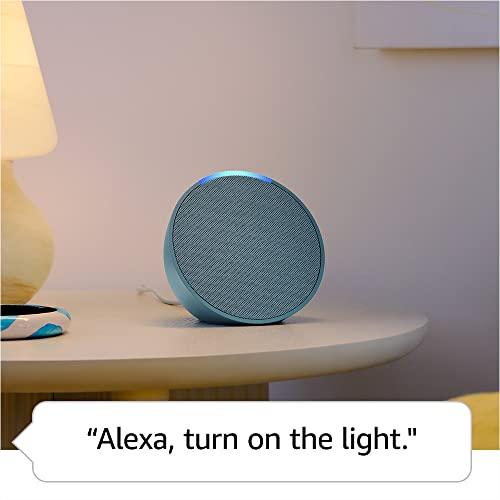
Understanding how these speakers perform in actual daily use helps clarify which might work better for your situation. In small to medium bedrooms, the Echo Pop excels—providing reliable alarm and timer functions, controlling basic smart lights or plugs, and playing podcasts or audiobooks at comfortable volumes. The directional audio actually works well in these intimate spaces.
For kitchen use, where background noise from appliances and cooking activities is common, the Echo Dot Max performs significantly better. Its enhanced microphone array and superior audio processing handle the challenging acoustic environment more effectively.
Living room deployment heavily favors the Echo Dot Max. Its room-filling audio and 360-degree sound dispersion work well for entertaining guests or providing background music during social activities. The Echo Pop can feel inadequate in these larger, more acoustically challenging spaces.
Both speakers represent 2023 technology, but they're positioned very differently for future development. The Echo Dot Max runs on newer, more powerful hardware that's likely to receive ongoing feature updates and capabilities as Amazon develops Alexa+ further. Early access to new AI features and potential software updates make it more future-proof.
The Echo Pop uses proven but more basic technology that's unlikely to see major capability expansions. This isn't necessarily negative—it means the core experience will remain stable and reliable, just without the cutting-edge features that may become available on premium models.
Since their release, Amazon has continued refining both devices through software updates, but the hardware limitations of each model remain fixed. The Echo Pop will always be limited by its single driver and basic processor, while the Echo Dot Max has room to grow through software improvements.
Based on our analysis of user reviews, professional testing, and technical specifications, the decision between these speakers comes down to a few key factors.
Choose the Echo Dot Max if audio quality matters significantly to you, if you're building or expanding a smart home system that needs comprehensive hub capabilities, or if you're interested in cutting-edge AI features and don't mind paying premium prices for advanced technology. It's also the clear choice if you want to build multi-room audio systems or home theater setups.
The Echo Pop makes more sense if you're budget-conscious, need multiple units for whole-home coverage, primarily use your speaker for basic voice commands and light audio duties, or if you're testing the smart speaker category before committing to more expensive options. It's particularly appealing if you already use Eero networking equipment and can benefit from the Wi-Fi extension capabilities.
For most users, the decision ultimately reflects how much you value audio quality and advanced features versus affordability and basic functionality. Both speakers succeed at their intended purposes—the question is which purpose aligns better with your needs and budget. The Echo Dot Max pushes the boundaries of what's possible in a compact speaker, while the Echo Pop proves that useful smart home technology doesn't have to be expensive.
| Amazon Echo Dot Max Smart Speaker | Amazon Echo Pop Smart Speaker |
|---|---|
| Audio System - The most important factor for music and entertainment | |
| Two-way system with dedicated woofer and tweeter, 3x bass boost, 360-degree sound dispersion | Single 1.95" front-firing driver, directional audio, basic stereo sound |
| Voice Assistant Technology - Determines responsiveness and smart capabilities | |
| Alexa+ with AZ3 chip and AI Accelerator for natural conversations and faster processing | Standard Alexa with AZ2 Neural Edge processor, 1-2 second response times |
| Advanced Audio Features - Critical for immersive listening and home theater | |
| 360-degree spatial audio, Dolby Atmos support, multi-speaker pairing for surround sound | No spatial audio or Dolby Atmos, basic stereo pairing only |
| Smart Home Hub Capabilities - Reduces need for additional hardware | |
| Built-in Zigbee hub, Omnisense environmental sensing, comprehensive device control | Matter controller support, no built-in Zigbee hub, basic device control |
| Design and Build Quality - Affects durability and room aesthetics | |
| Premium spherical design with 3D knit fabric, acoustic optimization, LED ring | Semi-spherical with curved LED bar, playful color options, budget-friendly materials |
| Microphone Performance - Important for voice recognition in noisy environments | |
| Enhanced array with improved wake-word detection and noise filtering | Three-microphone array, reliable in quiet to moderate noise environments |
| Room Coverage and Volume - Determines suitability for different spaces | |
| Room-filling sound for medium to large spaces, high volume without distortion | Best for small rooms and personal spaces, distorts at high volumes |
| Connectivity Features - Affects integration with existing home network | |
| Wi-Fi, Bluetooth, no network extension capabilities | Wi-Fi, Bluetooth, built-in Eero mesh network extension up to 1,000 sq ft |
| Multi-Room and Theater Potential - Important for whole-home audio systems | |
| Full home theater surround sound with Fire TV, sophisticated multi-room sync | Basic stereo pairing only, no advanced home theater capabilities |
| Value Proposition - Cost versus features and performance | |
| Premium pricing for cutting-edge AI, superior audio, and comprehensive smart home integration | Exceptional budget value for basic Alexa functionality and decent audio performance |
The Amazon Echo Dot Max Smart Speaker delivers significantly better sound quality with its two-way speaker system featuring a dedicated woofer and tweeter. It produces nearly three times more bass than standard Echo devices and offers 360-degree sound dispersion. The Amazon Echo Pop Smart Speaker has a single front-firing driver that provides clear vocals and decent sound for its price, but lacks the depth and bass response of the Echo Dot Max.
The Amazon Echo Dot Max Smart Speaker features Amazon's advanced Alexa+ AI assistant powered by the AZ3 chip, enabling more natural conversations, better context awareness, and faster processing of complex requests. The Amazon Echo Pop Smart Speaker uses standard Alexa with the AZ2 processor, which provides reliable basic voice commands but lacks the conversational improvements and advanced AI capabilities found in the Echo Dot Max.
The Amazon Echo Pop Smart Speaker is specifically designed for small spaces like bedrooms and offices. Its compact semi-spherical design and directional audio work well when placed against walls or in corners. While the Amazon Echo Dot Max Smart Speaker would also work in small rooms, its premium features and higher cost make the Echo Pop a more practical choice for basic bedroom use.
The Amazon Echo Dot Max Smart Speaker excels for home theater applications with full Dolby Atmos support and the ability to pair with other Echo speakers for surround sound with Fire TV devices. The Amazon Echo Pop Smart Speaker only supports basic stereo pairing and lacks the advanced audio processing needed for home theater systems, making the Echo Dot Max the clear choice for entertainment setups.
The Amazon Echo Pop Smart Speaker provides exceptional value for basic Alexa functionality, smart home control, and casual audio listening at a budget-friendly price point. The Amazon Echo Dot Max Smart Speaker offers premium value for users who prioritize superior audio quality, advanced AI features, and comprehensive smart home hub capabilities, justifying its higher cost with cutting-edge technology.
The Amazon Echo Dot Max Smart Speaker includes a built-in Zigbee smart home hub, allowing direct control of many smart devices without additional hardware. The Amazon Echo Pop Smart Speaker supports Matter and basic device control but lacks a built-in Zigbee hub, meaning you may need separate hubs for comprehensive smart home integration, making the Echo Dot Max more convenient for smart home enthusiasts.
The Amazon Echo Dot Max Smart Speaker features an enhanced microphone array with improved wake-word detection and superior background noise filtering, making it ideal for kitchens and busy living areas. The Amazon Echo Pop Smart Speaker has a three-microphone array that works well in quiet to moderate noise environments but may struggle more than the Echo Dot Max with background noise or distant commands.
Both speakers support multi-room functionality, but with different capabilities. The Amazon Echo Dot Max Smart Speaker offers sophisticated multi-room synchronization with room-specific acoustic optimization and can integrate with other premium Echo devices. The Amazon Echo Pop Smart Speaker supports basic multi-room grouping and is particularly cost-effective for covering multiple rooms, though without the advanced features of the Echo Dot Max.
The Amazon Echo Dot Max Smart Speaker is significantly better for music with its two-way audio system, spatial audio support, and room-filling sound that maintains clarity at higher volumes. The Amazon Echo Pop Smart Speaker handles casual music listening adequately but lacks bass depth and can distort at higher volumes, making the Echo Dot Max the obvious choice for music enthusiasts.
The Amazon Echo Pop Smart Speaker uniquely functions as an Eero Wi-Fi mesh network extender, adding up to 1,000 square feet of coverage for users with compatible Eero systems. The Amazon Echo Dot Max Smart Speaker focuses on smart home integration rather than network extension, offering comprehensive device control through its built-in Zigbee hub instead of the Wi-Fi extension capabilities found in the Echo Pop.
The Amazon Echo Dot Max Smart Speaker is more future-proof with its advanced AZ3 processor and Alexa+ technology, designed to receive ongoing AI feature updates and capability expansions. The Amazon Echo Pop Smart Speaker uses proven but more basic technology that's unlikely to see major capability expansions, though it will remain stable and reliable for its intended basic functions, unlike the evolving capabilities of the Echo Dot Max.
This depends on your needs and budget. Multiple Amazon Echo Pop Smart Speakers provide excellent coverage for whole-home voice control and basic audio at a lower total cost, plus unique Wi-Fi extension benefits. A single Amazon Echo Dot Max Smart Speaker delivers superior audio quality, advanced features, and comprehensive smart home control in one device, making it better for users prioritizing performance over coverage.
We've done our best to create useful and informative comparisons to help you decide what product to buy. Our research uses advanced automated methods to create this comparison and perfection is not possible - please contact us for corrections or questions. These are the sites we've researched in the creation of this article: techradar.com - engadget.com - engadget.com - t3.com - telegraph.co.uk - gadgetmatch.com - youtube.com - youtube.com - youtube.com - youtube.com - homecrux.com - aboutamazon.com - phonearena.com - tomsguide.com - matteralpha.com - techbuzz.ai - techradar.com - pocket-lint.com - bestbuy.com - rtings.com - reviewed.com - techradar.com - soundguys.com - youtube.com - youtube.com - youtube.com - bestbuy.com - soundguys.com - rtings.com - goodhousekeeping.com - bestbuy.com - youtube.com - dell.com - manuals.plus - youtube.com - bestbuy.com - en.wikipedia.org - nfm.com

Privacy Policy
Terms and Conditions - Affiliate Policy
Home Security
© Copyright 2008-2026.
11816 Inwood Rd #1211, Dallas, TX 75244