


When Amazon released the first Echo smart speaker in 2015, it kicked off the smart home revolution. Fast forward to 2023, and we now have an entire ecosystem of voice assistants that can control our lights, play our music, and answer our random 3 AM questions about why cats purr. But with so many options, choosing the right device for your needs can feel overwhelming.
Today, we're comparing two very different approaches to bringing Alexa into your home: the Amazon Echo Show 8, a premium smart display released in 2023, and the Amazon Echo Pop, an entry-level smart speaker from the same year. While both run Alexa, they represent fundamentally different philosophies about how we should interact with our smart assistants.
Before diving into the specifics, it's worth understanding what separates these two product categories. Smart speakers like the Echo Pop focus purely on audio interaction—you talk, they respond with voice, music, or other sounds. They're designed to be heard, not seen.
Smart displays like the Echo Show 8 add a visual layer to this interaction. They combine a touchscreen with traditional voice controls, letting you see weather forecasts instead of just hearing them, watch Netflix while cooking, or make video calls to family members.
The fundamental question isn't just about features—it's about how you want to interact with technology in your home. Some people prefer the simplicity of voice-only interaction, while others appreciate having visual feedback and additional capabilities.
Let's start with audio performance, since both devices need to sound good to be useful. This is where we see the biggest practical difference between investing in a premium device versus an entry-level one.
The Echo Show 8 includes dual 2-inch stereo speakers paired with a passive bass radiator—that's essentially a third speaker element that vibrates to enhance low-frequency sounds without requiring additional power. This setup delivers surprisingly robust audio for a device that's primarily marketed as a visual assistant.
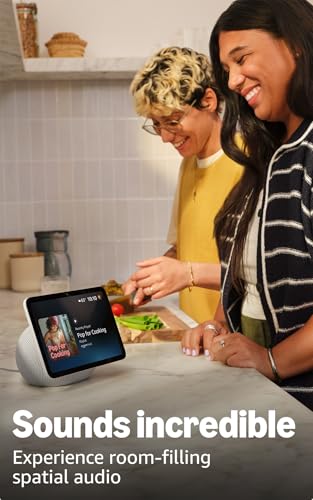
More importantly, Amazon equipped the 2023 model with spatial audio technology, which uses advanced signal processing to create a wider soundstage that fills your room more evenly. Think of it like the difference between listening to music through cheap earbuds versus good bookshelf speakers—the Echo Show 8 creates a more immersive listening experience.
The device also features room adaptation technology, which automatically analyzes your space's acoustics and adjusts the sound accordingly. If you place it on a kitchen counter surrounded by hard surfaces, it compensates for the extra echo. Put it on a bookshelf surrounded by sound-absorbing materials, and it adjusts differently. This kind of intelligent audio processing was typically found only in high-end speakers just a few years ago.
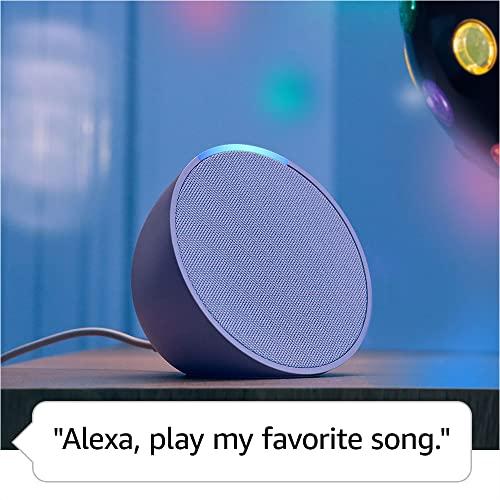
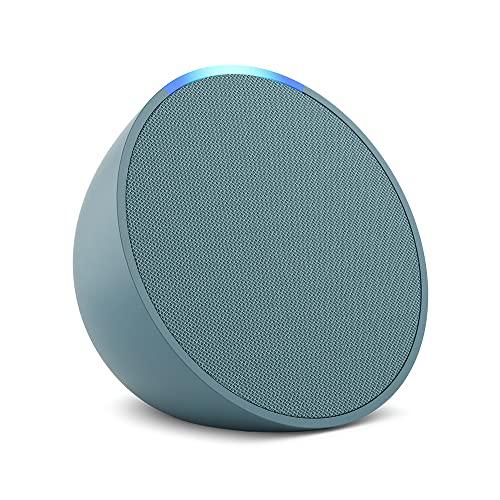
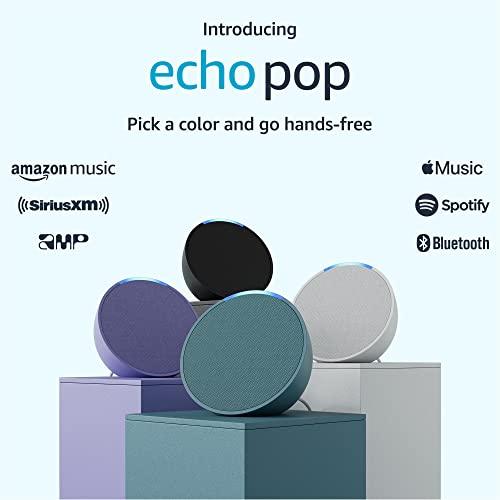
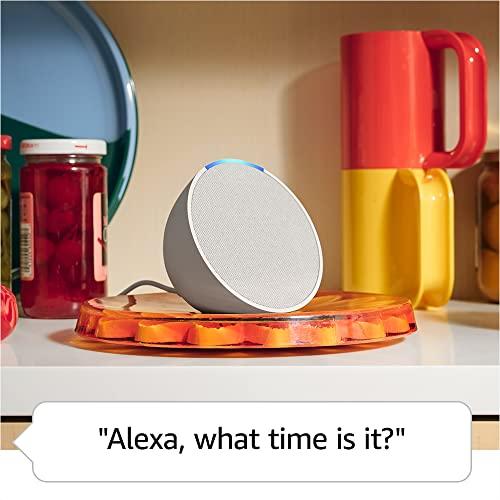
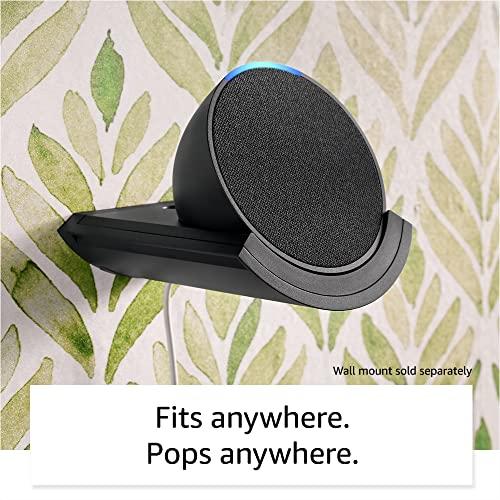
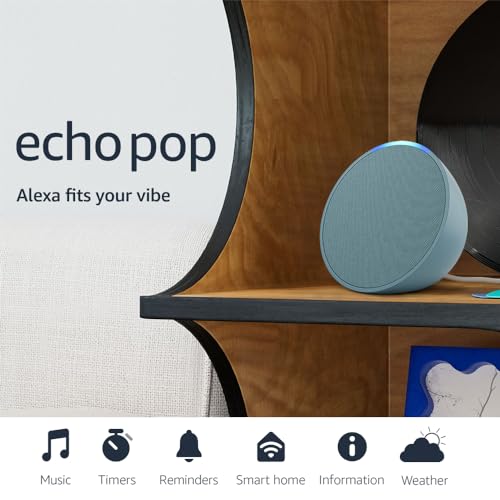
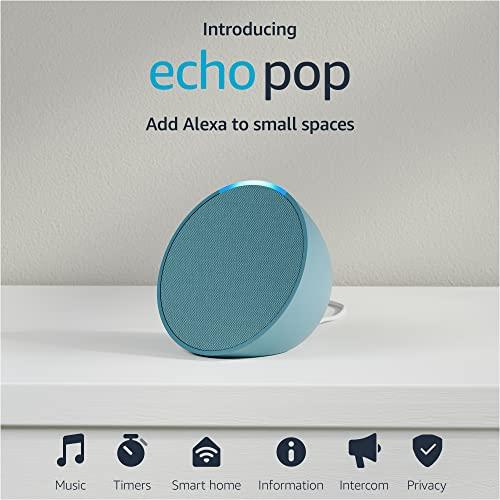
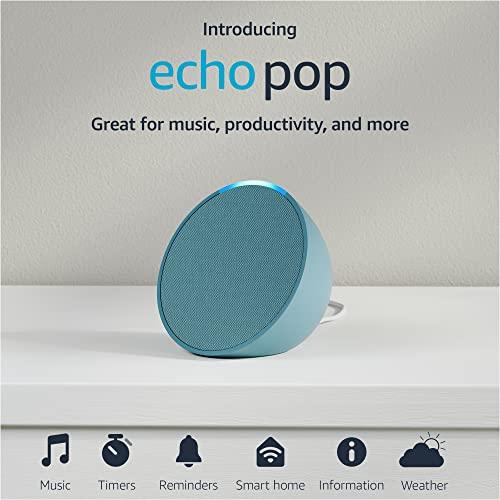
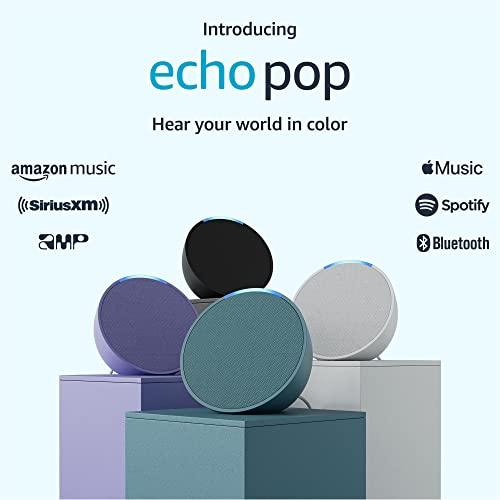
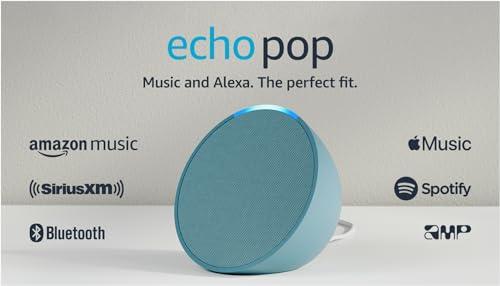
The Echo Pop, at roughly one-sixth the price of the Show 8 (at the time of writing), takes a much simpler approach. It features a single 1.95-inch front-firing driver in a semi-spherical design that's roughly the size of a softball.
While it can't match the Echo Show 8's room-filling audio, the Echo Pop delivers surprisingly clear vocals and adequate bass response for its size. The front-firing design means it works best when placed against a wall or in a corner, where surfaces can help reflect and amplify the sound.
However, there are clear limitations. Push the volume above 70%, and you'll start hearing distortion. The bass response, while decent for such a small driver, can't compete with larger speakers. For background music, podcasts, or audiobooks in a bedroom or small office, it's perfectly adequate. For your main living space or serious music listening, it's not.
If audio quality matters to you, the Echo Show 8 wins decisively. It's not going to replace a dedicated sound system, but it's capable enough to serve as your primary music speaker in most rooms. The Echo Pop is better thought of as a convenience device—it'll get the job done, but don't expect to be blown away.
Both devices use Amazon's AZ2 Neural Edge processor, released in 2023, which represents a significant upgrade over previous generations. This chip enables much faster processing of voice commands locally on the device, rather than sending everything to Amazon's servers.
The practical result is that both the Echo Show 8 and Echo Pop respond to commands in 1-2 seconds, compared to 3-5 seconds for older Echo devices. When you're asking Alexa to turn off the lights as you head to bed, those saved seconds actually matter.
The Echo Show 8 has a slight advantage with its four-microphone array compared to the Echo Pop's three microphones, but in real-world testing, both devices pick up voice commands reliably even in noisy environments. The difference is marginal enough that it shouldn't factor into your decision.
This is where the price difference between these devices becomes most apparent. The Echo Show 8 functions as a comprehensive smart home hub, while the Echo Pop offers basic smart home control.
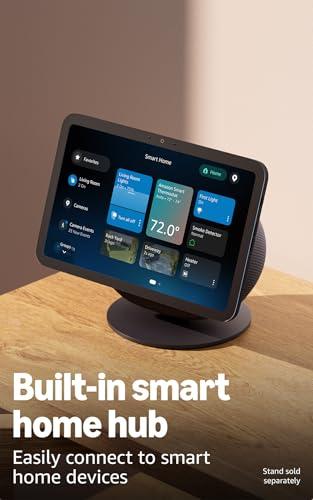
The Echo Show 8 includes built-in support for multiple smart home protocols: Zigbee (a low-power wireless standard used by many smart bulbs and sensors), Matter (the new universal smart home standard), Thread (a mesh networking protocol), and Amazon Sidewalk (which extends your smart home network using neighbors' Echo devices).
In practical terms, this means the Echo Show 8 can directly control a much wider variety of smart home devices without requiring additional hubs. If you buy a Zigbee smart bulb, it can connect directly to the Show 8. Many competing products require you to also purchase a separate hub, adding cost and complexity.
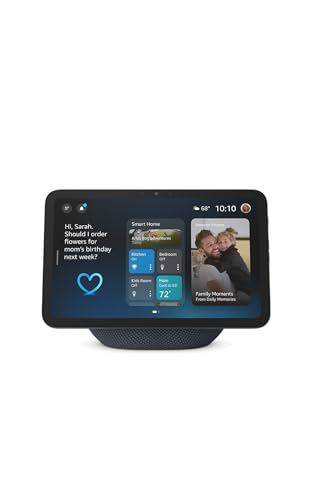
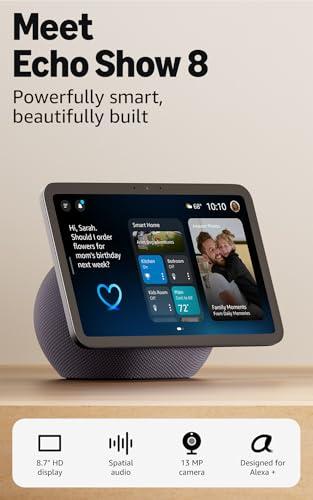
The visual interface makes smart home control more intuitive. Instead of remembering voice commands, you can tap on-screen controls to adjust lights, check camera feeds, or arm security systems. The 8-inch touchscreen displays status information at a glance—you can see which lights are on, what the thermostat is set to, or whether doors are locked.
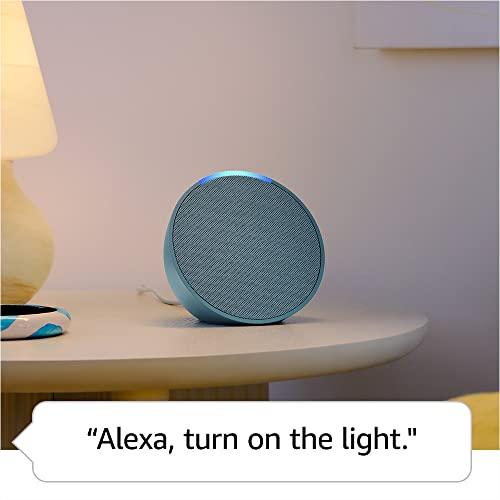
The Echo Pop supports Matter and can act as an Eero Wi-Fi extender (if you have compatible Eero mesh networking equipment), but it lacks the built-in hub capabilities of the Show 8. You'll likely need additional hubs for many smart home devices, and all control happens through voice commands—no visual feedback or touch controls.
For basic setups with a few smart bulbs, plugs, and maybe a smart thermostat, the Echo Pop works fine. But if you're planning to build a comprehensive smart home system, the Echo Show 8 offers significantly more capability and convenience.
Obviously, this is where the Echo Show 8 stands alone, since the Echo Pop has no display at all. But it's worth examining what that screen actually enables.
The 8-inch LCD screen runs at 1280x800 resolution—not quite HD, but sharp enough for comfortable viewing at typical desk or counter distances. The display automatically adjusts brightness based on ambient light, and the edge-to-edge glass design looks modern and premium.
For streaming video, the Echo Show 8 supports major services including Netflix, Hulu, Prime Video, and Fire TV Channels, though notably missing Disney+ and HBO Max at the time of writing. The screen size works well for casual viewing—think watching cooking videos while preparing dinner, or catching up on a show while getting ready in the morning.
The built-in web browser (called Silk) opens up additional possibilities. You can watch YouTube videos, browse recipes, or even video chat through services beyond Amazon's ecosystem.
The 13-megapixel camera is genuinely impressive for a smart display. It supports auto-framing, which uses computer vision to keep you centered in video calls even as you move around. This was cutting-edge technology when Apple introduced it as "Center Stage" on their iPads, and having it on a $180 device (at the time of writing) feels like getting premium features at mainstream prices.
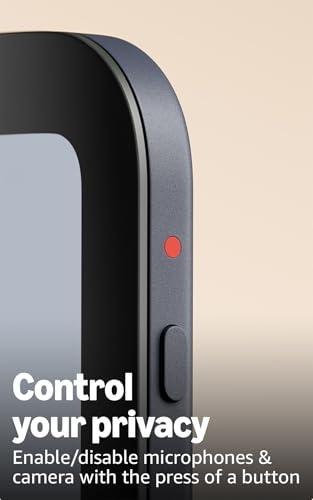
The physical privacy shutter addresses the biggest concern many people have about smart displays—you can physically block the camera when not in use, rather than relying on software controls alone.
Neither device is designed to replace a dedicated home theater setup, but they serve different roles in entertainment ecosystems.
The Echo Show 8 works well as a secondary entertainment device. The screen is perfect for following along with cooking shows in the kitchen, watching morning news at your breakfast counter, or video chatting with family from your home office. The spatial audio makes it surprisingly enjoyable for casual music listening, though serious audiophiles will want dedicated speakers.
The Echo Pop functions more like a satellite speaker in a multi-room audio system. You can group it with other Alexa devices for synchronized music playback throughout your home, but it's not meant to be your primary entertainment source.
For home theater specifically, both devices can control compatible smart TVs and streaming devices through voice commands, but neither offers features like HDMI connectivity or surround sound capabilities.
Want a kitchen assistant: The combination of visual recipe display, video entertainment, and quality audio makes the Echo Show 8 excellent for kitchens. You can follow cooking videos hands-free, set multiple timers with visual feedback, and enjoy music or shows while cooking.
Need video calling: With remote work and distributed families becoming more common, having a dedicated video calling device that's always plugged in and ready to go has real value. The auto-framing camera means you don't need to worry about positioning yourself perfectly.
Plan serious smart home automation: If you're building out a comprehensive smart home system, the Echo Show 8's built-in hub capabilities and visual controls will save you money and complexity over time.
Want a central information hub: The always-on display showing time, weather, calendar events, and notifications makes it useful as a family command center.
Need coverage in small spaces: Bathrooms, bedrooms, walk-in closets, or dorm rooms where a larger device wouldn't fit well but you still want Alexa access.
Want budget-friendly whole-home coverage: At roughly one-sixth the price, you can afford to put Echo Pop devices in multiple rooms for comprehensive voice control throughout your home.
Prefer minimal visual distractions: Some people find always-on screens distracting or intrusive. The Echo Pop's audio-only approach feels less invasive.
Have basic needs: If you mainly want to play music, set timers, and control a few smart lights, the Echo Pop handles these tasks perfectly well.
Both devices represent Amazon's 2023 technology refresh, incorporating lessons learned from nearly a decade of smart speaker development. The AZ2 processor in both devices enables faster local processing, which is increasingly important as privacy concerns grow and internet connectivity becomes less reliable.
The Echo Show 8's support for Matter and Thread positions it well for the evolving smart home landscape. As more devices adopt these open standards, having native support will become increasingly valuable.
The Echo Pop's compact design reflects a growing trend toward more discrete smart home devices. Not everyone wants prominent technology in every room, and the Pop's unobtrusive form factor addresses that concern.
The choice between these devices ultimately comes down to how you want to interact with your smart assistant and what role you want it to play in your daily life.
If you're looking for a smart assistant that can grow with your needs—handling video calls today, serving as a smart home hub tomorrow, and providing entertainment throughout—the Echo Show 8 justifies its higher price through versatility and capability.
If you need a simple, affordable way to add Alexa to additional rooms or want a no-frills assistant for basic tasks, the Echo Pop delivers excellent value for money.
Consider starting with an Echo Pop if you're new to smart assistants and unsure about your needs. You can always add an Echo Show 8 later as your primary device while using the Pop for secondary rooms. The beauty of Amazon's ecosystem is that all these devices work together seamlessly.
The bottom line: both devices excel in their intended roles, but they serve fundamentally different needs. Choose based on your space, budget, and how much you value visual interaction with your smart assistant.
| Amazon Echo Show 8 Display | Amazon Echo Pop Smart Speaker |
|---|---|
| Display - Core differentiator between smart displays and speakers | |
| 8-inch HD touchscreen (1280x800) with ambient light sensor | No display - audio-only interaction |
| Camera - Essential for video calls and smart home monitoring | |
| 13MP with auto-framing, digital zoom, and physical privacy shutter | No camera |
| Audio System - Determines sound quality and room coverage | |
| Dual 2-inch stereo speakers + passive bass radiator with spatial audio | Single 1.95-inch front-firing driver |
| Smart Home Hub - Built-in connectivity reduces need for additional hubs | |
| Zigbee, Matter, Thread, BLE Mesh, Sidewalk support | Matter controller and Eero Wi-Fi extension only |
| Processor - Affects response speed and local processing capabilities | |
| Octa-core SoC with AZ2 Neural Engine (40% faster than previous gen) | AZ2 Neural Edge processor |
| Microphone Array - Voice pickup quality in noisy environments | |
| 4-microphone array with far-field voice recognition | 3-microphone array with wake word detection |
| Streaming Services - Entertainment options beyond music | |
| Netflix, Hulu, Prime Video, Fire TV Channels, web browser | Audio streaming only (Spotify, Apple Music, etc.) |
| Form Factor - Placement flexibility and space requirements | |
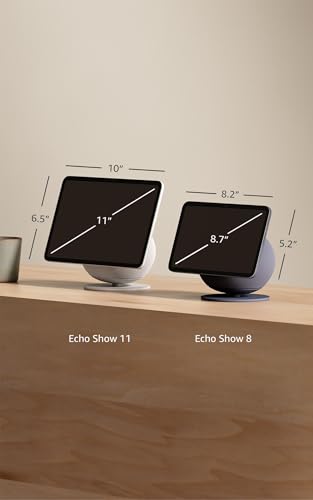
| Desktop/counter device (200 x 139 x 106mm, 1034g) | Compact semi-sphere (99 x 83 x 91mm, 196g) |
| Connectivity Options - How content gets to the device | |
| Dual-band Wi-Fi, Bluetooth A2DP (no 3.5mm output) | Dual-band Wi-Fi, Bluetooth streaming |
| Privacy Controls - Physical vs software-only privacy features | |
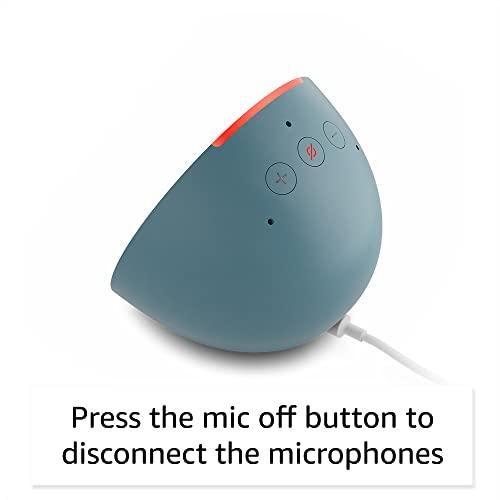
| Physical camera shutter + microphone mute button | Microphone mute button (lights up red when active) |
| Multi-room Audio - Whole-home music system capabilities | |
| Speaker groups via Alexa app, room adaptation technology | Speaker groups via Alexa app, directional sound |
| Release Generation - Latest tech improvements and future support | |
| 3rd generation (2023) - major processor and camera upgrades | 2023 launch model with current AZ2 processing |
The Amazon Echo Show 8 is a smart display with an 8-inch touchscreen, while the Amazon Echo Pop is a compact smart speaker with no display. The Echo Show 8 lets you watch videos, make video calls, and see visual responses from Alexa, whereas the Echo Pop is purely audio-based for voice commands and music playback.
The Amazon Echo Show 8 delivers significantly better audio quality with dual 2-inch stereo speakers, a passive bass radiator, and spatial audio technology. The Amazon Echo Pop has a single compact driver that's adequate for small rooms but can't match the room-filling sound of the Echo Show 8.
Only the Amazon Echo Show 8 supports video calling with its 13MP camera that includes auto-framing and a physical privacy shutter. The Amazon Echo Pop has no camera, so it's limited to voice-only calls through Alexa's Drop In feature.
The Amazon Echo Show 8 is superior for smart home control, featuring built-in Zigbee, Matter, Thread, and Sidewalk support, plus visual touch controls on its display. The Amazon Echo Pop offers basic smart home control through voice commands but lacks the comprehensive hub capabilities and visual interface.
The Amazon Echo Show 8 can stream video from Netflix, Hulu, Prime Video, Fire TV Channels, and includes a web browser for YouTube access. The Amazon Echo Pop only streams audio content from music services like Spotify, Apple Music, and Amazon Music.
The Amazon Echo Pop is ideal for small spaces with its compact semi-spherical design that fits on nightstands or small shelves. The Amazon Echo Show 8 requires more counter or desk space and might be too prominent for intimate spaces like bedrooms.
Both the Amazon Echo Show 8 and Amazon Echo Pop use Amazon's AZ2 processor for fast Alexa responses within 1-2 seconds. The Echo Show 8 provides visual feedback for responses, while the Echo Pop relies purely on audio responses.
While neither device replaces a home theater system, the Amazon Echo Show 8 can control compatible smart TVs and streaming devices through voice commands, and its display works well for casual video watching. The Amazon Echo Pop can also control TVs via voice but offers no visual entertainment features.
The Amazon Echo Pop provides exceptional value as an entry-level smart speaker, while the Amazon Echo Show 8 justifies its higher cost through extensive visual features, better audio, and comprehensive smart home capabilities. Your choice depends on whether you need display functionality.
Only the Amazon Echo Show 8 has a camera - a high-quality 13MP sensor that can display feeds from other security cameras and serve as a security monitor itself. The Amazon Echo Pop has no camera capabilities for security or monitoring purposes.
The Amazon Echo Show 8 excels in kitchens with its recipe display, cooking timers with visual feedback, video entertainment while cooking, and superior audio quality. The Amazon Echo Pop can handle basic kitchen tasks like timers and music but lacks the visual assistance features.
Both the Amazon Echo Show 8 and Amazon Echo Pop support multi-room audio through Alexa speaker groups. The Echo Pop's lower cost makes it more practical for placing multiple units throughout your home, while the Echo Show 8 works better as a central hub with satellite speakers.
We've done our best to create useful and informative comparisons to help you decide what product to buy. Our research uses advanced automated methods to create this comparison and perfection is not possible - please contact us for corrections or questions. These are the sites we've researched in the creation of this article: thedisconnekt.com - thehousetech.com - bestbuy.com - tomsguide.com - youtube.com - bestbuy.com - dimensions.com - engadget.com - youtube.com - techradar.com - ifixit.com - dreamgreenhouse.com - aboutamazon.com - engadget.com - en.wikipedia.org - bestbuy.com - homedepot.com - rtings.com - reviewed.com - techradar.com - soundguys.com - youtube.com - youtube.com - youtube.com - bestbuy.com - soundguys.com - rtings.com - goodhousekeeping.com - bestbuy.com - youtube.com - dell.com - manuals.plus - youtube.com - bestbuy.com - en.wikipedia.org - nfm.com

Privacy Policy
Terms and Conditions - Affiliate Policy
Home Security
© Copyright 2008-2026.
11816 Inwood Rd #1211, Dallas, TX 75244