

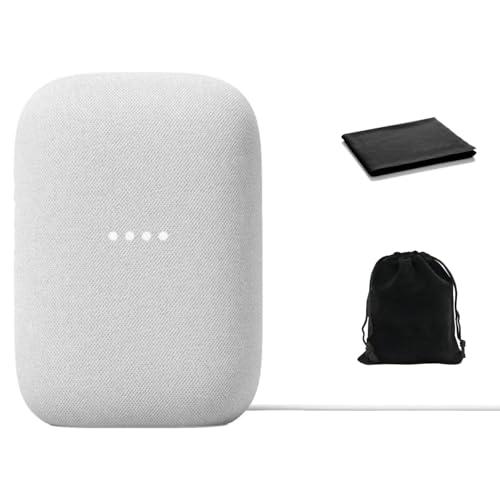
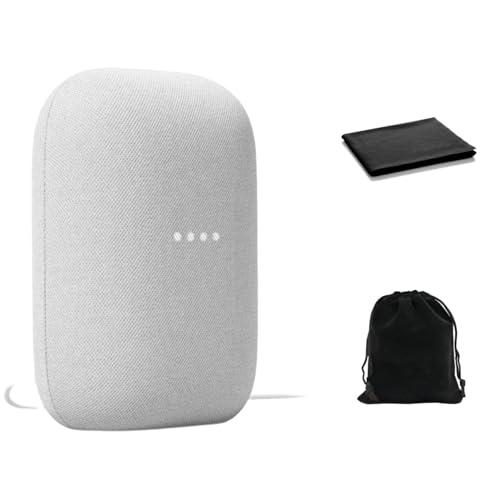
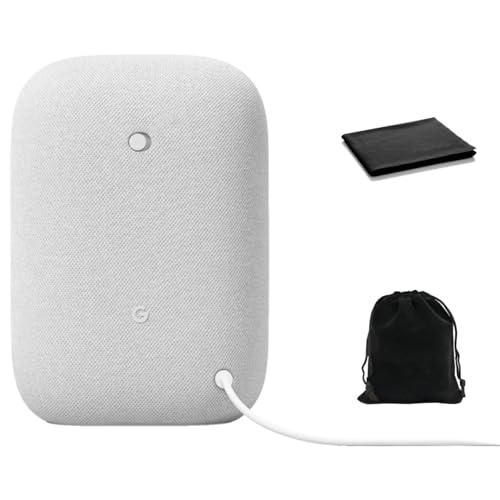
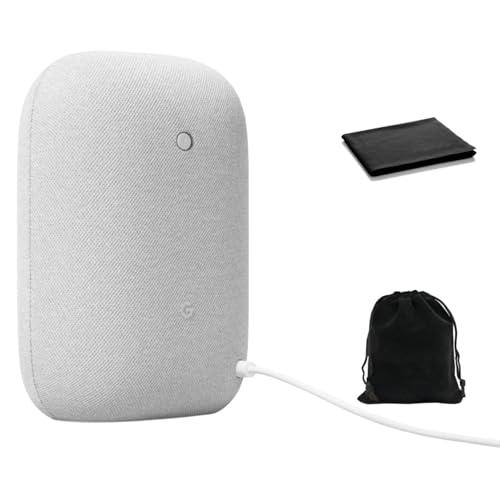
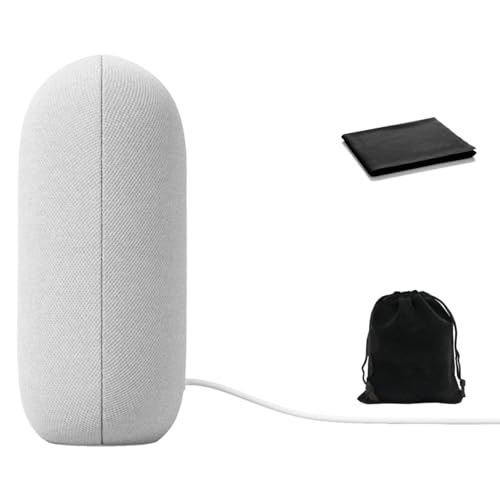
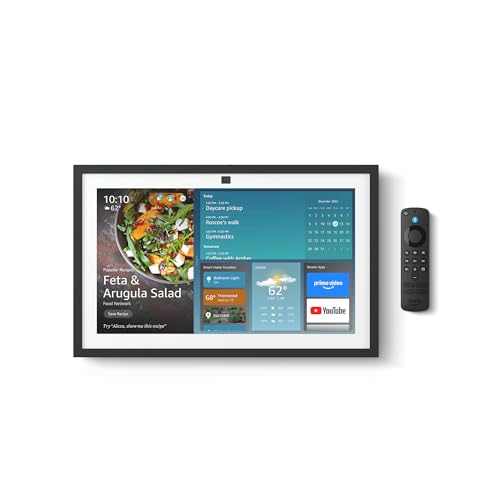

Smart home voice assistants have taken two very different evolutionary paths since their introduction in the mid-2010s. On one side, you have dedicated smart speakers like the Google Nest Audio that focus entirely on delivering excellent sound quality and seamless voice control. On the other, there are smart displays like the Amazon Echo Show 15 that combine large touchscreens with voice assistants to create comprehensive information hubs.
These aren't really competing products in the traditional sense—they're solving different problems with different approaches. But if you're trying to decide which type of device belongs in your home, understanding their fundamental differences will help you make the right choice.
The Google Nest Audio, released in 2020, represents Google's refined vision of what a smart speaker should be. It's essentially an evolved version of the original Google Home, but with dramatically improved audio engineering. Google learned from years of user feedback that people primarily wanted two things from their smart speakers: great sound quality for music, and reliable voice control for smart home management.
The Amazon Echo Show 15, launched more recently as Amazon's flagship display device, takes a completely different approach. Instead of focusing solely on audio, Amazon built what's essentially a wall-mounted tablet that happens to have excellent voice recognition. The 15.6-inch screen transforms how you interact with your smart home by making information visual and immediately accessible.
Think of it this way: the Nest Audio is like having a really smart radio that you talk to, while the Echo Show 15 is more like having a smart TV that also controls your house. Both can play music and answer questions, but they excel at very different tasks.
When it comes to sound quality, the Google Nest Audio absolutely dominates this comparison. This isn't surprising—Google designed every component specifically for audio reproduction. The device uses a 75mm woofer (the larger speaker that handles bass and midrange frequencies) paired with a 19mm tweeter (the smaller speaker that produces crisp high frequencies). This two-driver system creates what audio engineers call a "full-range" sound profile, meaning it can accurately reproduce everything from deep bass notes to sparkling cymbal crashes.
The technical improvements over the original Google Home are substantial. Google claims the Nest Audio delivers 75% more volume and 50% stronger bass response. More importantly, the device includes real-time audio processing that automatically adjusts the sound based on what you're listening to and where the speaker is placed in your room. This adaptive audio technology means the speaker sounds good whether it's on a bookshelf, kitchen counter, or mounted on a wall.
One particularly clever feature is called Ambient IQ, which uses the device's microphones to detect background noise levels and automatically adjusts volume for spoken content like podcasts or news. If your dishwasher kicks on while you're listening to the morning briefing, the Nest Audio will increase its volume slightly to compensate.
The Amazon Echo Show 15, unfortunately, makes significant audio compromises to accommodate its large screen. The speakers fire backward, directing sound away from listeners toward the wall behind the device. This rear-firing design creates what acoustics experts call "indirect" sound—the audio bounces off the wall before reaching your ears, which reduces clarity and creates a somewhat hollow, distant sound quality.
Professional reviews consistently describe the Echo Show 15's audio as "thin" and lacking bass depth. The backwards speaker placement made sense from an engineering perspective (it saved space behind the screen), but it fundamentally compromises the listening experience. If you're planning to use an Echo Show 15 primarily for music, you'll likely want to pair it with external Bluetooth speakers.
For home theater use, neither device serves as an ideal TV speaker replacement, but for different reasons. The Nest Audio lacks the visual component needed for modern streaming, while the Echo Show 15 has the screen but poor audio placement. However, the Echo Show's built-in Fire TV functionality does make it suitable as a small secondary TV for kitchens or bedrooms, especially if you add external speakers.
Both devices excel at voice recognition, but they take different approaches to smart home management. The Google Nest Audio uses three far-field microphones arranged to pick up voices from multiple directions, even in noisy environments. Google's voice processing has improved significantly since 2020, with better natural language understanding and faster response times.
The Amazon Echo Show 15 goes further with six microphones arranged in an array pattern that provides even better voice pickup. In practical terms, both devices will reliably hear you from across a typical room, but the Echo Show's additional microphones give it a slight edge in challenging acoustic environments.
Where they really differ is in smart home control methods. With the Nest Audio, everything happens through voice commands. Want to dim your living room lights? You ask Google to do it. Want to check if your front door is locked? You ask, and Google tells you verbally.
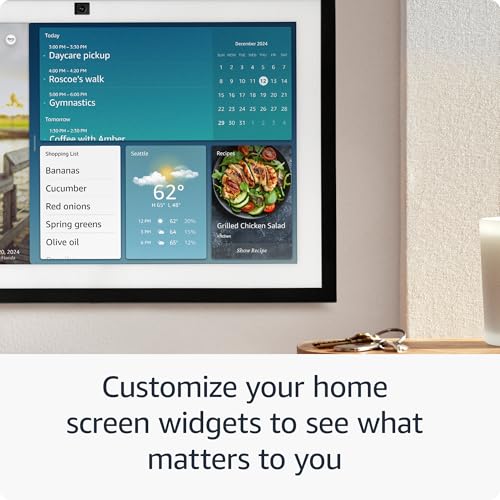
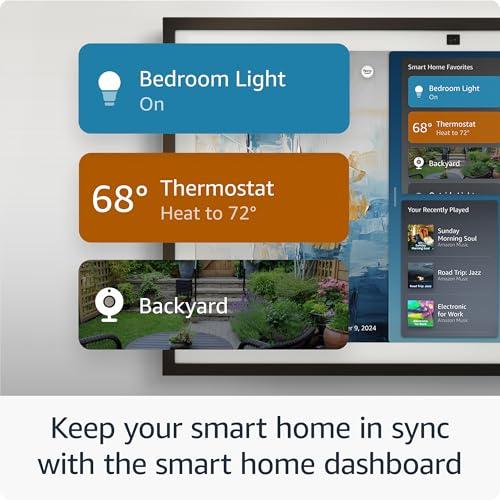
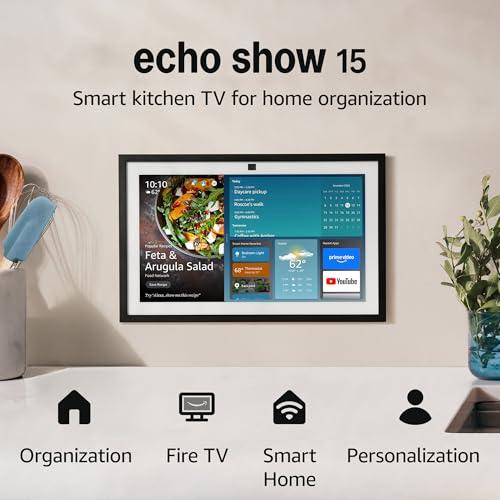
The Echo Show 15 adds visual control through customizable widgets—essentially small app-like interfaces displayed on the home screen. You can see the current temperature on your thermostat, the status of your smart locks, or your security camera feeds without asking any questions. For quick adjustments, you can simply touch the screen rather than speaking commands aloud.
This visual approach becomes particularly powerful for complex smart home setups. The Echo Show 15 supports Zigbee, Matter, and Thread protocols (technical standards that allow smart home devices to communicate), effectively turning it into a central hub that can directly control compatible devices without requiring separate hubs or bridges.
This is where the philosophical differences between these devices become most apparent. The Google Nest Audio provides information through conversation. Ask about weather, and it tells you the forecast. Ask about your calendar, and it reads your appointments. This voice-only approach works well for quick information requests and keeps you hands-free.
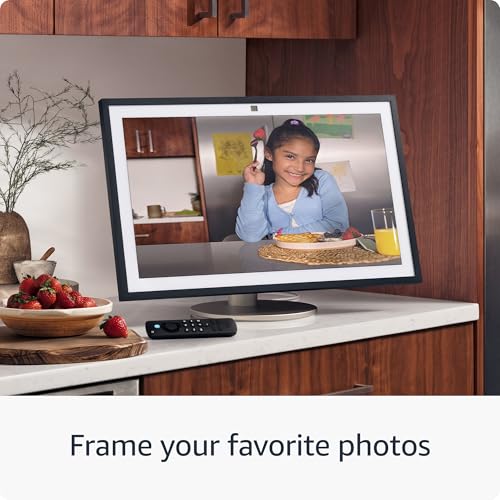
The Amazon Echo Show 15 transforms information access into something more like using a smartphone or tablet. The customizable widget system lets you see your calendar, weather forecast, shopping lists, and sticky notes all at once on the home screen. You can write notes by voice that appear as text, create shopping lists that family members can see and modify, and display family photos that rotate throughout the day.
The Visual ID feature (Amazon's term for facial recognition technology) allows the Echo Show 15 to recognize different family members and display personalized information. When you walk into the kitchen, it might show your calendar appointments, while showing your spouse's schedule when they approach. This personalization works alongside Voice ID, which recognizes different voices for audio interactions.
For families, this visual approach to information management can be genuinely transformative. Instead of everyone checking their phones for basic household information, the Echo Show 15 becomes a central information hub that reduces digital friction in daily routines.
The entertainment capabilities highlight another major difference between these approaches. The Google Nest Audio excels at audio-focused entertainment. Music streaming sounds excellent, with support for all major services including YouTube Music, Spotify, and Pandora. The Chromecast functionality (Google's wireless streaming technology) lets you easily send audio from your phone, tablet, or computer to the speaker.
For multi-room audio, the Nest Audio really shines. You can group multiple Google speakers throughout your home for synchronized playback, creating a whole-house audio system that's both affordable and high-quality. This capability makes it particularly appealing for music enthusiasts who want consistent audio experiences across multiple rooms.
The Amazon Echo Show 15 adds video entertainment through its built-in Fire TV functionality. You can access Netflix, Disney+, Prime Video, and other streaming services directly on the 15.6-inch screen. While this isn't large enough to replace your main TV, it works well for casual viewing in kitchens, bedrooms, or home offices.
The video calling capabilities deserve special mention. The Echo Show 15's 5MP camera supports auto-framing, which means it can track your movement and keep you centered in video calls. This works well for kitchen video calls while cooking or family calls where multiple people might be moving around. The camera quality is adequate for family calls, though not quite as sharp as dedicated video calling devices.
At the time of writing, these devices occupy very different price ranges, which reflects their different capabilities and target users. The Google Nest Audio typically sells for around $100, making it accessible for most households and affordable enough to buy multiple units for different rooms.
The Amazon Echo Show 15 commands a significantly higher price—usually around $250-300—which positions it as a more premium purchase. However, this pricing makes sense when you consider that you're essentially getting a smart display, digital photo frame, smart home hub, and small TV in one device.
For the Nest Audio, the value proposition is straightforward: exceptional audio quality and reliable smart home control at an accessible price point. If you already use Google services (Gmail, Google Calendar, Android phones), the integration feels seamless and natural.
The Echo Show 15's value depends heavily on how much you'll use its visual features. If you're primarily interested in playing music, the premium price doesn't make sense. But if you want to replace multiple devices (digital photo frame, kitchen TV, smart home control panel) with one integrated solution, the pricing becomes more reasonable.
The Google Nest Audio offers maximum placement flexibility. Its compact size and attractive fabric covering help it blend into most home décors. You can place it on bookshelves, kitchen counters, or bedside tables without dominating the space. The device needs to remain plugged in (there's no battery option), but the power cord is reasonably long and the plug isn't overly bulky.
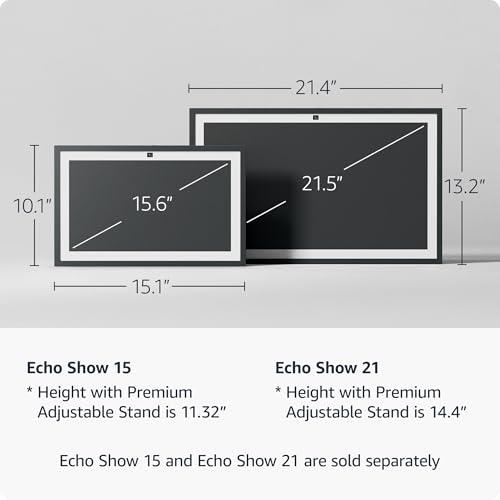
The Amazon Echo Show 15 requires more intentional placement planning. At roughly 16 inches wide and 10 inches tall, it's designed primarily for wall mounting, though it can sit on a large counter or desk. The wall mount is sturdy and allows the device to be easily removed for cleaning or repositioning, but you'll need to be comfortable drilling holes and running power cables.
The screen orientation flexibility is genuinely useful—you can mount it in either landscape or portrait orientation depending on your space and preferences. Portrait mode works well in narrow spaces like hallways, while landscape orientation is better for video content and multi-widget displays.
Since its 2020 release, the Google Nest Audio has received regular software updates that have improved voice recognition accuracy and added new Google Assistant capabilities. The underlying hardware remains solid, with a dedicated machine learning chip that processes many commands locally for faster response times and better privacy.
The Amazon Echo Show 15, being a more recent release, represents Amazon's current thinking about smart displays. The inclusion of multiple smart home protocols (Zigbee, Matter, Thread) suggests Amazon is positioning it as a long-term hub that will remain compatible with emerging smart home standards.
Both devices should receive software updates for years to come, but the Echo Show 15's more powerful processor and additional connectivity options suggest it may have a longer useful lifespan for users who plan to expand their smart home setups.
The decision between these devices should be based on how you actually want to interact with your smart home and entertainment system. The Google Nest Audio is perfect if you primarily want excellent music playback and voice control without visual distractions. It's particularly appealing for bedroom use, where a bright screen might be unwelcome, or for users who prefer the simplicity of voice-only interaction.
Choose the Nest Audio if you're an audio enthusiast who values sound quality above all else, if you're budget-conscious but want premium smart speaker functionality, or if you're planning to create a multi-room audio system throughout your home.
The Amazon Echo Show 15 makes sense for families who need better information organization, users who want visual confirmation of smart home device states, or anyone looking to consolidate multiple devices into one comprehensive hub. It's particularly valuable in kitchens, where the visual interface helps with recipe management, timer monitoring, and family communication.
Choose the Echo Show 15 if you manage complex schedules, want to reduce your phone dependency for basic information, or need a secondary screen for casual video content. It's also worth considering if you're building an extensive smart home system and want a central control interface that goes beyond voice commands.
Neither device is objectively better—they're optimized for completely different use cases. The key is honestly assessing how you'll actually use these capabilities in your daily routine. If you find yourself constantly asking your current smart speaker to repeat information because you weren't listening carefully, the visual interface of the Echo Show 15 might be transformative. If you primarily use your smart speaker for music and simple commands while your hands are busy, the superior audio quality of the Nest Audio will serve you better.
The smart home ecosystem you're already invested in should also influence your decision. Google's device integrates seamlessly with Android phones and Google services, while Amazon's display works best if you're already using Alexa-compatible smart home devices and Amazon's entertainment services.
Ultimately, both devices represent thoughtful approaches to smart home interaction, just with very different philosophies about how technology should fit into our daily lives.
| Google Nest Audio Smart Speaker | Amazon Echo Show 15 Smart Display |
|---|---|
| Product Type - Determines how you'll interact with your smart home | |
| Dedicated smart speaker focused on audio quality | Smart display with 15.6-inch touchscreen and voice control |
| Display - Critical for visual information management | |
| No display (voice-only interaction) | 15.6-inch Full HD (1920 x 1080) touchscreen with customizable widgets |
| Audio Quality - Most important for music listening | |
| 75mm woofer + 19mm tweeter, front-firing speakers optimized for sound | Rear-firing speakers designed around display, compromised audio quality |
| Dimensions - Space requirements in your home | |
| Compact: 6.89" tall x 4.89" wide (fits anywhere) | Large: 16.1" wide x 10.1" tall x 1.4" deep (requires wall mount or large counter) |
| Voice Assistant - Core smart home functionality | |
| Google Assistant with 3 far-field microphones | Amazon Alexa with 6-microphone array |
| Smart Home Control - How you manage connected devices | |
| Voice commands only, works with Google ecosystem | Voice + touch controls, built-in Zigbee/Matter/Thread hub |
| Camera - Video calling and visual recognition | |
| No camera | 5MP camera with Visual ID facial recognition and auto-framing |
| Entertainment Features - Streaming and media capabilities | |
| Music streaming, Chromecast support, multi-room audio | Built-in Fire TV, Netflix/Disney+ apps, video calling, digital photo frame |
| Setup Flexibility - Installation and placement options | |
| Counter/shelf placement, requires power outlet | Wall mount preferred (landscape/portrait), requires drilling and power |
| Multi-Room Capabilities - Expanding throughout your home | |
| Excellent: Groups with other Google speakers for synchronized playback | Limited: Works with other Echo displays but not optimized for multi-room audio |
| Information Access - How you get weather, calendar, news | |
| Voice queries with spoken responses | Visual widgets showing calendar, weather, notes, lists at a glance |
| Privacy Controls - Managing microphone and camera access | |
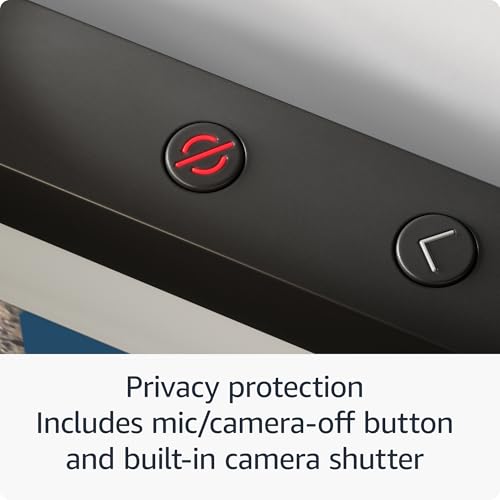
| Physical mic mute switch, no camera concerns | Physical mic/camera mute, camera shutter (privacy focused) |
| Connectivity - Wireless and streaming options | |
| Wi-Fi 802.11ac, Bluetooth 5.0, Chromecast built-in | Wi-Fi 802.11ac, Bluetooth 5.0, Chromecast, Fire TV integration |
The Google Nest Audio is significantly better for music playback. It features dedicated audio engineering with a 75mm woofer and 19mm tweeter that deliver 75% more volume and 50% stronger bass than Google's previous speakers. The Amazon Echo Show 15 has rear-firing speakers that create thin, distant sound quality since the audio bounces off the wall behind the device. For serious music listening, the Nest Audio is the clear winner.
It depends on how you prefer to access information. The Google Nest Audio uses voice-only interaction, which works well for quick questions and hands-free control. The Amazon Echo Show 15 adds visual widgets that display calendars, weather, shopping lists, and smart home controls at a glance. If you manage complex schedules or want to see information without asking, the screen on the Echo Show 15 can be very helpful.
The Google Nest Audio is much more compact at under 7 inches tall, making it easy to place on shelves, counters, or bedside tables. The Amazon Echo Show 15 is quite large at over 16 inches wide and is designed primarily for wall mounting. Choose the Nest Audio if space is limited or you want placement flexibility.
Yes, both can control smart home devices, but differently. The Google Nest Audio uses voice commands and works well with Google-compatible devices. The Amazon Echo Show 15 offers both voice and touch controls, plus it includes built-in Zigbee, Matter, and Thread protocols, making it a more comprehensive smart home hub that can directly connect to more device types without additional hubs.
The Amazon Echo Show 15 is the only option for video calls, featuring a 5MP camera with auto-framing that keeps you centered during calls. The Google Nest Audio has no camera and cannot make video calls. If video calling is important, you'll need the Echo Show 15.
Only the Amazon Echo Show 15 can stream video content with its built-in Fire TV functionality, supporting Netflix, Disney+, Prime Video, and other apps. The Google Nest Audio is audio-only and cannot display video content. However, the Echo Show's 15.6-inch screen is better suited for casual viewing rather than replacing your main TV.
This depends on your phone type. The Google Nest Audio integrates seamlessly with Android phones and Google services like Gmail and Google Calendar. The Amazon Echo Show 15 works with both Android and iPhone through the Alexa app, but offers deeper integration with Amazon services. Both support Bluetooth connectivity for music streaming from your phone.
The Google Nest Audio excels at multi-room audio, allowing you to group multiple speakers throughout your home for synchronized playback. The Amazon Echo Show 15 can connect with other Echo devices but isn't optimized for multi-room music due to its display focus and poor audio quality. For whole-home audio, multiple Nest Audio units are the better choice.
Both are relatively easy to set up, but the Google Nest Audio is simpler due to its single function. The Amazon Echo Show 15 requires more initial configuration for widgets, user profiles, and mounting decisions. However, once set up, the Echo Show 15 can be easier for daily use since you can see information without asking questions.
Neither is ideal as a primary home theater speaker. The Google Nest Audio lacks video capabilities entirely. The Amazon Echo Show 15 has a screen but poor rear-firing audio that doesn't provide the sound quality needed for movies. However, the Echo Show 15 can work as a small secondary TV for kitchens or bedrooms if you add external Bluetooth speakers.
Both offer good privacy features. The Google Nest Audio has a physical microphone mute switch and lets you delete voice recordings. The Amazon Echo Show 15 includes both microphone and camera mute buttons, plus a physical camera shutter for complete privacy. The Echo Show 15 also offers Visual ID that you can opt out of entirely.
Choose the Google Nest Audio if you prioritize excellent sound quality, prefer voice-only interaction, have limited space, or want to build a multi-room audio system. Choose the Amazon Echo Show 15 if you need visual information management, want video calling capabilities, manage complex family schedules, or want a central smart home control hub. The Nest Audio focuses on being the best smart speaker, while the Echo Show 15 aims to be a comprehensive digital hub.
We've done our best to create useful and informative comparisons to help you decide what product to buy. Our research uses advanced automated methods to create this comparison and perfection is not possible - please contact us for corrections or questions. These are the sites we've researched in the creation of this article: rtings.com - soundguys.com - bestbuy.com - androidcentral.com - whathifi.com - rtings.com - thenextweb.com - youtube.com - audiosciencereview.com - youtube.com - sypnotix.com - rtings.com - audioholics.com - youtube.com - store.google.com - store.google.com - youtube.com - support.google.com - cdn.adiglobaldistribution.us - dxomark.com - store.google.com - crutchfield.com - soundguys.com - soundguys.com - support.google.com - store.google.com - bestbuy.com - en.wikipedia.org - store.google.com - youtube.com - choose.co.uk - youtube.com - capsulenz.com - gadgetguy.com.au - youtube.com - tomsguide.com - techradar.com - youtube.com - developer.amazon.com - tomsguide.com - dell.com - en.wikipedia.org - youtube.com - bestbuy.com - youtube.com - youtube.com

Privacy Policy
Terms and Conditions - Affiliate Policy
Home Security
© Copyright 2008-2026.
11816 Inwood Rd #1211, Dallas, TX 75244