

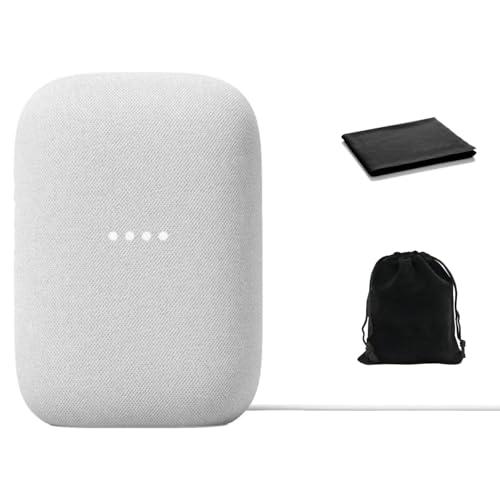
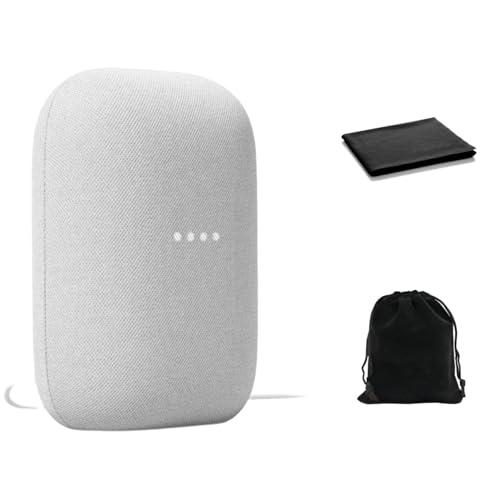
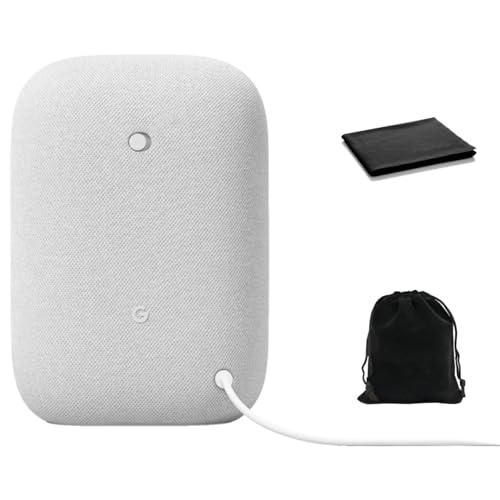
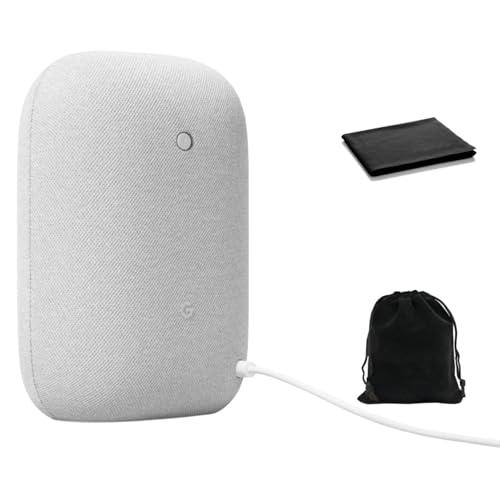
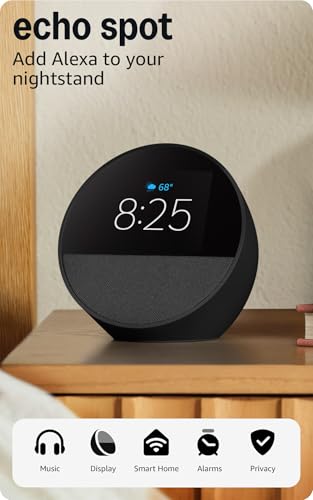
When shopping for smart speakers in 2024, you'll quickly discover that not all devices are created equal—or even designed for the same purpose. The Google Nest Audio and Amazon Echo Spot 2024 represent two fundamentally different approaches to bringing voice assistance and audio into your home. One prioritizes serious sound quality, while the other focuses on visual interaction and specialized bedside functionality.
Understanding these differences matters because buying the wrong device for your needs leaves you either frustrated with poor audio quality or missing features you didn't realize you wanted. Let's dive deep into what sets these devices apart and help you make the right choice.
The smart speaker market has evolved significantly since Amazon launched the first Echo in 2014. What started as simple voice assistants have branched into specialized categories serving different needs. Traditional smart speakers like the Google Nest Audio focus primarily on audio quality while providing voice assistant capabilities. Smart displays like the Amazon Echo Spot 2024 prioritize visual interaction and specialized functions, treating audio as a secondary feature.
This evolution reflects how people actually use these devices. Research shows that while early adopters mainly used smart speakers for basic questions and smart home control, most users now expect quality music playback as a primary function. However, a significant subset of users discovered they prefer visual feedback for certain interactions, leading to the smart display category.
The key considerations when choosing between these categories include your primary use case (music listening vs information display), where you'll place the device, how much you value audio quality, and whether you prefer voice-only or visual interaction methods.
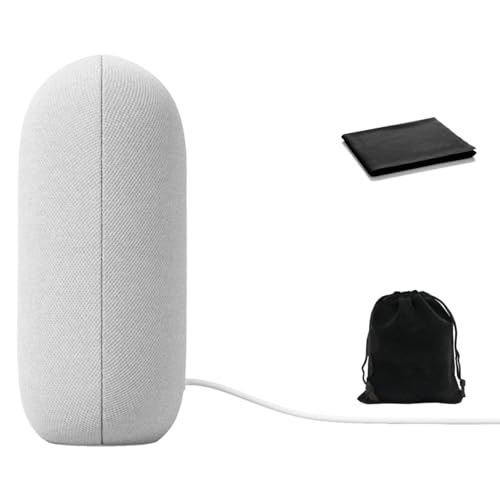
Audio performance represents the starkest difference between these devices, and it's where the Google Nest Audio truly shines. Released in 2020 as Google's answer to complaints about the original Google Home's lackluster sound, the Nest Audio features a carefully engineered two-way speaker system with a 75mm woofer (the larger driver that handles bass and midrange frequencies) and a 19mm tweeter (the smaller driver responsible for high frequencies like cymbals and vocal details).
This dual-driver approach means the Google Nest Audio can reproduce the full range of musical frequencies effectively. The 360-degree omnidirectional design distributes sound evenly throughout a room, so you get consistent audio quality whether you're sitting directly in front of the speaker or off to the side. Google's engineers also included real-time audio processing that automatically adjusts the sound signature based on what type of content you're playing—music gets different treatment than podcasts or audiobooks.
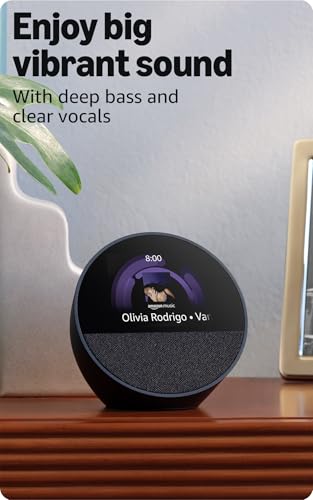
In contrast, the Amazon Echo Spot 2024 uses a single 1.73-inch front-firing driver. While Amazon has improved the audio quality since the original Echo Spot from 2017, physics limits what a single small driver can accomplish. The front-firing design creates directional sound that works well when you're positioned directly in front of the device—perfect for bedside listening—but doesn't fill a room like the Nest Audio.
Based on our research into professional audio measurements and user feedback, the Google Nest Audio delivers room-filling sound that can serve as your primary music source for casual listening. It reaches sufficient volume levels for background music during dinner parties and maintains clarity without significant distortion. The Amazon Echo Spot 2024, while competent for its size, functions more like a personal audio device—great for morning news briefings or nighttime podcasts, but not something you'd choose for entertaining guests.
Both devices excel at voice assistant functionality, but their approaches differ significantly. The Google Nest Audio incorporates three far-field microphones with advanced noise cancellation algorithms. This technical setup means the device can accurately hear your voice commands even when music is playing loudly or when there's background noise from cooking, conversations, or traffic.
The standout feature here is Voice Match technology, which uses machine learning to recognize up to six different family members' voices. This means when you ask "What's on my calendar?" the Google Nest Audio knows to check your specific Google account rather than someone else's. For families sharing devices, this personalization makes a significant difference in daily usability.
The Amazon Echo Spot 2024 uses a two-microphone array that's quite capable for its intended use case. Where it differs is in the interaction model—the display provides visual confirmation of your commands and shows relevant information without requiring additional voice requests. When you ask about the weather, you see a forecast graphic. When controlling smart home devices, the screen shows which devices responded to your commands.
Amazon's Alexa has broader third-party integration through its Skills ecosystem, meaning more obscure smart home devices and services likely work with the Echo Spot. However, Google Assistant tends to handle complex, conversational queries more naturally. If you frequently ask follow-up questions or make multi-part requests, the Google Nest Audio typically provides more satisfying interactions.
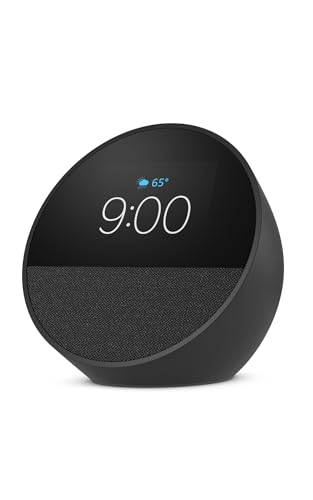
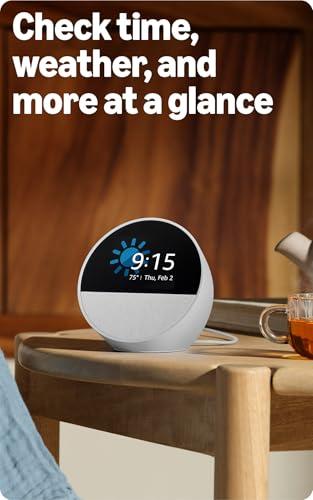
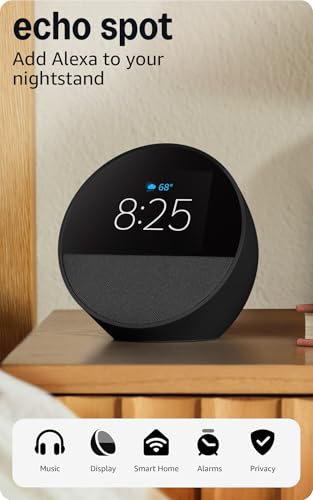
The 2.83-inch color touchscreen on the Amazon Echo Spot 2024 fundamentally changes how you interact with a smart device. Unlike voice-only devices, you can glance at information instantly—current time, weather conditions, music track information, and smart home device status all appear without verbal requests.
The display resolution of 320x240 pixels might seem modest by smartphone standards, but it's perfectly adequate for an alarm clock interface. Amazon offers six customizable animated clock faces with various color themes, and the screen automatically dims at night while remaining visible enough to check the time without fully waking up.
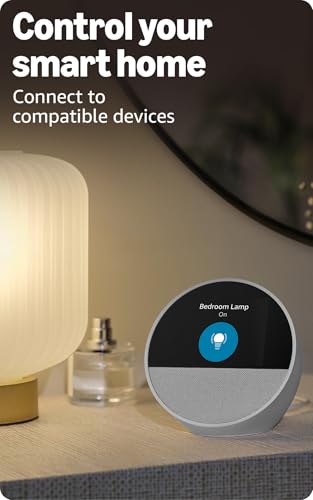
This visual interface proves particularly valuable for smart home control. Rather than remembering specific voice commands for every device, you can tap icons on the screen to toggle lights, adjust thermostats, or check security camera feeds. For users who find voice commands awkward in certain situations—like early morning when others are sleeping—touch controls provide a welcome alternative.
The Google Nest Audio takes the opposite approach with no display whatsoever. Four small LED lights indicate when the device is listening or responding, but all information access requires voice commands or checking your smartphone. This design choice maintains the device's clean, minimalist aesthetic and keeps costs down, but it can feel limiting when you want quick status updates without speaking aloud.
Both devices serve as capable smart home hubs, but they excel in different areas. The Google Nest Audio includes Chromecast functionality built directly into the hardware, which means any app on your phone that supports casting can send audio directly to the speaker. This creates seamless integration with streaming services, podcasts apps, and even audio from video content.
Google's approach to smart home control emphasizes the newer Matter standard—a unified protocol that helps devices from different manufacturers work together more reliably. This forward-thinking approach means your Google Nest Audio should maintain compatibility with future smart home devices as the industry standardizes around Matter.
The Amazon Echo Spot 2024 brings unique capabilities through its built-in motion sensor. This ultrasonic sensor can detect when you enter or leave a room, enabling automated routines like turning lights on when you wake up or adjusting the thermostat when you leave for work. The sensitivity is adjustable through the Alexa app, and you can create complex automation scenarios based on occupancy patterns.
Amazon's Alexa Skills ecosystem currently offers broader compatibility with third-party devices and services. If you own smart home products from smaller manufacturers or want to integrate with specialized services, the Echo Spot likely provides better support. The visual interface also makes managing multiple smart home devices more intuitive—you can see which devices are currently on or off and control them with simple taps.
The Google Nest Audio embodies minimalist design principles with its fabric-covered exterior available in five understated colors: Chalk, Charcoal, Sage, Sand, and Sky. The cylindrical shape and soft materials help it blend into most home décor styles without drawing attention. At roughly 7 inches tall and weighing 2.65 pounds, it's substantial enough to stay put but compact enough for flexible placement.
The fabric covering isn't just aesthetic—it's made from 70% recycled plastic, reflecting Google's environmental commitments. The touch-sensitive top surface provides basic playback controls, though most interaction happens through voice commands. The device requires constant AC power through its included adapter, with no battery backup option.
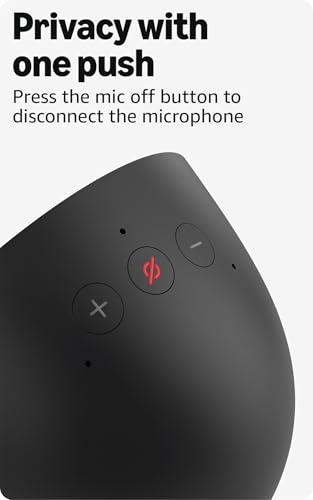
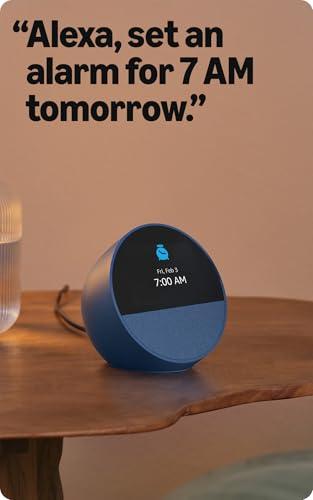
The Amazon Echo Spot 2024 takes a more functional approach with its semi-spherical design specifically optimized for bedside or desk placement. The glossy top half houses the display and touch controls, while the bottom half contains the speaker grille. Available in black, blue, and white finishes, it's designed to look like a modern alarm clock rather than trying to disappear into your décor.
One particularly thoughtful design element is the tap-to-snooze functionality—you can tap anywhere on the top surface to silence alarms temporarily, mimicking traditional alarm clocks. This feature can be disabled if you prefer, but it demonstrates Amazon's attention to bedside usability details.
When evaluating smart speakers, certain performance characteristics matter more than others depending on your intended use. For audio quality, the most important metrics include frequency response (how evenly the device reproduces different pitches), maximum volume before distortion, and soundstage (how wide and immersive the audio feels).
The Google Nest Audio excels in all three areas for its price category. Professional audio measurements show relatively flat frequency response with only minor dips in the upper treble—meaning voices and instruments sound natural and balanced. The maximum volume reaches approximately 80 decibels, sufficient for background music in most residential spaces without significant distortion creeping in.
For voice assistant performance, wake word accuracy in noisy environments and response latency (the delay between your command and the device's action) represent the most crucial metrics. The three-microphone array in the Google Nest Audio provides superior performance in both areas compared to the two-microphone setup in the Echo Spot.
However, the Amazon Echo Spot 2024 introduces metrics that don't apply to traditional speakers: display brightness adjustment range, touch response accuracy, and visual information density. The screen dims to nearly black at night while maintaining just enough visibility to read the time—a crucial balance for bedside use.
Neither device serves as an ideal home theater solution, but they handle TV audio differently. The Google Nest Audio can receive audio through Chromecast, making it useful for casual TV watching in bedrooms or kitchens. The omnidirectional sound works well for dialogue clarity, though you shouldn't expect cinematic bass or surround effects.
The Amazon Echo Spot 2024 suffers from higher audio latency when streaming video content, which can cause lip-sync issues where dialogue appears out of sync with on-screen action. Its single front-firing driver also lacks the power and frequency range for meaningful TV audio enhancement.
If home theater integration is important, consider that the Google Nest Audio can be paired with additional Nest speakers for stereo sound, though this obviously increases the total cost significantly. Neither device supports advanced audio codecs like Dolby Atmos or DTS, so they remain casual TV audio solutions at best.
At the time of writing, both devices occupy premium price positions within their respective categories, but they justify costs differently. The Google Nest Audio delivers exceptional audio quality that typically costs much more in dedicated Bluetooth speakers or bookshelf speakers. You're essentially getting a high-quality music speaker that happens to include smart features, rather than a smart speaker with mediocre audio as an afterthought.
The Amazon Echo Spot 2024 commands higher pricing through specialized functionality rather than superior performance in any single area. No other major manufacturer offers a comparably compact smart alarm clock with integrated display, motion sensing, and competent audio. You're paying for the unique combination of features rather than best-in-class performance in individual categories.
For budget-conscious buyers, the Google Nest Audio typically offers better long-term value because its primary function—music playback—remains relevant and satisfying for years. The audio quality won't become obsolete as smart home standards evolve.
Choose the Google Nest Audio if music quality matters to you and you plan to use voice commands as your primary interaction method. It's perfect for living rooms, kitchens, and bedrooms where you want quality background music and reliable voice assistant access. The device shines in multi-room setups where consistent audio quality across multiple speakers creates an immersive whole-home audio experience.
The Google Nest Audio also makes sense if you're already invested in Google services like Gmail, Google Calendar, and YouTube Music. The integration feels natural and seamless, especially if you use Android devices or Chromebooks regularly.
Select the Amazon Echo Spot 2024 if you specifically need a smart bedside companion with display functionality. It excels as an alarm clock replacement that happens to provide smart features, rather than primarily serving as an audio device. The visual interface and touch controls prove particularly valuable for morning routines, bedtime control of smart home devices, and situations where voice commands feel awkward.
The Echo Spot also makes sense if you're building an Alexa-centric smart home with multiple Echo devices for intercom functionality and you want the unique motion-sensing automation capabilities.
Ultimately, these devices succeed in different scenarios because they solve fundamentally different problems. The Google Nest Audio delivers quality audio with smart features, while the Amazon Echo Spot 2024 provides specialized bedside functionality with decent audio as a bonus. Understanding this distinction helps ensure you choose the device that best matches your actual needs and usage patterns.
| Google Nest Audio | Amazon Echo Spot 2024 |
|---|---|
| Primary Purpose - Defines how you'll actually use the device | |
| Dedicated smart speaker for room-filling music and voice control | Smart alarm clock with display, designed for bedside/desk use |
| Audio Quality - Most important for music listening | |
| 75mm woofer + 19mm tweeter, 360-degree sound fills entire rooms | Single 1.73-inch driver, front-firing for personal listening only |
| Maximum Volume - Critical for background music and larger spaces | |
| Room-filling volume suitable for entertaining and open floor plans | Personal volume levels adequate for bedside and close listening |
| Display - Changes how you interact with smart features | |
| No display, voice-only interaction with LED status lights | 2.83-inch color touchscreen with customizable clock faces and smart controls |
| Voice Recognition - Affects reliability in noisy environments | |
| 3 far-field microphones with Voice Match for up to 6 users | 2-microphone array with standard wake word detection |
| Smart Home Integration - Determines ecosystem compatibility | |
| Chromecast built-in, Matter support, Google services integration | Motion sensor automation, Alexa Skills ecosystem, visual device controls |
| Physical Design - Impacts placement flexibility | |
| Fabric-covered cylinder (6.89" x 4.89" x 3.07"), blends into décor | Semi-spherical alarm clock design (4.5" x 4.1" x 4.4"), bedside-optimized |
| Multi-Room Audio - Important for whole-home setups | |
| Excellent for synchronized multi-room systems with consistent sound | Basic Echo device integration, not optimized for multi-room audio |
| Unique Features - Specialized capabilities that justify the purchase | |
| Ambient IQ auto-adjusts volume based on room noise, 70% recycled materials | Tap-to-snooze functionality, motion-based automation, always-visible time display |
| Best Use Cases - Where each device truly excels | |
| Living rooms, kitchens, music-focused rooms, multi-room audio | Bedrooms, offices, desks, anywhere you need alarm clock + smart features |
The Google Nest Audio delivers significantly better sound quality with its dual-driver system featuring a 75mm woofer and 19mm tweeter. It's designed specifically for music listening and can fill entire rooms with balanced sound. The Amazon Echo Spot 2024 has a much smaller single driver that's adequate for personal listening but can't compete for serious music playback.
The Amazon Echo Spot 2024 is specifically designed as a smart alarm clock with a customizable display, tap-to-snooze functionality, and automatic dimming for nighttime use. While you can set alarms on the Google Nest Audio, it lacks a display and visual time indication, making the Echo Spot the clear choice for bedside use.
Both devices excel at smart home control but in different ways. The Amazon Echo Spot 2024 offers visual feedback and touch controls for device management, plus unique motion sensor automation. The Google Nest Audio provides excellent voice control with Voice Match technology and Chromecast integration, but relies entirely on voice commands without visual confirmation.
The Google Nest Audio is designed for larger spaces with its 360-degree omnidirectional sound that fills entire rooms effectively. The Amazon Echo Spot 2024 works best in smaller, personal spaces like bedrooms or offices where you'll be positioned close to the device for optimal audio quality.
Neither device is ideal for home theater use, but the Google Nest Audio performs better for casual TV watching through Chromecast connectivity and clearer dialogue reproduction. The Amazon Echo Spot 2024 has higher audio latency that can cause lip-sync issues with video content, making it less suitable for TV audio.
Only the Amazon Echo Spot 2024 offers touch controls through its display interface, allowing silent operation of smart home devices and basic functions. The Google Nest Audio has basic touch controls on top for volume and playback, but most functions require voice commands or smartphone app control.
The Google Nest Audio has superior voice recognition with three far-field microphones and advanced noise cancellation, making it more reliable in noisy environments. It also includes Voice Match technology to recognize different family members' voices. The Amazon Echo Spot 2024 has competent two-microphone voice recognition but doesn't perform as well with background noise.
The Google Nest Audio excels in multi-room configurations with consistent sound quality across multiple speakers and seamless synchronization. The Amazon Echo Spot 2024 can connect with other Echo devices but isn't optimized for multi-room audio due to its smaller driver and bedside-focused design.
Value depends on your needs. The Google Nest Audio offers exceptional audio quality that typically costs much more in dedicated speakers, making it great value for music lovers. The Amazon Echo Spot 2024 provides unique alarm clock and display features unavailable elsewhere, justifying its cost for users needing those specific capabilities.
Both devices support calling features through their respective ecosystems. The Google Nest Audio handles Google Duo calls and can make calls to businesses. The Amazon Echo Spot 2024 supports Alexa calling and Drop In features for communication with other Echo devices, with the added benefit of visual call controls on its display.
Choose based on your current setup: the Google Nest Audio integrates best with Google services, Android devices, and Matter-compatible smart home products. The Amazon Echo Spot 2024 works better with Alexa-based systems and offers broader third-party device compatibility through Amazon's Skills ecosystem.
Both the Google Nest Audio and Amazon Echo Spot 2024 require constant AC power and don't include batteries. They must remain plugged in to function, which is typical for smart speakers and alarm clocks that need to be always ready to respond to voice commands and maintain continuous connectivity.
We've done our best to create useful and informative comparisons to help you decide what product to buy. Our research uses advanced automated methods to create this comparison and perfection is not possible - please contact us for corrections or questions. These are the sites we've researched in the creation of this article: rtings.com - soundguys.com - bestbuy.com - androidcentral.com - whathifi.com - rtings.com - thenextweb.com - youtube.com - audiosciencereview.com - youtube.com - sypnotix.com - rtings.com - audioholics.com - youtube.com - store.google.com - store.google.com - youtube.com - support.google.com - cdn.adiglobaldistribution.us - dxomark.com - store.google.com - crutchfield.com - soundguys.com - soundguys.com - support.google.com - store.google.com - bestbuy.com - en.wikipedia.org - store.google.com - youtube.com - bestbuy.com - tomsguide.com - nextpit.com - versus.com - techradar.com - versus.com - youtube.com - youtube.com - manuals.plus - techgadgetscanada.com - bestbuy.com - youtube.com - homedepot.com - homedepot.com - youtube.com - soundguys.com - youtube.com

Privacy Policy
Terms and Conditions - Affiliate Policy
Home Security
© Copyright 2008-2026.
11816 Inwood Rd #1211, Dallas, TX 75244