



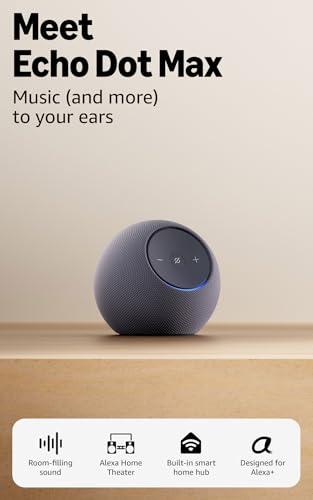
Amazon's 2025 smart home lineup brought two fascinating devices that approach home automation from completely different angles. The Echo Show 11 represents the visual-first future of smart home control, while the Echo Dot Max proves that sometimes the best interface is no interface at all. Both devices launched in late 2025 as part of Amazon's push toward more advanced AI integration, but they serve surprisingly different needs despite sharing the same Alexa+ brain.
The choice between these devices comes down to a fundamental question about how you want to interact with your smart home. The Echo Show 11 assumes you want visual feedback—seeing your calendar, checking who's at the door, or watching recipe videos while cooking. The Echo Dot Max takes the opposite approach, betting that voice commands and ambient intelligence can handle most of your needs without cluttering your space with screens.
This philosophical difference matters more than you might think. A display-based system encourages you to walk up and interact directly, making it a natural gathering point for family schedules and communication. A voice-only system disappears into the background until you need it, maintaining the aesthetic of your space while quietly managing your smart devices.
When evaluating these categories, the main considerations are interaction preference, space constraints, privacy comfort level, and how much you value visual feedback versus audio quality. Neither approach is inherently better—they're optimized for different lifestyles and use cases.
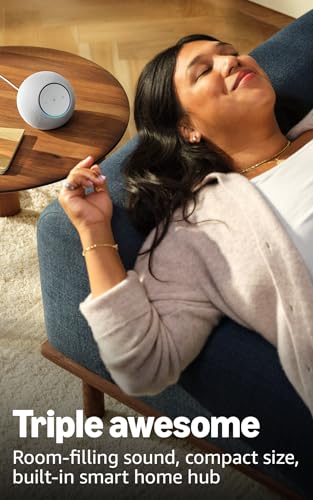
Audio performance reveals the clearest difference between these devices' priorities. The Echo Dot Max delivers genuinely impressive sound quality that surprised even skeptical reviewers when it launched. Amazon redesigned the internal architecture completely, incorporating a dedicated high-excursion woofer (a speaker driver designed to move more air for deeper bass) alongside a custom tweeter for crisp high frequencies. The result is nearly three times the bass response of previous Echo Dots, with room-filling sound that automatically adapts to your space using Amazon's room acoustics analysis.
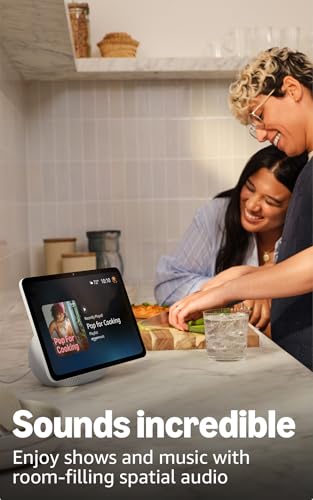
The Echo Show 11 takes a different approach to audio, using enhanced stereo speakers with front-facing drivers positioned to complement its visual interface. The audio system includes a custom woofer, but it's designed to work alongside the 11-inch display rather than dominate the experience. The sound quality is solid—definitely better than most laptop or tablet speakers—but it's not trying to compete with dedicated audio devices.
For music listening, the Echo Dot Max is the clear winner. Its two-way speaker system produces surprisingly rich sound for such a compact device, with the kind of bass response and clarity that usually requires much larger speakers. The Echo Show 11 handles music adequately, but its audio is optimized for voice calls, video content, and providing audio cues for visual information rather than pure musical enjoyment.
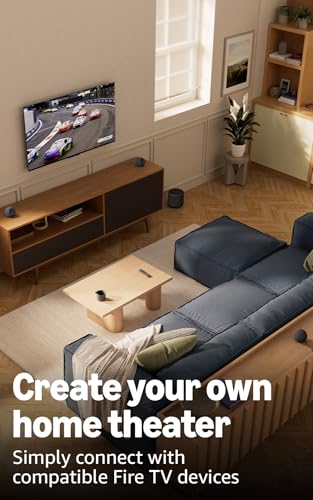
Both devices support Amazon's new multi-speaker home theater functionality, allowing you to pair up to five units with compatible Fire TV devices for surround sound. This feature works particularly well with the Echo Dot Max, since multiple units can create an impressive distributed audio system without visual distractions.
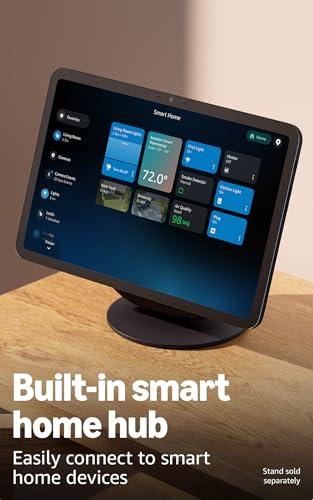
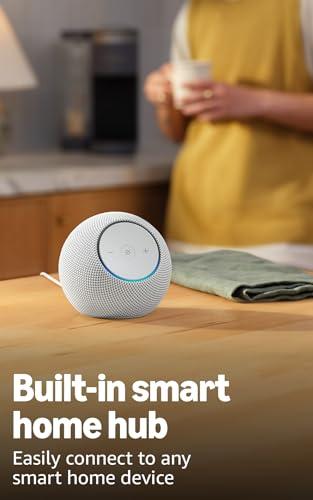
Both devices include comprehensive smart home hub functionality, supporting Zigbee, Matter, and Thread protocols (the communication standards that let smart devices talk to each other). This was a significant upgrade from earlier Echo devices that required separate hubs for many smart home products. The Echo Dot Max even includes Thread Border Router capability, which helps extend the range and reliability of Thread-based smart home networks.
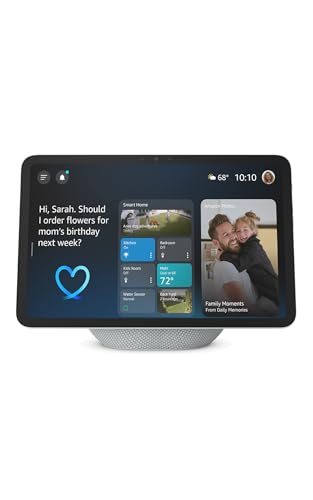
However, the control experience differs dramatically. The Echo Show 11 provides visual dashboards showing device status, energy usage, and quick controls for common actions. You can see at a glance which lights are on, check your security camera feeds, or adjust your thermostat with a few taps. The visual interface makes it much easier to manage complex smart home setups or troubleshoot connectivity issues.
The Echo Dot Max handles the same tasks through voice commands and audio feedback. While this works well for simple commands like "turn off the living room lights," it becomes cumbersome for more complex tasks like setting up new devices or managing multiple zones. The trade-off is that voice control works from anywhere in the room and doesn't require you to stop what you're doing to walk over to a screen.
For smart home beginners, the Echo Show 11 offers a gentler learning curve with visual confirmation of what's happening. Experienced smart home users might appreciate the Echo Dot Max's ability to disappear into the background while still providing full hub capabilities.
Both devices feature Amazon's new Alexa+ AI assistant, a significant upgrade from the standard Alexa that launched with earlier Echo devices. Alexa+ uses advanced language models that can understand context better, handle more complex requests, and provide more natural conversational responses. However, the Echo Show 11 gets the more powerful AZ3 Pro processor, while the Echo Dot Max uses the standard AZ3 chip.
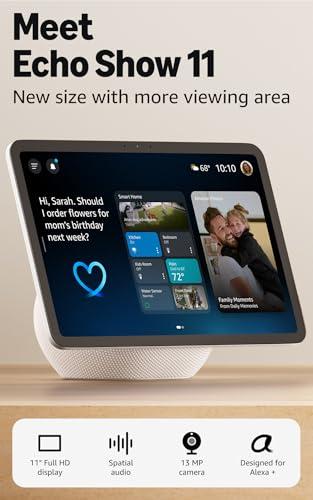
The processing difference becomes apparent in advanced AI features. The Echo Show 11 includes Amazon's Omnisense sensor fusion platform, which combines data from its 13-megapixel camera, microphone array, Wi-Fi signals, and other sensors to understand who's in the room and what they might need. It can recognize when you approach and automatically display relevant information like your calendar or weather forecast.
The Echo Dot Max focuses its AI processing on audio, with improved wake-word detection and better ability to understand commands in noisy environments. The enhanced microphone array can pick up voice commands from across larger rooms, even when music is playing.
For users who value proactive assistance and personalization, the Echo Show 11's advanced AI features justify the extra processing power. Those who prefer their smart assistants to stay quiet until asked will appreciate the Echo Dot Max's improved but less intrusive intelligence.
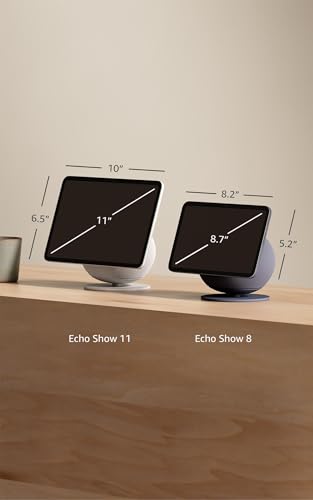
The Echo Show 11 shines brightest as a media device. Its 11-inch Full-HD touchscreen uses in-cell touch technology and negative liquid crystal design—technical improvements that reduce screen layers and improve viewing angles while making colors more vibrant. The display quality rivals many tablets, making it genuinely enjoyable for video calls, streaming content, or displaying family photos.
The visual interface extends beyond entertainment. Recipe videos with step-by-step instructions, visual smart home controls, family calendar management, and security camera monitoring all benefit from having a screen. The 13-megapixel camera enables high-quality video calls with automatic framing that keeps you centered even as you move around.
The Echo Dot Max obviously can't compete in visual categories, but this limitation becomes a feature for users who find screens distracting or prefer audio-focused experiences. Without a display, there's no temptation to constantly check notifications or get distracted by visual content.
Both devices support Amazon's new surround sound system for Fire TV devices, but they serve different roles in home theater setups. The Echo Dot Max excels as a distributed audio solution, where multiple units can create room-filling surround sound without visual distractions. The compact size and impressive audio quality make it ideal for rear and side channels in a surround setup.
The Echo Show 11 works better as a central component that can display movie information, control playback, or show subtitles when needed. However, its larger size and bright screen might be distracting during movie watching unless positioned carefully.
For dedicated home theaters, multiple Echo Dot Max units provide better value and performance. For family rooms where the TV competes with other activities, the Echo Show 11's versatility makes more sense.
At the time of writing, the Echo Dot Max costs roughly half as much as the Echo Show 11, making it one of the better values in smart home hubs. Previously, getting comprehensive smart home hub capabilities required devices costing significantly more, and the audio quality competes with dedicated speakers in a higher price bracket.
The Echo Show 11 commands a premium price that reflects its advanced display technology, more powerful processor, and camera capabilities. While expensive for a smart speaker, it's reasonably priced compared to similar smart displays from other manufacturers.
The value equation depends heavily on how you'll use the device. If you primarily want music playback and smart home control, the Echo Dot Max delivers exceptional capability for the money. If you need the visual interface and media capabilities, the Echo Show 11's price becomes justified by its unique feature set.
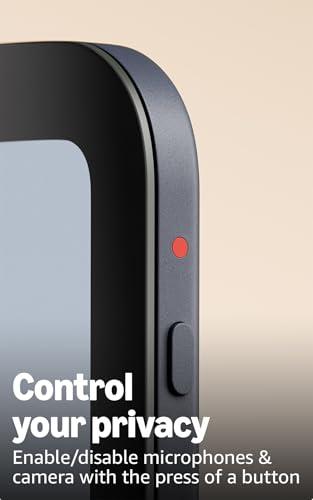
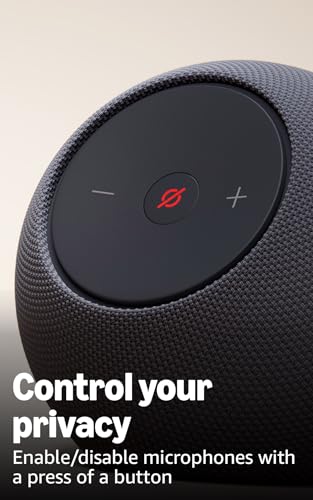
Privacy concerns differ significantly between these devices. The Echo Show 11 includes a camera and multiple sensors that enable advanced features but might make some users uncomfortable. Amazon includes physical privacy controls and processes much data locally on the device, but the capability for visual monitoring exists.
The Echo Dot Max eliminates visual privacy concerns entirely, relying only on microphone input and Wi-Fi signal analysis. Users who prefer smart home automation without cameras often gravitate toward audio-only devices.
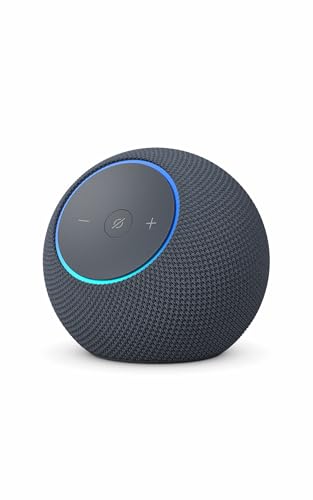
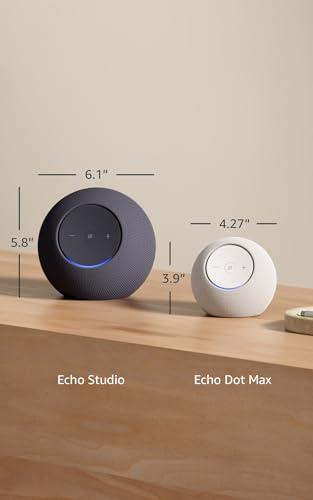
Placement flexibility also varies. The Echo Dot Max's compact size allows placement almost anywhere—bedside tables, kitchen shelves, office desks, or bookshelf integration. The Echo Show 11 requires dedicated counter or shelf space and works best as a focal point rather than background device.
The Echo Dot Max makes sense for users who want comprehensive smart home control in a compact, audio-focused package. It's particularly appealing for apartment dwellers with limited space, people planning multi-room audio systems, or anyone who prefers voice interaction over visual interfaces. The impressive audio quality makes it worthwhile even for users who don't need extensive smart home features.
The Echo Show 11 targets users who want a central family hub that handles communication, media, and home control through an intuitive visual interface. Families with shared calendars, people who make frequent video calls, cooking enthusiasts who follow video recipes, or anyone comfortable with camera-enabled devices will appreciate its comprehensive feature set.
Choose the Echo Dot Max if you prioritize audio quality, want full smart home capabilities in minimal space, prefer voice-only interaction, plan to use multiple devices throughout your home, or value the lower price point. It's the better choice for background smart home management that doesn't compete for visual attention.
Choose the Echo Show 11 if you want a central command center for family organization, frequently consume visual media, prefer touchscreen controls for complex tasks, are comfortable with advanced AI features including visual recognition, or have space for a larger focal-point device.
The decision ultimately comes down to whether you want your smart home hub to be invisible background intelligence or an active visual presence in your daily routine. Both approaches have merit, and Amazon's 2025 improvements make either choice significantly more capable than earlier generation devices. Consider your space, privacy preferences, and daily routines to determine which philosophy better matches your lifestyle.
| Amazon Echo Show 11 Smart Display | Amazon Echo Dot Max Smart Speaker |
|---|---|
| Display - The fundamental difference between these devices | |
| 11-inch Full-HD touchscreen (1920 × 1200) with adaptive brightness | No display - pure voice interaction |
| Audio Performance - Critical for music listening and call quality | |
| Enhanced stereo with custom woofer, optimized for visual content | Two-way speaker system with 3x bass of standard Echo Dot |
| Processor - Determines AI capabilities and responsiveness | |
| AZ3 Pro chip with AI accelerator for advanced visual recognition | AZ3 chip with AI accelerator for enhanced voice processing |
| Camera - Essential for video calls and visual AI features | |
| 13-megapixel with auto-framing and presence detection | No camera - maintains privacy and minimal design |
| Smart Home Hub - Controls all your connected devices without separate hubs | |
| Zigbee, Matter, Thread support with visual control interface | Zigbee, Matter, Thread Border Router in compact form |
| Size and Placement - Impacts where you can use the device | |
| Large countertop device requiring dedicated space | Compact spherical design fits anywhere |
| Alexa+ Integration - Amazon's advanced AI assistant with natural conversation | |
| Full Alexa+ with Omnisense sensor fusion and proactive responses | Alexa+ with improved voice detection and conversation handling |
| Multi-Speaker Support - Build whole-home audio or surround sound | |
| Pairs with other Echo devices for home theater setups | Excellent for distributed audio systems and surround sound |
| Privacy Controls - Important for users concerned about data collection | |
| Multiple sensors with physical controls, processes data locally | Audio-only interaction, no visual monitoring capability |
| Primary Use Cases - Who each device serves best | |
| Family hub, video calls, media consumption, visual smart home control | Music listening, voice control, compact smart home management |
The Amazon Echo Dot Max is significantly better for music listening. It features a dedicated two-way speaker system with a high-excursion woofer and custom tweeter that delivers nearly three times the bass of standard Echo devices. The Amazon Echo Show 11 has decent audio quality with enhanced stereo speakers, but its audio system is optimized for video content and voice calls rather than pure music enjoyment.
Yes, both the Amazon Echo Show 11 and Echo Dot Max include comprehensive smart home hub capabilities. They support Zigbee, Matter, and Thread protocols, eliminating the need for separate hubs with most smart home devices. The main difference is that the Echo Show 11 provides visual control through its touchscreen, while the Echo Dot Max relies on voice commands.
The Amazon Echo Show 11 is the clear winner for video calls with its 13-megapixel camera and 11-inch Full-HD display. It supports auto-framing that keeps you centered during calls and provides excellent video quality. The Echo Dot Max doesn't have a camera or display, so it can only handle voice calls.
Both devices support Amazon's multi-speaker home theater functionality with compatible Fire TV devices. The Echo Dot Max is particularly well-suited for this, as multiple units can create an impressive distributed surround sound system without visual distractions. The Echo Show 11 can also participate in surround setups but works better as a central control hub rather than a surround speaker.
The Echo Dot Max is much more compact with its spherical design, allowing placement on nightstands, bookshelves, or small spaces. The Amazon Echo Show 11 is a larger countertop device that requires dedicated space and works best as a focal point in kitchens, living rooms, or family areas.
Both devices run Amazon's advanced Alexa+ AI assistant, but the Amazon Echo Show 11 offers more sophisticated features. It includes Omnisense sensor fusion technology that can recognize users and provide proactive responses, while the Echo Dot Max focuses on improved voice detection and audio-based interactions.
The Echo Dot Max is better for privacy-focused users since it has no camera or display, relying only on voice interaction. The Amazon Echo Show 11 includes multiple sensors and a camera for advanced features, though Amazon provides physical privacy controls and processes much data locally on the device.
Only the Amazon Echo Show 11 offers non-voice control through its touchscreen interface, allowing you to tap controls, view device status, and manage settings visually. The Echo Dot Max requires voice commands for all smart home control, though it provides audio feedback to confirm actions.
The Amazon Echo Show 11 excels as a family hub with features like shared calendars, photo displays, video calling, recipe viewing, and visual message centers. The Echo Dot Max works well for families who prefer minimal visual presence and primarily need voice control and music playback.
For kitchen use, the Amazon Echo Show 11 is superior with its ability to display recipes, cooking videos, timers, and shopping lists while withstanding kitchen environments. The Echo Dot Max can handle voice commands and music but lacks the visual recipe guidance that makes cooking easier.
The Echo Dot Max offers exceptional value, providing premium audio quality and full smart home hub capabilities at roughly half the cost of the Amazon Echo Show 11. However, the Echo Show 11 justifies its higher price with unique visual features, camera capabilities, and advanced AI functionality that the Echo Dot Max cannot provide.
Yes, both devices support multi-room audio, but the Echo Dot Max is better suited for whole-home systems due to its superior audio quality, compact size, and lower per-unit cost. You can place multiple Echo Dot Max units throughout your home for synchronized music playback, while the Amazon Echo Show 11 works better as a central control point for managing the entire system.
We've done our best to create useful and informative comparisons to help you decide what product to buy. Our research uses advanced automated methods to create this comparison and perfection is not possible - please contact us for corrections or questions. These are the sites we've researched in the creation of this article: notebookcheck.net - techradar.com - matteralpha.com - bestbuy.com - aboutamazon.com - cordcuttersnews.com - techradar.com - engadget.com - engadget.com - t3.com - telegraph.co.uk - gadgetmatch.com - youtube.com - youtube.com - youtube.com - youtube.com - homecrux.com - phonearena.com - tomsguide.com - matteralpha.com - techbuzz.ai - techradar.com - pocket-lint.com - bestbuy.com

Privacy Policy
Terms and Conditions - Affiliate Policy
Home Security
© Copyright 2008-2026.
11816 Inwood Rd #1211, Dallas, TX 75244