

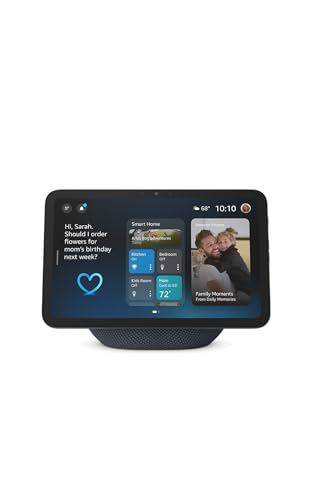


Amazon's smart displays have become the command centers of modern homes, and the 2025 lineup brings some compelling choices. The Echo Show 8 and Echo Show 11 represent Amazon's latest thinking on what a smart display should be, but choosing between them isn't as straightforward as you might think.
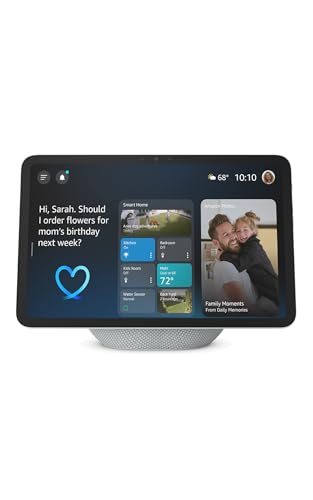
Both devices launched in late 2025 as part of Amazon's complete redesign of their Echo Show family. This marked a significant departure from the wedge-shaped designs we'd grown accustomed to, introducing a more modern aesthetic that looks at home in contemporary kitchens and living rooms. More importantly, these are the first Echo Shows built specifically for Amazon's new Alexa+ AI assistant, which promises more natural conversations and better contextual understanding.
Smart displays occupy a unique space in our homes. They're not quite tablets—you can't detach the screen or install arbitrary apps. They're not quite traditional smart speakers either, since that touchscreen opens up entirely new ways to interact with your smart home and consume media.
Think of them as always-on information hubs that respond to both voice commands and touch. They display your calendar while you're having coffee, show security camera feeds when someone's at the door, guide you through recipes while cooking, and serve as video calling stations for family chats. The screen transforms how you interact with a voice assistant, making abstract commands visual and immediate.
When evaluating smart displays, screen size becomes the primary differentiator once you've established that the core functionality meets your needs. Everything else—the smart home controls, voice recognition, streaming capabilities—tends to be remarkably similar within a manufacturer's lineup.
The Echo Show 8 and Echo Show 11 are essentially identical devices wrapped around different displays. Both use Amazon's new AZ3 Pro processor (a custom chip designed specifically for AI processing), identical 13-megapixel cameras with auto-framing technology, and the same audio architecture. This makes the comparison refreshingly straightforward—you're really just choosing screen size.
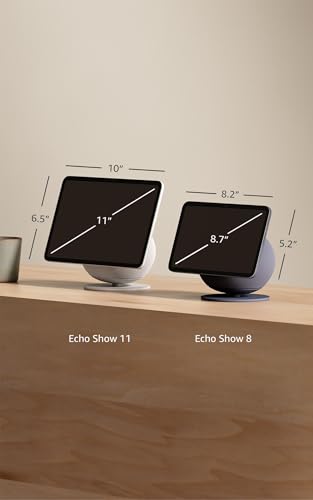
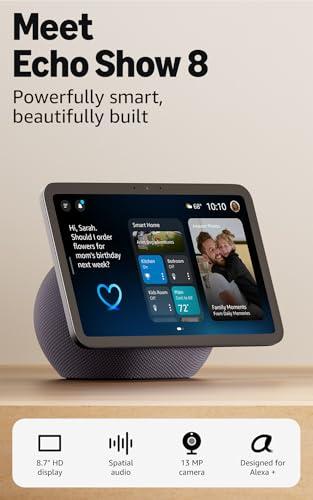
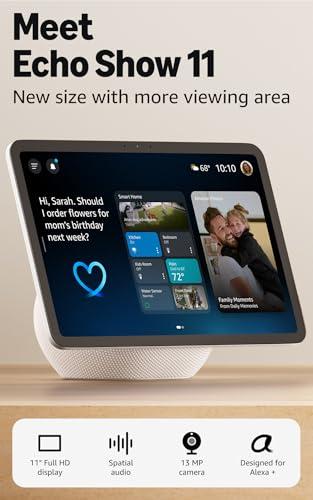
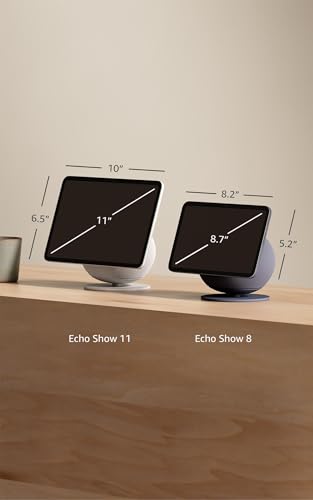
The Echo Show 8 features an 8.7-inch HD display with a resolution of 800 × 1134 pixels. The Echo Show 11 steps up to an 11-inch Full-HD panel with 1920 × 1200 resolution. That's not just bigger—it's significantly sharper, with roughly 2.3 times the pixel density.
In practical terms, this resolution difference becomes apparent immediately. Text looks crisp and readable from across the room on the Echo Show 11, while the Echo Show 8 requires you to be closer for comfortable reading. Photos and videos show more detail on the larger screen, and smart home control interfaces can display more information without feeling cramped.
Both displays use what Amazon calls "in-cell touch and negative liquid crystal design," which is marketing speak for panels that offer wide viewing angles and good visibility in various lighting conditions. The technology ensures the screens remain usable whether you're standing directly in front of them or viewing from the side while cooking dinner.
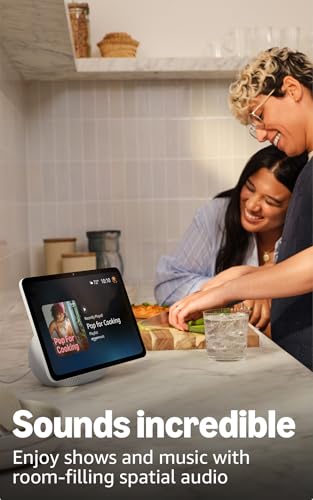
Here's where things get interesting: both the Echo Show 8 and Echo Show 11 share identical speaker systems. This isn't a case of the larger device getting better audio to match its size—Amazon decided that the same audio architecture works well for both.
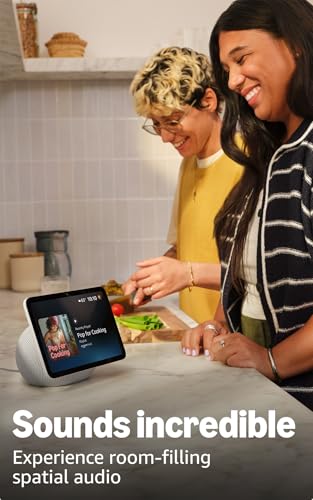
Each device features front-facing drivers and a custom woofer housed in that curved, mesh-covered rear section. The speakers are designed to project sound forward and upward, filling the room rather than just firing directly at you. This spatial audio approach means music sounds expansive rather than confined to the device itself.
Based on our evaluation of user and expert reviews, the audio quality punches well above what you'd expect from smart displays. The inclusion of a dedicated woofer provides genuine bass response, while the front-facing drivers deliver clear mids and highs. For casual music listening, podcast playback, and video audio, both devices perform admirably. They won't replace a dedicated sound system, but they're more than adequate for their intended use cases.
The identical audio systems mean this aspect shouldn't influence your purchase decision. Whether you choose the 8-inch or 11-inch model, you're getting the same listening experience.
Both devices run on Amazon's AZ3 Pro chip, marking a significant upgrade from previous generations. This isn't just a faster processor—it's designed specifically for AI workloads and edge computing (processing data locally rather than sending everything to the cloud).
The AZ3 Pro enables several key improvements over older Echo Shows. Touch responsiveness feels snappier, with less delay between tapping an element and seeing the response. Alexa wake-word detection is more reliable, and the new processor can handle more complex voice commands locally without needing to ping Amazon's servers.
More importantly, this chip powers the Omnisense sensor fusion platform, which sounds complicated but delivers practical benefits. The system combines data from multiple sensors—the camera, microphones, accelerometer, and even Wi-Fi signal analysis—to understand your proximity and intent. This means the Echo Show 8 and Echo Show 11 can automatically adjust what information they display based on whether you're standing right in front of them or across the room.
For example, when you're close, the display might show detailed weather information and calendar appointments. Step back to the other side of the kitchen, and it switches to showing just the time and basic status information in larger text. This adaptive interface represents a meaningful step forward in making smart displays truly smart.
Both the Echo Show 8 and Echo Show 11 feature identical 13-megapixel cameras, a significant upgrade from the 2-megapixel cameras found in older Echo Shows. This isn't just about higher resolution—the improved sensors capture better color accuracy and perform better in varying light conditions.
The auto-framing technology deserves special attention. Unlike the older Echo Show 10, which physically rotated the entire display to track movement, these new models use software to digitally pan and zoom the camera feed. As you move around during a video call, the camera intelligently crops and adjusts the frame to keep you centered. It's surprisingly effective and less mechanical than the rotating approach.
Where screen size does matter for video calls is in the viewing experience. The Echo Show 11 provides more comfortable viewing when multiple people are on the call, and its higher resolution makes facial details clearer. If video calling is a primary use case—particularly family calls with children or elderly relatives—the larger screen creates a more natural, TV-like experience.
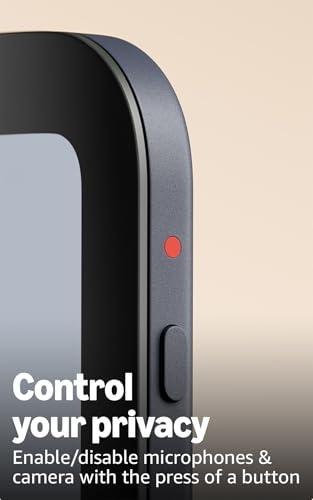
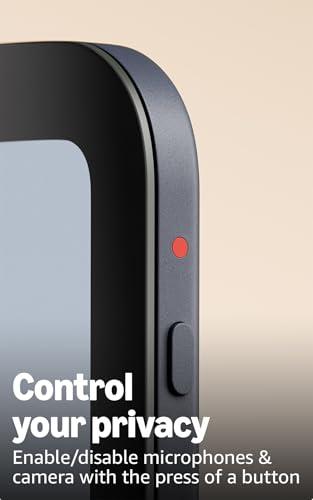
Both devices include physical privacy shutters for the camera, addressing the understandable concerns about always-connected cameras in private spaces. The shutter is easily accessible and provides complete visual blocking when closed.
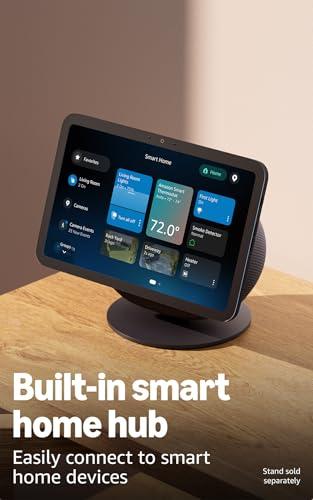
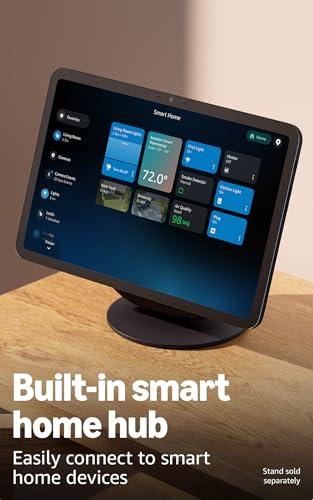
This is where both the Echo Show 8 and Echo Show 11 truly shine, and where they offer identical, comprehensive functionality. Both devices serve as full smart home hubs supporting Zigbee, Matter, and Thread protocols—essentially covering every major smart home standard currently in use.
Zigbee support means compatibility with thousands of existing smart home devices without requiring separate hubs. Matter support ensures future-proofing as this new unified standard gains adoption. Thread support, including Thread Border Router functionality, enables fast, reliable mesh networking for compatible devices.
The visual interface for smart home control represents a significant advantage over voice-only smart speakers. Instead of remembering voice commands for every device, you can see and tap controls for lights, thermostats, security systems, and more. The larger screen of the Echo Show 11 does provide an advantage here, accommodating more device controls simultaneously and making them easier to read from a distance.
Both devices excel at creating and managing routines—automated sequences of actions triggered by time, voice commands, or sensor inputs. The visual interface makes setting up complex routines much more intuitive than trying to configure everything through voice commands alone.
These are the first Echo Shows designed specifically for Alexa+, Amazon's enhanced AI assistant launched in 2025. Alexa+ represents a significant evolution from the original Alexa, incorporating large language model technology for more natural conversations and better contextual understanding.
With Alexa+, you can have follow-up conversations without repeating the wake word, ask complex multi-part questions, and get responses that consider previous interactions. The visual component becomes particularly powerful here—Alexa+ can display relevant information, images, and interactive elements alongside voice responses.
At the time of writing, Alexa+ requires either an Amazon Prime membership or a separate subscription, and it's initially available only in the United States. This represents a significant shift toward subscription-based AI services, but the enhanced capabilities do feel meaningfully different from the original Alexa experience.
After researching extensive user and expert feedback, several performance characteristics emerge as most important for smart displays: display clarity for daily use, audio quality for ambient listening, smart home response time, and video calling experience.
Display clarity heavily favors the Echo Show 11. The higher resolution becomes immediately apparent when reading calendar appointments, weather details, or recipe instructions. Text that requires squinting on the 8-inch model appears crisp and comfortable on the 11-inch display. For anyone with vision challenges or those who frequently view the display from across the room, this difference is significant.
Audio performance remains identical between models, and both deliver surprisingly good sound quality for their category. The spatial audio processing creates a sense of width and depth that makes music listening enjoyable rather than merely functional.
Smart home responsiveness benefits from the AZ3 Pro processor in both models. Local processing means faster response times for common commands like adjusting lights or checking door locks. Both devices handle these tasks with impressive speed compared to older Echo Shows.
Video calling experience subtly favors the larger model. While both feature identical cameras and auto-framing technology, the Echo Show 11 provides a more natural viewing experience reminiscent of video calls on a computer monitor rather than a tablet.
Neither the Echo Show 8 nor Echo Show 11 positions itself as a primary home theater display, but they can serve useful supplementary roles. Both can stream content from Prime Video, Netflix, and other services, making them suitable for casual viewing or as secondary screens.
The Echo Show 11 does provide a meaningfully better experience for video content. The larger screen and higher resolution make movies and shows more enjoyable, while the improved audio system delivers better dialogue clarity and more immersive sound.
For home theater integration, both devices excel as smart home control centers. You can use them to adjust lighting, control smart blinds, or manage audio systems before and during movie watching. The visual interface makes it easy to create "movie time" scenes that dim lights, lower blinds, and adjust temperature with a single tap.
At the time of writing, the Echo Show 11 commands a premium of roughly $40 over the Echo Show 8. This represents about a 20% price increase for 38% more screen area and significantly higher resolution.
From a pure value perspective, the math isn't straightforward. You're paying a moderate premium for a substantial improvement in the most important aspect of the device—the display itself. The question becomes whether that larger, sharper screen meaningfully improves your daily experience.
Based on our analysis of user feedback, the Echo Show 8 offers better overall value for most users. It delivers 100% of the functionality at roughly 80% of the cost, making it the rational choice for budget-conscious buyers or those with limited counter space.
However, the Echo Show 11 justifies its premium for specific use cases. If the device will serve as your primary smart home interface in a main living area, the improved readability and visual experience make the extra cost worthwhile. Similarly, if video calling or media consumption represent primary use cases, the larger screen creates a noticeably better experience.
Choose the Echo Show 8 if:
Choose the Echo Show 11 if:
Both the Echo Show 8 and Echo Show 11 represent excellent smart displays that fulfill the same core functions with identical competence. This makes the decision refreshingly clear-cut—you're choosing screen size and paying accordingly.
The Echo Show 8 delivers outstanding value and will satisfy most users' needs completely. Its compact size suits more locations, and the lower price makes it accessible for multi-room deployments.
The Echo Show 11 targets users who prioritize the display experience above all else. If you find yourself frequently interacting with smart home controls, watching videos, or making video calls, the larger screen and higher resolution create a meaningfully better experience that justifies the premium.
Neither choice is wrong, but understanding how you'll actually use the device in your daily routine should guide your decision. Both represent significant improvements over older Echo Shows and establish Amazon's smart displays as serious competitors in the increasingly important smart home hub category.
| Amazon Echo Show 8 | Amazon Echo Show 11 |
|---|---|
| Screen Size & Resolution - Most important factor affecting daily usability | |
| 8.7-inch HD display (800 × 1134 pixels) | 11-inch Full-HD display (1920 × 1200 pixels) |
| Display Technology - Both offer excellent viewing angles and brightness | |
| In-cell touch, negative liquid crystal design | In-cell touch, negative liquid crystal design |
| Audio System - Identical performance for music and calls | |
| Front-facing drivers + custom woofer, spatial audio | Front-facing drivers + custom woofer, spatial audio |
| Camera Quality - Same video calling capabilities | |
| 13MP with auto-framing, physical privacy shutter | 13MP with auto-framing, physical privacy shutter |
| Processor & Performance - Equal speed and responsiveness | |
| AZ3 Pro chip with AI accelerator | AZ3 Pro chip with AI accelerator |
| Smart Home Hub - Complete protocol support on both models | |
| Zigbee, Matter, Thread, Wi-Fi, Bluetooth | Zigbee, Matter, Thread, Wi-Fi, Bluetooth |
| Alexa Integration - Both designed for enhanced Alexa+ experience | |
| Full Alexa+ support with conversational AI | Full Alexa+ support with conversational AI |
| Physical Design - Shared modern aesthetic with size differences | |
| Compact footprint, mesh fabric rear housing | Larger footprint, same mesh fabric design |
| Best Use Cases - Different optimal environments | |
| Countertops, nightstands, smaller spaces | Family rooms, large kitchens, primary smart home hub |
| Value Proposition - Clear trade-off between features and cost | |
| Better value for most users, full functionality | Premium for larger screen, justified for heavy media use |
The primary difference is screen size and resolution. The Amazon Echo Show 8 features an 8.7-inch HD display, while the Amazon Echo Show 11 has an 11-inch Full-HD display with significantly higher resolution. All other features including audio, camera, processor, and smart home capabilities are identical between the two models.
Both the Amazon Echo Show 8 and Amazon Echo Show 11 have identical audio systems with front-facing drivers and custom woofers. There's no difference in sound quality between the models, so your choice should be based on screen size preference rather than audio performance.
The Amazon Echo Show 11 is worth the premium if you frequently watch videos, make video calls, or need to read information from across the room. The higher resolution and larger display make text much clearer and provide a better media viewing experience. However, the Amazon Echo Show 8 offers better value for basic smart home control and voice assistant functions.
Yes, both the Amazon Echo Show 8 and Amazon Echo Show 11 have identical smart home hub capabilities. They support Zigbee, Matter, and Thread protocols, allowing you to control thousands of compatible devices. The only advantage of the larger model is that smart home control interfaces are easier to read from a distance.
While both models have the same 13MP camera with auto-framing, the Amazon Echo Show 11 provides a better video calling experience. The larger screen makes it more comfortable to see multiple participants and creates a more natural, TV-like viewing experience for family conversations.
Yes, both the Amazon Echo Show 8 and Amazon Echo Show 11 are designed specifically for Alexa+ and include the AZ3 Pro processor needed for enhanced AI features. You'll get the same conversational AI capabilities and contextual understanding on either model.
The Amazon Echo Show 8 is better for compact spaces due to its smaller footprint. It fits comfortably on kitchen counters, nightstands, and desks without dominating the space. The Amazon Echo Show 11 requires more room and is better suited for larger areas like family rooms or spacious kitchens.
Both the Amazon Echo Show 8 and Amazon Echo Show 11 support major streaming services including Prime Video, Netflix, and Hulu. However, the Amazon Echo Show 11 provides a significantly better viewing experience due to its larger screen and Full-HD resolution, making it more suitable for casual video watching.
The Amazon Echo Show 8 offers better overall value for most users, delivering all the same functionality at a lower price point. The Amazon Echo Show 11 is worth the premium only if the larger, higher-resolution display significantly improves your intended use cases like media consumption or video calling.
Yes, both the Amazon Echo Show 8 and Amazon Echo Show 11 feature identical 13MP cameras with the same security monitoring capabilities. Both can function as security cameras when you're away from home, with the same image quality and privacy features including physical camera shutters.
Absolutely. Both the Amazon Echo Show 8 and Amazon Echo Show 11 have comprehensive smart home hub capabilities with support for all major protocols. The choice between them should be based on screen size preference rather than smart home functionality, as both offer identical control capabilities.
The Amazon Echo Show 11 is superior for photo display due to its larger screen size and Full-HD resolution. Photos appear much sharper and more detailed compared to the Amazon Echo Show 8. If you plan to use your Echo Show as a digital photo frame, the larger model provides a significantly better experience that justifies the additional cost.
We've done our best to create useful and informative comparisons to help you decide what product to buy. Our research uses advanced automated methods to create this comparison and perfection is not possible - please contact us for corrections or questions. These are the sites we've researched in the creation of this article: thedisconnekt.com - thehousetech.com - bestbuy.com - tomsguide.com - youtube.com - bestbuy.com - dimensions.com - engadget.com - youtube.com - techradar.com - ifixit.com - dreamgreenhouse.com - aboutamazon.com - engadget.com - en.wikipedia.org - bestbuy.com - homedepot.com - notebookcheck.net - techradar.com - matteralpha.com - bestbuy.com - cordcuttersnews.com

Privacy Policy
Terms and Conditions - Affiliate Policy
Home Security
© Copyright 2008-2026.
11816 Inwood Rd #1211, Dallas, TX 75244