




Smart displays have quietly become one of the most useful additions to modern homes. They combine the convenience of voice assistants with the visual appeal of touchscreens, creating devices that can show you weather forecasts, control your smart lights, stream videos, and even serve as digital picture frames. But choosing the right one can be tricky, especially when you're comparing devices as different as the Amazon Echo Show 11 and the Amazon Echo Show 5 (3rd Gen).
These two devices represent opposite ends of Amazon's smart display lineup, released about two years apart. The Echo Show 5 launched in 2023 as an updated version of Amazon's compact smart display, while the Echo Show 11 arrived in 2025 as their new flagship model. Understanding their differences—and which one fits your needs—requires looking beyond just screen size to consider how you'll actually use these devices in your daily life.
Before diving into the specifics, it's worth understanding what makes a good smart display. Unlike tablets or phones, these devices are designed to be always-on information centers that blend into your home environment. They need to balance several key factors: display quality for reading information from across the room, audio performance for music and voice responses, smart home integration capabilities, and processing power to handle multiple tasks smoothly.
The most important consideration is matching the device to its intended location and primary use case. A bedside smart display has very different requirements than one sitting in your living room or kitchen. This fundamental difference shapes everything about how the Echo Show 11 and Echo Show 5 are designed and priced.
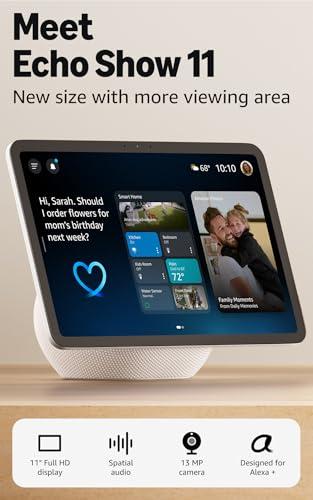
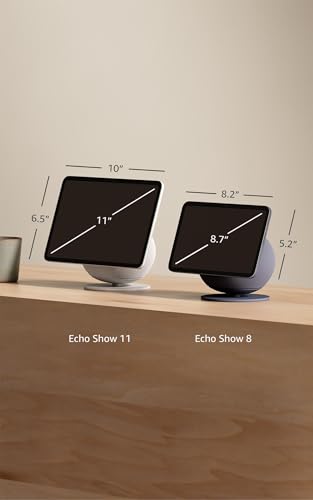
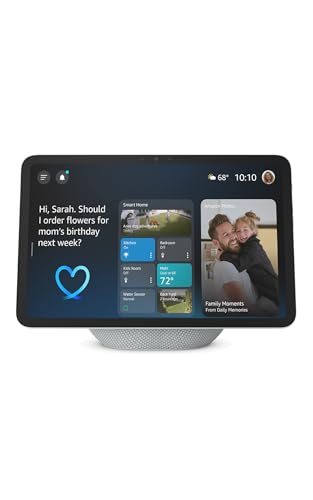
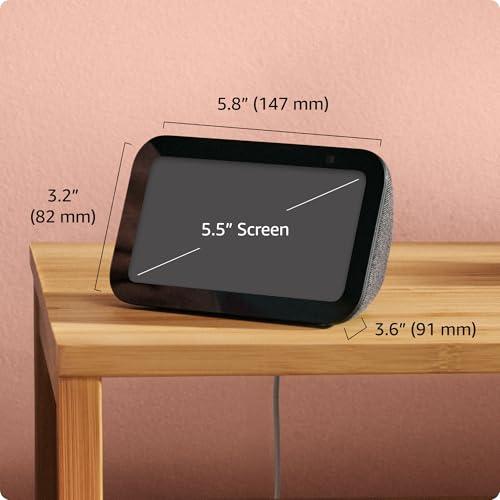
The most obvious difference between these devices is screen size, but the impact goes far beyond just having more pixels to look at. The Echo Show 11 sports a massive 10.95-inch Full HD display with 1920×1200 resolution, while the Echo Show 5 features a compact 5.5-inch screen at 960×480 pixels. That's not just bigger—it's fundamentally different in how you interact with it.
The Echo Show 11's display uses what Amazon calls "in-cell touch and negative liquid crystal design"—technical terms that essentially mean the touchscreen sensors are built directly into the display panel rather than layered on top, creating a more responsive touch experience with better clarity. The larger screen also supports adaptive brightness, automatically adjusting to room lighting conditions throughout the day. This makes it suitable for viewing from across the room, whether you're checking your calendar while getting ready in the morning or following a recipe from the kitchen counter.
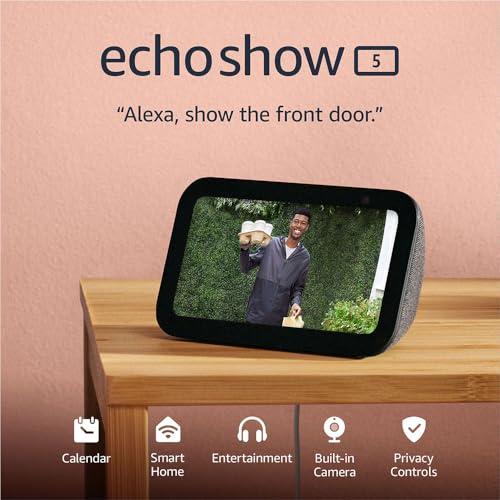
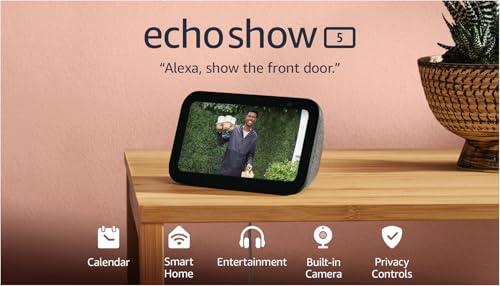
In contrast, the Echo Show 5 is optimized for close-range viewing. Its smaller, lower-resolution display works perfectly when placed on a nightstand or desk where you'll be within arm's reach. The pixel density is sufficient for reading time, weather, and basic information, but you wouldn't want to watch videos on it for extended periods. The compact display also means less power consumption, which matters for a device that's always on.
For home theater integration, the Echo Show 11 becomes the clear winner. Its large screen can serve as a secondary display for media information, showing what's playing on your main TV, controlling volume, or displaying lyrics during music playback. The Echo Show 5 simply isn't large enough to be useful in a home theater setup beyond basic voice control.
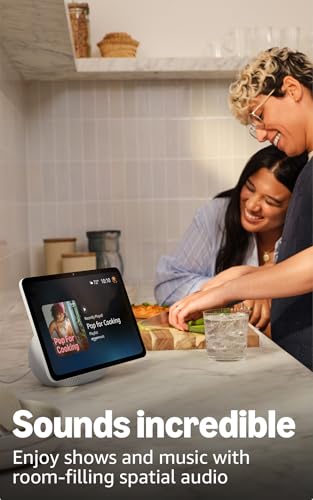
Audio performance reveals the biggest practical difference between these devices. The Echo Show 11 features what Amazon calls an "enhanced stereo audio system" with front-facing drivers and a custom woofer. This setup creates spatial audio—sound that seems to come from different directions—and delivers significantly deeper bass response. The speakers fire forward from the base unit, creating room-filling sound that's genuinely suitable for casual music listening.
The Echo Show 5 takes a different approach with a single 1.7-inch rear-firing speaker. Amazon claims this provides twice the bass of the previous generation, and our research into user reviews suggests it performs surprisingly well for its size. However, there's a practical limit: users consistently report that audio quality starts degrading noticeably above 70% volume, and the speaker simply can't match the spatial audio experience of larger displays.
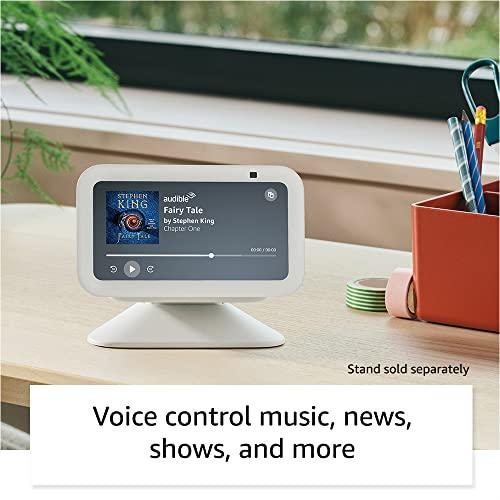
This audio difference matters more than you might expect. A smart display often serves as your primary music source in whatever room it occupies. The Echo Show 11 can legitimately replace a dedicated Bluetooth speaker in many scenarios, while the Echo Show 5 is best considered adequate for personal listening and voice responses.
For home theater use, the Echo Show 11's superior audio makes it useful as an auxiliary speaker for ambient music or as a communication hub during movie nights. Its clear, room-filling sound means everyone can hear Alexa's responses without strain.
The real technical differences lie in the processors and smart home capabilities, where the generational gap becomes apparent. The Echo Show 11 runs on Amazon's new AZ3 Pro custom silicon, which includes an AI Accelerator designed specifically for running advanced language models directly on the device. This means faster responses to voice commands and the ability to process complex requests without sending everything to Amazon's servers.
More importantly, the Echo Show 11 includes what Amazon calls the "Omnisense sensor fusion platform." This combines data from a 13-megapixel camera, audio sensors, ultrasound, Wi-Fi radar, accelerometer, and Wi-Fi Channel State Information (CSI) to create context-aware interactions. In practical terms, this means the device can detect when you're approaching and automatically display relevant information, or recognize different family members and show personalized content.
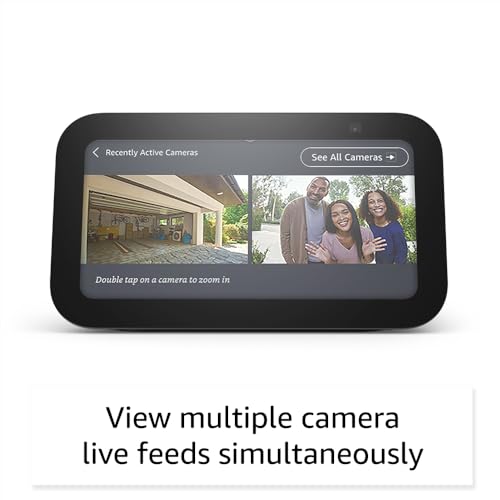
The Echo Show 5 uses the older AZ2 Neural Edge processor, which represents about a 20% speed improvement over its predecessor but lacks the advanced sensor fusion capabilities. It includes a 2-megapixel camera adequate for video calls and basic monitoring, but it can't perform the sophisticated presence detection of the larger model.
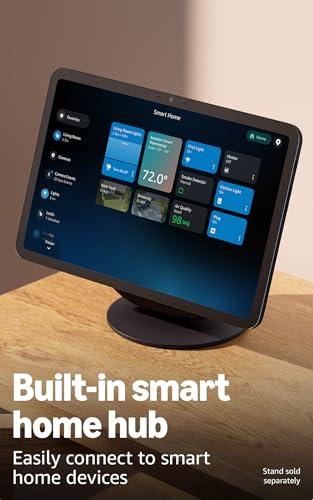
For smart home integration, this creates a meaningful divide. The Echo Show 11 functions as a comprehensive smart home hub, supporting Zigbee, Matter, and Thread protocols natively. It can serve as a Thread Border Router, which essentially means it acts as a bridge between Thread-enabled devices (a newer, more efficient smart home standard) and your home network. The Echo Show 5 handles basic smart device control through Alexa but lacks the advanced hub functionality.
If you're building or expanding a smart home, the Echo Show 11 could potentially replace dedicated hubs from other manufacturers. The Echo Show 5 works great for controlling existing smart devices but isn't designed to be the central brain of a complex smart home setup.
Both devices support Alexa+, Amazon's next-generation AI assistant that launched alongside the newer hardware. However, the Echo Show 5 runs on something called "Echo Ship 1.1," which Amazon developed as a lighter, more efficient operating system compared to the Fire OS used in other Echo devices. This creates a cleaner, less cluttered interface but with fewer advanced features.
The Echo Show 11 takes full advantage of Alexa+'s capabilities, including visual conversational responses where the assistant can show charts, images, or detailed information alongside voice responses. The larger screen accommodates widgets for family calendars, shopping lists, and health metrics that would be cramped on the smaller display.
User reviews consistently highlight that both devices are easy to set up, but the Echo Show 11 offers more customization options and can handle more complex multi-step routines. The Echo Show 5 excels at simple, single-purpose interactions—perfect for checking the weather or setting a timer, but less suitable for managing complex smart home scenes.
At the time of writing, the pricing reflects the significant capability differences between these devices. The Echo Show 11 commands a premium price as Amazon's flagship smart display, while the Echo Show 5 frequently goes on sale, making it one of the most accessible entry points into smart displays.
The value equation depends entirely on your intended use. The Echo Show 5 offers exceptional value for specific applications: bedside alarm clock, kitchen timer and recipe display, desk companion for a home office, or secondary display in rooms where you already have primary entertainment systems. Its compact size means you can afford to place multiple units throughout your home without breaking the budget.
The Echo Show 11 justifies its higher cost through versatility and future-proofing. It can serve as your primary smart home hub, eliminating the need for separate devices from other manufacturers. The superior display and audio make it suitable as a kitchen entertainment center, home office video conferencing solution, or living room information hub. The advanced AI processing and sensor capabilities suggest it will remain capable and current longer than simpler devices.
For home theater integration specifically, only the Echo Show 11 makes sense. Its large display can show detailed information about what's playing, control smart lighting for movie scenes, or serve as a communication center during gatherings. The Echo Show 5 simply lacks the screen real estate and audio capability to be useful in this context.
The form factor differences create distinct use case scenarios. The Echo Show 5 excels in spaces where a larger device would feel intrusive or overwhelming. Bedside tables, kitchen corners, small home offices, and kids' rooms all benefit from its compact presence. The device is light enough to move easily between rooms and unobtrusive enough to blend into most decor styles.
The Echo Show 11 demands more intentional placement. It's designed to be a focal point—something you orient furniture around rather than tuck into corners. This makes it ideal for kitchen islands, living room side tables, or home office desks where it can serve as both a productivity tool and entertainment center.
Multiple Echo Show 5 devices throughout a home create a distributed smart display network at a reasonable total cost. A single Echo Show 11 serves as a centralized hub but may leave other rooms without visual smart assistant capabilities. Your home layout and smart home philosophy will largely determine which approach works better.
The two-year gap between these releases represents significant technological evolution. The Echo Show 11 includes the latest connectivity standards, processor architectures, and AI capabilities that Amazon has developed. This suggests better long-term software support and compatibility with future smart home standards.
The Echo Show 5, while newer than many competing devices, uses more established technology that's proven reliable but may not support future features requiring advanced processing power. For example, the Omnisense sensor fusion in the Echo Show 11 enables capabilities that simply aren't possible with the Echo Show 5's simpler sensor array.
After extensive research into user experiences and expert reviews, clear usage patterns emerge. The Echo Show 5 consistently receives praise for exceeding expectations in its intended role as a compact, personal smart assistant. Users love it as an alarm clock that can show weather forecasts, control bedroom lighting, and provide gentle wake-up routines. Kitchen applications also shine—the device stays clean easily, displays timers clearly, and handles recipe browsing without taking up valuable counter space.
The Echo Show 11 gets consistent praise for being the smart display that finally delivers on the category's promise of replacing multiple devices. Users report successfully using it as their primary smart home interface, video calling device, and casual entertainment center. However, some find it overwhelming for simple tasks like checking the time or weather.
Choose the Echo Show 5 if you want to try smart displays without major investment, need a device for specific rooms like bedrooms or small kitchens, prefer multiple smaller devices over one large hub, or have physical space constraints. It's also the better choice if your smart home needs are basic and you primarily want voice control with occasional visual feedback.
Choose the Echo Show 11 if you want a comprehensive smart home hub that can replace multiple devices, plan to use it for media consumption and video calls, value future-proofing with the latest technology, or need a device that can serve an entire room rather than just personal use. It's definitely the choice for home theater integration or if you want the most capable smart display Amazon makes.
Consider that these devices often work well together—a Echo Show 11 as your main hub with Echo Show 5 units as satellites provides comprehensive coverage without the expense of multiple premium devices. The key is honestly assessing how you'll use smart displays in your daily routine and choosing devices that match those specific needs rather than simply buying the most impressive specifications.
| Amazon Echo Show 11 Smart Display | Amazon Echo Show 5 3rd Gen Smart Display |
|---|---|
| Display Size & Resolution - Determines viewing distance and media quality | |
| 10.95-inch Full HD (1920×1200) with adaptive brightness | 5.5-inch touchscreen (960×480) optimized for close viewing |
| Audio System - Critical for music quality and room-filling sound | |
| Enhanced stereo with front-facing drivers and custom woofer | Single 1.7-inch rear-firing speaker (2x bass improvement over previous gen) |
| Processor & AI Capabilities - Affects responsiveness and smart features | |
| AZ3 Pro with AI Accelerator and Omnisense sensor fusion | AZ2 Neural Edge processor (20% faster than previous generation) |
| Camera Quality - Important for video calls and home monitoring | |
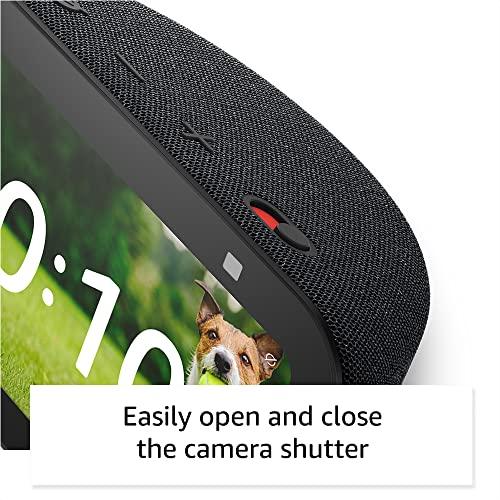
| 13-megapixel with auto-framing and presence detection | 2-megapixel front-facing with physical privacy shutter |
| Smart Home Hub Features - Determines compatibility with other devices | |
| Built-in Zigbee, Matter, Thread support with Border Router functionality | Basic Alexa control without advanced hub capabilities |
| Form Factor & Placement - Affects where you can use the device | |
| Premium centerpiece design requiring dedicated space | Compact bedside/desk companion that fits tight spaces |
| Connectivity Standards - Future-proofing for new smart home devices | |
| Latest Thread Border Router, Matter over multiple protocols | Standard Wi-Fi, Bluetooth without advanced mesh capabilities |
| Target Use Cases - Most important factor for purchase decision | |
| Primary smart home hub, media center, video conferencing | Bedside clock, kitchen assistant, secondary display, budget entry point |
| Value Proposition - Cost versus capability trade-offs | |
| Premium pricing justified by flagship features and comprehensive capabilities | Excellent budget value for specific use cases, frequently on sale |
The primary difference is size and capability. The Amazon Echo Show 11 features a large 10.95-inch Full HD display designed as a premium smart home hub, while the Amazon Echo Show 5 3rd Gen has a compact 5.5-inch screen optimized for personal use as a bedside or desk companion. The Echo Show 11 also includes advanced smart home hub features and superior audio quality.
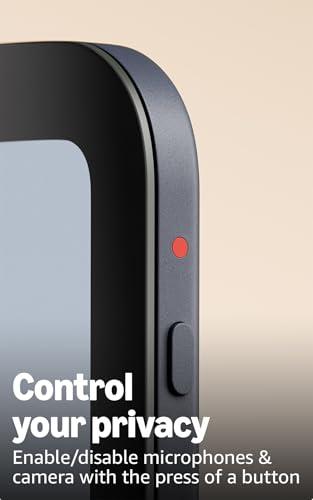
The Amazon Echo Show 5 3rd Gen is specifically designed for bedroom use. Its compact size fits perfectly on nightstands without being intrusive, includes a physical camera shutter for privacy, and features night mode for comfortable viewing in dark rooms. The Echo Show 5 excels as a smart alarm clock with customizable displays.
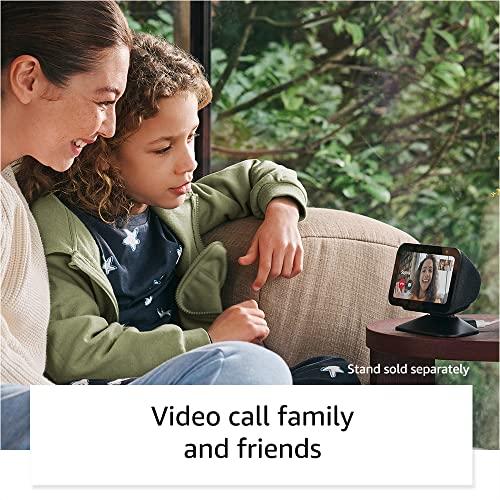
Both devices support video calls, but with different capabilities. The Amazon Echo Show 11 offers superior video calling with its 13-megapixel camera, auto-framing, and large display that's comfortable for group calls. The Amazon Echo Show 5 3rd Gen has a 2-megapixel camera suitable for basic video calls but is better for one-on-one conversations due to its smaller screen.
The Amazon Echo Show 11 delivers significantly better audio with its enhanced stereo system, front-facing drivers, and custom woofer that provides room-filling sound. The Echo Show 5 3rd Gen has improved audio compared to previous generations but is designed for personal listening and performs best at moderate volume levels.
The Amazon Echo Show 11 is designed as a comprehensive smart home hub with built-in Zigbee, Matter, and Thread support, making it excellent for managing complex smart home setups. The Echo Show 5 3rd Gen handles basic smart device control through Alexa but lacks the advanced hub functionality of the Echo Show 11.
It depends on your needs. The Amazon Echo Show 5 3rd Gen offers excellent value for basic smart display functions and frequently goes on sale, making it an affordable entry point. The Amazon Echo Show 11 provides premium features that justify its higher cost if you need comprehensive smart home control and media capabilities.
The Amazon Echo Show 11 is well-suited for casual video watching with its large Full HD display and quality audio system. The Echo Show 5 3rd Gen can play videos but the small screen makes it less enjoyable for extended viewing. For media consumption, the Echo Show 11 is the clear winner.
Both work well in kitchens but serve different purposes. The Amazon Echo Show 5 3rd Gen is perfect for countertop placement where space is limited, ideal for timers, recipes, and quick information. The Amazon Echo Show 11 works better on kitchen islands or larger spaces where you want media playback and more detailed recipe displays.
Both support Alexa and Alexa+ integration, but the Amazon Echo Show 11 offers more advanced AI capabilities through its Omnisense sensor fusion platform, enabling features like presence detection and proactive responses. The Echo Show 5 3rd Gen provides standard Alexa functionality that's perfectly adequate for most users.
The Amazon Echo Show 11 is the only viable option for home theater integration. Its large display can show media information, control smart lighting, and serve as a secondary screen, while its superior audio makes it useful for ambient music. The Echo Show 5 3rd Gen is too small to be practical in home theater environments.
Absolutely. Many users deploy multiple Amazon Echo Show 5 3rd Gen units throughout their home for distributed smart display coverage at a reasonable cost. Alternatively, you could use one Amazon Echo Show 11 as a central hub with smaller Echo Show 5 devices as satellites in bedrooms and secondary spaces.
The Amazon Echo Show 11 includes the latest processors, connectivity standards, and AI capabilities, making it more future-proof for upcoming smart home technologies and software updates. The Echo Show 5 3rd Gen uses proven but older technology that should remain functional but may not support future advanced features requiring more processing power.
We've done our best to create useful and informative comparisons to help you decide what product to buy. Our research uses advanced automated methods to create this comparison and perfection is not possible - please contact us for corrections or questions. These are the sites we've researched in the creation of this article: notebookcheck.net - techradar.com - matteralpha.com - bestbuy.com - aboutamazon.com - cordcuttersnews.com - bestbuy.com - reviewed.com - goodhousekeeping.com - techradar.com - geekzone.co.nz - versus.com - youtube.com - versus.com - youtube.com - hindustantimes.com - nfm.com - dimensions.com - gadgetguy.com.au - youtube.com - versus.com - dell.com - bestbuy.com - homedepot.com - homedepot.com - businessinsider.com - en.wikipedia.org - youtube.com

Privacy Policy
Terms and Conditions - Affiliate Policy
Home Security
© Copyright 2008-2026.
11816 Inwood Rd #1211, Dallas, TX 75244