


Smart displays have completely transformed how we interact with our homes. Gone are the days when voice assistants were just invisible speakers tucked in corners. Today's smart displays combine the convenience of voice control with the power of visual interfaces, creating command centers that can manage everything from your morning routine to your entire smart home ecosystem.
But here's the thing about smart displays: one size definitely doesn't fit all. The Amazon Echo Show 11 and Echo Spot 2024 represent two completely different philosophies in this space. Released in 2024, both devices showcase Amazon's latest thinking about where smart displays belong in our homes, but they couldn't be more different in their approach.
The Echo Show 11 is Amazon's flagship smart display, designed to be the centerpiece of your connected home. Think of it as the command bridge of a starship, but for your kitchen or living room. Meanwhile, the Echo Spot 2024 takes a minimalist approach, reimagining what a bedside smart device should be after Amazon learned from the original Echo Spot's shortcomings back in 2017.
Understanding these devices means grasping what matters most in smart displays: screen real estate for visual tasks, audio quality for entertainment and communication, smart home integration capabilities, and how they fit into your daily routines. The key is matching the right device to your specific needs and living situation.
The most obvious difference between the Echo Show 11 and Echo Spot 2024 is their displays, and this difference shapes everything else about how you'll use these devices.
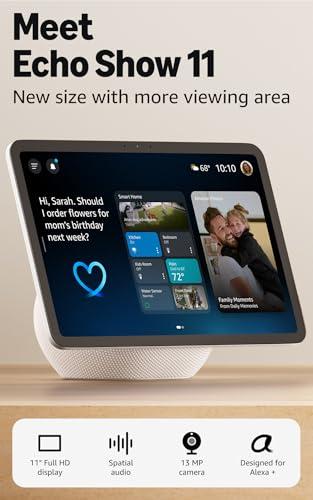
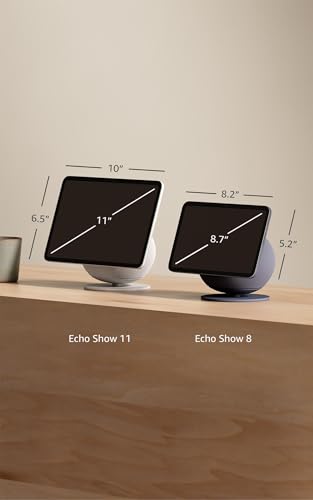
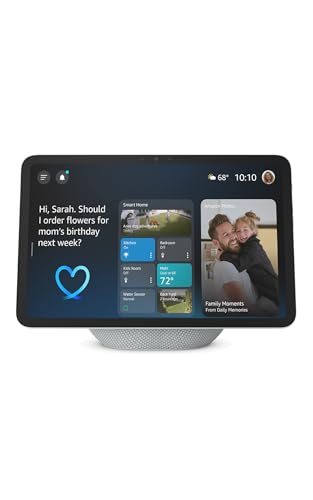
The Echo Show 11 sports an impressive 11-inch Full HD touchscreen with a resolution of 1920×1200 pixels. To put that in perspective, that's over a million pixels packed into a display that's roughly the size of a small tablet. The screen uses what Amazon calls "in-cell touch and negative liquid crystal technology" - fancy terms that basically mean the touch sensors are built directly into the display layers, making it thinner and more responsive, while the liquid crystal design provides better contrast and viewing angles.
What makes this display special is its adaptive nature. Built-in sensors monitor your room's lighting conditions and automatically adjust the screen's brightness and color temperature. This means recipe videos stay visible even with bright kitchen lights, while late-evening family video calls won't blind you with overly bright whites.
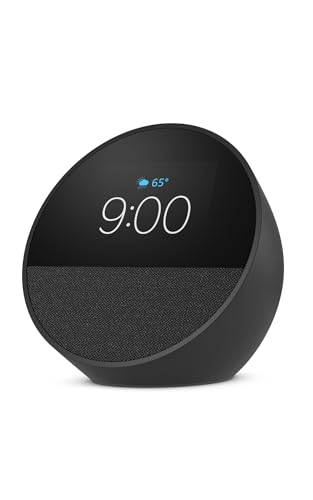
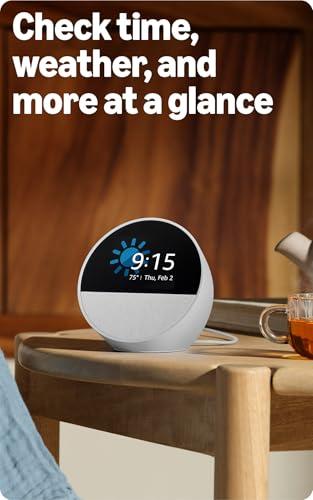
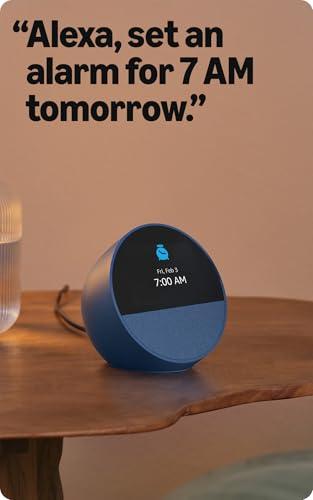
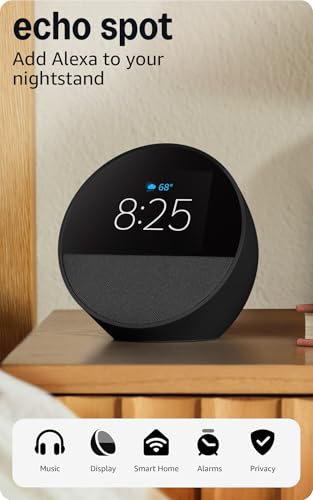
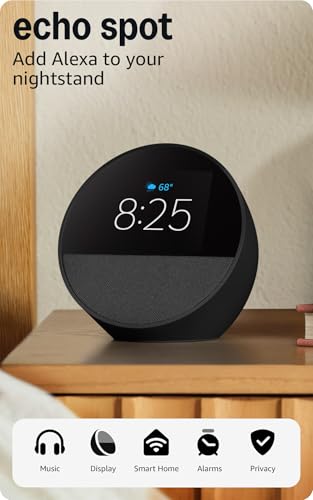
In contrast, the Echo Spot 2024 features a modest 2.83-inch touchscreen with 320×240 resolution. While that might sound tiny compared to the Show 11, it's actually perfectly sized for its intended purpose. The display is designed primarily for clock faces, weather information, and basic controls rather than media consumption. Amazon included six different animated clock faces with customizable color themes, and the screen intelligently dims at night - something crucial for bedside use that the original Echo Spot handled poorly.
The performance implications here are significant. The Echo Show 11 can comfortably display recipe instructions, video calls with multiple participants, smart home dashboards showing dozens of devices, and streaming video content. The larger display makes touch interactions more precise and comfortable, especially for older users or anyone with dexterity concerns.
The Echo Spot's smaller display excels at its focused tasks but simply can't handle complex visual information. You won't be watching YouTube videos or managing elaborate smart home scenes from this screen. However, for quick time checks, weather glances, and basic device controls, the smaller display is actually preferable - it provides just enough information without being distracting or overwhelming in a bedroom environment.
Audio performance reveals another fundamental difference in design philosophy between these devices. The Echo Show 11 is built to fill rooms with sound, while the Echo Spot 2024 focuses on personal, intimate audio experiences.
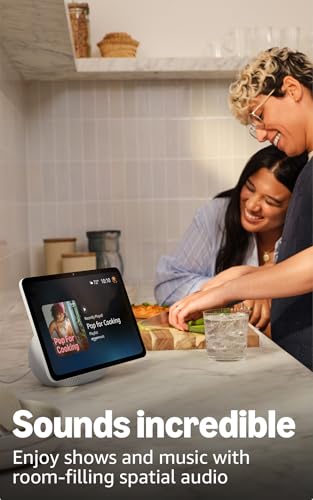
Inside the Echo Show 11 sits a sophisticated audio system featuring front-facing stereo drivers and a custom woofer, all powered by Amazon's AZ3 Pro chip. This setup enables what Amazon calls "spatial audio processing" - the device can analyze your room's acoustics and adjust its audio output accordingly. The stereo separation creates a genuine soundstage, meaning you can actually hear instruments positioned left and right in music recordings.
Our research into user and expert reviews consistently shows the Echo Show 11 punching well above its weight in audio quality. Users report being genuinely surprised by the bass response and overall volume capabilities. For video calls, the enhanced audio processing makes voices clearer and reduces background noise, while music streaming reveals details that smaller smart speakers simply can't reproduce.
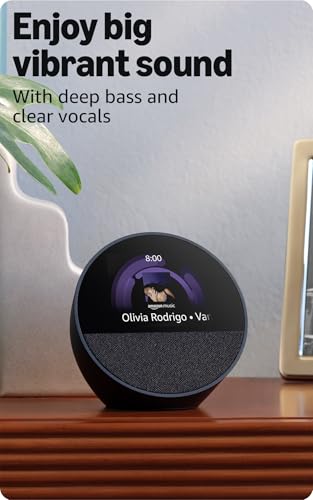
The Echo Spot 2024 takes a completely different approach with its single 1.73-inch forward-firing driver. This isn't a compromise - it's a deliberate design choice. The mono audio setup provides clear vocals for Alexa responses, adequate volume for podcast listening, and pleasant alarm tones without the room-filling presence that might disturb a sleeping partner.
From a technical standpoint, the Echo Spot's audio system excels at vocal clarity and manages to produce surprisingly decent bass for such a compact driver. Expert reviews consistently note that while you wouldn't choose this device as your primary music speaker, it handles its intended audio tasks - alarms, voice responses, and casual listening - with competence.
The performance difference becomes crucial when considering use cases. The Echo Show 11 can serve as your kitchen's primary audio source, handling everything from morning news podcasts to dinner party background music. The Echo Spot 2024 is perfect for personal audio needs but won't satisfy anyone looking for robust music playback or room-filling sound.
Perhaps the most significant technical difference between these devices lies in their smart home capabilities. The Echo Show 11 functions as a comprehensive smart home hub, while the Echo Spot 2024 serves as a capable but limited controller.
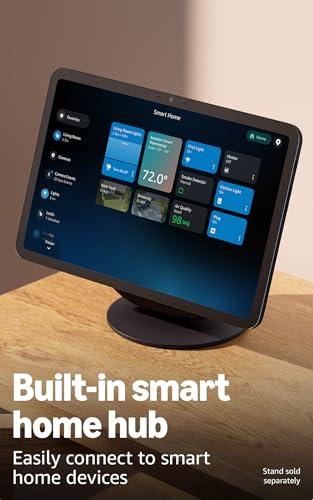
The Echo Show 11 includes built-in support for Zigbee, Matter, and Thread protocols - the three most important standards in modern smart home connectivity. But it goes beyond just supporting these standards; it actually acts as a Thread Border Router, which means it can create and manage Thread networks for compatible devices. Thread is particularly important because it creates a mesh network where smart home devices can communicate directly with each other, reducing latency and improving reliability even if your internet connection falters.
The device's Omnisense sensor fusion platform represents cutting-edge smart home technology. This system combines data from multiple sensors - a 13-megapixel camera, audio sensors, ultrasound proximity detection, Wi-Fi radar, accelerometer, and Wi-Fi Channel State Information (CSI). In practical terms, this means the Echo Show 11 can detect when you're approaching, recognize who you are, and automatically display relevant information or trigger appropriate routines.
For example, when you walk into the kitchen in the morning, the device might automatically display your calendar, start brewing coffee through connected smart appliances, and show weather information relevant to your commute. This level of contextual automation represents the future of smart home interaction.
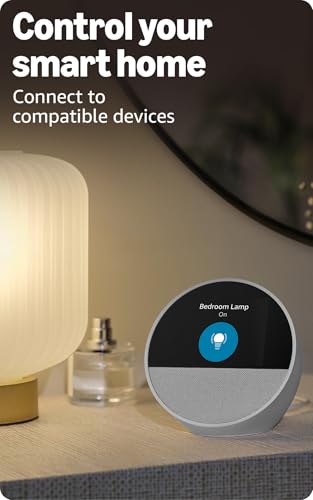
The Echo Spot 2024 offers more modest but still useful smart home integration. It supports Matter compatibility, meaning it can control a wide range of modern smart home devices, but it doesn't function as a hub itself. The device does include one unique feature: an ultrasonic motion sensor that can trigger occupancy-based routines. While simpler than the Show 11's comprehensive sensor suite, this motion detection works well for bedroom automation - automatically turning on a bedside lamp when you enter the room or adjusting the thermostat based on occupancy.
The practical implications are substantial. The Echo Show 11 can reduce or eliminate the need for separate smart home hubs, potentially saving money and reducing complexity in your setup. The Echo Spot 2024 works best as part of an existing smart home ecosystem rather than as its foundation.
The Echo Show 11 represents Amazon's vision for the future of voice assistants through its integration with Alexa+, while the Echo Spot 2024 provides refined versions of current Alexa capabilities.
Alexa+ (available at the time of writing primarily in the US) leverages the Echo Show 11's powerful AZ3 Pro processor to run advanced language models and vision transformers directly on the device. This edge-based processing means faster responses, better privacy (since data doesn't need to travel to Amazon's servers), and more sophisticated interactions. The system can engage in more natural conversations, provide visual responses alongside voice answers, and offer proactive suggestions based on context and user behavior.
The 13-megapixel camera enables advanced features like automatic framing during video calls, person recognition for personalized responses, and visual analysis for smart home automation. The camera quality represents a significant upgrade from previous Echo devices, providing sharp enough video for professional calls and family conversations.
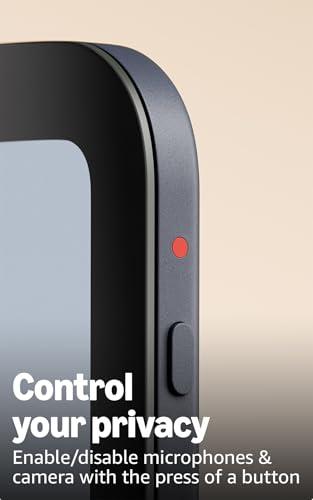
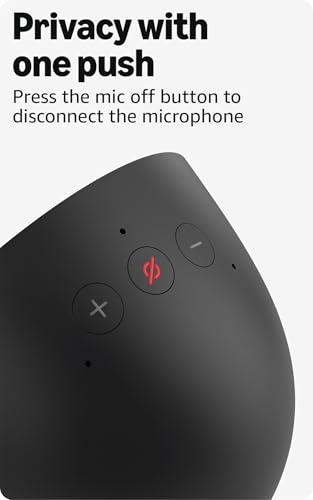
Privacy-conscious users might appreciate that the Echo Spot 2024 deliberately excludes a camera. This design choice reflects Amazon's learning from user feedback about bedroom privacy concerns. The device relies on standard Alexa functionality, which still covers the vast majority of common voice assistant tasks: setting alarms, checking weather, controlling smart devices, playing music, and answering questions.
The performance difference in AI capabilities is substantial but may not matter for all users. The Echo Show 11 offers cutting-edge features that will likely become standard across the industry, while the Echo Spot 2024 provides reliable, proven functionality without the complexity or privacy concerns of advanced AI features.
For home theater applications, the Echo Show 11 offers some compelling possibilities, while the Echo Spot 2024 doesn't really play in this space at all.
The Echo Show 11's large display and quality audio make it suitable as a secondary screen for home theater setups. You could use it to display movie information, control smart lighting scenes during films, or handle video calls without interrupting movie watching on your main display. The device's Thread Border Router functionality could help manage smart home devices throughout your home theater room, controlling everything from motorized curtains to ambient lighting systems.
However, the Echo Show 11 shouldn't be considered a primary home theater display. Its 11-inch screen, while impressive for a smart display, simply can't compete with dedicated TVs or projectors for movie watching. The audio system, while good for its size, lacks the power and positioning flexibility of dedicated home theater speakers.
The Echo Spot 2024 has virtually no home theater applications beyond potentially serving as a bedside controller for bedroom TV setups or providing discrete nighttime lighting control without disturbing movie watching.
At the time of writing, these devices occupy very different price points, and understanding their value propositions requires looking beyond just the initial purchase price.
The Echo Show 11 commands premium pricing that reflects its flagship status and comprehensive feature set. However, when you consider that it can replace multiple devices - a smart home hub, tablet for kitchen use, high-quality speakerphone, and digital photo frame - the value equation becomes more compelling. The device's future-proof technology, including Alexa+ integration and advanced connectivity standards, suggests it will remain relevant longer than simpler alternatives.
The Echo Spot 2024 offers focused value at a more accessible price point. While it can't replace multiple devices like the Show 11, it excels at its intended purpose better than alternatives that try to do too much. For users who specifically need a smart alarm clock with basic assistant features, the Spot provides excellent value without paying for capabilities they won't use.
The value comparison also depends on your existing smart home setup. If you already have smart home hubs and high-quality speakers, the Echo Show 11's additional capabilities might not justify its premium pricing. Conversely, if you're building a smart home from scratch, the Show 11's comprehensive integration could save money overall by reducing the need for separate devices.
Choose the Amazon Echo Show 11 if you want a central command center for your smart home that can handle multiple roles. This device makes sense for kitchens, home offices, or main living areas where its large display and robust audio can be fully utilized. It's particularly compelling for families who make frequent video calls, users building comprehensive smart homes, or anyone who values having cutting-edge technology that will remain relevant for years.
The Echo Show 11 also makes sense if you're willing to pay premium pricing for premium capabilities and prefer having one device that can handle multiple tasks rather than several specialized devices.
Choose the Echo Spot 2024 if you specifically need a smart alarm clock that respects bedroom privacy while providing convenient access to basic smart home controls. This device excels in bedrooms, guest rooms, or small office spaces where its compact footprint and focused functionality are assets rather than limitations.
The Echo Spot 2024 is particularly appealing for privacy-conscious users who want voice assistant capabilities without cameras, people working with limited space or specific placement requirements, or anyone who prefers simple, focused devices over complex, multi-purpose ones.
Both devices represent thoughtful approaches to smart display design, but they serve fundamentally different needs. The Echo Show 11 pushes the boundaries of what smart displays can do, while the Echo Spot 2024 perfects the art of doing specific things very well. Your choice should align with your specific use cases, privacy preferences, and how these devices will fit into your daily routines and living spaces.
The smart display category continues evolving rapidly, but both of these 2024 releases show Amazon's commitment to serving different user needs rather than pursuing a one-size-fits-all approach. That's ultimately good news for consumers, as it means you can find a device that truly matches your lifestyle rather than compromising on features you'll never use or lacking capabilities you actually need.
| Amazon Echo Show 11 Smart Display | Amazon Echo Spot 2024 Smart Alarm Clock |
|---|---|
| Display Size - Determines what tasks the device can handle effectively | |
| 11-inch Full HD touchscreen (1920×1200) - Excellent for recipes, video calls, media | 2.83-inch touchscreen (320×240) - Perfect for bedside clock and basic controls |
| Audio System - Critical for music quality and room-filling sound | |
| Stereo drivers + custom woofer with spatial audio processing - Can serve as primary speaker | Single 1.73-inch mono driver - Clear for voice/alarms but not room-filling music |
| Smart Home Hub Capabilities - Reduces need for separate hub devices | |
| Built-in Zigbee, Matter, Thread hub with Border Router functionality | Matter compatibility only - Works with smart devices but needs separate hub |
| Camera and Privacy - Major consideration for bedroom placement | |
| 13MP camera with video calling and person recognition features | No camera - Privacy-focused design ideal for bedrooms |
| AI Assistant Features - Affects future functionality and user experience | |
| Alexa+ with advanced conversational AI and edge processing via AZ3 Pro chip | Standard Alexa functionality - Reliable but without advanced AI features |
| Motion Detection - Enables automated lighting and presence routines | |
| Advanced Omnisense sensor fusion with multiple detection methods | Basic ultrasonic motion sensor for occupancy-based routines |
| Primary Use Case - Where each device excels in the home | |
| Kitchen/living room command center and entertainment hub | Bedside smart alarm clock with basic home controls |
| Connectivity Standards - Future-proofing for smart home expansion | |
| Zigbee, Matter, Thread, Wi-Fi, Bluetooth with hub functionality | Wi-Fi, Bluetooth, Matter support without hub capabilities |
| Design Philosophy - Reflects intended placement and usage patterns | |
| Large centerpiece device designed for shared family spaces | Compact, bedroom-optimized with privacy considerations |
| Value Proposition - What you get for the investment | |
| Premium all-in-one hub that can replace multiple devices | Focused smart alarm clock at accessible price point |
The Amazon Echo Show 11 Smart Display is specifically designed for kitchen use with its large 11-inch display that's perfect for following recipes, watching cooking videos, and managing timers. The Echo Spot 2024 would be too small for kitchen tasks and is designed primarily as a bedside alarm clock.
The Amazon Echo Show 11 functions as a full smart home hub with built-in Zigbee, Matter, and Thread support, meaning you can connect devices directly without needing separate hubs. The Echo Spot 2024 only supports Matter compatibility and requires existing smart home hubs for full functionality.
The Amazon Echo Spot 2024 Smart Alarm Clock is purpose-built for bedrooms with its compact size, no camera for privacy, customizable clock faces, and sleep-friendly display dimming. The Echo Show 11 would be too large and bright for most bedside tables.
The Amazon Echo Show 11 features an 11-inch Full HD display (1920×1200) with adaptive brightness that's excellent for videos and detailed content. The Echo Spot 2024 has a small 2.83-inch display (320×240) that's designed specifically for clock displays and basic information rather than media consumption.
The Amazon Echo Show 11 Smart Display excels at video calls with its large screen, 13MP camera, and enhanced audio system that can clearly display multiple participants. The Echo Spot 2024 has no camera and cannot make video calls, focusing instead on voice-only communication.
The Amazon Echo Show 11 delivers superior audio with stereo drivers, a custom woofer, and spatial audio processing that can fill a room with quality sound. The Echo Spot 2024 has a single small driver that's adequate for alarms and voice responses but not suitable for music listening.
The Amazon Echo Show 11 can serve as a useful secondary screen for home theater control, displaying movie information and managing smart lighting scenes. The Echo Spot 2024 has no meaningful home theater applications beyond basic smart device control.
The Amazon Echo Show 11 Smart Display supports comprehensive smart home integration with Zigbee, Matter, Thread, and can act as a Border Router for Thread networks. The Echo Spot 2024 offers basic Matter support and includes motion sensing for simple automation routines.
The Amazon Echo Spot 2024 Smart Alarm Clock is more privacy-focused with no built-in camera, making it ideal for bedrooms and personal spaces. The Echo Show 11 includes a 13MP camera for advanced features but also raises privacy considerations for some users.
The Amazon Echo Show 11 is designed for video content with its large, high-resolution display that's perfect for YouTube, Prime Video, and other streaming services. The Echo Spot 2024 cannot display video content and is limited to basic visual information like time and weather.
The Echo Spot 2024 offers focused value as an excellent smart alarm clock at a more accessible price point. The Amazon Echo Show 11 commands premium pricing but can replace multiple devices (hub, tablet, speaker) making it potentially better value for comprehensive smart home setups.
The Amazon Echo Show 11 Smart Display is designed as a centerpiece device for kitchens, living rooms, or offices where its large 11-inch screen can be fully utilized. The Echo Spot 2024 Smart Alarm Clock is compact and specifically sized for bedside tables, desks, or small spaces where a large display would be inappropriate.
We've done our best to create useful and informative comparisons to help you decide what product to buy. Our research uses advanced automated methods to create this comparison and perfection is not possible - please contact us for corrections or questions. These are the sites we've researched in the creation of this article: notebookcheck.net - techradar.com - matteralpha.com - bestbuy.com - aboutamazon.com - cordcuttersnews.com - bestbuy.com - tomsguide.com - nextpit.com - versus.com - techradar.com - versus.com - youtube.com - youtube.com - manuals.plus - techgadgetscanada.com - bestbuy.com - youtube.com - homedepot.com - homedepot.com - youtube.com - soundguys.com - youtube.com

Privacy Policy
Terms and Conditions - Affiliate Policy
Home Security
© Copyright 2008-2026.
11816 Inwood Rd #1211, Dallas, TX 75244