Original price was: $648.00.$548.00Current price is: $548.00.
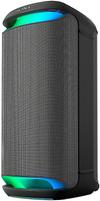
When it comes to party speakers, the Sony SRS-XV800 stands out as something of a technical powerhouse in a market often dominated by flashy lights and booming bass. After extensive research into user experiences and technical specifications, this speaker emerges as a compelling option that balances serious audio engineering with the fun features people expect from a party-focused device.
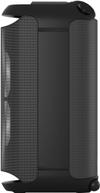
The most striking aspect of the Sony SRS-XV800 isn't immediately visible—it's Sony's X-Balanced Speaker Unit technology. Unlike traditional circular speaker drivers, these woofers use a rectangular shape that maximizes the diaphragm surface area (the part that actually moves air to create sound). Think of it like comparing a round pizza to a rectangular one of the same "size"—the rectangular version gives you more actual pizza. In speaker terms, this means more air movement and better bass response without the distortion that typically creeps in when you push circular drivers hard.
Our researchers found this design particularly effective during high-volume testing. Where many party speakers start to sound harsh or muddy when cranked up, the XV800 maintains clarity even at levels that would make your neighbors call the police. The rectangular drivers can produce the same sound pressure with less back-and-forth movement, which translates to cleaner sound when you really need to fill a space.
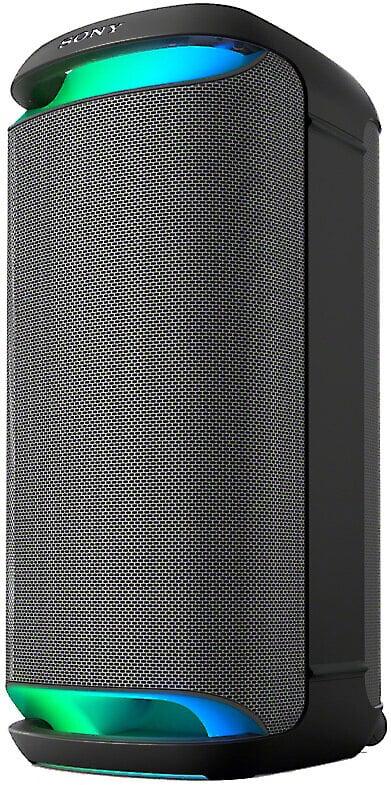
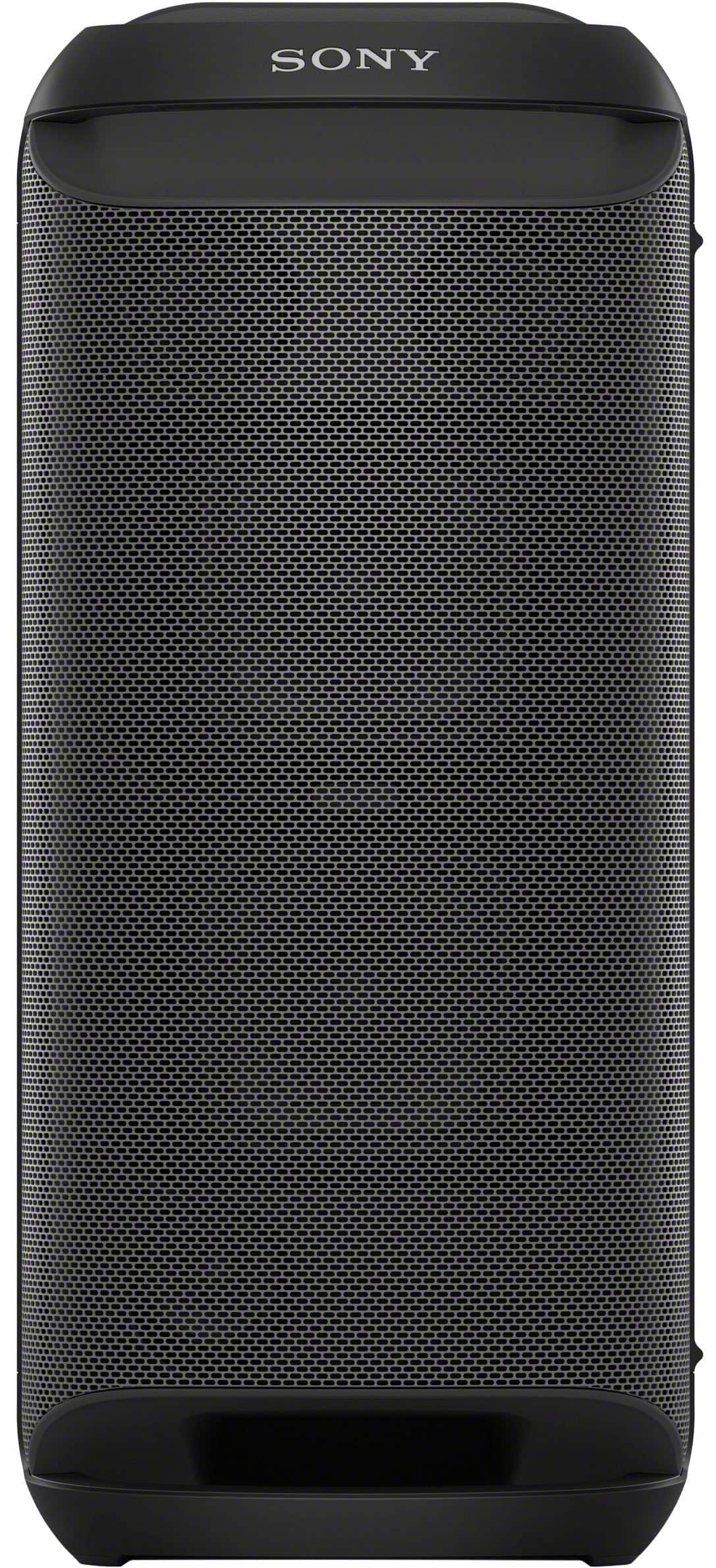
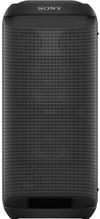
The five-tweeter configuration deserves special attention. Most party speakers treat high-frequency sound as an afterthought, focusing primarily on bass impact. The XV800 takes a different approach with three front-facing tweeters and two rear-facing ones, creating what Sony calls "omnidirectional" sound. In practical terms, this means people standing behind or to the sides of the speaker still get clear highs and detailed sound—crucial for actual parties where people aren't sitting in a perfect listening position.
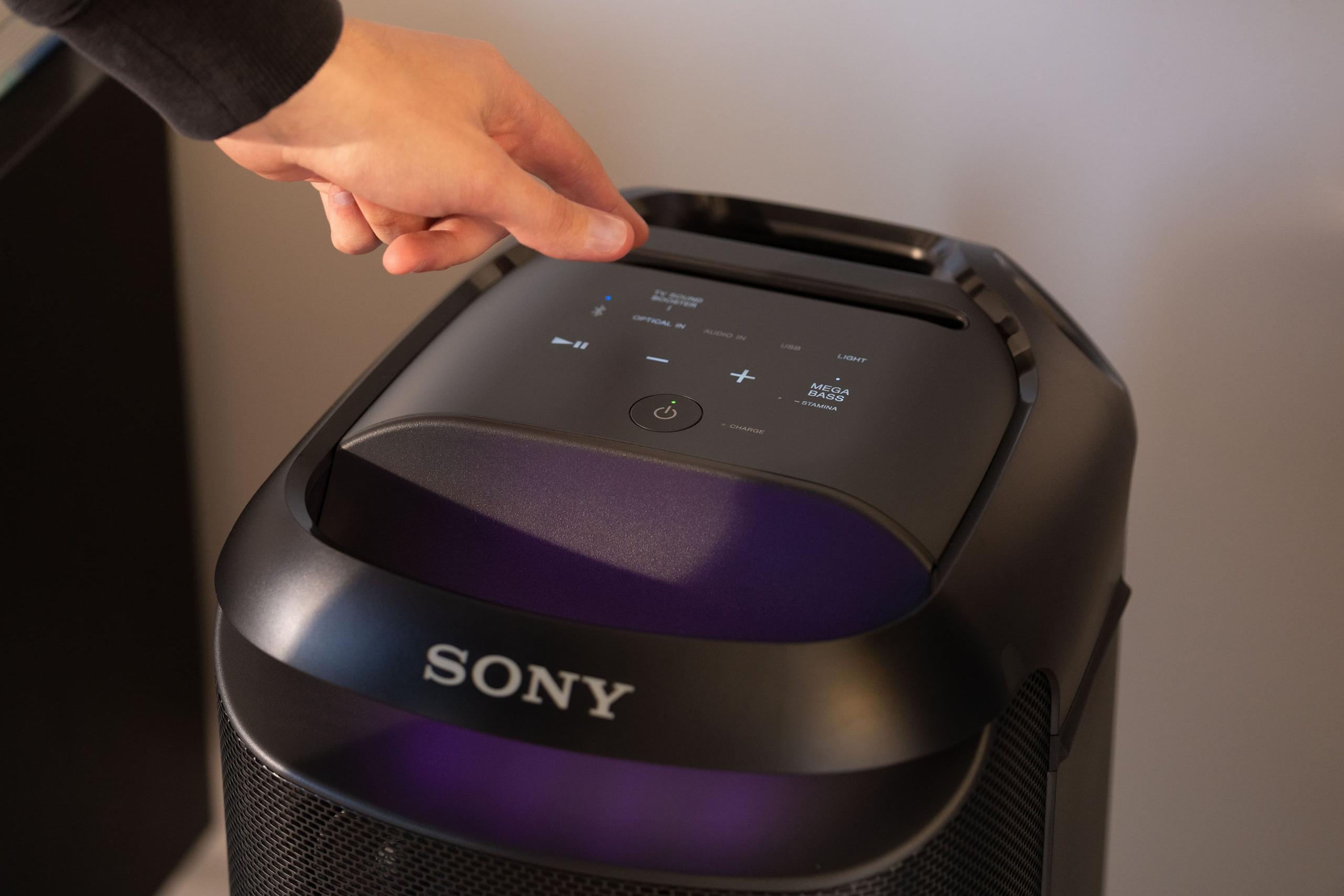
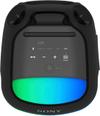
During testing scenarios, researchers noted that the speaker's frequency response from 20Hz to 20kHz delivers surprisingly balanced sound across all ranges. The MEGA BASS mode, accessible via a dedicated button, adds significant low-end punch without overwhelming the midrange frequencies where vocals and most instruments live. This balance is harder to achieve than it sounds—many party speakers either sound thin and bright or muddy and booming.
The inclusion of LDAC Bluetooth codec support sets this speaker apart from most competitors. LDAC can transmit roughly three times more audio data than standard Bluetooth compression, meaning your wireless music retains much more detail and nuance. While most people won't notice the difference with compressed streaming music, those playing high-quality files will appreciate the enhanced clarity and dynamics.
Battery life often becomes the Achilles' heel of portable speakers, but the Sony SRS-XV800 addresses this with a 25-hour rating that, according to user reports, holds up well in real-world use. The quick-charge feature providing three hours of playback from a ten-minute charge has proven particularly valuable for last-minute events or when you realize the speaker wasn't charged before guests arrive.
The adaptive orientation system represents thoughtful engineering. Built-in sensors detect whether the speaker is standing upright or lying horizontally, then automatically adjust the sound output for optimal performance in each position. This isn't just a marketing gimmick—the acoustic properties genuinely change based on orientation, and the automatic adjustment ensures you get the best sound regardless of how you position it.
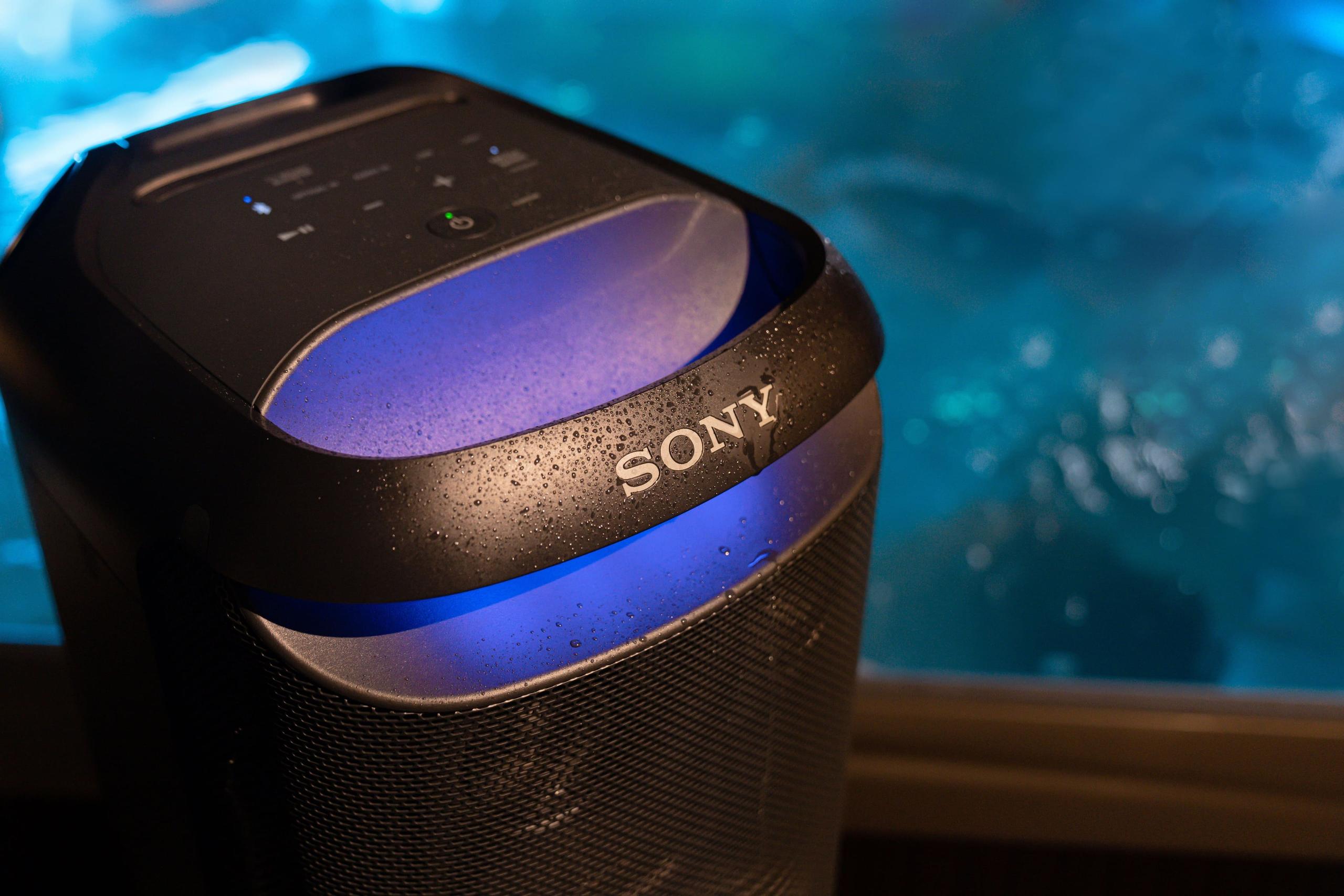
Water resistance varies by position: IPX4 when vertical (can handle splashing from any direction) and IPX2 when horizontal (protected from light drizzle). This variable rating reflects real-world physics—a horizontal speaker naturally collects more water on its surface than a vertical one.
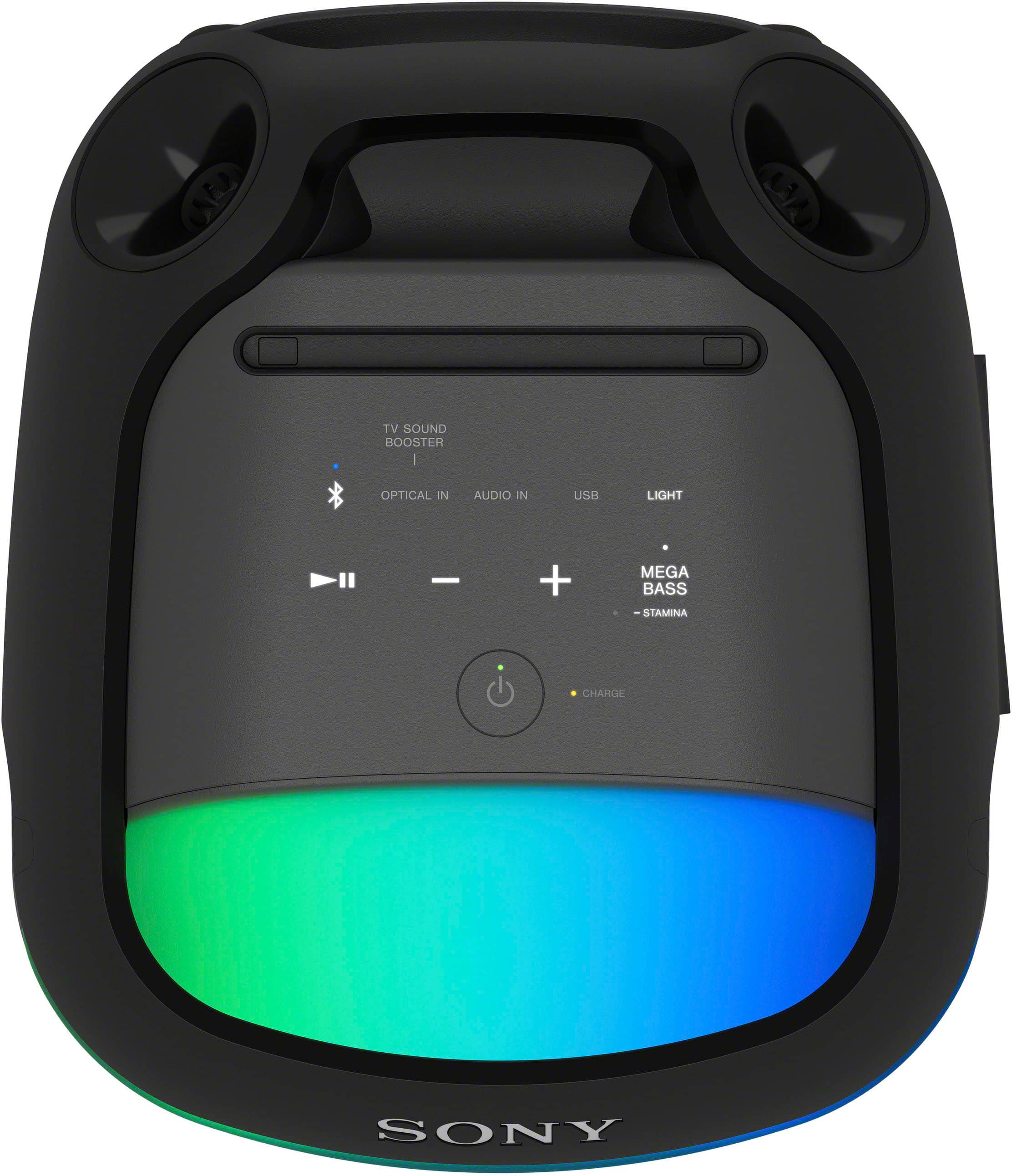
The input selection goes well beyond typical Bluetooth speakers. The optical digital input with included cable turns this into a legitimate TV sound enhancement system. Many users report significant improvement over TV speakers, with the TV Sound Booster mode providing synchronized audio that makes dialogue clearer and effects more impactful.
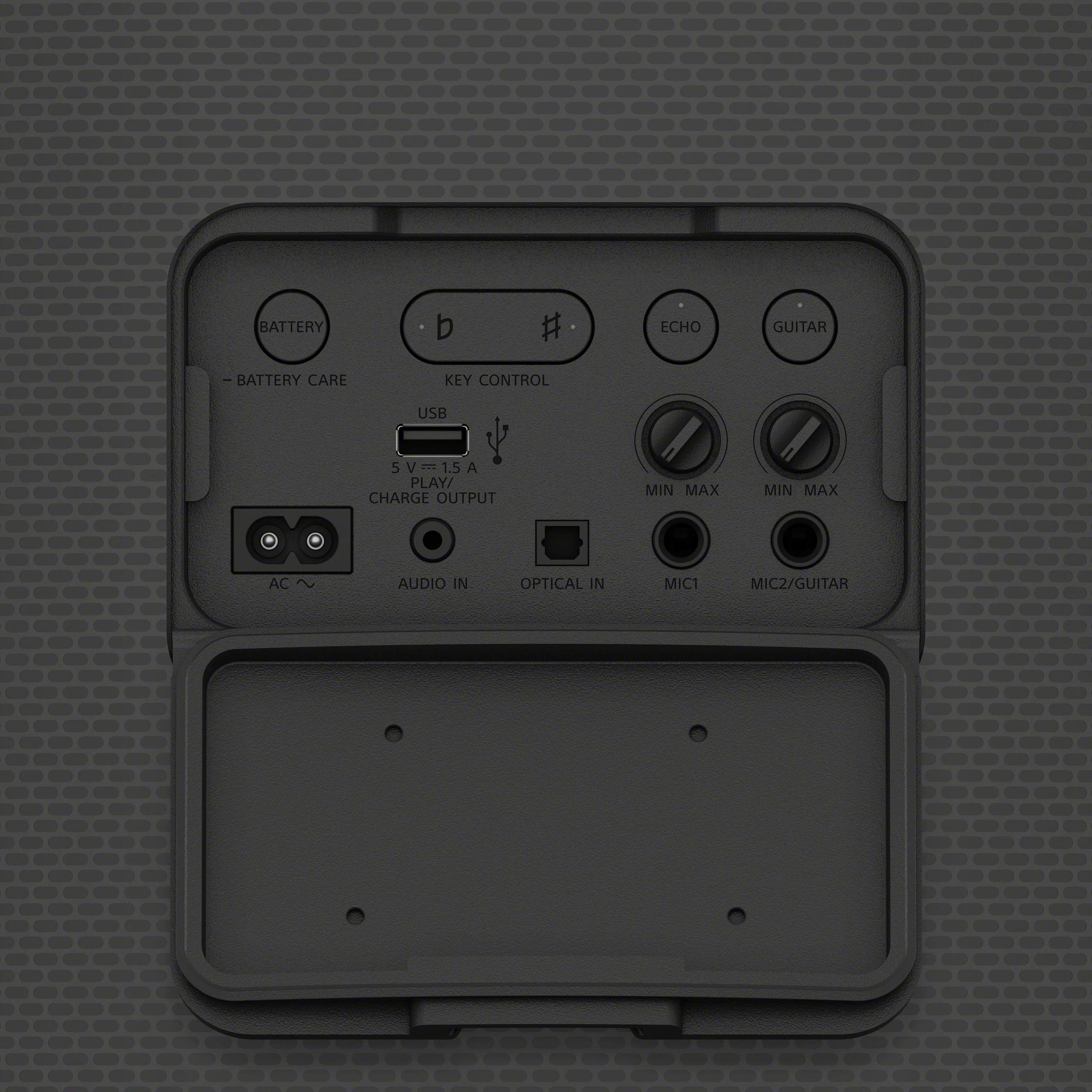
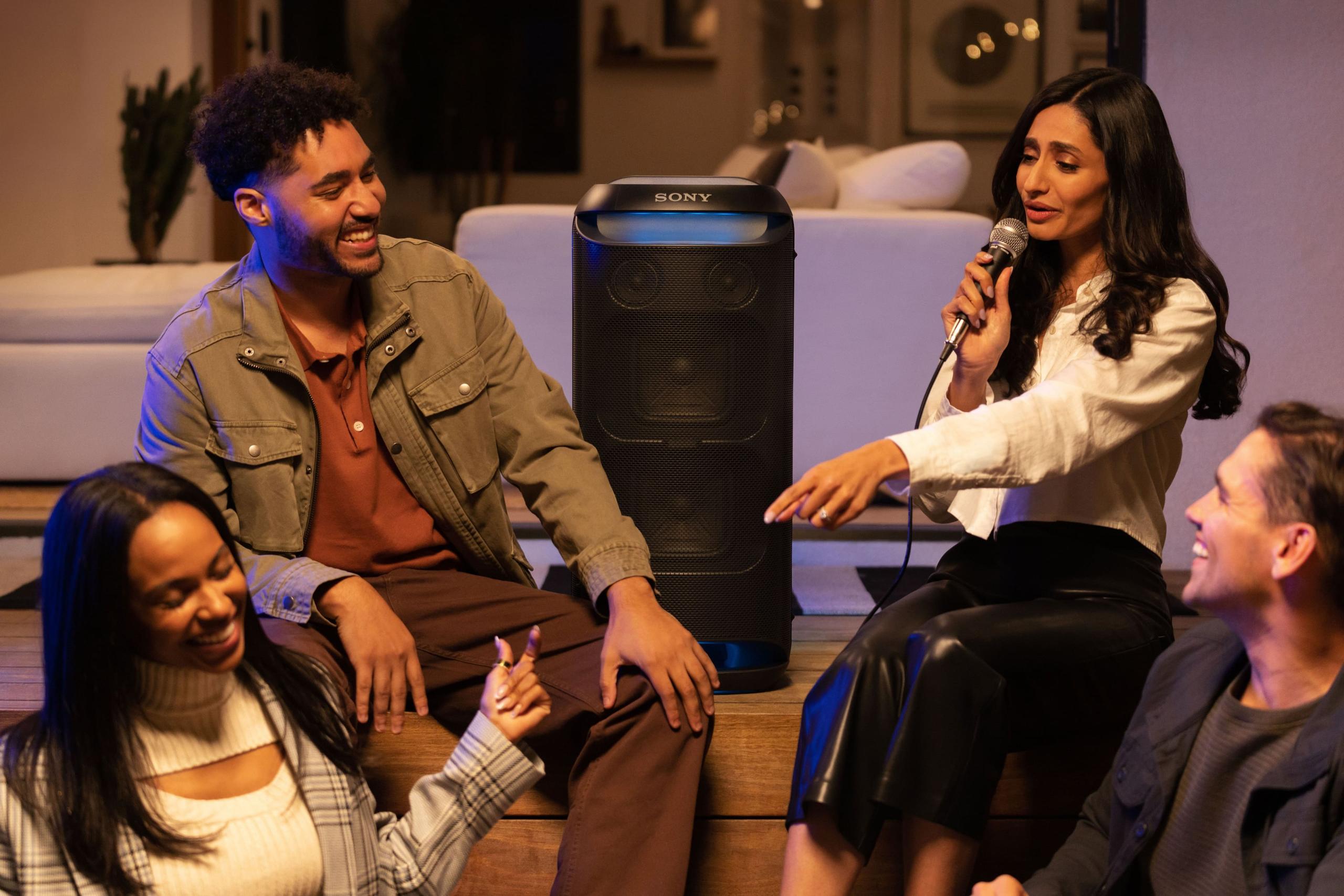
The dual quarter-inch inputs for microphones and guitars, each with independent volume controls, transform the speaker into a capable PA system. Echo and key controls for karaoke use show Sony's attention to actual use cases rather than just checking feature boxes. Online user reviews consistently praise these features for small venue performances and home karaoke setups.
USB-A connectivity serves dual purposes: playing music directly from flash drives and charging other devices. The 5V 1.5A output isn't fast-charging territory, but it's adequate for maintaining phone battery during extended events.
The Sony Music Center app provides extensive control over sound characteristics through a three-band custom EQ and various sound modes. Clear Audio+ processing attempts to restore detail lost in compressed music files, while LIVE SOUND mode creates a more spacious, concert-like atmosphere. These aren't just digital effects—they represent signal processing that can genuinely enhance different types of content.
Party Connect functionality allows linking up to 100 compatible Sony speakers, creating synchronized sound and lighting across multiple units. While most people won't approach this limit, even connecting two or three speakers for larger events provides impressive scalability that most competitors can't match.
The Fiestable app controls the LED lighting system, which can sync with music rhythm or respond to voice and motion. While lighting might seem like a gimmicky addition, user feedback suggests it significantly enhances the party atmosphere, particularly for evening events.
While marketed as a party speaker, the Sony SRS-XV800 functions surprisingly well as a home theater enhancement. The optical input and TV Sound Booster mode create a compelling alternative to traditional soundbars for smaller spaces. The omnidirectional sound dispersion works particularly well for living rooms where seating isn't arranged in a perfect line facing the TV.
However, it's important to note that this isn't a replacement for dedicated home theater systems. There's no surround sound processing, and the single-unit design can't provide true stereo separation. But for apartments, dorm rooms, or casual viewing where space and budget are concerns, it offers significantly better TV audio than most standalone speakers in this category.
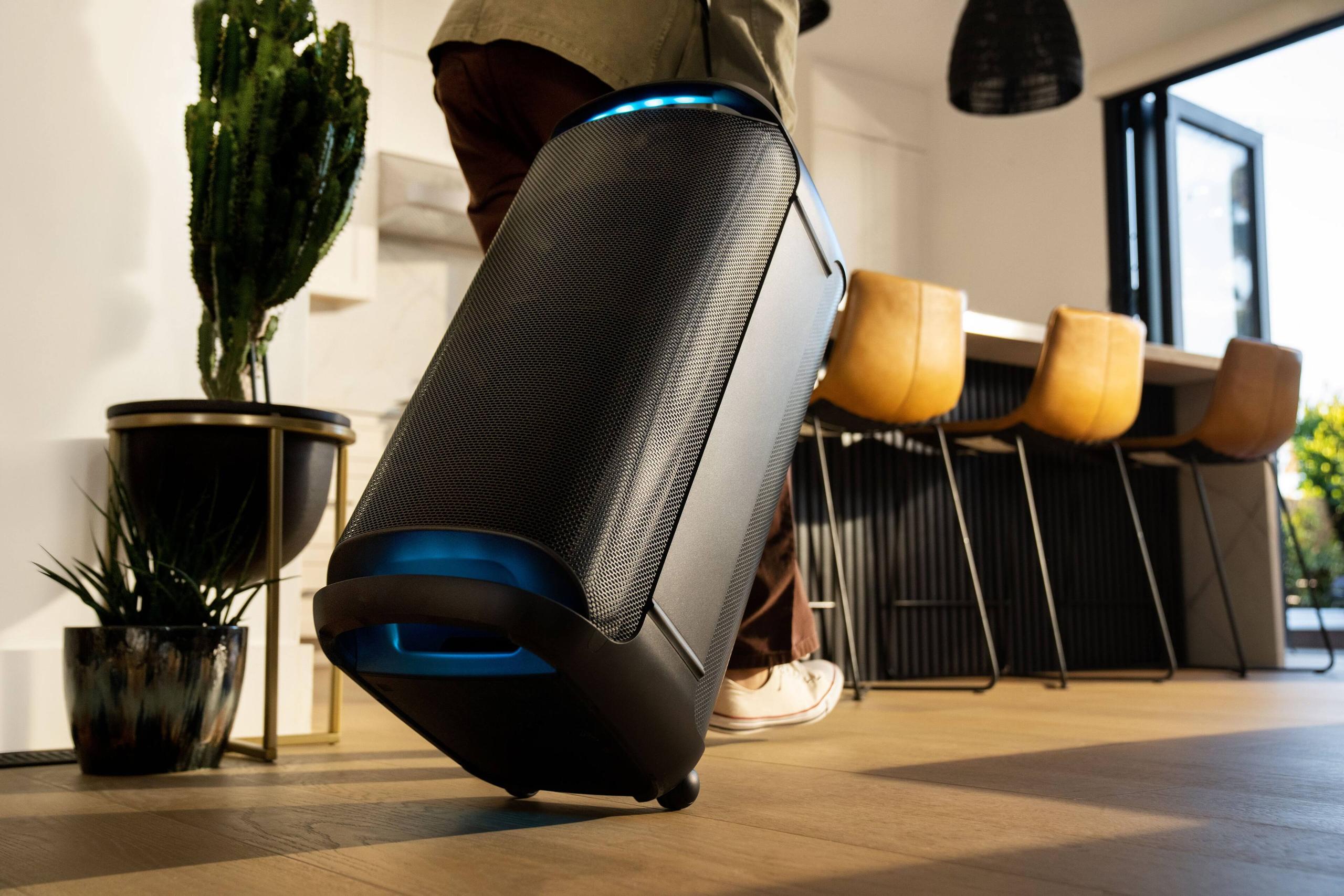
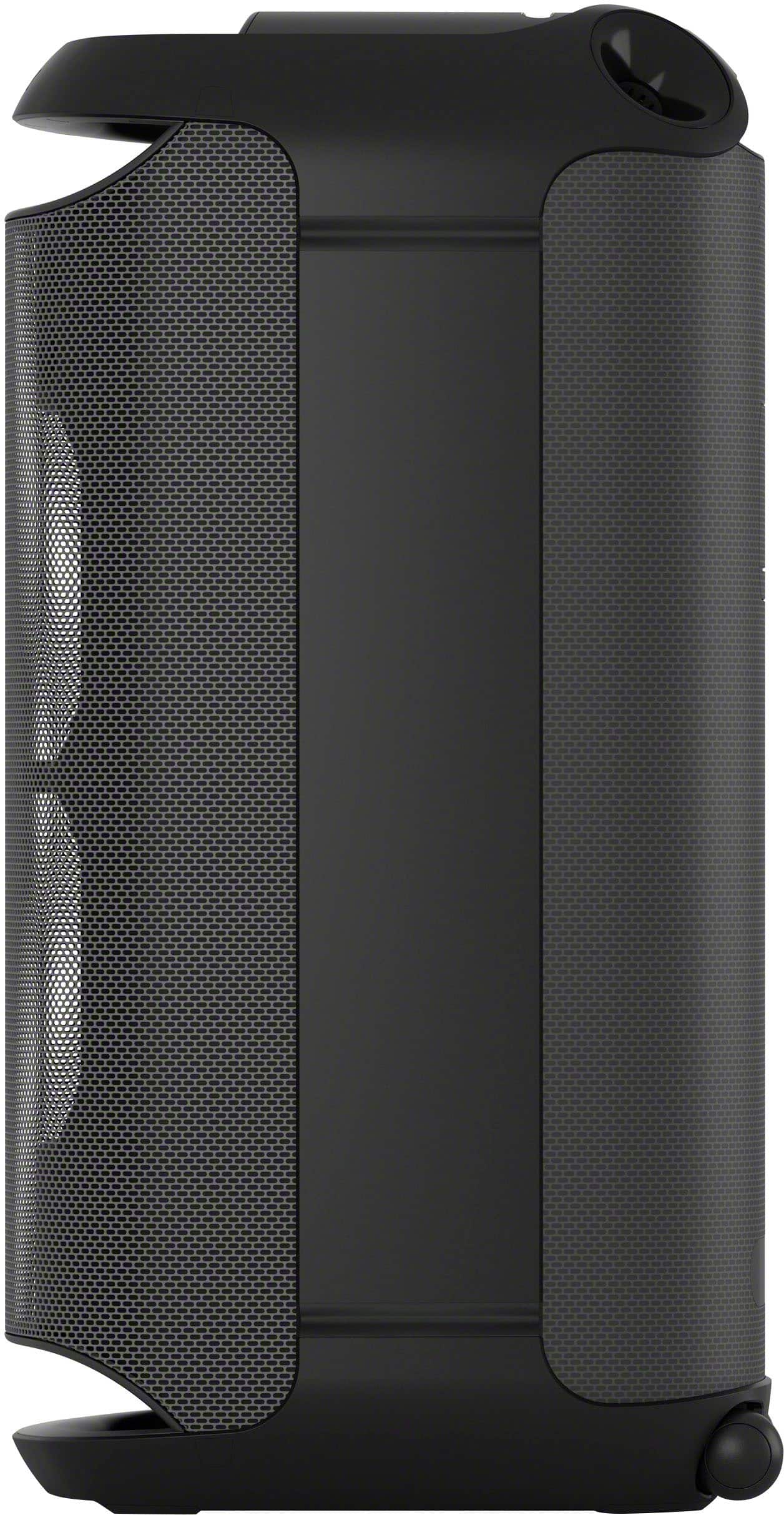
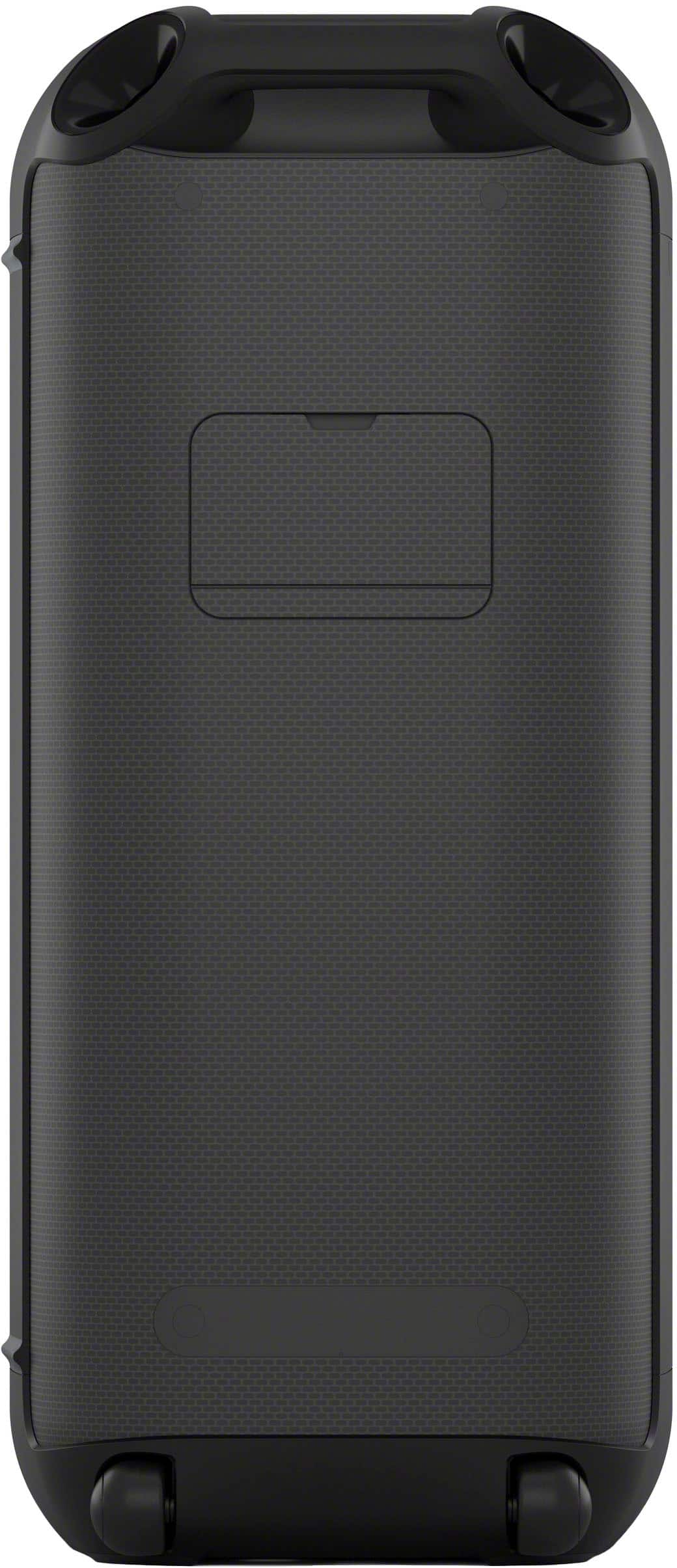
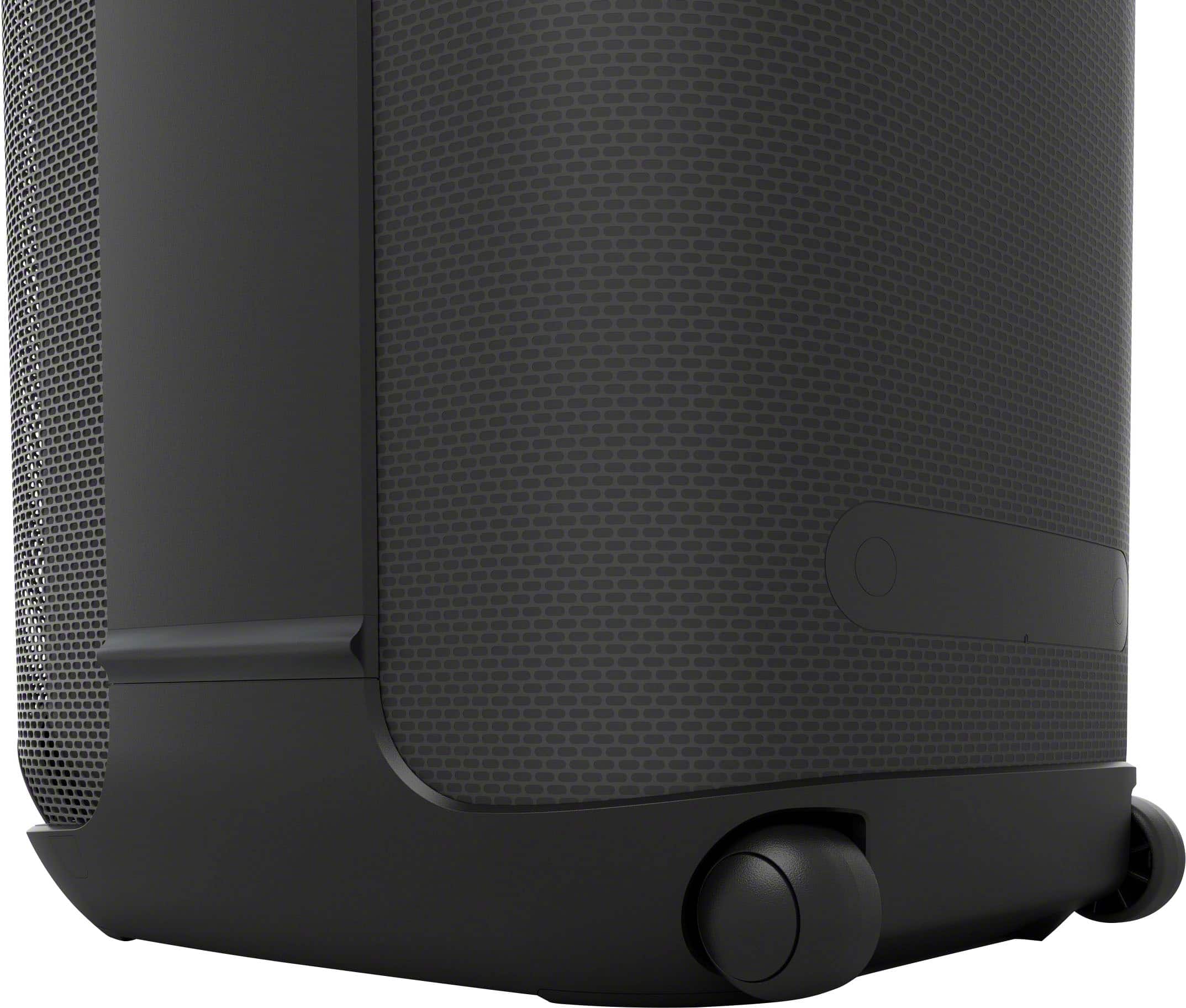
The 40.8-pound weight reflects the serious internal components but limits true portability despite the wheels and handle. This isn't a speaker you'll easily carry to the beach—it's better suited for deck parties, garage gatherings, or moving between rooms rather than locations.
At the time of writing, the price positioning places it in premium territory compared to many party speakers, though the feature set and build quality support this positioning. The extensive connectivity, sophisticated driver technology, and robust construction suggest this is designed as a long-term investment rather than a disposable party accessory.
Some researchers noted that while the sound quality excels, the midrange can occasionally sound slightly recessed compared to the prominent bass and clear highs. This tuning choice works well for most party music but might disappoint those primarily listening to vocal-focused content.
When evaluated against the current market, the XV800 occupies a unique position. While competitors like JBL's PartyBox series offer similar power levels and features, few match the combination of audio refinement, connectivity options, and battery life found here. The LDAC support alone differentiates it from most party speakers, which typically focus on volume over audio quality.
The extensive input options and app integration provide functionality that extends well beyond typical party speaker use cases. Users report success using it as a guitar amplifier, karaoke system, TV sound enhancement, and even for small venue PA applications—versatility that justifies the premium positioning for those who will use multiple features.
The Sony SRS-XV800 succeeds by refusing to compromise audio quality for the sake of party features. The sophisticated driver technology, comprehensive connectivity, and thoughtful engineering create a speaker that performs well across diverse scenarios while maintaining the fun elements that make party speakers appealing.
This isn't the right choice for everyone—the weight and price positioning mean it's best suited for those who prioritize sound quality and feature richness over pure portability. But for users who want a single speaker that can handle everything from background music to TV enhancement to karaoke nights, the XV800 delivers impressive capability in a well-engineered package.
The technical innovations, particularly the X-Balanced drivers and omnidirectional tweeter array, provide genuine performance advantages that translate to better real-world listening experiences. Combined with excellent battery life and robust construction, it represents a compelling option for those viewing their speaker purchase as a long-term entertainment investment.
The Sony SRS-XV800 X-Series Party Speaker delivers up to 25 hours of continuous playback on a single charge. This extended battery life makes it ideal for all-day events, outdoor parties, or extended home theater sessions without needing to stay plugged in. The speaker also features quick charging, providing 3 hours of playback from just a 10-minute charge when you're in a hurry.
Yes, the Sony SRS-XV800 works excellently as a TV speaker replacement. It includes an optical digital input with cable, plus a dedicated TV Sound Booster mode that enhances dialogue clarity and adds impactful bass to movies and shows. Many users find it significantly improves their TV audio experience compared to built-in TV speakers, making it a versatile home theater solution.
The Sony SRS-XV800 is water-resistant with an IPX4 rating when positioned vertically, protecting against splashes from any direction. When placed horizontally, it has an IPX2 rating for light moisture protection. While not fully waterproof for submersion, it handles poolside use, light rain, and accidental spills effectively during outdoor entertaining.
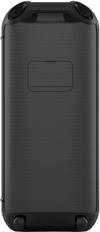
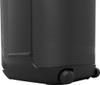
The Sony SRS-XV800 X-Series Party Speaker weighs 40.8 pounds (18.5 kg), making it quite substantial. However, it includes built-in wheels and a handle for easier transport between rooms or outdoor areas. The weight reflects its powerful internal components and robust construction, though it's better suited for stationary use or moving between locations rather than true portability.
Yes, the Sony SRS-XV800 supports LDAC Bluetooth codec, which transmits approximately three times more audio data than standard Bluetooth. This means significantly better wireless sound quality, especially noticeable with high-quality music files. It also supports AAC and SBC codecs, ensuring compatibility with all devices while providing the best possible wireless audio quality.
The Sony SRS-XV800 supports Sony's Party Connect feature, allowing you to wirelessly link up to 100 compatible Sony speakers for synchronized audio and lighting. You can also pair two XV800 units in stereo mode for true left/right channel separation. This scalability makes it perfect for large events or creating a multi-room home audio system.
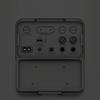
The Sony SRS-XV800 offers comprehensive connectivity including Bluetooth 5.2, optical digital input for TVs, USB-A for music playback and device charging, stereo mini jack (AUX), dedicated microphone input, and guitar input. This extensive connectivity makes it suitable for karaoke, live music, TV enhancement, and various home theater applications.
With 70W RMS power output and Sony's X-Balanced speaker technology, the Sony SRS-XV800 X-Series Party Speaker delivers impressively loud, clear sound that can easily fill large rooms or outdoor spaces. The omnidirectional design with five tweeters ensures consistent volume and clarity throughout the listening area, while the MEGA BASS mode adds extra low-end impact when needed.
Yes, the Sony SRS-XV800 includes dedicated karaoke functionality with microphone input, independent volume control, echo effects, and key control for pitch adjustment. The guitar input with separate volume control also supports live music performance. These features, combined with the powerful audio output, make it an excellent choice for home entertainment and small venue use.
The Sony SRS-XV800 X-Series Party Speaker offers exceptional value for users seeking premium sound quality, extensive connectivity, and versatile functionality. Its combination of 25-hour battery life, LDAC high-quality Bluetooth, TV integration capabilities, and robust build quality justifies the premium positioning. While the substantial weight limits pure portability, the superior audio performance, comprehensive features, and multi-use capability make it an excellent long-term investment for both party hosting and home theater enhancement.
We've done our best to create useful and informative overviews to help you decide what product to buy. Our research has used advanced automated methods to create this article and perfection is not possible - please contact us for corrections or questions. These are the sites we've researched in the creation of this article: soundandvision.com - crutchfield.com - sciencefocus.com - sony.com - bestbuy.com - bestbuy.com - stereoguide.com - sony-mea.com - soundguys.com - electronics.sony.com - youtube.com - sony.com - youtube.com - device.report - youtube.com - youtube.com - adorama.com - sonylatvija.com - sony.com
| Sony SRS-XV800 X-Series Party Speaker |
|---|
| Battery Life - Critical for untethered events: Up to 25 hours |
| Water Resistance - Essential for outdoor use: IPX4 (vertical) / IPX2 (horizontal) |
| Power Output - Determines volume and clarity: 70W RMS |
| Bluetooth Codec - Affects wireless audio quality: LDAC, AAC, SBC support |
| Speaker Configuration - Enables 360° sound dispersion: 5 tweeters + 2 X-Balanced woofers |
| Quick Charge - Emergency power when needed: 3 hours playback from 10-minute charge |
| Multi-Speaker Linking - Scalable for larger events: Up to 100 speakers via Party Connect |
| Karaoke Support - Built-in entertainment features: Mic/guitar inputs with echo control |
| Adaptive Orientation - Optimizes sound automatically: Vertical/horizontal detection with auto-tuning |
| TV Integration - Doubles as soundbar alternative: Optical digital input with TV Sound Booster |
| Weight: 40.8 lbs (18.5 kg) |
| Dimensions: 12.48" x 28.35" x 14.76" |
| Frequency Response: 20 Hz – 20,000 Hz |
| Bluetooth Version: 5.2 |
The Marshall Bromley 750 represents a significant step up in power and professional capabilities, delivering 500W of output compared to the Sony's 70W RMS. This translates to dramatically higher maximum volume levels - up to 127dB SPL - making it capable of filling large outdoor venues or cutting through crowd noise that would overwhelm lesser speakers. Marshall's True Stereophonic 360° sound system uses eight dedicated Class D amplifiers and a sophisticated driver array including twin 10-inch woofers, creating more controlled and accurate audio reproduction. The sealed cabinet design provides tighter bass response favored by audio professionals, while the Sound Character control intelligently adapts the speaker's tonal balance between "Dynamic" indoor mode and "Loud" outdoor performance. Professional-grade XLR/combo jack inputs accommodate studio microphones and instruments without adapters, and the user-replaceable battery system delivers over 40 hours of operation while doubling as a power bank.
However, the Marshall Bromley 750 commands roughly double the price of the Sony while weighing 30% more at 53 pounds, making it less practical for casual users. The Marshall lacks the Sony's multi-speaker Party Connect ecosystem and home theater integration features like optical input and TV Sound Booster mode. Where the Sony excels in versatility and value for residential use, the Marshall targets professionals and serious enthusiasts who need maximum power and can justify the premium for superior build quality and professional connectivity. For most home users, the Sony delivers 90% of the Marshall's performance at half the cost, making the Marshall's advantages mainly relevant for commercial applications, large outdoor events, or users who prioritize professional-grade audio equipment as a long-term investment.
🤖 Read Detailed Comparison
👌Marshall Bromley 750 Party Speaker Details
💵 See Marshall Bromley 750 Party Speaker Price
The Sony ULT TOWER 9 represents Sony's latest flagship party speaker technology, delivering significantly more raw power with 107.5 dB maximum output compared to the XV800's 103 dB—a difference that translates to roughly twice the acoustic energy for filling very large venues or outdoor spaces. Its massive 320mm square X-Balanced woofer produces deeper, more physical bass impact than the XV800's dual smaller drivers, while the professional-grade 10-band EQ and Sound Field Optimization provide studio-level audio customization that goes far beyond the XV800's 3-band setup. The ULT TOWER 9 also introduces two dedicated ULT bass modes for targeted low-end enhancement and features a more elaborate 23-module lighting system for users who prioritize visual spectacle alongside audio performance.
However, these performance gains come with significant trade-offs that favor the XV800 for many users. The ULT TOWER 9 weighs 65 pounds compared to the XV800's 41 pounds, making solo transport challenging and limiting its practical portability despite upgraded wheels. It also commands a substantial price premium—roughly $250 more at the time of writing—while consuming nearly double the power during operation. For most party scenarios involving 20-50 people or medium to large residential spaces, the XV800 delivers 90% of the flagship's performance at a much more accessible price point with superior portability. The ULT TOWER 9 primarily benefits users who regularly host very large events, need maximum volume for outdoor venues, or specifically want professional-grade audio customization features that justify the premium cost and reduced mobility.
🤖 Read Detailed Comparison
👌Sony ULT TOWER 9 Wireless Party Speaker Details
💵 See Sony ULT TOWER 9 Wireless Party Speaker Price
The JBL PartyBox 520 takes a notably different approach with its emphasis on audio accuracy and professional-grade features. Released in 2025 with AI Sound Boost technology, it delivers 400W RMS of power through a more traditional front-firing design that prioritizes frequency response precision over omnidirectional coverage. The AI processing analyzes audio in real-time to prevent distortion while maximizing volume, resulting in measurably louder output and punchier, more dynamic sound that excels for dance music and high-energy events. While its 15-hour battery life falls short of the Sony's marathon endurance, the JBL PartyBox 520 compensates with a swappable battery system that enables unlimited runtime with spare batteries—a crucial advantage for multi-day events or professional use where downtime isn't acceptable.
Where the JBL PartyBox 520 truly differentiates itself is in professional connectivity and modern features. The dual XLR/TRS combo inputs support balanced microphone and instrument connections that reduce noise and interference, making it suitable for wedding receptions and semi-professional performances rather than just casual parties. The 30W USB-C charging port provides four times the power output of the Sony's USB-A port, capable of rapidly charging phones and tablets throughout your event. However, these advantages come at a premium price—typically 25-35% more than the Sony—and significantly higher weight at 56 pounds. The JBL PartyBox 520 is the better choice for users who prioritize maximum audio performance and professional features over endurance and value, particularly those who need the loudest possible output and don't mind the extra cost and bulk for superior sound quality.
🤖 Read Detailed Comparison
👌JBL PartyBox 520 Speaker Details
💵 See JBL PartyBox 520 Speaker Price
The Sony ULT Tower 10 represents a completely different approach to party audio, prioritizing maximum acoustic performance over portability. This stationary powerhouse delivers a measured 110 dB of clean output—genuinely professional concert levels that can fill large indoor spaces without distortion. Its 3-way driver system features a massive 12.6-inch X-Balanced woofer paired with dedicated midrange drivers and four strategically placed tweeters, creating true 360-degree sound dispersion that's more sophisticated than the SRS-XV800's design. The dual ULT bass modes provide deeper, more room-shaking low-end response, while the 7-band equalizer and Sound Field Optimization technology offer professional-grade sound tuning capabilities. The included wireless microphone and comprehensive app-based DJ effects make it particularly appealing for serious entertainers who want maximum features out of the box.
However, the ULT Tower 10 comes with significant trade-offs that make it unsuitable for many users who would benefit from the SRS-XV800. At nearly 64 pounds and standing over 3.5 feet tall, it requires permanent installation and AC power, completely eliminating the outdoor flexibility and spontaneous party capabilities that make the XV800 so versatile. While it costs substantially more, the value proposition only makes sense if you specifically need professional-grade output levels and have a dedicated space for large-scale entertaining. For most home party scenarios, the SRS-XV800's combination of portability, 25-hour battery life, water resistance, and substantial audio performance delivers better real-world utility at a more accessible price point, making the ULT Tower 10 a specialized tool for users with specific high-output requirements rather than a general upgrade.
🤖 Read Detailed Comparison
👌Sony ULT Tower 10 Party Speaker Details
💵 See Sony ULT Tower 10 Party Speaker Price
The JBL PartyBox 720 represents a different philosophy in party speaker design, prioritizing raw power and visual spectacle over the Sony's balanced approach. With its specified 800W RMS output and dual 9-inch woofers, the JBL delivers significantly more volume and bass impact, making it the clear choice for large outdoor events or venues where maximum sound pressure matters most. The speaker's extensive lighting system—featuring 20 strobe LEDs, dual LED rings, and four LED strips—creates an immersive visual experience that transforms any space into a proper party venue. Professional connectivity through dual XLR inputs and USB-C support positions the JBL PartyBox 720 as a serious tool for DJs and event professionals who need guaranteed compatibility with microphones and mixing equipment.
However, these premium features come with significant trade-offs that affect daily usability. At 68.3 pounds compared to Sony's 40.8 pounds, the JBL PartyBox 720 requires considerable effort to transport and often needs two people for safe handling. The 15-hour battery life per unit, while supplemented by a second swappable battery, introduces complexity that most casual users would prefer to avoid. The mono audio configuration sacrifices the Sony's stereo imaging and spatial sound quality, while the substantially higher price point puts it out of reach for many buyers who simply want great party audio without professional-grade features they'll rarely use.
🤖 Read Detailed Comparison
👌JBL PartyBox 720 Portable Speaker JBLPARTYBOX720AM Details
💵 See JBL PartyBox 720 Portable Speaker JBLPARTYBOX720AM Price
The Sony ULT FIELD 7 takes a fundamentally different approach as a truly portable alternative that weighs just 13.9 pounds compared to the XV800's hefty 40.8-pound frame. Its standout feature is the customizable ULT bass technology, which offers two distinct enhancement modes that let you tailor the low-end response to different music genres and environments—something the XV800's fixed MEGA BASS button can't match. The ULT FIELD 7 also boasts superior weather protection with its IP67 rating, making it dust-proof and capable of surviving temporary submersion, opening up usage scenarios like beach parties, poolside gatherings, and camping trips where the XV800's limited water resistance would be problematic. Additionally, it promises 30 hours of battery life versus the XV800's 25 hours, and includes intelligent Sound Field Optimization that automatically adjusts audio based on environmental noise.
However, these portability advantages come with notable performance trade-offs. The ULT FIELD 7 can't match the XV800's room-filling omnidirectional sound coverage or absolute volume output, making it better suited for smaller gatherings rather than large party spaces. Reviews consistently note that the ULT FIELD 7's directional sound projection creates inconsistent listening experiences depending on your position relative to the speaker, and its bass can become compressed at higher volumes—limitations that don't affect the XV800's more robust driver configuration. For users who prioritize true mobility and outdoor durability over maximum sound quality, the ULT FIELD 7 offers compelling value at a more accessible price point, but those seeking the ultimate party sound experience will find the XV800's stationary advantages justify its premium positioning and weight penalty.
🤖 Read Detailed Comparison
👌Sony ULT FIELD 7 Portable Speaker Details
💵 See Sony ULT FIELD 7 Portable Speaker Price
The JBL PartyBox Ultimate takes a dramatically different approach, prioritizing raw power and professional features over portability. With 1100W RMS output compared to the Sony's 70W RMS, it delivers nearly 16 times more power and reaches 109.4 dB – loud enough to fill spaces as large as two basketball courts. The JBL's dual 9-inch woofers produce chest-thumping bass that's physically felt rather than just heard, making it particularly effective for electronic music and large dance floors. Its multi-dimensional lighting system goes far beyond the Sony's ambient LEDs, featuring starry night effects, light trails, strobes, and ground projection that create a true club-like atmosphere. The built-in JBL PartyPad DJ control panel allows real-time sound manipulation and effects, while Wi-Fi 6 connectivity enables Dolby Atmos streaming and eliminates the audio interruptions that can occur with Bluetooth.
However, these performance advantages come with significant trade-offs that make the JBL PartyBox Ultimate less versatile than the Sony. At 87.1 pounds and requiring constant AC power, it's designed for semi-permanent installations rather than true portability. While it excels at large venue events and can replace much more expensive professional PA systems, it can't match the Sony's flexibility for outdoor adventures, camping trips, or everyday home theater use. The JBL also commands a substantially higher price point, making it harder to justify unless you regularly host very large gatherings or need maximum visual and audio impact. For most users seeking a single speaker that can handle various scenarios, the Sony's combination of good performance, genuine portability, and versatile connectivity options provides better overall value, even if it can't match the JBL's raw power and professional features.
🤖 Read Detailed Comparison
👌JBL PartyBox Ultimate Speaker Details
💵 See JBL PartyBox Ultimate Speaker Price
The SOUNDBOKS 4 takes a completely different approach, prioritizing raw acoustic power above all else. With 216W RMS output and 126 dB capability, it delivers significantly more volume than the Sony—loud enough to clearly fill large outdoor spaces with 50+ people where the XV800 would struggle. The standout innovation is its swappable battery system, allowing unlimited runtime by hot-swapping fresh batteries without powering down. This makes it invaluable for multi-day festivals or professional applications where downtime isn't acceptable. The SOUNDBOKS 4 also offers superior weather protection with IP65 rating (versus the Sony's IPX4), making it genuinely weatherproof for harsh outdoor conditions, and includes professional XLR/TRS inputs for mixing boards and pro microphones.
However, this focus on maximum performance comes at significant trade-offs in versatility and value. The SOUNDBOKS 4 commands roughly 80% higher pricing than the Sony while offering a mono-only audio configuration that lacks stereo separation, and eliminates entertainment features like karaoke capability, LED lighting, and TV connectivity that make the XV800 such a complete party solution. Its bass-heavy tuning and high-volume optimization mean it's less refined for moderate indoor listening compared to the Sony's balanced sound signature. For most party hosts, the XV800's combination of solid volume capability, entertainment versatility, and competitive pricing delivers better real-world value, while the SOUNDBOKS 4 justifies its premium only for users who genuinely need maximum volume output and professional-grade durability for demanding outdoor applications.
🤖 Read Detailed Comparison
👌SOUNDBOKS 4 Portable Bluetooth Speaker Model 11-SB4_B Details
💵 See SOUNDBOKS 4 Portable Bluetooth Speaker Model 11-SB4_B Price
The Sony SRS-XV500 excels as a genuinely portable party speaker that delivers impressive performance when you need it most. At 25 pounds with integrated handles, it's significantly easier to transport than the XV800, making it practical for beach trips, camping, and frequent relocation between indoor and outdoor spaces. The XV500's most compelling feature is its dramatic performance boost when plugged into AC power—while it's notably quieter on battery alone, connecting it to wall power transforms it into a speaker that punches well above its weight class with substantially increased volume and bass impact. This makes it ideal for backyard parties, garage gatherings, or any scenario where power outlets are available. The XV500 also maintains the core party features that matter most: RGB lighting, karaoke inputs, Party Connect compatibility, and LDAC Bluetooth support.
The trade-offs become apparent when comparing versatility and consistent performance. The XV500 lacks any TV connectivity options, limiting it to pure party speaker duties rather than serving double duty as a home theater component. Its battery-only performance requires pushing volume levels higher to achieve the same impact as the XV800, and it doesn't maintain the same room-filling presence for larger gatherings. However, for users who prioritize portability and budget-conscious purchasing, these limitations are reasonable compromises. The XV500 offers exceptional value by delivering most of the XV800's party capabilities at a significantly lower price point, making it the smart choice for users who don't need TV integration and primarily use their speaker in powered environments where its plugged-in performance can shine.
🤖 Read Detailed Comparison
👌Sony SRS-XV500 Wireless Party Speaker Details
💵 See Sony SRS-XV500 Wireless Party Speaker Price
The Samsung MX-ST50F excels where the Sony shows its limitations, particularly in portability and visual entertainment. Samsung's five-level adjustable telescoping handle and lighter overall weight make it genuinely easier to transport between venues, addressing one of the Sony's biggest practical drawbacks. The Party Lights+ system represents a significant leap forward in speaker lighting technology, offering six customizable patterns across five lighting zones that synchronize dynamically with music—creating an immersive visual experience that transforms any gathering. The speaker's extensive audio customization options, including three distinct bass modes and four environmental sound settings, give users unprecedented control over their sound profile, allowing optimization for everything from intimate indoor gatherings to large outdoor events.
However, the Samsung MX-ST50F makes notable compromises in core audio performance and endurance that may concern serious listeners. The speaker's power output drops dramatically from 240W to just 90W when running on battery, significantly reducing both volume and bass impact during untethered use—a limitation that doesn't affect the Sony's consistent performance. With 18 hours of battery life compared to Sony's 25 hours, the Samsung falls short for extended events or multi-day use scenarios. While Samsung's Auracast multi-speaker connectivity proves more reliable than Sony's problematic Party Connect system, the overall audio quality doesn't match the Sony's sophisticated six-driver configuration and omnidirectional sound dispersion. For users who prioritize cutting-edge features, superior portability, and comprehensive entertainment capabilities, the Samsung justifies its premium positioning, but those focused purely on audio excellence and marathon battery life will find better value in the Sony's proven performance.
🤖 Read Detailed Comparison
👌Samsung MX-ST50F Sound Tower Party Speaker Details
💵 See Samsung MX-ST50F Sound Tower Party Speaker Price
The JBL PartyBox 310 delivers significantly more raw power and party energy, boasting 240W RMS output that can fill larger outdoor spaces and cut through ambient noise more effectively than the XV800's 70W system. Its bright, bass-forward sound signature creates an immediately exciting listening experience that's perfectly tuned for high-energy gatherings, while the dynamic light show with strobe effects provides genuine visual spectacle that transforms any space into a dance floor. The PartyBox 310's superior portability design—featuring a telescoping handle and smooth-glide wheels—makes it feel more manageable despite similar weight, and its 3.5mm output jack adds flexibility for daisy-chaining speakers or connecting headphones that the Sony lacks.
However, the JBL PartyBox 310 sacrifices battery endurance and versatility for its party-focused approach. With only 7-8 hours of real-world battery life compared to the XV800's 10 hours, it's less suitable for extended events, and the lack of optical input means it can't double as a TV soundbar for year-round home entertainment use. The JBL's energetic sound signature, while perfect for parties, becomes less versatile for background music or diverse listening scenarios where the Sony's balanced approach excels. While the JBL PartyBox 310 often commands a premium price, it justifies the cost through maximum volume capability, better transport design, and more impressive visual effects—making it the clear choice for users who prioritize party impact over multi-purpose functionality.
🤖 Read Detailed Comparison
👌JBL PartyBox 310 Portable Speaker Details
💵 See JBL PartyBox 310 Portable Speaker Price
The JBL PartyBox Stage 320 delivers significantly more raw party energy with its 240W RMS output that produces noticeably louder volumes and more physically impactful bass than the Sony's more restrained presentation. Its comprehensive lighting system featuring ring LEDs, strip LEDs, and eleven strobe lights creates genuine club-like atmosphere that immediately transforms any gathering, while the telescopic handle and lighter 36.4-pound weight make it substantially easier to transport between locations. Most importantly, the JBL features a revolutionary swappable battery system that allows you to replace depleted batteries instantly for unlimited runtime or swap out degraded batteries after years of use—addressing the biggest weakness in portable speaker ownership where built-in batteries eventually force expensive repairs or complete replacement.
However, the JBL PartyBox Stage 320 makes compromises that favor immediate party impact over long-term versatility. Its bright, bass-heavy sound signature can become fatiguing during extended listening sessions and doesn't handle delicate musical content as gracefully as the Sony's balanced approach. Real-world battery life drops to just 7-10 hours when using the impressive lighting effects and bass boost features that people actually buy party speakers for, compared to the Sony's genuine 25-hour endurance. The JBL also lacks the optical input and TV optimization features that make the Sony genuinely useful as a home theater component. While the JBL typically costs less and delivers superior traditional party speaker benefits, it's purpose-built for high-energy gatherings rather than the Sony's broader audio applications and marathon runtime capabilities.
🤖 Read Detailed Comparison
👌JBL PartyBox Stage 320 Portable Speaker Details
💵 See JBL PartyBox Stage 320 Portable Speaker Price
The JBL PartyBox Encore Essential 2 excels where portability and spontaneous entertainment matter most. At just 13.7 pounds with a simple carry handle, it transforms party speaker ownership from a logistics challenge into genuine grab-and-go convenience—you can literally pick it up with one hand and walk to your car without breaking stride. The 100W RMS output with AI Sound Boost technology delivers impressive peak volume that often sounds louder than the Sony's 70W specification suggests, particularly in smaller to medium-sized gatherings where its forward-firing design creates focused, punchy sound that cuts through conversation and ambient noise. The dynamic ring lightshow with strobing effects and six distinct patterns creates an immediately energetic party atmosphere that feels more carnival-like and attention-grabbing than the Sony's sophisticated ambient lighting, making it particularly appealing for younger demographics and high-energy events.
The trade-off comes in endurance and audio sophistication, where the JBL PartyBox Encore Essential 2 makes practical compromises for its portability advantages. The 15-hour battery life, while sufficient for most single-day events, falls short of the Sony's 25-hour marathon performance that eliminates charging anxiety during extended gatherings or multi-day trips. The frequency response floor of 40Hz versus the Sony's 20Hz extension means less room-shaking sub-bass impact, though the JBL's mid-bass emphasis often feels more immediately satisfying for party music genres. At a lower price point—typically 20-25% less expensive—the JBL represents excellent value for occasional users and those who prioritize convenience over audiophile-level performance, but serious entertainers or users hosting regular large events may find themselves wishing for the Sony's extended capabilities and professional-grade features.
🤖 Read Detailed Comparison
👌JBL PartyBox Encore Essential 2 Portable Speaker JBLPBENCOREES2AM Details
💵 See JBL PartyBox Encore Essential 2 Portable Speaker JBLPBENCOREES2AM Price
The Sony ULT Tower 9AC represents Sony's flagship approach to party audio, delivering significantly more acoustic power with its 107.5 dB maximum output – roughly twice the sound pressure of the XV800. Its standout feature is the massive 320mm × 320mm X-Balanced woofer that moves substantially more air than the XV800's dual drivers, creating visceral, chest-thumping bass that transforms bass-heavy genres like hip-hop and EDM into truly physical experiences. The sophisticated seven-driver array with dedicated midrange units and four strategically positioned tweeters creates superior 360-degree sound coverage, while the dual ULT bass modes (ULT1 for deep extension, ULT2 for punchy attack) offer targeted sound customization that the XV800's single MEGA BASS mode cannot match. Professional features like Key Control for pitch adjustment elevate karaoke experiences beyond recreational use, and the elaborate 23-module LED array creates club-like visual spectacles that dwarf the XV800's basic lighting system.
However, the ULT Tower 9AC demands significant trade-offs for its superior performance, requiring constant AC power that eliminates the outdoor freedom that makes the XV800 so versatile. At 28.5 kg, it typically needs two people for transport and suits semi-permanent installation better than frequent relocation. The lack of true water resistance (only splash-resistant with manual port closure) limits outdoor durability compared to the XV800's IPX4 rating. While the Tower 9AC justifies its premium pricing through maximum acoustic capabilities essential for large venues exceeding 2,000 square feet, users hosting typical backyard parties or medium-sized gatherings may find the XV800's 90% performance level more than adequate while gaining crucial battery operation and weather protection. The choice ultimately depends on whether maximum sound pressure and professional features outweigh the practical limitations of AC-only operation and reduced portability.
🤖 Read Detailed Comparison
👌Sony ULT Tower 9AC Party Speaker Details
💵 See Sony ULT Tower 9AC Party Speaker Price
The Sony SRS-XP700 offers a more aggressive, bass-forward sound signature that some party enthusiasts may actually prefer over the XV800's balanced approach. Its rear-firing bass port design delivers maximum physical impact – the kind of visceral, chest-thumping bass that you feel as much as hear, creating an intense party atmosphere that's particularly effective for dance music, hip-hop, and EDM. The XP700 also maintains consistent IPX4 water resistance regardless of positioning, unlike the XV800 which drops to IPX2 when horizontal. For users who prioritize raw bass impact over refined audio balance, the XP700's more aggressive tuning can be genuinely appealing.
From a value perspective, the SRS-XP700 often presents a compelling option when found at discounted prices, delivering solid party speaker performance without the premium features that not all users need. It's notably lighter at 37.25 pounds compared to the XV800's 40.8 pounds, and while it lacks wheels, the reduced weight partially compensates for transport convenience. The XP700 still includes the same core party features – Party Connect multi-speaker linking, karaoke inputs, device charging capabilities, and programmable lighting – making it a capable choice for users who don't require TV connectivity or the XV800's more refined sound profile. For budget-conscious buyers or those specifically seeking maximum bass impact, the XP700 remains a viable alternative that delivers genuine party speaker performance at a more accessible price point.
🤖 Read Detailed Comparison
👌Sony SRS-XP700 Wireless Party Speaker Details
💵 See Sony SRS-XP700 Wireless Party Speaker Price
The Samsung MX-ST40F prioritizes portability and interactive entertainment features over raw power, making it significantly more practical for users who frequently move their speaker between locations. At just 28 pounds compared to the Sony's 41-pound bulk, the Samsung is genuinely manageable for one person to carry, opening up use cases like beach trips, camping, or simply moving between rooms during house parties. The standout feature is its user-replaceable battery—while offering only 12 hours versus the Sony's 25, the ability to swap in fresh batteries means theoretically unlimited runtime for extended events. The Samsung also excels in interactive features with advanced karaoke capabilities including voice recording, voice removal from existing tracks, 12 built-in samplers, and five DJ effects that transform it into a portable production studio. The customizable party lighting system with six different patterns adds visual flair that responds dynamically to music.
However, the Samsung MX-ST40F makes notable compromises in pure audio performance to achieve its portability advantages. With 160W in AC mode dropping to just 80W on battery power, it simply can't match the Sony's room-filling volume or bass impact, particularly problematic for larger outdoor gatherings where serious sound pressure is needed. The Samsung's dual-tweeter design, while featuring waveguide technology for better dispersion, lacks the spatial audio experience created by the Sony's five-tweeter omnidirectional array. For users who value easy transport, extensive karaoke features, and the flexibility of battery replacement over maximum audio performance, the Samsung MX-ST40F offers compelling advantages despite typically commanding a slight price premium over the Sony. It's the clear choice for mobile entertainers or anyone who prioritizes convenience and interactive features over pure sonic horsepower.
🤖 Read Detailed Comparison
👌Samsung MX-ST40F Sound Tower Speaker Details
💵 See Samsung MX-ST40F Sound Tower Speaker Price
The JBL PartyBox Club 120 delivers significantly more raw power and audio impact, with its 160W RMS output producing noticeably louder, more dynamic sound than the Sony's 77W system. This power advantage translates to superior bass response that can physically shake floors and fill large outdoor spaces with authority—something the Sony struggles to match even at maximum volume. The JBL's customizable RGB lightshow creates a more intense party atmosphere with strobes, light trails, and starry effects that sync perfectly to music beats, offering the kind of visual spectacle that transforms any gathering into a club-like experience. Additionally, its innovative swappable battery design provides unlimited runtime potential for users willing to invest in additional battery packs, while the 10-minute fast charge feature delivers 80 minutes of playtime for quick power boosts during events.
However, the JBL PartyBox Club 120 achieves this superior performance with some practical compromises. Its 12-hour battery life is less than half of what the Sony offers, making it less suitable for all-day events without power management planning. The dual-handle design requires lifting the 24-pound unit rather than rolling it, which can be more cumbersome for frequent transport despite the lighter weight. The JBL also lacks the Sony's home theater integration features like optical input and TV Sound Booster mode, making it more specialized for party use rather than dual-purpose functionality. For users who prioritize maximum audio impact, intense visual effects, and don't mind managing shorter battery cycles, the JBL represents excellent value for serious party hosting. But those seeking worry-free all-day operation and versatile home use may find the Sony's compromises in power worthwhile for its superior convenience and endurance.
🤖 Read Detailed Comparison
👌JBL PartyBox Club 120 Portable Speaker Details
💵 See JBL PartyBox Club 120 Portable Speaker Price
The Soundboks Go represents the premium end of portable party audio, commanding roughly double the price but delivering specialized capabilities that justify the investment for users who prioritize true mobility. At just 20 pounds with compact 18×12×10-inch dimensions, it achieves genuine portability that the Sony simply cannot match, fitting in backpacks and car trunks while delivering an impressive 121 dB maximum output through its efficient 144W RMS Class-D amplification. The standout feature is its swappable USB-C battery system providing up to 40 hours of playback, effectively offering unlimited runtime with spare batteries—a crucial advantage for multi-day events or remote locations. The IP65 rating provides complete dust protection and water resistance from any direction, making it suitable for beaches, construction sites, and harsh outdoor conditions where the Sony would fail.
Where the Soundboks Go truly differentiates itself is in professional applications and extreme durability scenarios. Its proprietary SKAA wireless technology delivers ultra-low latency connections between up to five speakers, making it invaluable for DJ monitoring and live performance where timing is critical. The reinforced construction with silicone bumpers handles rough treatment that would damage conventional speakers, while the forward-firing horn-loaded tweeter maintains clarity at long distances in outdoor settings. However, this specialization comes with notable limitations: the single-driver bass system cannot match the Sony's deep low-frequency impact, the mono configuration lacks the room-filling omnidirectional coverage, and the feature set is deliberately minimal without karaoke inputs, TV connectivity, or programmable lighting. The Soundboks Go succeeds by excelling in specific scenarios—extreme portability, professional reliability, and harsh environment use—rather than trying to be everything to everyone.
🤖 Read Detailed Comparison
👌Soundboks Go Portable Bluetooth Speaker 11-SBGO_B Details
💵 See Soundboks Go Portable Bluetooth Speaker 11-SBGO_B Price
The Marshall Woburn III represents the premium end of home audio with its sophisticated three-way driver system and 150W amplification that delivers audiophile-grade sound quality. Its standout features include HDMI ARC connectivity for seamless TV integration, dedicated 2-inch midrange drivers for exceptional vocal clarity, and angled tweeters with waveguides that create an immersive stereo soundstage. The speaker's bass-reflex design extends low-frequency response down to 35Hz while maintaining the articulate, controlled bass that serious listeners appreciate. Premium materials like vegan leather exterior and brass control knobs reflect Marshall's iconic amplifier heritage, while features like Dynamic Loudness and Placement Compensation through the app ensure optimal sound regardless of volume level or room positioning.
In direct comparison, the Marshall Woburn III trades the Sony's portability and party features for superior audio performance and home theater integration at a higher price point. While it lacks battery operation, water resistance, and entertainment features like karaoke inputs, it delivers significantly more powerful amplification and refined sound reproduction that becomes especially apparent during critical listening sessions or movie watching. The Marshall's HDMI ARC connection and Night Mode make it a true home theater component, offering seamless TV integration that the Sony cannot match despite its optical input. For users who prioritize sound quality, permanent home installation, and premium build quality over mobility and party features, the Marshall Woburn III justifies its premium pricing through superior audio engineering and long-term value, making it the clear choice for dedicated listening rooms and home theater setups where ultimate performance matters more than versatility.
🤖 Read Detailed Comparison
👌Marshall Woburn III Bluetooth Home Speaker 1006088 Details
💵 See Marshall Woburn III Bluetooth Home Speaker 1006088 Price
The Tivoli Audio SongBook MAX takes a fundamentally different approach with its audiophile-focused design that prioritizes sound quality and analog connectivity over raw power and party features. Where the XV800 impresses with volume and omnidirectional projection, the Tivoli excels at delivering refined, detailed audio reproduction through its carefully tuned 3-way driver system that separates frequencies for cleaner, more accurate sound. The Tivoli's built-in preamp with selectable impedance settings makes it uniquely capable of connecting directly to turntables, guitars, and keyboards without external equipment – a feature the Sony simply can't match. Its physical EQ sliders provide immediate, tactile sound adjustment without needing to open apps or navigate digital menus, while the vintage-inspired design with high-gloss finishes and analog controls creates a premium aesthetic that doubles as home decor.
The Tivoli SongBook MAX weighs just 11.5 pounds compared to the Sony's 40.8 pounds, making it genuinely portable for room-to-room movement or casual outdoor use without requiring wheels or multiple people to transport. While it sacrifices the Sony's extended 25-hour battery life for a more modest 10-hour runtime, the Tivoli offers superior value for users who prioritize audio fidelity over maximum features. Its FM radio with analog tuning, consistent IPX4 water resistance regardless of orientation, and focus on musical accuracy rather than party-level volume make it ideal for home listening, vinyl enthusiasts, and musicians who need portable amplification. The trade-off is clear: if you value refined sound quality, analog connectivity, true portability, and don't need karaoke or lighting features, the Tivoli delivers a more focused and arguably more satisfying audio experience at a lower price point.
🤖 Read Detailed Comparison
👌Tivoli Audio SongBook MAX Bluetooth Speaker Details
💵 See Tivoli Audio SongBook MAX Bluetooth Speaker Price
The JBL EON ONE Compact represents a completely different philosophy in portable audio, designed as a professional-grade PA system that happens to be portable rather than a party speaker. Its standout feature is the integrated 4-channel digital mixer with professional XLR/TRS inputs, phantom power for condenser microphones, and a dedicated Hi-Z guitar input—essentially providing a complete sound reinforcement system in a single 17.6-pound package. The focused, directional sound projection from its 8-inch woofer and 1-inch tweeter delivers exceptional vocal clarity and speech intelligibility, with a maximum SPL of 112 dB that can easily handle audiences of 50+ people. Professional touches like automatic music ducking (which lowers background music when speech is detected), built-in effects processing, and swappable battery technology demonstrate its live performance heritage. At just over half the Sony's weight with a comfortable carry handle, it's genuinely portable for performers who need to move between venues frequently.
From a value standpoint, the JBL EON ONE Compact typically commands a premium price but delivers capabilities that would require multiple separate components—mixer, amplifier, speakers, and effects processor—making it cost-effective for its target market of performers, presenters, and mobile entertainers. While it offers shorter 12-hour battery life compared to the Sony's 25 hours, the tool-free swappable battery system provides theoretically unlimited runtime with spare batteries. The JBL excels in scenarios requiring microphone work, live instruments, or presentations where vocal clarity is paramount, but it's not optimized for the ambient music listening and party atmosphere that defines the Sony's strengths. The seven-year warranty (compared to Sony's one year) reflects JBL's confidence in the professional-grade construction, though the lack of water resistance limits outdoor applications compared to the Sony's IPX4 rating. For users who need true PA capabilities rather than just powerful music playback, the JBL represents the only viable single-unit solution in this size and weight class.
🤖 Read Detailed Comparison
👌JBL EON ONE Compact Portable PA Speaker Details
💵 See JBL EON ONE Compact Portable PA Speaker Price
The JBL PartyBox 110 excels where it matters most for party environments: raw volume output and deep, physical bass response that you feel as much as hear. Its 160W RMS power delivery and brighter sound signature allow it to get noticeably louder than the SRS-XV800, making it superior for outdoor gatherings or competing with crowd noise. The standout feature is its two-level Bass Boost system that produces genuinely room-shaking low-frequency extension that the Sony simply cannot match, creating that chest-thumping impact that defines great party audio. The PartyBox 110's LED light show is also significantly more dramatic and eye-catching, with larger light rings that create impressive synchronized displays that become a genuine focal point at gatherings.
Perhaps more importantly, the JBL PartyBox 110 delivers this superior party performance at a substantially lower price point while maintaining true portability at just 23 pounds. This weight advantage isn't trivial—it's the difference between easily carrying the speaker to beach parties, camping trips, or between rooms versus needing wheels and planning around smooth surfaces. The True Wireless Stereo pairing capability means you can connect two PartyBox 110 units for genuine stereo separation and doubled bass output, often for less total cost than a single SRS-XV800. While the JBL sacrifices the Sony's premium battery life and TV connectivity features, it focuses relentlessly on what makes parties memorable: loud, clear, bass-heavy sound with spectacular lighting effects that get people moving without breaking the budget.
🤖 Read Detailed Comparison
👌JBL PartyBox 110 Portable Party Speaker Details
💵 See JBL PartyBox 110 Portable Party Speaker Price
The JBL PartyBox Encore Essential excels where true portability matters most, weighing just 13 pounds with a grab-and-go handle that makes beach trips, camping, and dorm room parties effortless. Its concentrated 100W mono output delivers impressive maximum volume that can easily overpower the Sony in smaller spaces, creating that immediate sonic impact that gets parties started. The straightforward operation—power on, connect, and play—eliminates the complexity of multiple apps and professional features that many casual users don't need. At a significantly lower price point, it offers exceptional power-to-size ratio and includes essential party features like dynamic LED lighting, basic karaoke functionality, and True Wireless Stereo pairing for genuine stereo when you have two units.
However, the JBL PartyBox Encore Essential makes substantial compromises that limit its versatility compared to the Sony's comprehensive approach. The 6-hour battery life requires constant planning and charging for extended events, making all-day festivals or wedding receptions impractical without power access. Its mono configuration can't match the spatial sound experience and deep bass extension that the Sony's stereo setup provides, particularly noticeable when playing music with complex arrangements or using it for home theater enhancement. The basic connectivity options and simplified karaoke features also mean it can't serve the professional or multi-purpose roles that justify a premium speaker investment. For users who regularly host longer events, need genuine stereo sound quality, or want a speaker that doubles as home theater enhancement, the JBL's portability advantages may not outweigh its functional limitations.
🤖 Read Detailed Comparison
👌JBL PartyBox Encore Essential Speaker Details
💵 See JBL PartyBox Encore Essential Speaker Price
The Philips TAX5206 excels where the Sony falters: genuine portability and dedicated karaoke functionality. At just 23 pounds with a purpose-built trolley design, the Philips can be easily transported by one person between venues, making it ideal for users who regularly move their speaker to beach trips, backyard barbecues, or friends' houses. More importantly, the Philips is designed specifically for karaoke entertainment with comprehensive vocal processing features including echo control, voice changer effects, and vocal fader capabilities that can reduce existing vocals in songs. These specialized features eliminate the need for additional karaoke equipment and transform any gathering into a sing-along party. The Philips TAX5206 also maintains more consistent sound quality across its entire volume range, avoiding the bass-heavy character that plagues the Sony at maximum output levels.
From a value perspective, the Philips TAX5206 costs approximately 40% less while delivering functionality that the Sony simply cannot match in karaoke scenarios. The 14-hour battery life, while shorter than the Sony's claimed 25 hours, provides more predictable performance without the significant runtime variations caused by the Sony's power-hungry advanced features. The Philips' physical rotary controls for bass, treble, and effects adjustments offer immediate tactile control during parties without requiring smartphone app interaction. For users who prioritize practical portability, karaoke features, and consistent performance over maximum audio fidelity and advanced connectivity, the Philips TAX5206 represents superior real-world value. The significant cost savings could easily cover microphones and other party accessories, making it the smarter choice for entertainment-focused users rather than serious audiophiles.
🤖 Read Detailed Comparison
👌Philips TAX5206 Bluetooth Party Speaker Details
💵 See Philips TAX5206 Bluetooth Party Speaker Price
The Rockville Rock Party 9 takes a dramatically different approach, prioritizing maximum bass impact and karaoke entertainment at a budget-friendly price point. Its dual 8-inch woofers deliver genuinely earth-shaking bass that you can feel in your chest – particularly impressive for electronic music and hip-hop where low-frequency impact matters more than refinement. The advanced karaoke features including auto-tune, voice-changing effects, and echo control transform any gathering into an interactive entertainment experience, while the lightweight 19.64-pound design with carry handle makes it truly portable for frequent transport between venues. At a fraction of the Sony's cost, the Rockville delivers immediate gratification for users who want powerful party sound without premium pricing.
However, the budget-focused approach creates notable limitations compared to the SRS-XV800's sophisticated engineering. Battery life becomes a significant constraint at just 2-3 hours when pushed to high volumes, requiring careful event planning or access to power outlets for extended use. The lack of weather resistance limits outdoor versatility, and the audio quality, while impressive for the price, can become harsh at maximum volume with less refined midrange reproduction. The Rockville's connectivity options are more basic, lacking the optical input and high-resolution LDAC codec that make the Sony suitable for home theater applications. For users prioritizing raw bass power, dedicated karaoke features, and true portability over audio refinement and all-day battery life, the Rockville Rock Party 9 offers exceptional value despite these trade-offs.
🤖 Read Detailed Comparison
👌Rockville Rock Party 9 Portable Bluetooth Speaker Details
💵 See Rockville Rock Party 9 Portable Bluetooth Speaker Price
Original price was: $499.99.$369.99Current price is: $369.99.
Original price was: $579.99.$318.99Current price is: $318.99.


Privacy Policy
Terms and Conditions - Affiliate Policy
Home Security
© Copyright 2008-2026.
11816 Inwood Rd #1211, Dallas, TX 75244