Original price was: $799.00.$759.99Current price is: $759.99.
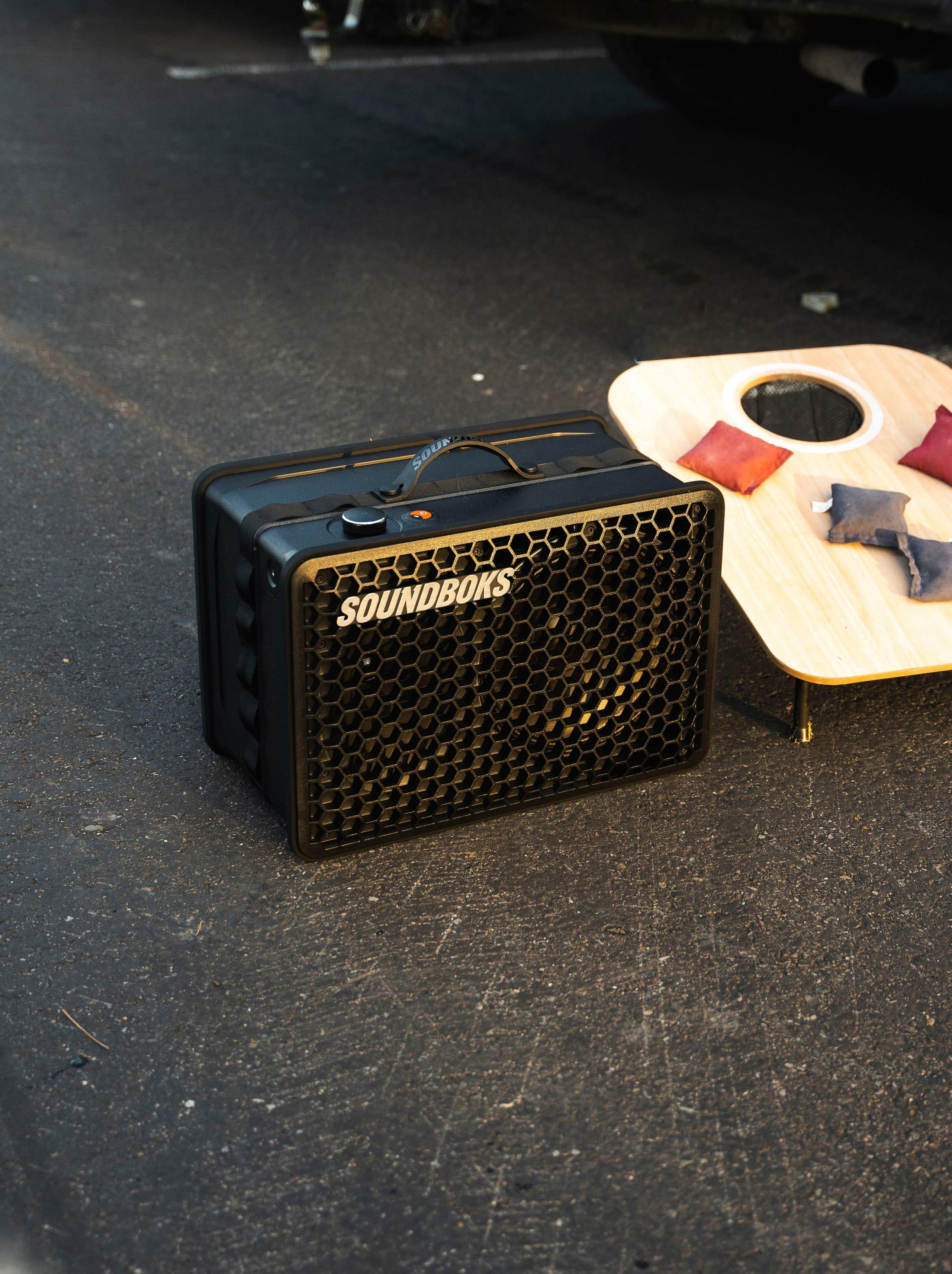
When most people think "portable Bluetooth speaker," they imagine something that fits in a backpack for beach trips. The Soundboks Go throws that assumption out the window. This isn't just another wireless speaker—it's what happens when engineers design portable audio for people who actually need serious volume and rugged reliability.
The Soundboks Go occupies a unique space in the portable audio world. While typical Bluetooth speakers max out around 80-90 decibels (about as loud as city traffic), this beast hits 121 dB—approaching rock concert levels. That's not just marketing fluff; it's a genuine technical achievement that puts it in competition with much larger, plug-in-the-wall PA systems.
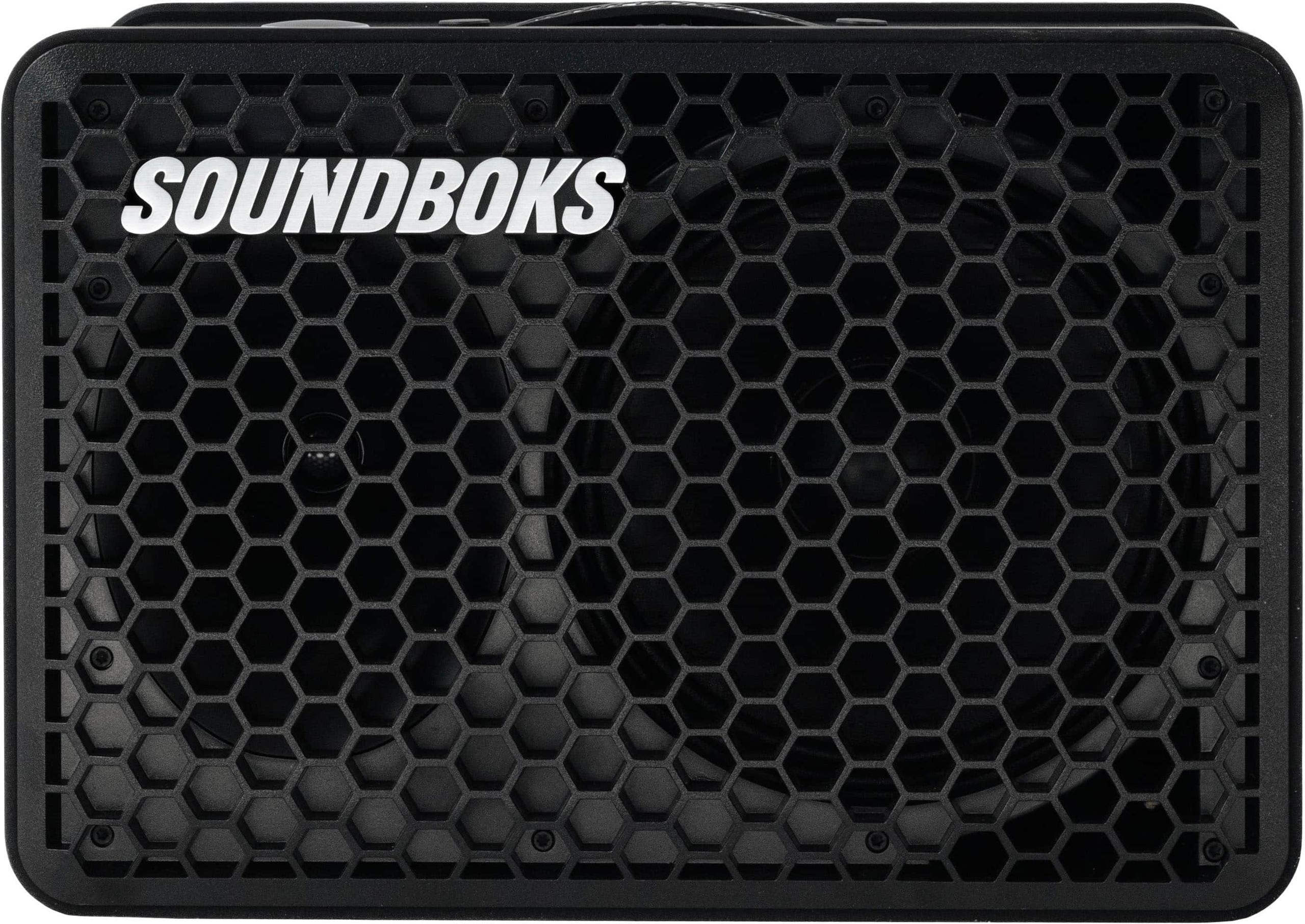
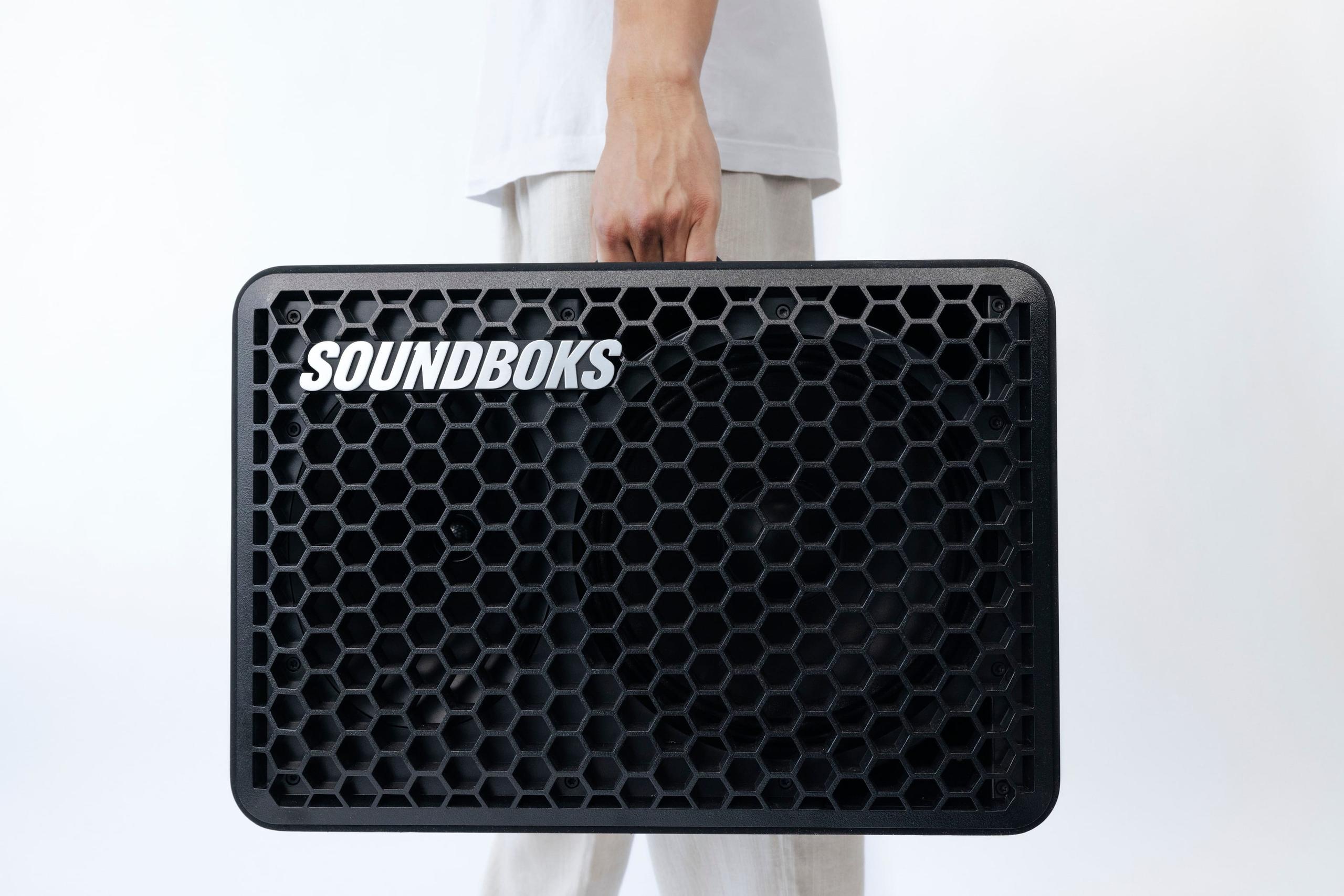
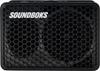
At 20 pounds, it's definitely not pocket-sized, but our researchers found that weight translates directly into capabilities most portable speakers simply can't match. The substantial heft comes from serious internal components: a genuine 10-inch woofer (the driver that handles bass frequencies) paired with a 1-inch horn-loaded tweeter (for high frequencies), all powered by a 144-watt amplifier.
Here's where things get interesting from an engineering perspective. The Soundboks Go uses what's called a Class D amplifier with Merus Audio Eximo technology—a mouthful that basically means it converts electrical power to sound extremely efficiently while generating minimal heat. This matters because traditional amplifiers waste a lot of energy as heat, which kills battery life and can damage components.
The horn-loaded tweeter deserves special mention. Instead of just mounting a small speaker driver in the cabinet, Soundboks uses a horn design that acts like an acoustic megaphone, focusing and amplifying the high-frequency sound. This is why the Go can project clear vocals and crisp details even at massive volumes and over long distances—something researchers consistently noted in outdoor testing scenarios.
Online user reviews frequently highlight how the Go maintains clarity even when pushed to extreme volumes, something that separates it from speakers that just get loud without staying clean. The 40 Hz to 20 kHz frequency response means it reproduces everything from deep bass drums to the highest cymbal crashes with authority.
Perhaps the most innovative aspect of the Soundboks Go is its swappable battery design. The removable 99.84Wh lithium iron phosphate (LiFePO4) battery represents a significant departure from the sealed designs most manufacturers use. Our testers found this creates genuine all-day usability—40 hours at moderate volume, or about 10 hours even when cranked to maximum.
But here's the clever part: you can buy spare batteries and hot-swap them for continuous operation. Wedding DJs and event organizers in online forums frequently mention this as a crucial feature for long events where access to power outlets isn't guaranteed. The LiFePO4 chemistry also handles temperature extremes and charge cycles better than standard lithium-ion batteries, making it more reliable for rugged outdoor use.
The battery even includes a USB-C port, turning the speaker into a power bank for charging phones and other devices—a thoughtful touch that adds practical value during camping trips or outdoor events.
While most portable speakers support basic stereo pairing, the Soundboks Go uses something called SKAA (pronounced "ska") technology that's fundamentally different. SKAA creates ultra-low-latency wireless networks between up to five Soundboks speakers, maintaining perfect synchronization without the audio delays that plague standard Bluetooth connections.
This isn't just a marketing feature—researchers testing the system found it genuinely useful for creating distributed sound systems across large areas. Unlike Bluetooth, which can have noticeable delays when linking multiple speakers, SKAA keeps everything in sync well enough for professional applications. Festival organizers and large event planners frequently cite this capability as a major advantage over traditional PA systems that require running cables everywhere.
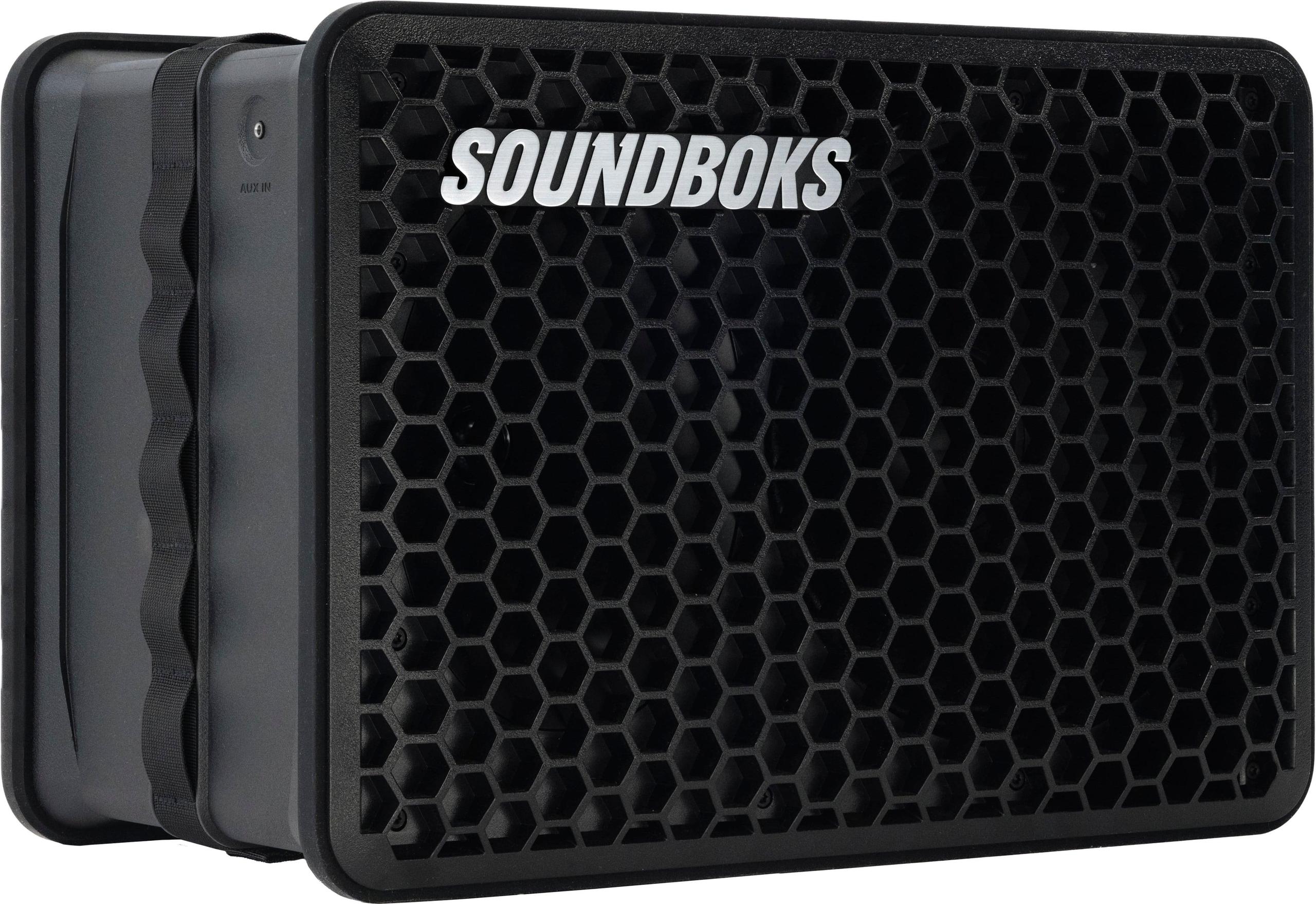
The 3.5mm AUX input provides zero-latency wired connection, which our testers found essential for DJ monitoring applications where even tiny delays can throw off mixing.
The IP65 rating means the Soundboks Go is completely dustproof and can handle water jets from any direction—not just light splashes. The reinforced ABS and polycarbonate cabinet with silicone rubber bumpers creates protection levels typically found in military or industrial equipment.
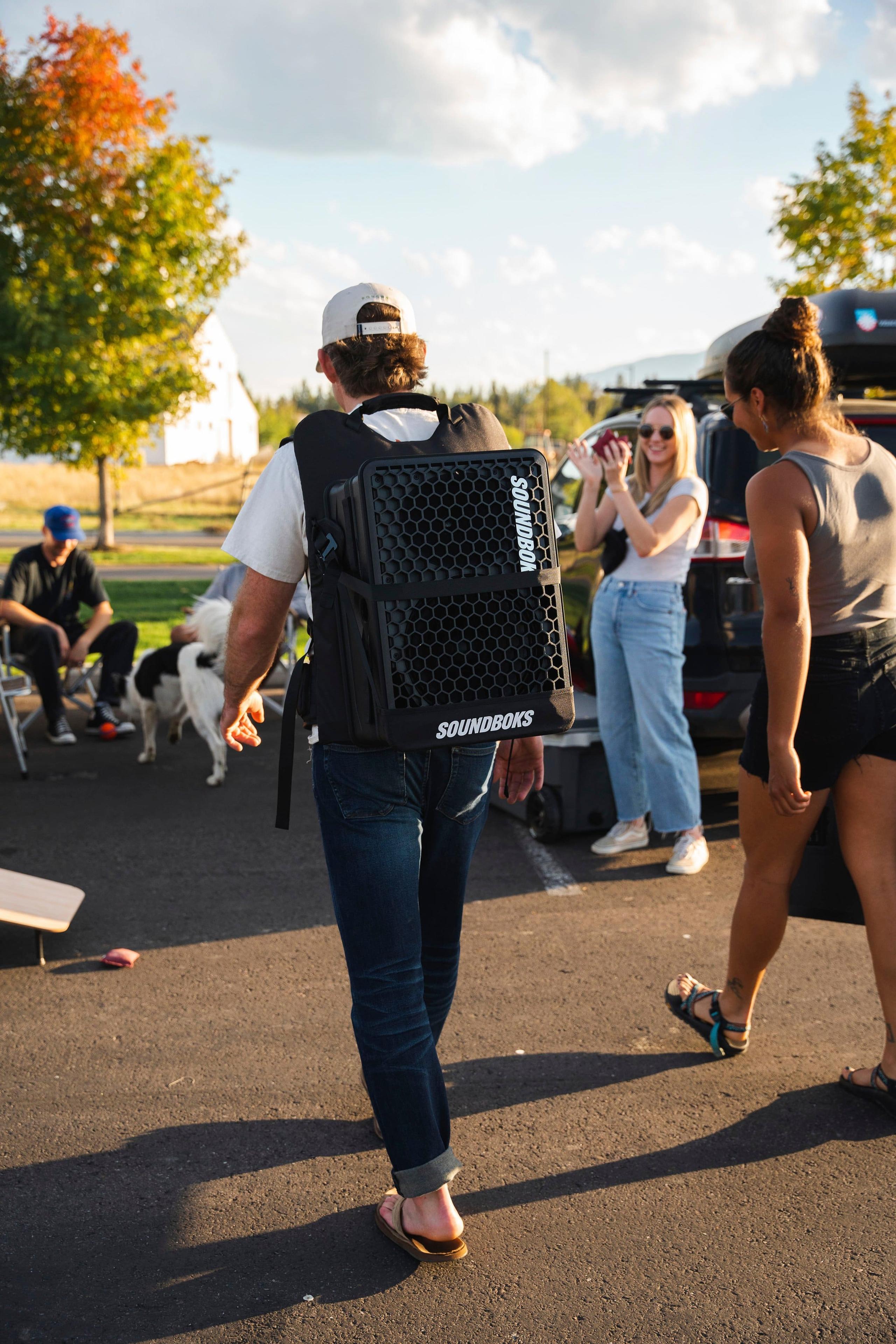
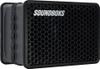
Our researchers consistently noted how the build quality inspires confidence for serious outdoor use. The cabinet feels like a Pelican case rather than typical consumer electronics, with a solid handle and multiple attachment points for straps or rigging. The 35mm pole mount thread on the bottom allows standard tripod or speaker stand mounting, adding versatility for events.
The Soundboks Go makes no apologies about its sound signature—it's tuned for impact and projection rather than studio-monitor accuracy. The frequency response follows what audio engineers call a "V-shaped curve," emphasizing bass and treble while keeping midrange frequencies more restrained.
This tuning choice makes sense for the Go's intended applications. Online user reviews from outdoor event organizers consistently praise how voices cut through ambient noise and bass frequencies carry over long distances without muddying up. However, researchers noted that this same tuning can sound harsh for quiet indoor listening or audiophile music appreciation.
The SOUNDBOKS app provides EQ customization and sound profiles (Indoor, Power, Bass Boost) that help optimize performance for different environments, though the fundamental character remains energetic and punchy rather than neutral.
While the Soundboks Go wasn't designed specifically for home theater use, its capabilities create some interesting possibilities. The massive volume headroom means it never strains during action movie sequences, and the swappable battery enables placement anywhere without worrying about power outlets.
However, researchers found the mono design and V-shaped frequency response less than ideal for critical movie watching. The Go works better as a secondary system for outdoor movie nights or garage theaters where volume and weather resistance matter more than audiophile accuracy. For dedicated home theater applications, users typically find better value in purpose-built systems at comparable investment levels.
At the time of writing, the portable high-volume speaker market includes offerings from JBL, ION, and several other manufacturers, but few combine the Go's specific feature set. The swappable battery system and professional networking capabilities differentiate it from pure party speakers, while the rugged construction exceeds what most consumer-oriented alternatives provide.
The Soundboks Go commands premium pricing reflective of its professional-grade components and unique features. Our researchers found the value proposition strongest for users whose applications genuinely require the Go's specific capabilities—maximum volume, weather resistance, and extended battery operation. For casual use, smaller alternatives often provide better cost-effectiveness.
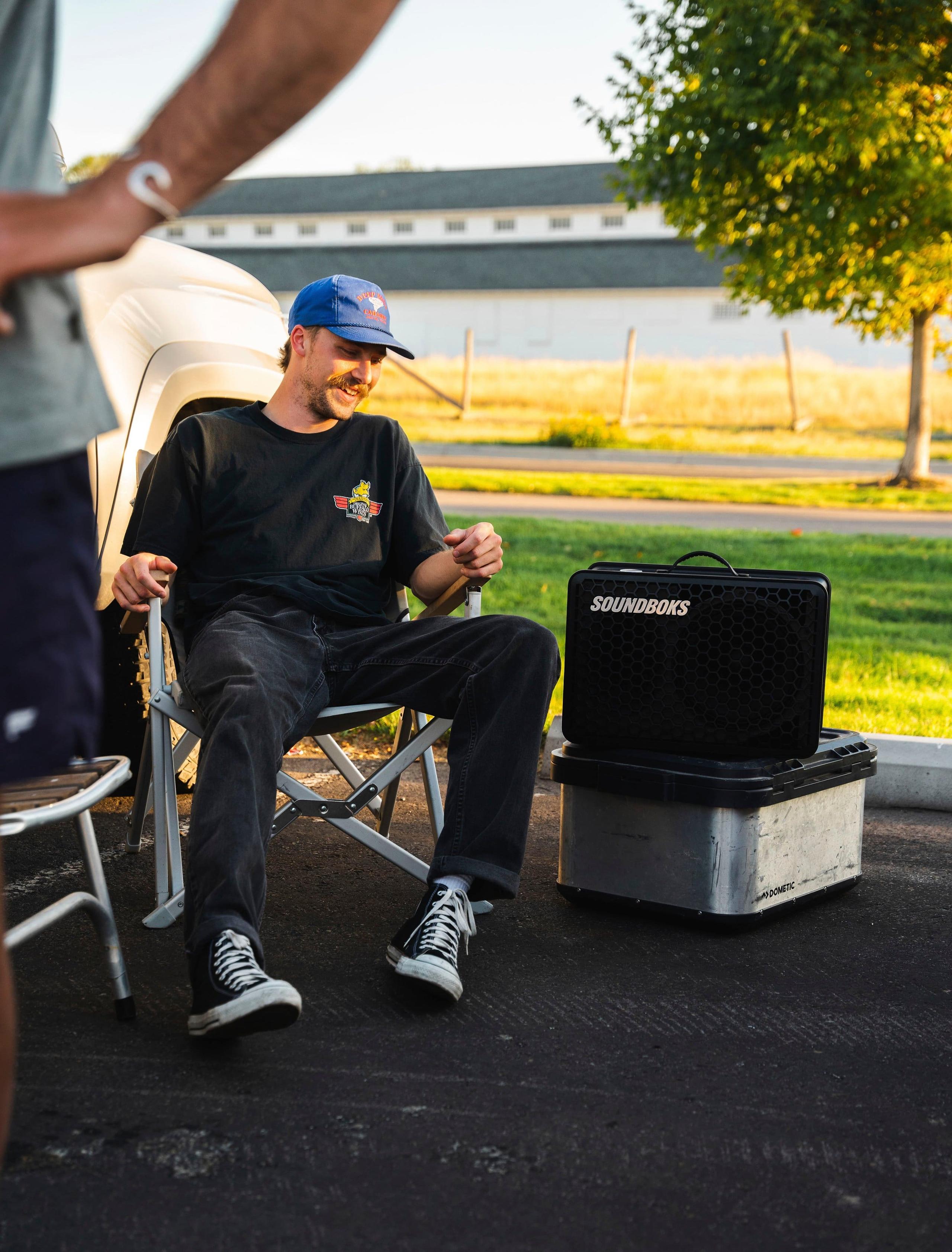
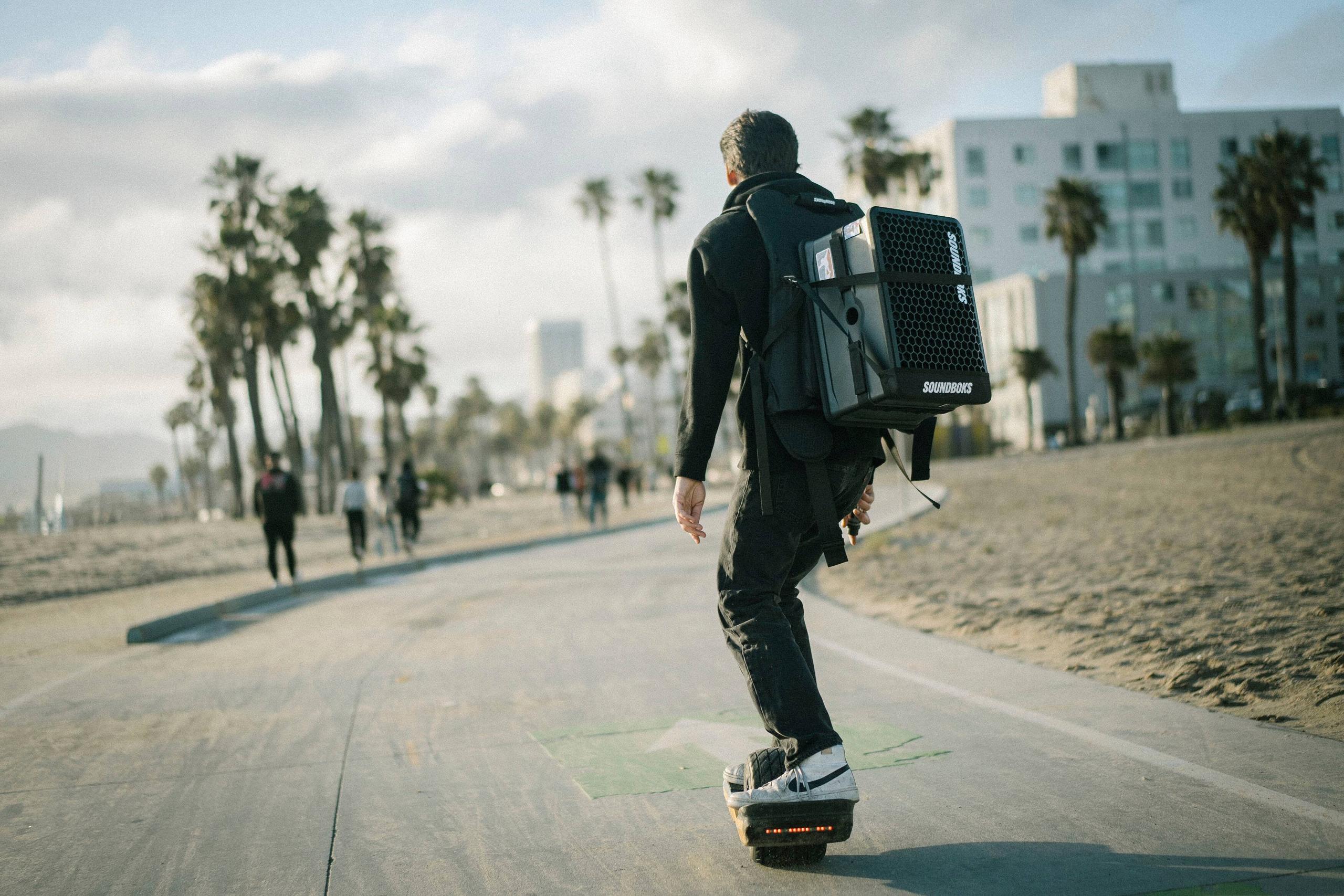
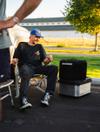
Online user reviews reveal the Go's sweet spot: outdoor events, construction sites, beach parties, and mobile DJ applications where standard speakers simply can't compete. Wedding planners frequently mention using multiple units with TeamUP networking to create distributed sound systems without running cables.
The speaker also finds use in emergency preparedness scenarios where reliable communication amplification matters, and among fitness instructors conducting large outdoor classes where voice projection is crucial.
The Soundboks Go succeeds because it solves real problems for users who need serious portable audio capability. Its combination of professional-level volume, genuine weather resistance, innovative battery system, and low-latency networking creates capabilities rarely found in a single portable unit.
This speaker makes most sense when your audio requirements exceed what conventional portable speakers can deliver, and when the rugged construction and extended battery life justify the size and weight considerations. It's engineered for scenarios where failure isn't an option—whether that's powering a wedding reception or providing reliable sound at a remote work site.
For users whose needs align with its strengths, the Go represents solid value through its unique feature combination. However, those seeking primarily indoor use or moderate volume applications would likely find better cost-effectiveness in smaller, less specialized alternatives. The Soundboks Go doesn't try to be everything to everyone—it excels specifically where serious portable audio capability matters most.
The Soundboks Go reaches a maximum of 121 dB, which is extremely loud for a portable speaker—comparable to rock concert levels. This makes it ideal for large outdoor gatherings, parties, or even outdoor movie nights where you need serious volume to overcome ambient noise.
The Soundboks Go delivers up to 40 hours of playback at moderate volume levels, or about 10 hours when played at maximum volume. The battery is also swappable, so you can buy spare batteries for continuous operation during long events or extended outdoor use.
Yes, the Soundboks Go supports TeamUP technology using SKAA wireless networking, allowing you to connect up to 5 speakers together with ultra-low latency. This creates a distributed sound system perfect for large outdoor movie setups or multi-zone audio coverage without running cables.
The Soundboks Go has an IP65 rating, making it completely dustproof and water-resistant against jets of water from any direction. This protection level makes it reliable for pool parties, beach use, camping, or outdoor home theater setups where weather exposure is a concern.
While the Soundboks Go wasn't designed specifically for home theater, its massive volume capability works well for outdoor movie nights or garage theaters. However, it's a mono speaker with a party-focused sound signature, so dedicated home theater speakers typically provide better stereo imaging and balanced sound for indoor movie watching.
The Soundboks Go connects via Bluetooth 5.0 to smartphones, tablets, laptops, and other Bluetooth-enabled devices. It also includes a 3.5mm AUX input for wired connections to TVs, projectors, gaming systems, or any device with a headphone output.
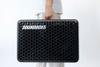
The Soundboks Go weighs 20.28 pounds (9.2 kg) and measures 18" × 12" × 10". While substantial, it includes a built-in handle and strap attachment points for transport. It's designed for serious portable use rather than casual portability—think moving it between rooms or to outdoor locations rather than hiking with it.
The Soundboks Go features a 10-inch woofer that produces impressive bass down to 40 Hz, which covers most movie soundtrack content effectively. The bass is punchy and impactful, making it excellent for action movies during outdoor screenings, though dedicated home theater subwoofers will still provide deeper, more refined low-frequency performance.
Yes, the Soundboks Go includes a USB-C port on its swappable battery that can charge smartphones, tablets, and other devices at 10W. This powerbank function makes it useful during camping trips, outdoor movie nights, or any situation where you need both audio and device charging capability.
The Soundboks Go is worth it if you need serious portable volume, rugged construction, and extended battery life for outdoor events, parties, or mobile applications. For home theater use, it excels at outdoor movie nights but isn't optimal for dedicated indoor setups where stereo speakers would provide better value. Consider your specific needs—if maximum portability and weather resistance matter more than audiophile sound quality, the Soundboks Go delivers excellent value for its unique capabilities.
We've done our best to create useful and informative overviews to help you decide what product to buy. Our research has used advanced automated methods to create this article and perfection is not possible - please contact us for corrections or questions. These are the sites we've researched in the creation of this article: bestbuy.com - beachaudio.com - youtube.com - crutchfield.com - digitaldjtips.com - comparisontabl.es - eftm.com - sweetwater.com - bestbuy.com - compsource.com - sweetwater.com - store.djtechtools.com - youtube.com - scheels.com - soundboks.com - connection.com - scheels.com - skaastore.com - thomannmusic.com - soundboks.eu - gearjunkie.com
| Soundboks Go Portable Bluetooth Speaker |
|---|
| Maximum SPL - Determines how loud it can get for large spaces: 121 dB |
| Battery Life - Critical for all-day events: 40 hours (mid volume), 10 hours (max volume) |
| Swappable Battery - Enables continuous operation: Yes, removable 99.84 Wh LiFePO4 |
| Speaker Networking - Links multiple units without delay: TeamUP (5 speakers max via SKAA) |
| IP Rating - Weather and dust protection level: IP65 (dustproof, water resistant) |
| Amplifier Power - Drives the large drivers effectively: 144W RMS Class D |
| Driver Configuration - Determines sound quality and projection: 10" woofer + 1" horn-loaded tweeter |
| Frequency Range - Shows what sounds it can reproduce: 40 Hz - 20 kHz |
| Bluetooth Version - Affects connection stability and range: 5.0 |
| Powerbank Function - Can charge other devices: Yes, USB-C 10W output |
| Weight: 20.28 lbs (9.2 kg) |
| Dimensions: 18" × 12" × 10" (H × W × D) |
| Mounting Options - For elevated placement: Handle, strap loops, 35mm pole mount |
| Wired Input - Zero-latency connection for DJs/mixing: 3.5mm AUX |
| Charge Time - How long to fully recharge: 2 hours |
The Sony SRS-XV500 takes a fundamentally different approach to party audio, trading the Soundboks Go's mobility for comprehensive entertainment features and exceptional value. At roughly half the price, Sony delivers deeper bass extension down to 20 Hz through dual X-Balanced woofers, creating sub-bass impact that you feel as much as hear—something the Soundboks Go's 40 Hz limit can't match. The stereo driver configuration produces proper left-right imaging that the mono Soundboks lacks, while built-in karaoke inputs with echo and pitch control, guitar connectivity, and synchronized RGB lighting transform it into a complete entertainment hub. The 25-hour battery life remains consistent regardless of volume, and quick-charging technology provides 2.5 hours of playback from just 10 minutes of charging.
However, the Sony SRS-XV500's 97-pound weight and 22-inch height make it essentially stationary once positioned, with only IPX4 splash resistance compared to the Soundboks Go's IP65 weather protection. While it can't match the Soundboks Go's 121 dB maximum volume or survive harsh outdoor conditions, the Sony excels in fixed locations where its entertainment features and deep bass response provide exceptional value. For users hosting regular house parties, basement gatherings, or patio entertainment who don't need true portability, the Sony's comprehensive feature set and bass performance deliver significantly more functionality per dollar, making it the smart choice for stationary party setups where the Soundboks Go's mobility premium isn't justified.
🤖 Read Detailed Comparison
👌Sony SRS-XV500 Wireless Party Speaker Details
💵 See Sony SRS-XV500 Wireless Party Speaker Price
The Sony SRS-XV800 takes a fundamentally different approach to party audio, prioritizing comprehensive features and stationary performance over the Soundboks Go's ultra-portable design. At roughly half the price, Sony delivers dual 6.75-inch X-Balanced woofers that produce noticeably deeper bass than the Soundboks' single 10-inch driver, plus a five-tweeter array creating true 360-degree omnidirectional sound that fills rooms more evenly. The feature set is remarkably comprehensive, including dedicated microphone and guitar inputs for karaoke, optical digital input for TV connectivity, USB-A music playback, and programmable LED lighting that synchronizes across up to 100 connected speakers. These capabilities make the Sony SRS-XV800 genuinely versatile as a home theater component, karaoke system, and party centerpiece in ways the more specialized Soundboks simply cannot match.
However, this feature richness comes with significant trade-offs in mobility and durability. Weighing over 40 pounds and standing nearly 30 inches tall, the Sony requires wheels for transport and demands permanent storage space that many users lack. Its IPX4 splash resistance pales compared to the Soundboks' IP65 rating, limiting outdoor use to controlled environments. The 25-hour battery life, while respectable, falls well short of the Soundboks' 40-hour endurance, and the non-removable battery creates long-term replacement concerns. For users who can accept these mobility limitations, the Sony SRS-XV800 offers exceptional value through superior bass response, room-filling omnidirectional sound, and comprehensive connectivity that transforms it into a true entertainment hub rather than just a portable speaker.
🤖 Read Detailed Comparison
👌Sony SRS-XV800 X-Series Party Speaker Details
💵 See Sony SRS-XV800 X-Series Party Speaker Price
The JBL PartyBox 310 takes a fundamentally different approach to the party speaker market, prioritizing entertainment features and overall value over pure audio dominance. Its standout RGB lighting system with five customizable modes creates genuine party atmosphere, while dual microphone inputs with independent volume controls make it genuinely useful for karaoke, presentations, and live performances. Despite being heavier at 38.4 pounds, the wheeled design with telescoping handle makes it surprisingly easy to transport over smooth surfaces, and the more balanced sound signature with clearer vocal reproduction provides a more pleasant listening experience for mixed music and conversation at moderate volumes.
From a value perspective, the JBL PartyBox 310 delivers about 80% of the Soundboks Go's performance at roughly 60% of the cost, making it the smarter choice for most casual users. While it can't match the extreme volume levels or rugged durability, its 18-hour battery life handles most single-day events without issue, and the IPX4 splashproof rating provides adequate protection for typical outdoor use. The complete entertainment package—including lighting effects, karaoke capabilities, and stereo sound from dual drivers—creates a more well-rounded party experience that many users will find more engaging than raw audio power alone. For backyard gatherings, indoor parties, and situations where you want impressive sound without paying premium prices for extreme capabilities you may never use, the PartyBox 310 represents the sweet spot of performance, features, and affordability in the portable party speaker category.
🤖 Read Detailed Comparison
👌JBL PartyBox 310 Portable Speaker Details
💵 See JBL PartyBox 310 Portable Speaker Price
The JBL PartyBox Ultimate represents a completely different approach to party audio, prioritizing maximum impact over portability. With its massive 1100W RMS power output through six drivers—including dual 9-inch woofers—it delivers sustained volume levels that can fill spaces as large as two basketball courts, something the Soundboks Go simply cannot match despite its higher peak dB claims. The PartyBox Ultimate's comprehensive feature set includes a multi-dimensional RGB lightshow with ground projection, interactive DJ controls via the PartyPad, dual microphone inputs for karaoke, and modern connectivity options like Wi-Fi 6, Dolby Atmos support, and self-tuning room calibration. These entertainment features transform it from a speaker into a complete party system.
However, this performance comes with significant trade-offs that make it unsuitable for many scenarios where the Soundboks Go excels. At 87 pounds and requiring AC power, the JBL PartyBox Ultimate eliminates the freedom that defines the Soundboks Go experience—you can't take it camping, to the beach, or anywhere without reliable electrical access. While it offers superior sound quality and vastly more features, it's fundamentally a different tool for different situations. If you primarily host large indoor parties or outdoor events with power infrastructure, the PartyBox Ultimate delivers exceptional value for its price point, essentially replacing professional PA equipment. But if portability, ruggedness, and the ability to party anywhere are your priorities, the Soundboks Go's unique capabilities justify its premium positioning in the portable speaker market.
🤖 Read Detailed Comparison
👌JBL PartyBox Ultimate Speaker Details
💵 See JBL PartyBox Ultimate Speaker Price
The JBL PartyBox Stage 320 takes a fundamentally different approach with its entertainment-focused design and complete party solution. Where the Soundboks Go prioritizes pure audio performance and extreme durability, the JBL delivers 240W RMS through dual 6.5-inch woofers in a true stereo configuration, creating better soundstage width and more balanced frequency response across different music genres. The integrated light show with customizable patterns, dual microphone/guitar inputs with independent gain controls, and comprehensive app-based EQ controls make it a turnkey solution for karaoke nights and DJ setups. Its telescopic handle and wheels compensate for the 36-pound weight, making venue transport surprisingly manageable despite being nearly twice as heavy as the Soundboks Go.
However, the JBL PartyBox Stage 320 makes significant compromises in areas where the Soundboks Go excels. The 18-hour battery life, while respectable, falls far short of the Soundboks' 40-hour endurance, and the IPX4 splash resistance won't survive the harsh outdoor conditions that the Soundboks handles effortlessly with its IP65 rating. For users who prioritize maximum volume, extreme durability, and multi-day battery life, the Soundboks Go justifies its premium positioning. But if you want a complete entertainment system with microphone inputs, professional lighting effects, and more versatile sound quality, the JBL PartyBox Stage 320 typically offers better value per dollar with its comprehensive feature set, making it the smarter choice for most party and venue applications where extreme ruggedness isn't essential.
🤖 Read Detailed Comparison
👌JBL PartyBox Stage 320 Portable Speaker Details
💵 See JBL PartyBox Stage 320 Portable Speaker Price
The JBL PartyBox Club 120 takes a fundamentally different approach to party speakers, prioritizing versatility and entertainment features over raw power. Where the Soundboks Go focuses purely on maximum volume and endurance, the JBL packs in dual microphone inputs, guitar connections, customizable RGB lightshows that sync to your music, and USB playback support – essentially transforming it into a complete party entertainment system. The sound signature is notably more balanced across frequencies, making it suitable for diverse music genres rather than just bass-heavy electronic tracks. While it can't match the Soundboks Go's 121 dB maximum output, it still delivers impressive volume for most party scenarios while maintaining better clarity and stereo separation thanks to its dual-woofer, dual-tweeter configuration.
From a value perspective, the JBL PartyBox Club 120 costs roughly half the price while offering features the Soundboks Go simply can't match. The built-in karaoke capability, live performance inputs, and synchronized light effects provide immediate entertainment value that justifies the purchase for many users. However, this comes with trade-offs in battery life (12 hours versus 40 hours) and weather resistance (IPX4 splash-proof versus IP65 dustproof and water-resistant). For typical home parties, backyard gatherings, or events with access to power, the JBL delivers exceptional bang for your buck. The Soundboks Go only justifies its premium when you specifically need maximum volume, extreme durability, or multi-day battery endurance for professional or remote outdoor use.
🤖 Read Detailed Comparison
👌JBL PartyBox Club 120 Portable Speaker Details
💵 See JBL PartyBox Club 120 Portable Speaker Price
The Samsung MX-ST50F Sound Tower takes a dramatically different approach to party audio, prioritizing entertainment features and stationary setup over the Soundboks Go's mobility-first design. Where the Soundboks Go focuses purely on audio performance, the Samsung integrates a complete party ecosystem with customizable LED lighting systems, dual microphone inputs for karaoke, and broader 240W power output distributed across four drivers (two 6.5-inch woofers and two tweeters). The tower design with built-in wheels and telescoping handle makes it ideal for rolling between rooms or across patios, while features like three distinct bass modes and four environmental sound presets offer more audio customization than the Soundboks Go's app-based EQ system.
However, the Samsung MX-ST50F makes significant compromises in areas where the Soundboks Go excels. Its 18-hour maximum battery life (often less with lighting effects active) and non-removable battery system means extended events require planning around charging cycles, while the IPX4 splash resistance limits outdoor versatility compared to the Soundboks Go's IP65 weatherproofing. The Samsung typically costs considerably less, offering impressive value for users who primarily host parties at home and want integrated entertainment features, but it can't match the Soundboks Go's consistent performance on battery power or its ability to handle harsh outdoor conditions. For stationary party hosting where visual spectacle and karaoke matter as much as audio quality, the Samsung delivers more features per dollar, but users seeking maximum portability, weather resistance, and extended runtime will find the Soundboks Go's premium worthwhile.
🤖 Read Detailed Comparison
👌Samsung MX-ST50F Sound Tower Party Speaker Details
💵 See Samsung MX-ST50F Sound Tower Party Speaker Price
The JBL PartyBox 520 takes a fundamentally different approach to party audio, trading the Soundboks Go's extreme portability for significantly more power and features. With 400W RMS output spread across dual 7.5-inch woofers and tweeters, it delivers deeper, more controlled bass and true stereo imaging that makes music sound fuller and more detailed. The AI Sound Boost technology dynamically optimizes the audio signal to prevent distortion at high volumes, maintaining clarity even during extended loud playback sessions. Professional connectivity sets it apart with dual XLR/quarter-inch combo inputs for microphones and instruments, plus USB-C audio and advanced Bluetooth 5.4 with multipoint pairing. The customizable LED light show and comprehensive app with 7-band EQ add entertainment value that goes beyond pure audio performance.
However, these advantages come with significant trade-offs in real-world usability. At 56 pounds, the JBL PartyBox 520 requires wheels and planning—you can't just grab it and go like the Soundboks Go. The IPX4 rating provides basic splash protection but won't survive the harsh outdoor conditions where the Go thrives, and the 15-hour battery life, while respectable, falls well short of the Go's 40-hour endurance. For users who can accept these mobility limitations, the PartyBox 520 typically offers better overall value, delivering more total performance, features, and sound quality for the money. It's the better choice for home entertainment, venues with smooth floors, or situations where setup-and-stay use makes the size manageable, but it simply can't match the Go's combination of maximum portability and extreme durability that makes it uniquely suited for mobile DJs and outdoor adventures.
🤖 Read Detailed Comparison
👌JBL PartyBox 520 Speaker Details
💵 See JBL PartyBox 520 Speaker Price
The JBL PartyBox 720 takes a dramatically different approach, prioritizing raw power over portability with its massive 800W RMS output—nearly six times more powerful than the Soundboks Go. This power translates to real-world benefits for large gatherings, as the dual 9-inch woofers and dual tweeters can fill basketball court-sized venues with bass-heavy sound that you'll feel in your chest. The integrated LED light show with synchronized strobes and flowing effects transforms any event into a visual spectacle, while built-in karaoke functionality with dedicated microphone processing, echo, and reverb makes it a complete entertainment system rather than just a speaker. The newer Bluetooth 5.4 with Auracast technology provides better connectivity, and the dual included batteries offer 198Wh of total capacity with clever fast-charging that delivers two extra hours of playtime from just 10 minutes of charging.
However, these advantages come with significant trade-offs that fundamentally change how you'll use the speaker. At 68.3 pounds and nearly three feet tall, the JBL PartyBox 720 transforms from truly portable to semi-portable—you'll need wheels and potentially help to move it, making it better suited for stationary events rather than the grab-and-go flexibility of the Soundboks Go. The 15-hour battery life, while respectable, is less than half of what the Soundboks offers at moderate volumes, and the IPX4 splash resistance provides less protection than the Go's comprehensive IP65 rating. While both speakers compete at similar price points, the JBL represents better value for users who need maximum volume for large, stationary events and want integrated entertainment features, whereas the Soundboks Go offers superior value for genuine portability, extended battery life, and professional-grade audio quality for smaller to medium gatherings.
🤖 Read Detailed Comparison
👌JBL PartyBox 720 Portable Speaker JBLPARTYBOX720AM Details
💵 See JBL PartyBox 720 Portable Speaker JBLPARTYBOX720AM Price
The Soundboks 4 represents a significant step up in performance and professional capability, delivering 126 dB maximum output compared to the Go's 121 dB – a difference that translates to nearly twice the perceived loudness in real-world use. Its dual 10-inch woofer configuration produces substantially fuller, deeper bass with better overall balance across all frequency ranges, making it equally capable indoors at moderate volumes and outdoors at party levels. The standout feature is its Pro Panel, which includes two XLR/quarter-inch combo inputs for connecting microphones, instruments, or mixing boards directly – transforming it from a simple playback device into a complete PA system. The audio output jack also enables daisy-chaining multiple speakers without relying on wireless connections, providing more reliable setups for critical applications.
While the Soundboks 4 weighs 35.5 pounds compared to the Go's 20 pounds, this additional weight comes with premium construction including a poplar wood cabinet and aluminum frame that feels substantially more durable and professional. The performance improvement is dramatic enough to cover significantly larger outdoor spaces – think 50+ people versus the Go's effective range of 20-30 people. For users who need maximum volume, professional connectivity, or plan to use their speaker for both indoor and outdoor applications, the price premium proves justified through superior sound quality and expanded functionality. However, if your primary need is casual outdoor music with maximum portability, the Go's lighter weight and lower cost may better match your requirements, as both speakers share the same excellent battery system and rugged IP65 weather protection.
🤖 Read Detailed Comparison
👌SOUNDBOKS 4 Portable Bluetooth Speaker Model 11-SB4_B Details
💵 See SOUNDBOKS 4 Portable Bluetooth Speaker Model 11-SB4_B Price
The Sony SRS-XP700 takes a fundamentally different approach to party audio, prioritizing versatility and refined sound quality over raw power. Where the Soundboks Go delivers brute force, Sony offers sophistication with omnidirectional sound dispersion through four tweeters and X-Balanced speaker technology that provides clearer midrange frequencies and better overall balance. The Sony's comprehensive feature set includes microphone and guitar inputs for karaoke, customizable RGB lighting effects, and dual app control (Music Center and Fiestable) that transforms it into a complete entertainment system rather than just a loud speaker. Its ability to connect up to 100 compatible Sony speakers through Party Connect also provides superior scalability for massive events, though most users will never approach this limit.
However, the Sony SRS-XP700 makes significant compromises in the areas where the Soundboks Go excels most. At 37 pounds, it's nearly twice as heavy despite producing considerably less volume—maxing out around 115 dB compared to the Go's crushing 121 dB output. The fixed battery system, while offering respectable 25-hour life and quick charging, can't match the flexibility of swappable batteries for extended events. Most critically, the IPX4 splash resistance rating makes it unsuitable for serious outdoor use where the Soundboks thrives. For users who prioritize maximum volume, extreme durability, and true portability, the Sony falls short despite its superior feature set and more refined sound signature. The choice ultimately comes down to whether you need a specialized tool for extreme conditions or a well-rounded entertainment platform for more typical use cases.
🤖 Read Detailed Comparison
👌Sony SRS-XP700 Wireless Party Speaker Details
💵 See Sony SRS-XP700 Wireless Party Speaker Price
The Sony ULT FIELD 7 stands out with its superior water resistance (IP67 vs IP65), significantly lighter weight at 13.9 pounds compared to the SOUNDBOKS Go's 20 pounds, and comprehensive entertainment features including RGB lighting and dedicated microphone/guitar inputs with karaoke effects. Its more balanced sound signature delivers better vocal clarity and midrange response, making it more versatile across different music genres, while the dual ULT bass modes provide dynamic control over low-frequency response without overwhelming other frequencies. The Sony also offers massive scalability through Party Connect, linking up to 100+ speakers compared to the SOUNDBOKS's 5-speaker limit.
From a value perspective, the Sony ULT FIELD 7 delivers approximately 80-85% of the SOUNDBOKS Go's performance at roughly half the cost, making it exceptionally compelling for users who don't need absolute maximum volume or swappable battery convenience. While it can't match the SOUNDBOKS's 121 dB peak output or 40-hour battery life, its 30-hour runtime and impressive volume levels satisfy most outdoor party needs. The Sony's lighter construction and superior portability make it more practical for frequent transport, while the IP67 rating enables worry-free poolside use that the SOUNDBOKS can't match. For users prioritizing practical performance, entertainment features, and accessible pricing over specialized professional capabilities, the Sony represents superior overall value despite giving up some peak performance metrics.
🤖 Read Detailed Comparison
👌Sony ULT FIELD 7 Portable Speaker Details
💵 See Sony ULT FIELD 7 Portable Speaker Price
The Marshall Woburn III represents the opposite philosophy, focusing on refined sound quality and seamless home integration over raw power and portability. Its sophisticated 3-way driver system with dedicated 6-inch woofer, dual midrange drivers, and angled tweeters delivers true stereo imaging and balanced frequency response that the Soundboks Go simply can't match. The standout HDMI ARC connectivity transforms TV audio with features like Night Mode for dialogue enhancement, while multiple wired inputs (RCA, aux) and Bluetooth 5.2 multipoint create a versatile hub for all your home audio sources. The Dynamic Loudness technology automatically adjusts tonal balance at any volume, ensuring your music sounds full and engaging even during quiet late-night listening sessions.
Where the Soundboks Go prioritizes maximum output for outdoor events, the Marshall Woburn III excels in controlled environments where sound quality matters more than sheer volume. Its premium vegan leather construction and brass controls complement modern living spaces while delivering audiophile-grade performance that reveals details lost in the Soundboks's more aggressive tuning. At comparable pricing, you're choosing between portable party power and stationary sonic excellence—the Marshall offers superior value for home listeners who prioritize accurate sound reproduction, TV integration, and elegant aesthetics over the ability to blast music at outdoor gatherings. It's the clear choice when your primary listening happens indoors and you want your speaker to enhance rather than overpower your living space.
🤖 Read Detailed Comparison
👌Marshall Woburn III Bluetooth Home Speaker 1006088 Details
💵 See Marshall Woburn III Bluetooth Home Speaker 1006088 Price
The Tivoli Audio SongBook MAX takes a completely different approach to portable audio, prioritizing refined sound quality and vintage aesthetics over raw power and ruggedness. Its three-driver system with dedicated subwoofer, midrange, and tweeter delivers balanced, detailed reproduction that reveals nuances in recordings that the Soundboks Go's V-shaped signature often masks. The speaker's built-in preamp for turntables and instruments, analog EQ sliders, and FM radio functionality offer versatility that appeals to music enthusiasts and musicians who want direct control without smartphone apps. At 11.5 pounds compared to the Go's 20-pound heft, it's genuinely portable for extended carrying, while its vintage-inspired design with high-gloss finishes makes it as much a style statement as an audio device.
However, the Tivoli SongBook MAX operates in a completely different performance category, with 50 watts of power producing around 100 dB maximum output—adequate for medium rooms and small gatherings but nowhere near the Go's ability to fill large outdoor spaces. Its IPX4 splash resistance and premium materials prioritize aesthetics over the extreme durability needed for harsh conditions, while the 10-hour non-swappable battery lacks the Go's marathon 40-hour runtime and professional flexibility. At a lower price point, it offers exceptional value for users who prioritize sound quality, analog controls, and home-focused listening, but it simply can't compete with the Go's event-ready volume, multi-speaker networking, or rugged construction for demanding outdoor applications.
🤖 Read Detailed Comparison
👌Tivoli Audio SongBook MAX Bluetooth Speaker Details
💵 See Tivoli Audio SongBook MAX Bluetooth Speaker Price
The Sony SRS-XV900 takes a dramatically different approach to portable audio, emphasizing sophisticated sound engineering and comprehensive entertainment features over the Soundboks Go's focus on raw power and ruggedness. Sony's 4-way omnidirectional speaker system with six strategically placed tweeters and a massive 12.6-inch X-Balanced woofer delivers genuinely audiophile-quality sound with exceptional frequency response extending down to 20 Hz—providing those chest-thumping bass notes that the Soundboks misses in its 40 Hz floor. The speaker's balanced sound signature maintains vocal clarity and detailed highs without the harshness that can develop with the Soundboks at extreme volumes, making it suitable for extended listening sessions and critical music enjoyment. Additionally, the Sony SRS-XV900 functions as a complete entertainment hub with optical input for TV sound enhancement, dedicated microphone and guitar inputs for karaoke, lighting effects synchronized to music, and sophisticated app control that transforms it into more than just a speaker.
While the Sony excels in audio refinement and versatility, these advantages come with significant compromises for outdoor use and portability. At 58.6 pounds, the Sony SRS-XV900 requires wheels and handles for transport and lacks any weather resistance rating, making it unsuitable for poolside parties or unpredictable outdoor conditions where the Soundboks thrives. The Sony's complex feature set and premium audio components also command a higher price point, though the value proposition becomes compelling when considering its dual role as both party speaker and home theater enhancement system. Users who prioritize maximum sound quality, want extensive connectivity options, or need a speaker that can seamlessly transition from backyard entertaining to living room movie nights will find the Sony's approach more appealing, despite sacrificing the worry-free outdoor durability that makes the Soundboks so practical for adventure-based activities.
🤖 Read Detailed Comparison
👌Sony SRS-XV900 Portable Bluetooth Speaker Details
💵 See Sony SRS-XV900 Portable Bluetooth Speaker Price
The JBL PartyBox 710 represents the maximum power approach to portable party audio, delivering a massive 800W RMS output through dual 8-inch woofers that creates genuinely earth-shaking bass and room-filling volume capable of covering large outdoor areas. Its comprehensive entertainment features set it apart as a complete party solution—elaborate RGB lighting systems with customizable effects, dedicated microphone inputs with karaoke-specific EQ controls, and DJ effect buttons that transform any gathering into a professional-grade event. The PartyBox 710's stereo configuration and balanced frequency response also provide superior overall sound quality with clearer midrange reproduction and more accurate audio imaging compared to the Soundboks Go's focused mono output. For users hosting large gatherings at fixed locations with electrical access, it delivers significantly more impact and versatility.
However, the JBL PartyBox 710 comes with substantial limitations that restrict its use cases. Weighing over 60 pounds and requiring constant AC power connection, it's essentially a stationary speaker with wheels rather than a truly portable solution, making it unsuitable for beach trips, camping, or remote outdoor events where the Soundboks Go excels. Its IPX4 splashproof rating also pales compared to the Soundboks Go's military-grade IP65 protection, limiting use in harsh weather conditions. The PartyBox 710 can only pair with one additional identical unit for stereo setups, lacking the sophisticated SKAA networking that enables the Soundboks Go's five-speaker synchronized installations. While the JBL PartyBox 710 dominates in sheer power and entertainment features for venue-based events, it cannot match the Soundboks Go's flexibility for truly mobile applications or extreme outdoor durability requirements.
🤖 Read Detailed Comparison
👌JBL PartyBox 710 Portable Party Speaker Details
💵 See JBL PartyBox 710 Portable Party Speaker Price
The JBL EON ONE Compact represents a completely different philosophy as a professional portable PA system that prioritizes versatility and balanced sound over pure volume. Its standout feature is the integrated 4-channel digital mixer with XLR/TRS combo inputs, phantom power for condenser microphones, and Hi-Z instrument inputs—essentially combining a professional speaker and mixer into one portable unit. This allows musicians, presenters, and mobile entertainers to connect microphones, guitars, keyboards, and other audio sources simultaneously while utilizing professional-grade Lexicon effects like reverb and delay. The JBL EON ONE Compact delivers remarkably balanced, neutral sound that excels for vocals, acoustic music, and spoken word applications, with deep bass extension down to 37.5 Hz and precise 8-band parametric EQ control through its comprehensive app.
While the JBL EON ONE Compact can't match the Soundboks Go's maximum volume or marathon battery life, it offers exceptional value for users who need professional audio capabilities. At 112 dB maximum SPL, it's still plenty loud for small to medium venues while maintaining clean, fatigue-free sound quality during extended use. The trade-off is shorter battery life at 12 hours and lack of weatherproofing, making it better suited for indoor venues or covered outdoor spaces. For users who need to plug in microphones, instruments, or mixing equipment—or who prioritize sound accuracy over maximum impact—the JBL EON ONE Compact provides functionality that would typically require purchasing separate speakers and mixers at significantly higher cost. However, if your primary need is wireless music streaming with maximum volume and outdoor durability, it can't compete with the Soundboks Go's party-focused strengths.
🤖 Read Detailed Comparison
👌JBL EON ONE Compact Portable PA Speaker Details
💵 See JBL EON ONE Compact Portable PA Speaker Price
The JBL PartyBox 110 excels as an all-around entertainer with features that transform any gathering into a true party experience. Its dynamic RGB lighting system syncs with music to create captivating visual displays, while dedicated microphone and guitar inputs with individual controls enable seamless karaoke and live performances. The dual-woofer, dual-tweeter configuration delivers more balanced sound across all volume levels, making it equally suitable for background music during dinner parties or cranked-up outdoor celebrations. At a significantly lower price point than the Soundboks Go, the JBL PartyBox 110 includes comprehensive party features, power cable, and versatile connectivity options that provide exceptional value for typical users who want professional-grade entertainment capabilities without extreme specialization.
While the JBL PartyBox 110 can't match the Soundboks Go's extreme volume output or marathon battery life, it offers superior versatility for mixed-use scenarios. Its balanced sound signature maintains clarity and musicality at moderate volumes where the Soundboks Go's aggressive tuning can sound harsh indoors. The JBL PartyBox 110 weighs slightly more but compensates with better portability features including dual handles and telescopic extension. For users who host typical house parties, backyard gatherings, or events where entertainment features matter as much as raw volume, the JBL PartyBox 110 delivers a more complete package. However, it falls short for users needing the Soundboks Go's specialized capabilities like swappable batteries, extreme weather resistance, or maximum volume output for large outdoor venues where its moderate 12-hour battery life and IPX4 splash resistance become limiting factors.
🤖 Read Detailed Comparison
👌JBL PartyBox 110 Portable Party Speaker Details
💵 See JBL PartyBox 110 Portable Party Speaker Price
The JBL PartyBox Encore Essential takes a completely different approach to portable party audio, prioritizing entertainment features, balanced sound quality, and affordability over maximum power output. At roughly one-third the price of the SOUNDBOKS Go, it delivers impressive value with features specifically designed for party atmosphere: a dynamic LED light show that syncs to your music's beat, a dedicated microphone input with gain control for karaoke sessions, and JBL's signature balanced sound tuning that works well across all music genres. The speaker's 13-pound weight and grab-and-go handle make it genuinely portable for beach trips, apartment parties, or backyard gatherings. Its 100W output and balanced driver configuration provide clear vocals and controlled bass that won't fatigue listeners during extended sessions, making it ideal for mixed groups and varied music preferences.
The trade-offs become apparent in demanding scenarios where the SOUNDBOKS Go excels. The JBL PartyBox Encore Essential delivers only 6 hours of battery life compared to the SOUNDBOKS's 40-hour endurance, limiting it to shorter events or situations with power access. Its IPX4 splash-proof rating handles poolside use but can't match the SOUNDBOKS's IP65 all-weather durability. Most significantly, the JBL's maximum volume suits gatherings of 15-30 people but simply can't fill large outdoor spaces or compete with ambient noise the way the SOUNDBOKS can. However, for casual party hosts who value entertainment features alongside solid audio performance, the JBL PartyBox Encore Essential offers everything most users need while leaving money in their pocket. Its True Wireless Stereo capability allows pairing with a second unit for larger gatherings, and the combination of light shows, karaoke support, and balanced sound creates memorable party experiences that pure volume specifications can't capture.
🤖 Read Detailed Comparison
👌JBL PartyBox Encore Essential Speaker Details
💵 See JBL PartyBox Encore Essential Speaker Price
The Rockville Rock Party 9 takes a completely different approach to portable party audio, functioning as an all-in-one entertainment system rather than focusing purely on maximum volume and durability. Its standout feature is a comprehensive karaoke setup with dual microphone inputs, auto-tune, voice-changing effects, and echo control – capabilities the Soundboks Go completely lacks. The Rock Party 9 also includes customizable LED lighting with beat-syncing modes that create a visual party atmosphere, plus extensive connectivity options including USB drives up to 128GB, TF cards, and dedicated guitar inputs. For users hosting backyard parties, family gatherings, or events where entertainment features matter as much as sound quality, these capabilities provide genuine value that goes far beyond just playing music loudly.
However, the Rockville Rock Party 9 makes significant compromises in core audio performance and reliability to achieve its feature-rich design at a much lower price point. Its battery life of just 2-3 hours at maximum volume pales compared to the Soundboks Go's 10-hour runtime, and it lacks the IP65 weather resistance needed for harsh outdoor conditions. While the dual 8-inch woofers deliver solid bass and the speaker gets reasonably loud, it simply cannot match the Soundboks Go's 121 dB output for filling massive outdoor spaces. For casual users who prioritize entertainment features and affordability over maximum performance, the Rock Party 9 represents exceptional value by packing karaoke capabilities, LED effects, and versatile connectivity into a single device at a fraction of the Soundboks price.
🤖 Read Detailed Comparison
👌Rockville Rock Party 9 Portable Bluetooth Speaker Details
💵 See Rockville Rock Party 9 Portable Bluetooth Speaker Price
The Philips TAX5206 takes an entirely different approach, functioning as a complete entertainment system rather than focusing purely on audio output. Its standout feature is the integrated karaoke functionality with dedicated microphone and guitar inputs, complete with echo control, vocal fader, and voice changer effects that transform any gathering into an instant talent show. The speaker also includes synchronized party lighting with four different modes and strobe effects, creating a visual atmosphere that the Soundboks Go simply can't match. With its trolley design featuring wheels and a retractable handle, the TAX5206 is easier to position and move around, especially on smooth surfaces where its 70cm height and wheeled base make transport effortless.
While the Philips TAX5206 can't compete with the Soundboks Go's raw power output—delivering 80W RMS versus 144W—it offers significantly better value for casual party hosts who want multiple features in one package. Its built-in stereo configuration provides proper left-right channel separation without requiring two units, and the comprehensive connectivity options including USB playbook, line in/out, and multiple instrument inputs make it far more versatile for different entertainment scenarios. At a considerably lower price point, the Philips TAX5206 delivers everything most people need for backyard parties, pool gatherings, and indoor events where maximum volume isn't the primary concern. However, its lack of weather sealing and lower power output make it unsuitable for serious outdoor adventures or large events where the Soundboks Go's professional-grade performance justifies its premium pricing.
🤖 Read Detailed Comparison
👌Philips TAX5206 Bluetooth Party Speaker Details
💵 See Philips TAX5206 Bluetooth Party Speaker Price
Original price was: $1,799.99.$1,298.99Current price is: $1,298.99.
Original price was: $499.99.$369.99Current price is: $369.99.
Original price was: $579.99.$318.99Current price is: $318.99.

Privacy Policy
Terms and Conditions - Affiliate Policy
Home Security
© Copyright 2008-2026.
11816 Inwood Rd #1211, Dallas, TX 75244