$319.79
When Nothing announced their first over-ear headphones, the audio world took notice. The Nothing Headphone (1) represents a bold step into premium territory for a company known for shaking up established categories. After extensive testing and analysis of user feedback, these headphones prove that Nothing's transparent design philosophy can translate into serious audio performance.
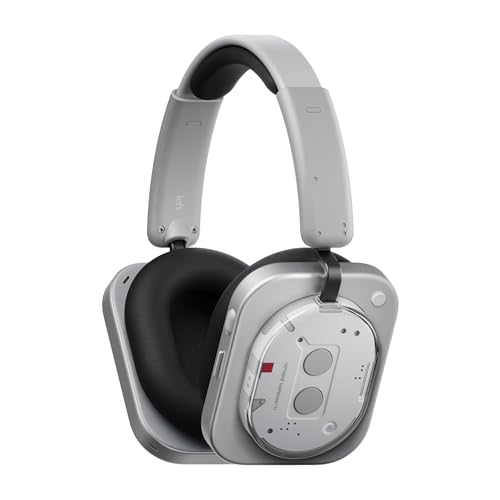
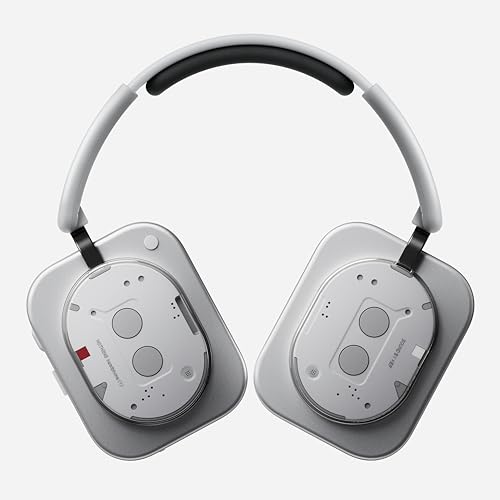
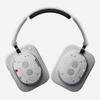
The most obvious feature is the transparent design. Unlike typical headphones that hide their internals, the Nothing Headphone (1) proudly displays its components through clear "squircle" shaped earcups. This isn't just visual flair—it represents Nothing's commitment to transparency in both design and function. Our testers found this aesthetic either refreshingly bold or oddly attention-grabbing, depending on personal taste.
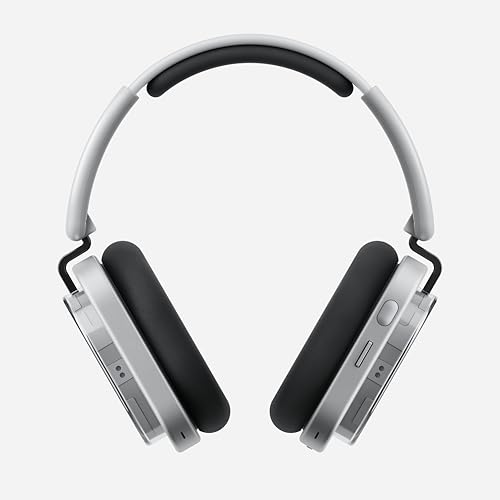
The build quality immediately feels premium. At 329 grams, they strike a balance between substantial feel and comfortable weight. The combination of metal and plastic construction provides durability without the heft of all-metal designs like Apple's AirPods Max. The IP52 rating means they can handle light splashes and dust—useful protection for daily use.
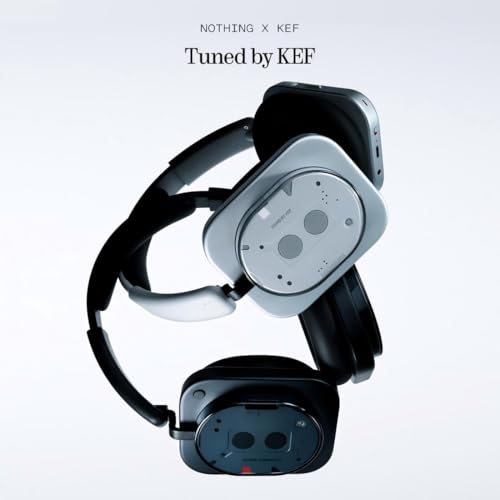
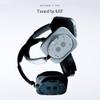
Nothing partnered with KEF, the renowned British audio company, to tune these headphones. This collaboration brings decades of speaker design expertise to the project. The custom 40mm dynamic drivers feature nickel-coated polyurethane diaphragms—a material choice that provides both rigidity for accurate sound reproduction and flexibility for deep bass response.
Out of the box, the sound signature is more restrained than Nothing's previous earbuds. Researchers noted this approach makes sense for over-ear headphones, which need to work across more diverse listening scenarios. The frequency response covers an impressive 20Hz to 40kHz range, extending well beyond human hearing into ultrasonic territory. While you can't hear these frequencies, they can affect the overall sound character through harmonic interactions.
The real magic happens in the companion app. The 8-band parametric equalizer (EQ) goes far beyond typical consumer offerings. Each band lets you adjust not just the volume level at specific frequencies, but also the "Q factor"—essentially how wide or narrow the adjustment affects surrounding frequencies. This level of control typically requires professional audio software. Our testers found that careful EQ adjustment transforms the headphones from "good" to "excellent," allowing fine-tuning that rivals custom audiophile setups.
Codec support includes LDAC (Sony's high-resolution wireless standard), AAC (Apple's preferred codec), and the universal SBC. LDAC can transmit nearly three times more data than standard Bluetooth audio, preserving more detail in your music. The headphones also support both USB-C and 3.5mm wired connections, offering flexibility for different audio sources and zero-latency scenarios.
Active Noise Cancellation (ANC) uses four microphones to detect and cancel unwanted sounds. The Nothing Headphone (1) achieves up to 42dB of noise reduction—placing it in the upper tier but not quite matching the absolute best from Sony or Bose, which can reach 45-48dB in ideal conditions.
The adaptive system automatically adjusts to your environment, increasing cancellation in noisy spaces and reducing it in quiet areas to maintain natural sound. Our testers found it highly effective against constant sounds like airplane engines, air conditioning, and traffic noise. However, it struggles more with wind noise compared to leading competitors—something to consider for outdoor use.
The transparency mode deserves special mention. Rather than simply reducing ANC, it actively mixes in ambient sound through the microphones. The implementation feels remarkably natural, allowing clear conversations without removing the headphones. Some researchers noted it outperforms more expensive alternatives in maintaining audio quality while letting environmental sounds through.
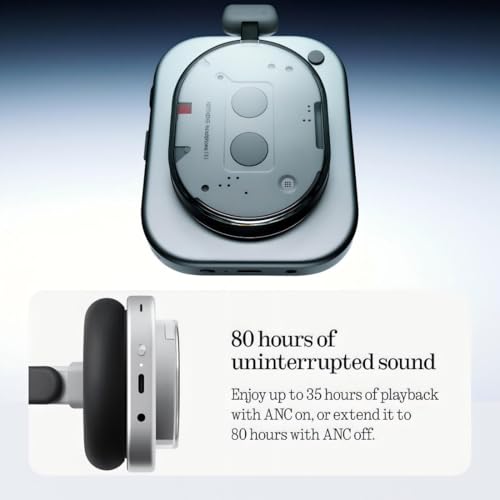
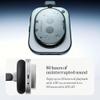
Here's where the Nothing Headphone (1) truly excels. The 1,040mAh battery delivers up to 80 hours of playback with ANC off using the AAC codec, or 35 hours with ANC enabled. These numbers significantly exceed most premium competitors, which typically offer 20-30 hours with ANC.
Even more impressive is the fast charging. Just five minutes of charging provides approximately five hours of playback with ANC off, or about 2.4 hours with ANC on. This addresses one of the biggest pain points in wireless headphones—running out of power at inconvenient times.
The extended battery life comes from efficient Bluetooth 5.3 implementation and careful power management throughout the system. For frequent travelers or anyone who forgets to charge devices regularly, this advantage alone might justify choosing these over competitors.
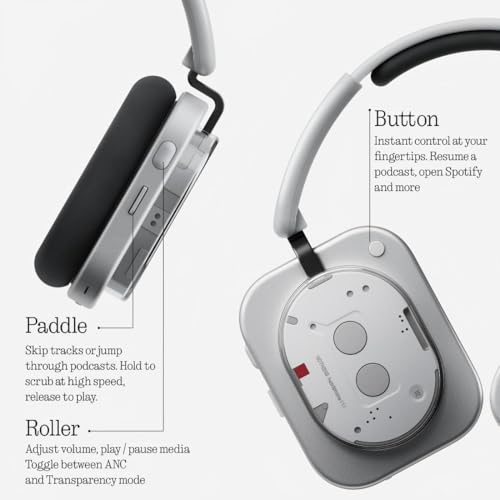
Nothing deliberately chose physical controls over touch surfaces, and our testers consistently praised this decision. The roller dial for volume adjustment provides precise, tactile feedback. The paddle switch lets you quickly toggle between ANC and transparency modes. A customizable push button can trigger voice assistants or other functions through the app.
These physical controls work reliably even with gloves or in challenging conditions where touch surfaces often fail. The button placement feels natural, and accidental activation proved rare during testing.
Multi-point connectivity allows simultaneous connection to two devices—essential for modern users juggling phone calls and computer audio. The transition between devices happens seamlessly, automatically pausing one source when the other becomes active.
Spatial audio with head tracking creates an immersive, cinema-like experience for compatible content. While not as refined as Apple's implementation, it adds meaningful value for video streaming and gaming. The system uses built-in sensors to detect head movement, adjusting the audio field to maintain the illusion of sound coming from your screen.
The low-latency gaming mode reduces audio delay to minimize the disconnect between visual and audio cues—crucial for competitive gaming where timing matters.
On-ear detection automatically pauses playback when you remove the headphones and resumes when you put them back on. This seemingly simple feature proves surprisingly convenient in daily use.
For home theater use, the Nothing Headphone (1) offers compelling advantages. The exceptional battery life means you won't interrupt movie marathons for charging breaks. The spatial audio processing enhances the cinematic experience, while the comfortable fit supports extended viewing sessions. The closed-back design prevents sound leakage—important for late-night viewing when others are sleeping.
The detailed EQ customization lets you optimize sound for different content types. You might prefer enhanced dialogue clarity for movies, elevated bass for action sequences, or balanced response for music. The ability to create and switch between multiple EQ profiles makes this practical rather than just theoretical.
For work scenarios, the reliable physical controls and multi-point connectivity prove invaluable. The transparency mode allows awareness of your environment during calls, while the ANC creates focus when needed. However, call quality, while adequate, doesn't quite match the crystal-clear performance of business-focused models from companies like Bose or Sony.
At the time of writing, the premium over-ear market is dominated by models costing significantly more. The Nothing Headphone (1) delivers many flagship features while undercutting established players by substantial margins. This value proposition becomes even more compelling when considering the exceptional battery life and customization capabilities that often exceed more expensive alternatives.
However, it's important to note areas where pricier competitors maintain advantages. Sony's latest models offer slightly superior ANC performance and more refined computational audio features. Bose provides better call quality and potentially more comfortable padding for extended wear. Apple's AirPods Max delivers tighter ecosystem integration for iPhone users, though at a significantly higher cost.
The Nothing Headphone (1) successfully establishes itself as a legitimate alternative in the premium over-ear category. The collaboration with KEF brings genuine audio expertise, while the exceptional battery life and comprehensive customization options provide clear advantages over many competitors.
The transparent design will divide opinions, but the substance backing the style is solid. These headphones excel for users prioritizing battery life, audio customization, and distinctive design. They're particularly compelling for home theater use, where the extended battery life and spatial audio processing shine.
While there's room for improvement in areas like wind noise handling and call quality, Nothing has created a product that doesn't just follow market trends but establishes its own identity. For buyers seeking premium performance with unique character, the Nothing Headphone (1) deserves serious consideration alongside more established alternatives.
The Nothing Headphone (1) is Nothing's debut over-ear wireless headphone featuring a distinctive transparent design and collaboration with KEF for audio tuning. It offers active noise cancellation, exceptional battery life up to 80 hours, and comprehensive sound customization through an 8-band parametric EQ.
The Nothing Headphone (1) delivers industry-leading battery life with up to 80 hours of playback when ANC is off, or 35 hours with ANC enabled. This exceptional endurance makes it ideal for extended home theater sessions and eliminates frequent charging interruptions during movie marathons.
Yes, the Nothing Headphone (1) features adaptive active noise cancellation with up to 42dB of noise reduction using a four-microphone array. While not quite matching Sony or Bose's top-tier models, it effectively blocks household sounds, HVAC noise, and other distractions during home theater viewing.
The Nothing Headphone (1) excels for home theater applications with its 80-hour battery life preventing charging interruptions, spatial audio with head-tracking for immersive experiences, and closed-back design that prevents sound leakage during late-night viewing. The detailed 8-band EQ allows optimization for different content types.
The Nothing Headphone (1) supports LDAC, AAC, and SBC codecs. LDAC provides high-resolution wireless audio with nearly three times more data transmission than standard Bluetooth, preserving audio detail important for home theater and music listening.
Yes, the Nothing Headphone (1) offers exceptional sound customization through its companion app with an 8-band parametric equalizer. You can adjust frequency response, Q-factor, and create multiple profiles for different content types like movies, music, or gaming.
The Nothing Headphone (1) supports multi-point connectivity, allowing simultaneous connection to two devices. This enables seamless switching between your TV audio and phone calls, or between your streaming device and computer without manual reconnection.
The Nothing Headphone (1) weighs 329g and features memory foam padding for extended comfort during long home theater sessions. While generally comfortable, some users may find competitors like Sony's models slightly more cushioned for marathon viewing sessions exceeding 3-4 hours.
The Nothing Headphone (1) features a distinctive transparent "squircle" earcup design that reveals internal components, setting it apart visually from conventional headphones. This aesthetic choice reflects Nothing's design philosophy of transparency while maintaining premium build quality with metal and plastic construction.
Yes, the Nothing Headphone (1) offers compelling value with flagship features at a competitive price point. The exceptional 80-hour battery life, professional-grade EQ customization, solid noise cancellation, and unique design make it particularly attractive for home theater enthusiasts and users seeking distinctive premium headphones without paying top-tier prices.
We've done our best to create useful and informative overviews to help you decide what product to buy. Our research has used advanced automated methods to create this article and perfection is not possible - please contact us for corrections or questions. These are the sites we've researched in the creation of this article: recordingnow.com - loudnwireless.com - markellisreviews.com - tomsguide.com - tomsguide.com - youtube.com - cnet.com - soundguys.com - 9to5google.com - youtube.com - notebookcheck.net - techradar.com - us.kef.com - soundguys.com - alexreviewstech.com - walmart.com - us.nothing.tech - youtube.com - youtube.com
| Nothing Headphone (1) |
|---|
| Battery Life - Critical for uninterrupted listening: Up to 80h (ANC off), 35h (ANC on) |
| Active Noise Cancellation - Blocks distracting background sounds: Up to 42dB reduction |
| Driver Size - Larger drivers typically produce better bass and soundstage: 40mm dynamic drivers |
| Audio Tuning - Professional sound engineering: Tuned by KEF |
| Bluetooth Version - Affects connection stability and power efficiency: Bluetooth 5.3 |
| Codec Support - Higher quality codecs preserve more audio detail: LDAC, AAC, SBC |
| Multi-Point Connection - Connect to two devices simultaneously: Dual-device support |
| Fast Charging - Quick power-up when battery runs low: 5 minutes = 5 hours playback |
| EQ Bands - More bands allow finer sound customization: 8-band parametric EQ |
| Water Resistance - Protection against moisture and dust: IP52 rated |
| Spatial Audio - Creates immersive, cinema-like experience: Head-tracking supported |
| Microphone Array - Better call quality and ANC performance: 4-microphone system |
| Control Type - Physical controls are more reliable than touch: Roller, paddle, push-button |
| Frequency Range - Wider range can affect overall sound character: 20Hz – 40kHz |
| Weight: 329g |
| Dimensions: 173.85 × 78 × 189.25 mm |
| Impedance: 16Ω |
The OneOdio A10 stands out primarily for its exceptional value proposition, delivering active noise cancellation and impressive battery life at a fraction of the cost. With up to 50 hours of playback time and hybrid ANC that effectively blocks 95% of low and mid-frequency ambient sounds, it provides the core functionality that most users actually need for daily commuting and office work. The lightweight 295g design with protein memory foam ear pads offers genuine comfort for extended wear, while the multipoint connectivity allows seamless switching between devices—features that were once exclusive to premium models. The build quality exceeds expectations for its price point, with recent versions incorporating more metal components for improved durability.
However, the OneOdio A10 makes notable compromises to achieve its accessible pricing. The V-shaped sound signature emphasizes bass and treble while recessing the midrange, creating an energetic but less refined audio experience compared to the Nothing's KEF-tuned drivers. Without a companion app, users miss out on EQ customization, firmware updates, and advanced features, while the lack of water resistance limits versatility. The ANC, while effective for the price, doesn't match the adaptive intelligence or 42dB reduction capability of premium alternatives. For budget-conscious users who prioritize essential ANC functionality over cutting-edge features, the OneOdio A10 represents outstanding value, but those seeking the latest technology, superior sound quality, and comprehensive customization will find the investment in premium alternatives worthwhile.
🤖 Read Detailed Comparison
👌OneOdio A10 Hybrid Active Noise Cancelling Headphones Details
💵 See OneOdio A10 Hybrid Active Noise Cancelling Headphones Price
The Beats Solo 4 takes a fundamentally different approach, prioritizing immediate satisfaction and portability over premium features. At roughly one-third the price of the Nothing Headphone (1), it delivers a balanced, neutral sound signature that sounds great right out of the box without any EQ tweaking required. The 217-gram weight and foldable design make it significantly more travel-friendly, easily slipping into laptop bags or even large pockets. While it lacks active noise cancellation entirely, the Beats Solo 4 compensates with exceptional 50-hour battery life that remains consistent across all usage scenarios, plus the reliability and ecosystem integration that Beats users have come to expect.
For users who don't need maximum isolation or extensive customization, the Beats Solo 4 represents outstanding value in the mainstream segment. Its on-ear design trades long-session comfort for unmatched portability, making it ideal for commuters, students, and anyone frequently on the move. The immediate audio satisfaction means you can enjoy your music within minutes of unboxing, without spending time learning EQ curves or adjusting settings. While it can't match the Nothing Headphone (1)'s premium features like adaptive ANC or spatial audio, the Beats Solo 4 delivers dependable performance at an accessible price point that makes high-quality wireless audio available to a much broader audience.
🤖 Read Detailed Comparison
👌Beats Solo 4 Wireless On-Ear Headphones Details
💵 See Beats Solo 4 Wireless On-Ear Headphones Price
The Sennheiser HD 450BT stands out primarily for its exceptional value proposition and immediately satisfying sound quality. Where the Nothing Headphone (1) requires EQ tweaking to reach its potential, the Sennheiser HD 450BT delivers what users consistently describe as a "fantastic" and well-balanced sound signature right out of the box. Its 238-gram lightweight design makes it significantly more comfortable for extended listening sessions, and the aptX Low Latency codec support provides superior audio-video sync for gaming and streaming – something the Nothing headphones can't match despite their premium positioning. The 30-hour battery life, while substantially shorter than the Nothing's industry-leading endurance, still handles daily use without issue and charges via the same convenient USB-C connection.
From a practical standpoint, the Sennheiser HD 450BT represents a more straightforward purchase decision for most users. Its basic but effective ANC handles office environments and commuting noise adequately, and the simple on/off operation avoids the complexity of adaptive modes that some users find unnecessary. While it lacks the cutting-edge features like spatial audio and LDAC support, it excels at core headphone functions without requiring significant time investment in customization. The substantial price difference makes the Sennheiser HD 450BT an attractive alternative for budget-conscious buyers who want proven Sennheiser audio quality and reliable wireless performance, even if it means sacrificing the Nothing's distinctive design and exceptional battery life.
🤖 Read Detailed Comparison
👌Sennheiser HD 450BT Wireless Noise Cancelling Headphones Details
💵 See Sennheiser HD 450BT Wireless Noise Cancelling Headphones Price
The Grado GW100x takes a fundamentally different approach to wireless audio, prioritizing pure sound quality over modern conveniences. Its standout feature is being one of the only open-back wireless headphones available, creating an expansive soundstage where music feels like it's coming from speakers positioned around you rather than drivers pressed against your ears. The larger 44mm X-series drivers with low-mass voice coils deliver exceptional detail and clarity, particularly in the midrange frequencies where vocals and instruments shine. At just 187 grams, the Grado GW100x is remarkably lightweight and comfortable for extended listening sessions, though the on-ear design may not suit everyone. The 46-hour battery life is impressive, and the minimalist three-button control system appeals to users who prefer simplicity over feature complexity.
However, the Grado GW100x makes significant trade-offs that limit its versatility compared to the Nothing Headphone (1). The open-back design means substantial sound leakage - anyone nearby will clearly hear your music - making them unsuitable for offices, public transport, or shared living spaces. There's no active noise cancellation, no companion app for customization, and no modern features like spatial audio or multipoint pairing. While the audio quality is exceptional for dedicated music listening in quiet environments, the Grado GW100x serves a much narrower use case. At a similar price point, it offers something truly unique for audiophiles who primarily listen at home, but the Nothing Headphone (1) provides far better value for users seeking versatile, all-around wireless headphones that can adapt to different situations and environments.
🤖 Read Detailed Comparison
👌Grado GW100x Wireless Headphones Details
💵 See Grado GW100x Wireless Headphones Price
The Sennheiser Momentum 4 stands out primarily for its superior comfort and proven sound quality. Weighing 36 grams less at 293g, it delivers noticeably better long-term wearability during extended listening sessions—a crucial advantage for daily users. The sound signature excels in audiophile technicalities like soundstage, instrument separation, and layering, making it the better choice for critical listening and revealing musical details that the Nothing's more bass-forward tuning can mask. With three years of market presence since its 2022 launch, the Sennheiser Momentum 4 has established reliability through real-world use and firmware refinements, while offering refined features like auto on/off and smart pause that integrate seamlessly into daily routines.
In terms of value proposition, the Sennheiser Momentum 4 represents proven excellence at a competitive price point, frequently available at discounts that make it an even stronger value. While it lacks the Nothing's cutting-edge spatial audio and exceptional 80-hour battery life, it counters with 60 hours of reliable playbook time and Sound Personalization technology that scientifically adjusts audio to individual hearing profiles. The trade-off comes down to innovation versus refinement—the Sennheiser Momentum 4 offers less exciting features but delivers consistently excellent performance across all core areas, making it the safer choice for buyers who prioritize comfort, established sound quality, and long-term reliability over the latest technological advances.
🤖 Read Detailed Comparison
👌Sennheiser Momentum 4 Wireless Headphones Details
💵 See Sennheiser Momentum 4 Wireless Headphones Price
The Shure Aonic 50 Gen 2 takes a markedly different approach to premium wireless audio, prioritizing professional-grade sound accuracy over consumer appeal. Where the Nothing Headphone (1) offers balanced, immediately engaging sound, Shure's larger 50mm drivers deliver analytical precision that reveals subtle musical details often masked by more colored tunings. The extensive codec support—including aptX, aptX HD, and aptX Adaptive alongside LDAC—provides superior compatibility with Android devices and high-resolution audio sources. Shure's ShurePlus PLAY app offers more granular control through parametric EQ and specialized Spatialized Audio modes (Music, Cinema, Podcast) that cater to different content types, though this depth requires more technical investment from users.
However, the Shure Aonic 50 Gen 2 makes notable trade-offs for its audio excellence. The active noise cancellation performs inconsistently compared to the Nothing's adaptive system, making it less suitable for challenging environments like commutes or air travel. At 45 hours, the battery life is excellent by industry standards but falls well short of the Nothing's exceptional 80-hour endurance. The lack of water resistance limits outdoor versatility, while the absence of modern conveniences like wear detection and multipoint connectivity may frustrate users accustomed to contemporary wireless features. For critical listeners willing to invest time in customization and who primarily use headphones in controlled environments, the Shure justifies its higher price with superior audio fidelity and professional heritage. But for most users seeking an all-around performer with flagship features at competitive pricing, the Nothing Headphone (1) delivers better real-world value.
🤖 Read Detailed Comparison
👌Shure Aonic 50 Gen 2 Wireless Headphones Details
💵 See Shure Aonic 50 Gen 2 Wireless Headphones Price
The JBL Tune 720BT stands out primarily for its exceptional 76-hour battery life that practically eliminates charging anxiety, making it ideal for travelers, students, or anyone who simply doesn't want to think about battery management. At its significantly lower price point, it delivers surprisingly good sound quality with JBL's Pure Bass Sound technology that creates an engaging, fun listening experience particularly well-suited for popular music genres. The lightweight 220g construction and foldable design make it far more portable than the Nothing, while the simple button controls provide reliable, no-nonsense operation without the learning curve of more complex systems. For users who primarily listen in quiet environments and don't need active noise cancellation, the JBL offers remarkable value by focusing intensely on core audio performance and convenience features.
However, the JBL Tune 720BT makes significant compromises that become apparent in demanding real-world scenarios. The complete lack of active noise cancellation means it's unsuitable for noisy commutes, open offices, or air travel where the Nothing's 42dB noise reduction becomes essential. The basic plastic construction feels cheap compared to the Nothing's premium materials, and the limited EQ options can't match the sophisticated 8-band customization available in the Nothing's app. While the JBL excels as an exceptional budget option that punches well above its weight class, users seeking premium features like spatial audio, advanced call quality, or immersive home theater capabilities will find it lacking. The JBL represents the smart choice for cost-conscious buyers who prioritize battery life and solid basics, but it operates in an entirely different category from the Nothing's comprehensive premium experience.
🤖 Read Detailed Comparison
👌JBL Tune 720BT Wireless Over-Ear Headphones Details
💵 See JBL Tune 720BT Wireless Over-Ear Headphones Price
The Beats Solo3 takes a fundamentally different approach as an on-ear headphone that prioritizes portability and Apple ecosystem integration over comprehensive features. Its standout strength lies in the seamless W1 chip integration that makes pairing and switching between Apple devices almost magical—open the case near your iPhone and they're instantly ready to connect, then effortlessly follow you as you switch to your MacBook or iPad. At just 215 grams with a compact, foldable design, they're significantly more travel-friendly and take up much less space in a bag. The signature Beats sound delivers immediate satisfaction with its bass-heavy profile and forward vocals, requiring no setup or customization to sound great right out of the box. Battery life remains impressive at up to 40 hours, and the Fast Fuel charging provides 3 hours of playback from just 5 minutes of charging.
However, the Beats Solo3 makes notable compromises that become apparent in direct comparison. The complete absence of active noise cancellation means you're relying solely on the limited passive isolation of the on-ear design, making them less suitable for noisy environments like airplanes or busy offices. The on-ear design, while portable, can cause ear fatigue during extended listening sessions since the weight presses directly on your ears rather than distributing around them. Sound customization is minimal, and the older Bluetooth 4.0 technology lacks support for high-resolution codecs like LDAC. For users deeply embedded in the Apple ecosystem who prioritize portability and plug-and-play simplicity, the Beats Solo3 offers excellent value and proven reliability. But for those seeking maximum features, comfort for long sessions, or effective noise isolation, the Nothing Headphone (1) provides a more comprehensive and capable experience, albeit at the cost of increased size and complexity.
🤖 Read Detailed Comparison
👌Beats Solo3 Wireless On-Ear Headphones Details
💵 See Beats Solo3 Wireless On-Ear Headphones Price
The Pioneer DJ HDJ-CUE1 takes a radically different approach, prioritizing specialized performance over broad consumer appeal. Where the Nothing Headphone (1) offers balanced KEF tuning and extensive EQ customization, the Pioneer DJ HDJ-CUE1 delivers purpose-built bass-heavy sound tuning inherited from professional models, specifically designed for beatmatching and mixing electronic music. The 90-degree swiveling ear cups enable critical single-ear monitoring that DJs rely on, while the lightweight 215g construction and metal-reinforced build can withstand the rigors of DJ booth environments night after night. The wired connection eliminates any latency concerns that could disrupt mixing timing, and the replaceable parts philosophy means these headphones can be maintained and customized over years of professional use.
In real-world value terms, the Pioneer DJ HDJ-CUE1 represents exceptional bang for your buck in its specialized category, offering professional-grade sound tuning at an entry-level price point that undercuts the Nothing model significantly. While it lacks the wireless convenience, ANC, and smart features that make the Nothing Headphone (1) perfect for modern life, the Pioneer model never needs charging, never suffers from connection drops, and delivers consistent performance in demanding environments where wireless headphones might falter. For aspiring DJs, electronic music enthusiasts, or anyone who values the reliability and simplicity of wired audio, the HDJ-CUE1 provides focused excellence rather than jack-of-all-trades versatility. The trade-off is clear: you sacrifice modern convenience features for specialized performance and significantly better value in a specific use case.
🤖 Read Detailed Comparison
👌Pioneer DJ HDJ-CUE1 Headphones Details
💵 See Pioneer DJ HDJ-CUE1 Headphones Price
The Focal Bathys represents a fundamentally different approach to premium wireless headphones, prioritizing audiophile-grade sound quality above all else. Where the Nothing Headphone (1) delivers excellent value through balanced performance across multiple categories, the Bathys focuses laser-sharp attention on audio fidelity with its proprietary 40mm aluminum-magnesium drivers made in France using techniques developed for Focal's reference speakers. The sound quality difference is immediately apparent – the Focal Bathys offers superior instrument separation, a notably wider soundstage, and the kind of detailed, nuanced presentation that serious music listeners crave. Its unique USB-DAC mode supporting up to 24-bit/192kHz resolution sets it apart from virtually all wireless competitors, allowing direct connection to computers and audio sources for uncompromised playback quality that bypasses Bluetooth compression entirely.
However, this audio excellence comes with significant trade-offs that highlight why the Nothing Headphone (1) appeals to a broader audience. The Focal Bathys costs substantially more while delivering shorter battery life (30 hours versus 35-80 hours), less effective noise cancellation, and average comfort compared to the Nothing's more accommodating fit. For everyday users who want great sound quality alongside excellent battery life, intuitive controls, and strong noise cancellation for commuting or travel, the Nothing Headphone (1) provides a more well-rounded package. The Bathys excels when sound quality is the primary concern – it's the clear choice for critical listening, home theater applications where you want the most immersive audio experience, or professional use where audio fidelity justifies the premium price. Ultimately, it comes down to whether you're willing to pay significantly more and accept compromises in convenience features for what is genuinely the best wireless sound quality available at this price tier.
🤖 Read Detailed Comparison
👌Focal Bathys Wireless Noise-Canceling Headphones Details
💵 See Focal Bathys Wireless Noise-Canceling Headphones Price
The SteelSeries Arctis Nova Pro Wireless takes a fundamentally different approach as a gaming-first headset, and its specialized features deliver real advantages for competitive players. Its hot-swappable dual battery system eliminates the downtime that even the Nothing's impressive 80-hour battery eventually requires—you simply pop in a fresh battery and continue playing without interruption. The dedicated 2.4GHz wireless connection provides ultra-low latency that's crucial for competitive gaming, while the retractable boom microphone with AI noise cancellation delivers broadcast-quality voice communication that far exceeds the Nothing's built-in microphone array. The gaming-optimized audio processing excels at audio separation, making it easier to distinguish enemy footsteps from explosions, and the base station's dual USB-C inputs let you seamlessly switch between gaming platforms like PC and PlayStation.
However, the SteelSeries Arctis Nova Pro Wireless makes significant trade-offs for its gaming specialization. It lacks the Nothing's weather resistance, high-resolution LDAC codec support, and superior noise cancellation that makes the Nothing excellent for travel and daily use. The SteelSeries also requires its bulky base station for full functionality, making it less portable and versatile for non-gaming scenarios. While both headphones command similar premium pricing, the SteelSeries represents better value only if gaming comprises the majority of your usage—its specialized features don't translate well to music listening, commuting, or general multimedia use where the Nothing's broader capabilities and exceptional battery life provide more practical benefits for everyday users.
🤖 Read Detailed Comparison
👌SteelSeries Arctis Nova Pro Wireless Gaming Headset Details
💵 See SteelSeries Arctis Nova Pro Wireless Gaming Headset Price
The OneOdio Studio Max 1 represents a revolutionary breakthrough in professional audio by solving one of DJing's biggest limitations: wireless latency. While the Nothing Headphone (1) excels in consumer features, the OneOdio delivers an unprecedented 20ms ultra-low latency through its proprietary RAPID WILL+ technology, making wireless DJing possible for the first time without audio delay that would ruin beat matching. The headphones also boast an industry-leading 120-hour battery life that eliminates charging anxiety during long DJ sets, plus four distinct connection modes including professional 6.35mm jacks for connecting directly to mixers and audio interfaces. The design prioritizes DJ workflow with features like single-ear monitoring, swiveling earcups for comfortable cueing, and the durability needed for nightly club use.
From a performance standpoint, the OneOdio Studio Max 1 operates in a completely different category focused on professional reliability rather than consumer convenience. Where the Nothing headphones require extensive EQ tuning to achieve balanced sound, the OneOdio's bass-heavy signature is intentionally tuned for DJ monitoring, helping beat matching and bassline detection even in noisy club environments – though this makes it less suitable for general music listening. The value proposition is compelling for working DJs and music producers who need wireless freedom without compromising professional performance, offering groundbreaking technology at an accessible price point. However, if you don't need ultra-low latency wireless capability or professional audio connections, the OneOdio lacks the consumer-focused features like active noise cancellation, water resistance, and spatial audio that make the Nothing headphones more versatile for everyday use.
🤖 Read Detailed Comparison
👌OneOdio Studio Max 1 Wireless DJ Headphones Details
💵 See OneOdio Studio Max 1 Wireless DJ Headphones Price
The Skullcandy Crusher 540 Active takes a fundamentally different approach with its patented haptic bass technology that lets you physically feel low-frequency sounds through vibrations against your head and body. This creates a genuinely unique listening experience that no other headphone can match, making electronic music, hip-hop, and rock feel more visceral and engaging. At a significantly lower price point, the Skullcandy Crusher 540 Active also specializes in active use with sweat-resistant nano-coating, breathable mesh ear cushions, and higher clamping force designed to keep the headphones secure during workouts. The 40-hour battery life, while half of what the Nothing offers, still provides excellent endurance with faster 10-minute rapid charging that delivers 4 hours of use.
However, the Skullcandy Crusher 540 Active makes notable compromises to achieve its specialized focus and lower price. It completely lacks active noise cancellation, relying only on passive isolation, which makes it less suitable for commuting or noisy environments where the Nothing excels. The bass-heavy sound signature, while perfect for its target genres, isn't as versatile for podcasts, classical music, or movie dialogue where balanced frequency response matters more. The Skullcandy Crusher 540 Active essentially trades the Nothing's premium versatility and ANC capabilities for unique haptic bass technology and fitness optimization, making it the better choice for active users who prioritize physical bass sensation and workout durability over noise cancellation and all-around performance.
🤖 Read Detailed Comparison
👌Skullcandy Crusher 540 Active Wireless Over-Ear Headphones Details
💵 See Skullcandy Crusher 540 Active Wireless Over-Ear Headphones Price
The Beats Studio Pro takes a fundamentally different approach by prioritizing immediate satisfaction over customization. Where the Nothing Headphone (1) requires EQ tweaking to sound its best, the Beats delivers a balanced, engaging sound signature right out of the box that most listeners find instantly appealing. This plug-and-play philosophy extends throughout the experience – seamless Apple ecosystem integration with features like Spatial Audio and automatic device switching, a lighter 270-gram design that's more comfortable for casual use, and folding hinges that make them significantly more portable. The Beats Studio Pro also costs less while still delivering premium features like adaptive ANC and 24-hour battery life, making it an exceptional value for users who want flagship performance without the complexity.
However, the trade-offs become apparent when you dig deeper into the specifications. The Beats Studio Pro offers no EQ customization whatsoever, lacks high-resolution LDAC codec support, and provides roughly half the battery endurance of the Nothing headphones. The ANC, while good, isn't quite as effective at blocking low-frequency noise. For Apple users who prioritize convenience and immediate gratification, these limitations may feel insignificant compared to the seamless ecosystem benefits. But for audio enthusiasts, Android users with high-resolution music libraries, or frequent travelers who need maximum battery life, the Beats' simplified approach may feel limiting despite its lower price point and superior out-of-box experience.
🤖 Read Detailed Comparison
👌Beats Studio Pro Wireless Headphones Details
💵 See Beats Studio Pro Wireless Headphones Price
The Bowers & Wilkins Px7 S3 represents a significant step up in technical audio performance, featuring completely redesigned 40mm bio-cellulose drivers with dedicated discrete amplification that delivers exceptional detail retrieval and resolution. Professional reviewers consistently rate its sound quality as superior, with one expert scoring it 9.2 out of 10 after proper tuning. The eight-microphone system provides more effective noise cancellation than the Nothing's four-microphone array, while also delivering crystal-clear call quality through ADI Pure Voice processing. The premium build quality is immediately apparent, with generous use of metal components, refined ergonomics, and memory foam padding that creates a more luxurious feel and better long-term comfort.
However, this technical superiority comes at a substantial price premium—roughly 70% more expensive at the time of writing. While the Px7 S3 excels in sound quality and build materials, it can't match the Nothing Headphone (1)'s exceptional 35-80 hour battery life, offering a more standard 30 hours instead. The Bowers & Wilkins model also provides less sound customization flexibility with its 5-band EQ compared to Nothing's comprehensive 8-band system. For audiophiles who prioritize ultimate sound quality and premium construction, the Px7 S3 justifies its higher cost through measurably better technical performance. However, the Nothing Headphone (1) delivers approximately 80% of this premium experience while being significantly more affordable, making it the better value choice for most users who want high-end features without the audiophile price tag.
🤖 Read Detailed Comparison
👌Bowers & Wilkins Px7 S3 Wireless Over-Ear Headphones Details
💵 See Bowers & Wilkins Px7 S3 Wireless Over-Ear Headphones Price
The Soundcore Space One Pro stands out primarily through its superior active noise cancellation technology and exceptional portability. Its 6-microphone array with 4-stage adaptive ANC delivers up to 98% noise reduction, significantly outperforming the Nothing Headphone (1)'s 42dB system in real-world scenarios like busy commutes or airplane travel. The FlexiCurve folding design is genuinely innovative, allowing the headphones to fold down smaller than almost any competitor – a game-changer for frequent travelers who struggle with luggage space. At 284 grams, it's also 45 grams lighter than the Nothing headphones, making extended listening sessions more comfortable. The Soundcore Space One Pro also excels in call quality with its AI-enhanced microphone system that provides clearer voice transmission in noisy environments.
From a value perspective, the Soundcore Space One Pro typically costs significantly less while delivering flagship-level features that rival much more expensive competitors. Where it falls short is in battery endurance – offering 40 hours with ANC compared to Nothing's impressive 80-hour capacity – and smart features like wear detection, which is notably absent despite being present in cheaper Soundcore models. The Soundcore also lacks water resistance entirely, limiting its versatility for gym use or outdoor activities. However, for users prioritizing proven ANC performance, travel convenience, and exceptional value over unique design aesthetics and marathon battery life, the Soundcore Space One Pro presents a more practical and cost-effective choice that delivers measurable performance advantages in key areas like noise cancellation and portability.
🤖 Read Detailed Comparison
👌Soundcore Space One Pro Wireless Noise Cancelling Headphones Details
💵 See Soundcore Space One Pro Wireless Noise Cancelling Headphones Price
The Beats Studio3 Wireless brings several practical advantages that shouldn't be overlooked, particularly its lightweight 260-gram design and foldable construction that makes it significantly more portable than the Nothing Headphone (1). Released in 2017, it features Apple's W1 chip that delivers seamless pairing and device switching within the Apple ecosystem—a convenience that remains unmatched for iPhone, iPad, and Mac users. The headphones offer respectable battery life of 22 hours with ANC enabled and include Fast Fuel charging that provides 3 hours of playback from a 10-minute charge. For users prioritizing portability and Apple integration, the Beats Studio3 Wireless presents a mature, proven platform that has stood the test of time with reliable performance and widespread accessory support.
However, the eight-year technology gap becomes apparent in nearly every performance metric that matters for serious listening. The Beats Studio3 Wireless is limited to basic AAC and SBC codecs without high-resolution audio support, offers only rudimentary noise cancellation compared to modern adaptive systems, and provides no meaningful sound customization options. While it can often be found at significantly lower prices than the Nothing Headphone (1), representing good value for budget-conscious buyers, the dated Bluetooth standards, Micro-USB charging, and lack of advanced features like transparency mode or multi-point connection highlight how far wireless headphone technology has advanced. For users seeking cutting-edge performance, future-proofing, or the best possible audio experience, the Beats Studio3 Wireless feels limited despite its strengths in portability and Apple ecosystem integration.
🤖 Read Detailed Comparison
👌Beats Studio3 Wireless Over-Ear Headphones Details
💵 See Beats Studio3 Wireless Over-Ear Headphones Price
The Sony WH-1000XM6 represents the gold standard in premium wireless headphones, offering several key advantages that justify its higher price point. Most notably, Sony's industry-leading active noise cancellation uses a 12-microphone array and QN3 processor to deliver up to 87% noise reduction – a significant step up from the Nothing's capable but more basic ANC system. This translates to transformative real-world performance on airplanes, trains, and in noisy offices where the Sony can virtually eliminate background distractions. The sound quality is immediately impressive out of the box thanks to tuning by Grammy-winning mastering engineers, eliminating the EQ adjustment period required with the Nothing headphones. At just 250 grams compared to the Nothing's 329 grams, the Sony also provides superior all-day comfort, and its foldable design makes it far more travel-friendly.
While the Sony WH-1000XM6 costs considerably more, it delivers measurable performance benefits that matter in daily use. The mature app ecosystem offers more sophisticated features like adaptive sound control that automatically adjusts settings based on your environment and activity, plus advanced spatial audio implementation that creates a more convincing surround sound experience for movies and gaming. The Sony's refined touch controls and premium build quality reflect years of iterative improvement, resulting in a more polished user experience. However, the Nothing Headphone (1) holds its own in battery life, actually outlasting the Sony significantly, and offers a distinctive aesthetic that no competitor can match. For users who prioritize proven excellence in noise cancellation and immediate audio satisfaction, the Sony justifies its premium. But for those seeking strong performance with unique design flair at a more accessible price, the Nothing represents compelling value, especially when you factor in its exceptional 80-hour battery life for non-ANC use.
🤖 Read Detailed Comparison
👌Sony WH-1000XM6 Wireless Noise Canceling Headphones Details
💵 See Sony WH-1000XM6 Wireless Noise Canceling Headphones Price
The Bowers & Wilkins Px8 McLaren Edition represents a fundamentally different approach to premium audio, prioritizing audiophile-grade sound engineering over value proposition. Its standout 40mm Carbon Cone drivers with angled positioning deliver exceptional clarity and detail that excels immediately out of the box, particularly with acoustic music, classical, and jazz genres. The collaboration with McLaren Automotive brings genuine luxury materials including aluminum construction and Nappa leather, creating a premium tactile experience that justifies its significantly higher price point. The Bowers & Wilkins Px8 McLaren Edition also features 24-bit DSP processing with aptX Adaptive support, ensuring high-resolution wireless audio quality that audiophiles will appreciate. However, this premium positioning comes with trade-offs: the headphones offer only basic EQ adjustment compared to Nothing's sophisticated customization options, and some users report comfort issues during extended listening sessions due to headband pressure.
In real-world performance, the Bowers & Wilkins Px8 McLaren Edition delivers superior out-of-box audio quality but falls short in several practical areas that matter for daily use. Its 30-hour battery life, while respectable, pales in comparison to Nothing's industry-leading 80-hour capability, and the seamless multi-device switching isn't as refined. The McLaren Edition's warm, dark sound signature sounds magnificent with acoustic instruments but requires no customization flexibility for users who want to tailor their experience or prefer bass-heavy modern genres. Ultimately, the Bowers & Wilkins Px8 McLaren Edition commands roughly double the price for what amounts to incremental audio improvements and luxury materials—making it ideal for discerning audiophiles who prioritize absolute sound quality over value, but less compelling for users seeking the best overall package of features, performance, and price.
🤖 Read Detailed Comparison
👌Bowers & Wilkins Px8 McLaren Edition Headphones Details
💵 See Bowers & Wilkins Px8 McLaren Edition Headphones Price
The Sony WH-1000XM5 represents the established benchmark in premium wireless headphones, offering several key advantages that justify its higher price point. Most notably, Sony's industry-leading active noise cancellation uses an 8-microphone system with dual processors to deliver superior noise blocking across all frequency ranges - particularly excelling in challenging environments like airplanes, busy offices, and windy outdoor conditions where the Nothing headphones struggle. The Sony model also shines with its immediate audio satisfaction, providing a refined, balanced sound signature that sounds excellent without any EQ adjustments, making it ideal for users who want premium performance right out of the box. At just 8.8 ounces compared to Nothing's 11-ounce weight, the Sony headphones offer significantly better comfort for extended listening sessions, while their mature touch controls and comprehensive app ecosystem provide features like adaptive sound control and speak-to-chat functionality.
However, the Sony model makes some trade-offs for this premium experience. With 40 hours of battery life compared to Nothing's exceptional 80-hour capability, the WH-1000XM5 requires more frequent charging and lacks any water resistance rating, limiting outdoor versatility. The Sony headphones also cost approximately $100 more at typical retail pricing, positioning them as the premium choice for users who prioritize best-in-class noise cancellation, immediate audio satisfaction, and proven reliability over the Nothing model's unique design, superior battery life, and customization potential. For most users seeking the safest premium choice with minimal setup requirements, the Sony represents the more refined, if more expensive, option in this comparison.
🤖 Read Detailed Comparison
👌Sony WH-1000XM5 Wireless Noise Canceling Headphones Details
💵 See Sony WH-1000XM5 Wireless Noise Canceling Headphones Price
The Bose QuietComfort Ultra represents the established premium approach to wireless headphones, delivering immediately satisfying sound quality and superior comfort right out of the box. Where it truly excels is in low-frequency noise cancellation, making it significantly better than the Nothing Headphone (1) for airplane travel and environments with constant droning sounds like air conditioning or traffic. The 253-gram weight and protein leather cushions provide exceptional all-day comfort that surpasses the Nothing's heavier design, while the compact, travel-friendly form factor makes it much more portable. Bose's decades of audio engineering experience show in the refined, balanced sound signature that works beautifully across all music genres without requiring any EQ adjustments—a stark contrast to the Nothing's need for extensive customization.
However, the Bose QuietComfort Ultra falls short in several practical areas that matter for daily use. Its 24-hour battery life is less than half of what the Nothing Headphone (1) offers, requiring more frequent charging and planning around power management. The higher price point also makes it a less attractive value proposition, especially considering you lose features like water resistance, wired USB-C audio, and the extensive customization options that Nothing provides. While the Bose delivers premium refinement and proven reliability, users who prioritize battery endurance, unique design, or getting more features for their money will find the Nothing Headphone (1) offers better real-world practicality despite requiring more initial setup effort to achieve optimal sound quality.
🤖 Read Detailed Comparison
👌Bose QuietComfort Ultra Wireless Headphones Details
💵 See Bose QuietComfort Ultra Wireless Headphones Price
The Bowers & Wilkins Px8 takes a fundamentally different approach to premium wireless audio, prioritizing refined out-of-box performance and luxury materials over customization and value. Its proprietary 40mm angled Carbon Cone drivers paired with 24-bit DSP processing deliver immediately impressive sound quality that doesn't require any EQ tweaking—you get sophisticated, detailed audio from the moment you put them on. The build quality is genuinely luxurious, with cast aluminum construction, genuine Nappa leather ear pads, and diamond-cut metal details that make these headphones feel like a premium product worth their higher price point. Call quality is also notably superior, with dedicated microphones that deliver professional-grade clarity for video meetings and phone calls.
However, this refinement comes at a significant cost premium and some practical trade-offs. While the Px8 offers excellent comfort and premium materials, its 30-hour battery life is solid but nowhere near the Nothing Headphone (1)'s exceptional 35-80 hour endurance. The noise cancellation performance is roughly equivalent—good but not elite—despite using more microphones and costing considerably more. For most users, the performance gap doesn't justify the substantial price difference, especially when the Nothing Headphone (1) can achieve similar sound quality through its advanced EQ customization. The Px8 makes sense if you prioritize luxury materials, prefer not to adjust sound settings, and don't mind paying a premium for incremental improvements in build quality and out-of-box audio performance.
🤖 Read Detailed Comparison
👌Bowers & Wilkins Px8 Wireless Headphones Details
💵 See Bowers & Wilkins Px8 Wireless Headphones Price
The Technics EAH-A800 takes a fundamentally different approach to premium wireless headphones, prioritizing audiophile-quality sound and exceptional comfort over cutting-edge features. Where the Nothing Headphone (1) requires careful EQ tuning to reach its potential, the Technics EAH-A800 delivers what many reviewers call "among the most natural and balanced" sound straight out of the box, thanks to its PEEK/Polyurethane 3-layer diaphragm drivers and decades of Technics' audio engineering expertise. The comfort advantage is immediately noticeable – at 298g, it's lighter than the Nothing model and features plush, enveloping ear pads that make it ideal for marathon listening sessions or home theater use. The Hi-Res Audio certification and extended 4Hz-40kHz frequency response demonstrate serious audiophile credentials that appeal to critical listeners who want accurate sound reproduction without tweaking.
However, the Technics EAH-A800 shows its 2022 design age in some key areas where the Nothing Headphone (1) excels. The most significant drawback is the constant ANC hiss that's audible even during music playback, plus the puzzling lack of automatic power-off functionality that can drain the battery if you forget to turn it off manually. While the 50-hour battery life with ANC is excellent, it can't match the Nothing's industry-leading 80-hour capability. The hybrid control scheme mixing physical buttons and touch surfaces feels less intuitive than Nothing's physical-only approach. At current pricing, the Technics EAH-A800 offers compelling value for listeners who prioritize natural sound quality and supreme comfort, but those wanting the latest features, maximum battery life, and modern conveniences will find the Nothing Headphone (1) better suited to contemporary usage patterns. The choice ultimately comes down to whether you prefer Technics' traditional audiophile philosophy or Nothing's feature-rich, customizable approach to premium audio.
🤖 Read Detailed Comparison
👌Technics EAH-A800 Wireless Noise Cancelling Headphones Details
💵 See Technics EAH-A800 Wireless Noise Cancelling Headphones Price
The Sony WH-1000XM4 represents the mature, proven alternative that excels where the Nothing Headphone (1) shows its inexperience. Sony's industry-leading noise cancellation technology genuinely transforms your listening environment, making these headphones exceptional for commuting, air travel, or any noisy setting where you need to focus. The sound quality delivers immediate satisfaction out of the box with a warm, engaging signature that works beautifully across all music genres, eliminating the need for extensive EQ tweaking. LDAC codec support provides genuinely high-resolution wireless audio that audiophiles can appreciate, while features like Speak-to-Chat and Adaptive Sound Control offer sophisticated automation that actually works reliably in daily use.
From a practical standpoint, the Sony WH-1000XM4 wins on comfort and portability with its lighter 254-gram weight and foldable design that makes travel significantly easier. While the 30-hour battery life can't match Nothing's impressive endurance, it's still excellent for real-world use and comes with mature fast-charging that's been refined over years. Perhaps most importantly, the Sony often sells at substantial discounts due to its age, frequently offering flagship performance at mid-tier pricing. For users who prioritize immediate satisfaction, proven reliability, and don't want to spend time customizing their audio experience, the Sony represents a more polished, complete package that justifies its reputation as a benchmark in the premium headphone category.
🤖 Read Detailed Comparison
👌Sony WH-1000XM4 Wireless Headphones Details
💵 See Sony WH-1000XM4 Wireless Headphones Price
The nwm ONE Wireless Open-Ear Headphones represents a revolutionary approach to personal audio with its completely open-ear design that allows full environmental awareness while maintaining audio privacy through innovative PSZ (Personalized Sound Zone) technology. This groundbreaking system uses phase cancellation to minimize sound leakage, solving the fundamental problem that has plagued open-ear headphones for years. The dual-driver configuration with a 35mm woofer and 12mm tweeter creates a unique "speaker-like" soundstage that feels expansive and natural, while the ultralight 185g weight makes it remarkably comfortable for all-day wear without the heat buildup or pressure fatigue associated with sealed headphones.
In practical terms, the nwm ONE excels in scenarios where the Nothing Headphone (1)'s isolation becomes a limitation – office environments where you need to hear colleagues, parenting situations requiring awareness of children, or outdoor activities where safety depends on hearing your surroundings. While it can't match the Nothing's bass impact or 80-hour battery life, the nwm ONE offers compelling value for users who prioritize comfort and environmental integration over traditional headphone performance metrics. The open design eliminates the need for transparency modes or artificial ambient sound processing, providing completely natural awareness that makes it ideal for multi-tasking scenarios. For users seeking innovative technology that redefines how headphones fit into daily life, the nwm ONE delivers a fundamentally different value proposition that justifies its premium positioning in the emerging open-ear category.
🤖 Read Detailed Comparison
👌nwm ONE Wireless Open-Ear Headphones Details
💵 See nwm ONE Wireless Open-Ear Headphones Price
The Pioneer DJ HDJ-X5 represents a completely different philosophy as a specialized professional tool, offering exceptional value for DJs and bass-heavy music enthusiasts at a fraction of the cost. Built to military shock standards (MIL-STD-810G) with replaceable cables and ear pads, these wired headphones prioritize reliability and durability over modern conveniences. The bass-forward tuning with enhanced low-end response excels for electronic music, hip-hop, and DJ monitoring, while the 4-core twisted cable structure provides superior channel separation crucial for cueing tracks. At just 269 grams, they're lighter than the Nothing Headphone (1) and designed specifically for extended DJ sets with swivel mechanisms that enable one-ear monitoring techniques.
However, the Pioneer DJ HDJ-X5 sacrifices versatility and modern features for their specialized focus, making them less suitable for general music listening or contemporary use cases. The bass-heavy signature creates a hollow midrange that doesn't flatter vocals, acoustic instruments, or genres outside of electronic music, while the wired-only design limits mobility and convenience compared to wireless alternatives. They lack active noise cancellation, app-based customization, gaming modes, call capabilities, and spatial audio features that modern users expect. For DJs, electronic music producers, or budget-conscious users who prioritize maximum value in professional monitoring applications, the Pioneer DJ HDJ-X5 delivers unmatched performance and durability. But for users seeking versatile daily-use headphones with premium wireless features, balanced sound across all genres, and modern convenience technologies, the Nothing Headphone (1)'s broader appeal and comprehensive feature set justify its higher price point.
🤖 Read Detailed Comparison
👌Pioneer DJ HDJ-X5 Headphones Details
💵 See Pioneer DJ HDJ-X5 Headphones Price
The OneOdio Fusion A70 positions itself as an ultra-budget alternative that prioritizes maximum battery life and basic wireless functionality over premium features. Its standout characteristic is exceptional endurance, delivering up to 72 hours of playback that can go weeks between charges for casual users. The headphones also include unique SharePort technology that allows daisy-chaining for shared listening, plus dual wired connectivity with both 3.5mm and 6.35mm jacks for professional equipment compatibility. For users with extremely tight budgets who need basic wireless headphones primarily for background listening while working or occasional music playback, the OneOdio Fusion A70 provides functional wireless audio at a fraction of the cost.
However, the A70's budget-first approach results in significant real-world compromises that fundamentally limit its usability compared to the Nothing headphones. The heavily V-shaped sound signature with overwhelming bass and harsh treble becomes fatiguing quickly and obscures vocal clarity, making it unsuitable for podcasts, calls, or critical music listening. More critically, the poor comfort design with inadequate padding creates pressure points that cause discomfort within 30-60 minutes, severely limiting session length. The lack of active noise cancellation, persistent wireless background hiss, and cheap plastic construction further highlight the gulf in user experience. While the OneOdio Fusion A70 might appeal to extremely price-conscious buyers, its comfort limitations and sound quality issues make it a poor long-term investment for anyone planning regular headphone use, essentially serving as a placeholder until budget allows for a more capable option.
🤖 Read Detailed Comparison
👌OneOdio Fusion A70 Bluetooth Over-Ear Headphones Details
💵 See OneOdio Fusion A70 Bluetooth Over-Ear Headphones Price
The JBL Quantum 910 Wireless Gaming Headset represents a specialized approach to wireless audio, packed with gaming-specific technologies that the Nothing Headphone (1) simply cannot match. Its most impressive feature is the integrated head-tracking spatial audio system with QuantumSPHERE 360 technology, which uses gyroscopic sensors and a calibration microphone to create a fixed 3D audio environment that provides genuine competitive advantages in gaming. The dedicated flip-up boom microphone with Discord certification delivers professional-grade voice clarity that far surpasses integrated microphone arrays, while the simultaneous 2.4GHz and Bluetooth connectivity allows gamers to maintain low-latency game audio while staying connected to phone calls. The larger 50mm drivers and gaming-optimized tuning emphasize spatial positioning and detail retrieval, making enemy footsteps and environmental cues significantly more precise than standard consumer audio tuning.
In real-world gaming scenarios, the JBL Quantum 910 provides measurable performance benefits that justify its specialized design—you'll genuinely hear enemies approaching from specific directions more accurately, communicate more clearly with teammates, and experience zero audio lag during competitive play. However, these advantages come with trade-offs for general use: the 420-gram weight causes more fatigue during extended non-gaming sessions, the gaming-focused audio tuning sounds less natural with music, and the 39-hour battery life with 3.5-hour charging time lags behind the Nothing's exceptional endurance and fast charging. The JBL also typically commands a premium price for features that only benefit serious gamers, making it a poor value proposition for users who primarily listen to music, make calls, or need headphones for commuting. Choose the Quantum 910 if gaming represents your primary audio use and you want every possible competitive edge, but recognize that you're paying extra for specialized capabilities that provide little benefit outside of gaming environments.
🤖 Read Detailed Comparison
👌JBL Quantum 910 Wireless Gaming Headset Details
💵 See JBL Quantum 910 Wireless Gaming Headset Price
The JBL Quantum 810 Wireless Gaming Headset excels as a purpose-built gaming solution that delivers specialized features the Nothing Headphone (1) simply cannot match. Its standout gaming advantages include low-latency 2.4GHz wireless connectivity that eliminates audio delay during competitive play, JBL QuantumSURROUND and DTS Headphone:X spatial audio processing that provides precise directional awareness for locating enemies, and a Discord-certified flip-up boom microphone optimized specifically for team communication. The JBL Quantum 810 also offers crucial play-and-charge functionality that keeps you in the game during extended sessions, plus gaming-tuned 50mm Hi-Res drivers that emphasize the audio frequencies where important gameplay cues live, giving competitive players a genuine tactical advantage.
From a value perspective, the JBL Quantum 810 delivers professional-grade gaming features at a significantly lower price point, making it an exceptional choice for dedicated PC gamers who prioritize performance over versatility. While it weighs more at 418g and its gaming-focused audio tuning isn't ideal for music listening, the specialized feature set justifies the trade-offs for its target audience. The main limitation is that advanced features like surround sound processing and RGB lighting require PC software, leaving console players with basic audio functionality. For users whose headphone usage is primarily gaming-focused, the JBL Quantum 810 offers better specialized performance per dollar, though it lacks the Nothing Headphone (1)'s superior ANC, universal compatibility, and premium everyday usability that make it suitable for work, commuting, and casual listening.
🤖 Read Detailed Comparison
👌JBL Quantum 810 Wireless Gaming Headset Details
💵 See JBL Quantum 810 Wireless Gaming Headset Price
The Beats Studio Pro x Kim Kardashian excels in areas where premium engineering and seamless integration matter most. Its fully adaptive active noise cancellation system, making 48,000 micro-adjustments per second, delivers noticeably superior performance against consistent background noise like airplane engines or office chatter compared to the Nothing's decent but not class-leading ANC. The built-in DAC enables true lossless audio when connected via USB-C, offering three distinct sound profiles optimized for different content types—a level of audio refinement that works brilliantly out of the box without requiring any EQ tweaking. For Apple users, the Beats Studio Pro x Kim Kardashian provides effortless device switching and spatial audio integration that creates a more cohesive ecosystem experience.
However, these premium features come at a significant cost premium—roughly double the price of the Nothing headphones at the time of writing. The Beats Studio Pro x Kim Kardashian also falls short in battery endurance, delivering 40 hours compared to the Nothing's exceptional 80-hour maximum, and lacks practical features like water resistance or simultaneous multi-device connectivity. While the Beats justifies its higher price through superior ANC technology, luxury materials, and polished performance, it represents a more traditional premium approach focused on refinement rather than value. Users who prioritize plug-and-play excellence, travel-grade noise cancellation, and don't mind paying extra for Apple ecosystem integration will find the Beats compelling, but those seeking maximum features per dollar will find better value elsewhere.
🤖 Read Detailed Comparison
👌Beats Studio Pro x Kim Kardashian Headphones Details
💵 See Beats Studio Pro x Kim Kardashian Headphones Price
Original price was: $1,799.99.$1,298.99Current price is: $1,298.99.
Original price was: $499.99.$369.99Current price is: $369.99.
Original price was: $579.99.$318.99Current price is: $318.99.


Privacy Policy
Terms and Conditions - Affiliate Policy
Home Security
© Copyright 2008-2026.
11816 Inwood Rd #1211, Dallas, TX 75244