


Smart speakers have evolved far beyond simple Bluetooth devices. Today's best models blend premium audio quality with voice control, smart home integration, and sophisticated streaming capabilities. But with so many options, choosing between two excellent speakers like the Bose Portable Smart Speaker and Sonos Era 100 requires understanding what really matters for your specific needs.
At the time of writing, these speakers represent different philosophies in smart speaker design. The Bose commands a premium price for its unique portability features, while the Sonos Era 100 offers exceptional value with superior audio quality at a more accessible price point. Both deliver smart features and quality sound, but their approaches couldn't be more different.
Before diving into specifics, it's worth understanding what makes a smart speaker truly "smart." These devices combine high-quality audio drivers with built-in microphones, Wi-Fi connectivity, and voice processing capabilities. The result is a speaker that can play music from streaming services, answer questions, control smart home devices, and integrate with other speakers throughout your home.
The key considerations when evaluating any smart speaker include audio performance (how good it sounds), smart features (what it can do beyond playing music), connectivity options (how it connects to your devices and services), physical design (size, portability, durability), and ecosystem integration (how well it works with other devices). Understanding these factors helps you prioritize what matters most for your situation.
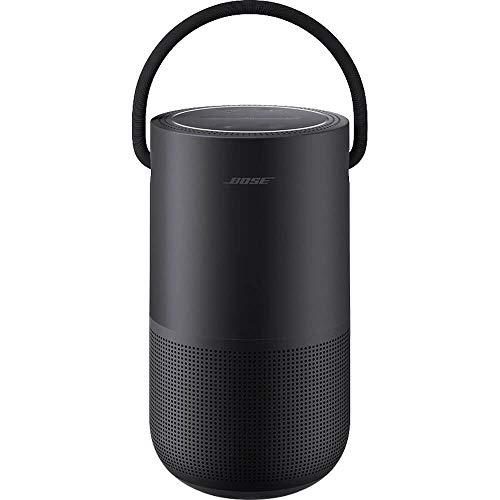
The most obvious difference between these speakers is mobility. The Bose Portable Smart Speaker includes a rechargeable battery that provides up to 12 hours of playback, making it genuinely portable. You can move it from room to room, take it outside for gatherings, or even bring it on trips. This freedom comes with trade-offs in audio quality and features, but for many users, the convenience is worth it.
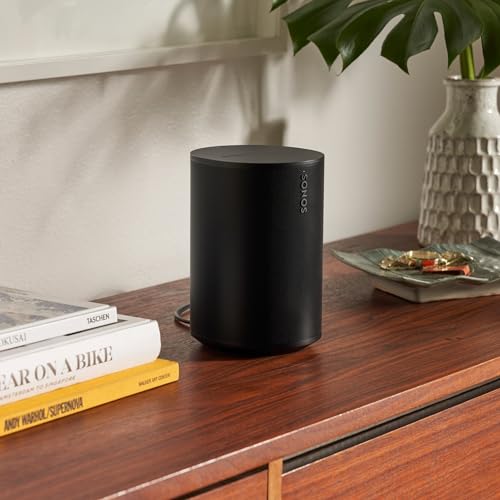
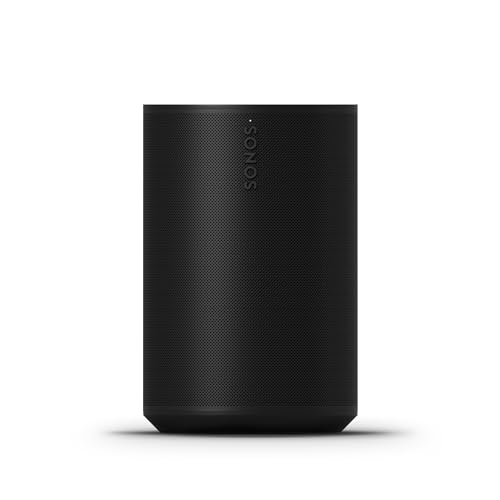
The Sonos Era 100, released in 2023 as a replacement for the popular Sonos One, requires constant power from a wall outlet. This stationary design allows Sonos to focus entirely on audio quality and smart features without battery constraints. The result is a speaker that sounds more refined and integrates better with home audio systems, but you'll need to choose its location carefully since moving it means finding another outlet.
This fundamental difference shapes everything else about these speakers. The Bose prioritizes versatility and convenience, while the Sonos emphasizes audio excellence and system integration.
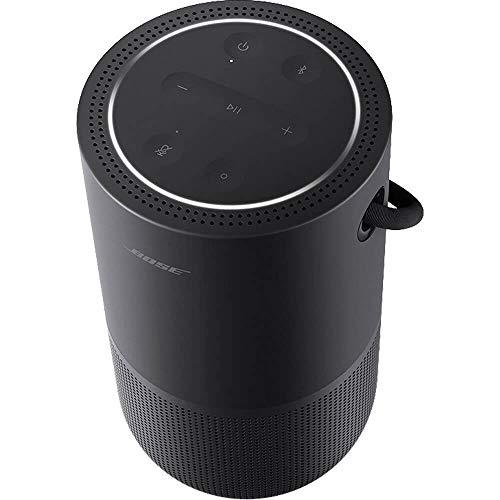
Understanding how these speakers create sound reveals why they appeal to different users. The Bose Portable Smart Speaker uses a 360-degree design with a downward-firing driver and three passive radiators. The driver aims sound downward into an acoustic deflector (a specially shaped component that redirects sound waves), which then spreads the audio evenly in all directions. This omnidirectional approach means the speaker sounds consistent whether you're in front of it, behind it, or to the side.
The three passive radiators (essentially speakers without magnets that vibrate in response to the main driver) significantly boost bass response. This creates impressive low-end impact that you can actually feel, especially when the speaker is placed near a wall or in a corner where bass frequencies naturally amplify. The 360-degree design works particularly well in open spaces or when the speaker is placed centrally in a room.
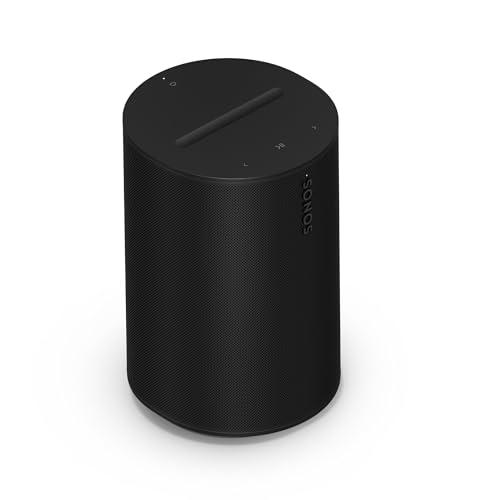
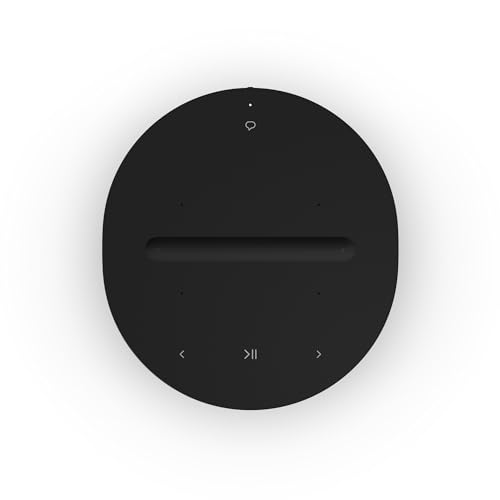
In contrast, the Sonos Era 100 takes a more traditional stereo approach. It features dual angled tweeters (small speakers designed for high frequencies) and a woofer (larger speaker for bass and midrange) that's 25% larger than its predecessor. This frontward-firing design creates genuine stereo separation, where different instruments and vocals can be positioned across a soundstage from left to right.
The dual tweeters are key to the Sonos Era 100's superior clarity and detail. While the Bose essentially creates mono sound (the same audio from all directions), the Sonos delivers true stereo imaging. This means you can hear instruments positioned distinctly in the mix, creating a more immersive and realistic listening experience for music that was recorded and mixed in stereo.
Bass performance differs significantly between these speakers. The Bose delivers more physical bass impact thanks to its three passive radiators. When you play bass-heavy music, you feel the low frequencies as much as you hear them. This visceral quality makes music feel more engaging, especially for genres like hip-hop, electronic music, or rock.
However, the Sonos Era 100 produces more controlled and accurate bass. While it may not have the same physical impact, its bass is tighter and more precise. This means bass lines in jazz or the low notes in orchestral music sound cleaner and more defined. The larger woofer also helps extend the frequency response lower than typical compact speakers.
The midrange is where vocals and most instruments live, and here the Sonos Era 100 has a clear advantage. Its dual tweeters and dedicated amplification for each driver create better instrument separation. You can distinguish individual elements in complex musical passages more easily. Vocals sound more natural and present, while instruments have better definition and space around them.
The Bose handles midrange well but can sound somewhat compressed in comparison. The 360-degree design, while great for coverage, doesn't create the same level of detail and precision. At higher volumes, the Bose can become slightly harsh or bright, whereas the Sonos maintains its composure and tonal balance even when pushed hard.
Both speakers offer voice control, but they take different approaches. The Bose Portable Smart Speaker supports both Amazon Alexa and Google Assistant, giving you flexibility in choosing your preferred ecosystem. This dual support is particularly valuable if you use Google services for some things and Amazon for others, or if different family members prefer different assistants.
The microphone array on the Bose performs exceptionally well, picking up voice commands from across the room even with music playing. The far-field microphone technology uses beamforming (focusing on sound from specific directions while filtering out noise from others) to isolate your voice from background audio.
The Sonos Era 100 supports Amazon Alexa and Sonos Voice Control (Sonos's own voice assistant), but notably lacks Google Assistant support. This limitation could be significant if you're heavily invested in Google's ecosystem. However, Sonos Voice Control offers some unique advantages, including on-device processing for faster response times and better privacy since your commands don't leave the speaker unless necessary.
Both speakers include physical switches to disable microphones when you want privacy, addressing concerns about always-listening devices.
The software experience differs dramatically between these speakers. The Bose uses the Bose Music app, which is functional but relatively basic. You can adjust EQ settings, group speakers, and control playback, but the interface feels limited compared to dedicated music apps.
The Sonos Era 100 benefits from the industry-leading Sonos S2 app, which essentially replaces your need for individual streaming service apps. You can browse Spotify, Apple Music, Amazon Music, and dozens of other services directly from the Sonos interface. The app also handles sophisticated multi-room audio management, letting you group speakers, adjust individual volumes, and even play different music in different rooms simultaneously.
This difference becomes more significant over time. While both speakers work with voice commands and direct streaming from your phone, the Sonos app makes discovering and playing music more seamless.
Modern connectivity features set both speakers apart from older models. The Bose includes Wi-Fi, Bluetooth 4.2, and Apple AirPlay 2 support. The Bluetooth capability is particularly useful for the portable design since you can stream directly from any device without needing Wi-Fi access.
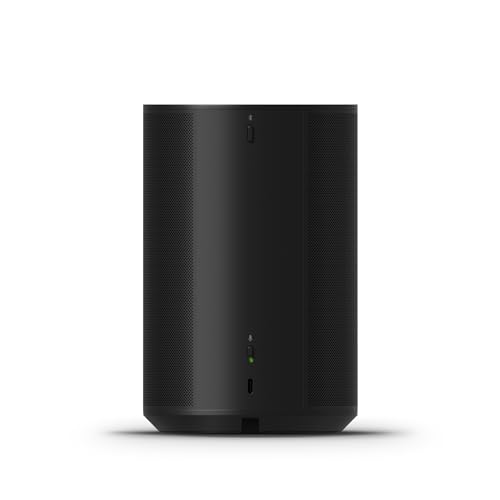
The Sonos Era 100, released in 2023, includes newer technology like Wi-Fi 6 (faster and more reliable wireless connectivity) and Bluetooth 5.0. It also features a USB-C port for wired audio input, though you'll need to purchase a separate adapter. This wired input capability is valuable if you want to connect a turntable, computer, or other audio source directly.
Both speakers support Apple AirPlay 2, which provides high-quality streaming from Apple devices and integration with HomeKit for smart home control.
The Sonos Era 100 includes Trueplay room correction, a sophisticated feature that analyzes your room's acoustics and automatically adjusts the speaker's output accordingly. Different rooms have different acoustic properties—hard surfaces create reflections while soft furnishings absorb sound—and Trueplay compensates for these variations.
The 2023 Era 100 improved this feature significantly. Unlike previous Sonos speakers that required an iOS device for Trueplay tuning, the Era 100 can use its own built-in microphones for quick room analysis. This makes the feature accessible to Android users and eliminates the need for walking around your room with a phone.
The Bose lacks similar room correction capabilities, relying instead on its 360-degree design to work reasonably well in various placements without optimization.
Physical design reflects each speaker's intended use. The Bose Portable Smart Speaker prioritizes durability and portability with an IPX4 water resistance rating, meaning it can handle splashes and light rain. The integrated fabric handle makes carrying convenient, and the materials feel robust enough for regular transport.
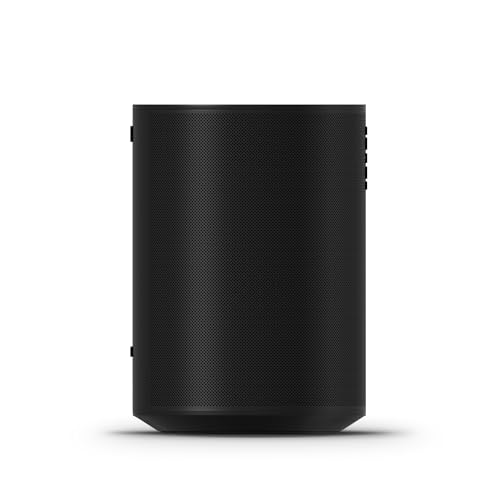
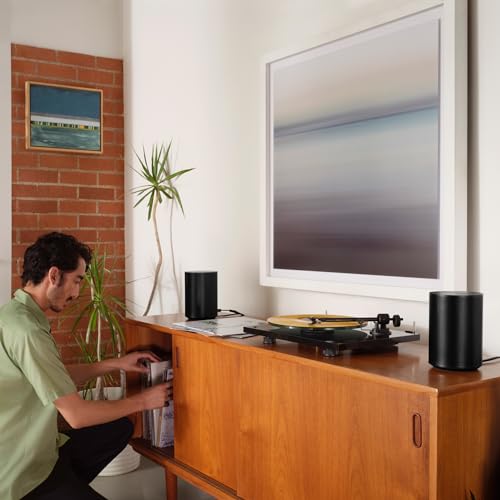
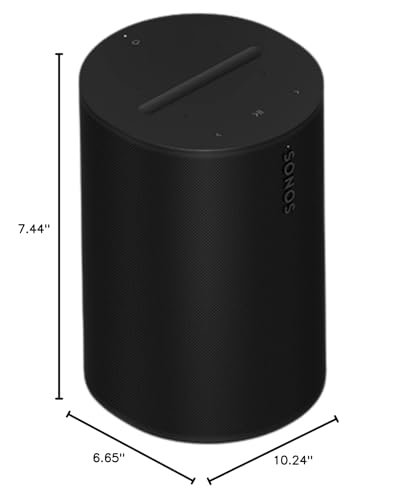
The Sonos Era 100 opts for premium stationary design with a matte finish available in black or white. It's heavier and larger, reflecting the more substantial internal components, but it's designed to blend into home décor rather than be carried around.
This is where the Sonos Era 100 truly excels. Sonos built its reputation on seamless multi-room audio, and the Era 100 integrates perfectly with other Sonos speakers. You can create groups for synchronized playback, use two Era 100s as a stereo pair, or even use them as rear surrounds with a Sonos soundbar for home theater applications.
The home theater integration deserves special mention. If you own or plan to buy a Sonos soundbar like the Arc or Beam, two Era 100s can serve as wireless rear surround speakers. This creates a proper 5.1 surround sound system without running any wires. The Era 100s automatically switch to surround duty when grouped with a soundbar, though you lose access to their Bluetooth and line-in features in this configuration.
The Bose offers basic multi-room capabilities through the Bose Music app, but it's not as sophisticated or reliable as Sonos's implementation. It also cannot integrate into home theater systems, limiting its expandability.
Room size significantly impacts performance for both speakers. The Bose Portable Smart Speaker's 360-degree design works well in smaller to medium-sized rooms where its omnidirectional coverage is an advantage. In very large spaces, the sound can feel diffuse and lacking in impact since it's not directed toward any specific listening position.
The Sonos Era 100 performs better in medium to larger rooms where its directional design can create a more focused and powerful sound. Its superior volume handling means it can fill larger spaces without distortion, though placement becomes more critical since the sound is directional.
At the time of writing, the pricing difference reflects the fundamental design trade-offs. The Bose commands a significant premium for its portability features, battery, and weather resistance. You're paying extra for the convenience and flexibility of a truly portable smart speaker.
The Sonos Era 100 offers better audio performance per dollar for stationary use. If you don't need portability, you get superior sound quality, better smart features, and more expansion possibilities for less money.
For most users, the decision comes down to lifestyle fit. The Bose makes sense if you frequently move between rooms, spend time outdoors, or live in a rental where permanent speaker placement isn't practical. The Sonos is ideal if you want the best possible sound quality in a fixed location and might build a larger audio system over time.
Choose the Bose Portable Smart Speaker if you're someone who values flexibility above all else. This speaker excels for users who work from different rooms, entertain outdoors regularly, or simply prefer the option to move their music around. It's also the better choice for Google Assistant users who need that ecosystem integration. The weather resistance makes it suitable for bathrooms, kitchens, or outdoor spaces where moisture might be a concern.
The Sonos Era 100 is the smarter choice for audio enthusiasts who want the best sound quality in this price range. It's ideal for users building a dedicated listening space, anyone interested in home theater integration, or those who prefer the convenience of the superior Sonos app ecosystem. If you're planning to expand into multi-room audio or already own other Sonos products, the Era 100 is the obvious choice.
In our research and evaluation of user and expert opinions, both speakers excel in their intended roles. The Bose delivers on its promise of portable premium audio with smart features, while the Sonos Era 100 provides exceptional stationary performance with room for system growth.
The key is honestly assessing your actual usage patterns. If you think you want portability but realistically will keep the speaker in one room most of the time, the Sonos offers better value. If you genuinely need or want the flexibility to move your speaker regularly, the Bose is worth the premium.
Both speakers represent quality choices that will serve their users well for years. The decision ultimately comes down to whether you prioritize the unique benefits of true portability or the superior audio and ecosystem advantages of a dedicated stationary design.
| Bose Portable Smart Speaker | Sonos Era 100 |
|---|---|
| Power Source - Determines where you can use the speaker | |
| Built-in rechargeable battery (up to 12 hours) | Requires wall power (no battery) |
| Audio Design - Affects sound coverage and quality | |
| 360-degree omnidirectional with downward-firing driver | Directional stereo with dual tweeters and forward-firing woofer |
| Voice Assistants - Smart home integration capabilities | |
| Amazon Alexa + Google Assistant | Amazon Alexa + Sonos Voice Control (no Google Assistant) |
| Water Resistance - Outdoor and bathroom use capability | |
| IPX4 rated (splash resistant for outdoor/bathroom use) | No water resistance (indoor use only) |
| Bass Response - Low-end impact and musicality | |
| Three passive radiators for powerful, felt bass impact | Single woofer 25% larger than predecessor, controlled bass |
| Stereo Sound - Audio separation and imaging | |
| Mono 360-degree sound (no stereo separation) | True stereo with left/right channel separation |
| Connectivity Options - How you can connect devices | |
| Wi-Fi, Bluetooth 4.2, AirPlay 2 | Wi-Fi 6, Bluetooth 5.0, AirPlay 2, USB-C line-in |
| Multi-Room Audio - Whole home integration | |
| Basic grouping via Bose Music app | Advanced multi-room with Sonos ecosystem |
| Home Theater Use - Surround sound capabilities | |
| Cannot be used as surround speakers | Can pair as wireless rear surrounds with Sonos soundbars |
| Room Correction - Automatic sound optimization | |
| No room correction features | Trueplay tuning adjusts sound for room acoustics |
| App Experience - Music browsing and control | |
| Basic Bose Music app with limited features | Premium Sonos S2 app with extensive streaming integration |
| Portability - Ease of moving between locations | |
| Lightweight with carrying handle, truly portable | Heavier bookshelf design, requires outlet for each location |
| Maximum Volume - Party and large room performance | |
| Good volume but can sound thin at maximum levels | Louder maximum volume while maintaining sound quality |
| Value Proposition - Performance per dollar spent | |
| Premium price for unique portability features | Better audio performance per dollar for stationary use |
The Sonos Era 100 delivers superior overall sound quality with true stereo separation from dual tweeters and a larger woofer. It provides better instrument clarity and maintains balanced sound even at higher volumes. The Bose Portable Smart Speaker offers more impactful bass through three passive radiators but produces mono sound without stereo imaging.
Only the Bose Portable Smart Speaker works on battery power, providing up to 12 hours of wireless playback. This makes it truly portable for outdoor use, moving between rooms, or travel. The Sonos Era 100 requires constant connection to a wall outlet and cannot operate on battery power.
The Bose Portable Smart Speaker is designed for outdoor use with IPX4 water resistance and battery operation. Its 360-degree sound coverage works well in open spaces where people gather around the speaker. The Sonos Era 100 lacks water resistance and requires wall power, making it unsuitable for most outdoor scenarios.
The Bose Portable Smart Speaker supports both Google Assistant and Amazon Alexa, giving you choice in voice assistants. The Sonos Era 100 only supports Amazon Alexa and Sonos Voice Control - it does not work with Google Assistant, which may be limiting for Google ecosystem users.
The Sonos Era 100 can function as wireless rear surround speakers when paired with Sonos soundbars like the Arc or Beam, creating a full 5.1 home theater system. The Bose Portable Smart Speaker cannot be integrated into home theater setups and works only as a standalone music speaker.
The Sonos Era 100 provides better value for stationary use, offering superior audio quality and advanced features at a lower price point. The Bose Portable Smart Speaker commands a premium for its unique portability and battery features, making it more expensive but justified if you need true mobility.
The Sonos Era 100 uses the industry-leading Sonos S2 app, which integrates multiple streaming services and offers sophisticated multi-room control. The Bose Portable Smart Speaker uses the more basic Bose Music app with limited features, though it covers essential functions like EQ adjustment and speaker grouping.
The Sonos Era 100 achieves higher maximum volume while maintaining sound quality and tonal balance. The Bose Portable Smart Speaker can get impressively loud for its size but may sound thin or harsh when pushed to maximum volume levels.
The Sonos Era 100 includes a USB-C port for wired audio input (adapter required separately), allowing connection of turntables, computers, or other sources. The Bose Portable Smart Speaker relies on wireless connections only through Wi-Fi, Bluetooth, and AirPlay 2 - it has no wired input option.
The Sonos Era 100 excels at multi-room audio with seamless synchronization across Sonos speakers throughout your home. You can group rooms, adjust individual volumes, and play different music in different areas. The Bose Portable Smart Speaker offers basic multi-room grouping but lacks the sophistication of the Sonos ecosystem.
The Sonos Era 100 features Trueplay room correction technology that analyzes your room's acoustics and optimizes the sound accordingly, using either your phone or the speaker's built-in microphones. The Bose Portable Smart Speaker has no room correction features and relies on its 360-degree design to work reasonably well in various placements.
The Bose Portable Smart Speaker is ideal for renters or frequent movers due to its battery operation, carrying handle, and 360-degree design that works well in any placement. The Sonos Era 100 requires finding outlets in each new location and works best with permanent placement for optimal directional sound, making it better suited for settled living situations.
We've done our best to create useful and informative comparisons to help you decide what product to buy. Our research uses advanced automated methods to create this comparison and perfection is not possible - please contact us for corrections or questions. These are the sites we've researched in the creation of this article: bestbuy.com - assets.bose.com - bestbuy.com - bestbuy.com - bose.com - techforless.com - soundguys.com - youtube.com - youtube.com - newegg.com - youtube.com - dell.com - nfm.com - staples.com - bose.com - sweetwater.com - focuscamera.com - smarthomesounds.co.uk - whathifi.com - rtings.com - smarthomesounds.co.uk - whathifi.com - rtings.com - audioadvice.com - loudnwireless.com - sonos.com - rtings.com - youtube.com - sonos.com - redsharknews.com - hometechnologyreview.com - bestbuy.com - sonos.com - trysonos.sg - sonos.com - youtube.com - bestbuy.com - audiolab.com - costco.com - surrounds.com.au - bestbuy.com

Privacy Policy
Terms and Conditions - Affiliate Policy
Home Security
© Copyright 2008-2026.
11816 Inwood Rd #1211, Dallas, TX 75244