

Smart speakers have become essential home companions, but not all are created equal. The Amazon Echo Spot 2024 and Sonos Era 100 represent two completely different philosophies in this crowded space. One prioritizes convenience and visual information, while the other focuses on delivering premium audio that rivals dedicated hi-fi speakers.
Released in 2024, both devices reflect major shifts in smart home technology. The Echo Spot marks Amazon's return to the smart display alarm clock category after discontinuing the original in 2019, while the Sonos Era 100 represents Sonos's commitment to expanding beyond their traditional Wi-Fi-only approach by finally adding Bluetooth connectivity—a feature users had requested for years.
Understanding which device fits your needs requires looking beyond surface-level similarities. These products might both respond to voice commands and play music, but they excel in entirely different scenarios.
The fundamental difference between these devices lies in their primary purpose. The Echo Spot is essentially a smart alarm clock that happens to play music, while the Sonos Era 100 is a serious music speaker that happens to have voice control.
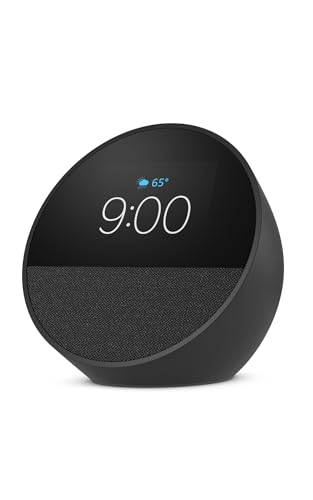
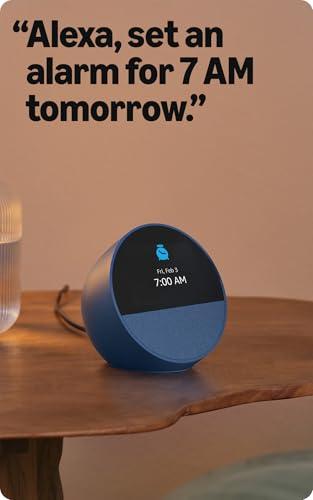
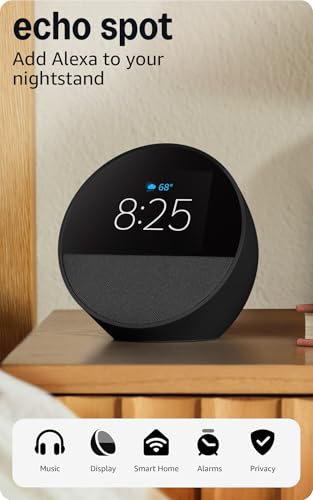
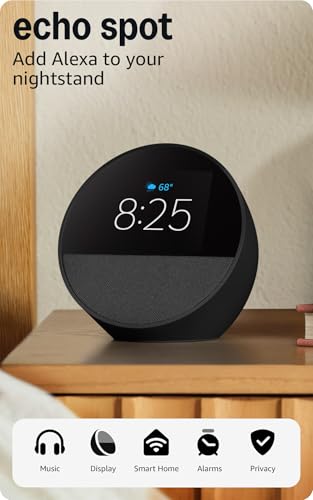
This distinction matters more than you might think. When Amazon designed the Echo Spot, they prioritized the bedside experience—creating something that would look good on a nightstand, display useful information, and handle basic audio needs without overwhelming a bedroom. The 2.83-inch display dominates the front face, showing customizable clock faces, weather information, and basic smart home controls.
Sonos took the opposite approach with the Era 100. They started with audio performance as the non-negotiable foundation, then added smart features around that core. The result is a speaker that can genuinely serve as your primary music source for a room, not just background noise while you're getting ready in the morning.
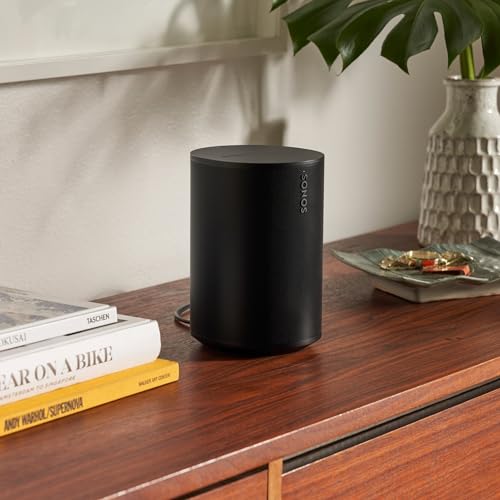
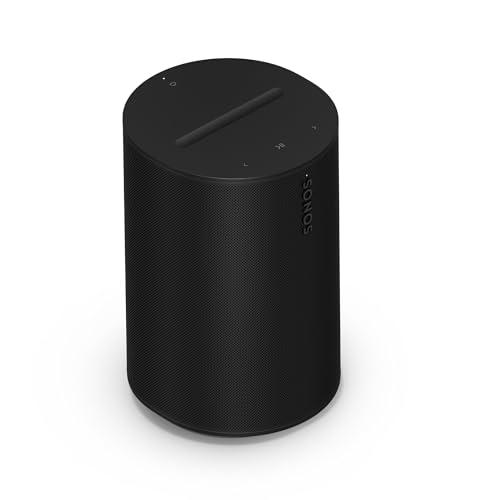
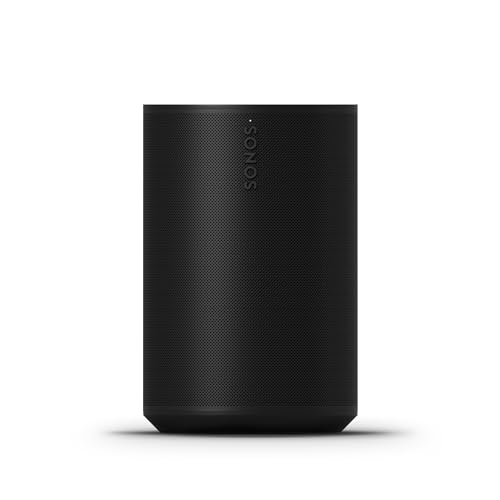
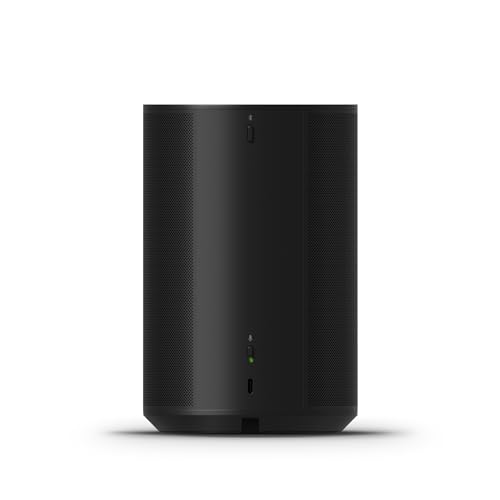
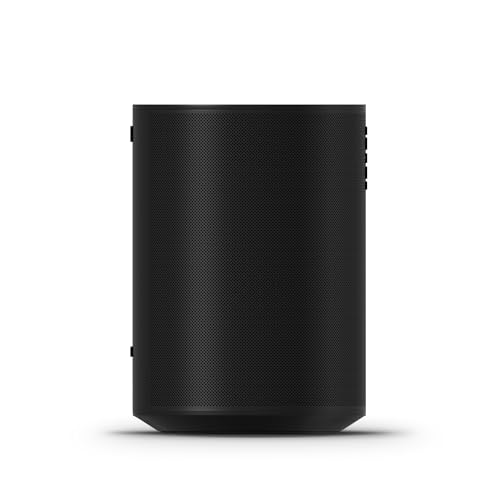
Here's where these devices diverge most dramatically. The Sonos Era 100 employs a three-driver configuration that creates true stereo sound from a single cabinet—a significant technical achievement. It uses two angled tweeters (the drivers responsible for high frequencies like cymbals and vocal details) positioned to create stereo separation, plus one mid-woofer that's 25% larger than what Sonos used in their previous compact speaker.
Each of these drivers gets its own Class-D amplifier, which is essentially a highly efficient power source that can precisely control each driver independently. This setup allows the Era 100 to create a wide soundstage (the perceived width of the audio image) that makes music feel spacious rather than cramped.
The Echo Spot, in contrast, uses a single 1.73-inch driver—basically one small speaker trying to handle everything from deep bass to crisp highs. While this is perfectly adequate for alarms, podcasts, or background music while you're brushing your teeth, it simply cannot match the depth and clarity of a multi-driver system.
This difference becomes immediately apparent when you play anything with complex instrumentation. The Sonos Era 100 can separate instruments so you hear each guitar, drum, and vocal line distinctly. The Echo Spot blends everything together into a serviceable but flat presentation.
Bass response tells a similar story. The Era 100's larger woofer and dedicated amplifier deliver controlled, punchy bass that doesn't overwhelm the rest of the frequency range. The Echo Spot's single driver simply cannot move enough air to produce meaningful bass extension, resulting in thin-sounding music that lacks the weight and impact of the original recording.
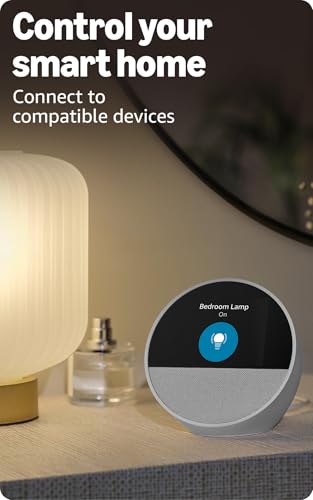
Both devices excel at smart home control, but they approach it from different angles. The Echo Spot includes a built-in Zigbee hub, which is essentially a translator that allows it to communicate directly with compatible smart home devices without requiring additional hardware. This means you can control Zigbee-based smart bulbs, sensors, and switches directly through the Echo Spot without buying separate hubs.
The visual element adds another layer of convenience. Instead of remembering voice commands, you can tap the screen to adjust lights, check security cameras, or control thermostats. The display also shows real-time status information—whether lights are on or off, current temperature readings, or security system status.
The Sonos Era 100 takes a different approach, focusing on broad compatibility rather than direct device control. It's Matter-certified, which means it works with the new universal smart home standard that allows devices from different manufacturers to communicate seamlessly. While it doesn't include its own hub, it integrates well with existing smart home ecosystems through voice commands and the Sonos app.
One unique feature of the Echo Spot is individual voice recognition. The device can distinguish between different household members and provide personalized responses—your spouse might get their calendar and preferred news sources, while you get yours. This personalization extends to smart home routines, so saying "goodnight" might turn off different lights depending on who's speaking.
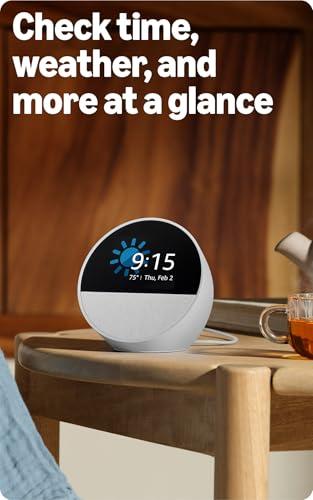
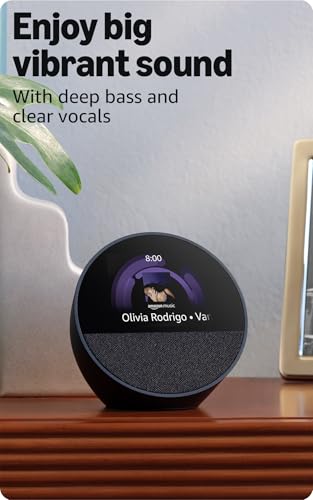
The 2.83-inch display on the Echo Spot serves multiple practical purposes beyond just showing the time. It provides visual feedback for voice commands, displays song information and album artwork, and offers quick access to controls without requiring voice interaction. For bedroom use, this proves particularly valuable—you can quickly check the weather without speaking and potentially waking a partner.
The screen automatically dims at night and can be configured to show different information based on time of day. Morning might bring weather and calendar appointments, while evening shows tomorrow's schedule and smart home status.
However, this display adds complexity and cost. Some users find they rarely use the visual features beyond basic clock functions, questioning whether they're paying extra for something they don't need.
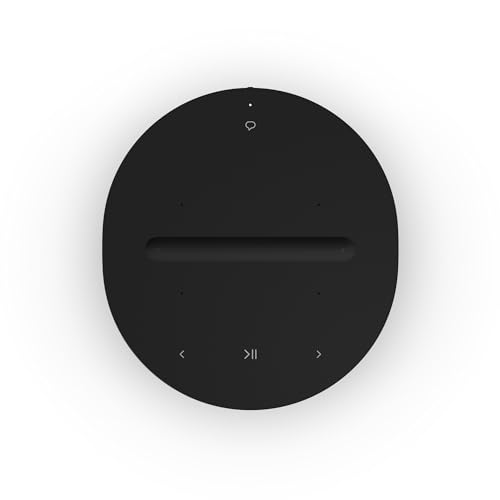
The Sonos Era 100 deliberately omits a display, embracing an audio-focused approach. All interaction happens through voice commands or the comprehensive Sonos S2 app, which offers detailed control over sound settings, streaming services, and multi-room coordination. This simplicity means fewer things to break and a more streamlined user experience for those who prefer audio-only interaction.
Connectivity reveals another philosophical divide. The Echo Spot uses Wi-Fi 5 (802.11ac), which is adequate for its needs but represents older wireless technology. Since it's primarily designed for voice commands and basic streaming, the bandwidth requirements remain modest.
The Sonos Era 100 embraces Wi-Fi 6 (802.11ax), providing faster data transfer rates and better performance in congested wireless environments. This matters when streaming high-resolution audio files or operating in homes with many connected devices competing for bandwidth.
More significantly, the Era 100 adds Bluetooth 5.0 connectivity—a first for Sonos compact speakers. This seemingly simple addition dramatically increases the speaker's versatility, allowing direct connection to phones, tablets, and computers without requiring network setup. Bluetooth also enables higher-quality audio codecs like AAC, which preserves more detail from the original recording compared to standard Bluetooth audio.
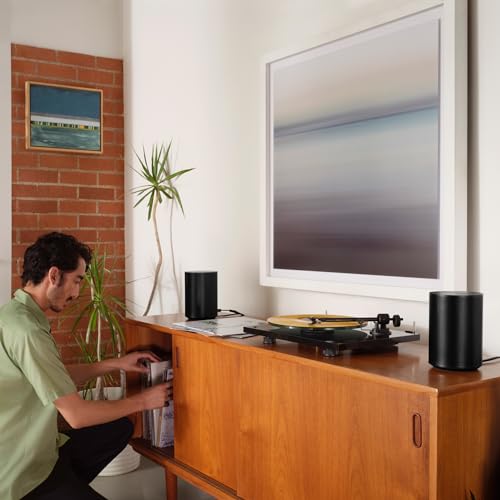
The Era 100 also includes a USB-C port for wired audio input, though this requires purchasing a separate adapter. This option proves valuable for connecting turntables, computers, or other audio sources that don't support wireless streaming.
The Sonos Era 100 incorporates Trueplay tuning technology, which automatically analyzes your room's acoustics and adjusts the speaker's output accordingly. This system uses either your smartphone's microphone or the speaker's built-in microphones to map how sound reflects off walls, furniture, and other surfaces, then modifies the frequency response to compensate for acoustic problems.
This technology addresses a real issue: every room sounds different due to size, furniture placement, and construction materials. A speaker that sounds perfect on a kitchen counter might sound boomy in a corner or thin on a bookshelf. Trueplay adapts to these variations, ensuring consistent performance regardless of placement.
The Echo Spot lacks this sophisticated room correction, relying instead on basic audio processing. While this keeps costs down, it means the speaker cannot adapt to different acoustic environments.
Custom waveguides in the Era 100 represent another technical advantage. These precisely shaped acoustic channels direct sound waves to create a wider listening area and more uniform frequency response. The result is audio that sounds good whether you're sitting directly in front of the speaker or off to one side.
Both devices support multi-room audio, but with different capabilities and philosophies. The Echo Spot works with Amazon's basic grouping system, allowing you to play the same music across multiple Echo devices simultaneously. However, this system doesn't provide the time-synchronized precision needed for seamless whole-home audio.
The Sonos Era 100 integrates into the sophisticated Sonos ecosystem, which provides sample-accurate synchronization across multiple rooms. This precision means you can walk from room to room without hearing audio delays or echo effects. Two Era 100s can be paired for true stereo separation, or they can serve as rear surround speakers in a Sonos home theater setup.
For home theater applications, the Era 100 proves more versatile. While neither device can serve as a primary soundbar, the Era 100 can enhance a Sonos soundbar as wireless rear channels, creating an immersive surround sound experience. The Echo Spot lacks this capability entirely.
Based on extensive user feedback and expert reviews, the performance differences become clear in actual use. For morning routines, the Echo Spot excels—displaying weather and schedule information while playing news or light music. The visual elements genuinely enhance the experience when you're getting ready and need quick information access.
However, when audio quality becomes important, the limitations surface quickly. The Echo Spot's single driver struggles with dynamic music, compressing loud passages and failing to reproduce the full frequency spectrum. This becomes particularly noticeable with bass-heavy genres like hip-hop or electronic music, where the lack of low-frequency extension leaves songs sounding incomplete.
The Sonos Era 100 delivers consistently impressive audio performance across genres. Classical music benefits from the stereo separation and detail retrieval, while rock music gains impact from the controlled bass response. The speaker maintains clarity even at higher volumes, avoiding the distortion that plagues smaller drivers when pushed hard.
Room size considerations also matter significantly. The Echo Spot works well for personal listening spaces—bedrooms, offices, or bathrooms where you're typically within a few feet of the device. Attempting to fill larger spaces quickly reveals its limitations.
The Era 100 handles medium-sized rooms effectively, providing enough output to create an engaging listening experience throughout a typical living room or kitchen. While it won't replace a dedicated hi-fi system for large spaces, it punches well above its size class.
At the time of writing, these devices occupy different price tiers that reflect their distinct purposes. The Echo Spot positions itself as an affordable smart display option, competing with basic alarm clocks and entry-level smart speakers. However, user feedback suggests many feel the device doesn't justify its cost when compared to more capable alternatives in Amazon's Echo lineup.
The Sonos Era 100 commands a significant premium but delivers proportionally better performance. The price reflects genuine audio engineering, premium materials, and sophisticated software integration. For users prioritizing sound quality, the additional cost proves worthwhile.
However, value depends entirely on your priorities. If you need a bedside companion that shows information and plays occasional background music, paying for audiophile-grade drivers and amplifiers makes little sense. Conversely, if music listening is important, settling for basic audio quality means missing much of what modern recordings offer.
The decision ultimately comes down to primary use case and personal priorities. Choose the Amazon Echo Spot if you want a smart alarm clock that can handle light audio duties. It excels for bedside use, offering visual information and basic music playback in an attractive, compact package. The smart home integration proves particularly valuable if you need Zigbee hub functionality or prefer visual controls over voice commands.
However, avoid the Echo Spot if audio quality matters or if you need room-filling sound. Its limitations become apparent quickly when used as a primary music source.
The Sonos Era 100 makes sense when audio performance takes priority. It delivers genuinely impressive sound quality that can serve as your main music source for medium-sized rooms. The broader connectivity options and ecosystem integration provide long-term value, especially if you plan to expand into multi-room audio.
Skip the Era 100 if you primarily need an alarm clock with smart features or if the visual display element is important to your daily routine.
For home theater applications, the Era 100 offers future expandability as rear surround speakers, while the Echo Spot provides no theater enhancement capabilities.
The fundamental question is whether you're buying a smart alarm clock with basic audio or a serious music speaker with smart features. Both devices excel in their intended roles, but they serve fundamentally different needs in modern homes.
| Amazon Echo Spot 2024 | Sonos Era 100 |
|---|---|
| Primary Purpose - What each device is actually designed for | |
| Smart alarm clock with basic audio capabilities | Premium music speaker with smart features |
| Audio Configuration - The foundation of sound quality | |
| Single 1.73" driver (mono sound, adequate for alarms/podcasts) | 2 angled tweeters + 1 mid-woofer (true stereo, room-filling sound) |
| Amplification - Power and audio control precision | |
| Basic integrated amplifier | 3 dedicated Class-D amplifiers (one per driver) |
| Display - Visual information and controls | |
| 2.83" touchscreen with customizable clock faces and smart home controls | No display (audio-focused, app-controlled) |
| Smart Home Integration - Device control capabilities | |
| Built-in Zigbee hub, individual voice recognition, visual controls | Matter-certified, voice control only, broader ecosystem compatibility |
| Connectivity Options - How you can stream audio | |
| Wi-Fi 5 only (basic streaming, no Bluetooth or wired input) | Wi-Fi 6, Bluetooth 5.0, USB-C line-in, AirPlay 2 (maximum flexibility) |
| Room Tuning Technology - Automatic sound optimization | |
| None (basic audio processing only) | Trueplay tuning adapts sound to your room's acoustics |
| Multi-Room Audio - Building whole-home systems | |
| Basic Echo grouping (not precision-synchronized) | Sample-accurate Sonos ecosystem synchronization |
| Ideal Placement - Where each device works best | |
| Nightstand, desk, bathroom (near-field personal use) | Living room, kitchen, office (room-filling audio) |
| Voice Assistant Support - Available voice controls | |
| Amazon Alexa with personalized responses | Amazon Alexa, Sonos Voice Control (no Google Assistant) |
| Stereo Pairing - Expanding audio performance | |
| Cannot pair for stereo (mono output only) | Two units create wide stereo separation |
| Home Theater Integration - Surround sound capabilities | |
| None (cannot enhance TV audio systems) | Can serve as wireless rear surround speakers with Sonos soundbars |
| Physical Design - Size and room presence | |
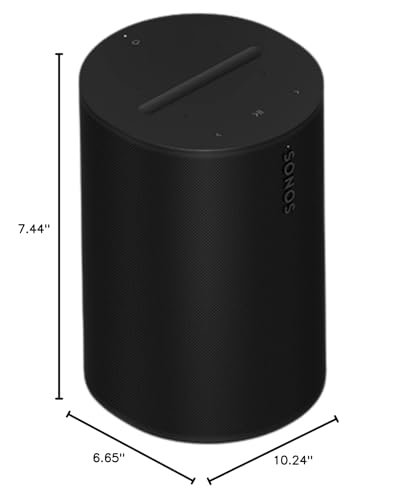
| Compact 405g, semispherical design perfect for bedside | Larger 2.02kg, premium materials, substantial presence |
| Best Use Cases - Who should choose each device | |
| Bedroom alarm clock, light smart home control, background audio | Primary music listening, audiophile sound quality, multi-room systems |
The Amazon Echo Spot 2024 is primarily a smart alarm clock with a 2.83-inch display and basic audio capabilities, while the Sonos Era 100 is a premium music speaker focused on high-quality audio performance. The Echo Spot excels for bedside use with visual controls, whereas the Era 100 delivers room-filling stereo sound for serious music listening.
The Sonos Era 100 has significantly better sound quality with its three-driver system (two tweeters plus one mid-woofer) and dedicated amplifiers for each driver. It produces true stereo sound with clear instrument separation and deeper bass. The Amazon Echo Spot uses a single small driver that's adequate for alarms and podcasts but cannot match the audio depth and clarity of the Era 100.
The Amazon Echo Spot 2024 includes a built-in Zigbee hub for direct smart home device control, plus individual voice recognition for personalized responses. The Sonos Era 100 is Matter-certified and works with existing smart home systems but doesn't include its own hub. For comprehensive smart home control with visual feedback, the Echo Spot offers more direct functionality.
The Amazon Echo Spot 2024 is specifically designed for bedroom use with its compact size, customizable clock display, and gentle audio output that won't disturb sleep partners. The visual display shows time, weather, and alarms without requiring voice commands. The Sonos Era 100 is larger and designed for room-filling audio, making it less suitable for bedside placement.
The Sonos Era 100 can integrate with Sonos home theater setups, serving as wireless rear surround speakers when paired with compatible Sonos soundbars. Two Era 100 units can create an immersive surround sound experience. The Amazon Echo Spot has no home theater integration capabilities and cannot enhance TV audio systems.
The Sonos Era 100 provides superior connectivity with Wi-Fi 6, Bluetooth 5.0, USB-C line-in (adapter required), and AirPlay 2 support. This allows streaming from virtually any device wirelessly or wired. The Amazon Echo Spot 2024 only supports Wi-Fi 5 connectivity with no Bluetooth or wired input options, limiting it to Amazon's ecosystem and basic streaming services.
Two Sonos Era 100 speakers can be paired to create true stereo separation with left and right channels for an enhanced listening experience. The Amazon Echo Spot cannot be paired for stereo sound since it only produces mono audio. For serious music listening with stereo imaging, the Era 100 is the only viable option between these devices.
Value depends on your primary needs. The Amazon Echo Spot 2024 costs less but serves a specific purpose as a smart alarm clock with basic audio. The Sonos Era 100 costs significantly more but delivers premium audio performance that can serve as your main music source. If you prioritize sound quality and versatility, the Era 100 provides better long-term value despite the higher upfront cost.
The Amazon Echo Spot 2024 supports Amazon Alexa with advanced features like individual voice recognition and personalized responses. The Sonos Era 100 supports Amazon Alexa and Sonos Voice Control but does not support Google Assistant. Both devices respond to voice commands, but the Echo Spot offers more personalized smart home integration through Alexa.
The Sonos Era 100 is far superior for music listening with its multi-driver design, stereo sound, and Trueplay room tuning technology that optimizes audio for your space. It can handle all music genres with clear detail and controlled bass. The Amazon Echo Spot is adequate for background music and podcasts but lacks the audio depth and power needed for primary music listening.
The Sonos Era 100 excels in multi-room setups with sample-accurate synchronization across multiple rooms, allowing seamless whole-home audio. The Amazon Echo Spot 2024 supports basic Echo grouping but lacks the precision synchronization needed for professional multi-room audio. For building a comprehensive multi-room system, the Era 100 provides superior integration and performance.
For living room use, the Sonos Era 100 is the better choice with its room-filling audio, premium build quality, and ability to serve as your primary music source. Its stereo sound and bass response make it suitable for entertaining and serious listening. The Amazon Echo Spot 2024 is designed for personal use and cannot provide the audio output needed to fill larger spaces like living rooms effectively.
We've done our best to create useful and informative comparisons to help you decide what product to buy. Our research uses advanced automated methods to create this comparison and perfection is not possible - please contact us for corrections or questions. These are the sites we've researched in the creation of this article: bestbuy.com - tomsguide.com - nextpit.com - versus.com - techradar.com - versus.com - youtube.com - youtube.com - manuals.plus - techgadgetscanada.com - bestbuy.com - youtube.com - homedepot.com - homedepot.com - youtube.com - soundguys.com - youtube.com - smarthomesounds.co.uk - whathifi.com - rtings.com - smarthomesounds.co.uk - whathifi.com - rtings.com - audioadvice.com - loudnwireless.com - sonos.com - rtings.com - youtube.com - sonos.com - redsharknews.com - hometechnologyreview.com - bestbuy.com - sonos.com - trysonos.sg - sonos.com - youtube.com - bestbuy.com - audiolab.com - costco.com - surrounds.com.au - bestbuy.com

Privacy Policy
Terms and Conditions - Affiliate Policy
Home Security
© Copyright 2008-2026.
11816 Inwood Rd #1211, Dallas, TX 75244