

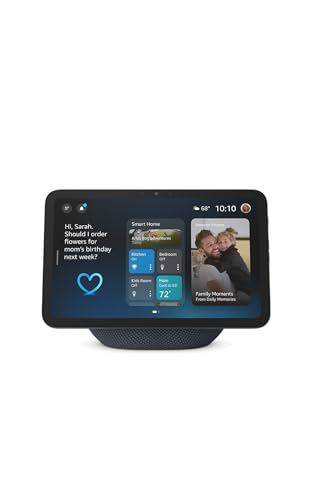


Smart displays have become the Swiss Army knives of modern homes. These devices combine the convenience of voice assistants with the visual benefits of touchscreens, creating versatile hubs for everything from checking the weather to controlling your entire smart home setup. Think of them as tablets that are always plugged in, always listening, and always ready to help with whatever you need.
When Amazon released both the Echo Show 8 and Echo Show 5 in their third-generation forms in 2023, they created two very different approaches to the same basic concept. The key considerations when choosing between smart displays come down to display quality for comfortable viewing, audio performance for music and media, camera capabilities for video calls, smart home integration features, processing power for smooth operation, physical size for your available space, and overall value for your specific needs.
The fundamental question isn't just which device is better—it's which device better matches how you'll actually use it in your daily life.
The most obvious difference between the Echo Show 8 and Echo Show 5 is right there in their names—screen size. But the impact of this difference goes far beyond just having more screen real estate.
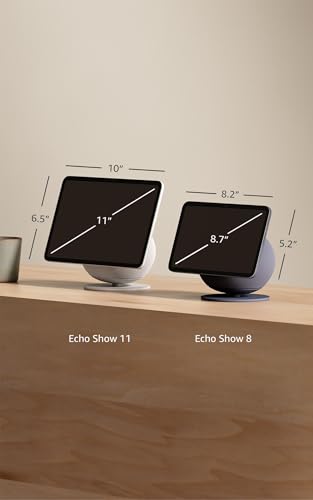
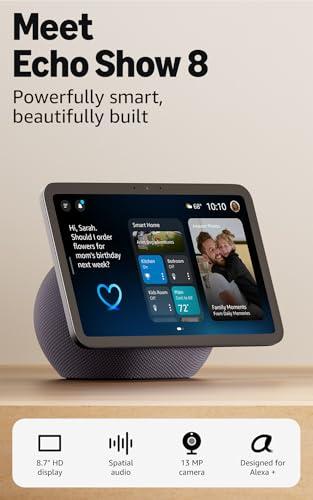
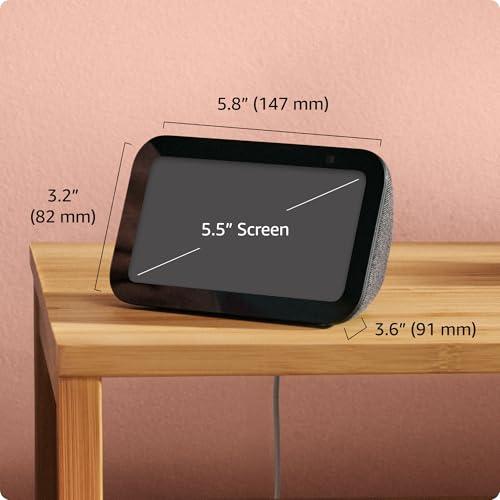
The Echo Show 8 features an 8-inch display running at 1280x800 resolution, while the Echo Show 5 sports a 5.5-inch screen at 960x480 resolution. To put this in perspective, the Show 8 has roughly 2.5 times the screen area and delivers significantly sharper images. This isn't just about numbers on a spec sheet—it translates to a fundamentally different user experience.
When you're following a recipe in your kitchen, the Echo Show 8 lets you read ingredients and instructions comfortably from a normal distance. With the Echo Show 5, you'll find yourself leaning in close to read text, which becomes tiresome during longer tasks. The same goes for watching videos—while both devices support streaming services like Prime Video and YouTube (through the browser), the Show 8 provides an experience that doesn't strain your eyes.
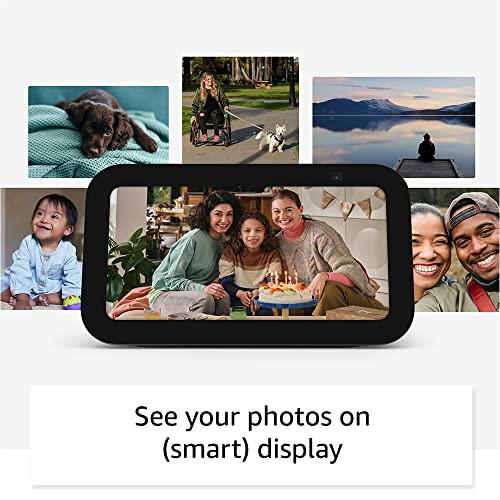
The resolution difference is equally important. Higher resolution means text appears crisper and images look more detailed. This becomes particularly noticeable when viewing photos from Amazon Photos or checking detailed information like weather maps. The Echo Show 8 delivers what you'd expect from a modern digital display, while the Echo Show 5 can sometimes look pixelated up close.
Both displays feature responsive touchscreens, but the Echo Show 8 benefits from faster processing power that makes scrolling and tapping feel more immediate. This might seem like a minor detail, but when you're quickly trying to adjust smart home settings or browse through menu options, that responsiveness makes a meaningful difference in daily use.
Here's where the differences between these devices become most dramatic. Audio quality often gets overlooked when people focus on smart displays, but it's actually one of the most important factors for long-term satisfaction.
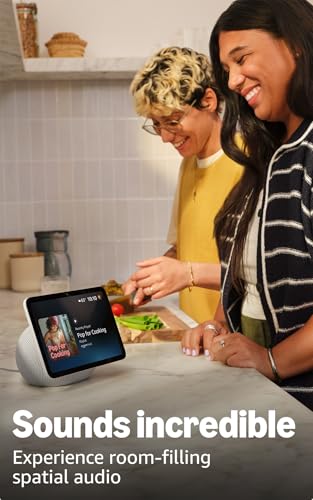
The Echo Show 8 incorporates dual 2-inch neodymium speakers with a passive bass radiator—essentially a specialized component that helps produce deeper, richer low-frequency sounds without requiring a powered subwoofer. This setup creates stereo sound that can genuinely fill a room. Users consistently report being surprised by how much bass and overall volume this compact device produces. It's not going to replace a dedicated sound system, but it's more than capable of providing quality background music while you work or cook.
The passive bass radiator deserves special mention because it's a clever engineering solution. Traditional speakers struggle to produce deep bass tones in small enclosures, but the radiator works like a drum skin that vibrates sympathetically with the main speakers, extending the low-frequency response significantly. This is why the Echo Show 8 can deliver satisfying bass despite its relatively compact size.
In contrast, the Echo Show 5 relies on a single 1.75-inch speaker firing downward. While Amazon improved the audio compared to previous generations, physics still applies—one small speaker simply cannot match the output of a properly designed stereo system. The sound is adequate for voice responses and casual listening, but it lacks the volume and frequency range needed for enjoyable music playback.
This audio difference becomes particularly important if you plan to use your smart display as a music source. The Echo Show 8 can serve as your primary speaker for a bedroom or office, while the Echo Show 5 works better as a supplementary device when you need basic audio feedback.
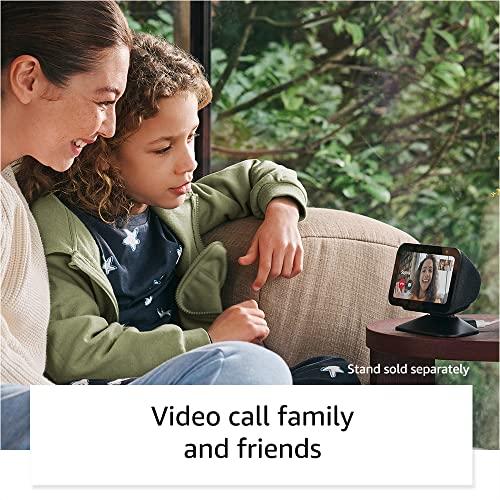
Video calling became much more important during recent years, and the camera quality difference between these devices reflects their different target markets.
The Echo Show 8 features a 13-megapixel camera positioned centrally above the screen. This camera supports auto-framing, which uses computer vision processing to detect your position and automatically pan and zoom to keep you centered in the frame during video calls. It's similar to Apple's Center Stage feature on iPads—the camera intelligently follows you as you move around, making video calls feel more natural and engaging.
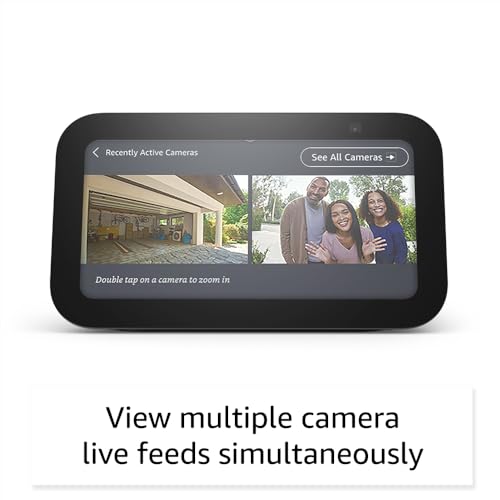
The 13-megapixel resolution provides sharp, clear video that looks professional enough for work calls or family conversations. The camera also supports person detection for smart home automation, meaning it can trigger routines when it recognizes movement in the room.
The Echo Show 5 makes do with a 2-megapixel camera that's adequate for basic video communication but noticeably lower quality. There's no auto-framing feature, and the overall video quality feels more like an afterthought than a core feature. It'll work fine for quick check-ins with family members, but it's not something you'd want to rely on for important video calls.
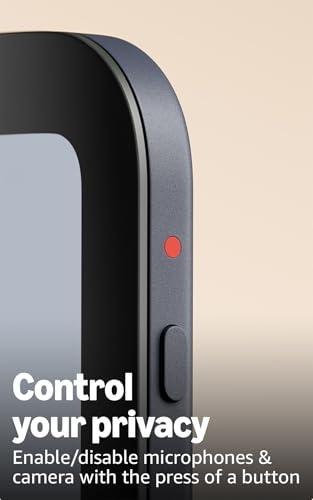
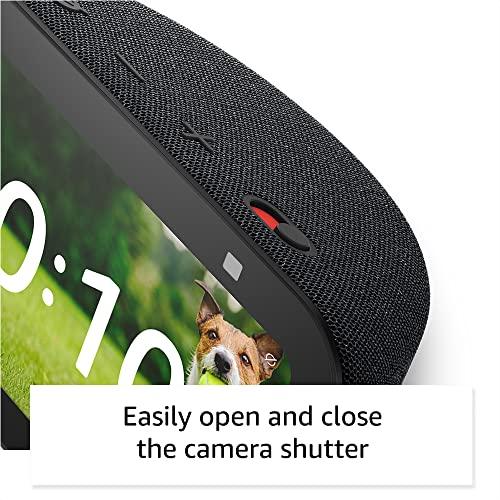
Both devices include physical camera shutters—sliding covers that completely block the camera lens when privacy is needed. This hardware-based privacy feature is reassuring for users concerned about potential security issues with always-on devices.
The performance difference between these devices reflects Amazon's positioning strategy. The Echo Show 8 runs on an octa-core system-on-chip (SoC) with Amazon's AZ2 Neural Network Engine—specialized hardware designed to process artificial intelligence tasks locally on the device rather than sending everything to the cloud.
This processing power translates to noticeably faster response times. When you ask Alexa to start playing a movie, control smart home devices, or perform complex tasks like language translation, the Echo Show 8 typically responds within seconds. The local processing capability also means many smart home commands execute immediately without waiting for internet connectivity.
The Echo Show 5 uses a MediaTek MT 8169 B hexa-core processor, which represents an improvement over previous generations but still lags behind its larger sibling in real-world performance. Users report longer loading times for video content and occasionally sluggish responses to touch inputs.
The neural processing capability in the Echo Show 8 enables features like Visual ID, which uses computer vision to recognize registered users and personalize the displayed content accordingly. It can show your calendar, your music preferences, and your smart home controls automatically when it recognizes you approaching the device.
One of the most significant technical differences between these devices lies in their smart home integration capabilities, though this isn't immediately obvious from their appearance.
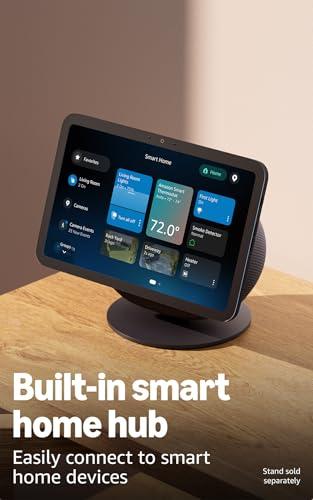
The Echo Show 8 functions as a comprehensive smart home hub with built-in support for Zigbee, Matter, and Thread Border Router protocols. Let me break down what this means in practical terms:
Zigbee is a wireless communication protocol specifically designed for smart home devices. Having built-in Zigbee support means the Echo Show 8 can directly control compatible lights, switches, sensors, and other devices without requiring separate hub hardware from companies like Philips Hue or SmartThings.
Matter is the new smart home standard that promises universal compatibility between devices from different manufacturers. Thread Border Router functionality allows the device to serve as a bridge between Thread-enabled devices and your home network, enabling more reliable and responsive smart home control.
These technical capabilities translate to real-world convenience. With the Echo Show 8, you can often control smart home devices faster because commands are processed locally rather than being sent to the cloud and back. The device can also continue operating some smart home functions even if your internet connection is temporarily interrupted.
The Echo Show 5 provides standard Alexa smart home functionality but lacks these advanced hub capabilities. You'll still be able to control compatible devices, but you may need separate hubs for some smart home ecosystems, and response times might be slower for certain commands.
Size matters when it comes to where these devices will live in your home. The Echo Show 8 measures approximately 7.9 by 5.5 by 4.2 inches and weighs about 2.3 pounds. It's substantial enough to feel stable on a countertop but large enough that you'll need to plan where to put it.
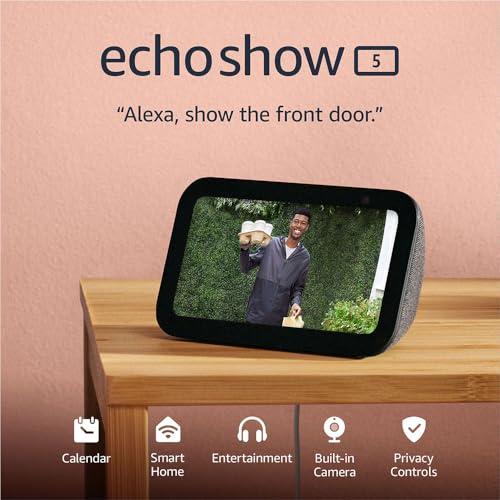
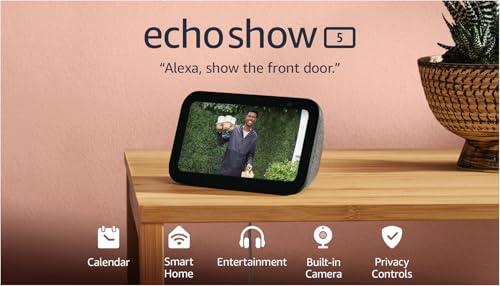
The Echo Show 5 is significantly more compact at roughly 5.8 by 3.6 by 3.2 inches and weighing just over one pound. This size makes it ideal for bedside tables, small desks, or anywhere space is at a premium.
Both devices feature Amazon's updated design language introduced in 2023, with curved backs covered in mesh fabric and more refined bezels around the screen. The physical buttons for privacy controls (camera shutter and microphone mute) are easily accessible on both devices.
The size difference affects more than just aesthetics. The Echo Show 8 has room for better internal components, larger speakers, and more advanced cooling systems that allow for sustained performance. The Echo Show 5 is optimized for efficiency and portability rather than maximum performance.
At the time of writing, these devices occupy very different price points that reflect their capabilities. The Echo Show 8 typically costs about three times more than the Echo Show 5, but this price difference represents genuine performance gaps rather than just premium positioning.
The Echo Show 8 justifies its higher cost through superior display quality, dramatically better audio performance, advanced camera features, faster processing, and comprehensive smart home hub capabilities. If you plan to use your smart display regularly for media consumption, video calls, or smart home control, the additional cost often proves worthwhile over time.
The Echo Show 5 offers excellent value for users with specific needs—those wanting a smart alarm clock, a secondary display for a bedroom, or a basic assistant for limited tasks. Its lower price point makes it accessible for users who want to try smart display technology without a significant investment.
Consider the total cost of ownership as well. If the Echo Show 8 eliminates the need for separate smart home hubs or provides enough audio quality to replace a bluetooth speaker, its effective cost becomes more competitive.
Neither device is designed as a primary home theater component, but they can play supporting roles in entertainment setups. The Echo Show 8 can serve as a secondary display for casual video viewing and provides adequate audio for personal viewing in bedrooms or offices.
The larger screen and better speakers make the Echo Show 8 suitable for watching YouTube videos, following along with cooking shows, or keeping up with news while doing other tasks. The audio quality is sufficient for dialogue-heavy content, though action movies or music videos will still benefit from dedicated audio equipment.
The Echo Show 5 is too limited for meaningful home theater use. The small screen and basic audio make it unsuitable for anything beyond quick video clips or voice-only content like podcasts and audiobooks.
Both devices can control smart home equipment that's part of a home theater setup—dimming lights, adjusting thermostats, or activating scene settings—but they're not designed to replace dedicated entertainment components.
The decision between these devices comes down to understanding your primary use cases and being honest about your expectations.
Choose the Echo Show 8 if you want a device that can serve as your primary smart display. Its superior screen, audio, and processing power make it suitable for regular video viewing, music listening, video calling, and comprehensive smart home control. It works well in kitchens where you might follow recipes, living areas where it can provide information at a glance, or offices where you need a capable assistant throughout the day.
The Echo Show 8 is also the better choice if you're building out a smart home ecosystem. The built-in hub capabilities can simplify your setup and reduce the number of devices you need to manage.
Choose the Echo Show 5 if you need a compact device for specific locations or purposes. It excels as a bedside alarm clock that can also show weather, calendar information, and news updates. The small footprint makes it perfect for crowded nightstands, small desks, or anywhere space is limited.
The Echo Show 5 also makes sense as a secondary device—perhaps in a bedroom when you already have a more capable smart display in your kitchen or living room. Its lower cost makes it feasible to have multiple units throughout your home for basic assistant functions.
Consider your space constraints carefully. If you have limited surface area, the Echo Show 5 might be your only practical option regardless of performance preferences.
Budget is obviously a factor, but try to think beyond the initial purchase price. A device you find frustrating to use because of performance limitations might not represent good value even at a lower price point.
The Echo Show 8 and Echo Show 5 represent Amazon's recognition that different users have different needs from smart display technology. The Show 8 prioritizes performance and capability, while the Show 5 focuses on affordability and compact convenience.
For most users who want their first or only smart display, the Echo Show 8 provides a more satisfying experience that justifies its higher cost through genuinely superior performance across all major categories. The Echo Show 5 serves specific niches well—budget-conscious buyers, space-constrained locations, or secondary device needs—but requires realistic expectations about its limitations.
The smart display market continues evolving rapidly, but Amazon's 2023 releases represent mature, well-engineered approaches to two different segments of user needs. Choose based on how you'll actually use the device, and you'll likely be satisfied with either option within its intended scope.
| Amazon Echo Show 8 Display | Amazon Echo Show 5 3rd Gen Smart Display |
|---|---|
| Display Size & Resolution - Critical for comfortable viewing and media consumption | |
| 8-inch display at 1280x800 resolution (sharp, comfortable for extended use) | 5.5-inch display at 960x480 resolution (requires leaning in close, pixelated at distance) |
| Audio System - Determines music quality and room-filling capability | |
| Dual 2-inch stereo speakers with passive bass radiator (room-filling sound, suitable for music) | Single 1.75-inch downward-firing speaker (basic audio, not suitable for music listening) |
| Camera Quality - Important for video calling and home monitoring | |
| 13MP camera with auto-framing (follows you during calls, professional video quality) | 2MP camera (adequate for quick calls only, no auto-framing) |
| Processor & Performance - Affects response speed and smooth operation | |
| Octa-core with Amazon AZ2 Neural Engine (40% faster, near-instant responses) | MediaTek hexa-core (noticeable delays, slower app loading) |
| Smart Home Hub Features - Reduces need for additional hub hardware | |
| Built-in Zigbee, Matter, and Thread Border Router (comprehensive hub, no additional hardware needed) | Standard Alexa functionality only (requires separate hubs for advanced smart home setups) |
| Physical Dimensions - Determines where device will fit in your home | |
| 7.9 × 5.5 × 4.2 inches, 2.3 lbs (requires adequate counter space, stable placement) | 5.8 × 3.6 × 3.2 inches, 1 lb (perfect for nightstands and small spaces) |
| Best Use Cases - Who should choose this device | |
| Primary smart display for kitchens, living rooms, comprehensive smart home control | Secondary device, bedside alarm clock, space-constrained locations |
| Video Streaming Experience - Quality for watching content | |
| Comfortable viewing for recipes, videos, extended use | Limited to quick clips, requires close positioning |
| Music Playback Capability - Can it replace a dedicated speaker | |
| Yes, suitable as primary music source for rooms | No, basic audio for voice responses only |
| Value Proposition - Cost vs. capability relationship | |
| Higher cost justified by significantly superior performance across all categories | Excellent budget option with realistic limitations for the price point |
The Amazon Echo Show 8 Display has a significantly better display with its 8-inch screen and 1280x800 resolution compared to the Amazon Echo Show 5 3rd Gen Smart Display's 5.5-inch screen at 960x480 resolution. The larger, sharper display on the Echo Show 8 makes watching videos much more comfortable and enjoyable.
The Amazon Echo Show 8 Display delivers dramatically better audio with dual 2-inch stereo speakers and a passive bass radiator that can fill a room with sound. The Amazon Echo Show 5 3rd Gen Smart Display has only a single 1.75-inch speaker with limited volume and virtually no bass, making it unsuitable for music listening.
The Amazon Echo Show 8 Display is superior for video calls with its 13MP camera that includes auto-framing technology to follow you during conversations. The Echo Show 5 has only a 2MP camera without auto-framing, providing basic video quality that's adequate for quick calls but not professional use.
The Amazon Echo Show 8 Display functions as a comprehensive smart home hub with built-in Zigbee, Matter, and Thread Border Router support, eliminating the need for separate hub hardware. The Amazon Echo Show 5 3rd Gen Smart Display provides standard Alexa smart home control but lacks advanced hub capabilities.
The Amazon Echo Show 5 3rd Gen Smart Display is ideal for small spaces at just 5.8 × 3.6 × 3.2 inches and weighing only 1 pound. The Echo Show 8 is larger at 7.9 × 5.5 × 4.2 inches and requires more counter space, making it better suited for kitchens and living areas.
The Amazon Echo Show 8 Display features an octa-core processor with Amazon's AZ2 Neural Engine, providing 40% faster performance and near-instant responses. The Amazon Echo Show 5 3rd Gen Smart Display uses a slower MediaTek processor that can have noticeable delays, especially when loading videos or apps.
For most people buying their first smart display, the Amazon Echo Show 8 Display is the better choice despite its higher cost. It provides superior performance across all categories and won't leave you feeling limited by screen size, audio quality, or processing speed like the Echo Show 5 might.
The Amazon Echo Show 8 Display is excellent for kitchen use with its larger 8-inch display that's easy to read from a normal distance while cooking. The Amazon Echo Show 5 3rd Gen Smart Display's small screen requires you to lean in close to read ingredients and instructions, which isn't practical while cooking.
The Amazon Echo Show 5 3rd Gen Smart Display offers excellent value for users needing a basic smart display or secondary device for specific locations. However, the Amazon Echo Show 8 Display provides better long-term value for most users due to its significantly superior capabilities across all performance categories.
The Amazon Echo Show 8 Display can effectively replace a Bluetooth speaker for most rooms with its powerful stereo speakers and bass response. The Echo Show 5 cannot serve as a music speaker replacement due to its single small speaker with poor audio quality and limited volume.
The Amazon Echo Show 5 3rd Gen Smart Display excels as a bedside alarm clock with its compact size, customizable clock faces, and night mode features. While the Amazon Echo Show 8 Display can also work bedside, its larger size may be overwhelming on smaller nightstands.
The Amazon Echo Show 8 Display is superior for smart home automation with its built-in hub capabilities, faster processing for local commands, and person detection features. The Echo Show 5 provides basic smart home control through Alexa but lacks the advanced protocols and local processing that make the Echo Show 8 more responsive and capable.
We've done our best to create useful and informative comparisons to help you decide what product to buy. Our research uses advanced automated methods to create this comparison and perfection is not possible - please contact us for corrections or questions. These are the sites we've researched in the creation of this article: thedisconnekt.com - thehousetech.com - bestbuy.com - tomsguide.com - youtube.com - bestbuy.com - dimensions.com - engadget.com - youtube.com - techradar.com - ifixit.com - dreamgreenhouse.com - aboutamazon.com - engadget.com - en.wikipedia.org - bestbuy.com - homedepot.com - bestbuy.com - reviewed.com - goodhousekeeping.com - techradar.com - geekzone.co.nz - versus.com - youtube.com - versus.com - youtube.com - hindustantimes.com - nfm.com - dimensions.com - gadgetguy.com.au - youtube.com - versus.com - dell.com - bestbuy.com - homedepot.com - homedepot.com - businessinsider.com - youtube.com

Privacy Policy
Terms and Conditions - Affiliate Policy
Home Security
© Copyright 2008-2026.
11816 Inwood Rd #1211, Dallas, TX 75244