



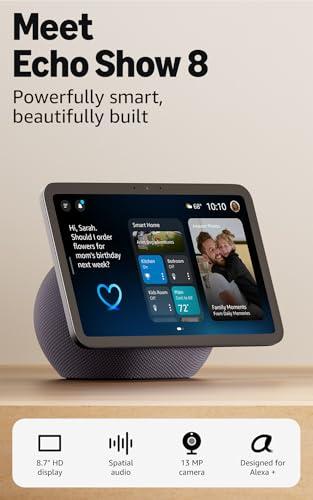
Smart displays have evolved far beyond simple digital picture frames. These devices now serve as command centers for your entire home, combining the convenience of voice assistants with visual interfaces that make controlling your smart home, staying organized, and consuming entertainment more intuitive than ever. But with Amazon's Echo Show lineup offering multiple sizes and capabilities, choosing the right one can feel overwhelming.
The two most compelling options in 2024 are the large-format Amazon Echo Show 15 and the more compact Amazon Echo Show 8. While both run Amazon's Alexa and share core smart display functionality, they take fundamentally different approaches to solving the same problems. Understanding these differences—and which approach works better for your specific needs—can save you from buyer's remorse and ensure you get the most value from your investment.
Before diving into specifics, it's worth understanding what makes smart displays different from tablets or regular screens. These devices are designed to be always-on information hubs that respond to voice commands, display ambient information, and integrate seamlessly with your smart home ecosystem. Unlike tablets that require active engagement, smart displays work passively in the background while remaining ready for interaction.
The key technologies that define modern smart displays include voice recognition arrays (multiple microphones that can hear you from across the room), ambient light sensors that adjust brightness automatically, and specialized processors designed for always-listening functionality without draining power. Most importantly, they include smart home protocol support—the communication standards that let them talk directly to your lights, locks, and other connected devices.
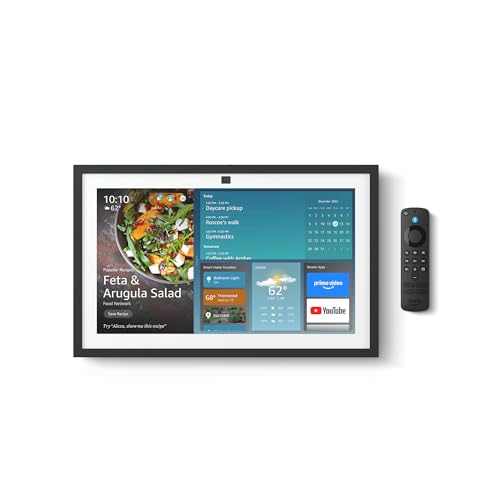
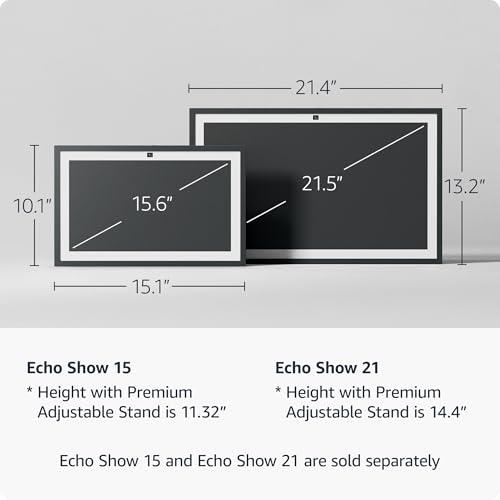
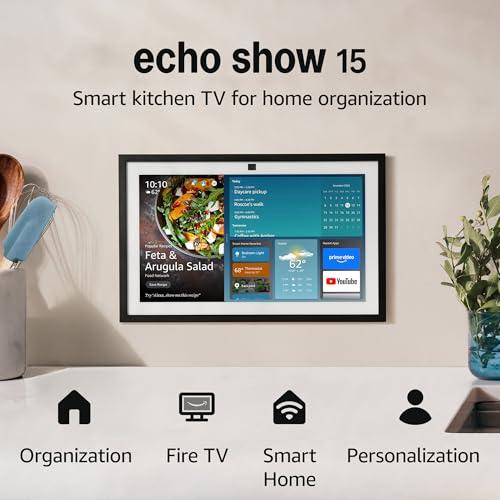
Released in 2021, the Amazon Echo Show 15 represents Amazon's attempt to create a wall-mounted family command center. At 15.6 inches, it's essentially a small tablet permanently mounted to your wall, running a customized interface designed for shared family use rather than individual interaction.
The Echo Show 15's most obvious advantage is sheer screen real estate. That 15.6-inch display provides roughly four times the visual space of the Echo Show 8, making it ideal for displaying multiple pieces of information simultaneously. The full HD resolution (1920 x 1080) ensures text remains crisp even when viewed from across a room—crucial for a device designed to be visible to multiple family members throughout the day.
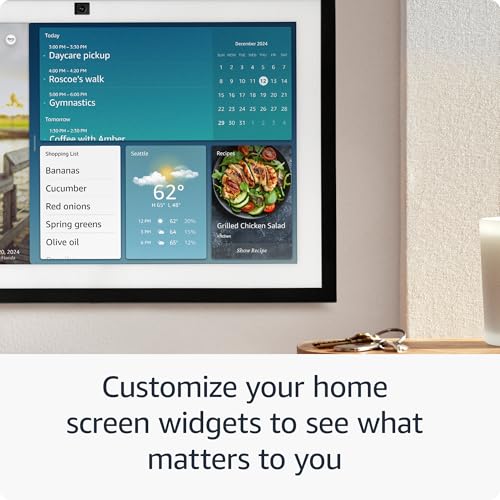
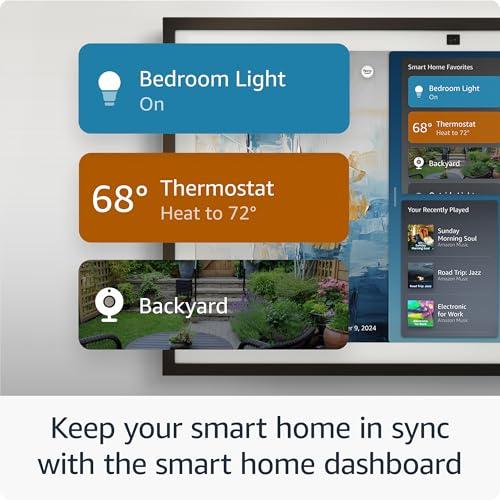
What makes the Echo Show 15 unique is its customizable widget system. Unlike other Echo Shows that cycle through predetermined screens, the 15 lets you arrange persistent widgets for calendars, shopping lists, sticky notes, weather, and smart home controls exactly how you want them. This turns the device into a true family bulletin board that's always visible and always current.
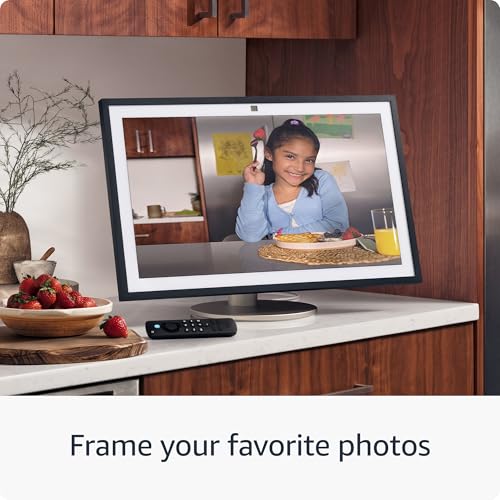
The portrait and landscape mounting flexibility deserves mention here. Most smart displays force you into one orientation, but the Echo Show 15 can adapt to your wall space and aesthetic preferences. In portrait mode, it resembles a tall digital picture frame; in landscape, it feels more like a small TV.
Perhaps the Echo Show 15's most compelling feature is built-in Fire TV functionality. This means you get full access to streaming services like Netflix, Prime Video, and YouTube without needing a separate streaming device. For kitchen placement, this transforms cooking time—you can follow along with cooking videos, catch up on shows while preparing meals, or keep kids entertained during breakfast prep.
The included Fire TV remote makes navigation much more pleasant than touch-only control, especially for video content. Voice control works well too, letting you say "Alexa, play The Office on Netflix" and having it work exactly as expected.
Here's where the Echo Show 15's compromises become apparent. Despite its large size, the audio quality is surprisingly disappointing. The dual 1.6-inch speakers face backwards and lack the bass response you'd expect from a device this size. Our research consistently shows users describing the sound as "tinny" or "flat," making it unsuitable for music listening or immersive media consumption.
This audio limitation becomes more frustrating when you consider the device's entertainment capabilities. You can stream Netflix in crisp HD, but the sound quality undermines the experience. For casual background viewing while cooking, it's adequate. For any serious media consumption, you'll want to connect external speakers via Bluetooth.
Surprisingly for its size and price point, the Echo Show 15 offers limited smart home hub functionality compared to smaller siblings. While it supports Matter (a universal smart home standard that lets devices from different manufacturers work together), it lacks Zigbee support—a crucial omission that means you'll need separate hubs for many popular smart home devices like Philips Hue lights or SmartThings sensors.
This creates an odd situation where the largest, most expensive Echo Show is less capable as a smart home controller than Amazon's smaller offerings. For basic smart home control through cloud services, it works fine. For advanced automation or direct device control, it feels limited.
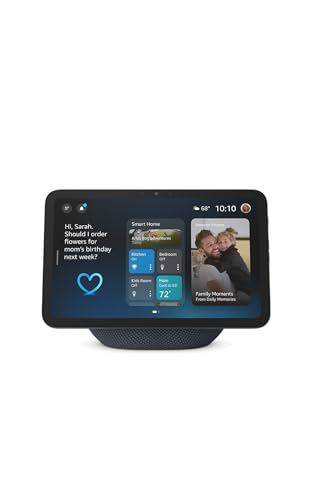
Amazon released the third-generation Echo Show 8 in 2023, and it represents the company's most refined smart display experience. At 8 inches, it strikes a middle ground between the tiny Echo Show 5 and the massive Echo Show 15, but its capabilities suggest it's been engineered as much more than a size compromise.
The 2023 Echo Show 8 includes Amazon's latest octa-core processor with the AZ2 Neural Network Engine—specialized silicon designed to handle voice processing and smart home commands locally rather than sending everything to the cloud. In practical terms, this means 40% faster response times compared to previous generations, with smart home commands executing almost instantly.
This performance advantage becomes noticeable in daily use. When you say "Alexa, turn off the kitchen lights," the Echo Show 8 processes the command locally and executes it faster than older models that had to communicate with Amazon's servers. For a device you interact with dozens of times daily, these responsiveness improvements accumulate into a notably better user experience.
Where the Echo Show 15 disappoints, the Echo Show 8 excels. The dual 2-inch drivers paired with a passive bass radiator (a component that enhances low-frequency response without requiring additional power) deliver surprisingly rich, full sound for the device's size.
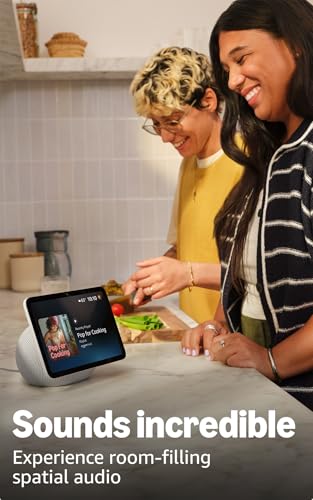
The 2023 model also includes spatial audio technology—processing that makes music feel more immersive by creating a wider soundstage. Room adaptation technology goes further, using the device's microphones to analyze your room's acoustics and automatically tune the audio output for optimal performance. These aren't just marketing terms; users consistently report that the Echo Show 8 sounds noticeably better than similarly sized smart displays from Google or other competitors.
For music listening, podcast consumption, or video calls, the Echo Show 8's audio quality makes it genuinely pleasant to use without external speakers. This is rare in the smart display category, where most devices prioritize voice clarity over music reproduction.
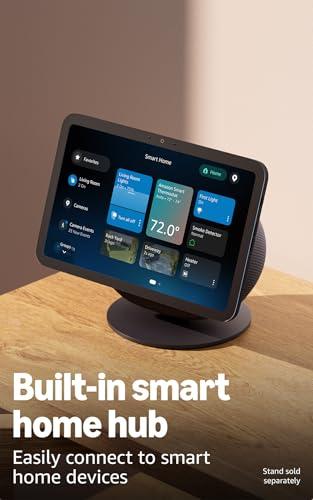
The Echo Show 8's most significant advantage over the Echo Show 15 lies in smart home integration. The 2023 model includes built-in Zigbee support, Thread Border Router capabilities, and Matter compatibility—essentially every major smart home protocol currently in use.
Zigbee support is particularly valuable because it allows direct communication with thousands of smart home devices without requiring separate hubs. If you have Philips Hue lights, Yale smart locks, or Samsung SmartThings sensors, the Echo Show 8 can control them directly. This eliminates the complexity and cost of additional hub hardware while improving response times since commands don't need to travel through multiple devices.
Thread Border Router support positions the Echo Show 8 for the future of smart homes. Thread is a mesh networking protocol that allows smart home devices to communicate with each other directly, creating more reliable networks that continue working even if your internet connection fails. As more Thread-enabled devices launch, having this capability built-in becomes increasingly valuable.
The 2023 Echo Show 8 upgraded to a 13-megapixel camera—a substantial improvement from previous generations and notably higher resolution than the Echo Show 15's 5-megapixel camera. More importantly, the camera now includes auto-framing technology that uses computer vision to keep you centered during video calls as you move around.
This auto-framing feature works remarkably well in practice. During video calls, you can move naturally around your kitchen or office, and the camera digitally pans and zooms to keep you in frame. It's similar to Apple's Center Stage technology but implemented in a much more affordable device.
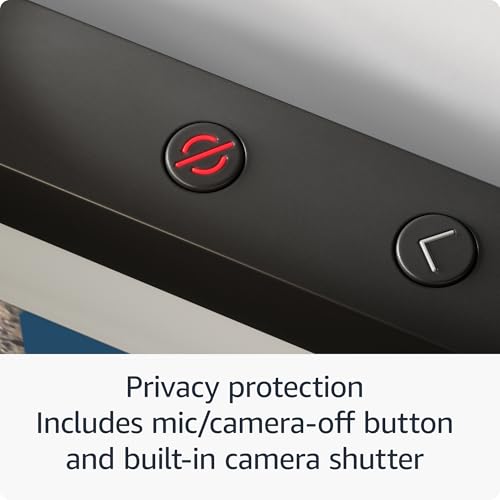
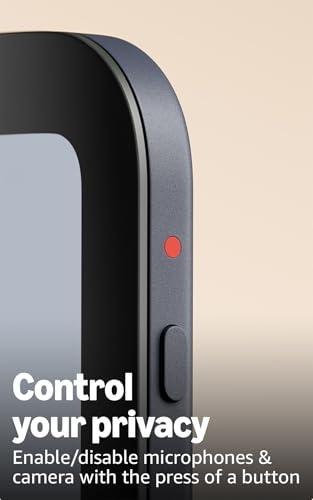
The camera's central placement at the top of the device creates more natural eye contact during video calls compared to off-center implementations. A physical privacy shutter provides peace of mind when the camera isn't needed.
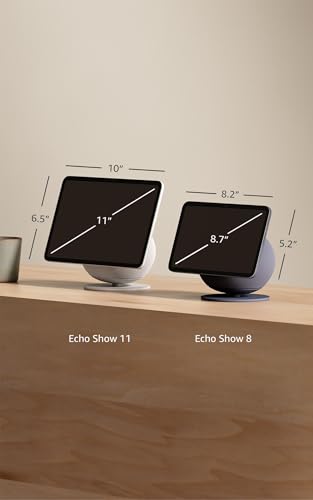
When evaluating smart display performance, pixel density often matters more than raw screen size. The Echo Show 8's 1280 x 800 resolution across 8 inches provides approximately 188 pixels per inch, while the Echo Show 15's 1920 x 1080 resolution across 15.6 inches delivers roughly 141 pixels per inch.
This means text and images appear sharper on the Echo Show 8 when viewed up close—important for a device designed for tabletop use where you'll frequently interact via touch. The Echo Show 15's lower pixel density is less noticeable at typical wall-viewing distances, making the trade-off reasonable for its intended use case.
Both devices excel at voice recognition, but their microphone implementations differ. The Echo Show 8 uses a focused four-microphone array optimized for near-field pickup in kitchen or office environments. The Echo Show 15's six-microphone array is designed for far-field recognition across larger rooms.
In practice, both handle voice commands reliably from reasonable distances. The Echo Show 15's advantage becomes apparent in larger, open-concept spaces where you might call commands from 15-20 feet away. For typical room sizes, both perform similarly.
This is where technical specifications translate into real-world performance differences. The Echo Show 8's Zigbee support enables local processing of smart home commands, typically executing them in under 500 milliseconds. The Echo Show 15, lacking Zigbee, must route most commands through Amazon's cloud servers, adding 1-3 seconds of latency.
These timing differences become noticeable with frequent use. Turning off lights as you leave a room feels instantaneous with the Echo Show 8 but noticeably delayed with the Echo Show 15. For occasional smart home control, the difference is minor. For heavy automation users, it's significant.
At the time of writing, the Echo Show 15 typically costs about $120 more than the Echo Show 8—a substantial premium that's difficult to justify based purely on features. The larger display and Fire TV integration provide clear value, but they're offset by inferior audio quality and limited smart home capabilities.
The Echo Show 8 delivers more functionality per dollar spent. Its comprehensive smart home hub capabilities alone could save you $50-100 on separate hub hardware, while its superior audio quality eliminates the need for external speakers in most situations.
For the Echo Show 15's higher price to make sense, you need to specifically value its unique attributes: the large wall-mounted display format, Fire TV integration, and family organization features. If these align with your needs, the premium becomes justifiable. If you're looking for the best overall smart display experience, the Echo Show 8 provides better value.
Neither device serves as a serious home theater component, but they approach entertainment differently. The Echo Show 15's Fire TV integration makes it genuinely useful for casual viewing—perfect for following cooking videos in the kitchen or keeping up with news during breakfast. The 15.6-inch screen is large enough for comfortable viewing from 6-8 feet away.
However, the poor audio quality significantly undermines the entertainment experience. For any serious viewing, you'll want to connect Bluetooth speakers or headphones. This additional complexity and cost should factor into your decision.
The Echo Show 8 lacks Fire TV but excels at everything else media-related. Its superior audio makes it excellent for music streaming, podcasts, and video calls. While you can't easily watch Netflix, you can access YouTube through the web browser, and the better speakers make even casual viewing more enjoyable.
You have a specific vision for a wall-mounted family command center and the space to accommodate it properly. The large display excels at always-visible information like shared calendars, shopping lists, and family photos. If you want Fire TV functionality in a kitchen or bedroom where you'll do casual viewing while multitasking, the Echo Show 15 makes sense despite its limitations.
The device works best for families who will use it primarily for organization and occasional entertainment rather than smart home control or music listening. If you already have separate hubs for your smart home devices and external speakers for audio, the Echo Show 15's weaknesses become less relevant.
You want the most capable, well-rounded smart display experience available. The Echo Show 8 excels at everything except screen size—audio quality, smart home integration, performance, and value all favor the smaller device. It's ideal for users who prioritize functionality over visual impact.
The Echo Show 8 works particularly well in kitchens, offices, or bedrooms where you'll interact with it frequently throughout the day. Its superior audio makes it genuinely enjoyable for music and calls, while its comprehensive smart home support eliminates the need for additional hub hardware.
Based on our research and analysis of user feedback, the Echo Show 8 represents the better choice for most buyers. Its balanced feature set, superior audio quality, comprehensive smart home capabilities, and lower price create a compelling package that's difficult to beat.
The Echo Show 15 serves a specific niche—users who prioritize the large wall-mounted display format above all else and can accept compromises in audio quality and smart home functionality. If this describes your needs perfectly, the larger display can be worth the premium. For everyone else, the Echo Show 8 delivers a more complete and satisfying smart display experience that will serve you better in the long run.
The smart display market continues evolving rapidly, but both devices should remain relevant for several years thanks to regular software updates and solid hardware foundations. Whichever you choose, you'll be getting a capable smart home hub that makes daily routines more convenient and connected.
| Amazon Echo Show 15 | Amazon Echo Show 8 |
|---|---|
| Display Size - Determines visibility and wall presence | |
| 15.6-inch Full HD (1920x1080) - Large enough for family calendars and shared information | 8-inch HD (1280x800) - Ideal for personal use and tabletop placement |
| Audio Quality - Critical for music and entertainment | |
| Dual 1.6-inch rear-facing speakers (poor bass, tinny sound) | Dual 2-inch drivers with passive bass radiator (rich, room-filling sound) |
| Smart Home Hub Support - Determines device compatibility and setup complexity | |
| Matter only (requires separate hubs for many devices) | Zigbee, Thread, Matter built-in (controls most smart devices directly) |
| Mounting and Placement - Affects where and how you can use it | |
| Wall-mount optimized, portrait/landscape orientation | Tabletop design with angled screen for easy interaction |
| Fire TV Integration - Built-in streaming capability | |
| Full Fire TV with remote (Netflix, Prime Video, YouTube) | None (web browser access to YouTube only) |
| Camera Quality - Important for video calls | |
| 5MP with Visual ID family recognition | 13MP with auto-framing technology |
| Processing Power - Affects responsiveness and smart home speed | |
| Amlogic Pop1 processor (adequate performance) | Octa-core with AZ2 Neural Engine (40% faster, local processing) |
| Best Use Case - Who should buy this | |
| Wall-mounted family command center with entertainment | All-around smart home hub with superior audio |
| Value Proposition - Cost vs features | |
| Premium price for unique large format and Fire TV | Better features per dollar with comprehensive smart home support |
The Amazon Echo Show 8 delivers significantly better audio quality than the Amazon Echo Show 15. The Echo Show 8 features dual 2-inch drivers with a passive bass radiator that produces rich, room-filling sound with good bass response. In contrast, the Echo Show 15 has smaller 1.6-inch rear-facing speakers that sound tinny and lack bass depth, making it unsuitable for music listening without external speakers.
The primary difference is size and intended use. The Amazon Echo Show 15 is a large 15.6-inch wall-mounted display designed as a family command center, while the Amazon Echo Show 8 is an 8-inch tabletop device built for personal interaction. The Echo Show 15 includes Fire TV streaming but has weaker audio, while the Echo Show 8 offers superior sound quality and more comprehensive smart home hub capabilities.
You can watch Netflix directly on the Amazon Echo Show 15 through its built-in Fire TV functionality with full app support and remote control. The Amazon Echo Show 8 doesn't have Fire TV built-in, so Netflix streaming isn't officially supported, though you can access some video content through the web browser including YouTube.
The Amazon Echo Show 8 is superior for smart home control. It includes built-in Zigbee, Thread, and Matter support, allowing direct control of most smart devices without additional hubs. The Echo Show 15 only supports Matter, requiring separate hubs for many popular smart home devices like Philips Hue lights or SmartThings sensors.
Both devices handle video calls well, but the Amazon Echo Show 8 has advantages with its newer 13MP camera that includes auto-framing technology to keep you centered as you move. The Echo Show 15 has a 5MP camera with Visual ID for family recognition. Both include physical privacy shutters and work with Alexa calling and video messaging.
The Amazon Echo Show 8 provides better overall value with superior audio quality, comprehensive smart home hub capabilities, and faster performance at a lower price point. The Echo Show 15 costs significantly more and is only worth the premium if you specifically need its large wall-mounted display format and Fire TV integration.
While the Amazon Echo Show 15 can technically sit on a surface using its included stand, it's designed primarily for wall mounting. Its large size and flat design make it awkward for tabletop use. The Echo Show 8 is specifically designed for tabletop placement with an angled screen that's perfect for counter or desk use.
The Amazon Echo Show 8 has a superior 13MP camera compared to the Echo Show 15's 5MP camera. The Echo Show 8 also features auto-framing technology that automatically keeps you centered during calls, plus its centered camera placement creates more natural eye contact. Both devices include physical privacy shutters.
Yes, both the Amazon Echo Show 15 and Amazon Echo Show 8 receive regular software updates from Amazon that add new features, improve performance, and enhance security. These updates happen automatically and help extend the useful life of both devices with new capabilities over time.
This depends on your priorities. The Amazon Echo Show 15 works well wall-mounted in kitchens for displaying recipes, family calendars, and streaming cooking videos through Fire TV. However, the Echo Show 8 is better for counter placement with superior audio for music while cooking, better smart home control for kitchen devices, and easier touch interaction while preparing meals.
Yes, both the Amazon Echo Show 15 and Amazon Echo Show 8 can display photos from Amazon Photos and serve as digital picture frames when not actively in use. The Echo Show 15 provides a larger canvas for photos and can rotate between portrait and landscape orientation, while the Echo Show 8 offers a more traditional tabletop photo frame experience.
The Amazon Echo Show 8 responds faster to voice commands, especially for smart home control. Its newer processor with AZ2 Neural Engine provides 40% faster performance than previous generations, and its built-in Zigbee support allows local processing of smart home commands. The Echo Show 15 relies more on cloud processing, which can add 1-3 seconds of delay for some commands.
We've done our best to create useful and informative comparisons to help you decide what product to buy. Our research uses advanced automated methods to create this comparison and perfection is not possible - please contact us for corrections or questions. These are the sites we've researched in the creation of this article: choose.co.uk - youtube.com - capsulenz.com - gadgetguy.com.au - youtube.com - tomsguide.com - techradar.com - youtube.com - developer.amazon.com - tomsguide.com - dell.com - en.wikipedia.org - youtube.com - bestbuy.com - youtube.com - youtube.com - thedisconnekt.com - thehousetech.com - bestbuy.com - tomsguide.com - youtube.com - bestbuy.com - dimensions.com - engadget.com - youtube.com - techradar.com - ifixit.com - dreamgreenhouse.com - aboutamazon.com - engadget.com - bestbuy.com - homedepot.com

Privacy Policy
Terms and Conditions - Affiliate Policy
Home Security
© Copyright 2008-2026.
11816 Inwood Rd #1211, Dallas, TX 75244