

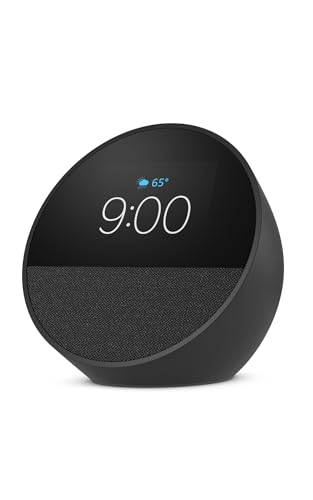
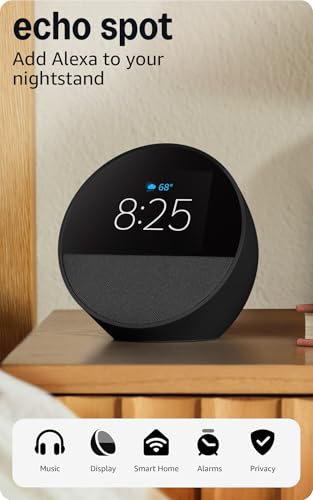
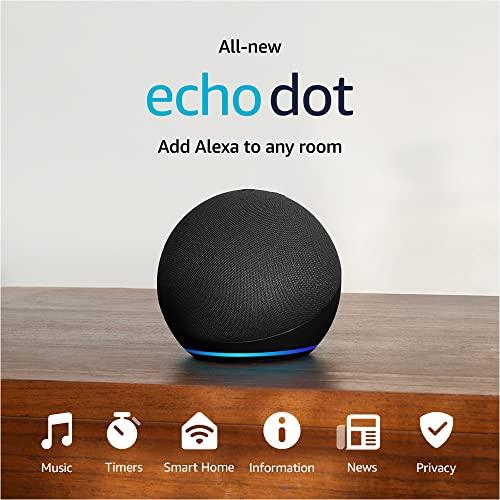

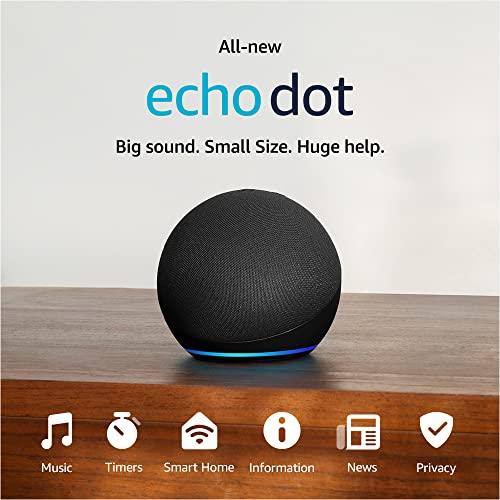
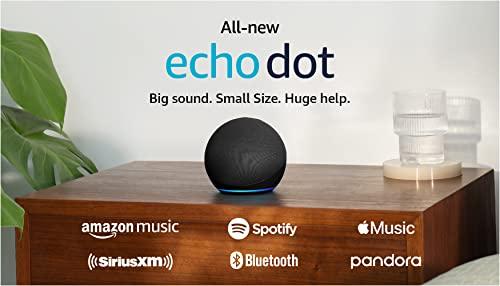
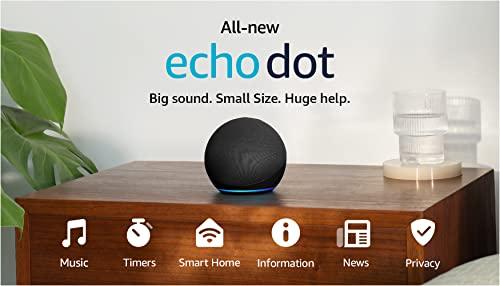
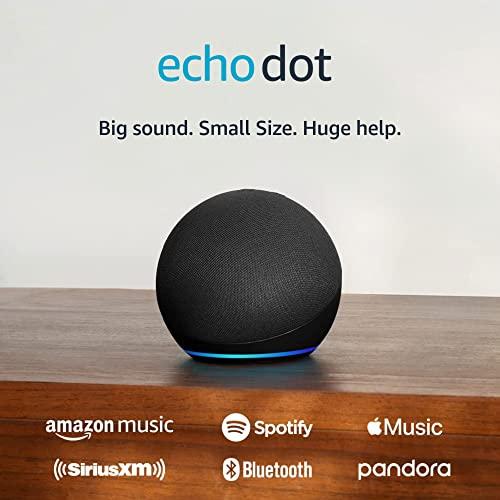
Amazon released two very different smart speakers that, on paper, might seem similar but serve completely different purposes in your home. The Echo Spot 2024 arrived in 2024 as a visual-first bedside companion, while the Echo Dot 5th Generation launched in 2022 as an audio-focused smart home hub. At the time of writing, these devices sit about $20 apart in price, but that small gap represents a massive difference in what you're actually getting.
After analyzing hundreds of user reviews and expert opinions, one thing becomes crystal clear: these aren't really competing products. They're solving different problems, and understanding which problem you need solved will determine which device deserves your money.
Smart speakers have evolved far beyond simple voice assistants. Today's devices function as command centers for your entire connected home, controlling everything from lights and thermostats to security cameras and entertainment systems. The key is figuring out whether you need a device that excels at audio performance and automation, or one that prioritizes visual feedback and touch interaction.
The main considerations boil down to audio quality (how good music actually sounds), smart home integration (how well it controls other devices), display functionality (whether you need to see information), sensor capabilities (what it can detect about your environment), and overall value (what you get for your money).
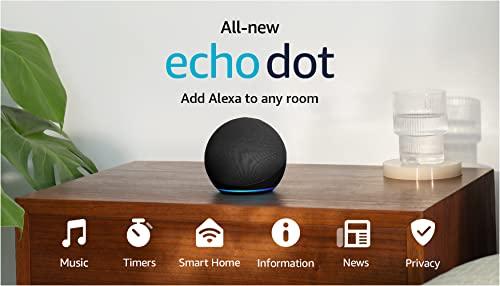
Both the Echo Spot and Echo Dot run Amazon's Alexa voice assistant, which means they can handle the same basic commands: setting timers, answering questions, controlling smart lights, and playing music from services like Spotify or Amazon Music. But the similarities end there.
Here's where things get interesting, and frankly, a bit counterintuitive. You'd expect the newer, more expensive Echo Spot 2024 to sound better than the older Echo Dot 5th Generation, but that's not what happens in practice.
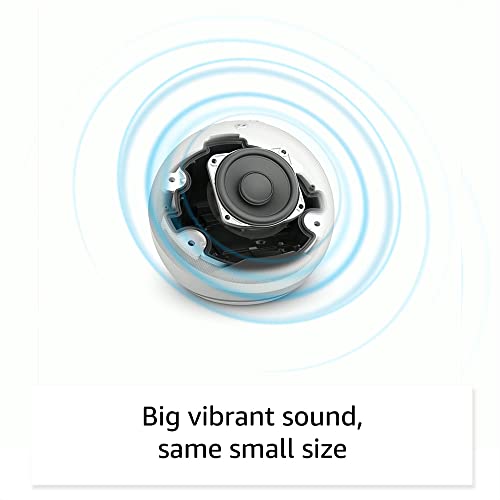
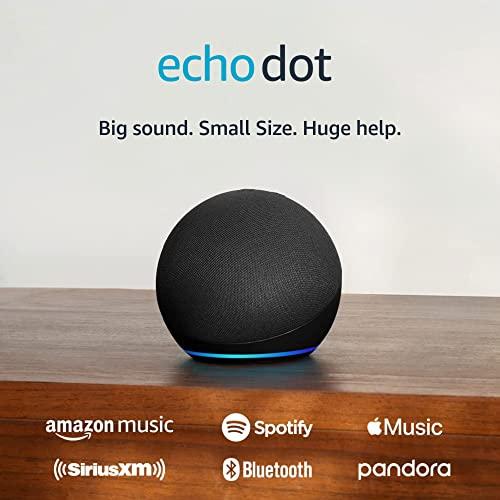
The Echo Dot delivers noticeably superior audio quality despite being the less expensive option. Both devices use the same 1.73-inch speaker driver—Amazon's most advanced driver for compact speakers—but their physical designs create completely different listening experiences.
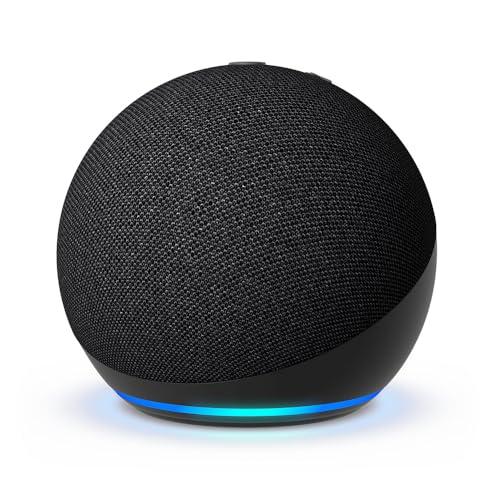
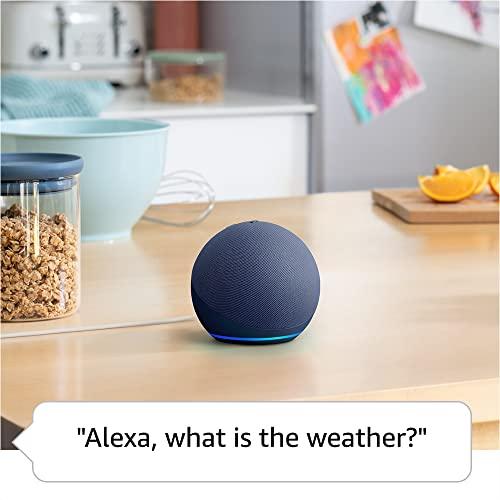
The Echo Dot's spherical shape with its fabric mesh covering creates what audio engineers call omnidirectional sound dispersion. This means sound waves radiate outward in multiple directions, filling your room with audio rather than just shooting it straight at you. When you're cooking in the kitchen or working in your home office, this room-filling effect makes music feel more immersive and present.
The Echo Spot, by contrast, uses a directional audio approach. Its flat front face and angled design shoot sound forward like a tiny stereo speaker. This works perfectly when you're lying in bed directly facing the device, but it doesn't create that sense of audio filling the space around you.
Our analysis of user feedback consistently shows the Echo Dot producing richer bass response, clearer vocal reproduction, and better overall balance across different music genres. The difference becomes especially apparent when you push the volume up—the Echo Dot maintains clarity at higher levels while the Echo Spot starts to show strain.
For home theater applications, neither device serves as a primary speaker system, but the Echo Dot's superior audio quality makes it a better choice for casual background music during movie nights or as part of a multi-room audio setup where you want consistent sound quality throughout your home.
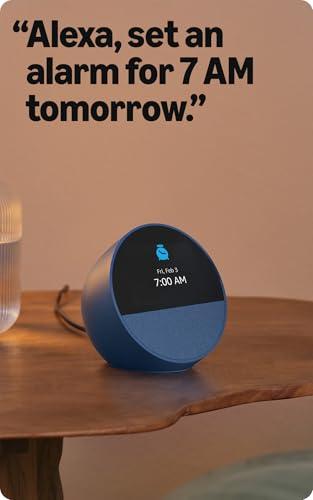
This is where the Echo Spot 2024 justifies its existence and higher price point. The 2.83-inch LCD touchscreen transforms how you interact with a smart speaker, moving beyond pure voice control into visual territory.
The display offers 320x240 pixel resolution—not high-definition by smartphone standards, but perfectly adequate for its intended purpose. What makes it special isn't the technical specs but how Amazon has optimized the interface for quick glances and touch interactions.
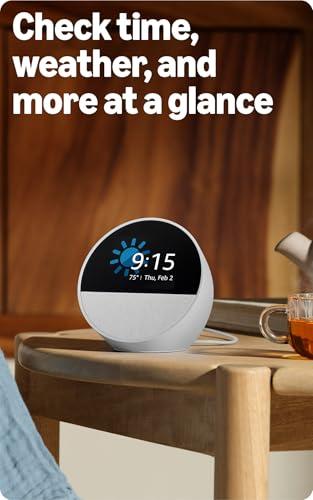
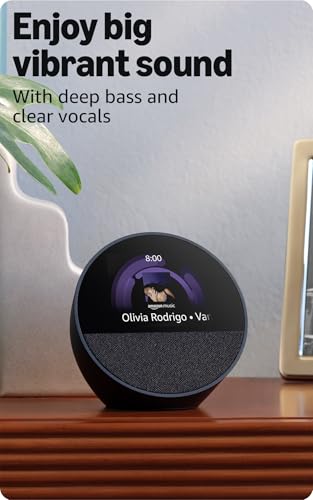
You can customize the always-on clock face with different color schemes and animated backgrounds, turning the device into an attractive piece of functional décor. Weather information appears with animated graphics showing rain, snow, or sunshine. When music plays, album artwork fills the screen with song titles and artist information clearly visible.
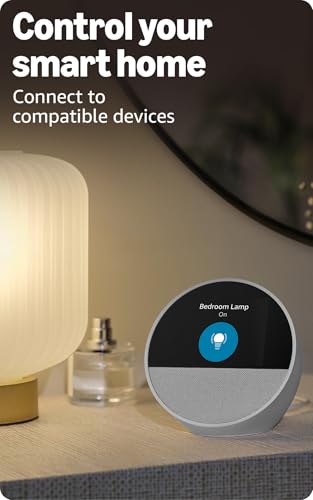
But the real magic happens with smart home control. Instead of saying "Alexa, turn off the bedroom lights," you can tap a widget on the screen. This silent interaction proves invaluable during late-night or early-morning routines when voice commands might wake a sleeping partner.
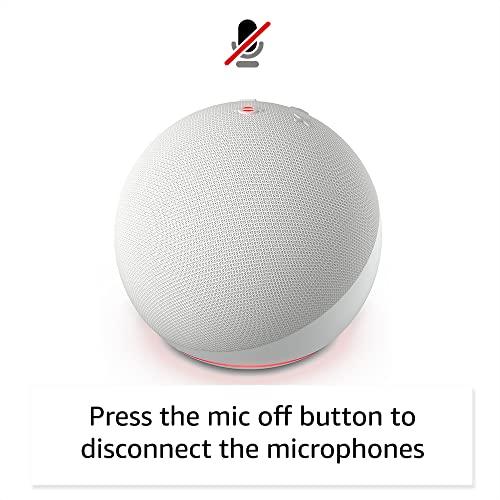
The Echo Dot attempts visual feedback through LED lights that shine through its fabric mesh, displaying basic information like time or song titles in pixelated text. It's functional but feels primitive compared to the Echo Spot's full-color interface.
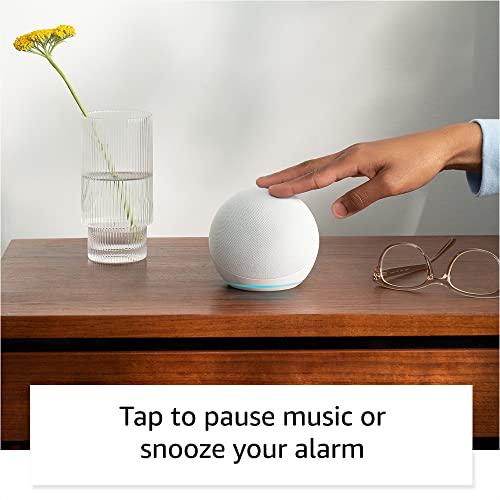
Touch controls extend beyond just tapping widgets. The Echo Spot supports tap-to-snooze functionality—just tap anywhere on the top surface to silence alarms. This physical interaction feels more natural than shouting "Alexa, stop!" when you're barely conscious at 6 AM.
Here's where the comparison gets really interesting, and where the Echo Dot 5th Generation pulls ahead in unexpected ways despite being older and cheaper.
The Echo Dot includes a temperature sensor that continuously monitors your room's climate. This seemingly simple feature unlocks powerful automation possibilities. You can create routines that automatically adjust your smart thermostat when the temperature drops below a certain point, or turn on a fan when it gets too warm. It's the kind of "set it and forget it" automation that makes smart homes truly smart.
Even more impressive, the Echo Dot can function as an Eero mesh Wi-Fi extender when paired with compatible Eero router systems. Essentially, it becomes part of your home network infrastructure, extending Wi-Fi coverage by up to 1,000 square feet. This dual-purpose functionality adds significant value beyond just being a smart speaker.
The Echo Spot 2024 lacks both the temperature sensor and Wi-Fi extension capabilities. It does include motion detection through ultrasonic sensors (high-frequency sound waves that detect movement), which can trigger routines when you enter or leave a room, but this feels like a step backward compared to the more comprehensive sensor suite in the older device.
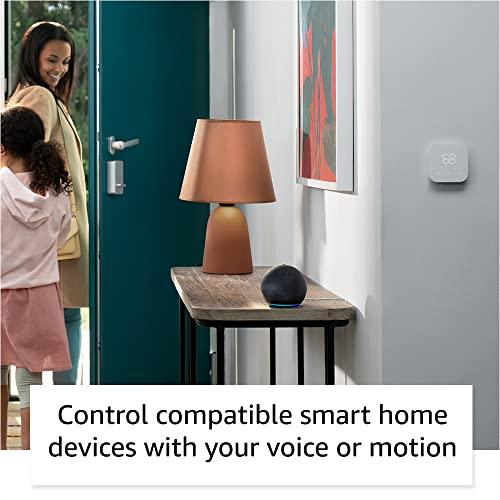
Both devices excel at controlling smart home devices through voice commands and integration with platforms like Matter (a universal smart home standard) and Zigbee (a wireless protocol for smart devices). The key difference lies in automation capabilities—the Echo Dot can react to environmental changes automatically, while the Echo Spot primarily responds to manual commands or scheduled routines.
When evaluating these devices, focus on three key performance areas: voice recognition accuracy, response speed, and reliability.
Both devices use Amazon's AZ2 Neural Edge processor, which handles voice processing locally on the device rather than sending everything to the cloud. This results in faster response times and better privacy protection. In practice, both devices demonstrate excellent voice pickup even in noisy environments, with multiple microphone arrays that can isolate your voice from background music or kitchen noise.
Response speed feels nearly identical between the two devices. Commands like "Alexa, set a timer for 10 minutes" or "Alexa, turn on the living room lights" execute within 1-2 seconds consistently. The processor improvements since the 4th generation Echo Dot are noticeable—everything feels snappier and more responsive.
Reliability varies slightly based on your home's Wi-Fi setup. Both devices support dual-band Wi-Fi (meaning they can connect to both 2.4GHz and 5GHz networks for optimal performance), but the Echo Dot's potential to extend your network coverage gives it an advantage in homes with spotty connectivity.
Understanding how these devices perform in actual daily use helps clarify which one fits your lifestyle better.
Bedroom Performance: The Echo Spot 2024 excels as a bedside companion. The customizable display serves as an attractive alarm clock, showing time, weather, and gentle wake-up lighting. Touch controls let you snooze alarms or adjust smart lights without speaking, which proves especially valuable when sharing a bed. The directional audio works perfectly for this close-range scenario.
Kitchen Integration: The Echo Dot 5th Generation dominates in kitchen environments. Its room-filling audio makes cooking with music more enjoyable, while the temperature sensor can monitor cooking environments and trigger ventilation fans. The compact spherical design fits better on crowded countertops, and the superior audio clarity helps when following spoken recipes over background cooking noise.
Living Room Deployment: For main living spaces, the Echo Dot again takes the lead. Its audio quality better supports casual music listening during daily activities, and the comprehensive smart home integration makes it an effective central control hub. The potential Wi-Fi extension capability adds infrastructure value in larger homes.
Multi-Room Audio: If you're planning to deploy multiple speakers throughout your home, the Echo Dot's superior audio consistency and lower per-unit cost makes more sense. You can create synchronized music playback across multiple rooms while maintaining good sound quality everywhere.
At the time of writing, the price difference between these devices is relatively modest, but the feature trade-offs are significant. The Echo Spot commands a premium for its display functionality, but you're essentially paying extra while losing features like temperature sensing and Wi-Fi extension that are included in the less expensive Echo Dot.
This creates an unusual situation where the newer, more expensive device offers fewer technical capabilities than its cheaper counterpart. The Echo Spot justifies its price through user experience improvements—the display, touch controls, and attractive design—rather than superior technical specifications.
For budget-conscious buyers, the Echo Dot delivers exceptional value with its comprehensive feature set. You get better audio quality, more sensors, network extension capabilities, and broad placement versatility at a lower price point.
The decision ultimately comes down to your primary use case and personal preferences.
Choose the Echo Dot 5th Generation if you prioritize audio quality, want comprehensive smart home automation, need Wi-Fi network extension, or plan to use multiple speakers throughout your home. It's also the better choice for anyone who values maximum functionality per dollar spent.
The Echo Dot excels in kitchens, living rooms, home offices, and anywhere you want good music playback combined with smart home control. Its temperature sensing capabilities make it ideal for climate automation, while its compact design works in virtually any location.
Choose the Echo Spot 2024 if you want a premium bedside experience with visual feedback and touch controls. It's perfect for people who prefer seeing information rather than just hearing it, or who need silent control options for shared sleeping spaces.
The Echo Spot makes sense for bedside tables, desks where you want visual information at a glance, or anywhere aesthetics matter more than raw functionality. Just understand you're paying extra for the display experience while accepting limitations in audio quality and smart home capabilities.
Neither device works well as a primary home theater speaker, but if you're using smart speakers for ambient audio during movie watching, the Echo Dot's superior sound quality and room-filling dispersion make it the better choice.
Consider your long-term smart home plans too. If you're building a comprehensive automated home system, the Echo Dot's temperature sensing and more robust integration capabilities provide better foundation for future expansion. If you want an attractive, functional bedside device that happens to be smart, the Echo Spot delivers that specific experience exceptionally well.
The bottom line: both devices excel in their intended roles, but those roles are quite different. Understanding which role matches your needs will lead you to the right choice and a more satisfying smart speaker experience.
| Amazon Echo Spot 2024 | Amazon Echo Dot 5th Generation |
|---|---|
| Display - Key differentiator for visual interaction and bedside use | |
| 2.83" LCD touchscreen with customizable clock faces and touch controls | LED lights through fabric mesh showing basic text information |
| Audio Quality - Most important for music listening and room filling sound | |
| 1.73" directional speaker, good for near-field listening | 1.73" omnidirectional speaker with superior room-filling audio and bass |
| Smart Home Sensors - Critical for automation and environmental control | |
| Motion sensor only (ultrasonic occupancy detection) | Motion sensor plus temperature sensor for climate-based automation |
| Wi-Fi Network Features - Adds infrastructure value to your home | |
| Standard Wi-Fi connection only | Functions as Eero mesh Wi-Fi extender, expanding coverage up to 1,000 sq ft |
| Physical Design - Impacts placement options and aesthetics | |
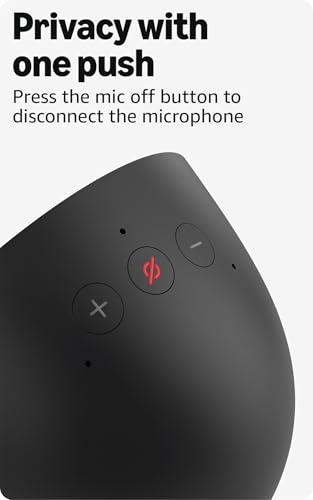
| Larger angular design (113×111×103mm, 405g) best for bedside tables | Compact spherical design (100×100×80mm, 304g) versatile for any room |
| Control Methods - Affects usability in quiet environments | |
| Voice commands plus touchscreen controls and tap-to-snooze | Voice commands and physical buttons only |
| Value Proposition - What you get for the price premium | |
| Premium display experience with some missing features found in cheaper model | Maximum functionality per dollar with comprehensive sensor suite |
| Best Use Cases - Where each device excels | |
| Bedside alarm clock, visual smart home control, quiet operation needs | Music listening, kitchen use, whole-home deployment, smart home automation |
The Echo Dot 5th Generation delivers superior audio quality with better bass response and room-filling sound. While both use the same 1.73-inch speaker, the Echo Dot's spherical design creates omnidirectional audio that sounds richer and clearer than the Echo Spot 2024's directional speaker setup.
The primary difference is the display. The Echo Spot 2024 features a 2.83-inch LCD touchscreen with customizable clock faces and visual controls, while the Echo Dot 5th Generation only has basic LED lights for minimal text display. The Echo Spot focuses on visual interaction, whereas the Echo Dot prioritizes audio performance.
The Echo Spot 2024 excels as a bedside companion with its attractive display, customizable clock faces, and tap-to-snooze functionality. The touchscreen allows silent control of smart devices without voice commands, making it ideal for shared bedrooms where the Echo Dot might disturb sleeping partners.
Actually, the Echo Dot 5th Generation offers more comprehensive smart home capabilities. It includes a temperature sensor for climate automation and can function as an Eero Wi-Fi extender. The Echo Spot 2024 provides visual smart home controls through its touchscreen but lacks these advanced sensing and networking features.
The Echo Dot 5th Generation provides better overall value with superior audio quality, temperature sensing, Wi-Fi extension capabilities, and versatile placement options at a lower price point. The Echo Spot commands a premium for its display functionality while offering fewer technical features than the less expensive Echo Dot.
Neither the Echo Spot 2024 nor Echo Dot 5th Generation serves as a primary home theater speaker. However, the Echo Dot works better for ambient audio during movies due to its superior sound quality and room-filling audio dispersion compared to the Echo Spot's directional audio approach.
Both the Echo Spot 2024 and Echo Dot 5th Generation use the same AZ2 Neural Edge processor and microphone arrays, so voice recognition performance is essentially identical. Both devices excel at picking up commands even in noisy environments with similar response speeds and accuracy.
The Echo Spot 2024 can display weather animations, album artwork, customizable clock faces, smart home device status, and touch control widgets. The Echo Dot is limited to basic pixelated text through its LED lights, showing only simple information like time or song titles.
The Echo Dot 5th Generation works better in kitchens due to its superior audio quality for cooking music, compact size that fits on crowded counters, and temperature sensor that can monitor cooking environments. The Echo Spot's larger size and directional audio make it less suitable for kitchen placement.
Yes, both the Echo Spot 2024 and Echo Dot 5th Generation support the same smart home platforms including Matter, Zigbee, and all Alexa-compatible devices. The difference lies in control methods—the Echo Spot offers visual touch controls while the Echo Dot provides more advanced automation through its temperature sensor.
The Echo Dot 5th Generation is better for multi-room deployment due to its lower per-unit cost, consistent audio quality, compact size, and versatile placement options. The Echo Spot 2024 works best as a single bedside unit rather than throughout the home due to its higher cost and specialized bedroom-focused features.
The Echo Spot 2024 uniquely offers a full-color touchscreen, customizable displays, tap-to-snooze, and visual smart home controls. The Echo Dot 5th Generation uniquely provides temperature sensing for automation, Eero Wi-Fi extension capabilities, and superior omnidirectional audio—features not found in the newer Echo Spot.
We've done our best to create useful and informative comparisons to help you decide what product to buy. Our research uses advanced automated methods to create this comparison and perfection is not possible - please contact us for corrections or questions. These are the sites we've researched in the creation of this article: bestbuy.com - tomsguide.com - nextpit.com - versus.com - techradar.com - versus.com - youtube.com - youtube.com - manuals.plus - techgadgetscanada.com - bestbuy.com - youtube.com - homedepot.com - homedepot.com - youtube.com - soundguys.com - youtube.com - soundguys.com - reviewed.com - youtube.com - youtube.com - whathifi.com - youtube.com - youtube.com - dell.com - bestbuy.com - youtube.com - youtube.com - nfm.com - soundguys.com - staples.com - homedepot.com - techradar.com - gadgets360.com - youtube.com - versus.com - en.wikipedia.org

Privacy Policy
Terms and Conditions - Affiliate Policy
Home Security
© Copyright 2008-2026.
11816 Inwood Rd #1211, Dallas, TX 75244