


Smart displays have evolved from simple digital clocks into sophisticated home command centers. These devices combine voice assistants with visual interfaces, creating a new category that sits somewhere between smartphones and traditional home appliances. The challenge for buyers is understanding which type fits their lifestyle—a comprehensive family hub or a focused bedside companion.
When Amazon released the Echo Show 15 in 2021, it represented their boldest attempt at creating a true household command center. Fast forward to 2024, and Amazon took a completely different approach with the Echo Spot 2024, stripping away complexity in favor of bedroom-focused simplicity. At the time of writing, these devices occupy vastly different price points and serve fundamentally different purposes, making the choice more about lifestyle needs than direct feature comparisons.
Smart displays serve multiple roles in modern homes. They act as information hubs, entertainment centers, communication devices, and smart home controllers. The key considerations when choosing one include display size and quality, audio performance, camera capabilities, smart home integration depth, and intended placement within your home.
The category spans from compact 2-inch displays meant for nightstands to massive 15-inch screens designed for wall mounting. Each size brings trade-offs in functionality, privacy, and price. Understanding these trade-offs helps determine which approach—comprehensive or focused—better serves your needs.
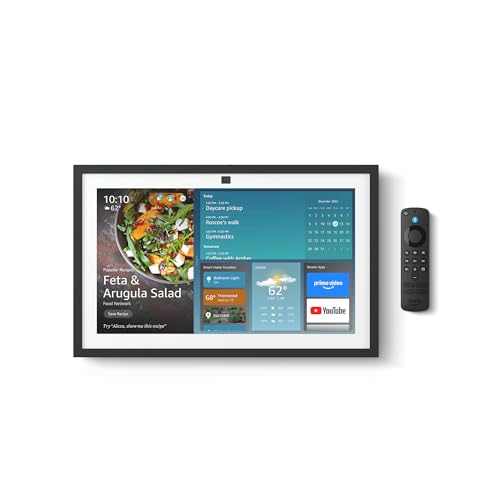
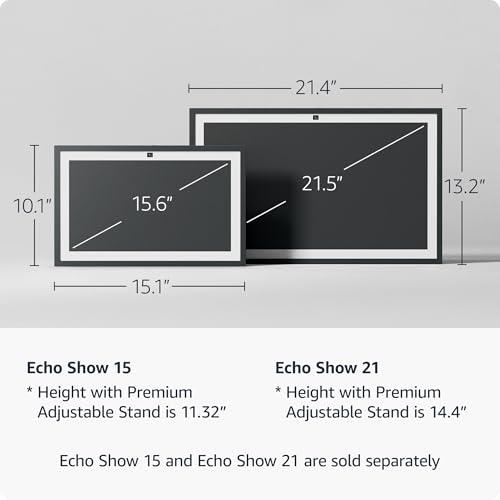
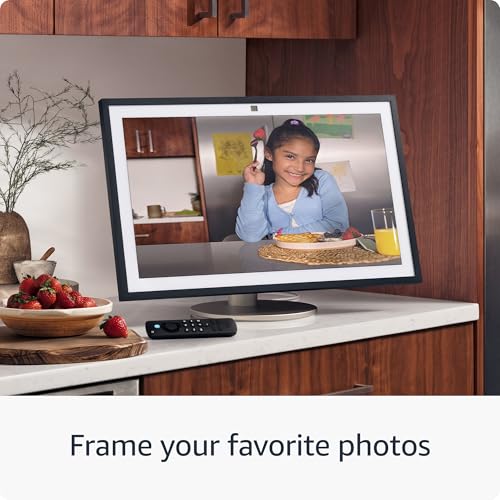
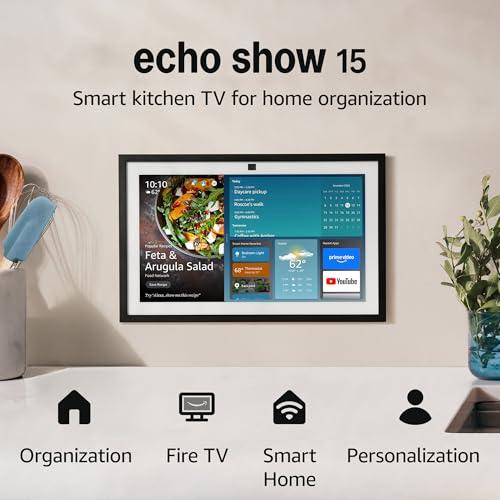
The Echo Show 15 represents Amazon's "more is more" philosophy. Its 15.6-inch Full HD display dominates any room it enters, offering built-in Fire TV streaming, customizable widget dashboards, and comprehensive smart home control. It's designed for wall mounting in kitchens, living rooms, or family areas where multiple people need quick access to information and controls.
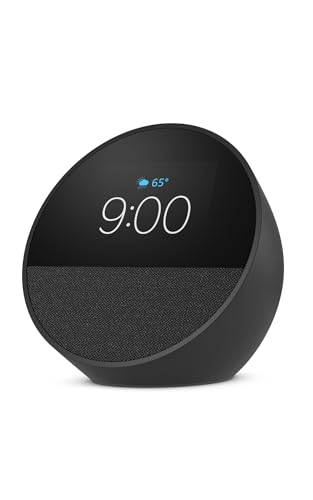
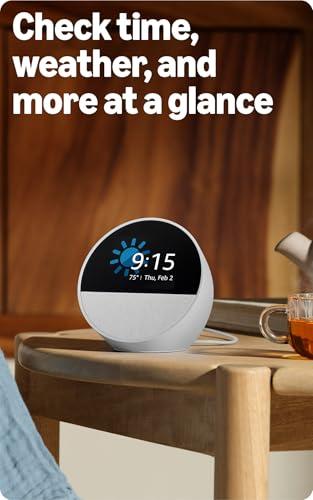
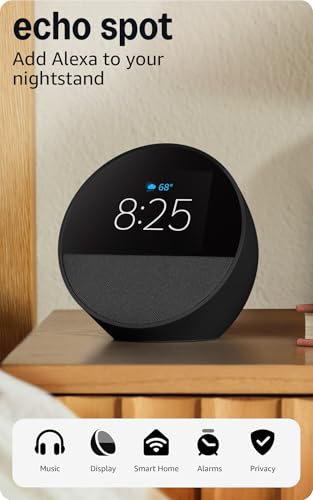
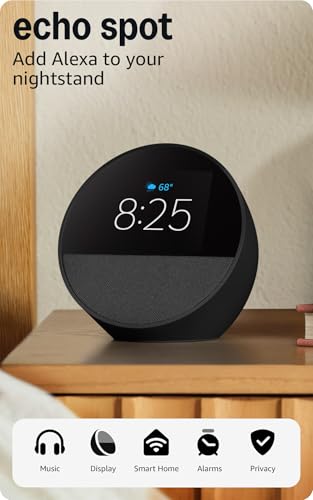
Conversely, the Echo Spot 2024 embodies "less is more" thinking. Its 2.83-inch display focuses exclusively on essential bedroom functions—alarms, weather, basic music controls, and simple smart home widgets. At the time of writing, it costs roughly one-sixth the price of the Show 15, reflecting its targeted feature set rather than comprehensive capabilities.
The generational gap between these products tells an interesting story about Amazon's evolving understanding of smart displays. The original Echo Spot from 2017 included a camera, which Amazon removed in the 2024 version after learning that bedroom privacy concerns outweighed video calling convenience for this device category.
The display represents the most dramatic difference between these devices. The Echo Show 15's 15.6-inch screen delivers 1920x1080 resolution—the same pixel density as a standard computer monitor. This creates sharp, detailed visuals suitable for reading recipes from across the kitchen, viewing security camera feeds, or watching streaming content during meal preparation.
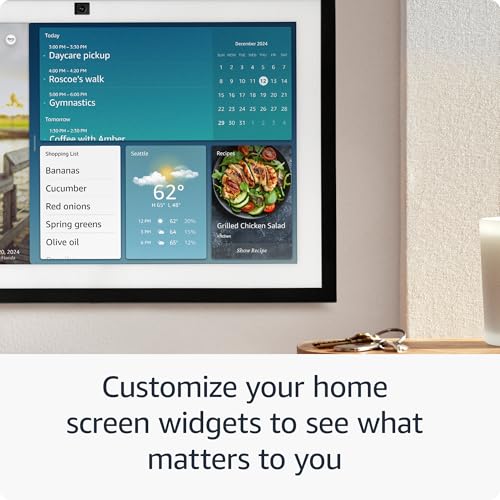
More importantly, the Show 15's display supports both landscape and portrait orientations, allowing flexible mounting options. The visual real estate enables complex interfaces like customizable widget dashboards, where family members can arrange calendars, shopping lists, weather forecasts, and smart home controls exactly how they prefer them. This customization transforms the device from a simple display into a personalized family command center.
The Echo Spot 2024's display tells a different story entirely. Its 320x240 resolution across just 2.83 inches provides enough clarity for its intended functions—digital clock faces, weather icons, song titles, and basic control widgets—but nothing more. The small screen intentionally limits functionality, preventing the distraction-heavy experience that larger displays can create in bedroom environments.
However, the Spot's display has notable limitations. Viewing angles are poor, making it difficult to read from the side of a bed. The rectangular screen feels cramped when trying to display multiple pieces of information simultaneously. These constraints aren't design flaws—they're intentional choices that prioritize simplicity over versatility.
Audio quality represents a surprising area where neither device truly excels, though each takes a different approach to mediocrity.
The Echo Show 15 uses dual 1.6-inch speakers arranged for stereo sound in landscape mode. While this seems promising on paper, the reality disappoints. The speakers fire backward from the device, reducing audio clarity and creating a "tinny" sound profile that lacks bass depth. Multiple expert reviews consistently identify audio as the Show 15's weakest element, particularly problematic given its entertainment-focused design.
This audio limitation becomes especially apparent when using the built-in Fire TV functionality. Watching Netflix or YouTube on the Show 15 often requires external speakers for enjoyable audio, which somewhat defeats the purpose of an all-in-one device. The audio quality works adequately for voice commands, brief music playback during cooking, and notification sounds, but falls short of expectations for serious listening.
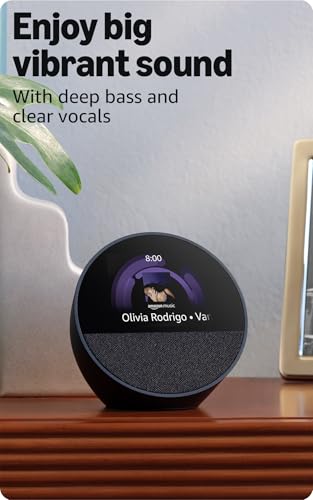
The Echo Spot 2024 takes a more focused approach with its single 1.73-inch front-firing speaker. While physically smaller than the Show 15's total speaker area, the Spot's audio design better matches its intended use case. Voice quality is crisp and clear—essential for bedside alarm functionality. The speaker handles podcasts and audiobooks well, with sufficient clarity for nighttime listening at moderate volumes.
However, the Spot struggles with complex music. Bass tends to overpower mid-range frequencies, and the device distorts noticeably above 70% volume. Intricate musical arrangements sound "muddy" or "hollow," limiting its usefulness for serious music listening. For its primary role as a smart alarm clock, though, the audio quality proves more than adequate.
Smart home integration reveals the clearest distinction between these devices' intended roles.
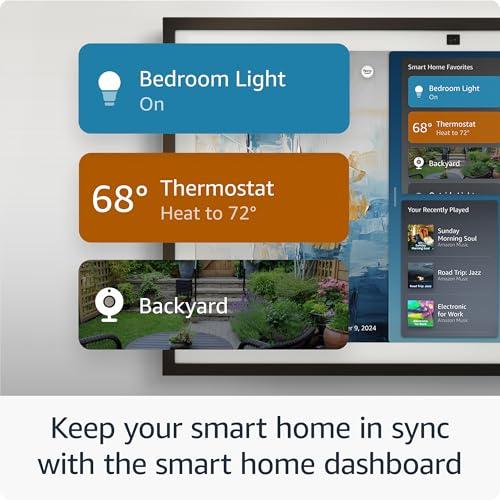
The Echo Show 15 functions as a comprehensive smart home hub, including built-in Zigbee support. Zigbee is a wireless communication protocol that many smart home devices use to connect directly without requiring internet connectivity. Having this built into the Show 15 means it can control compatible light bulbs, sensors, and switches directly, reducing network congestion and improving response times.
Beyond protocol support, the Show 15 provides visual smart home control through its large touchscreen. Users can adjust lighting brightness with sliders, view camera feeds from multiple sources simultaneously, and create complex automation routines through visual interfaces rather than voice commands alone. The Visual ID feature uses the built-in camera to recognize individual family members, automatically displaying personalized information like individual calendars, reminders, and preferred smart home scenes.
The device also supports Matter, a newer smart home standard designed to improve device compatibility across different manufacturers. Thread Border Router functionality allows it to serve as a gateway for Thread-enabled devices, creating a more robust smart home network. These technical capabilities position the Show 15 as a central nervous system for sophisticated smart home setups.
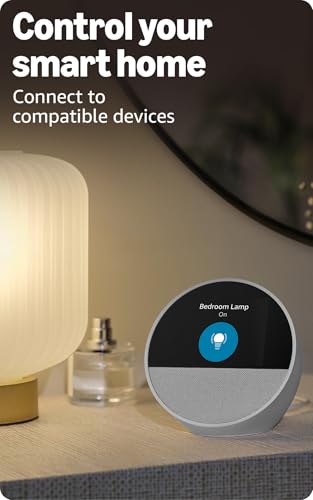
The Echo Spot 2024 takes a minimalist approach to smart home control. While it can control any Alexa-compatible device through voice commands, its visual interface only includes basic widgets like light brightness sliders. The small display prevents complex smart home dashboards or multiple device monitoring.
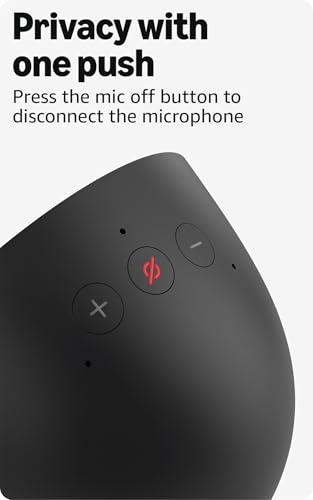
However, the Spot includes one unique smart home feature: an ultrasonic motion sensor built into the device. This sensor can trigger automation routines when it detects movement in the bedroom, such as turning on lights when someone gets up at night or activating morning routines when motion is first detected. The sensitivity can be adjusted through the Alexa app, making it surprisingly useful for bedroom-specific automation despite the device's otherwise limited smart home interface.
Camera capabilities create perhaps the starkest philosophical difference between these devices.
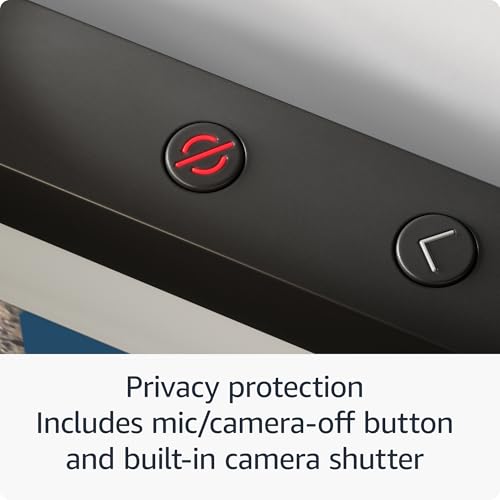
The Echo Show 15 includes a 5-megapixel camera (upgraded to 13 megapixels in more recent versions) with auto-framing capabilities. Auto-framing means the device can digitally zoom and pan to keep speakers in view during video calls, compensating for the fixed mounting position. The camera supports wide-angle viewing and includes a physical privacy shutter that slides over the lens when not in use.
This camera enables several key features: video calling with other Alexa devices or through the Alexa mobile app, displaying feeds from Ring video doorbells and security cameras, and the Visual ID feature for personalized content. For families who regularly video chat with relatives or want to monitor their home's security cameras from a central location, the camera functionality adds significant value.
The Echo Spot 2024 deliberately omits any camera, representing a clear design choice prioritizing bedroom privacy. Amazon learned from the original Echo Spot that many users felt uncomfortable with cameras in intimate spaces, even with privacy shutters. The 2024 version addresses these concerns by eliminating video functionality entirely.
This trade-off means the Spot cannot make video calls, display security camera feeds, or offer personalized Visual ID experiences. For users who value privacy over functionality—particularly in bedroom settings—this represents a feature, not a limitation.
Understanding when each device excels requires examining specific use scenarios and lifestyle patterns.
The Echo Show 15 thrives in active household environments. In kitchens, its large display makes recipe following effortless, while hands-free voice control keeps things moving during meal preparation. The ability to display multiple timers simultaneously, show calendar appointments for the day, and provide quick access to streaming services creates a true command center experience.
For families with children, the Show 15's visual interface makes smart home control more intuitive. Kids can easily adjust lighting or check the weather without memorizing voice commands. The customizable widgets allow each family member to prioritize the information most relevant to them, whether that's calendar appointments, traffic updates, or favorite streaming services.
The device also excels as a communication hub. Video calls with distant relatives become a natural part of kitchen conversations, while the large screen makes it easy for multiple people to participate. Integration with Ring security systems allows quick monitoring of doorbell visitors or checking on deliveries.
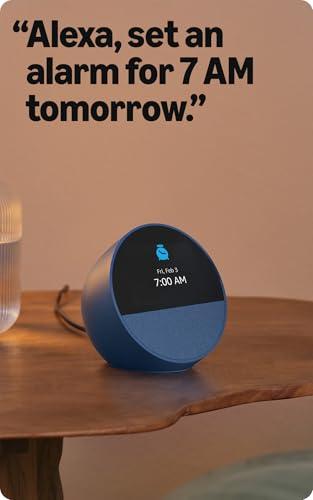
The Echo Spot 2024 shines in more focused scenarios. As a bedside alarm clock, it offers sophisticated features wrapped in simple interfaces. Morning routines can gradually increase lighting, provide weather briefings, and play personalized news updates—all triggered by motion detection or scheduled alarms. The tap-to-snooze functionality works by tapping anywhere on the device's top surface, eliminating fumbling for specific buttons in the dark.
The Spot's privacy-focused design makes it ideal for bedrooms, guest rooms, or other intimate spaces where cameras feel intrusive. Its compact size fits naturally on nightstands without dominating the space, while the customizable clock faces and color themes help it blend with bedroom décor.
For college students or young professionals in small apartments, the Spot provides essential smart functionality without overwhelming limited space or budgets. Its basic smart home controls work well for simple setups like smart bulbs or plugs, while the music and podcast capabilities provide adequate audio for personal listening.
At the time of writing, these devices occupy dramatically different price points, making value assessment more about return on investment than direct price comparison.
The Echo Show 15 represents a premium investment that pays off for households that fully utilize its capabilities. The built-in Fire TV functionality alone can replace a separate streaming device, while the smart home hub capabilities eliminate the need for additional hubs from other manufacturers. For families who regularly video chat, manage complex schedules, or want centralized smart home control, the higher price point delivers corresponding functionality.
However, the Show 15 represents poor value for users with simple needs. Someone who only wants basic Alexa functionality and occasional music playback would find most of its features unused, making the premium pricing unjustifiable.
The Echo Spot 2024 offers exceptional value within its focused scope. As a smart alarm clock, it provides features that would cost significantly more from specialized manufacturers. The motion sensing, customizable routines, and quality audio create a compelling package for bedside use. Its low price point makes multiple-device deployment affordable—many users purchase several Spots for different bedrooms rather than investing in one large display.
The Spot's value proposition weakens for users expecting comprehensive smart display functionality. Its limitations become frustrating quickly for anyone wanting video streaming, detailed information displays, or extensive smart home control.
Both devices represent different points in Amazon's learning curve about smart display adoption. The Echo Show 15 launched when Amazon believed consumers wanted maximum functionality in a single device. The inclusion of Fire TV, comprehensive smart home controls, and large displays reflected this "Swiss Army knife" approach.
The Echo Spot 2024's development incorporated lessons about privacy concerns, feature complexity, and price sensitivity. Amazon discovered that many users preferred focused functionality over comprehensive capability, particularly for bedroom deployment. The removal of the camera and emphasis on alarm clock features reflects this refined understanding.
Looking forward, these approaches likely represent permanent categories rather than evolutionary steps. Some households will always need comprehensive command centers, while others prefer simple, focused devices. The technical improvements since 2021—better processors, improved voice recognition, enhanced smart home protocol support—benefit both approaches without changing their fundamental purposes.
The decision between the Echo Show 15 and Echo Spot 2024 ultimately comes down to matching device capabilities to your specific needs and living situation.
Choose the Echo Show 15 if you need a family command center with comprehensive functionality. It excels for busy households managing multiple schedules, frequent video callers, smart home enthusiasts, or anyone wanting centralized information access. The large display and extensive capabilities justify the premium pricing when fully utilized.
The Echo Spot 2024 suits users wanting focused smart functionality without complexity or privacy concerns. It's ideal for bedrooms, small spaces, budget-conscious buyers, or anyone prioritizing simplicity over comprehensive features. Its excellent value within its scope makes it an easy recommendation for specific use cases.
Consider your space, privacy preferences, budget, and intended usage patterns. The roughly six-fold price difference reflects genuinely different product categories rather than simple feature variations. Both devices succeed within their intended roles—the key is choosing the role that matches your lifestyle needs.
| Amazon Echo Show 15 Smart Display | Amazon Echo Spot 2024 Smart Alarm Clock |
|---|---|
| Display Size - Primary factor for visibility and functionality | |
| 15.6-inch Full HD touchscreen (1920 x 1080) | 2.83-inch touchscreen (320 x 240) |
| Release Year - Indicates tech generation and feature set | |
| 2021 (established smart display technology) | 2024 (refined, privacy-focused design) |
| Primary Purpose - Determines which device fits your needs | |
| Family command center and entertainment hub | Smart alarm clock with basic Alexa features |
| Camera - Critical for video calls and security monitoring | |
| 5MP camera with auto-framing and privacy shutter | No camera (intentional privacy design) |
| Audio Configuration - Affects music quality and room filling | |
| Dual 1.6-inch speakers (stereo, but rear-firing) | Single 1.73-inch front-firing speaker |
| Smart Home Hub - Determines direct device control capabilities | |
| Built-in Zigbee hub, Matter, Thread Border Router | Matter controller only, no hub functionality |
| Mounting Options - Affects placement flexibility | |
| Wall-mountable (landscape/portrait) or stand placement | Countertop/nightstand only |
| Fire TV Integration - Built-in streaming without extra devices | |
| Full Fire TV with streaming apps and remote | No video streaming capabilities |
| Motion Sensing - Enables automated routines | |
| No motion sensor | Ultrasonic motion sensor for bedroom automation |
| Visual Interface Complexity - Impacts ease of use | |
| Customizable widgets, multiple information displays | Simple clock faces and basic widgets only |
| Privacy Focus - Important for bedroom placement | |
| Camera requires trust in privacy controls | No camera eliminates bedroom privacy concerns |
| Multi-User Support - Family sharing capabilities | |
| Visual ID recognizes family members for personalized content | Basic voice recognition only |
| Price Range (at time of writing) - Value consideration | |
| Premium smart display pricing | Budget-friendly alarm clock pricing |
The Amazon Echo Show 15 is a large 15.6-inch smart display designed as a family command center for kitchens and living rooms, while the Amazon Echo Spot 2024 is a compact 2.83-inch bedside smart alarm clock. The Show 15 focuses on comprehensive functionality including Fire TV streaming, while the Spot prioritizes simplicity and bedroom privacy.
Neither device excels at music playback, but they serve different purposes. The Amazon Echo Show 15 has dual speakers that sound tinny and rear-firing, making them inadequate for serious music listening. The Amazon Echo Spot 2024 has a single front-firing speaker that's decent for its size but distorts at higher volumes. Both work better for voice commands than music.
Only the Amazon Echo Show 15 supports video streaming with built-in Fire TV functionality for Netflix, YouTube, and other apps. The Amazon Echo Spot 2024 cannot play videos due to its tiny display and lack of streaming capabilities - it's designed purely as a smart alarm clock.
The Amazon Echo Show 15 offers superior smart home control with a built-in Zigbee hub, visual control widgets, and comprehensive device management on its large touchscreen. The Amazon Echo Spot 2024 provides basic smart home control through voice commands and simple widgets, but lacks hub functionality and visual interfaces.
The Amazon Echo Show 15 includes a 5MP camera with auto-framing for video calls and security camera viewing. The Amazon Echo Spot 2024 deliberately has no camera to address privacy concerns in bedroom settings, so it cannot make video calls or display security feeds.
The Amazon Echo Spot 2024 is specifically designed for bedrooms with no camera, compact size, tap-to-snooze functionality, and motion sensing for nighttime routines. The Amazon Echo Show 15 is too large for most nightstands and includes a camera that many find inappropriate for private spaces.
The Amazon Echo Show 15 is designed for wall mounting in both landscape and portrait orientations, with mounting hardware included. The Amazon Echo Spot 2024 is designed only for countertop or nightstand placement and cannot be wall mounted.
Value depends on your needs. The Amazon Echo Show 15 offers excellent value for families wanting a comprehensive smart display with Fire TV and extensive features. The Amazon Echo Spot 2024 provides outstanding value as a feature-rich smart alarm clock at a budget-friendly price point.
The Amazon Echo Show 15 has a massive 15.6-inch display perfect for viewing from across the room, reading recipes, or watching videos. The Amazon Echo Spot 2024 has a tiny 2.83-inch display suitable only for clock faces, weather, and basic information - not for detailed content viewing.
The Amazon Echo Show 15 excels for families with its large visual interface, customizable widgets for each family member, Visual ID recognition, and kid-friendly touchscreen controls. The Amazon Echo Spot 2024 serves individual use better and lacks family-oriented features.
The Amazon Echo Show 15 can display Ring doorbell feeds and security camera footage on its large screen thanks to its built-in camera and video capabilities. The Amazon Echo Spot 2024 can only provide voice notifications from Ring devices but cannot display video feeds due to its lack of camera and limited display.
The Amazon Echo Show 15 is ideal for kitchens with its large display for recipes, timers, video calls during cooking, and wall-mounting capability to save counter space. The Amazon Echo Spot 2024 is too small for kitchen use and lacks the visual interface needed for cooking assistance and family coordination.
We've done our best to create useful and informative comparisons to help you decide what product to buy. Our research uses advanced automated methods to create this comparison and perfection is not possible - please contact us for corrections or questions. These are the sites we've researched in the creation of this article: choose.co.uk - youtube.com - capsulenz.com - gadgetguy.com.au - youtube.com - tomsguide.com - techradar.com - youtube.com - developer.amazon.com - tomsguide.com - dell.com - en.wikipedia.org - youtube.com - bestbuy.com - youtube.com - youtube.com - bestbuy.com - tomsguide.com - nextpit.com - versus.com - techradar.com - versus.com - youtube.com - youtube.com - manuals.plus - techgadgetscanada.com - bestbuy.com - youtube.com - homedepot.com - homedepot.com - youtube.com - soundguys.com - youtube.com

Privacy Policy
Terms and Conditions - Affiliate Policy
Home Security
© Copyright 2008-2026.
11816 Inwood Rd #1211, Dallas, TX 75244