

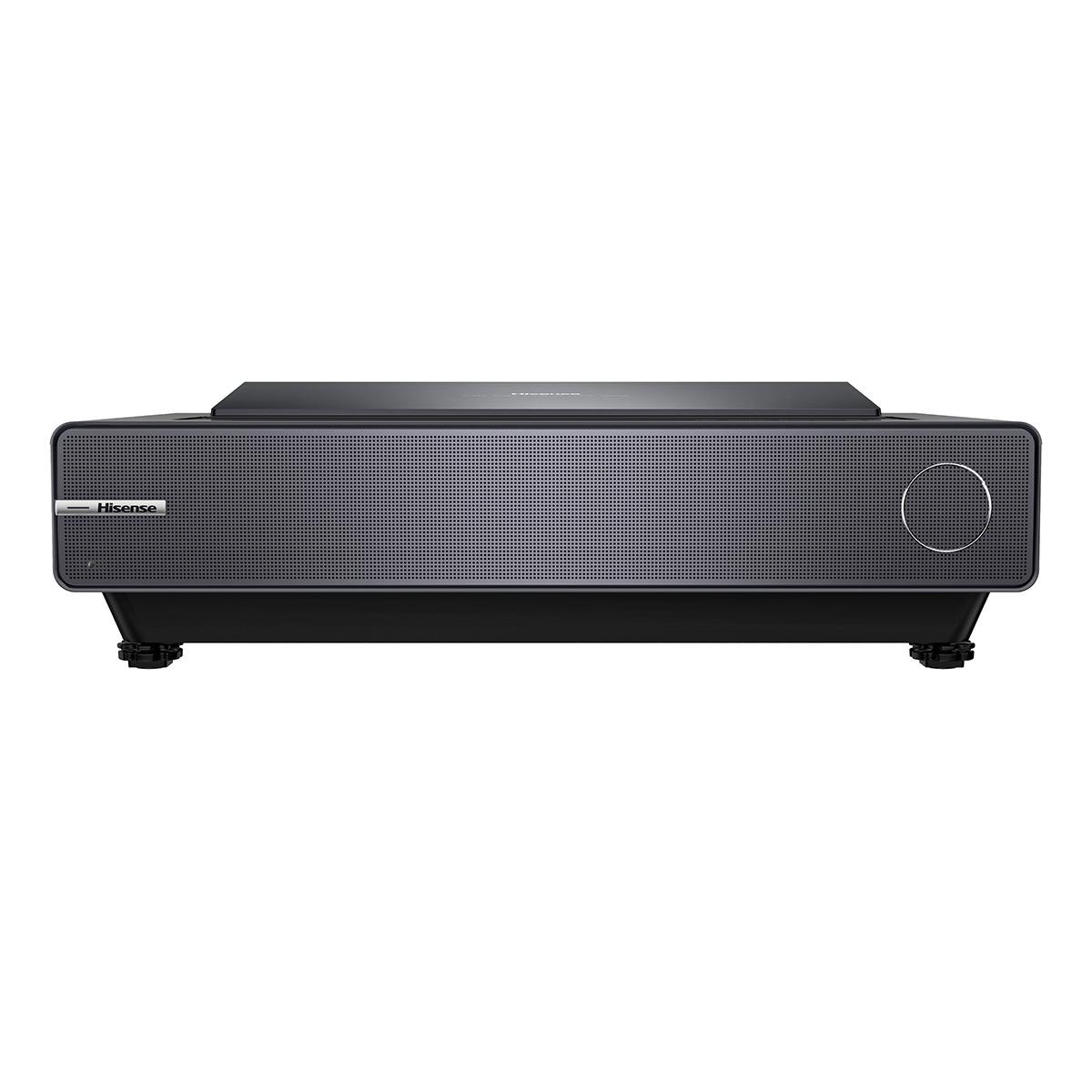
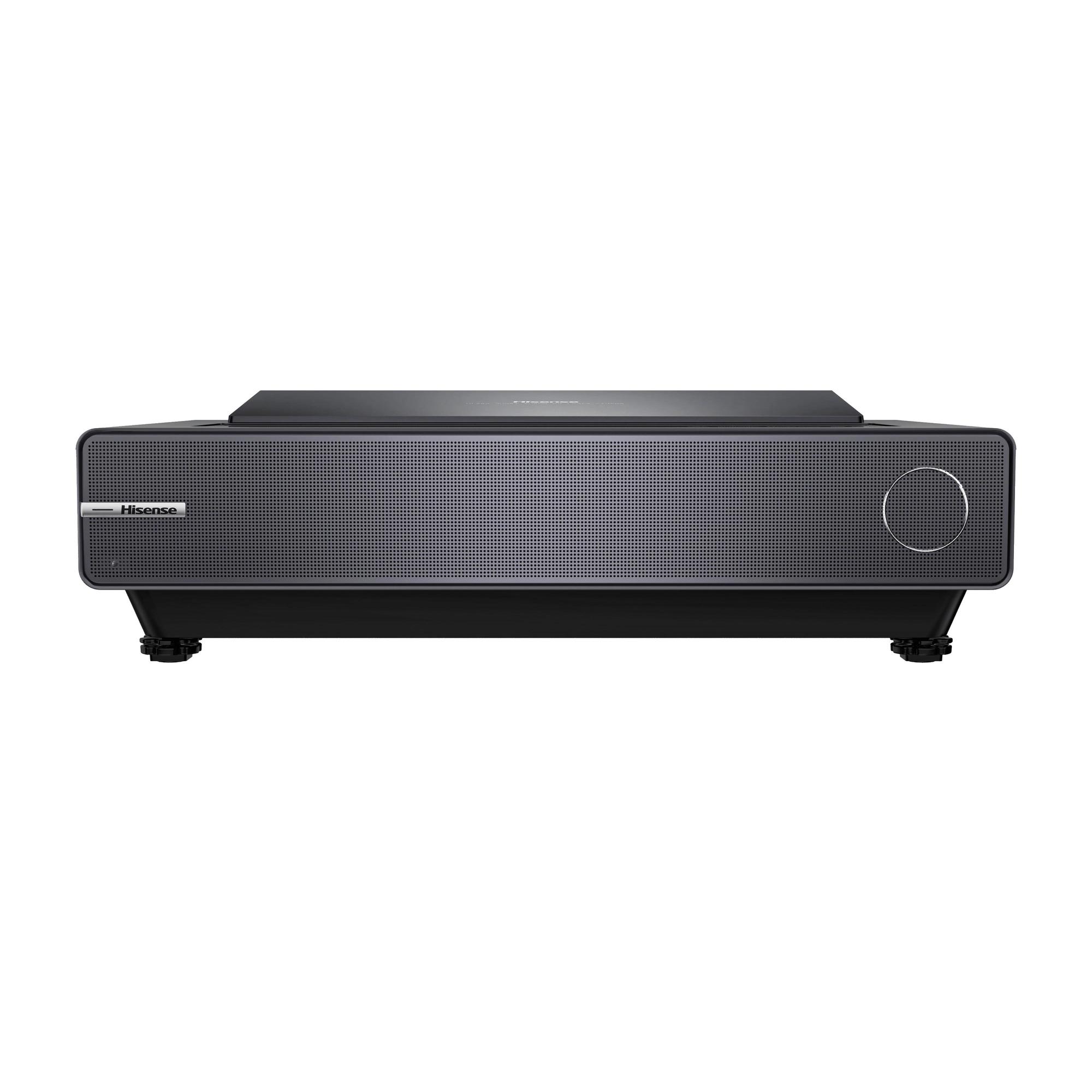
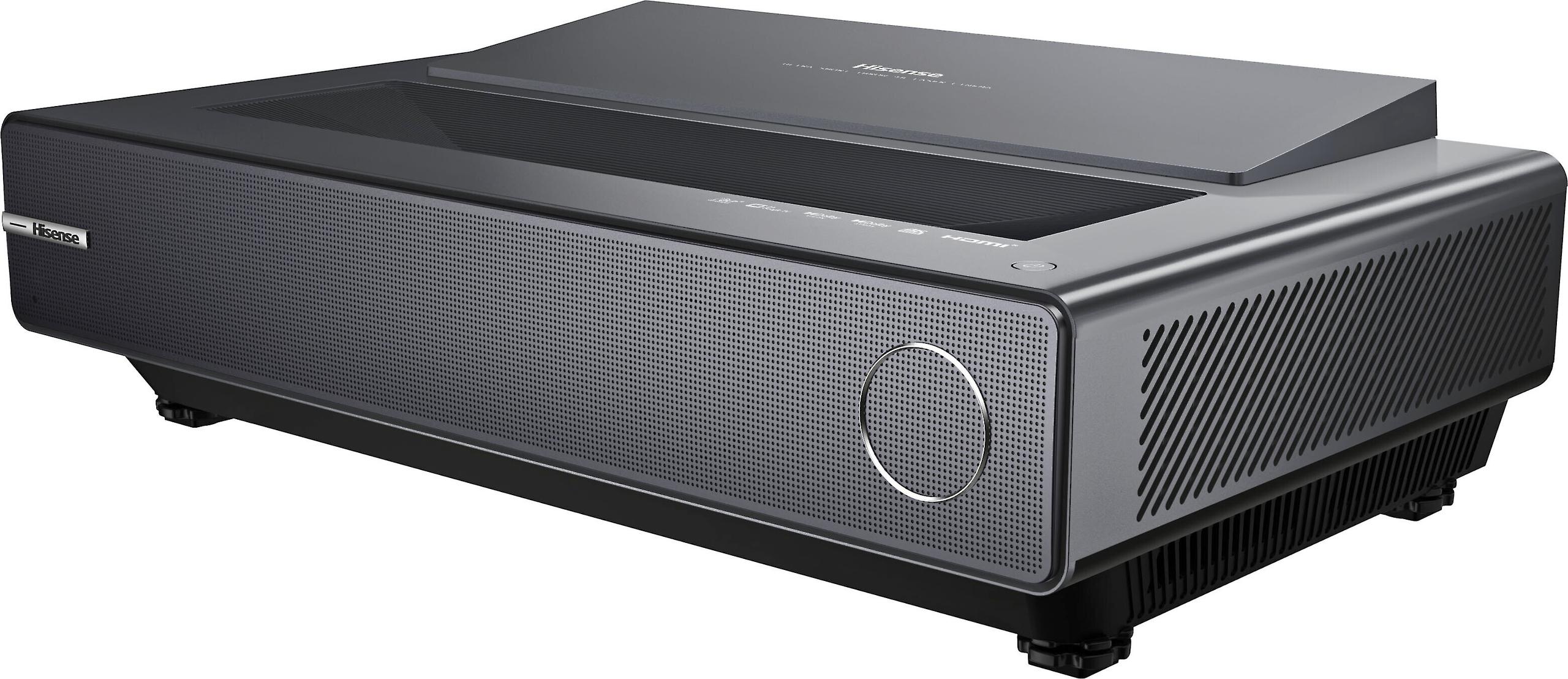
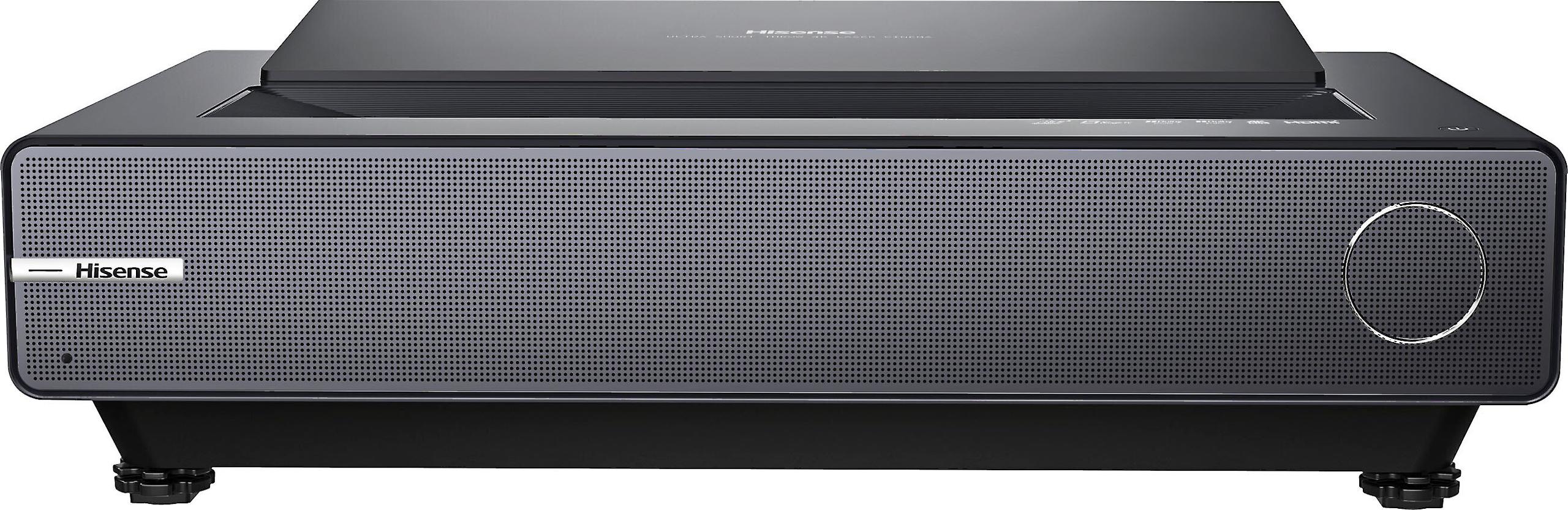
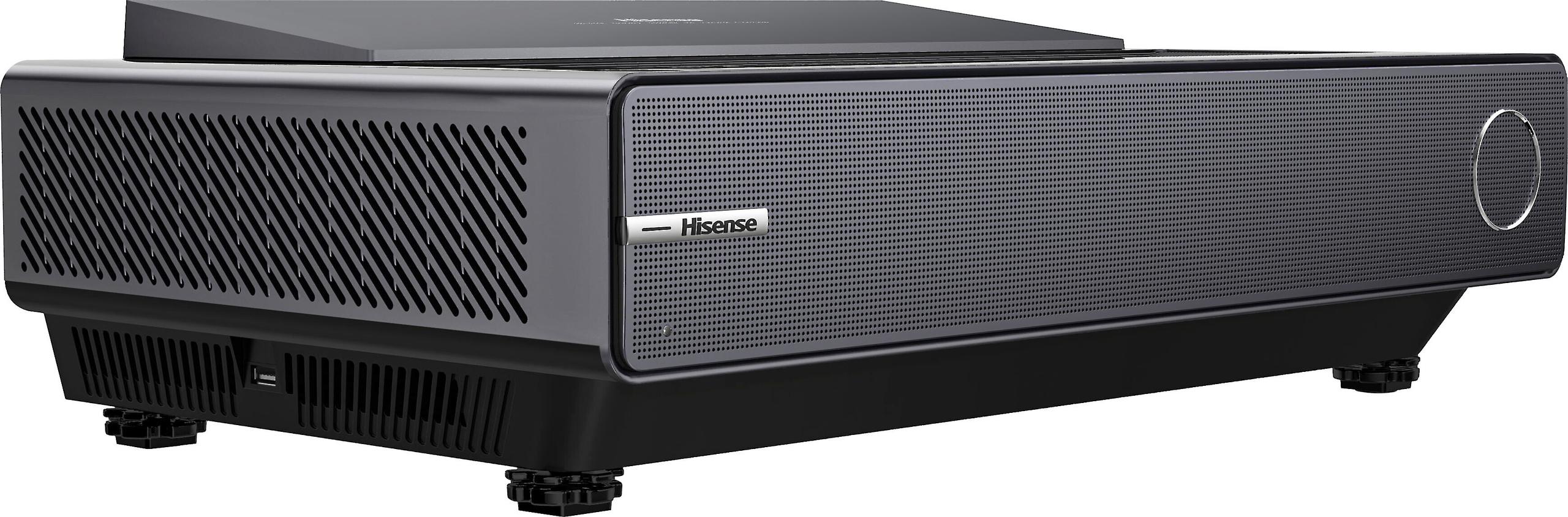
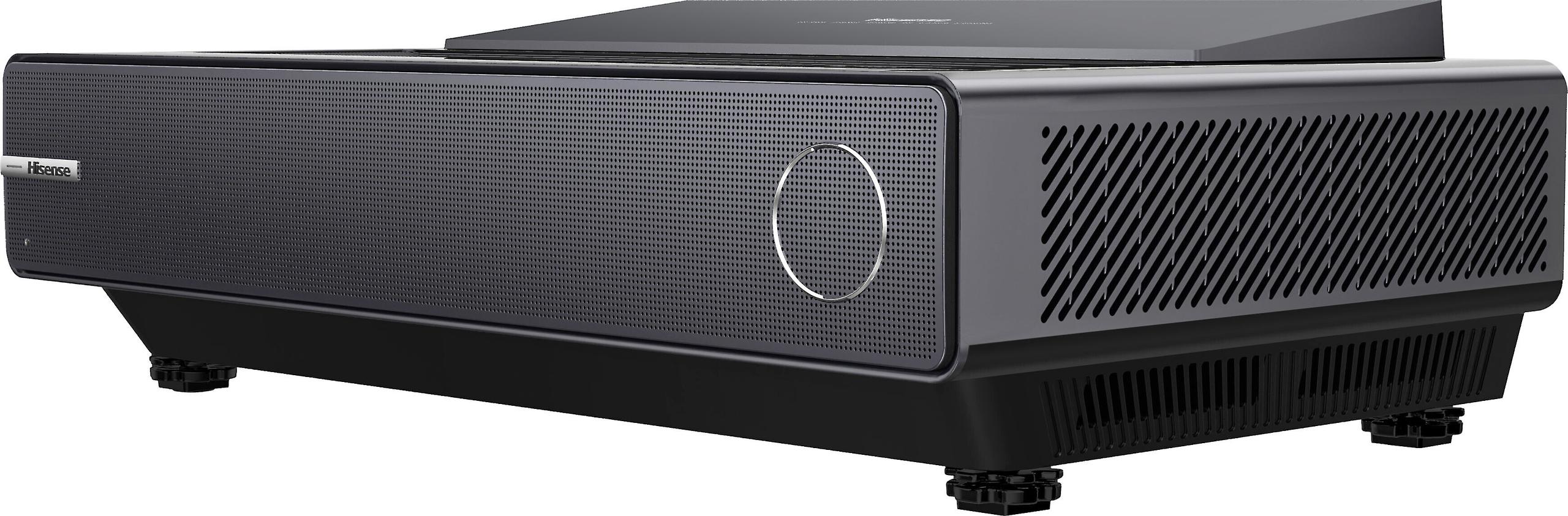
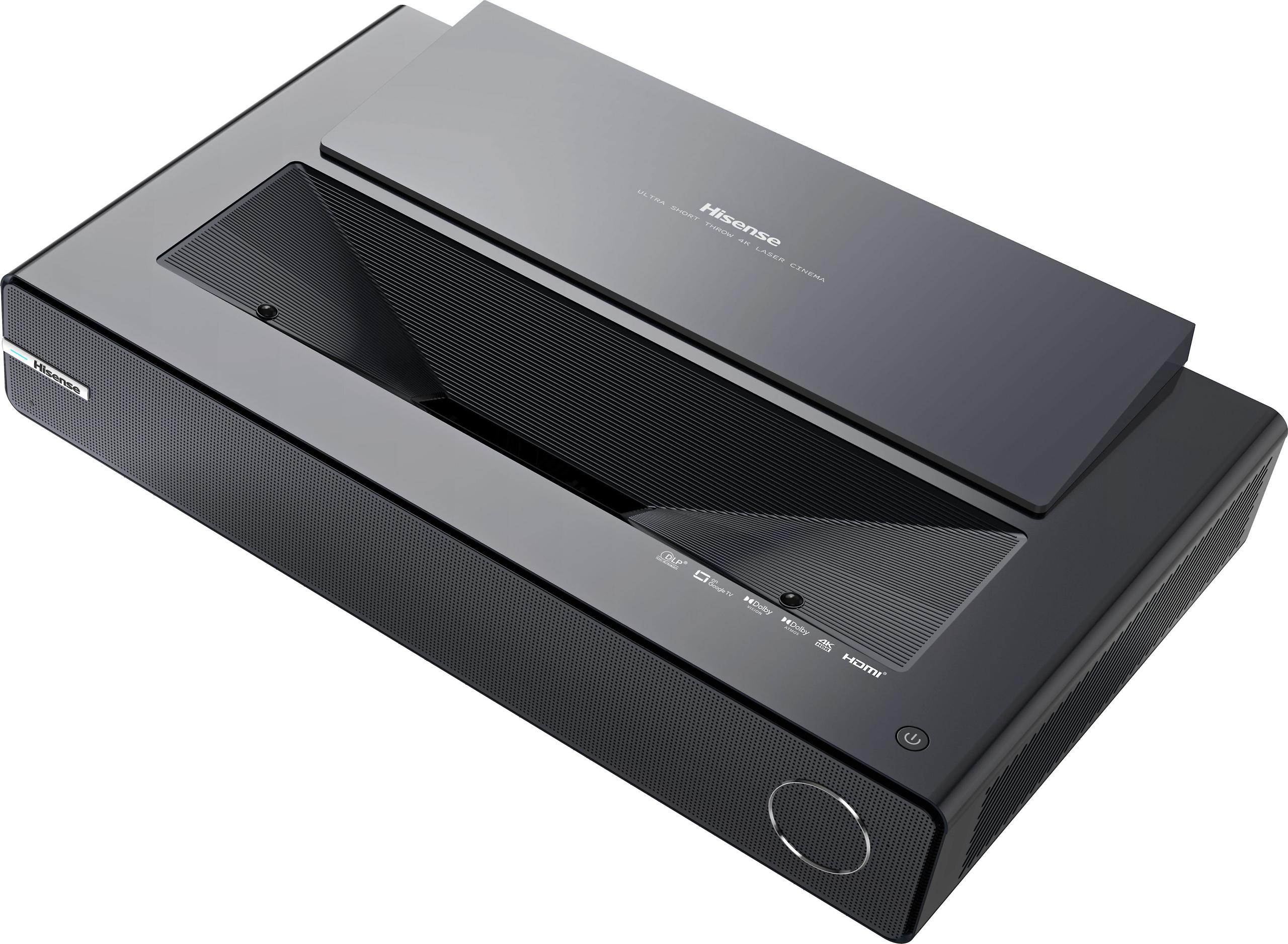
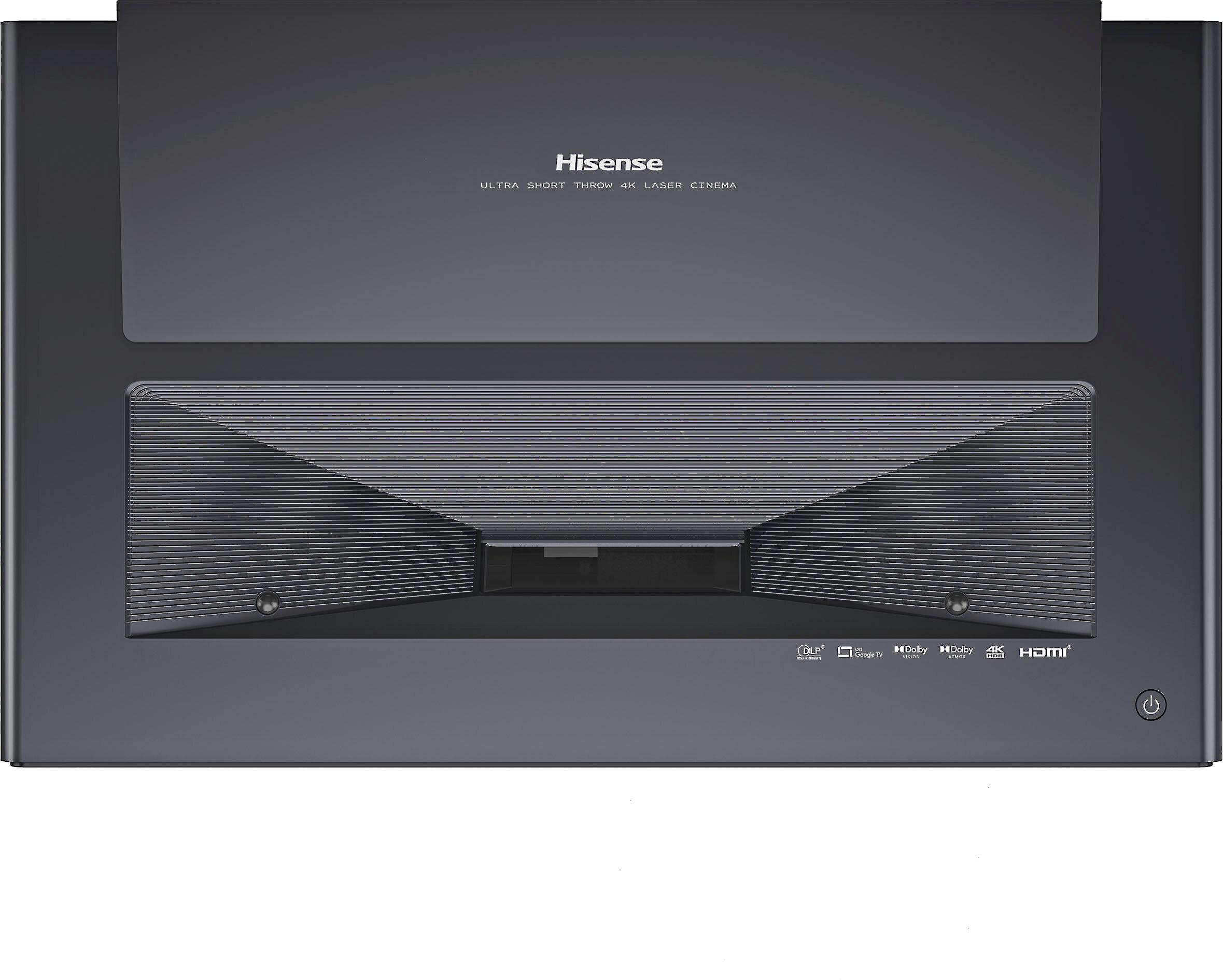
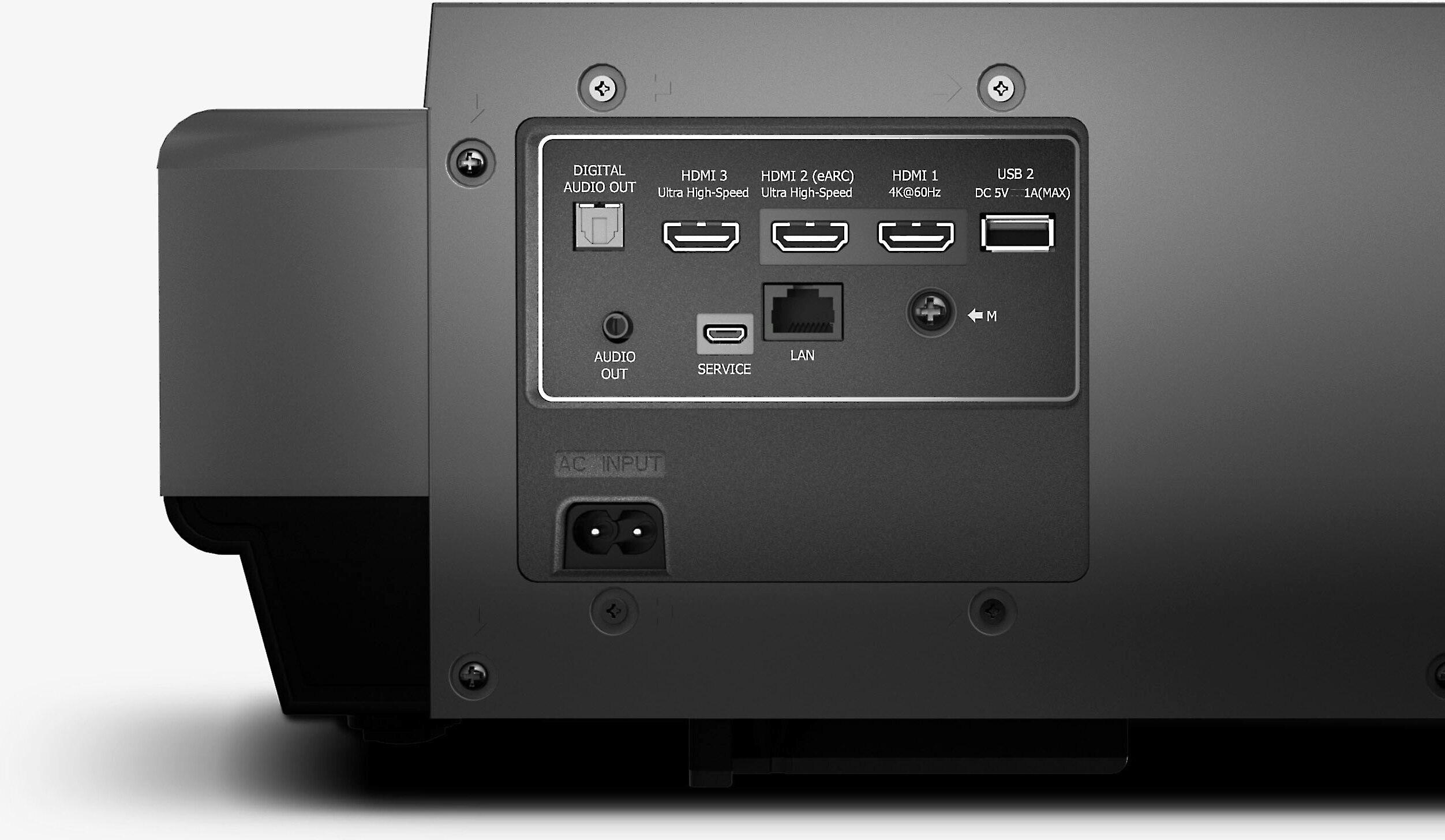
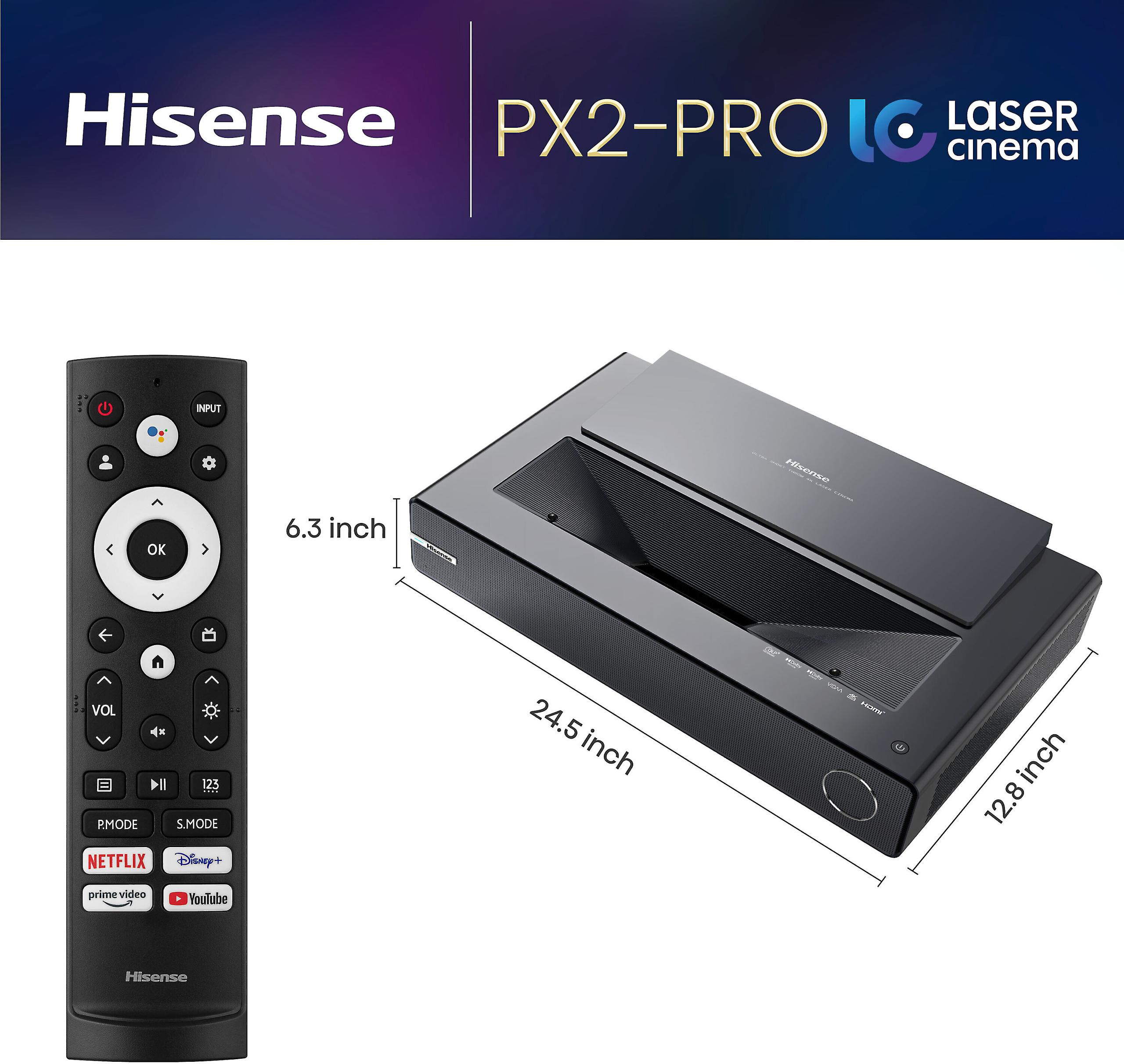

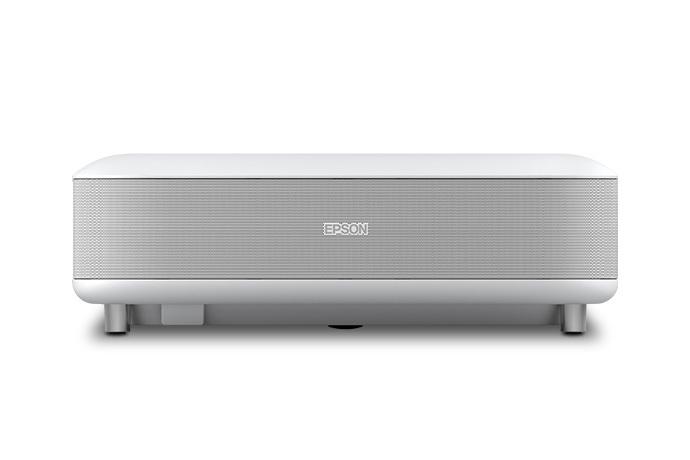
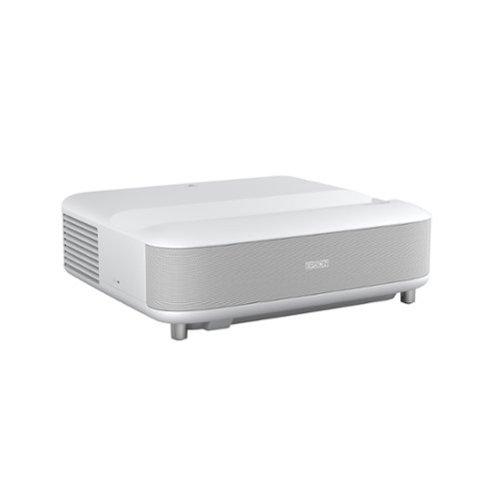


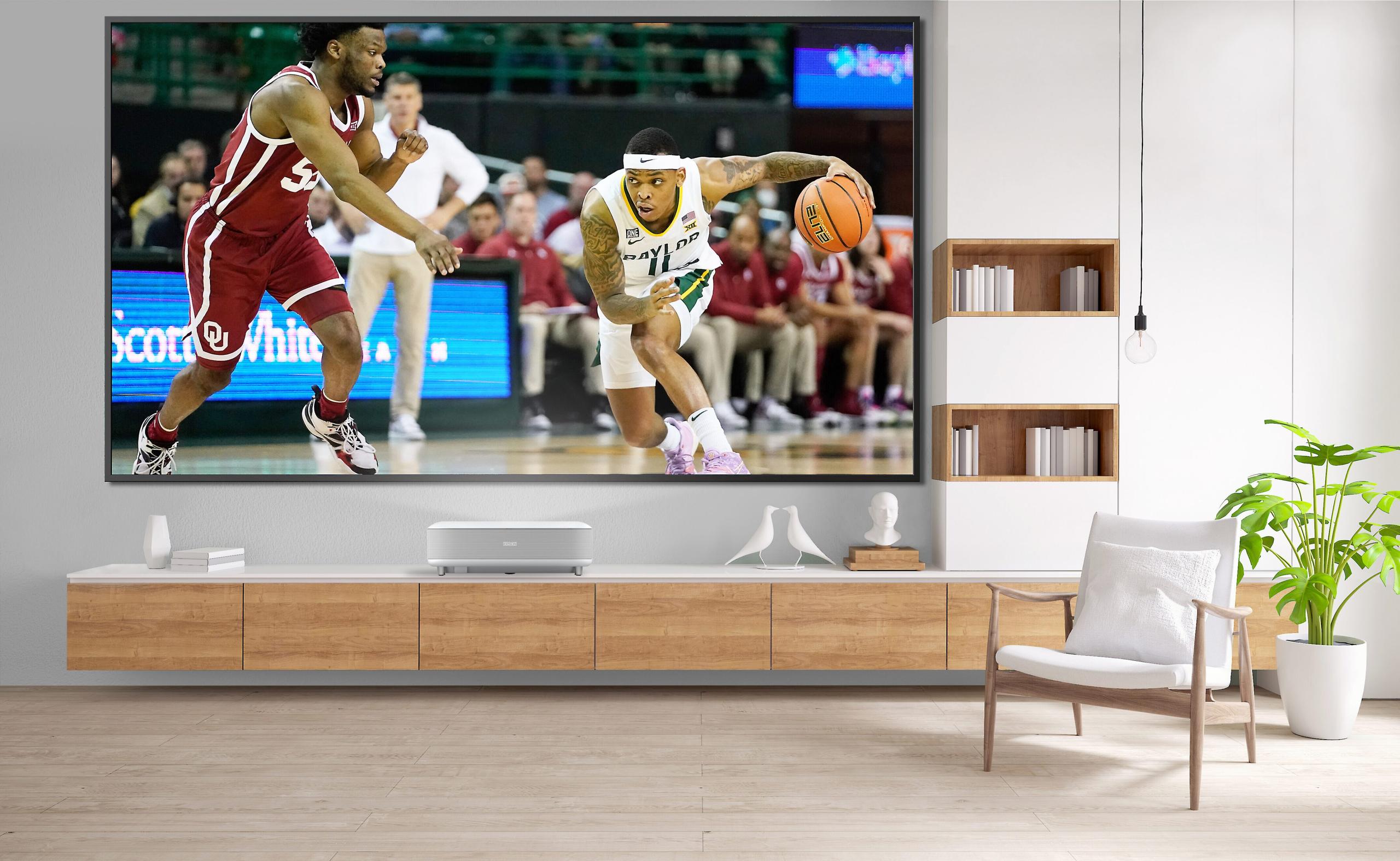
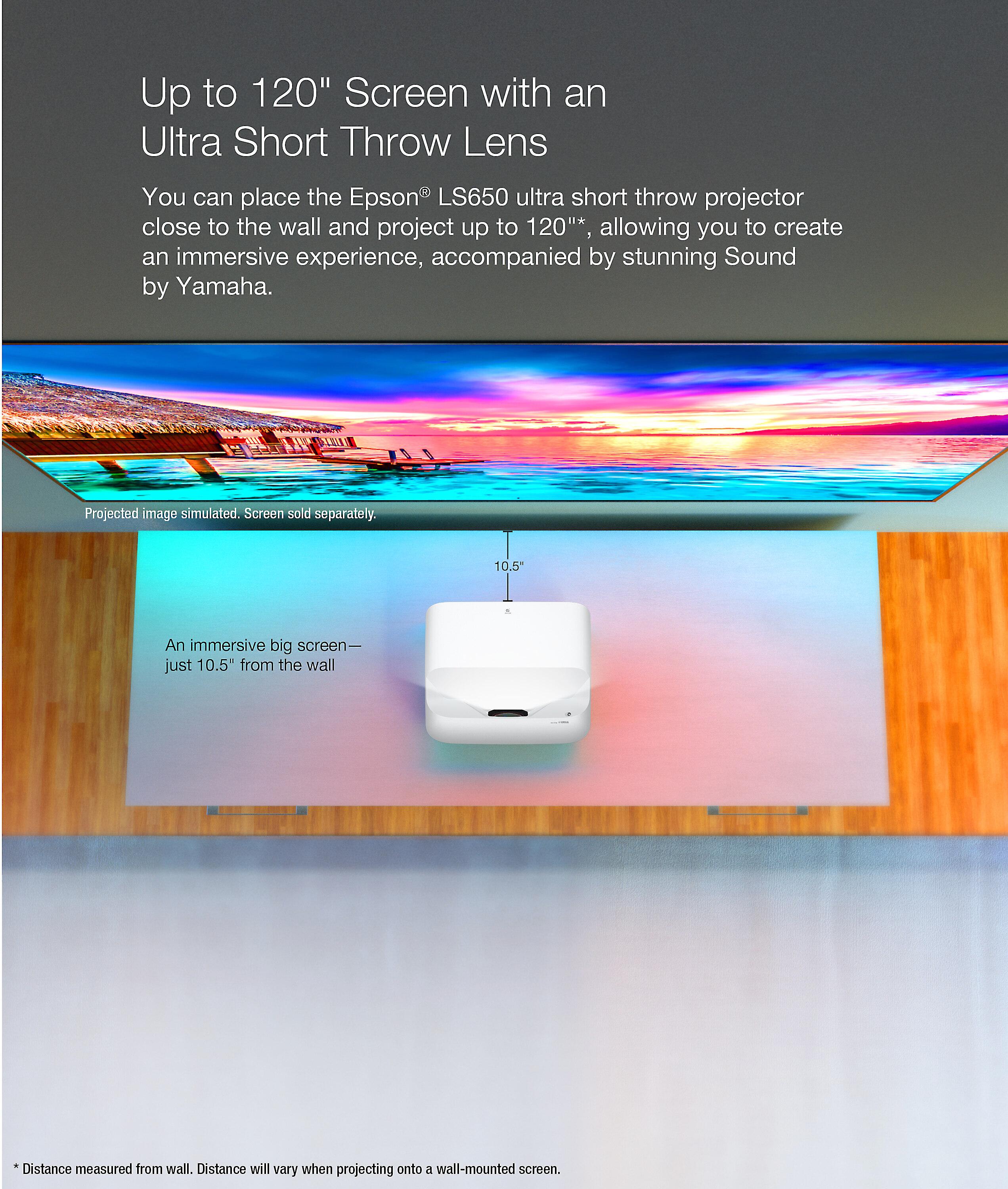
When it comes to creating a huge cinema experience at home, ultra short throw (UST) laser projectors have revolutionized what's possible. Today, we're comparing two compelling options: the Hisense PX2-PRO ($2,997) and the Epson LS650 ($1,999). These projectors can create massive 100+ inch images while sitting just inches from your wall, eliminating traditional projector mounting hassles.
Before diving deep, let's understand what makes these projectors special. UST technology uses precisely curved mirrors and advanced optics to project a large image from very close to the wall. Both units use laser light sources, which offer superior brightness, instant on/off, and longer lifespans compared to traditional lamp projectors.
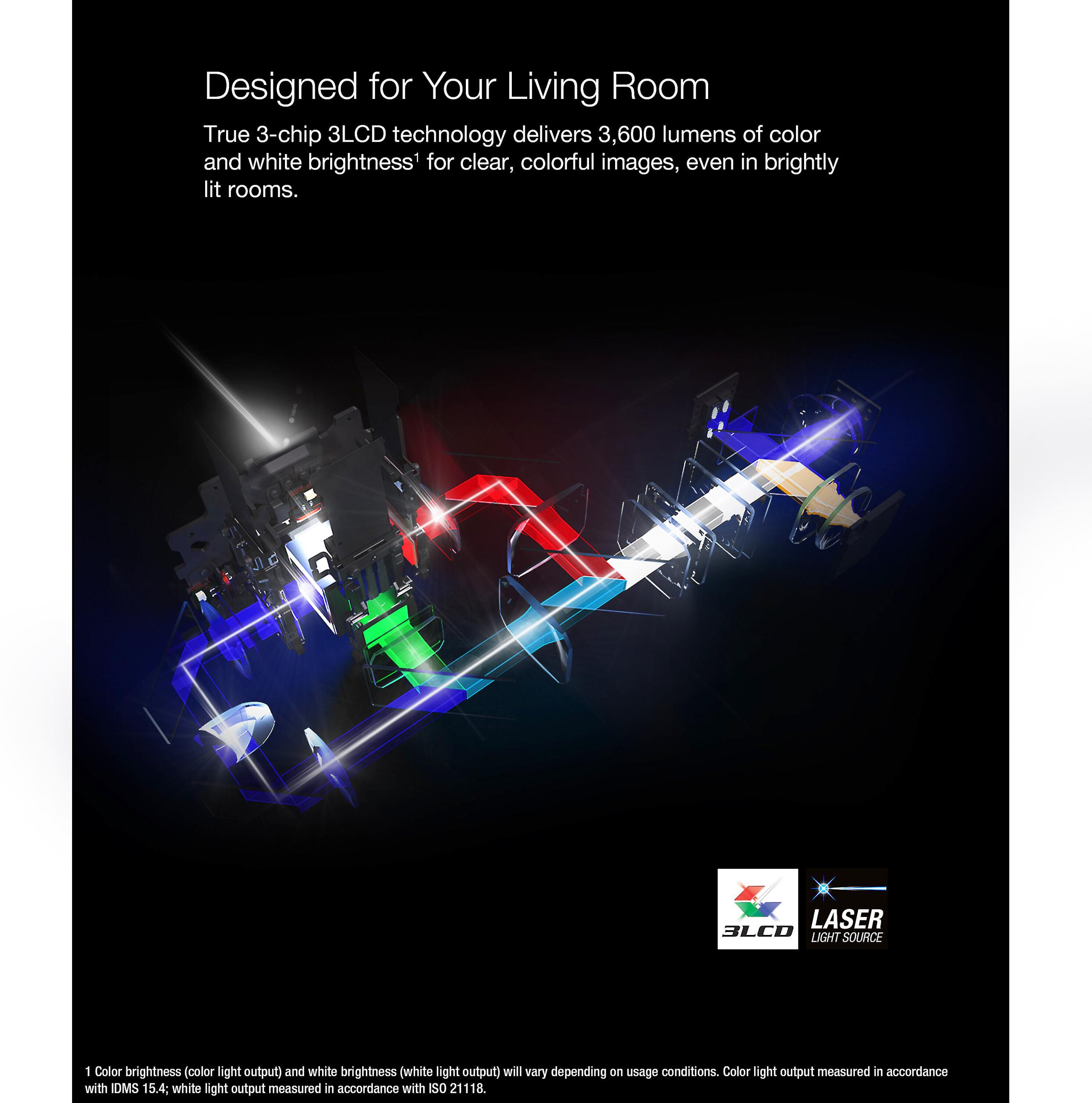
The Hisense PX2-PRO, released in 2022, introduced TriChroma laser technology, using three separate lasers (red, green, and blue) to create incredibly accurate colors. The newer Epson LS650, launched in late 2023, uses Epson's proven 3LCD technology with a single laser source split into three colors.
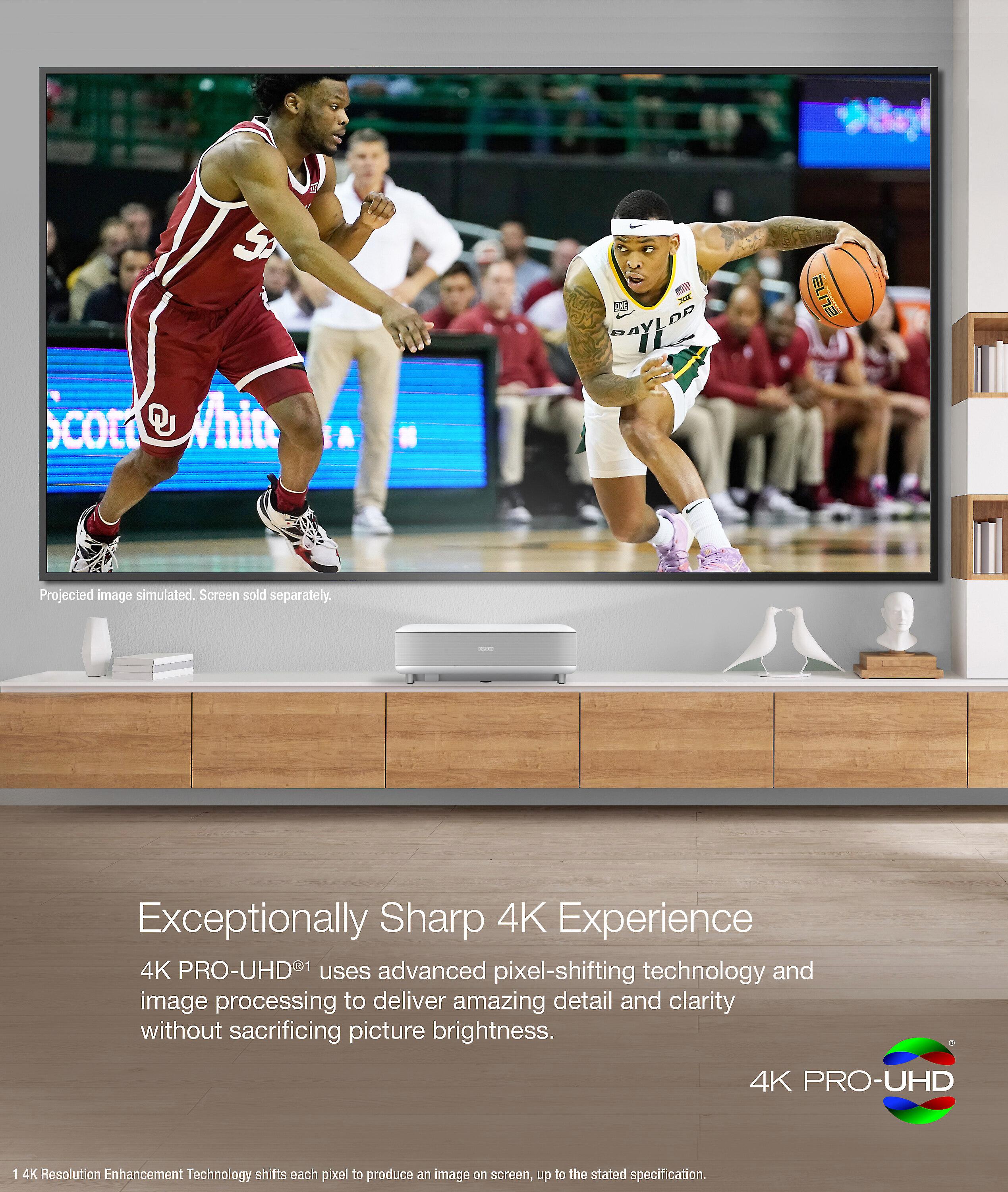
The Hisense delivers true 4K resolution (3840x2160 pixels), meaning every pixel you see is physically projected. Epson uses pixel-shifting technology, which rapidly moves a 1080p chip to create a 4K-like image. While both approaches can look excellent, the Hisense has a slight edge in absolute detail, particularly noticeable with static images and text.
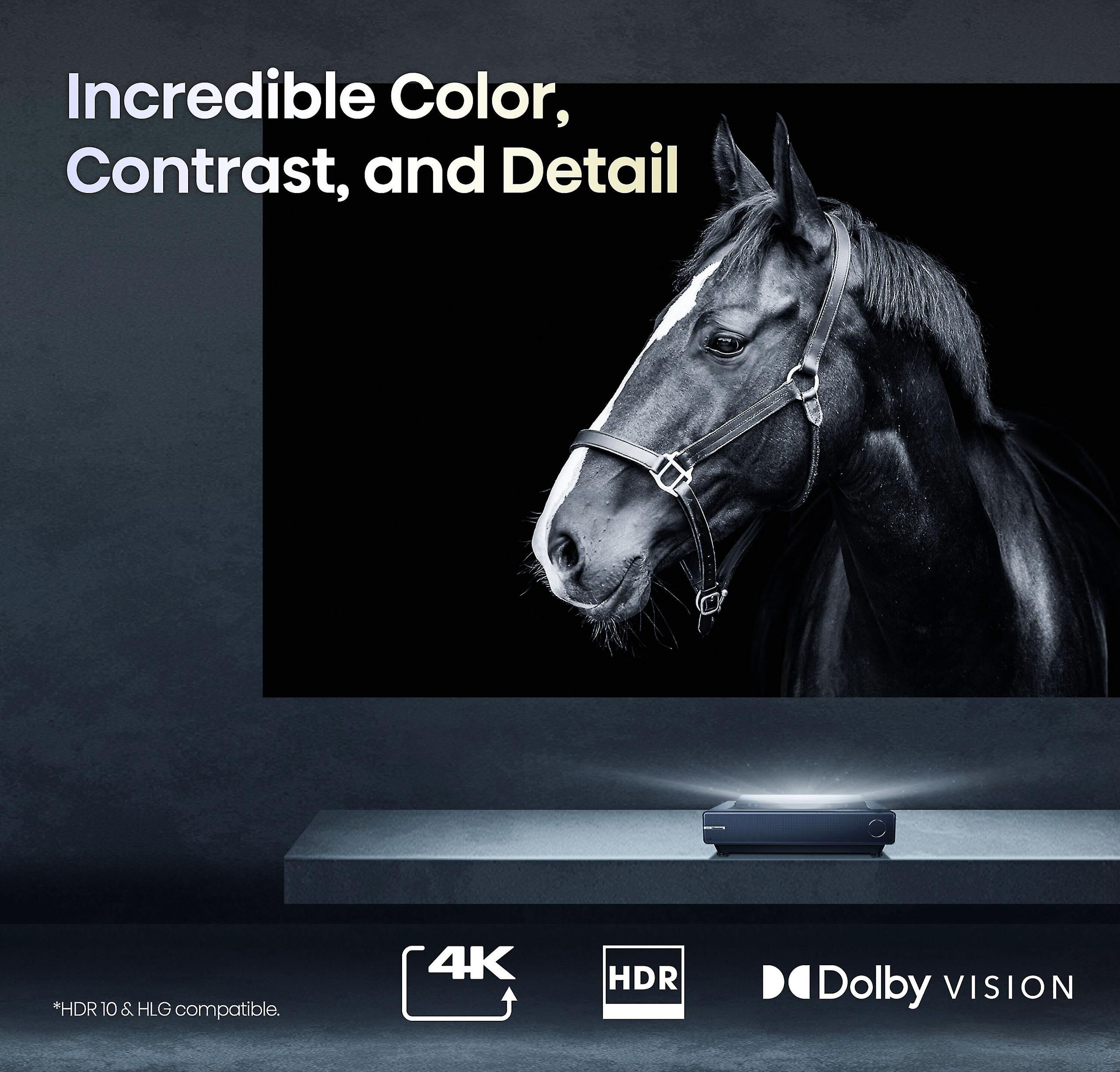
This is where these projectors really diverge. The Hisense's TriChroma laser system achieves an impressive 107% of the BT.2020 color space (the highest current standard for digital color). In practical terms, this means incredibly vivid and accurate colors, especially noticeable with nature documentaries and modern movies.
The Epson covers about 88.7% of the more basic Rec.709 color space. While still perfectly acceptable for most content, it can't match the Hisense's color volume and accuracy. However, Epson's 3LCD technology ensures no rainbow artifacts (color separation that some viewers notice with single-chip projectors).
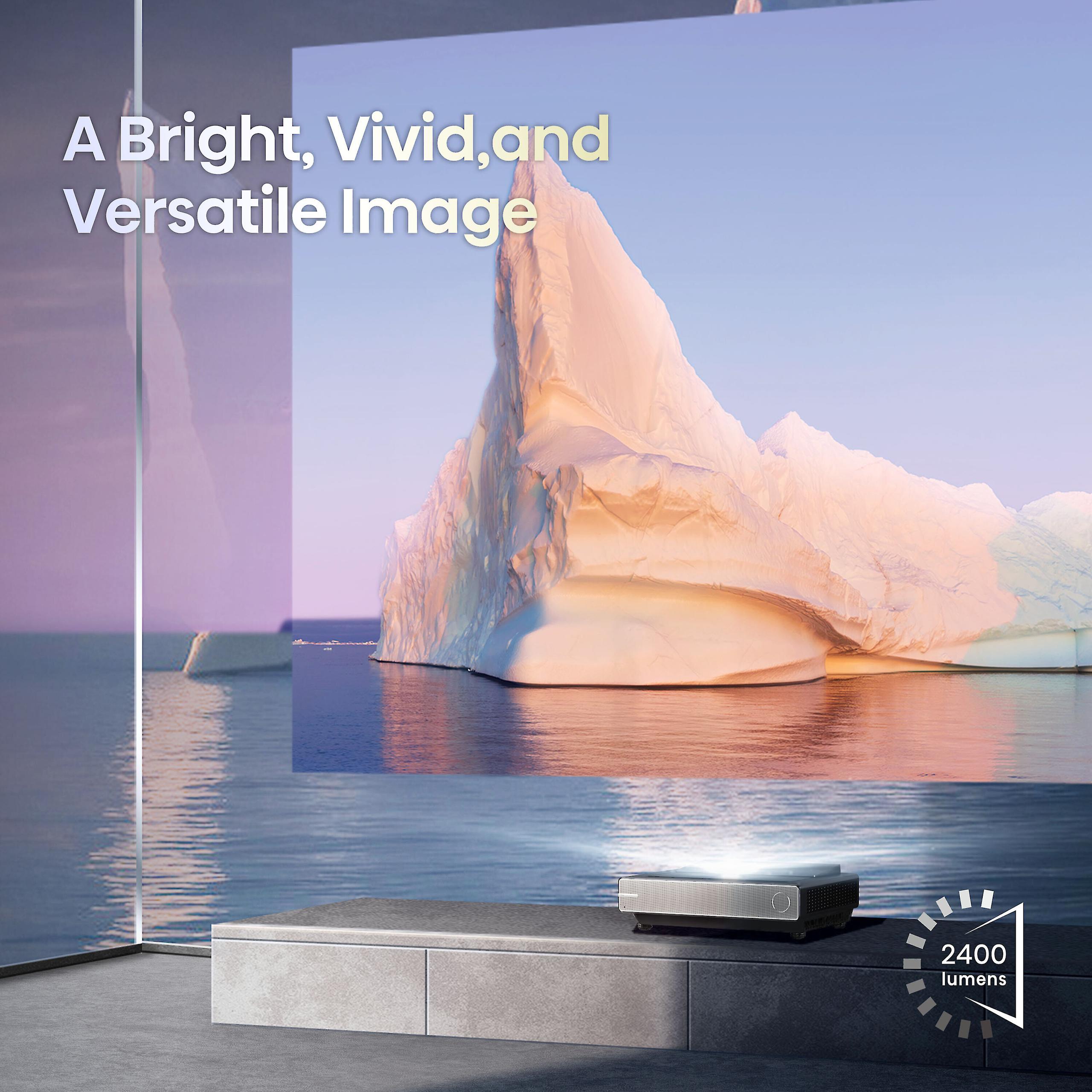
Here's where things get interesting. The Epson boasts 3,600 ANSI lumens compared to the Hisense's 2,400. In real-world use, this means the Epson performs better in rooms with ambient light. For dedicated home theaters or evening viewing, both are plenty bright, but the Epson has more flexibility for daytime use or rooms with windows.
The Hisense PX2-PRO runs Google TV, offering a more polished experience with better app support and content recommendations. The interface is snappy, and voice control works well. The Epson's Android TV implementation is functional but can feel sluggish, and some users report reliability issues.
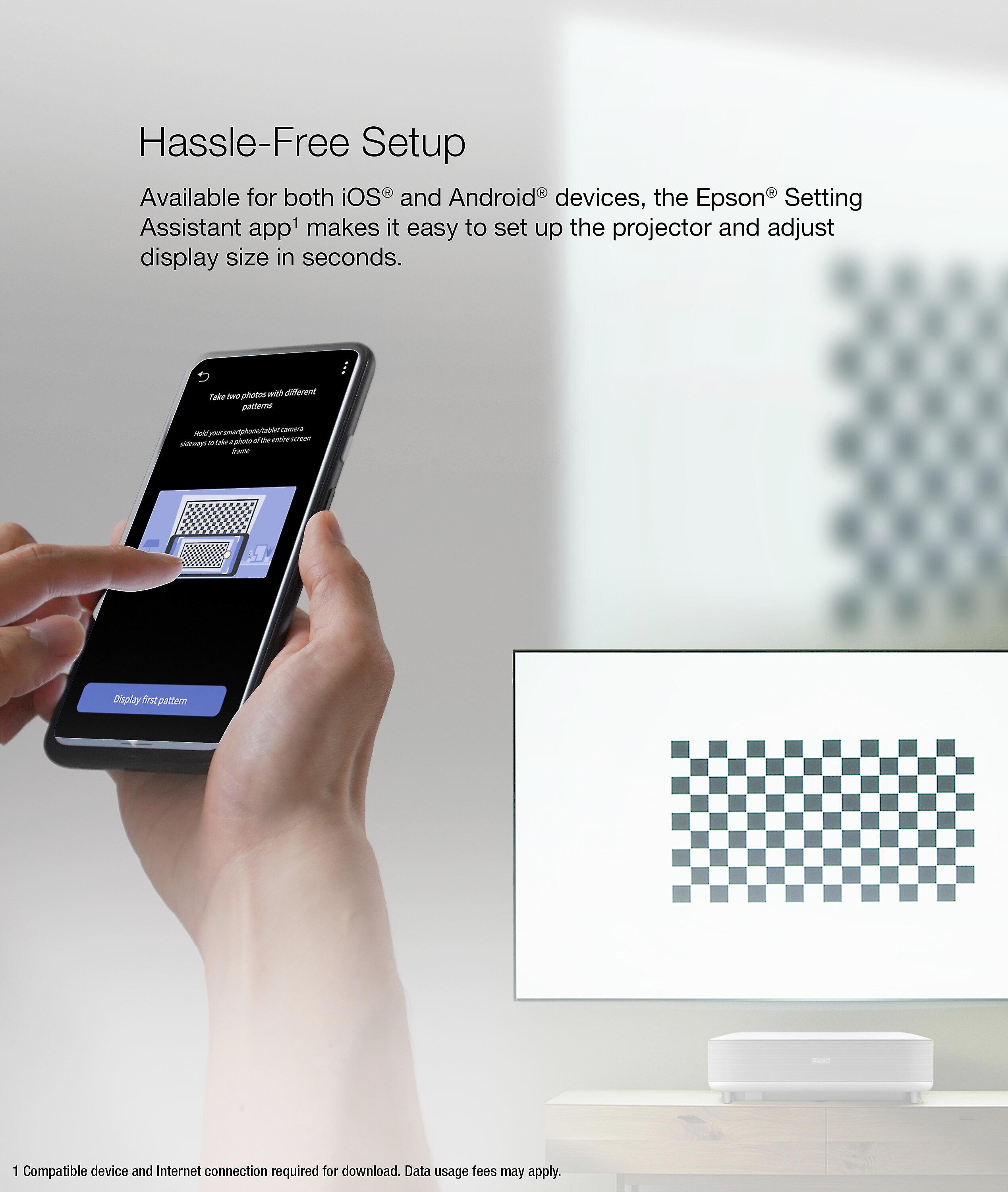
Both offer automatic geometric correction using your smartphone, though the Hisense's system is more refined. This matters because precise alignment is crucial for UST projectors - even small adjustments can affect image quality.
For gamers, the Hisense is the clear winner. It offers:
The Epson, while capable of gaming, doesn't specifically cater to gamers with higher input lag and no gaming-specific features.
Built-in audio has become increasingly important for UST projectors, as many users want an all-in-one solution. The Hisense offers 30W stereo speakers with Dolby Atmos support, creating a surprisingly immersive soundstage. The Epson's Yamaha-designed system is competent but less powerful at 20W total.
For serious home theater use, you'll want external speakers with either projector, but the Hisense could suffice for casual viewing.
Both projectors require careful placement and ideally a proper ALR (Ambient Light Rejecting) screen for best results. These screens, which can cost $500-1500, help maintain contrast and reject ceiling light that can wash out the image.
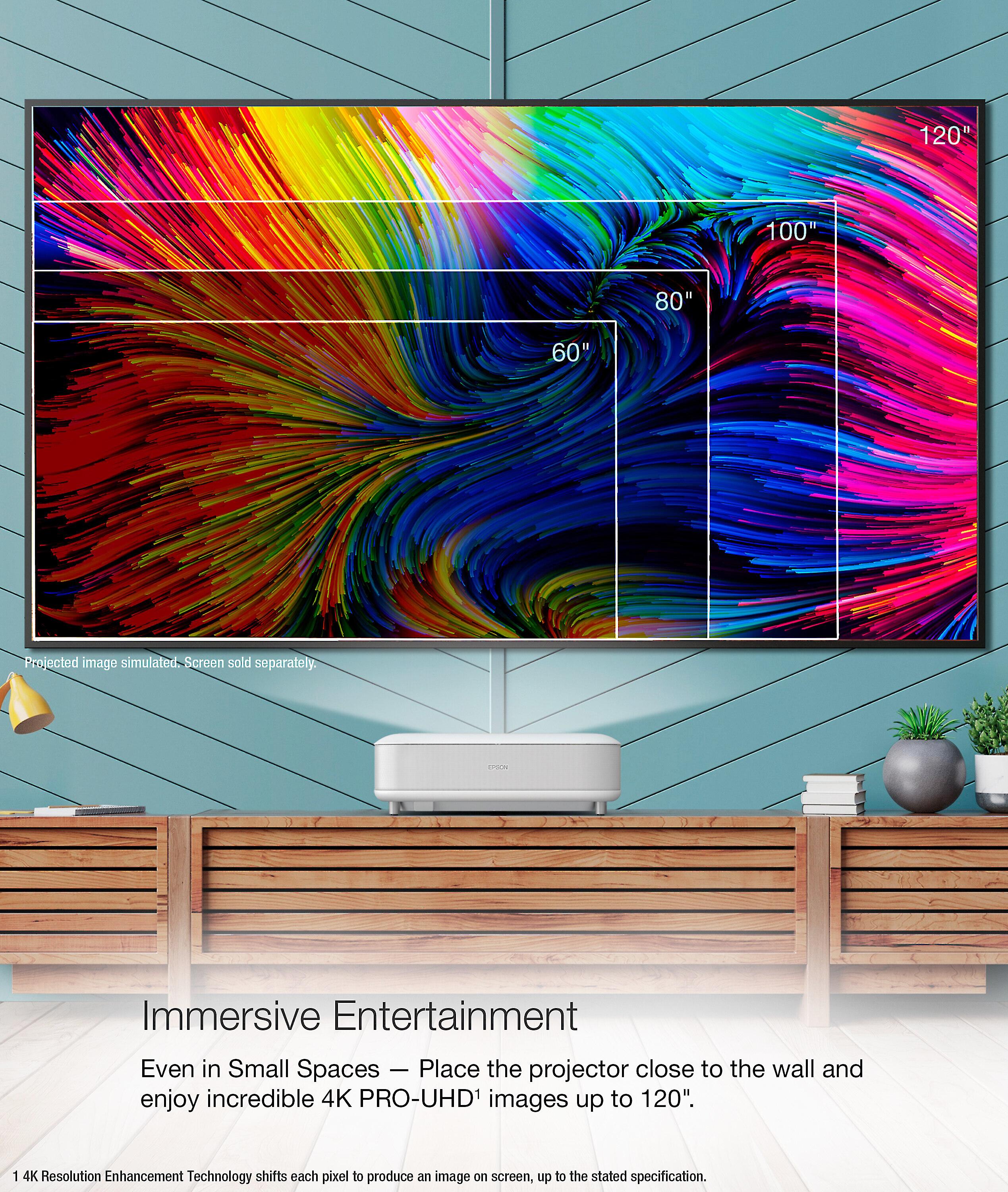
The Hisense's placement is slightly more forgiving, requiring about 11.7 inches from the wall for a 100-inch image, while the Epson needs about 12.2 inches. This small difference could matter depending on your furniture setup.
While the Epson LS650 is $1,000 less expensive, the value equation isn't straightforward. The Hisense offers:
The Epson counters with:
Choose the Hisense PX2-PRO if:
Choose the Epson LS650 if:
Both projectors represent the cutting edge of home theater technology, but they target slightly different users. The Hisense is the more premium option, offering better overall image quality and features at a higher price. The Epson focuses on brightness and value while maintaining good overall performance.
For a dedicated home theater room, the Hisense's superior color accuracy and true 4K resolution make it the better choice. For a bright living room or multipurpose space, the Epson's extra brightness might be more valuable.
Remember that either projector will require proper setup and ideally an ALR screen for the best experience. The technology has come a long way, but these aren't quite as plug-and-play as traditional TVs.
| Hisense PX2-PRO | Epson LS650 |
|---|---|
| Price - Initial Investment | |
| $2,997 | $1,999 |
| Resolution - Impacts detail and clarity | |
| True 4K (3840x2160) - Each pixel individually displayed | 4K PRO-UHD (pixel-shifted 1080p) - Good but not true 4K |
| Brightness - Critical for ambient light performance | |
| 2,400 ANSI lumens (good for dim/dark rooms) | 3,600 ANSI lumens (excellent for bright rooms) |
| Color Technology - Affects vibrancy and accuracy | |
| TriChroma RGB Laser (107% BT.2020) - Superior color range | 3LCD (88.7% Rec.709) - Good but more limited range |
| HDR Support - Enhances contrast and color | |
| Dolby Vision, HDR10, HLG - Full premium support | HDR10, HLG - Basic HDR support |
| Gaming Features - Important for responsiveness | |
| 30ms input lag, ALLM, 4K@60Hz - Good for gaming | Basic support, higher input lag - Not gaming-optimized |
| Smart Platform - Affects content access | |
| Google TV - Polished, extensive app support | Android TV - Basic functionality, some app limitations |
| Audio System - Built-in sound quality | |
| 30W Stereo with Dolby Atmos - Room-filling sound | 20W Yamaha system - Adequate but less powerful |
| Laser Life - Long-term durability | |
| 25,000 hours - Longer lifespan | 20,000 hours - Standard lifespan |
| Throw Distance for 100" Screen - Installation flexibility | |
| 11.7 inches - Slightly more compact placement | 12.2 inches - Standard placement |
| Connectivity - Device compatibility | |
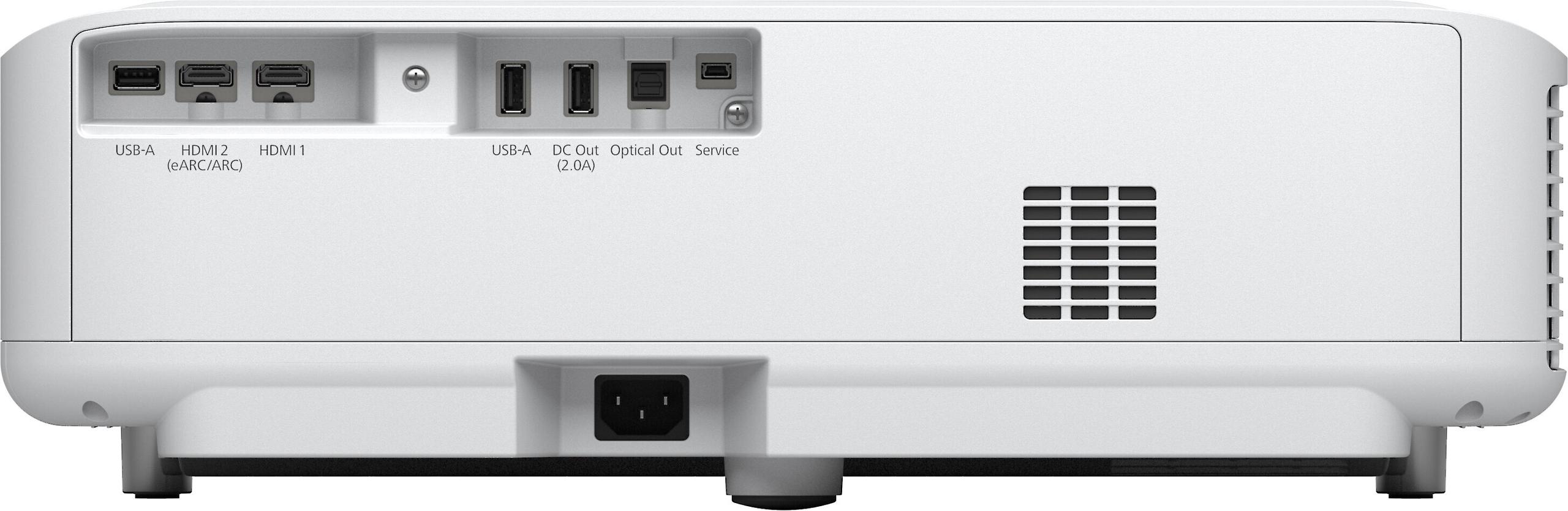
| 3x HDMI 2.1, eARC, USB - Modern connections | 2x HDMI 2.0, eARC, USB - Basic connections |
| Weight - Installation considerations | |
| 20.3 lbs - Heavier but solid build | 16.3 lbs - More manageable weight |
The Epson LS650 is better for bright rooms with its 3,600 ANSI lumens compared to the Hisense PX2-PRO's 2,400 lumens. This higher brightness makes the Epson more suitable for rooms with ambient light or daytime viewing.
The Hisense PX2-PRO offers superior picture quality with true 4K resolution and better color reproduction (107% BT.2020) compared to the Epson LS650's pixel-shifted 4K and more limited color range (88.7% Rec.709).
The Hisense PX2-PRO is significantly better for gaming with lower input lag (30ms), ALLM support, and 4K@60Hz capability. The Epson LS650 offers basic gaming support but lacks gaming-specific features.
The Epson LS650 at $1,999 offers better value if brightness is your priority, while the Hisense PX2-PRO at $2,997 justifies its higher price with better color, true 4K, and premium features.
Yes, both projectors offer streaming capabilities, but the Hisense PX2-PRO uses Google TV with better app support and performance, while the Epson LS650 uses Android TV with more basic functionality.
The Hisense PX2-PRO offers superior audio with 30W stereo speakers and Dolby Atmos support, compared to the Epson LS650's 20W Yamaha system.
Both projectors need similar space - the Hisense PX2-PRO needs 11.7 inches for a 100-inch image, while the Epson LS650 requires 12.2 inches.
The Hisense PX2-PRO has a slightly longer rated laser life of 25,000 hours compared to the Epson LS650's 20,000 hours.
Yes, both the Hisense PX2-PRO and Epson LS650 work best with ALR (Ambient Light Rejecting) screens designed for ultra short throw projectors.
Both projectors offer automatic geometric correction, but the Hisense PX2-PRO has a more refined setup process compared to the Epson LS650.
Yes, both the Hisense PX2-PRO and Epson LS650 can replace a TV, but the Hisense offers a more TV-like experience with better smart features and HDR support.
The Epson LS650 performs better in lit rooms, while the Hisense PX2-PRO works best in controlled lighting conditions for optimal picture quality.
We've done our best to create useful and informative comparisons to help you decide what product to buy. Our research uses advanced automated methods to create this comparison and perfection is not possible - please contact us for corrections or questions. These are the sites we've researched in the creation of this article: bestbuy.com - walmart.com - hisense-usa.com - techradar.com - youtube.com - shop.hisense-usa.com - shop.hisense-usa.com - electronicexpress.com - projectorreviews.com - projectorscreenstore.com - crutchfield.com - walmart.com - avsforum.com - techradar.com - youtube.com - projectorscreen.com - news.epson.com - projectorcentral.com - projectorreviews.com - avsforum.com - projectorcentral.com - news.epson.com - audiogeneral.com

Privacy Policy
Terms and Conditions - Affiliate Policy
Home Security
© Copyright 2008-2026.
11816 Inwood Rd #1211, Dallas, TX 75244