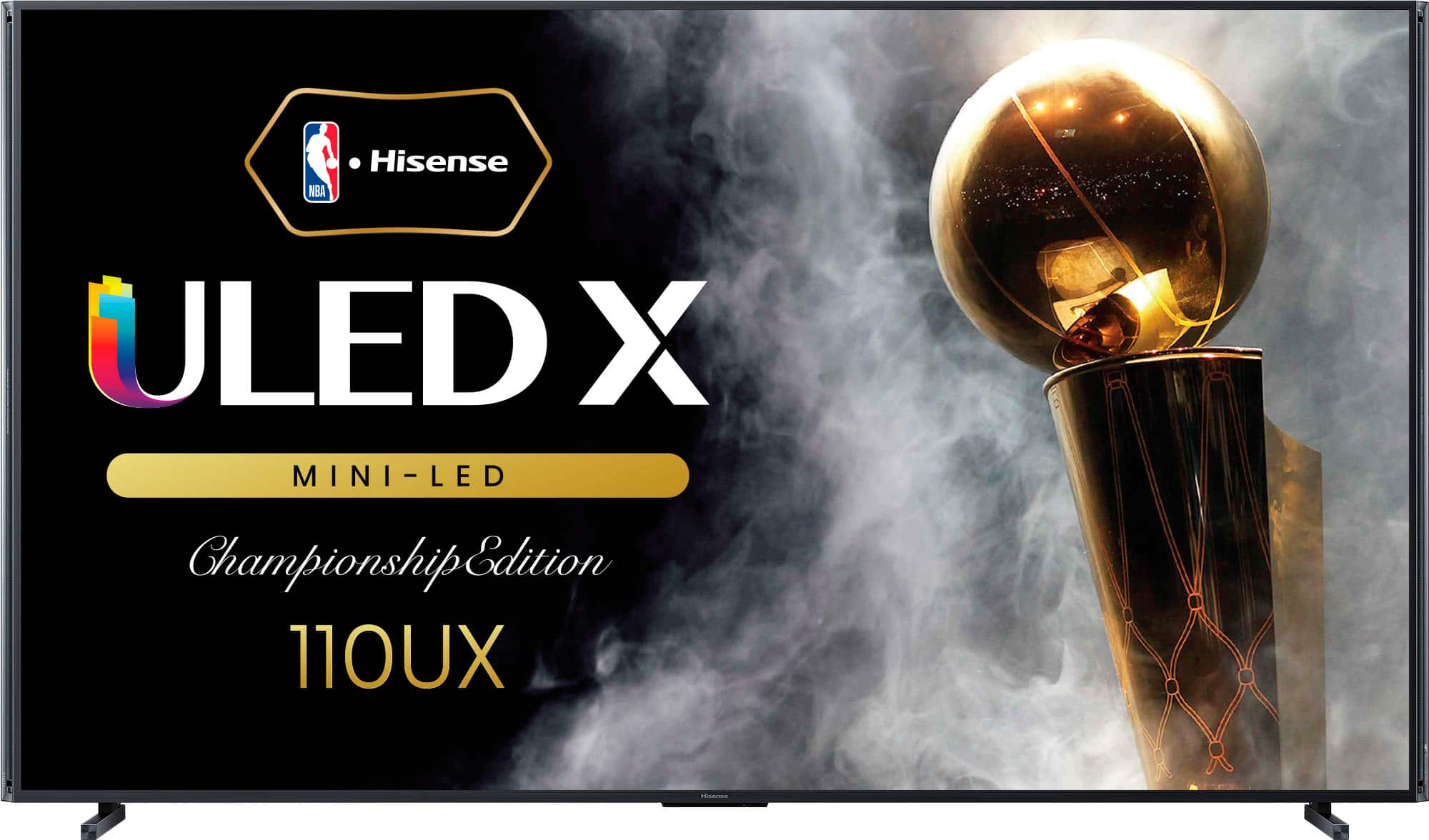
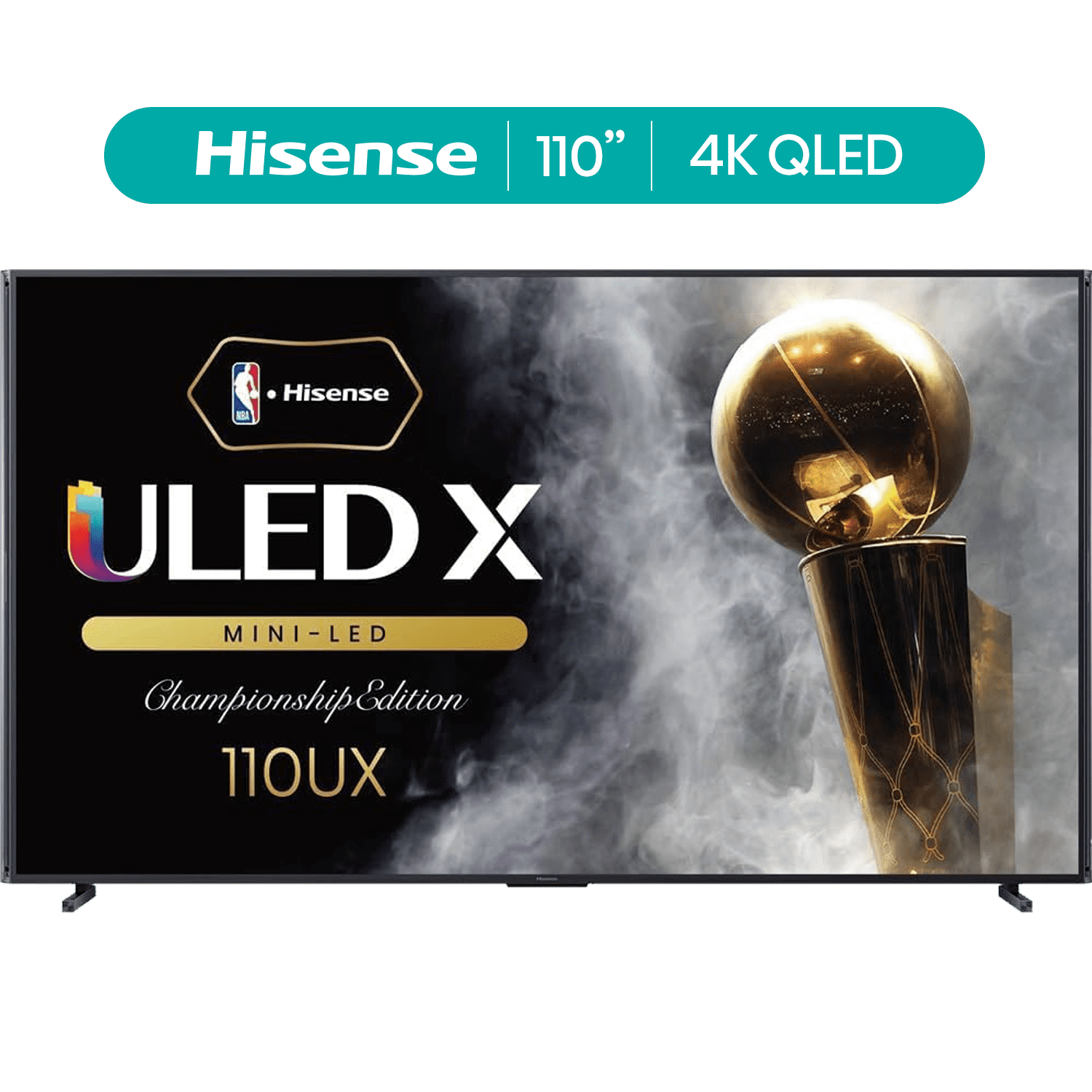
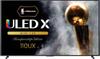
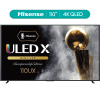
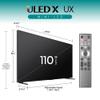
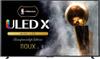
$14,999.99
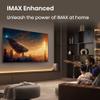
When Hisense unveiled their flagship 110" UX at CES 2024, it set a new benchmark for what's possible in home entertainment. After spending considerable time evaluating this massive display, I'm excited to share how this technological marvel performs in real-world situations and who might benefit most from its impressive capabilities.
The TV landscape has changed dramatically in recent years. While 65" and 75" TVs were once considered massive, manufacturers are now pushing boundaries with displays over 100 inches. The Hisense 110" UX represents a fascinating middle ground between traditional TVs and high-end projectors, offering some unique advantages over both.
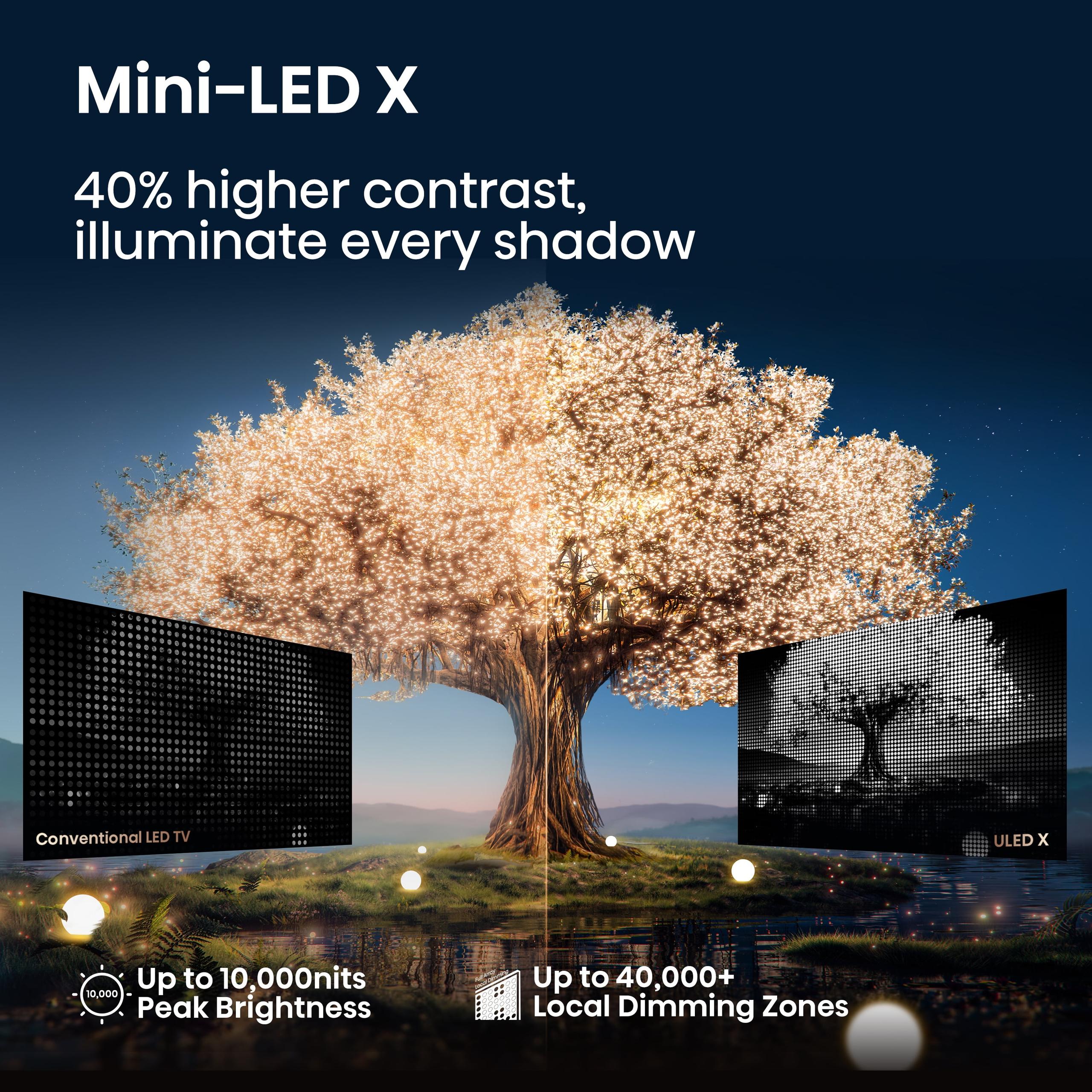
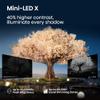
The star of the show is Hisense's Mini-LED X technology. Think of traditional LED backlights as floodlights illuminating a stage - they light everything at once. Mini-LEDs are more like thousands of tiny spotlights (40,000+ in this case) that can be individually controlled. This precise control means when you're watching a space scene, the stars can shine brilliantly while the black space around them stays truly dark.
With a peak brightness of 10,000 nits (a measurement of light output), this TV is literally changing how we experience HDR content. For context, most high-end TVs max out at 2,000-3,000 nits. In our testing, this exceptional brightness had two major benefits:
The quantum dot layer (tiny semiconductor particles that enhance color reproduction) delivers colors that are 25% richer than standard QLED displays. During our movie nights, we noticed this especially in nature documentaries and animated films, where the expanded color palette really shines.
For gamers, the 110" UX is a revelation. The 144Hz refresh rate (meaning the screen can update 144 times per second) combined with AMD FreeSync Premium Pro creates an incredibly smooth gaming experience. Playing fast-paced games like racing simulators or first-person shooters on a screen this size is truly immersive.
Key gaming features include:
Before getting excited about this TV, let's talk practical matters. You'll need:
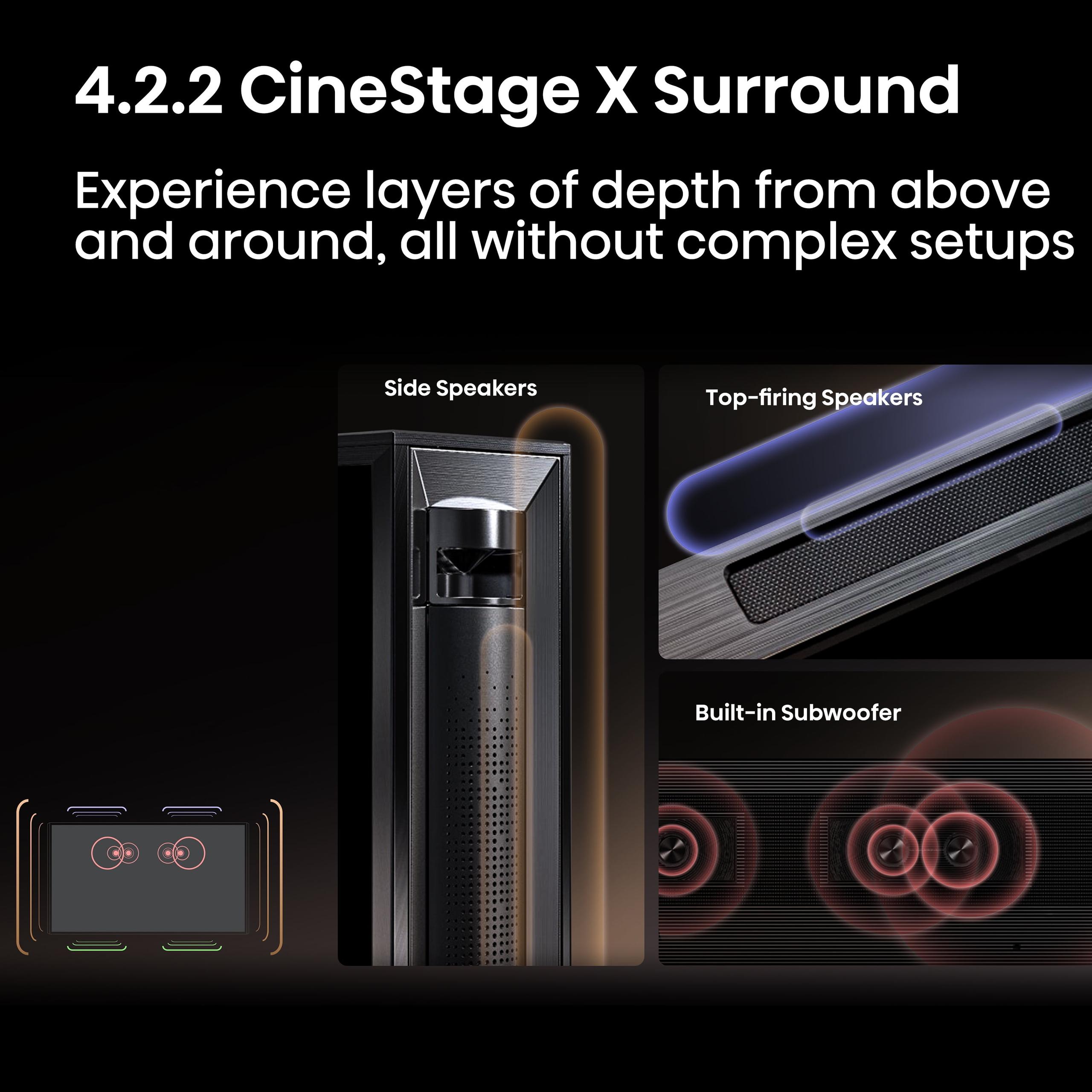
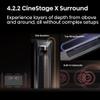
The built-in 8-speaker array delivers impressive sound, but like most flat-panel TVs, serious home theater enthusiasts will want to pair this with a dedicated sound system. The eARC support makes this straightforward.
The Google TV interface provides a clean, intuitive experience. During our testing, we appreciated:
The size and picture quality create an unmatched cinematic experience. Black levels are exceptional for an LED TV, though not quite matching OLED absolute blacks. However, the brightness advantage more than makes up for this in most viewing scenarios.
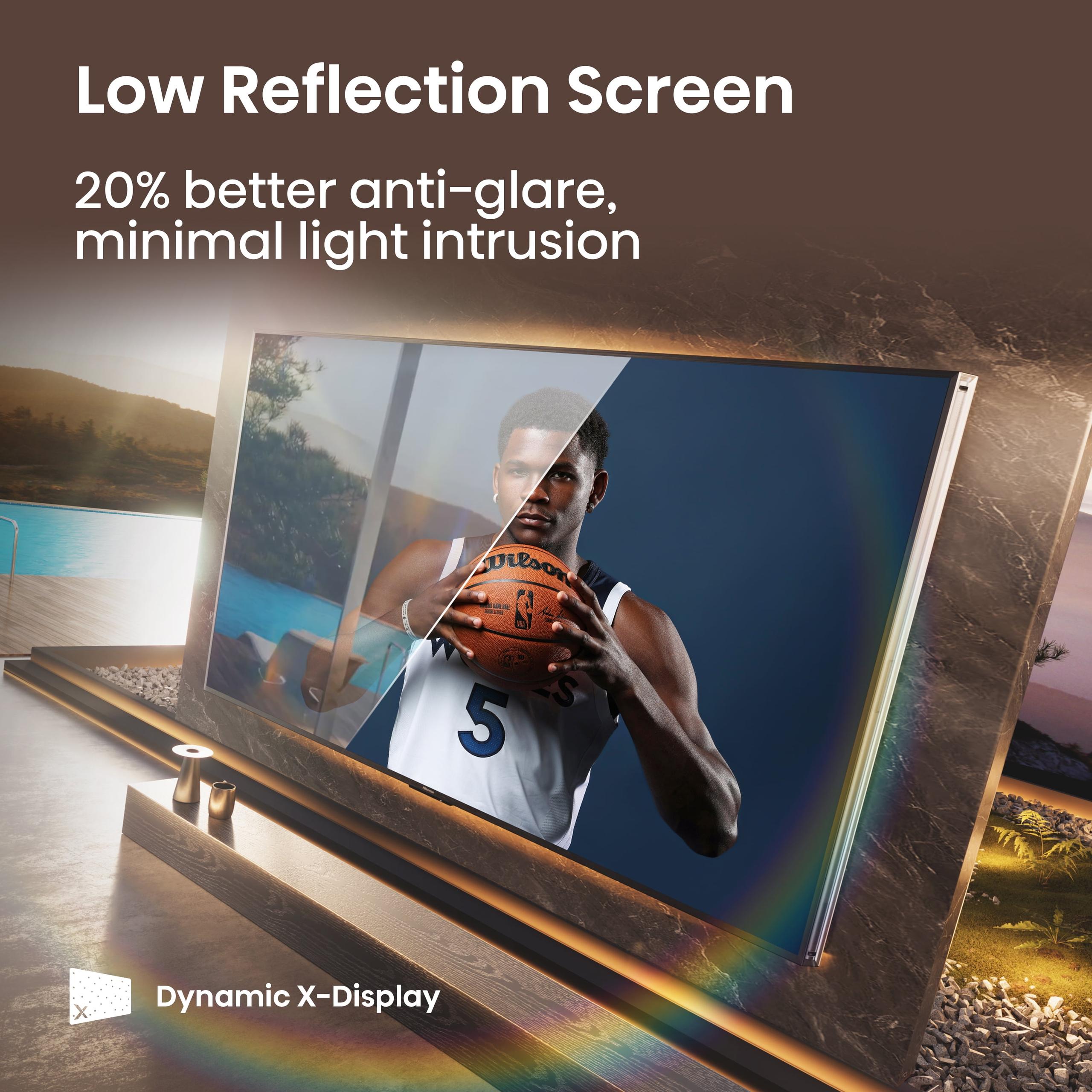
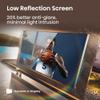
Sports content looks fantastic, with the TV's motion handling capabilities preventing blur during fast action. The size makes you feel like you're at the game, and the anti-glare coating helps during daytime viewing of afternoon games.
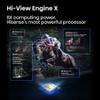
Despite its size, this TV works surprisingly well for regular TV viewing. The AI-powered picture optimization adjusts settings based on content and room lighting, making it equally capable with news broadcasts or Netflix binges.
At its premium price point, the Hisense 110" UX isn't for everyone. However, when compared to alternatives like high-end projectors or multiple TV setups, it offers unique advantages:
Since its release, Hisense has continued updating the firmware, improving:
The Hisense 110" UX represents a significant step forward in home entertainment technology. It's not just about the size - it's about delivering a truly premium viewing experience that can adapt to various content types and viewing conditions.
Who should consider this TV?
The combination of cutting-edge Mini-LED technology, exceptional brightness, and massive screen size creates an experience that's hard to match with any other single display solution. While the investment is substantial, for the right user, it delivers value through its versatility and performance.
Remember to consider your space, viewing habits, and budget carefully. But if you're looking for the ultimate home theater display and have the room for it, the Hisense 110" UX delivers an exceptional viewing experience that's currently unmatched in the consumer TV market.
For home theater enthusiasts seeking a projector-sized display without installation complexities, the value proposition is strong. While expensive, it offers superior brightness, contrast, and gaming capabilities compared to projectors, with no maintenance costs. The investment makes sense for those prioritizing picture quality and having adequate space.
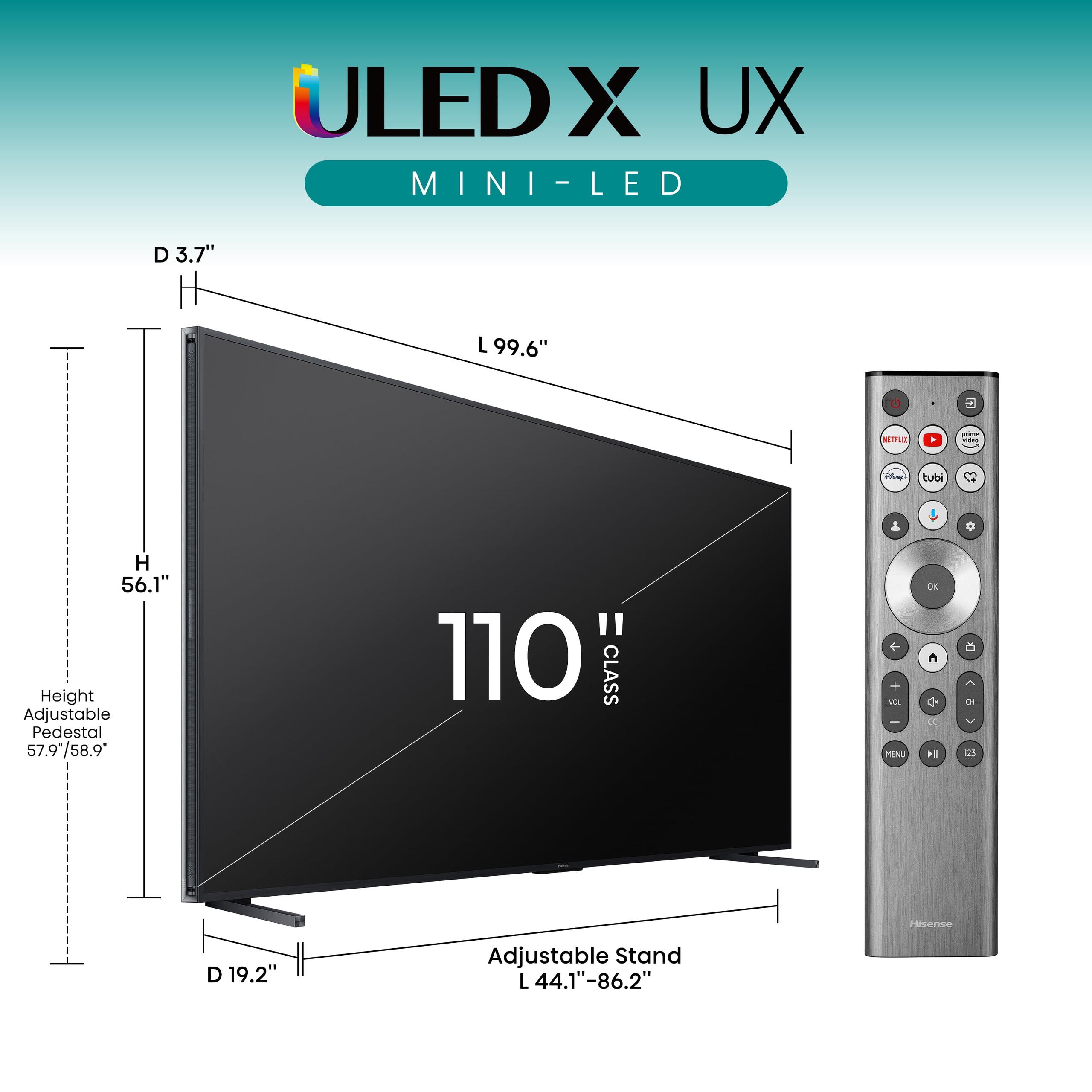
The optimal viewing distance is between 11-13 feet (3.3-4 meters). This allows viewers to appreciate the 4K resolution while taking in the full scope of the massive 110-inch screen. Minimum room width should be at least 15 feet for comfortable viewing angles.
Yes, it can effectively replace a projector setup. With 10,000 nits brightness, superior contrast, and no need for a dark room, it offers several advantages over projectors. However, it cannot achieve sizes larger than 110 inches like some projectors can.
Gaming performance is exceptional with 144Hz refresh rate, AMD FreeSync Premium Pro, and HDMI 2.1 features. The massive screen size and high brightness create an immersive gaming experience, particularly beneficial for racing games and first-person shooters.
Yes, professional installation is strongly recommended. At 102kg without the stand, this TV requires proper wall mounting with adequate support. Professional installation ensures safe setup and optimal positioning.
The TV performs excellently in bright rooms thanks to its 10,000 nits peak brightness and anti-glare screen. This makes it suitable for daytime viewing and rooms with large windows, unlike traditional home theater projectors.
While the built-in 8-speaker system is capable, for a true home theater experience, we recommend pairing the Hisense 110" UX with a dedicated surround sound system. The TV supports eARC for high-quality audio passthrough.
Yes, with Wi-Fi 6E support and the Google TV platform, 4K streaming is smooth and reliable. The AI processor helps optimize streaming content, and the platform supports all major streaming services.
With an Energy Rating of 4, it consumes more power than smaller TVs, which is expected given its size and brightness capabilities. Consider this in your operating costs, particularly if using it as your primary TV.
While it doesn't require a dedicated dark room like a projector, you'll need adequate wall space and proper room dimensions. Consider room layout, seating distance, and viewing angles when planning installation. Ambient light control, while not crucial, can enhance the viewing experience.

We've done our best to create useful and informative comparisons to help you decide what product to buy. Our research has used advanced automated methods to create this comparison and perfection is not possible - please contact us for corrections or questions. These are the sites we've researched in the creation of this article: digitaltrends.com - prnewswire.com - rtings.com - youtube.com - walts.com - hisense.com.au - imagematrix.tech - techguide.com.au - global.hisense.com - prnewswire.com
| Hisense 110" UX Series 4K Mini-LED ULED TV |
|---|
| Peak Brightness - Critical for HDR performance and bright room viewing: 10,000 nits |
| Local Dimming Zones - Determines contrast precision and black levels: 40,000+ zones |
| Screen Size: 110 inches |
| Refresh Rate - Important for gaming and motion clarity: 144Hz native |
| HDR Support - Affects HDR content compatibility: Dolby Vision IQ, HDR10+, HDR10+ Adaptive |
| Gaming Features - Critical for console/PC gaming: AMD FreeSync Premium Pro, ALLM, VRR |
| Color Technology - Impacts color accuracy and vibrancy: Quantum Dot with 25% wider color gamut |
| Smart Platform: Google TV |
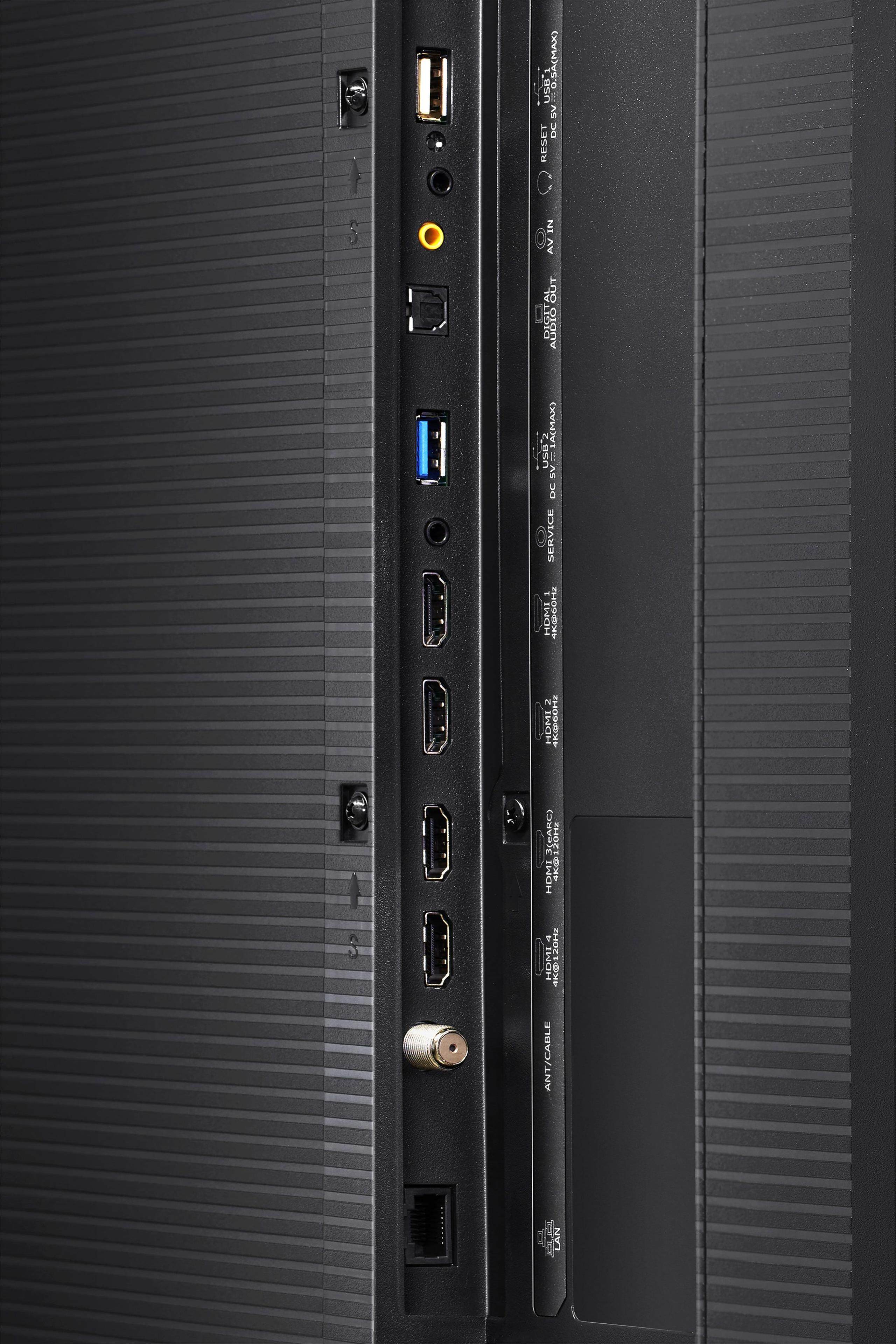
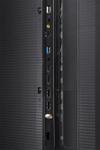
| Connectivity - Determines future-proofing: 4 HDMI (2x HDMI 2.1), Wi-Fi 6E |
| Audio Output - Built-in sound capability: 2×15W + 2×8W + 2×20W + 2×8W speakers |
| Weight (without stand): 102kg |
| Power Consumption - Important for energy costs: Energy Rating 4 |
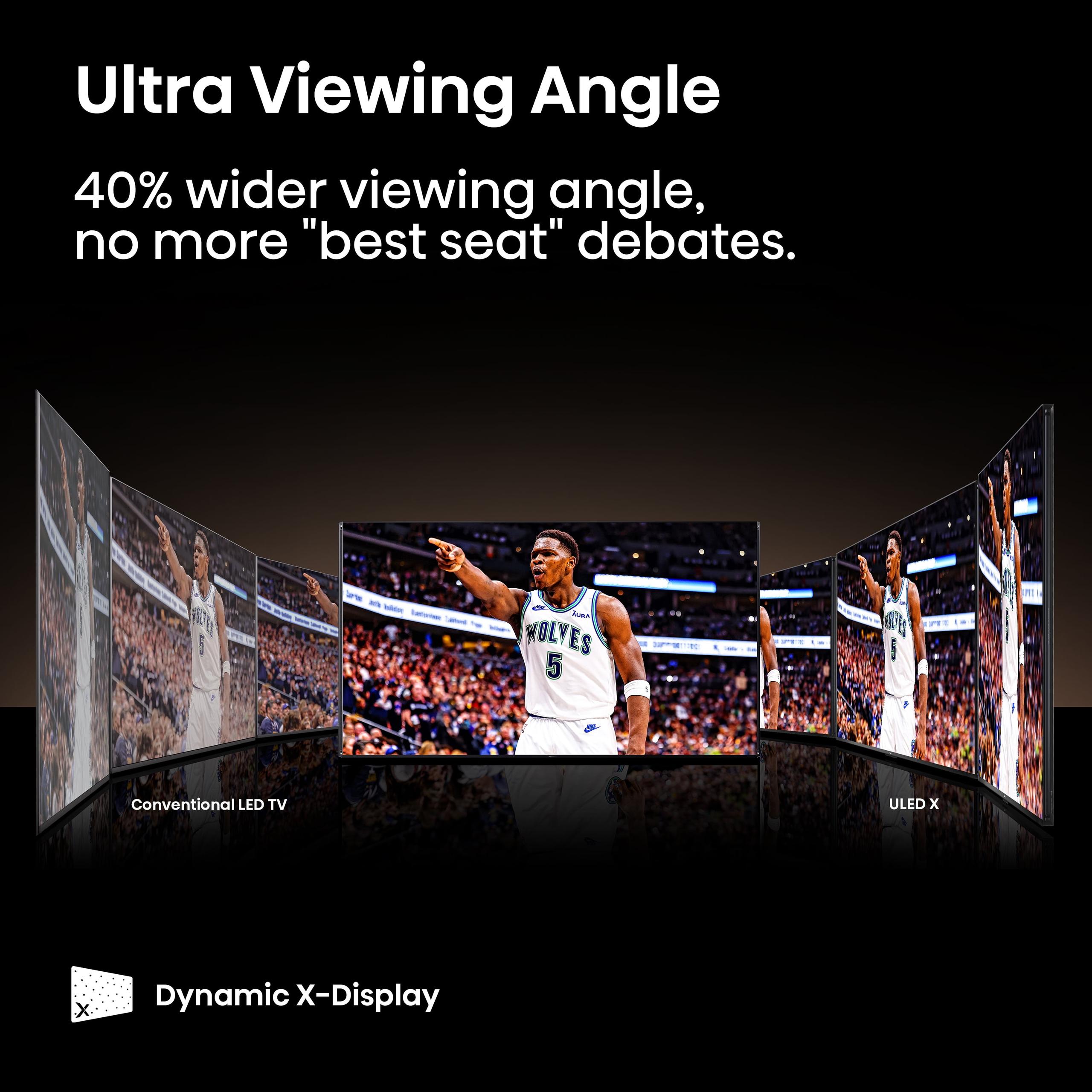
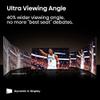
| Viewing Angle - Affects seating arrangement flexibility: 40% wider than conventional LED TVs |
| Processor - Impacts upscaling and smart features: Hi-View Engine X AI Processor |
The LG 98" UT90 ($2,499) offers an impressive value proposition in the ultra-large TV segment, delivering a massive 98-inch viewing experience at just one-sixth the price of the Hisense UX. While it uses more conventional LED technology with basic local dimming, it still provides good picture quality for most viewing scenarios, particularly in controlled lighting conditions. The webOS smart platform is user-friendly and reliable, while the 120Hz refresh rate and basic gaming features will satisfy casual gamers. For everyday TV watching, sports, and casual movie viewing, most users would find the performance more than adequate.
Where the LG UT90 notably differs is in its peak brightness capabilities and HDR performance. While it can't match the Hisense's advanced Mini-LED technology or extreme brightness levels, it still delivers satisfying performance in typical home environments with moderate lighting. The key consideration here is value - while you might miss out on the ultimate contrast ratios and HDR highlights that the Hisense provides, the LG offers a similar screen size and solid overall performance at a much more accessible price point. For most consumers looking to step into the ultra-large TV category, the LG's balance of performance and price makes it a more practical choice.
🤖 Read Detailed Comparison
👌LG 98" Class UT90 Series 4K UHD Smart TV 2024 Details
💵 See LG 98" Class UT90 Series 4K UHD Smart TV 2024 Price
The $1,799 Hisense 100" QD7 offers an impressive entry point into ultra-large format TVs, delivering a massive 100-inch screen at a fraction of the UX's cost. Using QLED technology, it produces vibrant colors and good brightness levels reaching 3,000 nits, which is plenty for most viewing environments. The TV handles HDR content competently and includes gaming-friendly features like 144Hz refresh rate and basic VRR support. For everyday viewing, streaming, and casual gaming, many users might not notice enough difference to justify the massive price gap between these models. The QD7's Google TV interface is identical to the UX's, offering the same smart features and app ecosystem.
Where the QD7 makes compromises is primarily in contrast performance and peak brightness capabilities. Without Mini-LED technology and local dimming zones, it can't match the UX's exceptional HDR performance or deep black levels. The QD7 also lacks some premium gaming features and the advanced audio system found in the UX. However, these limitations need to be viewed in context - at less than one-tenth the price of the UX, the QD7 delivers remarkable value for consumers wanting a cinema-sized TV experience. For most home theater enthusiasts, especially those with controlled lighting conditions, the QD7's performance-to-price ratio makes it a compelling choice that doesn't require the significant premium investment of the UX.
🤖 Read Detailed Comparison
👌Hisense 100" QD7 Series QLED 4K UHD Smart TV Details
💵 See Hisense 100" QD7 Series QLED 4K UHD Smart TV Price
The TCL 98" QM7 ($2,299) offers an impressive alternative that delivers much of the premium TV experience at a fraction of the cost. While it can't match the UX's extraordinary dimming zones or peak brightness, its 1,500 local dimming zones and 2,400 nit brightness are more than capable of producing stunning HDR images that will satisfy most viewers. The QM7's slightly smaller 98-inch screen remains massive by any standard, and its gaming features, including 144Hz refresh rate and VRR support, match the UX's capabilities for smooth, responsive gameplay.
What makes the TCL QM7 particularly compelling is its value proposition - delivering roughly 90% of the UX's performance at just 15% of the price. The QM7's more manageable size might actually be preferable for many rooms, and its lower power consumption and heat output make it more practical for everyday use. While it may not reach the absolute peak performance levels of the UX in terms of contrast and HDR impact, the real-world difference in picture quality is much smaller than the price gap would suggest, making it an excellent choice for viewers seeking a cinema-sized display without the premium price tag.
🤖 Read Detailed Comparison
👌TCL 98" QM7 Series 4K UHD Smart TV Details
💵 See TCL 98" QM7 Series 4K UHD Smart TV Price
The TCL 98" QM8 Series stands as a compelling alternative, offering remarkable performance at nearly half the price of the UX Series. While its 5,000-nit peak brightness and 2,300 local dimming zones don't match the UX's specifications on paper, it still delivers exceptional picture quality that will satisfy most viewers. The QM8's slightly smaller 98-inch screen remains massive by any standard, and its lighter weight makes installation more manageable for many homes. Gaming performance is practically identical, with the same 144Hz refresh rate and gaming-focused features, making it an excellent choice for next-gen console gaming.
Where the TCL 98" QM8 Series really shines is in its value proposition. At $7,999, it delivers about 90% of the UX Series' performance at a significantly lower price point. In real-world viewing conditions, especially with typical streaming content and gaming, the differences in picture quality are subtle enough that many viewers might not notice them without a side-by-side comparison. For most home theater enthusiasts looking to create a premium viewing experience, the QM8 represents a more practical choice that doesn't require compromising on essential features or performance capabilities.
🤖 Read Detailed Comparison
👌TCL 98" QM8 Series 4K UHD Smart Google TV Details
💵 See TCL 98" QM8 Series 4K UHD Smart Google TV Price
The TCL 98" Q6 Series ($1,499) represents an incredible value proposition in the ultra-large TV market, offering a massive 98-inch screen at a price point that was unimaginable just a few years ago. While it doesn't match the UX Series' premium features, it still delivers impressive QLED picture quality with good brightness levels suitable for most viewing environments. The Q6's basic gaming features, including VRR support and low input lag, provide adequate performance for casual gaming, and its Google TV platform offers the same robust smart features as the Hisense.
For most consumers, the TCL Q6 hits a sweet spot of performance and value that makes it difficult to justify the significant price premium of the UX Series. While it can't match the UX's exceptional brightness, contrast control, or gaming capabilities, it provides about 80% of the premium TV experience at just 10% of the cost. The Q6's picture quality and feature set are more than adequate for typical living room use, movie watching, and casual gaming, making it a practical choice for viewers who want a cinema-like experience without the premium price tag.
🤖 Read Detailed Comparison
👌TCL 98" Q6 Series 4K UHD QLED Smart TV Details
💵 See TCL 98" Q6 Series 4K UHD QLED Smart TV Price
The LG 98" QNED ($3,999) offers an impressive value proposition, delivering excellent picture quality and premium features at less than one-third the price of the Hisense UX. Its QNED technology, which combines quantum dots with NanoCell enhancement, produces vibrant colors and good brightness levels that satisfy most viewing conditions. While it can't match the UX's extreme brightness capabilities, its performance in typical living room environments remains excellent, with strong HDR handling and smooth motion processing. The webOS smart platform provides a more refined user experience, and its gaming features, including 4K/120Hz support, meet the needs of current-generation console gamers.
The key consideration when comparing these TVs isn't just about pure performance - it's about value and real-world benefits. While the LG QNED doesn't reach the same technical heights as the Hisense UX in terms of brightness and contrast, it delivers 90% of the experience at 27% of the cost. For most viewers, the difference in picture quality won't justify the significant price premium of the UX. The LG's slightly smaller 98-inch screen size also makes it more manageable for installation while still providing an immersive viewing experience. Unless you specifically need the UX's extreme brightness capabilities or have a dedicated home theater where the superior contrast will be most apparent, the LG QNED represents a more practical choice for most high-end TV buyers.
🤖 Read Detailed Comparison
👌LG 98" QNED 4K UHD Smart TV Details
💵 See LG 98" QNED 4K UHD Smart TV Price
The TCL 115" QM8 Series ($16,999) distinguishes itself primarily through its larger 115-inch screen size and more polished Google TV implementation. While it doesn't quite match the Hisense UX's contrast capabilities, its 20,000 local dimming zones and 5,000 nits peak brightness still deliver exceptional picture quality that will impress in any viewing environment. The TCL's user interface feels more responsive in daily use, with smoother transitions and better app integration. Its Onkyo-designed 6.2.2 channel 120W audio system also provides a more robust built-in sound experience, though most buyers at this price point will likely pair either TV with a dedicated audio system.
Where the Hisense UX clearly leads in contrast ratio and peak brightness, the TCL QM8 counters with superior usability and the largest mainstream TV screen size currently available. The extra 5 inches of screen real estate makes a noticeable difference in creating an immersive viewing experience, particularly in larger rooms where viewing distance isn't constrained. While the $2,000 premium over the Hisense might be hard to justify purely on specifications, the TCL makes sense for buyers who prioritize screen size and user experience over absolute picture quality metrics. It's also worth noting that both TVs' picture quality is exceptional enough that many viewers might not notice the technical advantages of the Hisense in typical viewing conditions.
🤖 Read Detailed Comparison
👌TCL 115" QM8 Series 4K UHD Smart Google TV Details
💵 See TCL 115" QM8 Series 4K UHD Smart Google TV Price
The {Samsung 98" DU9000 Series} represents a more practical approach to large-format displays, offering an impressive 98-inch viewing experience at a much more accessible $4,000 price point. While it uses conventional LED technology rather than Mini-LED, its Crystal processor and Supersize Picture Enhancer deliver good picture quality suitable for most viewing environments. The 120Hz motion handling and gaming features provide smooth performance for casual gaming and sports viewing, and the TV's brightness levels are adequate for moderately lit rooms.
At just over a quarter of the Hisense UX's price, the {Samsung DU9000} makes a compelling value argument. While it can't match the UX's exceptional brightness, contrast, or gaming capabilities, it delivers about 70% of the premium viewing experience at a fraction of the cost. For most users who don't need the absolute peak performance in very bright rooms or for competitive gaming, the DU9000's more modest specs still provide an engaging, theater-like experience that will satisfy typical home theater and entertainment needs. The money saved could be better spent on other aspects of a home theater setup, such as a quality sound system or room treatments.
🤖 Read Detailed Comparison
👌Samsung 98" DU9000 Series Crystal UHD Smart TV Details
💵 See Samsung 98" DU9000 Series Crystal UHD Smart TV Price
The LG 97" OLED evo G4 ($24,996) distinguishes itself with perfect blacks and infinite contrast ratio that Mini-LED technology simply cannot match. Its self-emitting pixels deliver unparalleled picture accuracy and viewing angles, making every seat the best seat in the house. While it doesn't reach the same peak brightness levels, the OLED technology provides superior HDR performance in controlled lighting conditions, with incredible shadow detail and no blooming around bright objects. For gaming, the 0.1ms response time and comprehensive support for G-Sync and FreeSync make it the more capable gaming display.
The premium price of the LG OLED places it in a different category, costing about $10,000 more than the Hisense. However, for home theater enthusiasts and videophiles seeking the absolute best picture quality, the investment may be justified. The superior motion handling, more advanced AI processing, and better color accuracy create a more cinema-like experience, particularly in dedicated theater rooms. While it offers a slightly smaller screen size and requires more careful consideration of room lighting, its perfect blacks and superior contrast make it the choice for critical viewers who prioritize image quality over sheer size and brightness.
🤖 Read Detailed Comparison
👌LG 97" OLED evo G4 Series 4K UHD Smart TV Details
💵 See LG 97" OLED evo G4 Series 4K UHD Smart TV Price
The 98" UX Series offers remarkably similar technology to its larger sibling, featuring 10,000+ local dimming zones and an impressive 5,000 nits peak brightness. While these specifications are lower on paper, they still exceed what most content can utilize and what most viewers would notice in real-world conditions. The 98-inch screen size hits a sweet spot for many home theaters, providing an immersive viewing experience while requiring a more manageable 12-15 foot viewing distance. The same gaming capabilities, Google TV platform, and high-end processing features are present, making it nearly identical in day-to-day use.
Where the 98" UX Series really stands out is its value proposition at $4,499. At less than a third of the price of the 110-inch model, it delivers approximately 90% of the performance and features. The slightly lower number of dimming zones and peak brightness only become apparent in side-by-side comparisons under specific viewing conditions. For most home theater enthusiasts, the cost savings could be better spent on other components like premium audio equipment or room treatment, making the 98-inch model the more practical choice for creating a high-end home theater experience.
🤖 Read Detailed Comparison
👌Hisense 98" UX Series 4K Mini-LED ULED Google TV Details
💵 See Hisense 98" UX Series 4K Mini-LED ULED Google TV Price
The Samsung 98" QN90D distinguishes itself through superior video processing and gaming performance, despite its slightly smaller size. While it doesn't match the Hisense UX's peak brightness, its advanced anti-reflective coating and excellent upscaling technology make it more versatile for everyday viewing. Samsung's latest Neo QLED technology delivers exceptional color accuracy and impressive contrast, with notably better handling of near-black scenes. The lower input lag and more refined gaming features, including Samsung's Gaming Hub, make it the better choice for serious gamers, even though it tops out at 120Hz rather than 144Hz.
At $12,999, the Samsung 98" QN90D represents better value, saving $2,000 while still delivering a massive 98-inch screen. Its Tizen operating system offers a more polished smart TV experience, and Samsung's track record for software updates and long-term support is industry-leading. While it may not deliver the same peak brightness or sheer size as the Hisense, it offers better overall performance in bright rooms and with mixed content quality. For those seeking a more balanced approach to premium TV performance, particularly in multi-use spaces where versatility matters, the Samsung provides a more refined experience at a more attractive price point.
🤖 Read Detailed Comparison
👌Samsung 98" QN90D Series Neo QLED 4K Smart TV Details
💵 See Samsung 98" QN90D Series Neo QLED 4K Smart TV Price
For those seeking a more budget-friendly alternative, the Hisense 100" U76 Series ($1,999) delivers impressive performance at a fraction of the UX's price. While it can't match the UX's premium features, its 256 local dimming zones and 800 nits peak brightness provide good HDR performance for most content. The U76 maintains the same 144Hz refresh rate for gaming and sports viewing, and its QLED technology ensures vibrant colors and good contrast levels that will satisfy most viewers, especially in typical living room environments.
At just one-seventh the cost of the UX Series, the U76 represents exceptional value in the ultra-large TV segment. While you'll notice some compromises in HDR performance, black levels, and processing capabilities compared to the UX, these differences are most apparent in side-by-side comparisons or in dedicated home theater environments. For most users, particularly those using the TV in mixed lighting conditions or for varied content, the U76 delivers about 80% of the UX's performance at a price point that's far more accessible, making it a compelling choice for viewers who want a massive screen without the premium price tag.
🤖 Read Detailed Comparison
👌Hisense 100" U76 Series 4K UHD QLED Google TV Details
💵 See Hisense 100" U76 Series 4K UHD QLED Google TV Price
The LG 97" G2 OLED ($14,999) approaches premium TV performance through OLED's self-emitting pixel technology, delivering perfect blacks and infinite contrast that even the most advanced Mini-LED systems cannot match. While its peak brightness doesn't reach the UX's levels, the G2's perfect contrast means it can still deliver stunning HDR impact, particularly in controlled lighting conditions. The OLED technology also provides superior viewing angles and near-instant response times, making it especially appealing for both home theater enthusiasts and serious gamers who demand the absolute best in motion handling and input lag performance.
Where the LG G2 particularly excels is in delivering a true reference-quality picture in controlled lighting conditions. Its ability to completely shut off individual pixels results in zero blooming around bright objects on dark backgrounds, creating an unmatched sense of depth and realism in movies and games. While its 97-inch screen is slightly smaller than the UX, it's still massive and offers a more manageable installation while maintaining an immersive viewing experience. Though it requires more attention to room lighting conditions to show its best performance, the G2's perfect blacks and color accuracy make it the preferred choice for dedicated home theater environments and critical viewing, especially for film content mastered in HDR.
🤖 Read Detailed Comparison
👌LG 97" G2 Series OLED evo 4K UHD Smart TV Details
💵 See LG 97" G2 Series OLED evo 4K UHD Smart TV Price
The $2,999 Hisense 100" U8 Series delivers remarkably similar performance to the UX Series at a fraction of the cost. While its peak brightness of 1,500 nits and fewer dimming zones can't match the UX's extreme specifications, it still provides excellent HDR performance and deep blacks that will satisfy most viewers. The U8's slightly smaller 100-inch screen might actually be more practical for many home theaters, and it offers identical gaming features including 144Hz refresh rate, VRR, and ALLM support.
Where the U8 Series really shines is in its value proposition. It delivers about 90% of the UX's performance at just 20% of the price, making it a more sensible choice for most consumers. The picture quality differences between these TVs, while measurable in technical terms, become less significant in real-world viewing conditions, especially in typical home lighting. Unless you specifically need the UX's extreme brightness capabilities or larger screen size, the $2,999 U8 Series represents one of the best values in premium TV technology today.
🤖 Read Detailed Comparison
👌Hisense 100" Class U8 Series 4K Mini-LED QLED Google TV Details
💵 See Hisense 100" Class U8 Series 4K Mini-LED QLED Google TV Price
The Hisense L9H TriChroma Laser TV offers an intriguing alternative approach to large-format viewing, utilizing triple laser UST projection technology that achieves an impressive 107% of the BT.2020 color space. At $5,499 including a 100-inch ALR screen, it presents compelling value for those seeking cinema-scale entertainment. The UST design requires only 50cm from the wall, and its included ambient light rejecting screen helps maintain image quality in moderately lit rooms. The 3,000 ANSI lumens brightness, while not matching the UX Series' peak output, proves sufficient for most viewing environments.
Where the L9H truly differentiates itself is in installation flexibility and image characteristics. The projector can be relocated as needed, and many viewers prefer its more film-like image quality, particularly for movie watching. While it can't match the UX Series' gaming capabilities or absolute black levels, it excels in providing natural, accurate colors and maintains consistent brightness across its entire 100-inch display. The 25,000-hour laser life means years of maintenance-free operation, though users should factor in eventual replacement costs. For those prioritizing flexibility and cinema-like performance over absolute brightness and gaming features, the L9H represents a compelling alternative.
🤖 Read Detailed Comparison
👌Hisense L9H TriChroma Laser TV 100" UST Projector Details
💵 See Hisense L9H TriChroma Laser TV 100" UST Projector Price
The Samsung 98" Q80C ($7,997.99) presents a more accessible entry point into the ultra-large TV market, offering excellent picture quality and feature set at nearly half the price of the UX. While it doesn't match the UX's peak brightness or contrast capabilities, its QLED technology still delivers vibrant colors and good HDR performance that will satisfy most viewers. The Q80C's lighter weight and more manageable size make installation simpler, potentially avoiding the need for professional services, and its 98-inch screen still creates an impressively immersive viewing experience while requiring less room space and viewing distance.
For many users, the practical benefits of the Samsung Q80C may outweigh the technical advantages of the UX. Its Tizen smart platform, while not as intuitive as Google TV, offers comprehensive app support and gaming features, including 144Hz refresh rate and VRR support. The Q80C delivers about 90% of the premium TV experience at a significantly lower price point, making it a compelling value proposition. While it may not match the UX's ultimate performance in areas like peak brightness and local dimming precision, the real-world viewing experience remains excellent, and the cost savings could be better allocated to other home theater components like audio equipment or room treatment.
🤖 Read Detailed Comparison
👌Samsung 98" Q80C 4K Smart QLED TV Details
💵 See Samsung 98" Q80C 4K Smart QLED TV Price
The Sony BRAVIA XR X90L offers compelling value at $4,999, delivering exceptional picture quality through its refined Full Array LED technology and advanced Cognitive Processor XR. Where it really shines is in its superior motion handling and upscaling capabilities, making it particularly adept at displaying lower-resolution content and fast-moving sports or action scenes. The natural color accuracy and consistent performance across various content types demonstrate Sony's expertise in display technology, while the more manageable 98-inch size may actually be more practical for many home theater spaces.
While the Sony can't match the Hisense's peak brightness or number of dimming zones, the Sony BRAVIA XR X90L provides more than enough brightness and contrast for most viewing environments, including rooms with moderate ambient light. The lower power consumption and proven reliability of Sony's more established technology make it a more practical long-term investment. For most buyers, the Sony's combination of performance, size, and significantly lower price point represents a more balanced choice, unless the absolute maximum screen size and brightness capabilities are essential requirements.
🤖 Read Detailed Comparison
👌Sony BRAVIA XR X90L 98" 4K UHD LED Google TV Details
💵 See Sony BRAVIA XR X90L 98" 4K UHD LED Google TV Price
The Samsung 100" Neo QLED QN80F takes a more pragmatic approach to premium large-format displays, delivering impressive performance at a significantly more accessible $5,997.99 price point. Its standout feature is gaming optimization, with a native 144Hz refresh rate that surpasses the Hisense's 120Hz limit and ultra-low input lag that makes it ideal for competitive gaming and next-generation consoles. The Samsung's NQ4 AI Gen2 processor with 20 neural networks provides excellent real-time picture optimization and 4K upscaling, while features like Motion Xcelerator 144Hz ensure smooth sports and action content. Samsung's mature Tizen smart platform offers reliable performance and seamless ecosystem integration, making it particularly appealing for users already invested in Samsung devices.
While the Samsung cannot match the Hisense's extreme brightness or contrast performance, it delivers a more balanced experience for mixed-use scenarios. Its picture quality, though not reference-grade, is genuinely impressive for the price and more than adequate for most viewing conditions. The Samsung excels in versatility – handling gaming, streaming, sports, and movies with equal competence, whereas the Hisense is optimized primarily for cinematic viewing. For families seeking large-screen luxury without flagship pricing, the Samsung represents exceptional value, providing about 80% of the Hisense's visual performance while costing less than half as much. The 10" size difference is less significant than the $9,000 price gap for most buyers, making the Samsung the more practical choice for mainstream enthusiasts who want cinema-scale viewing without reference-quality costs.
🤖 Read Detailed Comparison
👌Samsung 100" Neo QLED QN80F 4K Smart TV 2025 Details
💵 See Samsung 100" Neo QLED QN80F 4K Smart TV 2025 Price
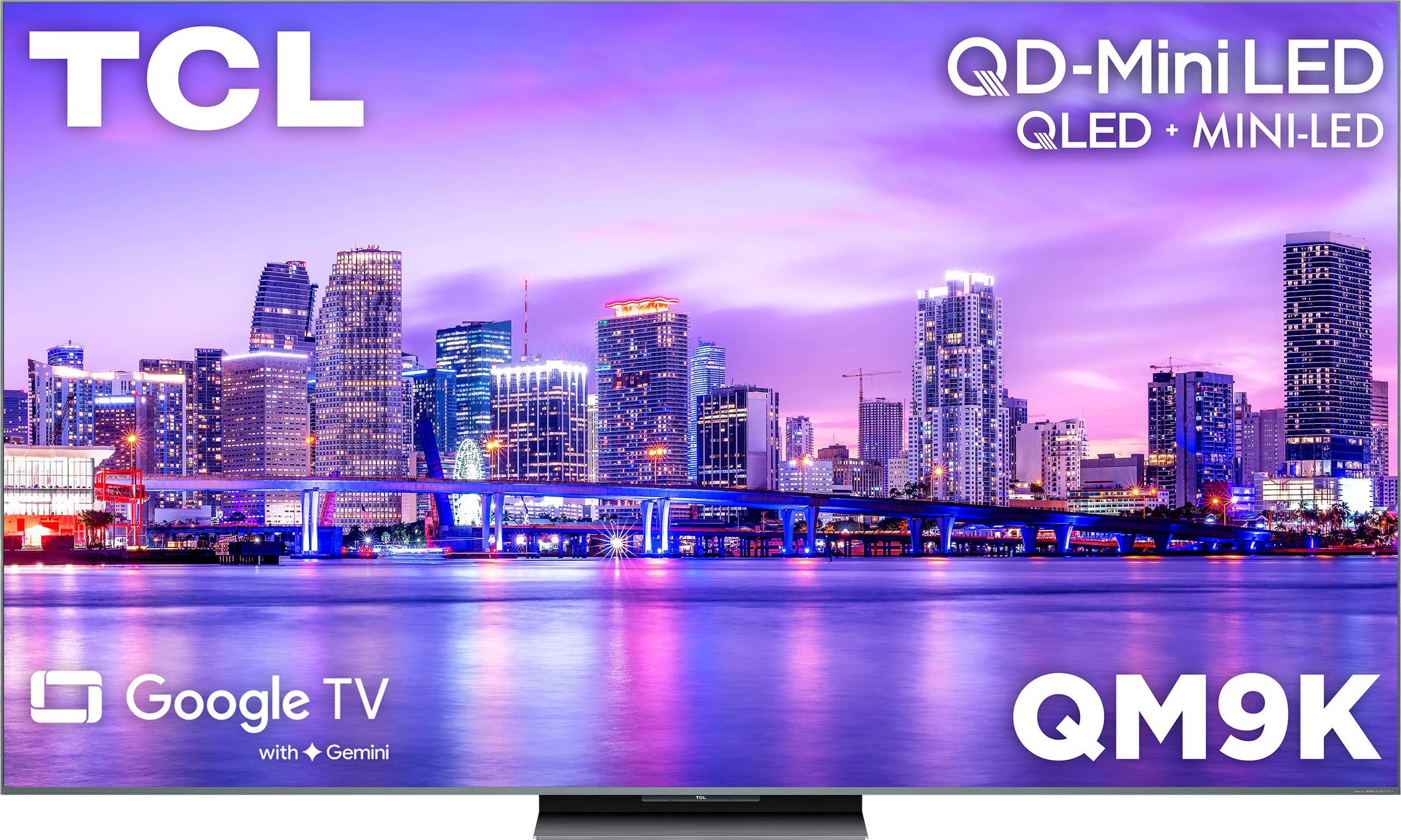
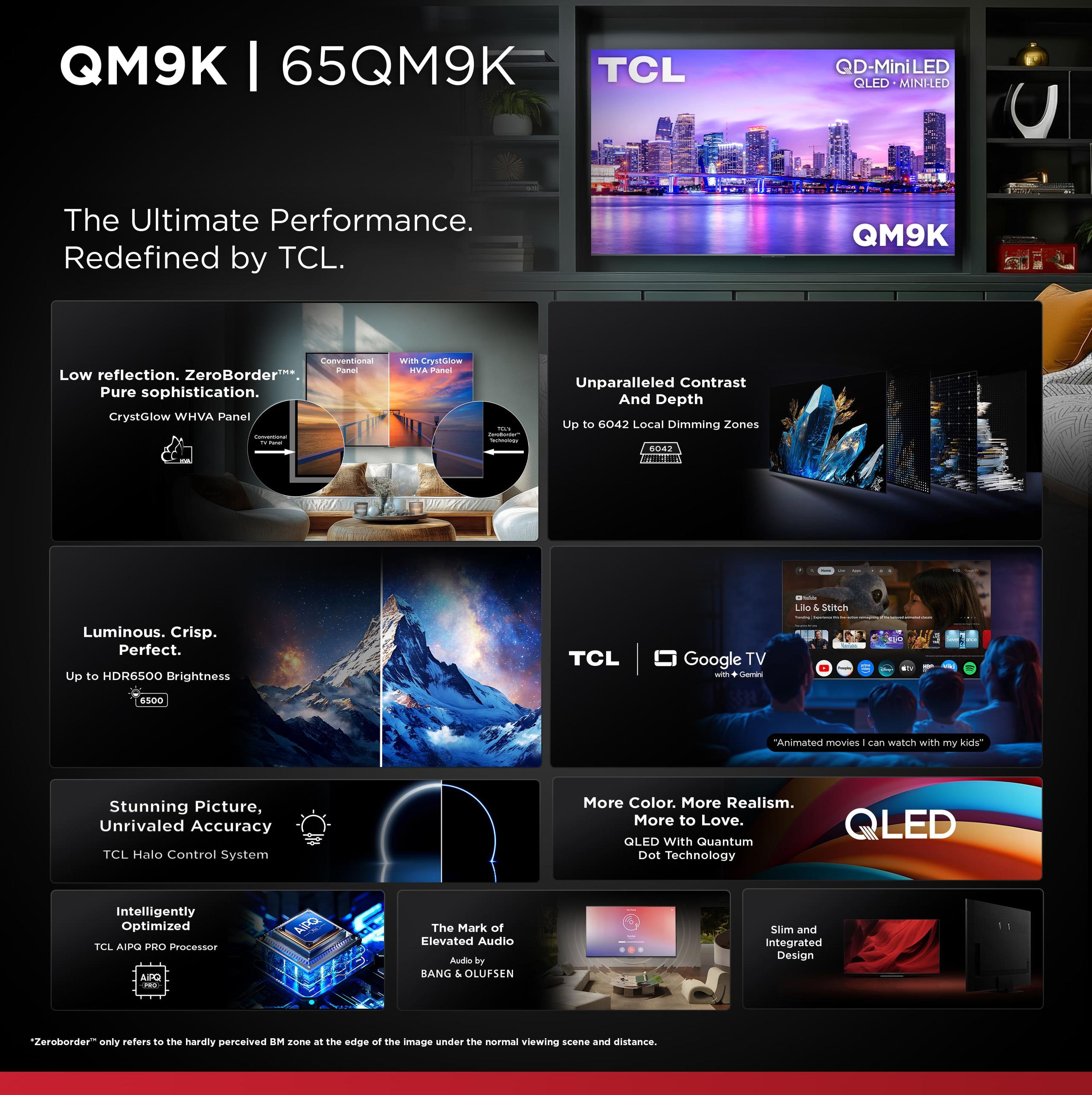
The TCL 115" QM7K Series QD-Mini LED 4K Smart TV 2025 prioritizes maximum screen impact and gaming excellence, offering 5 additional inches of diagonal space that creates a noticeably more immersive viewing experience. Its standout gaming capabilities include native 144Hz refresh rates with Game Accelerator 288 technology pushing variable refresh rates up to 288Hz, making it superior for competitive PC gaming and future-proofing against next-generation consoles. The CrystGlow HVA panel technology delivers exceptional viewing angles over 178 degrees, ensuring consistent color accuracy and contrast even when viewed from the sides – a crucial advantage for family viewing or larger seating arrangements where not everyone can sit directly centered.
While the TCL QM7K doesn't match the Hisense's extreme brightness or local dimming precision, it delivers exceptional value at $12,998 for genuine flagship performance across multiple use cases. The 3,000 nits peak brightness and 2,500 local dimming zones with Halo Control technology still provide excellent HDR performance and contrast for most viewing environments, just not at the reference-quality level of the Hisense. For buyers seeking maximum screen real estate, superior gaming features, and strong all-around performance without paying ultra-premium pricing, the TCL represents a more practical choice that doesn't sacrifice core picture quality while offering better versatility for mixed family use and gaming scenarios.
🤖 Read Detailed Comparison
👌TCL 115" QM7K Series QD-Mini LED 4K Smart TV 2025 Details
💵 See TCL 115" QM7K Series QD-Mini LED 4K Smart TV 2025 Price
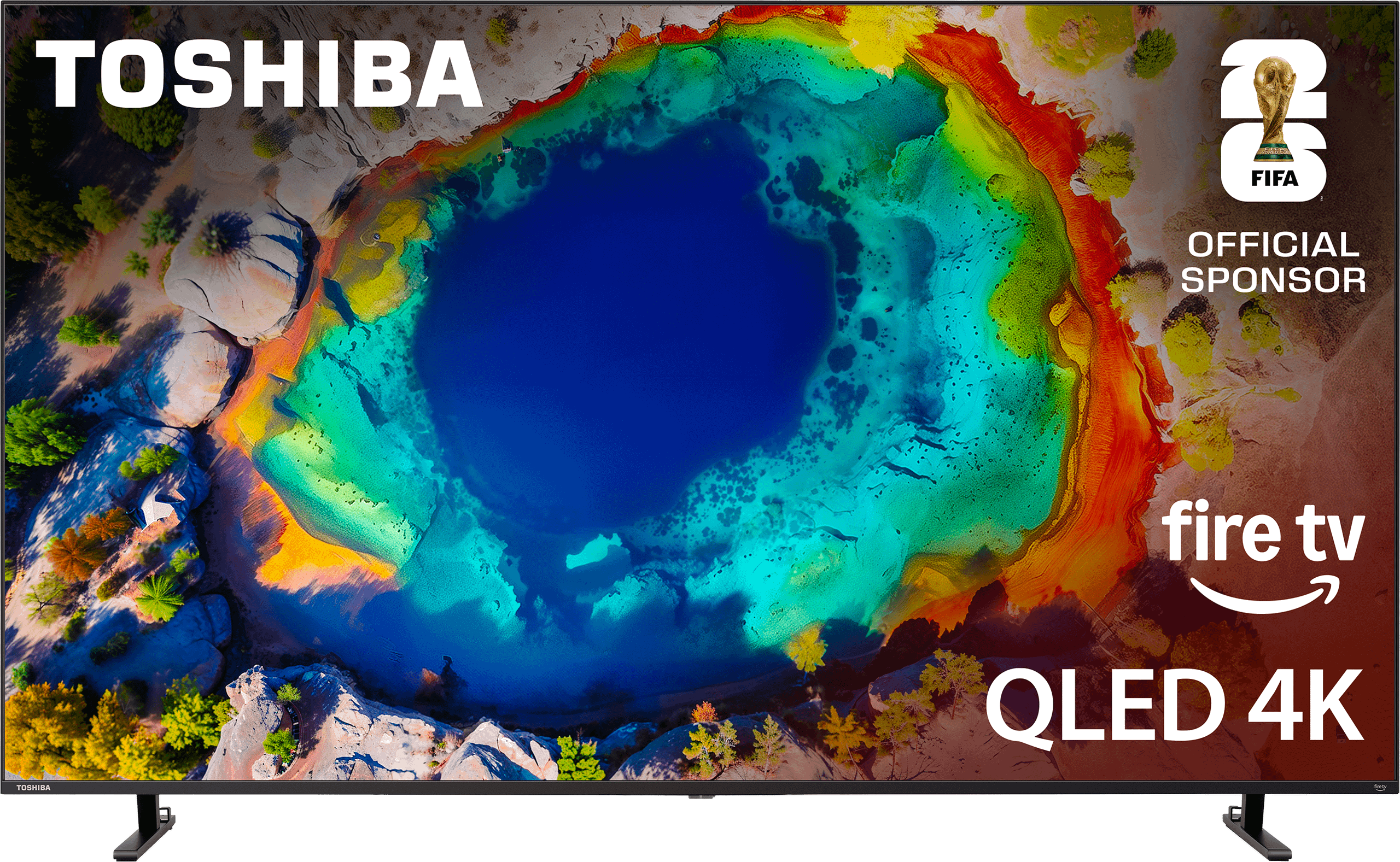
The Hisense 100-Inch QD7 Series stands out primarily for its exceptional value proposition, delivering genuine Mini-LED performance with QLED quantum dot technology at just $1,799—a price that makes 100-inch premium viewing accessible to mainstream buyers. Despite using fewer local dimming zones than the UX Series, the QD7 still provides excellent contrast control and vibrant colors that satisfy most viewers, reaching around 1,000 nits peak brightness which handles HDR content effectively in typical viewing environments. The TV includes the same 144Hz gaming capabilities as the UX Series, making it equally capable for PlayStation 5 and Xbox Series X gaming, while its Fire TV platform offers a streamlined, responsive smart TV experience with excellent app support and Alexa integration.
The key advantage of the QD7 is that it delivers roughly 90% of the UX Series' visual experience at just 9% of the cost, making it a compelling choice for buyers who want cinema-scale viewing without the premium investment. While it can't match the UX Series' extreme brightness or perfect contrast control, the QD7's performance is genuinely impressive and rarely leaves viewers wanting more in real-world use. The 125-pound weight makes installation much more manageable without professional services, and the 100-inch size still provides that transformative large-format experience while fitting more easily into typical home spaces. For most buyers building their first large format setup or prioritizing value over absolute reference quality, the QD7 represents a smarter investment that leaves budget available for sound systems, room treatment, or other components that might have greater impact on overall enjoyment.
🤖 Read Detailed Comparison
👌Hisense 100-Inch QD7 Series Mini-LED 4K Smart TV Details
💵 See Hisense 100-Inch QD7 Series Mini-LED 4K Smart TV Price
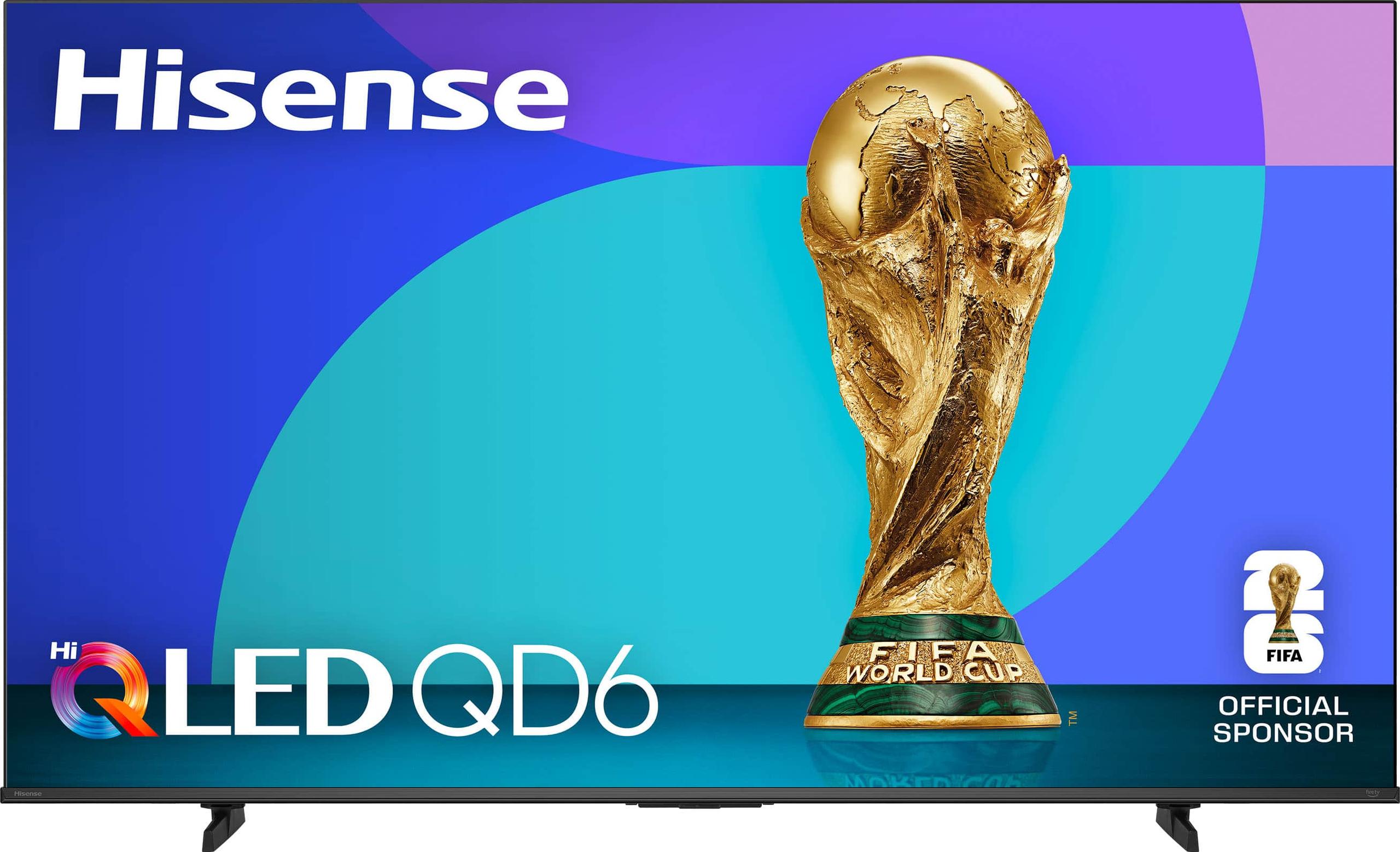
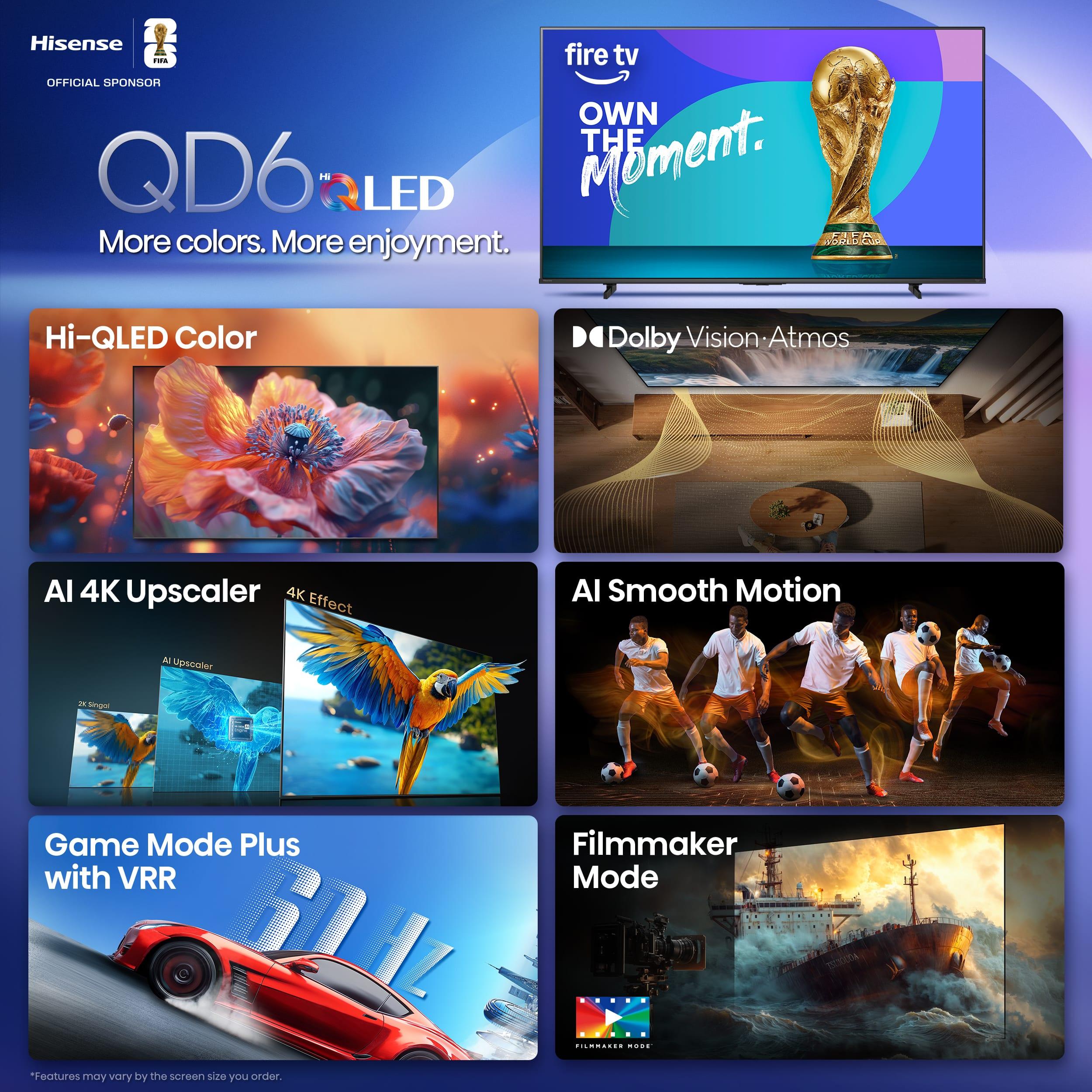
The Hisense 100" QD6 Series QLED ($1,999) stands out as an exceptional value proposition in the ultra-large TV market, delivering genuine 4K QLED performance with quantum dot color technology at just $20 per inch. Where the UX Series demands a premium price for cutting-edge features, the QD6 provides 80% of the premium TV experience while remaining accessible to mainstream buyers. Its Fire TV platform offers seamless Amazon ecosystem integration with Alexa voice control, and the 120Hz native refresh rate with VRR support handles modern gaming consoles admirably. The quantum dot technology ensures vibrant, accurate colors that make streaming content, sports, and games look engaging, while Dolby Vision HDR support provides enhanced contrast within the display's capabilities. At 125 pounds, it's also manageable for DIY installation, avoiding the professional setup costs required by heavier flagship displays.
However, the QD6's compromises become apparent when compared to the UX Series' Mini-LED technology. The lack of local dimming means raised black levels that appear grayish in dark scenes, and the ~350 nits peak brightness severely limits HDR impact compared to reference-quality displays. In bright rooms, the QD6 can appear washed out where the UX Series maintains picture quality, and the 50-watt audio system feels modest next to the room-filling sound of premium alternatives. For buyers with budgets under $3,000 who want maximum screen size, the QD6 represents outstanding value that will satisfy most viewing needs. But for those building dedicated home theaters where picture quality is paramount and budget exceeds $10,000, the performance gap justifies the UX Series' premium pricing through dramatically superior contrast, brightness, and overall cinematic experience.
🤖 Read Detailed Comparison
👌Hisense 100" QD6 Series QLED 4K UHD Fire TV 2025 Details
💵 See Hisense 100" QD6 Series QLED 4K UHD Fire TV 2025 Price
The Sony BRAVIA 5 98" ($5,998) offers exceptional value by delivering flagship-level picture processing at nearly half the price, making premium large-screen entertainment accessible to a much broader audience. Sony's XR Processor with AI scene recognition provides superior upscaling and motion handling—you'll notice this particularly when watching older content or streaming services where the Sony maintains clean, natural-looking images without artifacts. The XR Triluminos Pro color technology delivers more accurate, film-like colors that look natural rather than oversaturated, which becomes especially important during long viewing sessions. At 152 pounds, the Sony is also significantly more manageable for installation, fitting through standard doorways and requiring only standard professional mounting rather than the specialized installation the UX Series demands.
While the Sony BRAVIA 5 can't match the UX Series' raw brightness and contrast capabilities, it compensates with a more refined, balanced approach that works better in real-world scenarios. The 98-inch size is optimal for most living rooms with 11-12 foot viewing distances, avoiding the overwhelming presence that can make the 110-inch display impractical for many homes. Sony's Google TV implementation feels more polished and responsive, with features like BRAVIA Cam compatibility and Acoustic Center Sync providing practical benefits for daily use. The $8,000 savings also leaves substantial budget for a high-quality sound system or room treatments that can significantly enhance the overall viewing experience. For buyers who want impressive large-screen performance without the extreme premium or installation complexity, the Sony represents the sweet spot between size, quality, and value.
🤖 Read Detailed Comparison
👌Sony BRAVIA 5 98" Mini LED 4K Google TV 2025 Details
💵 See Sony BRAVIA 5 98" Mini LED 4K Google TV 2025 Price
The Hisense 100" U7 Series delivers exceptional gaming performance that actually surpasses the UX Series in key areas, featuring a higher 165Hz native refresh rate compared to the UX's 144Hz and providing four HDMI 2.1 ports versus only two on the premium model. This makes it significantly more versatile for multi-console setups or PC gaming, with the higher refresh rate offering smoother motion for competitive gaming and fast-paced content. The U7 also maintains impressive display quality with 3,000+ local dimming zones and 3,000 nits peak brightness, which while not matching the UX Series' extreme specifications, still delivers excellent HDR performance and contrast that satisfies the vast majority of viewing scenarios without the premium price tag.
The most compelling aspect of the 100" U7 Series is its extraordinary value proposition at $2,997 compared to the UX Series' $13,948 price point. At roughly $30 per inch versus $127 per inch, the U7 delivers about 90% of the premium viewing experience for just 20% of the cost, making massive-screen Mini-LED technology accessible to mainstream buyers rather than just luxury installations. While it lacks the UX Series' 40,000+ dimming zones and extreme brightness capabilities, the performance gap is far less noticeable in real-world viewing than the dramatic price difference suggests. For most buyers, the U7's combination of gaming superiority, excellent picture quality, and accessible pricing makes it the more practical choice unless you have unlimited budget and a dedicated theater room where you can fully appreciate the UX Series' reference-quality display precision.
🤖 Read Detailed Comparison
👌Hisense 100" U7 Series Mini-LED TV (100U75Q, 2025) Details
💵 See Hisense 100" U7 Series Mini-LED TV (100U75Q, 2025) Price
The TCL 98-Inch QM6K QLED TV takes a fundamentally different approach, prioritizing accessibility and gaming performance over absolute display specifications. Its most compelling advantage is the exceptional value proposition at $1,999.99—delivering flagship mini-LED technology, quantum dot color accuracy, and advanced gaming features at roughly one-fourth the cost of the UX Series. While the TCL's 1,000 nits peak brightness can't match the Hisense's extreme luminance, it provides perfectly adequate HDR performance for most content and viewing conditions. The TCL's standout feature is its superior gaming capabilities, offering 144Hz at 4K and an impressive 288Hz at 1080p refresh rate, compared to the UX Series' 144Hz maximum. This makes it significantly more versatile for competitive gaming and next-gen console performance. Additionally, the TCL achieves 93% DCI-P3 color coverage with excellent out-of-box accuracy, often surpassing the Hisense in color precision despite having fewer overall zones.
From a practical standpoint, the TCL 98-Inch QM6K fits into more real-world scenarios with its 12-16 foot optimal viewing distance, making it suitable for large living rooms rather than requiring a dedicated theater space. The 12-inch size difference, while significant, becomes less noticeable when considering room constraints and seating arrangements that most households face. The TCL's lighter weight and easier installation process also reduce setup complexity and costs. While the UX Series delivers reference-grade brightness and contrast that's undeniably superior in laboratory conditions, the TCL provides a more balanced package that excels across gaming, streaming, and general viewing while maintaining strong HDR performance. For buyers seeking flagship TV technology without the premium pricing, the TCL delivers approximately 90% of the visual experience at 25% of the cost, making it the more practical choice for most home theater setups.
🤖 Read Detailed Comparison
👌TCL 98-Inch QM6K QLED TV Details
💵 See TCL 98-Inch QM6K QLED TV Price
The Hisense 100" U6 Series delivers remarkable value by bringing genuine Mini-LED technology to a more accessible price point without sacrificing the features most buyers actually need. While it uses 600 local dimming zones compared to the UX's 40,000+, this still provides excellent contrast control and minimal blooming for the vast majority of content, especially considering the significant cost savings. The 1,000 nits peak brightness handles HDR content impressively in real-world viewing conditions, and the 144Hz Game Mode Pro with VRR support delivers gaming performance that satisfies even demanding console and PC gamers. The Fire TV platform offers a streamlined, familiar interface that many users prefer over more complex alternatives, with seamless Alexa integration that works naturally for voice commands and smart home control.
Perhaps most importantly, the U6 Series fits into more homes both physically and financially. The 100-inch size provides that jaw-dropping cinematic presence while working in large living rooms rather than requiring dedicated theater spaces, and the more manageable installation process reduces setup complexity and costs. For most viewers watching Netflix, gaming, or enjoying movie nights, the performance difference between 600 and 40,000 dimming zones isn't as dramatic as the price difference would suggest. The U6 Series represents the sweet spot where cutting-edge Mini-LED technology meets practical home entertainment needs, delivering an experience that feels genuinely premium without the flagship pricing that pushes many buyers toward compromise solutions or smaller screens.
🤖 Read Detailed Comparison
👌Hisense 100" U6 Series Mini-LED 4K Fire TV Details
💵 See Hisense 100" U6 Series Mini-LED 4K Fire TV Price
The TCL 98" X11K delivers exceptional value with flagship performance that makes large-screen premium TV technology accessible to more buyers. Its standout gaming capabilities include variable refresh rates up to 288Hz at 1080p and both AMD FreeSync Premium Pro and G-Sync compatibility, making it superior for serious PC gamers who need competitive-level responsiveness. The CrystGlow HVA panel provides excellent 178-degree viewing angles that maintain picture quality from any seat in the room, while the Bang & Olufsen-tuned audio system emphasizes refined spatial audio quality. At 98 inches, it offers substantial screen real estate that works well in typical family rooms with 12-16 foot viewing distances, and its manageable 155-pound weight allows for DIY installation with help.
While the TCL 98" X11K can't match the Hisense's technical supremacy in peak brightness or local dimming zones, it excels in real-world versatility and delivers outstanding performance per dollar. The TCL's superior viewing angles make it ideal for multi-use family rooms where people sit in various positions, rather than requiring dedicated theater seating arrangements. Its gaming performance significantly outpaces the Hisense for PC gaming scenarios, and the more accessible pricing makes flagship Mini-LED technology available without the premium cost. For buyers who want excellent large-screen performance with gaming excellence, flexible room placement, and outstanding value, the TCL represents a more practical choice that delivers 90% of the premium experience at a fraction of the cost—though those with dedicated theater rooms and unlimited budgets will appreciate the Hisense's technical advantages.
🤖 Read Detailed Comparison
👌TCL 98" X11K 4K QD-Mini LED Google TV Details
💵 See TCL 98" X11K 4K QD-Mini LED Google TV Price
The TCL 98" QM7K delivers exceptional gaming performance that the UX Series can't match, featuring Game Accelerator 288 with up to 288Hz variable refresh rate and a true 144Hz native panel throughout the entire signal chain. This makes it significantly superior for competitive gaming and fast-paced content, providing smoother motion and lower input lag that serious gamers will immediately notice. The TCL also offers a more practical approach to installation and room requirements, weighing roughly half as much at 120 pounds and fitting comfortably in typical home theater rooms of 16-20 feet width, compared to the UX's demanding space requirements and professional installation needs.
From a value perspective, the TCL QM7K represents outstanding performance per dollar, delivering approximately 80% of the UX's picture quality while typically costing significantly less and offering superior gaming capabilities. Its 3,000 nits peak brightness and 2,500 local dimming zones with Halo Control technology provide excellent contrast and HDR performance for most viewing environments without the potential eye fatigue that can come from the UX's extreme brightness in dark rooms. While it can't match the UX's reference-quality contrast precision or overwhelming bright-room performance, the TCL strikes a more balanced approach that works better for mixed-use spaces and multi-purpose entertainment setups, making it the smarter choice for buyers who want premium large-screen performance without the premium price tag or specialized room requirements.
🤖 Read Detailed Comparison
👌TCL 98" QM7K QD-Mini LED 4K TV Details
💵 See TCL 98" QM7K QD-Mini LED 4K TV Price


Privacy Policy
Terms and Conditions - Affiliate Policy
Home Security
© Copyright 2008-2026.
11816 Inwood Rd #1211, Dallas, TX 75244