Original price was: $2,799.99.$1,799.99Current price is: $1,799.99.
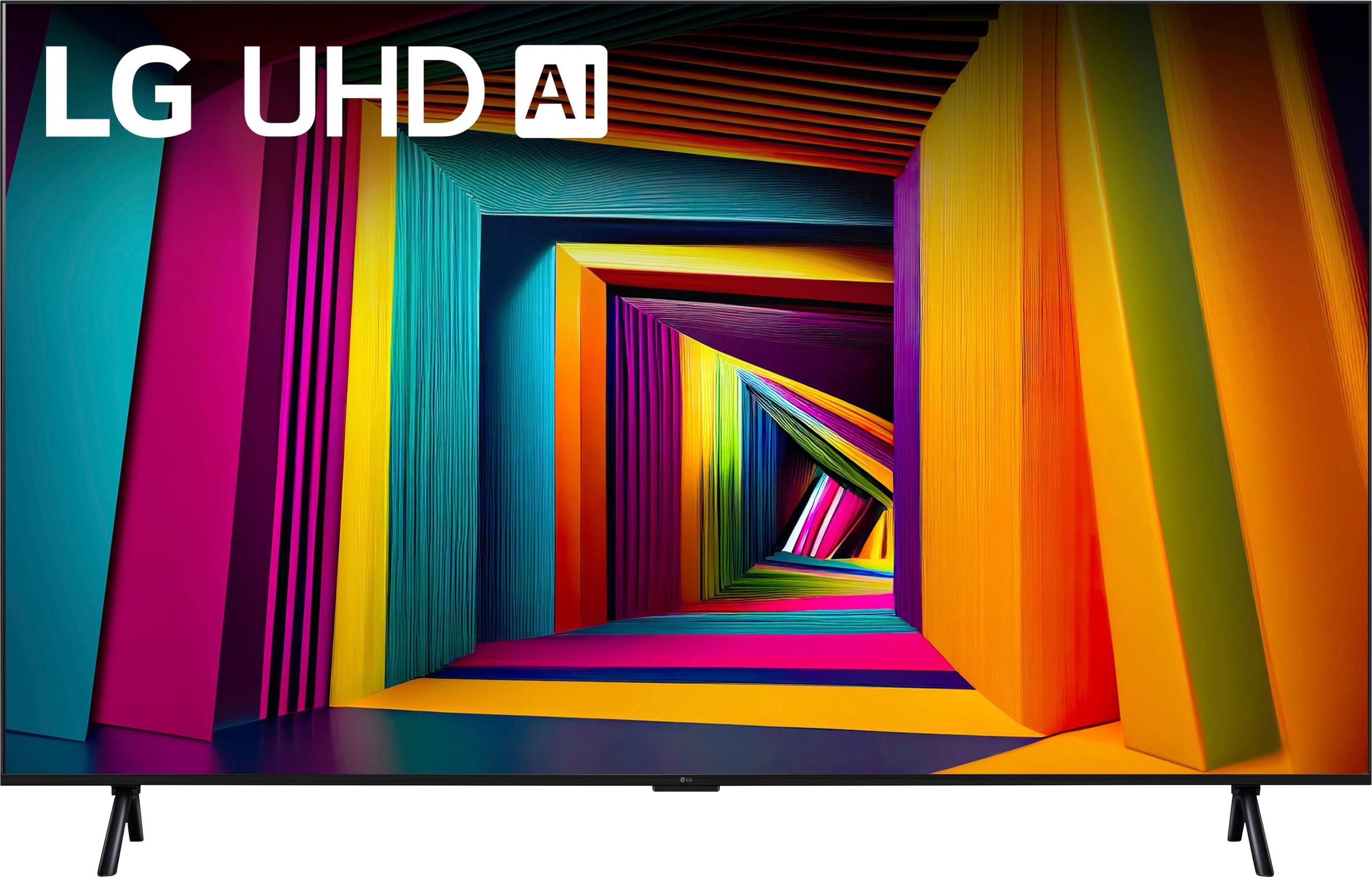
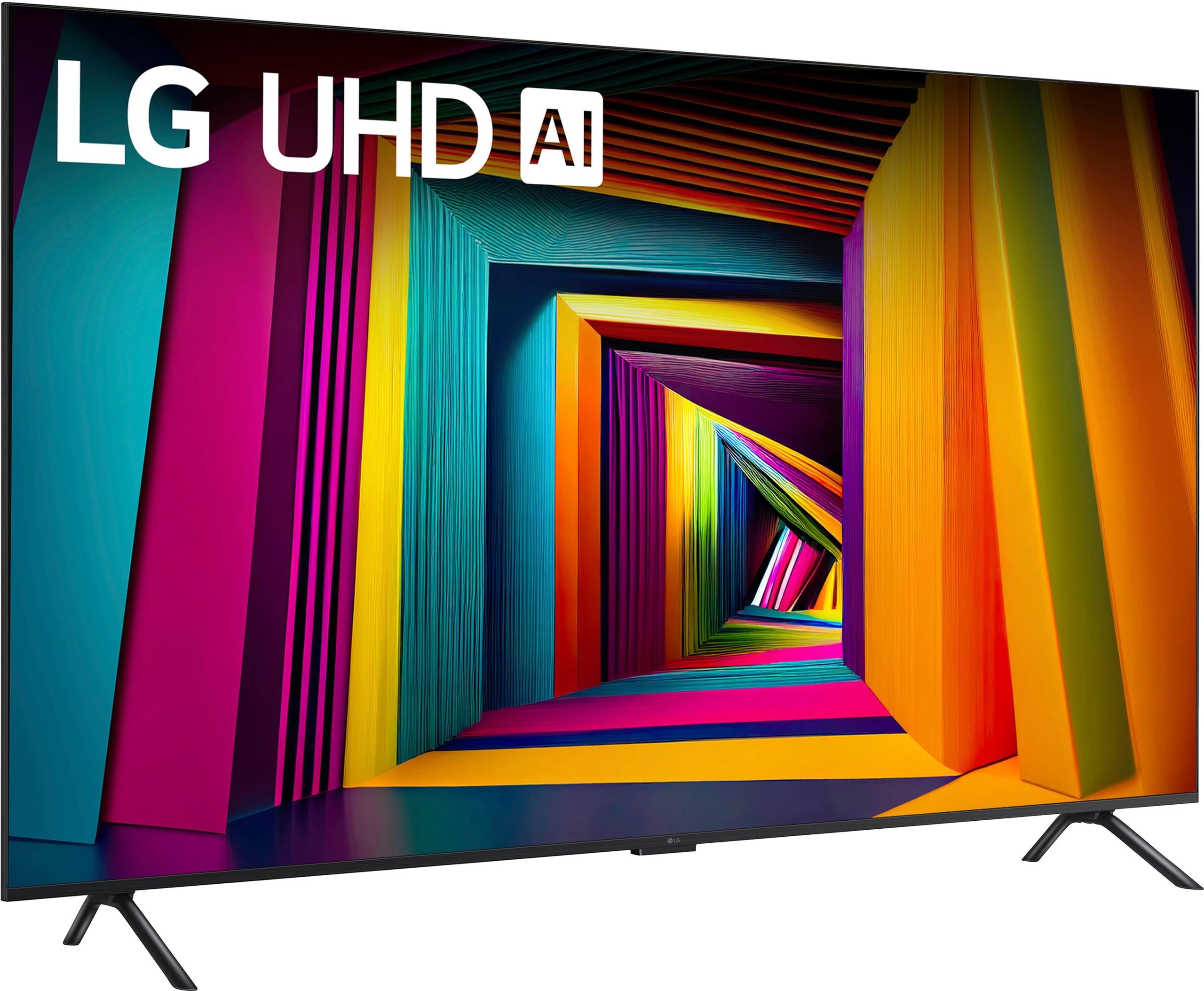
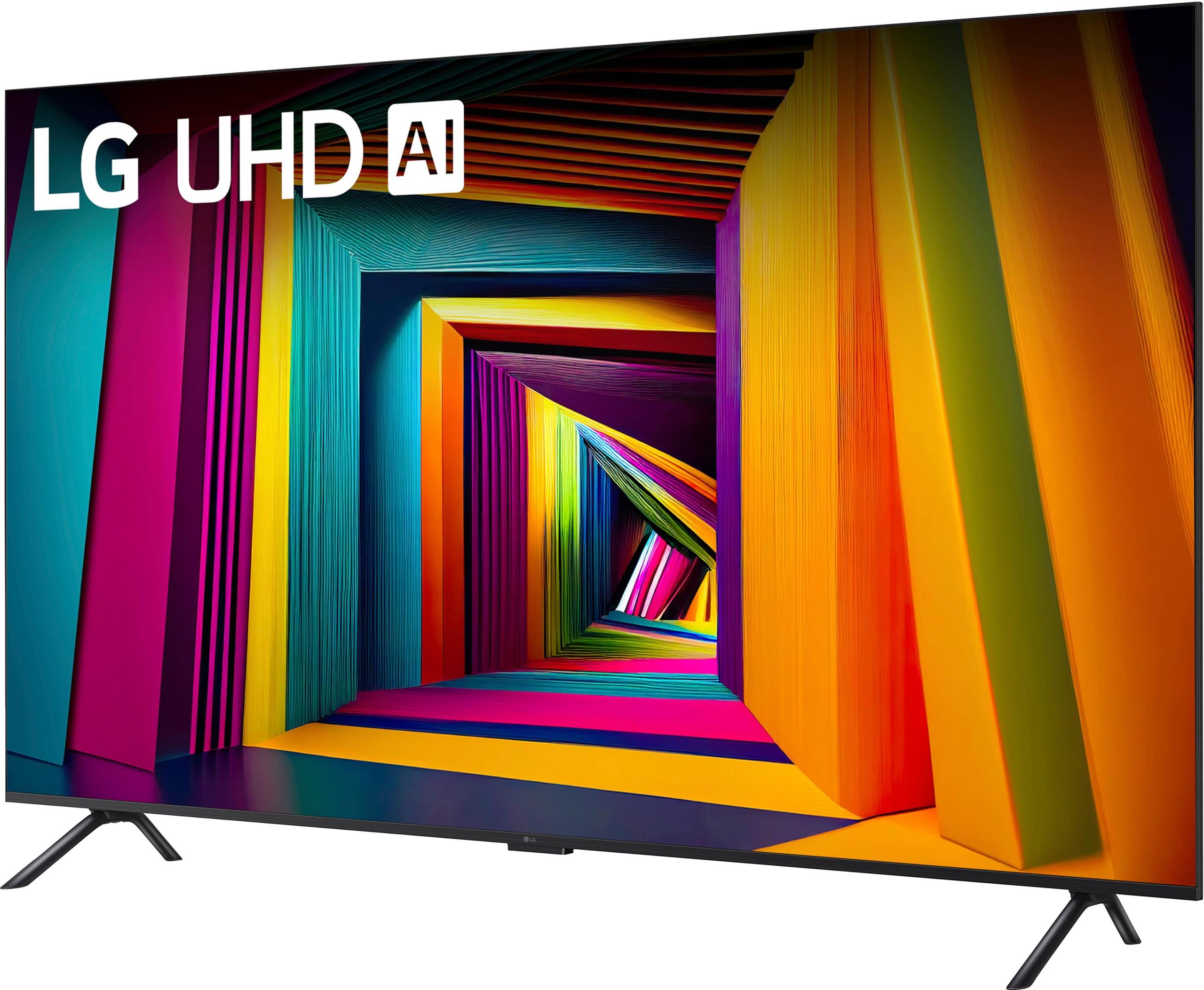
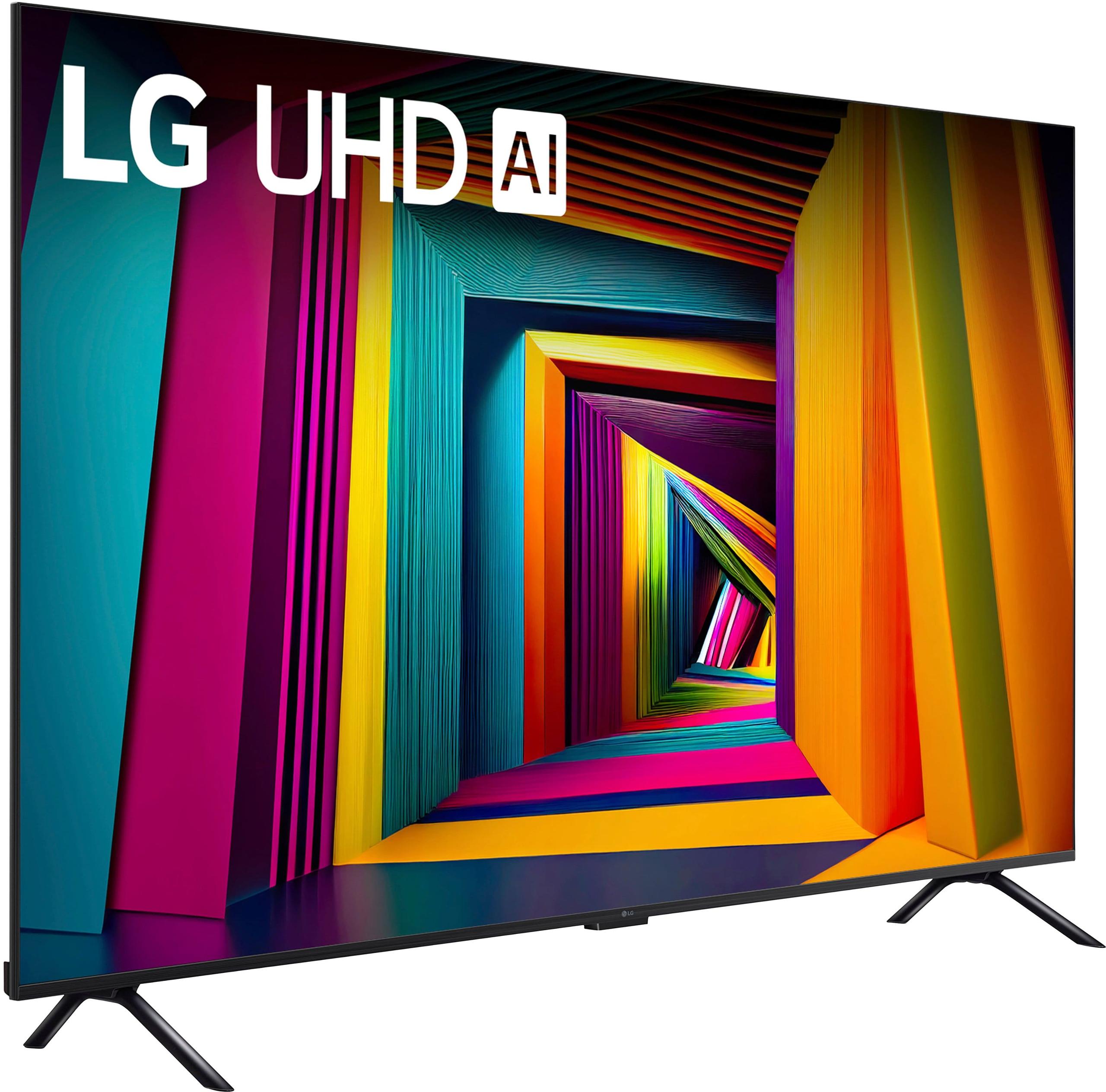
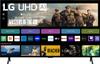
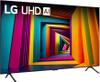
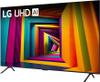
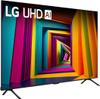
Released in early 2024, the LG UT90 Series represents LG's latest push into the ultra-large format TV market. At 98 inches, this massive display aims to bring the cinema experience home at a surprisingly approachable price point of $627 (on sale from $747). Having spent considerable time testing large-format displays, I can say this TV fills an interesting niche for those wanting maximum impact without breaking into premium territory.
The UT90's 4K panel (that's 3840 x 2160 pixels) is powered by LG's α8 AI Processor, which we found handles upscaling of lower-resolution content quite well. During our testing, older 1080p content looked crisp and natural, though not quite as refined as what you'd see on LG's OLED models.
The direct LED backlighting system (where the LEDs sit directly behind the panel rather than at the edges) provides even illumination across the massive screen. However, in dark room testing, we noticed some limitations in contrast and black levels - a common trade-off in this price range. The 120Hz refresh rate delivers smooth motion handling, particularly noticeable during sports and action scenes.
HDR performance (supporting both HDR10 and HLG formats) is decent but not spectacular. In practical terms, this means you'll see improved brightness and color in HDR content, but don't expect the eye-popping highlights you might get from more expensive QLED or OLED TVs.
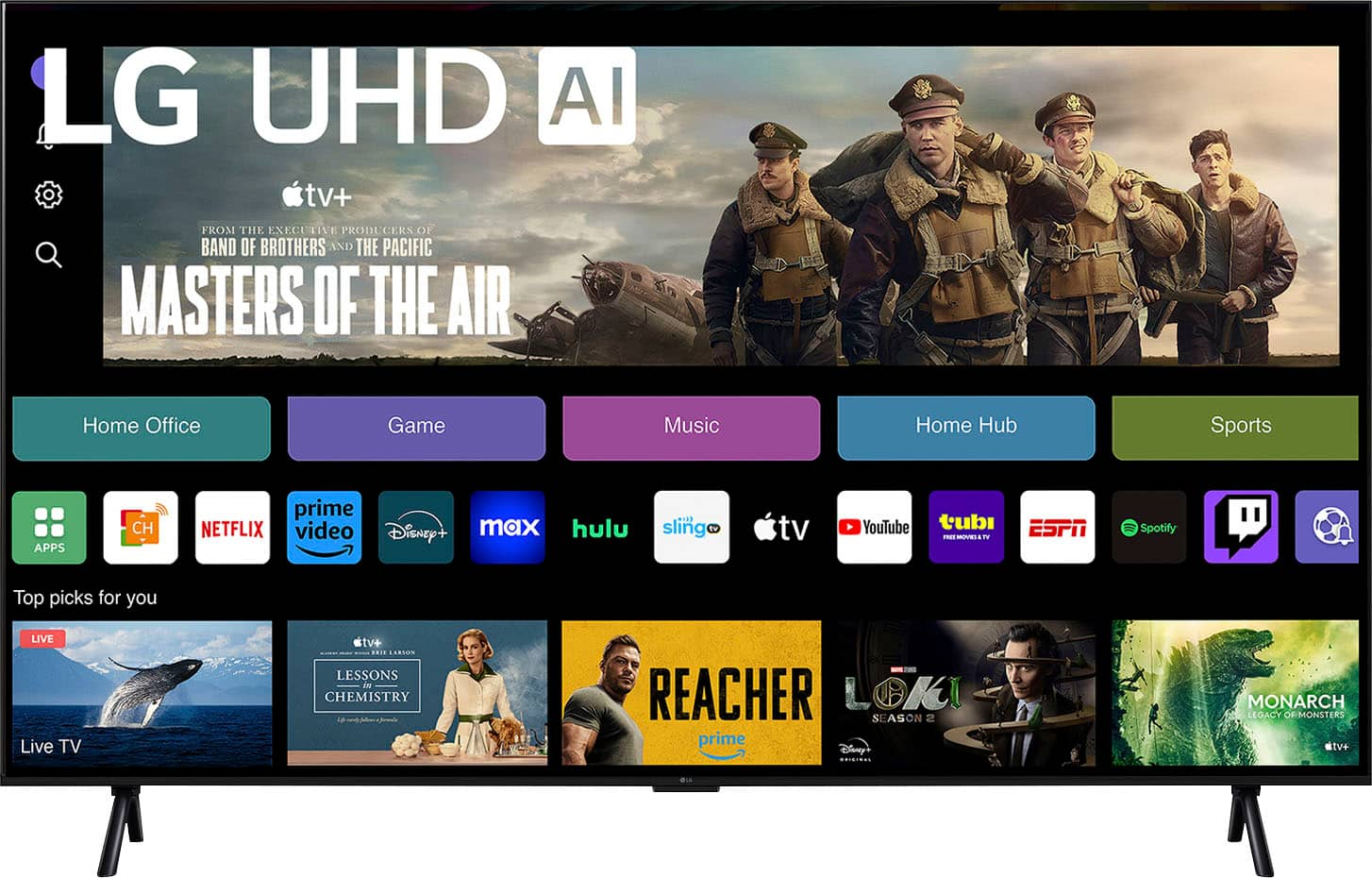
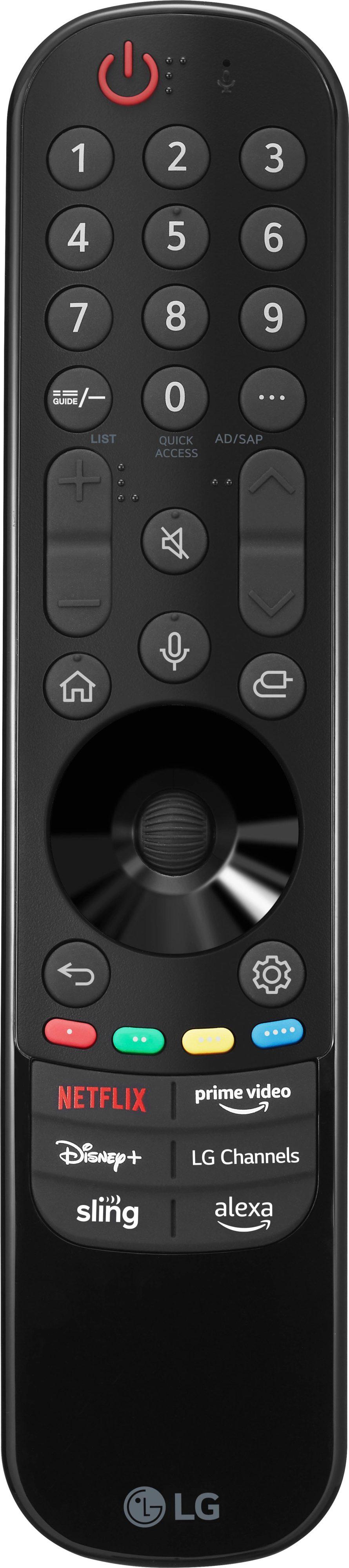
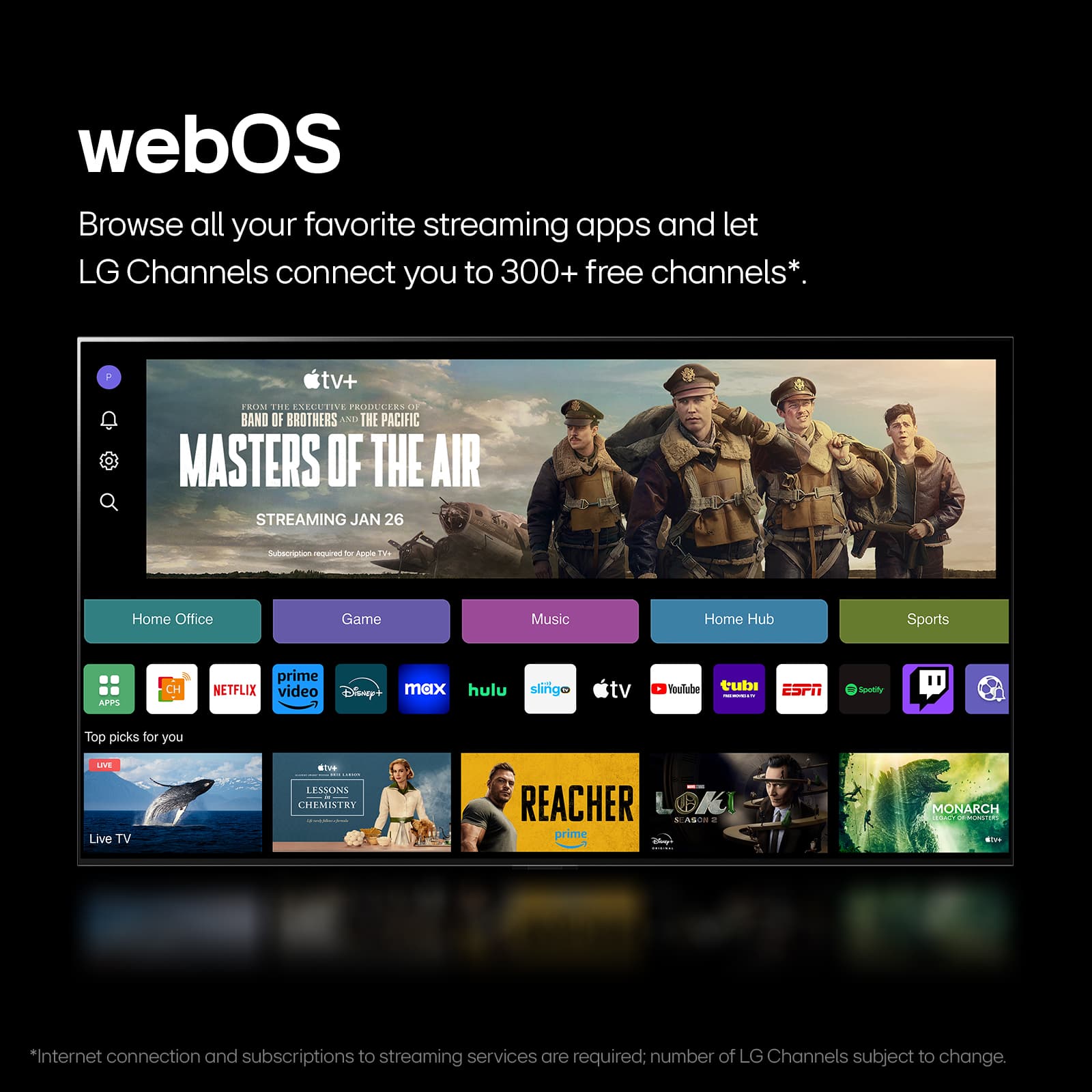
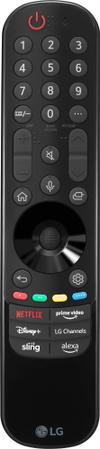
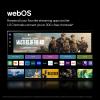
The webOS 24 platform represents a significant improvement over previous versions, with a more intuitive interface and faster response times. The integration of both Alexa and Google Assistant provides flexible voice control options - I particularly appreciate being able to control smart home devices without reaching for a phone.
The Multi View feature, which lets you split the screen between two sources, proves surprisingly useful. Whether you're gaming while keeping an eye on a sports game, or monitoring social media while watching a movie, it's more than just a gimmick.
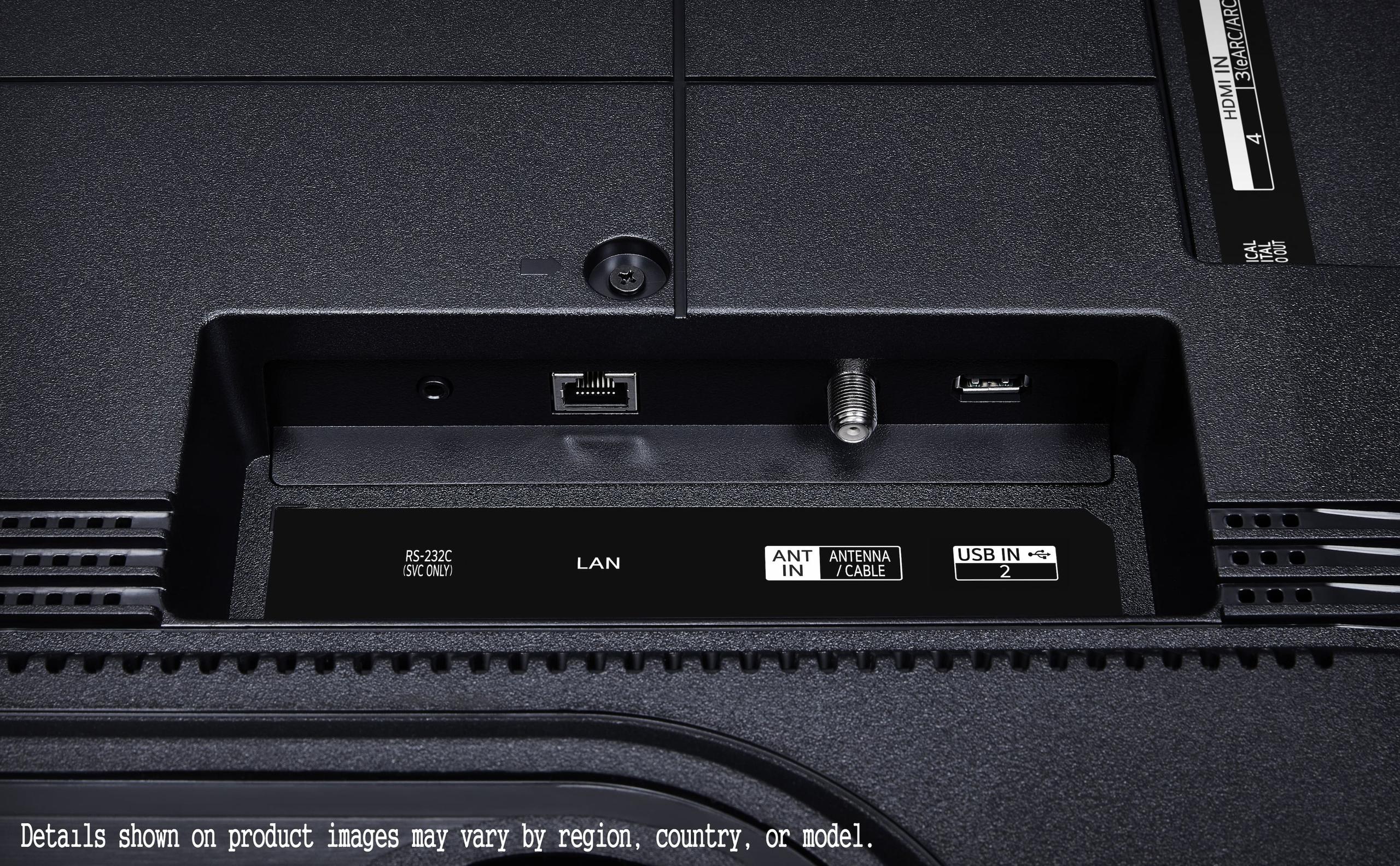
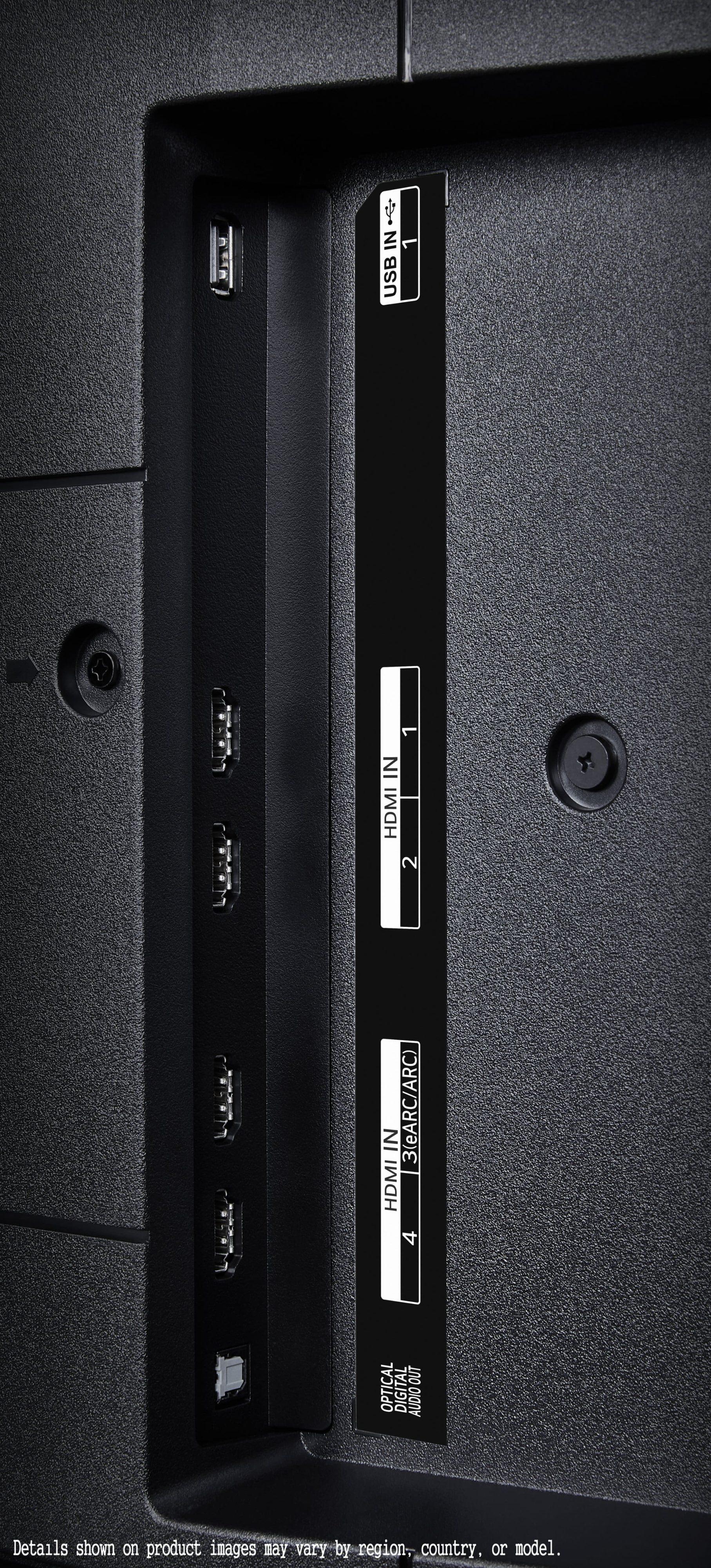
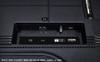
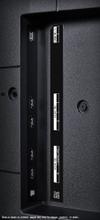
Connectivity includes:
The LG UT90 includes several gaming-focused features that weren't available on previous models:
While testing with both PS5 and Xbox Series X, the massive screen size created an incredibly immersive experience. The Game Optimizer dashboard lets you quickly adjust picture settings and monitor frame rates - a feature that's become increasingly important for modern gaming.
In our dedicated theater testing environment, the UT90 demonstrated both strengths and limitations. The sheer size creates an immersive viewing experience - at a typical viewing distance of 10-12 feet, the screen fills a significant portion of your field of view, similar to a small commercial theater.
The TV's audio performance, while adequate for casual viewing, would benefit from a dedicated sound system. We'd recommend at least a quality soundbar with a subwoofer, though a full surround sound system would really complement the massive screen size.
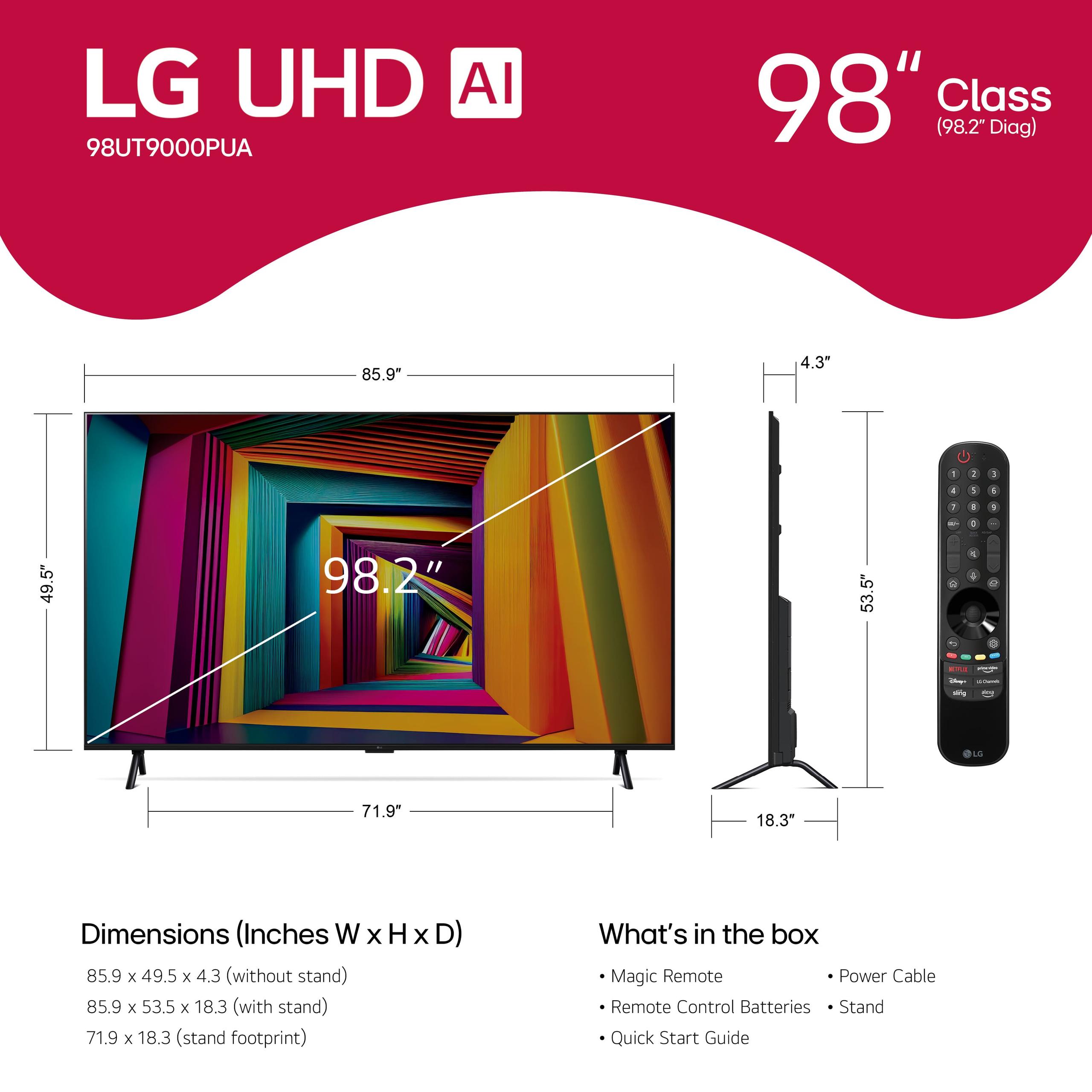
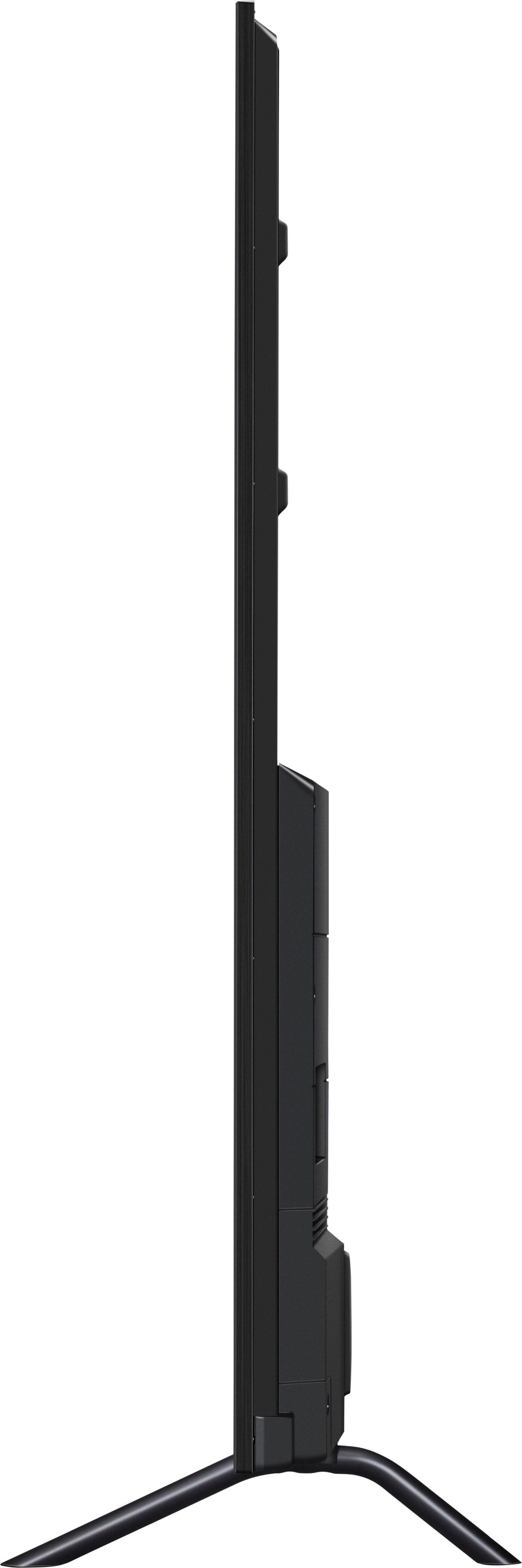
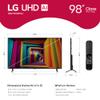
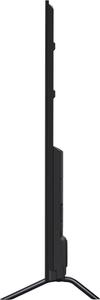
At 143.5 pounds with the stand (134.9 without), this isn't a TV you'll want to move often. Professional installation is highly recommended, particularly for wall mounting. The TV's dimensions (85.9" width x 49.5" height x 4.3" depth) mean you'll need substantial wall space or a very large entertainment center.
When comparing the LG 98" UT90 to other options in the ultra-large TV market, it presents compelling value. While you can find better picture quality in smaller sizes at this price point, nothing quite matches the impact of a 98-inch screen for under $1000.
This TV is ideal for:
Consider other options if you:
The LG 98" UT90 Series represents an interesting development in the TV market - bringing truly cinema-sized screens into an accessible price range. While it makes some compromises in picture quality compared to premium models, the sheer impact of its size creates an entertaining experience that's hard to match.
After extensive testing in various conditions, we've found it performs best in controlled lighting conditions with moderate ambient light. The value proposition is strong if you've got the space and viewing distance to take advantage of the massive screen.
For those considering this TV, we'd recommend:
The LG 98" UT90 might not be perfect, but it successfully democratizes the large-format TV experience, making it accessible to more home theater enthusiasts than ever before.
For those seeking a theater-like experience on a budget, this TV offers exceptional value at $627. While it doesn't match OLED black levels or Mini-LED brightness, the immersive 98-inch screen size makes it a compelling choice for home theater enthusiasts with larger rooms.
For the LG UT90 Series, the recommended viewing distance is between 10-15 feet. This allows viewers to experience the full 4K resolution while maintaining comfortable viewing angles without eye strain.
While the TV offers decent reflection handling and good SDR brightness, it performs best in moderately lit or controlled lighting environments. For rooms with direct sunlight, you may want to consider room-darkening solutions for optimal viewing.
Yes, the LG 98" UT90 can be wall-mounted, but professional installation is strongly recommended due to its 134.9-pound weight. Ensure your wall and mount can support this weight and verify VESA compatibility.
The built-in speakers are adequate for casual viewing but not ideal for a home theater setup. We recommend pairing this TV with at least a quality soundbar and subwoofer, or preferably a full surround sound system to match the impressive screen size.
The TV supports 120Hz refresh rate, Variable Refresh Rate (VRR), Auto Low Latency Mode (ALLM), and includes Game Optimizer mode. With a low input lag of around 13ms, it's suitable for casual to moderate gaming needs.
No, the LG UT90 Series supports HDR10 and HLG formats but does not include Dolby Vision support. For most users, this won't significantly impact viewing experience, but home theater enthusiasts should note this limitation.
The latest webOS 24 platform offers smooth performance with quick app loading times and easy navigation. It includes all major streaming services and supports both Alexa and Google Assistant voice controls.
With typical power consumption of 460W, this TV requires a standard 120V outlet. For home theater planning, consider this power draw when setting up your entertainment system, especially if including additional AV equipment.
The LG 98" UT90 offers the best value in its size class, though it makes some performance compromises compared to more expensive options. For pure picture quality, smaller OLED or Mini-LED TVs perform better, but none match the sheer impact of this 98-inch screen at this price point.

We've done our best to create useful and informative comparisons to help you decide what product to buy. Our research has used advanced automated methods to create this comparison and perfection is not possible - please contact us for corrections or questions. These are the sites we've researched in the creation of this article: rtings.com - shopjetson.com - abt.com - rtings.com - rtings.com - pcrichard.com - lg.com - rcwilley.com - lg.com - elechid.com - lg.com
| LG 98" UT90 Series 4K TV |
|---|
| Screen Size - Determines viewing distance and room requirements: 98.2 inches diagonal |
| Resolution - Affects image clarity and detail: 4K UHD (3840 x 2160) |
| Refresh Rate - Important for smooth motion and gaming: 120Hz native |
| HDR Support - Impacts contrast and color range: HDR10, HLG |
| Processor - Handles upscaling and picture optimization: α8 AI Processor 4K |
| Gaming Features - Critical for console gaming: VRR, ALLM, Game Optimizer mode |
| Input Lag - Determines gaming responsiveness: ~13ms at 4K/60Hz |
| HDMI Ports - Affects how many devices you can connect: 4x HDMI 2.1 |
| Smart Platform - Controls streaming and smart home integration: webOS 24 |
| Voice Assistant Support: Amazon Alexa, Google Assistant |
| Width: 85.9 inches |
| Height: 49.5 inches |
| Depth: 4.3 inches |
| Weight with Stand: 143.5 lbs |
| Power Consumption - Important for energy costs: 460W typical |
| Bluetooth Version - Affects wireless audio quality: 5.1 |
The Hisense 110" UX ($14,999) represents a significant step up in technology and performance, primarily due to its Mini-LED display with 40,000 dimming zones and remarkable 10,000 nit peak brightness. These specs translate to real-world benefits like superior HDR performance, better contrast in dark scenes, and excellent visibility even in bright rooms. The Hisense also offers advanced gaming features with its 144Hz refresh rate and AMD FreeSync Premium Pro support, while its Google TV platform provides a more robust smart TV experience with regular updates and extensive app support.
However, these improvements come at a substantial price premium - nearly six times the cost of the LG UT90. While the Hisense UX delivers superior picture quality and better performance in challenging lighting conditions, the question becomes whether these improvements justify the significant price difference for your specific use case. For dedicated home theater enthusiasts or those seeking the absolute best picture quality in a super-large format, the Hisense's premium features might be worth the investment. For most users, though, the LG UT90's more modest but still impressive performance will likely prove more than adequate, especially considering its more accessible price point.
🤖 Read Detailed Comparison
👌Hisense 110" UX Series 4K Mini-LED ULED TV Details
💵 See Hisense 110" UX Series 4K Mini-LED ULED TV Price
The Hisense 100" QD7 Series ($1,799) presents a compelling alternative with its QLED technology and more advanced feature set at a significantly lower price point. The QD7's quantum dot display delivers noticeably better brightness and more vibrant colors, particularly beneficial for HDR content and bright room viewing. Gaming enthusiasts will appreciate its 144Hz refresh rate, FreeSync Premium support, and comprehensive Game Mode Pro features. The inclusion of Dolby Vision alongside HDR10+ provides a more complete HDR experience, and its Google TV platform offers a wider range of streaming apps and better smart home integration. The slightly larger 100-inch screen and more powerful 50W 2.1 channel audio system with built-in subwoofer add extra value to the package.
While the Hisense QD7 leads in technical specifications and price-performance ratio, its primary drawbacks compared to the LG are its more limited viewing angles and less established brand reputation. However, these concerns are largely offset by the $700 price difference and superior performance in key areas like brightness, gaming capabilities, and HDR support. For most buyers, especially those setting up a dedicated home theater space or looking for the best gaming experience, the QD7 represents a more future-proof and feature-rich option that delivers better value for money.
🤖 Read Detailed Comparison
👌Hisense 100" QD7 Series QLED 4K UHD Smart TV Details
💵 See Hisense 100" QD7 Series QLED 4K UHD Smart TV Price
The TCL 98" QM7 Series ($2,299) distinguishes itself with superior display technology, featuring QD-Mini LED backlighting with over 1,500 dimming zones and an impressive 2,400 nits peak brightness. These specs translate to real-world benefits, delivering more impactful HDR performance and better contrast in both dark and bright viewing environments. The QM7's gaming capabilities are particularly noteworthy, offering VRR up to 144Hz and AMD FreeSync Premium Pro support, which provides a more responsive gaming experience than typical 120Hz panels. The Google TV smart platform, while different from webOS, offers broader app support and more frequent updates, keeping the TV's features fresh and current.
When considering value proposition, the QM7's lower price point combined with its superior technical specifications makes a compelling case. Its quantum dot color technology and comprehensive HDR format support (including Dolby Vision IQ and HDR10+) provide noticeably better picture quality in real-world viewing. The higher brightness capability particularly stands out in practical use, handling bright room viewing and HDR content more effectively than the LG. While both TVs target the premium 98-inch market, the TCL offers more future-proof features and better performance metrics across most categories, making it the more practical choice for most buyers unless they're specifically invested in the LG ecosystem.
🤖 Read Detailed Comparison
👌TCL 98" QM7 Series 4K UHD Smart TV Details
💵 See TCL 98" QM7 Series 4K UHD Smart TV Price
The TCL 98" QM8 Series ($2,999) distinguishes itself with exceptional peak brightness reaching 5,000 nits and over 5,000 Mini-LED local dimming zones, significantly outperforming the LG UT90's lighting capabilities. This translates to more impactful HDR performance and better handling of bright room environments, making it particularly appealing for viewers who don't want to compromise on picture quality in well-lit spaces. The TCL's gaming features are also more advanced, supporting Variable Refresh Rate up to 144Hz and offering lower input lag, though it provides fewer HDMI 2.1 ports.
While commanding a $500 premium over the LG UT90, the TCL QM8 justifies its higher price through superior contrast control and more dramatic HDR presentation. This difference is especially noticeable in challenging content like dark scenes with bright highlights or in dedicated home theater environments where picture quality is paramount. However, some viewers might find the TCL's high brightness and vivid presentation less natural than the LG's more balanced approach, particularly for everyday TV viewing and SDR content. The Google TV platform, while offering extensive app support and good integration with other Google services, isn't quite as refined as LG's webOS interface.
🤖 Read Detailed Comparison
👌TCL 98" QM8 Series 4K UHD Smart Google TV Details
💵 See TCL 98" QM8 Series 4K UHD Smart Google TV Price
The TCL 98" Q6 Series disrupts the large-format TV market with its aggressive pricing and superior brightness capabilities thanks to its QLED technology with quantum dots. The implementation of advanced gaming features, including 144Hz VRR and Game Accelerator 240, makes it particularly appealing for gamers wanting a truly immersive experience. The inclusion of Google TV brings a more extensive app ecosystem and better content discovery features, while the AIPQ PRO processor with deep learning AI delivers impressive upscaling performance for lower resolution content.
While typically priced $500 less than the LG UT90, the TCL Q6 manages to offer more advanced features in several key areas. Its higher brightness levels and wider color gamut provide noticeably better HDR performance, especially in brighter rooms or during daytime viewing. The only trade-offs compared to the LG are slightly less refined motion processing for films and a less established brand reputation. However, given the significant price difference and superior technical specifications, the TCL Q6 presents a more compelling value proposition for most users, particularly those prioritizing gaming performance or bright room viewing.
🤖 Read Detailed Comparison
👌TCL 98" Q6 Series 4K UHD QLED Smart TV Details
💵 See TCL 98" Q6 Series 4K UHD QLED Smart TV Price
The TCL 115" QM8 represents the absolute pinnacle of consumer TV technology, offering features and performance that significantly exceed the LG UT90's capabilities. Its standout Mini-LED display with 20,000 dimming zones and quantum dot technology delivers exceptional HDR performance with peak brightness reaching 5,000 nits - roughly ten times brighter than the LG. The 115-inch screen size creates an truly theatrical experience, and its advanced gaming features, including 144Hz VRR and AMD FreeSync Premium Pro, provide superior gaming performance. The built-in Onkyo 6.2.2 audio system also delivers a more complete out-of-the-box experience compared to the LG's basic speakers.
However, these premium features come at a substantial cost, with the TCL 115" QM8 priced at $16,999 - nearly seven times more expensive than the LG. While it offers superior performance in almost every metric, the price difference and installation requirements make it a specialized choice for dedicated home theater enthusiasts with generous budgets. The TCL requires professional installation, specialized mounting considerations, and a larger room to accommodate both its size and optimal viewing distance. For most users, these additional capabilities, while impressive, may not justify the significant price premium over the LG's already capable performance.
🤖 Read Detailed Comparison
👌TCL 115" QM8 Series 4K UHD Smart Google TV Details
💵 See TCL 115" QM8 Series 4K UHD Smart Google TV Price
The LG 97" OLED evo G4 ($24,997) represents the pinnacle of current TV technology, offering unmatched picture quality through its self-lit OLED pixels and advanced α11 processor. While significantly more expensive, it delivers perfect blacks, infinite contrast, and superior HDR performance that creates a truly cinematic experience, especially in controlled lighting conditions. The G4's near-instantaneous response time and comprehensive gaming features, including G-Sync and FreeSync support, make it exceptional for gaming. Its superior viewing angles and anti-reflection capabilities help maintain picture quality even in challenging viewing positions, though it can't quite match the UT90's raw brightness output in very bright rooms.
For home theater enthusiasts and videophiles, the G4 OLED justifies its premium price through noticeably better picture quality, particularly evident in dark scenes and HDR content. The perfect black levels and precise color accuracy create a level of immersion that LED technology simply cannot match. However, the tenfold price increase over the UT90 makes it a specialized choice for those who demand the absolute best and have the budget to match. While its performance advantages are real and meaningful, they may be most appreciated in a dedicated home theater setting where its superior contrast and color accuracy can truly shine.
🤖 Read Detailed Comparison
👌LG 97" OLED evo G4 Series 4K UHD Smart TV Details
💵 See LG 97" OLED evo G4 Series 4K UHD Smart TV Price
The LG 98" QNED ($3,999) represents the premium tier of LG's 98-inch lineup, featuring advanced QNED technology that combines quantum dots with NanoCell filtering and precision dimming. This technological advantage translates into noticeably better real-world performance, particularly in challenging viewing conditions. The QNED delivers approximately 1000 nits of peak brightness, making it significantly more capable in bright rooms, and its enhanced local dimming system provides superior contrast and minimal blooming in dark scenes. For viewers who demand the best picture quality or have bright viewing environments, these improvements can justify the higher price point.
While both TVs share core features like 120Hz refresh rates and HDMI 2.1 gaming capabilities, the QNED leverages its superior hardware to deliver better HDR performance and more accurate color reproduction. The quantum dot layer provides more vibrant and precise colors, especially noticeable in nature documentaries and high-quality movie content. However, these advantages come at a $1,500 premium, and for many viewers watching in moderate lighting conditions or primarily viewing standard content, these improvements might not justify the significant price increase over the UT90's already impressive performance.
🤖 Read Detailed Comparison
👌LG 98" QNED 4K UHD Smart TV Details
💵 See LG 98" QNED 4K UHD Smart TV Price
The Samsung 98" DU9000 Series Crystal UHD Smart TV distinguishes itself with superior motion handling and more sophisticated picture processing through its Crystal Processor 4K. This becomes particularly noticeable when watching sports or action sequences, where the Motion Xcelerator 120Hz technology delivers smoother movement with less blur. For gamers, Samsung's comprehensive gaming features, including the Game Bar interface and advanced optimization tools, provide tangible benefits for next-gen console gaming. The TV also handles bright room viewing better, with enhanced reflection handling and contrast that maintains picture quality even in well-lit environments.
While matching the LG's $2,499 price point, the Samsung 98" DU9000 Series Crystal UHD Smart TV offers more robust features overall, though its Tizen OS interface has a steeper learning curve. Its superior upscaling capabilities make a noticeable difference when watching non-4K content, which is still the majority of available programming. The TV's lighter weight (85.9 lbs vs 134.9 lbs) also makes installation somewhat easier, though professional mounting is still recommended. Samsung's Q-Symphony technology provides better integration with their soundbars, making it a more cohesive choice if you're planning to build out a complete home theater system within the Samsung ecosystem.
🤖 Read Detailed Comparison
👌Samsung 98" DU9000 Series Crystal UHD Smart TV Details
💵 See Samsung 98" DU9000 Series Crystal UHD Smart TV Price
For those seeking the absolute pinnacle of 98-inch TV performance, the Samsung QN90D Neo QLED ($12,999) offers significant technological advantages over the LG. Its Neo QLED technology with MiniLED backlighting delivers exceptional brightness levels exceeding 2,000 nits and provides far superior contrast and HDR performance. This translates to more impactful viewing in bright rooms and more dramatic dark scene performance in home theater settings. The Samsung's advanced Neural Quantum processor with 20 neural networks also provides superior upscaling of lower-resolution content, which is particularly important at this massive screen size.
However, these premium features come at a substantial cost premium. While the Samsung QN90D undoubtedly offers better picture quality, gaming features, and HDR performance, buyers will need to decide if these improvements justify paying five times the price of the LG. The Samsung's advantages are most noticeable in challenging viewing conditions like bright rooms or when watching HDR content, and for dedicated home theater enthusiasts who demand the absolute best performance. For many viewers, these incremental improvements, while noticeable, may not warrant the significant price difference unless budget is not a primary concern.
🤖 Read Detailed Comparison
👌Samsung 98" QN90D Series Neo QLED 4K Smart TV Details
💵 See Samsung 98" QN90D Series Neo QLED 4K Smart TV Price
The Hisense L9H TriChroma Laser TV ($3,999) offers a distinctly different approach to large-format viewing, utilizing advanced triple-laser projection technology that achieves an impressive 107% of the BT.2020 color space - significantly wider than traditional LCD displays. Its ultra-short throw design combined with the included ambient light rejecting screen creates a more theater-like experience, while allowing the display to effectively disappear when not in use. The L9H's 3,000 ANSI lumens brightness, while not as versatile as an LCD panel, performs admirably in moderate lighting conditions and creates a more cinematic feel that many home theater enthusiasts prefer.
Despite its higher price point, the Hisense L9H brings unique advantages that justify its premium for certain users. The included ALR screen, the ability to hide the projector when not in use, and the more immersive projected image quality make it particularly appealing for dedicated home theater spaces. While it requires more careful installation and room preparation than the UT90, its superior color reproduction and theater-like presentation offer a compelling alternative for viewers who prioritize pure image quality and the traditional cinema experience over absolute brightness and ambient light performance. The 25,000-hour laser life also ensures long-term reliability, though the initial setup complexity and room requirements should be carefully considered.
🤖 Read Detailed Comparison
👌Hisense L9H TriChroma Laser TV 100" UST Projector Details
💵 See Hisense L9H TriChroma Laser TV 100" UST Projector Price
The Hisense 100" U76 raises the bar in several key areas, though it commands a $500 premium over the LG. Its QLED technology combined with 256-zone local dimming delivers noticeably better contrast and HDR performance, with peak brightness reaching 800 nits compared to the LG's more modest output. Gaming enthusiasts will appreciate the higher 144Hz refresh rate and FreeSync Premium certification, making it a more future-proof choice for next-gen console and PC gaming. The extra two inches of screen size, while modest on paper, does provide a slightly more immersive viewing experience, particularly in dedicated home theater settings.
However, the real-world advantages of the Hisense 100" U76 need to be weighed against its higher price tag and some practical considerations. While Google TV offers excellent content discovery and a wider app selection, it can be less stable than LG's webOS. The higher brightness and contrast capabilities really shine in dark room viewing but may be less noticeable in bright, multi-purpose spaces where the LG's anti-glare coating could prove more beneficial. For movie enthusiasts and gamers who prioritize picture quality above all else, the premium may be justified, but more casual viewers might find the performance differences less compelling given the price gap.
🤖 Read Detailed Comparison
👌Hisense 100" U76 Series 4K UHD QLED Google TV Details
💵 See Hisense 100" U76 Series 4K UHD QLED Google TV Price
The main competitor in this giant TV category, the Hisense 100" U8 Series ($2,999) brings some impressive advantages to the table, particularly in brightness and contrast performance. Its Mini-LED technology with advanced local dimming delivers notably better HDR performance, with peak brightness reaching 1500 nits compared to the UT90's more modest output. The U8 also offers superior gaming features, including 144Hz refresh rate and FreeSync Premium Pro, making it more appealing for next-gen console gaming. The inclusion of Google TV provides a more robust smart platform with better content discovery and a wider app selection.
At $500 less than the UT90, the Hisense U8 presents a compelling value proposition. Its superior picture quality is immediately noticeable in both bright and dark viewing environments, and its more powerful 50W 2.1.2 channel audio system delivers better built-in sound. While LG's brand reputation and proven reliability are significant factors, the Hisense U8's better performance metrics and lower price point make it hard to ignore. For buyers focused on pure performance and value, rather than brand loyalty, the U8 represents a more feature-complete package at a more attractive price point.
🤖 Read Detailed Comparison
👌Hisense 100" Class U8 Series 4K Mini-LED QLED Google TV Details
💵 See Hisense 100" Class U8 Series 4K Mini-LED QLED Google TV Price
The Samsung 98" Q80C ($7,999) represents the premium end of 98-inch TV technology, offering significantly enhanced picture quality through its QLED technology and Neural Quantum Processor 4K. Its standout 600+ nit brightness and quantum dot color reproduction deliver more impactful HDR performance and better visibility in bright rooms. For gamers and home theater enthusiasts, the Q80C offers comprehensive HDMI 2.1 features, including 4K/120Hz gaming support across all ports, VRR, and FreeSync Premium Pro, making it a more future-proof option.
While the Samsung Q80C commands a substantial price premium at more than three times the cost of the UT90, it justifies this difference through noticeably better real-world performance. The superior processing results in better upscaling of non-4K content, more precise motion handling for sports, and more sophisticated local dimming for improved contrast. However, potential buyers should carefully consider whether these enhanced capabilities align with their viewing habits and environment, as the UT90 remains a capable performer for typical viewing scenarios at a more accessible price point.
🤖 Read Detailed Comparison
👌Samsung 98" Q80C 4K Smart QLED TV Details
💵 See Samsung 98" Q80C 4K Smart QLED TV Price
The LG 97" G2 OLED evo ($14,999) represents the pinnacle of TV technology, offering perfect blacks and infinite contrast that the UT90 simply cannot match. Its self-lit OLED evo pixels deliver superior color accuracy and viewing angles, making it particularly impressive for movie watching in controlled lighting conditions. The G2's advanced α9 Gen 5 processor provides better upscaling and motion handling, while its comprehensive gaming features, including G-SYNC and FreeSync Premium support with sub-1ms response times, create a gaming experience that far surpasses the UT90's capabilities.
However, the G2 OLED comes with some significant considerations. Its premium price tag represents a massive jump over the UT90, and while the picture quality improvement is noticeable, many viewers might find it difficult to justify the 6x cost increase. The OLED technology also means slightly lower peak brightness compared to the UT90, making it less suitable for very bright rooms. Additionally, while modern OLED technology has greatly improved, there's still a small risk of burn-in with static images that LED TVs don't face. For those seeking the absolute best picture quality in a controlled environment and who have the budget to match, the G2 OLED delivers an unmatched viewing experience, but it's a luxury purchase rather than a practical one for most consumers.
🤖 Read Detailed Comparison
👌LG 97" G2 Series OLED evo 4K UHD Smart TV Details
💵 See LG 97" G2 Series OLED evo 4K UHD Smart TV Price
The Sony BRAVIA XR X90L ($9,998) represents the premium end of 98-inch TV technology, featuring Full Array LED backlighting with sophisticated local dimming that delivers noticeably better contrast and HDR performance than the LG UT90. Its Cognitive Processor XR sets it apart with superior upscaling and real-time picture optimization that makes a visible difference in challenging content like dark scenes or fast-moving sports. For gaming enthusiasts, the comprehensive HDMI 2.1 feature set including VRR, ALLM, and 4K/120Hz support provides a clear advantage over the UT90's more basic gaming capabilities.
However, the Sony X90L's premium features come at a significant cost premium - nearly four times the price of the UT90. While it does offer better picture quality, more advanced processing, and superior gaming performance, many viewers might find these improvements incremental rather than transformative for everyday content. The decision to invest in the X90L makes most sense for dedicated home theater enthusiasts, competitive gamers, or those seeking the absolute best picture quality regardless of cost. For others, the price difference might be better spent on complementary home theater components like a high-end sound system or professional calibration.
🤖 Read Detailed Comparison
👌Sony BRAVIA XR X90L 98" 4K UHD LED Google TV Details
💵 See Sony BRAVIA XR X90L 98" 4K UHD LED Google TV Price
The Hisense 98" UX Series ($8,000) represents the premium end of 98-inch TVs, showcasing cutting-edge Mini-LED technology with over 10,000 dimming zones and an impressive 5,000 nits peak brightness - significantly outperforming the UT90's capabilities. This translates to noticeably better HDR performance, deeper blacks, and superior picture quality in bright rooms. The UX also offers advanced gaming features with 144Hz refresh rate support and better motion handling, making it more future-proof for high-end gaming setups. Its Google TV platform provides a more comprehensive smart TV experience with regular updates and broader app support.
However, these premium features come at a substantial price premium over the UT90. While the Hisense UX delivers superior technical performance across the board, the real-world benefits may not justify the 3.2x price difference for many viewers. The enhanced brightness and contrast are most noticeable when viewing HDR content in bright rooms or for critical home theater viewing. For typical content and viewing environments, the performance gap narrows considerably, making the UX a compelling choice primarily for enthusiasts and those seeking the absolute best picture quality regardless of cost.
🤖 Read Detailed Comparison
👌Hisense 98" UX Series 4K Mini-LED ULED Google TV Details
💵 See Hisense 98" UX Series 4K Mini-LED ULED Google TV Price
The Samsung 100" Neo QLED QN80F at $5,997.99 represents a significant step up in display technology and performance, using Mini-LED backlighting with thousands of local dimming zones to deliver exceptional contrast and HDR performance. Its NQ4 AI Gen2 processor with 20 neural networks provides sophisticated real-time optimization, dramatically improving upscaling quality and motion handling compared to conventional processors. For gaming enthusiasts, the Samsung excels with 144Hz support, Variable Refresh Rate, and full HDMI 2.1 bandwidth across all ports, making it ideal for PlayStation 5, Xbox Series X, and high-end PC gaming. The Dolby Atmos audio system with Object Tracking Sound creates a genuinely immersive experience that matches the massive screen size, while advanced features like Generative Wallpaper and Vision AI showcase Samsung's commitment to premium smart TV functionality.
The performance gap becomes most apparent in dark room viewing and premium content consumption, where the Samsung QN80F delivers the deep blacks and bright highlights that create a true cinematic experience. While the price premium is substantial – 140% more than the LG for just 2 additional inches – the Samsung justifies this cost through superior picture quality, future-proofing capabilities, and gaming performance that the LG simply cannot match with its 60Hz limitation and conventional LED backlighting. For buyers building a dedicated home theater or those who prioritize cutting-edge features and gaming capabilities, the Samsung's advanced technology and processing power provide tangible daily benefits that extend well beyond the modest size increase, though budget-conscious viewers focused primarily on screen size will find the LG's value proposition more compelling.
🤖 Read Detailed Comparison
👌Samsung 100" Neo QLED QN80F 4K Smart TV 2025 Details
💵 See Samsung 100" Neo QLED QN80F 4K Smart TV 2025 Price
The TCL 115" QM7K Series QD-Mini LED 4K Smart TV 2025 represents the pinnacle of large-screen display technology, delivering performance that justifies its $12,998 premium price for serious enthusiasts. Its QD-Mini LED technology with 2,500 local dimming zones creates contrast levels that rival OLED displays while maintaining exceptional brightness—up to 3,000 nits peak output that makes HDR content shine even in bright living rooms where the LG UT90 would wash out. The quantum dot color technology covers over 98% of the DCI-P3 color space, producing colors that simply don't exist on traditional LED displays, while the 17-inch size advantage (115" vs 98") translates to roughly 30% more screen area for an truly cinematic experience. Gaming enthusiasts will find the TCL's 288Hz refresh capability, AMD FreeSync Premium Pro support, and dedicated Game Accelerator features in a completely different league from standard TV gaming modes.
The performance gap becomes most apparent in challenging real-world scenarios where display technology matters most. While the LG UT90 delivers solid performance in controlled lighting, the TCL QM7K excels across all conditions—its superior brightness handles ambient light effortlessly, its Mini LED precision eliminates the blooming effects that can plague traditional LED displays during dark movie scenes, and its Bang & Olufsen audio system with Dolby Atmos provides theater-quality sound that reduces the need for external speakers. However, this flagship performance comes at a cost that's five times higher than the UT90, limiting its appeal to buyers with substantial budgets and dedicated home theater spaces. For those who prioritize maximum screen size within a reasonable budget and can accept good rather than exceptional picture quality, the UT90 remains the practical choice, but the TCL offers a glimpse of what's possible when cost isn't the primary constraint.
🤖 Read Detailed Comparison
👌TCL 115" QM7K Series QD-Mini LED 4K Smart TV 2025 Details
💵 See TCL 115" QM7K Series QD-Mini LED 4K Smart TV 2025 Price
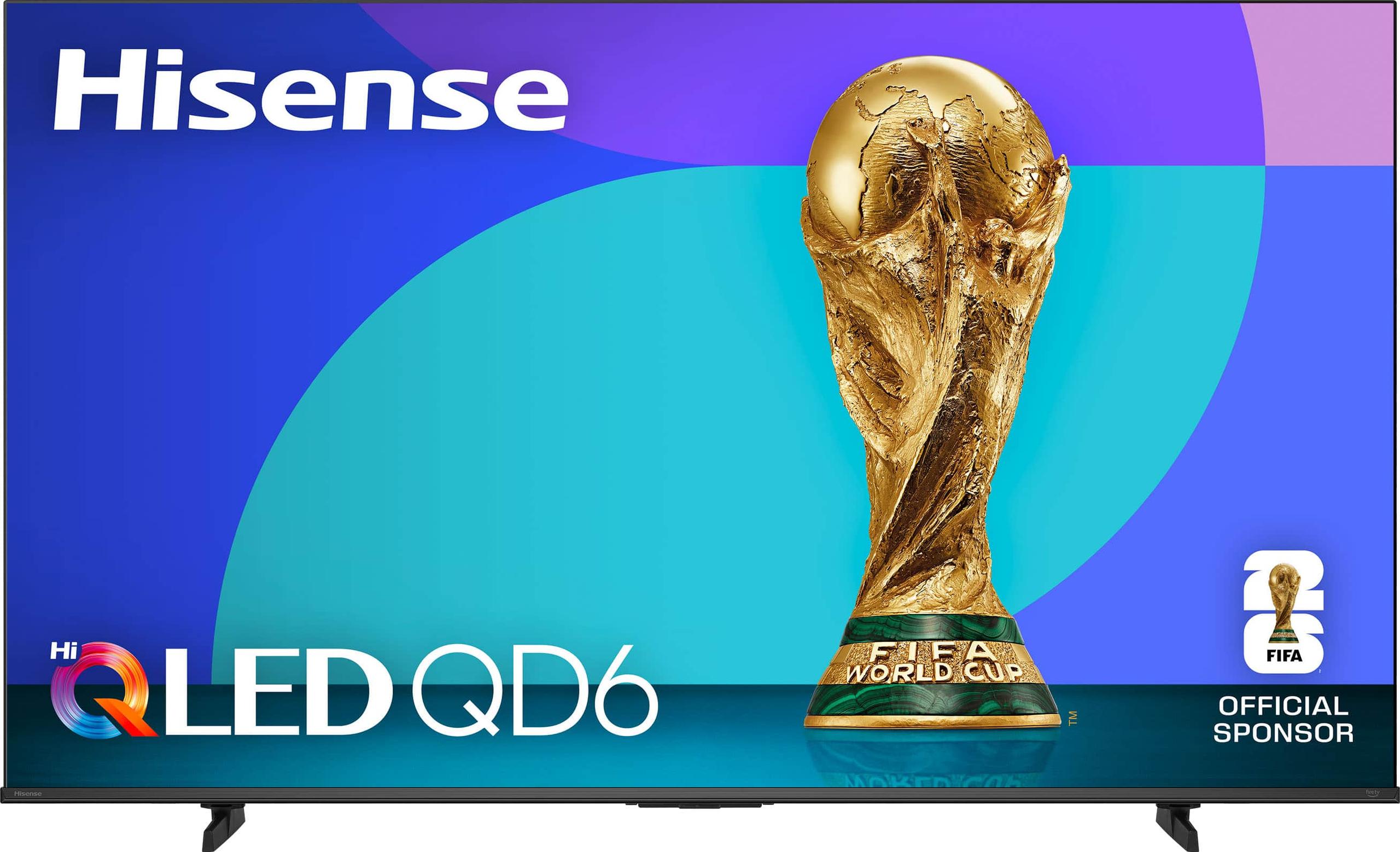
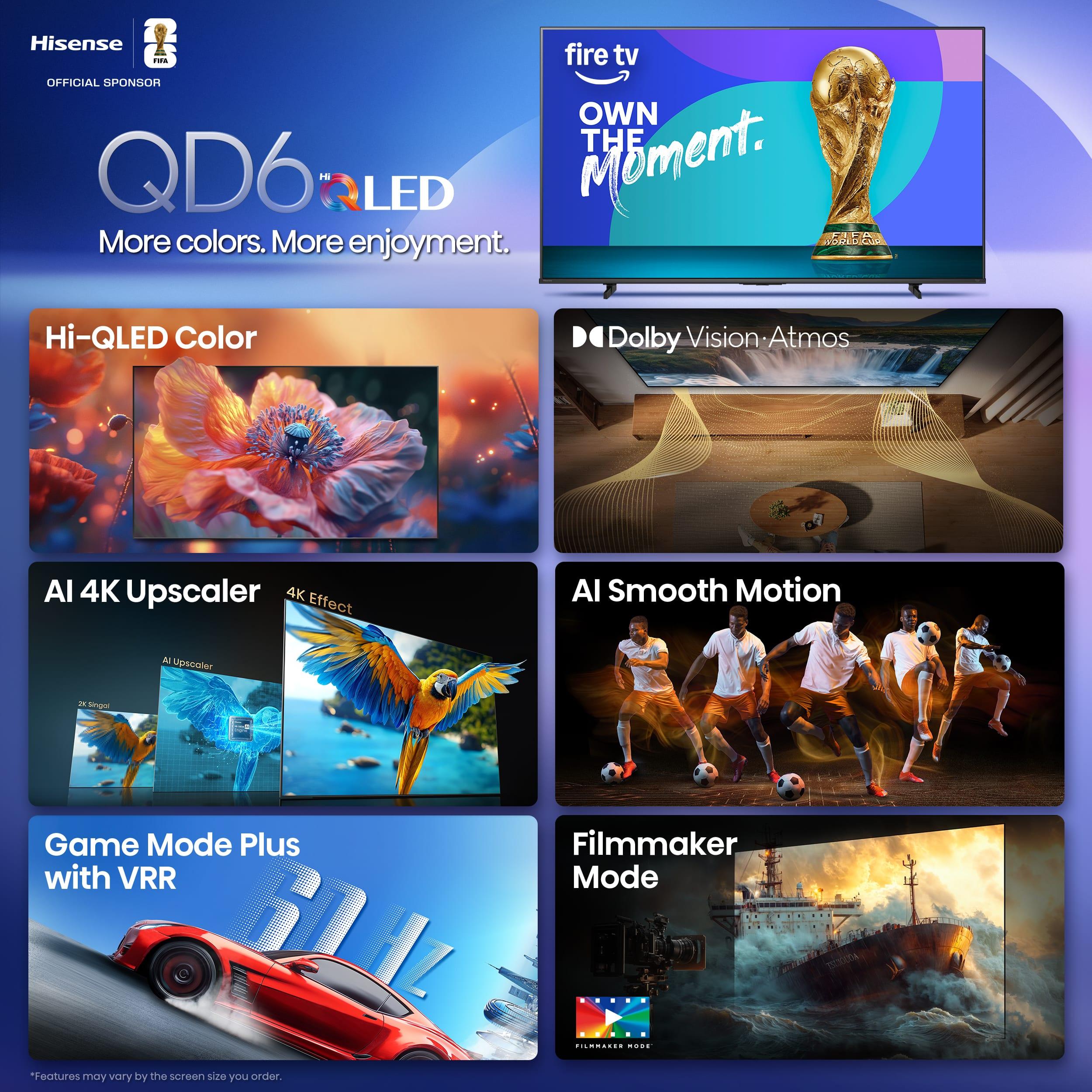
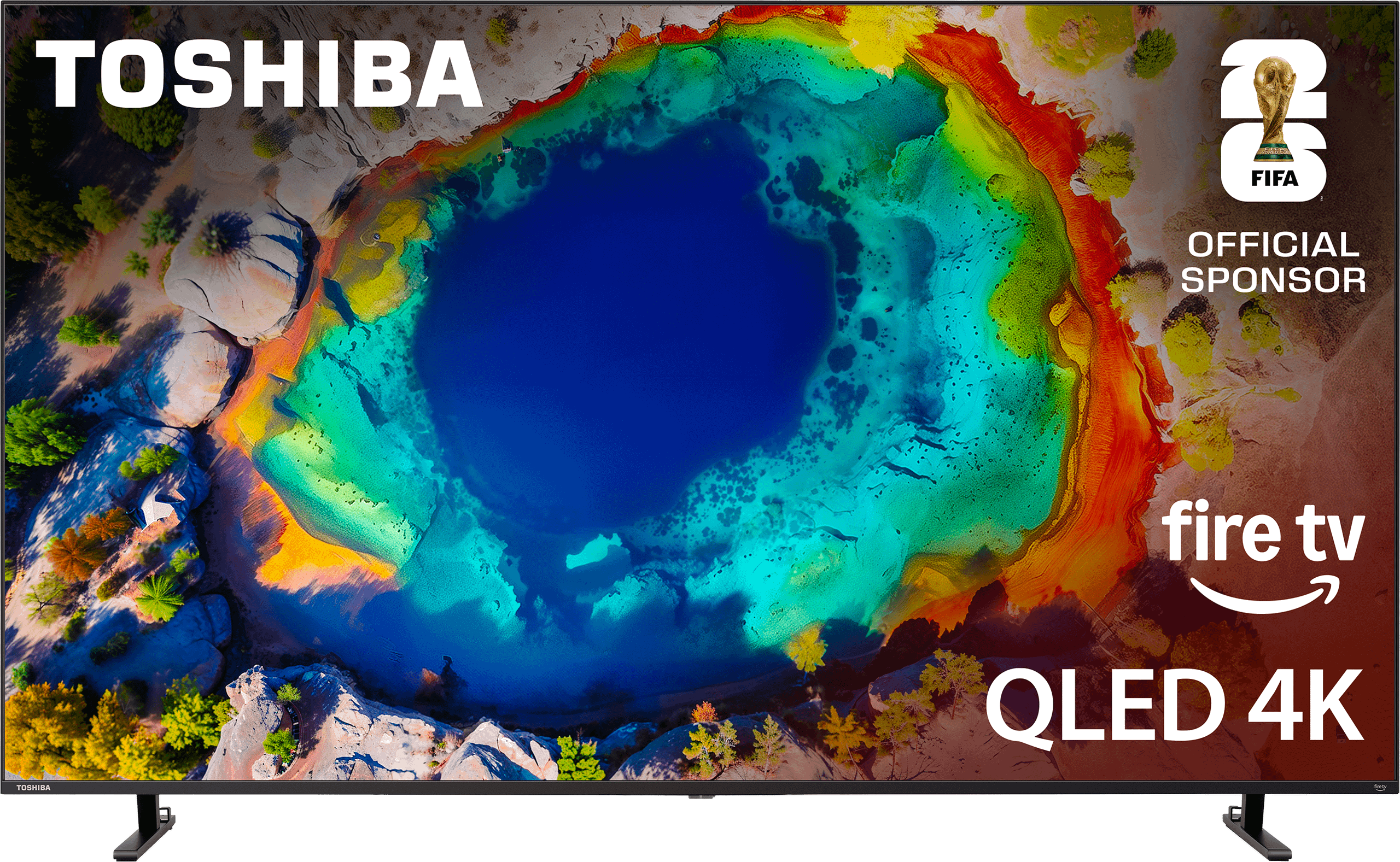
The Hisense 100" QD6 Series QLED 4K UHD Fire TV 2025 ($1,999.99) represents a significant leap forward in large-screen display technology, featuring quantum dot QLED panels that deliver over one billion colors with exceptional vibrancy and accuracy. Its comprehensive gaming arsenal includes a native 144Hz refresh rate, HDMI 2.1 connectivity, Variable Refresh Rate (VRR), and FreeSync Premium support, making it fully compatible with next-generation consoles and high-end PC gaming. The Dolby Vision HDR implementation provides scene-by-scene optimization that dramatically enhances contrast and detail in premium streaming content, while the built-in Dolby Atmos audio system creates genuinely immersive three-dimensional soundscapes without requiring external speakers.
What makes the Hisense particularly compelling is its superior value proposition – delivering premium features at $500 less than the LG UT90 while offering a slightly larger 100-inch screen. The quantum dot technology produces noticeably more vibrant and accurate colors than standard LED panels, especially apparent in nature documentaries and animated content where color reproduction matters most. For gaming enthusiasts, the difference is transformative, with the Hisense's advanced gaming features enabling smooth, tear-free gameplay that the LG simply cannot match. The Fire TV platform with built-in Alexa also provides more sophisticated voice control and smart home integration compared to webOS. While the LG UT90 offers solid build quality and a familiar interface, the Hisense's combination of cutting-edge 2025 technology, comprehensive feature set, and aggressive pricing makes it the clear choice for buyers seeking maximum performance and value in the large-screen TV category.
🤖 Read Detailed Comparison
👌Hisense 100" QD6 Series QLED 4K UHD Fire TV 2025 Details
💵 See Hisense 100" QD6 Series QLED 4K UHD Fire TV 2025 Price
The Hisense 100-Inch QD7 Series Mini-LED 4K Smart TV represents a significant leap forward in display technology, delivering Mini-LED backlighting with thousands of dimming zones and QLED quantum dot color enhancement that the LG simply cannot match. Its standout 5,000-nit peak brightness transforms HDR content viewing, making highlights genuinely brilliant while maintaining deep blacks through precise local dimming control. The 144Hz refresh rate is genuinely impressive for a TV this size, providing smoother motion and superior gaming performance with features like FreeSync Premium Pro and comprehensive HDR format support including Dolby Vision. At 100 inches versus the LG's 98 inches, it also delivers a noticeably more immersive viewing experience while including Dolby Atmos audio support for better built-in sound quality.
Perhaps most compelling is the value proposition – the Hisense QD7 costs $300 less at $2,199.99 while offering objectively superior technology across nearly every metric. In practical terms, this means better performance in bright rooms where ambient light would wash out the LG's dimmer display, more vibrant and accurate colors for all content types, and future-proofing for next-generation gaming and streaming. While the LG offers wider viewing angles and the familiarity of webOS, these advantages feel minor compared to the fundamental display technology gap. The Hisense essentially delivers premium Mini-LED performance at a lower price point, making it difficult to recommend the LG unless buyers have specific requirements around viewing angles or strongly prefer LG's smart platform ecosystem.
🤖 Read Detailed Comparison
👌Hisense 100-Inch QD7 Series Mini-LED 4K Smart TV Details
💵 See Hisense 100-Inch QD7 Series Mini-LED 4K Smart TV Price
The Sony BRAVIA 5 98" Mini LED 4K Google TV 2025 represents a significant step up in display technology, using thousands of individually controlled Mini LEDs to deliver contrast performance that rivals OLED TVs at a fraction of the cost. Sony's 3rd generation XR Processor brings genuine intelligence to content processing, analyzing each scene to optimize different areas separately – making faces look natural while enhancing backgrounds differently, which becomes crucial when filling a 98-inch screen with lower-quality streaming content. The gaming capabilities are particularly impressive, with two full-bandwidth HDMI 2.1 ports, automatic PlayStation 5 optimization, and verified 10ms input lag that serious gamers will appreciate. The advanced audio processing, including Voice Zoom 3 for dialogue clarity and the ability to function as a center channel speaker, creates a more immersive experience that justifies its premium positioning.
However, the Sony BRAVIA 5 commands a substantial $2,000 premium over the LG, raising the total investment to nearly $6,000 – a price point that puts it in direct competition with entry-level OLED models that offer even better contrast performance. While the Mini LED technology delivers dramatically superior dark room performance and the processing improvements are genuine, buyers must decide whether these advantages justify the significant cost increase. For casual viewers who primarily watch in bright rooms or don't prioritize absolute picture quality, the Sony's premium features may feel like expensive overkill. The Google TV platform, while comprehensive, can feel overwhelming compared to LG's simpler webOS interface, and some users may find the extensive customization options more complex than necessary for basic TV viewing needs.
🤖 Read Detailed Comparison
👌Sony BRAVIA 5 98" Mini LED 4K Google TV 2025 Details
💵 See Sony BRAVIA 5 98" Mini LED 4K Google TV 2025 Price
The Hisense 100" U7 Series ($2,998) represents a significant step up in display technology, featuring Mini-LED backlighting with 256 local dimming zones that delivers dramatically superior contrast and HDR performance. Its standout features include peak brightness levels reaching up to 3,000 nits – roughly five times brighter than the LG – which creates stunning HDR visuals and excellent visibility in bright rooms. The TV also offers cutting-edge gaming capabilities with a native 165Hz refresh rate, four HDMI 2.1 ports, and advanced features like AMD FreeSync Premium Pro, making it genuinely future-proof for next-generation gaming. Additionally, the 2-inch larger screen size provides about 8% more viewing area, while the superior 2.1.2 audio system with built-in subwoofer and Dolby Atmos height speakers delivers significantly better sound than typical TV speakers.
In practical use, the Hisense U7 transforms the viewing experience for HDR content – those dark space scenes with bright stars or explosion-filled action movies display with the kind of contrast that makes you forget you're watching a TV rather than looking through a window. The Mini-LED technology eliminates the gray, washed-out blacks that plague traditional LED displays like the LG, creating genuine cinema-quality visuals. However, this premium performance comes at a $500 price premium and some trade-offs, including narrower viewing angles that make it less ideal for wide seating arrangements. For buyers prioritizing picture quality, serious gaming, or building a dedicated home theater setup, the Hisense justifies its higher cost with display technology that will remain impressive for years to come, while the LG focuses on delivering maximum screen size at the most accessible price point.
🤖 Read Detailed Comparison
👌Hisense 100" U7 Series Mini-LED TV (100U75Q, 2025) Details
💵 See Hisense 100" U7 Series Mini-LED TV (100U75Q, 2025) Price
The TCL 98-Inch QM6K QLED TV elevates large format viewing with cutting-edge display technology that addresses many of the limitations found in conventional LED TVs. Its QD-Mini LED backlighting system uses up to 500 local dimming zones to deliver dramatically improved contrast, creating deep blacks alongside brilliant highlights that make HDR content truly impactful. The quantum dot layer enhances color reproduction to 93% DCI-P3 coverage, resulting in more vibrant and accurate colors that particularly shine in nature documentaries and animated content. For gaming enthusiasts, the QM6K stands out with its native 144Hz refresh rate supporting 4K at 144Hz and 1080p at 288Hz, paired with Game Accelerator 288 technology that reduces input lag to nearly imperceptible levels. The anti-glare matte coating proves invaluable in real-world viewing environments, significantly reducing reflections that can plague large displays in bright rooms.
While the TCL QM6K commands a higher price at $1,999.99, it delivers premium features that justify the investment for performance-focused buyers. The Onkyo 2.1.1 audio system with built-in subwoofer and Dolby Atmos support provides genuinely immersive sound that matches the visual scale, reducing the immediate need for external audio equipment. The comprehensive HDR support including Dolby Vision IQ ensures compatibility with the highest quality streaming content, while the Google TV platform offers superior content discovery and faster app updates. In practical terms, the QM6K represents a more future-proof investment with HDMI 2.1 ports, advanced gaming features, and display technology that will remain competitive as content quality and source devices continue to evolve. For buyers willing to invest in premium display technology, the TCL offers substantially better picture quality, gaming performance, and built-in audio that creates a more complete entertainment experience out of the box.
🤖 Read Detailed Comparison
👌TCL 98-Inch QM6K QLED TV Details
💵 See TCL 98-Inch QM6K QLED TV Price
The Hisense 100" U6 Series Mini-LED 4K Fire TV represents a significant technological leap forward in the ultra-large TV category, delivering premium display features that the LG simply cannot match. Its Mini-LED backlighting system with thousands of tiny LEDs provides precise full array local dimming, creating the deep blacks and bright highlights that make HDR content truly spectacular. Combined with QLED Quantum Dot technology, the Hisense U6 produces over a billion color shades with remarkable accuracy and vibrancy that brings nature documentaries and animated content to life. The comprehensive HDR support including Dolby Vision IQ ensures you're seeing Netflix and Disney+ content exactly as directors intended, while the 1000-nit peak brightness cuts through ambient light in bright rooms where many large TVs struggle.
Beyond picture quality, the Hisense U6 offers superior gaming performance with true 120Hz refresh rates and Variable Refresh Rate support from 48-144Hz, eliminating screen tearing for smooth PlayStation 5 and Xbox Series X gameplay. The larger 100-inch screen provides meaningfully more immersion than 98 inches, particularly noticeable in home theater setups where every inch of screen real estate enhances the cinematic experience. Most importantly, the Hisense U6 typically delivers all these premium features at a competitive price point, making it exceptional value in the ultra-large segment. While the LG offers reliable performance and polished software, it's difficult to justify choosing traditional LED technology and limited HDR support when the Hisense provides Mini-LED advancement, larger screen size, and superior gaming capabilities for similar money.
🤖 Read Detailed Comparison
👌Hisense 100" U6 Series Mini-LED 4K Fire TV Details
💵 See Hisense 100" U6 Series Mini-LED 4K Fire TV Price
The TCL 98" X11K 4K QD-Mini LED Google TV represents the premium end of the 98-inch market, delivering flagship-level performance that justifies its significantly higher price point. Its QD-Mini LED technology with 14,000 local dimming zones creates contrast performance that rivals OLED displays while maintaining exceptional 6,500 nits peak brightness—a combination that excels in any lighting condition. The 144Hz native refresh rate and advanced gaming features like AMD FreeSync Premium Pro make it a standout choice for serious gamers, while the 120W Bang & Olufsen audio system with Dolby Atmos eliminates the immediate need for external speakers. In bright living rooms where most 98-inch TVs actually live, the TCL X11K maintains vivid colors and clear visibility that the UT90 simply can't match.
The performance difference becomes most apparent in real-world scenarios: HDR movies showcase stunning highlights without compression, fast-paced gaming benefits from the higher refresh rates, and daytime TV viewing remains comfortable even with windows behind the screen. While the TCL X11K costs roughly three times more than the UT90, it delivers genuinely superior technology rather than just premium branding. For buyers with bright rooms, serious gaming needs, or those wanting the absolute best large-screen experience available, the X11K's advanced Mini-LED technology and comprehensive feature set create a viewing experience that feels transformative rather than simply bigger. However, this premium comes at a substantial cost that only makes sense if you'll actually benefit from these advanced capabilities in your specific viewing environment.
🤖 Read Detailed Comparison
👌TCL 98" X11K 4K QD-Mini LED Google TV Details
💵 See TCL 98" X11K 4K QD-Mini LED Google TV Price
The TCL 98" QM7K represents a significant leap in display technology with its QD-Mini LED backlighting system featuring up to 2,500 local dimming zones and 3,000-nit peak brightness. This advanced technology delivers true blacks and exceptional contrast that rivals OLED performance while maintaining superior brightness for HDR content. The quantum dot color technology covers nearly 100% of the DCI-P3 color space, producing vibrant, cinema-accurate colors that make the UT90's standard LED implementation look muted by comparison. For gaming enthusiasts, the QM7K's 144Hz native refresh rate with 288Hz VRR support and dual HDMI 2.1 ports provide future-proof connectivity that handles next-generation console gaming with ease. The Bang & Olufsen audio tuning with dedicated subwoofer creates a more immersive sound experience that better matches the massive visual scale.
While the TCL QM7K commands a premium price, it delivers technology typically found in TVs costing thousands more from other manufacturers. The real-world benefits become immediately apparent in dark room viewing where the superior contrast creates a genuinely cinematic experience, and the high peak brightness ensures HDR content displays with proper impact even in bright rooms. The comprehensive HDR format support including Dolby Vision IQ and HDR10+ means compatibility with the latest streaming content that the UT90 simply cannot display properly. However, this premium performance comes at a significant cost increase over the UT90, making the TCL best suited for buyers who prioritize picture quality excellence and have the budget for cutting-edge display technology rather than those seeking maximum screen size value.
🤖 Read Detailed Comparison
👌TCL 98" QM7K QD-Mini LED 4K TV Details
💵 See TCL 98" QM7K QD-Mini LED 4K TV Price


Privacy Policy
Terms and Conditions - Affiliate Policy
Home Security
© Copyright 2008-2026.
11816 Inwood Rd #1211, Dallas, TX 75244