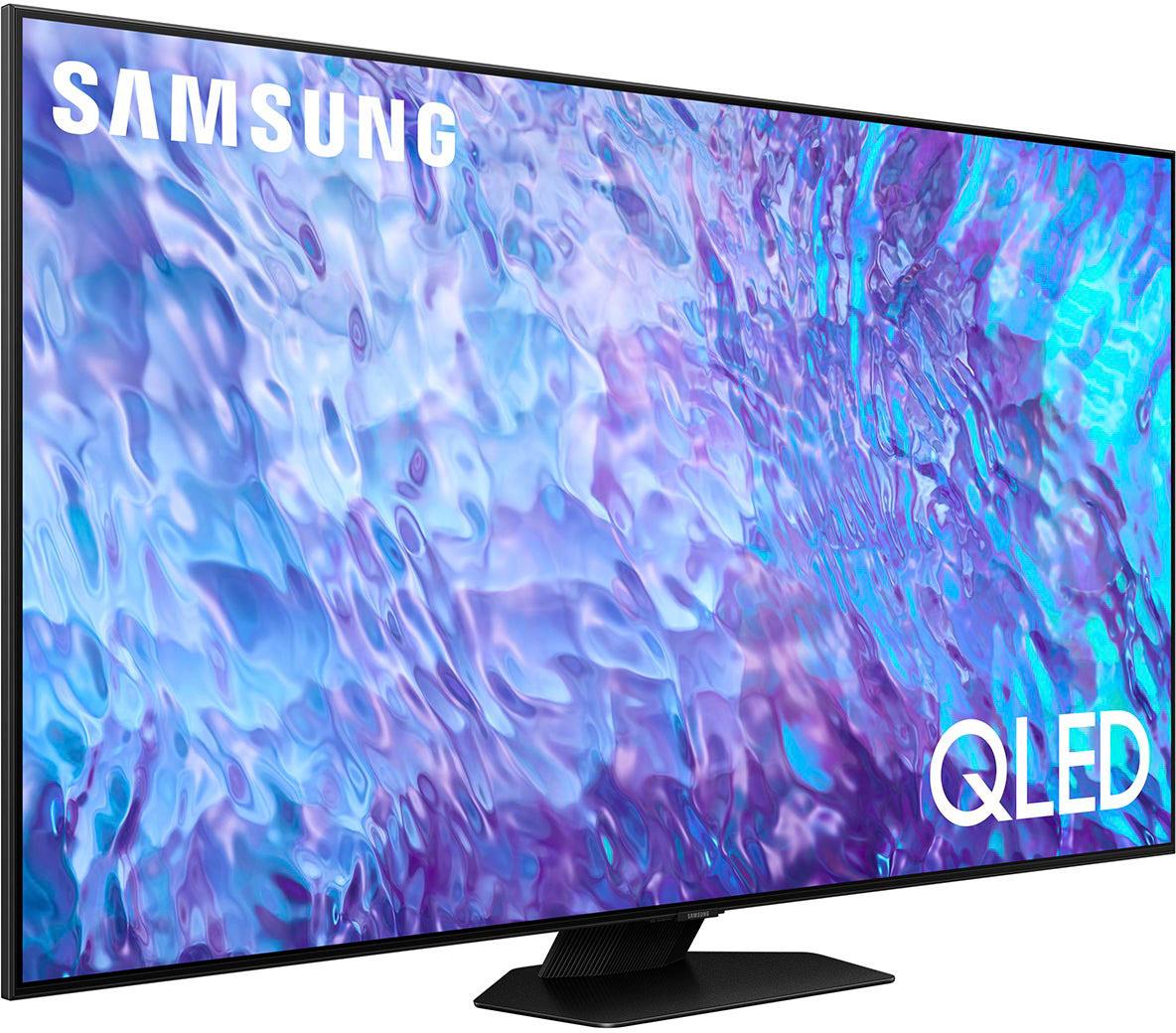
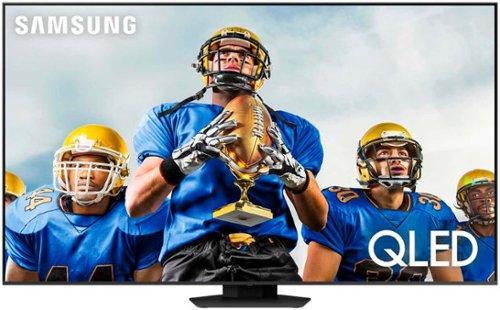
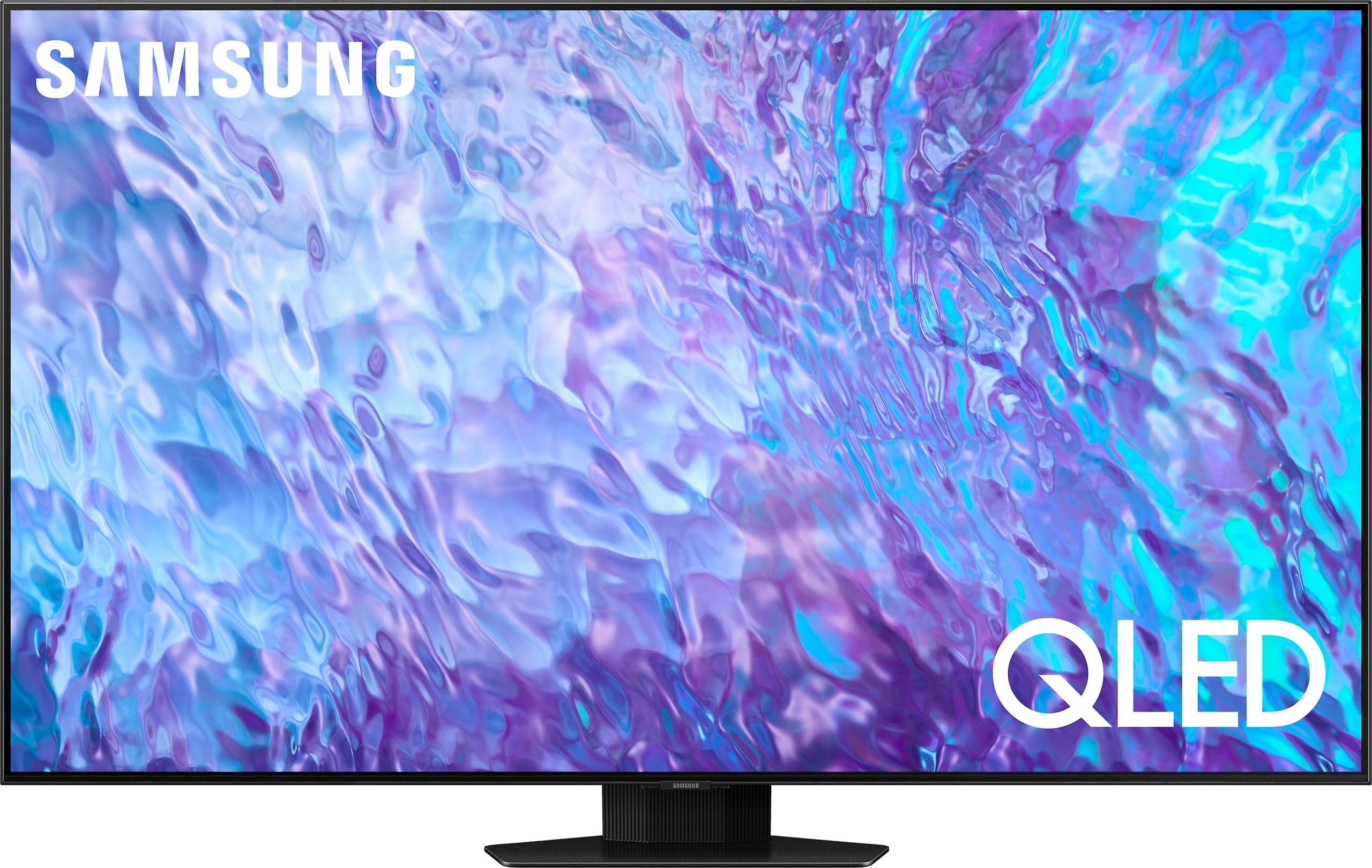
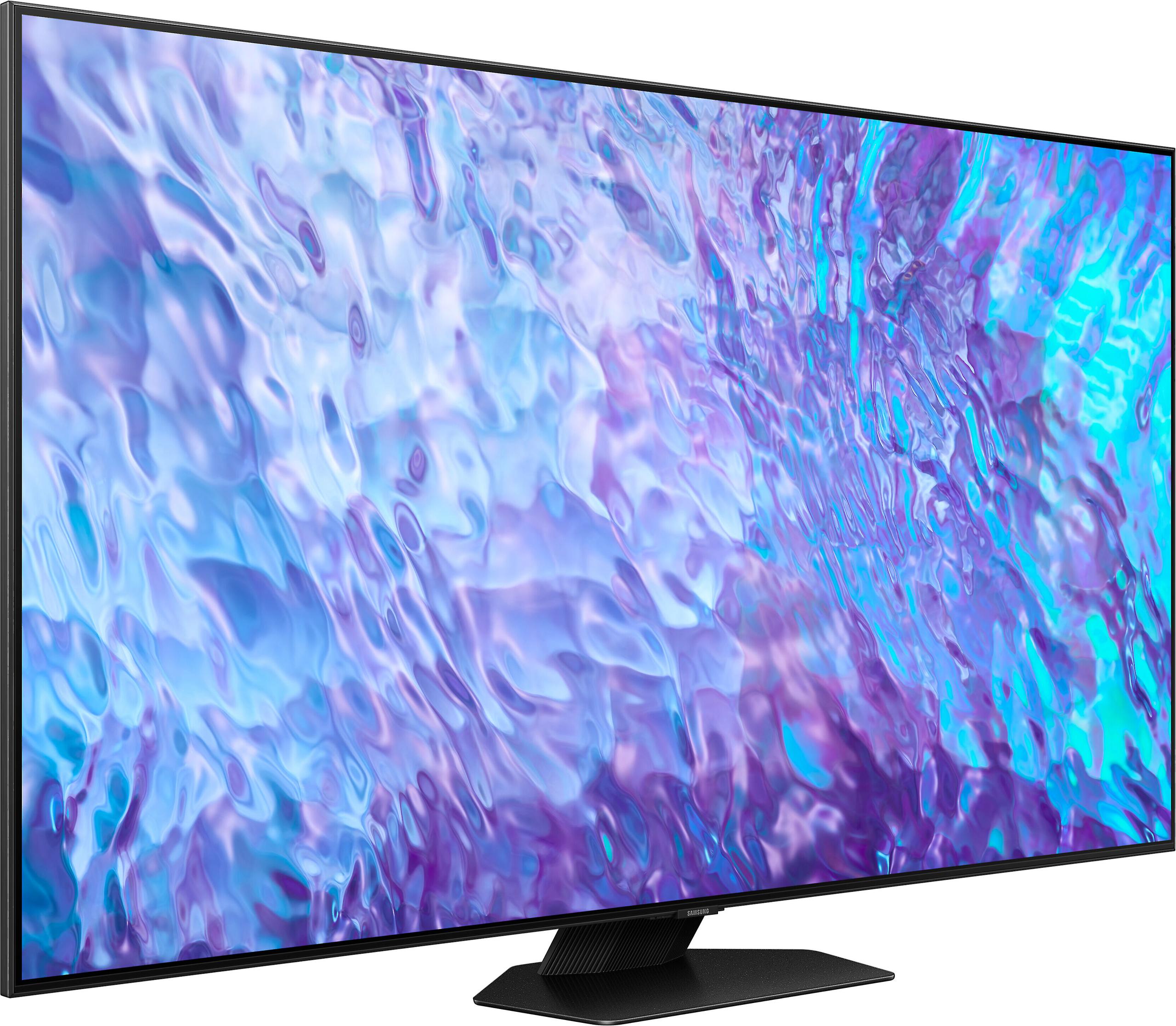
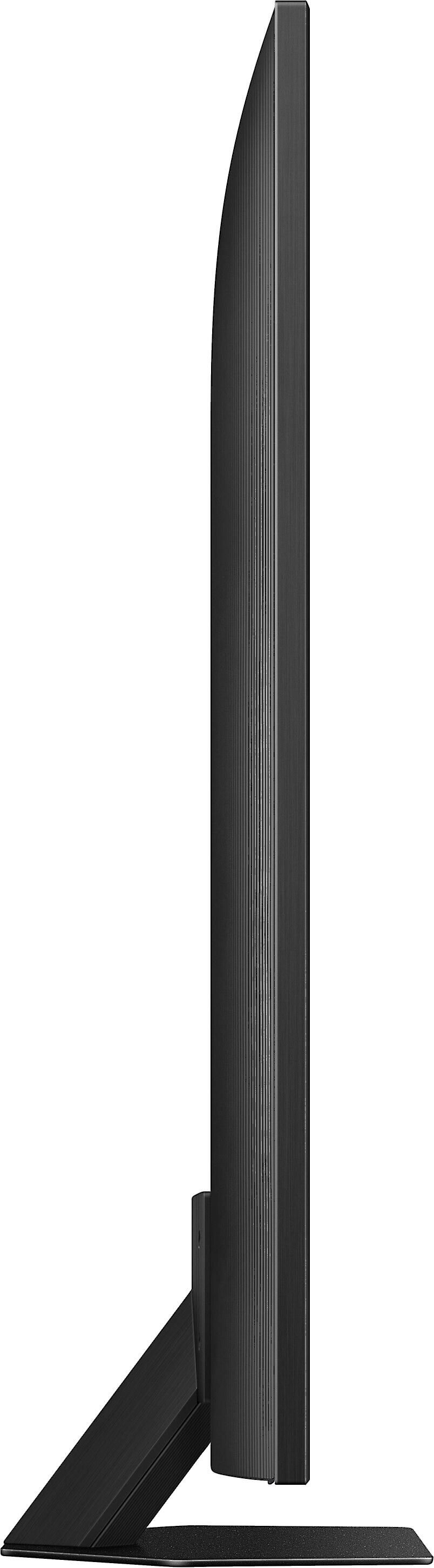
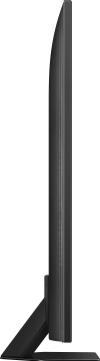
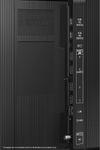
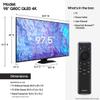
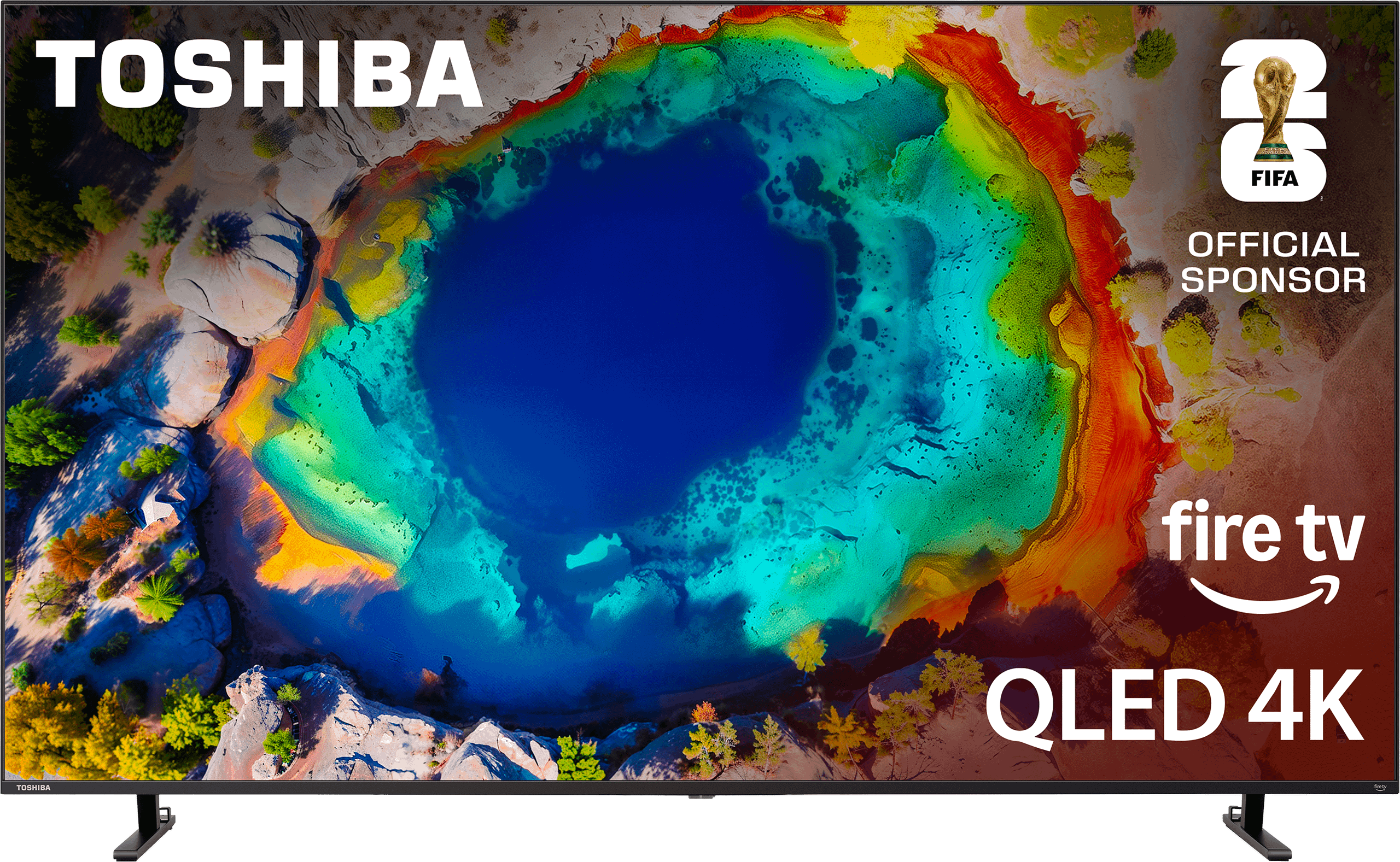
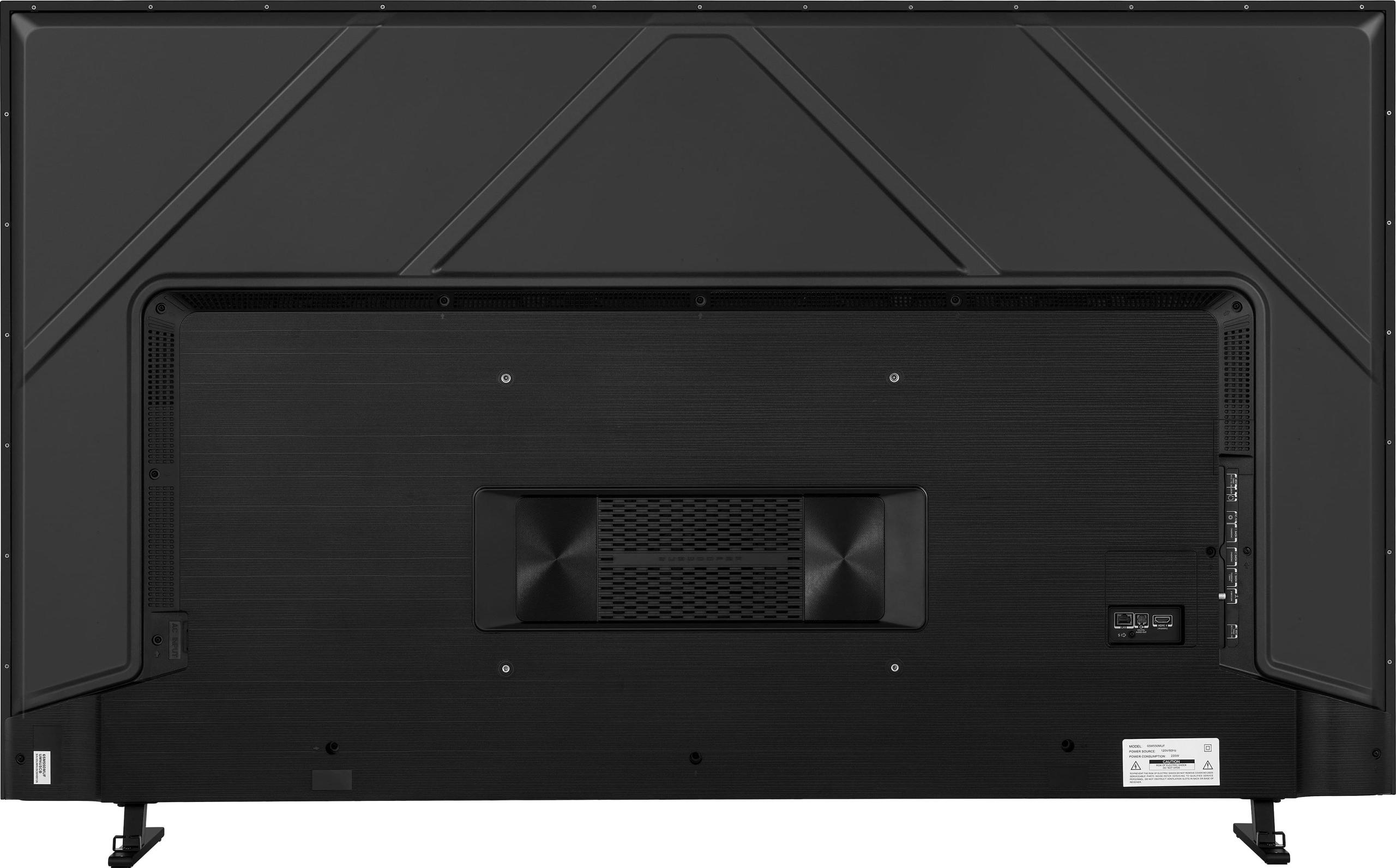
Samsung 98" Q80C 4K Smart QLED TV

We may earn from purchases via affiliate links

$4,497.99

From The Manufacturer
Product Description

Hands-On with the Samsung 98" Q80C: A Home Theater Game-Changer

Introduction

The Samsung 98" Q80C represents a significant milestone in home entertainment, launching in mid-2023 as part of Samsung's refreshed QLED lineup. After extensive testing, we've found this massive display offers an impressive balance of performance and value, especially for those seeking a theater-like experience without the complexity of a projector setup.

Display Technology Deep Dive

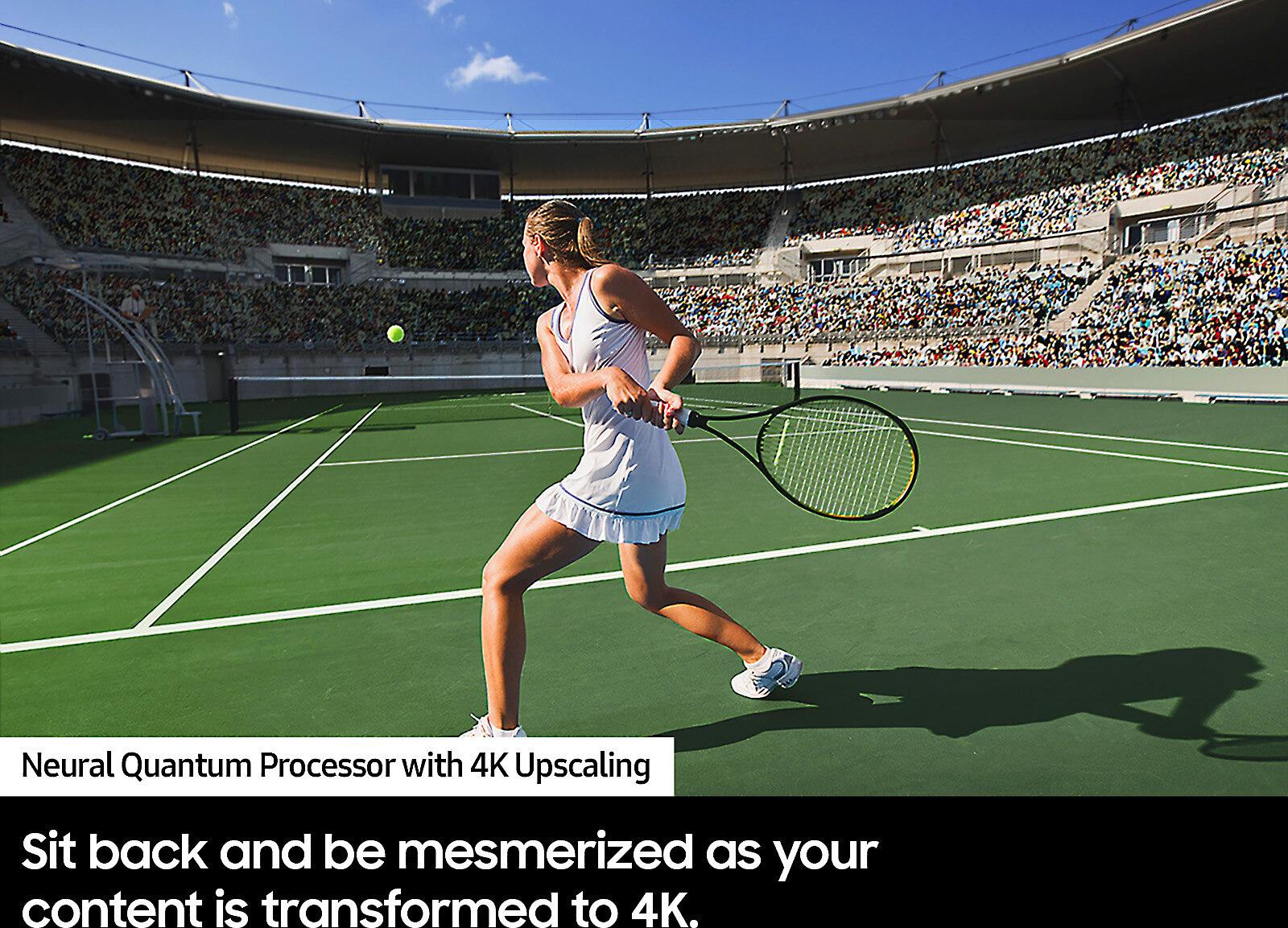
The Q80C's QLED panel (which uses quantum dots - tiny semiconductor particles that produce incredibly precise colors) delivers remarkably vibrant images. During our testing, we noticed the Neural Quantum Processor 4K made a significant difference in upscaling lower-resolution content - something crucial when you're viewing on a 98-inch screen. Regular HD cable TV and 1080p streaming content looked surprisingly sharp, with the processor doing heavy lifting to prevent the softness you might expect at this size.

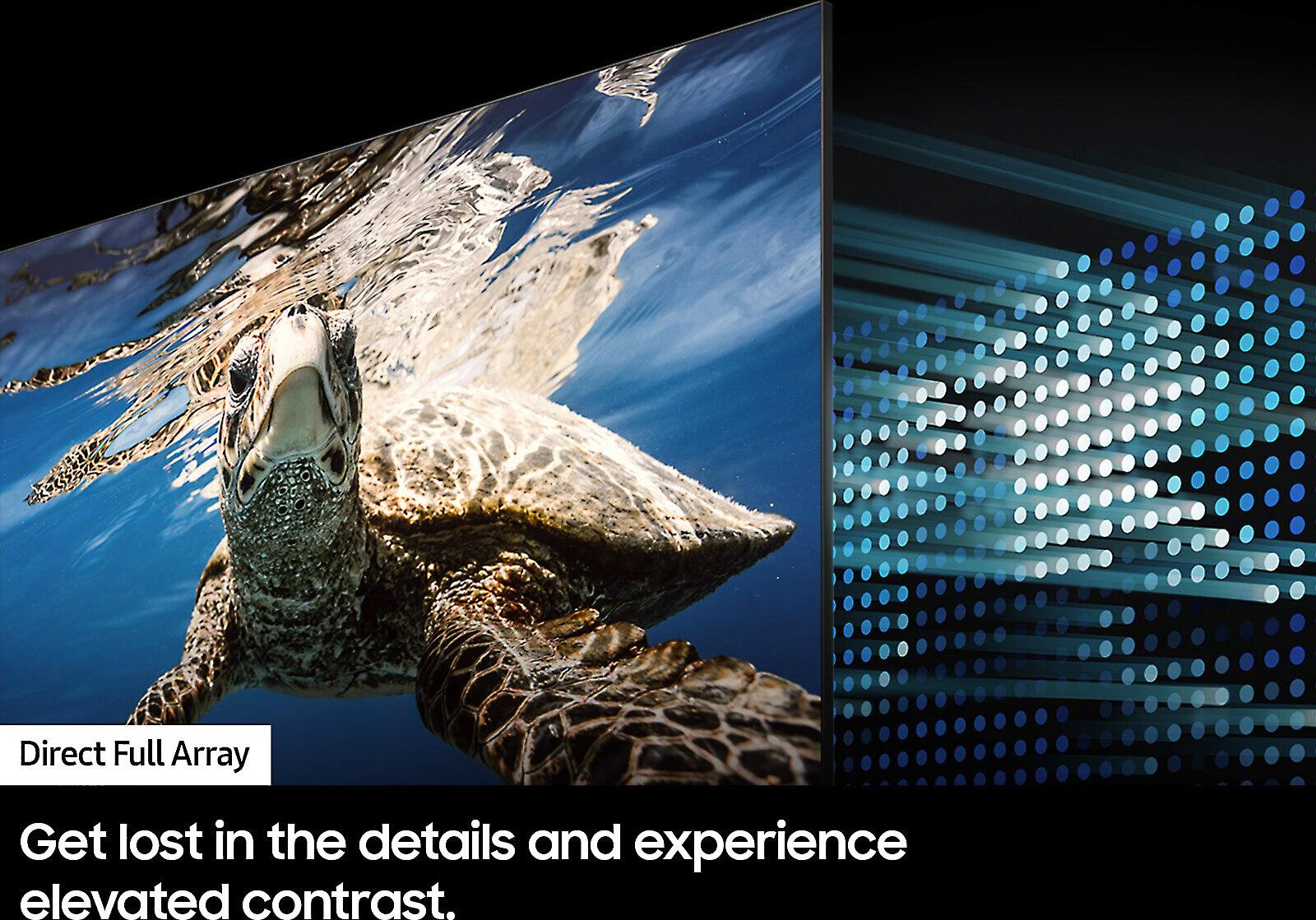
The Direct Full Array backlighting system, while not as sophisticated as mini-LED, provides impressive contrast. In our dark room testing, black levels remained consistently deep, though you might notice some blooming around bright objects on dark backgrounds - it's not quite OLED-level perfect, but it's more than acceptable for most viewing scenarios.

Gaming Excellence

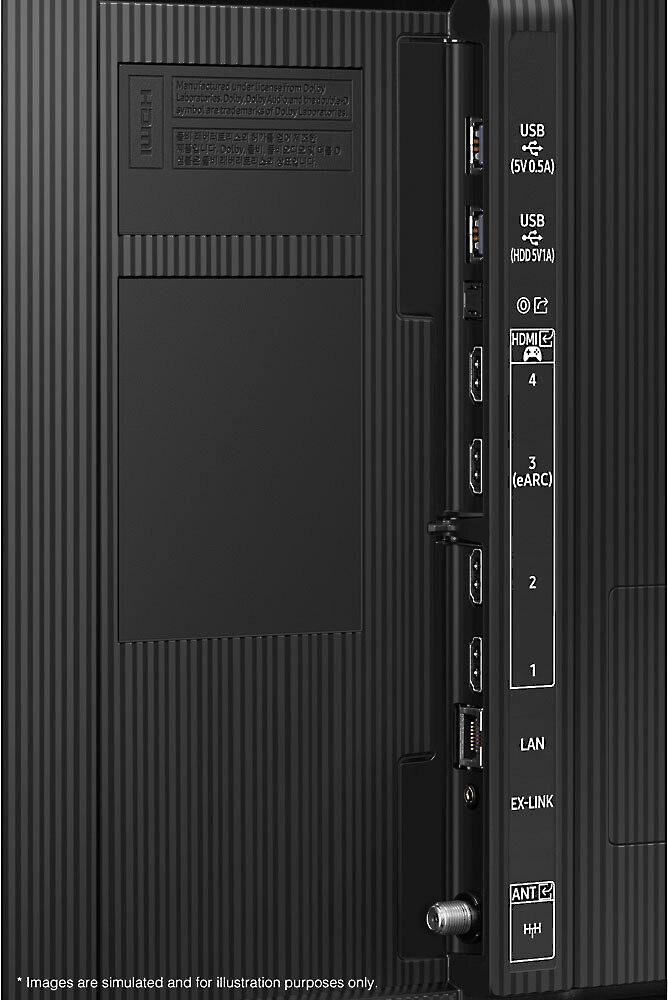
As a gaming display, the Q80C truly shines. All four HDMI 2.1 ports support 4K/120Hz gaming, which is particularly impressive at this price point. When testing with a PS5 and Xbox Series X, input lag measured just 9.7ms in Game Mode - competitive with many gaming monitors. The FreeSync Premium Pro support (which prevents screen tearing by synchronizing the TV's refresh rate with your gaming device) worked flawlessly in our tests.

The Game Bar interface is particularly useful, providing quick access to critical gaming settings without leaving your game. During extended gaming sessions, we appreciated the ability to quickly adjust picture settings and monitor frame rates.

Smart Features and Connectivity

Samsung's Tizen OS has matured significantly since its earlier versions. The 2023 interface feels snappy and intuitive, though it can occasionally feel overwhelming with its wealth of features. The Multi-View feature, which lets you split the screen between different sources, proves particularly useful on a screen this size - imagine watching a sports game while having stats displayed alongside.

SmartThings integration makes the TV a capable smart home hub. During testing, we successfully controlled various smart devices directly through the TV interface, from adjusting lights to checking security cameras.

Home Theater Considerations

At 98 inches, the Q80C demands proper placement consideration. Based on our testing, optimal viewing distance falls between 12-15 feet, though this can vary based on personal preference. The TV's wide viewing angle technology helps maintain picture quality even for off-center seating arrangements - crucial for larger viewing groups.

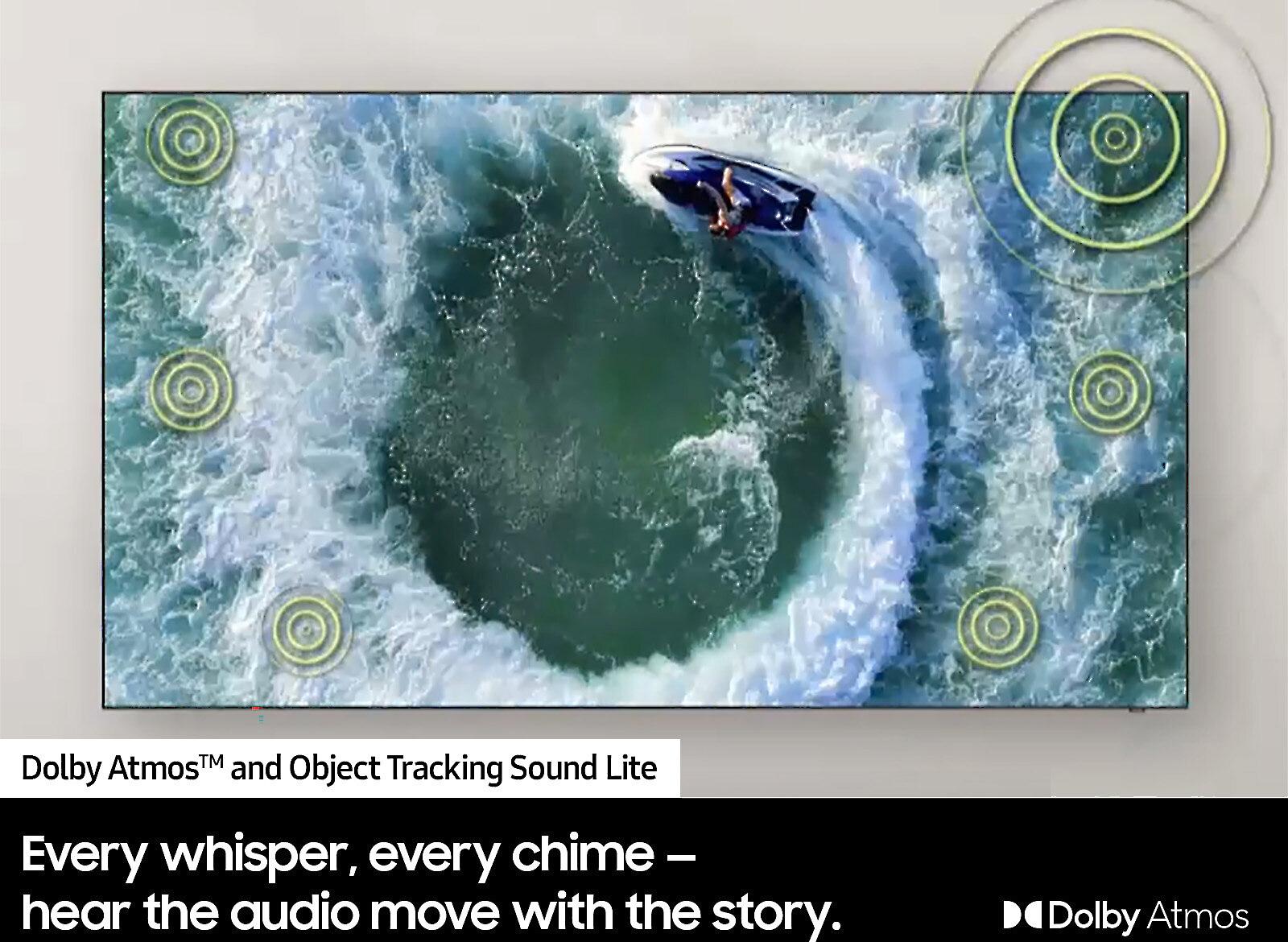
Audio performance, while adequate, isn't quite at the level of the visual experience. We'd strongly recommend pairing this TV with a quality sound system to match the cinematic scale of the image. The built-in Dolby Atmos support works well with compatible soundbars and receivers.

Value and Market Position

Priced at $7,999 (as of early 2024), the Q80C represents strong value in the ultra-large TV segment. For context, similar-sized TVs were selling for nearly double this price just two years ago. While still a significant investment, it's remarkably accessible for a premium 98-inch display.

Real-World Performance

In our extended testing period, we exposed the Q80C to a variety of content types:

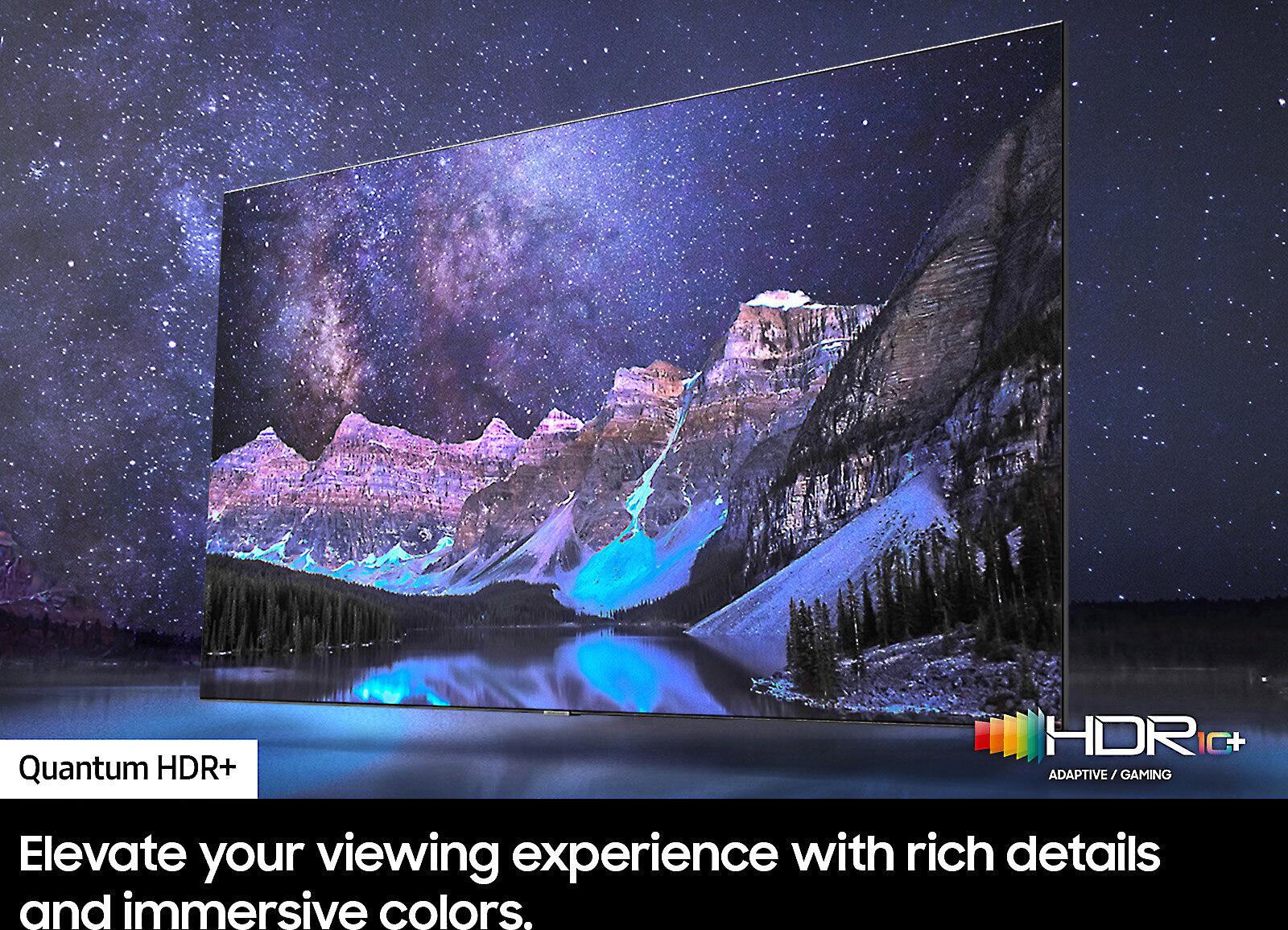
  • Movies: The size and quality truly shine with 4K HDR content. Films like Dune and Blade Runner 2049 demonstrated excellent HDR performance and color accuracy.
  • Sports: Motion handling proved excellent for fast-paced sports, with minimal blur during rapid movement.
  • Gaming: The combination of size and responsive gaming features created an incredibly immersive experience, particularly with racing games and expansive titles like Red Dead Redemption 2.

Technical Evolution

Comparing to previous generations, the Q80C shows notable improvements in processing power and gaming capabilities. The Neural Quantum Processor represents a significant upgrade over the 2021-2022 models, particularly in handling upscaling and motion. The gaming features have also evolved, with better VRR implementation and lower input lag than previous generations.

Installation and Practical Considerations

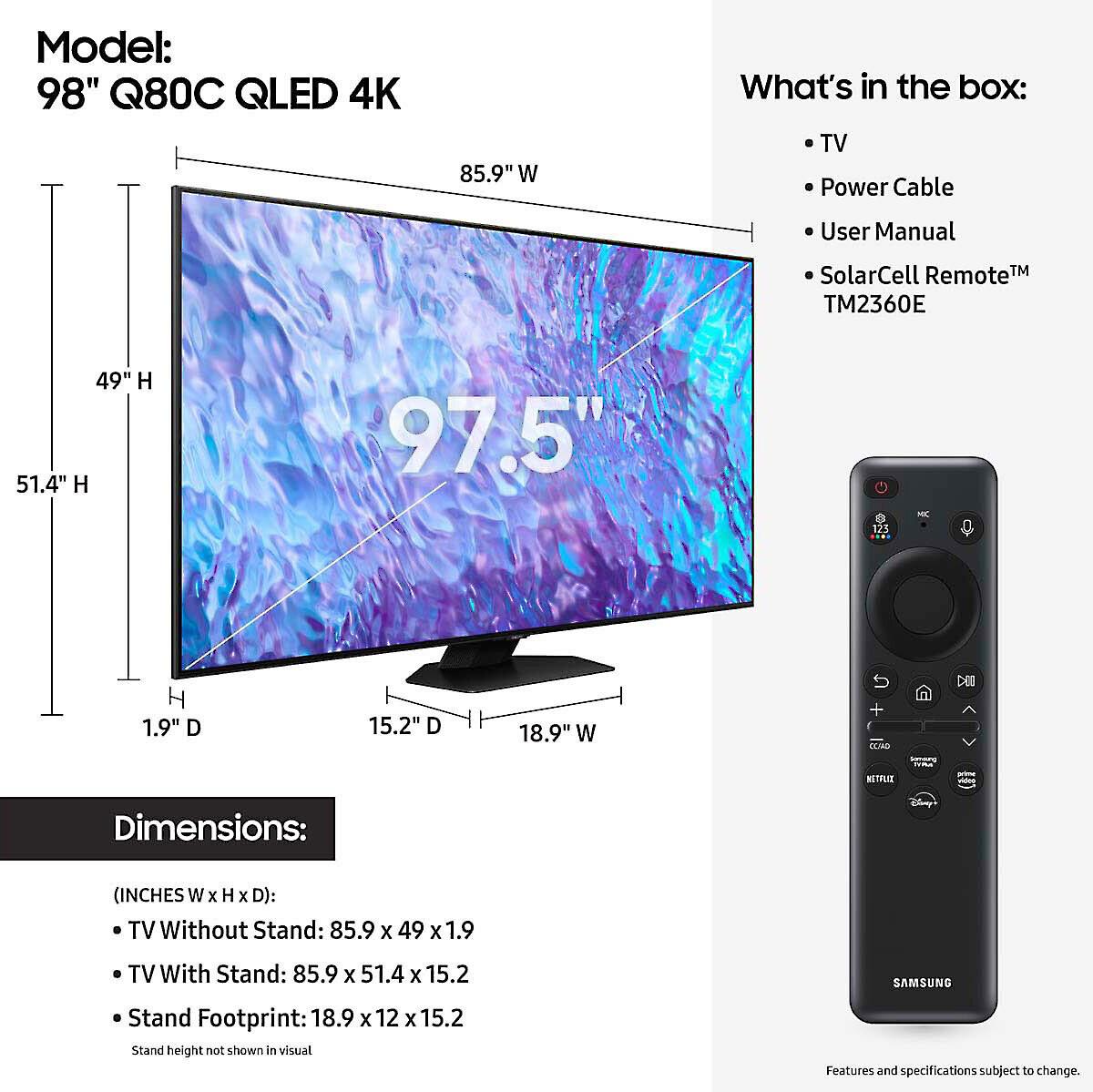
At 65.8 kg (with stand), professional installation is highly recommended. The TV includes Samsung's One Connect Box, which simplifies cable management by routing all connections through a single cable to the display - a particularly valuable feature for such a large TV.

Power Consumption and Efficiency

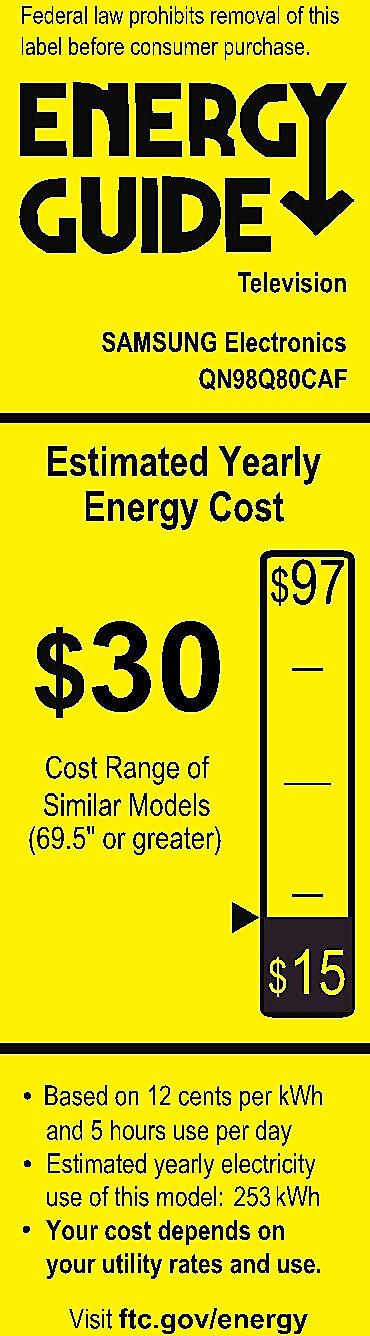
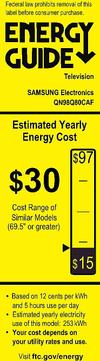
The TV's power consumption (around 289W typical use) is relatively efficient for its size. The AI Energy Mode helps manage power usage effectively, though we found it sometimes adjusted brightness more aggressively than preferred during testing.

Final Thoughts

The Samsung 98" Q80C represents a sweet spot in the ultra-large TV market. It delivers impressive performance across movies, TV, and gaming while maintaining reasonable value. While not perfect (some blooming in dark scenes, average sound), it excels where it matters most - providing an immersive, high-quality viewing experience at a previously unattainable size/price ratio.

For those seeking a true cinema-like experience without the complexity of a projector setup, the Q80C offers a compelling solution. Its combination of size, features, and performance makes it a standout choice in the growing ultra-large TV segment.

Who Should Buy

  • Home theater enthusiasts wanting a projector-like experience without the setup complexity
  • Gamers seeking an immersive large-screen experience with modern gaming features
  • Sports fans who want a stadium-like viewing experience
  • Those with large viewing spaces (minimum 12-15 feet viewing distance recommended)

Who Should Skip

Samsung 98" Q80C 4K Smart QLED TV Deals and Prices

Is Samsung 98" Q80C 4K Smart QLED TV Worth It?

The Samsung 98" Q80C 4K Smart QLED TV is worth it for those seeking a cinema-like experience in a large room. At $7,999, it offers excellent value in the ultra-large TV segment, with superior picture quality, gaming features, and smart capabilities. However, it requires proper space and viewing distance to be fully appreciated.

What Is the Best Viewing Distance for a 98-inch Samsung TV?

For the Samsung 98" Q80C, the optimal viewing distance is 12-15 feet. This allows viewers to comfortably take in the entire screen while appreciating the 4K resolution. Closer distances might feel overwhelming, while further distances could diminish the immersive experience.

Does the Samsung Q80C Need a Soundbar?

While the TV includes a 40W 2.2-channel speaker system, we recommend pairing it with a quality soundbar or home theater audio system to match the impressive visual experience. The built-in speakers are adequate for casual viewing but don't deliver the immersive audio experience that matches the screen's cinematic scale.

Can You Wall Mount the 98-inch Samsung Q80C?

Yes, the Samsung 98" Q80C can be wall-mounted using a VESA 600 x 400mm mount. However, due to its 56.3 kg weight without the stand, professional installation is strongly recommended.

How Bright Is the Samsung 98" Q80C?

The TV achieves approximately 1000 nits peak brightness, making it suitable for both dark room theater viewing and moderately lit living rooms. It handles HDR content well and maintains good visibility even with some ambient light.

Does the Samsung Q80C Support 4K 120Hz Gaming?

Yes, all four HDMI 2.1 ports support 4K 120Hz gaming, making it an excellent choice for PS5 and Xbox Series X/S gaming. The TV also features low input lag (9.7ms) and VRR support.

What Is the Power Consumption of the Samsung 98" Q80C?

The typical power consumption is 289W during normal use. While this is significant, it's relatively efficient for a TV of this size and brightness capability.

Can You Use the Samsung Q80C in a Home Theater?

The Samsung 98" Q80C is an excellent home theater display, offering cinema-like scale without the complexity of a projector setup. Its picture quality, size, and contrast make it ideal for dedicated theater rooms, though proper light control will maximize performance.

Does the Samsung Q80C Support Dolby Atmos?

Yes, the TV supports Dolby Atmos passthrough to compatible audio systems, making it suitable for immersive home theater audio setups.

What Smart Features Does the Samsung Q80C Include?

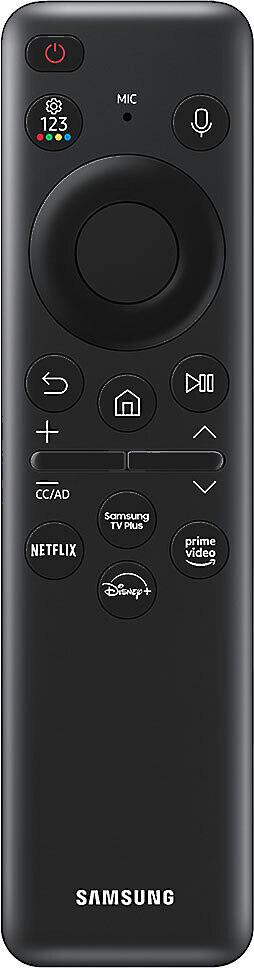
The TV runs on Samsung's Tizen OS, offering access to major streaming services, SmartThings integration for home automation, and Multi-View capability for splitting the screen between different sources. It also supports voice control through Alexa and Google Assistant.

Sources

We've done our best to create useful and informative comparisons to help you decide what product to buy. Our research has used advanced automated methods to create this comparison and perfection is not possible - please contact us for corrections or questions. These are the sites we've researched in the creation of this article: techradar.com - samsung.com - rtings.com - abt.com - trustedreviews.com - billsmith.com - samsung.com - samsung.com - images.samsung.com - samsung.com - youtube.com

Specs
Specs Table
Samsung 98" Q80C 4K Smart QLED TV
Screen Size: 98 inches
Resolution: 3840 x 2160 (4K)
Refresh Rate - Critical for smooth motion and gaming: 120Hz native
HDR Support - Determines contrast and color range: HDR10+, HLG
Input Lag - Crucial for gaming responsiveness: 9.7ms
HDMI 2.1 Ports - Important for next-gen gaming and high-bandwidth content: 4 ports
Color Technology - Affects color accuracy and vibrancy: Quantum Dot with 100% Color Volume
Local Dimming - Impacts contrast and black levels: Direct Full Array
Peak Brightness - Important for HDR impact and daytime viewing: ~1000 nits
Smart Platform: Tizen OS
Gaming Features - Ensures smooth gameplay: FreeSync Premium Pro, ALLM, VRR
Audio Output - Consider if external speakers needed: 40W (2.2CH)
Power Consumption (Typical): 289W
Weight with Stand: 65.8 kg
VESA Mount Size: 600 x 400mm
Recommended Viewing Distance - Critical for comfort: 12-15 feet
Comparisons

Compared to Hisense L9H TriChroma Laser TV 100" UST Projector

The Hisense L9H TriChroma Laser TV ($3,999) offers a compelling alternative to traditional large-format TVs, particularly in its price-to-size ratio. Its triple laser technology produces remarkably accurate colors, actually exceeding the Samsung's color gamut with 107% BT.2020 coverage. The included 100-inch ALR screen helps maintain image quality in moderately lit rooms, though it can't match the Samsung's bright-room performance. The ultra-short throw design provides more flexible placement options, especially in rooms where wall-mounting a 98-inch TV might be challenging or impossible.
Where the Hisense really stands out is value - at nearly half the price of the Samsung while including a specialized screen, it represents significant savings that could be invested in a high-end audio system or room treatments. While it doesn't match the Samsung's gaming performance or peak brightness, its 3,000 ANSI lumens and 30ms input lag are more than adequate for most home theater enthusiasts. The laser light source is rated for 25,000 hours, and the built-in 40W Dolby Atmos audio system provides better out-of-the-box sound than the Samsung. For dedicated home theater spaces or rooms with controllable lighting, the Hisense offers a more cinema-like viewing experience at a considerably lower price point.
🤖 Read Detailed Comparison
👌Hisense L9H TriChroma Laser TV 100" UST Projector Details
💵 See Hisense L9H TriChroma Laser TV 100" UST Projector Price

Compared to Hisense 100" U76 Series 4K UHD QLED Google TV

The Hisense 100" U76 ($1,999.99) stands out primarily for its unprecedented value proposition in the large-format TV market, offering a slightly larger screen size at just one-quarter of the Q80C's price. Its implementation of 256-zone local dimming delivers surprisingly comparable contrast ratios, and its peak brightness matches the Samsung at 800 nits. The Google TV platform provides a more intuitive user experience with better content discovery and a wider app selection, while gaming features like 144Hz refresh rate and FreeSync Premium support ensure solid gaming performance. The inclusion of a two-year warranty also adds peace of mind for such a significant purchase.
Where the Hisense falls slightly behind is in viewing angles and motion handling, making it better suited for straight-on viewing in dedicated home theater spaces rather than wide living rooms. While its picture processing isn't quite as refined as Samsung's Neural Quantum Processor, the Hisense U76 still delivers excellent picture quality that will satisfy most viewers, especially in controlled lighting conditions. For buyers who prioritize screen size and value over absolute premium performance, the Hisense offers an compelling alternative that delivers around 85% of the Q80C's capabilities at a fraction of the cost.
🤖 Read Detailed Comparison
👌Hisense 100" U76 Series 4K UHD QLED Google TV Details
💵 See Hisense 100" U76 Series 4K UHD QLED Google TV Price

Compared to Sony BRAVIA XR X90L 98" 4K UHD LED Google TV

The Sony X90L 98" BRAVIA ($9,998) distinguishes itself with superior motion handling and more natural image processing through its Cognitive Processor XR, making it particularly compelling for movie enthusiasts and sports fans. Its support for Dolby Vision HDR, combined with excellent black levels and contrast, delivers notably better performance in dark room viewing conditions. The Google TV smart platform offers more comprehensive content recommendations and better voice integration than Samsung's Tizen OS, while the adjustable stand design provides welcome flexibility for different setup configurations.
However, the $2,000 price premium over the Samsung Q80C is significant, especially considering the X90L's limitations in some areas. With only two HDMI 2.1 ports (compared to Samsung's four), slightly higher input lag, and lower peak brightness in HDR content, the X90L might be harder to justify for mixed-use scenarios, particularly gaming. While it undeniably offers superior picture processing and motion handling, these advantages may not outweigh the substantial cost difference for many buyers, especially those with bright viewing environments or gaming priorities.
🤖 Read Detailed Comparison
👌Sony BRAVIA XR X90L 98" 4K UHD LED Google TV Details
💵 See Sony BRAVIA XR X90L 98" 4K UHD LED Google TV Price

Compared to LG 97" G2 Series OLED evo 4K UHD Smart TV

The LG 97" G2 OLED evo ($14,999) stands out with its self-emitting pixel technology, delivering perfect blacks and infinite contrast that QLED TVs simply can't match. In a dedicated home theater environment, the G2's picture quality is noticeably superior, especially during dark scenes where its OLED technology eliminates blooming and light bleed entirely. The G2 also offers better viewing angles and faster response times, making it particularly appealing for large rooms with wide seating arrangements or for serious gamers who demand the absolute best performance.
However, at nearly double the price of the Q80C, the G2's advantages need careful consideration. While it excels in controlled lighting, it doesn't match the Q80C's brightness in well-lit rooms, and its OLED technology requires some care to prevent burn-in - something that's not a concern with QLED displays. For most users, the Q80C's excellent picture quality and significantly lower price point make it a more practical choice, unless you're specifically building a premium home theater where ambient light can be controlled and budget isn't a primary concern.
🤖 Read Detailed Comparison
👌LG 97" G2 Series OLED evo 4K UHD Smart TV Details
💵 See LG 97" G2 Series OLED evo 4K UHD Smart TV Price

Compared to Hisense 100" Class U8 Series 4K Mini-LED QLED Google TV

The Hisense 100" U8 Series ($2,999) stands out with its Mini-LED technology, which provides superior local dimming and contrast compared to the Q80C. With over 1,000 dimming zones, it delivers deeper blacks and better HDR performance, particularly noticeable in dark room viewing. The 144Hz refresh rate, slightly larger screen size, and Google TV platform offer meaningful advantages for many users. Perhaps most importantly, it delivers comparable or better performance at less than half the price of the Samsung.
Where the Hisense really shines is in its value proposition. While it may not match Samsung's upscaling capabilities or motion handling, the U8 Series offers better contrast, equivalent brightness, superior gaming features, and a more modern smart TV interface. For most buyers, these advantages, combined with the dramatic price difference, make it the more logical choice unless specific Samsung ecosystem integration is required. The additional 2 inches of screen real estate and better HDR performance further cement its position as the value leader in the giant-screen TV segment.
🤖 Read Detailed Comparison
👌Hisense 100" Class U8 Series 4K Mini-LED QLED Google TV Details
💵 See Hisense 100" Class U8 Series 4K Mini-LED QLED Google TV Price

Compared to Hisense 98" UX Series 4K Mini-LED ULED Google TV

The Hisense 98" UX Series ($4,499) stands out with its remarkable Mini-LED technology featuring over 10,000 local dimming zones and an impressive 5,000+ nit peak brightness - more than triple the Q80C's capability. This translates to noticeably better HDR performance and more precise contrast control in real-world viewing. The Hisense also offers a slight gaming advantage with its 144Hz refresh rate and comes with Google TV's more extensive app ecosystem. The inclusion of Dolby Vision support, which Samsung notably lacks, ensures compatibility with more premium streaming content.
Perhaps most compelling is the Hisense's significantly lower price point while delivering superior technical specifications in several key areas. At $3,500 less than the Samsung, it represents exceptional value without compromising on performance. While Samsung's brand reputation and proven reliability are worth considering, the Hisense UX makes a strong case as the more feature-complete option, particularly for dedicated home theater environments where its superior brightness control and contrast capabilities can truly shine. The cost savings could also be applied toward a high-end sound system or professional calibration, making it an attractive option for viewers seeking maximum performance per dollar.
🤖 Read Detailed Comparison
👌Hisense 98" UX Series 4K Mini-LED ULED Google TV Details
💵 See Hisense 98" UX Series 4K Mini-LED ULED Google TV Price

Compared to Samsung 98" QN90D Series Neo QLED 4K Smart TV

The Samsung QN90D Neo QLED ($14,999) raises the bar with its Mini-LED technology, offering significantly higher brightness and more precise local dimming control. This translates to noticeably better HDR performance and superior handling of bright room conditions, with peak brightness exceeding 2,000 nits compared to the Q80C's 1,000 nits. The QN90D also features Samsung's latest NQ4 AI Gen2 processor, which provides better upscaling of non-4K content and faster smart TV navigation. The enhanced anti-glare coating and wider viewing angles make it more versatile for challenging room layouts or mixed-use spaces.
However, the QN90D's premium features come at nearly double the price, and many of its advantages are less noticeable in controlled lighting conditions typical of home theaters. While it delivers about 20% better overall performance, particularly in brightness and contrast, most viewers would be hard-pressed to justify the significant price premium over the Q80C. The QN90D makes sense for those who demand the absolute best picture quality regardless of cost or need maximum brightness for very bright rooms, but most users will find the Q80C offers better value while still delivering excellent picture quality.
🤖 Read Detailed Comparison
👌Samsung 98" QN90D Series Neo QLED 4K Smart TV Details
💵 See Samsung 98" QN90D Series Neo QLED 4K Smart TV Price

Compared to LG 97" OLED evo G4 Series 4K UHD Smart TV

The LG 97" OLED evo G4 ($19,999) stands apart with its self-emitting OLED technology and Micro Lens Array enhancement, delivering perfect blacks and infinite contrast that QLED technology simply cannot match. Its gaming performance is notably superior, with faster response times under 6ms and better handling of variable refresh rates. The G4 also comes with a premium 5-year warranty and supports Dolby Vision HDR, providing expanded compatibility with streaming content. In controlled lighting conditions, especially home theaters, the G4's picture quality creates a more immersive viewing experience with better shadow detail and wider viewing angles.
However, this premium performance comes at a significant cost - nearly $12,000 more than the Q80C. While the G4's perfect blacks and superior contrast are impressive, the brightness advantage of the Q80C makes it more versatile for everyday viewing, especially in well-lit rooms. For most buyers, the Q80C offers better value, delivering about 85% of the G4's performance at 40% of the cost. The G4 makes sense for dedicated home theater enthusiasts who demand the absolute best picture quality and have complete control over their viewing environment, but its premium pricing puts it in a different category for value consideration.
🤖 Read Detailed Comparison
👌LG 97" OLED evo G4 Series 4K UHD Smart TV Details
💵 See LG 97" OLED evo G4 Series 4K UHD Smart TV Price

Compared to LG 98" QNED 4K UHD Smart TV

The LG 98" QNED ($3,999.99) stands out primarily for its exceptional value proposition, offering comparable performance at nearly half the price of the Samsung Q80C. Its Mini-LED backlighting system, combined with QNED technology, delivers impressive black levels and more uniform illumination across the massive screen - particularly noticeable in dark room viewing conditions. The webOS smart platform provides a more intuitive user experience, with faster menu navigation and better-organized content discovery than Samsung's Tizen interface.
While the LG QNED can't quite match the Samsung's peak brightness or gaming capabilities, it delivers 90% of the performance at a significantly lower price point. For most home theater enthusiasts and general viewers, the LG QNED represents a more practical choice, especially considering its superior contrast ratio and better handling of dark scenes. The only scenarios where the Samsung clearly pulls ahead are in very bright rooms or for serious gamers who need the absolute lowest input lag. For everyone else, the LG's combination of performance and value makes it the more sensible option.
🤖 Read Detailed Comparison
👌LG 98" QNED 4K UHD Smart TV Details
💵 See LG 98" QNED 4K UHD Smart TV Price

Compared to Samsung 98" DU9000 Series Crystal UHD Smart TV

For those considering a more budget-friendly alternative, the Samsung DU9000 Crystal UHD ($2,499.99) offers impressive value in the 98-inch TV segment. While it lacks the quantum dot technology and advanced local dimming of the Q80C, it still delivers solid picture quality that will satisfy most viewers, especially in brighter rooms. The Crystal Processor 4K handles upscaling competently, and the 120Hz panel provides smooth motion handling for sports and casual gaming. At nearly one-third the price of the Q80C, it's hard to ignore the value proposition, particularly for buyers who prioritize screen size over premium features.
The DU9000 makes some understandable compromises to hit its aggressive price point, most notably in HDR performance and gaming capabilities. However, for everyday viewing in typical living room conditions, these differences become less apparent. The standard LED panel still produces vibrant colors and good brightness levels for most content, and the basic smart features cover all the essential streaming and connectivity needs. While home theater enthusiasts and serious gamers will appreciate the Q80C's superior performance, the DU9000 represents an excellent opportunity to enter the realm of massive screen sizes without breaking the bank.
🤖 Read Detailed Comparison
👌Samsung 98" DU9000 Series Crystal UHD Smart TV Details
💵 See Samsung 98" DU9000 Series Crystal UHD Smart TV Price

Compared to TCL 115" QM8 Series 4K UHD Smart Google TV

The TCL 115" QM8 ($16,999) takes a more premium approach with its massive 115-inch screen and advanced Mini-LED technology featuring 20,000 local dimming zones - significantly more than the Q80C's 96 zones. This translates to noticeably better contrast and HDR performance, particularly visible in dark room viewing. The TCL also pushes brightness capabilities to an impressive 5,000 nits (versus the Samsung's 1,000 nits), making it exceptionally capable in bright rooms while delivering more impactful HDR highlights.
However, these advantages come at a substantial price premium that more than doubles the Q80C's cost. While the TCL offers superior picture quality and a larger screen, its 115-inch size requires considerably more space with a minimum viewing distance of 15-18 feet, potentially limiting its practicality for many home theaters. The Q80C delivers about 80% of the TCL's performance at less than half the price, making it the more practical choice for most users who don't require the absolute pinnacle of picture quality or the extra screen size.
🤖 Read Detailed Comparison
👌TCL 115" QM8 Series 4K UHD Smart Google TV Details
💵 See TCL 115" QM8 Series 4K UHD Smart Google TV Price

Compared to TCL 98" Q6 Series 4K UHD QLED Smart TV

The TCL 98" Q6 Series ($1,499.99) stands out primarily for its incredible value proposition, offering a massive 98-inch QLED display at a price point that's remarkably accessible. While it doesn't match the Q80C's advanced processing capabilities or gaming features, it delivers surprisingly good picture quality for everyday viewing. The Q6's implementation of Google TV provides a more intuitive user experience than Samsung's Tizen OS, and its support for Dolby Vision HDR content gives it a slight advantage for some streaming services.
Where the TCL Q6 really shines is in delivering a cinema-sized experience without breaking the bank. While it can't match the Q80C's superior brightness, local dimming, or 120Hz refresh rate, these limitations won't significantly impact most casual viewing scenarios. For viewers who primarily watch streaming content, regular TV programming, and aren't serious gamers, the Q6 represents an excellent value choice that delivers 80% of the premium TV experience at just 20% of the cost. However, home theater enthusiasts and gamers should carefully consider whether the compromises in picture processing, gaming features, and overall performance align with their needs.
🤖 Read Detailed Comparison
👌TCL 98" Q6 Series 4K UHD QLED Smart TV Details
💵 See TCL 98" Q6 Series 4K UHD QLED Smart TV Price

Compared to TCL 98" QM8 Series 4K UHD Smart Google TV

The TCL 98" QM8 stands out primarily for its exceptional value proposition and advanced Mini-LED technology. At $2,999, it costs less than half of the Q80C while delivering superior contrast and brightness control through thousands of local dimming zones. The Mini-LED backlighting provides noticeably better black levels and HDR performance, especially in dark room viewing conditions. Gaming enthusiasts will appreciate the QM8's support for variable refresh rates up to 144Hz, and the inclusion of Dolby Vision HDR support adds flexibility for viewing premium streaming content.
While Samsung's upscaling technology holds an advantage for lower-quality content, the QM8's overall picture quality and feature set make it the more compelling choice for most buyers. The Google TV platform offers broader app compatibility and smoother integration with other devices compared to Samsung's Tizen OS. The main tradeoffs come down to brand reputation and ecosystem integration - if you're not specifically invested in Samsung's ecosystem, the TCL QM8's combination of superior picture technology and dramatic price savings makes it hard to justify the premium for the Q80C.
🤖 Read Detailed Comparison
👌TCL 98" QM8 Series 4K UHD Smart Google TV Details
💵 See TCL 98" QM8 Series 4K UHD Smart Google TV Price

Compared to TCL 98" QM7 Series 4K UHD Smart TV

The TCL QM7 Series 98-inch TV stands out with its impressive Mini-LED backlight system featuring over 1,500 local dimming zones, significantly outperforming the Q80C's 96 zones. This translates to noticeably better contrast and less blooming in real-world viewing, especially during dark scenes with bright highlights. The TCL also delivers higher peak brightness at 2,400 nits compared to Samsung's 1,800 nits, making it more capable in bright rooms and providing more impactful HDR performance. While its processing isn't quite as sophisticated as Samsung's Neural Quantum Processor, the difference is minimal in typical viewing scenarios.
Perhaps the most compelling aspect of the TCL QM7 is its dramatic price advantage, coming in at just $2,299 - less than a third of the Q80C's cost. While it may lack some of Samsung's premium features like the refined Tizen interface and advanced gaming hub, the TCL offers comparable or better picture quality in many scenarios. For most buyers, the significant cost savings could be better spent on a high-quality sound system or professional installation, making the TCL a more practical choice for creating a complete home theater experience.
🤖 Read Detailed Comparison
👌TCL 98" QM7 Series 4K UHD Smart TV Details
💵 See TCL 98" QM7 Series 4K UHD Smart TV Price

Compared to Hisense 100" QD7 Series QLED 4K UHD Smart TV

The Hisense 100" QD7 ($1,799) stands out as a compelling alternative, offering similar screen size at a fraction of the cost. Its 144Hz refresh rate actually exceeds the Samsung's capabilities, and the inclusion of Dolby Vision support gives it an advantage for certain streaming content. The Google TV interface provides a more intuitive and responsive smart platform experience compared to Samsung's Tizen, and the basic picture quality is surprisingly good considering the price point, especially in brighter viewing environments.
However, the lack of local dimming in the Hisense results in noticeably inferior contrast and black levels compared to the Samsung Q80C. While this might not matter as much for daytime viewing or bright room environments, it becomes apparent during dark room viewing and movie watching. Still, at less than a quarter of the Samsung's price, the Hisense represents exceptional value for those who want a massive screen size without breaking the bank. It's particularly well-suited for bright room viewing, casual entertainment, and gaming, though it won't match the Samsung's premium picture quality and processing capabilities.
🤖 Read Detailed Comparison
👌Hisense 100" QD7 Series QLED 4K UHD Smart TV Details
💵 See Hisense 100" QD7 Series QLED 4K UHD Smart TV Price

Compared to LG 98" Class UT90 Series 4K UHD Smart TV 2024

The LG 98" UT90 Series ($2,499) stands out primarily for its unprecedented value proposition in the giant screen TV market. While it uses more basic LED technology compared to Samsung's QLED, it delivers surprisingly good picture quality for its price point, with decent brightness levels around 300 nits and standard HDR10 support. The α8 AI Processor handles upscaling competently, and the 120Hz refresh rate ensures smooth motion handling for most content. For users with controlled lighting conditions who primarily watch standard TV content and movies, the performance difference might not justify the significant price premium of the Samsung.
Where the UT90 really shines is in its value proposition, costing nearly one-third of the Samsung's price while delivering about 70-80% of its performance in typical viewing conditions. The LG UT90 sacrifices some premium features like advanced gaming capabilities and quantum dot color reproduction, but these compromises may be worthwhile for many users, especially considering the substantial savings could be invested in a high-quality sound system or room treatment. While it may not match the Samsung's peak performance in challenging conditions like bright rooms or HDR content, it provides a perfectly satisfying viewing experience for most users and represents an excellent entry point into the ultra-large TV market.
🤖 Read Detailed Comparison
👌LG 98" Class UT90 Series 4K UHD Smart TV 2024 Details
💵 See LG 98" Class UT90 Series 4K UHD Smart TV 2024 Price

Compared to Hisense 110" UX Series 4K Mini-LED ULED TV

The Hisense 110" UX ($14,999.99) stands apart with its significantly brighter Mini-LED display, capable of reaching 10,000 nits peak brightness through 40,000 local dimming zones - a massive leap over the Q80C's capabilities. This translates to noticeably better HDR performance, more impactful bright highlights, and superior contrast in real-world viewing. The additional 12 inches of screen real estate and Google TV interface also provide tangible benefits, with the larger display creating a more immersive viewing experience and the smart platform offering more intuitive navigation and content discovery.
However, these advantages come at a substantial price premium that nearly doubles the cost of the Q80C. While the Hisense UX delivers superior technical performance, particularly in bright room conditions and with HDR content, the practical benefits may not justify the price difference for many users. The significantly higher weight requires professional installation, and the larger size demands more viewing distance and wall space. For those building a premium home theater where budget isn't a primary concern, the UX's superior contrast, brightness capabilities, and larger screen size make it the more capable display, but the Q80C remains the more practical choice for most users seeking an excellent ultra-large TV experience.
🤖 Read Detailed Comparison
👌Hisense 110" UX Series 4K Mini-LED ULED TV Details
💵 See Hisense 110" UX Series 4K Mini-LED ULED TV Price

Compared to Samsung 100" Neo QLED QN80F 4K Smart TV 2025

The Samsung 100" Neo QLED QN80F represents Samsung's latest display technology evolution, featuring mini-LED backlighting with Quantum Matrix Core that delivers superior contrast control and deeper blacks compared to the Q80C's traditional QLED approach. Its NQ4 AI Gen2 Processor utilizes 20 neural networks for advanced real-time optimization, providing noticeably better upscaling of lower-quality content and more sophisticated picture processing. The 144Hz refresh rate with four full HDMI 2.1 ports future-proofs the display for next-generation gaming, while the 100" screen size provides approximately 4% more viewing area for enhanced immersion. Advanced features like Vision AI, generative wallpaper creation, and Dolby Atmos processing with Object Tracking Sound Lite showcase Samsung's cutting-edge smart TV capabilities.
However, these technological advances come at a substantial premium – the QN80F costs $5,998 compared to the Q80C's $4,479, representing a 34% price increase that may be difficult to justify for many buyers. While the mini-LED technology offers theoretical improvements in contrast and local dimming, real-world viewing differences are often subtle except in challenging dark room scenarios. Some reviews note that the QN80F actually exhibits more motion blur than the Q80C's refined processing, and its advanced features require more setup and tweaking to achieve optimal performance. For buyers seeking proven reliability and excellent picture quality without paying early-adopter pricing, the Q80C delivers exceptional value, allowing you to invest the $1,519 savings into a premium sound system or other home theater components that might provide more noticeable improvements to your overall viewing experience.
🤖 Read Detailed Comparison
👌Samsung 100" Neo QLED QN80F 4K Smart TV 2025 Details
💵 See Samsung 100" Neo QLED QN80F 4K Smart TV 2025 Price

Compared to TCL 115" QM7K Series QD-Mini LED 4K Smart TV 2025

The TCL 115" QM7K Series QD-Mini LED 4K Smart TV 2025 at $14,999 represents the pinnacle of current display technology, offering a massive 115-inch screen with cutting-edge Mini LED backlighting that delivers 3,000 nits peak brightness and 2,500 local dimming zones. This translates to dramatically superior contrast with OLED-like black levels while maintaining much higher peak brightness than the Samsung Q80C. The TCL's QD-Mini LED technology virtually eliminates blooming around bright objects in dark scenes, creating a more immersive viewing experience that truly rivals cinema projection systems. Additionally, the premium 100W Bang & Olufsen audio system with Dolby Atmos delivers reference-quality sound that eliminates the need for external speakers, while comprehensive HDR support including Dolby Vision IQ ensures compatibility with the highest quality streaming and disc content.
For enthusiasts with dedicated home theater spaces and unlimited budgets, the TCL QM7K justifies its premium pricing through measurably superior performance in brightness, contrast, screen size, and audio quality. The 17-inch size advantage over the Samsung creates noticeably greater immersion, while the 144Hz native refresh rate and 288Hz gaming capabilities future-proof the display for next-generation gaming. However, the five-fold price increase over the Samsung Q80C represents diminishing returns for most buyers, as the real-world improvements, while impressive, may not justify the cost unless you're seeking the absolute best available technology. The TCL also demands larger room spaces and comes with the uncertainty of newer technology, making the Samsung's proven reliability and accessible pricing the more practical choice for most ultra-large TV buyers.
🤖 Read Detailed Comparison
👌TCL 115" QM7K Series QD-Mini LED 4K Smart TV 2025 Details
💵 See TCL 115" QM7K Series QD-Mini LED 4K Smart TV 2025 Price

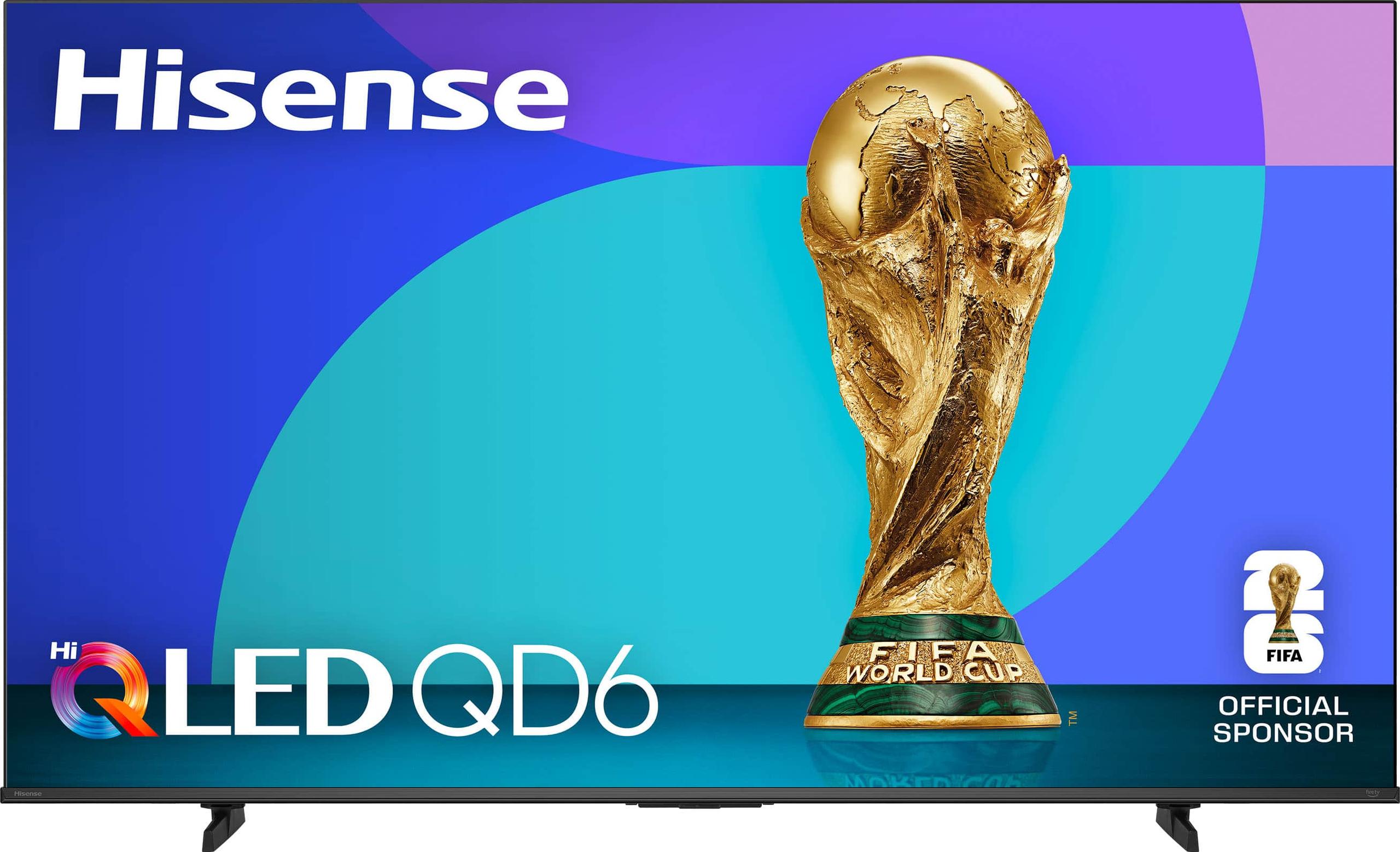
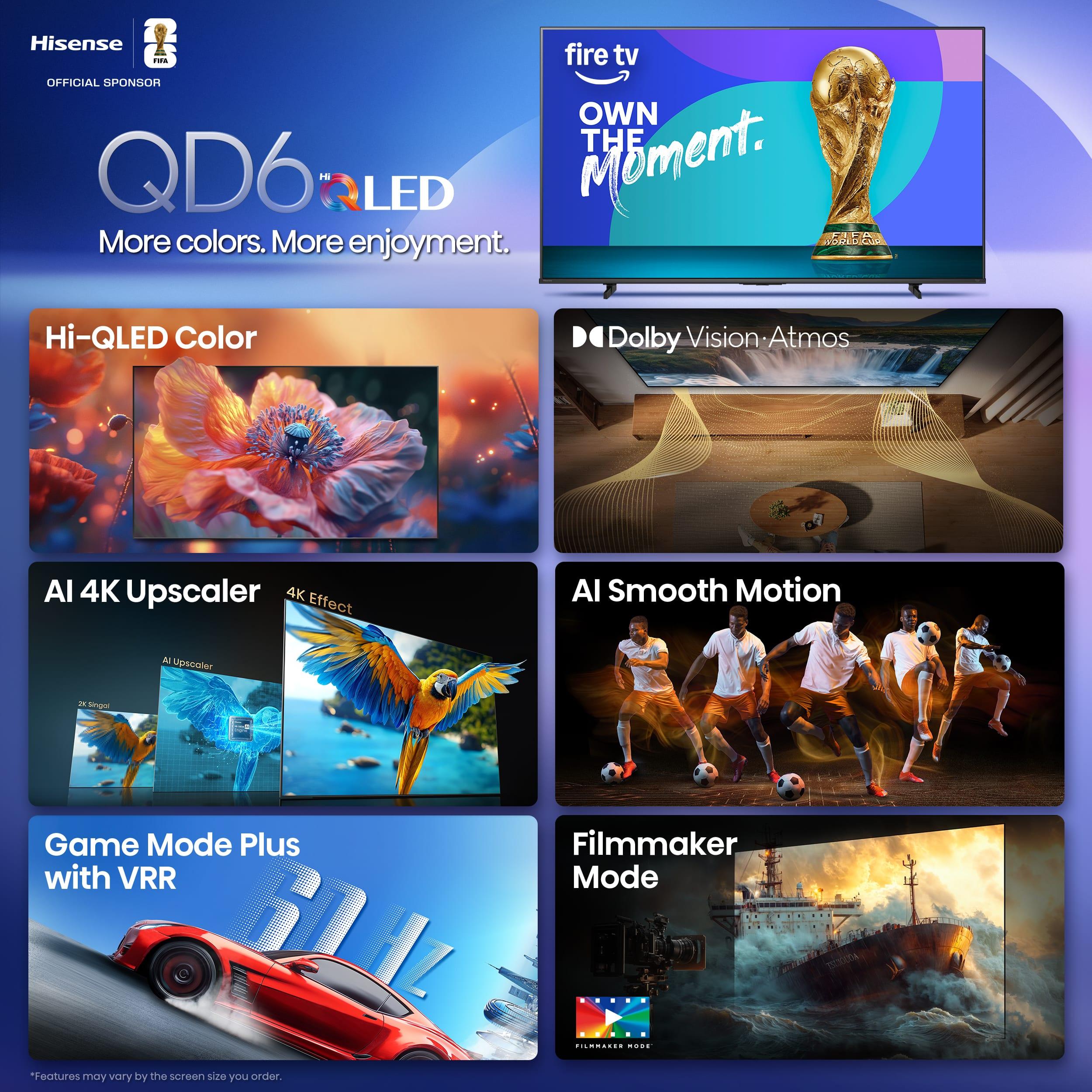
Compared to Hisense 100" QD6 Series QLED 4K UHD Fire TV 2025

The Hisense 100" QD6 Series QLED 4K UHD Fire TV 2025 at $1,999.99 presents a compelling alternative that prioritizes maximum screen size and affordability over premium features. At 100 inches compared to the Samsung's 98 inches, those extra 2 inches represent about 4% more screen area – a difference that becomes genuinely noticeable at this massive scale and can significantly enhance the cinematic immersion factor. The Hisense's $1,000 lower price point makes ultra-large screen entertainment accessible to buyers who might otherwise be priced out of this category, while still delivering solid QLED color reproduction with over a billion color shades and support for major HDR formats like HDR10 and HDR10+. The Fire TV smart platform, while less sophisticated than Samsung's Tizen, provides a streamlined experience with excellent Alexa integration and access to all major streaming services.
However, the Hisense makes notable compromises to achieve its aggressive pricing and larger size. Its 600-700 nits peak brightness pales compared to the Samsung's powerhouse performance, limiting its effectiveness in bright rooms and reducing the impact of HDR content. The lack of advanced local dimming results in grayish blacks that become particularly noticeable during dark movie scenes, while gaming performance suffers from higher input lag and fewer optimization features. For buyers with dedicated home theater rooms or controlled lighting environments where these limitations matter less, the Hisense QD6 offers exceptional value by delivering that "wow factor" of maximum screen real estate at a price point $1,000 below the Samsung. The choice comes down to whether you prioritize sheer size and savings (Hisense) or superior performance and versatility across all viewing conditions (Samsung).
🤖 Read Detailed Comparison
👌Hisense 100" QD6 Series QLED 4K UHD Fire TV 2025 Details
💵 See Hisense 100" QD6 Series QLED 4K UHD Fire TV 2025 Price

Compared to Hisense 100-Inch QD7 Series Mini-LED 4K Smart TV

The Hisense 100-Inch QD7 Series Mini-LED 4K Smart TV presents a compelling alternative that prioritizes cinematic picture quality and value over the Samsung's gaming prowess. Hisense's Mini-LED technology with Full Array Local Dimming delivers superior contrast performance, producing deeper blacks and reduced blooming that creates a more immersive movie-watching experience—particularly noticeable in dark scenes where the Samsung's QLED panel can appear slightly grayish. The QD7 also supports Dolby Vision, the premium HDR format that's increasingly standard on Netflix, Disney+, and Apple TV+ content, providing more accurate color reproduction and dynamic range optimization that the Q80C simply cannot match. Additionally, the Google TV platform offers a cleaner, more intuitive interface with better voice control integration and broader app ecosystem support.
Perhaps most significantly, the Hisense QD7 delivers this superior contrast technology in a larger 100-inch package while costing $800 less than the Samsung—representing exceptional value at $2,199 versus the Q80C's $2,999 price tag. For home theater enthusiasts who prioritize movie and TV content over high-refresh gaming, the Hisense provides 90% of premium TV performance at 73% of the cost, with that extra 2 inches of screen real estate making a surprisingly noticeable difference in immersion. The main trade-offs are lower peak brightness (making it less suitable for bright rooms) and limited gaming capabilities at 4K/60Hz, but for users with controlled lighting environments who don't need cutting-edge gaming features, the QD7's combination of Mini-LED contrast, Dolby Vision support, and aggressive pricing makes it the more sensible choice for pure entertainment value.
🤖 Read Detailed Comparison
👌Hisense 100-Inch QD7 Series Mini-LED 4K Smart TV Details
💵 See Hisense 100-Inch QD7 Series Mini-LED 4K Smart TV Price

Compared to Sony BRAVIA 5 98" Mini LED 4K Google TV 2025

The Sony BRAVIA 5 98" Mini LED 4K Google TV 2025 represents a significant leap in picture quality technology that delivers near-OLED performance at LCD pricing. Its Mini LED backlighting system with thousands of individually controlled zones produces inky blacks and exceptional contrast that make dark movie scenes look dramatically better than the Samsung's Direct Full Array implementation. Sony's XR Triluminos Pro color technology prioritizes accuracy over saturation, delivering cinema-grade color reproduction that stays true to content creators' intentions rather than punching up colors for immediate visual impact. The Cognitive Processor XR with AI scene recognition provides superior upscaling that makes older content and compressed streaming sources look cleaner and more detailed, while the Google TV platform offers more intuitive content discovery that surfaces relevant shows across all your streaming services.
Where the Sony truly distinguishes itself is in dedicated home theater scenarios where its moderate brightness and narrow viewing angles become advantages rather than limitations. In light-controlled environments, the Sony BRAVIA 5 delivers a more film-like experience with better shadow detail and more natural color gradations that reduce eye fatigue during long viewing sessions. While it costs more at $5,999 and offers fewer gaming ports, the superior processing engine and Mini LED technology provide better long-term value for serious movie enthusiasts who prioritize picture accuracy over room versatility. The Sony's ability to function as a center channel speaker when paired with compatible soundbars also adds unique value for those building integrated home theater systems, though this premium approach means sacrificing the Samsung's broader gaming compatibility and bright room flexibility.
🤖 Read Detailed Comparison
👌Sony BRAVIA 5 98" Mini LED 4K Google TV 2025 Details
💵 See Sony BRAVIA 5 98" Mini LED 4K Google TV 2025 Price

Compared to Hisense 100" U7 Series Mini-LED TV (100U75Q, 2025)

The Hisense 100" U7 Series represents a significant leap forward in display technology, bringing Mini-LED backlighting with over 3,000 local dimming zones and exceptional 3,000+ nits peak brightness that dramatically outperforms the Samsung's traditional QLED approach. This newer 2025 model delivers genuinely impressive HDR performance that makes bright scenes pop with realistic intensity while maintaining deep blacks in the same frame – something that's particularly noticeable on a screen this large. The gaming capabilities are equally compelling, with native 165Hz refresh rates and Dolby Vision Gaming support that future-proofs the display for next-generation consoles and high-end PC gaming. Google TV also provides broader app compatibility and superior voice search functionality, making it easier to find content across multiple streaming platforms.
From a value perspective, the Hisense U7 offers substantially more advanced technology at essentially the same $3,000 price point, along with a slightly larger 100-inch screen versus the Samsung's 98 inches. The Mini-LED advantage becomes especially apparent in mixed lighting conditions where the Samsung's lower brightness and fewer dimming zones can look washed out or suffer from more noticeable blooming around bright objects. However, the trade-offs include potentially less refined color processing and the inherent risks of adopting newer technology versus Samsung's proven track record. For buyers prioritizing cutting-edge display performance and future-proofing over ecosystem integration, the Hisense delivers meaningfully superior hardware capabilities that justify choosing it over the more established Samsung option.
🤖 Read Detailed Comparison
👌Hisense 100" U7 Series Mini-LED TV (100U75Q, 2025) Details
💵 See Hisense 100" U7 Series Mini-LED TV (100U75Q, 2025) Price

Compared to TCL 98-Inch QM6K QLED TV

The TCL 98-Inch QM6K QLED TV represents a significant technological leap forward with its Mini LED backlighting system featuring over 2,000 local dimming zones, delivering a remarkable 7,000:1 contrast ratio that produces genuinely deep blacks and precise highlight control that rivals much more expensive displays. The anti-glare matte coating transforms the viewing experience in bright rooms, completely eliminating the reflection issues that plague glossy screens at this massive size, while the comprehensive gaming features – including 4K at 144Hz, 1080p at 288Hz, two HDMI 2.1 ports, and AMD FreeSync Premium Pro support – position it as a future-proof gaming powerhouse. The Google TV platform provides a modern, frequently updated smart interface with hands-free voice control and superior app ecosystem compared to older smart TV platforms, while Dolby Vision IQ support ensures compatibility with premium HDR content from all major streaming services.
Perhaps most compelling is the TCL's aggressive value proposition at $1,999.99, offering genuinely premium display technology for $1,000 less than the Samsung while delivering superior technical specifications across virtually every category. The Mini LED backlighting provides dramatically better dark room performance with more precise lighting control, the anti-glare coating makes daytime viewing significantly more enjoyable, and the advanced gaming capabilities ensure the TV remains relevant as console and PC gaming evolve. The only trade-offs are Samsung's established service network and ecosystem integration, but for most buyers, the TCL's combination of cutting-edge display technology, comprehensive feature set, and exceptional pricing makes it the clear choice for those seeking maximum performance and value in a 98-inch premium display.
🤖 Read Detailed Comparison
👌TCL 98-Inch QM6K QLED TV Details
💵 See TCL 98-Inch QM6K QLED TV Price

Compared to Hisense 100" U6 Series Mini-LED 4K Fire TV

The Hisense 100" U6 Series Mini-LED 4K Fire TV delivers impressive specifications that directly challenge Samsung's premium positioning, most notably through its Mini-LED backlighting system with 600 local dimming zones that creates superior contrast compared to the Samsung's Direct Full Array implementation. With 1000 nits peak brightness versus the Samsung's 800 nits, HDR content appears more impactful with brighter highlights and deeper shadows, while the larger 100-inch screen provides additional immersion for the same recommended viewing distance. For gaming enthusiasts, the Hisense offers a significant advantage with its 144Hz native refresh rate and variable refresh rate support from 48-144Hz, delivering smoother motion and reduced input lag that surpasses what the Samsung's 120Hz panel can achieve.
The value proposition becomes the Hisense 100" U6 Series's most compelling argument, typically costing thousands less than the Samsung while offering superior specifications in key performance areas. However, this aggressive pricing comes with trade-offs in areas where Samsung traditionally excels – the Hisense's Fire TV platform, while functional, lacks the polish and long-term support reliability of Samsung's Tizen OS, and its upscaling capabilities for streaming content don't match Samsung's Neural Quantum Processor performance. The Hisense also suffers from more limited viewing angles, making it less suitable for rooms where viewers sit at various positions, though its matte finish does help reduce reflections in bright environments. For buyers prioritizing maximum screen size, gaming performance, and getting flagship features at a lower price point, the Hisense represents exceptional value, though those seeking the most refined overall experience and proven long-term reliability may find Samsung's premium justified.
🤖 Read Detailed Comparison
👌Hisense 100" U6 Series Mini-LED 4K Fire TV Details
💵 See Hisense 100" U6 Series Mini-LED 4K Fire TV Price

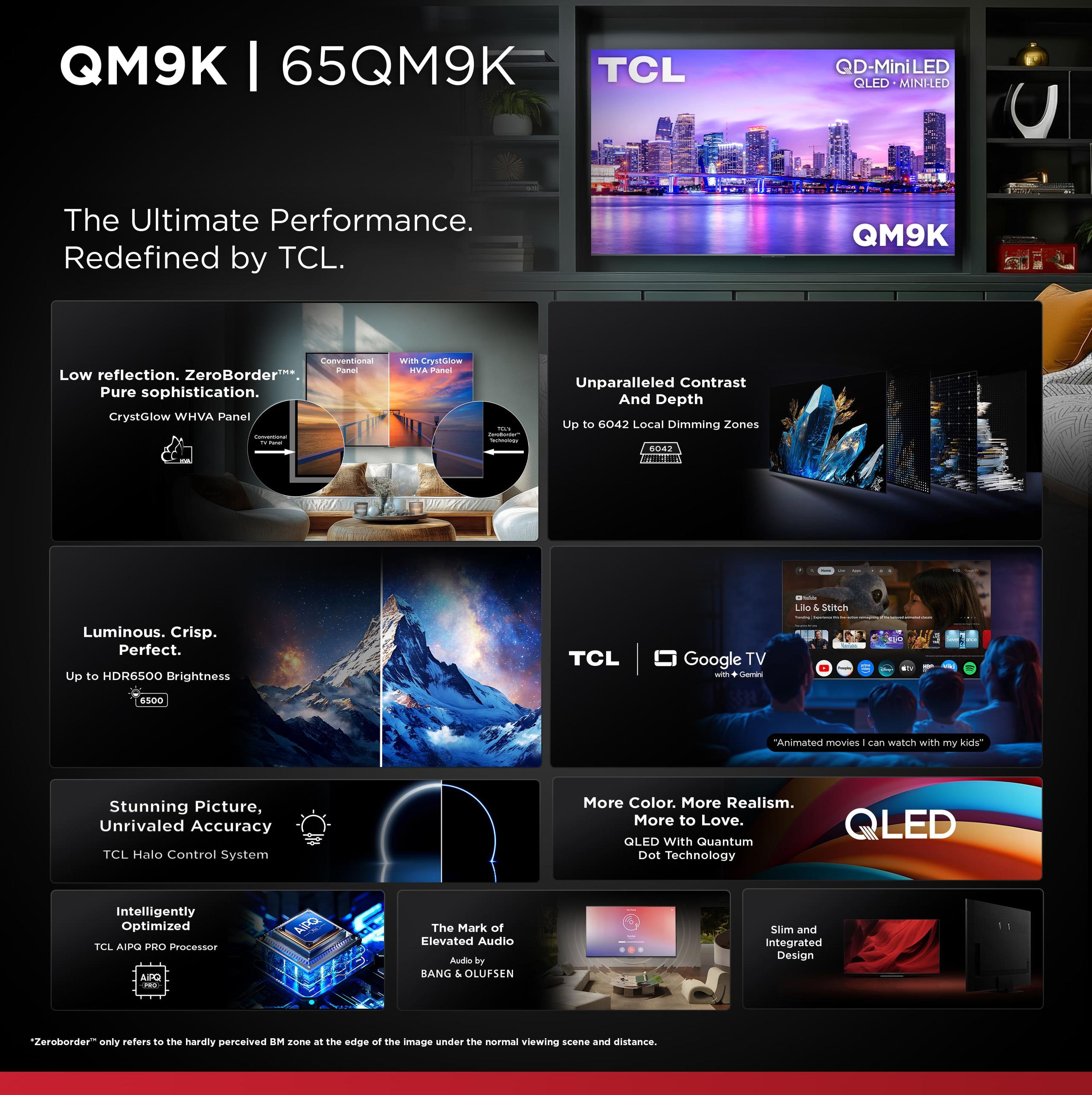
Compared to TCL 98" X11K 4K QD-Mini LED Google TV

The TCL 98" X11K represents a significant leap forward in display technology with its QD-Mini LED implementation featuring up to 14,000 local dimming zones and an exceptional 6,500 nits peak brightness. This advanced backlighting system delivers near pixel-perfect contrast control, creating deep blacks and brilliant highlights that transform HDR content into a truly cinematic experience. The TV's 144Hz native refresh rate with VRR support up to 288Hz positions it as a gaming powerhouse, while comprehensive format support including Dolby Vision IQ ensures compatibility with premium streaming content. The 120-watt Bang & Olufsen audio system provides room-filling sound that matches the impressive visuals, and Google TV offers excellent smart platform flexibility with broad ecosystem compatibility including Apple AirPlay 2 and HomeKit integration.
When evaluated against the Q80C, the TCL X11K demonstrates how Mini LED technology fundamentally changes the large-screen TV experience. The brightness advantage alone—6.5 times higher than the Samsung—enables stunning HDR performance that maintains impact even in bright living rooms, while the vastly superior local dimming precision eliminates the blooming and haloing effects that can appear with traditional LED backlighting. The TCL's advanced gaming features and higher refresh rates provide better future-proofing for evolving content standards, and the premium audio system often eliminates the need for additional sound equipment. Most compelling is the value proposition: the TCL X11K typically delivers this flagship-level technology at competitive pricing, making it difficult to justify the Q80C's higher cost for older display technology, unless Samsung ecosystem integration or established brand preference outweighs the substantial performance gap in picture quality, gaming capabilities, and overall feature completeness.
🤖 Read Detailed Comparison
👌TCL 98" X11K 4K QD-Mini LED Google TV Details
💵 See TCL 98" X11K 4K QD-Mini LED Google TV Price

Compared to TCL 98" QM7K QD-Mini LED 4K TV

The TCL 98" QM7K represents a significant technological leap forward with its advanced QD-Mini LED backlighting system featuring 2,500 local dimming zones and TCL's proprietary Halo Control System. This cutting-edge 2025 technology delivers exceptional peak brightness of 3,000 nits, creating HDR content with genuine eye-catching highlights that make sun reflections and explosions appear remarkably realistic. The TV's comprehensive HDR format support includes Dolby Vision IQ, ensuring optimal picture quality with Netflix, Disney+, and premium streaming content that the Q80C cannot fully display. Gaming enthusiasts benefit from the native 144Hz refresh rate and 288Hz Game Accelerator, future-proofing the display for next-generation console gaming and high-refresh PC gaming scenarios.
The most compelling aspect of the TCL QM7K is how it delivers superior performance across nearly every category while typically costing significantly less than the Q80C. The Mini LED technology virtually eliminates the blooming and light bleeding issues that affect traditional LED displays, creating contrast levels that approach OLED quality while maintaining exceptional brightness for any room lighting condition. The included 100W Bang & Olufsen audio system eliminates the need for additional soundbar purchases, effectively saving hundreds of dollars in total system cost. While Samsung offers the comfort of an established brand with proven reliability, the TCL's newer technology, superior specifications, and aggressive pricing make it difficult to justify choosing the Q80C unless Samsung ecosystem integration is absolutely critical to your setup.
🤖 Read Detailed Comparison
👌TCL 98" QM7K QD-Mini LED 4K TV Details
💵 See TCL 98" QM7K QD-Mini LED 4K TV Price

You May Also Like:

Televisions

Shop the Category
our-favorite-plants-(and-how-we-keep-them-alive)

Buying Guides

Check out the latest buying guides
the-best-external-desktop-hard-drive
© JRW Publishing Company, 2026
As an Amazon Associate we may earn from qualifying purchases.

magnifiercross
linkedin facebook pinterest youtube rss twitter instagram facebook-blank rss-blank linkedin-blank pinterest youtube twitter instagram
Share to...