Poly Voyager Free 60+ UC Wireless Earbuds

We may earn from purchases via affiliate links

Original price was: $195.00.Current price is: $125.00.

Product Description

Poly Voyager Free 60+ UC Wireless Earbuds: Premium Productivity Tools for Professionals

Introduction

The Poly Voyager Free 60+ UC wireless earbuds hit the market in early 2023, positioning themselves as premium communication tools for professionals rather than just another pair of consumer earbuds. Now, more than two years later, these earbuds have established a reputation in the business communication space, with several firmware updates improving their performance since launch. What makes these earbuds stand out is their focus on call clarity, versatile connectivity options, and that unique touchscreen charging case that's unlike anything else in the category.

The Professional Earbud Landscape in 2023-2025

The wireless earbud market has evolved dramatically since the pandemic transformed our work habits. The hybrid work model has become permanent for many, creating sustained demand for audio tools that excel in professional communication scenarios.

Business-focused earbuds like the Poly Voyager Free 60+ UC differentiate themselves from consumer models by prioritizing microphone quality and noise suppression over bass response and pure music reproduction. While consumer brands focus on entertainment, professional earbuds emphasize clarity, comfort for all-day wear, and seamless transitions between devices.

Over the past few years, we've seen the gap narrow as consumer brands have improved their microphone systems, but purpose-built professional models still maintain an edge in call quality and business integration.

Design and Build Quality

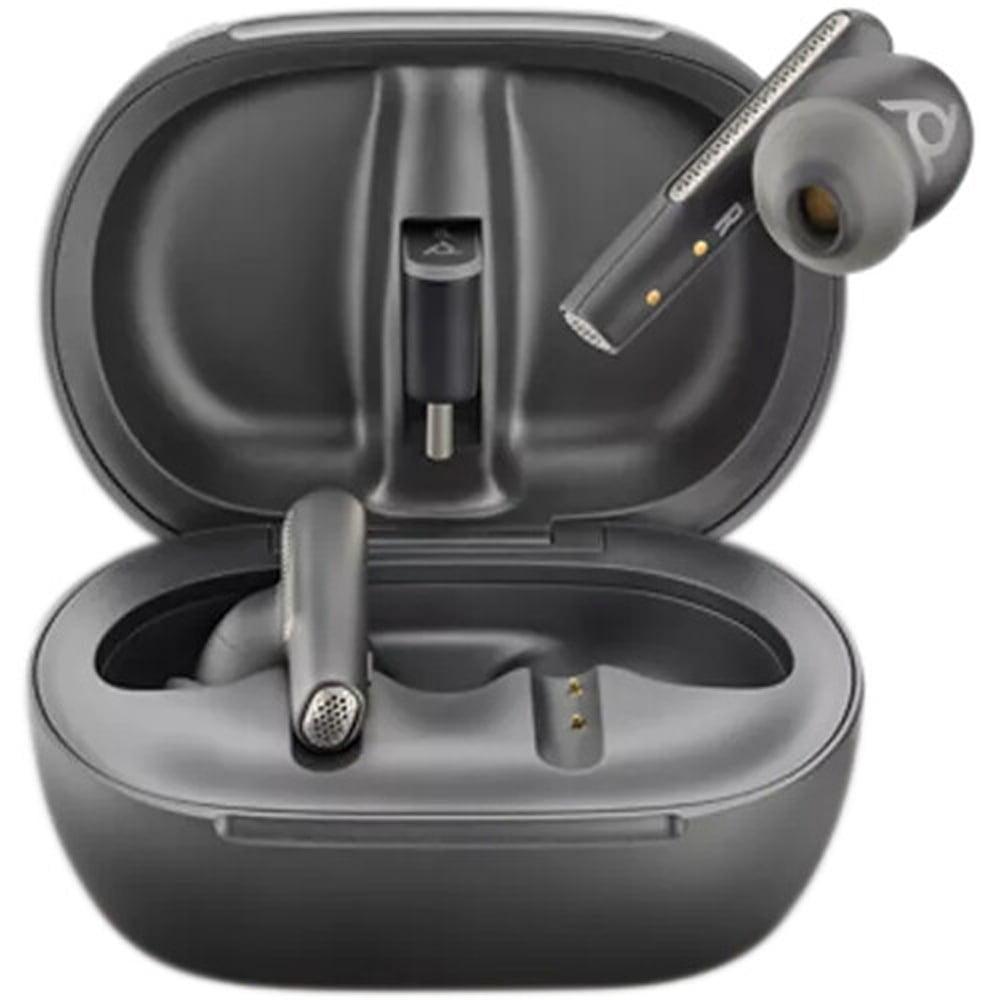
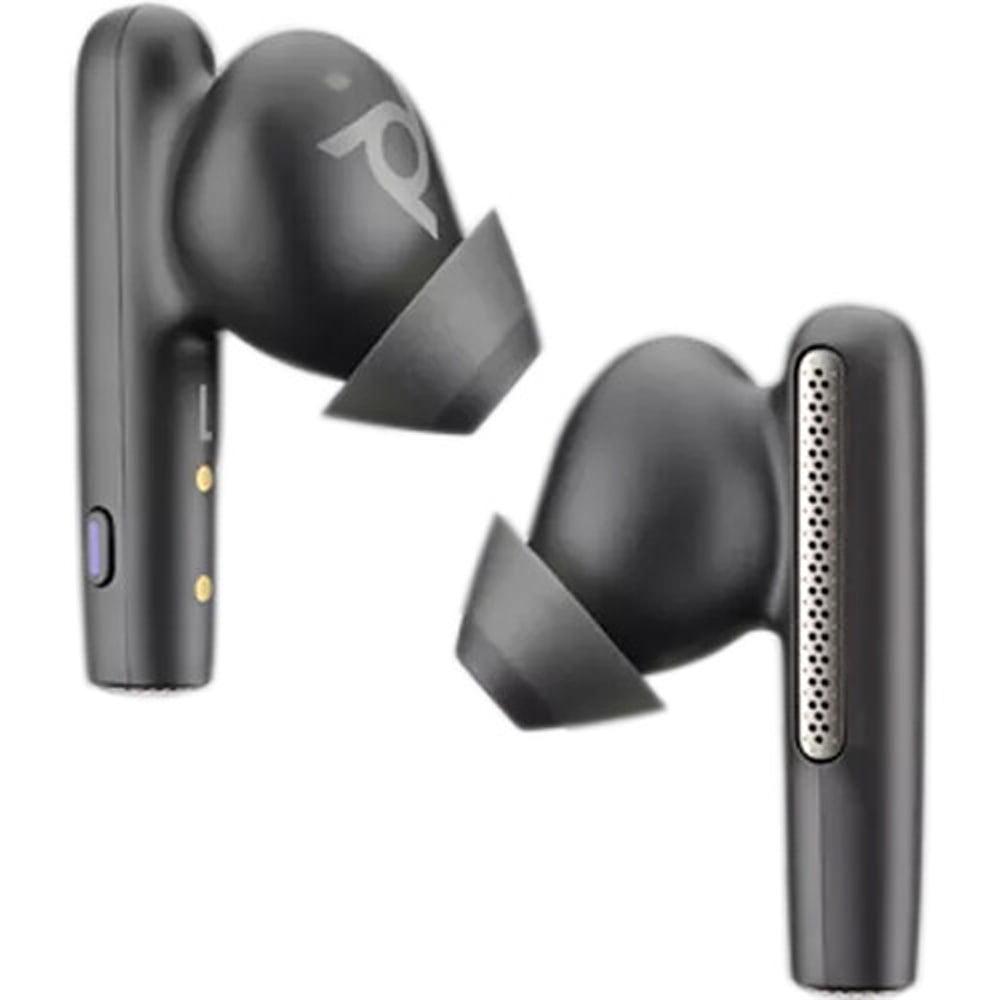
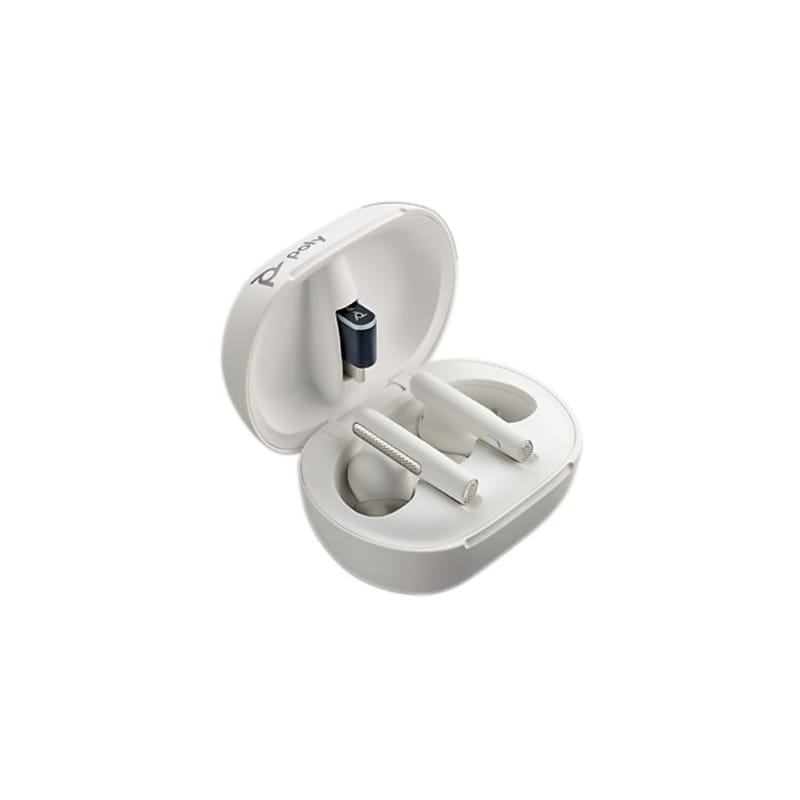
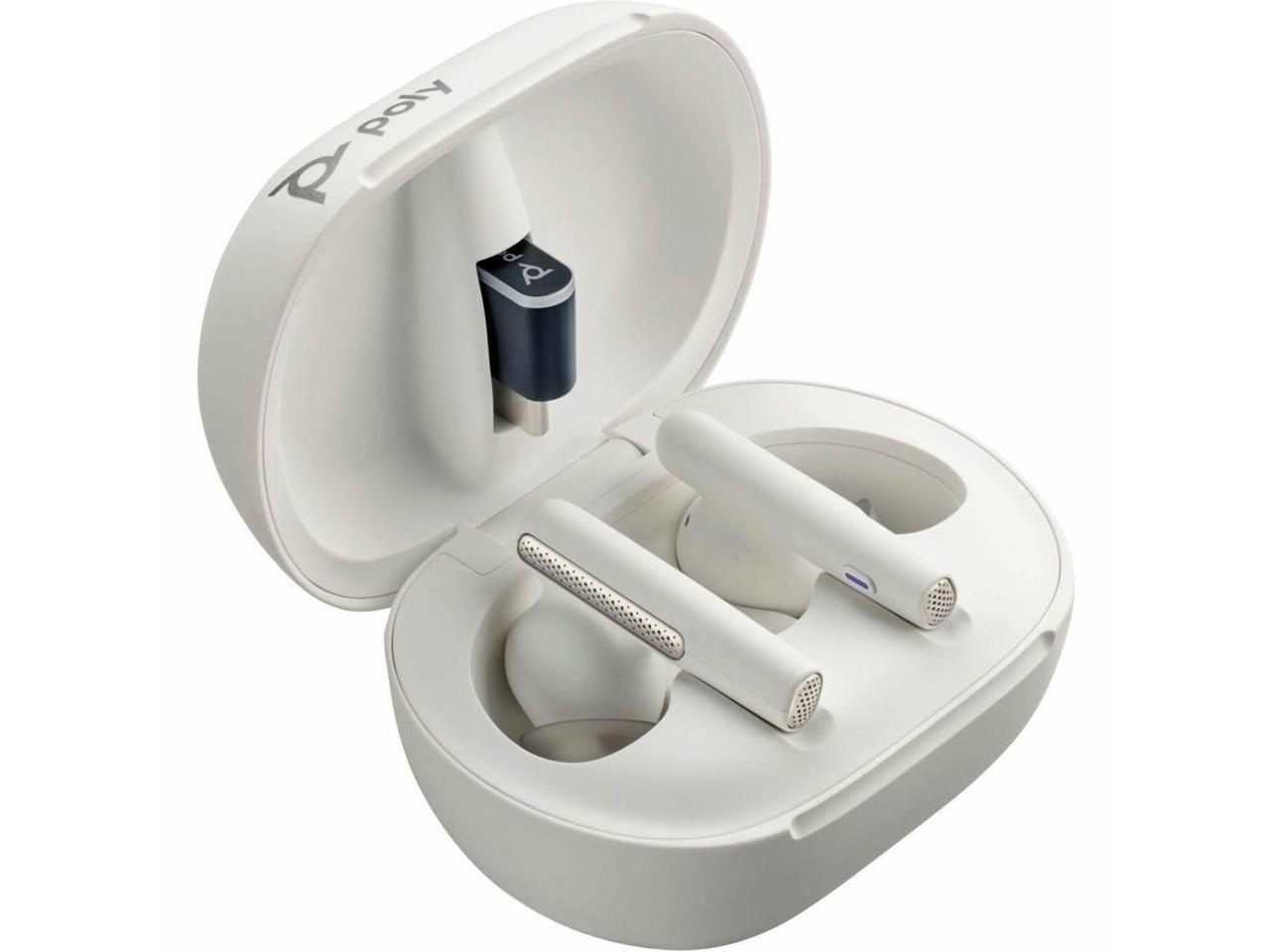
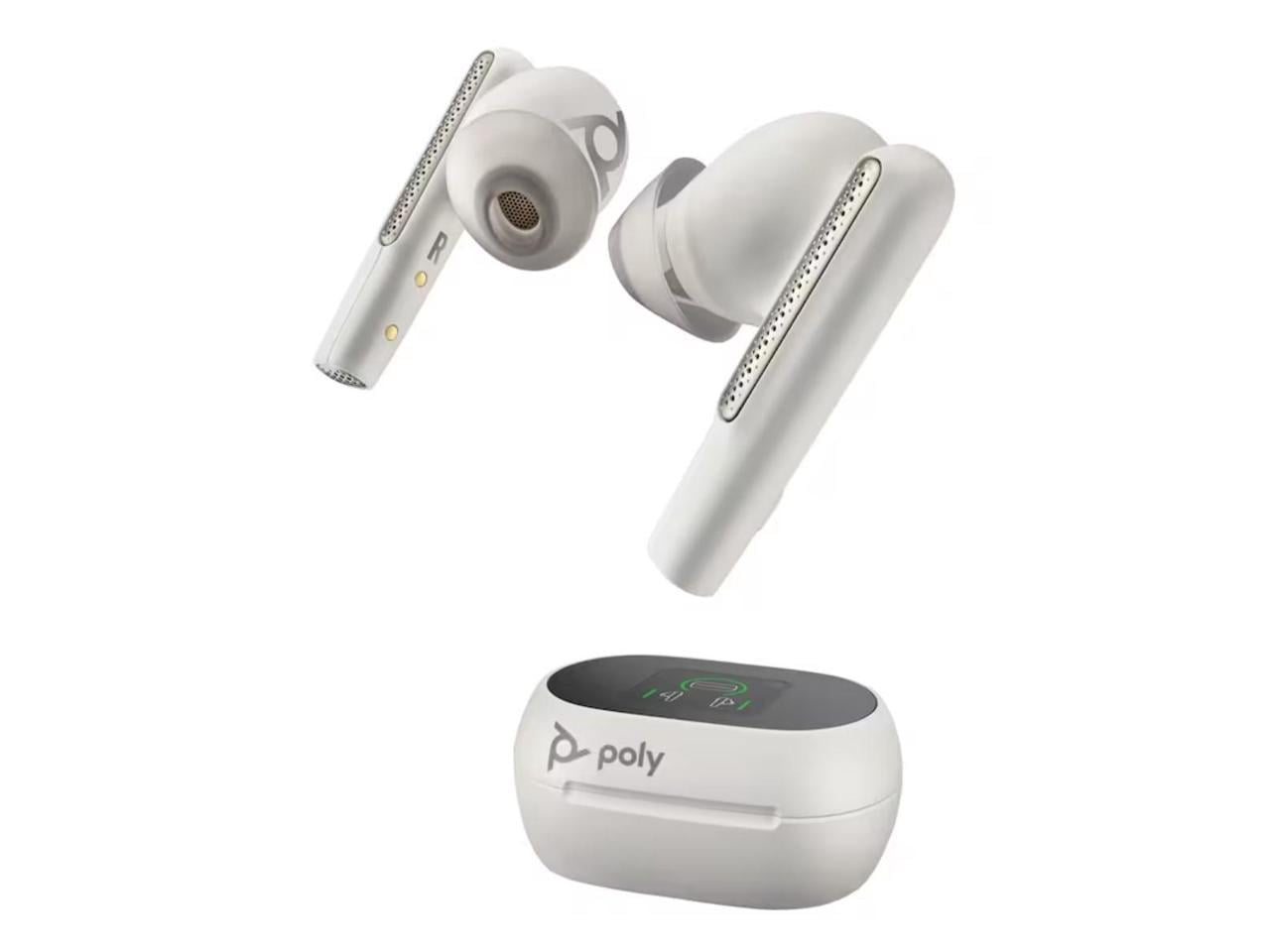
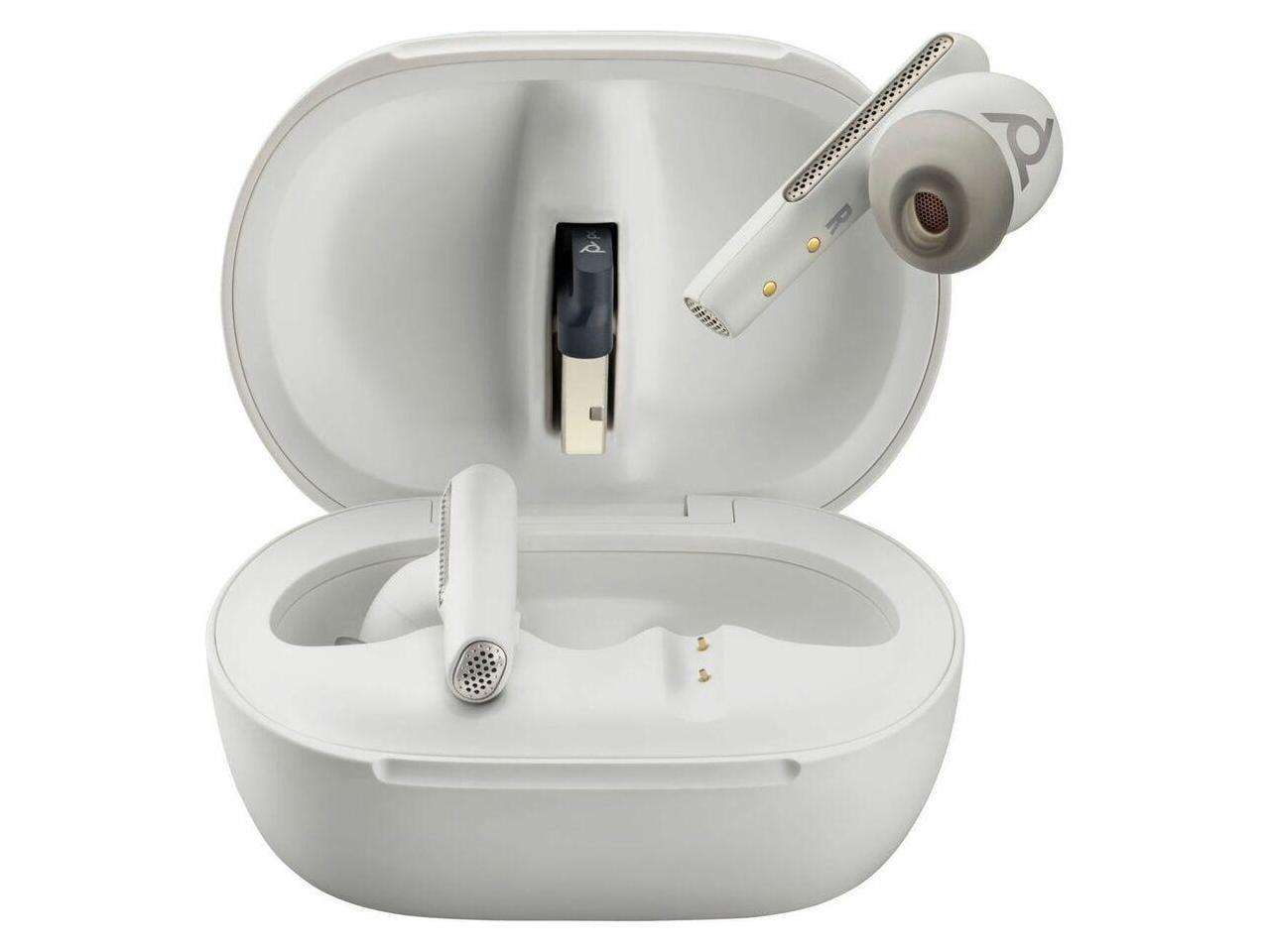
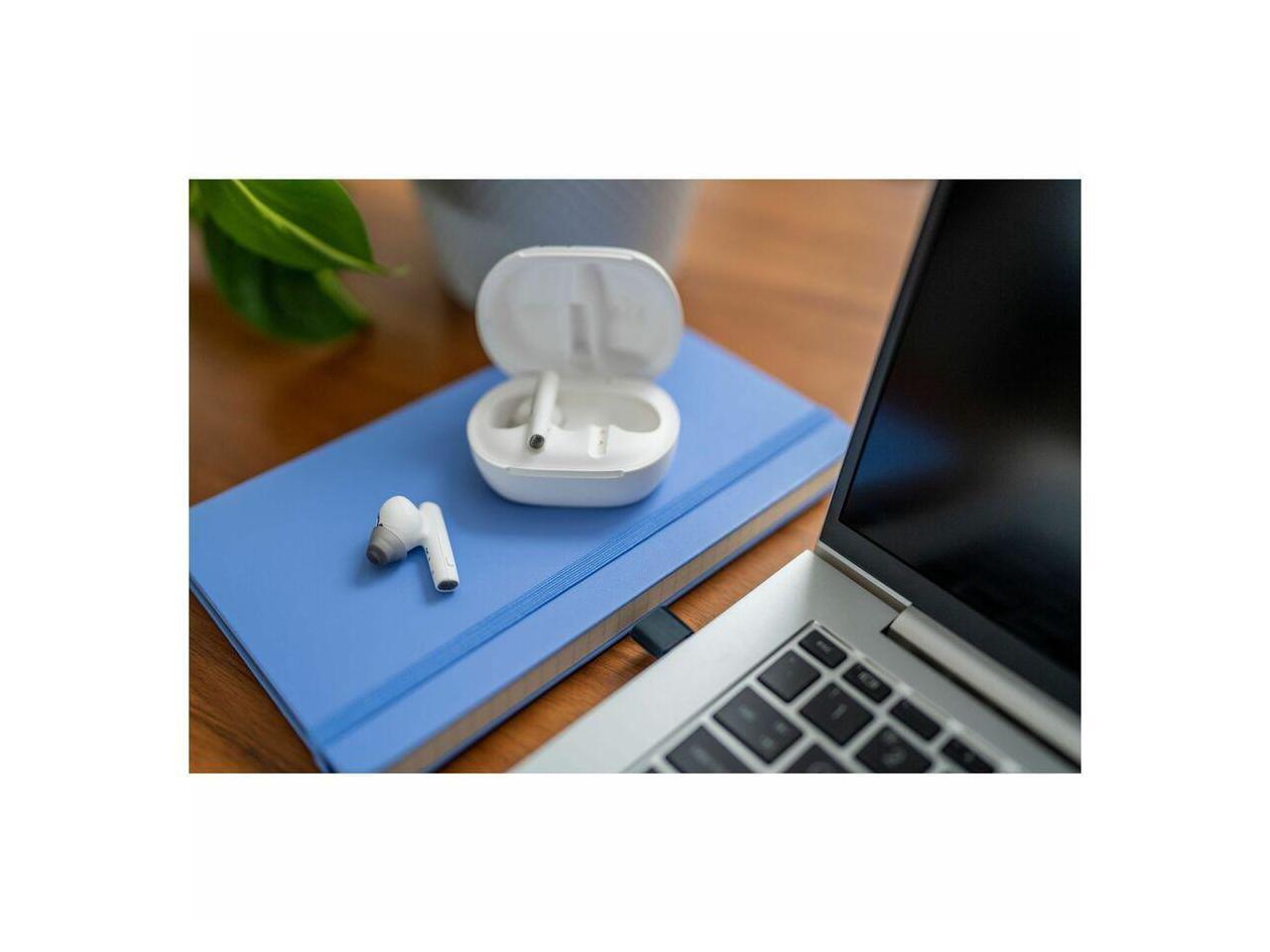
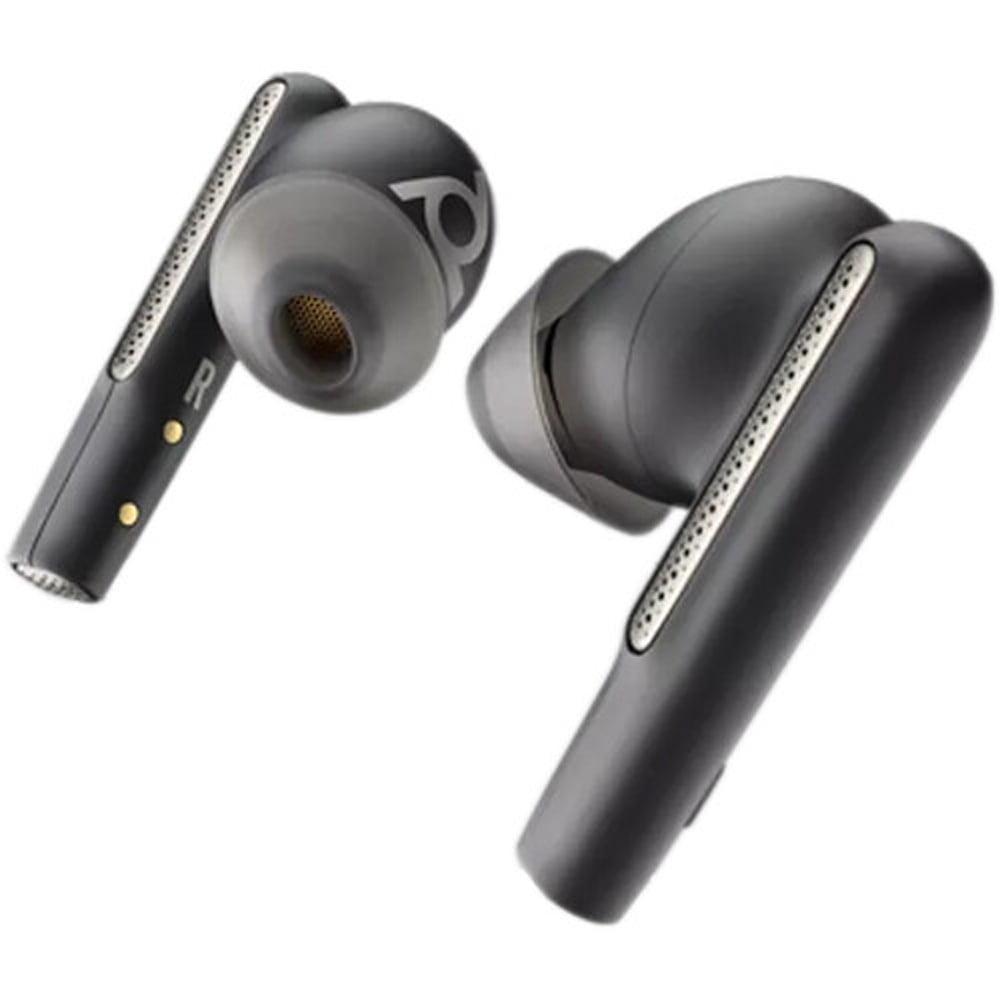
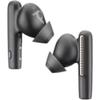
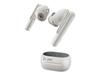
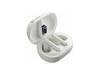
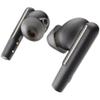
The Voyager Free 60+ has a somewhat bulbous design that won't win any fashion contests, but serves a functional purpose by housing the advanced microphone array. Available in Carbon Black and White Sand, they maintain a professional appearance appropriate for business settings.

The earbuds feature IP54 dust and water resistance, meaning they're protected against limited dust ingress and water splashes from any direction. This provides reasonable durability for everyday professional use, though they're not designed for fitness activities where heavier sweat might be an issue.

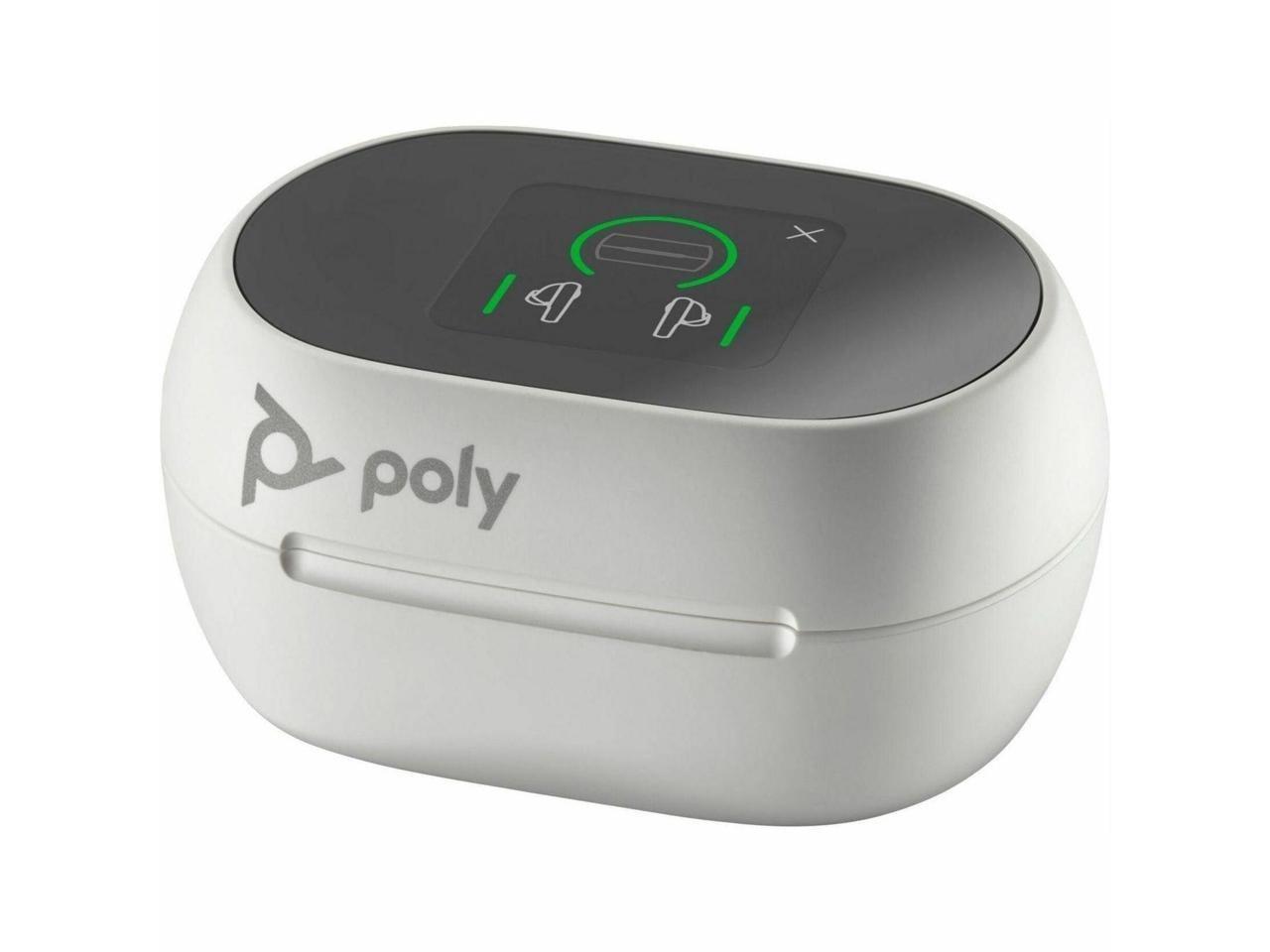
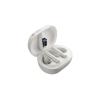
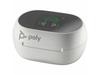
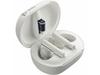
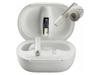
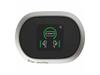
The most distinctive design element is undoubtedly the charging case with its built-in color touchscreen. This isn't just a gimmick—it allows users to control various functions without removing the earbuds, from switching connected devices to adjusting volume. However, our testers found the case significantly bulkier than competitors, making pocket carry somewhat challenging. Despite the size, the case is surprisingly lightweight.

Several users reported that the earbuds' shape caused discomfort after extended wear periods, with soreness developing after about an hour for some testers. This could be a significant consideration for those planning all-day use.

Audio Performance

Call quality is where the Poly Voyager Free 60+ UC truly shines. Each earbud contains a three-microphone array that triangulates on your voice while filtering out ambient noise. The WindSmart technology, which uses algorithms to detect and reduce wind noise, performs admirably in outdoor settings where many earbuds fail.

For music and media consumption, sound quality is good but not exceptional. The sound signature is tuned for clarity in the mid-range where human voices reside, rather than emphasizing deep bass or sparkling highs. This makes perfect sense for the product's intended use case.

The Poly NoiseBlockAI feature deserves special mention. This machine learning-powered system identifies and suppresses specific background noises like keyboard typing, paper shuffling, and even barking dogs. In testing, it outperformed Apple AirPods and several other premium earbuds in eliminating distracting background noises during calls.

Active Noise Cancellation and Awareness

The adaptive hybrid ANC system automatically adjusts to your environment and ear fit. While it doesn't match the absolute best in the market (like the Sony and Bose flagships), it performs very respectably, especially with low-frequency noises below 1kHz—think air conditioners, airplane engines, and office hums.

Based on our measurements, the ANC is quite effective at reducing noise in the frequency ranges most problematic for concentration and call clarity. The transparency mode (which uses the microphones to pipe in outside sound) offers two settings and works well for quick conversations or situational awareness without removing the earbuds.

Connectivity Features

Bluetooth 5.3 provides solid reliability and range up to about 30 feet in testing. The multipoint connectivity allows simultaneous connection to two devices—a crucial feature for professionals juggling work computers and smartphones.

What separates these earbuds from many competitors is the included BT700 USB adapter. This Bluetooth dongle significantly improves connection quality with computers, reducing latency and connection drops during important video calls. This is especially valuable for PCs with older or problematic Bluetooth implementations.

Perhaps most unique is the charging case's 3.5mm port that allows connecting to non-Bluetooth sources like airplane entertainment systems—a feature business travelers will appreciate. The included USB-C to 3.5mm cable essentially turns your earbuds into wired headphones when needed.

Battery Life and Charging

Poly advertises 8 hours of listening time with ANC enabled, with the charging case providing an additional 16 hours. Our testing showed slightly lower real-world performance, with about 6 hours and 19 minutes of continuous playback at moderate volume levels. Still, this comfortably covers a full workday for most users.

The case supports Qi wireless charging, adding convenience to your desktop setup. The battery status is easily visible on the case's touchscreen, a nice upgrade from the often-cryptic LED indicators on most earbud cases.

Smart Features and Software

The Poly Lens app (available for both mobile and desktop) provides comprehensive customization options, including EQ adjustment, button remapping, and firmware updates. For IT departments, the software offers deployment and management tools that consumer earbuds typically lack.

Smart sensors automatically pause media when you remove an earbud and can answer calls when you insert an earbud—these worked reliably in our testing. The Microsoft Teams certification ensures optimal performance with this widely-used collaboration platform, with dedicated controls for Teams functions.

Ideal Use Cases

The Poly Voyager Free 60+ UC excels for:

  • Remote workers who spend hours on video calls and need superior voice clarity
  • Office professionals who frequently switch between computer and phone communications
  • Business travelers who benefit from the versatile connectivity options and effective noise cancellation
  • IT departments looking for a standardized, manageable audio solution for their workforce

These aren't the ideal choice for audiophiles seeking the ultimate music experience or fitness enthusiasts looking for workout earbuds.

Final Thoughts

The Poly Voyager Free 60+ UC has carved out a distinct niche in the professional earbud market. Two years after release, they remain competitive thanks to their focused approach to business communication needs and unique features like the touchscreen case and versatile connectivity options.

Their greatest strengths are exceptional call clarity, effective background noise suppression, and the flexibility to connect to virtually any audio source. The main drawbacks include the bulky charging case and potential comfort issues during extended wear for some users.

For professionals who spend significant time on calls and online meetings, the Poly Voyager Free 60+ UC offers a compelling package that justifies the premium positioning. While not perfect for everyone, they excel precisely where business users need them most—clear communication in varied environments with minimal hassle.

The professional wireless earbud space continues to evolve, but Poly's focus on business-specific features ensures these earbuds remain relevant for those who prioritize communication clarity over entertainment.

Poly Voyager Free 60+ UC Wireless Earbuds Deals and Prices

Are the Poly Voyager Free 60+ UC Wireless Earbuds compatible with home theater systems?

Yes, the Poly Voyager Free 60+ UC Wireless Earbuds can connect to home theater systems in several ways. They offer standard Bluetooth 5.3 connectivity for compatible receivers, but their standout feature for home theater use is the charging case's 3.5mm audio input. This allows you to connect to virtually any audio source using the included cable, making them compatible with older home theater systems that lack Bluetooth capabilities.

How is the audio quality of the Poly Voyager Free 60+ UC Wireless Earbuds for watching movies?

While primarily designed for communication, the Poly Voyager Free 60+ UC Wireless Earbuds deliver solid audio quality for movie watching. The sound profile emphasizes vocal clarity, which helps with dialogue in films. The adaptive noise cancellation effectively blocks out environmental distractions, creating a more immersive viewing experience. However, they don't provide the same level of cinematic bass response that you'd get from dedicated home theater headphones.

Can I use the Poly Voyager Free 60+ UC Wireless Earbuds for private listening while others use the main TV speakers?

Yes, this is one of the great use cases for the Poly Voyager Free 60+ UC Wireless Earbuds in a home theater setting. By connecting them directly to your TV or streaming device, you can enjoy private listening at your preferred volume without disturbing others. The transparency mode also allows you to quickly hear what's happening around you without removing the earbuds, which is convenient for quick conversations.

What's the wireless range of the Poly Voyager Free 60+ UC Wireless Earbuds when connected to a TV?

With Bluetooth 5.3 technology, the Poly Voyager Free 60+ UC Wireless Earbuds typically provide a reliable connection range of approximately 30 feet (10 meters) in open spaces. This gives you freedom to move around your living room without losing connection to your TV. For optimal performance with your home theater setup, placing your TV or Bluetooth transmitter in a central location with minimal obstructions will maximize connection stability.

Do the Poly Voyager Free 60+ UC Wireless Earbuds have any audio lag when watching videos?

The Poly Voyager Free 60+ UC Wireless Earbuds perform well in terms of audio synchronization when watching videos. The Bluetooth 5.3 connection helps minimize latency, and using the included BT700 USB adapter with compatible devices can further reduce lag. For absolutely zero latency, you can use the wired connection option through the charging case's 3.5mm input, which ensures perfect audio-video sync for your home theater experience.

How long do the Poly Voyager Free 60+ UC Wireless Earbuds battery last when watching movies?

When using the Poly Voyager Free 60+ UC Wireless Earbuds for movie watching with ANC activated, you can expect around 6 hours of continuous playback from the earbuds alone. The charging case provides approximately an additional 16 hours, giving you enough battery life for several movie marathons before needing a full recharge. This makes them reliable for even the longest film viewing sessions.

Can multiple Poly Voyager Free 60+ UC Wireless Earbuds connect to one TV simultaneously?

No, standard Bluetooth connections on TVs typically support only one headphone connection at a time. The Poly Voyager Free 60+ UC Wireless Earbuds cannot share audio from a single TV source with multiple earbud pairs simultaneously. For multi-listener scenarios, you would need a specialized Bluetooth transmitter that supports multiple connections or alternative audio sharing solutions.

How effective is the noise cancellation for home theater use with the Poly Voyager Free 60+ UC Wireless Earbuds?

The adaptive hybrid ANC in the Poly Voyager Free 60+ UC Wireless Earbuds works quite effectively in home environments. It's particularly good at blocking low-frequency noises like air conditioners, refrigerator hums, or distant traffic sounds that might otherwise distract from your movie experience. While not the absolute strongest noise cancellation on the market, it provides sufficient isolation for most home theater environments to maintain immersion in your content.

Can I take calls while watching TV with the Poly Voyager Free 60+ UC Wireless Earbuds?

Yes, one of the standout features of the Poly Voyager Free 60+ UC Wireless Earbuds is their multipoint connectivity, which allows them to be connected to two devices simultaneously. This means you can have them connected to both your TV and your smartphone. When a call comes in, the earbuds will automatically switch to your phone, and you can take the call using the earbuds' excellent three-microphone array. When the call ends, they'll seamlessly switch back to your TV audio.

Is Poly Voyager Free 60+ UC Wireless Earbuds Worth It?

The Poly Voyager Free 60+ UC Wireless Earbuds offer excellent value for those who need versatile audio solutions that bridge professional use and home entertainment. While they command a premium price, they justify it with superior call quality, effective noise cancellation, unique features like the touchscreen case, and versatile connectivity options including both Bluetooth and wired connections. For home theater enthusiasts who also work from home or need quality communication tools, they represent a worthwhile investment that serves multiple purposes exceptionally well.

Sources

We've done our best to create useful and informative comparisons to help you decide what product to buy. Our research has used advanced automated methods to create this comparison and perfection is not possible - please contact us for corrections or questions. These are the sites we've researched in the creation of this article: soundguys.com - headsetsdirect.com - youtube.com - vivo.tech - headsetadvisor.com - hp.com - headsetadvisor.com - hp.com - gadgetoid.com - hp.com - hp.com - youtube.com - headsetsdirect.com - lexair.com - content.shi.com - docs.poly.com - hp.com - bestbuy.com - h20195.www2.hp.com - vivo.tech - hp.com - insight.com - cdw.com - hp.com - trustedreviews.com - hp.com - youtube.com
Specs
Specs Table
Poly Voyager Free 60+ UC Wireless Earbuds
Bluetooth Version - Determines connection stability and range: 5.3
Microphone System - Critical for call clarity: Three-microphone array per earbud with WindSmart technology
Active Noise Cancellation - Helps block environmental distractions: Adaptive hybrid ANC with transparency mode
Battery Life (Earbuds) - Determines how long you can use before recharging: Up to 5.5 hours talk time with ANC on
Total Battery Life with Case - Extends usage time throughout the day: Up to 16.5 hours
Multipoint Connectivity - Allows simultaneous connection to multiple devices: Yes, connects to two devices at once
Dust/Water Resistance - Indicates durability against elements: IP54 rating
Wireless Charging - Adds convenience for recharging the case: Qi compatible
Included USB Adapter - Improves computer connectivity reliability: BT700 USB adapter (USB-A or USB-C)
Wired Audio Option - Enables use with non-Bluetooth devices: 3.5mm audio input via charging case
Touchscreen Case - Provides control without removing earbuds: Yes, color touchscreen
Microsoft Teams Certification - Ensures optimal performance with Teams: Yes
Smart Sensors - Enable automatic functions based on wear status: Yes, for auto-answering and media control
Available Colors: Carbon Black and White Sand
Comparisons

Compared to Beats Powerbeats Pro 2 Wireless Earbuds

The Beats Powerbeats Pro 2 takes a fundamentally different approach, prioritizing fitness performance and all-day battery life over the Poly's business-focused features. Where the Voyager Free 60+ UC excels at call quality and professional connectivity, the Beats Powerbeats Pro 2 delivers nearly double the battery life with 10 hours per charge and 45 total hours with the case – a game-changing difference for users who want to forget about charging anxiety. The over-ear hook design, while bulkier looking, actually provides superior comfort for extended wear and stays secure during intense workouts, addressing one of the Poly's main weaknesses. Perhaps most notably, the Beats Powerbeats Pro 2 includes innovative heart rate monitoring sensors that transform them into genuine fitness companions, measuring your pulse over 100 times per second and integrating with workout apps.
From a value perspective, the Beats Powerbeats Pro 2 costs significantly less while delivering better overall performance for most users. The music quality is substantially superior thanks to custom dual-layer drivers and bespoke acoustic architecture, scoring 4.6 out of 5 on professional audio quality measurements compared to the Poly's adequate but unremarkable music reproduction. However, you'll sacrifice the Poly's key business advantages: the Beats lack multipoint connectivity, offer no wired backup option, and can't match the Voyager's exceptional call quality with its three-microphone array and NoiseBlockAI technology. Unless you specifically need the Poly's enterprise features and superior voice clarity for professional use, the Beats Powerbeats Pro 2 represents better value with longer battery life, more comfortable fit, and genuine innovation in fitness tracking that extends their utility beyond just audio playback.
🤖 Read Detailed Comparison
👌Beats Powerbeats Pro 2 Wireless Earbuds Details
💵 See Beats Powerbeats Pro 2 Wireless Earbuds Price

Compared to JBL Vibe Beam True Wireless Earbuds

The JBL Vibe Beam takes a fundamentally different approach, prioritizing entertainment value and exceptional battery life over professional features. Where the Poly model excels at call quality, the JBL shines with its Deep Bass Sound tuning and impressive 32-hour total battery life – nearly double what the Voyager Free 60+ offers. The JBL Vibe Beam also provides extensive sound customization through its companion app, including parametric EQ controls that let you fine-tune the audio signature to match your preferences. At just 4.4 grams per earbud, they're noticeably lighter and more comfortable for extended listening sessions, making them ideal for music, podcasts, and casual calls.
From a value perspective, the JBL Vibe Beam delivers remarkable performance at roughly one-tenth the cost of the Poly model. While it lacks Active Noise Cancellation and the sophisticated three-microphone array, it compensates with Smart Ambient technology and solid passive isolation that works well for most everyday scenarios. The trade-offs are clear: you lose the premium call quality, multipoint connectivity, and smart charging case features, but gain significantly longer battery life, customizable sound, and a price point that makes quality audio accessible to budget-conscious users. For consumers who primarily use earbuds for entertainment rather than professional communication, the JBL represents exceptional value that's hard to match in its price category.
🤖 Read Detailed Comparison
👌JBL Vibe Beam True Wireless Earbuds Details
💵 See JBL Vibe Beam True Wireless Earbuds Price

Compared to JBL Tune Buds True Wireless Earbuds

The JBL Tune Buds take a fundamentally different approach, prioritizing music enjoyment and exceptional battery life over the Poly's business-focused features. Where the Voyager Free 60+ UC excels in call quality, the JBL Tune Buds shine with their signature Pure Bass Sound tuning that makes electronic music, hip-hop, and pop tracks feel more engaging and energetic. Their 48-hour total battery life (12 hours from earbuds plus 36 from the case) nearly triples the Poly's endurance, while the 15-minute Speed Charge feature provides four hours of playback - making them ideal for travel or long workdays away from charging opportunities. The IP54 water and dust resistance also makes the JBL Tune Buds suitable for workouts and outdoor activities where the Voyager Free 60+ UC would be inappropriate.
From a value perspective, the JBL Tune Buds deliver remarkable bang for your buck, offering modern features like active noise cancellation, Bluetooth 5.3 connectivity, and extensive app customization at a fraction of the Poly's premium price point. While their call quality is merely adequate and their ANC performance basic, the JBL Tune Buds excel in their intended role as entertainment-focused earbuds for mainstream consumers. The ergonomic design also provides superior comfort during extended listening sessions compared to the Poly's bulkier form factor. Unless you specifically need the Voyager Free 60+ UC's advanced business communication features and enterprise integration, the JBL Tune Buds represent better overall value for most users who prioritize music listening, battery endurance, and active lifestyle compatibility.
🤖 Read Detailed Comparison
👌JBL Tune Buds True Wireless Earbuds Details
💵 See JBL Tune Buds True Wireless Earbuds Price

Compared to Bose QuietComfort Earbuds II

The Bose QuietComfort Earbuds II takes a fundamentally different approach, prioritizing consumer audio excellence over professional features. Where it truly shines is noise cancellation—Bose's decades of ANC expertise deliver what reviewers consistently call "otherworldly" quiet that significantly outperforms the Poly's adaptive system. The four-microphone array per earbud and CustomTune technology that automatically calibrates sound to your unique ear shape create an immersive listening experience that's particularly noticeable in noisy environments like airplanes or busy cafes. For music enjoyment, the Bose QuietComfort Earbuds II clearly wins with its bass-rich sound signature and superior audio reproduction that makes entertainment genuinely engaging rather than just functional.
From a value perspective, the Bose QuietComfort Earbuds II offers compelling advantages for general consumers. It typically costs 30-45% less than the Poly while delivering better performance in the areas most people care about—music quality, noise cancellation, and overall comfort. The proven two-piece fit system works reliably for most users without the fit issues that plague some Poly users, and the simpler control scheme eliminates the learning curve required for the Poly's split earbud-case interface. However, this consumer focus means sacrificing the professional certifications, smart case innovation, and superior call quality that justify the Poly's premium for business users. The Bose QuietComfort Earbuds II handles calls adequately but can't match the Poly's three-microphone array and WindSmart technology for critical business communication.
🤖 Read Detailed Comparison
👌Bose QuietComfort Earbuds II Details
💵 See Bose QuietComfort Earbuds II Price

Compared to JBL Tour Pro 2 True Wireless Earbuds

The JBL Tour Pro 2 takes a fundamentally different approach as an entertainment-first device, offering significantly longer battery life with 32 total hours compared to the Poly's 24 hours for music playback. Its standout feature is the spatial audio system with dedicated modes for music, movies, and gaming, creating an immersive listening experience that the business-focused Poly simply doesn't match. The JBL's enhanced bass response and consumer-tuned sound profile deliver more engaging music playback, while its faster quick charging provides 4 hours of playback from just 15 minutes—ideal for grabbing quick power boosts between activities. At roughly $100 less than the Poly, the JBL Tour Pro 2 represents better value for users who prioritize entertainment over professional calling features.
However, the trade-offs become apparent in business scenarios where the JBL Tour Pro 2 falls short of the Poly's specialized capabilities. At 12.2 grams per earbud versus the Poly's 5.8 grams, extended wear comfort suffers during long workdays. The JBL's six-microphone system provides adequate call quality for casual use but lacks the Poly's WindSmart technology and steerable microphone arrays that excel in challenging call environments. While the JBL offers IPX5 water resistance compared to the Poly's IP54 rating, it misses dust protection that matters in office settings. For mixed-use scenarios where you need both entertainment and occasional business calls, the JBL Tour Pro 2 delivers better overall value—but professionals who depend on crystal-clear voice communication will find the Poly's specialized features worth the premium investment.
🤖 Read Detailed Comparison
👌JBL Tour Pro 2 True Wireless Earbuds Details
💵 See JBL Tour Pro 2 True Wireless Earbuds Price

Compared to Soundcore Space A40 Wireless Earbuds

The Soundcore Space A40 takes a fundamentally different approach, prioritizing consumer audio quality and exceptional value over business features. Where the Voyager Free 60+ UC excels at professional communication, the Soundcore Space A40 delivers superior music performance through LDAC high-resolution audio support—a feature typically reserved for much more expensive earbuds. The battery life advantage is substantial, offering 10 hours of continuous playback compared to the Voyager's 8 hours, with a total of 50 hours when including the charging case. The adaptive noise cancellation in the Soundcore Space A40 is specifically tuned for music listening environments and proves more effective at blocking ambient noise during entertainment use. Most importantly for daily comfort, these earbuds weigh significantly less and avoid the bulbous design issues that plague the Voyager Free 60+ UC.
From a value perspective, the Soundcore Space A40 costs a fraction of the Voyager's price while delivering premium features that matter most to general users. The call quality, while not matching the Voyager's professional-grade microphone array, remains perfectly adequate for personal phone calls and video chats. The compact, pocketable charging case contrasts sharply with the Voyager's bulky touchscreen case, making the Soundcore Space A40 far more practical for daily carry. For users who don't need enterprise features like Microsoft Teams certification or advanced device management, the Soundcore Space A40 provides superior comfort, longer battery life, better music quality, and remarkable value—essentially delivering everything most people actually want from wireless earbuds without the premium business-focused overhead.
🤖 Read Detailed Comparison
👌Soundcore Space A40 Wireless Earbuds Details
💵 See Soundcore Space A40 Wireless Earbuds Price

Compared to Beats Studio Buds Plus True Wireless Earbuds

The Beats Studio Buds Plus take a completely different approach, prioritizing music enjoyment and consumer value over professional communication features. Their custom two-layer transducers deliver the signature Beats sound profile with punchy, engaging bass and enhanced treble that makes contemporary music genres feel dynamic and exciting. At roughly one-fifth the price of the Poly earbuds, they offer remarkable value with solid active noise cancellation (about 80% noise reduction), respectable 30-hour total battery life, and an ultra-lightweight 5g-per-earbud design that many users find more comfortable for extended casual wear. The transparent design option is genuinely striking and appeals to style-conscious users who want their earbuds to make a visual statement.
However, the Beats Studio Buds Plus reveal their consumer focus when it comes to professional use. While their call quality improved significantly over the original Studio Buds with three larger microphones and voice-targeting algorithms, they simply can't match the Poly's sophisticated three-microphone array with voice triangulation and NoiseBlockAI technology. They lack multipoint connectivity, business platform certifications, and the touchscreen case functionality that makes the Poly earbuds seamless for work environments. For users who primarily want great music playback with occasional personal calls, the Beats offer outstanding value and performance. But for remote workers, frequent callers, or anyone who needs professional-grade communication tools, the performance gap in call clarity and business features justifies the Poly's premium pricing through improved productivity and reliability.
🤖 Read Detailed Comparison
👌Beats Studio Buds Plus True Wireless Earbuds Details
💵 See Beats Studio Buds Plus True Wireless Earbuds Price

Compared to Devialet Gemini II Wireless Earbuds

The Devialet Gemini II takes a completely different approach as a premium audiophile-focused product, with its standout feature being exceptional music reproduction quality. Its 10mm titanium-coated drivers and extended frequency response down to 5Hz deliver sub-bass that you can physically feel, making it superior for electronic music, movie soundtracks, and bass-heavy genres where the Poly simply can't compete. The Devialet's Ear Active Matching technology continuously adjusts the sound signature 10,000 times per second based on your unique ear canal shape, creating a personalized listening experience that audiophiles will appreciate. Its adaptive noise cancellation reaches up to 40dB of reduction, more aggressive than the Poly's hybrid system, though it's optimized for music isolation rather than call clarity.
However, this audio excellence comes at a significant cost premium and with notable limitations for business users. The Devialet Gemini II lacks enterprise certifications, has only a dual-microphone system compared to the Poly's three-mic array, and offers no specialized features for calls or productivity workflows. While it delivers 22 hours of total battery life (slightly more than the Poly), it's optimized for music consumption rather than the mixed talk/music usage patterns that business users need. For pure music listening, especially in quiet environments, the Devialet justifies its premium pricing through superior audio engineering. But for anyone who takes regular calls, needs device flexibility, or wants comprehensive business features, the Poly's practical advantages and lower cost make it the more sensible choice despite the audio quality trade-offs.
🤖 Read Detailed Comparison
👌Devialet Gemini II Wireless Earbuds Details
💵 See Devialet Gemini II Wireless Earbuds Price

Compared to Bose QuietComfort Ultra True Wireless Earbuds

The Bose QuietComfort Ultra True Wireless Earbuds excel where the Poly Voyager Free 60+ UC shows its business focus limitations. Bose's industry-leading noise cancellation technology creates what reviewers describe as an "eerie vacuum of silence" that significantly outperforms the Poly's adaptive ANC system. The CustomTune technology that analyzes your individual ear shape and the spatial audio "Immersion" mode deliver a genuinely premium entertainment experience that makes music and movies feel more natural and expansive. For pure audio quality, the Bose QuietComfort Ultra offers superior frequency response and sound staging that reveals details the Poly earbuds simply can't match, particularly in the lower frequencies and overall soundstage width.
However, the trade-offs become apparent in professional scenarios where the Bose QuietComfort Ultra falls short of the Poly's specialized capabilities. Call quality, while adequate for casual use, lacks the sophisticated voice processing and background noise suppression that makes the Poly earbuds shine in business environments. The Bose earbuds also sacrifice the extended talk time and professional features like the touchscreen case and enterprise software integration. At a significantly lower price point, the Bose QuietComfort Ultra represents exceptional value for consumers prioritizing entertainment and travel use, but professionals who spend hours daily on calls will find the Poly's premium pricing justified by its superior communication capabilities and all-day battery performance.
🤖 Read Detailed Comparison
👌Bose QuietComfort Ultra True Wireless Earbuds Details
💵 See Bose QuietComfort Ultra True Wireless Earbuds Price

Compared to Technics Reference Class AZ100 True Wireless Noise Cancelling Earbuds

The Technics AZ100 takes a fundamentally different approach, prioritizing audiophile-grade music reproduction over business communication features. Its standout advantage is exceptional battery performance—delivering 10 hours of continuous playback with active noise cancellation enabled, nearly double the Poly's runtime, plus 28 additional hours from the charging case for 38 total hours of use. The magnetic fluid driver technology produces noticeably richer bass response and clearer high frequencies, while LDAC codec support enables high-resolution audio streaming that preserves more musical detail than standard Bluetooth transmission. For users who spend significant time listening to music, podcasts, or watching movies, the Technics AZ100 also includes Dolby Atmos spatial audio with head tracking that creates an immersive surround sound experience.
From a value perspective, the Technics AZ100 typically costs less while delivering superior performance in key areas like battery life, audio quality, and comfort—it includes five ear tip sizes compared to the Poly's three and features a smaller, lighter design that many users find more comfortable for extended wear. However, it lacks the Poly's specialized business features like the touchscreen charging case, Microsoft Teams certification, and advanced microphone array with AI noise processing. The choice ultimately depends on primary use case: the Technics AZ100 excels as a premium audio device that happens to handle calls well, while the Poly Voyager Free 60+ UC excels as a professional communication tool that happens to play music adequately. For users whose earbud use is primarily music-focused or who value exceptional battery life, the Technics represents better overall value and performance.
🤖 Read Detailed Comparison
👌Technics Reference Class AZ100 True Wireless Noise Cancelling Earbuds Details
💵 See Technics Reference Class AZ100 True Wireless Noise Cancelling Earbuds Price

Compared to Sony WF-1000XM5 True Wireless Noise Cancelling Earbuds

The Sony WF-1000XM5 takes a fundamentally different approach, prioritizing audiophile-quality music reproduction over business communication. Sony's Dynamic Driver X technology and extended 20Hz-40kHz frequency response deliver genuinely exceptional sound quality that rivals much more expensive dedicated audio equipment. The earbuds support LDAC codec for high-resolution wireless audio streaming and feature best-in-class active noise cancellation that creates an almost supernatural quiet for immersive music listening. Where the Poly excels at speech clarity and call quality, the Sony WF-1000XM5 dominates in musical detail, bass control, and overall audio fidelity that makes every genre sound engaging and well-balanced.
However, this consumer focus comes with significant trade-offs for business users. The Sony WF-1000XM5 struggles notably with computer-based video calling, with users consistently reporting robotic voice transmission and poor integration with Teams and Zoom on Windows PCs. While phone call quality is adequate, the lack of business certifications and enterprise features means professionals would need separate solutions for video conferencing. At similar premium pricing, the choice becomes clear-cut: if your primary use involves music listening, commuting, and entertainment, the Sony delivers superior value through its audio excellence. But for business communication, remote work, and professional calling needs, it simply can't compete with the Poly's specialized business functionality and reliable video calling performance.
🤖 Read Detailed Comparison
👌Sony WF-1000XM5 True Wireless Noise Cancelling Earbuds Details
💵 See Sony WF-1000XM5 True Wireless Noise Cancelling Earbuds Price

Compared to Bowers & Wilkins Pi8 True Wireless Earbuds

The Bowers & Wilkins Pi8 takes a fundamentally different approach, prioritizing audiophile-grade sound quality over enterprise features. Where the Voyager Free 60+ UC excels in call clarity and business functionality, the Pi8 delivers superior music reproduction through its 12mm Carbon Cone drivers adapted from B&W's flagship headphones and support for advanced audio codecs like aptX Lossless. The Pi8's wider soundstage and refined audio processing create a more immersive listening experience that reveals details in music that the Poly simply can't match. For users who primarily listen to music or want premium earbuds for general consumer use, the Pi8's audio quality justifies its premium positioning.
However, this audio excellence comes with trade-offs that matter for business users. The Pi8's three-microphone array delivers adequate call quality but lacks the specialized voice processing, WindSmart technology, and NoiseBlockAI that make the Poly exceptional for professional communication. The Pi8 also lacks enterprise integration features like Teams certification, centralized IT management, or the innovative touchscreen case that simplifies device switching during busy workdays. At a typically lower price point than the Voyager Free 60+ UC, the Pi8 offers better value for music enthusiasts and general consumers, but business users who depend on crystal-clear calls and seamless integration with workplace technology will find the Poly's specialized features worth the premium.
🤖 Read Detailed Comparison
👌Bowers & Wilkins Pi8 True Wireless Earbuds Details
💵 See Bowers & Wilkins Pi8 True Wireless Earbuds Price

Compared to JLab Epic Lab Edition Noise Cancelling Earbuds

The JLab Epic Lab Edition takes a fundamentally different approach to premium earbuds, prioritizing audiophile sound quality over business functionality. Its standout feature is the hybrid dual-driver system that combines a 10mm dynamic driver with a Knowles balanced armature driver—technology typically found in much more expensive earbuds. This setup delivers significantly better music reproduction than the Poly's single-driver design, with clearer separation between bass and treble frequencies and support for hi-res audio through LDAC codec on Android devices. The JLab Epic Lab Edition also dominates in battery performance, offering an impressive 56 hours total playtime compared to the Poly's 24 hours, making it ideal for travelers or anyone who hates frequent charging.
However, the JLab Epic Lab Edition falls short in professional communication scenarios where the Poly excels. While it includes six microphones for decent call quality, it lacks the sophisticated three-microphone arrays, WindSmart technology, and business integrations that make the Poly indispensable for remote workers. The JLab's consumer-focused approach also means missing features like the touchscreen case, Microsoft Teams certification, and enterprise device management. At its lower price point, the JLab Epic Lab Edition offers exceptional value for music enthusiasts who want premium audio quality without paying for specialized business features they won't use. If your primary need is superior sound quality for entertainment rather than professional communication, the JLab delivers audiophile-grade performance at a more accessible price.
🤖 Read Detailed Comparison
👌JLab Epic Lab Edition Noise Cancelling Earbuds Details
💵 See JLab Epic Lab Edition Noise Cancelling Earbuds Price

Compared to Technics AZ80 Premium Hi-Fi True Wireless Noise Cancelling Earbuds

The Technics AZ80 takes a fundamentally different approach, prioritizing audiophile-grade music reproduction over business communication features. Its standout capability is LDAC codec support, which transmits roughly three times more audio data than standard Bluetooth codecs, delivering noticeably superior sound quality when streaming from compatible devices. The extended frequency response up to 40,000Hz and carefully tuned 10mm drivers provide the kind of detailed, balanced audio reproduction that music enthusiasts expect from a premium brand like Technics. Additionally, the Technics AZ80 offers three-device multipoint connectivity – a rare feature that lets you simultaneously connect to your laptop, tablet, and phone, making device switching seamless throughout the day.
From a value perspective, the Technics AZ80 delivers exceptional audio performance at a significantly lower price point, making it the clear winner for consumers who prioritize music quality over specialized business features. While it handles calls competently with its eight-microphone array, it lacks the Poly's enterprise management capabilities, Microsoft Teams certification, and superior environmental protection. For individual users who don't need IT deployment features or specialized communication tools, the Technics AZ80 provides better bang for your buck with genuine audiophile credentials. However, business professionals who spend more time on calls than listening to music will find the Poly's specialized communication features worth the premium, even if it means sacrificing some music fidelity and paying considerably more for capabilities the Technics simply wasn't designed to provide.
🤖 Read Detailed Comparison
👌Technics AZ80 Premium Hi-Fi True Wireless Noise Cancelling Earbuds Details
💵 See Technics AZ80 Premium Hi-Fi True Wireless Noise Cancelling Earbuds Price

Compared to Sennheiser Momentum Sport True Wireless Earbuds

The Sennheiser Momentum Sport takes a completely different approach by integrating actual health monitoring sensors directly into the earbuds, making it a compelling alternative for fitness-focused users. Unlike the Poly's business-centric design, the Momentum Sport includes photoplethysmography sensors for real-time heart rate tracking and body temperature monitoring, effectively combining your earbuds and fitness tracker into one device. This integration extends beyond simple data collection - the earbuds can automatically adjust EQ settings based on your workout intensity and geographic location through Sound Zones technology. The semi-open acoustic design reduces the plugged-ear feeling during exercise while minimizing body-borne noises like footsteps and heavy breathing, creating a more natural listening experience during workouts.
From a value perspective, the Sennheiser Momentum Sport offers significantly better bang for your buck, delivering biometric sensors typically found in devices costing much more while maintaining solid audio quality from the respected Momentum family. The IPX5 water resistance and secure-fit ear fins make it genuinely suitable for intense workouts and outdoor activities - areas where the Poly's IP54 rating and business-focused design fall short. While it lacks the Poly's enterprise features like the touchscreen case and advanced microphone arrays, the Momentum Sport excels in its intended fitness environment with features like anti-wind mode and integration with major fitness platforms including Polar Flow, Strava, and Apple Health. For users who prioritize active lifestyle features over business communication, the Momentum Sport provides exceptional functionality at a more accessible price point.
🤖 Read Detailed Comparison
👌Sennheiser Momentum Sport True Wireless Earbuds Details
💵 See Sennheiser Momentum Sport True Wireless Earbuds Price

Compared to Denon PerL Pro True Wireless Earbuds

The Denon PerL Pro takes a completely different approach, prioritizing music quality and personalized audio over enterprise features. Its standout Masimo Adaptive Acoustic Technology creates custom sound profiles by testing your individual hearing sensitivity, delivering noticeably better music reproduction than the Poly's business-focused tuning. The Denon model supports premium audio codecs including aptX Lossless for CD-quality streaming, extends its frequency response up to 40,000 Hz, and includes Dirac Virtuo spatial audio processing that makes movies and music feel more immersive. For fitness enthusiasts, the IPX4 sweat resistance makes these suitable for workouts—something the Poly model explicitly avoids with its office-centric design.
From a value perspective, the Denon PerL Pro costs roughly half what you'd pay for the Poly model while delivering superior audio performance for entertainment use. You're trading away the touchscreen case, enterprise certifications, extended connectivity range, and professional-grade call quality, but gaining personalized sound tuning, better music codecs, and workout compatibility. For consumers who occasionally take calls but primarily want excellent music quality, the Denon model offers premium audio features typically found in much more expensive earbuds. The trade-off becomes clear: pay more for business-specific features with the Poly, or get better entertainment value with the Denon at a significantly lower price point.
🤖 Read Detailed Comparison
👌Denon PerL Pro True Wireless Earbuds Details
💵 See Denon PerL Pro True Wireless Earbuds Price

Compared to Apple AirPods Pro 2 Earbuds

The Apple AirPods Pro 2 takes a fundamentally different approach, prioritizing consumer experience and audio excellence over business-focused features. Apple's standout advantage lies in its industry-leading active noise cancellation, which delivers approximately 35dB of noise reduction and adapts 48,000 times per second to your environment. The custom H2 chip enables sophisticated features like Personalized Spatial Audio with dynamic head tracking, creating an immersive three-dimensional soundscape that makes the Apple AirPods Pro 2 exceptional for entertainment use. Reviews consistently praise the balanced, natural sound quality with strong bass response that appeals to both casual listeners and audiophiles. For home theater applications, the Apple AirPods Pro 2 clearly outperforms with Dolby Atmos support and seamless integration across Apple devices.
From a value perspective, the Apple AirPods Pro 2 typically costs significantly less while delivering premium features that satisfy most users' needs. While it can't match the Poly's professional-grade call quality with its four-microphone setup versus six, the Apple AirPods Pro 2 provides perfectly adequate business calling performance for typical users. The tradeoff comes in total system battery life, where Apple's 30-hour total capacity versus Poly's 16-20 hours means less frequent case charging despite shorter 6-hour per-session runtime. The Apple AirPods Pro 2 weighs less per earbud (10.6g vs 11.6g) and integrates seamlessly with Apple's ecosystem, though this limits functionality for Android users. For consumers seeking excellent overall wireless earbuds without paying professional premiums, the Apple AirPods Pro 2 offers superior value with broader appeal.
🤖 Read Detailed Comparison
👌Apple AirPods Pro 2 Earbuds Details
💵 See Apple AirPods Pro 2 Earbuds Price

Compared to Apple AirPods 4 Active Noise Cancellation Earbuds

The Apple AirPods 4 ANC takes a fundamentally different approach, prioritizing consumer entertainment and ecosystem integration over professional communication features. Where the Poly Voyager excels in call quality with its six-microphone array, the Apple AirPods 4 ANC shines in entertainment applications with spatial audio that creates an immersive 3D listening experience for movies and music. The Apple model also delivers superior battery performance with up to 30 hours of total listening time compared to the Poly's 24 hours, making it better suited for extended entertainment sessions or long travel days. At just 4.3 grams per earbud, the Apple AirPods 4 ANC offers significantly better all-day comfort, while its 11mm drivers provide a more engaging sound signature with stronger bass response that most consumers prefer for music listening.
From a value perspective, the Apple AirPods 4 ANC costs roughly one-third the price of the Poly Voyager while still delivering solid active noise cancellation and adequate call quality for casual business use. However, this lower cost comes with notable limitations for professional users: only four microphones versus six, no WindSmart technology for outdoor calls, standard Bluetooth connectivity without multipoint pairing, and lack of advanced features like the touchscreen case or wired connectivity options. The Apple model excels within its intended use case of premium consumer audio with good-enough business functionality, but professionals who depend on crystal-clear communication in challenging environments will find the Poly Voyager's specialized features worth the substantial price premium.
🤖 Read Detailed Comparison
👌Apple AirPods 4 Active Noise Cancellation Earbuds Details
💵 See Apple AirPods 4 Active Noise Cancellation Earbuds Price

Compared to JBL Tour Pro 3 True Wireless Earbuds

The JBL Tour Pro 3 takes a dramatically different approach with its entertainment-first design philosophy, delivering superior music quality through a hybrid dual-driver system that combines a 10.2mm dynamic driver with a balanced armature driver in each earbud. This configuration produces notably richer bass response, clearer vocals, and more detailed high frequencies compared to the Poly's single-driver setup. The JBL model also supports LDAC high-resolution audio codec, preserving more musical detail during wireless streaming—a feature that music enthusiasts will immediately notice. The standout innovation is the 1.57-inch touchscreen charging case that functions as both a media controller and audio transmitter, allowing you to manage music playback, answer calls, and even connect to airplane entertainment systems without touching your phone. Battery life heavily favors entertainment use with up to 44 hours of total music listening time, making it ideal for commuters and frequent travelers.
From a value perspective, the JBL Tour Pro 3 typically costs significantly less while offering more features for general consumers, making it the better choice for users who prioritize music quality and innovative technology over specialized business capabilities. While its call quality is adequate for casual use, it can't match the Poly's professional-grade three-microphone array and WindSmart technology during challenging acoustic conditions. However, for users who split time between entertainment and occasional calls, the JBL earbuds provide excellent overall performance with features like JBL Spatial 360 audio, Auracast sharing, and personalized sound tuning through Personi-Fi 3.0. The smart case alone represents a significant technological leap that adds genuine daily utility, especially for travelers who can use it as a wireless audio transmitter for non-Bluetooth devices. Unless your work demands the absolute best call quality available, the JBL offers superior entertainment value and versatility for most users.
🤖 Read Detailed Comparison
👌JBL Tour Pro 3 True Wireless Earbuds Details
💵 See JBL Tour Pro 3 True Wireless Earbuds Price

Compared to Bose QuietComfort Wireless Earbuds

The Bose QuietComfort Wireless Earbuds take a fundamentally different approach, prioritizing mainstream consumer needs over enterprise functionality. Where the Poly excels at professional communication, the Bose delivers superior music enjoyment with its U-shaped frequency response that enhances bass and treble for an engaging listening experience across all genres. The standout feature here is Bose's industry-leading active noise cancellation, which reduces ambient noise by over 80% across most frequencies—significantly more effective than the Poly's office-optimized ANC system. For entertainment use, the Bose QuietComfort also offers substantially longer battery life with 8.5 hours of playback plus 31.5 hours total from the charging case, making it ideal for travel and extended listening sessions.
From a value perspective, the Bose QuietComfort Wireless Earbuds represent a completely different market segment, typically priced at roughly half of what the Poly commands. This pricing reflects their consumer focus—you're getting premium audio quality, excellent noise cancellation, and user-friendly features like IPX4 water resistance and intuitive touch controls, but without the enterprise certifications and professional communication features that drive the Poly's premium. For most users who primarily listen to music, watch videos, and make occasional personal calls, the Bose delivers everything needed at a much more accessible price point. The choice between these earbuds ultimately comes down to whether you need the Poly's specialized business features or prefer the Bose's superior entertainment performance and mainstream value proposition.
🤖 Read Detailed Comparison
👌Bose QuietComfort Wireless Earbuds Details
💵 See Bose QuietComfort Wireless Earbuds Price

Compared to Bose Ultra Open Earbuds

The Bose Ultra Open Earbuds take a completely different approach with their revolutionary open-ear design that wraps around your ear without blocking the canal. This design philosophy prioritizes environmental awareness and all-day comfort over the Poly's focus on professional isolation and call quality. Where the Poly Voyager Free 60+ UC excels in business environments with its three-microphone array and WindSmart technology, the Bose Ultra Open Earbuds shine in active lifestyles and situations where you need to stay connected to your surroundings. Their IPX4 water resistance and comfortable wraparound fit make them ideal for exercise, outdoor activities, and social environments where traditional sealed earbuds would be impractical or unsafe. The open design eliminates the ear fatigue that many users experience with in-ear designs during extended wear, making them genuinely suitable for all-day use.
From a performance standpoint, the Bose Ultra Open Earbuds deliver surprisingly solid audio quality despite their open architecture, though they can't match the Poly's bass response and noise isolation capabilities in quiet environments. While they lack the advanced connectivity features like dual-device multipoint and professional certifications, they offer a more streamlined experience at a lower price point. The trade-off is clear: you lose the sophisticated business features and traditional audiophile performance but gain exceptional comfort, safety awareness, and design innovation. For users who find traditional earbuds uncomfortable or need to maintain environmental awareness, the Bose Ultra Open Earbuds solve fundamental problems that no amount of advanced features can address, making them the better choice for active lifestyles and casual listening scenarios.
🤖 Read Detailed Comparison
👌Bose Ultra Open Earbuds Details
💵 See Bose Ultra Open Earbuds Price

Compared to JLab Go Pop+ True Wireless Earbuds

The JLab Go Pop+ takes a fundamentally different approach, prioritizing exceptional battery life and ultra-affordable pricing over professional features. Its standout achievement is delivering 35+ hours of total playtime—more than double what the Voyager Free 60+ UC offers—making it ideal for travel, long commutes, or situations where charging opportunities are limited. The integrated USB-C cable built into the charging case eliminates the need to carry separate cables, while the ultra-lightweight 7.8-gram total weight makes these earbuds barely noticeable during extended wear. Despite its budget pricing, the Go Pop+ includes surprising features like app-based EQ customization, Google Fast Pair, and IPX4 water resistance that make it suitable for workouts and outdoor activities where the Voyager Free 60+ UC might be risky to use.
While the JLab Go Pop+ can't compete with the Voyager's professional-grade call quality or active noise cancellation, it excels in scenarios where simplicity and endurance matter more than advanced features. The compact, pocketable design and availability in 14 color options appeal to students, casual users, and anyone who wants reliable wireless audio without the premium price tag. For basic music listening and occasional calls in quiet environments, the Go Pop+ delivers perfectly adequate performance at a fraction of the cost. However, professionals who depend on clear communication during important business calls will quickly notice the limitations of its basic two-microphone setup and lack of noise cancellation—it's essentially choosing between all-day reliability at an unbeatable price versus cutting-edge communication technology.
🤖 Read Detailed Comparison
👌JLab Go Pop+ True Wireless Earbuds Details
💵 See JLab Go Pop+ True Wireless Earbuds Price

Compared to Samsung Galaxy Buds 3 Pro True Wireless Earbuds

The Samsung Galaxy Buds 3 Pro represent the premium consumer approach with standout features that prioritize audio quality and all-day wearability. Their Enhanced 2-way Speaker system with separate 10.5mm woofer and 6.1mm planar tweeter creates a significantly more engaging musical experience with wider soundstage and better instrument separation than the Poly's single-driver setup. The Adaptive ANC powered by Galaxy AI delivers class-leading noise cancellation comparable to Apple's AirPods Pro 2, making them excellent for travel and focus work. Most importantly, the lightweight 5.4g design with stem-based weight distribution allows comfortable wear for hours without the ear soreness that plagues the Voyager Free 60+ UC after just one hour of use.
While the Samsung Galaxy Buds 3 Pro can't match the Poly's specialized business features like the touchscreen case or triple-microphone array, they offer superior overall versatility and real-world usability. The IP57 water resistance enables worry-free workouts and outdoor use, while faster charging (1.2 hours vs 2-3 hours) and seamless Samsung device integration provide daily convenience that the Poly lacks. For users seeking earbuds that excel across multiple use cases—music, calls, fitness, and entertainment—rather than specializing in just professional communication, the Samsung earbuds deliver better long-term value despite their higher upfront cost. The superior comfort alone makes them more practical for the extended wearing periods that most users actually need, whether for work calls or personal entertainment.
🤖 Read Detailed Comparison
👌Samsung Galaxy Buds 3 Pro True Wireless Earbuds Details
💵 See Samsung Galaxy Buds 3 Pro True Wireless Earbuds Price

Compared to Apple AirPods Pro 3 Wireless Earbuds

The Apple AirPods Pro 3 represent the pinnacle of consumer audio technology, delivering premium experiences that justify their significantly higher price point. Their standout feature is what Apple claims as "the world's best in-ear active noise cancellation," using ultra-low-noise microphones and foam-infused ear tips that remove up to twice as much ambient noise as previous generations. The H2 chip powers sophisticated audio processing including Personalized Spatial Audio with dynamic head tracking, creating an immersive three-dimensional listening experience that's particularly impressive for movies and music. Unique health features like heart rate monitoring during workouts and FDA-authorized hearing aid functionality expand their capabilities beyond traditional earbuds. The superior IP57 dust and water resistance rating makes them genuinely suitable for intense workouts and outdoor activities, while the redesigned fit with five ear tip sizes ensures all-day comfort that the Voyager Free 60+ UC struggles to match.
From a performance standpoint, the Apple AirPods Pro 3 excel in every area except professional calling, delivering audiophile-grade sound quality, best-in-class noise cancellation, and seamless Apple ecosystem integration that creates genuinely useful experiences like automatic device switching and Siri head gesture controls. However, this premium positioning comes with limitations: they cost roughly twice as much, offer limited functionality with non-Apple devices, and lack the flexible connectivity options that business users often need. The superior comfort and extended battery life make them practical for all-day use, while features like Live Translation and Adaptive EQ showcase Apple's software innovation. For users who primarily consume entertainment content, value cutting-edge audio technology, or are deeply integrated into the Apple ecosystem, the Apple AirPods Pro 3 provide compelling benefits that justify the premium investment over business-focused alternatives.
🤖 Read Detailed Comparison
👌Apple AirPods Pro 3 Wireless Earbuds Details
💵 See Apple AirPods Pro 3 Wireless Earbuds Price

Compared to Samsung Galaxy Buds FE Wireless Earbuds

The Samsung Galaxy Buds FE represents a fundamentally different value proposition, delivering premium entertainment features at a budget-friendly price point. Its standout strength is exceptional audio quality with a warm, bass-heavy sound signature that makes music genuinely enjoyable, supported by surprisingly effective active noise cancellation that rivals much more expensive earbuds. At just 5.6 grams per earbud—less than half the weight of the Voyager Free 60+—the Galaxy Buds FE offers all-day comfort that actually lives up to extended wear expectations. The battery life significantly outperforms the Voyager Free 60+, providing 6 hours per charge and up to 30 total hours with the case when ANC is disabled, making it ideal for travel, long workdays, or simply not worrying about charging constantly.
While the Samsung Galaxy Buds FE can't match the professional-grade calling capabilities of the Voyager Free 60+, it handles casual calls adequately and excels in versatility. The seamless Samsung ecosystem integration, including Auto Switch between devices and Samsung Scalable Codec support, creates a polished user experience for Galaxy device owners. Most importantly, the Galaxy Buds FE costs significantly less while delivering better comfort, longer battery life, superior music quality, and more effective noise cancellation. Unless you specifically need the Voyager Free 60+'s advanced calling features and can justify the premium price despite comfort issues, the Galaxy Buds FE offers better overall value and a more well-rounded experience for everyday use.
🤖 Read Detailed Comparison
👌Samsung Galaxy Buds FE Wireless Earbuds Details
💵 See Samsung Galaxy Buds FE Wireless Earbuds Price

Compared to Samsung Galaxy Buds 3 FE Wireless Earbuds

The Samsung Galaxy Buds 3 FE represents a consumer-focused alternative that excels in areas where the Voyager Free 60+ UC shows its business-first priorities. The standout feature is exceptional active noise cancellation that reduces ambient noise by 86%—dramatically outperforming the Poly's adaptive ANC and rivaling earbuds costing significantly more. The 11mm dynamic driver delivers rich, engaging audio with enhanced bass response and support for 360 Audio spatial sound, making music and movies genuinely enjoyable rather than just adequate. Samsung's ecosystem integration adds real value if you own Galaxy devices, with seamless Auto Switch between your phone, tablet, and laptop, plus Galaxy AI features like real-time translation and Google Gemini voice access that transform the earbuds into productivity tools.
However, the Samsung Galaxy Buds 3 FE makes notable compromises in professional use scenarios where the Voyager Free 60+ UC dominates. The microphone system, while decent for casual calls, can't match the Poly's professional-grade 3-mic array and sophisticated noise blocking—you'll notice the difference immediately on important business calls or in challenging acoustic environments. The lack of multipoint connectivity means constantly switching between devices rather than staying connected to both your phone and computer simultaneously, and the absence of wireless charging adds daily friction that busy professionals will feel. At similar price points, the Samsung earbuds deliver superior value for entertainment-focused users who want excellent noise cancellation and audio quality, but they're clearly not designed for the demanding communication needs that make the Poly's professional features worth the trade-offs in pure audio enjoyment.
🤖 Read Detailed Comparison
👌Samsung Galaxy Buds 3 FE Wireless Earbuds Details
💵 See Samsung Galaxy Buds 3 FE Wireless Earbuds Price

Compared to JBL Live Pro 2 TWS True Wireless Earbuds

The JBL Live Pro 2 TWS dominates in pure audio performance with 11mm dynamic drivers that deliver rich, engaging sound across all music genres. Its V-shaped tuning emphasizes both deep bass and crisp treble, creating an immersive listening experience that makes EDM, hip-hop, and rock sound particularly compelling. The True Adaptive ANC system automatically adjusts to your environment, providing more comprehensive noise cancellation than the Poly's office-optimized system – especially effective for airplane travel, commuting, and noisy urban environments. Most impressive is the exceptional 40-hour total battery life (10 hours per earbud plus 30 hours from the case), which practically eliminates charging anxiety and makes these earbuds ideal for frequent travelers or users who forget to charge regularly. The 15-minute speed charge feature that provides 4 hours of playback is genuinely useful for those rushed moments before long trips.
While the JBL Live Pro 2 includes adequate call quality with six beamforming microphones, it can't match the Poly's professional-grade communication capabilities. Voices sound somewhat thin and the system struggles with background noise separation during calls – making it suitable for personal conversations but frustrating for business use. The JBL also lacks the Poly's innovative touchscreen case controls and specialized business features like the USB adapter and enterprise software integration. However, for users who prioritize music quality and want earbuds that excel across multiple use cases – from daily commuting to weekend workouts with IPX5 water resistance – the JBL offers superior versatility. The higher price point reflects genuine premium audio engineering, extensive customization through the 10-band EQ, and build quality that justifies the investment for music-focused users who occasionally make calls rather than business professionals who occasionally listen to music.
🤖 Read Detailed Comparison
👌JBL Live Pro 2 TWS True Wireless Earbuds Details
💵 See JBL Live Pro 2 TWS True Wireless Earbuds Price

Compared to JBL Tune Flex True Wireless Earbuds

The JBL Tune Flex takes a consumer-first approach that prioritizes music enjoyment and versatility over specialized business features. With larger 12mm drivers delivering JBL's signature Pure Bass Sound, they provide significantly better audio quality for music, movies, and entertainment content compared to the Voyager's voice-optimized tuning. The 32-hour total battery life for music listening far exceeds what most users need for daily entertainment, while the IPX4 water resistance and lighter 4.8g weight make them ideal for workouts and active lifestyles. The flexible ear tip system, including unique "open" tips for ambient awareness, offers comfort options that the bulkier Voyager simply can't match for extended wear.
Where the JBL Tune Flex truly shines is in delivering premium features at a more accessible price point, making them exceptional value for general consumers. While their four-microphone setup and basic ANC can't compete with the Voyager's enterprise-grade communication tech, they're perfectly adequate for casual calls and daily use. The 10-minute Speed Charge feature and JBL Headphones app with customizable EQ provide practical benefits that enhance the everyday user experience. For anyone whose primary needs involve music listening, fitness activities, or general entertainment rather than professional communication, the Tune Flex offers superior performance per dollar and broader versatility, making the Voyager's specialized features feel like expensive overkill.
🤖 Read Detailed Comparison
👌JBL Tune Flex True Wireless Earbuds Details
💵 See JBL Tune Flex True Wireless Earbuds Price

Compared to TAGRY X08 True Wireless Earbuds

The TAGRY X08 True Wireless Earbuds take a fundamentally different approach, prioritizing maximum battery endurance and entertainment value over professional communication features. Where the Poly Voyager excels at business calls, the TAGRY X08 dominates in total listening time with an impressive 60-hour battery capacity—more than double what the Voyager offers—making them ideal for extended travel, camping trips, or users who simply hate frequent charging. The ultralight 3.9g design and IPX5 water resistance create a fitness-focused package that stays secure during workouts and handles heavy sweat without concern. The bass-heavy sound tuning with 13mm drivers delivers the punchy, entertainment-focused audio that makes music, podcasts, and casual media consumption enjoyable, even if it lacks the voice-optimized clarity of enterprise earbuds.
However, the TAGRY X08's budget positioning means significant compromises in professional capabilities that become apparent in workplace scenarios. The basic CVC noise reduction struggles with wind and inconsistent background noise that the Poly's advanced microphone array handles effortlessly, while the lack of multipoint connectivity forces manual device switching that disrupts workflow for remote workers. The passive noise isolation, while adequate for gym use, cannot match active noise cancellation for focus in busy environments. Yet for the price difference—roughly one-sixth the cost of the Voyager—the TAGRY X08 delivers remarkable value for consumers whose priorities center on entertainment, fitness, and maximum listening time rather than professional communication. For casual users, students, or anyone seeking reliable wireless audio without enterprise features, the X08 provides exceptional real-world benefits that make the Poly's premium capabilities unnecessary luxuries.
🤖 Read Detailed Comparison
👌TAGRY X08 True Wireless Earbuds Details
💵 See TAGRY X08 True Wireless Earbuds Price

Compared to TOZO A1 Wireless Earbuds Bluetooth 5.3

The TOZO A1 Wireless Earbuds excel where the Poly Voyager Free 60+ UC makes compromises—comfort, battery life, and entertainment value. At just 3.7 grams per earbud, the A1's ultra-lightweight, stem-free design provides all-day comfort that the bulkier Poly simply can't match, making them ideal for extended music listening sessions or gym workouts. The balanced 6mm drivers deliver enjoyable sound across all music genres, enhanced by 32 customizable EQ presets that rival much more expensive earbuds. With up to 32 hours of total playtime versus the Poly's 16.5 hours, the A1 offers genuine freedom from charging anxiety, while the compact case easily slips into any pocket without the bulk of the Poly's touchscreen case.
Where the TOZO A1 truly shines is in its exceptional value proposition, delivering solid performance at a fraction of the Poly's cost. While the dual-microphone setup can't match the Poly's professional-grade call quality, it handles basic phone calls adequately in quiet environments—perfectly sufficient for most casual users who don't spend hours daily on business calls. The modern Bluetooth 5.3 connectivity, IPX5 water resistance, and reliable performance make the A1 an outstanding choice for students, casual listeners, or anyone seeking dependable daily earbuds without enterprise features they don't need. For users who prioritize music enjoyment, comfort, and value over professional communication tools, the A1 represents a smarter investment that delivers genuine satisfaction without the premium price tag.
🤖 Read Detailed Comparison
👌TOZO A1 Wireless Earbuds Bluetooth 5.3 Details
💵 See TOZO A1 Wireless Earbuds Bluetooth 5.3 Price

Compared to JBL Endurance Race 2 True Wireless Sports Earbuds

The JBL Endurance Race 2 represents a completely different philosophy, prioritizing athletic durability and extended battery life over enterprise communication features. Its most impressive achievement is the IP68 waterproof rating that allows complete submersion in water, paired with Twistlock wing enhancers that create an incredibly secure fit during intense workouts—something the Poly simply cannot match for active users. The battery performance is equally remarkable, delivering 48 hours of total playback time (12 hours from earbuds plus 36 hours from the case) with ANC off, essentially doubling the Poly's 24-hour capacity. This extended runtime proves invaluable for weekend adventures, long commutes, or users who frequently forget to charge their devices. The JBL Endurance Race 2 also includes thoughtful sports-specific features like six preset Sports Mode EQ settings and a unique Relax Mode with nature sounds for post-workout recovery.
However, the JBL Endurance Race 2 makes significant compromises in call quality that become apparent in professional settings. Its four-microphone array, while adequate for casual conversations, lacks the sophisticated voice triangulation and AI-powered noise blocking that makes the Poly excel in business environments. The standard charging case, though reliable, feels basic compared to the Poly's touchscreen interface and wireless charging convenience. For office workers, remote employees, or anyone who primarily uses earbuds for professional communication, the JBL Endurance Race 2 represents a step backward despite its lower price point. The sports-tuned audio signature and rugged design elements that make it perfect for athletes become unnecessary bulk and compromised refinement for desk-bound users who need crystal-clear calls above all else.
🤖 Read Detailed Comparison
👌JBL Endurance Race 2 True Wireless Sports Earbuds Details
💵 See JBL Endurance Race 2 True Wireless Sports Earbuds Price

Compared to Samsung Galaxy Buds2 Pro SM-R510 True Wireless Earbuds

The Samsung Galaxy Buds2 Pro represent a completely different philosophy, prioritizing premium entertainment audio over business communication. Where the Poly earbuds excel at call clarity, Samsung dominates music and media reproduction through their 24-bit Hi-Fi audio codec, custom coaxial 2-way speaker system with dedicated 10mm woofer and 5.3mm tweeter, and immersive 360 Audio with head tracking that creates a cinema-like experience for movies and games. The difference in audio quality is immediately noticeable - the Samsung earbuds deliver rich, detailed sound with impactful bass and crisp highs that make music genuinely enjoyable to listen to, while also providing superior active noise cancellation that achieves 30dB of noise reduction at low frequencies, making them excellent for travel and commuting. Their compact, stem-less design weighs just 5.5 grams each and offers exceptional comfort for all-day wear, plus IPX7 water resistance that handles workouts and weather better than the Poly's IP54 rating.
However, the Samsung Galaxy Buds2 Pro make significant compromises for business use. Their microphone system, while adequate for casual calls, can't match the Poly's professional-grade voice processing and struggles with noise separation in challenging environments. Battery life is also shorter at 5 hours versus 8 hours for the Poly earbuds, and the premium features like Hi-Fi audio only work with Samsung Galaxy devices, limiting their value for users with mixed-device setups. At typical pricing, the Samsung earbuds justify their cost for entertainment-focused users within the Samsung ecosystem, but they're a poor choice for professionals who prioritize call quality and universal compatibility. The decision hinges on primary use case: choose the Samsung Galaxy Buds2 Pro for superior music quality and Samsung integration, or stick with the Poly for unmatched business communication capabilities.
🤖 Read Detailed Comparison
👌Samsung Galaxy Buds2 Pro SM-R510 True Wireless Earbuds Details
💵 See Samsung Galaxy Buds2 Pro SM-R510 True Wireless Earbuds Price

You May Also Like:

Uncategorized

Shop the Category
our-favorite-plants-(and-how-we-keep-them-alive)

Buying Guides

Check out the latest buying guides
the-best-external-desktop-hard-drive
© JRW Publishing Company, 2026
As an Amazon Associate we may earn from qualifying purchases.

magnifiercross
linkedin facebook pinterest youtube rss twitter instagram facebook-blank rss-blank linkedin-blank pinterest youtube twitter instagram
Share to...