





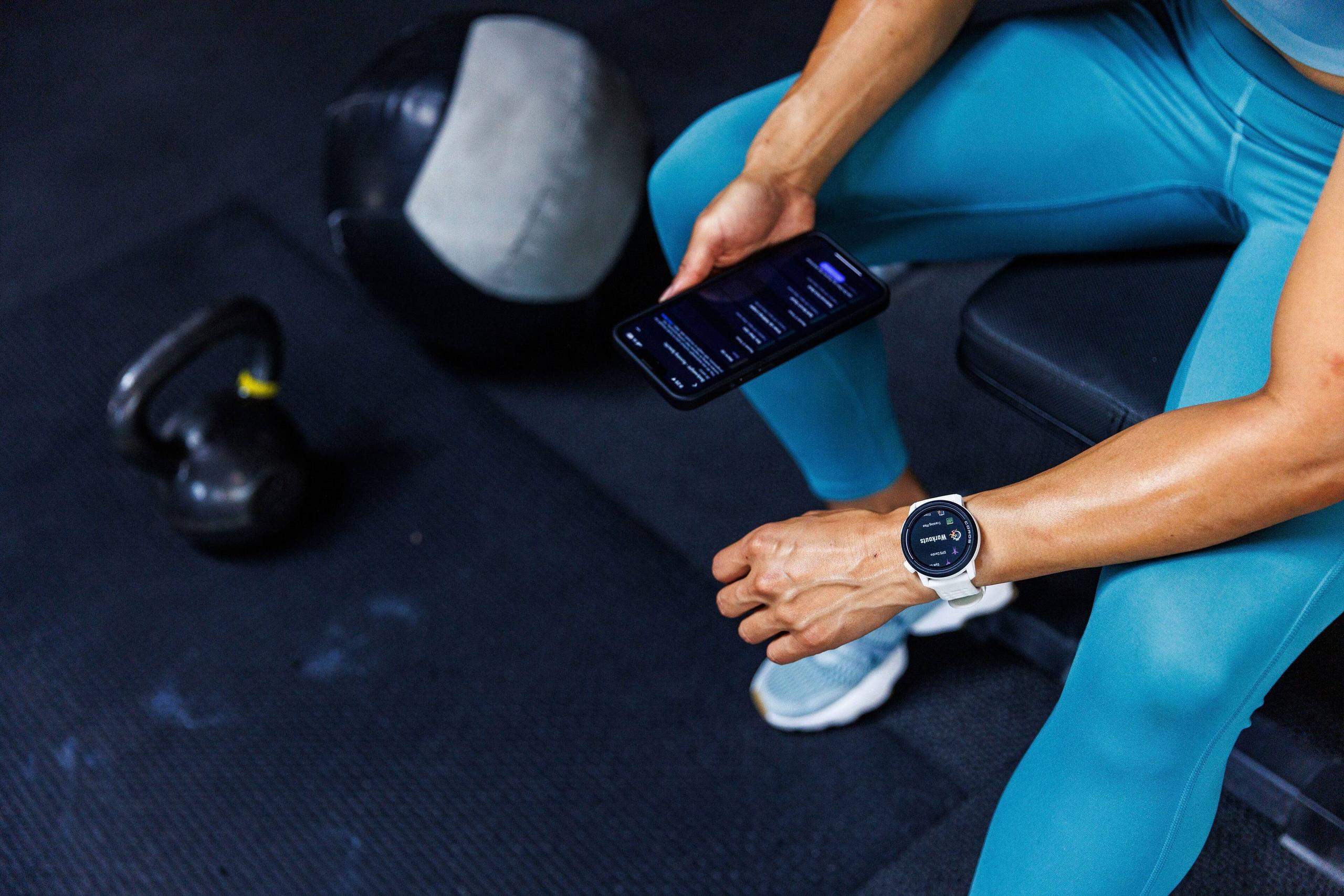
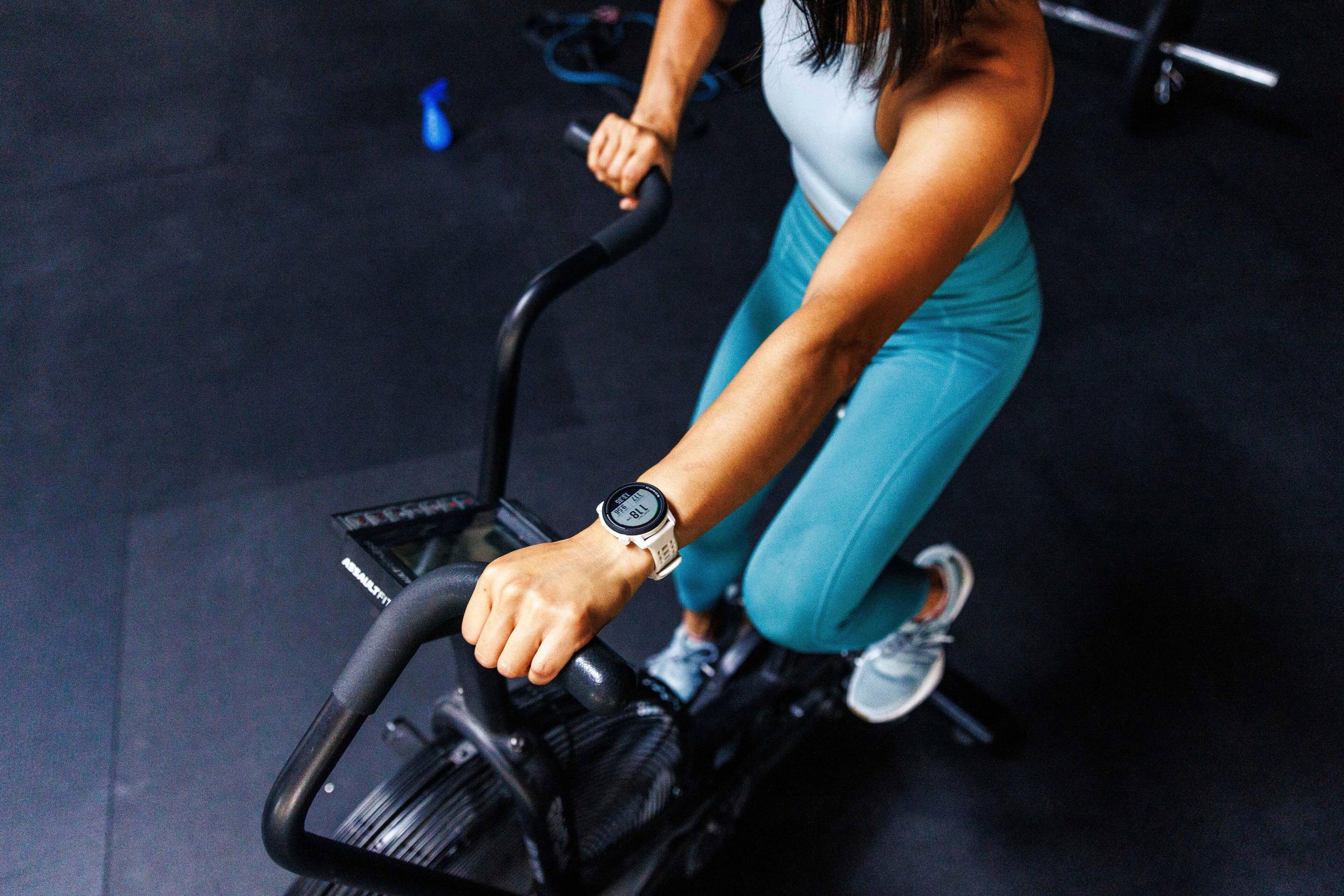
GPS sports watches have evolved far beyond simple step counters into sophisticated training computers that rival equipment used by professional athletes just a decade ago. These specialized devices focus on what matters most to serious athletes: pinpoint GPS accuracy, extended battery life for long training sessions, and comprehensive performance metrics that actually help you improve.
At the time of writing, two watches stand out in the competitive mid-range GPS sports watch market: the Suunto Race S, which launched in 2024 as a more compact version of Suunto's flagship Race series, and the COROS Pace 3, released in late 2023 as an evolution of COROS's popular budget-performance formula. Both watches pack premium features into relatively affordable packages, but they take notably different approaches to achieving that goal.
Before diving into the specifics, it's worth understanding what separates a true GPS sports watch from a general fitness tracker or smartwatch. These devices prioritize three core elements: GPS accuracy that works in challenging environments like dense forests or urban canyons, battery life measured in days rather than hours, and training metrics that provide actionable insights rather than just basic activity summaries.
The most important performance characteristics include GPS precision (how closely the watch tracks your actual route), heart rate accuracy during varying intensities, battery efficiency across different usage modes, and the quality of training insights the device provides. Water resistance, build durability, and display readability in bright sunlight also matter significantly for athletes who train in all conditions.
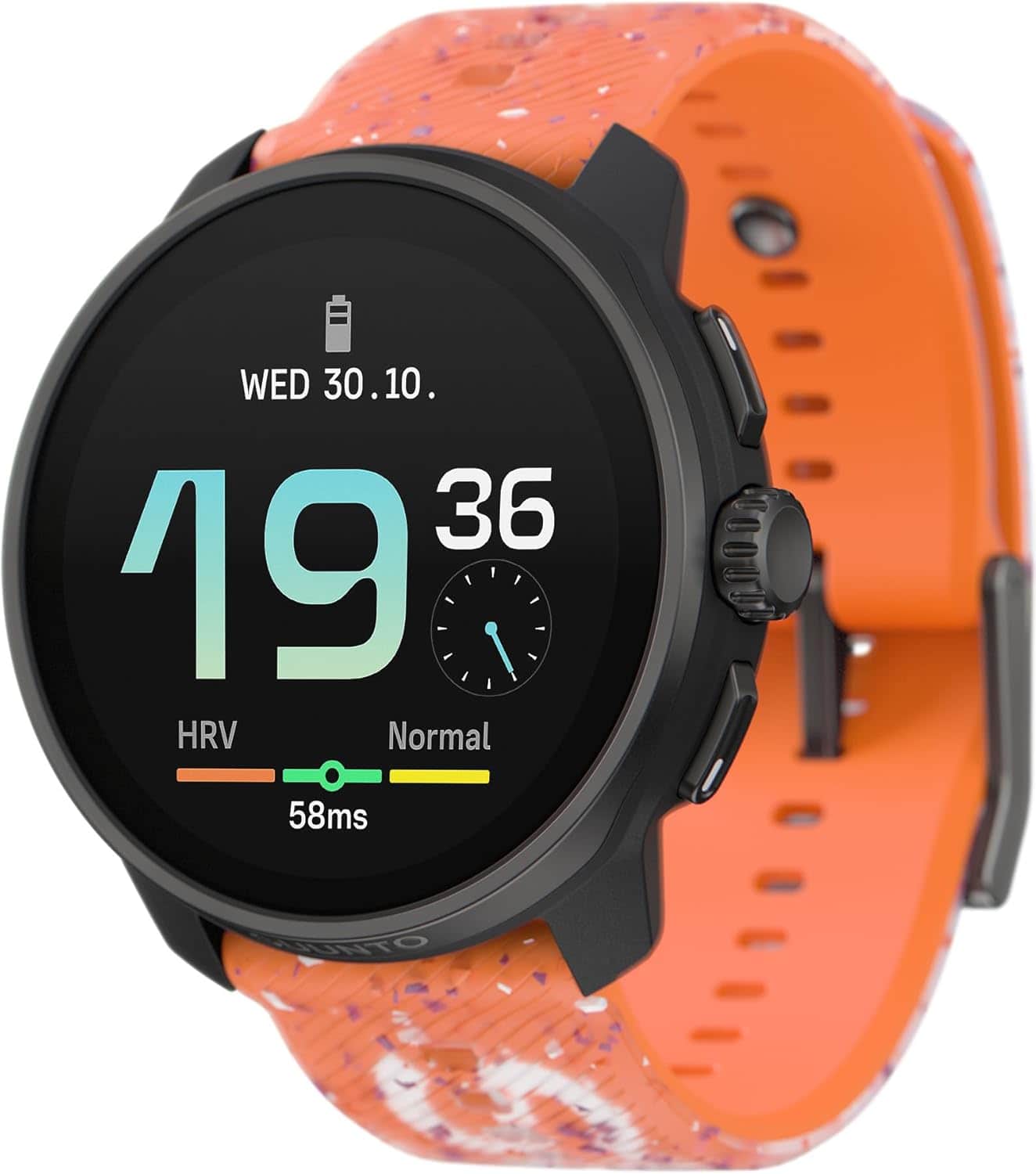
The Suunto Race S represents Suunto's attempt to pack their flagship Race technology into a more wearable 45mm package. At 60 grams with the standard stainless steel case (or 53 grams in the titanium version), it's notably heavier than many competitors, but that weight comes with tangible benefits.
The centerpiece is a stunning 1.32-inch AMOLED display with 466 pixels per inch—the same pixel density found on premium smartphones. This isn't just about aesthetics; AMOLED technology delivers exceptional brightness that remains clearly readable even in direct sunlight, while the high resolution makes maps and data screens genuinely useful rather than squinting exercises. The display is protected by Gorilla Glass and surrounded by a stainless steel bezel that feels genuinely premium.
What's particularly impressive about the Suunto Race S is its dual-frequency GNSS capability, which uses both L1 and L5 satellite frequencies simultaneously. This dual-frequency approach dramatically improves accuracy in challenging environments where traditional GPS struggles. The watch can connect to four different satellite systems at once—GPS, GLONASS, GALILEO, and BEIDOU—with the ability to track up to 32 satellites simultaneously. This constellation of positioning data, combined with Suunto's FusedAlti technology (which blends GPS altitude with barometric readings), provides remarkably precise elevation tracking.
The navigation capabilities are genuinely impressive for a watch in this category. With 32GB of onboard storage, the Suunto Race S can hold detailed offline maps that zoom up to 20 kilometers out, complete with turn-by-turn navigation and breadcrumb trails. The ClimbGuide feature is particularly clever—it analyzes your route ahead of time and warns you about upcoming climbs during activities, helping you pace accordingly.
For heart rate monitoring, Suunto redesigned the optical sensor with double the number of LEDs compared to previous generations. While optical wrist sensors will never match chest straps for absolute precision, this improved design shows better accuracy during steady-state activities and fewer dropout issues during intense efforts.
The Suunto Race S includes Suunto Coach AI, which analyzes your training load, recovery metrics, and performance trends to provide personalized guidance. It's not just generic advice—the system considers your specific training history and goals to suggest workout intensities and recovery periods.
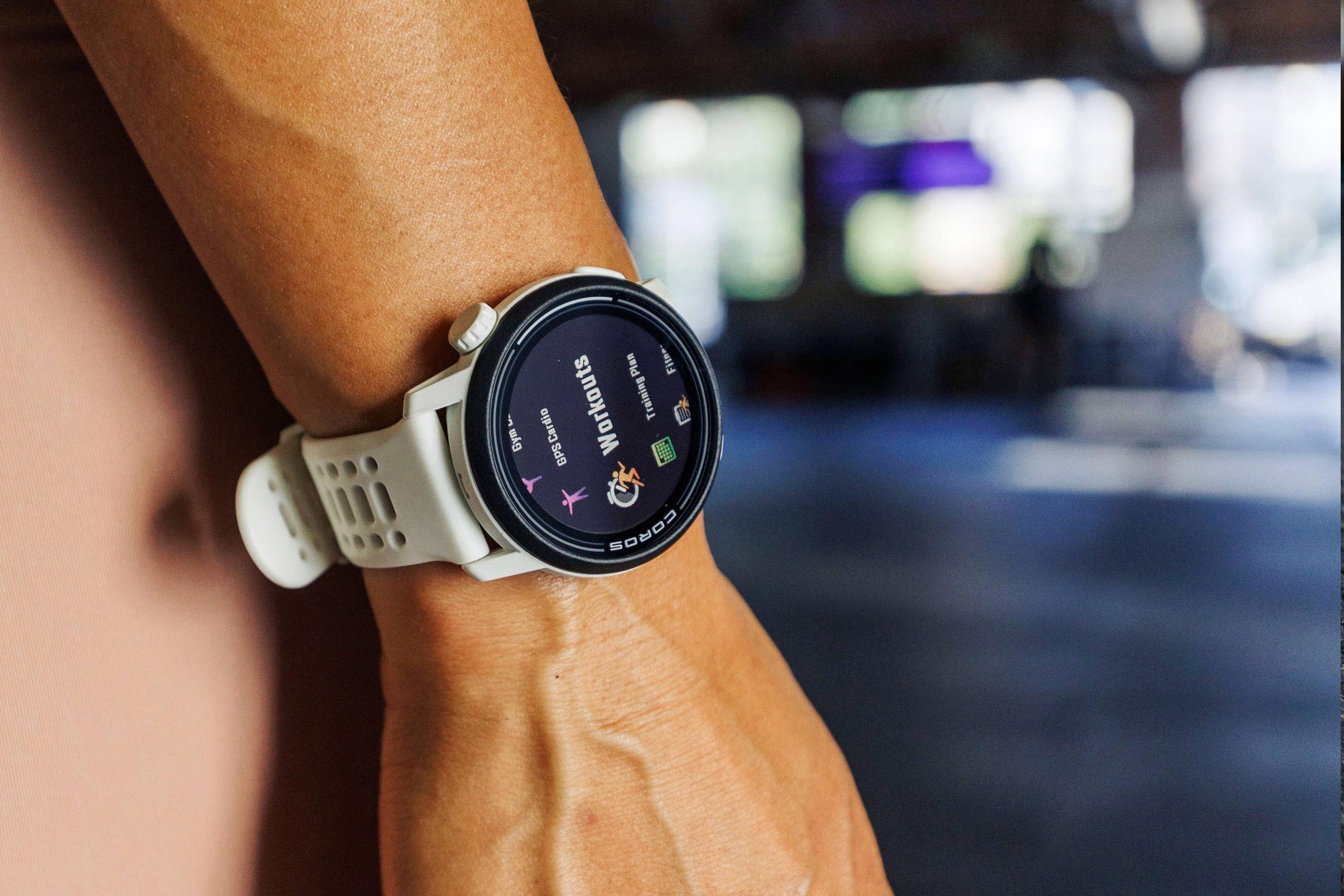
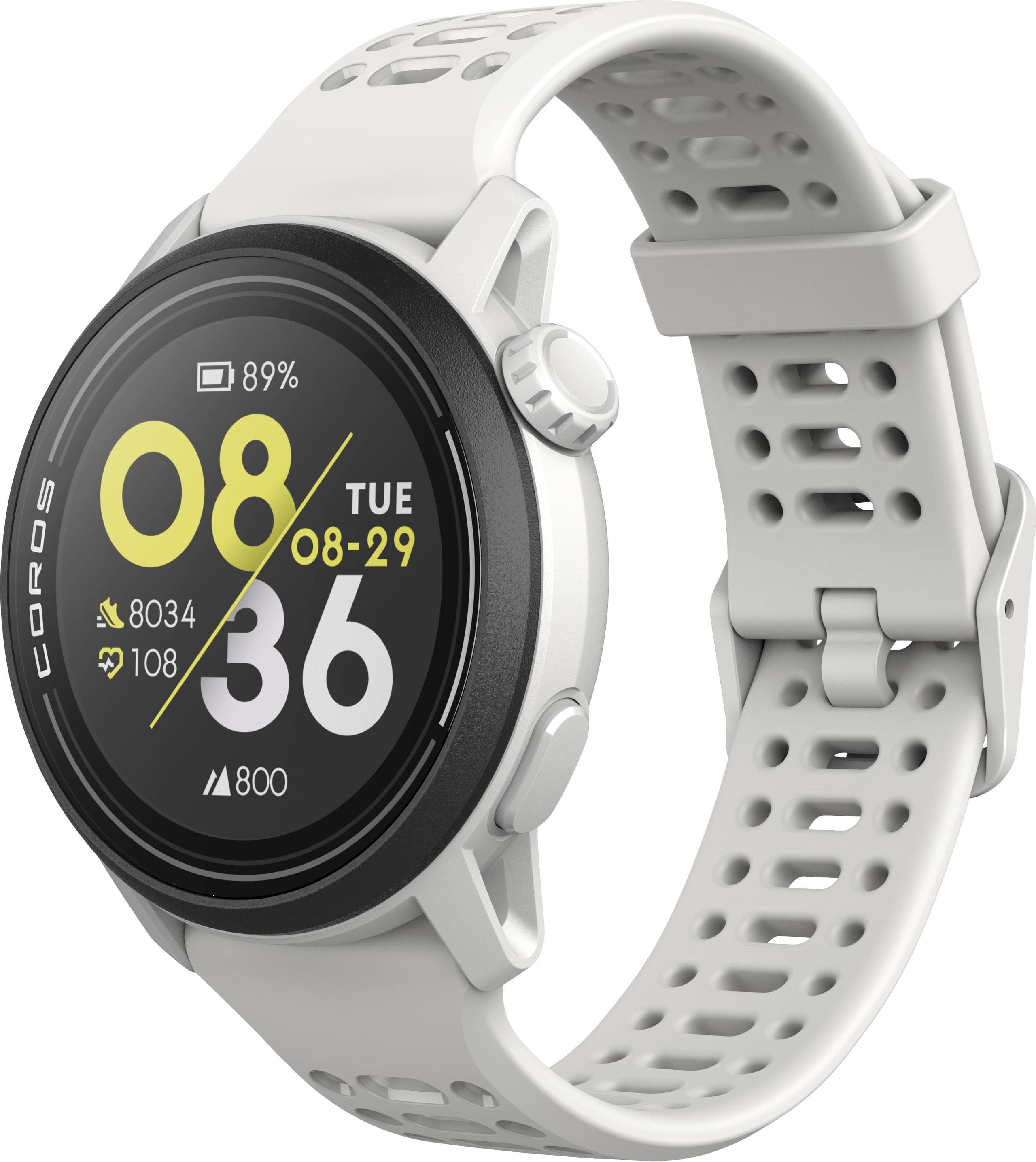
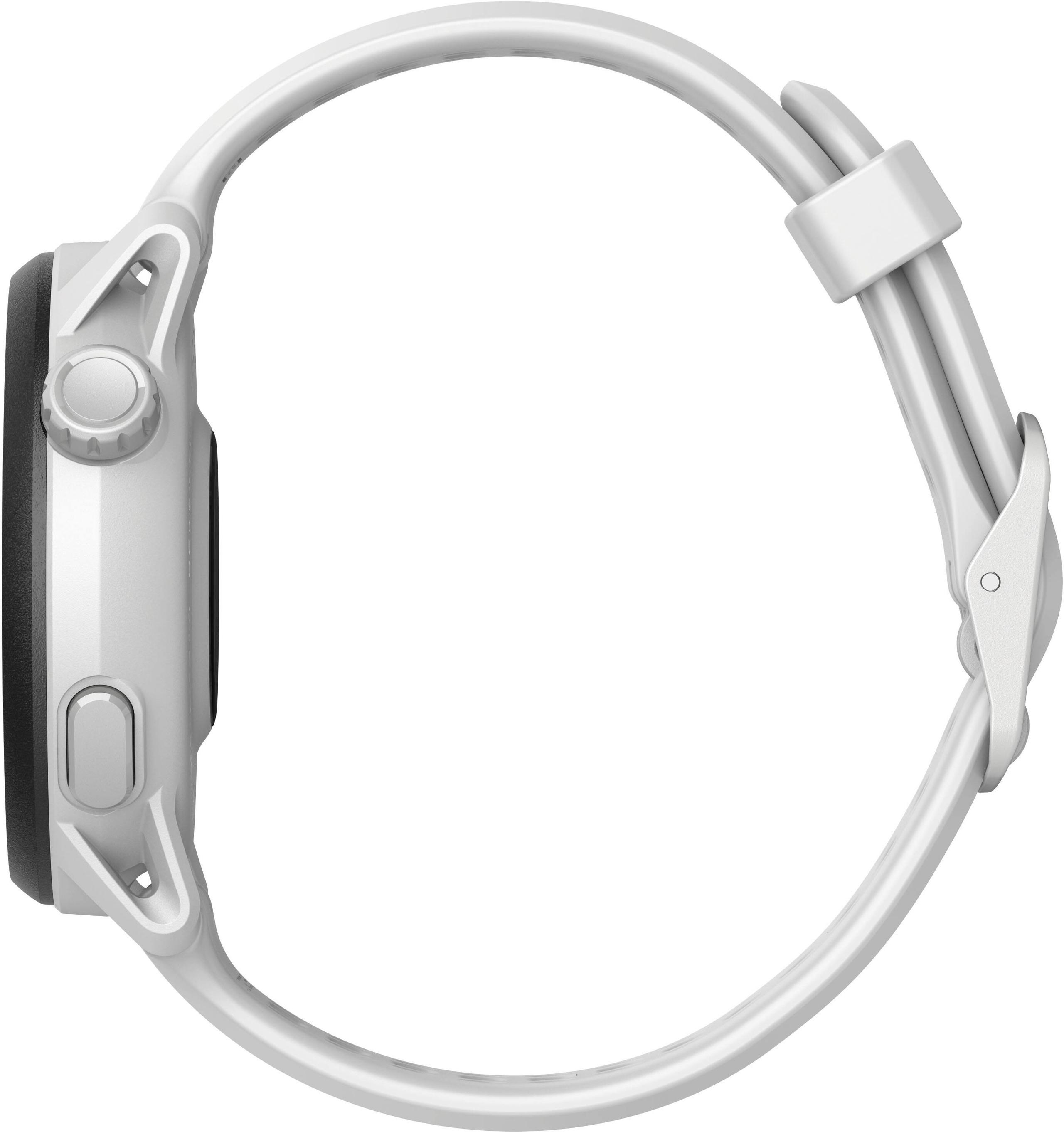
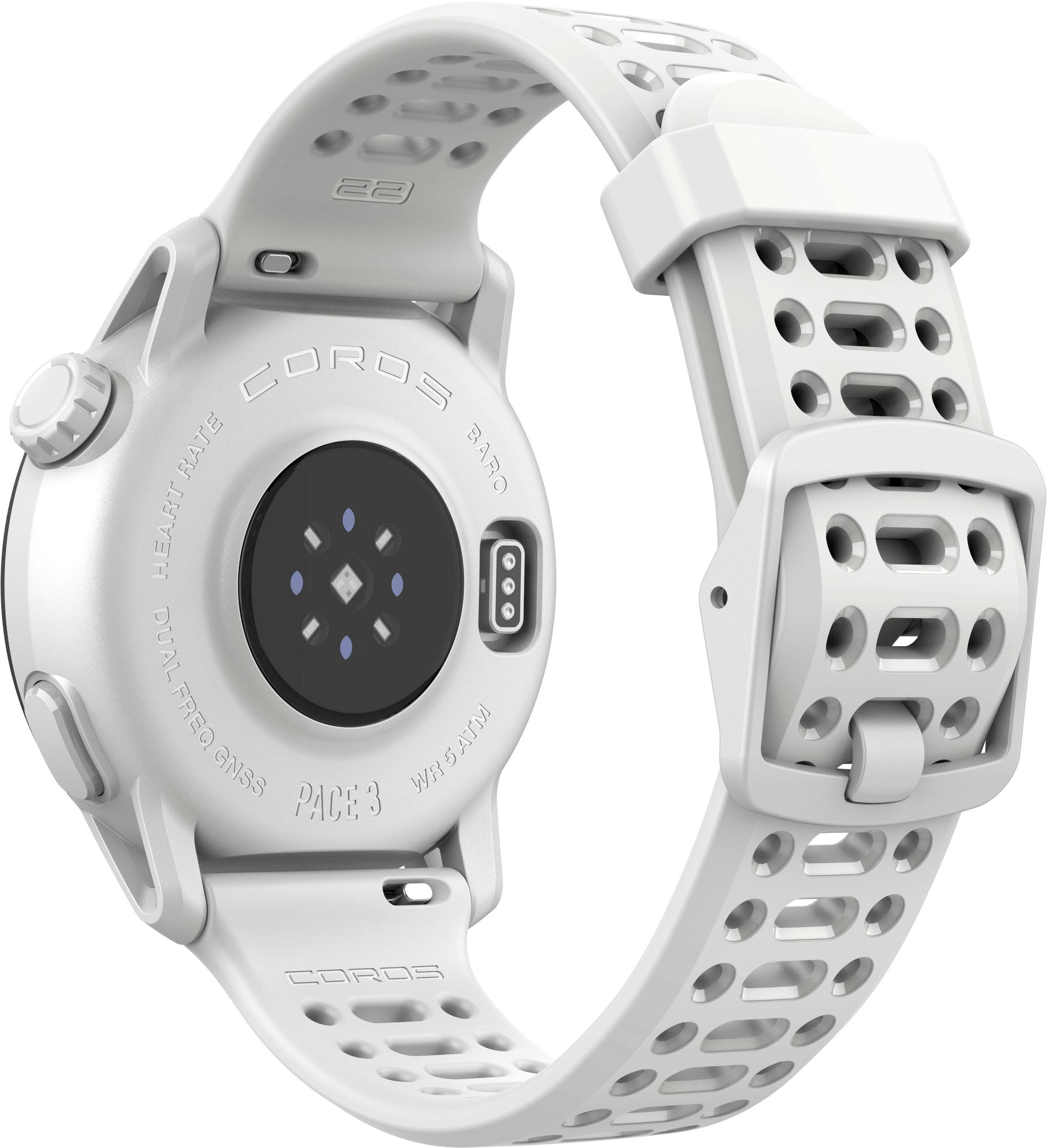
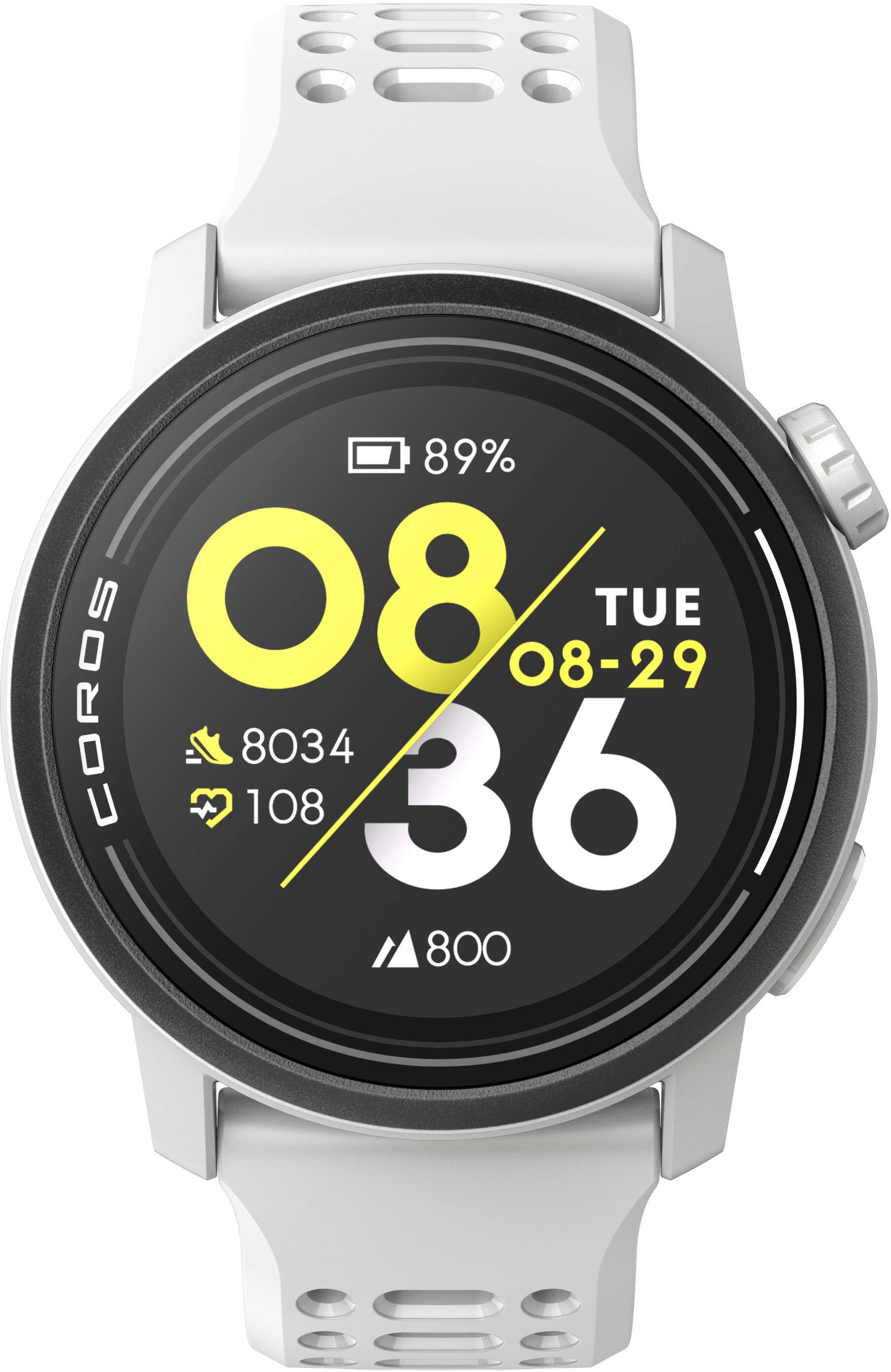
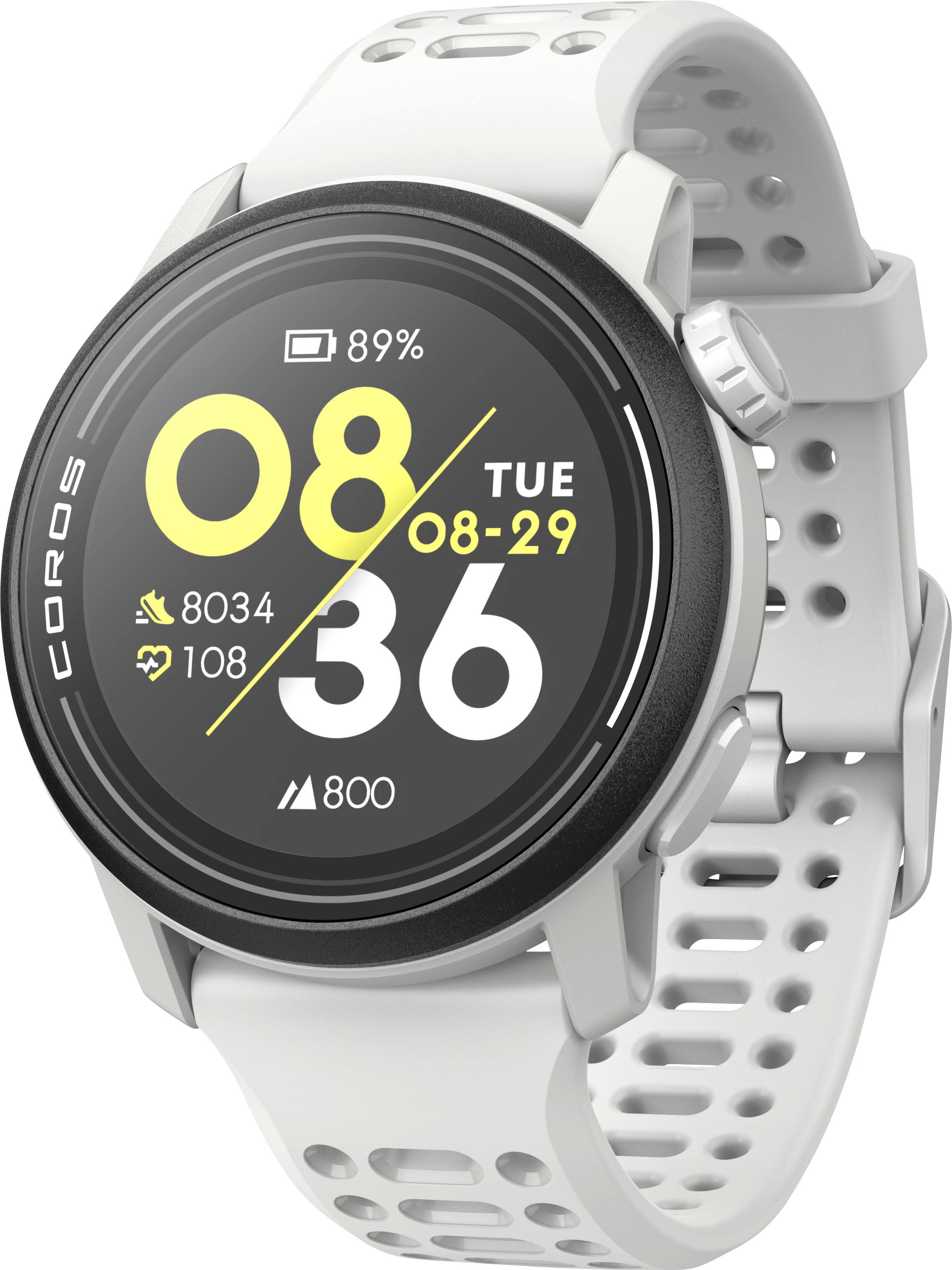
The COROS Pace 3 takes a fundamentally different approach, prioritizing core performance features while maintaining an almost impossibly light weight of just 30 grams with the nylon band. This makes it one of the lightest GPS watches with dual-frequency positioning available at any price point.
Don't let the plastic construction fool you—the fiber-reinforced polymer case feels solid and has proven durable in real-world use since the watch's late 2023 release. The 1.2-inch transflective LCD display isn't as visually striking as the Suunto Race S's AMOLED screen, but it's perfectly readable and contributes significantly to the exceptional battery life.
Speaking of battery life, this is where the COROS Pace 3 truly shines. In smartwatch mode, it delivers up to 24 days of use—nearly three times longer than the Suunto Race S. Even more impressive is the power efficiency during GPS tracking, consuming roughly half the battery per hour compared to most AMOLED-equipped competitors. This translates to 38 hours of GPS tracking at full accuracy, which comfortably covers most ultramarathons and multi-day hiking adventures.
The GPS accuracy is genuinely surprising for the price point. The COROS Pace 3 uses dual-frequency GNSS with a redesigned satellite chipset that, based on extensive testing by multiple reviewers, matches or exceeds the accuracy of watches costing significantly more. In challenging environments like urban canyons or dense forest coverage, it consistently delivers reliable tracking that's within acceptable margins for serious training.
One unique feature at this price point is the 4GB of onboard music storage. You can load MP3 files directly onto the COROS Pace 3 and connect Bluetooth headphones for completely phone-free workouts. This might seem minor, but it's liberating during long runs when carrying a phone becomes cumbersome.
The heart rate sensor uses five LEDs and four photodetectors in a design that sits flatter against the wrist compared to many competitors. While it shares the typical limitations of optical sensors during high-intensity intervals, it performs well for the majority of training scenarios where consistent heart rate data matters most.
COROS has built a reputation for regular firmware updates that add meaningful features over time. Since the COROS Pace 3's release, several updates have improved GPS algorithms, added new sport modes, and refined the user interface based on community feedback.
Both watches excel in GPS performance, but they achieve accuracy through slightly different approaches. The Suunto Race S leans heavily on its comprehensive satellite constellation and advanced algorithms, while the COROS Pace 3 focuses on efficient chipset design and signal processing.
In practical testing scenarios—urban environments with tall buildings, tree-covered trail runs, and open terrain—both watches perform admirably. The differences in distance tracking are typically within 1-2% over long activities, which falls well within acceptable ranges for training purposes. Where the Suunto Race S pulls ahead is in complex navigation scenarios thanks to its detailed mapping capabilities, while the COROS Pace 3 excels in pure tracking accuracy relative to its price point.
Optical heart rate sensors have improved dramatically in recent years, but they still have inherent limitations. Both watches perform well during steady-state activities like easy runs or cycling at consistent effort. However, both can struggle during rapid intensity changes—think interval training or sudden hills—where they might lag behind actual heart rate changes or occasionally spike incorrectly.
The Suunto Race S's redesigned sensor shows slightly better consistency during variable efforts, but the difference isn't dramatic enough to be a primary decision factor. For activities where precise heart rate data is critical, both watches support external chest strap connectivity via Bluetooth.
This is perhaps the most significant practical difference between the two watches. The COROS Pace 3's battery efficiency is genuinely impressive—our research indicates it can handle a full work week of training with multiple GPS sessions while still having substantial charge remaining.
The Suunto Race S requires more frequent charging, typically every 7-10 days with regular GPS use. While not terrible by modern standards, it means thinking about charging schedules more often. For weekend warriors, this difference might be minimal, but for athletes training daily or those embarking on multi-day adventures, the COROS Pace 3's endurance becomes a significant advantage.
Both watches provide comprehensive training data, but they present it differently. The Suunto Race S focuses on AI-driven insights through Suunto Coach, which attempts to provide personalized recommendations based on your training patterns and recovery metrics. It's sophisticated but can sometimes feel overly complex for athletes who prefer straightforward data.
The COROS Pace 3 takes a more direct approach, providing clear metrics and leaving more interpretation to the user or external analysis platforms like Strava or TrainingPeaks. Both approaches work well, but they appeal to different types of athletes.
The 30-gram weight difference between these watches is immediately noticeable on the wrist. The COROS Pace 3 essentially disappears during wear, making it comfortable for sleep tracking and all-day use. The Suunto Race S feels more substantial—some athletes prefer this feeling of quality and durability, while others find it unnecessarily bulky.
Both watches offer 50-meter water resistance, suitable for swimming and most water sports. The Suunto Race S's Gorilla Glass and stainless steel construction feels more premium and likely offers better long-term durability, while the COROS Pace 3's polymer case is surprisingly resilient despite feeling less luxurious.
Neither watch attempts to be a comprehensive smartwatch like an Apple Watch or Samsung Galaxy Watch, but they include useful connectivity features. The Suunto Race S handles notifications well and offers extensive customization options for watch faces and data screens.
The COROS Pace 3's smart features are more basic but include the notable advantage of onboard music storage. For athletes who prefer to leave their phone at home during workouts, this capability is genuinely valuable. Both watches can control phone music playback, but only the COROS Pace 3 can operate independently.
At the time of writing, there's a significant price gap between these watches, with the COROS Pace 3 positioned as the value option and the Suunto Race S commanding a premium for its advanced features and build quality.
The COROS Pace 3 delivers remarkable value by including dual-frequency GPS, extensive battery life, and solid build quality at a price point where many competitors offer basic GPS and inferior battery performance. It's genuinely competitive with watches costing significantly more.
The Suunto Race S justifies its higher price through premium materials, superior display technology, advanced navigation features, and AI-driven training insights. Whether these features are worth the price premium depends entirely on individual priorities and budget constraints.
The COROS Pace 3 makes the most sense for athletes who prioritize core performance features, exceptional value, and lightweight comfort. It's ideal for runners, triathletes, and cyclists who want proven GPS accuracy and extended battery life without paying for premium aesthetics or advanced features they might not use. The music storage capability is a genuine bonus for those who prefer phone-free workouts.
The COROS Pace 3 is particularly appealing for endurance athletes who need confidence in battery life during long events, budget-conscious athletes who want premium GPS performance, and anyone who finds heavier watches uncomfortable during extended wear or sleep.
The Suunto Race S appeals to athletes who value premium build quality, advanced navigation capabilities, and comprehensive training insights. It's the better choice for those who frequently venture into areas where detailed mapping is valuable, appreciate AI-driven coaching guidance, and prefer the visual quality and customization options of AMOLED displays.
Consider the Suunto Race S if you're willing to charge more frequently for premium features, value sophisticated training analytics, need comprehensive navigation tools for outdoor adventures, and prefer the feel and appearance of premium materials.
Both watches succeed at their intended purposes, making the choice more about matching features to individual needs than identifying an outright winner.
The COROS Pace 3 represents exceptional value in the GPS sports watch market, delivering performance that rivals much more expensive competitors while maintaining remarkable battery efficiency and comfortable wearability. Its straightforward approach to training metrics and proven GPS accuracy make it an excellent choice for athletes focused on core performance features.
The Suunto Race S offers a more premium experience with superior materials, advanced features, and comprehensive capabilities that justify its higher price point for athletes who will utilize its full feature set.
For most athletes prioritizing proven performance and value, the COROS Pace 3 provides everything needed for serious training at an attractive price point. For those who appreciate premium design and advanced features, the Suunto Race S delivers a more complete and sophisticated experience.
The key is honestly assessing which features matter most for your specific training needs and budget constraints. Both watches will serve serious athletes well, but they cater to distinctly different priorities and preferences within the GPS sports watch category.
| Suunto Race S GPS Sports Watch | COROS Pace 3 GPS Sport Watch |
|---|---|
| Display Technology - Critical for readability and battery life | |
| 1.32" AMOLED touchscreen, 466x466 pixels (vibrant colors, excellent brightness) | 1.2" transflective LCD, 240x240 pixels (always readable, battery efficient) |
| Weight - Major factor for comfort during long activities | |
| 60g stainless steel (53g titanium) - premium feel but heavier | 30g with nylon band - exceptionally lightweight and comfortable |
| Battery Life (Smartwatch Mode) - How often you'll need to charge | |
| Up to 9-13 days depending on features enabled | Up to 17-24 days - significantly less charging hassle |
| GPS Battery Life - Critical for long training sessions | |
| 30 hours dual-frequency mode (120 hours tour mode) | 38 hours standard GPS (15 hours dual-frequency) |
| GPS Accuracy - Essential for precise distance and route tracking | |
| Dual-frequency GNSS with 5 satellite systems, up to 32 satellites | Dual-frequency GPS with redesigned chipset - excellent accuracy for price |
| Navigation Features - Important for outdoor adventures | |
| 32GB storage, offline maps, turn-by-turn navigation, ClimbGuide | Basic breadcrumb navigation and route syncing - no detailed maps |
| Heart Rate Monitoring - Key for training intensity guidance | |
| Redesigned optical sensor with double LEDs, 24/7 tracking | Next-gen optical sensor with 5 LEDs, 4 photodetectors |
| Build Quality - Durability for intensive use | |
| Stainless steel bezel, Gorilla Glass, premium materials | Fiber-reinforced polymer, mineral glass - solid but less premium |
| Water Resistance - Swimming and water sports capability | |
| 50 meters (5 ATM) - suitable for swimming | 50 meters (5 ATM) - equally capable for water activities |
| Music Storage - Phone-free workout capability | |
| Music controls only (no storage) - requires phone for audio | 4GB onboard storage for MP3s - completely phone-free workouts |
| Training Features - Coaching and performance insights | |
| Suunto Coach AI, 95+ sport modes, advanced training analytics | Free training plans, comprehensive sport modes, straightforward metrics |
| Smart Features - Connectivity beyond fitness | |
| Smart notifications, customizable faces, no contactless payments | Basic notifications, WiFi sync, Bluetooth heart rate broadcasting |
| Value Proposition - Performance per dollar spent | |
| Premium features and build quality at higher price point | Exceptional performance and battery life at budget-friendly price |
The COROS Pace 3 has significantly better battery life, lasting up to 17-24 days in smartwatch mode compared to the Suunto Race S at 9-13 days. For GPS tracking, the COROS Pace 3 provides 38 hours while the Suunto Race S offers 30 hours in dual-frequency mode.
The key difference is approach: the Suunto Race S focuses on premium build quality with AMOLED display and advanced navigation features, while the COROS Pace 3 prioritizes exceptional value with outstanding battery life and lightweight design at a more affordable price point.
Both the Suunto Race S and COROS Pace 3 offer dual-frequency GPS with excellent accuracy. The Suunto Race S supports more satellite systems (5 vs standard GPS systems), but real-world testing shows both provide comparable tracking precision for most training activities.
The Suunto Race S justifies its higher price with premium materials (stainless steel, Gorilla Glass), AMOLED display, comprehensive navigation mapping, and AI coaching features. The COROS Pace 3 offers better value for athletes focused on core GPS and training features without premium aesthetics.
The COROS Pace 3 is generally better for long-distance running due to its exceptional 30-gram lightweight design and superior battery efficiency. However, the Suunto Race S offers more detailed navigation features that could benefit ultra-runners on complex trail routes.
Only the COROS Pace 3 offers 4GB of onboard music storage for MP3 files, enabling completely phone-free workouts. The Suunto Race S can control music on your phone but doesn't store music directly on the watch.
The Suunto Race S has a superior 1.32" AMOLED touchscreen with vibrant colors and excellent brightness. The COROS Pace 3 uses a smaller 1.2" LCD display that's more basic but highly readable and contributes to better battery life.
Yes, both the Suunto Race S and COROS Pace 3 offer 50-meter water resistance, making them suitable for swimming, showering, and water sports. Both include dedicated swimming modes for pool and open water activities.
The COROS Pace 3 is significantly more comfortable due to its ultra-lightweight 30-gram design compared to the Suunto Race S at 60 grams. The weight difference makes the COROS Pace 3 much better for sleep tracking and extended wear.
Both watches integrate with popular fitness platforms like Strava and TrainingPeaks. The COROS Pace 3 also supports Nike Run Club and Apple Health, while the Suunto Race S offers more comprehensive integration with Suunto's own training ecosystem and AI coaching features.
The Suunto Race S is significantly better for navigation with 32GB storage for offline maps, turn-by-turn directions, and detailed route planning. The COROS Pace 3 offers only basic breadcrumb navigation, making the Suunto Race S the clear choice for serious hiking and outdoor navigation.
The Suunto Race S's main weakness is shorter battery life and heavier weight that some find uncomfortable. The COROS Pace 3's biggest limitation is the basic LCD display and lack of detailed navigation features, making it less suitable for complex outdoor adventures requiring mapping.
We've done our best to create useful and informative comparisons to help you decide what product to buy. Our research uses advanced automated methods to create this comparison and perfection is not possible - please contact us for corrections or questions. These are the sites we've researched in the creation of this article: techradar.com - trackbetter.com - trackbetter.com - runnersworld.com - alastairrunning.com - youtube.com - feedthehabit.com - outdoorgearlab.com - irunfar.com - youtube.com - forum.suunto.com - youtube.com - dcrainmaker.com - the5krunner.com - youtube.com - youtube.com - grittyrunners.co.uk - youtube.com - us.suunto.com - us.suunto.com - youtube.com - playbetter.com - us.suunto.com - suunto.com - suunto.com - suunto.com - bestbuy.com - trackbetter.com - watchard.com - cleverhiker.com - tomsguide.com - dcrainmaker.com - youtube.com - advnture.com - runtothefinish.com - runnersworld.com - youtube.com - us.coros.com - youtube.com - outdoorgearlab.com - youtube.com - trackbetter.com - runningshoesguru.com - youtube.com - runningwarehouse.com - tomsguide.com - coros.com - support.coros.com - shop-fr.coros.com - running.reviews - support.coros.com - us.coros.com - youtube.com - coros.com - coros.com - wareable.com - publiclands.com - youtube.com - corosbenelux.com - trackbetter.com - bestbuy.com

Privacy Policy
Terms and Conditions - Affiliate Policy
Home Security
© Copyright 2008-2026.
11816 Inwood Rd #1211, Dallas, TX 75244