

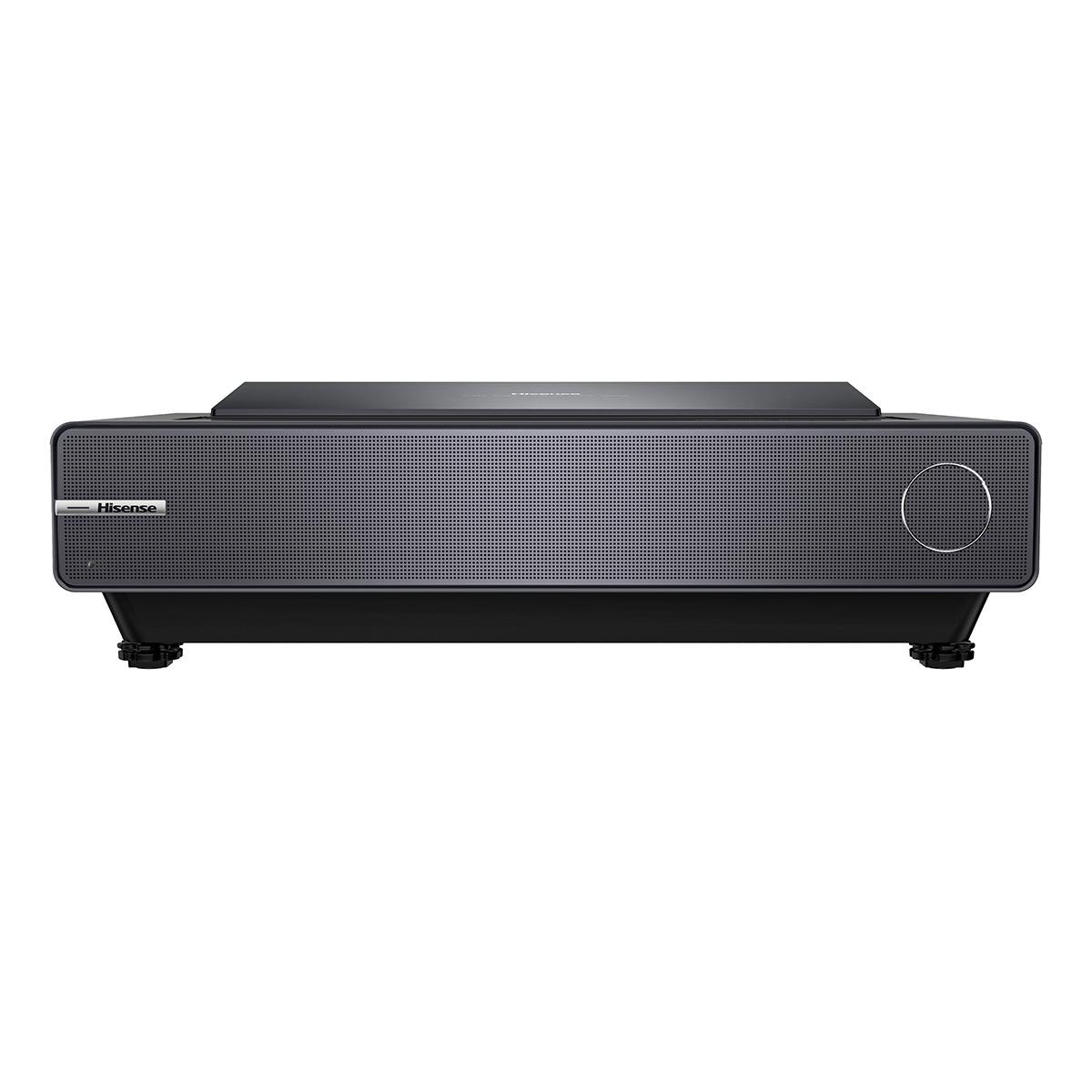
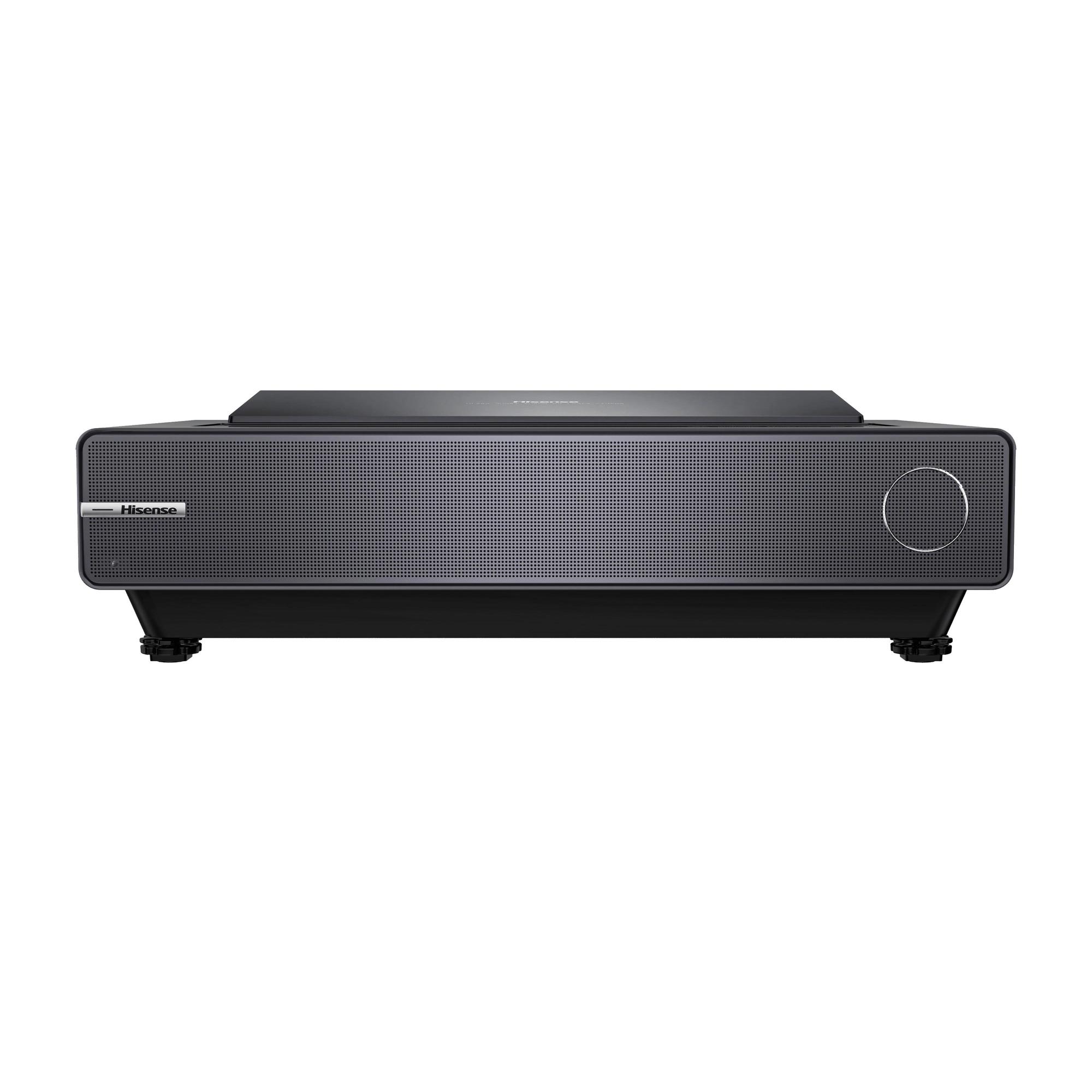
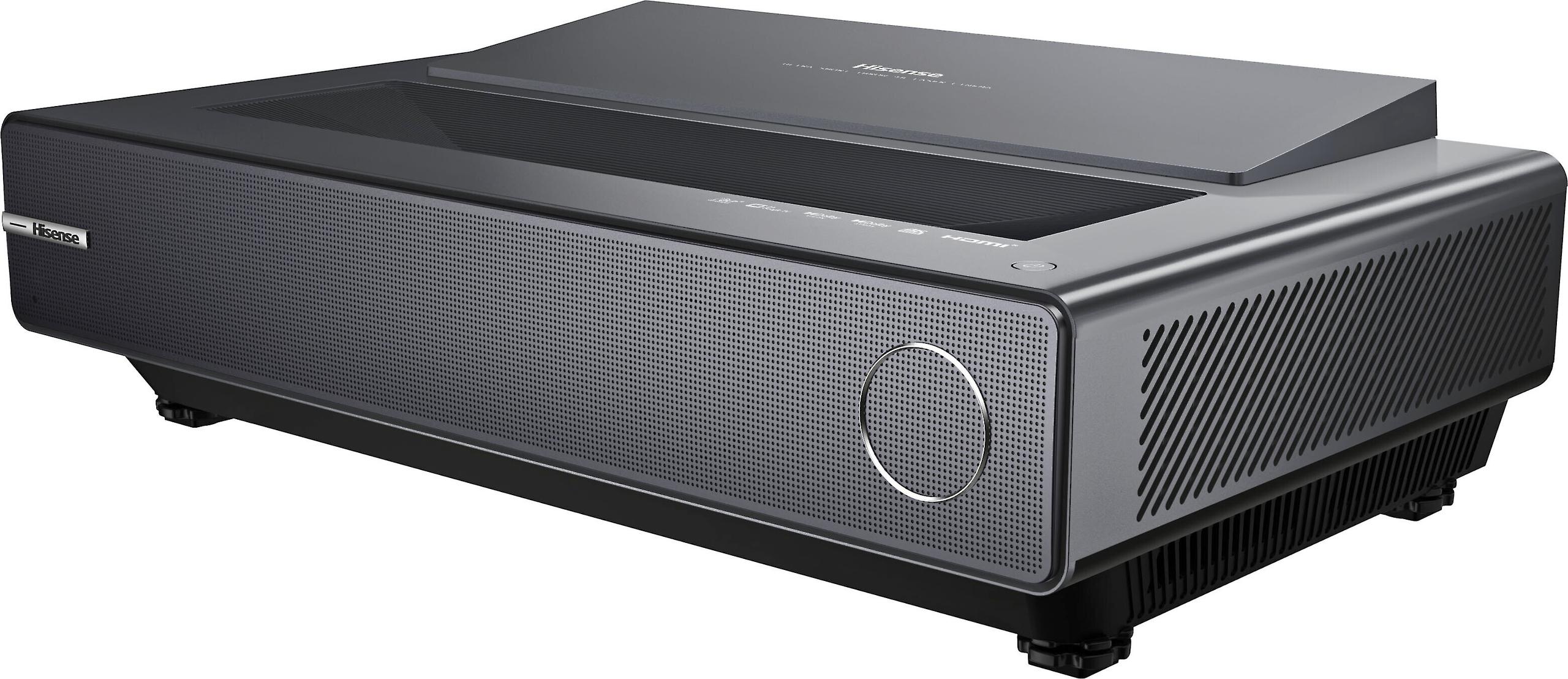
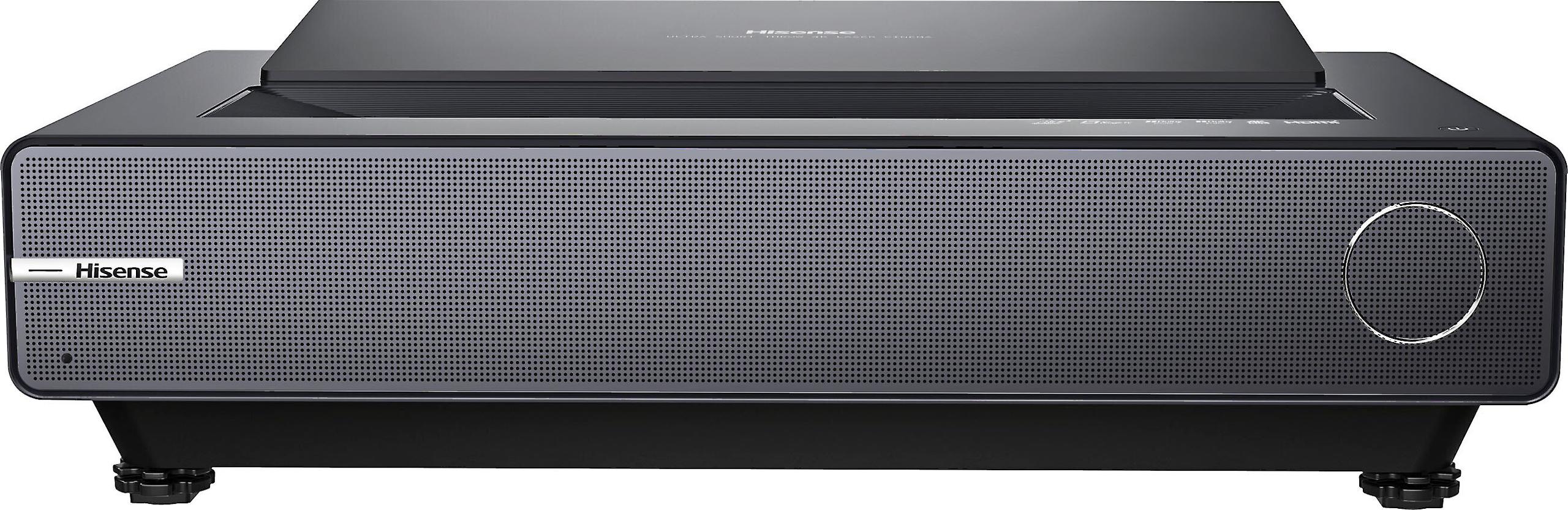
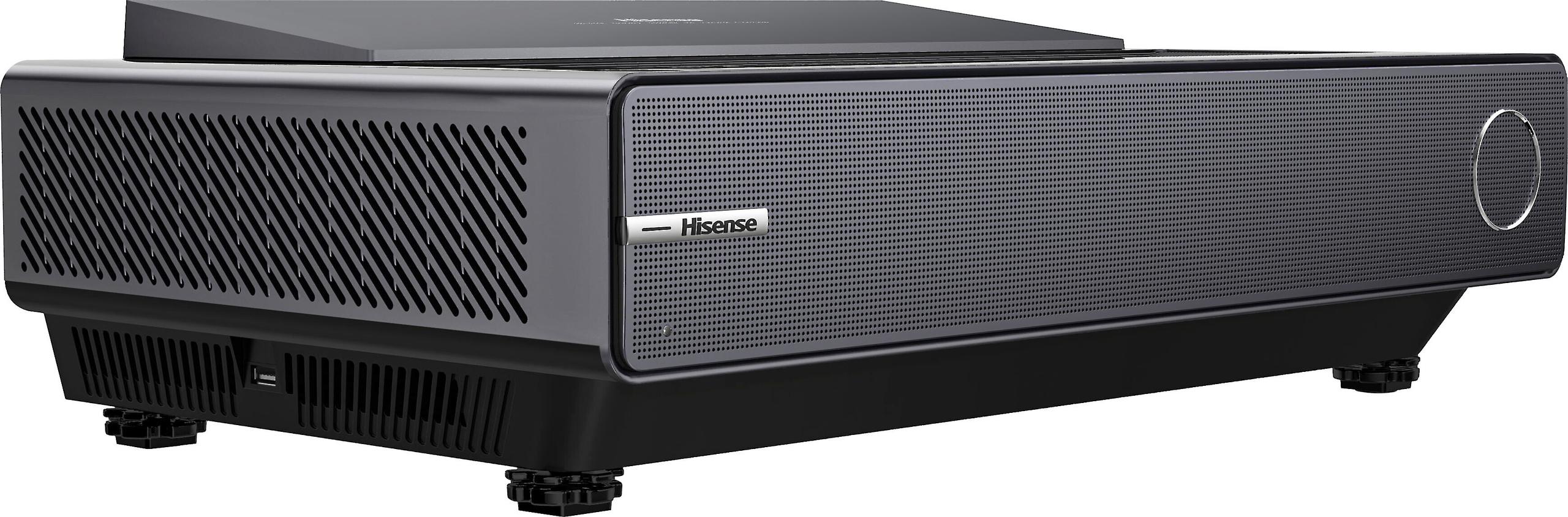
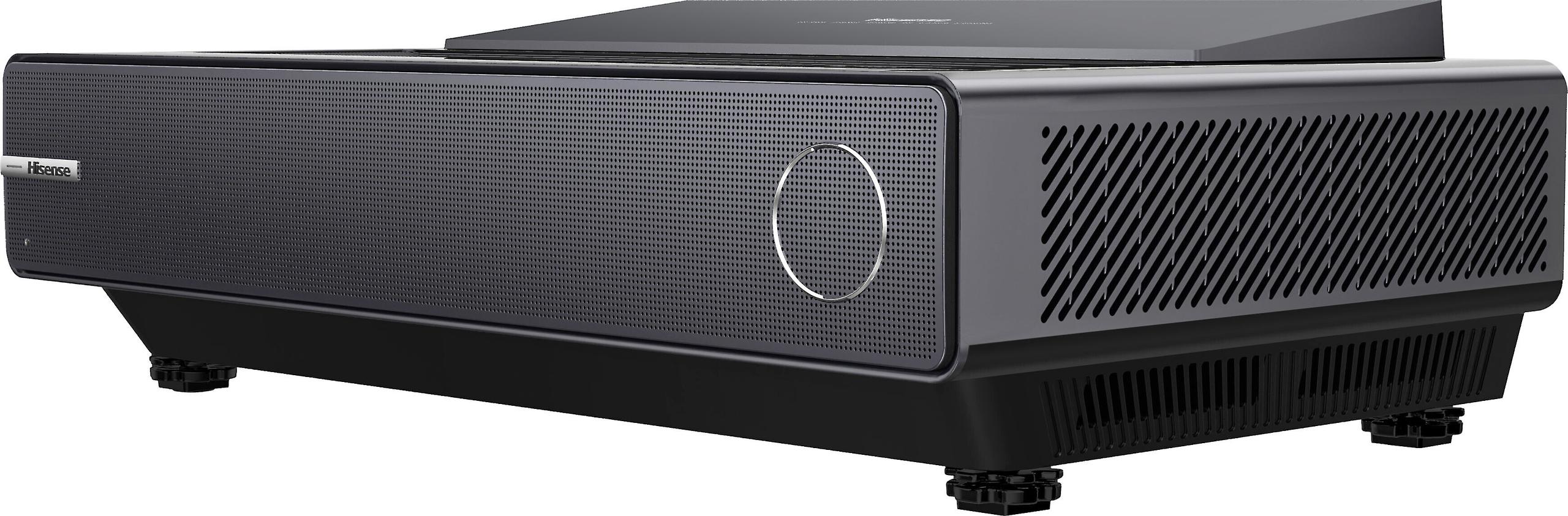
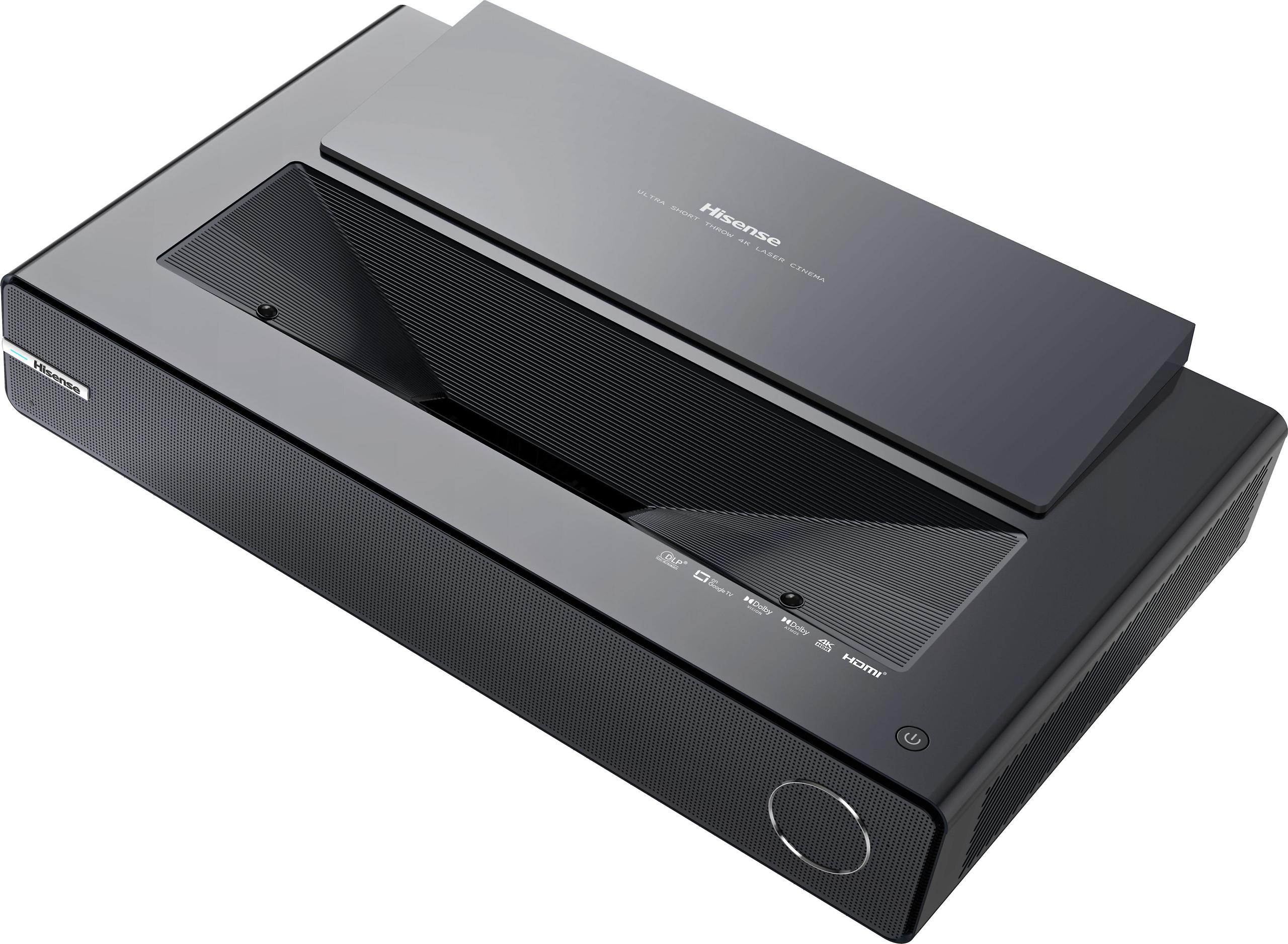
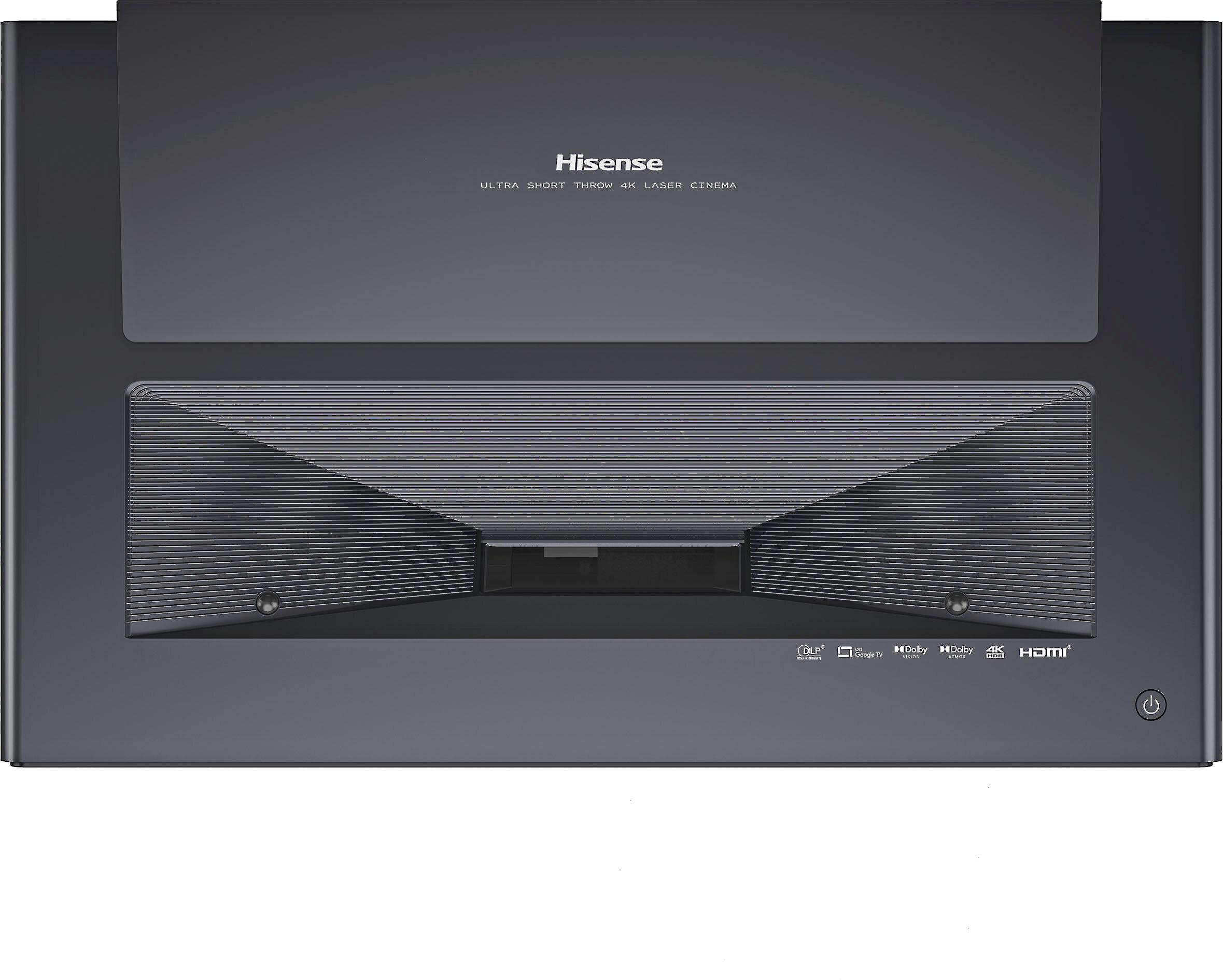
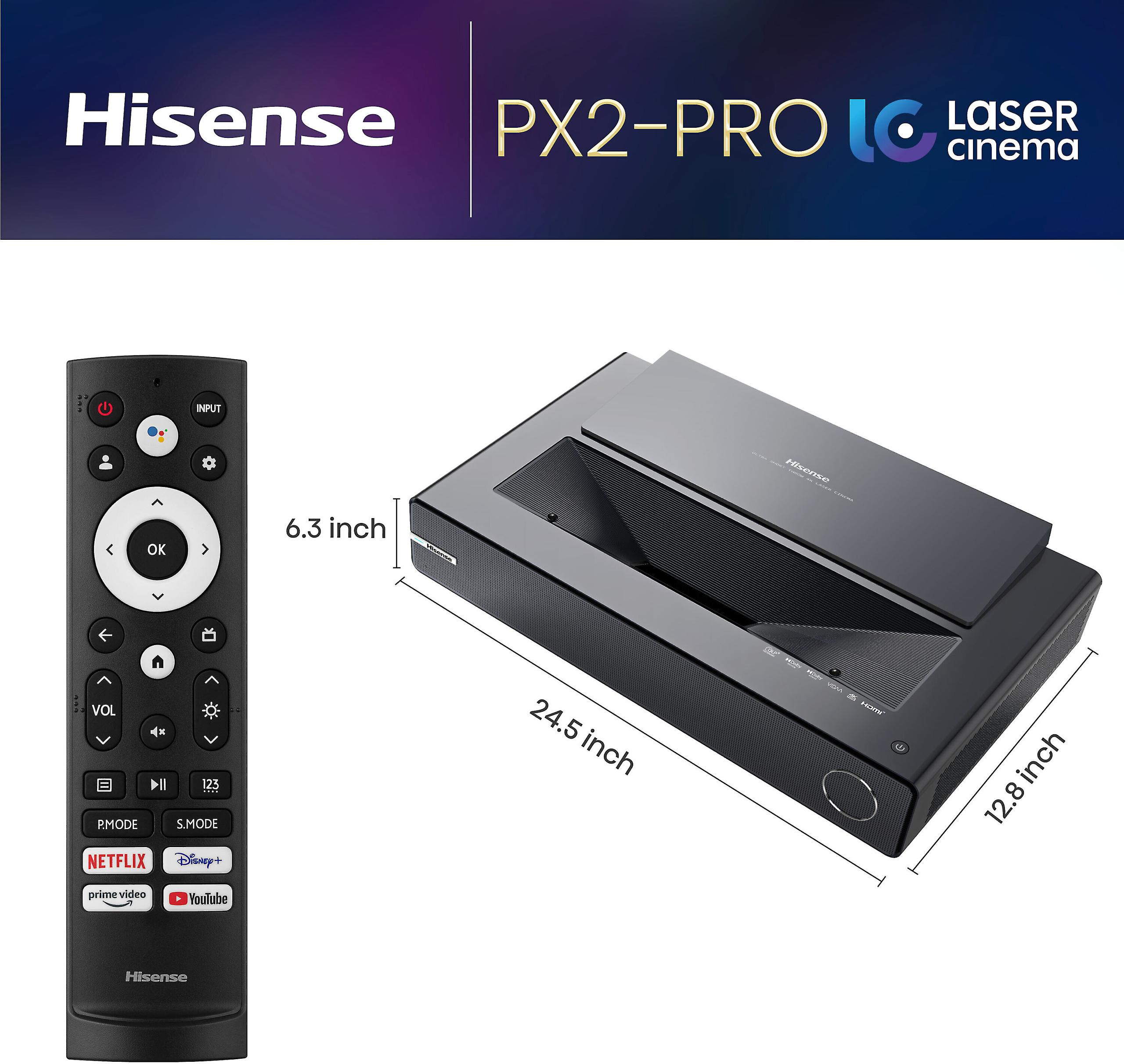


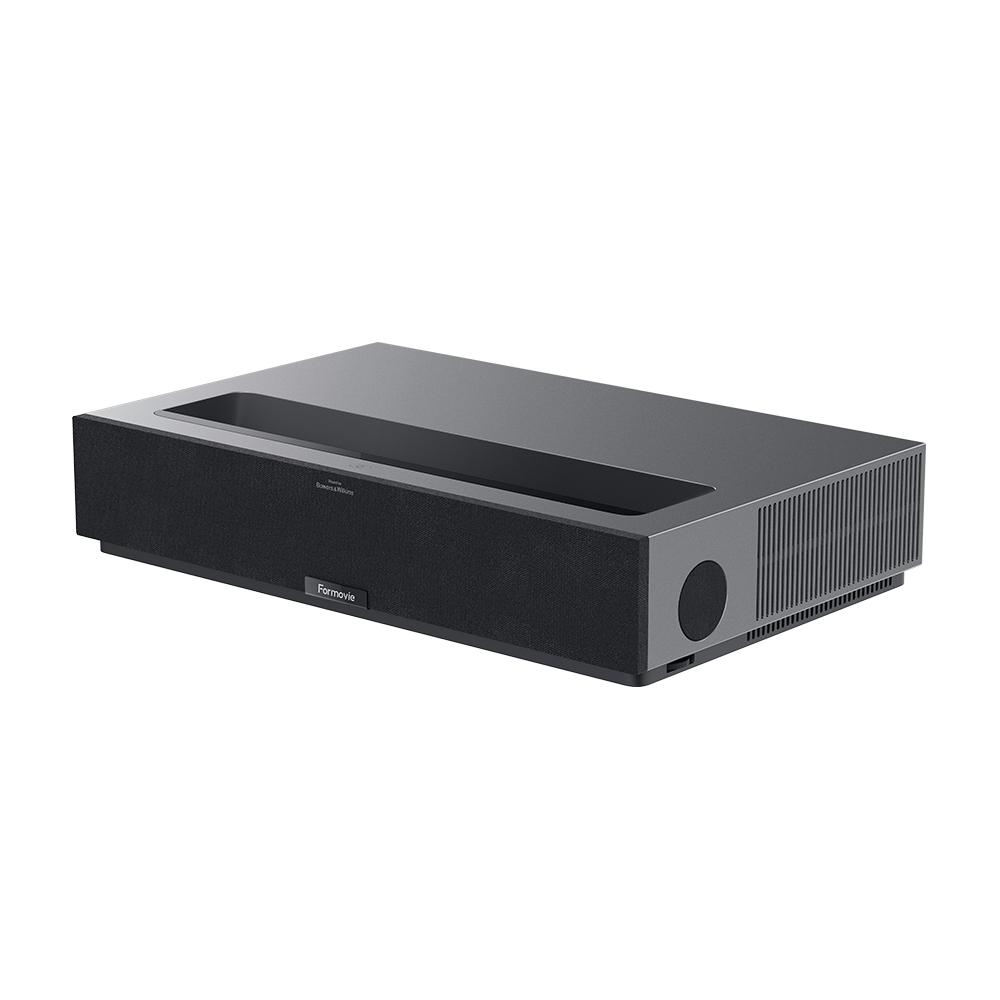
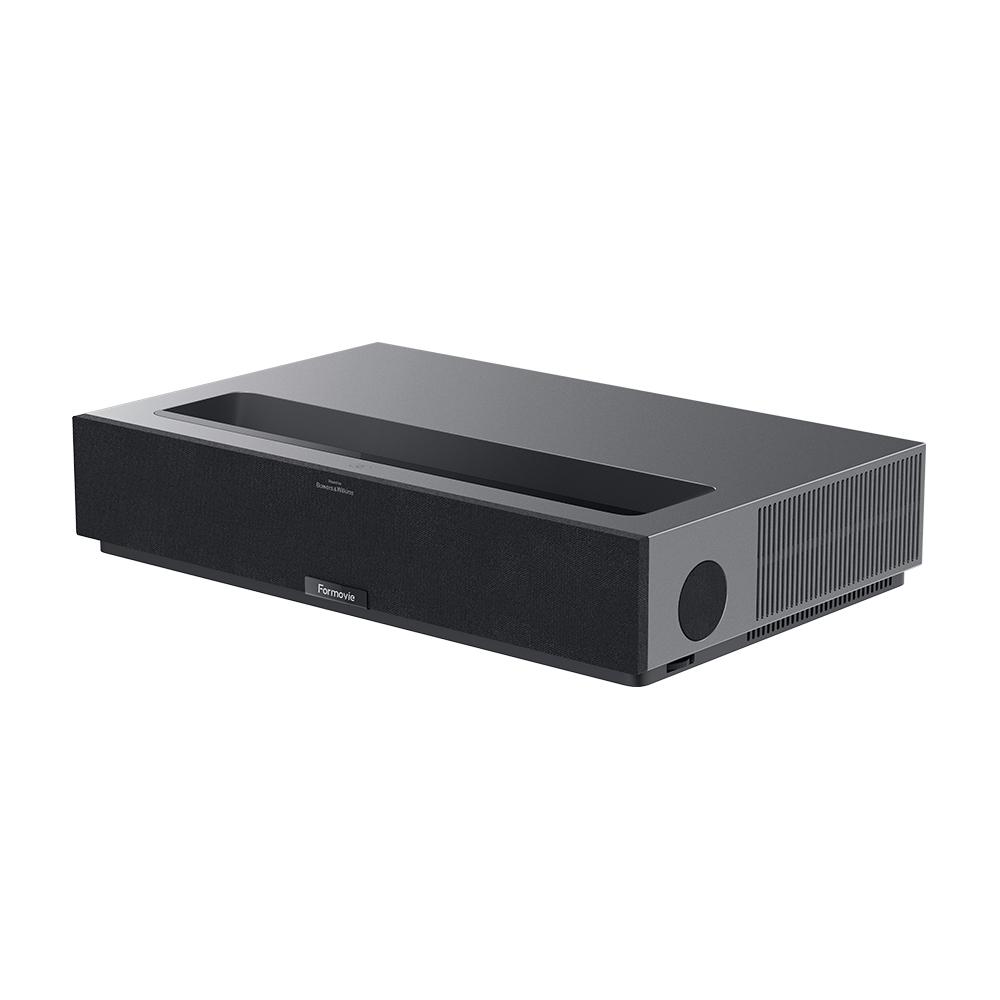
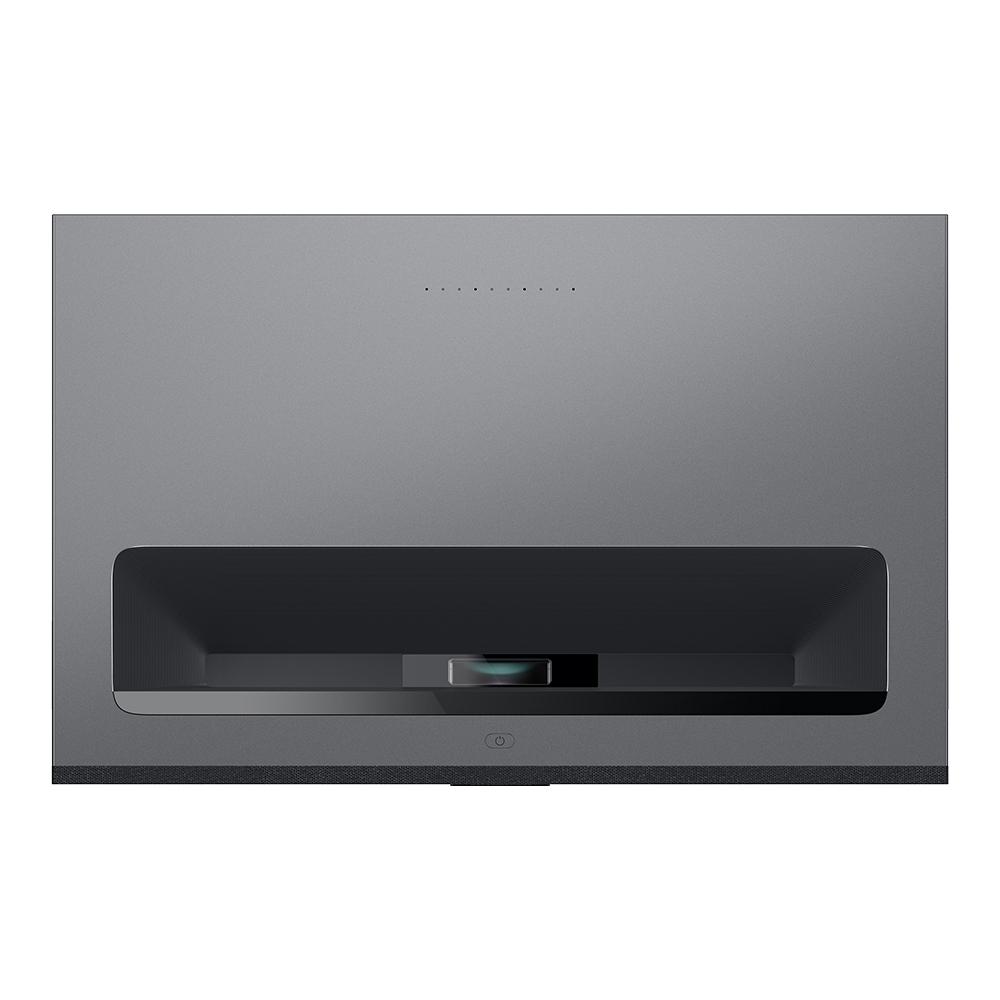
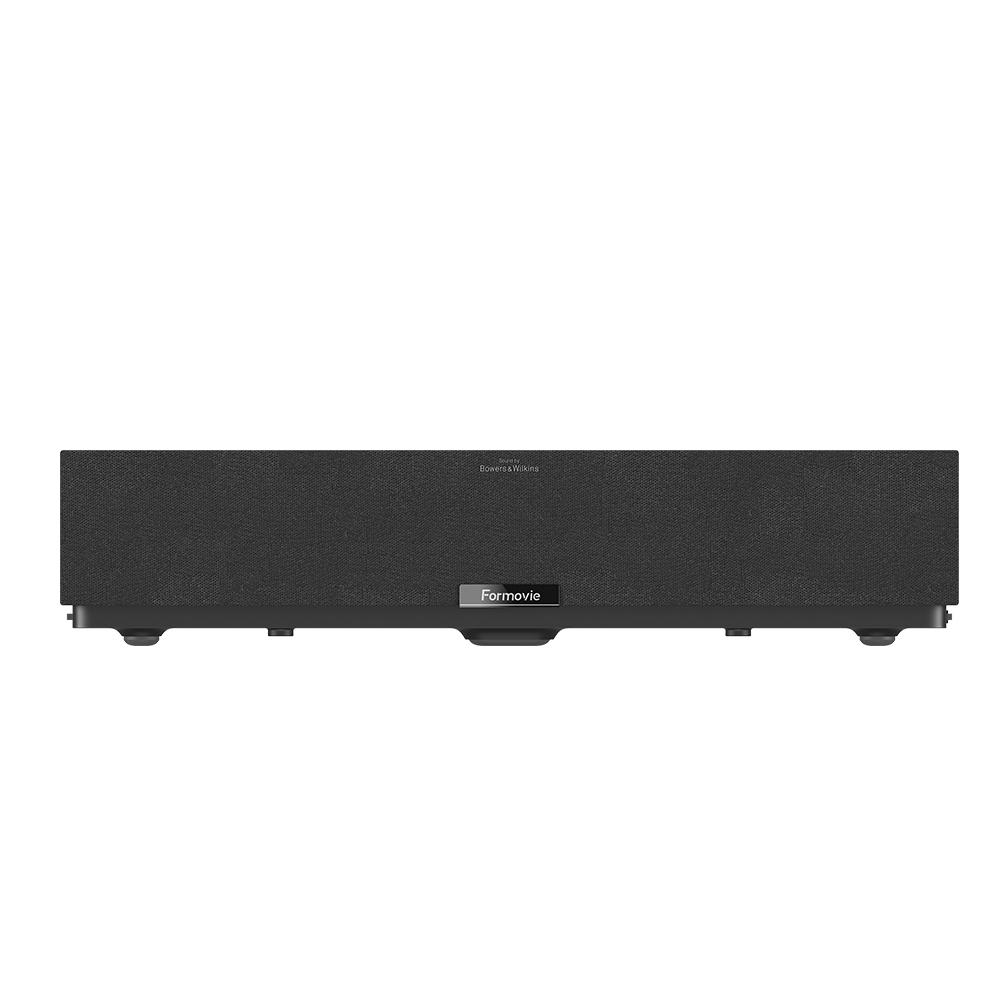
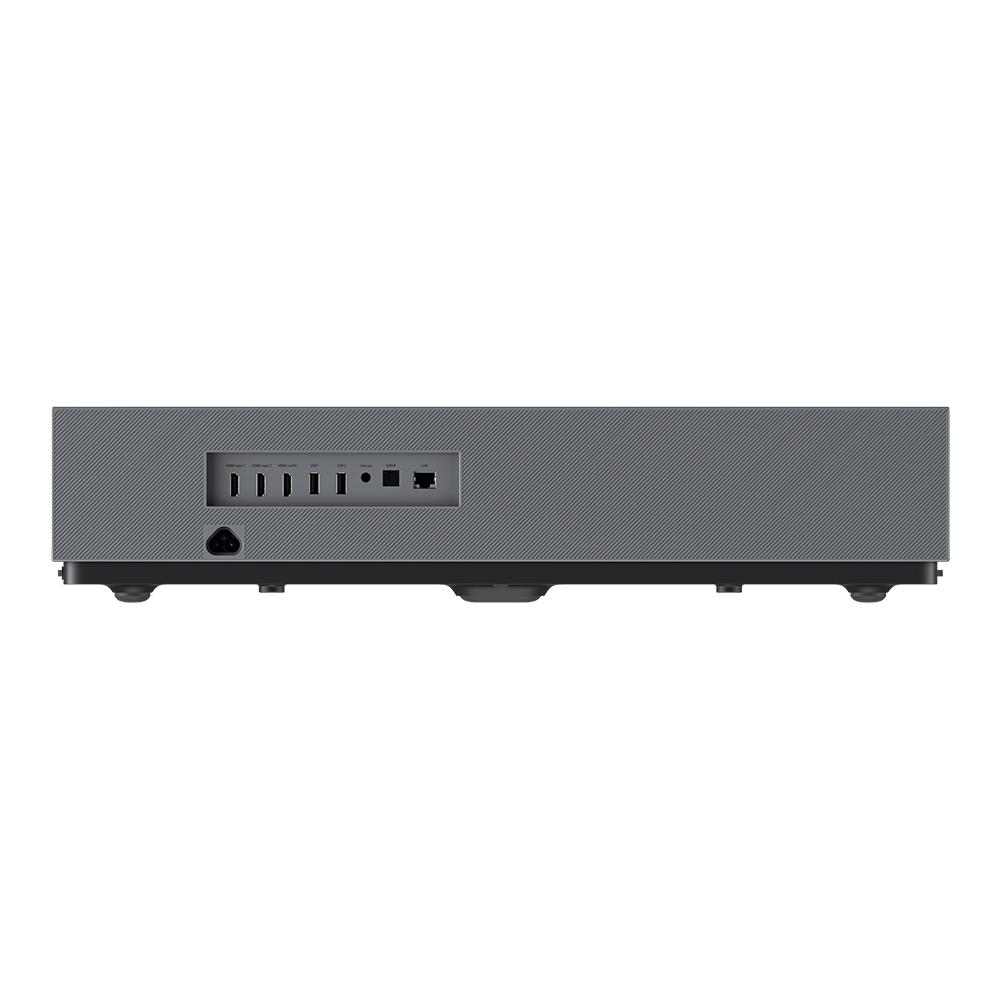
When it comes to creating a theater-like experience at home, ultra short throw (UST) laser projectors have revolutionized what's possible. Today, we're comparing two leading options: the Hisense PX2-PRO ($2,998) and the Formovie Theater ($2,699), both of which represent the cutting edge of home projection technology.
Unlike traditional projectors that need to sit far from the screen, UST projectors can create massive images from just inches away. This breakthrough means you can place them in a TV stand rather than mounting them on the ceiling or across the room. Both of these models use advanced triple laser technology, which produces more vibrant colors than traditional lamp-based projectors or even single-laser systems.
The Hisense PX2-PRO and Formovie Theater both launched in 2022, marking a significant step forward in UST technology. Since their release, both have received software updates improving their smart features and performance. While newer models have emerged, these two remain highly competitive, especially considering their current pricing.
The Formovie Theater's 2800 ANSI lumens outshines the PX2-PRO's 2400 ANSI lumens, making it better suited for rooms with ambient light. For context, ANSI lumens are a standardized measurement of brightness - think of it as how well the projector can compete with room lighting. The Formovie's advantage here means you won't need to completely darken your room for every viewing session.
Both projectors use triple laser systems, but implement them differently:
These color capabilities far exceed what traditional TVs can produce (which typically cover about 75% of BT.2020). In practical terms, both deliver stunningly vivid images that make content like nature documentaries and action movies pop with remarkable realism.
While the PX2-PRO advertises a higher dynamic contrast ratio, real-world testing shows both projectors perform similarly in dark room conditions. The Formovie Theater has a slight edge in maintaining black level detail, particularly in challenging scenes with both bright and dark elements.
Both projectors need about 4-8 inches from the wall to create their images. Here's what you can expect:
The Formovie's larger maximum size provides more flexibility, especially for dedicated home theater spaces. However, remember that larger images require more brightness for the same perceived picture quality.
The PX2-PRO includes an innovative auto-geometric calibration system using your smartphone, making initial setup significantly easier. The Formovie Theater relies on manual adjustment but provides comprehensive controls for enthusiasts who prefer fine-tuning their image.
The PX2-PRO runs Google TV, offering:
The Formovie Theater uses Android TV, providing:
Both projectors support 4K/60Hz gaming with ALLM (Auto Low Latency Mode), which automatically switches to game mode when it detects a console. The PX2-PRO has a slight advantage in input lag, making it marginally better for competitive gaming.
Built-in audio quality often gets overlooked, but it's crucial for an all-in-one solution:
The Formovie Theater delivers noticeably better audio quality, though serious home theater enthusiasts will want to pair either projector with a dedicated sound system.
Both projectors excel with movies, but in different ways:
For dark room movie viewing, both deliver outstanding experiences. The extra brightness of the Formovie Theater makes it more versatile for casual viewing with some lights on.
The higher brightness of the Formovie Theater makes it better for watching sports during the day or with lights on. Both handle motion well, though fast-moving content like hockey or football can benefit from their motion smoothing features.
At their current prices:
The $300 price difference is significant but not decisive - the choice should depend more on your specific needs than the price difference.
Both projectors represent excellent value in the UST market, with the Formovie Theater offering slightly better overall performance for most users. However, the PX2-PRO's superior smart features and easier setup might make it the better choice for less technical users or those prioritizing gaming.
For a dedicated home theater room, either projector will deliver outstanding performance. The decision ultimately comes down to your specific use case and environment. If you're upgrading from a traditional TV or projector, either option will provide a significant improvement in both image size and quality.
Remember that both projectors will benefit from a proper screen - while they can project onto a wall, an ALR (Ambient Light Rejecting) screen will significantly improve contrast and color performance, especially in rooms with ambient light.
| Hisense PX2-PRO | Formovie Theater |
|---|---|
| Price - Initial Investment | |
| $2,998 | $2,699 (Better value for features) |
| Brightness - Critical for ambient light viewing | |
| 2400 ANSI lumens (Good for dark rooms) | 2800 ANSI lumens (Better for moderate lighting) |
| Screen Size Range - Installation flexibility | |
| 90" to 130" | Up to 150" (More flexible for larger spaces) |
| Color Technology - Image quality and vibrancy | |
| TriChroma laser, 107% BT.2020 | Triple laser, 107% BT.2020 (Similar performance) |
| Smart Platform - Content access and usability | |
| Google TV (newer, better integration) | Android TV (more apps available) |
| Gaming Performance - Response time matters | |
| 30-35ms input lag, ALLM support | 40ms input lag, ALLM support |
| Audio System - Built-in sound quality | |
| 30W Dolby Atmos speakers | Bowers & Wilkins speakers (noticeably better) |
| HDR Support - Dynamic range capability | |
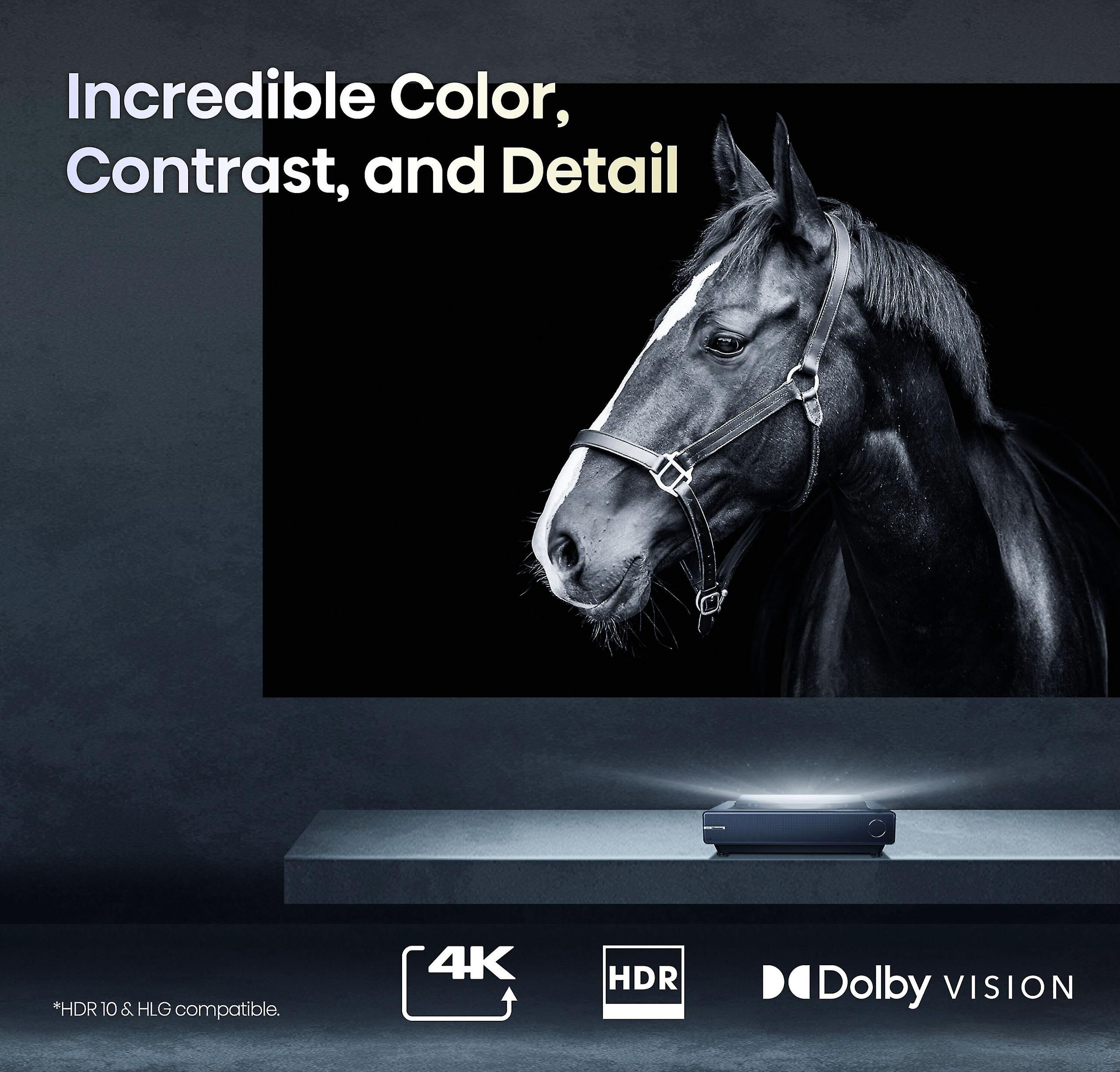
| Dolby Vision, HDR10, HLG | Dolby Vision, HDR10+, HLG |
| Installation Features - Setup ease | |
| Auto geometric calibration, smartphone setup | Manual 8-point keystone correction |
| Light Source Lifespan - Long-term value | |
| 25,000 hours | 25,000 hours (Similar longevity) |
| Connectivity - Device compatibility | |
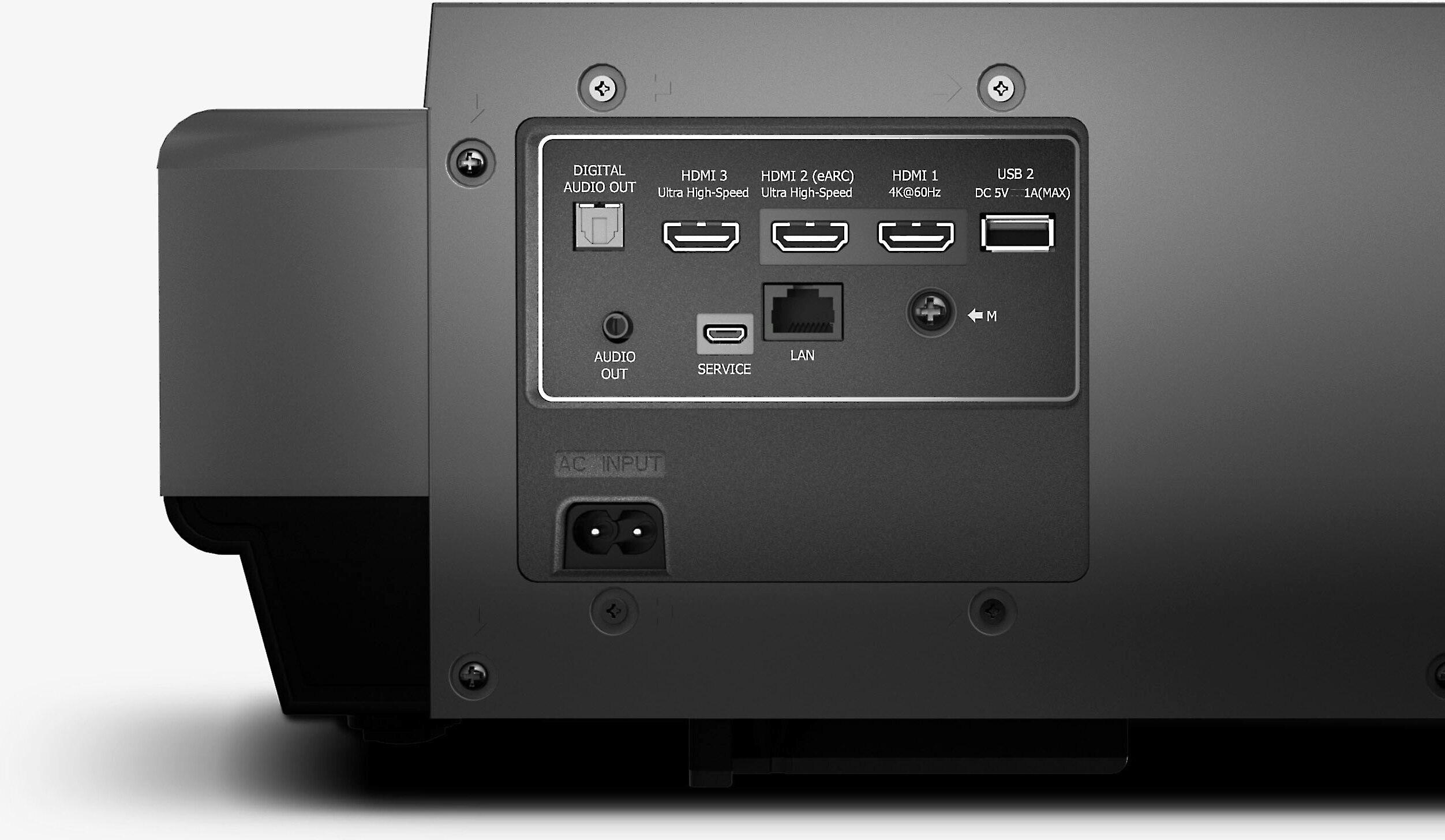
| 3x HDMI 2.1, eARC, 2x USB | 3x HDMI 2.1, eARC, USB |
The Formovie Theater offers better overall value with higher brightness (2800 vs 2400 ANSI lumens) and superior built-in audio at $2,699. However, the Hisense PX2-PRO at $2,998 has better gaming performance and smart features through Google TV.
The Formovie Theater is brighter with 2800 ANSI lumens compared to the PX2-PRO's 2400 ANSI lumens, making it better suited for rooms with some ambient light.
The Hisense PX2-PRO has slightly lower input lag (30-35ms vs 40ms) and better gaming features, making it the better choice for gaming enthusiasts.
Both projectors work best with an ALR (Ambient Light Rejecting) screen, though they can project onto a white wall. A proper screen significantly improves contrast and color performance.
Both the Formovie Theater and PX2-PRO need about 4-8 inches from the wall for optimal image size, making them ideal for furniture placement.
The Hisense PX2-PRO uses the newer Google TV platform with better content recommendations, while the Formovie Theater uses Android TV with more apps available.
The Formovie Theater can project up to 150 inches, while the PX2-PRO maxes out at 130 inches.
The Formovie Theater features superior Bowers & Wilkins speakers, though both support Dolby Atmos and external audio systems.
Both projectors have a rated laser lifespan of 25,000 hours, equivalent to over 10 years of typical use.
The Formovie Theater performs better in bright rooms due to higher brightness, but both projectors work best in controlled lighting conditions.
The Hisense PX2-PRO offers easier setup with automatic geometric calibration using a smartphone app, while the Formovie Theater requires manual adjustment.
Both offer excellent value for UST laser projectors, with the Formovie Theater providing better price-to-performance ratio at $2,699, while the PX2-PRO justifies its $2,998 price with better smart features and gaming performance.
We've done our best to create useful and informative comparisons to help you decide what product to buy. Our research uses advanced automated methods to create this comparison and perfection is not possible - please contact us for corrections or questions. These are the sites we've researched in the creation of this article: bestbuy.com - walmart.com - hisense-usa.com - techradar.com - youtube.com - shop.hisense-usa.com - shop.hisense-usa.com - electronicexpress.com - projectorreviews.com - projectorscreenstore.com - crutchfield.com - walmart.com - avsforum.com - techradar.com - projectorcentral.com - rtings.com - formovie.com - projectorreviews.com - projectorcentral.com - projectorscreen.com - projectorcentral.com - nothingprojector.com - formovie.com

Privacy Policy
Terms and Conditions - Affiliate Policy
Home Security
© Copyright 2008-2026.
11816 Inwood Rd #1211, Dallas, TX 75244